
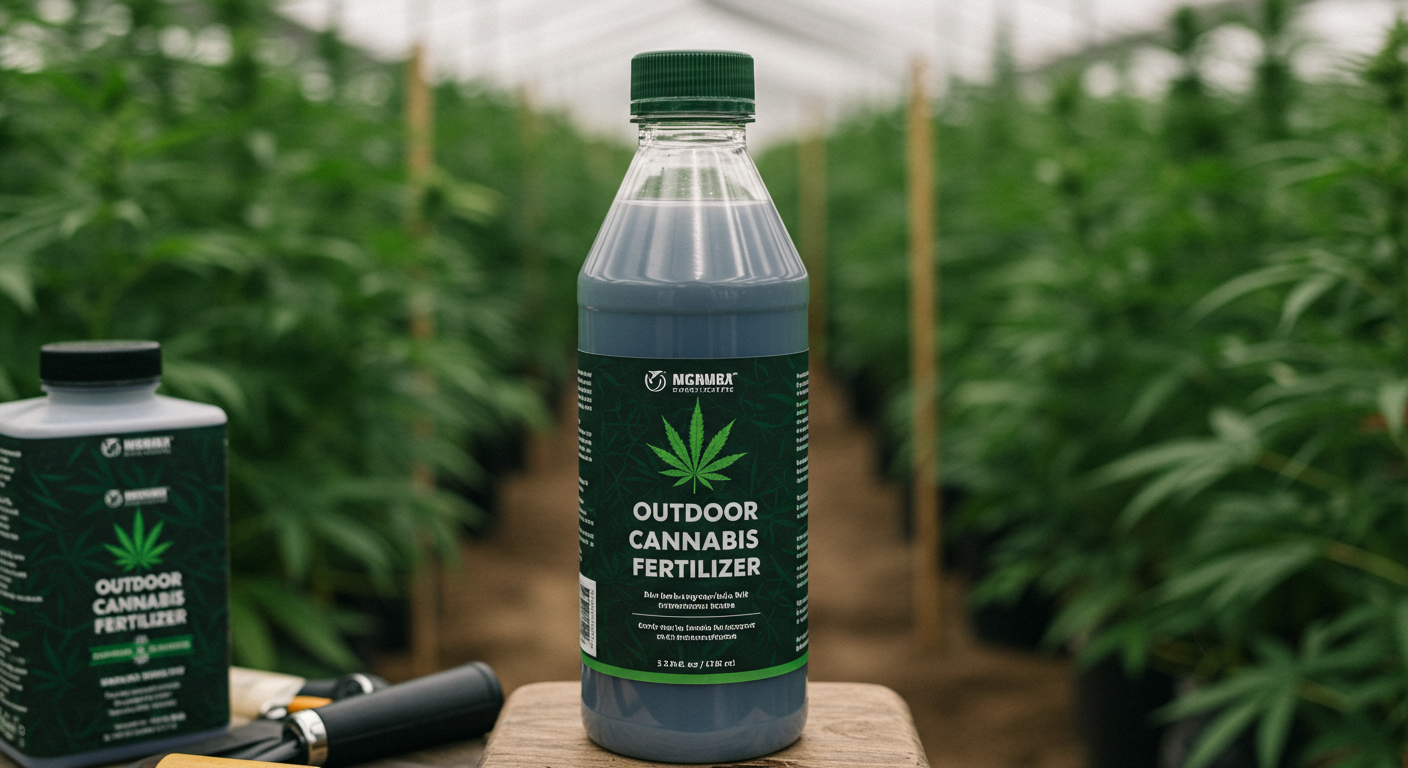
Is October Too Late to Fertilize Cannabis Plants?
October makes outdoor cannabis growers second-guess almost every yellow leaf. A plant can still be building flowers, the forecast can turn cold overnight, rain can stay in the root zone for days, and the usual feeding schedule suddenly looks less certain. The calendar says autumn. The plant may still say, “I am not finished.”
So, is October too late to fertilize cannabis plants? Not automatically. The useful answer depends on the plant’s flowering stage, the health of its root zone, the weather, the medium, and how close it is to harvest. A light, justified correction can still help a plant that has active roots and several weeks left. A heavy feed, a late nitrogen push, or a stack of bloom products can easily make a stressed late-season plant harder to finish.
Let’s make the decision from the plant outward. First identify whether it is still actively building flower mass, whether it has a genuine shortage rather than ordinary late-flower fade, and whether the roots can actually use what is applied. That approach is slower than reacting to one pale leaf, but it protects the part of the crop that matters most now: clean, mature, healthy flowers.
Use this guide only for lawful cultivation, with the property owner’s permission. Local rules may also affect outdoor cultivation, visibility, odor, runoff, and plant limits.
Master Advice: October is a month on the calendar, not a feeding stage. Feed only when the plant still has time, healthy roots, and a clear reason to use the nutrients.
The Short Answer: When October Fertilizing Still Makes Sense
Fertilizing can still make sense when an outdoor plant is in early or mid flowering, has healthy green growth around the flower sites, is drinking at a normal pace, and is expected to continue maturing for more than a short window. In that situation, the plant is still demanding water, minerals, and energy to maintain leaves and add flower tissue. A complete, moderate program may be more useful than abruptly starving it because the month changed.
It makes much less sense when the plant is very close to harvest, has stopped drinking, sits in cold saturated soil, is already showing widespread natural senescence, or has a disease problem. Fertilizer does not repair cold, low light, root damage, or botrytis. It can add salts to a medium that is already struggling to dry and can push soft leaf growth exactly when airflow and flower inspection should take priority.
Late-flower fade is the gradual loss of green color as older leaves remobilize mobile nutrients toward developing flowers.
Some late fade is normal. The key question is speed and pattern: a slow change on older fan leaves is different from a rapid whole-plant decline, burned margins, stalled drinking, or pale new growth.
| Plant situation | Plant status | Best next move | What to avoid |
|---|---|---|---|
| Early flower with weeks remaining | Active drinking, healthy leaves, fresh white pistils or clear flower expansion | Continue a complete, moderate flower-appropriate program and observe response | A sudden high-strength “catch-up” feed |
| Mid flower with minor lower-leaf fade | Roots are active and flowers are still building | Check water, pH, and recent feed strength before making a small correction | Treating every yellow leaf as an emergency |
| Late flower near expected harvest | Slower drinking, mostly mature flowers, normal aging | Prioritize weather protection, inspection, and steady moisture | Adding nitrogen or several bloom boosters |
| Cold, wet, or root-stressed plant | Slow dry-back, droop, sour medium, or reduced water use | Correct root-zone conditions first and wait for active uptake | Adding more fertilizer to force a response |
Start With the Plant, Not the Date
Two outdoor plants can look completely different on the same October day. One might be a fast-finishing cultivar with mostly cloudy trichomes and flowers that have already reached their final shape. Another could be a later cultivar only halfway through its meaningful flower-building period. Giving both plants the same feeding decision because it is October misses the biology that matters.
Begin with four observations. Is the plant still taking up water at a familiar rate? Are the flower sites still expanding? Do the remaining healthy leaves look capable of supporting the crop? Is the root zone able to breathe and dry between rain events? Those answers tell you much more than a calendar entry.
Remember: A healthy late-season plant often needs fewer changes, not more. Stability lets you see what is actually happening.
Signs the plant may still benefit from a measured feed
Look for active flower development rather than just a green canopy. Newly swelling calyxes, flower clusters that are still gaining weight, and leaves that remain functional around productive sites all suggest the plant has work left to do. When the medium is drying normally and the plant responds to watering with good turgor, roots are more likely to use a modest feed safely.
A legitimate deficiency can also justify action. For example, a plant that was underfed before flowering may lose lower-leaf color too quickly while still carrying many weeks of immature flowers. The correction should be complete and restrained, not a single-nutrient guess based on a photograph. In outdoor soil, pH, saturation, cold roots, and poor aeration can imitate nutrient shortage.
“My plant is still throwing white pistils in October. Does that mean I should keep feeding?”
Question sent by: Danielle R., via Email.
White pistils alone are not a feeding instruction, but they do tell you the plant may still be actively flowering. Check the whole picture: flower expansion, water use, leaf health, weather, and estimated time to harvest. If the roots are working and the plant has meaningful time left, continue a moderate complete program rather than stopping abruptly. If the plant is wet, cold, or nearly finished, protect the root zone and flowers first.
Why Late-Season Nutrition Is Different Outdoors
Outdoor feeding becomes less predictable in October because the root environment changes. Cooler nights slow the whole plant. Shorter days reduce the energy available for growth. Repeated rain can hold water in a container or soil bed long after the surface looks dry. Humid weather also raises disease pressure inside dense flowers. None of those conditions disappears because a fertilizer label promises a bigger harvest.
Roots take up nutrients through an active living system. They need oxygen, reasonable temperature, moisture that is neither droughty nor stagnant, and a chemical environment they can tolerate. If a pot stays saturated, more fertilizer increases the concentration around roots without solving the lack of oxygen. If the soil is cold and the plant barely drinks, a strong feed can stay behind as unused salts.
Research on flowering cannabis supports the principle of avoiding excess. Controlled studies have found that raising phosphorus or total nutrient concentration above adequate levels did not improve yield or flower quality, even when more nutrients accumulated in the root zone or tissue. The practical outdoor lesson is simple: a plant needs enough available nutrition, not the highest possible concentration.
Do not feed a waterlogged root zone to “wake it up”
If the medium is cold, heavy, and slow to dry, the immediate risk is impaired roots and flower disease, not a lack of bottled nutrients. Improve drainage, shelter containers where practical, restore an appropriate wet-dry rhythm, and inspect flowers closely before adding fertilizer.
Normal Autumn Fade Versus a Problem Worth Correcting
This is the part that causes the most overfeeding. In late flower, older leaves can gradually lose nitrogen as the plant remobilizes resources toward reproductive tissue. That is a normal plant process. It does not mean the crop is being neglected, and it does not require turning the foliage dark green again.
A problem is more likely when the change is fast, affects productive upper leaves early, comes with burnt tips or dark clawed leaves, follows a major weather shift, or appears alongside poor water uptake. The pattern matters. A nutrient shortage, a pH problem, a salt buildup, root damage, and natural maturation can all show some yellowing. Feeding the wrong diagnosis usually makes the picture noisier.
| What you see | Possible cause | How to confirm | Corrective action | Prevention |
|---|---|---|---|---|
| Slow yellowing on older fan leaves late in flower | Normal nutrient remobilization and maturity | Flowers are mature, uptake is slowing, upper productive leaves remain serviceable | Keep water steady and avoid chasing full greenness | Build balanced nutrition earlier in the season |
| Rapid pale lower canopy while flowers are still immature | Underfeeding, leaching, or reduced uptake | Review recent watering, feed, pH, root health, and weather before changing anything | Use a modest complete correction only after roots are functioning | Keep a simple water and feed log |
| Dark leaves, tip burn, downward clawing | Excess nitrogen or high salt concentration | Symptoms follow strong feeding and the medium dries slowly or runoff is unusually concentrated | Stop escalating, return to appropriate water management, reassess | Increase feed gradually and use one complete program |
| Sudden whole-plant droop after rain | Overwet root zone, cold stress, or disease pressure | Pot stays heavy, soil smells sour, water use falls, or stems and flowers show damage | Address root-zone and weather conditions before feeding | Use an aerated medium and protect containers from prolonged saturation |
What to Feed in October, If a Feed Is Justified
When an October feed is justified, think complete and moderate. Cannabis still relies on a functioning balance of macronutrients and micronutrients, but the late-season goal is not to drive a fresh wave of vegetative growth. Nitrogen is not automatically bad in flower, yet a late heavy nitrogen push can keep tissues overly leafy, delay normal maturation, and make dense plants harder to manage in wet weather.
Phosphorus and potassium are often marketed as the answer to late flower. They are essential nutrients, but “more” is not the same as “better.” Research has shown that excessive phosphorus and higher total nutrient concentration do not automatically raise cannabis yield or cannabinoid quality. A bloom product cannot replace healthy roots, sunlight, or an intact canopy.
For a container plant in a soilless mix, a diluted complete flower nutrient may be appropriate if the plant is actively drinking and clearly needs it. For a living soil or amended outdoor bed, slow mineralization and wet autumn weather make late additions less predictable. A fast response is less likely from a dry amendment that still needs warm, active biology to become available. Do not pile amendments on top of each other simply because the forecast looks uncertain.
Pro Tip: Before changing a late-season feed, write down the last two irrigations, what went into them, how long the medium took to dry, and what the weather did. That short record is often more useful than another bottle.
Use one complete, conservative program
When the plant has active roots and clear time left, make the smallest complete correction that matches the medium and its current water use.
Stacking boosters to chase density
Several strong additives can increase salt stress and complicate diagnosis without overcoming shade, cold roots, poor drainage, or impending harvest.
How Close Is Too Close to Harvest?
There is no universal “stop feeding on this exact day” rule because cultivars, media, climate, and harvest goals differ. A better decision comes from the remaining harvest window and plant behavior. When only a short period remains and the flowers are mostly mature, the value of correcting a minor fade is low. The value of avoiding overwatering, salt buildup, and mold is high.
When a plant still has several weeks left, a sudden complete withdrawal can be just as unhelpful as overfeeding. Researchers have observed that cannabis can remobilize nutrients from leaves late in flowering, and that reduced fertilizer can sometimes retain much of the final cannabinoid yield under controlled conditions. That does not mean every outdoor plant should be starved. It means the final weeks should be managed deliberately rather than driven by a hard calendar rule.
“Should I stop all nutrients two weeks before harvest?”
Question sent by: Eli Thompson, via Facebook page.
Not by default. If the plant is truly in its final stretch and the medium already contains enough nutrition, a simpler water routine may be reasonable. But a fixed two-week rule can leave a still-active plant short of support. Let flower maturity, water use, root health, and the medium guide the decision. Avoid using a forced starvation period as a substitute for a clean, balanced feeding program throughout the season.
Weather Changes the Answer More Than Most Feeding Charts Admit
October weather often decides whether feeding helps. A warm, bright stretch with a container that dries normally can support measured uptake. A run of cold rain and overcast days tells a different story. Less sunlight means less photosynthesis. Less transpiration and a saturated medium can reduce the plant’s ability to move water and nutrients. Dense late flowers also become more vulnerable when humidity stays high.
In a wet period, protect the root zone and canopy before chasing a nutrient response. Raise containers off cold ground where practical, make sure drainage holes are not blocked, avoid watering already-heavy pots, and remove only damaged or clearly unproductive material that is trapping moisture. Do not aggressively defoliate a stressed plant in October. Healthy leaves are still its solar panels, and sudden stripping can add stress when recovery time is short.
Important: A feeding plan only works while the root zone can breathe. If the plant is not using water, slow down and find out why before adding nutrients.
Rain, Runoff, and Container Plants
Container-grown outdoor cannabis needs extra attention in autumn. Rain can dilute nutrients in a fast-draining mix, but it can also keep the lower root zone wet for too long. Both are possible in the same week. The answer is not to feed after every storm. Lift the container, inspect the medium at depth when possible, and watch how quickly the plant returns to normal water use.
Runoff tells a limited story, especially in outdoor soil, but it can still reveal a pattern. Very high dissolved salts after repeated feeding may mean the medium is carrying more than the plant can use. Very low strength after heavy rain may suggest leaching in a soilless container. Treat either signal as a reason to review the whole system rather than as an instruction to make a dramatic correction.
Organic, Mineral, and Mixed Feeding Late in the Season
Organic and mineral approaches can both grow good cannabis, but they behave differently once autumn arrives. Mineral nutrients are usually more immediately available when roots are active. That can make them easier to adjust in a controlled container routine. Organic inputs depend more heavily on biological activity and environmental conditions. In cool wet weather, an amendment may not become available in time to solve an immediate issue.
A mixed approach can also work, but it needs restraint. If the soil already carries compost, amendments, or slow-release fertility, adding a concentrated liquid feed without understanding the baseline can oversupply the root zone. The fact that a product is organic does not make it harmless at the wrong time or rate.
| Approach | Best fit | October strength | October limitation |
|---|---|---|---|
| Complete mineral nutrient | Active container plants in soilless media | Predictable availability when roots are healthy and uptake is active | Easy to overconcentrate when the medium stays cold or wet |
| Organic liquid feed | Active living-soil or soil-based containers with an established routine | Can complement an existing biological program | Response can be slower and less predictable in cool conditions |
| Dry amendments | Planned soil-building before or early in the season | May support longer-term soil fertility when applied with enough lead time | Usually not a quick late-flower rescue tool |
| Several products stacked together | Rarely justified without a measured system | None that a balanced program cannot provide | Higher salt load, unclear diagnosis, and needless complexity |
When You Should Not Fertilize in October
Do not fertilize simply because the plant looks less green than it did in August. Do not fertilize a plant that is close enough to harvest that it is naturally slowing down. Do not fertilize through a root-zone problem, a major cold event, obvious overwatering, or suspected bud rot. And do not expect nutrients to reverse genetics, shade, frost damage, or a severely compressed timeline.
Where disease is present, handle the disease issue first. Dense flowers that stay wet can develop internal rot while the outside still looks acceptable. Inspect after rain, especially in thick tops. Remove compromised material carefully, improve airflow where possible, and keep the surrounding flowers dry. Fertilizer is irrelevant if flower health is already failing.
Suspected bud rot is not a nutrient problem
Brown or gray tissue inside a dense flower, a sudden dead patch, or a musty smell needs immediate inspection and removal of affected material. Do not spray, feed, or squeeze questionable flowers in the hope that the problem will pass.
A Simple October Decision Process
Here is a practical way to make an October decision without turning every feeding into a complicated calculation. Start with the weather and root zone. Then look at the flowers. Only after those two checks should leaf color influence the plan.
Before adding nutrients, confirm these points
- The plant still has meaningful flower development left before the expected harvest window.
- The medium is not cold, saturated, sour-smelling, or unusually slow to dry.
- The plant is still using water and holding normal turgor.
- The observed symptom is more than gradual aging of lower fan leaves.
- The recent feed history does not already suggest excess or salt buildup.
- The next change will be a complete, measured correction rather than a booster stack.
- Weather protection and flower inspection are already part of the daily routine.
If these answers point toward an active, under-supported plant, a conservative feed may be reasonable. If they point toward cold roots, a wet medium, an almost-finished plant, or a flower-health concern, hold the nutrients and protect the system. You do not need to solve every autumn change in one irrigation.
Common October Fertilizing Mistakes
Adding extra phosphorus and potassium because flowers look small
Flower size is the result of sunlight, cultivar timing, healthy roots, water, nutrition, canopy condition, and season length. Extra phosphorus or potassium cannot recover the light that a shaded plant never received, and research does not support the idea that excessive phosphorus automatically improves cannabis yield or quality.
Trying to restore every leaf to dark green
Late flower is not supposed to look exactly like mid-vegetative growth. A controlled gradual fade can be normal. The goal is to preserve enough functional leaf area and stable roots for flowers to finish, not to keep every fan leaf pristine until harvest.
Feeding heavily after several days of rain
Heavy rain does not always mean the plant is hungry. It can mean the pot is saturated and roots are under oxygen stress. Judge the real moisture level and water use first. If a container has genuinely leached and then returns to active dry-back, a moderate correction is more sensible than a concentrated rescue dose.
Stopping all care because harvest is near
The final stretch still requires observation. Watering, branch support, weather response, and mold inspection remain important right up to harvest. A nearly finished plant can still lose quality quickly if it is left soaked, unsupported, or unchecked after a storm.
“Can I use a bloom booster after a cold October rain?”
Question sent by: Marcus Lavoie, via Email.
Wait until the medium has returned to a healthy moisture level and the plant is clearly using water again. A bloom booster will not correct low light, chilled roots, or saturation, and it can concentrate salts in a pot that has not resumed normal uptake. If a feed is still needed after recovery, choose a balanced and modest correction rather than an aggressive single-purpose product.
Frequently Asked Questions
Is October too late to fertilize cannabis plants outdoors?
No. It can still be appropriate for an actively flowering plant with healthy roots and enough time before harvest. It is usually a poor choice for a cold, wet, nearly finished, or diseased plant. The growth stage matters more than the month.
Should I give cannabis nitrogen in October?
Only as part of a balanced program when the plant still has time left and shows a real need. Heavy late nitrogen is not a quality strategy. It can encourage unnecessary leafy growth and make a wet late-season canopy harder to manage.
Will fertilizer make my October cannabis buds bigger?
Fertilizer can support continued flower development only when nutrition is genuinely limiting and the plant has active roots, usable light, and time to finish. It cannot make a mature flower restart or compensate for poor weather and root stress.
Should I fertilize after heavy rain?
Check the root zone first. If a container has leached and later resumes normal dry-back, a measured feed may help. If it remains saturated or the plant is drooping, resolve drainage and oxygen issues before feeding.
Can I add compost or dry amendments in October?
They may have value for longer-term soil building, but they are usually not a fast late-flower correction. Their release depends on moisture, temperature, microbial activity, and time. Use them as part of a planned soil strategy rather than an emergency response.
Does yellowing always mean I should feed?
No. Slow yellowing of older fan leaves can be normal late-flower fade. Rapid decline, upper-leaf symptoms, tip burn, clawing, poor water use, or a saturated medium deserve a broader diagnosis before nutrients are added.
Finish the Season by Protecting What Is Working
October feeding is not about squeezing one last dramatic reaction from the plant. It is about recognizing when the crop still has useful work left and supporting that work without creating a new problem. If flowers are still developing, roots are active, and the weather allows normal uptake, a conservative complete feed can make sense. If the plant is mature, wet, cold, or unhealthy, simplify the routine and protect flower quality.
Keep the final weeks calm. Watch the weather, lift the pot, inspect the flowers, and change one major variable at a time. That is how a late outdoor plant gets the best chance to finish cleanly, rather than merely finishing loudly.
Selected Research Behind This Guide
Share this article
A quick overview of the topics covered in this article.
Follow us
Latest articles
October 27, 2026
October 27, 2026
October 27, 2026
October 27, 2026