
Water Temperature and Cannabis Root-Zone Health: Dissolved Oxygen, Metabolic Uptake, and Pythium Thermal Windows
In commercial cannabis cultivation, growers obsess over lighting intensity, atmospheric vapor pressure deficit, and sophisticated fertilizer formulations, yet frequently overlook the single thermodynamic variable that dictates whether roots can metabolize those inputs: irrigation water temperature. The temperature of the nutrient solution entering the substrate governs two inversely coupled biological phenomena: dissolved oxygen (DO) saturation and root metabolic respiration. As water temperature climbs, Henry’s law dictates that physical oxygen solubility drops precipitously, starving root cortical tissues of the oxygen necessary to drive oxidative phosphorylation. Simultaneously, the Arrhenius equation accelerates root cellular respiration and pathogen proliferation, doubling the biological oxygen demand of roots and opportunistic water molds. Conversely, irrigating with cold water shocks root cells, causing membrane lipids to crystallize from a fluid liquid-crystalline state into a rigid gel phase, arresting aquaporin water channels and halting active phosphorus and nitrogen transport. Achieving maximum cannabinoid potency, vegetative growth rates, and structural plant vigor requires maintaining an exact root-zone thermal window between 18 °C and 21 °C (65 °F to 70 °F).
Managing water temperature is not merely a matter of comfort for the plant; it represents a primary biophysical defense against root pathogen infestation and nutrient lock-out. When warm nutrient solution saturates a container, opportunistic oomycetes such as Pythium ultimum and Phytophthora undergo rapid zoosporogenesis, utilizing flagellated swimming spores to penetrate oxygen-depleted root tips. In recirculating deep water culture (DWC) and drain-to-waste rockwool systems alike, an un-chilled reservoir hovering above 23 °C can destroy months of vegetative progress in under 72 hours. Conversely, growers who draw untreated winter tap water below 14 °C induce instant thermal shock, manifesting as purpling petioles, stunted internodes, and false phosphorus deficiencies. This comprehensive technical guide details the thermodynamic principles, membrane biophysics, dissolved oxygen curves, and engineering architectures required to master irrigation water temperature for cannabis, connecting directly with our core guides on root rot diagnosis and prevention, flood-and-drain hydrodynamics, and cannabis watering frequency and volume.
Thermodynamics and Dissolved Oxygen: Henry’s Law and Membrane Phase Transitions
To understand why root zones react violently to minor temperature fluctuations, cultivators must examine the thermodynamic laws governing gas solubility and cellular membrane biophysics:
- Henry’s Law of Gas Solubility: The concentration of dissolved gas in an aqueous liquid is directly proportional to the partial pressure of that gas above the liquid: C = kH × Pgas. However, the Henry’s law constant (kH) is strongly temperature-dependent. At 15 °C (59 °F), pure water reaches oxygen saturation at 10.1 mg/L (ppm). At 20 °C (68 °F), saturation falls to 9.1 mg/L; at 25 °C (77 °F), it drops to 8.2 mg/L; and at 30 °C (86 °F), oxygen solubility collapses to 7.5 mg/L. As irrigation water warms, it physically loses its capacity to hold life-sustaining oxygen.
- Root Metabolic Oxygen Demand (Q10 Temperature Coefficient): Biological reaction rates within plant cells approximately double for every 10 °C rise in temperature (Q10 = 2.0). At 26 °C, cannabis root mitochondria consume dissolved oxygen at more than double the rate observed at 16 °C. Thus, warm water creates an agronomic paradox: precisely when root cells require the greatest volume of oxygen to fuel accelerated respiration, the water physically holds the lowest concentration of dissolved gas.
- Membrane Lipid Phase Transition: The plasma membrane of cannabis root epidermal cells is composed of a phospholipid bilayer embedded with transport proteins. At optimal temperatures (18 °C to 21 °C), these lipids remain in a fluid, flexible liquid-crystalline state, allowing aquaporins (water channels) and H+-ATPase proton pumps to freely transport ions. When cold water below 14 °C (57 °F) hits the root zone, the lipid bilayer undergoes a rapid phase transition into a rigid, crystalline gel. This sudden stiffening restricts protein conformation, severely restricting water permeability and active mineral absorption.
The Agronomic Science: The Inverted Oxygen-Temperature Paradox
Many indoor cultivators believe that injecting pure compressed oxygen or running oversized air diffusers can fully compensate for high water temperatures in summer reservoirs. This is physically impossible under standard atmospheric pressure. While aeration diffusers can maintain saturation up to the theoretical Henry’s law limit, they cannot force water at 26 °C (79 °F) to hold more than approximately 8.1 mg/L of dissolved oxygen. Maintaining water temperature at 19 °C (66 °F) passively delivers over 9.3 mg/L of dissolved oxygen while suppressing root respiration rates to sustainable metabolic levels.
Nutrient Absorption Kinetics: Active Transport, ATP Generation, and Cold Lock-Out
The physiological mechanism connecting root temperature to nutrient uptake involves enzymatic phosphorylation and transmembrane electrochemical gradients:
Water Temperature and Cannabis Root Health
The biological vitality of cannabis root systems depends directly on maintaining stable enzymatic activity within root apical meristems. When root tissues reside within their biological sweet spot of 18 °C to 21 °C, secondary root branching accelerates, root cap lubrication facilitates frictionless substrate penetration, and delicate root hairs maintain rapid cell division. At this optimal thermal range, mitochondrial ATP generation operates at maximum efficiency without oxidative overload, fueling the primary H+-ATPase proton pumps that acidify the rhizosphere apoplast and drive the influx of essential mineral cations (potassium, calcium, magnesium). If root temperatures drop below 15 °C, cytoplasmic streaming grinds to a halt, root elongation ceases, and root tips become brittle and suberized, severely curtailing canopy transpiration and vegetative leaf expansion.
Nutrient uptake across root cell membranes is partitioned into passive diffusion and active transport. Passive uptake (such as mass flow of water and uncharged boron) requires minimal metabolic energy. However, primary macronutrients such as phosphorus (in the form of dihydrogen phosphate, H2PO4–) and nitrogen (nitrate, NO3–) must be actively pumped across the plasma membrane against steep concentration gradients by specialized symporters. These protein carriers rely on ATP produced during mitochondrial cellular respiration. When irrigation water drops below 16 °C, mitochondrial respiration slows down dramatically, cutting ATP synthesis. Within hours of cold irrigation, cannabis plants exhibit acute phosphorus deficiency: leaf petioles turn vibrant reddish-purple, lower fan leaves develop dull bronze necrotic patches, and vascular sap transport slows to a crawl.
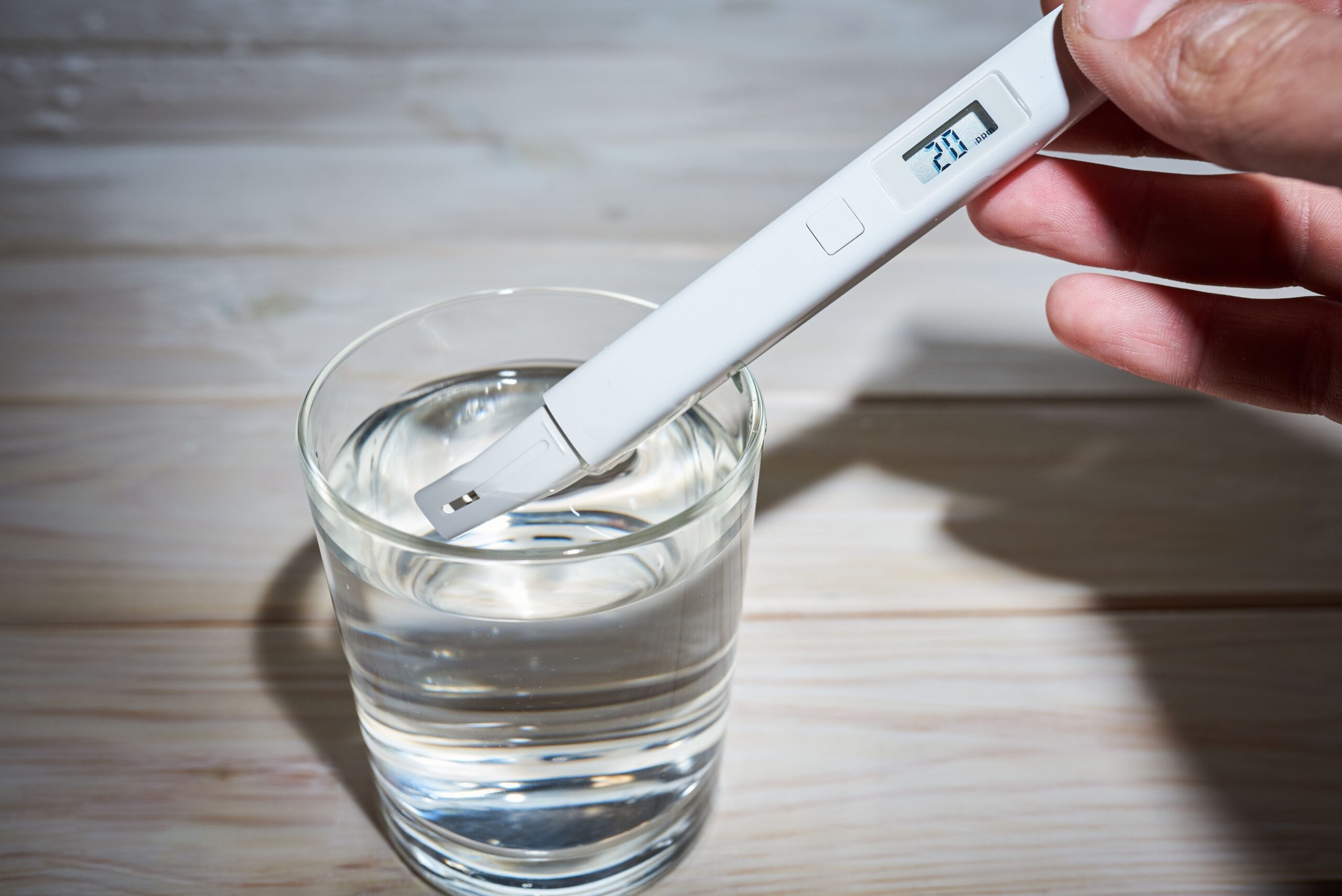
Precision laboratory digital thermometer auditing irrigation solution temperature and dissolved oxygen saturation.
Root Pathogen Proliferation and the Pythium Thermal Window
While cold water induces metabolic stalling, excessively warm irrigation water opens the door to devastating biological pathogens that thrive in warm, hypoxic root zones:
Water Temperature and Root-Zone Health
Maintaining biological health throughout the subterranean root zone requires preventing opportunistic water molds from gaining a reproductive foothold. The primary biological culprit behind commercial root collapse is Pythium (specifically Pythium ultimum and Pythium aphanidermatum). Pythium is an oomycete, an aquatic pseudo-fungus whose lifecycle is exquisitely tuned to water temperature and oxygen availability. Below 20 °C (68 °F), Pythium resides largely in dormant oospore survival structures, suppressed by aerobic beneficial rhizobacteria such as Bacillus subtilis and Trichoderma harzianum. However, once root-zone temperatures exceed 23 °C (73 °F), Pythium transitions into its explosive zoosporangial phase. Zoosporangia discharge hundreds of biflagellated, motile zoospores that chemically detect and swim toward root exudates.
When root zones combine temperatures above 23 °C with dissolved oxygen levels below 5.5 mg/L, root epidermal cells begin suffocating, leaking ethanol, carbohydrates, and amino acids into the surrounding rhizosphere. These metabolic stress exudates act as chemical attractants for swimming Pythium zoospores. The zoospores encyst upon root hairs, germinate germ tubes, and secrete cellulase and pectinase enzymes that dissolve the root cortical tissue from the inside out. Within days, the healthy, brilliant white root system turns into a slimy, brown, foul-smelling mass of decaying vascular cords. Above-ground symptoms lag behind root destruction: the canopy displays severe wilting despite wet substrate, yellowing interveinal chlorosis, and catastrophic blossom drop. Once Pythium establishes systemic infection in warm substrate, chemical eradication is nearly impossible without terminating the crop.
| Water Temp Range (°C / °F) | Dissolved O2 Max Saturation | Root Metabolic & Uptake Status | Pathogen Vulnerability Level | Agronomic Recommendation |
|---|---|---|---|---|
| Below 14 °C (< 57 °F) | 10.3 – 10.8 mg/L | Metabolic shock, lipid crystallization, phosphorus lock-out | Very low: pathogen spores dormant | Dangerous: Heat feed water immediately before application |
| 15 °C – 17 °C (59 °F – 63 °F) | 9.7 – 10.1 mg/L | Sluggish vegetative growth, delayed root branching | Suppressed: Pythium reproduction inhibited | Sub-optimal: Acceptable for slow vegetative hold, sluggish |
| 18 °C – 21 °C (64 °F – 70 °F) | 8.9 – 9.5 mg/L | Optimal: Peak ATP transport, active uptake, rapid branching | Minimal: Beneficial microbes dominate rhizosphere | Target Commercial Window: Ideal for all systems |
| 22 °C – 24 °C (71 °F – 75 °F) | 8.4 – 8.8 mg/L | Accelerated respiration, elevated oxygen demand | Moderate risk: Pythium zoospore production begins | Cautionary: Deploy active cooling or aggressive aeration |
| Above 25 °C (> 77 °F) | < 8.2 mg/L | Root hypoxia, ethanol exudation, cortical death | Extreme danger: Explosive Pythium root rot proliferation | Critical: Immediate chilling required to save crop |
The physiological boundaries delineated in Table 1 demonstrate why precise thermal regulation of irrigation water is non-negotiable in professional cannabis production. While indoor grow rooms routinely maintain ambient day temperatures between 26 °C and 28 °C to maximize photosynthetic carbon fixation under elevated carbon dioxide, allowing root zones to mirror these ambient air temperatures invites catastrophic root rot. Commercial operators must treat the canopy environment and the root-zone environment as two distinct thermodynamic regimes. The canopy thrives in warm, humid air driven by intense radiative light energy, while the root zone requires a subterranean environment that remains thermally cool, highly oxygenated, and chemically stable. However, cultivators often struggle to reconcile seasonal source-water shifts, leading to sudden physiological shocks that puzzle even experienced facility managers.
Can I irrigate directly with cold tap water during winter, or will 12 °C water harm my indoor cannabis plants?
Question sent by: Elena Rostova, via email.
“During the winter months, my municipal tap water arrives at my facility at 11 °C to 12 °C (52 °F to 54 °F). I mix my fertilizer directly in the batch tank and irrigate my flowering coco coir beds within 20 minutes. Recently, my fan leaves developed deep purple stems and interveinal yellowing, even though my feed EC and pH are perfect. Could the cold water be shocking the root system?”
You are witnessing textbook root thermal shock and cold-induced phosphorus starvation. Irrigating tropical and sub-tropical cannabis root systems with 12 °C water is extremely damaging to plant physiology.
When liquid at 12 °C enters a container maintained at 24 °C ambient room temperature, it causes instantaneous thermal contraction of root cortical cells. Within seconds, the fluid phospholipid membrane of root cells undergoes a physical phase change into a rigid, non-permeable gel. This disables the membrane-bound H+-ATPase proton pumps responsible for generating the electrochemical gradient needed to absorb dihydrogen phosphate ions (H2PO4–). Even if your nutrient solution contains abundant available phosphorus, the cold roots are physically unable to transport it across cell membranes, resulting in instant purpling of leaf petioles and stunted floral development.
Furthermore, cold water constricts root vascular vessels (xylem conduits), dramatically increasing hydraulic resistance. As the warm canopy above continues transpiring under high-intensity grow lights, water delivery cannot keep pace with atmospheric evaporative demand. The plant experiences physiological drought: leaves wilt and droop despite the substrate being thoroughly saturated. Never apply nutrient solution below 18 °C (64 °F). Install an in-line titanium water heater or submersible aquarium heaters in your mixing reservoir, and allow the solution to warm to 19 °C – 20 °C and equilibrate for at least 60 minutes before irrigating.
Elena’s situation highlights the severe metabolic disruption caused by winter source-water chilling. When cold water abruptly lowers container substrate temperature, the thermal mass of the pot can take twelve to eighteen hours to recover back to room temperature. If cold irrigations occur daily, the root zone remains trapped in permanent metabolic stasis, completely arresting plant development and drastically reducing floral harvest yields. Conversely, during peak summer cycles, growers face the opposite thermodynamic challenge: municipal source water warming past 22 °C, compounded by submersible pump heat dissipation within enclosed reservoirs. To maintain optimal root-zone health year-round, commercial facilities must invest in robust hydraulic engineering, utilizing active titanium chillers, heat exchangers, and insulated fluid delivery lines.
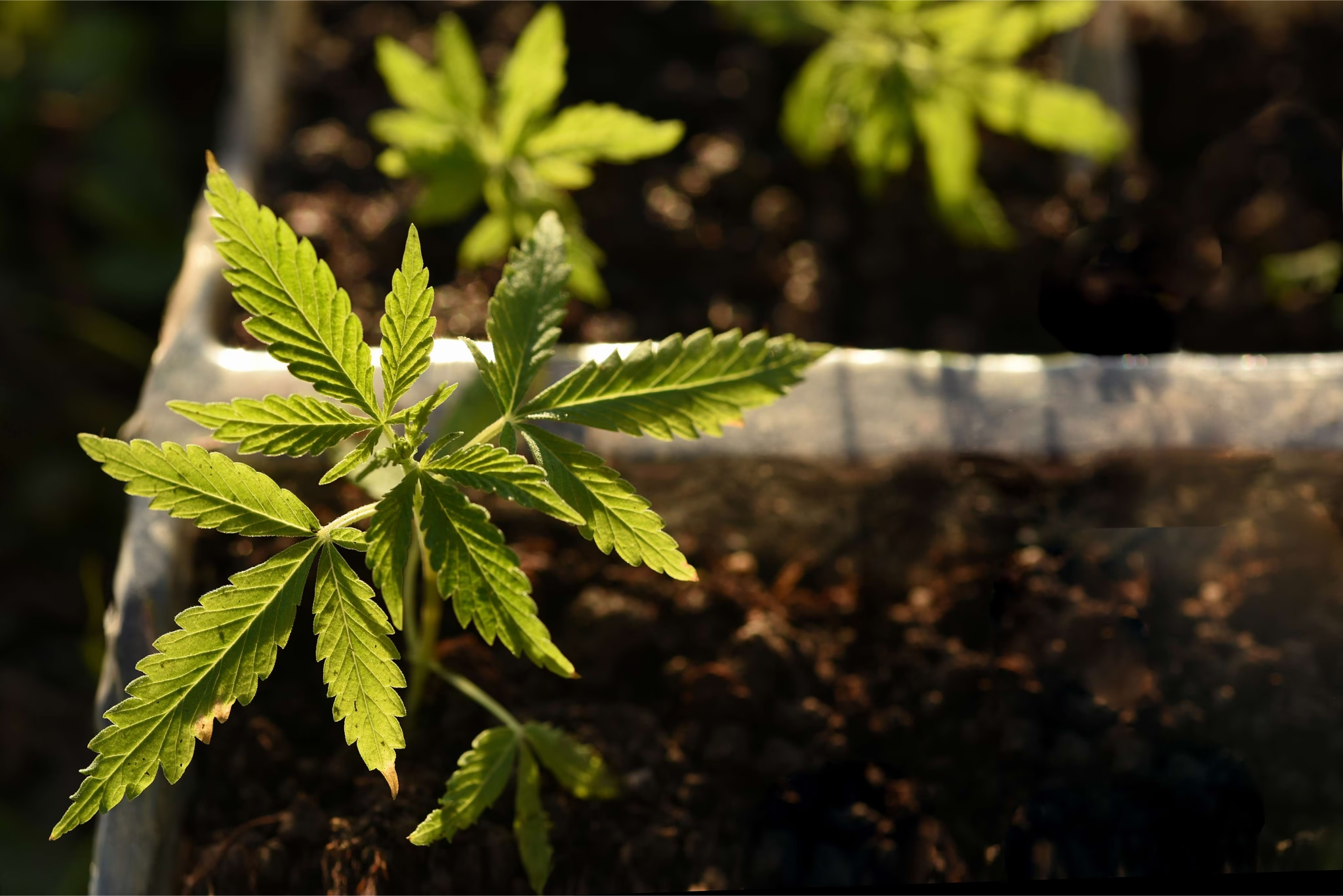
Robust vegetative root structure established within thermally buffered potting medium maintaining stable microbial balance.
Chiller Sizing, Reservoir Engineering, and Thermal Plumbing Architecture
Maintaining exact reservoir temperatures requires proper thermodynamic calculation and hydraulic engineering:
- Calculating BTU Cooling Requirements: Water has an exceptionally high specific heat capacity (4.184 Joules per gram per °C, or 1 BTU per pound per °F). Sizing a commercial water chiller requires accounting for total reservoir volume, ambient room temperature differential, and mechanical heat loads from submersible pumps and aerators. A standard 1/4-horsepower hydroponic chiller delivers approximately 2,000 to 3,000 BTU/hr of cooling capacity, suitable for a 100-gallon reservoir. Commercial facilities operating 500-gallon to 1,000-gallon batch tanks require 1.5 to 3.0 HP industrial chillers to pull down warm municipal water rapidly.
- Submersible Pump Heat Dissipation: A primary hidden heat source in automated fertigation systems is continuous-duty submersible utility pumps. High-volume magnetic drive pumps transfer up to 80% of their electrical wattage directly into the water as thermal energy. A 150-watt mixing pump running 24/7 inside a 50-gallon insulated reservoir will raise water temperature by 4 °C to 6 °C above ambient room temperature in less than 24 hours. Facility engineers replace internal submersible mixing pumps with external air-cooled magnetic drive pumps or deploy high-pressure venturi educators powered by brief timed cycles.
- Plumbing Insulation and Radiation Shielding: White PVC or polyethylene irrigation lines routed overhead across cultivation rooms absorb immense radiant heat from high-output LED fixtures and HPS luminaires. If nutrient solution sits stationary inside overhead plumbing manifolds between pulsed shots, the water within the pipes can heat up to 32 °C (90 °F). When the solenoid valve opens, that scalding, oxygen-depleted slug of water hits the plants first. Cultivators must insulate delivery lines with closed-cell elastomeric foam (Armaflex) or program high-frequency automated line purge cycles before each feeding event.
The Operational Trap: Frozen Water Bottles vs Titanium In-Line Chillers
Amateur growers battling warm reservoir temperatures frequently attempt to cool their tanks by tossing in frozen plastic water bottles or blocks of ice. This manual practice creates severe thermal shock waves: water temperature plunges by 6 °C in forty minutes, only to rebound 8 °C higher four hours later as the ice melts. These violent thermal oscillations stress root membranes far more than a stable elevated temperature. Commercial operations rely exclusively on digital thermostatic titanium in-line water chillers with ±0.5 °C deadbands, ensuring an unyielding 19.5 °C baseline around the clock.
Deploying dedicated titanium chillers eliminates the dangerous temperature fluctuations associated with crude manual cooling methods. However, even when a cultivator invests in a commercial chiller, operational mistakes often compromise system efficiency. A frequent dilemma arises when growers operating in warm climates struggle with ambient room heat encroaching upon recirculating reservoirs. When faced with summer heat waves, some operators consider turning off aeration diffusers under the mistaken assumption that bubbling warm ambient air into the tank is heating the water, while others wonder if adding massive volumes of biological inoculants can replace physical temperature control. Understanding how aeration mechanics interact with water chilling is crucial for maintaining root-zone biosecurity.
My DWC reservoir creeps up to 24 °C during heat waves. Can I just pump in extra bubbles instead of buying a chiller?
Question sent by: Tariq Vance, via email.
“I run a 4-bucket deep water culture system in a sealed tent. In late summer, the reservoir water hits 24.5 °C (76 °F). A commercial chiller is expensive and creates extra heat in my room. Can I simply upgrade my air pump to a commercial 60L/min diaphragm pump and run massive air stones to compensate for the warm water?”
Upgrading your air pump will not solve your problem, and in deep water culture, it may actually accelerate root rot and destroy your crop.
First, as governed by Henry’s law, pumping extra atmospheric air into 24.5 °C water cannot overcome the physical solubility threshold of oxygen. At that temperature, water is saturated at roughly 8.3 mg/L DO. No matter how many bubbles you inject, the dissolved oxygen level cannot exceed that ceiling under ambient room pressure. Meanwhile, the root metabolic demand for oxygen is running at peak velocity, consuming oxygen faster than water can diffuse it across the root boundary layer.
Second, and most critically: large commercial diaphragm air pumps compress ambient air, heating the output air stream by 2 °C to 4 °C above ambient room temperature. If your grow tent air is 26 °C, your air pump is injecting 29 °C air directly into your nutrient solution, actively heating the reservoir like an immersion heater!
At 24.5 °C, Pythium and Fusarium zoospores proliferate exponentially. In DWC, where roots have no physical soil buffering, warm water is fatal. You must bite the bullet and install an active water chiller. Set the chiller to 19 °C (66 °F). If room heat is a concern, locate the chiller exterior to your grow tent so its exhaust heat exhausts directly outside. In recirculating hydroponics, a chiller is not an optional accessory: it is the primary life-support system of the plant.
Tariq’s scenario illustrates why thermodynamic cooling cannot be substituted with increased aeration volume. In bare-root hydroponic architectures like DWC, nutrient film technique (NFT), and aeroponics, the lack of a solid medium means that root membranes are exposed directly to the thermal reality of the nutrient solution. In solid substrates like stone wool blocks, coconut coir, and deep living organic soil beds, the substrate itself acts as a thermal buffer, dampening rapid temperature shifts. However, even solid substrates eventually equalize with the ambient air temperature if irrigation events are spaced far apart. Commercial operators must design integrated thermal management protocols tailored specifically to their chosen cultivation medium.
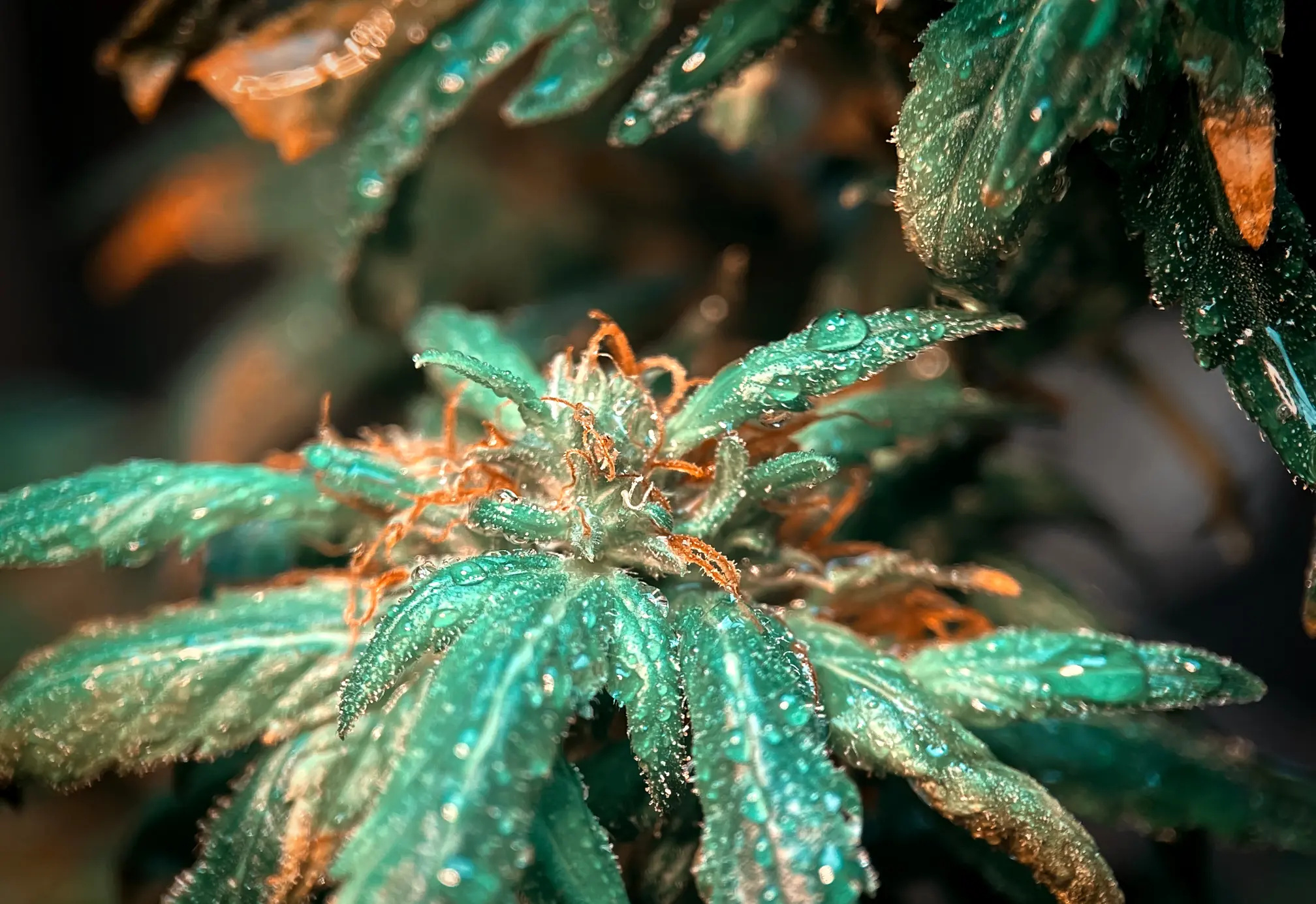
Dense glandular trichome development and active transpiration supported by strict thermal management of irrigation water.
Medium-Specific Thermal Dynamics: Soil, Coco Coir, Rockwool, and Hydroponics
Thermal buffering capacity varies substantially across different cannabis cultivation media:
- Bare-Root Hydroponics (DWC, RDWC, NFT): Possesses zero solid buffering capacity. The root temperature is 100% identical to the solution temperature. Strict chilling to 18 °C – 20 °C (64 °F – 68 °F) is mandatory 24 hours a day to prevent catastrophic pathogen blooms.
- Horticultural Rockwool Blocks and Slabs: Stone wool consists of 95% air and water pore space held within inert spun basalt fibers. Because rockwool blocks sit elevated on drainage tables exposed to room airflow, they equalize with ambient room temperature rapidly. When executing crop-steering pulse fertigation, irrigating with 19 °C solution provides a restorative cooling pulse that recharges dissolved oxygen across the slab core.
- Coconut Coir Potting Containers: Coconut coir possesses high moisture retention and moderate thermal mass. Evaporative cooling from fabric containers naturally depresses substrate core temperature by 1 °C to 2 °C below ambient room temperature, provided air movement is sufficient. Irrigating coco with 20 °C solution maintains an ideal 19 °C to 21 °C root core.
- Living Organic Super Soil Beds: Large raised fabric soil beds (100 to 500 gallons) possess massive thermal inertia. Biological microbial respiration within living soil naturally generates metabolic heat (often 1 °C to 3 °C above room temperature). Cultivators must avoid irrigating living soil with water above 21 °C to prevent overheating the diverse mycorrhizal and bacterial populations responsible for nutrient mineralization.
| Cultivation System / Medium | Target Feed Water Temp | Target Root-Zone Substrate Temp | Critical Danger Threshold (High) | Primary Thermal Hazard Mode |
|---|---|---|---|---|
| Deep Water Culture (DWC / RDWC) | 18.5 °C – 20.0 °C | 18.5 °C – 20.0 °C | > 22.0 °C (72 °F) | Rapid Pythium zoospore infestation and root collapse |
| Rockwool Pulse Fertigation | 19.0 °C – 20.5 °C | 20.0 °C – 22.0 °C | > 24.5 °C (76 °F) | Algal blooms, root browning, hypoxic dry-back stalling |
| Coco Coir in Fabric Containers | 19.5 °C – 21.0 °C | 19.5 °C – 21.5 °C | > 24.0 °C (75 °F) | Evaporative salt crusting and localized thermal shock |
| Living Organic Soil Raised Beds | 19.0 °C – 21.0 °C | 20.0 °C – 22.5 °C | > 25.0 °C (77 °F) | Microbial die-off, anaerobic denitrification pockets |
| Aeroponics & Ultrasonic Cloners | 19.0 °C – 20.0 °C | 19.0 °C – 20.0 °C | > 22.5 °C (72 °F) | Callus rotting, vascular bacterial wilt in cutting stems |
Thermal Monitoring Protocols: Digital Telemetry, Thermistors, and Closed-Loop Control
Commercial facilities cannot rely on handheld analog wands checked once a week to safeguard root temperatures. Precision cultivation demands continuous automated telemetry. Modern digital environmental systems integrate stainless steel RTD (Resistance Temperature Detector) probes or digital thermistors directly into substrate blocks and delivery manifolds. In high-frequency crop-steering rockwool and coco runs, multi-parameter soil moisture sensors (such as the Meter Group TEROS 12 or TrolMaster WCS-1) capture root-zone temperature simultaneously with volumetric water content and pore-water electrical conductivity every sixty seconds.
These live temperature data streams feed into facility programmable logic controllers (PLCs). Operators establish multi-tier alarming rules: if a nutrient batch reservoir climbs past 21.5 °C (71 °F), the automation system triggers high-stage chiller circulation while sending high-priority SMS alerts to cultivation staff. If an in-line delivery manifold records stagnant water sitting above 24 °C prior to a scheduled P1 morning irrigation event, the controller initiates an automated line dump, purging warm line water to waste before opening table solenoid valves. By combining real-time thermistor telemetry with automated diversion valves, commercial growers eliminate thermal shock, preserve root metabolic efficiency, and maintain pristine rhizosphere health across all cultivation cycles.
Irrigation Water Temperature Master Checklist
Audit these thermodynamic and mechanical parameters before each feeding cycle:
- Irrigation water temperature is maintained strictly between 18 °C and 21 °C (65 °F to 70 °F) prior to application.
- Incoming source water below 16 °C is conditioned with titanium heaters before mixing fertilizer to avoid phosphorus lock-out.
- Active titanium water chillers are sized with adequate BTU capacity to counter ambient room heat and pump wattage.
- Continuous-duty submersible mixing pumps inside reservoirs are replaced with external pumps or run on timed intervals.
- Overhead delivery manifolds exposed to intense fixture radiation are insulated with elastomeric foam or purged before feeding.
- Dissolved oxygen saturation is maintained above 8.5 mg/L via continuous aeration at target temperatures.
- Digital temperature probes are installed in both mixing reservoirs and representative root-zone substrate containers.
- Reservoir temperatures exceeding 22.5 °C trigger automated alarms and immediate chiller cooling to suppress Pythium.
- Substrate core temperature is monitored during photoperiod dry-backs to verify evaporative stability.
- Automated line dump protocols are configured to purge stagnant, warm water from delivery lines before bench fertigation.
Scientific References
- Bugbee, B. (2004). Nutrient management in recirculating hydroponic culture. Acta Horticulturae, 648, 99-112.
- Kramer, P. J., & Boyer, J. S. (1995). Water Relations of Plants and Soils. Academic Press, San Diego, CA.
- Marschner, H. (2012). Marschner’s Mineral Nutrition of Higher Plants (3rd ed.). Academic Press, London.
- Sutton, J. C., Sopher, C. R., Owen-Going, T. N., Liu, W., Grodzinski, B., Hall, J. C., & Benchimol, R. L. (2006). Etiology and epidemiology of Pythium root rot in hydroponic crops: current knowledge and perspectives. Plant Disease, 90(1), 4-15.
- Taiz, L., Zeiger, E., Møller, I. M., & Murphy, A. (2015). Plant Physiology and Development (6th ed.). Sinauer Associates, Sunderland, MA.
- Zheng, Y. (2021). Handbook of Cannabis Production in Controlled Environments. CRC Press, Boca Raton, FL.
- Nelson, P. V. (2011). Greenhouse Operation and Management (7th ed.). Prentice Hall, Boston, MA.
- Raviv, M., & Lieth, J. H. (2008). Soilless Culture: Theory and Practice. Elsevier Science, Amsterdam.
Share this article
A quick overview of the topics covered in this article.