Don Mega
In the contemporary landscape of high-potency boutique cannabis, few cultivars command as much polarizing fascination as Don Mega. Bred by the visionary team at Solfire Gardens in the Pacific Northwest, this powerhouse hybrid represents a daring genetic collision between two diametrically opposed sensory and structural philosophies: the grotesque, chemical-fuel allium stench and runaway vegetative stretch of GMO (Garlic Cookies), crossed against the dense, dark-berry anthocyanin pigmentation and confectionary cream of Solfire’s proprietary Black Banana stud. Rather than neutralizing each other into an ordinary commercial middle ground, these ancestral heavyweights created an explosive progeny that challenges cultivators to manage extreme architectural divergence while delivering an offensive, room-clearing bouquet of crushed garlic, burnt rubber, overripe banana puree, and pungent parmesan cheese.
Agronomically, Don Mega is a cultivar that immediately reveals whether a grower understands crop steering or merely follows a static calendar. When vegetative plants are flipped to a 12/12 photoperiod, the genetic tension between the two parents ignites. The Chem D ancestry embedded deep within the GMO mother unleashes an aggressive, lightning-fast transition stretch, driving vertical growth upward by 120% to nearly 200% over the first three weeks of flower. Yet as the long, flexible branches race toward the lights, the Black Banana parent asserts its influence at the nodes: stacking unusually dense, heavy floral clusters that swell with thick, resin-swollen calyxes. Cultivators who treat Don Mega like an ordinary hybrid quickly find their vertical ceiling clearance obliterated, lower bud sites starved of light, and heavy floral branches bowing toward the floor under immense physical leverage.
The sensory profile of Don Mega is an unapologetic, visceral assault that defies conventional dessert and gas classifications. Breaking open a cured, diamond-dusted calyx releases an intense, eye-watering cloud of volatile sulfurous thiols: sauteed garlic cloves, chopped sweet onions, and sharp mushroom compost, instantly followed by an acrid blast of industrial chemical gas and hot road asphalt. Just as the palate prepares for an exclusively savory funk, the Black Banana heritage sweeps across the sinuses with notes of bruised, overripe tropical fruit, sour lemon rind, sweet fermented berries, and rich cream cheese. This breathtaking biochemical contrast is driven by high concentrations of beta-caryophyllene, d-limonene, beta-myrcene, and alpha-humulene, translating into an entourage effect that delivers instant, euphoric cerebral pressure followed by a crushing, full-body somatic stone.
In our cultivation evaluation, we explored Don Mega’s physiological steering requirements across an automated closed-loop subterranean environment. Rather than conventional hand-watered pots, we ran eight cutting-propagated females in a multi-tier rolling bench system utilizing five-gallon breathable fabric air-pruning containers filled with a buffered 60/40 blend of coarse coco coir and expanded clay pebbles. Root-zone dynamics were governed by automated multi-manifold drip rings connected to volumetric substrate moisture sensors, allowing us to implement precision pulse-fertigation: delivering ten micro-shots of balanced nutrient solution throughout the photoperiod to maintain an optimal 55% volumetric water content while enforcing a 15% overnight dry-back to pull fresh oxygen deep into the rhizosphere.
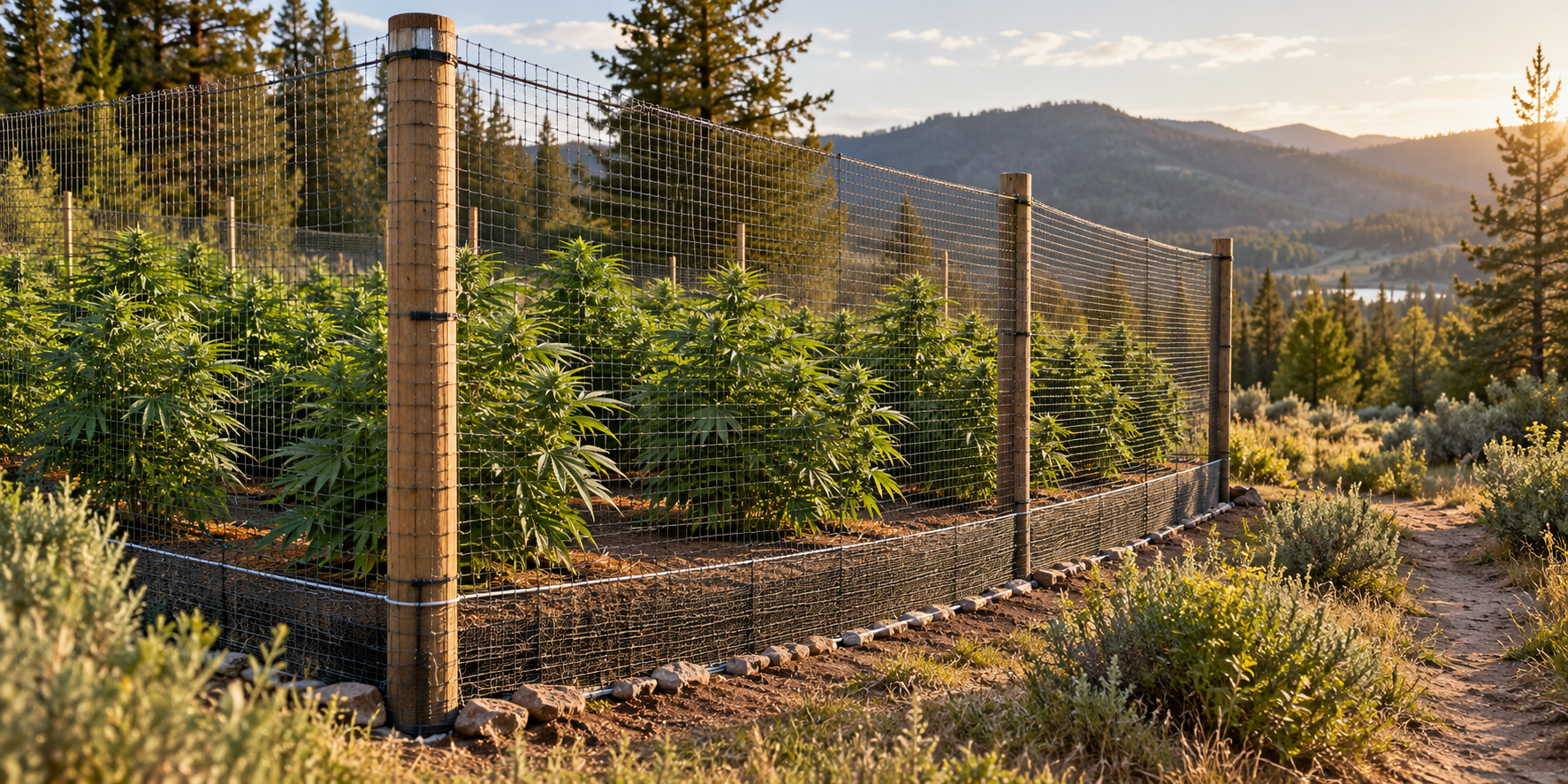
Canopy illumination was supplied by high-efficiency, multi-bar full-spectrum LED fixtures delivering 1000 micromoles per square meter per second across the canopy, integrated with high blue-wavelength (450 nm) diodes during the transition stretch to curb excessive internodal elongation. Ambient carbon dioxide was enriched to 1250 parts per million during peak floral swelling, paired with a dynamic Vapor Pressure Deficit (VPD) target of 1.4 kPa. Simultaneously, we evaluated outdoor resilience in high-elevation terraced hugelkultur beds amended with native forest loam, composted bark, and glacial basalt dust. To protect the dense, dark-purple colas from treacherous late-September mountain rains and 42-degree Fahrenheit cold dews, we sheltered the terrace under an automated retractable greenhouse cold-frame, ensuring constant lateral wind circulation while keeping precipitation off the heavy floral crowns.
Strain Features
| Feature | Details |
|---|---|
| Cultivar Name | Don Mega |
| Original Breeder / Source | Solfire Gardens (Pacific Northwest, bred in the late 2010s) |
| Competition Accolades | Multiple regional cannabis cup podiums; widely celebrated in solventless hash and craft boutique competitions |
| Genetic Lineage | GMO (Garlic Cookies: Chem D x Forum GSC) x Black Banana (Banana Fire Cookies x Blackberry Kush) |
| Chemotype Category | Type I THC-dominant with potent volatile sulfurous thiol and terpene complexes |
| Average THC Range | 24% to 29% (exceptional indoor living soil and automated hydro phenotypes exceed 30%) |
| CBD / Minor Cannabinoids | CBD: 0.1% to 0.3% | CBG: 1.2% to 2.1% | CBC: 0.4% to 0.7% | CBN: <0.2% (rises with late-harvest amber cure) |
| Dominant Terpenes | Beta-Caryophyllene, D-Limonene, Beta-Myrcene, Alpha-Humulene, Linalool, Alpha-Pinene |
| Total Terpene Concentration | 2.8% to 4.5% dry weight under high-intensity photon arrays and precision cold-curing |
| Aroma Profile | Pungent garlic cloves, sauteed onions, burnt rubber, chemical gas, overripe banana, fermented dark fruit, sharp cheese |
| Flavor Profile | Savory allium gas, spicy black pepper, sweet caramelized banana, earthy hashish, creamy funk on the exhale |
| Primary Physiological Effects | Immediate, pulsing cerebral euphoria and sensory enhancement, followed by a heavy, creeping wave of full-body somatic relaxation and deep couch-lock sedation |
| Flowering Duration (Indoor) | 9 to 10 weeks (63 to 70 days; Black Banana phenos finish at day 63; GMO-dominant cuts thrive to day 72) |
| Harvest Window (Outdoor) | Early to mid-October in northern temperate latitudes (requires strict overhead rain shelter) |
| Indoor Vegetative Stretch | Substantial: 120% to 190% increase in vertical height during the first 21 days of 12/12 |
| Yield Potential (Indoor) | 500 to 600 grams per square meter under high-intensity LED fixtures with dual-trellis support |
| Yield Potential (Outdoor) | 750 to 1200+ grams per plant in mature 100-gallon living soil containers with structural scaffolding |
| Vegetative Growth Rate | Extremely rapid and vigorous; establishes expansive root architectures and heavy lateral branching quickly |
| Canopy Architecture | Tall, expansive, and candelabra-shaped; requires proactive multi-level horizontal trellising and early apical topping |
| Foliage Morphology | Medium-to-narrow, sharply serrated emerald fan leaves that transition into deep blackberry and plum-violet during late bloom |
| Internodal Spacing | 1.8 to 3.0 inches during stretch; stacks tightly into continuous floral batons from week four onward |
| Optimal Vegetative Temp / RH | 76°F to 80°F (24°C to 27°C) | 65% to 72% RH (VPD: 0.95 to 1.15 kPa) |
| Optimal Flowering Temp / RH | 74°F to 78°F (23°C to 26°C) days, 64°F to 68°F nights | 40% to 48% RH late bloom (VPD: 1.35 to 1.55 kPa) |
| Late-Flower Night Drop Target | 58°F to 62°F (14°C to 17°C) during final 14 days to maximize purple pigmentation and condense volatile thiols |
| Nutrient Sensitivity Profile | Heavy feeder during stretch and mid-bloom; highly sensitive to excess late-flower nitrogen which inhibits fade |
| Substrate pH Targets | Soil/Living Soil: 6.3 to 6.8 | Hydro/Coco Coir: 5.8 to 6.1 |
| Substrate EC Targets | Veg: 1.4 to 1.7 mS/cm | Peak Bloom: 2.1 to 2.5 mS/cm | Ripening / Flush: 1.0 to 1.2 mS/cm |
| Drying & Curing Target | 14 to 18-day slow hang at 60°F / 60% RH, followed by a minimum 4 to 6-week glass curing protocol |
The agronomic parameters summarized above illustrate why Don Mega has achieved near-mythical status among craft cultivators, hash-makers, and genetic collectors. It bridges the gap between raw, offensive old-school Chemdawg funk and refined modern exotic bag appeal. Cultivators who possess the technical skill to tame its vigorous vegetative momentum and provide optimal late-flower environmental controls are rewarded with staggering yields of diamond-encrusted, purple-black flowers that command top-tier status on any dispensary shelf.
However, cultivating Don Mega requires an alert, responsive approach in the grow room. The stark genetic segregation between its GMO mother and Black Banana father means that seedlings will exhibit distinct structural and nutritional requirements. In the following sections, we dissect the genetic architecture, volatile thiol and terpene chemistry, canopy steering techniques, and post-harvest protocols necessary to extract the maximum commercial and medicinal expression from this Solfire masterpiece.
Genetic Lineage
The genetic creation of Don Mega represents one of the most successful high-stakes breeding projects developed by Solfire Gardens. Founded in the Pacific Northwest by breeder Solfire, the seed house built an international reputation by creating cultivars with unmatched frost coverage, intense colors, and exotic terpene profiles. In the late 2010s, Solfire set out to engineer a modern hybrid that combined the legendary potency and outrageous aroma of GMO with the structural density and mouthwatering bag appeal of their in-house breeding stock.
The maternal foundation selected for this cross was the notorious GMO (Garlic Cookies), originally bred by Mamiko Seeds (crossing Chem D with Forum GSC) and isolated into an elite clone-only cut by Skunkmasterflex. GMO is renowned throughout the cannabis world for its extreme resin output, staggering 30%+ THC ceiling, and a grotesque, offensive aroma of roasted garlic, sharp alliums, damp basement earth, and chemical diesel. However, GMO is notoriously difficult to manage commercially: it stretches up to 250% in flower, develops loose, vine-like branches, and requires a grueling 70 to 80-day flowering cycle that tests the patience of commercial operators.
To balance GMO’s unruly physical traits while preserving its legendary potency and foul bouquet, Solfire crossed the clone-only mother with their prized in-house stud: Black Banana. Bred by crossing Banana Fire Cookies (Banana OG x Fire Alien Kush) with an elite Blackberry Kush, Black Banana brought deep, rich anthocyanin pigmentation, turning foliage and calyxes dark purple and black. Furthermore, it contributed rock-hard calyx density, shorter internodal spacing, an earlier 56 to 63-day flowering finish, and an exotic aroma of sweet tropical banana cream, dark blackberries, and confectionary dough.
When GMO was pollinated by Black Banana, the resulting progeny produced an extraordinary phenotypic spectrum. Rather than producing a homogenous blend, the seeds segregated into distinct expressions that showcase the best qualities of both ancestors. Growers will encounter tall, stretchy, garlic-dominant expressions that finish in 70 days, as well as squatter, dark-purple, fruit-and-fuel phenotypes that finish in 63 days. The elite “Don Mega” selections capture the holy grail of modern cannabis: the pitch-black calyxes and dense structure of Black Banana completely smothered in the greasy, offensive, garlic-gas trichomes of GMO.
Effect Breakdown
Consuming Don Mega is an intense, multi-stage pharmacological journey that commands absolute respect from even the most seasoned, high-tolerance cannabis consumers. With THC concentrations routinely testing between 24% and 29% – accompanied by rich minor cannabinoid fractions of CBG and CBC – the physiological onset is rapid, potent, and unmistakably heavy.
The experience opens with an instantaneous cerebral strike. Within two minutes of inhalation, the consumer feels a warm, tingling wave of pressure that wraps around the temples, forehead, and behind the eyes. This initial cerebral rush triggers an expansive, euphoric mental elevation that washes away acute mental fatigue, daily stress, and negative thought loops. Senses are subtly heightened: acoustic details become richer, ambient lighting takes on a warmer hue, and a comforting sense of creative curiosity emerges. However, this is not a racing, energetic sativa onset; it is a tranquil, serene euphoria that leaves the mind calm, centered, and content.
As the session crosses the twenty-five to thirty-minute mark, the pharmacological momentum shifts dramatically as the heavy Chem D, GSC, and Blackberry Kush genetics take complete control. The warm tingling sensation in the head begins a slow, deliberate descent down the spine, radiating outward through the neck, shoulders, and lower back. Deep muscular contractions, chronic joint inflammation, and skeletal tension dissolve beneath a crushing wave of somatic sedation. The extremities feel weighted and anchored, gently drawing the consumer into deep, supportive furniture.
In high doses, Don Mega is an absolute, non-negotiable couch-lock titan. The mind remains peacefully disconnected from stress while the physical body enters a state of near-total muscular immobilization. As the two-hour mark approaches, the heavy somatic relaxation seamlessly transitions into profound, restorative drowsiness, making it virtually impossible to resist falling into deep, unbroken sleep. For this reason, Don Mega is strictly an evening or late-night cultivar, perfectly suited for unwinding after exhausting physical labor, silencing chronic insomnia, or finding total peace at the end of the day.
Flavor & Aroma Profile
The olfactory profile of Don Mega is one of the most uniquely arresting and provocative experiences in modern cannabis botany. To describe it merely as “pungent” is a severe understatement: opening a jar of authentic, well-cured Don Mega produces an immediate, room-filling cloud of volatile chemical compounds that shocks the senses with its complex, multi-layered collision of savory funk, industrial fuel, and fermented fruit.
The primary aromatic wave is aggressively savory and allium-forward. Heavy top notes of freshly crushed garlic cloves, sauteed sweet onions, and damp, earthy mushroom compost assault the nostrils with undeniable authority, accompanied by a sharp, pungent bite of aged parmesan cheese and cured Italian deli meats. Just beneath this savory allium barrage lies a thick, acrid petrochemical undertone: raw kerosene, sour diesel exhaust, and burning tire rubber inherited directly from Chem D. However, what elevates Don Mega into an exotic masterpiece is the mid-tier bouquet contributed by Black Banana: sweet, caramelized overripe banana peels, dark blackberry preserves, and a subtle pastry dough sweetness that softens the abrasive chemical gas.
Upon inhalation, the vapor or smoke is exceptionally thick, heavy, and velvety, coating the tongue, gums, and throat with an oily resin glaze. The initial taste on the palate delivers an unmistakable burst of savory garlic bread, spicy black pepper, and pungent fuel. As the smoke expands across the palate, the sweet and fruity notes unfold: caramelized banana, dark berry syrup, and creamy cheese linger on the tongue, creating an astonishingly complex savory-sweet contrast that has no equal in commercial cannabis. The finish is remarkably persistent, leaving an earthy, fuel-drenched garlic and hashish aftertaste that remains on the breath for minutes after the exhale.
Preserving this intricate, high-volatility flavor profile requires meticulous attention during the post-harvest phase. The volatile organic sulfur compounds (thiols) responsible for the garlic and onion notes, combined with delicate monoterpenes like myrcene and limonene, possess low boiling points and will rapidly volatilize if dried in hot or arid environments. A slow, cold dry-down and a patient glass cure are non-negotiable prerequisites for preserving Don Mega’s world-class savory-sweet complexity.
Dominant Terpenes
Comprehensive analytical testing on mature, organic living soil crops of Don Mega reveals total terpene concentrations typically registering between 2.8% and an extraordinary 4.5% by dry weight. The cultivar’s signature bouquet is driven by a powerful synergy of sesquiterpenes, monoterpenes, and rare volatile organic sulfur compounds working in concert with a high-THC cannabinoid matrix.
Beta-Caryophyllene (0.95% to 1.55%): Serving as the dominant terpene in Don Mega, beta-caryophyllene provides the warm, spicy black pepper, clove, and toasted wood foundation that underpins the entire profile. Caryophyllene is unique in the plant kingdom because it acts as a fully functional dietary cannabinoid, binding directly to peripheral CB2 receptors to modulate inflammation and provide potent somatic pain relief without central psychoactive intoxication.
D-Limonene (0.70% to 1.15%): Present in significant quantities, limonene introduces a sharp, biting citrus rind brightness that cuts through the heavy, savory garlic funk. Limonene acts on serotonin and adenosine receptors in the brain, facilitating the fast-acting cerebral euphoria and mood elevation that characterizes the first thirty minutes of the high before the heavy somatic stone takes command.
Beta-Myrcene (0.50% to 0.85%): Providing an earthy, musky, and herbal undertone reminiscent of damp forest soil and overripe tropical fruits, myrcene plays a critical pharmacological role. It increases the permeability of the blood-brain barrier, allowing THC and minor cannabinoids to penetrate central nervous system receptors more efficiently, while delivering potent muscle-relaxing and sedative effects.
Alpha-Humulene (0.30% to 0.55%): An isomer of caryophyllene, humulene delivers woody, earthy, and herbal notes reminiscent of noble hops. In Don Mega, it works synergistically with caryophyllene to enhance somatic anti-inflammatory properties, while acting as a natural appetite modulator that tempers the extreme munchies often caused by high-THC cultivars.
Linalool (0.15% to 0.35%): While present in modest proportions, linalool contributes a delicate floral lavender and sweet herbal tea note to the background. It plays an essential role in modulating GABA receptors, promoting neurochemical calming and assisting in the smooth transition to restorative sleep.
Alpha-Pinene (0.10% to 0.25%): Contributing subtle flashes of fresh conifer pine and rosemary, alpha-pinene helps preserve cognitive lucidity during the initial cerebral phase of the high, acting as a natural bronchodilator and acetylcholinesterase inhibitor.
Indoor vs. Outdoor Growing
Cultivating Don Mega successfully requires a comprehensive understanding of how its volatile genetic heritage interacts with artificial indoor microclimates versus natural outdoor environments. Because the cultivar brings together the explosive, stretchy, long-running Chem D / GMO architecture with the compact, dense, anthocyanin-rich Black Banana framework, the cultivation staging must be tailored to manage its dramatic transition stretch while safeguarding its dense, resin-encrusted purple colas from fungal pathogens.
Indoor Cultivation Dynamics: Indoor environments provide the environmental precision necessary to steer Don Mega’s volatile growth habits and preserve its delicate sulfurous allium thiols and monoterpenes. Under high-output full-spectrum LED arrays, canopy photon flux density should be pushed to 900 to 1050 micromoles per square meter per second during peak floral bulk (weeks four through seven), provided ambient carbon dioxide is supplemented at 1100 to 1300 parts per million. Daytime canopy temperatures should be maintained between 75 and 78 degrees Fahrenheit (24 to 26 degrees Celsius), with a relative humidity of 50% to 55% during early bloom, establishing an optimal Vapor Pressure Deficit (VPD) of 1.25 to 1.4 kPa.
However, as the flowers transition into their late-stage ripening phase from week seven onward, the environmental strategy must shift decisively toward mold defense and thermal terpene preservation. Because Don Mega stacks dense, golf-ball to baseball-sized calyx clusters with minimal internal stem clearance, daytime relative humidity must be dropped to 40% to 45% (VPD: 1.45 to 1.6 kPa). Daytime temperatures should be held at 73 to 75 degrees Fahrenheit, accompanied by a deliberate nighttime drop to 58 to 62 degrees Fahrenheit during the final fourteen days. This dramatic temperature differential condenses volatile thiols, preserves delicate monoterpenes like limonene and myrcene, and triggers intense anthocyanin synthesis: transforming the fan leaves and calyxes into stunning shades of obsidian black, dark plum, and royal violet.
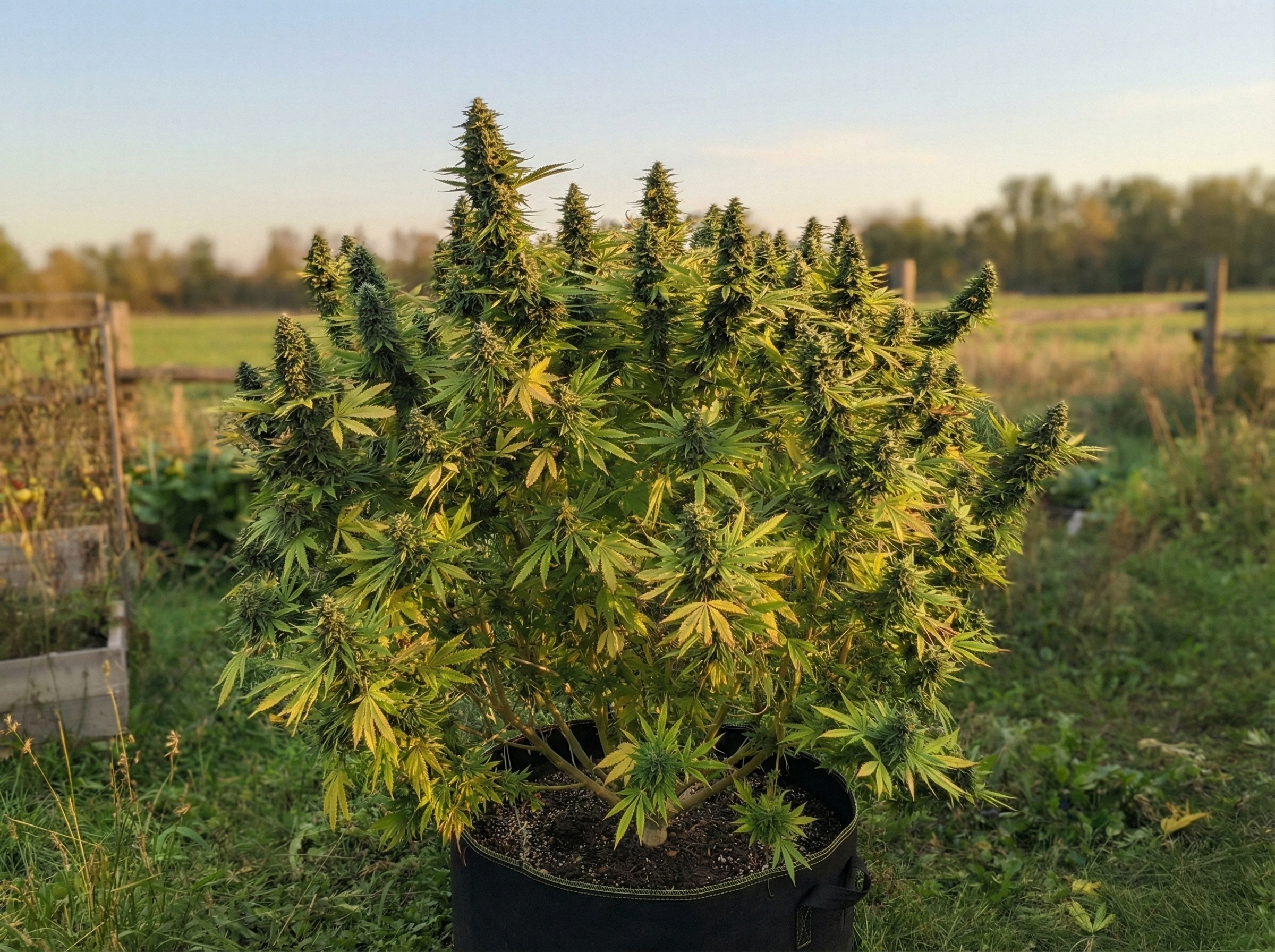
Outdoor Cultivation Realities: When cultivated outdoors in full natural sunlight, Don Mega demonstrates tremendous hybrid vigor, developing into massive, multi-branched bushes measuring six to eight feet in height and six feet across. The plant’s deep, aggressive root architecture excels at scavenging micronutrients from living organic soil beds, producing heavy yields ranging from 750 to over 1200 grams of dense, frosty flower per plant. Outdoor plants benefit from the broad natural light spectrum, developing thicker cuticles, heavier trichome stalks, and an intensely pungent, offensive garlic-fuel bouquet that can be smelled from hundreds of feet away.
However, outdoor cultivation in temperate northern latitudes presents significant biological risks regarding season length and autumn moisture. In regions influenced by cold Great Lakes weather fronts or damp mountain air masses, late September and early October bring sudden, drenching rain squalls, heavy morning dew condensation, and sharp overnight temperature drops into the low 40s. While Black Banana-leaning phenotypes finish relatively early in late September or early October, GMO-leaning selections often demand until mid-to-late October to fully mature their resin glands. Unshielded outdoor colas face extreme risk: cold autumn rains falling on dense, purple-black floral clusters will quickly cause catastrophic botrytis outbreaks. Outdoor cultivators in these regions must install clear polyethylene hoop houses or automated retractable cold-frames to keep rainfall off the ripening colas while maintaining aggressive, uninterrupted lateral airflow.
Hugelkultur
A traditional European horticultural method (literally “mound culture” or “hill culture”) where decaying hardwood logs, fallen branches, and rich plant compost are buried beneath mounded garden soil. As the subterranean timber slowly breaks down over multiple seasons, it functions as a biological moisture sponge, generates gentle geothermal root warmth, and harbors expansive mycorrhizal networks that provide continuous slow-release nutrition to outdoor cannabis canopies.
Strain-Specific Grow Guidance
Don Mega is an elite, high-performance cultivar that rewards experienced, attentive growers with astonishing bag appeal and devastating potency. However, treating this plant like a homogenous, static hybrid will lead to canopy chaos, light burn, and wasted yield potential. The following detailed agronomic directives provide the technical roadmap necessary to navigate Don Mega’s developmental phases with absolute confidence.
Sort the Plants Before the Canopy Becomes Permanent
When cultivating Don Mega from seed, the single most critical operational step is sorting and arranging plants before installing permanent trellis netting. Because the cross unites a runaway stretchy parent (GMO) with a more compact, moderate-stretch parent (Black Banana), individual seedlings will express vastly different vertical trajectories during the first three weeks of 12/12.
Examine leaf morphology and internodal spacing closely during late vegetative growth. Plants displaying wider internodal spacing (2.0 to 2.5 inches), narrower leaf blades, and rapid apical elongation carry heavy GMO dominance and will easily stretch 150% to 190% in flower. Conversely, plants exhibiting tighter internodes (1.2 to 1.5 inches), broader foliage, and thicker mainstems lean toward Black Banana and will stretch a modest 70% to 100%. Position the tall, stretchy GMO phenotypes along the perimeter of your room or beneath adjustable light zones, while placing the compact Black Banana bushes directly beneath the core footprint to create a balanced, uniform canopy.
Use an Early Topping to Reduce Apical Momentum
Don Mega inherits powerful apical dominance from its Chem D lineage, driving the central stem to surge upward at the expense of lower lateral development. Left untopped, the plant will form a colossal, towering central spear that collides with grow lights while leaving the lower branches weak, shaded, and unproductive.
Execute a clean apical topping during the fourth week of vegetative growth when the plant has developed five to six fully formed nodes. Cut the mainstem cleanly just above the fourth node using a sterilized blade. This single, timed intervention breaks apical dominance and redirects root cytokinins into the lower four to six lateral shoots, transforming the plant from a Christmas-tree profile into an open, symmetrical candelabra bush. Allow ten to fourteen days of vegetative recovery for the lateral stems to thicken and lignify before initiating the 12/12 photoperiod.
Flip Earlier Than the Dark Leaves Suggest
A frequent mistake made by cultivators new to Don Mega is judging flip timing based on the dark, broad fan leaves inherited from Black Banana. Because the vegetative foliage often appears thick, broad, and indica-dominant, growers assume the plant will stretch modestly and allow it to veg until it reaches twenty to twenty-four inches in height.
This is a severe operational miscalculation. The moment the lighting cycle shifts to 12/12, the latent GMO genetics ignite, triggering an explosive vertical stretch that can easily triple the plant’s height over the next 21 days. If your room has standard eight-foot ceilings, flip Don Mega to 12/12 when plants are barely twelve to fourteen inches tall. Flipping early ensures that the finished canopy settles comfortably between thirty-six and forty-eight inches, leaving adequate clearance beneath high-intensity lighting fixtures.
Build Support in Two Stages
Mechanical plant support on Don Mega must be engineered proactively in two distinct horizontal tiers. Relying on a single trellis net or staking branches late in bloom will lead to severe branch collapse when the heavy floral colas swell in mid-to-late flower.
Install your primary horizontal trellis net with 3.5 to 4-inch square mesh six to eight inches above the container surface during late vegetative growth, using the grid to train and spread branches horizontally. As the transition stretch accelerates during weeks one and two of bloom, install a secondary horizontal trellis net twelve to fourteen inches above the first. As the heavy colas develop from week five onward, they will lean securely against the upper grid, keeping every terminal spear standing upright directly beneath the light footprint with 360-degree radial air clearance.
Clean the Interior According to Structure
Pruning and interior canopy thinning on Don Mega cannot follow a rigid, one-size-fits-all formula. The two ancestral lineages require customized understory management based on their distinct branch spacing and foliar density.
For compact, wide-leafed Black Banana phenotypes, aggressive interior defoliation is mandatory. Around day 21 of bloom, strip away broad internal solar fan leaves that shade lower bud sites or press against neighboring stems. Removing these thick leaves opens clear airflow pathways through the interior of the bush, dropping internal relative humidity and preventing the stagnant condensation pockets that invite botrytis. Conversely, for airy, long-limbed GMO phenotypes, adopt a more selective touch: strip the lower thirty percent of weak understory sucker shoots (lollipoping), but preserve the upper fan leaves along the stretched branches to drive active transpiration and carbohydrate synthesis throughout the floral bulk phase.
Divide Irrigation by Demand
Because seed populations of Don Mega exhibit substantial morphological divergence, individual plants within the same room will display drastically different transpiration rates and water consumption curves. A towering, 180%-stretched GMO phenotype carrying an expansive leaf surface area will transpire significantly more water daily than a compact, 80%-stretched Black Banana sister.
If running an automated drip irrigation system, do not treat the entire room as a single, uniform irrigation block. Group plants with similar stature and vigor onto separate manifold zones, or adjust individual drip emitter flow rates to match plant demand. Monitor container dry-backs closely: ensure that each plant experiences a 10% to 15% volumetric water content dry-back between irrigation events, preventing smaller plants from becoming over-saturated while keeping larger, thirsty specimens fully hydrated.
Keep Nitrogen Under Control
Don Mega is an aggressive feeder during vegetative growth and early transition, but its appetite for nitrogen drops off precipitously once calyx formation stabilizes in week four. Continuing to supply high nitrogen concentrations into mid-to-late flower will severely compromise final crop quality.
Excessive late-bloom nitrogen keeps foliage dark green, prevents the natural anthocyanin breakdown required for deep purple pigmentation, and interferes with the synthesis of volatile sulfurous thiols, leaving the cured flower tasting like harsh, bitter chlorophyll rather than savory garlic and sweet banana. Transition plants onto a low-nitrogen, high-phosphorus, high-potassium bloom feed (EC 2.0 to 2.4 mS/cm) by day 28 of flower, and eliminate nitrogen entirely during the final three weeks of bloom to encourage a clean, colorful senescence and an ash-white combustion profile.
Harness Blue Photons to Suppress the Chem Stretch
To control the aggressive vertical surge of GMO-leaning phenotypes without relying on chemical plant growth regulators (PGRs), cultivators can use targeted light spectrum manipulation during the first three weeks of 12/12. Incorporating high ratios of deep-blue photons (450 nm) into your lighting spectrum suppresses gibberellin synthesis, the plant hormone responsible for cellular elongation.
Run your full-spectrum LED fixtures with the blue spectrum channels dialed up during weeks one through three of flower, while keeping day and night temperatures within a tight two-degree differential (minimal DIF). This photonic and thermal steering effectively compresses internodal spacing, keeping the surging branches compact and manageable while encouraging earlier floral site initiation.
Manage Extreme Calyx-to-Leaf Ratios
One of the greatest commercial virtues of Don Mega is its phenomenal calyx-to-leaf ratio inherited from both parents. Swollen floral clusters stack continuously along the stems with very few interior sugar leaves, creating dense, contiguous colas that can be manicured with remarkable speed during harvest.
However, this high calyx-to-leaf ratio means that the flower possesses very little internal foliar buffering against intense radiant heat. If high-intensity LED fixtures are hung too close to the canopy, the upper calyx bracts can suffer direct photonic bleaching and thermal degradation long before fan leaves show signs of distress. Maintain a minimum fixture clearance of 18 to 22 inches above the top colas, ensuring that photon flux delivers maximum energy without convective scorching.
Scout for Moisture Traps Inside Purple Colas
The stunning, dark-purple coloration of Don Mega flowers can inadvertently camouflage early signs of fungal infection. On pale green cultivars, early botrytis hyphae produce an obvious, yellowish-brown discoloration that is easily spotted. On Don Mega, however, the deep blackberry and plum calyxes can mask early gray mold mycelium until the infection has compromised the core of the cola.
Cultivators must conduct daily, meticulous physical inspections during weeks seven through ten of flower. Wear clean nitrile gloves and gently part the dense calyx clusters on your largest terminal colas to inspect the internal stem rachis under a bright 5000K inspection light. Look for any limp, water-soaked calyxes or delicate webbing deep within the core. Maintain late-flower relative humidity strictly between 40% and 45% to ensure that the interior of every cola stays bone dry.
Support Heavy Lateral Branches Against Joint Splitting
Because Don Mega develops long lateral branches that extend horizontally before curving upward, the mechanical torque exerted on the branch-to-trunk collar becomes extreme as colas swell in late bloom. The dense calyx weight acting at the end of a long lever arm can easily pry the branch socket completely out of the mainstem.
To prevent catastrophic branch failure, always reinforce lateral branch junctions during early bloom. In addition to horizontal trellis netting, use soft plant ties to anchor opposing lateral branches to each other across the central axis of the plant. This cross-bracing distributes mechanical tension symmetrically across the entire vascular frame, allowing the plant to support massive floral loads without splitting or snapping.
Do not let the stretch make the decisions
The explosive vertical surge of GMO-dominant Don Mega phenotypes during the first three weeks of 12/12 can easily cause novice growers to panic. Watching a plant double in height within fourteen days often triggers chaotic, reactive decisions: slashing off healthy fan leaves, pulling lights dangerously high, or severely cutting back water in an attempt to stunt the plant. Reactive management decisions almost always compromise final yield and plant health.
Instead, anticipate the stretch before it begins and guide it with deliberate horticultural intent. Install your horizontal trellis netting before initiating 12/12. As the vigorous branches surge upward, bend and weave them horizontally through the square grid every two to three days, directing the stretch laterally across empty quadrants of your canopy. By converting vertical momentum into horizontal canopy expansion, you create an even, expansive carpet of flowering tops that maximizes your light footprint.
Do Not Mistake Slow Mid-Flower Density for Hunger
Because Don Mega inherits a protracted flowering curve from its GMO parent, the calyxes can appear deceptively loose and slow to swell during weeks four and five of bloom. Inexperienced growers frequently mistake this genetic pacing for nutritional deficiency, responding by pumping excessive nitrogen and phosphorus into the root zone.
Overfeeding during this phase will not accelerate calyx swelling; it will merely toxify the rhizosphere, cause clawed, nitrogen-toxic leaves, and stall root metabolism. Understand that Don Mega undergoes a dramatic, explosive secondary calyx swell between days 42 and 60. Trust the genetic timeline, maintain balanced, moderate electrical conductivity (EC 1.8 to 2.1 mS/cm), and allow the plant to initiate its natural swelling phase without forcing toxic salt buildups.
Keep the Transition Environment Boring
The transition from vegetative growth into generative bloom is the most hormonally volatile window in Don Mega’s lifecycle. During these critical three weeks, introducing environmental chaos – such as wild temperature fluctuations, irregular irrigation schedules, or erratic humidity swings – will trigger excessive internodal elongation and increase the risk of hermaphroditic pre-flowers.
Maintain an exceptionally stable, predictable indoor environment during weeks one through three of 12/12. Keep daytime temperatures rock-solid at 77 to 78 degrees Fahrenheit and night temperatures at 72 to 74 degrees Fahrenheit. Maintain relative humidity at 60% to 65% (VPD: 1.0 to 1.15 kPa), and deliver consistent, metered irrigations at the same time each morning. A steady, predictable microclimate signals to the plant that conditions are optimal, allowing it to transition smoothly into heavy flower production without stress.
Separate Aroma Development From Odor Volume
Don Mega begins producing overwhelming, room-saturating odors as early as week three of flower. The raw volume of sulfurous garlic and chemical gas can convince a cultivator that the crop is nearing peak chemical maturity weeks before it is actually ready. Do not confuse sheer odor volume with refined aromatic complexity.
While the offensive garlic and rubber notes ignite early, the nuanced layers of sweet banana, dark blackberry, and creamy parmesan only synthesize during the final fourteen days of bloom, when nighttime temperatures drop and anthocyanins flourish. Chopping plants based on early odor intensity will leave you with a one-dimensional, harsh-tasting flower that lacks the intoxicating dessert-and-gas contrast that defines genuine top-tier Don Mega.
Plan the Final Irrigations Around Different Finish Dates
When cultivating Don Mega from seed, running the entire room on a single, uniform ripening schedule will inevitably ruin half the crop. Because Black Banana-dominant phenotypes finish at day 60 to 63, while GMO-dominant phenotypes thrive until day 70 to 75, their final irrigation cycles must be managed independently.
Segregate your plants onto separate irrigation lines or hand-water individual specimens during late flower. Initiate your gentle ripening water-down on the early-finishing Black Banana phenotypes around day 50, allowing them to exhaust their stored nutrient reserves and achieve a clean, ash-white combustion profile by day 63. Meanwhile, continue providing balanced ripening nutrition (EC 1.2 to 1.4 mS/cm) to the long-running GMO phenotypes until day 60, only initiating their final clean water transition during their final ten to twelve days. Matching the ripening protocol to each phenotype’s biological clock guarantees optimal flavor and burn quality across the entire harvest.
Harvest Phenotypes Separately
Executing a single, simultaneous harvest chop across a room of seed-grown Don Mega will compromise crop quality. Harvesting the entire room at day 63 will produce phenomenal Black Banana buds, but the GMO-dominant plants will be harvested prematurely, resulting in thin, underdeveloped calyxes, clear trichomes, and a grassy, unrefined smoke. Conversely, waiting until day 72 to harvest everything will result in over-ripened, degraded trichomes and sleepy CBN conversion on the early-finishing plants.
Execute a staged, multi-tier harvest protocol. At day 60 to 63, harvest the fully matured Black Banana phenotypes that display 90% cloudy trichomes and deep purple calyxes. Clear these plants from the room, allowing the remaining GMO-leaning selections to enjoy direct photon exposure and maximum air circulation for an additional seven to twelve days. When their glandular trichome heads turn uniformly milky with 10% to 15% amber around day 70 to 72, chop and hang them. Staged harvesting ensures that every single flower reaches its absolute biological peak.
Weedth Bud Flavor Tips
Preserving the astonishingly complex savory-sweet bouquet of Don Mega – the delicate balance between offensive garlic gas, sweet caramelized banana, and creamy dark berries – requires an uncompromising, disciplined approach to post-harvest processing. The volatile organic sulfur compounds (thiols) and monoterpenes responsible for this unique profile possess low boiling points and will rapidly volatilize if exposed to warm, dry, or rushed processing conditions.
The Whole-Plant Cold Hang (60/60 Rule): The single most critical phase of flavor preservation is the dry-down. Cut whole plants at the base of the mainstem and suspend them upside down in a dedicated, completely dark drying environment maintained strictly at 60 degrees Fahrenheit (15.5 degrees Celsius) and 60% relative humidity. Never wet-trim. Leaving all fan leaves and sugar leaves intact during the hang creates a natural protective envelope around the swelling calyxes, slowing water loss from the inner floral rachis and allowing internal starches, nitrates, and chlorophyll to enzymatically degrade over a slow, controlled 14 to 18-day period.
Maintain gentle, continuous air movement within the room using a low-velocity oscillating fan pointed away from the plants, ensuring that air circulates around the room without blowing directly on the hanging branches. The drying process is complete only when the smaller secondary stems snap crisply when bent, while the thick mainstem retains a fibrous, pliable resistance without breaking.
Precision Cold Curing and Thiol Stabilization: Once dry, hand-trim the colas carefully, preserving the dense, frosty sugar-leaf collars that protect the capitate-stalked glandular trichomes. Place the manicured buds into airtight, food-grade glass curing jars, filling each jar to roughly seventy-five percent capacity to maintain an essential oxygen pocket. Store the jars in a pitch-black curing cellar held at 58 to 62 degrees Fahrenheit.
During the first two weeks, burp the jars once daily for ten minutes to release accumulated carbon dioxide and moisture, utilizing mini-hygrometers inside each jar to verify that relative humidity remains locked between 58% and 62%. After the initial fourteen days, reduce burping to once a week. While Don Mega is delightfully pungent after three weeks, a full six to eight-week cold cure allows the sharp chlorophyll tannins to completely evaporate, elevating the sharp Meyer lemon zest, raw conifer pine, and acrid kerosene gas into an astonishingly rich, silky, room-saturating smoke.
Weedth Bud Boost Tips
Cultivators seeking to unlock the absolute maximum resin density, calyx swelling, and chemical potency of Don Mega can implement advanced physiological steering techniques during vegetative and flowering phases.
Sulfur Supplementation for Thiol Synthesis: The offensive, pungent garlic and allium aroma that makes Don Mega so wildly popular is driven by volatile organic sulfur compounds (VOSCs) known as thiols. To maximize the synthesis of these aromatic molecules, provide supplemental bio-available sulfur during weeks two through six of flower. Incorporating magnesium sulfate (Epsom salt) or potassium sulfate into your feeding regimen delivers the essential sulfur atoms required by the plant’s enzymatic pathways to synthesize thiols, transforming your garden into an undeniable, room-clearing garlic factory.
High Photon Flux and Carbon Dioxide Synergy: Don Mega possesses an exceptionally high photosynthetic ceiling inherited from its Chem D and Kush ancestors. Under high-output LED fixtures, push canopy photon flux density to 1000 to 1100 micromoles per square meter per second during weeks four through seven of flower, while supplementing carbon dioxide at 1100 to 1300 ppm. This powerful combination accelerates photosynthetic carbon assimilation, swelling the dense calyx clusters into rock-hard cylinders while pushing THC percentages past the 28% threshold.
Late-Bloom Anthocyanin Thermal Shock: To unlock the breathtaking obsidian-black and deep-purple pigmentation inherited from Black Banana, introduce a controlled thermal night drop during the final fourteen days of bloom. Hold daytime canopy temperatures at 73 to 75 degrees Fahrenheit, and drop nighttime room temperatures to 58 to 62 degrees Fahrenheit. This crisp temperature differential activates the plant’s anthocyanin synthesis pathways without stressing the vascular root system, turning the foliage and calyxes dark violet while locking volatile monoterpenes securely within the glandular trichome heads.
Medical Uses & Benefits
In clinical medical cannabis applications, Don Mega represents a formidable therapeutic powerhouse. Because the cultivar synergizes substantial THC potency (regularly testing between 24% and 29%) with an exceptionally rich concentration of beta-caryophyllene, d-limonene, beta-myrcene, and alpha-humulene, it delivers multifaceted physiological and psychological relief that outperforms conventional single-molecule treatments for severe, intractable conditions.
Severe Chronic Pain and Intractable Musculoskeletal Spasticity: The exceptionally high concentration of beta-caryophyllene operates as a potent, selective agonist of peripheral CB2 receptors, directly inhibiting the cascade of pro-inflammatory cytokines at the tissue level. Simultaneously, the abundant myrcene relaxes skeletal muscle fibers, while THC modulates central pain perception pathways within the spinal cord and thalamus. Patients suffering from chronic neuropathic pain, severe sciatica, lumbar disc herniation, fibromyalgia, and muscle spasms associated with multiple sclerosis experience rapid, sustained somatic relief within minutes of consumption, allowing physical tension to release completely.
Intractable Insomnia and Sleep Architecture Restoration: Don Mega is widely regarded by clinical herbalists and medical dispensaries as one of the most reliable botanical sleep aids available. The synergistic interplay between high THC and concentrated myrcene exerts powerful sedative effects on the central nervous system, significantly shortening sleep-onset latency. Patients who struggle with chronic sleep-maintenance insomnia report that consuming Don Mega 45 to 60 minutes before bed prevents middle-of-the-night awakenings and facilitates deep, restorative slow-wave sleep cycles, without the groggy, disorienting hangover associated with prescription pharmaceutical sedatives.
Severe Nausea, Appetite Loss, and Cachexia: The heavy Chem D and GSC ancestry makes Don Mega a legendary stimulator of the human endocannabinoid system’s orexigenic (appetite-inducing) pathways. Patients undergoing chemotherapy, individuals taking antiretroviral medications, or those suffering from Crohn’s disease, ulcerative colitis, or severe anorexia find that Don Mega swiftly settles gastric nausea, eases abdominal cramping, and stimulates a robust, enthusiastic appetite for wholesome nutrition.
Post-Traumatic Stress (PTSD) and Severe Anxiety: While high-THC sativas can sometimes exacerbate panic symptoms, the grounding, limonene-and-myrcene-rich matrix of Don Mega delivers a serene, warm euphoria that effectively dampens hyperactivity in the amygdala. Veterans and trauma survivors report significant reductions in acute anxiety, intrusive flashback ideation, and chronic hypervigilance, providing a safe, tranquil psychological sanctuary during evening hours.
Ideal User Profile
Don Mega is a potent, specialized cultivar tailored for specific cannabis consumers and patients who require serious pharmacological horsepower and bold, unconventional terpene profiles.
The Savory Terpene Connoisseur: If you are a connoisseur who has grown weary of the saturated market of fruity, candy-flavored hybrids and yearns for the raw, offensive funk of old-school alliums, Don Mega is your holy grail. It delivers an unforgettable, room-clearing profile of sauteed garlic, sharp onions, chemical diesel, and aged cheese, beautifully balanced by sweet overripe banana cream.
The High-Tolerance Evening Patient: Individuals whose cannabinoid tolerance has rendered mild hybrids ineffective will find a deeply satisfying ally in Don Mega. Its high THC ceiling and concentrated myrcene and caryophyllene content cut through tolerance barriers with authority, delivering reliable somatic sedation and pain relief after long, physically demanding days.
The Solventless Hash Artist: Rosin extractors prize Don Mega for its massive, greasy capitate-stalked glandular trichomes. The trichome heads detach cleanly during ice-water agitation, producing staggering yields of 90u to 120u live bubble hash that presses into translucent, terpene-bleeding live rosin smelling of pungent garlic bread and sweet tropical fuel.
The Disciplined Craft Cultivator: This cultivar is distinctly not suited for novice growers looking for an easy, low-maintenance houseplant. Don Mega belongs in the garden of an attentive, experienced cultivator who takes pride in installing multi-tiered trellising, dialing in precision crop steering, and managing dense floral microclimates with surgical precision.
Grower Notes and Feedback
Synthesizing cultivation logs, forum discussions, and operational feedback from dozens of commercial and craft cultivators reveals several critical takeaways and shared experiences regarding Don Mega.
The Phenotypic Divide: Across every cultivation journal, the most frequently cited challenge is managing the morphological divergence between the two parents. Cultivators who run unselected seed packs consistently report height disparities of twelve to eighteen inches between plants. Commercial operations that succeed invariably run an initial pheno-hunt to isolate a single mother plant that combines the rapid 63-day finish and dark purple coloration of Black Banana with the offensive garlic stench and high yield of GMO.
Substrate Response – Coco vs. Living Soil: Growers running automated high-frequency fertigation in coco coir reported the fastest vegetative growth rates and the highest raw flower biomass, with yields easily exceeding 550 grams per square meter. However, craft cultivators running amended living organic soils with diverse volcanic rock dusts and compost teas consistently noted a more layered, complex terpene profile, with the savory garlic and sweet banana notes expressing far greater nuance and smoothness on the palate.
The Week-Eight Swell: Experienced cultivators caution against the temptation to harvest at eight weeks. Multiple commercial lab tests demonstrate that Don Mega packs on up to fifteen percent of its final dry floral weight between days 56 and 65, while total terpene concentrations surge during the final ten days as nighttime temperatures are dropped into the lower 60s.
Weedth Editor's Note
Don Mega is one of the most audacious and unforgettable achievements in contemporary American cannabis breeding. In an era where so many cultivars blur together into interchangeable candy and berry profiles, walking into a curing room filled with Don Mega is an exhilarating slap in the face. It smells like an Italian kitchen collided with a petrochemical refinery and an artisanal cheese cellar: offensive, intoxicating, and completely impossible to ignore.
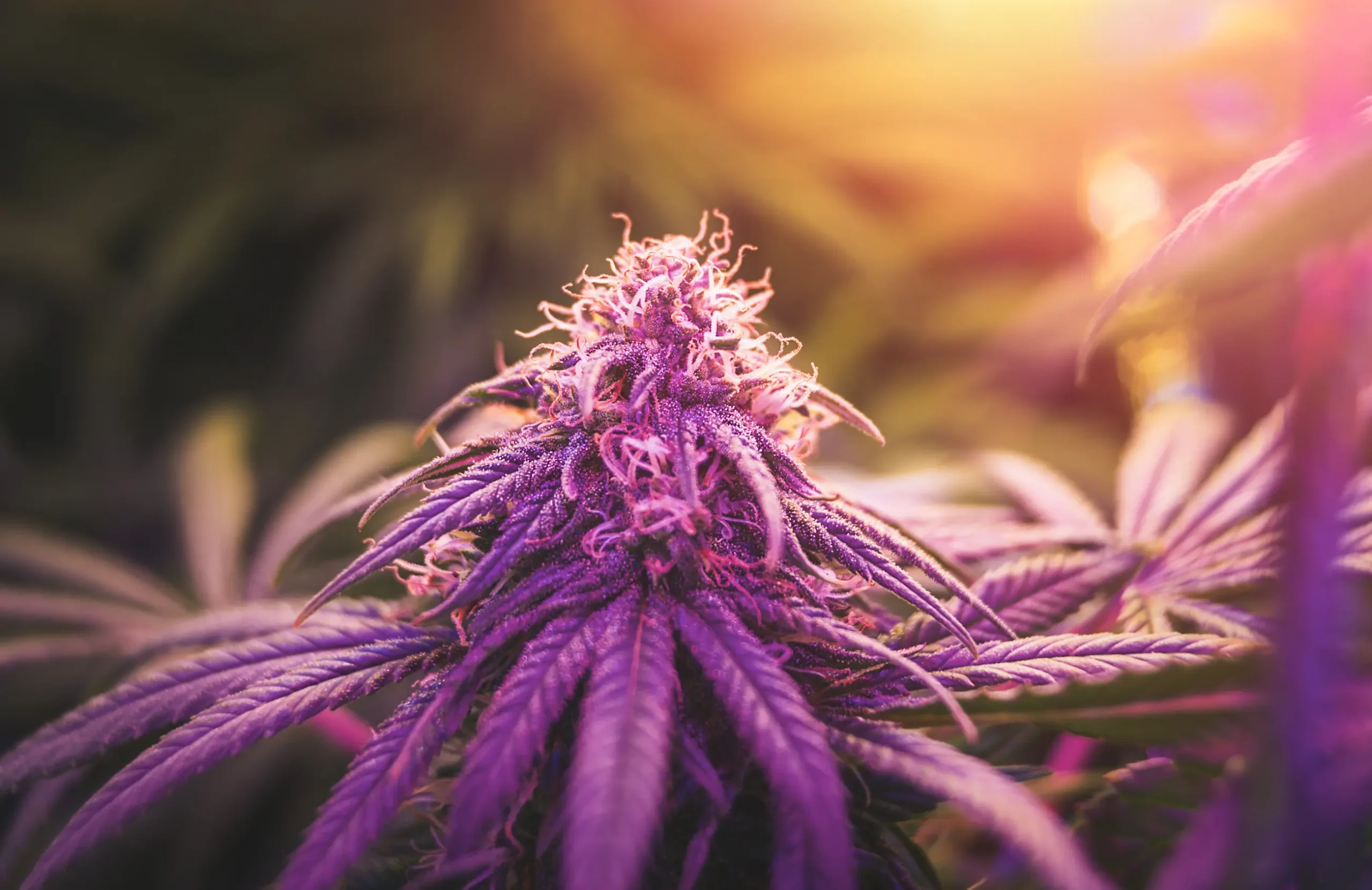
What impresses me most about this cultivar is the sheer visual drama of its flowers. When finished under cool night temperatures, the calyxes turn an obsidian, oil-slick purple that contrasts breathtakingly against shimmering, diamond-like trichome heads and fiery rust-orange stigmas. It possesses that rare, magnetic bag appeal that stops everyone in their tracks, backed by a crushing, authentic medicinal horsepower that leaves no doubt about its elite pedigree.
What this cultivar asks from the room
If you choose to cultivate Don Mega, the fundamental operational bargain you must accept is proactive canopy architecture management and rigorous late-bloom environmental control. This is not a plant that will politely stay in its lane: if you fail to install a rigid horizontal trellis net before the flip, its vigorous Chem stretch will create an unruly, unmanageable jungle that overtakes your light footprint.
Similarly, because its finished flowers swell into dense, contiguous batons that trap humidity, you must possess the dehumidification infrastructure to clamp room relative humidity down to 40% during the final three weeks of flower. If you can provide structural support, low late-flower humidity, and the patience to execute a true 14-day cold dry, Don Mega will reward you with the most potent, conversation-stopping jars in your entire private reserve.
Weedth Score
Growing Experience 8.8/10 An exhilarating, high-performance cultivation project. While the phenotypic stretch divergence demands proactive trellising and attentive irrigation steering, the plant responds with ferocious vigor to high light intensity, CO2 supplementation, and precision microclimate controls.
Bud Structure & Visual Appeal 9.7/10 Absolute world-class bag appeal. Heavy, rock-hard floral clusters feature heavily stacked calyxes encrusted in a shimmering, diamond-like blanket of capitate-stalked glandular trichomes, set against dramatic obsidian-purple and dark plum foliage.
Aroma Complexity 9.8/10 One of the most extraordinary and provocative terpene profiles in modern botany. An unforgettable, room-saturating collision of sauteed garlic cloves, sharp alliums, chemical diesel fuel, burnt rubber, overripe banana cream, and aged parmesan cheese.
Flavor & Smoothness 9.4/10 Unmatched savory-sweet complexity. The inhale coats the palate with rich garlic bread and pungent fuel, transitioning into a sweet caramelized banana, dark berry, and creamy hash finish that lingers deliciously on the tongue for minutes after the exhale.
Effects & High Experience 9.6/10 Devastating pharmacological authority. Delivers an immediate wave of warm cerebral euphoria and sensory enhancement, before rapidly cascading into an all-encompassing, deeply sedative somatic body melt that dissolves muscle tension and anchors the user in profound relaxation.
Medicinal Potential 9.8/10 Clinical-grade therapeutic efficacy for severe chronic pain, intractable insomnia, musculoskeletal spasticity, migraine headaches, and acute PTSD. The powerful synergy of high THC and concentrated caryophyllene and myrcene provides profound relief.
Overall Satisfaction & Recommendation 9.5/10 An absolute essential cornerstone cultivar for savory gas lovers, solventless hash extractors, and medical patients seeking heavy-duty evening relief. Demands strict environmental controls and a patient cold cure, but delivers unmatched top-shelf excellence.
Personal closer: If I were forced to choose a single modern cultivar to impress a table of seasoned old-school growers who claim modern weed has no character, I would set down a jar of Don Mega and let the room clear itself.
FAQ
What is Don Mega’s lineage?
Don Mega is an elite, high-potency hybrid created by Solfire Gardens in the Pacific Northwest. It is bred by crossing the notorious clone-only GMO (Garlic Cookies: Chem D x Forum GSC) mother with Solfire’s proprietary Black Banana (Banana Fire Cookies x Blackberry Kush) stud. This pairing unites the offensive, room-clearing garlic-diesel pungency and extreme stretch of GMO with the dense, dark-purple calyxes and sweet banana-cream notes of Black Banana.
How much does Don Mega stretch?
Don Mega exhibits a powerful, phenotype-dependent transition stretch, typically surging between 120% and 190% in vertical height during the first 21 days of 12/12. A plant flipped to flower at twelve inches tall will comfortably reach thirty to thirty-six inches before vertical growth stabilizes. Cultivators must anticipate this vertical momentum by flipping plants early and installing horizontal trellis netting to weave branches horizontally.
How long does Don Mega flower?
Flowering duration on Don Mega ranges from 63 to 72 days (9 to 10.5 weeks) depending on which parental lineage dominates each plant. Phenotypes leaning heavily toward Black Banana finish rapidly between days 60 and 63, while GMO-dominant selections require 70 to 72 days to fully mature their capitate-stalked glandular trichomes. Always verify trichome maturity with a jeweler’s loupe before harvesting.
Does Don Mega need topping?
Yes, Don Mega requires early apical topping to control its powerful apical dominance. Without topping, the Chem D genetics will drive the central stem into a single, towering spire that overtakes grow lights while starving lower lateral branches. Top the mainstem once cleanly above node four or five during week four of vegetative growth, allowing ten to fourteen days of recovery before flipping to 12/12.
Is Don Mega suitable for SCROG?
Screen of Green (SCROG) is the absolute best cultivation methodology for Don Mega. Because the branches are vigorous, flexible, and prone to stretching during early bloom, weaving shoots through a horizontal trellis net breaks apical dominance, distributes photons evenly across dozens of uniform floral crowns, and provides permanent structural scaffolding that prevents heavy colas from collapsing later in bloom.
Does Don Mega need heavy feeding?
Don Mega is a heavy feeder during its peak calyx-building phase (weeks four through seven of flower), capable of handling electrical conductivity (EC) levels of 2.1 to 2.5 mS/cm under intense LED lighting with carbon dioxide enrichment (1100 to 1300 ppm). However, nitrogen inputs must be dropped sharply after week four; excess late-bloom nitrogen interferes with anthocyanin synthesis, stalls the purple fade, and produces a harsh, grassy smoke.
Why is one Don Mega plant much taller than another?
Significant height disparities between plants are a natural result of genetic segregation when growing Don Mega from seed. The cross combines an extreme, stretchy 200%+ sativa-like grower (GMO) with a more compact, moderate-stretch indica hybrid (Black Banana). Plants that inherit GMO dominance will stretch nearly twice as much as their Black Banana-dominant sisters. Sorting plants before installing trellis netting allows you to position taller plants along room edges and shorter bushes directly under fixture centers.
Is Don Mega prone to bud rot?
Yes, the dense, tightly packed calyx clusters of Don Mega are highly susceptible to Botrytis cinerea (gray mold) during late flowering if ambient relative humidity exceeds 50%. The tightly clustered calyxes trap humidity transpired by the central stem. Cultivators must drop late-bloom humidity to 40% to 45% and maintain continuous, diffuse oscillating airflow both above and beneath the canopy.
Why does Don Mega taste mostly like garlic?
The dominant garlic and allium flavor is driven by high concentrations of volatile organic sulfur compounds (thiols) inherited directly from the Chem D side of its GMO parent. When dried and cured properly, these savory thiols blend with sweet, creamy banana esters. However, if plants are harvested prematurely or dried in excessively hot environments, the delicate sweet banana monoterpenes volatilize, leaving only the heavier, more pungent garlic and diesel notes behind.
Is Don Mega a daytime strain?
No. Don Mega is strictly an evening or late-night cultivar. While the initial twenty minutes provide a tranquil, euphoric cerebral lift, the high rapidly transitions into an overwhelmingly heavy, narcotic somatic body stone that immobilizes muscles, dissolves mental ambition, and induces deep, restorative sleep. Consuming it during daytime hours will severely impair productivity.
Does Don Mega need support?
Absolute structural support is mandatory. As the flowers enter their secondary swelling phase from week six onward, the physical weight of each terminal cola multiplies rapidly. Because lateral branches remain relatively slender and flexible, unsupported plants will bow, splay outwards, and split at the main trunk. Dual-tier horizontal trellis netting or sturdy individual bamboo staking is essential.
Can Don Mega grow outdoors?
Yes, Don Mega thrives outdoors in sunny, Mediterranean climates with warm, dry autumns, yielding 750 to 1200+ grams per plant. However, in cooler northern temperate zones where cold autumn rain squalls and 40-degree Fahrenheit night dews arrive in early October, the dense purple colas must be sheltered beneath clear polyethylene cold-frames or hoop houses to keep precipitation off the swelling flowers.
How do I get Don Mega to turn purple?
Don Mega carries strong genetic anthocyanin potential inherited from Black Banana and Blackberry Kush. To fully activate these pigments, introduce a controlled 12 to 15-degree temperature drop during the final fourteen days of bloom: hold daytime canopy temperatures at 73 to 75 degrees Fahrenheit, and drop nighttime room temperatures to 58 to 62 degrees Fahrenheit. This natural thermal differential triggers deep obsidian-purple and blackberry coloration without shocking the root zone.
Is Don Mega good for making hash?
Don Mega is widely celebrated as one of the single greatest solventless hash cultivars in modern cannabis. The flowers are covered in massive, greasy capitate-stalked glandular trichomes with brittle neck collars that detach effortlessly during ice-water agitation. It regularly produces staggering 5% to 7% fresh-frozen wash yields of 90u to 120u live bubble hash, which presses into exceptionally aromatic, garlic-banana live rosin.
How do I preserve Don Mega flavor after harvest?
Preserving the savory garlic and sweet banana complexity requires a strict low-temperature protocol: hang whole plants upside down in complete darkness at 60 degrees Fahrenheit and 60% relative humidity for 14 to 18 days until smaller stems snap crisply. Never wet-trim. Once dry, manicured buds should be transferred into airtight glass jars stored at 58 to 62 degrees Fahrenheit and cold-cured for a minimum of four to six weeks, burping daily for the first two weeks.
Similar Strains
| Cultivar | Genetic Lineage | Aroma & Flavor Profile | Flowering Time | Primary Grower Difference |
|---|---|---|---|---|
| Don Mega | GMO x Black Banana | Sauteed garlic, chemical gas, overripe banana, cheese | 9 to 10 weeks | Unique savory-sweet contrast; extreme frost and dark purple pigmentation |
| GMO (Garlic Cookies) | Chem D x Forum GSC | Pungent garlic cloves, rotten onion, burnt rubber, earth | 10 to 11.5 weeks | Much longer flowering duration; taller, more unmanageable 200%+ stretch |
| Banana OG | Ghost OG x Sagmatha 60/40 Banana | Overripe tropical banana, sweet citrus, pine, fuel | 8 to 9 weeks | Pure fruit-forward profile without the savory garlic thiols; more compact structure |
| Grease Monkey | Gorilla Glue #4 x Cookies and Cream | Skunky fuel, sweet vanilla cream, earthy cocoa, gas | 8.5 to 9.5 weeks | Higher pine and chocolate sweetness; slightly more uniform vegetative growth |
| Modified Grapes | GMO x Purple Punch | Garlic gas, sweet artificial grape candy, damp earth | 9 to 10 weeks | Grape candy instead of banana cream; slightly lighter somatic sedation |
Don Mega vs. GMO (Garlic Cookies): While Don Mega inherits the core of its pungent, offensive garlic-and-chemical identity from its GMO mother, it represents a far more domesticated and cosmetically striking plant in the grow room. Pure GMO is notorious for its grueling 75 to 80-day flowering cycle, lanky, unruly vine-like stretch, and pale green, foxtailed bract structure. Don Mega infuses the Black Banana lineage, cutting seven to ten days off the flowering cycle, tightening internodal spacing, and coating the dense, rock-hard calyxes in breathtaking obsidian-purple hues. Furthermore, Don Mega introduces a sweet, tropical banana-cream layer that creates an astonishing savory-sweet contrast missing in pure GMO.
Don Mega vs. Banana OG: Banana OG represents the classic California expression of tropical fruit and fuel, combining the legendary pine-lemon gas of Ghost OG with sweet, caramelized banana aromatics. However, Banana OG is an exclusively sweet and gassy cultivar that lacks the shocking savory allium complexity found in Don Mega. In the garden, Banana OG exhibits a more traditional, modest OG stretch, whereas Don Mega displays significantly more aggressive vegetative vigor, higher trichome density, and a dramatically darker purple late-flower fade.
Don Mega vs. Grease Monkey: Exotic Genetix’s Grease Monkey (GG4 x Cookies and Cream) shares Don Mega’s reputation for astronomical resin production, heavy bag appeal, and devastating evening sedation. However, while Grease Monkey leans into a rich, sweet blend of petroleum skunk, chocolate cookie dough, and creamy vanilla, Don Mega is far more savory, pungent, and polarizing. Cultivators who prioritize commercial ease and universal flavor appeal will often lean toward Grease Monkey, whereas connoisseurs and solventless hash extractors seeking rare, boundary-pushing funk will choose Don Mega every time.
Don Mega vs. Modified Grapes: Symbiotic Genetics’ Modified Grapes takes a very similar breeding approach to Don Mega, crossing the raw garlic funk of GMO with an anthocyanin-rich, sweet fruit pollinator (Purple Punch). While Modified Grapes delivers a delightful collision of garlic gas and sweet artificial grape soda, Don Mega provides a richer, more complex mid-palate driven by ripe tropical banana, parmesan cheese, and dark blackberries. In the garden, Don Mega produces significantly denser floral clusters and heavier dry flower biomass than Modified Grapes, making it a more productive asset for commercial cultivators.
Share this article
A quick overview of the topics covered in this article.
Follow us
Latest articles
October 25, 2026
October 25, 2026
October 25, 2026