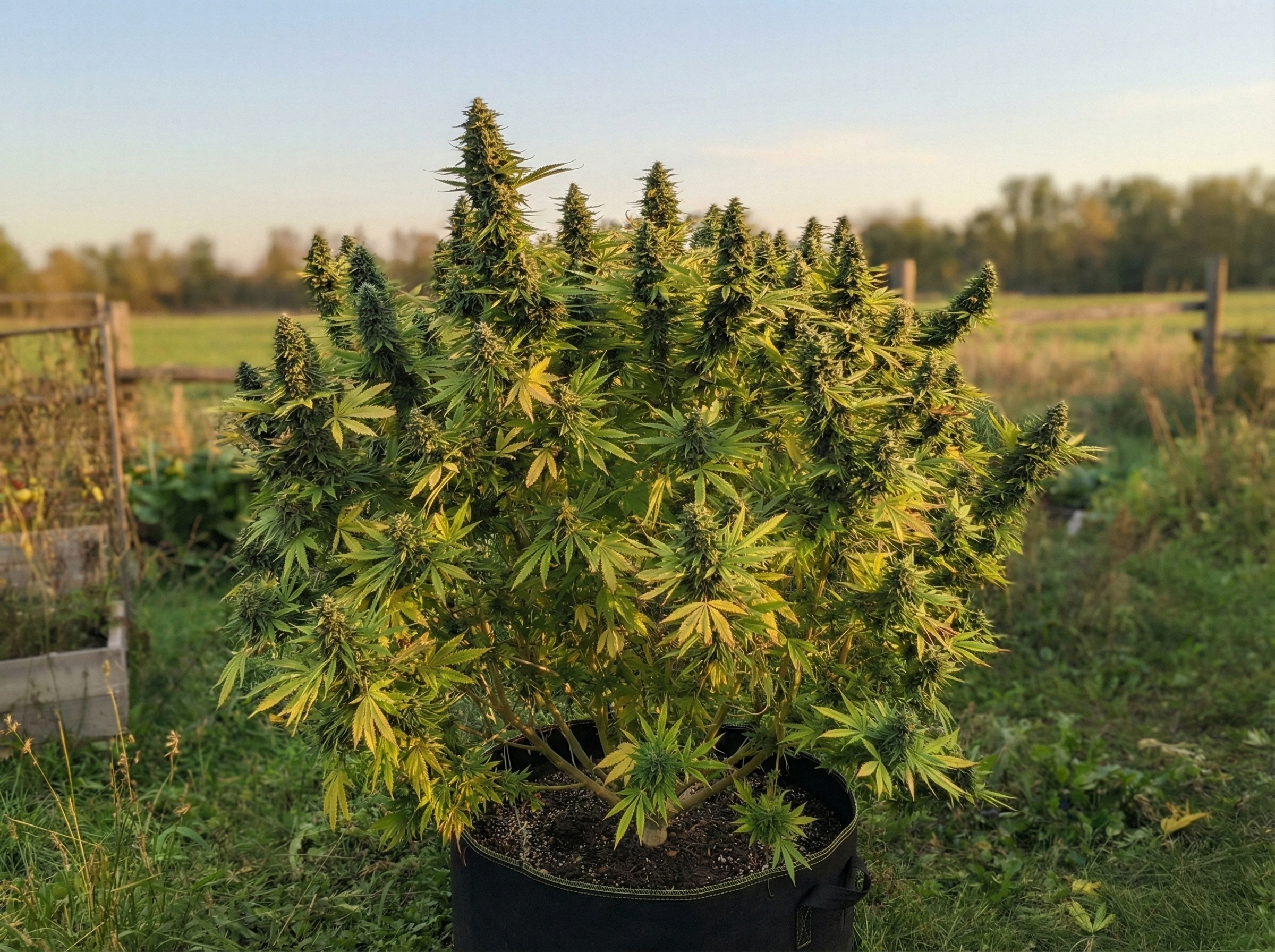
Outdoor Cannabis Near the Coast: Salt, Wind, and Humidity
Outdoor cannabis can grow successfully near the coast, but a coastal site is not simply an inland garden with more wind. The plant may be exposed to airborne salt spray, persistent onshore wind, high nighttime humidity, fog, saline irrigation water, storm surge, and sandy or salt-affected soil at the same time. These pressures interact, but they should not be diagnosed as one generic “coastal stress” problem.
The practical decision is whether you can place the garden where salt deposition is limited, wind is filtered rather than blocked, morning drying is reliable, and the root zone receives low-salt water with enough drainage to prevent accumulation. A site only a short distance farther inland or behind a porous shelter can behave very differently from an exposed ocean-facing corner.
This resource uses a simple coastal framework: separate what lands on the leaves from what accumulates around the roots, then measure how wind and humidity change the recovery time. That approach prevents common mistakes such as treating salt scorch as nutrient deficiency, building a solid wind wall that creates turbulence, or responding to humid weather by keeping the root zone permanently dry.
Quick Definition
Salt spray is aerosolized seawater carried inland by wind. It can deposit sodium and chloride directly on leaves, stems, flowers, structures, and soil. Foliar exposure is different from root-zone salinity caused by irrigation water, saline soil, or saltwater inundation.
In This Resource
- Start With the Coastal Stress That Actually Reaches Your Garden
- Map Salt Spray, Onshore Wind, Humidity, and Water Sources
- Build Shelter That Filters Wind Without Trapping Moist Air
- Keep Sodium and Chloride Out of the Root Zone
- Carry Flowering Plants Through Fog, Dew, Salt Events, and Coastal Storms
- Diagnose Salt, Wind, and Moisture Injury Before Correcting It
- Commission the Site and Run a Weekly Coastal-Garden Routine
Start With the Coastal Stress That Actually Reaches Your Garden
“Near the coast” covers very different environments. A sheltered garden several kilometers inland may receive humid marine air but almost no direct salt spray. A cliff-top garden can receive strong onshore wind and aerosol salt while remaining well drained. A low coastal property may have excellent wind protection but a shallow water table or a well affected by saltwater intrusion. A tropical shoreline may stay warm and humid for long periods, while a cool marine coast may combine fog, cold nights, and slow flower drying.
Before buying screens, changing soil, or selecting irrigation hardware, identify which of four coastal pathways actually reaches the planting area: foliar salt deposition, mechanical wind exposure, persistent canopy moisture, and root-zone salinity. You may have one, two, or all four.
Coastal Exposure Changes With the Weather, Not a Fixed Distance From Shore
There is no reliable rule that says a garden becomes “safe” a certain number of meters or miles inland. Breaking surf, wind speed, wind direction, shoreline orientation, elevation, dunes, vegetation, buildings, and storm intensity all affect aerosol transport. A garden close to sheltered water can receive less direct salt than a more distant site aligned with an exposed onshore wind corridor.
Season matters too. A property may look clean through calm summer weather and then receive obvious salt injury during a sequence of strong autumn onshore winds. Treat coastal exposure as an event-driven variable. Keep notes after the weather that actually transports marine aerosol rather than deciding from a map alone.
This is especially useful when evaluating a new property. Ask what happens during the strongest regular onshore weather, not only what the garden feels like on a pleasant day. Long-term residents, coastal landscape damage, corrosion patterns on metal, and the condition of windward vegetation can all add context before the first cannabis plant goes outside.
Foliar Salt Exposure Has a Windward Pattern
Salt spray damage often appears first on the side of the plant facing the ocean or the dominant onshore wind. Sodium and chloride deposited on foliage can draw water from tissues and contribute to marginal or tip burn, desiccation, premature leaf loss, and reduced growth. Nearby salt-sensitive landscape plants can provide useful clues because exposed windward leaves may show more scorch than protected leeward leaves.
That pattern matters because root-zone salinity tends to be more uniform through the plant when the entire root system is affected. A sharply one-sided symptom that follows the prevailing wind deserves a salt-spray and wind investigation before you change fertilizer.
Wind Stress Is More Than Broken Branches
Strong wind increases mechanical load, increases transpiration when the air is dry enough, strips boundary-layer protection from leaves, moves salt farther inland, and can make containers unstable. Repeated coastal wind can also produce rubbing damage where branches touch stakes, trellis lines, fences, or each other.
Wind is not always harmful. Moderate airflow helps a wet canopy dry after fog, dew, or rain. The goal is therefore not zero wind. The goal is filtered airflow without damaging gust exposure.
Humidity Changes the Drying Window
Marine air can keep nighttime relative humidity high and push air temperature close to the dew point. Fog and low cloud can add free moisture without measurable rainfall. In late flower, dense inflorescences may remain humid after the surrounding air has started to dry. Cannabis research has shown that humidity inside dense flowers can be substantially higher than ambient readings, especially in the morning.
This is why coastal growers should record morning dry-down time, not only daily maximum RH. If flowers stay damp until late morning because the site is shaded or over-sheltered, the disease environment may be more important than the weather app suggests.
Root-Zone Salinity Is a Separate Exposure Route
Salt can reach the root zone through irrigation water, saline wells, storm surge, tidal flooding, contaminated runoff, sea spray deposited repeatedly on soil, or fertilizers added to an already salty medium. Salinity makes it harder for roots to take up water and can create nutrient imbalance. Sodium can also degrade soil structure in susceptible soils.
Controlled cannabis and hemp studies confirm that increasing NaCl can reduce growth, yield, physiology, and cannabinoid concentration, but those experiments used specific cultivars and root-zone systems. They do not provide one universal outdoor coastal threshold. Use them as evidence that salt matters, not as a reason to copy hydroponic NaCl limits into a garden.
Grower Question
“My garden is about a mile from the ocean, but I never see visible salt on the leaves. Should I still assume salt spray is a major problem?”
Question sent by: CoastalCanopy, via email.
No. Distance alone does not define exposure. Wind direction, shoreline shape, dunes, buildings, vegetation, elevation, storms, and local shelter all change how much salt reaches the site. Look for windward injury patterns, compare exposed and sheltered zones, and test water and soil if root-zone salinity is a concern.
Map Salt Spray, Onshore Wind, Humidity, and Water Sources
A coastal garden should be mapped before it is planted because exposure can change sharply across a small property. One corner can sit in a wind tunnel between buildings while another remains protected behind vegetation. A wall may stop direct salt spray but create turbulence over the top. A hedge may reduce salt load yet hold humid air around a dense plant. The best planting position is usually the location where these tradeoffs are visible and measurable.
Start With a Wind and Salt-Exposure Sketch
Draw the property or growing area and mark the ocean-facing direction, prevailing onshore wind, strongest storm-wind direction, major buildings, solid fences, hedges, tree lines, dunes, and open corridors. Add the proposed cannabis positions and at least one more sheltered reference position.
Do not assume the prevailing regional wind is the same as the wind inside your garden. Buildings, alleys, retaining walls, cliffs, and vegetation redirect airflow. Observe the site during several onshore wind events and after at least one stronger coastal weather event if the season allows.
Use a Simple Deposition Comparison When the Exposure Is Unclear
If you want more than a visual guess, you can build a simple comparative field screen. Place identical clean non-porous collectors, such as glass or glazed ceramic plates, at the exposed candidate site and the sheltered reference site before a dry onshore wind event. Keep them at comparable heights and angles, away from irrigation spray and obvious soil splash.
After the event, rinse each collector with the same measured volume of low-EC or distilled water and compare the EC of the two rinses. A higher reading from the exposed plate suggests greater soluble-ion deposition. This is not a standardized salt-spray laboratory test, and it cannot tell you exactly how much sodium or chloride reached a cannabis leaf. Its value is comparison: did the windward location receive materially more soluble residue than the sheltered location during the same event?
Repeat the comparison on more than one relevant weather day. If the exposed location repeatedly shows more residue and nearby plants show matching windward scorch, you have stronger evidence that shelter placement matters. If the plates remain similar, focus more attention on irrigation water, root-zone EC, wind mechanics, and humidity rather than assuming aerosol salt is the dominant problem.
Use Nearby Plants as Biological Indicators
Existing vegetation can reveal exposure accumulated over months or years. Look for leaf scorch concentrated on ocean-facing sides, asymmetrical growth, bent crowns, dieback on exposed shoots, and a healthier leeward surface. These patterns are not proof of sea salt by themselves, but they help you locate the zones worth measuring more carefully.
Pay attention to new growth because young tissue is often more sensitive to salt spray and mechanical injury. If every exposed shrub has brown tips after strong onshore winds while sheltered plants remain clean, the cannabis site should not be treated as a low-exposure zone.
Record Canopy-Height Wind, Not Only Weather-Station Wind
A handheld anemometer is optional but useful. If you use one, measure at roughly canopy height in the proposed plant position and in the sheltered reference position. Record sustained wind and gust behavior during several events rather than chasing one peak number. If you do not have an anemometer, use repeatable visual indicators: flag movement, branch deflection, screen movement, container rocking, and whether nearby foliage is continuously whipped or only gently moving.
Write down the direction as well as the strength. Coastal salt exposure is directional. A moderate wind directly off breaking surf can deposit more aerosol salt than a stronger offshore wind.
Map Night Humidity and Morning Dry-Down
Place comparable temperature/RH loggers at the proposed site and a reference zone, protected from direct rain and solar heating according to the device instructions. Logging every 10 to 30 minutes can show whether one position spends more of the night near saturation or warms and dries more slowly after sunrise.
Pair the logger with direct observation. Record when dew or fog moisture first appears and when representative leaves and flower surfaces become dry. A site that reaches morning sun early and receives gentle filtered airflow may recover much faster than a deeply sheltered corner with the same overnight RH.
| Variable | How to Check It | What You Are Looking For | Common Misread |
|---|---|---|---|
| Salt spray | Windward vs leeward injury, post-storm inspection | Directional deposition pattern | Calling every brown edge nutrient burn |
| Wind | Canopy-height observation or anemometer | Repeated gust zones and protected zones | Using airport wind as the garden wind |
| Humidity | Shielded logger plus dawn inspection | Overnight saturation and dry-down speed | Managing to one midday RH value |
| Water quality | Lab water test | EC, sodium, chloride, alkalinity and trends | Assuming clear water is low-salt water |
| Root-zone salinity | Consistent soil/substrate EC method | Accumulation over time | Comparing readings from different extraction methods |
| Storm exposure | Site history and post-event mapping | Surge, runoff, debris, wind and access risks | Treating all coastal storms as wind-only events |
Map the Marine Layer and the First Useful Morning Sun
On many coasts, the moisture problem is not rainfall but a recurring marine layer. Fog or low cloud can keep leaves cool and wet through the early morning, especially where a building, bluff, hedge, or tree line delays direct sun. Walk the site at dawn, early morning, and late morning on several foggy days. Record when each candidate position first receives useful sun and when free moisture disappears.
Do not assume the sunniest afternoon location is the fastest-drying morning location. A western exposure can receive intense late-day sun while staying shaded through the dampest hours after sunrise. For flowering cannabis, a site with earlier morning light and moderate filtered airflow may be safer than a hotter site that remains wet until noon.
Test Coastal Wells and Surface Sources Instead of Assuming
Coastal groundwater can be excellent, or it can become more saline during drought, heavy pumping, tidal influence, or saltwater intrusion. Surface water can also change after storms. If the garden depends on a private well, pond, captured water, or another variable source, test before planting and again if taste, conductivity, drought conditions, pumping behavior, or local intrusion risk changes.
A useful horticultural water analysis includes EC, sodium, chloride, alkalinity, calcium, magnesium, and other locally relevant ions. General greenhouse and nursery guidelines can flag suspicious values, but cannabis-specific tolerance varies with cultivar, substrate, fertilizer program, leaching, and climate. Treat laboratory interpretation as a screening tool, then track the root zone and plant response.
Important
Do not use seawater, brackish water, or visibly salt-affected runoff as a routine irrigation source. Dilution by guesswork is not a reliable salinity-management method. Test the source and use low-salt water when the crop and root zone require it.
Build Shelter That Filters Wind Without Trapping Moist Air
Shelter is the central design problem near the coast because the same barrier can solve one problem and create another. Reducing onshore wind can lower salt deposition and branch load, but over-sheltering can reduce canopy drying and create a still humid pocket. A good coastal shelter filters wind rather than creating a sealed chamber.
Porous Windbreaks Usually Behave Better Than Solid Walls
Extension windbreak guidance consistently shows that barriers allowing some air through can reduce harmful turbulence on the leeward side compared with fully solid barriers. A solid fence or wall may create a strong pressure difference, force wind over the top, and generate eddies where the flow reconnects behind it.
This does not mean every hedge or mesh screen is automatically better. The height, density, distance from the plant, local wind direction, salt loading, and surrounding structures matter. Commission the windbreak by observing what happens at canopy height rather than judging it from appearance.
Place the Plant in the Leeward Protection Zone Without Creating Deep Shade
The most protected point immediately behind a barrier is not always the best planting point. Too close, and the plant may sit in turbulence, shade, root competition, or a humid dead zone. Too far away, and the windbreak may provide little useful reduction in salt and gust load.
Observe several candidate positions during onshore wind. The preferred location has visibly reduced branch movement compared with the exposed reference but still maintains regular leaf movement and receives enough morning sun to dry dew and fog.
Use Salt-Tolerant Shelter Plants as the First Line of Exposure
Where local rules and site ecology allow, existing salt-tolerant shrubs, hedges, or trees can intercept aerosol salt and reduce wind speed before it reaches the cannabis plant. Protect established native coastal vegetation rather than clearing it automatically. It may be doing valuable work as a living wind filter.
Avoid planting cannabis so close to a shelter hedge that the hedge roots dominate the root zone or that the cannabis canopy becomes physically entangled. Leave enough access to inspect both sides of the plant and to remove damaged tissue without pushing through wet vegetation.
Recheck Shelter as the Cannabis Canopy Gets Taller
A windbreak that works for a 60 cm vegetative plant may behave differently around a 2 m flowering plant. The upper canopy can rise above the protected layer and begin receiving direct salt wind while the lower canopy remains sheltered. At the same time, the plant itself becomes part of the windbreak and can create still pockets inside dense branching.
Repeat the wind comparison after major stretch, after trellis changes, and again when flowers gain weight. Watch the upper windward flowers, outer lateral branches, and any point where the plant has grown above a fence or hedge. The shelter is successful only if the vulnerable canopy remains protected without losing the airflow needed for drying.
Protect Containers From Tipping and Salt Splash
Containers give you control over the medium and make it easier to move plants away from extreme events when lawful and physically practical. They also have less mass and can tip in coastal gusts. A saturated container after rain may become heavy, while a dry container can be surprisingly easy to move.
Place containers on a stable surface with free drainage. Do not sit fabric pots in shallow saline runoff or where storm water can pool. Support tall plants independently rather than relying on the container wall as the anchor point. If you group containers for wind stability, leave enough space that humid air can still move between canopies.
Grower Question
“Would a solid privacy fence on the ocean side be better than mesh because it blocks more salt spray?”
Question sent by: CoastalRoots, via email.
Not automatically. A solid barrier may reduce direct spray at one height but create turbulence and a stagnant leeward pocket. A porous screen or layered vegetation often produces smoother shelter. Compare wind movement, salt symptoms, morning drying, and shade at the actual plant position before deciding.
Do
Use a shelter strategy that reduces direct onshore exposure while preserving enough airflow and morning sun for reliable canopy drying.
Avoid
Building a nearly sealed enclosure around outdoor cannabis just to stop salt wind. You can trade foliar salt pressure for heat, humidity, and disease pressure.

Keep Sodium and Chloride Out of the Root Zone
Coastal root-zone management starts with source control. If irrigation water already carries a high salt load, fertilizer adds more ions to the same solution. If spray deposits salt on the soil surface, repeated light irrigation may move that salt only into the upper root zone rather than out of it. If storm surge enters the bed, the problem can be much larger than routine irrigation management.
Measure Source Water and Root-Zone EC Separately
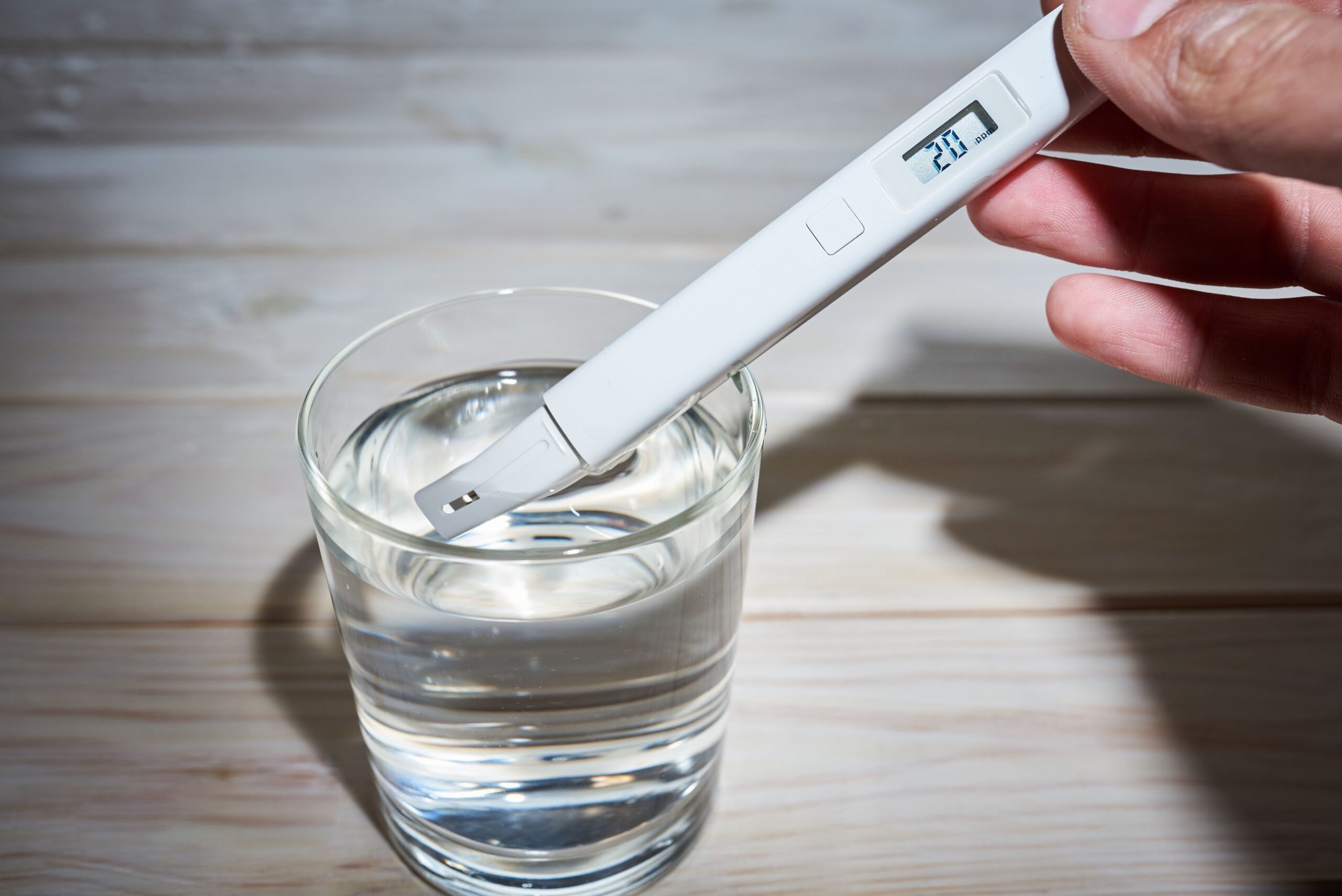
Water EC tells you the total dissolved-ion load of the source. Root-zone EC tells you what is actually accumulating around the roots after irrigation, fertilizer, evaporation, plant uptake, and drainage interact. These are related but not interchangeable measurements.
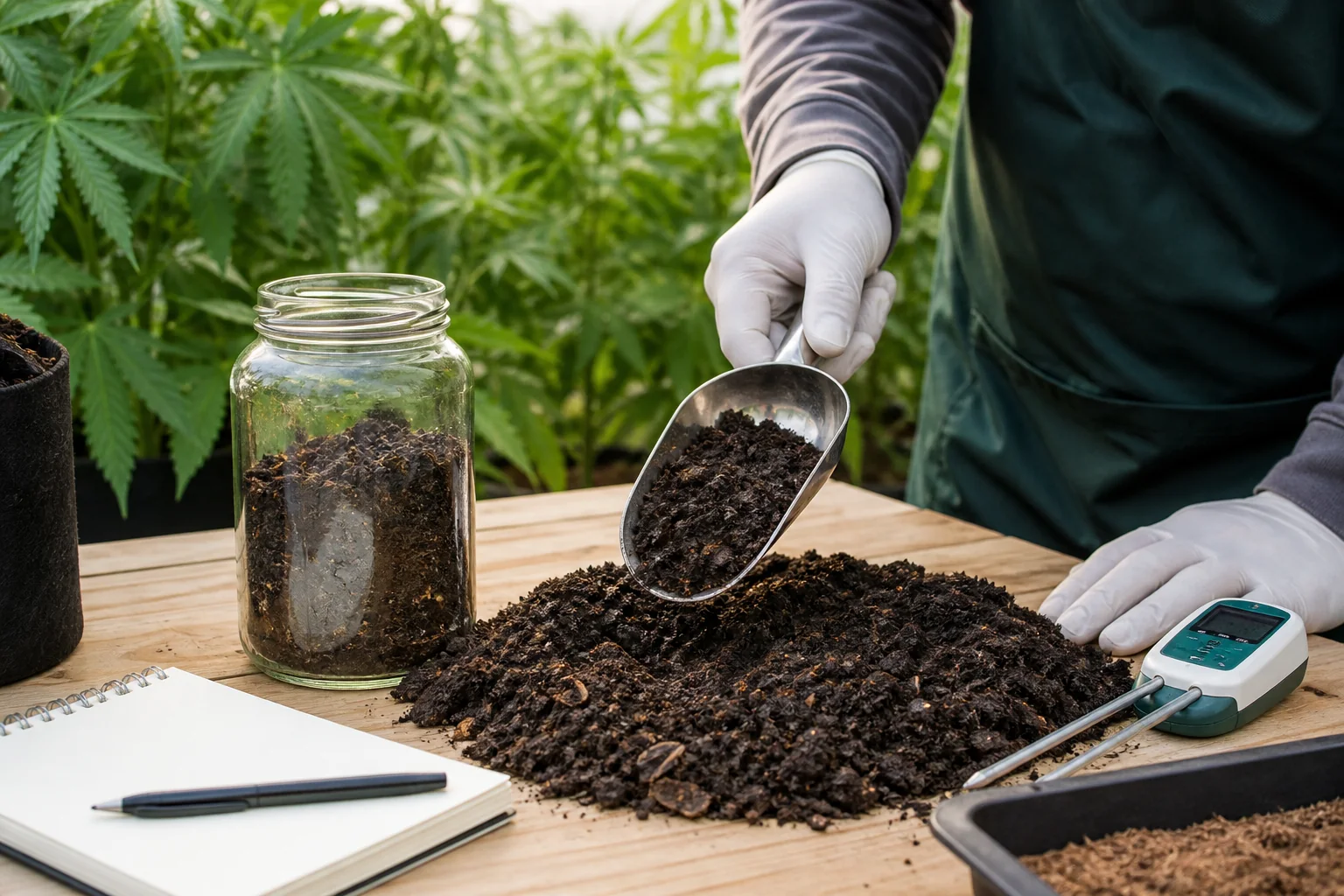
Use a consistent sampling method. Soil-water extracts, pour-through methods, runoff, and direct probes do not necessarily give equivalent readings. Pick a method appropriate to the medium, repeat it the same way, and compare trends against your own baseline rather than mixing numbers from unrelated methods.
Track Sodium and Chloride, Not EC Alone
Two water sources can have similar EC and different ion profiles. Near the coast, sodium and chloride deserve special attention because they can rise with saltwater intrusion or marine contamination. Sodium also affects soil structure, especially in fine-textured soils, while chloride can accumulate in plant tissue and contribute to leaf injury.
Ask the laboratory to report sodium and chloride directly. If the source is borderline or changing seasonally, repeat testing. A once-a-year sample is not enough when drought, pumping, storm surge, or tidal influence can change the source.
Coastal Sand and Coastal Clay Fail in Different Ways
Many coastal gardens are sandy, but not all are. Sandy soil can drain and leach salts quickly when fresh water is available, yet it also stores less water and fewer nutrients. That can make a windy coastal site dry rapidly between irrigations. Frequent fertigation in a low-buffer soil can then become another source of soluble salts if drainage and irrigation uniformity are poor.
Fine-textured coastal soil presents a different problem. Sodium can contribute to dispersion and poor structure, reducing infiltration and aeration. If that soil also has a shallow water table or receives saline runoff, simply adding more irrigation may not move salts below the roots. Soil testing and drainage evaluation become more important than trying to “flush” by intuition.
Raised beds and containers can bypass unsuitable native ground, but they do not eliminate salinity. A container irrigated with salty water can concentrate ions as water evaporates and the plant transpires. Control of the medium is useful only when the water source and drainage path are also controlled.
Fertilizer Is Part of the Total Salt Budget
Fertilizers are soluble salts. That does not make fertilizer harmful, but it means a coastal root zone already receiving elevated sodium or chloride has less margin for an aggressive feeding program. If source-water EC rises, the correct response may be to reassess the complete solution rather than adding nutrients to compensate for pale or burned leaves.
Track the irrigation source, fertilizer strength, and root-zone EC as separate records. If root-zone EC rises while source water and feed remain stable, dry-back, incomplete wetting, low drainage fraction, or localized salt accumulation may be involved. If source EC rises first, investigate the water before changing the nutrient formula.
Leaching Only Works When Water Can Actually Leave
Applying low-salt water can help move accumulated salts below the active root zone, but only if the soil or container drains freely. Pouring extra water into poorly drained coastal clay, a perched water table, or a saturated bed can create oxygen stress without meaningfully removing salts.
Before any deliberate leaching event, confirm drainage, outlet path, local runoff rules, and the salinity of the water you plan to use. In containers, collect or direct drainage safely rather than allowing concentrated runoff to soak into another root zone.
Do Not Confuse Leaching With Daily Overwatering
Routine irrigation should match plant use and root-zone storage. Leaching is a specific corrective process used when salt accumulation is measured or strongly supported by evidence. Constantly pushing excess water through a root zone can waste nutrients, reduce oxygen, create runoff, and increase humidity around the plant.
A better sequence is measure, confirm the source, correct the cause, leach only when the medium and drainage support it, then remeasure. If EC falls but the water source remains saline, the problem will return.
Fresh Rain Can Help, but Do Not Rely on Rain as a Salt Program
Rainfall can rinse foliage and leach salts from well-drained soil. Coastal regions with frequent clean rain may therefore accumulate less salt than equally exposed dry coasts. But rain is irregular, and the same storm that rinses aerosol salt may bring surge, saturated soil, branch breakage, or disease pressure.
Keep irrigation and salinity management functional even in a rainy climate. If you need clean water after a severe salt event, you should already know where it will come from.
| Question | Measurement | Useful Interpretation | Do Not Assume |
|---|---|---|---|
| Is the source salty? | Water EC plus Na and Cl lab test | Establish source baseline and seasonal change | Clear water is safe water |
| Are salts accumulating? | Consistent root-zone EC method | Compare trend through the season | One runoff reading diagnoses the root zone |
| Is sodium affecting soil? | Soil/water analysis and structure observations | Watch infiltration, dispersion and compaction risk | Adding more fertilizer will fix poor uptake |
| Will leaching work? | Drainage test and low-salt water confirmation | Water must move beyond active roots | More water always means less salinity |
| Did the correction work? | Repeat EC and plant-response check | Lower accumulation without waterlogging | Improvement is permanent if source remains unchanged |
Carry Flowering Plants Through Fog, Dew, Salt Events, and Coastal Storms
Vegetative plants have more capacity to replace damaged leaves and usually dry faster than dense flowering canopies. Late flower changes the risk balance. Flowers create sheltered humid spaces, branches carry more mass, and salt or storm injury can become a quality problem rather than only a leaf problem.
Cool Foggy Coasts and Warm Humid Coasts Need Different Emphasis
Do not treat all marine humidity the same way. On a cool foggy coast, the main problem may be slow warming, long leaf-wetness periods, weak morning sun, and a finish window that runs into cold wet weather. On a warm subtropical or tropical coast, the plant may face warm saturated nights, heavy rainfall, strong disease pressure, and tropical storms while still using substantial water on sunny days.
The management principle is the same, but the emphasis changes. Cool marine sites may benefit most from earlier sun, reduced shade, and genetics that can finish within the local weather window. Warm humid sites may need stronger drainage, wider airflow paths, faster storm recovery, and more frequent late-flower inspection. A coastal label does not replace a climate diagnosis.
Morning Dry-Down Becomes a Flowering Measurement
During flowering, choose several representative canopy positions: an exposed windward flower, a sheltered interior flower, a lower shaded flower, and a healthy reference on the leeward side. After fog, dew, or light rain, observe which position dries last.
Track the time rather than relying on touch alone. If one interior zone remains damp hours after the exterior is dry, correct spacing or shelter before disease symptoms appear. A repeated late-drying zone is a design problem even if the average daily RH looks reasonable.
Salt Spray on Flowers Creates a Different Tradeoff Than Salt Spray on Leaves
General coastal horticulture guidance often recommends rinsing salt from sensitive foliage with fresh water after strong onshore salt events. That advice becomes more complicated with dense cannabis flowers because overhead rinsing also adds free water to tissue where prolonged moisture can increase disease risk.
During vegetative growth, a gentle clean-water rinse after a severe salt event can be a reasonable corrective tool when the plant has enough daytime warmth and airflow to dry completely. In dense late flower, avoid routine overhead rinsing as an automatic habit. First determine whether salt deposition is actually significant, whether the flower surface is already wet, how quickly the site can dry, and whether the exposure can be reduced through shelter instead.
Field Advice: Near the coast, the correct response can change with plant stage. A water rinse that is low-risk on open vegetative leaves may be a poor default on dense flowers during foggy weather.
Do Not Spray Oils or Foliar Products Just to “Seal Out” Salt
A coating is not a substitute for exposure control. Oils, soaps, foliar nutrients, and other products can alter leaf surfaces, interact with sunlight, leave residues on flowers, or be illegal for use on cannabis in your location. They can also complicate diagnosis if leaf burn appears after a salt event.
Use physical placement, filtered shelter, clean irrigation water, and measured correction before reaching for a spray. Any pesticide or foliar product must be legal for the crop and applied according to the label and local rules.
Storm Preparation Starts Before the Forecast Turns Urgent
Coastal storms can combine extreme wind, salt aerosol, heavy rain, power loss, unsafe access, falling branches, contaminated flooding, and saltwater intrusion. A plant support system designed for normal sea breeze may not survive a tropical storm or major coastal low.
Before the storm season or before flowering becomes heavy, verify stakes, trellis anchors, container stability, drainage routes, irrigation shutoff points, and safe access. Remove loose garden objects that can become projectiles. Do not construct dangerous improvised structures over the plant at the last minute.
After a Salt-Wind Event, Inspect Before You Feed
Strong wind can produce torn leaves, abrasion, broken branches, temporary wilting, and dehydration. Salt spray can produce marginal scorch. Saturated roots after heavy rain can reduce water uptake. These stresses can appear together and can all be mistaken for a nutrient problem.
Inspect branch integrity, soil moisture, drainage, windward leaf pattern, source-water quality, and recent fertilizer history before feeding. If salt deposition is the main problem, adding more fertilizer can increase root-zone EC without addressing the exposure.
Grower Question
“After a strong onshore storm, should I rinse my flowering plants immediately with fresh water?”
Question sent by: WestCoastLeaf, via Facebook page.
Not automatically. Salt removal can be useful, but dense flowers that stay wet are vulnerable to moisture problems. Inspect how much salt deposition occurred, whether rain has already rinsed the plant, the current humidity, and how quickly the canopy can dry. Prioritize safe shelter and targeted correction rather than routine overhead soaking.
Safety
If storm surge, sewage-contaminated floodwater, or unknown contaminated water contacts flowers, do not treat the problem as ordinary irrigation or salt stress. Follow local public-health and agricultural guidance. Do not consume or process contaminated material simply because the plant survives.
Diagnose Salt, Wind, and Moisture Injury Before Correcting It
Coastal symptoms overlap. Brown leaf edges can come from sodium or chloride exposure, high fertilizer EC, drought, hot wind, root damage, or several nutrient problems. Drooping can mean a dry root zone, a saturated root zone, salt-induced osmotic stress, or mechanical injury after a storm. Diagnosis depends on pattern, history, measurement, and time.
Salt Spray Injury Is Often Directional
Look for damage concentrated on the windward side, especially after a known onshore event. Exposed leaves may show tip or margin burn while the protected side remains greener. New tender growth may show injury earlier. Nearby vegetation can show the same directionality.
If the entire plant is affected evenly, broaden the diagnosis. Root-zone salinity, fertilizer accumulation, irrigation problems, drought, heat, and disease become more likely than foliar salt alone.
Salt Symptoms Can Appear After the Wind Event Has Ended
Do not expect every salt-spray injury to be obvious while the wind is still blowing. Tissue may look acceptable immediately after exposure and then develop marginal burn, bronzing, curling, or necrosis over the following day or days. That lag is another reason to keep an event log.
Photograph the same windward and leeward leaves before and after major onshore events. If new injury repeatedly develops on the exposed side after those events, the pattern becomes more diagnostic. If damage continues during calm periods, investigate the root zone, water source, fertilizer, pests, disease, and other environmental causes.
Root-Zone Salinity Can Look Like Drought
Salts lower the water potential of the root-zone solution, making water harder for roots to absorb even when the medium is moist. The plant may look wilted or slow-growing despite having water around the roots. Adding more fertilizer makes this worse if soluble salts are already high.
Check moisture at depth, source-water EC, root-zone EC, recent fertilizer inputs, and drainage. If the plant is wilted in wet salty soil, the correction is not the same as drought irrigation.
Wind Desiccation Produces Mechanical Clues
Wind injury often comes with torn tissue, branch flexing, rubbed petioles, damaged ties, bent stems, or injury concentrated on the exposed side. Dry windy periods can also accelerate water loss and make marginal damage appear quickly.
Compare the plant after calm periods and onshore wind events. If damage stops progressing when the plant is moved or sheltered while water quality remains unchanged, wind exposure becomes a stronger explanation.
Humidity Problems Are Diagnosed by Recovery Time
Do not diagnose excessive humidity from RH alone. Observe whether leaves and flowers dry after dew or fog, whether interior flowers stay wet, whether lower canopy tissue remains still and shaded, and whether disease signs are developing. A coastal garden can have high nighttime RH and still perform well if it dries quickly every morning.
Conversely, a garden with moderate average RH can struggle if fog and shade keep the canopy wet until midday. The meaningful variable is often how long moisture persists at the tissue.
| Symptom Pattern | First Suspect | What to Measure | Common Wrong Correction |
|---|---|---|---|
| Windward leaf-edge scorch after onshore event | Salt spray and wind exposure | Direction, nearby plant injury, water source | Increasing fertilizer |
| Whole-plant marginal burn with high root-zone EC | Root-zone salinity | Water EC, Na, Cl, root-zone EC | Rinsing leaves only |
| Wilt in moist medium | Salt stress or low root oxygen | Moisture, drainage, EC, root condition | Watering repeatedly without diagnosis |
| Torn leaves and rubbed branches | Wind/mechanical injury | Gust exposure, support points | Foliar nutrient spray |
| Interior flowers stay damp after exterior dries | Humidity and poor airflow | Dawn dry-down and flower inspection | Ignoring it because midday RH is lower |
| Sudden post-storm decline after flooding | Root hypoxia, contamination or salinity | Flood source, drainage, soil/water test | Immediate heavy feeding |
Change One Variable and Verify the Next Comparable Event
If the diagnosis points to wind exposure, adjust shelter or move the container, then observe the next onshore event. If root-zone EC is high, correct the source and leach appropriately, then remeasure. If morning dry-down is slow, improve spacing or move the plant into earlier sun, then compare the next foggy morning.
Coastal weather does not repeat perfectly, so look for directional improvement. The correction worked when the targeted risk decreases without creating a new one.
Do
Use exposure pattern, water testing, root-zone measurements, wind history, and moisture recovery to separate coastal stresses.
Avoid
Calling every brown tip “salt burn” simply because the garden is near the ocean.
Commission the Site and Run a Weekly Coastal-Garden Routine
A coastal garden should be commissioned before flowering because the hardest problems become more expensive to fix once plants are large and flowers are dense. Commissioning means exposing the proposed system to real irrigation, real wind, and real morning humidity while the plant is still easy to move or the site is still easy to modify.
Run a Pre-Plant Coastal Site Test
- Confirm legal cultivation and site access. Verify local rules, property permission, visibility requirements, structures, water use, and any restrictions that affect the garden.
- Map the onshore direction. Mark open salt-wind corridors, barriers, hedges, buildings, and storm exposure.
- Compare at least two planting positions. One should be the preferred sheltered position and one a more exposed reference.
- Log overnight temperature and RH. Confirm which site dries first after dawn.
- Observe a real onshore wind event. Watch branch movement, turbulence, container stability, and shelter performance.
- Test irrigation water. Establish baseline EC, sodium, chloride, alkalinity, and other locally relevant parameters.
- Verify drainage. Run a full irrigation or inspect after rain and confirm water leaves the root zone.
- Set a root-zone EC baseline. Use one repeatable sampling method before fertilizer and seasonal salt accumulation complicate interpretation.
- Check storm access. Know how you will secure supports, shut off irrigation, reach the site safely, and protect clean water supplies.
Create a Simple Coastal Exposure Score
Use a three-level field score to decide how closely the garden needs to be watched. This is not a laboratory salinity rating or disease forecast. It is an operational prompt.
| Level | Typical Conditions | Action |
|---|---|---|
| Green | Filtered breeze, little visible salt injury, clean water, quick morning dry-down, stable drainage | Maintain routine and record baseline |
| Yellow | Repeated onshore wind, slower dry-down, rising root-zone EC, stronger fog cycle, storm approaching | Increase checks and correct one verified weakness |
| Red | Severe salt deposition, branch damage, persistent flower wetness, saline irrigation, storm surge or contaminated flooding | Stop routine assumptions, prioritize safety, isolate the cause, and verify before correction |
Weekly Coastal-Garden Checklist
Practical Checklist
- Review the next 7 to 10 days for onshore wind, fog, rain clusters, coastal storms, heat, and unusually dry windy periods.
- Inspect windward and leeward foliage for new scorch, tearing, abrasion, or asymmetry.
- Check support points, stakes, ties, trellis anchors, and container stability.
- Record which canopy zones dry first and last after dew, fog, or rain.
- Inspect representative flowers gently for trapped moisture, brown tissue, dead sugar leaves, or unusual odor.
- Confirm the windbreak still filters rather than creating a still pocket or new turbulence as plants grow.
- Check irrigation source EC when the water source is variable or intrusion risk has changed.
- Track root-zone EC at a consistent interval and with the same method.
- Check moisture at depth before watering and confirm drainage after meaningful irrigation.
- Look for salt-affected runoff, standing brackish water, storm debris, or splash reaching the root zone.
- After severe onshore salt events, decide whether clean-water rinsing is appropriate for the current plant stage and drying conditions.
- Record every correction and verify it during the next comparable weather event.
After-Storm Verification
Once the site is safe to enter, compare the plant with your pre-storm baseline. Inspect structure first, then foliage, flowers, root-zone moisture, drainage, salt deposition, and water source. If storm surge or contaminated flooding occurred, treat it as a contamination and salinity event, not normal irrigation.
Do not rush into pruning every injured leaf or feeding a stressed plant immediately. Stabilize the site, remove dangerous debris, restore drainage, document damage, and let the plant show which tissues are truly failing.
What a Resilient Coastal Cannabis Garden Looks Like
A resilient coastal garden does not eliminate wind, humidity, or every trace of salt. It places the plant where direct marine exposure is reduced, keeps enough air moving for fast morning drying, uses a root zone that drains, irrigates with tested water, and catches salinity changes before symptoms become severe.
The most useful evidence is recovery: windward leaves stop deteriorating after shelter improves, root-zone EC returns toward baseline after the source is corrected, flowers dry earlier after canopy spacing improves, and the support system remains stable through the next onshore event.
Master Advice: Near the coast, do not manage “the ocean” as one problem. Measure salt on the plant, salt around the roots, wind at the canopy, and moisture through the morning. Solve the pathway that is actually failing.
Grower Question
“What is the first measurement you would add to a coastal garden if you could only choose one?”
Question sent by: EastCoastCanopy, via Facebook page.
If the water source is a coastal well or another variable source, start with a laboratory water test that includes EC, sodium, and chloride. If the water is known to be low-salt municipal water, start with site mapping and morning dry-down observations. The most useful first measurement is the one that addresses the exposure route you cannot already rule out.
Share this article
A quick overview of the topics covered in this article.
Follow us
Latest articles
October 25, 2026
October 25, 2026
October 25, 2026