Cannabis Nutrient Diagnosis: Deficiency, Lockout, Burn, and Root-Zone Look-Alikes
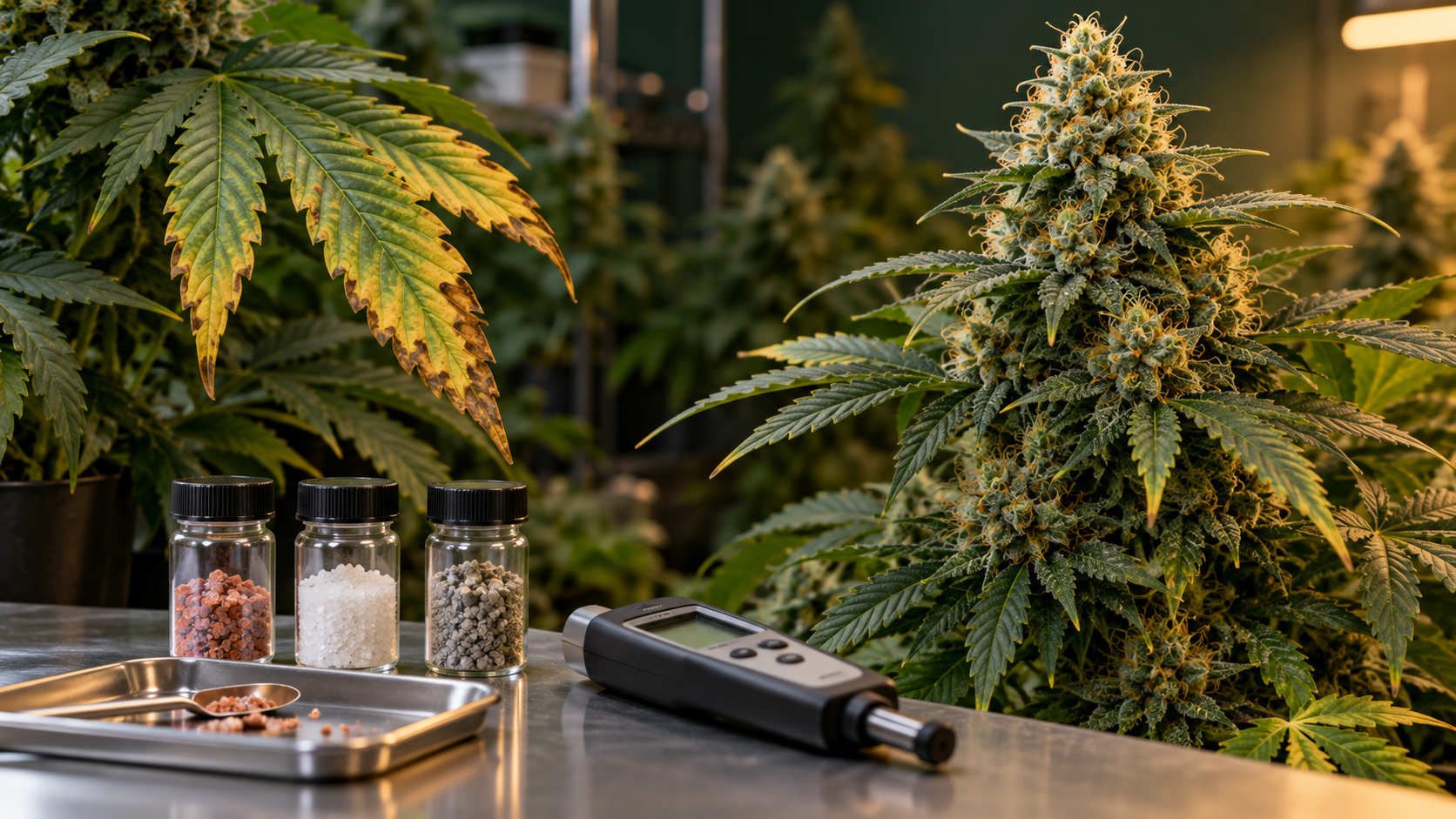
A yellow leaf can send a grower toward a stronger fertilizer when the actual problem is a saturated container. A browned leaf tip can trigger a flush even though the plant experienced an unusually dry root zone. Several plants can display the same color change while their causes differ because one receives an uneven irrigation pattern and another has an unbalanced nutrient solution. The leaf is reporting damage or disrupted function, not naming the cause.
Diagnose the system before treating the symptom: map where damage starts, review recent changes, inspect moisture and root function, measure the correct inputs and growing medium, exclude pests and other injury, then correct the strongest supported cause. Assess success using new growth and stable root-zone behavior rather than expecting dead leaf tissue to turn green. Do not label every yellow leaf a deficiency, every brown tip nutrient burn, or every puzzling result “lockout.”
This resource provides one differential-diagnosis workflow for cannabis grown in containers, native ground, soilless media and hydroponic systems. It is not an element-by-element feeding chart, a pesticide guide, a universal EC target or a substitute for a diagnostic laboratory. The broader Nutrients and Fertilizers Guide explains complete nutrition planning; this page answers what to check when plants already show a suspected nutrient problem.
Read the Plant Before Naming a Nutrient
Begin by describing the plant without using a diagnostic label. “Lower fan leaves show yellowing that starts at the tips, while the upper canopy remains green” is an observation. “Potassium deficiency” is a hypothesis requiring additional evidence. A good first inspection records onset, location, progression, recent irrigation and the relationship between affected plants. Photograph a healthy comparison plant under similar light. If the plant is deteriorating rapidly, stabilize an immediately hazardous root-zone or environmental condition while gathering the evidence rather than waiting for a perfect chart match.
Nutrient Deficiency Charts: Useful Clue, Poor Diagnosis
A visual chart can narrow the initial possibilities. It cannot tell whether an element is absent from the fertilizer, temporarily unavailable in the medium, poorly absorbed by damaged roots, or redistributed during normal aging. Controlled cannabis experiments have produced informative photographs by deliberately removing individual elements. But a grower’s plant may simultaneously experience high salinity, irregular moisture, a pest infestation and a changing flowering stage. A single-element trial does not reproduce that combination.
In one controlled flowering-stage cannabis study, visual symptom onset did not consistently correspond with nutrient measurements in leaves. The researchers recommended integrating tissue results with the nutrient solution, growing medium and symptom history. Another study on a hemp cultivar documented a sequence of single-element deficiency and toxicity signs, but its sand-culture conditions and cultivar do not turn its reference values into universal cannabis thresholds. Use charts as a short list of hypotheses, not a shopping list.
Map the age, position, and distribution of affected tissue
Check older leaves, the newest fully expanded leaves, new growing tips, leaf margins, interveinal tissue and the underside of leaves. Nutrient mobility can help orient the search: shortage of a relatively mobile element may first become apparent in older tissue, whereas limitations in poorly mobile elements often disrupt newer growth. This is a tendency rather than an infallible map. Rapid growth, flowering redistribution and environmental transport can complicate the pattern. Note whether spots are on only the upper, illuminated side; along a wet wall; beside a sprayer; or throughout several plants sharing the same reservoir.
Compare the whole plant and its neighbors. A line of plants served by one emitter suggests a distribution issue. Plants of different ages within a shared bed should not be interpreted as a uniform treatment group. When only one cultivar reacts after a recipe change, genetic sensitivity is plausible, but do not use the cultivar label to bypass root-zone checks.
Record the sequence, not only the worst leaf
Ask whether the symptom began after an increased feed, missed irrigation, change in source water, transplant, pruning, heat event, pesticide or foliar application, cold night, change in lamp height or prolonged wet period. A symptom that follows a new intervention makes that intervention worth investigating; it does not prove causality. Preserve a dated record with images from the same plant and same canopy zone. A fresh lesion appearing on previously healthy growth means something different from an old necrotic edge that remains visible but stops expanding.
Definition: Observation, hypothesis, and confirmation
Observation: what visibly happened and where. Hypothesis: the mechanism that could explain it. Confirmation: independent evidence from the root zone, input, plant tissue, pathogen test or a controlled follow-up. A symptom chart supplies hypotheses, not confirmation.
Field Advice: Mark one affected leaf and one comparable unaffected shoot. Rephotograph them from the same angle with neutral lighting; do not compare today’s sunlit leaf with yesterday’s photo under a colored grow light.
Separate Nutrient Supply From Root Function
Plants must obtain mineral ions from a moving solution around functioning roots. Sufficient fertilizer in the bag or reservoir does not establish sufficient uptake. Chemistry controls what is dissolved or held by the medium; moisture and oxygen affect root metabolism; temperature, root integrity and transpiration influence uptake and movement toward growing tissues. Several distinct failures can yield a similar yellow leaf.
Nutrient Lockout vs Deficiency
“Nutrient deficiency” can mean that the plant is not receiving enough of an essential element for normal function. That shortage may begin with an insufficient input, depletion in the root zone or inability to take up the element. “Nutrient lockout” is informal grower shorthand, not a laboratory diagnosis. Growers use it for pH-driven availability problems, high-salt inhibition, ion antagonism and nonfunctioning roots. These mechanisms require different corrections.
Low supply: the complete input and relevant root-zone analysis show inadequate availability of a specific element, roots are functioning and a compatible tissue pattern supports the interpretation. Availability limitation: the element is present in the medium but the chemical environment limits its soluble fraction. Uptake limitation: roots cannot acquire or transport nutrients normally because oxygen, moisture, temperature or tissue integrity is impaired. Competitive interaction: a high supply of one ion can alter the uptake and distribution of others. A diagnosis should specify which one is supported, or remain provisional when results cannot separate them.
pH affects availability but is not a universal on-off switch
pH changes the solubility and chemical forms of several nutrients and can affect root physiology. A root-zone pH outside a relevant laboratory’s range is useful evidence, especially when the symptom and source-water history agree. One pH reading cannot prove that all nutrients are unavailable or that a particular ion is absent. Probe calibration, mixing, medium type, fertilizer chemistry and sampling method matter. A source-water pH value also cannot replace an assessment of alkalinity, which describes the water’s acid-neutralizing capacity and helps explain recurring medium drift.
Before using an acid or pH adjustment product, determine what was measured. Reservoir, input solution, PourThru leachate, saturated media extract and native-soil slurry are different sample matrices. An isolated number should not be compared with a threshold established for another matrix. If pH is genuinely drifting, investigate the source water, fertilizer’s acidifying or basic reaction and the medium’s buffering system before repeatedly adding correction products.
Salt stress and ion-specific excess are different questions
Concentrated dissolved salts can make water harder for roots to acquire and can injure tissue through osmotic and ion-specific mechanisms. High EC gives evidence of total conductivity; it does not identify whether the excess is fertilizer, sodium, chloride or another ion. A normal EC also cannot prove every essential element is balanced. If a particular ion matters to the diagnosis, use the fertilizer’s full analysis, source-water report or quantitative solution and tissue testing.
Several cannabis-specific nutrient studies document interactions rather than simple one-element stories. In an experiment changing the ammonium-to-nitrate balance, high ammonium supply altered root-zone pH, growth and calcium/magnesium accumulation. A potassium-supply experiment found changes in calcium and magnesium concentrations under elevated potassium inputs. Those are documented outcomes within specific cultivars and controlled regimes, not proof that every unexplained spot is an antagonism or that one ratio fixes all plants.
Warning: Do not treat “lockout” as a reason to flush automatically
A suspected pH problem, elevated salts, wet roots and true underfeeding can overlap. A large unmeasured volume of water may worsen saturation, remove needed nutrients, cause runoff problems or obscure the original evidence. Identify the mechanism and the medium-specific response before changing irrigation or fertilizer strength.
Water, Oxygen, and Root Damage Come Before the Bottle
Root-zone physics deserves its own examination because a plant can look thirsty or nutrient-starved with abundant water and fertilizer present. Roots require gas exchange to support respiration and active uptake. A prolonged saturated period reduces air-filled pores in containers and compacted ground. At the opposite extreme, dry media may concentrate salts or channel irrigation away from parts of the root ball. Neither case is established by the visible leaf alone.
Wet Roots That Mimic Nutrient Deficiency
A recently watered pot that remains heavy as the canopy droops, growth slows and leaves yellow suggests a water-demand mismatch. Compare the container’s weight or measured moisture trend with its normal dry-back behavior and a healthy control. Check whether the drainage outlet is clear and whether a perched wet zone persists in the lower container. A surface that looks dry does not establish that the middle and base have adequate air. For planted beds, use infiltration, root observations and the pattern of low-lying wet areas rather than interpreting the surface alone.
Do not impose a universal number of days between irrigations. Container geometry, substrate particle size, root volume, light, humidity and recent plant stress change water consumption. If chronic saturation is the most supported cause, restore an appropriate irrigation interval and drainage pathway without allowing a critically damaged root system to desiccate. If decline continues or the root system is collapsing, reconsider the hypothesis rather than simply waiting longer.
Root Oxygen Problems That Look Like Deficiencies
Oxygen shortage disrupts root respiration. When energy and root growth are restricted, uptake of water and ions can fall even when the reservoir or fertilizer recipe is chemically complete. This can produce slow growth, generalized chlorosis, wilting and multiple apparent deficiencies. Inspect air-filled pore structure, moisture persistence, reservoir circulation and the difference between plants in wetter and better-aerated positions. A functioning air pump does not prove that every root surface has adequate oxygen if solution flow or temperature is uneven.
Healthy roots vary in color with age and medium staining, so color alone cannot diagnose rot or anoxia. Look for the combined evidence: reduced fine-root development, loss of root firmness, sloughing tissue, crown lesions, poor water uptake and progressive decline. If disease is plausible, reduce movement of shared water or tools between healthy and affected plants and consult the dedicated Root Rot vs Overwatering diagnostic guide. The two conditions can coexist; fertilizer concentration cannot establish which is present.
Watering Problems That Look Like Nutrient Deficiencies
Underirrigation can leave roots without enough water to transport mineral ions, even when the medium contains ample fertilizer. Uneven wetting is especially deceptive in dry peat-based media or channels through compacted soil. A measured irrigation volume may exit the pot rapidly while the central root ball remains dry. Check more than one depth and the wetted pattern around emitters. In large outdoor containers, different sides of the root ball can behave differently under direct sun and wind.
Repeated heavy dry-back can also concentrate soluble salts. A grower may correctly detect high leachate EC but incorrectly infer that the original fertilizer recipe was necessarily too strong. The irrigation pattern, runoff collection and source water may be contributing. For outdoor native ground, rainfall and surface evaporation make the relationship between a bottle dose and measured soil conditions even less direct.
Drought, saturation, disease, and physical root injury
Compare pot mass or moisture, irrigation delivery, root condition and the timing of wilt. Dry roots may need carefully restored moisture; wet oxygen-limited roots need the cause of saturation corrected; mechanically damaged roots require reduced disturbance and close observation; a suspected root disease may require a diagnostic laboratory and containment. Symptoms alone often cannot distinguish these cases. Where a problem is spreading among plants connected by water or propagation material, prioritize preventing cross-contamination while identifying the cause.
“My leaves are yellow but the pot is still wet. Should I double the nitrogen?”
Question source: Common grower question.
No. Check root-zone moisture at depth, drainage, water use, root integrity and any recent fertilizer change first. The yellow canopy does not show whether nitrogen is absent or whether wet roots cannot use what is already there.
A Repeatable Inspection and Measurement Protocol
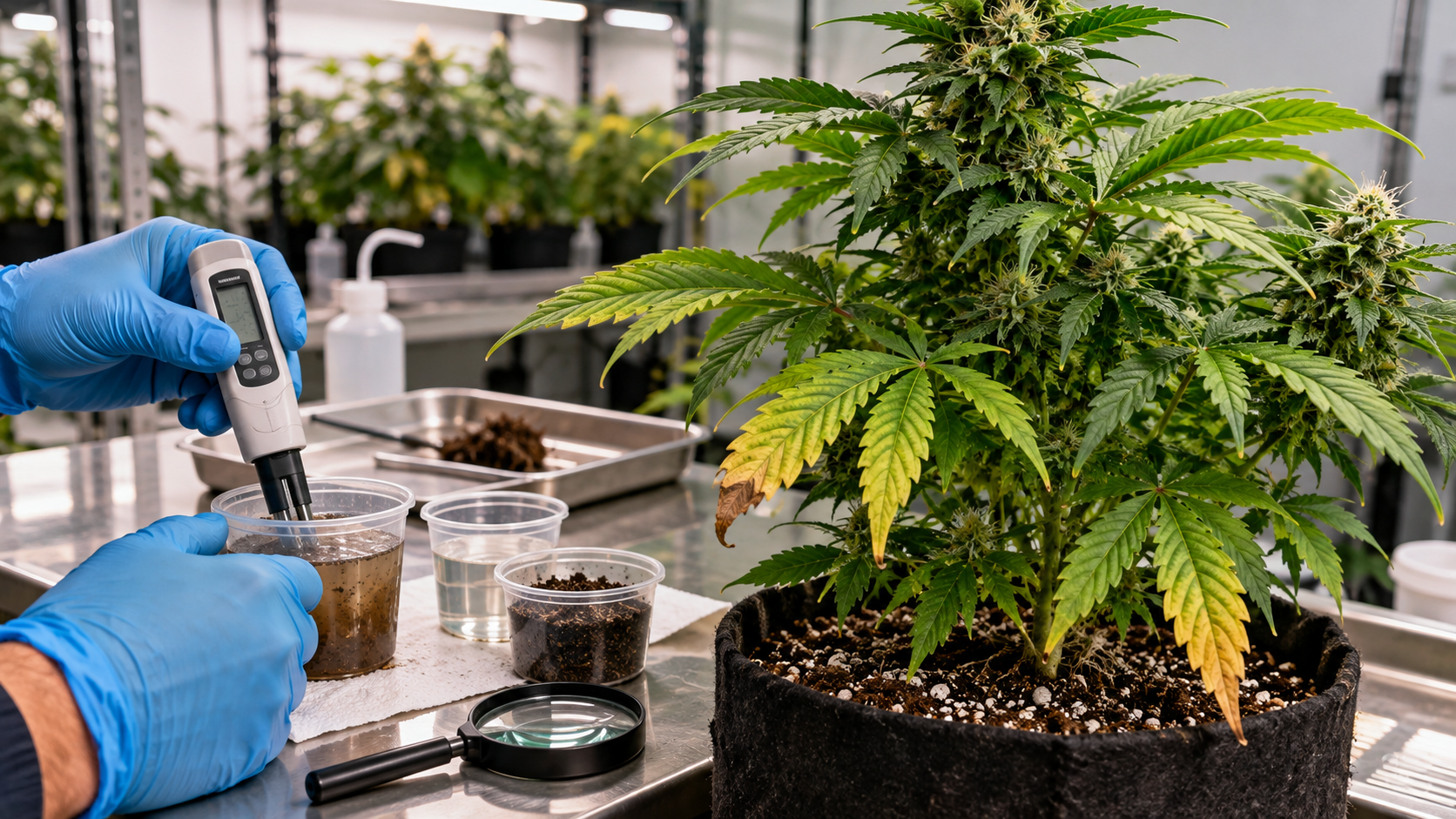
Write down the question before picking up a meter. If the question is “Is the feed stronger than last week?” sample and measure the mixed input under comparable conditions. If the question is “Are salts accumulating around roots?” take a standardized growing-medium measurement or use the specified hydroponic solution procedure. If the question is “Has the plant accumulated this element?” consider a matched tissue test. The tests cannot replace one another.
Step 1: isolate the affected group and document baseline
Record plant or bed ID, cultivar where known, growth stage, first observation date, photo angles, symptom location and percentage of comparable plants affected. Identify a healthy comparison receiving a similar climate but, when possible, a separate irrigation point. Note feed changes, tank refills, source-water changes, leaching events, amendments, sprays and outdoor weather. This baseline guards against calling a pre-existing mark a fresh failure after intervention.
Step 2: check delivery and root-zone condition
Inspect the actual irrigated root zone before sampling fertilizer. Confirm the dripper or watering can reached the plant, inspect the timing and volume recorded, assess root-ball moisture at more than one depth, and check drainage. In hydroponics, inspect the reservoir and root surfaces safely, noting circulation, solution condition and unexpected temperature changes. Avoid tearing apart a valuable plant merely to find a diagnosis when less destructive inspection or laboratory sampling is available.
Step 3: audit source water and the complete nutrient input
Measure and record calibrated input pH and EC alongside the solution temperature, source identity, fertilizer ingredients, dilution and mixing order. Review whether a supplement contains additional N, K, Ca, Mg, sodium or chloride. Water analysis can reveal alkalinity and specific ions not shown by a feed chart. A source change or malfunctioning injector can produce a batch-wide pattern. When the recipe or source has a known error, correct that error before adding an unrelated nutrient product.
Step 4: measure the correct root-zone sample
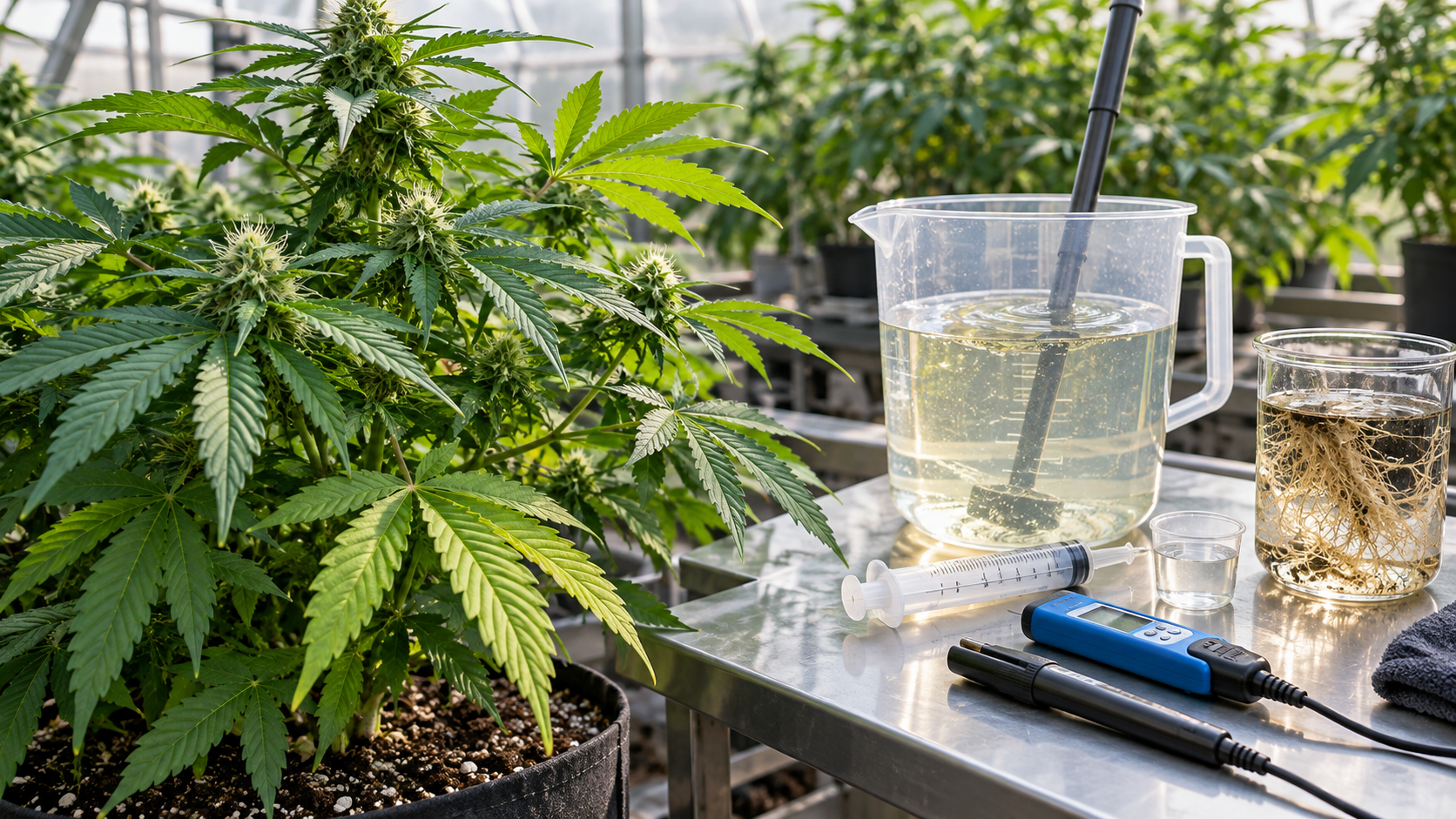
For soilless media, use a named procedure such as saturated media extract, 1:2 extraction or standardized PourThru, and interpret it against that procedure’s own ranges. Casual runoff after inconsistent watering is not interchangeable with controlled PourThru. In field soil, request a soil method appropriate to the region and crop question; do not apply soilless-container cutoffs to native ground. In recirculating systems, measure the actual solution and track its trend with water consumption; nutrient-ion analysis may be required to resolve ambiguous EC trends.
EC is a property of dissolved ions collectively. pH describes acidity. Neither establishes calcium, nitrogen or phosphorus concentration on its own. Recheck probe calibration and units if results contradict the plant. Compare extraction values only when the method, sampling time, medium, temperature handling and interpretation remain consistent. A high single runoff reading deserves investigation, not a universal flushing prescription.
Step 5: select a laboratory test that can resolve the uncertainty
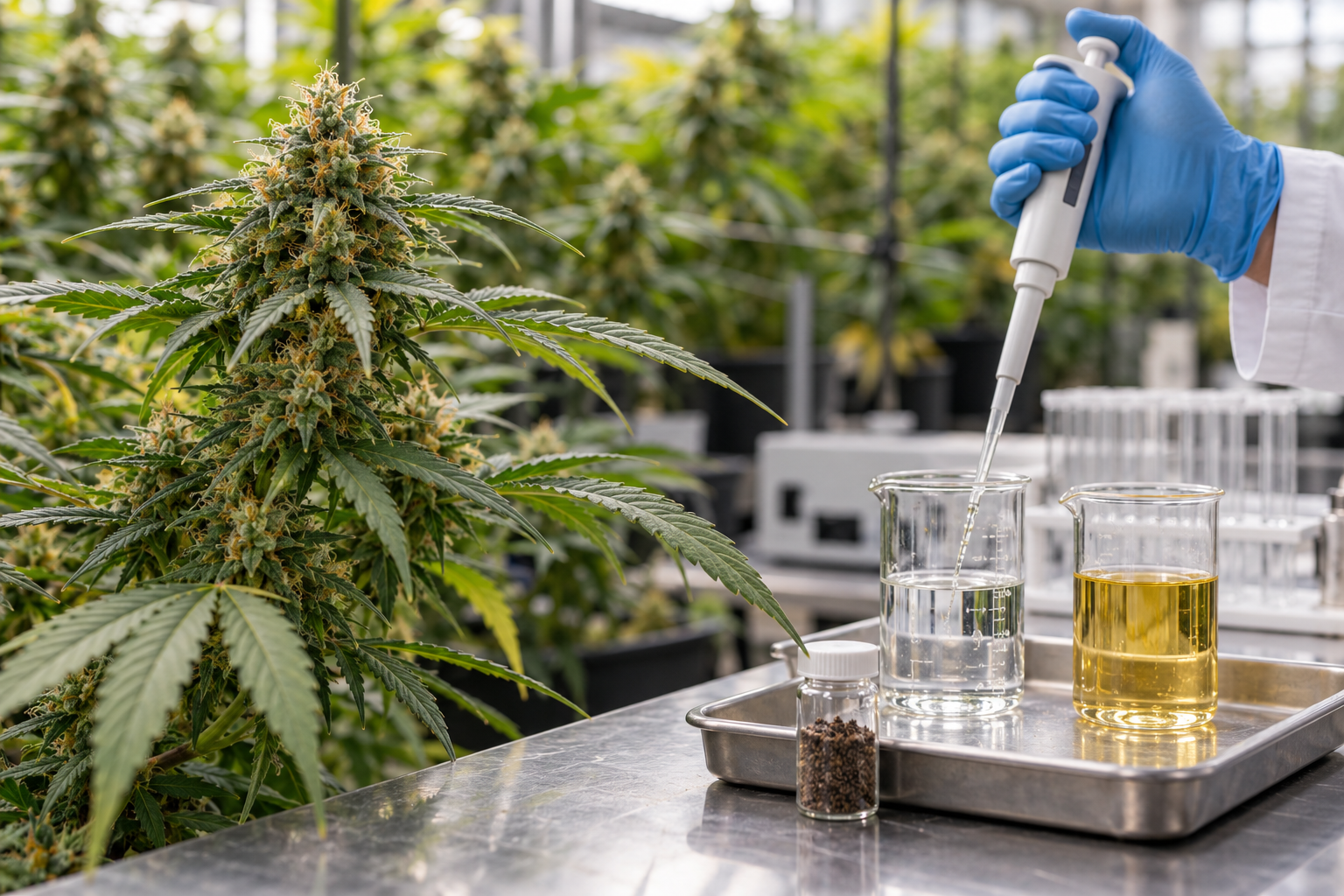
If a measured deficiency remains plausible after checking roots and supply, submit a laboratory sample with the correct leaf age, plant part and developmental stage. When the lab allows, submit separately labeled samples from affected plants and healthy comparators; avoid mixing them into one average. Tissue nutrient concentration indicates what has accumulated in the sampled material but cannot by itself explain the uptake failure. An organism, residue or contaminant requires a different panel. Use the test-selection approach in the planned Soil Test, Water Test, Tissue Test resource when that page is published; do not assume its future URL is live today.
| Diagnostic question | Best first evidence | What it does not answer | Useful next step |
|---|---|---|---|
| Was the fertilizer mixed or delivered differently? | Mixing log, source, calibrated input EC and pH, emitter function | What the plant absorbed | Inspect root-zone conditions and compare affected versus unaffected plants |
| Are soluble salts accumulating in a soilless root zone? | Standardized method-specific media EC trend | Which ion is responsible or whether roots are healthy | Review irrigation, water composition and complete solution analysis |
| Is a particular element insufficient in the plant? | Matched tissue analysis with symptom and stage history | Whether low uptake arose from supply, roots or chemistry | Pair with source/feed and growing-media analysis |
| Are roots oxygen-limited or decaying? | Moisture, drainage, tissue integrity, water use and progression | Pathogen species | Correct physical stress and obtain a diagnostic assay if disease remains plausible |
| Does a stain or spot indicate pests, drift or a pathogen? | Pattern mapping, hand lens, exposure history and relevant specimen | Element concentration from a photograph | Use appropriate plant diagnosis or chemical testing |
Definition: Three measurements, three layers
Input: nutrients and salts delivered. Root zone: what the medium or solution contains under a specified sampling method. Tissue: what the sampled organ accumulated. A mismatch narrows the investigation; it does not automatically identify the cause.
Build a simple inspection record that can be repeated
Keep one row per affected plant or comparable group: date, growth stage, location of new symptoms, pot weight or moisture observation, input EC/pH, medium-method EC/pH if obtained, irrigation volume, water use, root notes, climate change, action taken and next review. Preserve the original values rather than replacing them with a diagnosis. Repeat measurements at a comparable time and using the same method. If a change requires immediate intervention for plant survival, record the state before acting wherever practical and safe.
Pro Tip: When measurements conflict, verify the instrument and sample before believing whichever number matches your initial guess. A calibrated meter cannot rescue a sample taken from the wrong material.
Distinguish Deficiency, Burn, and Non-Nutrient Look-Alikes
Use the following comparisons as working hypotheses. Several columns may describe the same plant. A robust diagnosis explains the timing and distribution of symptoms as well as the root-zone evidence. If it cannot, keep multiple possibilities open until a targeted check separates them.
Cannabis Nutrient Burn Diagnosis and Recovery
The phrase nutrient burn often describes marginal or tip necrosis noticed after concentrated feeding. It may involve excessive soluble salts, an ion-specific toxicity, dehydration that concentrates the existing solution, direct foliar fertilizer injury or another stress. It does not prove that an NPK bottle alone is responsible. Record which leaves were first affected and whether injury follows a feed increase or strong dry-back. Compare standardized medium EC trends, source water and input records, then examine roots. High EC supports a salinity concern only in the correct sampling context.
Where concentrated solution is confirmed, stop escalating the recipe and restore an appropriate feeding and irrigation pattern for the system. Where the root ball is saturated, do not immediately pour large volumes through it as an all-purpose rescue. A controlled leaching decision requires adequate drainage, an understood medium, an acceptable source-water chemistry and a plan for runoff disposal. Where leaf margins were directly sprayed, the pattern and spray record may explain localized injury despite normal medium chemistry.
Nutrient Burn vs Drought vs Root Damage
These three conditions can all produce crispy edges, reduced water use or wilt, but their timing and location differ. A dry container with a poorly wetted core and a rapid hot-weather onset supports moisture deficit. A recently concentrated feed followed by rising standardized root-zone EC supports salt exposure. Persistent droop in a wet root ball, disappearing fine roots or crown changes supports impaired roots. They can also interact: dry-back raises salt concentration, and root damage reduces nutrient uptake. Choose the first correction according to the measured limiting condition, not the appearance of a single tip.
| Observed pattern | Possible explanations | Discriminating check | Premature action to avoid |
|---|---|---|---|
| Older leaves fade first | Mobile nutrient shortage, flowering redistribution, shade, wet or damaged roots | Stage, light exposure, new growth, root status and relevant input/tissue evidence | Adding N and Mg simultaneously based on color |
| Young leaves bleach or distort | Micronutrient or calcium delivery limitation, intense light, pests, spray or root issues | Location, leaf underside, exposure pattern, roots and laboratory evidence as needed | Using a concentrated micronutrient cocktail |
| Tips brown after a feed increase | Salinity, ion excess, dry-back concentration or direct product injury | Feed log, calibrated method-specific EC, source water, moisture trend | Assuming any tip burn proves a named NPK toxicity |
| Plant wilts while medium is wet | Oxygen limitation, root disease, damaged roots, unusual heat | Depth moisture, root integrity, drainage, temperature and progression | Heavy irrigation or stronger fertilizer |
| Margins scorch during a hot dry interval | Drought, salt accumulation, wind or light/heat injury | Root-ball moisture map, water delivery, exposure and root-zone trend | Diagnosing potassium solely from scorch shape |
| Spots cluster on one exposed side | Spray deposit, drift, light injury, wind or pest distribution | Exposure and treatment history; inspect leaf underside and lesions | Assuming random spots identify a missing element |
| Multiple symptoms begin together across one reservoir | Recipe error, source-water change, reservoir upset or shared pathogen | Batch records, quantitative solution analysis, root comparison | Treating every plant as an isolated deficiency |
Cannabis Leaf Symptoms That Are Not Nutrient Deficiencies
Inspect for insects and mites with a hand lens when there is stippling, silvering, scarring, webbing, distorted growth or patchy damage. A lens can reveal animals and feeding signs; it does not establish a nutrient disorder. Compare the top and bottom of affected leaves, the newest buds and adjacent healthy plants. If damage appears in a field-edge gradient after a nearby treatment, investigate spray drift rather than naming a micronutrient. Leaf spots with expanding lesions, unusual sporulation or a spreading plant-to-plant pattern may require a plant diagnostic service.
Light and heat injury can concentrate near the brightest fixtures or most exposed outdoor surfaces. Wind and abrasion can damage a consistent face of the canopy. In late flowering, a gradual shift in older leaf color may reflect normal aging or nutrient redistribution, though rapid premature collapse still deserves investigation. Genetic pigmentation, purpling from cool conditions and residual mechanical damage can also imitate chart entries. A photograph rarely distinguishes these on its own.
Check apparently persuasive but non-diagnostic clues
Purple stems are not a phosphorus test. Clawing does not identify nitrogen toxicity. Brown roots do not by themselves prove root rot, and a sweet or sour smell cannot name a pathogen. White deposits can arise from dried fertilizer, water minerals, spray residue or, in other contexts, pests and fungi; identify the material before treatment. A controlled cannabis report published in 2026 investigated salt crystals on leaf hairs that visually resembled disease, illustrating why laboratory or microscopic identification matters when a lesion’s identity changes the response.
Use the broader Nutrient Basics guide for individual element functions and general early clues. Return to this diagnostic sequence when a chart description overlaps with a watering, environmental or disease pattern.
“My leaf tips burned two days after I increased potassium. Does that prove potassium toxicity?”
Question source: Common grower question.
No. The timing justifies reviewing the change, but the complete feed may also have increased EC or altered calcium and magnesium availability. Verify the full recipe, source-water ions, standardized root-zone trend and condition of roots. A specific-ion claim needs element-specific evidence.
Interpret Results Within the Growing System
One decision pathway applies across systems, but its measurements must change with the material. The water held in native ground behaves differently from water in peat, coco or a recirculating reservoir. Treating the same EC or pH number as equivalent across these materials is an analytical error.
Native-ground soil and outdoor beds
Start with the site’s drainage pattern, recent rain, irrigation placement and soil history. A shallow surface reading may miss a saturated layer or a dry zone below mulch. Field fertility reports use defined chemical extraction methods; an extractable nutrient concentration is not the same as what a hydroponic tank delivers. Sample symptomatic and healthy zones separately when spatial differences may identify the cause. Unknown fill or suspected contaminants require targeted testing, not only a fertility panel. Avoid turning a short-lived leaf symptom into a permanent amendment decision without compatible soil evidence.
Peat and compost-based containers
Organic components, lime, fertilizer release, moisture retention and container depth alter root-zone chemistry. The surface can dry while lower layers remain wet. Compaction and an undersized root system can prolong saturation; a hydrophobic dried core can instead channel the next irrigation along the sidewalls. Use a consistent medium test when salts or pH are in question. Do not pour random outdoor soil or unverified amendments into an ailing indoor container; additional contaminants, pests and physical changes would complicate diagnosis.
Coco and drain-to-waste systems
Review fertigation frequency, distribution uniformity, source water, the complete Ca/Mg/K input, and whether a consistent portion of solution reaches every active root zone. Coco’s cation exchange behavior can change the relationship between the mixed solution and root-zone concentrations, especially when media history and buffering differ. A one-off runoff sample is not a universal direct measurement of root solution. Interpret standardized media or leachate data with the specific method, then investigate uneven dry-back or salt accumulation before raising nutrients.
Deep-water culture and recirculating hydroponics
Assess delivered solution, source water, reservoir level and temperature, circulation, root integrity and the trend in pH and EC. A falling water level with rising EC may signal proportionately more water removal, but it does not identify the individual ion concentrations; uptake is not uniform across elements. A stable EC can conceal an imbalanced nutrient mixture. For recurring problems, measure specific ions through a compatible laboratory and follow the reservoir’s maintenance record. Shared water can connect root health issues across many plants, making containment and diagnostic testing relevant when root disease is suspected.
Genetics, stage, and environment change interpretation
Fast-growing plants need more total mineral supply than small or severely stressed plants under identical nominal concentrations, but leaf symptoms also depend on cultivar and stage. The controlled cannabis deficiency trials used defined genetics and regimes; the resulting tissue levels cannot be copied to every cultivar and developmental stage. Light intensity, temperature, humidity, flowering sink demand and plant size affect water movement and tissue concentrations. Prioritize matched healthy comparisons, method-consistent trends and actual growth performance over universal internet target values.
Do: compare like with like
Keep extraction method, plant stage, sample location, units and sampling time consistent. Record source water, growing medium, irrigation and recent interventions with each result.
Avoid: a universal rescue recipe
A dry peat pot, saturated soil bed and unstable hydroponic reservoir should not all receive the same flush, Cal-Mag additive or pH adjustment based on similar yellow leaves.
Correct One Supported Cause and Verify Recovery
The aim is to stop progression and restore useful growth. Choose an intervention only after deciding what evidence would make it appropriate. In a rapidly deteriorating plant, correct a clear immediate hazard such as failed irrigation or stagnant, saturated conditions first. Do not postpone obvious stabilization to collect unnecessary numbers, but preserve observations and avoid combining multiple unrelated treatments that destroy the diagnostic trail.
Cannabis Nutrient Burn: Symptoms, Confirmation, and Recovery
Use this section for recovery after the diagnostic checks above. First establish whether injury is continuing: mark the boundary of an affected leaf edge and monitor leaves that were healthy at the initial inspection. Recheck the full input concentration, source-water chemistry, standardized root-zone EC and irrigation history. If the measured system supports excess soluble salts, stop adding new boosters and return to a suitable complete nutrient and watering program, adjusting gradually and with method-appropriate measurement. Controlled leaching may be considered where the medium, water quality, drainage and disposal permit it, but it is not automatically appropriate for a saturated or physically damaged root system.
If a particular nutrient excess is suspected, assess the entire formula and any interacting elements before removing one nutrient blindly. A tissue or solution panel may be needed. Necrotic tissue will not heal; judge progress by a halt in new injury and healthy later growth. Severe root damage or a changed weather pattern may make the recovery slow or incomplete. A fixed day-count promise would conceal those differences.
When supply is genuinely too low
Verify that the target element is missing or insufficient in a compatible input or root-zone analysis and that the plant’s symptoms and tissue status support the interpretation. Restore an appropriately balanced complete program or correct the measured missing component rather than stacking several “deficiency cures”. For a plant with damaged roots, simply increasing concentration may intensify stress. Recheck the input and root-zone result after the change, then observe growth that developed after the correction.
When pH or source water is the limiting factor
If repeatable testing shows a true medium pH trend or source-water alkalinity issue, review the water, fertilizer reaction, amendment and buffering system. Select a system-specific change instead of repeatedly swinging the solution between extremes. Preserve safe handling for any acids or bases and do not invent a universal pH target for different materials. Confirm that the new root-zone measurement stabilized before declaring a nutritional response.
When roots, moisture, or delivery explain the symptoms
Restore appropriate irrigation distribution, drainage and air availability according to the actual medium. Correct a blocked emitter or a poorly wetted root ball before changing nutrients. Reduce unnecessary disturbance of roots and monitor whether water use begins to recover. If fine roots deteriorate, crown lesions expand or decline persists after the physical cause has been corrected, pursue disease diagnosis; the broader root rot versus overwatering comparison explains that separate decision.
Warning: Do not stack corrections
Changing EC, pH, fertilizer brand, irrigation frequency and several supplements on the same day can cause additional injury and makes the response uninterpretable. Resolve an urgent physical hazard, then change only the best-supported controllable variable while recording what else changed naturally.
A decision table for the first correction and follow-up
| Evidence-supported cause | First correction | What to remeasure | Reason to reconsider |
|---|---|---|---|
| Incorrect or incomplete mixed feed with functional roots | Restore a suitable complete formula or correct the documented mixing error | Finished input composition and compatible root-zone trend | New tissue still deteriorates with confirmed adequate supply |
| Method-confirmed salt accumulation | Stop escalating feed and correct irrigation/feed balance; consider controlled leaching only when appropriate | The same root-zone extraction method plus source and water use | Moisture remains excessive, roots fail or EC interpretation changes with the method |
| Consistent pH drift with a known source or amendment contributor | Correct the source and buffering cause through a system-specific plan | Calibrated pH trend under the same protocol | The corrected trend does not match symptom progression or uptake evidence |
| Saturated oxygen-limited medium | Restore drainage and an appropriate wet-dry cycle without extreme drying | Moisture profile, water use, root integrity and new growth | Tissue collapses or disease signs progress despite correction |
| Underwatered or unevenly wetted root ball | Restore uniform wetting and a plant-appropriate schedule | Depth moisture, delivery uniformity and subsequent dry-back | Symptoms continue despite full wetting and healthy roots |
| Pest, drift, pathogen or direct spray injury | Stop the relevant exposure and confirm identity before treatment | New lesions, exposure map, organism or lab findings | Distribution shifts or the suspected agent is not confirmed |
Recovery signs are not the same as a repaired old leaf
Healthy new leaves, restored water use, stable root-zone readings and an absence of newly spreading injury support progress. Existing yellowing may persist; brown tissue is dead and should not be expected to regreen. Not every parameter must change immediately after intervention. For a suspected salt issue, root-zone EC can respond earlier than a plant produces new leaves. For suspected deficiency, newly produced tissue may improve while older tissue continues to age. Compare like-for-like plant parts over an appropriate period rather than declaring success from one midday posture change.
When to escalate to a laboratory or stop self-treatment
Escalate when plants decline despite a corrected and documented root-zone problem, when an unknown pathogen or chemical exposure would change sanitation or legal handling, when tissue and solution tests conflict, or when many plants share a spreading pattern. Ask the lab a concrete question and supply the correct sample. A nutrient tissue test is not a pathogen test or a cannabis product safety certificate. When unsafe source water, unknown soil contamination or suspected hazardous substances are involved, consult the appropriate specialists before handling and do not consume questionable material.
“The old yellow leaves still look bad after I fixed the feed. Did the treatment fail?”
Question source: Common grower question.
Not necessarily. Mark and assess leaves that developed after the correction, repeat the parameter you changed using the same measurement method, and check whether new injury has stopped. If the root zone is stable but fresh growth keeps worsening, reopen the differential diagnosis.
Do: define success before acting
Choose a measurable root-zone or input target appropriate to the method and a visible sign of halted progression on marked plants. Keep a healthy comparator where possible.
Avoid: treating old damage as a daily score
A leaf that was already necrotic may remain ugly after the plant stabilizes. Do not respond by adding a second nutrient or changing the diagnosis without fresh evidence.
The Nutrient-Diagnosis Decision Checklist
A useful diagnosis states what is happening, which evidence supports it and what observation could prove it wrong. Work through this final sequence before a rescue purchase or sweeping crop-wide adjustment.
- Record affected plants, symptom age, leaf position, onset, stage and recent changes.
- Compare an affected plant with a healthy plant under similar light and irrigation conditions.
- Confirm the actual water delivery, moisture at depth, drainage and root function.
- Check for mites, insects, spray patterns, heat/light injury and evidence of root disease.
- Review source-water chemistry and the full fertilizer recipe, not just the front-label NPK ratio.
- Calibrate pH and EC instruments and use a named growing-medium test interpreted with its own method.
- When a specific ion or causal organism matters, request a suitable laboratory panel.
- Write down the strongest provisional diagnosis, alternative explanations and first correction.
- Change one supported variable, while immediately stabilizing any clear urgent root-zone hazard.
- Mark affected tissue, track new growth and water use, and repeat the same measurement procedure.
- Escalate if new injury advances, roots continue to deteriorate or test results remain contradictory.
The finish line is not a perfect-looking old leaf. It is a root-zone explanation that fits the evidence, a correction the plant can tolerate and a follow-up showing the problem has stopped progressing. When the diagnosis points to water and tissue breakdown rather than mineral supply, follow that mechanism instead of buying another fertilizer.
Educational content. Always follow your local laws.
Share this article
A quick overview of the topics covered in this article.
- Read the Plant Before Naming a Nutrient
- Separate Nutrient Supply From Root Function
- Water, Oxygen, and Root Damage Come Before the Bottle
- A Repeatable Inspection and Measurement Protocol
- Distinguish Deficiency, Burn, and Non-Nutrient Look-Alikes
- Interpret Results Within the Growing System
- Correct One Supported Cause and Verify Recovery
- The Nutrient-Diagnosis Decision Checklist