Black Maple
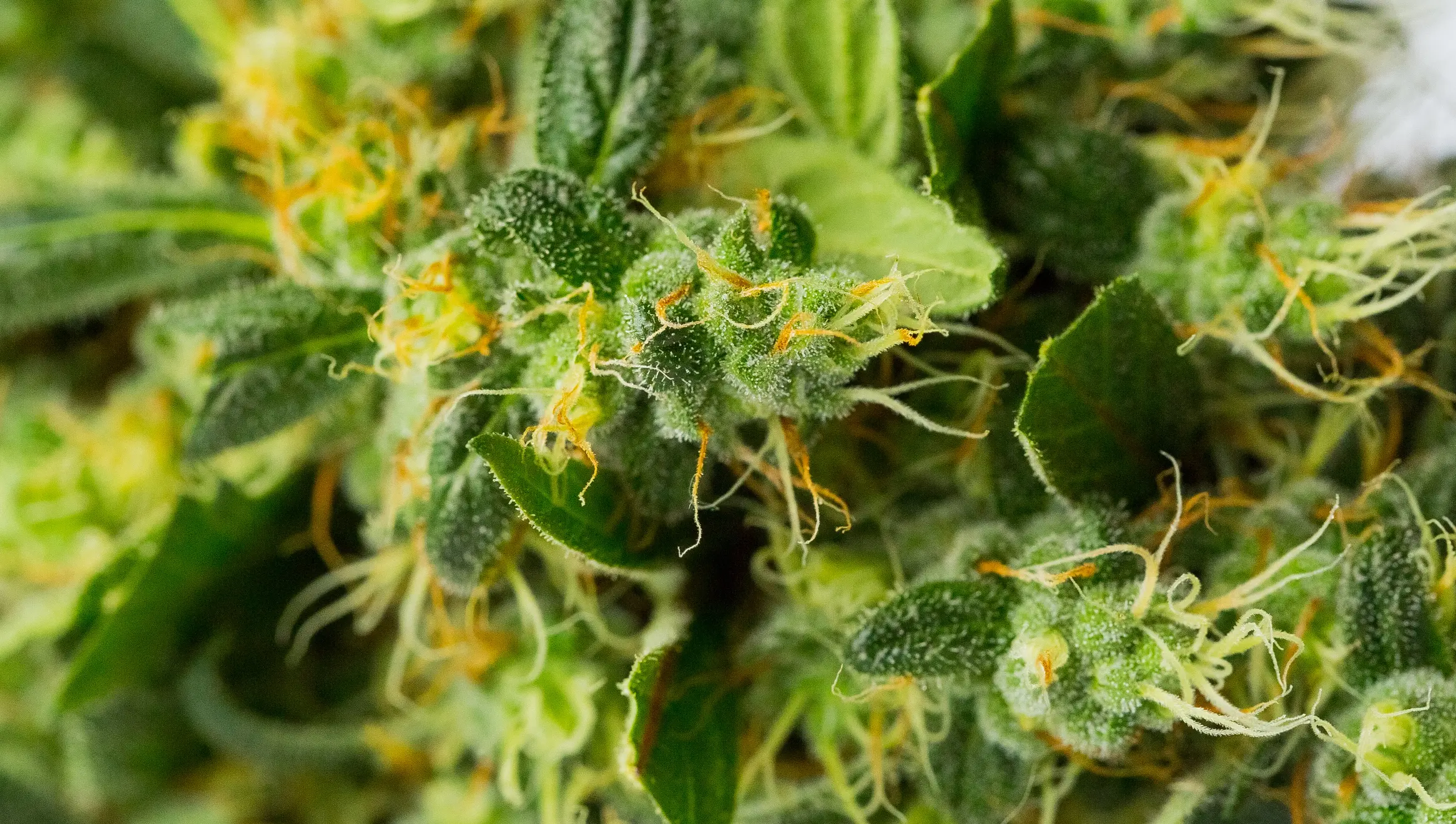
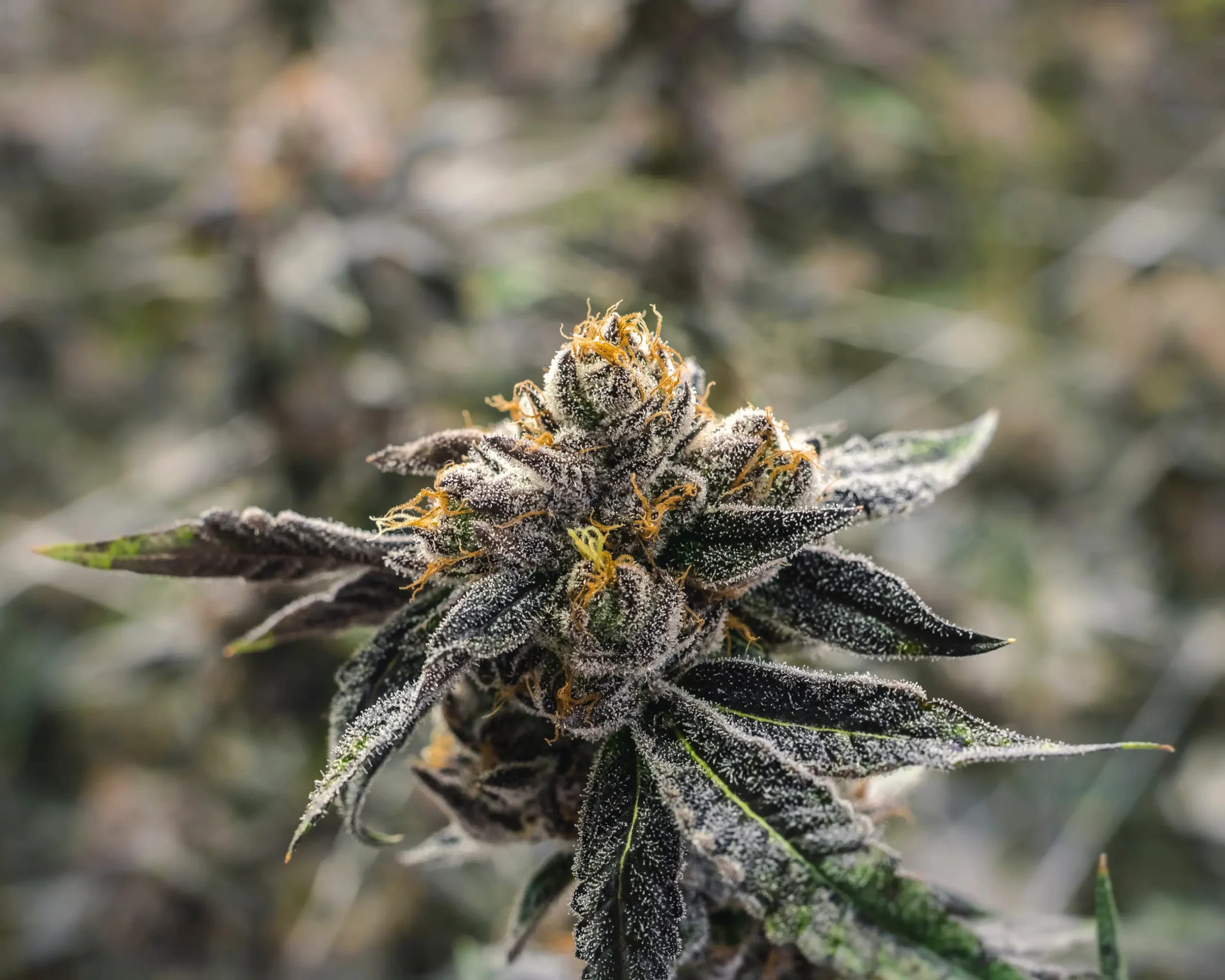
Black Maple, often called Black Maple 22, is a dark resin-heavy hybrid whose aroma rarely matches the name in a simple way. Maple or caramel sweetness may appear, but it is usually surrounded by black pepper, rubber, diesel, vanilla, sandalwood, grape, pine and earthy funk. The profile can feel like warm pastry and syrup viewed through a much sharper fuel-and-spice filter.
The plant combines Dulce de Uva with Sherbanger. That pairing produces a medium, strongly branched plant with broad leaves, significant foliage production and enough stretch to open the canopy after the flip. The flowers become dense and sticky, and the final plant may fade into deep purple or near-black color. The same leaf mass that supports vigorous growth can become the cultivar’s largest cultivation weakness.
The central question is how to control aggressive foliage without overdefoliating a plant that needs to finish heavy resinous buds. Waiting too long creates a humid interior and repeated leaf removal late in flower. Stripping too hard reduces the photosynthetic support behind the final swell. Black Maple works best when the branch framework is selected early, the center is cleaned before density peaks and the cure is long enough for maple, grape and vanilla to emerge behind rubber and pepper.
How often should I defoliate Black Maple without stripping it too hard?
Use the plant’s actual light and airflow bottlenecks rather than a weekly calendar. Select the main arms in veg, clean weak interior shoots before the flip, then remove only leaves that seal the center, press against flower sites or shade several productive tops. Stop major structural work after stretch and preserve the exposed leaves that power the late resinous swell.
Sent by: Noah via e-mail
Strain Features
| Feature | Details |
|---|---|
| Strain Type | Indica-dominant hybrid |
| Genetic Profile | Dulce de Uva x Sherbanger |
| Common Selection Name | Black Maple 22 or Black Maple #22 |
| THC | Commonly reported in the mid-to-upper 20% range; selected batches may test higher |
| CBD | Usually very low |
| Dominant Terpenes | Beta-caryophyllene, limonene, linalool and pinene are frequently reported |
| Flavor / Aroma | Maple, caramel, grape, vanilla, rubber, black pepper, diesel, wood and pine |
| Effect Character | Strong euphoria followed by heavy, comforting body relaxation and possible sleepiness |
| Flowering Time | Approximately 8 to 10 weeks; many selected cuts finish around 63 to 70 days |
| Stretch | Medium; Sherbanger-leaning plants may stretch more |
| Plant Architecture | Bushy, broad-leaved and strongly branched with aggressive foliage production |
| Bud Structure | Dense, sticky flowers with dark color and abundant resin |
| Grow Difficulty | Intermediate |
| Primary Grow Risk | Interior leaf congestion, hidden humidity and a harsh rubber-pepper finish when overfed or dried quickly |
Genetic Lineage
Dulce de Uva contributes grape candy, dough, cream, dark color and high resin potential. Sherbanger combines sherbet sweetness with Headbanger-derived sour fuel and structural vigor. Black Maple brings those families together in a plant that can be sweet, dark and dessert-like while still carrying sharp rubber, pepper and diesel.
The selected #22 expression became particularly associated with dense resin, black-purple color and a complex sweet-to-savory aroma. That number identifies a selected plant, not a different cross. Seed-grown related versions may show broader variation than the circulated selected cut.
Phenotypes may lean toward Dulce de Uva with grape, pastry, vanilla and maple, or toward Sherbanger with more stretch, sour fuel, pepper and rubber. Hash-oriented selection has also emphasized trichome production, but flower quality still depends on whether the cured aroma remains complete and the buds dry evenly.
The two parents also explain why Black Maple can look more uniform than it smells. Broad leaves, thick lateral growth and early resin may appear across several plants, yet the cured jars can separate sharply. One expression may lead with dark grape and vanilla cream, another with tire rubber and black pepper, and a third with pine, sour fuel and only a trace of pastry sweetness. For selection work, the plant should therefore be evaluated at three points: structure before the flip, flower behavior near the end of stretch and aroma after at least several weeks of cure.
Black Maple #22 should be understood as a selected expression within the cross. The number does not prove that every seed-grown Black Maple will copy the same stretch, color, solventless performance or finishing time. The selected cut is documented as a medium-stretch plant with thick, crowning branches, a nine-to-ten-week flower window and strong resin potential. Related seed plants can finish earlier or later and may require a different canopy plan.
This distinction is especially important when a grower receives an unlabeled clone or seeds sold under the shorter name. Do not build the entire room around a reputation for dark color or heavy hash return. First observe branch angle, internodal distance, the rate at which new leaves refill the center after pruning and whether the aroma remains sweet after the first dry. A useful keeper is not simply the blackest plant. It is the plant whose architecture can be repeated and whose cured profile retains the contrast between maple-grape sweetness and Sherbanger-derived sour spice.
Effect Breakdown
Euphoric pressure
The onset is often powerful and mentally positive. Mood rises and the user may feel focused, creative or socially comfortable for a short period. The effect can arrive with noticeable head pressure.
Warm body coating
Physical relaxation develops quickly and may feel dense or enveloping. Muscles loosen and the experience becomes more suitable for evening use. Many users describe comfort rather than complete immediate sedation.
Sleep threshold
Higher doses can become strongly sleepy, couch-locking and mentally slow. Combining the strain with alcohol or using too much can increase anxiety, dizziness or disorientation. Dry mouth and dry eyes are common.
The transition between the first and second phase is dose-dependent. A small amount may preserve the talkative, focused edge for longer, while a larger dose can compress that window and move quickly into heaviness. This helps explain why reports range from creative and social to sedating and sleep-oriented. Different batches may also vary in cannabinoid and terpene composition, so the strain name alone cannot predict a single fixed experience.
For an experienced user, the most characteristic Black Maple session is often not instant sedation but a dense progression: an upbeat pressure behind the eyes, a brief period of interest and comfort, then a spreading physical weight that makes demanding tasks less attractive. New users should not mistake the pleasant opening for permission to redose immediately. The later phase can be considerably stronger than the first ten minutes suggest.
Flavor & Aroma Profile
The jar may open with rubber, black pepper, diesel and dark earth. With time and broken flower, caramel, maple, vanilla, grape, sandalwood and pine become more visible. The maple note is usually an accent rather than a literal syrup aroma.
The inhale can feel sweet, woody and creamy. The exhale is more aggressive, with fuel, rubber, pepper and pine. A cured grape-dough aftertaste may remain behind the spice. Selected flowers can be both sweet and industrial without becoming dirty or sulfurous.
Black Maple punishes a rushed finish. Excess nitrogen or salt buildup can make the smoke hot and mineral. Rapid drying preserves rubber and pepper while removing vanilla, grape and caramel. Several weeks of cure are often needed before the sweet layer integrates with the gas.
The intact flower and the broken flower can tell different stories. An unopened jar may seem predominantly peppery and industrial because the heavier spice and fuel notes fill the headspace quickly. When a bud is split, the interior can release grape skin, vanilla dough, caramelized sugar and dry wood. That contrast is a useful quality check: if the interior carries no softer layer at all, the phenotype may be strongly savory or the late-flower and drying environment may have stripped the more volatile portion of the profile.
On the palate, the best examples do not taste like poured maple syrup. The sweetness is darker and less literal, closer to browned sugar, pastry crust or maple wood behind grape and fuel. Black pepper and rubber arrive on the exhale, while pine and sandalwood can remain in the aftertaste. A balanced flower feels deliberately strange rather than confused: dessert at the front, mechanical sourness through the middle and warm wood at the finish.
Combustion quality reveals late feeding and drying mistakes quickly. A mineral, throat-catching smoke with a narrow rubber note usually indicates that loud aroma survived but balance did not. A smoother sample allows the sweetness to expand after the exhale instead of disappearing beneath heat. Because the cultivar already has a forceful savory backbone, the grower gains little by pushing it toward additional harshness.
Dominant Terpenes
Terpene order can change between phenotypes, cultivation environments and laboratory batches. The table describes recurring patterns rather than a fixed chemical formula.
| Terpene / Group | Likely Role in Black Maple |
|---|---|
| Beta-Caryophyllene | Frequently leads the pepper, rubber-spice and warm body of the aroma. |
| Limonene | Adds brightness and may help lift grape, caramel and citrus-adjacent sweetness above the dark base. |
| Linalool | Can contribute floral cream, vanilla and a softer dessert texture. |
| Pinene | Supports pine, wood and the sharper forest-like finish. Humulene and guaiol may add additional wood and earthy depth in some samples. |
Available flower analyses support the idea that Black Maple does not have one permanent terpene order. Some batches place limonene and beta-caryophyllene near the top with measurable pinene and linalool; others are more caryophyllene-led or show a stronger humulene and myrcene background. This variation is expected across cuts, environments, harvest dates and laboratories. It is more accurate to describe a recurring family of compounds than to claim that one terpene always dominates.
The aroma also cannot be reduced to terpene names alone. Rubber, fuel and savory funk may involve volatile compounds that are not represented well by a short commercial terpene panel. Terpene data can explain citrus lift, pepper, pine and floral cream, but it should not be used as a complete recipe for the cultivar’s smell or as a medical prediction. The practical value is comparison: when the same cut is tested across runs, changes in the profile can reveal how temperature, maturity and post-harvest handling changed the finished flower.
For growers, the most useful target is preservation of contrast. Limonene and the lighter pine-floral fraction keep the jar from becoming flat rubber and earth. Caryophyllene, humulene and heavier woody compounds give the strain its warm depth. Late heat, rough handling or a fast dry tends to narrow that contrast, leaving the durable pepper-fuel base louder than the grape, vanilla and caramel top layer.
Indoor vs. Outdoor Growing
| Decision Point | Indoor Growing | Outdoor Growing |
|---|---|---|
| Foliage control | Indoor access makes repeated selective thinning and lower cleanup easier. | Wide plant spacing and early pruning are essential because large shrubs can become opaque. |
| Stretch | Medium stretch can complete a partially open screen. | Sherbanger-leaning plants may become taller and broader with unrestricted roots. |
| Flower density | Controlled humidity protects dark sticky buds and preserves finish quality. | Rain and dew can hide inside dark dense flowers, where early damage is difficult to see. |
| Color | Stable cooler nights can reveal dark pigmentation without severe stress. | Natural autumn cooling may deepen color, but weather risk must remain acceptable. |
| Support | A net organizes branches and supports the late resinous swell. | Cages and ties are valuable because dense side branches can pull outward. |
| Best fit | Intermediate growers who are comfortable with selective defoliation and curing. | Dry, warm regions or protected outdoor spaces with a reliable finish. |
For Black Maple, the indoor decision is mainly about controlling the cultivar-specific risk before it reduces premium flower. Outdoor cultivation can increase root volume and plant size, but only a suitable finishing climate allows the strongest aroma and bud structure to mature safely.
Indoors, Black Maple benefits from access on more than one side of the canopy. A wall-to-wall plant can look efficient until broad leaves seal the center and the side branches begin leaning into one another. A rectangular screen with service lanes, or fewer plants with enough space to rotate and inspect them, is easier to manage than an overcrowded sea of foliage. The cultivar does not require extreme height, but it does require the grower to reach the interior before the flowers become sticky.
Outdoors, unrestricted roots can turn the same branchy habit into a wide shrub. Install a cage while the stems are still flexible and guide the primary arms outward so the center receives morning sun and moving air. Avoid placing the plant against a solid fence or in a pocket where dew remains after the rest of the garden has dried. Dark pigmentation is visually attractive but does not protect wet flowers from infection.
Greenhouse cultivation sits between those two systems. Protection from rain is useful, yet a closed greenhouse can preserve humidity long after sunset. Sidewall ventilation, horizontal airflow and deliberate plant spacing matter more than the roof alone. If the greenhouse cannot evacuate moisture during cool nights, the apparent weather protection may create a more dangerous finishing environment than an open, breezy site.
Container size should be matched to the planned canopy. An undersized container may require frequent irrigation during stretch and produce unstable root-zone EC. An oversized container kept constantly wet can slow root oxygenation beneath a plant whose large leaves hide early stress. Choose enough root volume to support the intended branch count, then irrigate from measured demand rather than from the dramatic appearance of the canopy.
Strain-Specific Grow Guidance
Select the branch framework before the foliage takes over
Top once or twice early and choose the strongest arms. Remove weak interior shoots before they become hidden by broad leaves. The plant can create a large number of branches, but not every branch will reach productive light.
The aim is not a maximum number of tops. It is a limited set of tops that can remain separated after the plant refills with leaves. On a clone with established roots, one early topping followed by outward tying often creates enough primary arms. A second topping can work in a longer vegetative period, but each new leader increases the amount of interior foliage that must be managed later.
| Growth Stage | Structural Decision | Black Maple Reading |
|---|---|---|
| Rooted clone / early seedling | Build roots before high-stress training | Wait for firm new growth and several healthy nodes; broad leaves alone do not prove the root system is ready. |
| Early veg | Top once or bend the main stem | Identify the four to eight strongest lateral directions and remove inward shoots that have no clear lane. |
| Late veg | Spread arms across an open screen | Leave visible gaps because leaf width and transition growth will close more space than the bare stems suggest. |
| Weeks 1-2 flower | Tuck flexible leaders and limit vertical competition | Watch which branches continue stretching; do not repeatedly top once floral transition is established. |
| End of stretch | Clean the lower zone and install final support | Remove shaded shoots, preserve exposed fan leaves and stop major structural stress. |
| Mid to late flower | Support and inspect rather than reshape | Keep colas separated, remove only leaves creating a real airflow problem and avoid unnecessary contact with resin. |
Flip with room for medium stretch
A partially open canopy is ideal. The plant often stretches enough to close gaps, especially in Sherbanger-leaning expressions. A completely filled screen becomes difficult to ventilate after the leaves expand and flowers begin stacking.
Defoliate by purpose, not on a repeating calendar
Some reports describe frequent leaf removal because the plant regrows foliage aggressively. Repetition alone is not the goal. Remove leaves that block several tops, press against developing flowers or prevent air from entering the center. Leave healthy exposed leaves that support the final swell.
A useful defoliation test is to look through the plant from below with the circulation fans running. If no moving air reaches the center and the same leaves repeatedly overlap, selective removal is justified. If light and air already reach the productive sites, removing more tissue simply because a calendar says “day 21” adds stress without solving a problem. Black Maple can replace leaves quickly during transition, so small, repeated decisions are safer than one severe strip.
My preferred pruning window is late veg through the end of stretch. That gives enough time to learn which arms are real contributors while avoiding heavy work deep into flower. Once the flowers become dense and sticky, every unnecessary reach into the canopy risks bruised trichomes, bent petioles and transferred moisture. The late plant should be supported and observed, not repeatedly redesigned.
Create a clean lower zone early
The dense upper canopy shades the interior quickly. Remove low branches and small shoots before mid-flower. Late lollipopping wastes resources already invested and forces the grower to handle sticky flowers repeatedly.
Keep irrigation matched to the leaf mass
A leafy plant can use water quickly under strong light, but a broad drooping canopy can also hide overwatering. Check container weight, root-zone oxygen and actual daily demand. Stable moisture supports the heavy flower build more effectively than repeated saturation and drought.
Track the change in irrigation demand across the flip. A healthy, rooted Black Maple normally increases water use as the leaf area expands. If demand suddenly slows while the room remains stable, inspect root-zone temperature, saturation, pH and accumulated salts before increasing nutrient strength. Large leaves may remain visually full for a time even while the root environment is declining.
In coco or other high-frequency systems, smaller and more consistent events are generally safer than alternating saturation with severe dryback. In soil, wait for meaningful oxygen return without allowing the plant to wilt hard. The exact interval cannot be universal because container size, substrate, light and plant mass change the answer. The cultivar-specific rule is to avoid an anaerobic center beneath a canopy that already holds humidity above it.
Reduce nitrogen before the canopy becomes dark and thick
Black Maple can look visually impressive when very dark, yet excess nitrogen increases leaf overlap and delays a clean flower finish. Clawing tips, reduced water use and soft stems are warnings. A moderate fade is not a failure when the flowers continue swelling.
Use moderate feeding after establishment and let demand justify every increase. The selected cut is documented as vigorous and resinous, but no peer-reviewed Black Maple-specific EC curve exists. A starting framework may rise gradually from gentle seedling or clone nutrition toward a firm mid-flower program, then stabilize or taper as water use slows. It should never be copied without reading runoff, source water, substrate and plant response.
| Stage | Nutrition Priority | Signs to Watch | Response |
|---|---|---|---|
| Early veg | Root establishment and balanced nitrogen | Pale new growth, slow rooting or constantly wet media | Correct root-zone conditions before increasing strength. |
| Late veg | Support branch building without excessive leaf expansion | Very dark leaves, hooked tips and soft crowded growth | Hold or reduce nitrogen and improve light distribution. |
| Transition | Maintain calcium and magnesium availability while stretch accelerates | Interveinal paling, weak stems or rising root-zone EC | Verify pH and water composition before adding supplements. |
| Mid flower | Stable delivery during resin and density development | Burned tips, stalled drinking or leaf-edge stress | Reduce concentration or frequency; do not chase density with more salts. |
| Late flower | Preserve clean finish and functioning leaves | Delayed fade, harsh mineral aroma or wet media after normal interval | Follow declining demand and avoid unnecessary late inputs. |
Light response and canopy load
Black Maple can use strong flowering light after its structure is set, but the thick leaf layer changes how that light is distributed. Driving the top harder does not compensate for a sealed middle. First create a shallow canopy with visible lanes, then increase intensity while monitoring leaf angle, top temperature and irrigation demand.
For a practical room with ambient carbon dioxide, an operational range might begin around 350-500 PPFD for rooted young plants, 500-700 PPFD in established veg, 650-850 PPFD during transition and 800-1000 PPFD after stretch when temperature and irrigation are controlled. These are Weedth working ranges, not results from a Black Maple-specific lighting trial. Stay in the lower half if the room is warm, the root volume is limited or the tops are already showing edge curl and bleaching.
The cultivar’s dark pigment is not a license to overlight it. A purple top can still be heat-stressed, and resin can continue developing while the volatile sweet fraction is being lost. Compare the aroma and leaf posture of top flowers with protected flowers lower in the canopy. If the upper layer smells narrower and shows dry margins, reducing canopy load can improve finished quality even when no severe burn is visible.
Climate and flower health
The most dangerous period begins when the branchy plant has finished stretching but the flowers have not yet revealed how dense they will become. Early flower can tolerate moderate humidity, yet the target should move downward as the colas harden. Roughly 50-55% RH during transition, 45-50% through bulk and 40-45% near finish is a practical starting progression when temperature and air movement support it. These numbers are adaptable ranges, not guarantees.
Horizontal airflow should move leaves gently at several levels rather than blast one side of the tops. Air must enter beneath the canopy, cross the middle and escape above it. A strong fan pointed directly at flowers can dry exposed surfaces while the interior remains humid. The better solution is branch spacing, lower cleanup and distributed circulation.
Flowering timeline and harvest window
The selected #22 cut is commonly described as a nine-to-ten-week plant with medium stretch. Seed-related expressions can vary. Treat day counts as planning tools and confirm maturity through flower behavior. Black Maple often becomes visually dark before it is fully finished, so color alone is a poor harvest signal.
| Flower Period | Likely Development | Grower Priority |
|---|---|---|
| Weeks 1-2 | Medium stretch, fast leaf refill and early pistils | Tuck flexible leaders, keep gaps open and avoid excess nitrogen. |
| Weeks 3-4 | Branch positions stabilize and flower clusters become clear | Complete lower cleanup and stop major pruning after the canopy is readable. |
| Weeks 5-6 | Resin rises; pepper, rubber and sour fuel may dominate | Maintain root-zone consistency and install the final support layer. |
| Weeks 7-8 | Dense flowers crown, color deepens and internal humidity risk increases | Inspect the stem side of large tops and protect canopy temperature. |
| Weeks 9-10 | Calyxes complete their swell; grape, vanilla and caramel may become clearer | Harvest by calyx maturity and trichomes while the finishing climate remains safe. |
Inspect dark buds from the inside
Purple tissue can hide the first sign of rot
Do not judge Black Maple’s largest tops only from the visible surface. Separate the flower gently at the stem side, inspect contact points and investigate any dull grey-brown tissue or stale odor immediately. Its dark pigmentation and aggressive leaf cover can conceal moisture damage longer than a pale, open flower would.
Purple and near-black flower tissue can conceal early botrytis discoloration. Gently inspect the base of the largest buds and any contact points. Smell for stale or musty notes and maintain airflow through the branch structure.
Wait for sweetness to appear behind the rubber
The cultivar may smell primarily like pepper and industrial gas before full maturity. Harvest after calyx swelling, slowing new pistils and mostly cloudy calyx trichomes. Additional days can clarify grape, maple and vanilla, but a wet forecast is not worth risking dense dark flowers.
Grower Note: Use environmental numbers as adaptable ranges rather than strain mythology. The cultivar-specific priority is the growth behavior, flower structure and quality risk described above.
Weedth Bud Flavor Tips
Preserve maple, grape and vanilla by avoiding excessive late heat and strong direct airflow after harvest. The sharp rubber and pepper notes are more durable, so an aromatic flower can still lose its most desirable balance while remaining loud.
Dry medium branches with space around the dense buds. Dark color makes it harder to judge internal moisture visually. Use feel, branch condition and short sealed-container checks rather than appearance alone.
The cure is part of the cultivar’s identity. Early jars may smell industrial, woody and peppery. Over several weeks, caramel, grape and vanilla often become clearer. Store whole flowers in cool darkness and avoid repeatedly opening the entire batch.
Treat Black Maple as a layered sweet-savory cultivar rather than a simple gas strain. The sharp rubber and pepper fraction can remain obvious after rough handling, creating the illusion that aroma was preserved. The real quality test is whether grape skin, vanilla, browned sugar and dry wood survive beside it. A loud jar with only one durable note is not the same as a complete jar.
My preferred operational approach is large-branch hanging in darkness near 16-19°C and 55-60% RH with indirect room circulation. Ten to fourteen days is a useful target when branch size and room control allow it, but the endpoint matters more than the calendar. Dense dark tops should lose moisture evenly; they should not become crisp outside while the stem-side core remains cool and soft.
Use minimal wet trimming. Protective sugar leaves slow the surface and reduce unnecessary abrasion against resin heads. Once the flower is evenly dry, trim carefully and begin curing in small enough containers that moisture can be monitored without opening the entire harvest. Black Maple often improves noticeably between the second and sixth week of cure as the sweeter layer separates from the industrial front note.
Long-term storage should be cool, dark and airtight with limited headspace and limited opening. Divide the harvest into working and reserve containers. The working jar can be opened normally while the reserve portion remains stable. This is especially valuable for Black Maple because repeated warm-air exposure gradually removes the quieter dessert notes before it eliminates the heavier spice and wood.
Judge the cure by balance
Look for maple, grape and vanilla to emerge without losing the pepper, fuel and wood that give the cultivar structure.
Mistaking loud rubber for complete flavor
Hot drying and direct fan air can leave a forceful jar while stripping the sweet layer that makes Black Maple distinctive.
Weedth Bud Boost Tips
Indoors, yield improves when the grower removes low-value branches before the leaf mass becomes difficult to navigate. A strong main canopy with visible air lanes produces more premium flower than retaining every resinous lower site.
Outdoors, build a wide support cage and keep the center open. The plant can carry substantial side-branch weight. Strategic early thinning is easier and safer than trying to separate heavy dark branches after rain.
Resin production is already a genetic strength. Pushing aggressive bloom supplements is less valuable than maintaining healthy roots, even light and a stable finish. Overfeeding can increase harshness and leafiness without improving usable flower.
The most important bud-boost decision is branch selection before the plant becomes opaque. Black Maple does not need every shoot preserved to prove its vigor. Removing weak inward growth concentrates light and airflow around the arms capable of carrying dense flowers. This improves the percentage of premium buds while reducing the humid low-value material that is difficult to dry.
Use support in layers. The first net or tie system establishes lateral spacing. A second layer near the end of stretch or early bulk holds the crowning side branches as resin and density increase. Support should preserve separation rather than pull every top toward the same center. Outdoors, a wide cage with individual soft ties serves the same purpose.
Do not chase black color with severe cold. Natural pigmentation may deepen under cooler nights, but cold roots and excessive day-night swings can slow water use and raise humidity around dense flowers. Color is a secondary expression. Healthy calyx development, clear aroma and clean interior tissue are more valuable than forcing the darkest possible photograph.
The single sentence I would keep beside this plant is this: Black Maple responds better to an inspectable canopy than to a maximal canopy. If the grower cannot see or reach the interior, no additive can protect the flowers hidden there.
Medical Uses & Benefits
Reported use includes evening stress, physical tension, low mood and sleep preparation. The early euphoria may improve emotional tone before the heavy body effect becomes dominant.
The potency and sedating finish can interfere with daytime function. Sensitive users may experience anxiety, dizziness or excessive heaviness. The cultivar should not be represented as treating insomnia, pain or any disease.
Use reports are not medical proof
Cannabis responses vary by dose, tolerance, chemotype and individual physiology. Reported experiences do not replace medical advice and do not prove that a cultivar treats a disease.
The early mental lift and later physical weight can be useful to some adults seeking an evening transition, but the sequence is not universal. A low dose may feel emotionally bright; a high dose may be disorienting before it becomes sedating. Anyone with a history of panic, sensitivity to high-THC products or interactions with medication should approach cautiously and seek qualified medical guidance where appropriate.
Strain labels are not standardized medical products. Two Black Maple batches can differ in cannabinoid concentration, terpene composition and duration. Reported comfort, appetite or sleepiness should therefore be treated as experience data, not as evidence that the cultivar diagnoses, prevents or treats a condition.
Ideal User Profile
Black Maple suits experienced users who enjoy dark sweet-gas profiles, strong body relaxation and an evening-oriented effect. It is especially attractive to people who appreciate grape and pastry notes but do not mind rubber, pepper and diesel.
Growers should choose it when they can manage a leafy canopy and dense-bud drying. It is less suitable for low-tolerance users, hot rapid-drying environments or growers who prefer minimal pruning.
Grower Notes and Feedback
A recurring pattern is aggressive foliage production after the flip. Growers often report that the plant remains healthy and vigorous while requiring repeated access to the center. The best results come from early structural pruning rather than endless late leaf removal.
Another pattern is the gap between aroma and name. Maple sweetness may be present, but rubber, pepper and gas frequently lead. The cured balance varies by phenotype, and a sweet-smelling live plant may still finish more savory than expected.
Growers also describe the plant as structurally generous but not automatically efficient. Side branches appear promising early, and it is tempting to keep all of them. By mid-flower, the cost becomes visible: overlapping leaves, crowded secondary sites and a center that is difficult to inspect. The better runs usually begin with fewer chosen arms and end with a larger proportion of dense, mature flowers.
The other recurring lesson is that color can distract from readiness. A plant may become purple or nearly black while still producing fresh pistils and building calyx volume. Harvesting for appearance alone can leave the flavor dominated by sharp rubber and green spice. Waiting for the actual finish often brings the grape, maple and vanilla layer into better alignment, provided the room remains dry enough to justify the extra time.
Keeper selection should include a post-harvest scorecard. Record stretch, branch strength, how quickly the center refills after pruning, the date the flowers begin to crown, visible mold pressure, live aroma, dry aroma and jar aroma after four to six weeks. A plant that looks spectacular but requires constant rescue may be less useful than a slightly greener expression that remains open, finishes evenly and tastes more complete.
Weedth Editor’s Note
I would not let Black Maple decide its own branch count. The plant is capable of filling every open space with foliage, and that is exactly why I would choose the framework early. My ideal canopy has fewer strong arms, a clean center and room to inspect every dark cola.
I would also give the cure time before judging the flavor. Rubber and pepper show themselves immediately. Maple, grape and vanilla are the quieter reward. If I rush the dry, the cultivar keeps its volume but loses its depth.
What makes Black Maple interesting to me is not the color by itself. Dark flower is easy to admire and easy to overvalue. The character appears when the plant uses that visual weight to carry an aroma that is simultaneously comforting and abrasive. One moment suggests grape pastry and warm wood; the next feels like pepper, tire rubber and sour fuel. A well-finished jar should not make me choose between those sides.
In the room, I would treat the plant as a lesson in subtraction. The vigorous branch that turns inward, the lower shoot that will never clear the leaf layer and the fan leaf pressing against a forming top all look harmless when the plant is young. Together they become the humid center that steals attention during the last weeks. Removing them early feels less dramatic than repairing them late, and that is exactly the point.
I would also resist the urge to force every celebrated trait. I would not chill the root zone to make the flowers blacker, push the feed to make the canopy greener or dry quickly to make the rubber louder. Black Maple already has plenty of visual and aromatic force. My job would be to preserve the softer counterweight: the grape, vanilla, caramel and clean resin texture that make the force feel deliberate instead of crude.
The run I would remember would not be the one with the largest single cola. It would be the one where every dark top could be inspected from more than one angle, the branches stayed separated after the final swell and the cure changed week by week. First pepper and sour rubber, then grape skin, then a warm maple-pastry note arriving after I had nearly decided it was not there. That slow reveal is the reason I would grow it again.
Weedth Score
Growing Experience: 8.1/10
Vigorous and rewarding, but foliage management and dense-bud inspection require work.
Bud Structure & Visual Appeal: 9.3/10
Dark, sticky and highly resinous with excellent late color.
Aroma Complexity: 9.1/10
Rubber, pepper, maple, grape, vanilla, wood and gas create unusual depth.
Flavor & Smoothness: 8.5/10
Excellent after a patient cure; overfeeding and rapid drying make it harsh.
Effects & High Experience: 8.6/10
Strong euphoria develops into warm, heavy and often sleepy relaxation.
Overall Satisfaction & Recommendation: 8.7/10
A premium evening cultivar for growers comfortable managing foliage and cure.
I would grow Black Maple again for the moment the rubber and pepper open into grape and caramel, but I would remove the weak interior before the plant hides it from me.
FAQ
What is Black Maple 22 crossed from?
It is widely documented as Dulce de Uva crossed with Sherbanger.
Does Black Maple stretch a lot?
Most descriptions place it in the medium range, although Sherbanger-leaning expressions may stretch more.
Why is Black Maple so leafy?
Broad-leaf growth and strong branching are recurring traits. Early branch selection and purposeful defoliation help keep the interior open.
Does Black Maple really smell like maple syrup?
Maple or caramel may appear, but rubber, pepper, diesel, vanilla, grape and wood are often equally or more prominent.
Is Black Maple prone to mold?
Dense dark flowers and a crowded interior can create risk. Inspect the inside of large buds because discoloration is harder to see against purple tissue.
How long should Black Maple cure?
Several weeks are often needed for grape, vanilla and caramel to integrate with the louder rubber and pepper notes.
Similar Strains
Sherbanger 22 – Contributes the sour fuel, stretch and pepper side, but is brighter and less maple-grape heavy.
Grape Gasoline – Shares grape, dark color and fuel, with a taller frame and cleaner grape-candy emphasis.
Biscotti – Offers dense cookie gas and pepper, but is nuttier and less syrupy or grape-driven.
Black Diamond – Matches dark berry-earth flower and evening relaxation, with less rubber and maple sweetness.
Purple Punch – Provides grape dessert flavor and sedation in a more compact, simpler and less fuel-heavy plant.
Educational content. Always follow local laws and regulations.
Share this article
A quick overview of the topics covered in this article.
Follow us
Latest articles
October 28, 2026
October 28, 2026
October 28, 2026