
Cannabis Light Stress Diagnosis: Heat, Photobleaching, Nutrient Burn, and Canopy Symptoms
In modern high-efficiency indoor cannabis cultivation, light intensity is the primary accelerator of plant metabolism. With the widespread adoption of multi-bar solid-state light-emitting diode (LED) fixtures capable of delivering photosynthetic photon flux densities (PPFD) well over 1000 to 1500 μmol/m²/s, growers possess unprecedented power to drive carbon assimilation, dense floral stacking, and heavy secondary metabolite synthesis. However, high-irradiance photon delivery is a double-edged sword: when photon delivery exceeds the plant biochemical processing capacity or when environmental transpiration is misaligned, light becomes a potent destructive force.
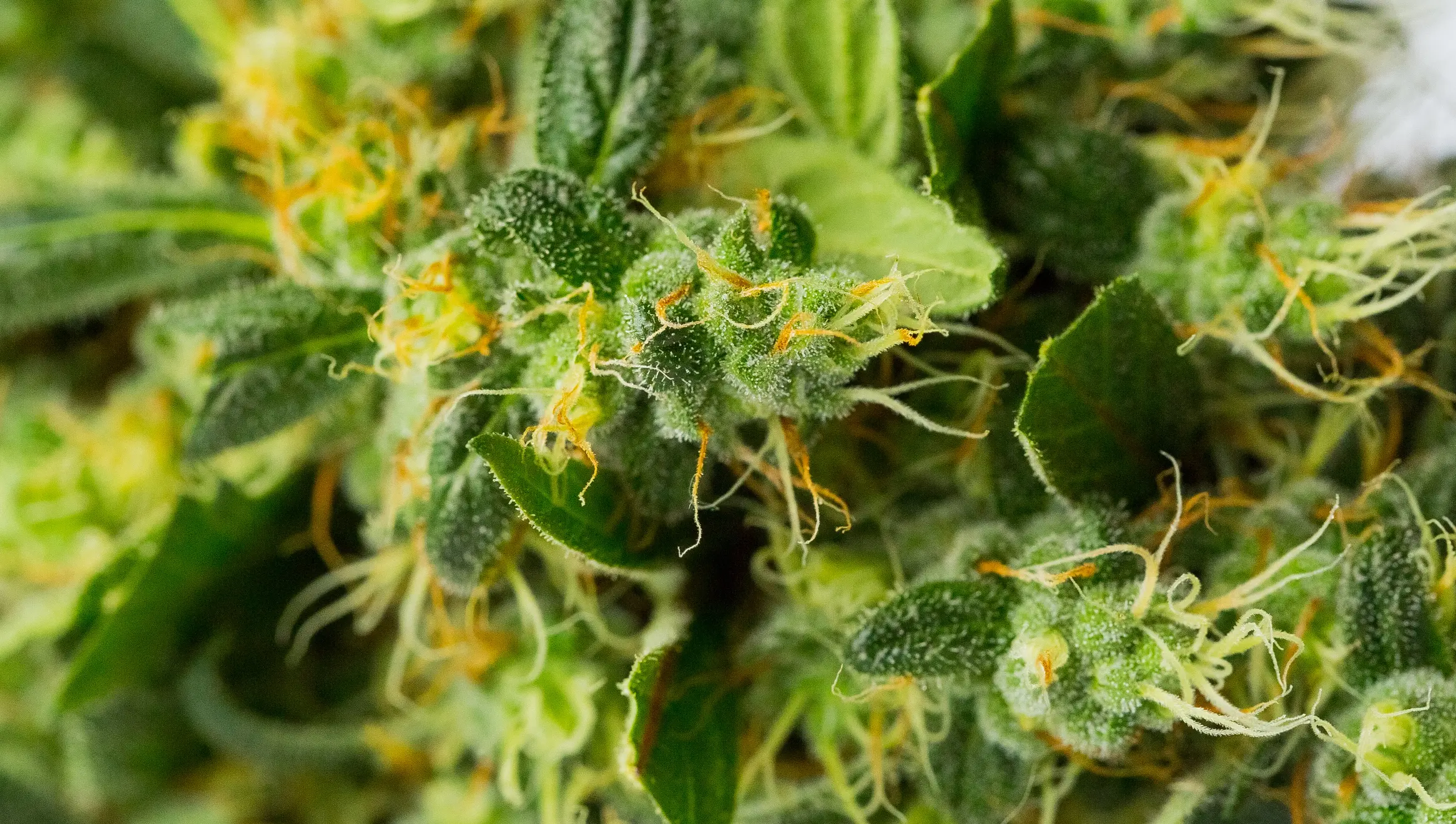
Diagnosing canopy stress is one of the most frustrating challenges in indoor horticulture. When top fan leaves begin curling upward at their serrated margins (tacoing), leaf tips turn crispy brown, upper colas bleach ghostly white, or new floral growth erupts into stringy towers of foxtails, cultivators frequently jump to the wrong conclusion. Guided by generic deficiency charts and grower folklore, they immediately assume a root-zone nutrient deficiency: diagnosing iron chlorosis, calcium-magnesium starvation, or excessive nitrogen fertilizer. They alter reservoir formulations, perform aggressive flushes with unbuffered water, or pour expensive additives into their irrigation tanks, only to watch the canopy deteriorate further.
The physiological reality is that light stress, radiant heat load, transpirational dehydration, and root-zone salt buildup are intimately intertwined. High photon flux accelerates transpiration, forcing the plant to drink water at rapid rates. If the nutrient solution electrical conductivity (EC) is too concentrated, the plant accumulates toxic mineral salts at its leaf margins, mimicking nutrient burn. Conversely, if irradiance overwhelms Photosystem II reaction centers, excess photons generate destructive reactive oxygen species (ROS) that dismantle chlorophyll pigments, causing photobleaching that mimics micro-nutrient chlorosis.
This comprehensive diagnostic manual provides a rigorous, science-grounded framework for separating light stress from heat damage, nutrient toxicity, and genetic anomalies. We deconstruct the biophysics of photoinhibition and chlorophyll degradation, analyze the mechanical causes of leaf praying and tacoing, examine the spatial patterns that distinguish light burn from root-zone toxicities, and establish a repeatable, single-variable verification protocol to restore canopy vigor without ruining nutrient chemistry.
Plant Physiology and Photochemical Saturation: How Excess Photons Damage Chloroplasts
To accurately identify light stress, cultivators must understand what happens inside a cannabis leaf when photon arrival exceeds photosynthetic capacity. Photosynthesis is a series of quantum photochemical reactions: photon energy excites electrons within chlorophyll molecules in Photosystem II (PSII), passing electrons down an electron transport chain to generate NADPH and ATP, which fuel the Calvin cycle to convert carbon dioxide ($CO_2$) into sugars.
Photoinhibition and Photobleaching
Photoinhibition is the light-induced reduction in a plant photosynthetic quantum efficiency, occurring when absorbed light energy exceeds the capacity of the Calvin cycle to utilize it. Photobleaching is the irreversible photochemical destruction of photosynthetic pigments: when excess excitation energy cannot be dissipated, it reacts with molecular oxygen to form singlet oxygen ($^1O_2$) and hydroxyl free radicals ($OH^\bullet$). These reactive oxygen species (ROS) destroy the D1 protein core of Photosystem II and oxidize chlorophyll a and chlorophyll b molecules, stripping leaves and floral calyxes of their green color and turning them bright white or pale yellow.
Cannabis Photobleaching: Symptoms, Causes, and Correction
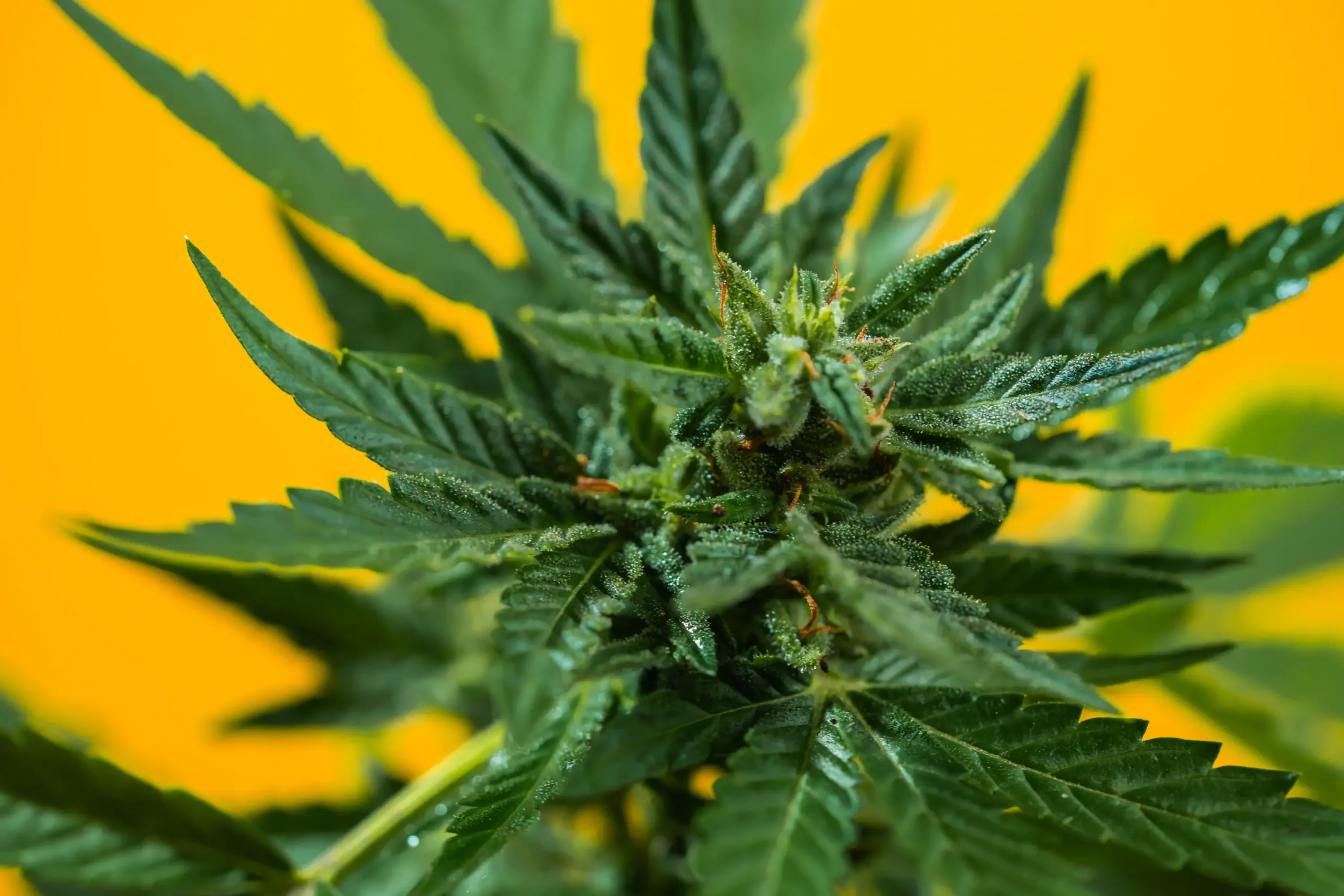
Photobleaching represents the ultimate stage of chronic photoinhibition. The visual presentation is unmistakable: the uppermost leaves and the crowns of the highest floral colas turn vivid albino white or pale cream, while lower foliage just 6 to 12 inches below retains a healthy deep green color. Unlike genetic variegation (which produces asymmetrical white sectors across random fan leaves) or chemical herbicide contamination, photobleaching occurs strictly on plant surfaces positioned closest to the luminaire.
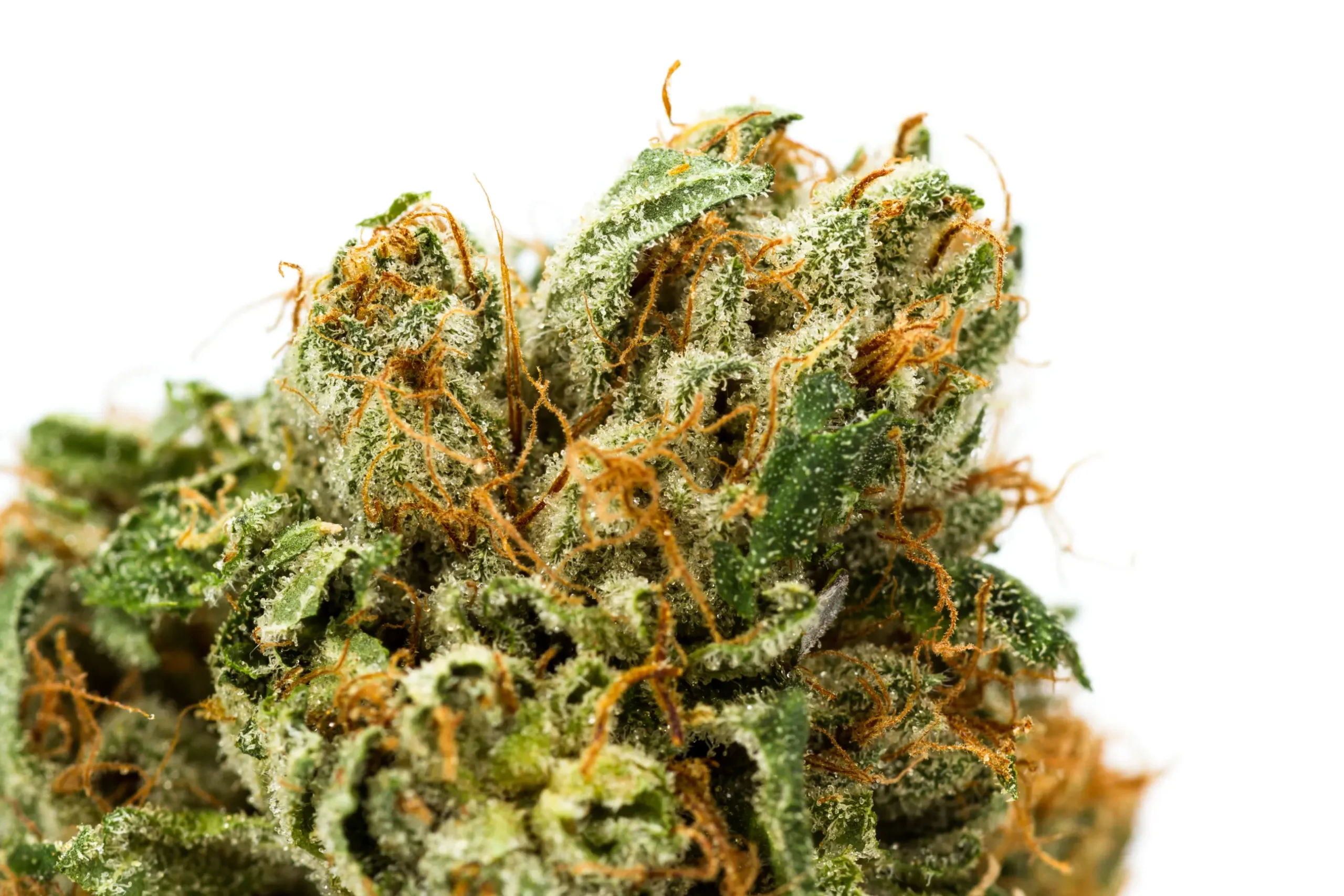
While some growers mistakenly boast about bleached colas as “frosty white tips,” photobleached calyxes are biologically degraded. The intense photon bombardment destroys glandular trichome heads, vaporizes volatile monoterpenes (such as myrcene, limonene, and pinene), and oxidizes tetrahydrocannabinol (THC) into cannabinol (CBN) and non-psychoactive degradation byproducts. Bleached flower smoke is harsh, cardboard-flavored, and deficient in cannabinoid potency.
Why the Center of a Cannabis Canopy Bleaches First
In almost every indoor garden, photobleaching begins directly beneath the optical center of the light fixture. This occurs due to geometric photon concentration. Most horticultural fixtures: whether high-pressure sodium (HPS) reflectors or multi-bar LED arrays: produce an optical hotspot in the center of their distribution grid. Even with diffuse optical lenses, the central 2×2-foot area of a 4×4-foot footprint receives 20% to 40% higher photon flux density than the outer perimeter edges.
Furthermore, air circulation beneath the center of a fixture is frequently restricted by ductwork or horizontal mounting bars, causing local leaf surface temperatures (LST) to rise. When extreme photon flux coincides with elevated leaf temperature, the enzymatic repair of the Photosystem II D1 protein stalls, causing rapid, localized pigment lysis in central colas while perimeter plants remain completely unaffected.
Photochemical Principle: Light is energy. If you provide more photon energy than the plant can assimilate through carbon fixation or dissipate through transpiration and protective xanthophylls, that surplus energy will physically tear cellular chloroplasts apart.
Environmental Demand: How High PPFD Amplifies Transpiration and Water Uptake
Photosynthetic photon flux does not operate in a biological vacuum. When you increase light intensity, you simultaneously increase the plant metabolic demand for water, nutrients, carbon dioxide, and transpirational cooling.
Top Leaves Yellowing While Lower Leaves Stay Green
One of the most frequent diagnostic errors in indoor cultivation occurs when upper fan leaves begin yellowing between their veins while lower foliage remains lush and dark green. Growers consult generic deficiency charts and immediately declare an iron (Fe) or sulfur (S) deficiency, as both are immobile micronutrients whose symptoms appear first on new growth.
However, true micronutrient deficiencies affect new shoots across the entire plant regardless of proximity to light. When chlorosis is concentrated exclusively on the upper leaves directly exposed to intense light, it is almost always photo-induced transpirational chlorosis. Under high PPFD (above 800 μmol/m²/s), upper leaves transpire water at staggering rates. If root uptake cannot match this transpirational pull, or if root-zone EC has accumulated excess mineral salts, the upper stomata partially close to conserve water. Without evaporative cooling, upper leaf temperatures spike, inhibiting chlorophyll synthesis enzymes and producing interveinal yellowing that mimics iron deficiency.
Cannabis Leaves Praying, Canoeing, or Tacoing Under Grow Lights
Cannabis foliage exhibits dynamic mechanical movements in response to light intensity and moisture stress:
- Leaves Praying (Vertical 45-degree angle): When healthy fan leaves angle their blades upward toward the light fixture with turgid, rigid petioles, the plant is in an optimal metabolic state. Stomatal conductance is high, root-zone osmotic potential is balanced, and the leaf is positioning its surface to maximize photon capture. Praying is a sign of exceptional plant vigor, not stress.
- Leaves Tacoing / Canoeing (Margins Curling Upward): When the serrated outer edges of the leaf curl vertically upward to form a “V” or trough shape, the plant is exhibiting a defensive stress response. Tacoing is the physical mechanism by which a leaf minimizes its exposed surface area to incoming photons and turbulent hot airflow. By curling its margins, the leaf reduces incident light interception by 20% to 30% and traps a micro-layer of humid air over its stomata to slow water loss.
The Knee-Jerk Nutrient Flusher Trap
When upper leaves taco and show brown, crispy tips under high-intensity LEDs, growers frequently assume severe nutrient burn or salt lockout, immediately flushing their medium with hundreds of gallons of plain, unbuffered reverse-osmosis (RO) water. Flushing strip-mines the root zone of calcium, magnesium, and beneficial microbes, inducing acute osmotic root shock. If lower leaves are healthy and only top leaves are curling, the issue is photon overload and high VPD: not nutrient toxicity. Raising the light fixture 6 inches cures the problem; flushing the root zone compounds the disaster.
Diagnostic Separation: Light Stress vs Heat Stress vs Nutrient Burn vs Genetics
To implement the correct remedy, cultivators must systematically differentiate between four primary stress factors that manifest as identical canopy symptoms.
Light Burn vs Heat Stress in Cannabis
Under older high-pressure sodium (HPS) lighting, light burn and heat stress almost always occurred simultaneously because HPS lamps emit immense quantities of radiant infrared heat (over 800 nm). Under modern solid-state LED luminaires, however, light stress and heat stress are completely decoupled.
LED fixtures produce virtually zero forward radiant infrared heat; their diodes project high-energy visible photons while heatsinks dissipate heat upward toward the ceiling. Consequently, a canopy under LED lighting can suffer from catastrophic light burn and photobleaching even while room air temperature is a comfortable 74 degrees Fahrenheit (23.3 degrees Celsius). To separate the two:
- Pure Light Stress: Affects only the upper leaf surfaces directly perpendicular to the light beam. Leaf tips and calyxes turn white or bright yellow, but leaves remain relatively turgid without widespread drooping. Shaded foliage directly underneath the top leaf layer remains dark green and healthy.
- Pure Heat Stress: Affects entire branches regardless of direct photon exposure. Leaf margins curl upward, serrations become dry and papery, and the entire canopy exhibits a dull, pale green hue with generalized transpirational wilting.
Cannabis Light Stress vs Heat Stress
When evaluating canopy damage, measure Leaf Surface Temperature (LST) with an infrared thermal gun. If LST is below 82 degrees Fahrenheit (28 degrees Celsius) but upper colas are bleaching and tacoing under 1100 μmol/m²/s PPFD, you are dealing with pure photonic overload. If LST exceeds 86 degrees Fahrenheit (30 degrees Celsius), thermal denaturation of Rubisco enzymes is compounding the light stress, requiring immediate HVAC temperature reduction or air circulation adjustments.
Light Stress vs Nutrient Burn
Nutrient burn occurs when root-zone electrical conductivity (EC) is excessively high, causing excess mineral salts: primarily nitrogen, potassium, and phosphorus: to accumulate at the terminus of leaf vascular veins. As water evaporates through transpirational hydathodes at leaf serration tips, high salt concentrations desiccate and burn the marginal tissue.
To separate nutrient burn from light stress:
- Nutrient Burn Pattern: Uniformly affects leaf tips across the entire vertical architecture of the plant: bottom, middle, and top leaves all exhibit identical 1-to-2-millimeter crispy copper-brown tips. Leaves typically display a dark forest-green hue due to nitrogen saturation.
- Light Stress Pattern: Restricted strictly to the top 10% to 20% of the canopy. Lower and middle leaves exhibit zero tip burn or chlorosis. The burned margins are accompanied by upward leaf curling (tacoing) and interveinal fading rather than dark green foliage.
Foxtailing from Heat, Light, or Genetics
Foxtailing describes the abnormal development where floral calyxes, instead of swelling into compact rounded colas, stack vertically on top of one another to form elongated, finger-like spires of new calyx growth:
- Genetic Foxtailing: Desirable and uniform. Prominent in landrace equatorial sativas, Colombian, Thai, and Dr. Grinspoon lineages. Calyxes stack uniformly across the entire plant from top to bottom, covered in dense, mature glandular trichomes.
- Stress-Induced Foxtailing: Undesirable and localized. Occurs strictly on the crowns of top colas positioned too close to high-intensity LED bars or HPS bulbs. The plant attempts to outgrow the intense heat/light zone by pushing out thin spires of immature, airy calyxes covered in non-viable white pistils, ruining bud density and commercial bag appeal.
| Observed Symptom | Primary Stress Root Cause | Spatial Canopy Distribution | Immediate Corrective Action |
|---|---|---|---|
| Albino White Bud Crowns & Top Leaves | Extreme Photobleaching (Excess PPFD) | Restricted to topmost colas directly under fixture center | Dim luminaire power by 20% or raise fixture 6-8 inches |
| Tacoing Leaves with Green Lower Tiers | Photonic Overload & Excessive Transpiration | Upper 15% of canopy; shaded foliage completely normal | Reduce PPFD by 150 μmol/m²/s; increase ambient RH by 5% |
| Uniform Crispy Brown Tips Across All Tiers | Mineral Salt / Nutrient Burn (High EC) | Bottom, middle, and top leaves show identical burnt tips | Lower input nutrient EC by 0.3 to 0.5 mS/cm; increase runoff |
| Stringy Spire Foxtails with Fresh White Pistils | Localized Heat / Photon Hotspot (Week 6+) | Uppermost flower tips facing closest to LED diodes | Trellis colas horizontally away from optical center |
| Yellow Leaves Between Veins Across Whole Plant | Root-Zone Iron / Magnesium Lockout (pH Error) | New growth across all branches regardless of light intensity | Calibrate pH pen; adjust root-zone pH to 5.8-6.2 (hydro) or 6.3-6.8 (soil) |
What to Measure Before Changing Nutrients: PPFD, LST, Runoff EC, and VPD
Never alter your nutrient reservoir formulation or flush your root zone until you have collected empirical data across four fundamental cultivation metrics.
How to Diagnose a Grow Light Problem Before Changing Nutrients
Execute this four-step diagnostic measurement protocol before touching your fertilizer bottles:
- Measure Canopy PPFD: Using a calibrated quantum PAR sensor, record photon flux at the exact height of the damaged foliage. If PPFD exceeds 900 μmol/m²/s in an unsupplemented room (ambient 400-450 ppm CO2), your plant is operating in acute photoinhibition. Ambient CO2 cannot support carbon fixation above 900 to 1000 μmol/m²/s.
- Measure Leaf Surface Temperature (LST): Aim an infrared thermal gun at affected upper leaves and shaded mid-canopy leaves. In a healthy LED room, LST should run 2°F to 4°F cooler than ambient air temperature. If upper leaves are hotter than room air, transpirational cooling has failed.
- Measure Input vs Runoff EC and pH: Test your irrigation input solution and compare it to the drainage leachate. If input EC is 1.8 mS/cm and runoff EC is 2.0 mS/cm, your root zone is balanced: proving the canopy symptom is light stress, not salt buildup. If runoff EC is 3.5 mS/cm, root-zone salt accumulation is compounding your transpirational stress.
- Calculate Canopy Vapor Pressure Deficit (VPD): Cross-reference room temperature, relative humidity, and LST on a psychrometric VPD chart. If VPD exceeds 1.5 to 1.6 kPa in late vegetative or early bloom, excessive transpirational demand is driving leaf tacoing.
Why do leaf tips curl up like canoes under LEDs even when temperatures are below 75 degrees?
Question sent by: Christian Miller, via Instagram.
Because leaf tacoing under LEDs is driven by photon flux density and Vapor Pressure Deficit (VPD), not ambient room air temperature. LED fixtures emit intense, concentrated blue and deep red photons that trigger high stomatal transpiration. If your room is 74 degrees but relative humidity is 40%, the VPD is extremely dry (1.7 kPa). To prevent fatal internal dehydration, the leaf curls its outer edges upward, reducing exposed surface area and creating a boundary layer of trapped moisture over its stomata. Increasing room humidity to 60% or dimming the LED fixture by 15% immediately flattens the leaves back out.
Comparative Nutritional Dynamics: Mineral Salts vs Living Soil Under High PPFD
The cultivation medium and fertilizer chemistry dictate how a cannabis crop tolerates extreme photon delivery.
Mineral Salt Hydroponics (Coco Coir, Rockwool, DWC)
In synthetic mineral hydroponics, nutrients are supplied as fully dissociated ionic salts ($NO_3^-$, $K^+$, $Ca^{2+}$, $Mg^{2+}$, $H_2PO_4^-$). Under high PPFD, transpiration increases exponentially. If the feed EC is calibrated for lower light (e.g., 2.2 mS/cm under 600 PPFD), pushing lights to 1100 PPFD causes the plant to drink water faster than it consumes ions, driving root-zone EC to toxic levels (3.5+ mS/cm) within 48 hours. In high-PPFD hydroponics, head growers frequently dilute feed EC down to 1.4 to 1.7 mS/cm, allowing plants to drink massive water volumes without suffering salt toxicity.
Living Organic Soil (No-Till, Living Beds)
In living organic soil, nutrients are bound within organic matter and solubilized slowly by mycorrhizal fungi and rhizosphere bacteria. Organic soil has high cation exchange capacity (CEC) and natural microbial buffering, making it far more resistant to nutrient burn under high light. However, organic beds cannot rapidly ramp nutrient delivery on demand: if light intensity is pushed beyond 900 PPFD, the plant biochemical demand for magnesium and nitrogen can outstrip microbial mineralization rates, resulting in true light-induced nutritional starvation.
Solving a Phantom Nitrogen Deficiency Across 32 Gavita Fixtures
In an Oklahoma commercial facility operating 32 1000W double-ended HPS fixtures, the head grower reported a severe nitrogen deficiency on a prized Runtz canopy at week 4 of bloom. Upper fan leaves were rapidly turning lime green and yellowing, with top colas showing noticeable tip necrosis. The grower had already increased calcium nitrate feeding by 30%, which resulted in clawing leaves and worsened the chlorosis.
The takeaway: We conducted an on-site optical and root-zone audit. Runoff EC was a dangerous 3.8 mS/cm: the plants were already saturated with nitrogen. We mapped canopy PPFD and discovered that the Gavita reflectors were hung just 24 inches above the canopy, delivering 1350 μmol/m²/s to a room running ambient 420 ppm CO2. The leaves were suffering from severe photoinhibition and transpirational desiccation: not nutrient deficiency. We raised the fixtures to 36 inches, dimming canopy PPFD to 920 μmol/m²/s, and dropped feed EC to 1.6 mS/cm with 20% runoff. Within 6 days, the upper canopy chlorosis halted, leaves flattened out, and calyx swelling resumed. When canopy problems appear only at the top of the plant, look at your light fixtures before you touch your fertilizer tanks.
Do
Raise Fixtures 6 to 8 Inches Before Changing Feed
If upper leaves taco or bleach, adjust luminaire hanging height or dim fixture intensity first; observe plant response for 48 hours before altering nutrient chemistry.
Avoid
Stack Multiple Corrective Actions Simultaneously
Never flush the medium, change nutrient ratios, lower room temperature, and spray foliar additives all in the same 24 hours; stacking corrections masks root causes.
Systematic Troubleshooting Sequence: The Single-Variable Correction Framework
To successfully resolve canopy stress without destabilizing crop metabolism, execute this rigorous single-variable troubleshooting sequence:
Step 1: Isolate the Physical Spatial Pattern
Examine the vertical and horizontal distribution of symptoms. If symptoms are isolated strictly to upper foliage directly beneath the optical center of the light, diagnose light/heat stress. If symptoms are present on lower, middle, and upper foliage across the entire room, diagnose root-zone nutrient or pH issues.
Step 2: Relieve Photonic Pressure Immediately
The fastest way to test a light stress diagnosis is to reduce photon flux:
- Dim the fixture by 20% to 25%, or raise the luminaire by 6 to 10 inches.
- Target canopy PPFD between 650 and 750 μmol/m²/s for 72 hours.
- If leaves uncurl (untaco) and resume normal horizontal orientation within 24 to 48 hours, light overload is confirmed.
Step 3: Align Environmental VPD
If PPFD is reduced but leaves remain canoe-shaped, adjust humidity to lower transpirational stress:
- Increase relative humidity by 5% to 8% to bring room VPD into the optimal 1.1 to 1.3 kPa range.
- Ensure oscillating canopy circulation fans provide gentle air movement (0.5 to 1.0 m/s) without blowing directly on top colas to prevent windburn.
Step 4: Audit and Rebalance Root-Zone EC
Once photon and environmental stress are eliminated, audit root-zone leachate. If runoff EC exceeds input EC by more than 0.5 mS/cm, increase daily irrigation volume by 15% to 20% to ensure adequate leachate flushing without altering the base nutrient ratio.
| Diagnostic Finding | Immediate Hardware Action | Environmental Adjustment | Irrigation / Nutrient Adjustment |
|---|---|---|---|
| PPFD > 1000 without CO2 | Dim lights to 75% or raise 8 inches | Target ambient 76-78°F air temp | Maintain standard feed EC; do not flush |
| LST > 86°F under HPS/LED | Increase fixture hanging distance | Lower HVAC setpoint by 3°F; check airflow | Ensure frequent irrigations to support transpiration |
| Runoff EC > 3.0 mS/cm | No change to lighting hardware | Maintain stable 1.2 kPa VPD | Irrigate with 20% runoff at 1.4 mS/cm feed EC |
| VPD > 1.6 kPa (Dry Air) | Dim fixtures 10% during hot hours | Raise room RH to 60%; mist humidifiers | Maintain lower feed EC to prevent salt shock |
Field Verification: Monitoring Quantum Yield Recovery, Stomatal Re-Opening, and Calyxes
To verify that your corrective interventions have succeeded in reversing canopy stress, monitor these three physiological recovery milestones:
Milestone 1: Stomatal Re-Opening and Leaf Blade Flattening (24 to 48 Hours)
Within 24 to 48 hours of dimming fixtures and restoring optimal VPD, tacoing fan leaves should relax their serrated margins, returning to a flat, horizontal posture. Petioles should remain turgid and firm, with leaf blades positioned perpendicular to incoming diffuse light.
Milestone 2: Halting of Chlorotic Margin Progression (Days 3 to 5)
While completely photobleached white tissue cannot regenerate lost chlorophyll, the progression of yellowing and bleaching must halt entirely. Newly emerging pre-flowers, bracts, and sugar leaves at branch tips should emerge with deep, uniform green pigmentation.
Milestone 3: Normal Calyx Swelling and Trichome Head Integrity (Week 2 Post-Correction)
Inspect developing colas with a 30x loupe. Glandular trichome stalks should stand upright with spherical, intact resin heads. Stressed, thin foxtails should cease elongation, allowing floral clusters to swell into dense, compact calyx formations.
Can bleached white cannabis buds recover their green color or cannabinoid potency?
Question sent by: Rachel Sterling, via community forum.
No, fully photobleached floral calyxes cannot recover their green color. Once chlorophyll molecules undergo irreversible photo-oxidation and chloroplast cell structures collapse, the tissue remains permanently white. Furthermore, because intense photon bombardment destroys glandular trichome heads, bleached colas will have permanently lower terpene content and degraded cannabinoids. However, by dimming lights immediately, you prevent the bleaching from spreading downward into the rest of the cola, allowing the underlying 85% of the flower cluster to mature with full commercial quality and potency.
Final Decision Checklist and Companion Weedth Resources
Before altering nutrient formulations or diagnosing root-zone failure, confirm compliance with this canopy diagnostic checklist:
Canopy Stress Diagnostic Checklist
- Map symptom location: symptoms isolated to top colas directly under fixtures indicate light stress.
- Measure canopy PPFD: confirm whether readings exceed 900 μmol/m²/s in rooms without CO2 supplementation.
- Audit leaf surface temperature (LST): verify that LST runs 2°F to 4°F cooler than ambient room air under LEDs.
- Test input vs runoff EC: a balanced root zone (runoff within 0.5 EC of input) rules out nutrient salt toxicity.
- Calculate vapor pressure deficit (VPD): verify that room VPD remains between 1.1 and 1.3 kPa during peak bloom.
- Dim fixtures by 20% or raise luminaires 6 to 8 inches as the first corrective intervention.
- Never flush mediums with pure unbuffered RO water when leaves show upper-canopy light stress.
- Observe leaf posture for 48 hours: flattening of tacoed leaf margins confirms photonic overload was the culprit.
Mastering canopy stress diagnosis protects cultivators from costly, compounding mistakes. By evaluating symptoms through the rigorous lenses of plant photobiology, transpirational physics, and root-zone chemistry, commercial operators diagnose the true root cause, restore canopy equilibrium, and preserve record-breaking harvest yields across every cultivation cycle.
Final Verdict: When canopy problems appear exclusively on the top colas directly facing your grow lights, the issue is almost always photon overload and high VPD: not nutrient deficiency. Raise your fixtures, lower your PPFD, and align your room humidity before you touch a single fertilizer bottle.
To expand your technical cultivation foundation with our companion foundational guides on indoor grow mediums, cannabis plant morphology, and environmental setup, explore our educational resources below:
Share this article
A quick overview of the topics covered in this article.
Follow us
Latest articles
October 29, 2026
October 29, 2026
October 29, 2026
