Uneven Cannabis Canopy: How to Diagnose Light Distribution
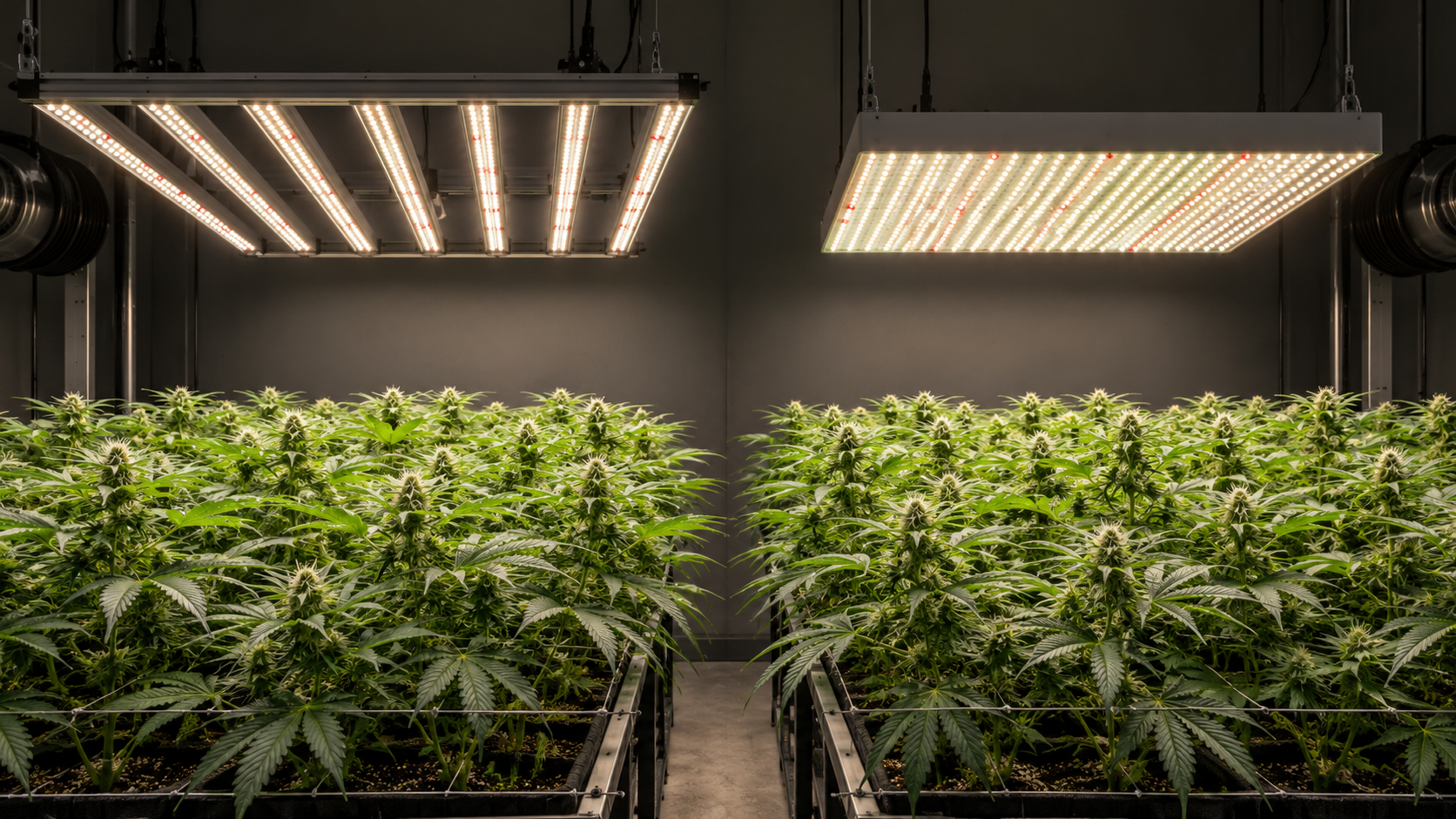
An uneven cannabis canopy represents one of the most widespread yet frequently misdiagnosed performance bottlenecks in indoor cultivation facilities. When top colas display jagged, irregular heights with isolated peaks soaring toward fixture diodes while neighboring branches lag in deep shadows, whole-room photosynthetic efficiency plummets. Cultivators often struggle to determine whether canopy irregularities stem from non-uniform photon delivery across luminaire footprints, natural apical dominance, root-zone hydraulic imbalances, or genetic phenotypic variation. Blaming lighting hardware without performing disciplined diagnostic measurements leads to misguided fixture adjustments that worsen crop performance. Mastering canopy diagnosis and mechanical leveling techniques transforms an erratic vegetative profile into a flat, high-yielding photosynthetic carpet.
- Direct Answer: Diagnosing Uneven Canopy Architecture and Photon Imbalance
- Apical Dominance and Phototropism: How Auxin Gradients Drive Canopy Peaks
- Look-Alike Diagnosis: Separating Light Distribution from Root-Zone and Genetic Disparities
- Step-by-Step Canopy Leveling SOP: Low-Stress Training (LST) and SCROG Netting
- PAR Uniformity Mapping: Measuring the Canopy Photon Gradient
- Recovery Signals, Failure Modes, and Realistic Yield Expectations
- Final Decision Checklist and Companion Weedth Resources
Direct Answer: Diagnosing Uneven Canopy Architecture and Photon Imbalance
An uneven cannabis canopy is rarely caused by a single isolated variable. In professional cultivation, diagnosing an uneven canopy requires a systematic investigation to separate optical distribution problems (uneven luminaire PPFD patterns) from biological and cultural problems (apical dominance, uneven irrigation, or root damage).
The diagnostic protocol begins with two essential baseline observations:
- The Spatial Uniformity Pattern: If the tallest, most vigorous plants are grouped strictly beneath the center of the fixtures while plants along the perimeter are noticeably shorter, the issue is primarily an optical uniformity gradient. Legacy fixtures or poorly spaced LED arrays concentrate photons in the center while starving edges.
- The Individual Plant Asymmetry Pattern: If height disparities occur randomly across the bench: where one plant is tall, an adjacent plant is stunted, or individual branches on the same plant exhibit wild height variance: the primary cause is biological apical dominance, root-zone hydraulic unevenness, or genetic divergence between seed phenotypes.
Canopy Uniformity Ratio and Apical Dominance
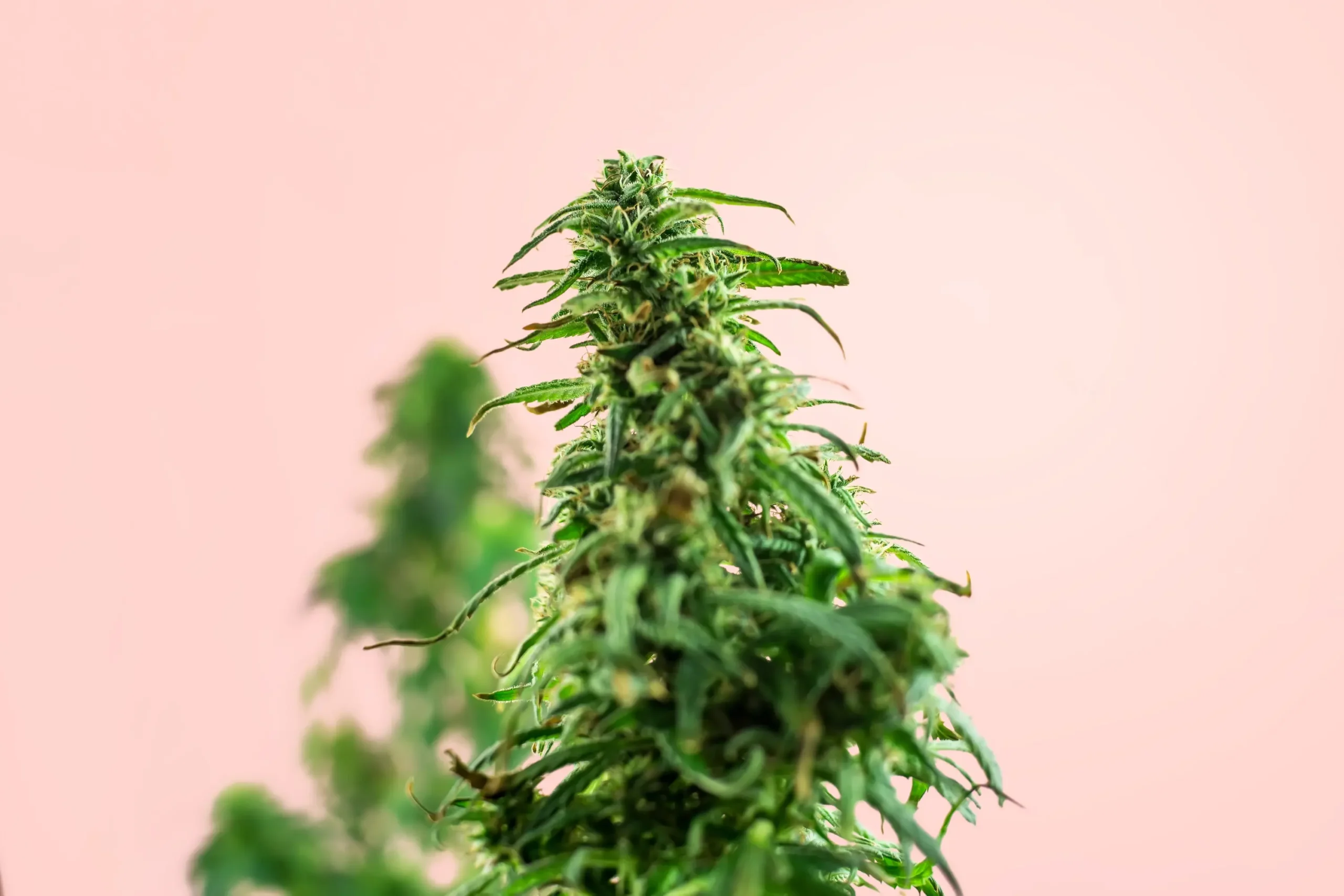
Canopy Uniformity Ratio is the mathematical ratio between the minimum Photosynthetic Photon Flux Density ($PPFD_{min}$) and the average Photosynthetic Photon Flux Density ($PPFD_{avg}$) measured across the plant canopy plane. Commercial benchmarks require a ratio of 0.85:1 or higher. Apical Dominance is the neurohormonal phenomenon whereby the primary shoot terminal meristem produces auxin that suppresses the outgrowth of lateral axillary buds, naturally driving a pyramidal, Christmas-tree canopy profile.
The optical penalty of an uneven canopy is fundamentally dictated by the Inverse Square Law of Light ($E = I / d^2$). For point light sources and high-output fixtures, photon irradiance decreases inversely with the square of the distance from the diode plane. While modern multi-bar LED arrays exhibit distributed planar emission characteristics that mitigate point-source falloff, photon attenuation remains substantial: a vertical height disparity of just 8 inches between a central apical cola and surrounding secondary shoots results in a 25% to 35% drop in incident photon flux density. Furthermore, standard 120-degree lambertian LED diodes emit photons across wide angular distributions. When an isolated central spire shoots upward, its broad fan leaves cast extensive lateral shadows, intercepting photons that would otherwise illuminate adjacent lower shoots.
When an uneven canopy is left uncorrected prior to flower induction, the economic consequences are severe. Because light intensity diminishes with distance according to the inverse square law, fixture height must be raised to protect the few protruding apical shoots from light bleaching and heat scorch. Consequently, the remaining 75% of the canopy sits 12 to 18 inches below the optimal photon zone, receiving sub-saturating PPFD levels. This creates an extreme yield bifurcation: a handful of scorched top colas accompanied by massive volumes of loose, larfy, low-potency understory buds.
Golden Rule of Canopy Architecture: Commercial yield is determined by the total number of square feet operating at optimal photon saturation, not by the height of your tallest branch. Flatten the canopy to maximize illuminated surface area.
Apical Dominance and Phototropism: How Auxin Gradients Drive Canopy Peaks
To correct an irregular canopy, cultivators must understand the endogenous plant hormone circuits that dictate branch growth angles and vertical elongation.
Polar Auxin Transport (PAT)
In untreated cannabis plants, the topmost apical meristem acts as the primary command center for plant architecture. The apical bud synthesizes abundant quantities of indole-3-acetic acid (IAA), the principal natural auxin. Auxin is actively transported downward through the stem via specialized membrane transport proteins known as PIN-FORMED (PIN) efflux carriers in a tightly regulated process termed Polar Auxin Transport (PAT).
As auxin travels downward through the stem vascular cambium, it enters lateral axillary nodes. Inside the axillary buds, high auxin concentrations up-regulate the biosynthesis of strigolactones, a class of plant hormones that directly repress bud outgrowth. Simultaneously, auxin suppresses the synthesis of cytokinins, which are root-produced hormones required to promote cell division in lateral shoots. Consequently, the main central stalk surges upward while side branches remain suppressed, creating an uneven, peaked plant architecture.
The Sugar-Demand Signaling Mechanism
Recent plant physiology research reveals that auxin is not the sole regulator of apical dominance; it operates in tandem with metabolic sucrose allocation. The actively dividing apical meristem serves as a dominant, high-affinity carbohydrate sink. Phloem-delivered sucrose is prioritized and imported into the apical tip, leaving dormant lateral axillary buds starved of essential metabolic sugars.
When an axillary bud lacks sufficient sucrose, its intracellular energy sensors (such as Trehalose-6-Phosphate, T6P) remain unactivated, arresting cell division regardless of external lighting. When cultivators decapitate the apical shoot (topping), the primary sugar sink is eliminated instantaneously. Within hours, a rapid pulse of sucrose floods into adjacent lateral nodes, activating T6P signaling and triggering immediate bud outgrowth before hormonal auxin levels even fully dissipate. Understanding this carbohydrate redistribution explains why topping rapidly flattens canopy architecture.
Phototropism and Asymmetrical Light Capture
When fixtures deliver non-uniform light distribution, plant photoreceptors exacerbate apical dominance through phototropism. Phototropins (phot1 and phot2) are blue-light photoreceptors located in stem tips. When one side of a plant receives higher photon intensity than the other, phototropins undergo asymmetrical autophosphorylation, causing auxin to redistribute laterally toward the shaded side of the stem.
The elevated auxin concentration on the shaded side stimulates rapid cell elongation, causing the stem to bend dramatically toward the brightest photon source. In a grow room with uneven luminaire spacing, peripheral plants bend diagonally inward toward center hotspots, crowding central canopies and creating severe structural irregularities that block airflow and light penetration.
| Observed Symptom | Probable Root Cause | Key Diagnostic Verification | Primary Correction SOP |
|---|---|---|---|
| Center Peaks / Short Edges | Non-uniform luminaire PPFD footprint | PAR meter shows > 40% drop from center to perimeter | Optimize fixture hanging height; add cross-lighting |
| Single Spire / Low Sides | Natural apical dominance (untrained) | Plant displays pyramidal Christmas-tree structure | Top apical shoot; apply low-stress training (LST) |
| Patchy, Stunted Plants | Uneven irrigation / Clogged drippers | Substrate moisture sensors show uneven drybacks | Clean drip stakes; audit line pressure and flow rate |
| Random Height Variance | Genetic seed phenotype expression | Crop started from non-stabilized F1/F2 seed lots | Sort plants by height; deploy risers beneath short pots |
| Unilateral Wilting Tops | Root rot pathogen (Pythium / Fusarium) | Brown, slimy roots; foul odor; sluggish water uptake | Apply biological inoculants or hypochlorous acid flush |
Look-Alike Diagnosis: Separating Light Distribution from Root-Zone and Genetic Disparities
Before assuming your lighting array is defective, commercial agronomists perform differential diagnosis to eliminate common cultural look-alikes that produce identical uneven canopy growth.
Look-Alike 1: Substrate Dryback and Irrigation Volume Imbalances
In automated drip irrigation systems, slight pressure drops or mineral salt scale accumulation inside micro-tubing causes emitter flow rates to diverge widely across a bench. A dripper delivering 1.8 liters per hour alongside a partially clogged dripper delivering 0.9 liters per hour creates dramatic differences in substrate water availability.
Plants receiving inadequate water volume experience elevated root-zone electrical conductivity (EC), osmotic drought, and localized stomatal closure. Cell expansion grinds to a halt, leaving the underwatered plant 8 to 12 inches shorter than its well-irrigated neighbors. Always verify substrate volumetric water content (VWC) using time-domain reflectometry (TDR) moisture probes before adjusting lighting hardware.
Look-Alike 2: Phenotypic Segregation in Seed-Grown Crops
Cultivating commercial canopies from non-feminized or non-stabilized polyhybrid seed lines introduces extensive genetic variability. In a batch of 50 seeds from the same strain package, individual phenotypes express vastly different internodal stretch ratios, root vigor, and canopy architecture.
Some phenotypes stretch 200% upon flowering induction, while short-stature phenotypes stretch barely 30%. When growing from seed, growers must sort plants by height during vegetative staging or place structural risers (such as plastic milk crates or foam blocks) beneath shorter containers to align canopy tops on a perfectly level plane.
Look-Alike 3: Root Pathogens and Hypoxia
Localized root infections caused by waterborne oomycetes (such as Pythium ultimum) or fungal pathogens (Fusarium oxysporum) destroy delicate root hairs and block xylem vascular transport. Affected plants cannot maintain transpirational turgor pressure, leading to severely stunted vertical growth that mimics localized light starvation. Inspecting root health: verifying crisp white coloration, active root tips, and fresh earthy aroma: eliminates pathogenic root stunting.
Step-by-Step Canopy Leveling SOP: Low-Stress Training (LST) and SCROG Netting
Once cultural look-alikes are ruled out, cultivators deploy physical manipulation techniques to disrupt apical dominance and establish an unbroken horizontal canopy.
The Screen of Green (SCROG) Methodology
The Screen of Green (SCROG) technique is the gold standard for commercial canopy management. It utilizes horizontal trellis netting stretched tight across benches to mechanically guide vertical shoots into empty canopy zones.
Trellis Mesh Selection and Structural Anchoring
The choice of trellis materials and framing mechanics directly influences canopy leveling success. Novice cultivators often deploy cheap, thin monofilament plastic netting. Under the mechanical tension of swelling, vigorous cannabis branches, monofilament cords act like wire saws, slicing through outer epidermal collenchyma and phloem tissues, causing localized vascular girdling and stem snapping.
Commercial facilities utilize heavy-duty soft woven polyester or food-grade multi-strand polypropylene netting with 4-inch to 6-inch square openings. To prevent the netting from sagging toward the center under heavy floral weight, secure perimeter lines to rigid 1-inch EMT conduit frames clamped directly to rolling bench corners. Taut, rigid outer framing allows cultivators to exert steady downward leverage when tucking and horizontalizing thick vegetative shoots.
Step 1: Apical Topping (Weeks 3 to 4 of Vegetative Growth)
When plants reach 5 to 6 vegetative nodes, cleanly excise the primary terminal shoot using sterilized pruning shears just above the 4th or 5th node. Removing the apical bud eliminates the primary auxin source, instantly releasing lateral axillary buds from strigolactone suppression. Within 5 to 7 days, four to six co-dominant lateral branches surge outward with equal vigor.
Step 2: First Trellis Layer Installation and Weaving
Install heavy-duty nylon or polypropylene trellis netting with 3.5-inch to 6-inch square mesh approximately 8 to 12 inches above the container rim. Pull the netting taut and anchor securely to bench uprights.
As branches grow 2 to 3 inches above the screen, gently bend dominant vertical shoots horizontally beneath the mesh squares, directing them outward toward the empty perimeter. Use soft rubber-coated garden ties to secure stubborn branches without constricting vascular phloem tissue. Continue horizontal weaving until the screen is 70% to 75% full.
Step 3: Supercropping (Knuckling) Rigid Dominant Shoots
If an aggressive apical branch bolts above the trellis plane and becomes too stiff to bend easily, apply supercropping. Grasp the internodal stem firmly between thumb and forefinger 4 to 6 inches below the growing tip. Gently roll and squeeze the stem until you feel internal cellulose and xylem fibers soften and collapse with a slight pop. Bend the shoot 90 degrees horizontally into an open trellis square.
Within 48 to 72 hours, the plant forms a thick, reinforced vascular knuckle at the bend point, allowing lateral shoots along the horizontal stem to surge upward toward the light while maintaining the main shoot at the desired canopy height.
Step 4: Second Trellis Layer and Flowering Flip
Transition the room to the 12/12 photoperiod once the first screen reaches 75% coverage. Install a second trellis netting layer 10 to 12 inches above the first screen at Day 10 of bloom. Allow transitional stretch shoots to fill the second screen, distributing flower sites across an unbroken horizontal plane.
| Training Method | Optimal Timing | Stress Level | Recovery Time | Primary Architectural Result |
|---|---|---|---|---|
| Apical Topping | Veg Weeks 3 – 4 (5th Node) | Moderate | 4 – 6 days | Breaks apical dominance; creates 4+ co-dominant stems |
| Low-Stress Training (LST) | Veg through Bloom Week 2 | Very Low | 12 – 24 hours | Reorients branches horizontally; opens center to photons |
| SCROG Trellising | Late Veg through Bloom Day 14 | Low | Continuous | Locks entire bench into a flat, uniform horizontal grid |
| Supercropping (Knuckling) | Late Veg to Bloom Day 10 | Moderate – High | 48 – 72 hours | Realigns runaway shoots; builds thick structural vascular knuckle |
| Lollipopping (Under-Pruning) | Bloom Day 21 | Moderate | 2 – 3 days | Removes shaded bottom 30%; redirects energy to top canopy |
PAR Uniformity Mapping: Measuring the Canopy Photon Gradient
To verify whether physical canopy leveling has successfully resolved your light distribution imbalances, commercial agronomists employ precision quantum sensor grid mapping.
Executing a 12-Point Canopy Grid Test
Never rely on a single PAR measurement taken directly beneath the center diode cluster. Mount a full-spectrum quantum PAR sensor (such as an Apogee SQ-500) on a leveled telescopic pole. Divide each 4×4 or 4×8-foot cultivation table into a 12-point grid (3 rows of 4 test points spaced 12 inches apart).
Record instantaneous PPFD readings at the exact top height of the plant canopy at each grid intersection during peak photoperiod hours. Enter the readings into a spreadsheet to calculate three critical optical uniformity metrics:
- Average PPFD ($PPFD_{avg}$): The mathematical mean of all 12 grid readings.
- Uniformity Ratio ($U_{min}$): The minimum recorded value divided by the average value: $$\text{Uniformity Ratio} = \frac{PPFD_{min}}{PPFD_{avg}}$$ Commercial high-efficiency canopies target a ratio of 0.85:1 or higher. If your ratio falls below 0.70:1, the outer edges of your canopy are receiving inadequate photons relative to the center.
- Coefficient of Variation ($CV$): The standard deviation of the grid readings divided by the mean: $$\text{CV} = \frac{\sigma}{\mu} \times 100$$ An elite facility achieves a CV below 12%, ensuring uniform floral bulking and identical harvest timing across the entire table.
Cumulative Daily Light Integral (DLI) Disparities
To comprehend why a 20% drop in perimeter PPFD causes such catastrophic yield losses, growers must convert instantaneous PPFD measurements into cumulative Daily Light Integral (DLI): $$\text{DLI} = \text{PPFD} \times \text{Photoperiod Hours} \times 0.0036$$
Under a 12-hour flowering schedule, a central canopy peak receiving 950 μmol/m²/s PPFD absorbs a robust DLI of $41.0\text{ mol/m}^2/d$. In contrast, an adjacent shaded branch receiving only 550 μmol/m²/s absorbs barely $23.7\text{ mol/m}^2/d$. Over an 8-week (56-day) flowering cycle, the center cola absorbs 2,296 moles of photosynthetically active photons per square meter, while the shaded branch absorbs only 1,327 moles: an astonishing 42% deficit in cumulative photosynthetic energy. This massive energy gap explains why uneven canopies produce dense, rock-hard top colas alongside loose, unmarketable understory fluff.
How Trellising and Grid Mapping Elevated B-Grade Biomass into \$32,000 in Top Colas
A commercial indoor grower in Oklahoma operated thirty-two 650W multi-bar LED fixtures over rolling flood tables without trellising or topping. The plants grew into wild, Christmas-tree shapes with tall center colas standing 22 inches above lower lateral branches. The grower kept fixtures suspended 28 inches high to prevent scorching the main crowns.
The problem: Testing the canopy with a quantum PAR meter revealed extreme photon inequality: center tops received 950 μmol/m²/s PPFD, while secondary branches barely received 380 PPFD (a dismal uniformity ratio of 0.48:1). At harvest, the room produced 45% discount “B-grade” larf and smalls that sold for a fraction of premium flower pricing.
The turnaround: In the next cycle, we instituted mandatory topping at node 5, installed double-tier SCROG trellis netting, and performed horizontal weaving through Day 14 of bloom. By pulling down dominant peaks into a flat horizontal plane, fixture hanging height was safely lowered from 28 inches down to 14 inches above the canopy. The grid test confirmed a staggering improvement: minimum PPFD jumped to 820 μmol/m²/s with an average of 910 PPFD across all points (Uniformity Ratio: 0.90:1). B-grade trim plummeted from 45% down to 8%, total dry yield increased by 19%, and wholesale crop revenue surged by \$32,000.
When analyzing the return on investment of canopy training, facility operators must calculate the conversion efficiency of Photosynthetically Active Radiation ($PAR$). When a canopy displays an uneven, peaked profile, nearly 30% of emitted photons pass through canopy voids or strike non-photosynthetic structural stems and floor surfaces. In contrast, an unbroken horizontal SCROG screen achieves an optical leaf area index ($LAI$) between 3.5 and 4.2, intercepting up to 96% of incident photons before they reach the substrate container level. Maximizing photon interception efficiency directly maximizes grams of dry flower produced per kilowatt-hour of utility power consumed.
Furthermore, an even horizontal canopy dramatically improves environmental uniformity and HVAC performance. Wildly uneven plant canopies create stagnant microclimate pockets: tall central colas sit in high-velocity airflow directly beneath ceiling fans, while depressed lower branches sit in humid, boundary-layer dead zones. These damp microclimates create prime breeding grounds for powdery mildew (Golovinomyces ambrosiae) and Botrytis bud rot. Flattening the canopy ensures laminar, unrestricted horizontal air movement (0.3 to 0.5 m/s) across the entire floral plane, equalizing leaf temperature and Vapor Pressure Deficit across every single plant.
In addition, physical canopy leveling establishes equal hydraulic tension across all plant branches. According to the cohesion-tension theory of sap ascent, tall vertical branches experience greater transpirational pull and lower gravitational resistance than low lateral shoots. By pulling tall branches downward into a horizontal orientation, cultivators equalize the xylem pressure potential across all floral bud sites. This equalizes the mass flow delivery of calcium ($Ca^{2+}$), potassium ($K^+$), and water, ensuring that every developing floral cluster expands with identical density and maturity.
Do
Top Early and Weave Canopy Through Double Trellis
Excise apical buds at node 5 and weave branches horizontally through trellis netting to establish a flat, high-efficiency photosynthetic screen.
Avoid
Supercrop Rigid Woody Stems After Week 3 of Bloom
Never bend or snap stiff woody branches late in flowering; structural damage causes vascular embolism, stunts floral bulking, and invites fungal pathogens.
Recovery Signals, Failure Modes, and Realistic Yield Expectations
Manipulating plant architecture requires monitoring plant recovery signals to prevent severe physiological stress or permanent vascular damage.
Positive Recovery Signals vs Structural Failure Signs
Following low-stress bending or supercropping, monitor trained shoots over a 24- to 72-hour observation window:
- Positive Recovery Signs: Within 12 to 24 hours of being tied or bent horizontally, the apical growing tip curves 90 degrees upward toward the luminaire (phototropic realignment). Foliage retains rich emerald coloration and turgor. Within 3 to 5 days, a swollen, fibrous callus (knuckle) forms at bend points, restoring full vascular sap flow.
- Structural Failure Signs: If a branch is bent with excessive force, the outer epidermal tissue and internal xylem snap completely through (a compound fracture). The foliage distal to the break wilts rapidly, loses turgor, and turns pale. If a clean split occurs, immediately splint the break with horticultural grafting tape or a soft wire wrap; cannabis possesses remarkable regenerative capacity and can heal a partial split if taped within 20 minutes.
When to Stop Canopy Interventions
Canopy leveling interventions must cease strictly by Day 21 of the 12/12 flowering cycle. After Week 3, stem lignification is complete, cell walls are rigid, and the plant has completely ceased vertical elongation to direct all photosynthetic carbohydrates into floral resin synthesis and calyx bulking. Pruning, bending, or supercropping late-bloom branches induces severe ethylene stress, stunts floral development, and risks breaking heavy colas.
Yield Claims vs Biological Reality
Marketing literature often claims that SCROG trellising or topping increases cannabis yield by “50% to 100%.” From a scientific perspective, training does not magically create new photosynthetic energy out of thin air. Instead, training redistributes growth hormones and incident photons from a single dominant apical shoot across 16 to 24 co-dominant floral sites.
By eliminating deep understory shading and ensuring that every bud site operates within the optimal 800 to 1,000 PPFD saturation band, the plant converts larf into premium “A-grade” colas. True commercial yield gains typically range from 15% to 25% higher cured dry mass, accompanied by a massive increase in commercial grading tier and wholesale market value.
Can I use SCROG trellising on autoflowering cannabis cultivars?
Question sent by: Sean McIntyre, via email.
Yes, but with critical timing modifications. Because autoflowering cultivars initiate flowering automatically within 21 to 28 days of germination regardless of photoperiod, their vegetative recovery window is extremely narrow. High-stress training (such as aggressive topping or late supercropping) can stunt autoflower growth and permanently reduce harvest size. Instead, apply exclusively gentle Low-Stress Training (LST): using soft garden ties to gently pull the main stem horizontally during Weeks 2 and 3, and tucking branches through a low trellis screen without pinching or snapping stems. Gentle LST spreads the autoflower canopy without causing hormonal shock.
Final Decision Checklist and Companion Weedth Resources
Before initiating canopy adjustments or repositioning fixture hardware, verify your diagnostic and training parameters against this operational checklist:
Canopy Diagnosis and Leveling SOP Checklist
- Execute a 12-point quantum PAR grid mapping test; calculate Average PPFD, Uniformity Ratio, and Coefficient of Variation.
- Target a minimum canopy PPFD Uniformity Ratio of 0.85:1 across the entire cultivated bench area.
- Audit substrate moisture sensors and emitter flow rates to rule out irrigation dryback stunting before adjusting lights.
- Sort seed-grown cultivars by phenotype vigor or place container risers beneath short phenotypes to establish a level surface.
- Perform apical topping cleanly at the 5th node during Week 3 or 4 of vegetative growth to break apical dominance.
- Install double-tier trellis netting; weave branches horizontally beneath the first screen until 75% full prior to bloom flip.
- Apply supercropping only to pliable vegetative or early transitional stems; never snap rigid woody branches after Day 21 of bloom.
- Perform a thorough Day 21 under-canopy lollipop pruning to eliminate shaded foliage and maximize airflow velocity.
Transforming an uneven, chaotic canopy into an engineered horizontal plane is the hallmark of elite commercial cultivation. By diagnosing photon imbalances with precision quantum meters and guiding plant architecture with disciplined trellising protocols, growers eliminate understory waste, optimize electrical efficiency, and capture championship-quality flower across every square foot of canopy.
Final Verdict: The luminaire sets the photon potential, but the grower builds the canopy. Flatten the peaks, fill the valleys, and harvest an unbroken field of uniform, top-tier colas.
To expand your technical cultivation foundation with our companion foundational guides, explore Weedth resources below.
Share this article
A quick overview of the topics covered in this article.
Follow us
Latest articles
October 29, 2026
October 29, 2026