Lighting a Vertical Cannabis Grow
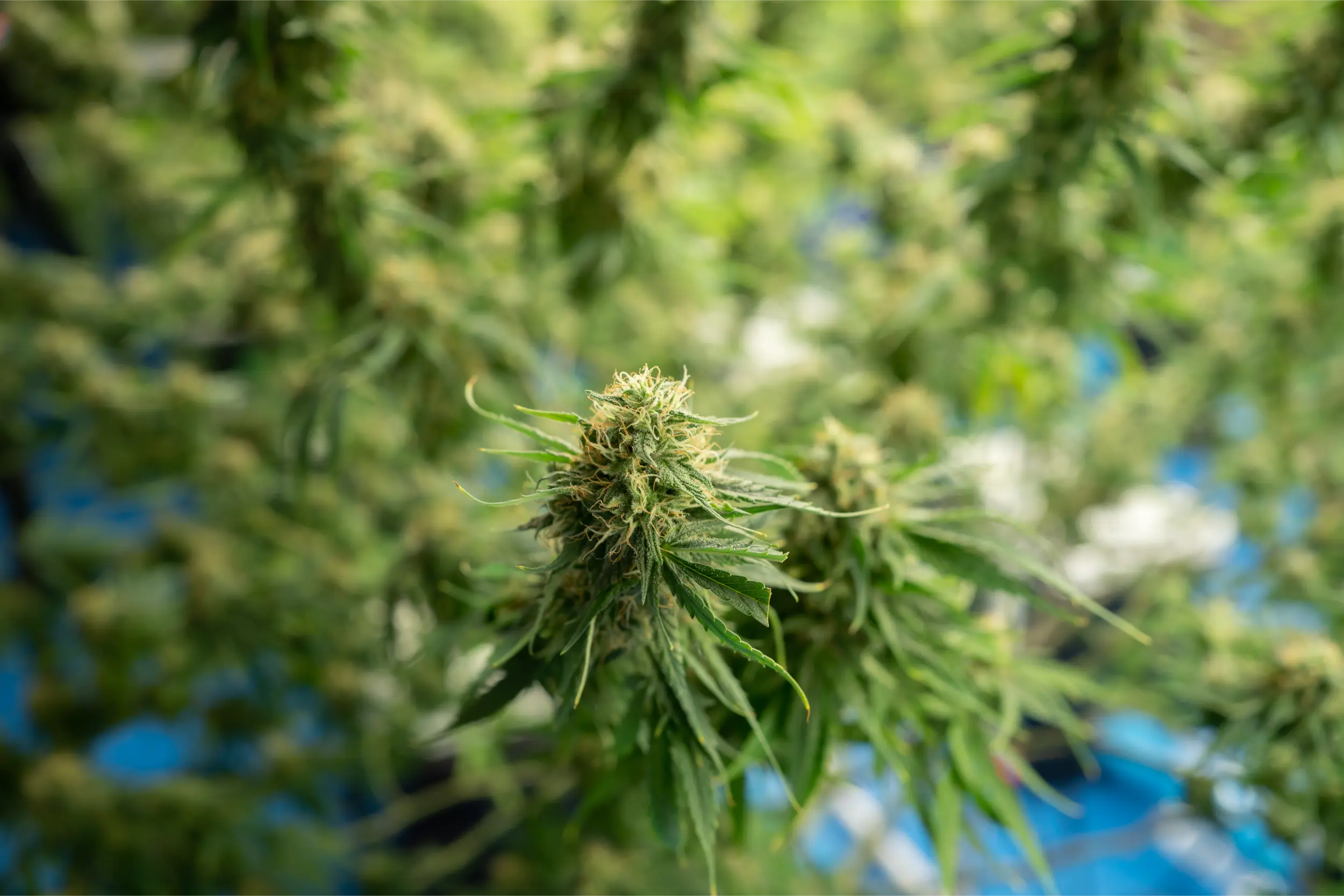
Multi-tier vertical farming represents the ultimate spatial optimization in commercial cannabis cultivation, allowing facility operators to double or triple flowering canopy square footage within the exact same real estate footprint. However, stacking plant canopies on heavy-duty mobile racking completely redefines the laws of horticultural lighting and facility thermodynamics. In a single-tier facility, cultivators enjoy generous vertical headroom, permitting high-intensity luminaires to hang 24 to 36 inches above the crop where overlapping beam cones blend smoothly. In a vertical racking system, every vertical inch is intensely contested: between substrate containers, drainage gradients, trellis supports, and structural racking beams, luminaires must operate within an ultra-tight vertical clearance envelope of just 6 to 12 inches from developing apical colas. Deploying lighting in a vertical farm requires specialized low-profile LED bar architectures, remote driver heat extraction, tier-specific dimming calibration, and precision microclimate airflow management to prevent thermal stratification and catastrophic crop bleaching.
- Direct Answer: The Engineering Rules of Multi-Tier Vertical Lighting
- Vertical Headspace Budgeting: Allocating Inches Across Racking Levels
- Fixture Form Factors: Low-Profile LED Bars and Remote Driver Engineering
- Thermal Stratification and Microclimate Management Across Tiers
- Step-by-Step Vertical Lighting Commissioning SOP
- Common Multi-Tier Mistakes and Agronomic Pitfalls
- Final Commissioning Checklist and Companion Weedth Resources
- Scientific References
Vertical Canopy Lighting Envelope
The vertical lighting envelope in a multi-tier racking facility is the net usable vertical distance between the upper surface of the mature floral canopy and the lower optical lens of the luminaire mounted beneath the rack tier above. In modern commercial two-tier and three-tier racking systems, this clearance window is constrained to 6 to 12 inches (15 to 30 cm). Operating within this compressed envelope requires luminaires with ultra-wide beam angles (120 to 140 degrees) and low diode current density to deliver 800 to 1,000 μmol/m²/s PPFD with zero localized thermal radiation.
Direct Answer: The Engineering Rules of Multi-Tier Vertical Lighting
Lighting a vertical cannabis grow successfully requires adhering to five non-negotiable engineering mandates that differ fundamentally from traditional single-tier cultivation floors:
- Mandate 1: Low-Profile Distributed Diode Architecture: Legacy point-source luminaires (such as double-ended HPS, ceramic metal halide, or high-power COBs) are physically impossible in vertical racks. High-bay lights require 36+ inches of clearance and emit concentrated radiant heat that incinerates nearby foliage. Vertical grows require slim multi-bar LED fixtures with a physical thickness under 2.0 to 2.5 inches that distribute photons across thousands of low-power diodes.
- Mandate 2: Remote LED Driver Placement: Electronic LED drivers generate 15% to 20% of a luminaire’s total thermal heat. In a multi-tier rack, mounting drivers directly to the light fixture chassis dumps sensible heat directly into the under-bench soil/root zone of the tier above, warming root substrates past 78°F (25.5°C) and suffocating root oxygen. Drivers must be detached and mounted remotely on external rack uprights or in dedicated electrical service corridors.
- Mandate 3: Ultra-Wide 120° to 140° Beam Optics: Because fixtures hang only 8 to 12 inches above the canopy, narrow-beam optics (90 degrees or less) create severe optical banding: stripes of intense 1,400+ PPFD beneath diode bars alternating with dark 400 PPFD shadow troughs between bars. Fixtures must feature unlensed 120-degree Lambertian diodes or specialized 140-degree wide-dispersion lenses to achieve complete optical crossover within 6 inches of vertical fall.
- Mandate 4: Tier-Independent Dimming Control: Natural thermal convection causes room air to stratify, with top tiers running 4°F to 8°F warmer than bottom tiers. Because plant metabolic rate and light saturation curves increase with temperature and VPD, lighting levels must be controlled independently per tier. Top tiers require different dimming and airflow calibration than bottom tiers.
- Mandate 5: Integrated Horizontal Laminar Airflow: Each tier deck forms an impenetrable ceiling that blocks vertical convective airflow. Without dedicated horizontal under-canopy and over-canopy fan systems delivering 0.3 to 0.5 m/s continuous airspeed across each tier, stagnant microclimates form, spiking humidity and inviting powdery mildew and bud rot.
Vertical Headspace Budgeting: Allocating Inches Across Racking Levels
The mathematical foundation of vertical facility engineering is the Vertical Headspace Budget. Every single vertical inch from the finished floor to the lowest structural ceiling obstacle must be accounted for before ordering racking hardware or luminaires.
The Vertical Component Stack
In a standard commercial flowering room, the physical stack for each individual cultivation tier consists of six discrete components:
- Mobile Carriage and Rolling Base: 6 to 8 inches for carriage wheels, rails, and structural steel base frame.
- Drainage Slope and Tray Profile: 4 to 6 inches for flood tables, gutter troughs, and drain plumb lines.
- Substrate Container and Root Zone: 6 to 9 inches for 1-gallon to 3-gallon pots, coco slabs, or rockwool cubes.
- Mature Cannabis Canopy Height: 22 to 30 inches for trained, topped, and trellised plants.
- Lighting Clearance Gap ($Z$): 8 to 12 inches of open air buffer between top colas and diode lenses.
- Fixture Chassis and Rack Cross-Beam: 4 to 6 inches for luminaire chassis, mounting brackets, and structural rack beams supporting the deck above.
Summing these components demonstrates that a functional flowering tier requires a minimum clear height of 50 to 65 inches (1.27 to 1.65 meters) per level. Attempting to compress tier clearance below 45 inches forces plants dangerously close to diodes, causing severe photobleaching and restricting air circulation.
| Facility Parameter | Single-Tier Rolling Benches | Two-Tier Vertical Racks | Three-Tier Vertical Racks |
|---|---|---|---|
| Minimum Ceiling Height | 9 – 10 feet (2.7 – 3.0 m) | 11 – 13 feet (3.4 – 4.0 m) | 15 – 18 feet (4.6 – 5.5 m) |
| Typical Fixture Hanging Clearance | 20 – 30 inches (50 – 75 cm) | 8 – 12 inches (20 – 30 cm) | 6 – 10 inches (15 – 25 cm) |
| Max Plant Height at Harvest | 36 – 48 inches (90 – 120 cm) | 24 – 30 inches (60 – 75 cm) | 18 – 24 inches (45 – 60 cm) |
| Canopy Canopy Square Footage | 1,000 sq ft baseline | 1,800 – 2,000 sq ft (+80-100%) | 2,600 – 2,900 sq ft (+160-190%) |
| HVAC Dehumidification Load | Baseline (1.0x) | 1.85x – 2.0x latent load | 2.7x – 3.0x latent load |
Fixture Form Factors: Low-Profile LED Bars and Remote Driver Engineering
Selecting the correct mechanical fixture form factor is the single most critical hardware decision in vertical facility engineering.
Diode Current Density and Junction Temperature Modeling
The photothermal performance of close-proximity vertical lighting is governed by the semiconductor physics of LED junction temperature: $$T_j = T_a + P_d \cdot (\theta_{jc} + \theta_{cs} + \theta_{sa})$$ where $T_j$ is the diode p-n junction temperature, $T_a$ is ambient tier air temperature, $P_d$ is dissipated thermal power per diode, and $\theta$ represents thermal resistance through the junction-to-case, case-to-sink, and sink-to-air thermal pathways. When diodes are driven at high forward currents (e.g., 150 to 200 mA), junction temperatures spike above 185°F (85°C), reducing photon conversion efficiency and radiating sharp localized convective heat downward onto the canopy.
To operate safely within an 8-to-12 inch canopy buffer, vertical fixtures utilize under-driven diode arrays: doubling the number of surface-mounted mid-power diodes (such as Samsung LM301H or Bridgelux Thrive) and driving them at conservative currents of just 55 to 65 mA. This under-driven configuration drops thermal resistance, keeps junction temperatures below 130°F (54°C), boosts electrical efficacy beyond 2.9 μmol/Joule, and produces a gentle, diffuse photon field that permits top colas to thrive just inches away from the light bars without thermal stress.
Low-Profile Multi-Bar LED Architecture
The industry benchmark for vertical multi-tier flowering is the under-deck multi-bar luminaire. These fixtures feature 6 to 8 slim extruded aluminum bars spanning a 4×4 or 4×8 foot footprint, mounting directly to the wire mesh decking or unistrut crossbars of the racking level above.
Key mechanical criteria include:
- Ultra-Slim Physical Depth ($< 2.5\text{ inches}$): Every inch saved in fixture thickness is an inch granted back to the plant canopy buffer.
- Close-Proximity Optical Blending: Because the fixture sits 8 to 12 inches from the crop, diodes must be spaced densely along the bars (high diode count driven at lower milliamps) to prevent intense optical pinpoints from burning upper sun leaves.
- IP66 Waterproof Ingress Rating: Vertical fixtures operate directly beneath irrigation trays and drainage plumbing. Accidental tray overflows or pressurized water washdowns require full IP65/IP66 ingress protection to eliminate electrical short circuits.
Remote Driver Placement and Thermal Extraction
A standard 650W LED fixture consists of two main physical components: the optical diode chassis and the switch-mode power supply (LED driver). The driver operates at roughly 92% to 95% electrical efficiency, converting 5% to 8% of incoming AC power (30 to 50 watts) directly into conductive heatsink heat. The driver chassis reaches surface temperatures of 130°F to 150°F (54°C to 65°C).
In single-tier cultivation, mounting drivers on the fixture chassis is harmless because heat rises freely toward the ceiling. But in a vertical rack, the driver sits inches below the metal tray supporting the tier above. Convective and radiant heat transfers directly into the drainage table, heating the root zones of the upper plants. High root-zone temperatures ($> 75^\circ\text{F}$) collapse dissolved oxygen in irrigation water, trigger pythium root rot, and impair calcium uptake. By using remote DC extension cables, drivers are mounted on the outer upright steel columns of the mobile carriage or grouped together in external electrical rooms where dedicated HVAC exhaust removes their heat before it enters the grow room volume.
Thermal Stratification and Microclimate Management Across Tiers
The most complex operational challenge in vertical cannabis farming is the creation of severe vertical microclimate stratification.
The Physics of Stack Effect Stratification
Warm air is less dense than cold air and naturally rises toward the ceiling under buoyant forces (the stack effect). In a 16-foot three-tier room:
- Tier 1 (Bottom Deck, 1 ft above floor): Air temperature runs at 72°F to 74°F (22°C to 23°C) with relative humidity at 65% to 70% (VPD: 0.85 to 1.0 kPa). Plants experience slower metabolic rates and lower water consumption.
- Tier 2 (Middle Deck, 6 ft above floor): Air temperature runs at 76°F to 78°F (24°C to 25.5°C) with relative humidity at 60% to 65% (VPD: 1.1 to 1.25 kPa). This is the optimal metabolic sweet spot.
- Tier 3 (Top Deck, 11 ft above floor): Air temperature runs at 81°F to 84°F (27°C to 29°C) with relative humidity at 50% to 55% (VPD: 1.45 to 1.70 kPa). Plants experience high transpiration demand, rapid substrate drybacks, and severe thermal stress if lighting is overdriven.
If the cultivation team runs all three tiers at identical 100% lighting power and irrigates them on an identical schedule, Tier 1 will develop overwatering root rot, while Tier 3 will suffer from chronic under-irrigation, calcium deficiency, and apical tip burn.
Integrated Rack Airflow Systems
To destroy vertical stratification, vertical facilities install integrated rack ventilation systems. These consist of slim fan arrays or pressurized fabric duct socks mounted directly beneath each tier deck. Air is pulled from the room aisle and blown horizontally through the canopy at a controlled velocity of 0.3 to 0.5 meters per second. Continuous horizontal airflow breaks the foliar boundary layer, sweeps away transpired water vapor, and equalizes temperatures between tiers within ±1.5°F.
Psychrometric Balancing and Latent Load Modeling
In addition to sensible heat extraction, mechanical engineers must account for the dramatic multiplication of latent dehumidification load in a multi-tier facility. When canopy square footage doubles or triples within the same room footprint, total daily plant transpiration surges proportionally: $$\dot{m}_{\text{water}} = \sum_{k=1}^{\text{tiers}} A_{\text{canopy},k} \cdot E_k$$ where $E_k$ represents the average transpiration rate per unit canopy area on tier $k$ (typically 0.15 to 0.22 gallons per square foot per day during peak flowering).
In a 2,000 square foot room operating two tiers of flowering canopy (4,000 sq ft active canopy), daily transpiration reaches 600 to 880 gallons of water per day (approximately 5,000 to 7,300 pounds of moisture). If overhead HVAC return air ducts cannot pull this massive moisture volume out from between the enclosed rack levels, localized relative humidity inside Tier 1 and Tier 2 pockets will spike past 85% RH during lights-off transitions. Integrating dedicated rack extract ducting ensures rapid moisture evacuation, protecting dense flowering colas from internal mold and pathogen development.
| Facility Clear Height | Feasible Tier Count | Clearance Per Tier | Target Plant Height | Recommended Form Factor |
|---|---|---|---|---|
| 10 Feet (3.0 m) | 2 Tiers (Tight) | 48 – 52 inches (1.2 – 1.3 m) | 18 – 22 inches (45 – 55 cm) | Ultra-slim 350W-450W bar LEDs; remote drivers |
| 12 Feet (3.6 m) | 2 Tiers (Spacious) | 62 – 66 inches (1.5 – 1.7 m) | 26 – 32 inches (65 – 80 cm) | Standard 650W commercial bar LEDs; remote drivers |
| 15 Feet (4.6 m) | 3 Tiers (Tight) | 50 – 54 inches (1.25 – 1.35 m) | 18 – 24 inches (45 – 60 cm) | Slim 400W-500W commercial bar LEDs; remote drivers |
| 18 Feet (5.5 m) | 3 Tiers (Optimal) | 64 – 68 inches (1.6 – 1.7 m) | 28 – 34 inches (70 – 85 cm) | High-efficiency 650W-800W bar LEDs; zoned dimming |
Step-by-Step Vertical Lighting Commissioning SOP
To commission a multi-tier vertical lighting installation that eliminates crop loss and maximizes yield uniformity, engineering teams execute this five-step sequence.
Step 1: Complete Headspace Clearance Verification
Measure from the bare deck of each tier to the bottom rail of the shelf above. Confirm that net clearance exceeds 50 inches for 2-tier setups or 48 inches for 3-tier setups. Mount low-profile unistrut or wire brackets flush against the shelf decking to minimize lost vertical elevation.
Step 2: Remote Driver Rack Installation and Cabling
Mount all LED driver power supplies on dedicated vertical unistrut columns at the end of each mobile carriage or in an external electrical utility alcove. Route DC power extension cables through protective braided sleeving or flexible drag chains (energy chains) that accommodate rolling carriage movement without pinching or abrading copper wiring.
Step 3: Multi-Zone Controller Programming
Assign separate 0-10V or digital controller channels to each vertical tier level. Program Tier 1 (bottom) at 90% power, Tier 2 (middle) at 85% power, and Tier 3 (top) at 80% to 85% power during initial flowering weeks. As temperature profiles are monitored, trim dimming levels to achieve matched canopy leaf temperatures across all tiers.
Step 4: Execute Full-Tier PAR Grid Mapping
Using a calibrated quantum flux meter mounted on an extension wand, record PPFD readings at 12-inch intervals across the canopy plane of each tier at an 8-inch operating distance. Confirm that PPFD stays between 800 and 1,000 μmol/m²/s without localized spikes exceeding 1,150 μmol/m²/s directly beneath diode bars.
Step 5: Genetic Selection and Canopy Trellis SOP
Vertical cultivation requires strict genetic selection: cultivate compact, low-stretch indica-dominant or hybrid cultivars with an anticipated flowering stretch of 1.5x or less. Install double horizontal trellis netting on each tier. Aggressively weave and tuck branches horizontally during Days 1 to 14 of 12/12 to lock canopy height into a flat 20-inch profile, guaranteeing a permanent 8-to-12 inch clearance gap below the light bars.
The Stretch Catastrophe: How a Tall Phenotype Collapsed a 3-Tier Vertical Facility
A multi-million dollar licensed commercial facility in Massachusetts built a high-density 3-tier vertical flowering room with 15-foot ceilings. Each tier had exactly 50 inches of total clear space. The head grower decided to run a popular, hype-strain Ghost Train Haze phenotype known for explosive vegetative vigor and high retail pricing.
The disaster: Despite topping the plants twice in veg, the sativa-dominant genetics initiated a massive 2.8x flowering stretch during the first three weeks of 12/12. By Day 21, the developing colas had grown completely through the single trellis net, bursting through the 10-inch lighting buffer and growing directly into the LED diode bars. Apical meristems pressed directly against the aluminum light chassis. Over 1,200 prime tops suffered complete thermal and optical bleaching: calyxes turned albino-white, trichomes oxidized completely, and leaves tacoed hard against the hot diodes. The facility had to manually prune and discard thousands of bleached tops, losing an estimated \$65,000 in wholesale flower revenue.
The turnaround: In the subsequent cycle, we overhauled their SOP completely: Ghost Train Haze was banned from the vertical racks and restricted to single-tier rooms. The vertical racks were populated exclusively with a short-stature, heavy-yielding Gelato #33 cross that stretched only 1.3x. We added a second trellis net at 16 inches, trained stems horizontally, and achieved a laser-flat 22-inch canopy that maintained a perfect 10-inch air buffer beneath the lights. The harvest broke facility records, delivering 2.2 lbs per light with zero bleaching.
When engineering multi-tier electrical infrastructure, facility managers must calculate the inrush current dynamics of large LED installations. When dozens of electronic LED drivers are energized simultaneously at the start of the 12-hour photoperiod, their internal charging capacitors draw a massive, momentary current spike that can be 20 to 50 times greater than nominal operating current. If all three tiers on a mobile carriage fire simultaneously, the inrush surge can trip commercial circuit breakers, plunging the room into darkness.
Staggered Ignition and Solid-State Relays
To eliminate inrush tripping, vertical facilities utilize intelligent digital power distribution units (ePDUs) with staggered sequence ignition. The master lighting controller fires Tier 1 luminaires at $T=0$, Tier 2 luminaires at $T+30\text{ seconds}$, and Tier 3 luminaires at $T+60\text{ seconds}$. This staggered start flattens peak electrical demand, preserves circuit breaker contacts, and protects high-efficiency electronic drivers from premature component failure.
Ergonomic Lighting Access and Maintenance Clearance
Finally, vertical lighting design must account for human operational ergonomics. In a multi-tier vertical farm, cultivation technicians must access plants on Upper Tiers 2 and 3 using rolling ladders, catwalks, or motorized scissor lifts. If luminaires are suspended loosely on dangling wire cables, workers accidentally bump into fixtures while pruning foliage or tying trellis lines, knocking lights out of level or damaging electrical connectors. Rigid unistrut clip mountings secure luminaires firmly to the under-shelf framework, ensuring equipment stays perfectly aligned despite daily human interaction.
Do
Mount LED Drivers Remotely Outside Racking Decks
Locate electronic drivers on external rack columns or in utility corridors to prevent conductive heat from warming the root-zone substrate of the tier above.
Avoid
Cultivate High-Stretch Sativas in Multi-Tier Racks
Never grow stretchy, vigorous cultivars in vertical racks; plants will burst through the 10-inch lighting buffer, pressing directly against hot diodes and bleaching apical buds.
Common Multi-Tier Mistakes and Agronomic Pitfalls
Vertical cultivation leaves virtually zero margin for error. Cultivators frequently encounter operational failure due to four recurring design mistakes.
Mistake 1: Ignoring Vertical Thermal Buoyancy
Relying on a single wall-mounted thermostat to control a multi-tier vertical room is an invitation to disaster. Because hot air pools near the ceiling, the thermostat at eye level might read a comfortable 75°F, while the top tier canopy sits at 84°F under high photon irradiance. Vertical facilities require a vertical array of aspiration sensor boxes: measuring temperature, humidity, and $CO_2$ at every individual tier level: to provide actionable microclimate data to the building automation system.
Mistake 2: Single-Circuit Lighting Control Across Tiers
Wiring all vertical tiers to a single master circuit breaker eliminates the ability to compensate for environmental differences. If the top tier is running warm, the grower cannot dim the top lights without dimming the cooler bottom tier. Independent dimming channels per tier are essential for fine-tuning canopy leaf temperature and balancing roomwide transpiration rates.
Mistake 3: Insufficient Horizontal Air Velocity
Cultivators often assume that standard overhead room circulation fans will adequately mix air inside vertical racks. Overhead fans cannot push air through horizontal wire decks, dense root tables, and multi-layered foliar canopies. Dedicated rack-mounted fan manifolds delivering 0.3 to 0.5 m/s horizontal air velocity across each tier are mandatory to prevent localized humidity stagnation and fungal spore proliferation.
Can I use double-ended HPS lights if I have a 14-foot ceiling and build a 2-tier rack?
Question sent by: Brad Callahan, via email.
No. Double-ended HPS luminaires are completely unviable in any multi-tier vertical racking system, regardless of ceiling height. A 1,000W DE HPS fixture requires a minimum of 36 to 42 inches of hanging distance above the canopy just to prevent its extreme infrared radiant heat from scorching plants. In a 14-foot room with two tiers, each tier has roughly 65 to 70 inches of total clear space. If you allocate 12 inches for the carriage and tray, 10 inches for pots, and 38 inches for the HPS light and clearance, your plants would only have 8 inches of space to grow! Furthermore, the intense radiant heat from the lower HPS lamp would bake the root zone of Tier 2 directly above it. Vertical farming was made possible solely by the advent of cool-running, low-profile multi-bar LED fixtures.
Final Commissioning Checklist and Companion Weedth Resources
Before flipping vegetative or flowering crops into a multi-tier vertical racking installation, execute this comprehensive facility commissioning checklist:
Vertical Facility Lighting Commissioning Checklist
- Audit vertical headspace budget; verify minimum clear height of 50 inches per tier for commercial flowering.
- Select slim multi-bar LED fixtures with physical chassis thickness under 2.5 inches and IP66 ingress protection.
- Mount electronic LED drivers remotely on external carriage columns or in electrical service corridors.
- Protect moving DC power cables with flexible drag chains (energy chains) to prevent mechanical pinching.
- Assign independent 0-10V dimming channels to each vertical tier level for microclimate compensation.
- Program staggered sequence ignition across tiers to eliminate massive AC circuit inrush current spikes.
- Install horizontal under-deck ventilation delivering 0.3 to 0.5 m/s airspeed across every tier canopy.
- Install multi-point aspiration sensor boxes at each tier height to monitor vertical thermal stratification.
- Deploy double horizontal trellis nets and select low-stretch cultivars (stretch $\le 1.4\text{x}$) to protect the 10-inch light clearance buffer.
Vertical cannabis farming is an engineering triumph that unlocks unprecedented commercial profitability when executed with scientific discipline. By honoring the physics of the vertical lighting envelope: pairing slim, wide-angle LED bars with remote driver thermal management and tiered microclimate balancing: facility operators harvest championship-grade, uniform flower from the lowest deck to the top ceiling tier.
Final Verdict: In vertical farming, every inch counts. Treat vertical headspace as your most valuable asset: keep your fixtures slim, put your drivers outside the rack, train your canopy flat, and let distributed LED technology maximize your canopy footprint.
To expand your technical cultivation foundation with our companion foundational guides, explore Weedth resources below.
Scientific References
- Zheng, Y. (Ed.). (2021). Handbook of Cannabis Production in Controlled Environments. CRC Press.
- Both, A. J., Bugbee, B., Kubota, C., Lopez, R. G., Mitchell, C., Runkle, E. S., & Wallace, C. (2017). Proposed product-labeling guide for horticultural lighting products. HortTechnology, 27(4), 544-549.
- Kozai, T., Niu, G., & Takagaki, M. (Eds.). (2019). Plant Factory: An Indoor Vertical Farming System for Efficient Quality Food Production. Academic Press.
- Nelson, J. A., & Bugbee, B. (2014). Economic analysis of greenhouse lighting: light emitting diodes vs. high pressure sodium. PLOS ONE, 9(6), e99010.
- Eichhorn Bilodeau, S., Wu, B. S., Rufyikiri, A. S., MacPherson, S., & Lefsrud, M. (2019). An update on plant photobiology and implications for Cannabis production. Frontiers in Plant Science, 10, 296.
Share this article
A quick overview of the topics covered in this article.
Follow us
Latest articles
October 29, 2026
October 29, 2026
October 29, 2026