Lighting Low-Stress Trained Cannabis Canopies
Low-Stress Training (LST) and Screen of Green (SCROG) trellising represent two of the most effective plant architecture manipulations in modern indoor cannabis cultivation. By systematically bending, securing, and horizontally guiding vegetative branches, growers intentionally disrupt natural apical dominance, transforming a conical Christmas-tree plant profile into a uniform, two-dimensional horizontal tabletop. However, dramatically restructuring plant morphology requires a corresponding fundamental shift in horticultural lighting strategy. An untrained, vertically dominant cannabis plant requires intense overhead penetration to force photons down through a three-foot vertical foliage profile. In contrast, an LST planar canopy compresses the active floral zone into a narrow 10-to-16 inch vertical layer where every developing cola occupies the exact same horizontal plane. Maximizing the genetic yield potential of an LST canopy requires selecting wide-dispersion multi-bar LED luminaires, calculating precise hanging elevations that deliver wall-to-wall PPFD uniformity, and synchronizing lighting intensity with the hormonal phases of vegetative bending and transitional floral stretch.
- Direct Answer: How Planar Canopies Redefine Horticultural Lighting
- Auxin Redistribution and Planar Light Interception Mechanics
- The Inverse Square Law and Depth of Penetration Across Flat Canopies
- Fixture Geometry and Beam Distribution: Multi-Bar LEDs vs Point Sources
- Step-by-Step Lighting Integration Sequence for LST and SCROG
- Common Lighting Mistakes Over Low-Stress Trained Canopies
- Final Commissioning Checklist and Companion Weedth Resources
- Scientific References
Planar Canopy Light Interception
Planar canopy light interception occurs when plant architecture is trained into a continuous, two-dimensional horizontal plane of uniform height, eliminating vertical height disparities between apical and lateral meristems. In an untrained conical cannabis plant, light extinction follows a steep exponential gradient, resulting in severe lower-tier shading. In a low-stress trained planar canopy, incident Photosynthetic Photon Flux Density (PPFD) is captured uniformly across hundreds of co-dominant floral sites, allowing 95%+ of delivered photons to drive primary A-grade flower biomass without wasting energy on deep vertical penetration.
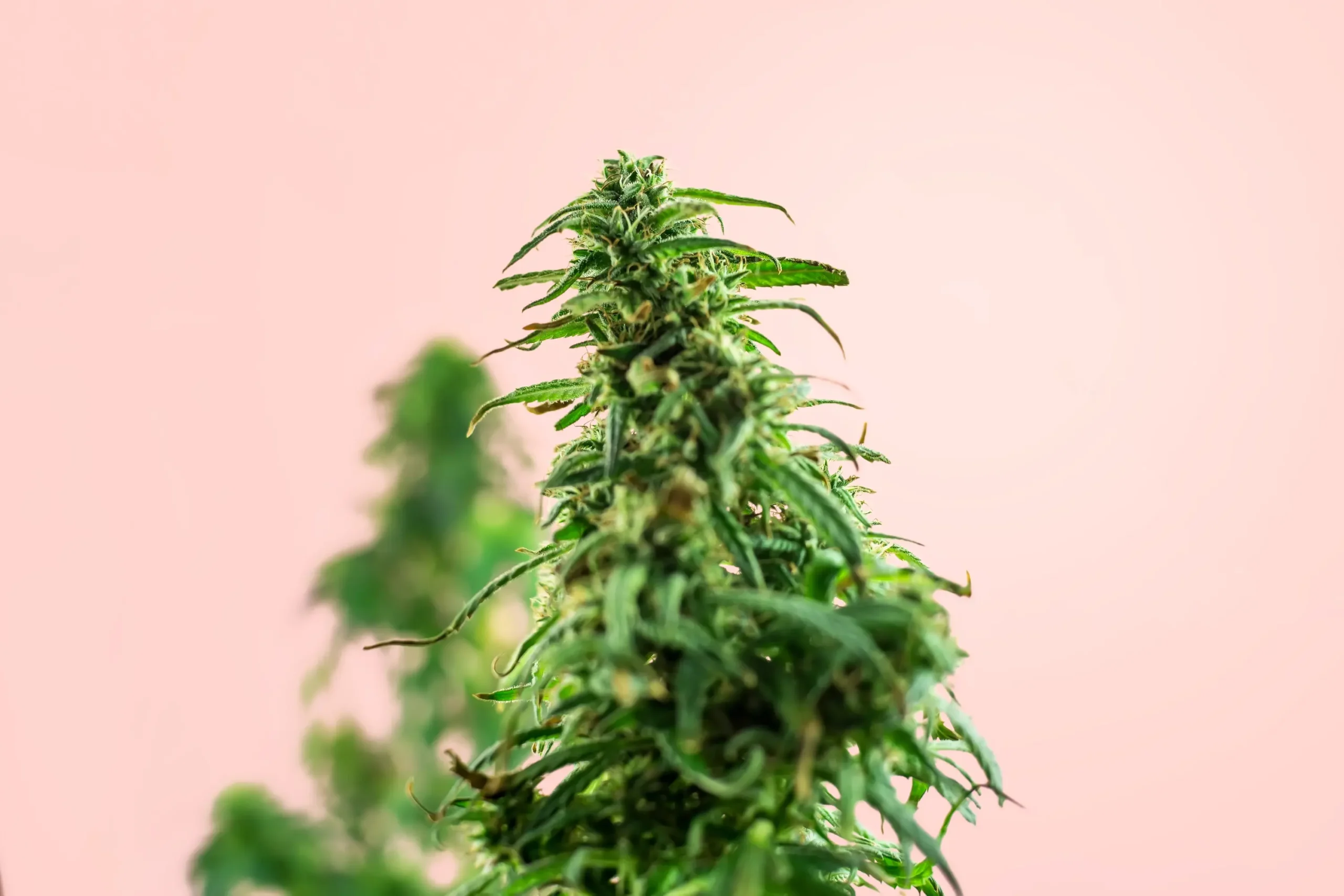
Direct Answer: How Planar Canopies Redefine Horticultural Lighting
The definitive technical rule for lighting low-stress trained cannabis canopies is straightforward: planar canopies eliminate the need for high-intensity vertical penetration, shifting the primary engineering goal to edge-to-edge horizontal uniformity.
When a cultivator trains a canopy flat through LST or a SCROG net, the optical requirements of the cultivation space change in four decisive ways:
- Lower Suspension Distances: Because all developing colas sit at an identical vertical height, fixtures can be suspended closer to the crop (typically 14 to 18 inches for commercial bar LEDs) without risking hot spots on runaway top shoots. This close hanging height increases electrical photon delivery efficiency by reducing room boundary wall losses.
- Preference for Wide Lambertian Emission: Narrow-beam fixtures (60 to 90 degrees) or concentrated point sources (such as double-ended HPS) are completely misaligned with LST canopies. They blast the center of the flat table with excessive intensity while starving perimeter wings. Planar canopies demand wide 120-degree to 140-degree multi-bar LED fixtures that distribute photons across an expansive physical chassis.
- Elimination of Under-Canopy Larf: In an untrained 4-foot tall plant, lower bud sites receive less than 50 μmol/m²/s PPFD, developing into loose, discount B-grade trim. In an LST canopy, the active floral layer is only 10 to 14 inches deep, and everything below the support net is pruned away (“lollipopped”). Every single bud site on the plant operates within the high-efficiency 750 to 950 μmol/m²/s photosynthetic sweet spot.
- Synchronized Metabolic Consumption: Because hundreds of floral colas receive identical photon flux and operate at matched transpiration rates, water uptake, nutrient demand, and calcium deposition occur with flawless uniformity across the entire container matrix, preventing erratic individual plant drybacks.
Auxin Redistribution and Planar Light Interception Mechanics
To optimize lighting schedules over low-stress trained crops, cultivators must understand the hormonal feedback loop between stem bending and foliar light interception.
Disrupting Apical Dominance (Auxin Decapitation Effect)
In an upright, naturally growing cannabis plant, the primary apical shoot meristem synthesizes the phytohormone auxin (indole-3-acetic acid, IAA). Auxin is transported basipetally (downward) through phloem parenchyma cells via specialized PIN-FORMED (PIN) efflux carrier proteins. High concentrations of downward-flowing auxin suppress the outgrowth of lateral axillary buds, maintaining strong apical dominance and forcing the plant into a conical, vertical growth pattern designed to compete with neighboring vegetation for direct sunlight.
When a grower applies low-stress training by gently bending the main terminal stem horizontally below the level of secondary branches, gravity-sensing statoliths inside endodermal cells reorient PIN carrier proteins. Auxin drains away from the dominant tip and distributes evenly across all subordinate lateral nodes. Freed from apical suppression, cytokinins synthesized in the roots stimulate rapid cell division in dormant axillary buds. Within 48 to 72 hours, 8 to 16 secondary branches elongate vertically at an identical rate, transforming a single central cola into a dozen co-dominant, matched floral leaders.
Phytochrome Signaling and BRC1 Gene Down-Regulation
Beyond physical auxin drainage, low-stress training triggers a profound photomorphogenic response governed by phytochrome photoreceptors. In an upright conical plant, lower axillary buds are shaded by upper sun leaves. Because chlorophyll absorbs red photons (660 nm) while transmitting far-red photons (730 nm), the light filtering down to lower nodes has a severely depressed red to far-red ratio ($R:FR < 0.35$). This low ratio keeps phytochromes in their inactive $P_r$ conformation, which actively up-regulates the transcription factor BRANCHED1 (BRC1), an evolutionary master repressor that arrests bud cell cycle progression.
When branches are trained horizontally into an open plane, lateral axillary buds are suddenly exposed to direct, unfiltered overhead LED radiation with a high red-to-far-red ratio ($R:FR > 1.20$). Phytochromes rapidly convert into their biologically active $P_{fr}$ form, which directly represses BRC1 transcription. Within 36 hours of bending, cell division resumes in dormant bud meristems, initiating coordinated lateral shoot emergence across all trained nodes.
Beer-Lambert Extinction in Planar vs Conical Canopies
The mathematical interception of photosynthetically active radiation down through a crop layer is dictated by the Beer-Lambert Extinction Law: $$I(z) = I_0 \cdot e^{-k \cdot \text{LAI}(z)}$$ In an untrained plant with a conical shape, the Leaf Area Index (LAI) is dispersed over a vertical depth ($z$) of 36 to 48 inches. The extinction coefficient ($k \approx 0.70$) causes light to decay exponentially, leaving lower nodes below the light compensation point ($LCP \approx 60\text{ to }80\text{ }\mu\text{mol/m}^2\text{/s}$).
In contrast, an LST canopy compresses the entire functional LAI (typically 3.5 to 4.5) into a dense, horizontal monolayer measuring only 12 inches thick. Because the canopy surface is flat, incident light strikes the sun leaves at near-normal angles across the entire table. Over 95% of incoming photons are captured within this single productive tier, maximizing roomwide radiation use efficiency (RUE, grams of dry biomass per mole of delivered photons) and eliminating the parasitic carbon respiration associated with heavily shaded lower leaves.
| Cultivation Parameter | Untrained Natural Canopy (Conical) | Low-Stress Trained Canopy (Planar) | Photobiological / Operational Impact |
|---|---|---|---|
| Active Floral Vertical Depth | 36 – 48 inches (90 – 120 cm) | 10 – 16 inches (25 – 40 cm) | Eliminates vertical light falloff and lower larf |
| Recommended Hanging Distance | 24 – 36 inches (60 – 90 cm) | 14 – 18 inches (35 – 45 cm) | Lower distance increases canopy PPFD and efficacy |
| Horizontal PPFD Uniformity ($U_1$) | 0.55 – 0.68 (Severe center peak) | 0.86 – 0.92 (Wall-to-wall flat) | Every cola develops matched density and potency |
| A-Grade Top Flower Ratio | 50% – 62% of total harvest | 85% – 92% of total harvest | Converts 25%+ of biomass from trim to top-tier flower |
| Subordinate Larf Production | Substantial (20% to 35% discount mass) | Virtually Zero (all lower growth stripped) | Drastically reduces manual hand-trimming labor costs |
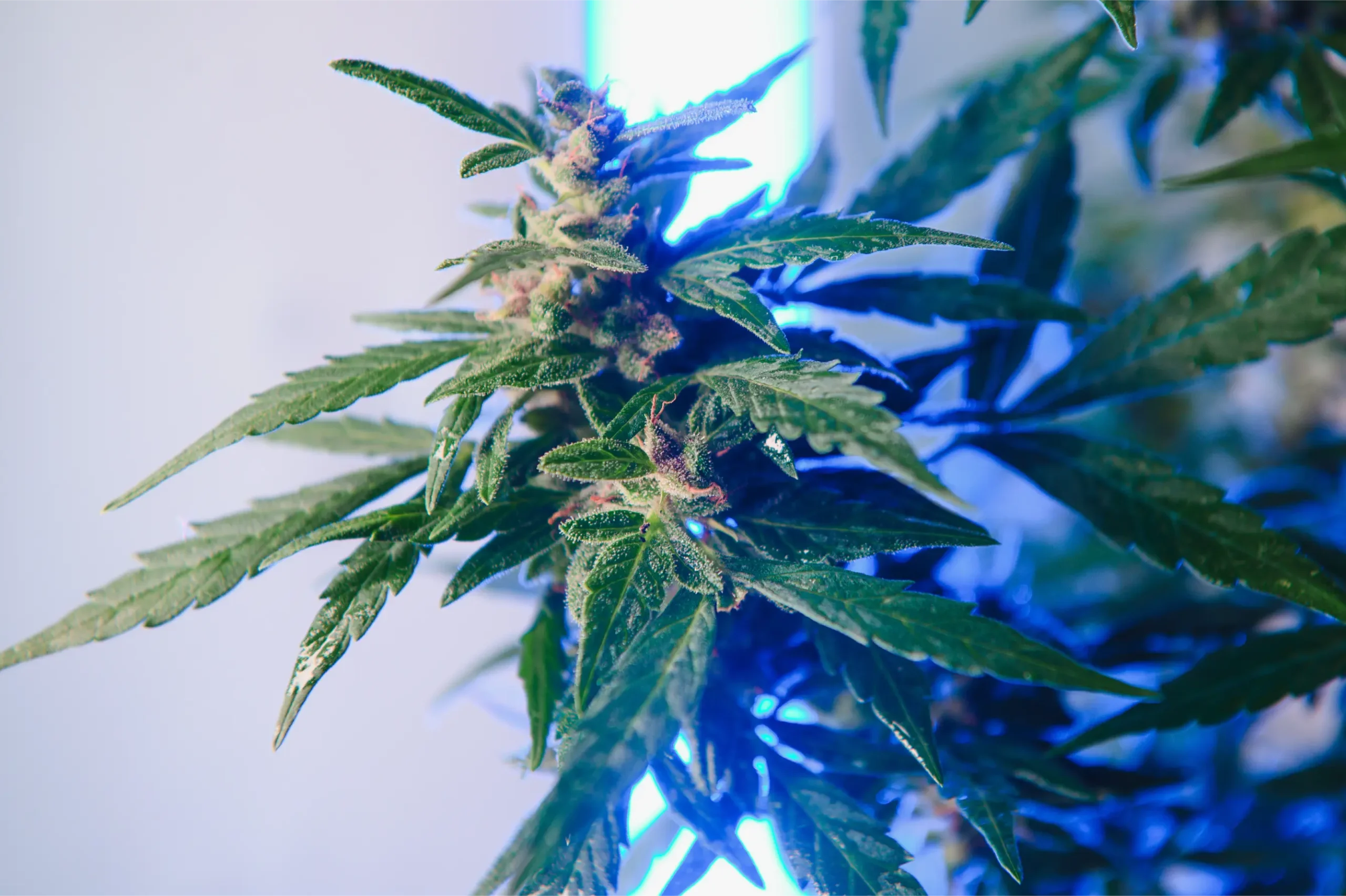
The Inverse Square Law and Depth of Penetration Across Flat Canopies
The fundamental physical law governing light intensity versus distance is the Inverse Square Law: $$E = \frac{I}{d^2}$$ where $E$ is irradiance, $I$ is source luminous intensity, and $d$ is distance from the light emitter. While the inverse square law strictly applies to point sources, distributed arrays still experience significant photon attenuation as distance expands.
The Distance Gradient in Tall Canopies
In an untrained plant where the top cola sits 18 inches ($d_1 = 1.5\text{ ft}$) below a light and the lowest branch sits 54 inches ($d_2 = 4.5\text{ ft}$) below the light, the distance increases by a factor of 3.0. Under inverse square mechanics, photon delivery collapses: $$\frac{E_2}{E_1} = \left( \frac{1.5}{4.5} \right)^2 = \frac{1}{9} \approx 11.1\%$$ The lower branches receive barely one-ninth of the light striking the top cola, guaranteeing underdeveloped, airy fluff.
The Distance Compression in LST Canopies
In a low-stress trained canopy, the entire floral zone is compressed into a narrow vertical band between 14 inches ($d_1 = 1.16\text{ ft}$) and 24 inches ($d_2 = 2.0\text{ ft}$) from the diode plane. Evaluating the distance ratio demonstrates the dramatic improvement in photon delivery: $$\frac{E_2}{E_1} = \left( \frac{1.16}{2.0} \right)^2 \approx 33.6\%$$ Furthermore, because multi-bar LEDs are distributed line sources rather than point sources, real-world linear attenuation ($1/d$) is even gentler than point-source decay ($1/d^2$). Consequently, bottom floral calyxes in an LST canopy receive 55% to 65% of top intensity, ensuring that even the lowest nodes on each trained branch swell into firm, marketable flower.
Fixture Geometry and Beam Distribution: Multi-Bar LEDs vs Point Sources
Matching fixture engineering to canopy morphology is the key to achieving record-setting grams-per-watt efficiency over low-stress trained crops.
Why Point Sources Fail Over Flat Canopies
Double-ended HPS luminaires and high-power chip-on-board (COB) LEDs project light from a central concentrated point. Because an LST canopy spreads colas outward toward the perimeter of the growing table, the outer flowers sit far away from the central light bulb. Under point-source geometry, perimeter flowers receive steep, oblique light that has traveled through excessive air distance, resulting in poor edge PPFD ($< 450\text{ }\mu\text{mol/m}^2\text{/s}$). If the grower lowers the point source to illuminate the edges, the center of the flat canopy gets torched with 1,600+ PPFD, bleaching the middle colas.
The Cosine Fourth Law of Illumination
The severe edge falloff observed when using single-point luminaires over a flat table is explained mathematically by the Cosine Fourth Law of Illumination: $$E_\theta = E_0 \cdot \cos^4(\theta)$$ where $E_0$ is normal irradiance directly below the lamp ($ heta = 0^\circ$) and $E_\theta$ is irradiance arriving at an off-axis angle $\theta$. This fourth-power decay results from three compounding geometric factors: the inverse square distance increases by $1/\cos^2(\theta)$, the projected source area diminishes by $\cos(\theta)$, and the receiving horizontal surface tilts relative to the beam by another factor of $\cos(\theta)$. At an edge angle of just 45 degrees, $\cos^4(45^\circ) = (0.7071)^4 = 0.25$, meaning perimeter colas receive barely 25% of the light striking the center.
Distributed multi-bar LED arrays completely defeat the cosine fourth law by eliminating the single central point source. Instead of projecting light from one hot center out to the margins, a multi-bar fixture places an active diode bar directly above every square foot of canopy. Because every floral cola sits directly beneath an emitter at near-zero incident angle ($ heta \approx 0^\circ$), the cosine penalty disappears, delivering an exceptionally flat, edge-to-edge photon plane.
The Multi-Bar LED Advantage
Modern commercial multi-bar LED fixtures (typically 6 to 10 parallel aluminum bars spanning a 4×4 or 4×5 foot chassis) provide a matched two-dimensional lighting grid that mirrors the geometry of an LST table. Because diodes are distributed uniformly across the entire fixture frame:
- Every square foot of the flat canopy receives direct downward photons from an adjacent bar, eliminating steep angle falloff.
- Wide 120-degree unlensed SMD diodes create overlapping beam cones that blend seamlessly just 12 to 14 inches below the fixture.
- The horizontal uniformity ratio ($U_1 = \text{PPFD}_{\min} / \text{PPFD}_{\max}$) routinely achieves 0.88 to 0.92 across the entire table, ensuring identical flower density from the table center to the outer edges.
| Cultivation Stage | Target PPFD (μmol/m²/s) | Photoperiod & DLI | Hanging Distance | LST / Canopy Action |
|---|---|---|---|---|
| Early Veg (Bending Phase) | 300 – 400 μmol/m²/s | 18 hrs | 19 – 26 mol/m²/day | 24 – 28 inches (dimmed 50%) | Initial stem horizontal pinning; soft tie anchors |
| Late Veg (Screen Fill) | 500 – 650 μmol/m²/s | 18 hrs | 32 – 42 mol/m²/day | 20 – 24 inches (dimmed 70%) | Tuck secondary shoots horizontally under trellis net |
| Transitional Stretch (W1-W2) | 700 – 800 μmol/m²/s | 12 hrs | 30 – 35 mol/m²/day | 18 – 22 inches (dimmed 85%) | Continuous horizontal weaving; fill 85% of screen squares |
| Peak Bloom Bulking (W3-W6) | 850 – 1,050 μmol/m²/s | 12 hrs | 37 – 45 mol/m²/day | 14 – 18 inches (100% full power) | Lollipop under-screen foliage; maximize floral irradiance |
| Ripening / Senescence (W7-W9) | 650 – 750 μmol/m²/s | 12 hrs | 28 – 32 mol/m²/day | 18 – 20 inches (dimmed 75%) | Reduce thermal load to preserve delicate monoterpenes |
Step-by-Step Lighting Integration Sequence for LST and SCROG
To synchronize your lighting schedule with canopy training for maximum harvest yield, execute this six-step standard operating procedure.
Step 1: Moderate Intensity During Vegetative Training
During early vegetative low-stress training (Weeks 2 to 4), keep lighting intensity moderate: 300 to 450 μmol/m²/s PPFD (dim fixtures to 50% or raise them to 26 inches). High lighting intensity causes stems to harden and lignify rapidly, making branches brittle and prone to snapping during bending. Moderate intensity keeps stems flexible and pliable, allowing clean 90-degree horizontal bends without tissue breakage.
Step 2: Main Stem Pinning and Radial Distribution
Secure the main stem horizontally using rubber-coated soft garden wire anchored to the container rim. Train secondary branches outward in a radial starburst pattern, spreading growth evenly across the container footprint. Ensure all growing tips sit at the exact same horizontal height (±1 inch).
Step 3: Trellis Installation and Transitional Weaving
Install your first horizontal trellis netting (3.5-inch or 4-inch square mesh) 8 to 12 inches above the container rim. Flip the photoperiod to 12/12. During the explosive transitional stretch (Days 1 to 14 of flower), visit the canopy every two days: gently tuck elongating vertical shoots horizontally beneath the trellis squares, directing them outward toward the table perimeter. Stop tucking on Day 14, allowing the shoots to rise vertically 4 to 6 inches above the screen to form dense terminal buds.
Step 4: The Day 21 Defoliation and Lollipopping SOP
On Day 21 of 12/12 (the end of flower stretch), perform a thorough “lollipopping” defoliation. Remove 100% of leaves, suckers, and tiny floral shoots located below the horizontal trellis screen. Because the dense planar canopy above blocks 95% of overhead light, under-screen foliage operates as a parasitic carbon sink that breathes off sugars and obstructs interior airflow. Stripping under-screen growth redirects all root-absorbed water, mobile nitrogen, and photoassimilates directly into the illuminated upper canopy.
Step 5: Lowering Luminaires to Peak Bloom Distance
Immediately following Day 21 defoliation, lower your multi-bar LED fixtures to their optimal peak flowering suspension distance: 14 to 18 inches above the horizontal colas. Ramp dimmer controls to 100% power, delivering 850 to 1,050 μmol/m²/s PPFD across the entire planar surface. If supplementing with carbon dioxide (1,100 to 1,300 ppm $CO_2$), you can increase PPFD to 1,150 μmol/m²/s to drive exceptional calyx swelling.
Step 6: Late-Bloom Dimming for Terpene Preservation
During the final 10 to 14 days of flowering (Weeks 8 to 9), dim fixtures to 70% to 75% power (600 to 750 μmol/m²/s). Calyx mass accumulation is complete, and floral development shifts to resin maturation and cannabinoid synthesis. Lowering light intensity drops canopy leaf temperature by 2°F to 3°F, preserving volatile monoterpenes (myrcene, limonene, and pinene) from thermal evaporation and ensuring maximum aromatic potency at harvest.
The SCROG Overdrive Trap: How 1,400 PPFD Bleached a Table of Pristine Wedding Cake
A craft commercial cultivator in Oklahoma trained a 4×8 rolling bench of Wedding Cake into an immaculate, laser-flat SCROG canopy. Every square of the trellis net was filled with an identical 5-inch vertical cola. Seeking to shatter facility yield records, the grower lowered two 680W multi-bar LED fixtures from 18 inches down to 8 inches above the flat screen and turned the master dimmers to 100% without supplemental CO2, delivering a staggering 1,420 μmol/m²/s PPFD across the entire horizontal plane.
The problem: In an untrained canopy, tall shoots provide slight shading for lower foliage, and high hanging heights dissipate heat. But over this flat planar canopy, every single apical bud was exposed to unrelenting, extreme photon flux without sufficient carbon dioxide to process the electron transport surge. Within 10 days of Week 5 bloom, every cola on the entire bench developed severe photoinhibition: upper sugar leaves curled into tight canoes, chlorophyll bleached completely white on the top 2 inches of every cola, and resin glands turned cloudy-brown prematurely due to photo-oxidation.
The correction: We intervened immediately: the fixtures were raised back to 16 inches above the screen, and the dimmers were dialed down to 85% (delivering an optimal 950 PPFD). We introduced 1,200 ppm CO2 to support photosynthetic electron flow. Within two weeks, the bleached colas resumed secondary calyx stacking beneath the white tips, and new green floral growth covered the damaged tissue. The harvest still yielded an impressive 2.3 lbs/light, but the top buds had to be discounted as B-grade due to cosmetic bleaching scars. The grower learned that flat canopies require respect: because every bud is exposed, overdriving intensity damages the entire table simultaneously.
When engineering environmental conditions over low-stress trained canopies, facility managers must recognize that planar canopies create a profound horizontal aerodynamic boundary layer. In natural upright plants, vertical gaps between conical branches allow air to circulate freely up and down through the plant profile. In a fully populated SCROG table, the dense horizontal mat of fan leaves forms a nearly solid vegetative ceiling that completely decouples the under-screen atmosphere from the overhead room volume.
Without dedicated mechanical intervention, the space beneath the trellis screen turns into a stagnant, high-humidity swamp. Relative humidity below the net can run 15% to 20% higher than room ambient air, while air temperatures remain cooler due to lack of light penetration. This microclimatic pocket creates the perfect incubation chamber for root-zone pathogens, fungus gnats, and gray mold (Botrytis cinerea) attacking the base of main stalks.
Dual-Level Airflow Integration
To eliminate this boundary layer hazard, modern facilities deploy dual-level airflow distribution: dedicated low-profile under-bench fans blow air horizontally beneath the trellis screen (0.3 to 0.5 m/s) to sweep away transpired moisture from the soil surface, while oscillating overhead fans create gentle downward turbulence across the upper planar colas. Equalizing airflow across both sides of the leaf deck maintains stable Vapor Pressure Deficit (VPD) and prevents localized fungal outbreaks.
Do
Deploy Wide Multi-Bar LEDs at 14 to 18 Inches
Use distributed multi-bar luminaires to mirror the two-dimensional planar canopy, delivering wall-to-wall 850-1,050 PPFD uniformity with zero hot spots.
Avoid
Use Concentrated Point-Source HIDs Over Flat Canopies
Never use narrow-angle point-source HPS or COB lights over LST canopies; they blast the center with phototoxic heat while starving perimeter wings.
Common Lighting Mistakes Over Low-Stress Trained Canopies
Even experienced growers make critical lighting errors when managing flat, low-stress trained canopies.
Mistake 1: Lowering Fixtures to 6-8 Inches to Chase Extreme PPFD
Because an LST canopy is flat, growers often assume they can slam their multi-bar LEDs right down to 6 or 8 inches above the plants. While LEDs run much cooler than HPS lamps, hanging fixtures that close narrows the effective beam footprint of individual diode bars. Diodes directly over colas create intense optical pinpoints ($> 1,300\text{ PPFD}$), while the spaces between bars receive dark troughs (500 PPFD), creating severe light banding and bleaching top calyxes. Maintain 14 to 18 inches to allow wide Lambertian photons to blend smoothly.
Mistake 2: Leaving Shaded Under-Screen Foliage Intact
Failing to aggressively lollipop below the trellis screen on Day 21 is a massive efficiency drain. Shaded leaves receiving $< 60\text{ }\mu\text{mol/m}^2\text{/s}$ consume sugars through dark respiration without generating photosynthates. Leaving this lower growth intact wastes water, diverts nutrients from top colas, and creates an airflow barrier that invites powdery mildew.
Mistake 3: Overdriving Flat Canopies Without Supplemental CO2
In an LST canopy, 100% of the active foliage is directly exposed to overhead light. In ambient air ($400\text{ ppm } CO_2$), cannabis leaves reach photosynthetic saturation at roughly 800 to 850 μmol/m²/s PPFD. Pushing light intensity to 1,000+ PPFD across a flat canopy without adding supplemental $CO_2$ ($1,000\text{ to }1,300\text{ ppm}$) causes photoinhibition, stomatal closure, and leaf margin tacoing across the entire table.
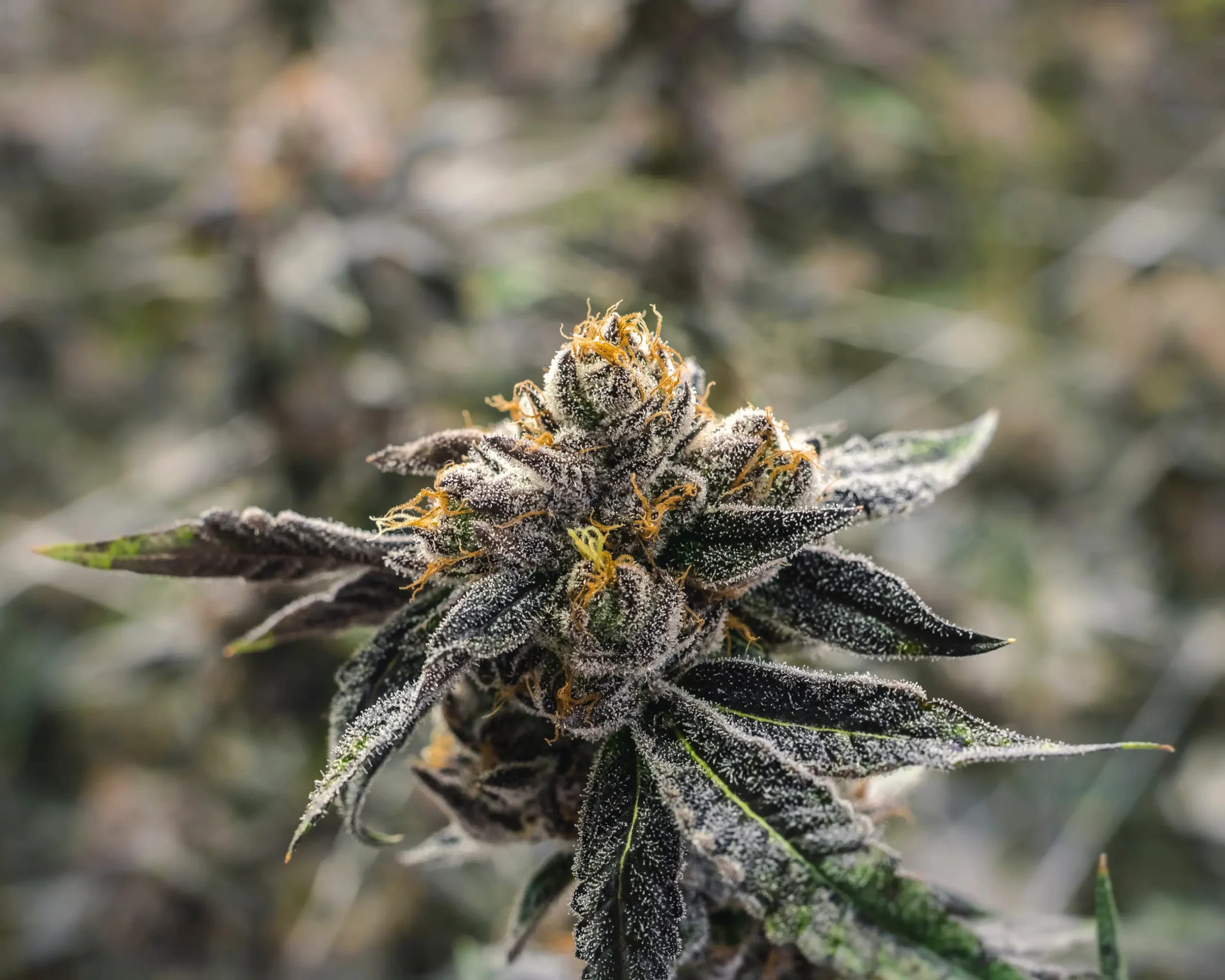
Do I need under-canopy or side lights if I already train my canopy flat with LST and SCROG?
Question sent by: Nathan Brooks, via email.
No. If you execute low-stress training and SCROG correctly, you do not need under-canopy lighting or side lighting. Under-canopy lighting is engineered to illuminate middle and lower tiers in deep, vertical canopies (36 to 48 inches deep). In a proper LST canopy, the active floral layer is only 10 to 14 inches thick, and everything below the screen is completely lollipopped away. Overhead multi-bar LEDs already saturate this thin, flat layer with 900+ PPFD. Adding under-canopy lights beneath a SCROG screen illuminates bare woody stems and the underside of fan leaves, wasting electricity and adding unnecessary heat without increasing harvest yield. Save your capital and focus on overhead uniformity.
Final Commissioning Checklist and Companion Weedth Resources
Before initiating floral stretch or setting final lighting schedules over low-stress trained canopies, review this comprehensive engineering checklist:
LST Canopy Lighting Commissioning Checklist
- Dim lighting to 300-450 PPFD during early vegetative training to keep stems pliable and prevent branch snapping.
- Train main terminal stems horizontally using soft-tie anchors to break apical dominance and activate lateral shoots.
- Install horizontal trellis mesh 8 to 12 inches above container rims to guide branches into a flat plane.
- Weave elongating vertical shoots horizontally beneath the screen through Day 14 of 12/12.
- Perform complete Day 21 defoliation and lollipopping, stripping 100% of growth beneath the trellis screen.
- Lower multi-bar LED luminaires to 14-18 inches above the flat floral plane for peak bloom bulking (Weeks 3-6).
- Verify horizontal PPFD uniformity ($U_1 \ge 0.86$) across the entire screen using a research-grade quantum meter.
- Cap lighting intensity at 850 PPFD unless supplementing with 1,000-1,300 ppm $CO_2$ to prevent photoinhibition.
- Install under-screen horizontal circulation fans (0.3 to 0.5 m/s) to sweep away trapped boundary layer humidity.
- Dim fixtures to 70%-75% power during final ripening (Weeks 8-9) to lower leaf temps and preserve delicate terpenes.
Low-stress training transforms cannabis cultivation into an exact science by aligning plant morphology with modern solid-state lighting physics. By treating your flat canopy as a high-efficiency photon absorption plane: matching wide-dispersion multi-bar LEDs to the horizontal screen and managing microclimates above and below the net: you eliminate larf entirely and harvest dense, championship-caliber colas across every square inch of your grow space.
Final Verdict: Flat canopies deserve flat lighting. Discard high-penetration point sources, mount wide multi-bar LEDs at 14 to 18 inches, strip away lower parasitic growth, and let horizontal photon uniformity maximize your commercial harvest yields.
To expand your technical cultivation foundation with our companion foundational guides, explore Weedth resources below.
Scientific References
- Zheng, Y. (Ed.). (2021). Handbook of Cannabis Production in Controlled Environments. CRC Press.
- Both, A. J., Bugbee, B., Kubota, C., Lopez, R. G., Mitchell, C., Runkle, E. S., & Wallace, C. (2017). Proposed product-labeling guide for horticultural lighting products. HortTechnology, 27(4), 544-549.
- Eichhorn Bilodeau, S., Wu, B. S., Rufyikiri, A. S., MacPherson, S., & Lefsrud, M. (2019). An update on plant photobiology and implications for Cannabis production. Frontiers in Plant Science, 10, 296.
- Taiz, L., Zeiger, E., Møller, I. M., & Murphy, A. (2015). Plant Physiology and Development (6th ed.). Sinauer Associates.
- Nelson, J. A., & Bugbee, B. (2014). Economic analysis of greenhouse lighting: light emitting diodes vs. high pressure sodium. PLOS ONE, 9(6), e99010.
Share this article
A quick overview of the topics covered in this article.
Follow us
Latest articles
October 29, 2026
October 29, 2026
October 29, 2026