Sulfur Nutrition and Cannabis Aroma Claims: Volatile Sulfur Compounds, Terpene Synthesis, and Sulfate Feeding
For decades, cannabis cultivators attributed the pungent “skunky,” “gassy,” and “diesel” aromatic signatures of elite cultivars entirely to monoterpenes and sesquiterpenes. Recent groundbreaking analytical chemistry has overturned this dogma, identifying trace Volatile Sulfur Compounds (VSCs), particularly 3-methyl-2-butene-1-thiol (321-MBT / VSC3), as the true molecular drivers of skunk aroma, detectable by the human olfactory system at parts-per-trillion concentrations. Sulfur (S) is absorbed by root hairs as the divalent sulfate oxyanion (SO42-) and reduced in chloroplasts to synthesize cysteine and methionine, which serve as foundational precursors for Coenzyme A, glutathione, and prenylated thiols. However, commercial claims asserting that flooding root zones with extreme sulfate doses will double aroma intensity represent an agronomic misconception. Once tissue metabolic requirements are met (50 to 80 PPM S), excess sulfate triggers severe osmotic salinity and induces molybdenum lockout without enhancing aromatic terpene synthesis. This guide examines the biophysics of sulfate assimilation, maps the biosynthesis of volatile thiols, evaluates commercial aroma claims against empirical data, and establishes precision fertigation standards for craft and commercial operations.
Sulfur Physiology: Sulfate Uptake and Reductive Assimilation
Sulfur ranks alongside calcium and magnesium as one of the three secondary macronutrients essential for cannabis survival. In plant dry matter, sulfur constitutes between 0.2% and 0.4% of total biomass, playing a fundamental role in primary metabolism, cellular redox buffering, and secondary metabolite synthesis.
Cannabis roots absorb sulfur exclusively from the rhizosphere as the fully oxidized divalent sulfate anion (SO42-). Sulfate uptake across root hair plasma membranes is mediated by specialized, high-affinity SULTR proton-sulfate symporters (SULTR1;1 and SULTR1;2), driven by the proton motive force established by plasma membrane H+-ATPases. Three protons (H+) are symported with each sulfate anion across the membrane:
SO42- + 3H+ xrightarrow{SULTR Transporters} Intracellular Sulfate
Once inside the plant, sulfate travels through the xylem to photosynthetic leaf mesophyll cells. Inside leaf chloroplasts, sulfate undergoes a complex multi-step reductive assimilation pathway:
- ATP Activation: Sulfate is thermodynamically stable and unreactive. The enzyme ATP sulfurylase catalyzes the reaction of sulfate with ATP to form adenosine 5′-phosphosulfate (APS), releasing inorganic pyrophosphate.
- Reduction to Sulfite: The enzyme APS reductase transfers two electrons from reduced glutathione (GSH) to APS, generating sulfite (SO32-).
- Reduction to Sulfide: Inside chloroplast thylakoids, sulfite reductase utilizes six electrons from reduced ferredoxin to reduce sulfite directly to sulfide (S2-).
- Cysteine Biosynthesis: Finally, O-acetylserine (thiol) lyase incorporates the liberated sulfide into O-acetylserine, synthesizing the foundational sulfur-containing amino acid L-cysteine.
From cysteine, cannabis synthesizes L-methionine (the second sulfur amino acid), Coenzyme A (CoA), and glutathione (GSH). Coenzyme A is the indispensable carrier molecule that transfers acetyl and malonyl groups into the mevalonate (MVA) and methylerythritol phosphate (MEP) pathways, which generate all cannabinoid and terpene backbones. Glutathione operates as the master physiological antioxidant, scavenging harmful reactive oxygen species (ROS) produced under high-PPFD LED arrays.
The S-Adenosylmethionine (SAM) Methylation Engine
Beyond direct protein synthesis, methionine serves as the immediate precursor for S-adenosylmethionine (SAM). In cannabis biochemistry, SAM operates as the universal biological methyl donor. Thousands of enzymatic methylation reactions depend on SAM, including:
- Cannabinoid Biosynthesis: O-methyltransferase enzymes utilize SAM to transfer methyl groups onto aromatic cannabinoid precursors, stabilizing cannabinoids and generating unique methylated analogs.
- Lignin Polymerization: SAM provides the methyl units required for caffeic acid O-methyltransferase (COMT), which produces the coniferyl and sinapyl alcohol monomers that fortify xylem vascular walls against mechanical collapse.
- Epigenetic Gene Regulation: SAM governs chromatin structure and DNA cytosine methylation, controlling how cannabis cultivars modulate terpene synthase gene expression in response to environmental light and heat cues.
Iron-Sulfur ([Fe-S]) Electron Relay Clusters
Sulfur also coordinates directly with ionic iron to assemble iron-sulfur clusters ([2Fe-2S] and [4Fe-4S]) inside chloroplasts and mitochondria. These metallic prostheses serve as high-speed electron relays within ferredoxin, NADH dehydrogenase, and the cytochrome b6f complex. When root-zone sulfate drops below sufficiency thresholds, iron-sulfur cluster assembly collapses, shutting down photosynthetic electron transport and inducing photo-oxidative leaf bleaching.
Sulfate reduction is one of the most energy-intensive metabolic reactions in plant biochemistry, requiring 14 ATP equivalents and 8 electrons per sulfur atom reduced. Because sulfite reductase derives its reducing electrons directly from ferredoxin in Photosystem I, sulfur assimilation occurs almost exclusively during daylight hours in active chloroplasts. Maintaining vigorous light intensity and active photosynthesis is mandatory for efficient sulfur utilization.
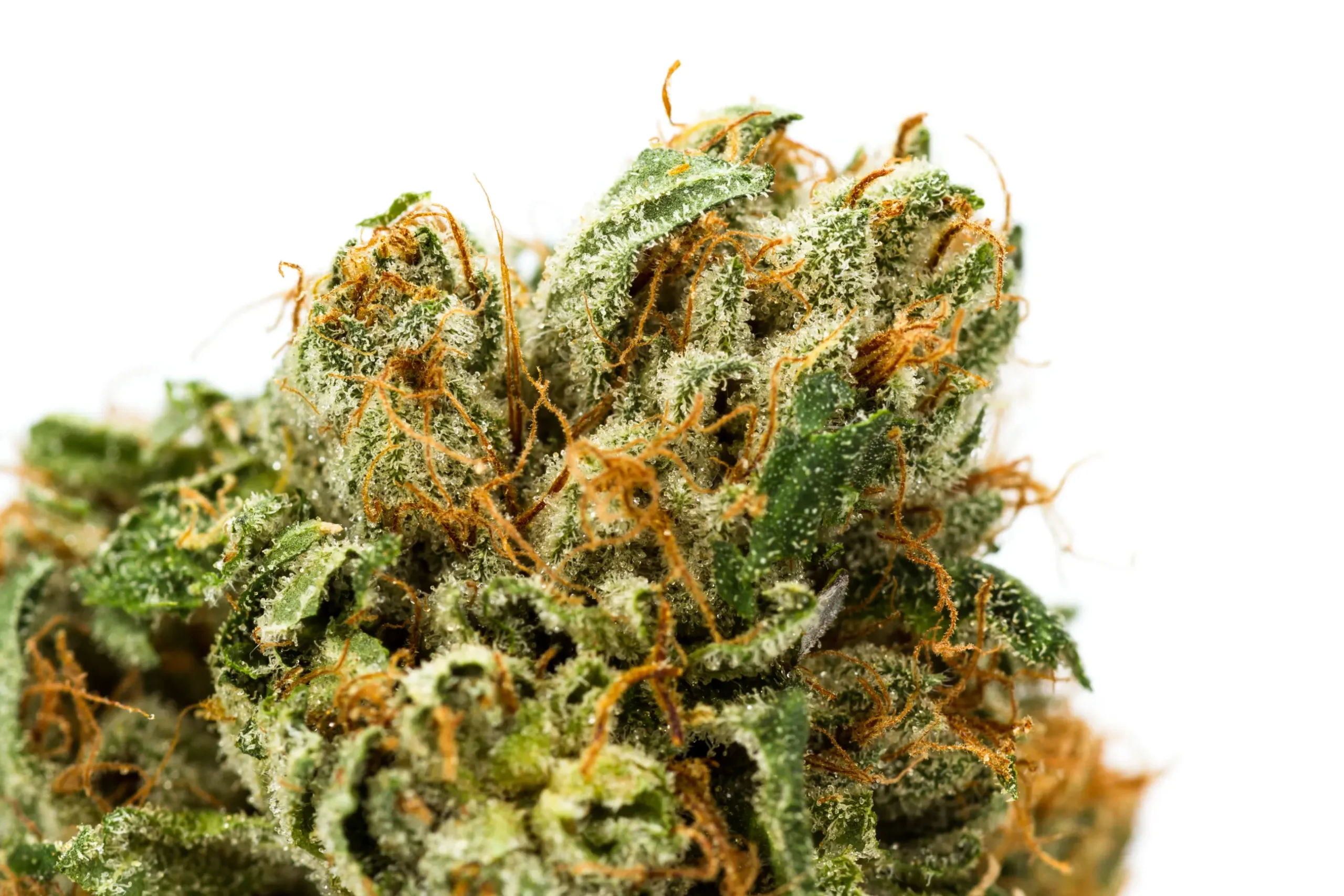
The Aroma Revolution: Volatile Sulfur Compounds (VSCs) and 321-MBT
For over four decades of modern cannabis breeding, the distinct “gas,” “diesel,” “skunk,” and “burnt rubber” aromas of cultivars such as Sour Diesel, OG Kush, and Skunk #1 were attributed strictly to monoterpenes (like myrcene, limonene, and pinene) and sesquiterpenes (such as beta-caryophyllene and humulene). However, terpene profiles consistently failed to explain why two strains with identical terpene percentages possessed radically divergent aromatic pungencies.
In 2021, landmark analytical research by Oswald et al., utilizing comprehensive two-dimensional gas chromatography coupled with sulfur chemiluminescence detection (GC×GC-SCD), discovered a completely distinct chemical class inside cannabis trichomes: prenylated Volatile Sulfur Compounds (VSCs).
1. The Master Skunk Molecule: 3-methyl-2-butene-1-thiol (321-MBT / VSC3)
The primary compound responsible for the signature skunky odor of cured cannabis is 3-methyl-2-butene-1-thiol (abbreviated as 321-MBT or VSC3). This molecule features a prenyl group (isopentenyl unit) bonded directly to a reactive thiol (-SH) group:
CH3-C(CH3)=CH-CH2-SH (3-methyl-2-butene-1-thiol)
Remarkably, 321-MBT is the exact chemical homolog found in the defensive spray of the striped skunk (Mephitis mephitis) and in light-struck “skunked” beer. The human olfactory epithelium possesses specialized copper-containing olfactory receptors (such as OR2T11) that detect volatile thiols at astonishingly low concentrations. The human odor detection threshold for 321-MBT is approximately 0.1 to 1.0 parts-per-trillion (0.1 to 1.0 ng/kg). Consequently, while terpenes exist in cured buds at concentrations of 1% to 4% (10,000 to 40,000 PPM), 321-MBT exists at trace levels of only 1 to 50 parts-per-billion, yet dominates the aromatic perception of the flower.
2. Additional Volatile Sulfur Compounds in Elite Cultivars
Beyond 321-MBT, analytical researchers identified a diverse family of volatile organosulfur compounds in pungent cannabis varieties:
- VSC4 (3-methyl-1-butanethiol): Contributes sharp, animalistic, and musky aromatic notes.
- VSC5 (2-methyl-1-butanethiol): Imparts pungent garlic and savory undertones.
- VSC6 & VSC7 (Prenylated Sulfides & Disulfides): Compounds such as dimethyl disulfide (DMDS) and dimethyl trisulfide (DMTS) that provide pungent chemical, onion, and “diesel” notes common in Chemdawg and GMO cultivars.
Chemovar Profiling: Gas Cultivars vs Dessert Strains
Analytical gas chromatography reveals that volatile sulfur compound expression is intensely cultivar-specific:
- High-VSC Cultivars (The Gas/Skunk Class): Iconic heritage genetics such as Sour Diesel, Chem Dog, OG Kush, and GMO Cookies express 321-MBT and dimethyl sulfides at concentrations between 15 and 50 parts per billion. This minuscule trace quantity produces overwhelming skunk pungency that easily pierces carbon filtration systems.
- Low-VSC Cultivars (The Sweet/Dessert Class): Modern dessert-forward varieties such as Gelato, Wedding Cake, and Runtz contain near-zero detectable 321-MBT (< 0.5 parts per billion). Their aromatic bouquets are driven almost exclusively by limonene, linalool, and beta-caryophyllene, manifesting as sweet, doughy, citrus, or floral notes without the pungent skunky punch.
Critically, this divergence proves that genetics, not fertilizer volume, dictate volatile sulfur compound synthesis. Feeding massive sulfate doses to a low-VSC dessert cultivar like Wedding Cake will never transform it into a skunky Sour Diesel; it will merely elevate vacuolar sulfate salts.
Question: My plants are in week 2 of flower under 1000W LED arrays in coco. The brand-new growth at the very top of the canopy is turning a solid pale lime-yellow, but my lower fan leaves are deep green. My reservoir EC is 1.8 and input pH is 5.9. I thought it was nitrogen deficiency and bumped my base feed, but the top leaves stayed yellow. What is happening?
You are seeing textbook early sulfur deficiency. Because sulfur is moderately immobile in cannabis, the plant cannot mobilize cysteine from older leaves to meet the rapid cell division demands of floral stretch. Therefore, young apical shoots starve for sulfur while lower leaves remain dark green. Adding more nitrogen base fertilizer made the problem worse by further unbalancing your Nitrogen-to-Sulfur ratio (which should ideally reside between 2.5:1 and 3:1).
When you audited your nutrient profile, your base nutrients were likely formulated with low magnesium sulfate. To resolve the chlorosis immediately: dissolve 1.0 gram per gallon of pharmaceutical Epsom salts (MgSO4· 7H2O) into your reservoir. This delivers approximately 34 PPM of elemental sulfur and 26 PPM of elemental magnesium with zero nitrogen. Apical foliage will green up completely within 48 to 72 hours as newly synthesized cysteine re-establishes chlorophyll thylakoids.
Terpenes vs VSCs: Synergistic Chemistry of the Cannabis Bouquet
The true aroma profile of premium cannabis emerges from the chemical interplay between hydrocarbon terpenes and volatile sulfur compounds:
| Parameter / Metric | Botanical Terpenes | Volatile Sulfur Compounds (VSCs) |
|---|---|---|
| Chemical Classification | Isoprenoid hydrocarbons and oxygenated terpenoids | Organosulfur thiols, sulfides, and thioesters |
| Key Examples | Myrcene, Limonene, Pinene, Beta-Caryophyllene, Linalool | 3-methyl-2-butene-1-thiol (321-MBT), DMDS, DMTS |
| Concentration in Cured Bud | High: 10,000 – 40,000 PPM (1.0% – 4.0% dry weight) | Trace: 0.001 – 0.05 PPM (1 – 50 parts per billion) |
| Human Odor Threshold | Moderate: 10 to 500 parts per billion (ppb) | Extremely Low: 0.0001 to 0.001 parts per billion (sub-ppt) |
| Olfactory Notes | Citrus, pine, sweet floral, fruit, clove, lavender | Skunk spray, pungent gas, diesel fuel, burnt rubber, garlic |
| Biosynthetic Precursor | Geranyl pyrophosphate (GPP) & Farnesyl pyrophosphate (FPP) | L-cysteine + Isopentenyl pyrophosphate (prenyl donor) |
Mathematical Proof: Odor Activity Value (OAV) Analysis
In flavor and fragrance science, the olfactory potency of a molecule is measured by its Odor Activity Value (OAV), defined as the ratio of its concentration in the sample to its human sensory detection threshold:
ext{Odor Activity Value (OAV)} = rac{ ext{Compound Concentration in Tissue}}{ ext{Human Sensory Detection Threshold}}
Compounds with an OAV greater than 1.0 contribute directly to sensory aroma; compounds with an OAV in the thousands dominate the entire olfactory profile:
- Beta-Myrcene (Terpene): Concentration in high-grade flower approx. 15,000 PPM (15 mg/g). Odor threshold approx. 13 to 20 PPM. Resulting ext{OAV} sim 750 ext{ to } 1,150.
- 321-MBT (Volatile Sulfur Compound): Concentration in flower approx. 0.025 PPM (25 ppb). Human sensory threshold approx. 0.000001 PPM (1 ppt). Resulting ext{OAV} sim 25,000.
This mathematical reality explains why trace sulfur compounds overpower terpenes by orders of magnitude. Terpenes establish the foundational aromatic canvas (sweet, citrus, herbaceous), while trace VSCs act as high-octane aromatic multipliers that punch through packaging and register instantaneously on human olfactory receptors. Without VSCs, cannabis smells like sweet hops or lavender; with VSCs, it exudes the pungent, unmistakable gas that commands top market pricing.
Volatile sulfur compounds are exceptionally susceptible to photochemical oxidation and volatilization. Just as UV radiation in clear beer bottles degrades hop isohumulones into skunky thiols, high drying temperatures (> 21 °C / 70 °F) and intense light exposure during curing cause rapid evaporation and oxidation of 321-MBT. To preserve maximum gas aroma, dry whole hanging plants at strictly controlled low temperatures (15 °C to 18 °C / 60 °F) and 60% relative humidity in total darkness.
Aroma Claims vs Agronomic Reality: The Luxury Consumption Threshold
The discovery of volatile sulfur compounds sparked widespread marketing claims across the hydroponic fertilizer sector. Nutrient manufacturers and forum influencers quickly claimed that doubling or tripling sulfate feeding, applying agricultural sulfur burners, or pouring massive quantities of Epsom salts during flowering will exponentially amplify terpene percentages and “gas” aromas. In professional agronomy, this claim must be evaluated through the lens of plant nutrient response curves and luxury consumption:
1. The Law of Diminishing Returns and Luxury Consumption
Like all essential minerals, cannabis sulfur assimilation follows a classical yield and secondary metabolite response curve:
- Deficiency Zone (< 30 PPM S): Protein synthesis stalls, chlorophyll production drops, and both cannabinoid and VSC biosynthesis are severely restricted due to inadequate cysteine and Coenzyme A availability.
- Sufficiency Zone (50 to 80 PPM S): At this optimal concentration, the plant’s APS reductase and sulfite reductase enzyme pathways operate at maximum kinetic velocity (Vmax). All metabolic demands for cysteine, methionine, glutathione, and secondary prenylated thiols are 100% satisfied.
- Luxury Consumption Zone (> 100 to 150 PPM S): Once sulfur assimilation pathways are enzymatically saturated, cannabis absorbs additional sulfate ions and stores them passively inside vacuolar cell compartments without metabolizing them. Controlled peer-reviewed trials demonstrate that elevating root-zone sulfate from 80 PPM to 160 PPM yields zero statistically significant increase in terpene or VSC concentration.
2. Agronomic Dangers of Sulfate Over-Application
Dumping excess sulfate into irrigation reservoirs during late flower introduces severe physiological penalties:
- Osmotic Salinity Stress: Sulfate is a divalent anion that increases electrical conductivity (EC) significantly per milligram dissolved. High sulfate levels drive root-zone EC past 2.8 mS/cm, causing osmotic water stress and premature leaf margin burn.
- Mulder Antagonism with Molybdenum: Sulfate (SO42-) and molybdate (MoO42-) share the same high-affinity anion uptake transport proteins in root cell membranes. Flooding the root zone with excess sulfate competitively suppresses molybdenum uptake, causing nitrate accumulation and whiptail chlorosis.
- Delayed Ripening and Harsh Combustion: Excess unassimilated mineral salts remaining in plant tissues at harvest impart an acrid, sulfurous taste upon combustion, causing cured flowers to burn with harsh black ash.
The Hazards of Agricultural Sulfur Burners in Flowering Canopies
Some indoor cultivators utilize agricultural sulfur vaporizers (burning raw elemental sulfur prills, ext{S}8) during vegetative growth to eradicate powdery mildew and broad mites. While effective as an antifungal vapor, vaporizing sulfur inside a flowering room is an agronomic catastrophe:
- Trichome Degradation: Vaporized sulfur sublimates into airborne sulfur gas that condenses directly onto glandular trichome resin heads. The sulfur chemically oxidizes delicate monoterpenes and denatures trichome membranes.
- Harsh Acrid Smoke: Condensed elemental sulfur particles cannot be washed or purged from sticky floral resin. When smoked or vaporized by consumers, the sulfur combusts into toxic, suffocating sulfur dioxide (ext{SO}2) gas, ruining flavor and causing immediate coughing.
- Regulatory Lab Failure: Legal cannabis testing jurisdictions mandate strict limits on elemental sulfur residues. Utilizing sulfur vaporizers after the initiation of flowering guarantees laboratory testing rejection.
Question: We read that sulfur creates skunk aroma, so in week 5 of flower we added 3 grams per gallon of Epsom salts and switched to a high-potassium-sulfate bloom booster. Now our runoff EC has spiked from 2.2 to 3.4 mS/cm, leaf tips are curling down and crisping, and middle leaves have orange necrotic spots. Did we overdose sulfur?
You have inflicted acute osmotic salinity toxicity combined with induced Molybdenum lockout. By stacking heavy Epsom salts on top of a sulfate-based bloom booster, your elemental sulfur likely soared beyond 180 PPM, and total sulfate anions flooded the root zone. Divalent sulfate ions spiked the substrate osmotic pressure, dehydrating root cells and causing the burnt, down-curling leaf tips.
Simultaneously, the massive surge of sulfate ions outcompeted molybdate at root anion transport channels, inducing the orange-brown necrotic spotting on middle fan leaves (classic whiptail/molybdenum starvation). To rescue the crop: execute an immediate media leach using a clean, balanced nutrient solution at 1.2 mS/cm (pH 5.9 for coco, 6.4 for soil) at 40% container volume until runoff EC drops back under 2.2 mS/cm. Reset your reservoir to deliver 75 PPM elemental S. Your flowers will recover, but understand that flooding with excessive sulfur does not create extra gas; genetics dictate VSC production once baseline nutritional sufficiency is met.
Diagnosing Sulfur Imbalances: Mobility, Symptoms, and Molybdenum Antagonism
Accurately identifying sulfur nutritional status requires careful inspection of canopy symptom architecture:
| Nutritional State | Foliar Location | Visual Manifestation | Physiological Cause | Common Diagnostic Misinterpretation |
|---|---|---|---|---|
| Sulfur Deficiency (Early) | Newest apical shoot leaves and upper canopy | Uniform light green to pale yellow chlorosis across young leaves; leaf veins and interveinal tissue yellow simultaneously | Sulfur is moderately phloem-immobile; plant cannot easily remobilize structural cysteine from older tissue | Frequently misdiagnosed as Nitrogen deficiency (which starts on oldest lower leaves) or Iron deficiency (which has sharp green veins) |
| Sulfur Deficiency (Severe) | Whole canopy, starting top-down | Apical leaves turn bleached white or ivory; petiole undersides turn deep violet/purple; plant growth is severely stunted and rigid | Complete collapse of protein synthesis and chloroplast thylakoid membrane degradation | Misdiagnosed as viral infection or broad mite damage |
| Sulfur Excess / Toxicity | Lower and middle fan leaves | Dark green, leathery, stunted leaves; brown necrotic scorch along serrated margins; leaf tips curl downward in claw-like posture | Osmotic salinity burn and secondary induced Molybdenum deficiency due to competitive anion antagonism | Misdiagnosed as Nitrogen toxicity or extreme wind burn |
To distinguish between sulfur deficiency and nitrogen deficiency in under 10 seconds: look at WHERE the yellowing begins. Nitrogen is highly phloem-mobile; nitrogen deficiency ALWAYS begins on the oldest fan leaves at the bottom of the plant. Sulfur is moderately immobile; sulfur deficiency ALWAYS begins as uniform lime-green chlorosis on the newest emerging leaves at the top of the canopy while lower leaves remain dark green.
Target Elemental PPM and Mineral Sources: Epsom Salts vs Potassium Sulfate
To satisfy the full genetic potential for cannabinoid and volatile thiol synthesis without inducing salinity damage, target these elemental concentrations.
Calculating Elemental Sulfur (S) and Magnesium (Mg) from Epsom Salt
Commercial growers frequently rely on pharmaceutical-grade Magnesium Sulfate Heptahydrate (ext{MgSO}4· 7 ext{H}2 ext{O}). To dose sulfur accurately in parts-per-million, cultivators use stoichiometry based on molar mass:
- Molar mass of ext{MgSO}4· 7 ext{H}2 ext{O} = 246.47 g/mol.
- Elemental Sulfur fraction: 32.06 / 246.47 sim 0.1301 (13.01% S).
- Elemental Magnesium fraction: 24.31 / 246.47 sim 0.0986 (9.86% Mg).
When dosing Epsom salts in commercial water volumes (where 1 US gallon = 3.785 liters):
- Adding 1.0 gram of Epsom salt per gallon yields: 1,000 ext{ mg} imes 0.1301 / 3.785 ext{ L} sim 34.37 ext{ PPM Elemental S}.
- Simultaneously, that 1.0 gram delivers: 1,000 ext{ mg} imes 0.0986 / 3.785 ext{ L} sim 26.05 ext{ PPM Elemental Mg}.
Dosing 1.5 to 2.0 grams per gallon of Epsom salts satisfies peak bulking requirements (50 to 70 PPM S) with absolute chemical precision.
- Early Vegetative Stage: 40 – 50 PPM Elemental S
- Late Veg & Transition Stretch (Weeks 1 – 3): 60 – 75 PPM Elemental S
- Peak Floral Bulking (Weeks 4 – 7): 65 – 85 PPM Elemental S
- Late Ripening Flush (Final 10 Days): 20 – 30 PPM Elemental S (or baseline taper)
Horticultural Mineral Sources for Precision Dosing
Cannabis agronomists rely on three primary soluble mineral compounds to formulate sulfur in fertigation solutions:
- Magnesium Sulfate Heptahydrate (Epsom Salts, MgSO4· 7H2O): The universal gold standard for delivering pure sulfur alongside magnesium. Epsom salts contain approximately 12.9% combined elemental sulfur and 9.8% soluble magnesium with zero nitrogen, making it the perfect vehicle for sulfur delivery throughout all flowering stages.
- Potassium Sulfate (Sulfate of Potash, K2SO4): An exceptional agricultural salt delivering approximately 18% elemental sulfur and 42% potassium (K2O). Highly soluble and virtually free of chlorides, potassium sulfate is the ideal amendment during mid-to-late flower when potassium demand peaks alongside sulfur demand.
- Calcium Sulfate Dihydrate (Agricultural Gypsum, CaSO4· 2H2O): Contains 18.6% sulfur and 23.2% calcium. Gypsum has moderate solubility in water (approx. 2.4 g/L), making it an outstanding long-term slow-release sulfur buffer when amended into living soil, peat, and organic coco blends at 1 to 2 tablespoons per gallon of medium.
Precision Fertigation Schedules: Vegetative to Late-Bloom Ripening
Follow this exact chemical blending protocol to incorporate sulfur into your fertigation schedule:
- Vegetative Recipe: Base Hydroponic Part A + Part B, delivering 110 PPM Ca, 45 PPM Mg, and 50 PPM S. Sulfur demand is moderate, supporting rapid leaf elongation and chlorophyll formation.
- Floral Transition (Weeks 1 to 3): Elevate sulfur to 70 PPM S by adding 0.5 grams per gallon of Epsom salts. This provides the enzymatic sulfur required for Coenzyme A and early glandular trichome stalk initiation.
- Peak Bulking (Weeks 4 to 6): Elevate sulfur to 80 PPM S and potassium to 220 PPM K by blending potassium sulfate (K2SO4) and magnesium sulfate. This window represents the peak synthesis of glandular head disc cells and volatile thiol accumulation.
- Ripening Window (Weeks 7 to Harvest): Reduce total conductivity by 40%. Maintain 30 to 40 PPM S to ensure cellular antioxidant activity without leaving excess sulfate salts in harvested calyxes.
To master electrical conductivity monitoring, PPM conversion scales, and meter calibration curves, consult our comprehensive foundational guide: Cannabis EC Meter Guide: EC, TDS, PPM, Calibration, and 500 vs 700 Scales.
Final Standard Operating Checklist and Next Related Guide
Follow this standardized engineering checklist to optimize sulfur nutrition for maximal terpene and thiol expression:
Scientific References
- Oswald, I. W., Ojeda, M. A., Pobanz, R. J., Koby, K. A., Buchanan, A. J., Del Rosso, J., … & Martin, T. J. (2021). Identification of green and gassy volatile sulfur compounds in cannabis sativa using multidimensional gas chromatography. ACS Omega, 6(47), 31667-31676.
- Leustek, T., & Saito, K. (1999). Sulfate transport and assimilation in plants. Plant Physiology, 120(3), 637-644.
- Marschner, H. (2012). Marschner’s Mineral Nutrition of Higher Plants (3rd ed.). Academic Press.
- Zheng, Y. (2021). Handbook of Cannabis Production in Controlled Environments. CRC Press.
- Hawkesford, M. J., & De Kok, L. J. (2006). Managing sulphur metabolism in plants. Plant, Cell & Environment, 29(3), 382-395.
- Bernstein, N., Gorelick, J., Zerahia, R., & Koch, S. (2019). Impact of environmental conditions on secondary metabolite production in cannabis. Industrial Crops and Products, 139, 111467.
- Epstein, E., & Bloom, A. J. (2005). Mineral Nutrition of Plants: Principles and Perspectives (2nd ed.). Sinauer Associates.
- Byers, T. L., et al. (2023). Minor volatile sulfur compounds contribute significantly to the pungent aroma of cannabis inflorescences. Journal of Agricultural and Food Chemistry, 71(12), 4890-4899.
Share this article
A quick overview of the topics covered in this article.