Cannabis Grow Room Moisture-Load Calculator
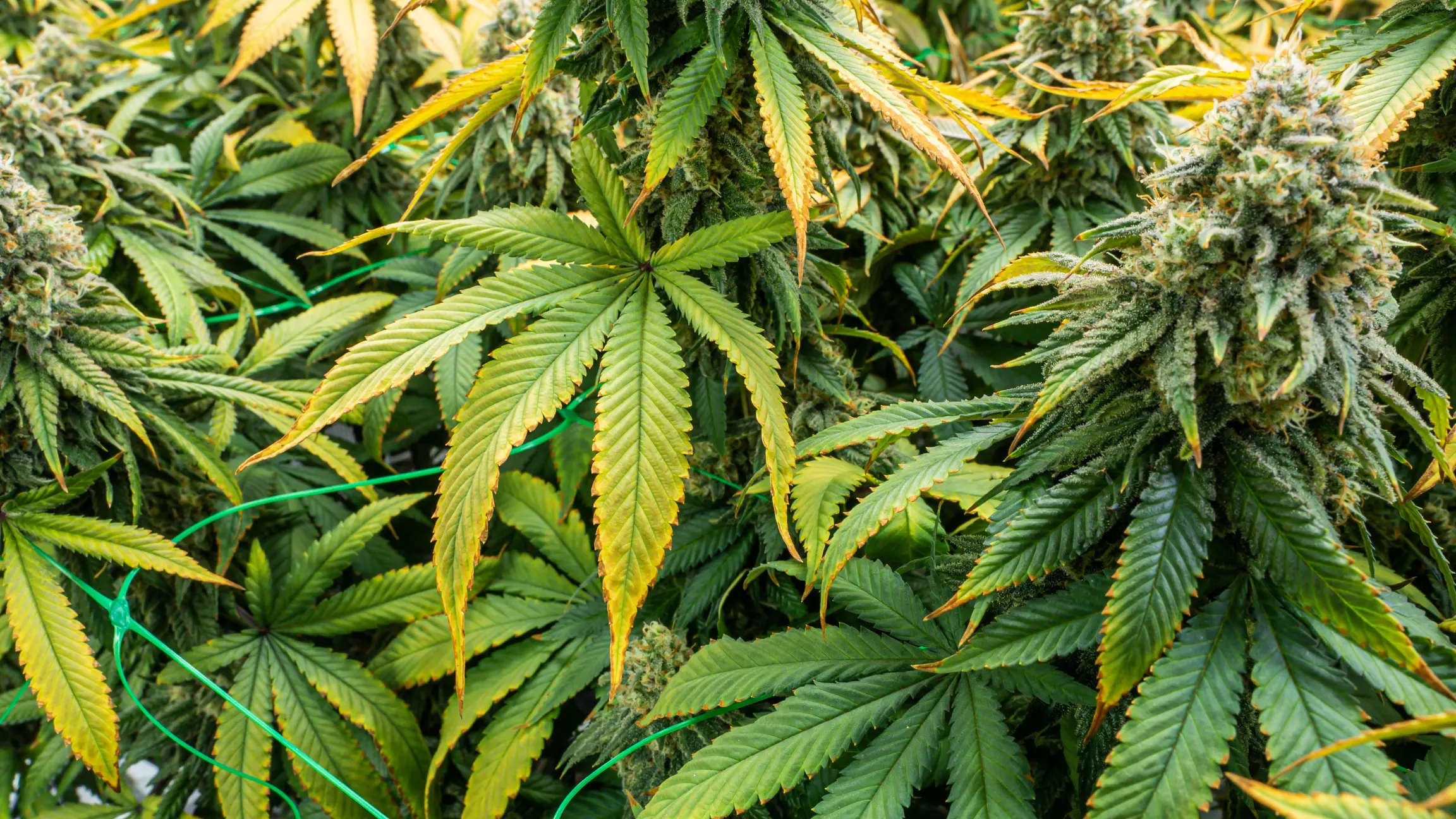
Accurately calculating the latent moisture load of an indoor cannabis cultivation facility is the single most critical engineering step in preventing catastrophic crop loss, structural moisture rot, and chronic fungal epidemics. Commercial dehumidifier manufacturers frequently market equipment using vague square-footage claims, such as advertising a unit as suitable for up to 1,500 square feet. In controlled environment agriculture (CEA), these marketing metrics are entirely meaningless. A 1,500 square foot residential living room with two human occupants generates less than three pints of moisture per day, whereas a 1,500 square foot cannabis flowering canopy under high-intensity LED lighting transpires upwards of 150 to 200 gallons (1,200 to 1,600 pints) of liquid water into the air every 24 hours.
Relying on residential room-size estimates or generic rules of thumb guarantees undersized equipment, leading to soaring nighttime humidity, suffocated stomata, and late-bloom Botrytis outbreaks. Conversely, wildly oversizing dehumidification without modulating compressor stages causes severe thermal spikes, electrical service panel overload, and excessive equipment cycling fatigue. To establish flawless environmental stability, cultivators must treat the grow room as a closed thermodynamic mass-balance system, calculating peak latent moisture generation directly from daily irrigation input, canopy transpiration rates, and environmental psychrometrics.
The Golden Mass Balance Rule of Horticultural Moisture Load
Under steady-state indoor cultivation conditions, the total moisture load entering the atmosphere equals 95 to 100 percent of the total liquid water delivered to the crop. A minor fraction (2 to 5 percent) is biochemically bound into carbohydrates and plant structural tissue, but this volume is statistically negligible for HVAC engineering calculations. Therefore, Peak Daily Moisture Load (Pints/Day) equals Total Daily Irrigation Volume (Gallons) multiplied by 8.34 (Pounds per Gallon), which converts directly to pints because one pint of pure water weighs approximately 1.04 pounds (roughly one gallon equals eight pints).
This fundamental mass balance equation provides the mathematical bedrock for all dehumidification engineering. If a cultivation room receives 50 gallons of nutrient solution per day across its automated irrigation cycles, that exact volume of water will enter the room atmosphere within the subsequent 24-hour period. Because one US gallon contains exactly eight pints, a 50-gallon daily watering schedule generates precisely 400 pints of water vapor that must be extracted by mechanical dehumidifiers or exhaust ventilation. Any dehumidification system rated for less than 400 pints per day under actual room operating conditions will inevitably fail to control humidity.
Furthermore, moisture generation is not distributed evenly across the 24-hour diurnal cycle. Transpiration rates peak during the middle of the photoperiod when photosynthetic photon flux density (PPFD) is highest and stomatal conductance is wide open. Between 60 and 75 percent of the total daily water load is transpired during the lights-on cycle, while the remaining 25 to 40 percent evaporates continuously from moist root substrates and unsealed drainage systems during the dark cycle. Sizing calculations must account for this diurnal surge to ensure equipment handles peak hourly moisture spikes.
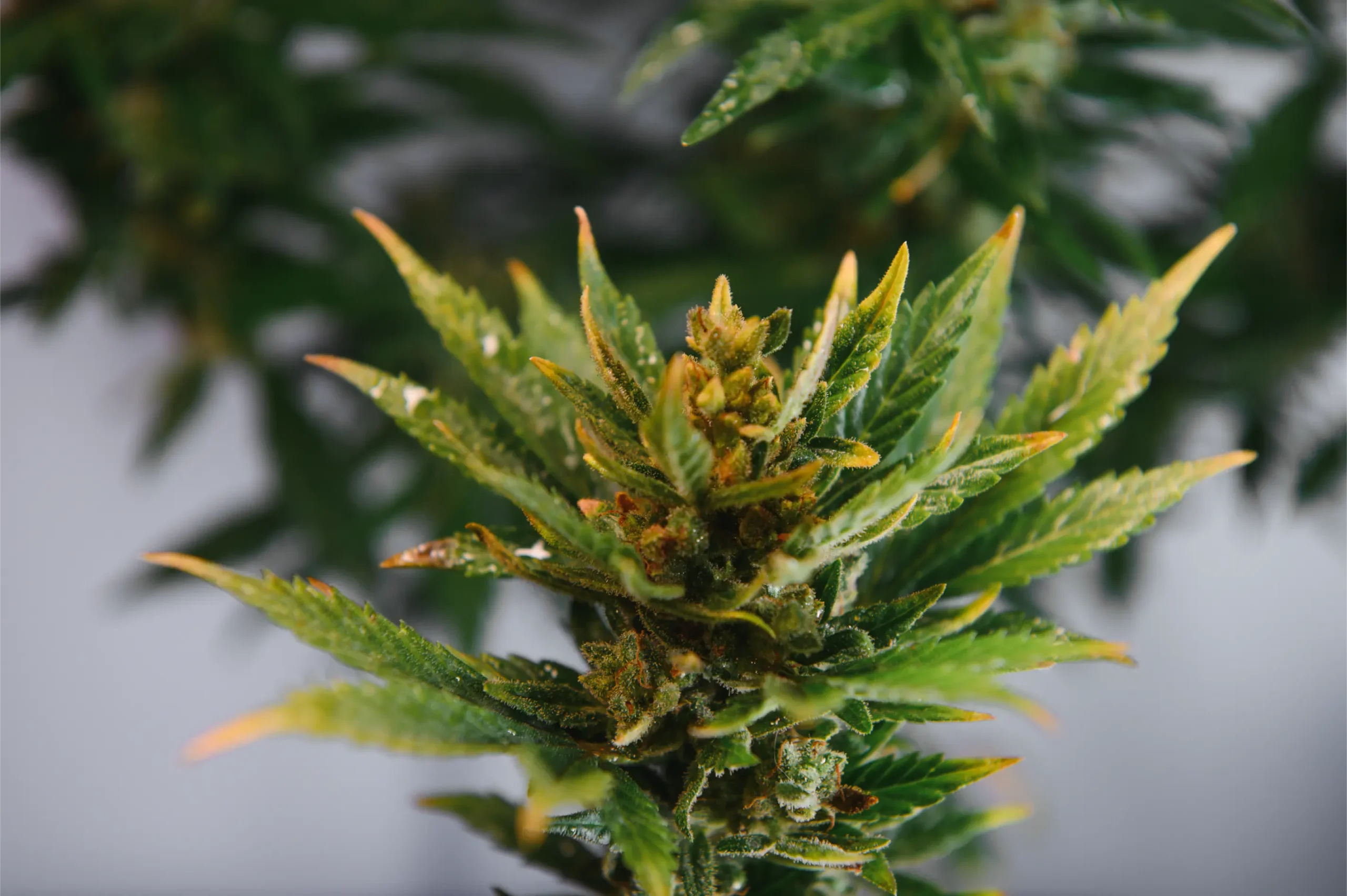
Active cannabis canopy transpiring large volumes of water vapor, requiring precise mathematical modeling of latent loads to size commercial dehumidifiers.
Cultivators must also understand the difference between standard AHAM rating conditions and actual grow room conditions. The Association of Home Appliance Manufacturers (AHAM) rates dehumidifiers at 80 degrees Fahrenheit (26.7 degrees Celsius) and 60 percent relative humidity. However, during the critical late-flowering flush stage, professional growers frequently drop environmental setpoints to 68 degrees Fahrenheit (20 degrees Celsius) and 45 percent relative humidity to maximize terpene retention and suppress mold. At these cooler, drier conditions, a dehumidifier compressor extracts 30 to 45 percent less water per hour than its advertised AHAM rating due to reduced air vapor pressure. Failure to derate equipment capacity leads directly to catastrophic humidity spikes.
To eliminate these costly engineering oversights, this guide provides a step-by-step mathematical calculator workflow. By examining physical space constraints, laying out mechanical infrastructure, sizing equipment from measured irrigation mass, implementing robust electrical safety, and establishing safe-failure protocols, cultivators build high-performance grow rooms capable of repeatable, commercial-grade results.
Defining Space Constraints: Dimensions, Moisture Barriers, and Electrical Loads
Before purchasing dehumidifiers or calculating CFM air exchange, cultivators must assess the physical and architectural constraints of the cultivation space. The structural envelope dictates how moisture behaves within the building. Unlike a standard dry residential room, an active cannabis flowering room operates as a high-humidity tropical microclimate. Without proper vapor barriers, moisture vapor travels through plaster, drywall, and wood framing via vapor pressure differential, rotting structural studs and breeding toxic black mold within exterior building walls.
The interior envelope of the grow room must be sealed with a continuous vapor retarder possessing a perm rating of less than 0.1 perms. Heavy-duty 6-mil or 8-mil virgin polyethylene sheeting, multi-layer reinforced poly, or closed-cell spray foam insulation must be installed across all walls and ceilings. All seams must be overlapped by at least six inches and sealed with moisture-resistant acoustic sealant or vapor-barrier tape. Concrete slab floors must be inspected for subterranean moisture transmission, as ground moisture seeping upward through unsealed concrete adds uncalculated latent load to the room.
I am converting a 12×15 spare bedroom into a flower room with 16 plants under 4,800 watts of LED lighting. I plan to use two 70-pint home dehumidifiers. Will this be enough to keep nighttime humidity below 50%?
No, that setup will fail severely during peak bloom. Sixteen mature plants in late flower will consume approximately 16 to 20 gallons of water daily, creating a latent load of 128 to 160 pints per day. Two residential 70-pint units (140 pints total AHAM rating) lose roughly 35 percent of their capacity at 50 percent relative humidity and 68 degrees Fahrenheit, delivering only about 90 pints of actual extraction. Furthermore, residential units dump massive heat into the room and lack continuous commercial duty cycles. You need a dedicated commercial horticultural dehumidifier rated for at least 200 to 250 pints per day.
Question sent by: Christian, via email.
Christian’s scenario illustrates the massive gap between residential appliance ratings and agricultural reality. Commercial horticultural dehumidifiers differ fundamentally from domestic portable units. Domestic units utilize lightweight plastic internal blowers and small condensing coils with closely spaced aluminum fins that quickly foul with airborne dust. Under continuous 24/7 agricultural duty cycles, residential dehumidifier compressors overheat, internal float switches fail, and small internal collection buckets overflow, spilling water across the floor.
In contrast, commercial units (such as Quest, Anden, or Phoenix) feature heavy-gauge galvanized steel chassis, high-static backward-curved impellers, wide-fin heat exchangers, and external 24-volt low-voltage terminal blocks for integration with industrial environmental controllers. Most importantly, commercial units boast high energy efficiency ratios, removing between 5.0 and 8.0 pints of water per kilowatt-hour of electricity, compared to residential units that struggle to extract 2.5 to 3.5 pints per kilowatt-hour, drastically lowering monthly electrical operating overhead.
Layout Architecture Before Purchasing: Canopy, Drainage, and Airpath Alignment
Mechanical equipment must never be purchased in isolation from physical room layout. The spatial arrangement of cultivation benches, lighting grids, drainage plumbing, and circulation fans determines how efficiently air moves across condensing coils. A poorly planned room layout creates aerodynamic dead zones where moist air stagnates, preventing dehumidifiers from accessing the moisture-laden vapor plume generated by the canopy.
The first architectural rule is establishing clean service corridors and uniform bench spacing. Rolling benches or stationary cultivation tables should be oriented parallel to the primary airflow axis of the room. Placing tables perpendicular to airflow creates massive physical dams that block supply air from reaching the lower under-canopy root zone. Maintaining a minimum clearance of 24 to 30 inches between bench ends and perimeter walls ensures that air circulates smoothly along room boundaries, returning freely to dehumidifier intake grilles.
Aerodynamic Rule: Dehumidifier Placement and Air Jet Circulation
Dehumidifiers discharge dry, warm air at high velocity. Never point a dehumidifier exhaust grille directly into plant foliage, as the concentrated dry air jet induces acute foliar windburn, stomatal desiccation, and localized calcium deficiency. Instead, suspend commercial dehumidifiers overhead above the lighting plane, directing the dry discharge stream along the ceiling toward the opposite wall. This establishes a circular ceiling-to-floor air convection roll that gently blends conditioned dry air into the bulk room atmosphere before it contacts the delicate upper canopy.
Drainage design is equally vital in minimizing unnecessary latent load. Every gallon of irrigation runoff left standing in collection trays or floor gutters continues to evaporate back into the atmosphere, forcing dehumidifiers to re-extract the same water repeatedly. Cultivators must engineer active, hard-plumbed drainage systems. Benches must be pitched at a minimum slope of 0.25 inches per linear foot toward dedicated collection manifolds. Runoff must drain immediately through PVC pipe into an external sealed sump or directly into building sanitary sewer lines.
If drainage plumbing requires a condensate collection pump, select a commercial unit equipped with a dual-float safety switch. The primary float operates the pump motor, while the secondary safety float connects directly to the digital environmental controller or lighting relay contactor. If the condensate pump discharge line becomes clogged or loses power, the safety switch trips, automatically disabling automated irrigation timers to prevent hundreds of gallons of nutrient solution from flooding the cultivation room floor.
Irrigation runoff and substrate surface evaporation contributing directly to room latent moisture load, requiring hard-plumbed drainage to prevent re-evaporation.
Environmental sensor placement must be meticulously planned to ensure dehumidifiers receive accurate feedback. Transducers measuring temperature and relative humidity should never be mounted directly on cold exterior walls or positioned within three feet of a dehumidifier intake or exhaust grille. Sensors must be installed at canopy height in the center of the plant canopy, protected inside an actively aspirated radiation shield with a continuous 12-volt micro-fan drawing ambient air across the sensor probes. This guarantees that controller decisions reflect true foliar boundary conditions.
Furthermore, cultivators must establish dedicated equipment zones outside the main growing room whenever feasible. Placing heavy electrical panels, automated fertigation dosers, and secondary water storage reservoirs in an adjacent mechanical utility corridor saves valuable canopy square footage, isolates electrical connections from high-humidity washdown areas, and allows technicians to perform routine maintenance without introducing biological contaminants into the flowering environment.
The Step-by-Step Latent Sizing Calculator Workflow
To accurately size commercial dehumidification equipment, cultivators must apply a rigorous engineering workflow that accounts for irrigation inputs, sensible-to-latent energy conversion, and psychrometric derating. The following mathematical workflow guides cultivators through the exact calculations required for commercial-grade precision.
Step 1: Determine Peak Daily Irrigation Volume. Sum the total volume of water delivered to all plants in the room on the peak feeding day of the flowering cycle (typically weeks 4 through 6 of bloom). In high-performance coco coir or rockwool high-frequency fertigation systems, a mature plant under 1,000 μmol/m²/s PPFD consumes between 0.75 and 1.25 gallons of water per day. Multiply the number of plants by the average peak gallon volume to determine Total Daily Irrigation Gallons.
| Canopy Size & Plant Count | Daily Water Input | Calculated Daily Load | Required AHAM Rating | Recommended Equipment Class |
|---|---|---|---|---|
| 4×4 Tent (4 Plants) | 4.0 Gallons / Day | 32 Pints / Day | 50 to 70 Pints / Day | Large residential or compact commercial unit (lung room placement). |
| 8×8 Space (12 Plants) | 12.0 Gallons / Day | 96 Pints / Day | 150 to 180 Pints / Day | Commercial overhead dehumidifier (e.g., Quest 105 or 155 pint). |
| 12×15 Room (24 Plants) | 24.0 Gallons / Day | 192 Pints / Day | 280 to 320 Pints / Day | Heavy commercial unit (e.g., Quest 225 or Anden A320V). |
| 20×30 Facility (80 Plants) | 80.0 Gallons / Day | 640 Pints / Day | 950 to 1,100 Pints / Day | Multiple industrial units configured in distributed staging (e.g., two 500-pint units). |
| 40×60 Commercial (320 Plants) | 320.0 Gallons / Day | 2,560 Pints / Day | 3,800 to 4,200 Pints / Day | Dedicated rooftop split DX HVACD system or commercial Quest 506 array. |
Step 2: Convert Gallons to Raw Pints of Moisture. Multiply the Total Daily Irrigation Gallons by 8 to establish the Base Daily Latent Load in pints. For a room consuming 24 gallons daily, the baseline moisture load is 24 multiplied by 8, yielding 192 pints of water vapor per day.
Step 3: Apply the Psychrometric Derating Factor. Because commercial dehumidifiers are rated at 80 degrees Fahrenheit and 60 percent relative humidity, their capacity drops significantly when operating in cooler, drier late-flowering environments (such as 68 to 72 degrees Fahrenheit and 45 to 50 percent RH). In this target zone, moisture extraction capacity decreases by approximately 30 to 35 percent. To account for this capacity reduction, divide the Base Daily Latent Load by a derating efficiency factor of 0.65. Continuing the example: 192 pints divided by 0.65 equals 295.3 pints of required AHAM-rated dehumidification capacity.
Step 4: Incorporate the Safety and Infiltration Buffer. Add a 15 to 20 percent engineering safety factor to accommodate door openings, structural air infiltration, humid outdoor makeup air, and unexpected transpirational surges. Multiplying 295.3 pints by 1.15 yields a final specified equipment capacity of approximately 340 pints per day AHAM rating. Sizing equipment to this final calculated target ensures the room maintains strict setpoint stability even during extreme weather conditions.
Electrical Infrastructure and Life Safety: Elevated Circuits and Fire Mitigation
Operating high-capacity dehumidifiers alongside multi-kilowatt lighting arrays and automated fertigation systems presents serious electrical hazards. Water and electricity exist in close physical proximity within an indoor garden. Inadequate electrical design is the primary cause of electrical fires, equipment damage, and personal injury in indoor agricultural facilities.
Commercial dehumidifiers draw significant electrical current. A 200-pint commercial dehumidifier typically draws 8 to 12 amperes on a standard 120-volt circuit, or 4 to 6 amperes on a dedicated 240-volt single-phase line. Electrical safety codes mandate that continuous agricultural loads (equipment operating for three hours or longer) must never exceed 80 percent of the circuit breaker rating. A 12-ampere dehumidifier requires a dedicated 20-ampere branch circuit with 12 AWG copper wiring; running such a unit on a shared 15-ampere residential circuit alongside lighting ballasts or fans will inevitably trip thermal circuit breakers or overheat electrical conductors inside walls.
Life Safety Rule: Elevation of Electrical Receptacles and GFCI Protection
All electrical outlets, disconnect switches, and low-voltage controller terminals inside a cultivation space must be installed at a minimum height of 48 to 54 inches above the finished floor. In the event of a catastrophic irrigation hose rupture, drainage overflow, or condensate pump failure, standing water on the floor will never contact live electrical terminals. Every branch circuit supplying equipment in the grow room must be protected by Class A Ground Fault Circuit Interrupters (GFCI) or Arc Fault Circuit Interrupters (AFCI) to prevent fatal electrocution and arc-induced electrical fires.
Power cable management requires strict discipline. Extension cords must never be used for permanent equipment wiring. Power cables should be suspended overhead in dedicated steel wire-mesh cable trays or run inside rigid metallic conduit (EMT) securely fastened to structural studs. Power cords hanging loose across floors create severe trip hazards, are vulnerable to damage from foot traffic and rolling carts, and can sit in pools of corrosive nutrient water.
Furthermore, commercial dehumidifiers should be hardwired or connected via industrial NEMA twist-lock plugs (such as NEMA L6-20 for 240-volt configurations). Standard residential straight-blade plugs can loosen under continuous operational vibration, creating high-resistance electrical connections that overheat, melt plastic receptacle faceplates, and ignite surrounding building materials.

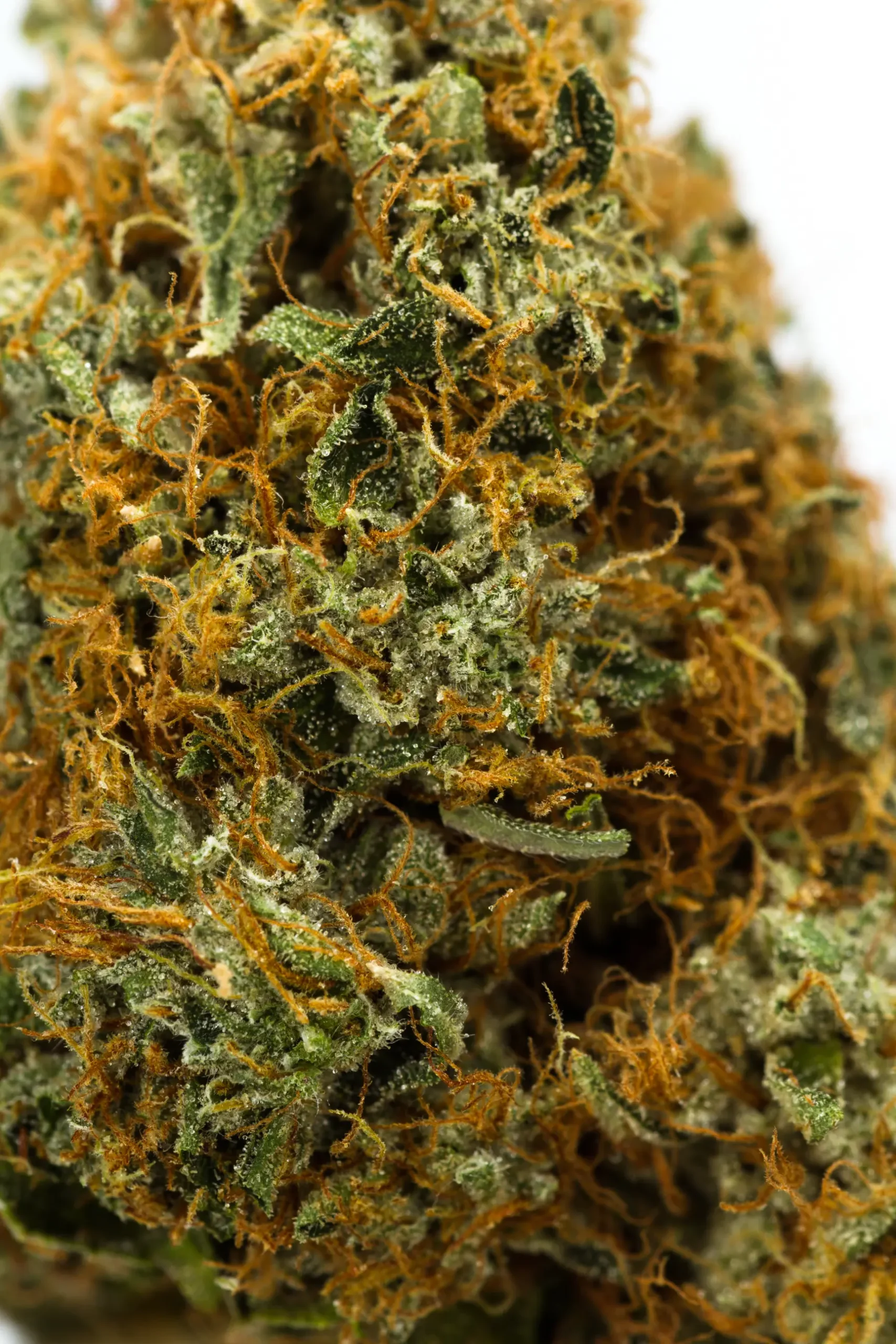
Late-stage floral cola requiring absolute latent moisture control and uninterrupted dehumidification to prevent internal bud rot and mold outbreaks.
Thermal dissipation from dehumidifiers must also be accounted for in total cooling load calculations. Every pound of water vapor condensed by a dehumidifier releases its latent heat of vaporization (approximately 1,061 BTU per pound) into the room air as sensible heat. In addition, 100 percent of the electrical wattage consumed by the dehumidifier compressor and fan motor is converted into sensible thermal energy. A dehumidifier drawing 1,000 watts adds approximately 3,412 BTU per hour of sensible heat to the room, requiring adequate air conditioning capacity to prevent ambient temperatures from overheating.
Empty-Room Commissioning and Psychrometric Stress Testing
Before transplanting a single plant into the cultivation space, growers must execute an empty-room commissioning test. Attempting to tune environmental equipment while high-value crops are actively growing is an enormous operational gamble. Commissioning validates that heating, cooling, dehumidification, and ventilation systems operate in harmony without competitive cycling.
To simulate peak flowering latent and sensible loads in an empty room, cultivators can introduce artificial heat and moisture sources. Operate all grow lights at 100 percent power to establish the baseline sensible heat load. To generate an artificial moisture load, place commercial ultrasonic humidifiers or large open water reservoirs equipped with submersible immersion heaters in the center of the room, calibrated to discharge the calculated hourly latent load (for example, 1.5 to 2.0 gallons per hour). Run the room through a full 12-hour lights-on and 12-hour lights-off cycle, logging environmental data continuously at one-minute intervals.
- Vapor Barrier Integrity Audit: Inspect all wall and ceiling seams to ensure zero moisture diffusion into building framing.
- GFCI and AFCI Breaker Trip Test: Manually trip and reset all ground-fault and arc-fault circuit interrupters before loading circuits.
- Condensate Gravity Drainage Pitch: Verify all drain pipes maintain a minimum continuous 0.25-inch per foot downward slope.
- Dual-Float High-Water Cutoff Test: Manually lift the secondary safety float on the condensate pump to confirm irrigation shutoff.
- Lights-Off Psychrometric Transition: Confirm dehumidifiers engage immediately during dark cycle, preventing RH from rising > 5%.
- Aspirated Sensor Shield Velocity: Verify internal aspiration fan delivers continuous air velocity across temperature and RH probes.
- Controller Deadband Calibration: Program 3% to 5% RH deadbands to prevent rapid, destructive compressor short-cycling.
Executing this rigorous commissioning checklist prevents severe operational emergencies during mid-bloom. A particularly critical observation during the commissioning run is compressor deadband performance. If the environmental controller is programmed with a tight 1 percent relative humidity deadband, the dehumidifier compressor will cycle on and off every three minutes as humidity fluctuates around the setpoint. This rapid short-cycling overheats compressor motor windings, breaks down internal refrigeration lubricants, and destroys the unit within months. Establishing a deadband of 4 to 5 percent RH allows the unit to run in long, efficient dehumidification cycles.
The commissioning run must also verify the behavior of the system during the critical 30-minute transition period immediately following lights-out. When high-wattage LED fixtures shut off, ambient air temperature drops rapidly while root containers remain warm, causing relative humidity to spike abruptly. The commissioning data log must demonstrate that the dehumidification array activates aggressively during this transition, suppressing the humidity spike before the air temperature drops to the dew point.
Comprehensive Failure Planning and Emergency Response Automation
Even the most meticulously engineered cultivation facility will eventually experience mechanical or electrical component failures. In commercial horticulture, success is defined not by assuming failures will never occur, but by engineering automated failsafe redundancies that prevent single-point failures from destroying entire harvests.
The most devastating failure mode is a complete dehumidifier compressor failure during late bloom. If a room relies on a single massive 500-pint dehumidifier and that unit suffers a refrigerant leak or compressor burnout, the entire room will reach 90 percent relative humidity within hours, ruining hundreds of thousands of dollars of flowering canopy. Professional facilities mitigate this existential risk by deploying N+1 redundancy: instead of installing one giant dehumidifier, they install two or three smaller units (for example, two 250-pint units) configured in staged lead-lag operation. If one unit fails, the remaining units continue extracting moisture, keeping humidity within survivable limits while repairs are executed.
Emergency Automation: Environmental Failsafe Triggers
Modern programmable logic controllers (PLCs) and smart horticultural environmental controllers must be configured with emergency failsafe logic. If relative humidity exceeds 70 percent for more than 45 consecutive minutes during the dark cycle, the controller should automatically trigger emergency auxiliary exhaust fans to purge moist air outdoors, activate lung room supplemental heat to raise ambient air above the dew point, and transmit urgent high-priority SMS and email alerts to facility managers.
Power loss planning is another vital pillar of risk management. During a municipal power outage, backup emergency generators must be sized with sufficient surge capacity to handle compressor locked-rotor amperage (LRA). When an inductive motor like a dehumidifier compressor starts up, it draws a momentary inrush current that is four to six times its normal operating running-load amperage (RLA). If the backup generator cannot supply this massive starting surge, the generator voltage collapses, tripping transfer switches and leaving the garden without environmental control.
Blocked condensate drainage lines represent a silent, insidious failure mode. Biofilm, algae, and mineral scale gradually accumulate inside flexible vinyl drain tubing over months of operation. Eventually, the line blocks completely, causing condensate to overflow into the internal catch pan. Cultivators must install clear vinyl or rigid PVC lines equipped with cleanout tee fittings, allowing technicians to inspect for blockages visually and flush lines without disassembling equipment.
Preventative Maintenance Schedule and Equipment Longevity
Commercial dehumidification equipment represents a substantial capital investment that requires structured, ongoing preventative maintenance. Operating continuously in warm, dusty, terpene-rich agricultural atmospheres accelerates wear on filters, heat exchangers, and electrical contacts.
Establish a strict bi-weekly filter cleaning and inspection protocol. Airborne organic dust, pulverised perlite particles, and dried nutrient mist are constantly drawn into the dehumidifier intake. A clogged air filter restricts airflow across the evaporator coil, causing refrigerant temperatures to drop below freezing. Ice forms across the coil fins, completely blocking airflow and severely reducing moisture extraction capacity. Clean MERV 8 to MERV 11 intake filters bi-weekly, and replace disposable pleated filters every 60 to 90 days.
Maintenance Protocol: Evaporator Coil Sanitization and Algaecide Treatment
Every 90 days or between crop cycles, disconnect electrical power and remove the service access panel to inspect the aluminum evaporator and condenser coils. Spray the fins with an approved self-rinsing, non-acidic agricultural coil cleaner to dissolve organic terpene films and microbial biofilms. Place slow-dissolving quaternary ammonium condensate pan tablets into the internal drip basin. These tablets release a controlled biocide that prevents algae, slime, and legionella bacteria from colonizing the drain pan and blocking drain ports throughout the subsequent growing cycle.
Every six months, a qualified HVAC technician or experienced facility manager should conduct an electrical audit of all dehumidification machinery. Inspect terminal connections for signs of heat discoloration, loose screws, or oxidized copper. Measure compressor running amperage using a calibrated true-RMS clamp meter, comparing the measured amperage against the manufacturer nameplate RLA. A compressor drawing significantly higher amperage than rated is an early indicator of winding insulation degradation, failing run capacitors, or restricted refrigeration expansion valves.
By executing this thorough, mathematically grounded moisture load calculator workflow, cannabis cultivators eliminate the dangerous guesswork that undermines indoor environmental control. Sizing equipment based on true daily irrigation mass, applying rigorous psychrometric derating factors, engineering robust electrical and drainage infrastructure, and maintaining disciplined preventative maintenance protocols guarantees absolute atmospheric stability. Cultivators protect valuable botanical assets, prevent devastating fungal blights, and achieve optimal transpirational vitality and commercial harvest yields crop after crop.
Scientific and Technical References
- ASABE. (2018). Heating, Ventilating and Cooling Greenhouses (ANSI/ASAE EP406.4). American Society of Agricultural and Biological Engineers. Engineering standards for mass-balance moisture calculations, transpirational modeling, and psychrometric analysis in controlled environments.
- Both, A. J., Benjamin, L., Ciolkosz, D., & Kleinhenz, M. D. (2015). Greenhouse Dehumidification: Principles and Practices. Rutgers Cooperative Extension Bulletin E353. Comprehensive research into latent heat removal, commercial dehumidifier efficiency metrics (pints/kWh), and canopy transpiration dynamics.
- Albright, L. D. (1990). Environment Control for Animals and Plants. American Society of Agricultural and Biological Engineers. Foundational text on fluid mechanics, heat exchange, psychrometric charting, and agricultural environmental control.
- Taiz, L., Zeiger, E., Møller, I. M., & Murphy, A. (2015). Plant Physiology and Development (6th ed.). Sinauer Associates. Detailed analysis of stomatal conductance, plant water potential, xylem transport, and transpirational mass flux under artificial illumination.
Share this article
A quick overview of the topics covered in this article.
Follow us
Latest articles

November 6, 2026

November 6, 2026

November 6, 2026