
Cannabis Odor Control for Small Indoor Gardens
Effective cannabis odor control in a small indoor garden relies on two non-negotiable engineering principles: maintaining continuous negative static air pressure inside the enclosure and pulling all exhausted air through a properly sized bed of virgin activated carbon at the correct contact speed. Even a single flowering plant in a 2×2 or 2×4 tent synthesizes volatile monoterpenes, sesquiterpenes, and prenylated volatile sulfur compounds (VSCs) that rapidly permeate drywall, hallways, and shared HVAC returns if unfiltered air escapes.
Most indoor odor failures happen not because carbon filtration fails in principle, but because growers oversize fan speed beyond the filter’s contact-time rating, allow relative humidity above 65 percent to clog carbon micropores with water vapor, or lose negative pressure when opening tent doors. This guide details exact CFM calculations, static pressure losses, carbon bed specifications, and harvest containment protocols.
How Negative Static Pressure Prevents Fugitive Odor Leaks
A carbon filter can only scrub the air that actually passes through its canister; if your tent is under positive or neutral pressure, pungent air will push out through every pinhole, cable port, and zipper tooth.
Establishing and Verifying Inward Tent Wall Flex
Negative static pressure is achieved when your inline exhaust fan extracts slightly more cubic feet per minute (CFM) of air from the top of the tent than enters through the passive lower mesh intakes or active intake duct. Because air always flows from higher pressure (the outside lung room) toward lower pressure (inside the tent), every seam and zipper acts as a one-way inward intake rather than an odor leak.
To verify negative pressure, zip the tent completely closed with your exhaust fan running at its baseline speed and observe the vertical fabric panels. The side walls should bow gently inward by 1.5 to 3 centimeters (0.5 to 1.2 inches). You can also hold a thin strip of tissue paper or incense smoke 2 centimeters outside a closed zipper seam and confirm it pulls briskly inward.
Balancing Passive Intake Vents Without Starving the Fan
Closing every lower intake port turns your tent into a vacuum chamber that buckles metal poles, strains the inline fan motor, and chokes air exchange. Conversely, opening three large rectangular mesh vents wide open on a 2×4 tent drops the pressure differential to zero, allowing buoyant warm air to drift out the upper cable ports.
As a rule of thumb, open a passive intake cross-sectional area roughly 1.5 to 2 times the area of your exhaust duct diameter (for example, one 6-inch round sock port plus a quarter of one velcro mesh screen for a 4-inch or 6-inch exhaust system), and secure fine mesh bug screens over open ports to block dust and pests.
Negative Static Pressure: An enclosure state where internal air pressure is slightly lower than the surrounding lung room, forcing all air movement through seams and ports to flow strictly inward so 100 percent of exiting air must pass through the carbon filter.
Practical questions from home cultivators often center on how these thresholds behave in real-world tents and small rooms.
“How long does a virgin activated carbon filter actually last in a small indoor grow tent before it needs replacement?”
Question sent by: Katherine Morin, via email.
In a clean indoor environment where relative humidity stays below 60 percent, you use RO or distilled water in humidifiers, and you wash the cloth pre-filter sleeve every cycle, a quality virgin Australian RC412 carbon filter lasts 12 to 18 months of continuous 24/7 operation (roughly three to four full harvests). If the filter has been exposed to high humidity above 70 percent, cigarette or incense smoke, or tap-water mineral dust, its effective lifespan can drop to a single four-month cycle.
Keep a spare replacement carbon canister in its factory-sealed plastic bag in a dry closet once your primary filter passes 12 months of active runtime.
Virgin Activated Carbon Physics and Contact Time
Activated carbon removes cannabis odor through physical adsorption (Van der Waals forces), trapping non-polar organic gas molecules inside a microscopic labyrinth of pores.
Australian RC412 Granular Carbon vs Acid-Washed Pellet Coal
Not all black carbon canisters perform equally. High-grade horticultural filters use steam-activated virgin Australian RC412 granular carbon featuring an iodine adsorption number above 1000 mg/g and a high density of micropores (under 2 nanometers wide) specifically sized to capture lightweight monoterpenes like myrcene, limonene, and pinene alongside volatile sulfur compounds (3-methyl-2-butene-1-thiol).
Budget filters frequently pack heavy, extruded cylindrical coal pellets (4 mm diameter) with high ash content and large macropores. Extruded pellets leave wider air channels between granules and have lower surface-area-to-weight ratios, often letting sharp skunky thiols bleed through within six to eight weeks of flowering.
Bed Depth and Residence Contact Time Requirements
Adsorption is not instantaneous; air passing through a carbon cylinder requires a minimum residence contact time of roughly 0.1 to 0.2 seconds inside the carbon bed for volatile molecules to collide with and bind to internal pore walls. Standard quality canisters use a 38 mm to 50 mm (1.5 to 2.0 inch) thick packed carbon bed vibrate-settled to prevent air channeling.
Every carbon filter has a maximum CFM rating stamped on its flange. If you pair a short, stubby 4-inch carbon filter rated for 200 CFM maximum scrubbing capacity with a powerful fan pulling 320 CFM, air rushes through the carbon bed too fast for complete adsorption, blowing raw odor straight out the exhaust duct.
| Tent Dimensions | Internal Tent Volume | Base CFM Needed (1 Air Exchange/Min) | Recommended Fan & Carbon Filter Spec (With Static Loss) |
|---|---|---|---|
| 2x2x4 ft (0.6×0.6×1.2 m) | 16 cu ft (0.45 m3) | 16 CFM base | 4-inch EC Fan (190-205 CFM max) run at 20-35% + 4×12 in RC412 Filter |
| 2x4x5 ft (0.6×1.2×1.5 m) | 40 cu ft (1.13 m3) | 40 CFM base | 4-inch or 6-inch EC Fan run at 25-40% + 4×16 or 6×16 in RC412 Filter |
| 3x3x6 ft (0.9×0.9×1.8 m) | 54 cu ft (1.53 m3) | 54 CFM base | 6-inch EC Fan (350-400 CFM max) run at 25-45% + 6×16 in RC412 Filter |
| 4x4x6.5 ft (1.2×1.2×2.0 m) | 104 cu ft (2.95 m3) | 104 CFM base | 6-inch EC Fan (400 CFM max) run at 40-65% + 6×24 in RC412 Filter |
| 4x8x6.5 ft (1.2×2.4×2.0 m) | 208 cu ft (5.89 m3) | 208 CFM base | 8-inch EC Fan (700+ CFM max) run at 45-70% + 8×24 in RC412 Filter |
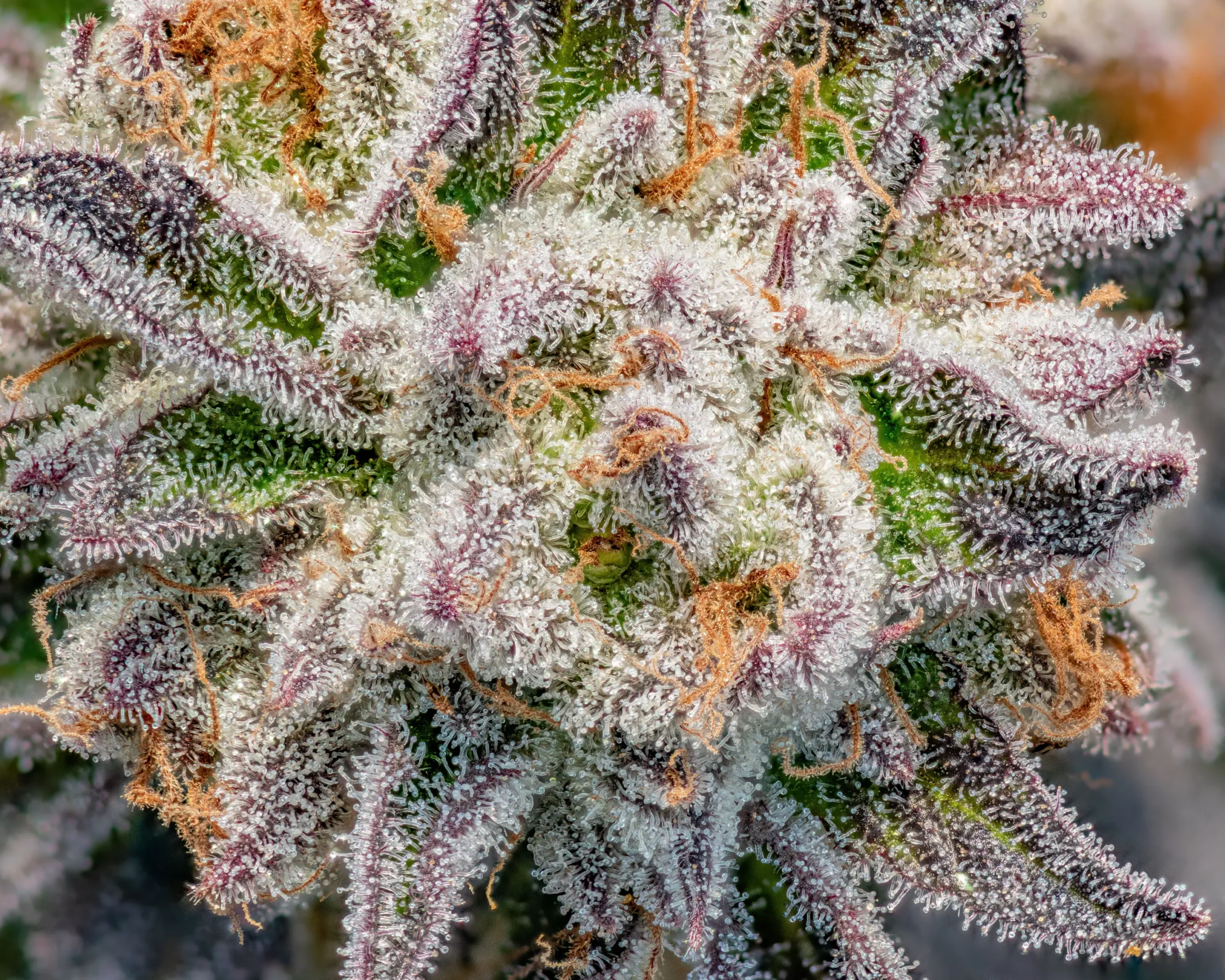
Sizing a 6-inch fan and long-body filter so you can run the motor at 30 to 50 percent speed simultaneously maximizes carbon contact time and cuts fan noise in half.
Sizing CFM for Static Pressure, Duct Bends, and Heat
Calculating tent volume (Length x Width x Height) is only step one; real-world airflow drops substantially once you attach a dense carbon bed, pre-filter sleeve, and flexible ducting.
Calculating Static Pressure Multipliers
To replace total tent air volume once every 60 seconds during peak flowering transpiration, start with Base CFM = Length x Width x Height (in feet). Next, apply static resistance multipliers: pulling air through a packed carbon filter and cloth pre-filter adds roughly 25 to 35 percent static resistance, each 90-degree bend in flexible aluminum ducting adds 10 to 15 percent resistance, and warm LED heat management adds another 20 percent buffer.
For a 4x4x6.5 tent (104 cubic feet), multiplying 104 CFM by 1.65 for carbon resistance, two duct sweeps, and thermal headroom gives a real requirement of roughly 172 CFM. A 6-inch mixed-flow EC fan rated at 400 free-air CFM running at speed 5 delivers roughly 180 CFM against static pressure while staying well below the 400 CFM max scrubbing limit of a 6×24 inch carbon filter.
Pulling vs Pushing Air Through a Carbon Canister
Whenever vertical headroom allows, mount the carbon filter inside the top of the tent and pull air inward through the outer cloth pre-filter sleeve, through the carbon bed, into the inline fan, and out the exhaust duct. Pulling uses the entire outer cylinder surface area (over 300 square inches) and captures dust on the washable pre-filter.
If a low 4-foot tent forces you to mount the filter outside the tent and push air out through the inner core, you must move the cloth pre-filter to the intake side (or inside the filter core) so household dust and plant trichomes do not clog the inner perforated metal cylinder from the inside out.
Do
- Maintain slight negative static pressure so closed tent walls bow inward by 1.5 to 3 centimeters at all times.
- Use a virgin Australian RC412 granular carbon filter with a max CFM rating at least 25 percent higher than your operating fan speed.
- Keep flowering tent relative humidity below 60 percent so water vapor does not condense inside carbon micropores.
- Dry your harvested branches inside the closed grow tent with the carbon filter and inline fan running continuously.
Avoid
- Running ultrasonic humidifiers with hard tap water, which coats pre-filters and carbon beds in white mineral dust within days.
- Operating an inline exhaust fan above the maximum CFM rating of your carbon filter, which cuts residence contact time too short.
- Placing ozone generators or scented odor-neutralizing gels inside the grow tent where they damage plants and contaminate bud flavor.
- Leaving all lower passive mesh vents wide open, which drops static pressure differential to zero and lets odor drift out upper ports.
Even a perfectly sized fan and virgin carbon bed will suddenly stop scrubbing odor if one environmental variable spikes out of bounds: relative humidity.
“Can I turn my inline exhaust fan and carbon filter off at night when the grow lights turn off to save electricity and reduce bedroom noise?”
Question sent by: Katherine Cloutier, via contact form.
Never turn your inline exhaust fan off during the dark period. The moment the fan stops, negative pressure disappears and buoyant, humid, terpene-rich air leaks out through every zipper seam and intake port within three minutes, filling your bedroom with odor and spiking tent humidity past 75 percent. If bedroom noise is an issue, buy an oversized 6-inch EC motor fan with an insulated duct silencer and program it to drop from 50 percent daytime speed down to a whisper-quiet 20 to 25 percent speed at lights-out.
Hanging the inline fan from elastic bungee cords or rubber ratchet straps rather than rigid metal chains also eliminates structural vibration hum through ceiling joists.
Why High Humidity (>65% RH) Causes Sudden Odor Breakthrough
The most common cause of sudden late-night or mid-flower odor leaks in a small indoor garden is water vapor saturating the activated carbon bed.
Water Molecule Competition Inside Carbon Micropores
Although activated carbon is largely non-polar and prefers organic volatile compounds at moderate humidity, capillary condensation begins inside micropores whenever relative humidity in the airstream climbs above 65 to 70 percent. At 70 percent RH and above, abundant water molecules condense into liquid films across the pore entrances, physically blocking larger terpene and volatile sulfur molecules from reaching adsorption sites.
Even worse, high humidity often strips already-adsorbed lightweight volatiles back off the carbon surface, releasing a sudden wave of concentrated dank odor out the exhaust duct right after lights-out when tent humidity spikes.
Maintaining Pre-Filters and Reviving Damp Carbon Beds
Keep flowering tent relative humidity at or below 55 to 60 percent (and lung-room humidity at 45 to 50 percent) using a dedicated compressor dehumidifier so the air entering the carbon filter stays dry. If a humidifier malfunction or wet lights-off spike temporarily floods your carbon filter with 75 percent RH air, lowering room humidity back to 45 percent and running warm, dry air through the fan for 6 to 12 hours will often evaporate the condensed pore water and restore scrubbing performance.
In addition, vacuum or cold-water hand-wash your white outer cloth pre-filter sleeve every four to six weeks (keep a spare dry sleeve on hand). Never run a ultrasonic humidifier filled with hard tap water inside a tent with a carbon filter; white calcium carbonate mineral dust rapidly crusts over the pre-filter and blinds the carbon pores permanently within two weeks.
| Odor Failure Symptom | Primary Root Cause | Diagnostic Check | Immediate Correction |
|---|---|---|---|
| Smell in lung room with tent closed | Loss of negative pressure or duct leak | Check if tent walls bow inward; inspect duct clamps | Partially close lower intake flaps; seal fan-to-filter collar with foil tape |
| Raw odor blowing out of exhaust duct | RH above 65% or fan CFM exceeding filter rating | Read tent hygrometer history; check fan speed vs filter max CFM | Drop RH below 55%; dial EC fan down so residence time increases |
| Weak airflow and loud fan whine | Pre-filter clogged with mineral dust from tap-water humidifier | Inspect outer cloth sleeve for chalky white crust | Replace pre-filter sleeve; use only RO or distilled water in humidifiers |
| Gradual terpene bleed after 12-18 months | Activated carbon micropores fully saturated | Check install date and total run hours (>10,000 hrs) | Replace carbon canister before mid-flower of the current cycle |
With tent humidity controlled below 60 percent and connections sealed with aluminum foil HVAC tape, your last odor vulnerability is opening the tent door for maintenance and harvest.
Cultivation Warning
High-output corona-discharge ozone (O3) generators oxidize volatile terpenes in the air, but placing an ozone unit inside a grow tent or lung room destroys living plant foliage, degrades natural terpenes inside developing trichome heads, and poses severe respiratory hazards to humans and pets.
Practical questions from home cultivators often center on how these thresholds behave in real-world tents and small rooms.
“Does a household HEPA air purifier with a thin black carbon sheet remove flowering cannabis odor?”
Question sent by: Katherine Blackwood, via contact form.
No. True HEPA filters are engineered to trap solid airborne particulates like dust, pollen, and mold spores, not gaseous organic molecules. The thin 3-millimeter foam pad dusted with powdered charcoal included in consumer air purifiers contains less than two ounces of carbon and zero residence contact time, so it saturates within a few hours during flowering. Real cannabis odor control requires a packed cylindrical canister containing 3 to 8 kilograms (7 to 18 pounds) of virgin granular activated carbon.
Keep your HEPA purifier in the living room for dust and allergens, and use a dedicated horticultural canister filter inside your tent and lung room.
Sealing Duct Joints and Managing the Lung Room as an Airlock
Every time you unzip a flowering tent to water, defoliate, or harvest, negative pressure collapses and terpene-laden air rolls out into your home.
Foil HVAC Tape vs Worm-Gear Clamps on High-Pressure Seams
Pay special attention to the positive-pressure side of your inline fan (between the fan outlet flange and the exit window or lung room). Any pinholes in cheap single-ply flexible foil ducting or loose worm-gear hose clamps on the outlet side of the fan will spray unfiltered odor if there is any leak between the filter flange and fan intake.
Couple the carbon filter directly to the inline fan intake using a neoprene-lined rubber duct coupler or wrap the metal seam with three overlapping turns of UL-181 aluminum foil HVAC tape before tightening the stainless worm-gear clamp. Use heavy-duty four-ply PVC-coated aluminum ducting rather than fragile single-layer dryer foil.
Airlock Discipline, Secondary Scrubbers, and Neutralizing Gels
Treat the spare bedroom or closet holding your tent (the lung room) as a secondary containment airlock. Before unzipping the tent during weeks 5 through 9 of flower, close the lung-room door, place a draft stopper across the bottom door gap, and turn your tent exhaust fan up to 80-100 percent speed so it pulls air aggressively inward around your shoulders while you work.
For high-terpene cultivars or apartments with nearby neighbors, stand a secondary freestanding 6-inch carbon filter and fan upright on the floor of the lung room as a standalone recirculating scrubber, and run it for 30 minutes whenever you open the tent or trim harvest.
Essential-oil odor neutralizing gels and blocks (such as ONA) work well when placed near the front hallway door or outside the lung room, but never place open jars of neutralizing gel inside your grow tent or drying space, as volatile masking compounds absorb directly into sticky trichome resin and ruin flower flavor.
Finally, plan your drying and trimming protocol before harvest day arrives so the strongest odor week of the cycle stays completely contained.
Odor Containment During Harvest, Trimming, and Drying
Agitating trichomes with trimming shears and evaporating 75 percent of fresh plant water weight during the first 72 hours of drying releases the highest concentration of volatile compounds in the entire grow.
Drying Inside the Negative-Pressure Tent
Never hang harvested branches in an unsealed closet, spare bathroom, or cardboard box outside your carbon filtration loop. Instead, harvest whole plants or large branches, switch off the grow light, and hang the crop directly inside your sealed grow tent with the inline fan and carbon filter running continuously at a low speed (20 to 35 percent) that maintains slight negative pressure and 60 percent RH.
Keeping the drying crop inside the negative-pressure tent ensures every cubic foot of moisture and evaporated monoterpenes passes through the RC412 carbon bed for the entire 10-to-14-day slow dry.
Trimming Inside the Lung Room and Waste Disposal
When dry-trimming or bucking buds into curing jars, set your trim station up inside the closed lung room directly beside the open tent intake or freestanding carbon scrubber. Wear nitrile gloves, wipe shears with isopropyl alcohol in a closed jar, and seal finished jars promptly between branches.
Do not throw fresh sugar-leaf trim, stems, or pruned flowering branches into an open kitchen trash can or outdoor bin. Double-bag aromatic plant waste inside heavy-duty odor-barrier bags or freeze stems and trim in sealed freezer bags before composting or disposal.
Field Verification Checklist
- Zip the tent closed and verify visible inward wall flex and inward tissue-strip pull at all zipper seams and cable ports.
- Confirm that the flange between the carbon filter and fan intake is sealed airtight with a rubber coupler or UL-181 aluminum foil tape.
- Check your tent hygrometer high/low log to ensure lights-off humidity spikes stay below 60 to 65 percent RH.
- Inspect and vacuum or hand-wash the white cloth pre-filter sleeve before flipping the garden to 12/12 flowering.
- Test exhaust duct air at the outlet with a trusted second nose during week 5 of flower to verify zero terpene breakthrough.
Complete the five-point odor verification checklist below before flipping your garden to 12/12 flowering.
“Why did my brand-new carbon filter suddenly stop working after I turned on my ultrasonic cool-mist humidifier?”
Question sent by: Katherine Radcliffe, via email.
Ultrasonic humidifiers nebulize both water and every dissolved mineral (calcium and magnesium bicarbonates) present in tap water into an ultrafine white aerosol mist. Your exhaust fan pulls that mineral aerosol directly into the cloth pre-filter and carbon bed, cementing the microscopic pores shut within 48 to 72 hours and restricting airflow. Turn off the humidifier immediately, remove and wash the cloth pre-filter sleeve in warm water, blow out the canister exterior with compressed air, and refill your ultrasonic humidifier exclusively with reverse osmosis (RO) or distilled water.
Alternatively, switch to an evaporative wick humidifier, which leaves tap-water scale trapped on the replaceable paper wick inside the reservoir instead of launching it into the air.
Scientific References
- ASHRAE. (2021). ASHRAE Handbook – Fundamentals: Gaseous Air Cleaners and Activated Carbon Adsorption Kinetics. American Society of Heating, Refrigerating and Air-Conditioning Engineers.
- Oswald, I. W. H., Ojeda, M. A., Pobanz, R. J., et al. (2021). Identification of a new family of prenylated volatile sulfur compounds in Cannabis revealed by comprehensive two-dimensional gas chromatography. ACS Omega, 6(47), 31667-31676.
- Qi, N., & LeVan, M. D. (2005). Coadsorption of organic compounds and water vapor on BPL activated carbon: 5. Methyl ethyl ketone, benzene, and toluene. Carbon, 43(11), 2258-2263.
- Wang, X., & Zhang, Y. (2020). Effect of relative humidity on volatile organic compound adsorption performance of granular activated carbon in indoor air filtration. Building and Environment, 179, 106971.
Share this article
A quick overview of the topics covered in this article.
Follow us
Latest articles
November 9, 2026
November 9, 2026

November 9, 2026
November 9, 2026
