
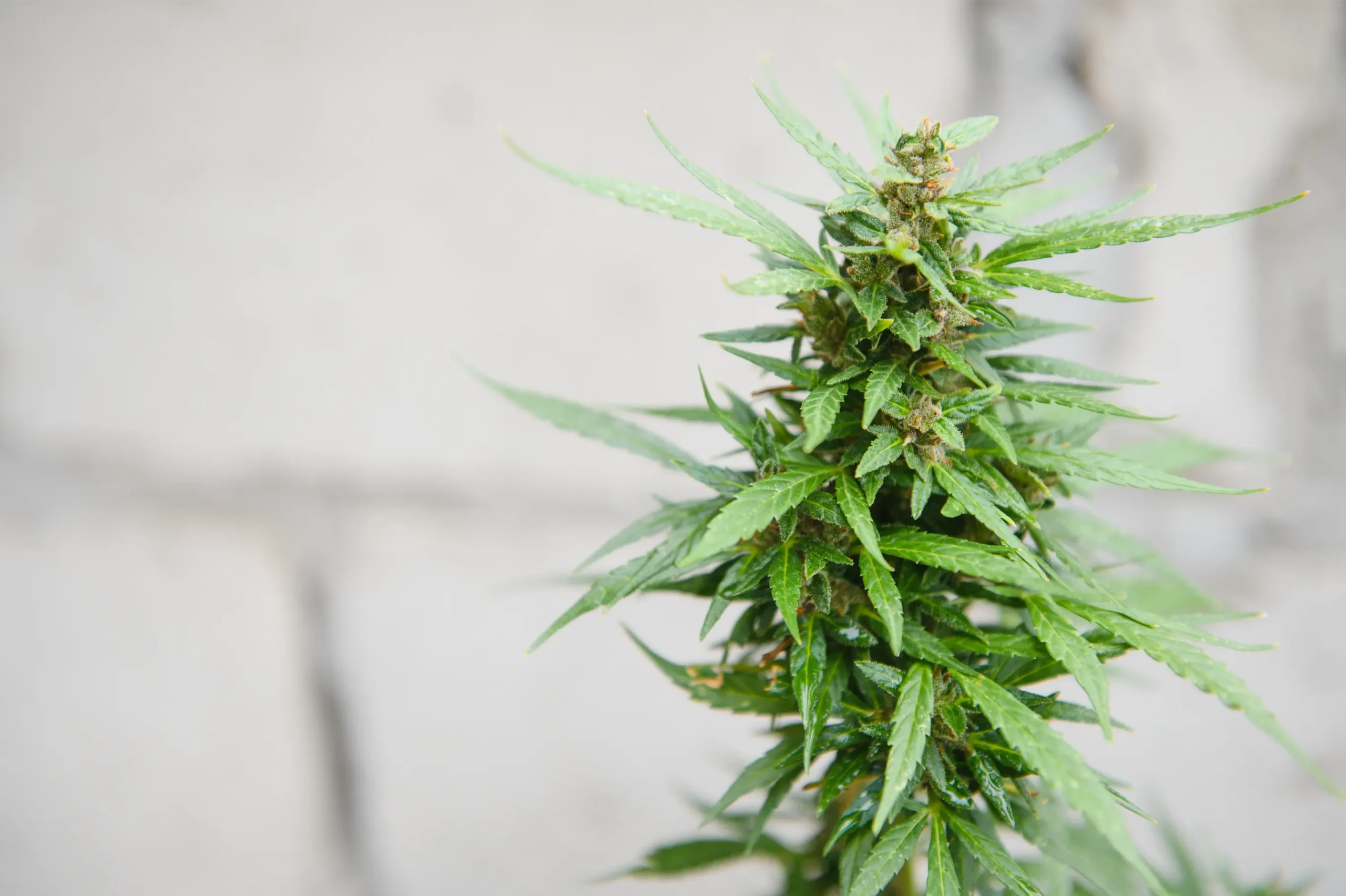
Cannabis Temperature and Humidity by Growth Stage
Cannabis temperature and relative humidity (RH) work as an interconnected pair across every growth stage, controlling how fast stomata transpire water, how rapidly photosynthetic enzymes fix carbon, and whether dense late-flower colas stay free of Botrytis bud rot. As a general trajectory, cannabis starts life in warm, high-humidity air (24 to 26 degrees Celsius and 65 to 75 percent RH) when root systems are tiny, then steps down toward cooler, drier air (20 to 24 degrees Celsius and 42 to 50 percent RH) during late flowering to protect resinous buds and preserve volatile monoterpenes.
Modern full-spectrum LED fixtures have also shifted traditional ambient temperature targets upward by 2 to 3 degrees Celsius compared to legacy High-Pressure Sodium (HPS) bulbs because LEDs emit almost zero forward infrared radiant heat onto leaf surfaces. This guide provides exact day and night temperature and humidity charts for every stage, explains lights-off dew-point spikes, and shows where to place sensors for true canopy readings.
Why LED Gardens Need Warmer Ambient Air Than Legacy HPS Rooms
If you follow an old 1990s grow book that recommends 22 to 24 degrees Celsius (72 to 75 F) during vegetative growth under modern LEDs, your plants will transpire slowly and show purple petioles and calcium/magnesium lockouts.
Leaf-Surface Temperature (LST) Physics Under LEDs vs HPS
Photosynthetic enzyme kinetics (specifically RuBisCO activation and electron transport rate) are governed by actual Leaf-Surface Temperature (LST), which peaks in efficiency around 25 to 27 degrees Celsius (77 to 81 F). High-Pressure Sodium (HPS) lamps radiate massive amounts of near-infrared energy that heats upper leaves 1 to 2 degrees Celsius warmer than the surrounding air, meaning a 24 C (75 F) HPS room produces a 25.5 C (78 F) leaf surface.
Full-spectrum white/red LED diodes emit negligible forward infrared radiation while driving high stomatal evaporative cooling. Consequently, leaves under LEDs typically sit 1.5 to 2.5 degrees Celsius (3 to 4.5 F) cooler than ambient tent air. To achieve an optimal 25.5 C leaf temperature during LED vegetative growth, your ambient tent air needs to sit between 26 and 28.5 degrees Celsius (79 to 83 F).
Using an Infrared (IR) Thermometer to Measure True Canopy Temp
Instead of guessing your leaf temperature offset, point a $20 handheld non-contact infrared laser thermometer at the upper fully expanded fan leaves from a distance of 15 to 20 centimeters (holding the sensor at a 45-degree angle so you measure leaf tissue rather than the soil floor between leaves).
Check three spots across the canopy two hours after lights turn on. If your ambient tent sensor reads 25 degrees Celsius (77 F) but your IR gun reads 22.5 degrees Celsius (72.5 F) on the leaf surface, raise ambient tent temperature by 2 degrees Celsius or dim your exhaust fan slightly so metabolic rates and calcium mass flow speed up.
Leaf-Surface Temperature (LST): The actual thermal temperature of the leaf lamina measured via infrared radiometry; under LED fixtures without supplemental IR, active transpiring leaves typically run 1.5 to 2.5 degrees Celsius (3 to 4.5 F) cooler than surrounding ambient air.
Practical questions from home cultivators often center on how these thresholds behave in real-world tents and small rooms.
“Why are the edges of my upper fan leaves curling upward like a canoe (‘tacoing’) even though my tent thermometer only reads 26 degrees Celsius (79 F)?”
Question sent by: Hadley Mancini, via contact form.
Upward-curling serrated leaf margins (‘taco-leafing’) on the top branches directly beneath an LED fixture while air temperature reads a comfortable 26 C is almost always caused by excessive localized photon irradiance (PPFD) and high local leaf-surface Vapor Pressure Deficit rather than hot air temperature. When an LED hangs too close, the upper leaves receive more photons than their roots and stomata can cool via transpiration, so the leaf curls its margins inward to reduce light-intercepting surface area. Raise the LED fixture by 10 to 15 centimeters (or dim it by 15 percent) and increase gentle horizontal fan movement across the tops.
Always check the distance between your highest main colas and the LED bars right after the week-2 flowering stretch finishes.
Stage-by-Stage Temperature and Relative Humidity Targets
Each phase of cannabis development shifts the balance between root water uptake capacity, vegetative transpiration speed, and floral mold prevention.
Clones, Seedlings, and Vegetative Growth (High RH to Moderate RH)
Unrooted clones have zero roots to absorb water, and newly sprouted seedlings have only a delicate primary taproot; if exposed to dry 40 percent RH air, their leaves dehydrate faster than the stem can pull moisture. Keep unrooted cuttings inside a vented dome at 75 to 85 percent RH and 24 to 26 C (75 to 79 F), and run rooted seedlings at 65 to 70 percent RH and 25 to 27 C (77 to 81 F).
Once plants enter vigorous Vegetative Growth (Weeks 2 to 6), root mass expands rapidly. Maintain LED daytime air temperatures at 25 to 28.5 C (77 to 83 F) and relative humidity between 55 and 65 percent (stepping down from 65 percent in early veg to 55 percent in late veg). This warm, moderately humid environment keeps stomata wide open for maximum CO2 assimilation and rapid node stacking.
Early Flower Stretch, Late Flower Ripening, and the 60/60 Dry
During Weeks 1 to 3 of 12/12 Flowering (the transition stretch), hold daytime temperatures at 24 to 27 C (75 to 81 F) and lower relative humidity to 50 to 55 percent as the canopy fills in. Once dense floral clusters stack during Mid-to-Late Flower (Weeks 4 to 9), drop relative humidity to 42 to 50 percent and step daytime temperatures down to 21 to 25 C (70 to 77 F) during the final two weeks.
Lowering late-flower temperatures below 24 C (75 F) serves two crucial purposes: it prevents volatile monoterpenes (like myrcene, ocimene, and limonene, which begin evaporating readily above 26 C) from off-gassing out the exhaust fan, and it widens the safety margin against Botrytis cinerea (gray mold) inside tight colas. After harvest, transition the dark tent to 15.5 to 18 C (60 to 64 F) and 58 to 62 percent RH for a slow 10-to-14-day dry.
| Growth Stage | Day Temp (LED Air) | Night Temp (Lights Off) | Target Relative Humidity (RH) | Target VPD Band |
|---|---|---|---|---|
| Unrooted Clones (Days 1-10) | 24 – 26 C (75 – 79 F) | 22 – 24 C (72 – 75 F) | 75% – 85% RH (in vented dome) | 0.4 – 0.6 kPa |
| Seedlings (Weeks 1-2) | 25 – 27 C (77 – 81 F) | 21 – 23 C (70 – 73 F) | 65% – 70% RH | 0.6 – 0.8 kPa |
| Vegetative Growth (Weeks 3-6) | 25 – 28.5 C (77 – 83 F) | 20 – 24 C (68 – 75 F) | 55% – 65% RH | 0.8 – 1.1 kPa |
| Early Flower Stretch (Weeks 1-3) | 24 – 27 C (75 – 81 F) | 19 – 22 C (66 – 72 F) | 50% – 55% RH | 1.0 – 1.3 kPa |
| Mid-to-Late Flower (Weeks 4-9) | 21 – 25 C (70 – 77 F) | 17 – 20 C (63 – 68 F) | 40% – 50% RH | 1.2 – 1.5 kPa |
| Post-Harvest Drying (10-14 Days) | 15.5 – 18 C (60 – 64 F) | 15.5 – 18 C (60 – 64 F) | 58% – 62% RH (in dark) | 0.7 – 0.9 kPa |
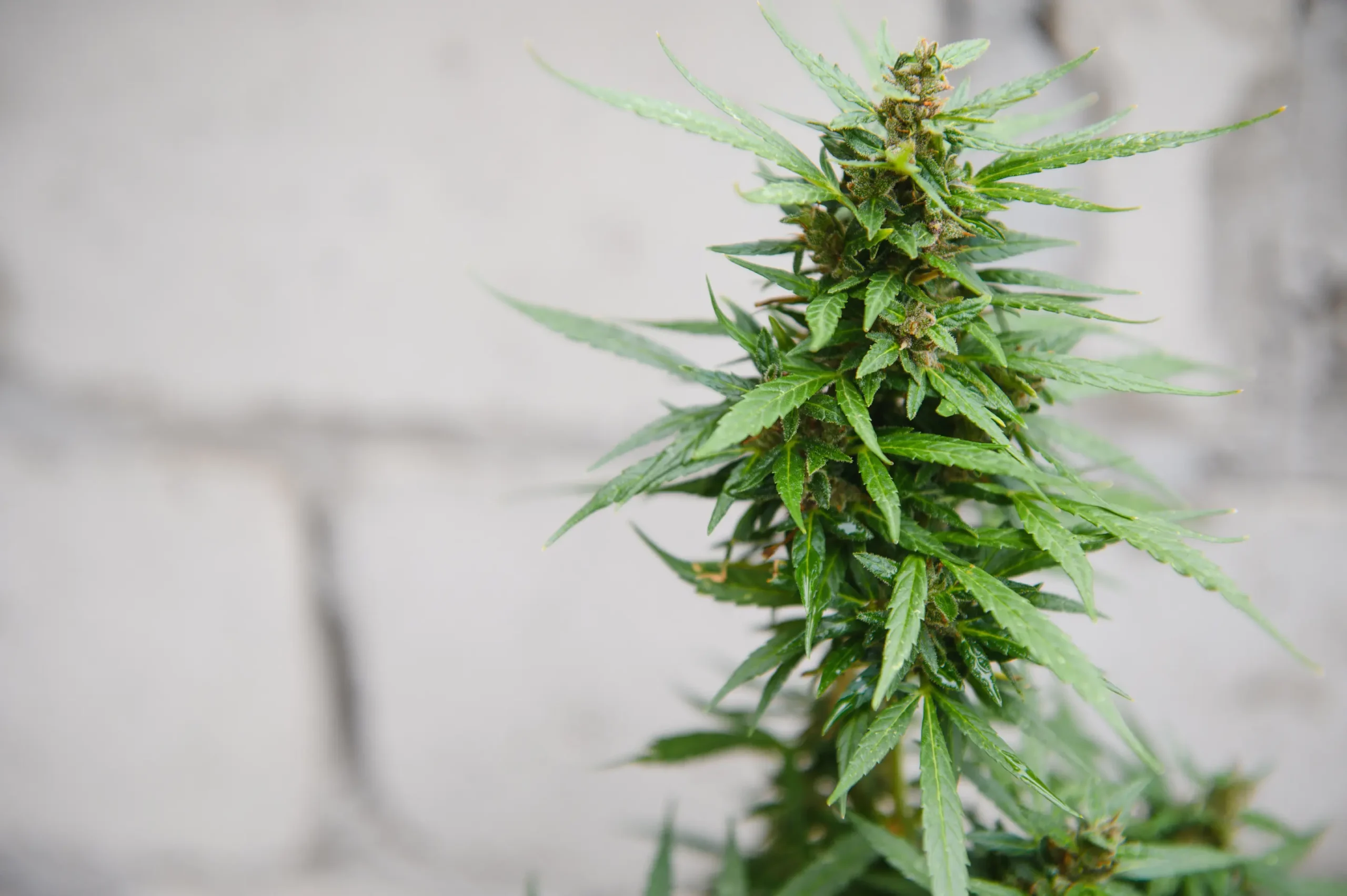
While daytime climate numbers get the most attention, the 30 minutes immediately following lights-out pose the highest risk for condensation and mold.
Managing Day-to-Night Temperature Differentials (DIF) and Lights-Off Humidity Spikes
Warm air holds exponentially more water vapor than cold air; when your grow light clicks off and tent temperature drops 5 degrees Celsius in 20 minutes, relative humidity skyrockets.
How DIF Controls Internode Stretch in Early Flower
The difference between daytime temperature and nighttime temperature is known in horticulture as DIF (Day Temperature minus Night Temperature). A large positive DIF (for example, 28 C day and 18 C night = +10 C DIF) stimulates gibberellin hormone activity and elongates stem internodes significantly during the first three weeks of 12/12 flowering.
For standard indoor tents, aim for a gentle 3 to 5 degrees Celsius (5 to 9 F) drop at night. If you are growing a tall sativa-dominant cultivar in a low-ceiling tent, running a near-zero DIF (holding night temperature within 1 to 2 degrees Celsius of day temperature, or running night slightly warmer during the first two hours of darkness) during weeks 1 and 2 of flower noticeably compresses internode spacing and reduces stretch by 20 to 30 percent.
Stopping the Lights-Off Dew-Point Spike that Triggers Bud Rot
At the exact moment your LEDs shut off, plant leaves continue transpiring residual moisture for 20 to 30 minutes while air temperature plummets. Because cooler air has a lower saturation vapor capacity, the same absolute grams of water in the air cause Relative Humidity to jump from 50 percent up to 70+ percent inside dense flower bracts, hitting the local dew point and condensing microscopic liquid water droplets that germinate Botrytis cinerea spores.
Prevent lights-off humidity spikes with three habits: stop all irrigation at least 3 to 4 hours before lights turn off; program your inline exhaust fan and lung-room dehumidifier to ramp up 15 minutes before lights-out and stay elevated for the first hour of darkness; and maintain continuous oscillating canopy airflow 24/7.
Do
- Run LED vegetative tents warmer (25-28.5 C / 77-83 F) than legacy HPS charts to compensate for cooler leaf-surface temperatures.
- Step relative humidity down progressively by stage: 65-70% seedling, 55-65% veg, 50-55% early flower, and 40-50% late flower.
- Hang your primary sensor probe at upper canopy height shielded from direct radiant light and place a second probe mid-canopy.
- Condition your lung room 2-3 C cooler and 10% drier than the tent target so your inline exhaust fan has crisp air to draw in.
Avoid
- Watering late in the day right before lights turn off, which fuels a massive lights-off relative humidity spike inside flower colas.
- Letting late-flower daytime temperatures climb above 26 C (79 F), which volatilizes delicate monoterpenes and invites foxtailing.
- Pointing oscillating fans or space heaters directly at hanging buds during the post-harvest dry, which causes a 3-day hay-smelling flash dry.
- Leaving glowing green, blue, or red LED indicator lights uncovered on humidifiers or power strips during the 12-hour dark period.
Even the best automated fan controller will make the wrong decision if its sensor probe is hanging in the wrong spot.
“Is it true that dropping night temperatures to 10 degrees Celsius (50 F) in the last week of flower brings out purple colors and increases THC?”
Question sent by: Hadley Nystrom, via email.
Cooler night temperatures during the final two weeks of ripening trigger water-soluble anthocyanin pigment expression in genetically predisposed cultivars, turning bracts and sugar leaves striking shades of violet, burgundy, and black. However, dropping night temperatures all the way down to 10 C (50 F) shocks root metabolism, stalls final resin maturation, and causes severe dew-point condensation inside dense colas. You can trigger full genetic purple coloration and preserve volatile terpenes safely by holding late-flower night temperatures at a crisp 16 to 18 degrees Celsius (61 to 64 F) with daytime highs of 21 to 23 C (70 to 73 F).
Keep your dehumidifier running aggressively when lowering late-flower night temperatures so relative humidity never creeps above 50 percent.
Proper Sensor Placement and Avoiding False Microclimate Readings
A grow tent is not a uniform box of air; temperatures and humidity can vary by 4 degrees Celsius and 15 percent RH between the floor, the canopy middle, and the ceiling.
Hanging the Probe at Canopy Height Shielded From Direct Radiant Light
Never mount your primary thermo-hygrometer or controller probe flat against the cold outer mylar tent wall, on the wet soil surface, or above the hot aluminum LED driver. Hang the corded sensor probe directly at the height of your upper main colas in the center third of the tent, raising the probe every week as the plants grow.
Crucially, if a black plastic sensor housing hangs directly under intense LED bars, radiant photon absorption heats the plastic casing 2 to 3 degrees Celsius higher than the actual air temperature (causing false high temp and false low RH readings). Clip a small white plastic dome or a white paper Dixie cup upside-down 3 centimeters above the sensor probe as a radiation shield while leaving the sides open to horizontal airflow.
Cross-Checking Boundary Layer Humidity Inside Dense Canopies
A single probe hanging 5 centimeters above the canopy only reads the mixed air stream above the leaves. Inside a bushy, undefoliated mid-flower canopy, overlapping fan leaves trap a stagnant ‘boundary layer’ of transpired water vapor where local humidity sits at 68 percent even when your main controller probe above the tops reads a comfortable 48 percent.
Place a secondary compact wireless Bluetooth hygrometer halfway down inside the interior branching structure during weeks 4 to 9 of flower. If interior canopy RH sits more than 8 percent higher than upper tent RH, selectively defoliate inward-facing fan leaves and angle an under-canopy oscillating fan upward at 30 degrees to break up stagnant pockets.
| Environmental Excursion | Immediate Plant Physiological Response | Visual Canopy Symptom | Equipment Fix |
|---|---|---|---|
| Day Temp >30 C (86 F) without CO2 | Stomata close to conserve water; photorespiration rises | Canoed/tacoed leaf margins curling upward; airy foxtailed buds | Dim LED 15-20%, vent exhaust outdoors, or cool lung room with AC |
| Night Temp <15 C (59 F) in Veg/Early Flower | Phosphorus & water transport slow; anthocyanins form | Stiff droopy leaves at dawn, purple stems, slow growth | Run lights at night; add thermostatic oil-filled radiator in lung room |
| Veg RH <35% (High VPD >1.6 kPa) | Transpiration outpaces root uptake; guard cells shut | Crispy dry leaf edges, twisted new tips, calcium spots | Add evaporative or RO-fed ultrasonic humidifier on humidistat |
| Late Flower RH >60% (Low VPD <0.8 kPa) | Condensation forms inside dense colas at lights-out | Single yellow dying sugar leaf pulling easily from brown moldy bud | Add compressor dehumidifier in lung room; run exhaust + clip fans 24/7 |
To hold your tent steady without constant wide swings, condition the room outside the tent rather than cramming appliances inside it.
Cultivation Warning
If you ever see a single small sugar leaf sticking out of a thick top cola in weeks 6 to 9 turn suddenly pale yellow or crispy brown while the rest of the plant is healthy, tug gently on that leaf. If it slides out effortlessly with zero resistance, gray mold (Botrytis) is rotting the stem core inside the bud. Turn off circulation fans immediately, slip a plastic bag over the affected cola, amputate the branch 5 cm below the rot, and drop tent RH below 45%.
Practical questions from home cultivators often center on how these thresholds behave in real-world tents and small rooms.
“My basement lung room sits at 30 percent humidity in the winter and my tiny tent humidifier runs out of water twice a day. How can I keep veg humidity up without refilling constantly?”
Question sent by: Hadley Callahan, via reader Q&A form.
When an inline exhaust fan runs continuously at high speed in an arid winter basement, it pulls dry 30 percent RH air through the tent every 30 seconds and dumps your humidifier’s mist straight out the duct. First, switch your inline exhaust fan to a temperature/humidity trigger mode with its minimum baseline speed set to the lowest setting (10 to 15 percent) that still maintains slight inward negative pressure during veg when odor is minimal. Second, use an external 15-to-20-liter top-fill evaporative humidifier (or a float-valve bucket feeding an ultrasonic fogger) so you only refill once every three to four days.
Once your plants develop a full canopy in week 4 of veg, natural foliar transpiration will supply most of the tent’s humidity automatically.
Conditioning the Lung Room vs Inside-Tent Appliances
Because a 4×4 tent exchanges its entire air volume every 60 seconds, trying to heat, cool, or dehumidify the air inside the tent while drawing unconditioned air from the bedroom is a losing battle.
Why Dehumidifiers and Heaters Belong in the Lung Room
Placing a 50-pint compressor dehumidifier or 1,500-watt heater inside a small 2×4 or 4×4 grow tent eats up valuable floor space, blasts localized hot dry air directly onto nearby plants, and gets sucked out the exhaust fan within 45 seconds before the sensor can react.
Instead, place your compressor dehumidifier, portable air conditioner, and oil-filled radiant space heater outside the tent in the spare room (the lung room). Set your lung room to sit 2 to 3 degrees Celsius cooler and 10 percent drier than your desired inside-tent target (for example, holding the lung room at 21 C and 42 percent RH during late flower). Your tent’s smart inline exhaust fan then simply draws in that pre-conditioned lung-room air whenever tent temp or humidity rises.
Blacking Out Appliance LEDs to Prevent Hermaphroditic Light Leaks
Any humidifier, dehumidifier, power strip, or fan controller placed inside a flowering tent (or visible through an open passive intake mesh vent) must be inspected in pitch darkness. Tiny green, blue, and red LED status lights on humidifiers emit enough photons at close range to disrupt phytochrome darkness signaling on lower branches, inducing male pollen sacs (nanners) or seeded buds.
Cover every power-strip switch and appliance display with two layers of opaque black electrical tape or light-blocking stickers before flipping to 12/12.
When winter nights require supplemental heat, place a thermostatically controlled oil-filled metal radiator in the lung room rather than a glowing red ceramic fan heater. Oil radiators provide gentle, even thermal mass without glowing light elements or desert-dry hot air blasts.
Once harvest arrives, your grow tent transforms into a precision drying chamber for the final two weeks.
Transitioning Climate Controls for the 10-to-14-Day Slow Dry
More top-shelf harvests are ruined in the first 72 hours of drying than in the entire nine weeks of flowering.
Holding the 60 Degrees Fahrenheit / 60 Percent RH Target
When you chop your plants and hang whole branches inside the dark tent, enzymatic breakdown of harsh green chlorophyll into smooth, neutral compounds requires moisture inside the flower tissue for at least 10 to 14 days. If you dry buds in a warm 24 C (75 F), 35 percent RH closet, the outer bracts flash-dry crispy in 3 days, trapping bitter chlorophyll inside and locking in a permanent ‘wet hay’ aroma.
Dial your lung room AC and humidifier/dehumidifier to hold the dark tent as close to 15.5 to 18 degrees Celsius (60 to 64 F) and 58 to 62 percent RH as possible, with your inline exhaust fan running on low speed (20-30 percent) and one small circulation fan aimed strictly at the tent floor (never blowing directly onto hanging buds).
What to Do If You Cannot Reach 60 F in Summer
If summer ambient heat prevents your room from getting cooler than 21 to 22 degrees Celsius (70 to 72 F) during drying, keep relative humidity strictly between 60 and 62 percent, leave whole plants intact with larger fan leaves attached during the first five days to slow evaporation, and jar the flowers one to two days earlier when medium stems bend with a dull crack rather than waiting until they snap bone-dry.
Field Verification Checklist
- Verify that your primary thermo-hygrometer probe hangs at upper canopy height with a small white shade cap blocking direct LED heating.
- Measure leaf-surface temperature in three canopy spots with an IR thermometer to confirm leaves sit between 24 and 26.5 C in veg.
- Program your exhaust fan and dehumidifier to ramp up 15 minutes before lights-out to suppress the dark-period humidity spike.
- Sit inside the zipped tent for 2 minutes with the grow light off to confirm zero light leaks from intake vents or appliance LEDs.
- Check high/low 24-hour temperature and humidity logs every morning and adjust stage setpoints when transitioning from veg to stretch to late bloom.
Use the Do/Avoid summary and five-step climate checklist below to verify your tent setup across every stage.
“What is the maximum daytime temperature cannabis can tolerate indoors if I am NOT using supplemental CO2 tanks?”
Question sent by: Hadley Beaulieu, via grow journal submission.
At normal ambient atmospheric CO2 levels (400 to 450 PPM), C3 photosynthetic net carbon assimilation in cannabis peaks when leaf-surface temperatures sit around 25 to 27 C (ambient LED air temperature of 26.5 to 29 C / 80 to 84 F). Above 30 degrees Celsius (86 F) without enriched CO2, the RuBisCO enzyme increasingly binds oxygen instead of carbon dioxide (photorespiration), stomatal conductance drops, and flower bracts stretch into airy, loose ‘foxtails.’ Treat 29 C (84 F) as your hard ceiling in veg and 26 C (79 F) as your ceiling in mid-to-late flower when growing at ambient CO2.
If summer heat spikes force your tent to 29-30 C temporarily, adding liquid potassium silicate and kelp extract to your feed schedule significantly improves cellular heat tolerance.
Scientific References
- Chandra, S., Lata, H., Khan, I. A., & ElSohly, M. A. (2011). Temperature response of photosynthesis in different drug and fiber varieties of Cannabis sativa L. Physiology and Molecular Biology of Plants, 17(3), 297-303.
- Nelson, J. A., & Bugbee, B. (2015). Analysis of environmental effects on leaf temperature under sunlight, high pressure sodium and light emitting diodes. PLOS ONE, 10(10), e0138930.
- Punja, Z. K. (2018). Flower and foliage-infecting pathogens of marijuana (Cannabis sativa L.) plants. Canadian Journal of Plant Pathology, 40(4), 514-527.
- Sommano, S. R., Chittasupho, C., Ruksiriwanich, W., & Jantrawut, P. (2020). The cannabis terpenes: biosynthesis, stability, and biological activities. Molecules, 25(24), 5792.
Share this article
A quick overview of the topics covered in this article.
Follow us
Latest articles
November 8, 2026
November 8, 2026
November 8, 2026
November 8, 2026
