Cherry Paloma
Cherry Paloma – Strain Profile & Grow Guide
Cultivation, bud quality, flavor preservation, effects, and practical grow strategy
Cherry Paloma is a balanced fruit-and-gas hybrid combining tart cherry, ruby grapefruit, orange zest, lime, floral spice, creamy dough, black pepper, and savory fuel with an upbeat social opening and a calm tingly landing. It belongs to the modern group of cultivars in which flavor and visual quality are inseparable from cultivation discipline. The plant can produce impressive flower without an exotic feeding program, but the best version depends on canopy balance, stable root-zone conditions, controlled late-flower humidity, and a careful dry. A high THC number alone does not explain why the strain is memorable. Its value is in the way aroma, texture, resin, and effect develop together.
The documented lineage is Tropicana Cherry x Georgia Pie. That background gives the plant a recognizable direction, yet phenotype variation still matters. One plant may lean toward the brighter, faster, or more aromatic parent, while another may stay shorter, denser, darker, or more physically calming. For that reason, every figure in this guide should be treated as a working range rather than a promise. Observe the individual plant first and use the cultivar description as a map, not a rigid recipe.
For growers, the central task is to understand the strain's architecture before the flowering stretch ends. Medium-tall hybrid growth, moderate internodes, vigorous side branches, colorful spear-shaped colas, and dense resin that can hide moisture near the stem. The main risks are lineage confusion under the shared name, excessive stretch, hot foxtailing, hidden humidity, uneven canopy height, branch lean, and citrus loss during drying. These are manageable problems, but they become expensive when noticed late. The following profile focuses on how to prevent those losses while preserving the cultivar's defining aroma of tart cherry, ruby grapefruit, orange peel, lime, peach skin, floral spice, cinnamon, creamy dough, black pepper, and gas.
For consumers, potency should be approached with the same care. Effects can change with dose, tolerance, harvest maturity, and terpene expression. A small amount may feel bright and balanced, while a larger amount from the same flower can become physically heavy or mentally hazy. Start low, especially with a fresh batch, and allow the onset to develop before increasing the dose.
Weedth Grower Note: The defining challenge is not simply growing the plant to harvest. It is preserving tart cherry, ruby grapefruit, orange peel, lime, peach skin, floral spice, cinnamon, creamy dough, black pepper, and gas while preventing lineage confusion under the shared name, excessive stretch, hot foxtailing, hidden humidity, uneven canopy height, branch lean, and citrus loss during drying.
Strain Features
| Feature | Details |
|---|---|
| Type | Balanced hybrid with a slightly sativa-leaning opening |
| Genetic profile | often close to balanced, with the selected phenotype determining whether citrus energy or doughy body calm dominates |
| Lineage | Tropicana Cherry x Georgia Pie |
| THC | commonly reported around 20-27% THC |
| CBD | usually below 1% |
| Indoor flowering time | approximately 63-70 days indoors, with many plants requiring at least 65 days |
| Outdoor harvest | early to mid-October in the Northern Hemisphere under dry, temperate conditions |
| Yield potential | medium to high when the stretch is controlled and the side branches are fully illuminated |
| Height | medium to tall with noticeable early-flower extension |
| Grow difficulty | Moderate because stretch, phenotype variation, dense resinous flowers, and citrus preservation require planning |
| Plant structure | medium-tall hybrid growth, moderate internodes, vigorous side branches, colorful spear-shaped colas, and dense resin that can hide moisture near the stem |
| Stretch | usually about 1.6-2x, making flip height and net placement important |
| Aroma | tart cherry, ruby grapefruit, orange peel, lime, peach skin, floral spice, cinnamon, creamy dough, black pepper, and gas |
| Flavor | cherry-grapefruit and orange first, followed by lime, creamy pastry, floral pepper, peach, and savory fuel |
| Primary cultivation concern | lineage confusion under the shared name, excessive stretch, hot foxtailing, hidden humidity, uneven canopy height, branch lean, and citrus loss during drying |
| Best training direction | top early, build a wide eight-to-twelve-top frame, guide stretch under a net, remove weak lower growth, and support the main spears before late swell |
Genetic Lineage
Cherry Paloma combines Tropicana Cherry with Georgia Pie. That cross is the reason its best flowers can smell like a red-fruit citrus drink laid over pastry, spice, and gas, but it also explains a plant that may stretch more aggressively than its finished buds suggest.
Tropicana Cherry contributes the tart cherry, grapefruit, orange peel, lime, floral lift, and much of the vivid color associated with selected phenotypes. In the room, its influence appears as vertical ambition, pointed spear development, and a bright early effect that can feel social before the body component settles.
Georgia Pie supplies peach skin, creamy dough, cinnamon-like spice, pepper, resin density, and a more grounded finish. It can strengthen the flowering frame, yet heavy spears still develop enough leverage to lean together late, making support part of quality control rather than merely cosmetic work.
The phenotypic range is meaningful. One plant may emphasize ruby grapefruit, lime, color, and a longer open spear; another may finish stockier with cherry pastry, peach, and gas. Neither expression should be judged from color alone. Aroma retention, clean flower interiors, manageable 1.6-2x stretch, and post-cure definition are stronger selection criteria.
Because the cultivar name is used inconsistently in informal markets, lineage confirmation matters. A defensible Cherry Paloma profile should connect Tropicana Cherry’s citrus-red-fruit architecture to Georgia Pie’s creamy spice and resin rather than treating any cherry-scented flower as interchangeable.
Effect Breakdown
Initial onset
Cherry Paloma commonly begins with a crisp change in mood and sensory focus. Conversation may feel easier, colors and music become more engaging, and the tart citrus character seems to match a high that initially moves outward rather than pulling the user toward the sofa.
The beginning is not identical across phenotypes. Tropicana Cherry-leaning flower can feel quicker and more animated, while Georgia Pie-heavy examples introduce calm earlier. In both cases, the onset is usually more socially usable than the dense, resinous appearance might lead someone to expect.
Peak effects
As the peak develops, mental brightness gains a softer physical foundation. The user may remain talkative or creatively engaged, but shoulders loosen and urgency drops. This combination is the strain’s defining balance: energy without a hard edge, followed by enough body comfort to keep the experience grounded.
A moderate amount can suit food, music, casual projects, or a relaxed gathering. Larger servings amplify the Georgia Pie side, making attention less linear and turning the buoyant opening into a warmer, slower state. The shift is usually more rounded than abrupt.
The aroma expression often predicts emphasis. Grapefruit-lime phenotypes tend to feel brighter at the front, whereas dough, pepper, and gas-heavy plants more quickly reduce momentum. That relationship is not a medical rule, but it is a useful way to compare multiple cuts under the same name.
Late phase and comedown
The closing phase is calm without always becoming fully sedating. Social energy recedes, the body feels settled, and the user may prefer familiar surroundings over a new activity. With a moderate dose, this can be a clean evening landing rather than immediate sleep.
High doses or very ripe harvests can create a heavier conclusion. Appetite, dry mouth, and mental wandering become more likely, while the earlier citrus-like clarity becomes harder to access. Allowing the first serving to peak before adding more preserves the cultivar’s best arc.
Best time to use
Cherry Paloma fits the transition from late afternoon into evening particularly well. It can open a dinner, a low-pressure social setting, or a creative session, then soften naturally as the night advances. Very early daytime use may be distracting for anyone with low tolerance.
Who should be cautious
Users prone to anxiety should treat the fast, bright onset respectfully. Too much can turn sensory lift into restlessness before the body calm arrives. A quiet setting and a measured first dose make the change of phases easier to read.
Those seeking immediate sleep may find some citrus-forward phenotypes too lively at first, while users wanting sustained productivity may find the pastry-heavy late phase too relaxing. The cultivar works best when both stages are welcome.
Effects vary with harvest timing, chemotype, tolerance, and context. A new batch should be approached as a new expression, especially when its aroma shifts substantially between grapefruit-lime and cherry-dough-gas.
Flavor & Aroma Profile
Live plant and jar aroma
The live plant usually develops a layered aroma built around tart cherry, ruby grapefruit, orange peel, lime, peach skin, floral spice, cinnamon, creamy dough, black pepper, and gas. Early flower may reveal only the brightest or most generic part of the profile. The defining secondary notes often emerge after the middle of bloom, when resin heads become abundant and the calyxes begin to swell.
A stem rub can help identify phenotype direction, but it is not a perfect predictor of cured flower. Some plants smell intensely sweet in veg and finish earthy. Others seem quiet until late bloom and become loud during drying. Keep notes at several stages rather than selecting from one early impression.
A finished Cherry Paloma jar should open with tart cherry and ruby grapefruit, then reveal lime, floral spice, pastry and gas after a short rest. If the second impression is only sweet fuel, the bright half was lost during ripening, drying or repeated oxygen exposure.
Inhale, exhale, and aftertaste
The expected flavor is cherry-grapefruit and orange first, followed by lime, creamy pastry, floral pepper, peach, and savory fuel. On the inhale, the most volatile notes arrive first. On the exhale, heavier sesquiterpenes and roasted, earthy, woody, or peppery elements become more noticeable. A clean vaporizer at moderate temperature often separates these layers better than combustion.
Cherry Paloma smoothness is the sum of a moderate late feed, full maturity and an even dry through the spear core. A loud harvest-day cherry smell cannot compensate for salt accumulation or a hot exterior that seals while the center remains wet.
The aftertaste is a useful quality test. Premium flower leaves a recognizable trace that matches the jar aroma. Poorly finished flower may smell impressive but finish bitter, grassy, mineral, or empty. The most accurate evaluation should happen after at least three to four weeks of cure, not immediately after drying.
Why the profile can disappear
Cherry Paloma's grapefruit, orange and lime layer is far less durable than its pastry-gas base. Dry large spears slowly in cool darkness with indirect air, accepting extra time so the exterior does not become brittle while the stem-side core is still releasing moisture.
For Cherry Paloma, the most important flavor risk is linked to lineage confusion under the shared name, excessive stretch, hot foxtailing, hidden humidity, uneven canopy height, branch lean, and citrus loss during drying. Preventing that problem during bloom is easier than trying to repair flavor after harvest. Mold, heat stress, and root-zone imbalance can change aroma before the plant is cut.
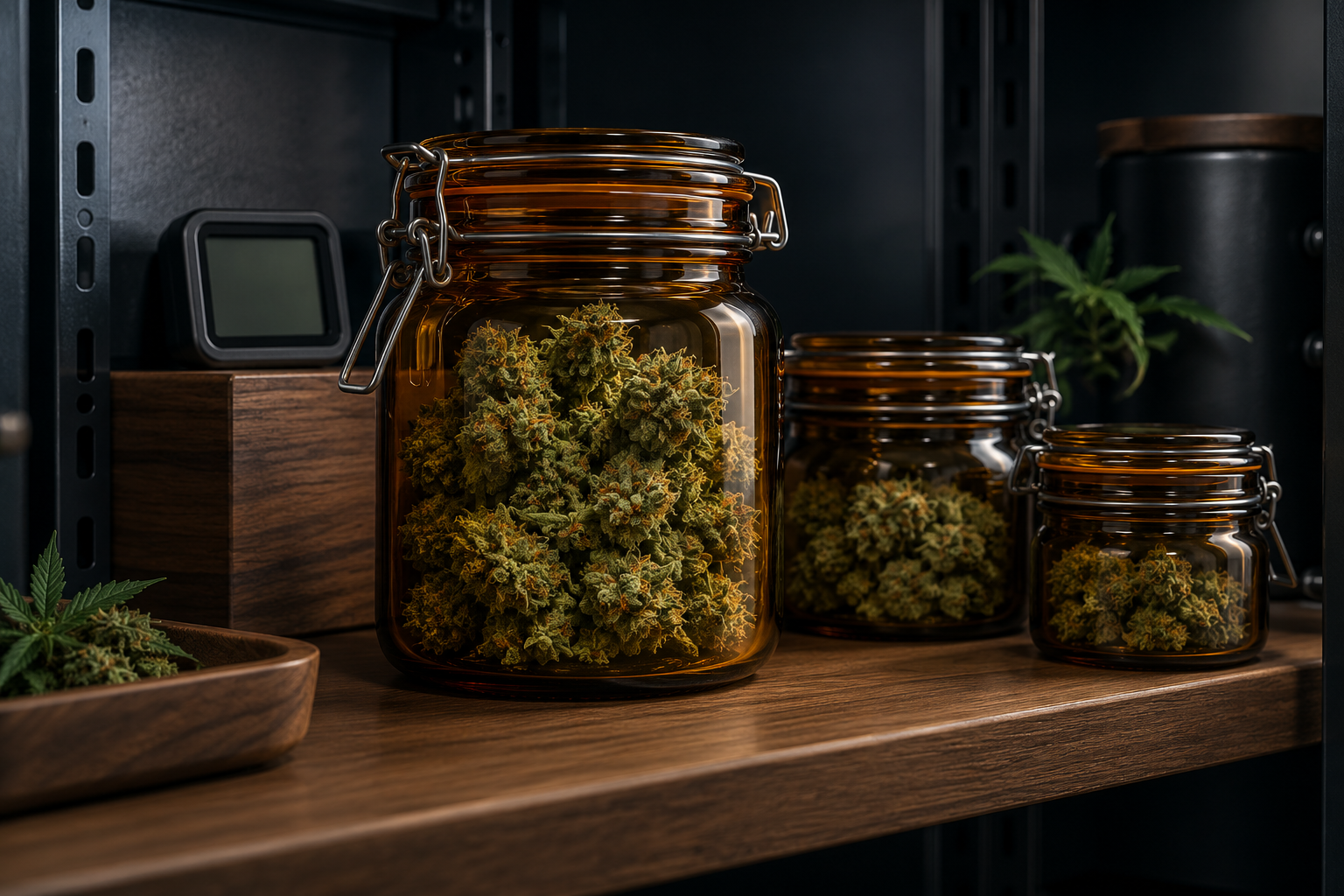
After cure, protect Cherry Paloma from heat and repeated fresh-air exchange. Keep a small working jar and leave the rest sealed; this preserves the volatile grapefruit-lime opening while the creamy dough and gas remain stable underneath.
Dominant Terpenes
Terpene results are phenotype- and batch-dependent. The compounds below describe the most common aromatic direction reported for this cultivar or its documented family. They should be confirmed with laboratory data when chemical precision is required.
Limonene
Limonene is relevant to Cherry Paloma because it contributes grapefruit, orange, lime, and an uplifting mental opening. Terpene dominance can change among phenotypes and laboratories, so the profile should be treated as a common direction rather than a fixed chemical fingerprint.
The sensory role is easier to verify than a precise effect claim. Aroma can be smelled and compared directly, while human effects are shaped by dose, THC, minor cannabinoids, tolerance, and expectation. Terpenes may influence the experience, but they should not be treated as a guaranteed medical mechanism in a single flower sample.
Beta-caryophyllene
Beta-caryophyllene is relevant to Cherry Paloma because it contributes pepper, cinnamon-like spice, gas, and physical relaxation. Terpene dominance can change among phenotypes and laboratories, so the profile should be treated as a common direction rather than a fixed chemical fingerprint.
The sensory role is easier to verify than a precise effect claim. Aroma can be smelled and compared directly, while human effects are shaped by dose, THC, minor cannabinoids, tolerance, and expectation. Terpenes may influence the experience, but they should not be treated as a guaranteed medical mechanism in a single flower sample.
Linalool
Linalool is relevant to Cherry Paloma because it contributes floral softness and a smoother emotional landing. Terpene dominance can change among phenotypes and laboratories, so the profile should be treated as a common direction rather than a fixed chemical fingerprint.
The sensory role is easier to verify than a precise effect claim. Aroma can be smelled and compared directly, while human effects are shaped by dose, THC, minor cannabinoids, tolerance, and expectation. Terpenes may influence the experience, but they should not be treated as a guaranteed medical mechanism in a single flower sample.
Myrcene
Myrcene is relevant to Cherry Paloma because it contributes ripe fruit depth, earth, and late body calm. Terpene dominance can change among phenotypes and laboratories, so the profile should be treated as a common direction rather than a fixed chemical fingerprint.
The sensory role is easier to verify than a precise effect claim. Aroma can be smelled and compared directly, while human effects are shaped by dose, THC, minor cannabinoids, tolerance, and expectation. Terpenes may influence the experience, but they should not be treated as a guaranteed medical mechanism in a single flower sample.
Indoor vs. Outdoor Growing
| Factor | Indoor | Outdoor |
|---|---|---|
| Size | medium to tall with noticeable early-flower extension | Larger root volume can create a wide multi-branch plant |
| Finish | approximately 63-70 days indoors, with many plants requiring at least 65 days | early to mid-October in the Northern Hemisphere under dry, temperate conditions |
| Main advantage | Environmental control and repeatable quality | Root volume, sunlight, and higher per-plant yield |
| Main risk | lineage confusion under the shared name, excessive stretch, hot foxtailing, hidden humidity, uneven canopy height, branch lean, and citrus loss during drying | Weather, insects, branch damage, and late moisture |
| Best strategy | top early, build a wide eight-to-twelve-top frame, guide stretch under a net, remove weak lower growth, and support the main spears before late swell | Open structure, early support, and weather planning |
Indoor structure
Indoors, Cherry Paloma usually finishes as a medium to tall with noticeable early-flower extension plant. Its stretch is usually about 1.6-2x, making flip height and net placement important. The main objective is to create an even canopy before vertical growth stops. A net is useful, but branches should not be woven so tightly that removal at harvest becomes destructive.
Indoor climate
Indoor success depends on lower humidity as the spear colas harden and maintain air movement around branch junctions and the flower stem. Air should move above, below, and through the canopy without blasting one flower continuously. Strong extraction is more valuable than a fan pointed directly at the buds.
Indoor nutrition
The cultivar's feeding direction is moderate feeding with careful nitrogen reduction after stretch; excess late fertility delays flavor maturity and keeps the flower too leafy. Irrigation runoff, leaf color, and tip condition should guide adjustment. A predetermined high-strength recipe is less reliable than observing how quickly the plant uses water and how the new growth develops.
Outdoor structure
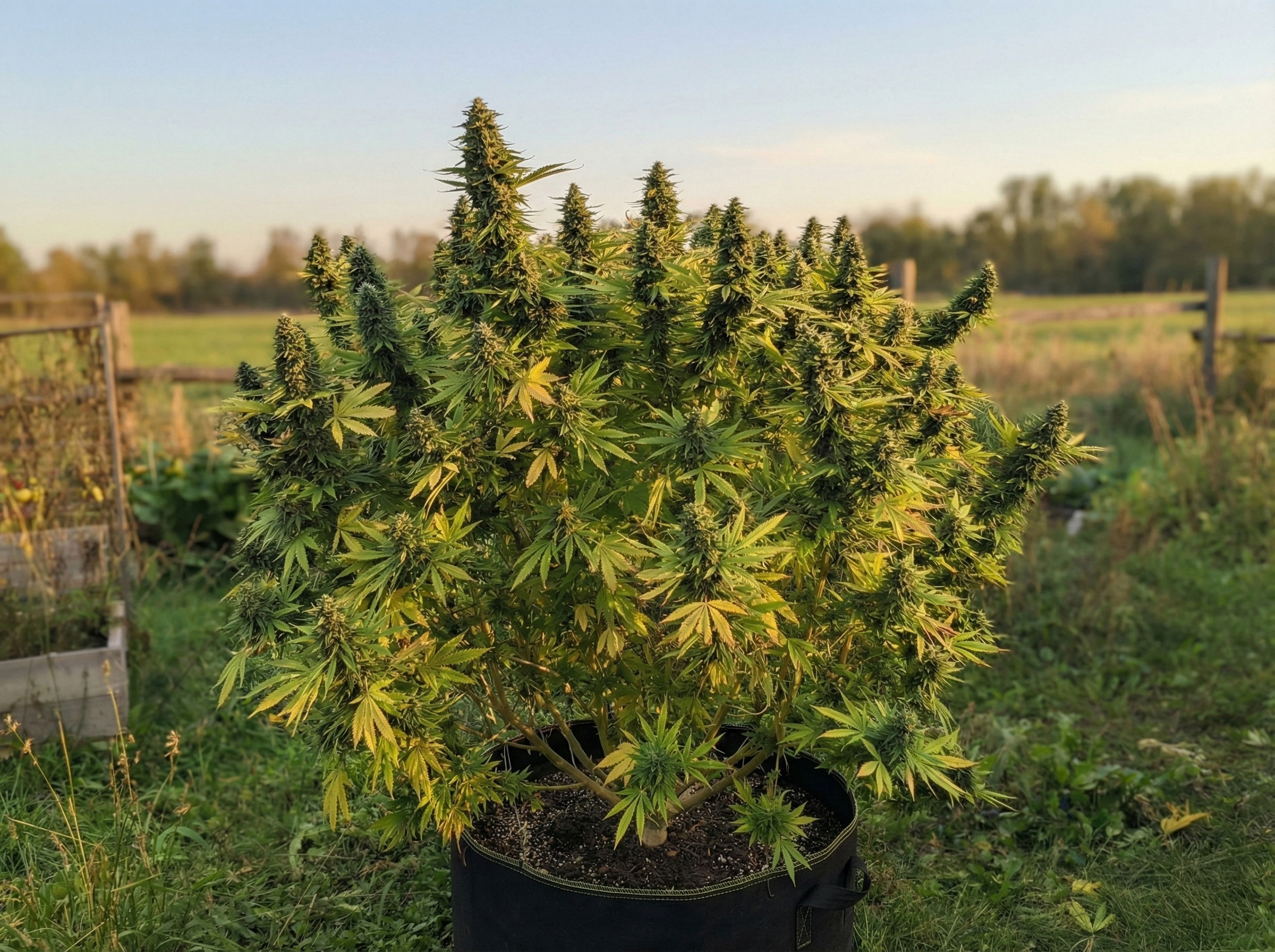
Outdoors, the plant benefits from unrestricted root volume and direct sun. Expected timing is early to mid-October in the Northern Hemisphere under dry, temperate conditions. Give branches enough space to move in wind and enough support to prevent the final flowers from folding them downward.
Outdoor climate
The best outdoor site provides morning sun, steady airflow, and protection from prolonged late-season rain. The cultivar's dense flower structure makes dry autumn weather more valuable than extreme summer heat.
Outdoor pest pressure
Outdoor aroma and dense flowers attract attention from insects as well as people. Inspect the interior of flowers and branch junctions. Caterpillar damage can open a path for rot, while mites and aphids reduce vigor long before yield visibly collapses.
Greenhouse use
A greenhouse protects Cherry Paloma from direct autumn rain, yet its tall spears can transpire enough to make a closed house wetter than the garden outside. Keep roof and side exchange active, leave lanes between phenotypes, and measure humidity at cola height rather than beside the intake.
Which environment fits best
Choose indoors when flavor consistency, security, and climate control are the priorities. Choose outdoors when root volume, plant size, and lower energy use matter more. Cherry Paloma can perform in both, but the grower must solve different problems: canopy density indoors and weather uncertainty outdoors.
Strain-Specific Grow Guidance
Vegetative structure and plant selection
Cherry Paloma begins with medium-tall hybrid growth, moderate internodes, vigorous side branches, colorful spear-shaped colas, and dense resin that can hide moisture near the stem. Select plants for vigor, symmetrical branching, clean leaf development, and a root system that fills the container without circling excessively. Do not choose only by early aroma. Weak structure becomes expensive once flowers gain weight.
The natural branching pattern is strong lateral arms respond to topping and weaving, but vertical leaders can outrun weaker sides without repeated early guidance. If growing from seed, expect some variation. Label every plant and preserve clones before flowering when possible. A keeper should be judged after cure, not only by photographs at harvest.
Let Cherry Paloma establish active roots before the first topping. Once the fifth or sixth node is moving strongly, top and begin spreading the future leaders; doing this to a recently transplanted plant often turns its useful 1.6-2x stretch into an uneven recovery race.
Training and canopy design
The preferred training direction is: top early, build a wide eight-to-twelve-top frame, guide stretch under a net, remove weak lower growth, and support the main spears before late swell. The purpose is not to create the flattest possible plant. The purpose is to distribute strong flower sites across the available light while preserving airflow and branch strength.
Begin Cherry Paloma LST while the leaders are green and cooperative, widening the plant over several visits. A late severe bend on a tall selected spear creates a weak joint exactly where final branch lean and net pressure will become greatest.
Finish Cherry Paloma topping and any decisive branch correction in vegetative growth or the first transition days. Once the long spears begin stacking, restrict intervention to gentle tucking, selective cleanup and support so citrus resin matures on an undisturbed frame.
Transition and stretch management
Plan for a stretch of usually about 1.6-2x, making flip height and net placement important. The flip height should reflect the available vertical space, container size, light distance, and phenotype. A plant with healthy roots and high light can stretch more strongly than a stressed plant described in an online grow report.
Use Cherry Paloma's first two flowering weeks to guide every vigorous lateral into its final square. Remove only shoots that cannot join the canopy, preserve enough leaf for stretch, and stop tucking once spear positions are fixed and stems begin to harden.
By the end of Cherry Paloma's third flowering week, the net should be filled and the tall leaders assigned permanent lanes. From there, stop inventing new architecture and concentrate on supporting spears, separating phenotypes and keeping the stem-side interior dry.
Root zone, watering, and nutrition
The cultivar's watering preference is that it likes consistent irrigation and a well-aerated medium; repeated drought during stretch can create uneven height and weak lower sites. Choose a medium with enough air capacity to recover after full irrigation. Container size should match the intended vegetative period; a long veg in a small pot creates root restriction before the plant reaches its productive phase.
Feeding should follow this direction: moderate feeding with careful nitrogen reduction after stretch; excess late fertility delays flavor maturity and keeps the flower too leafy. Watch the newest leaves, not only the oldest fans. Dark glossy foliage, clawing, burnt tips, or slowed water use indicate that more fertilizer is unlikely to improve yield.
Judge calcium and magnesium for Cherry Paloma from water analysis, medium and new growth, not from a purple petiole alone. Citrus-family color and rapid stretch can mislead the eye; confirm root-zone EC and the pattern on expanding leaves before supplementing.
When Cherry Paloma changes behavior unexpectedly, compare root-zone pH, EC and pot weight across its phenotypes. A single salty container or dry emitter often explains the apparent deficiency more convincingly than a new bottle added to every plant.
Light, temperature, and humidity
The lighting strategy is to benefits from strong even light, but top-canopy heat changes grapefruit and cherry into flatter generic sweetness and may cause foxtailing. Increase intensity in steps and watch leaf angle, edge curl, bleaching, and water demand. More light only improves production when roots, carbon dioxide, temperature, and nutrition can support the extra photosynthesis.
Humidity management should follow this rule: lower humidity as the spear colas harden and maintain air movement around branch junctions and the flower stem. Dense cannabis flowers can maintain much higher humidity internally than the room reading suggests. That is why a safe ambient number does not guarantee a safe flower interior.
Cherry Paloma nights should cool without creating a long humidity spike inside the spear centers. Size dehumidification for the dense canopy at lights-off and inspect where bracts wrap the stem, because that hidden line remains wet after outer surfaces feel dry.
Flower development and support
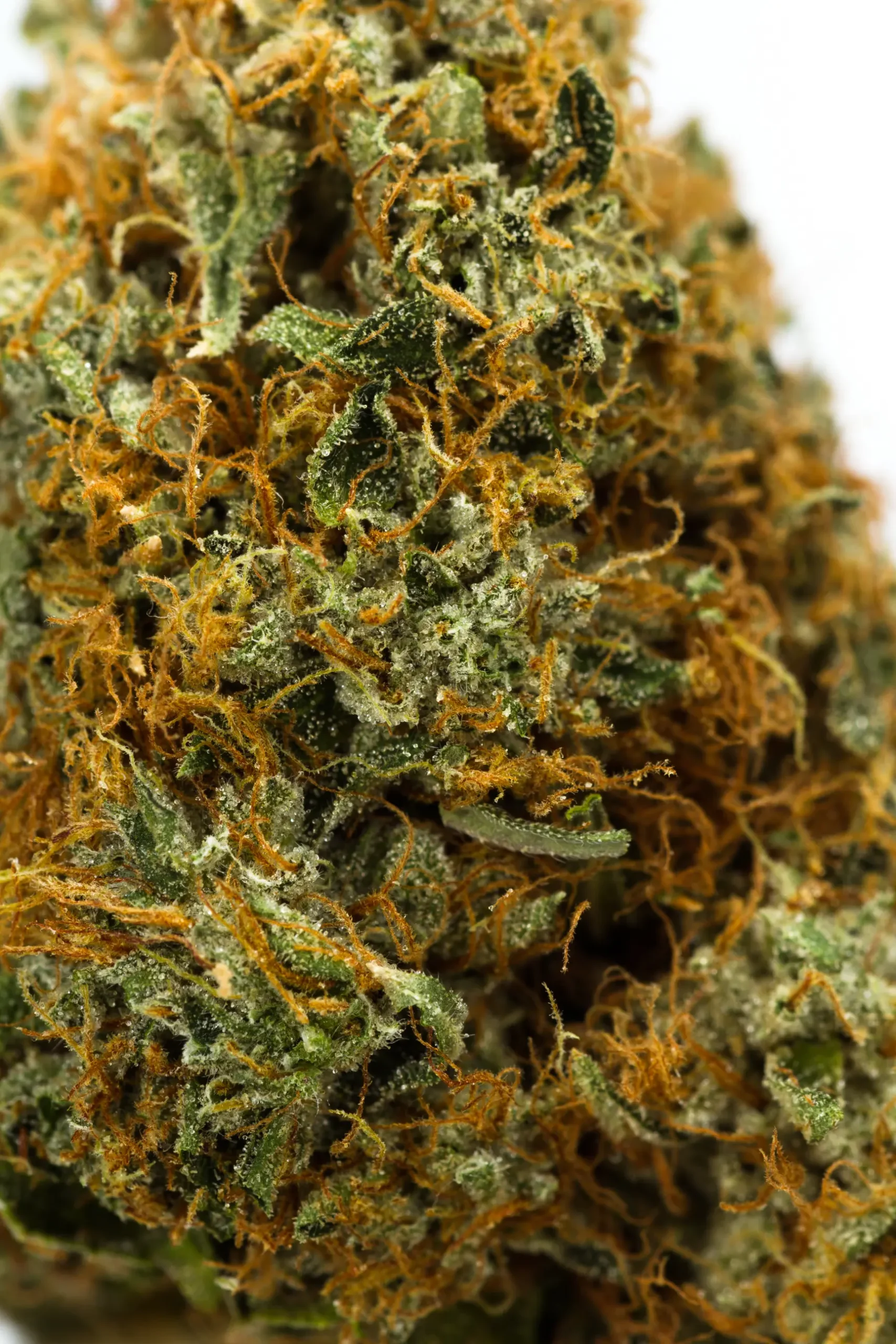
The finished flowers are expected to be dense cherry-red, purple, lime, and forest-green flowers with orange pistils, swollen calyxes, and greasy resin. Support should be installed before the branches lean. Adding stakes or a second net late can damage trichomes and compress flowers against each other.
Mid flower is the moment to part Cherry Paloma spears gently and inspect the stem line. A dull sweet or musty pocket that differs from ruby grapefruit and gas is an environmental warning, not a new terpene expression.
Cherry Paloma may form attractive genetic points on evenly ripening spears, but top-only pale towers with rising leaf edges indicate excessive heat or light. Compare shaded and exposed flowers before blaming genetics, because hot foxtailing usually arrives with a flatter citrus nose.
Pest and disease prevention
Do not let the stretch make the decisions
The main strain-specific risks are lineage confusion under the shared name, excessive stretch, hot foxtailing, hidden humidity, uneven canopy height, branch lean, and citrus loss during drying. Prevention begins before flowering. Clean the space, inspect incoming plants, remove dead material, and avoid carrying outdoor tools directly into an indoor room.
Once Cherry Paloma spears close around the stem, keep liquids off them. Correct problems through climate, clean tools and removal of isolated damaged tissue; spraying a citrus-rich mature surface trades one risk for residue and trapped moisture.
Stress inspection should include the lower nodes and interior branches. Sensitive modern hybrids can express isolated reproductive structures after light leaks, severe drought, root damage, or repeated high-stress training. Remove affected tissue, correct the stress, and evaluate whether the plant remains suitable to finish.
Harvest timing
The expected flowering window is approximately 63-70 days indoors, with many plants requiring at least 65 days. Calendar age is only a checkpoint. The actual harvest decision is: wait for the cherry-citrus aroma to become deeper and less green, then harvest at mostly cloudy trichomes with limited amber for a balanced social-to-calm effect.
Read Cherry Paloma on bract trichomes from several spear levels. The exposed top can amber while the protected stem-side bracts remain clear, and the more colorful phenotype can look mature before its grapefruit-lime aroma has reached full definition.
Cherry Paloma can justify a staged harvest when the upper grapefruit-rich spears mature several days ahead of shaded pastry-heavy lowers. Take only clearly finished tops, restore light without tearing the remaining frame apart, and continue only if the room is dry and the plant is still drinking cleanly.
Master Advice: Build the grow around medium-tall hybrid growth, moderate internodes, vigorous side branches, colorful spear-shaped colas, and dense resin that can hide moisture near the stem and a stretch of usually about 1.6-2x, making flip height and net placement important. Do not wait until late flower to solve spacing and support.
Weedth Bud Flavor Tips
Indoor flavor priorities
Indoors, the key is to prevent heat and excessive nitrogen from flattening Cherry Paloma's profile. Benefits from strong even light, but top-canopy heat changes grapefruit and cherry into flatter generic sweetness and may cause foxtailing. Keep the canopy uniform so top flowers do not experience a different temperature and stress level from the middle.
Reduce Cherry Paloma nitrogen in response to the plant's fade and slowing demand, not to force yellow photographs. The goal is a clean pastry-and-citrus finish with functioning leaves, not a prematurely starved tall phenotype that stops swelling.
Stop foliar applications early on Cherry Paloma because its spear flowers collect droplets along the stem and its bright citrus resin is easy to contaminate. Finish pest prevention before stacking begins and use inspection, airflow and sanitation as the flowering strategy.
Outdoor flavor priorities
Harvest outdoor Cherry Paloma after dew has cleared but before warm sun heats the volatile citrus surface. Watch the forecast as closely as trichomes; one dry, slightly early cut can preserve more grapefruit than a theoretically perfect flower soaked by repeated October rain.
If rain is expected near maturity, compare the risk of early harvest with the risk of rot. A slightly early but clean crop may retain more usable flavor than a fully mature crop damaged by moisture. Use covers only when they do not trap humidity around the plant.
Move cut Cherry Paloma spears directly into cool darkness and avoid piling them while the branches are still warm. Heat and compression at harvest can erase the grapefruit-lime top note before the controlled dry has even begun.
Drying strategy
The cultivar-specific drying direction is: use a cool slow dry with indirect circulation because grapefruit, lime, and cherry esters are especially vulnerable to heat and excessive air speed. Use darkness, cool temperature, gentle air exchange, and enough spacing that branches do not touch. Direct fan air should move around the crop, not at it.
Separate Cherry Paloma's full spears from small lower clusters during drying assessment. The lowers may feel storage-ready days before the stem-side core of a top; seal each size class only after its own moisture has equalized.
A snapping Cherry Paloma side twig does not prove that a thick spear center is ready for storage. Condition representative top and lower samples separately with hygrometers, then jar the harvest only when internal rebound stays controlled.
Curing and storage
The recommended cure is: four to eight weeks integrates sharp citrus into cherry-grapefruit cream, floral spice, dough, peach, and cleaner gas. Early in cure, open containers as needed to release excess moisture and refresh the headspace. As moisture stabilizes, reduce the frequency of opening.
Never try to repair a weak Cherry Paloma cure with citrus peel. Added peel introduces moisture and foreign aroma while hiding the useful diagnosis: whether heat, oxygen or an early harvest removed the cultivar's own grapefruit, lime and cherry sequence.
Store Cherry Paloma in several small, cool, dark containers so the reserve is not exposed each time the working jar is opened. Handle the flower by its stem; the most delicate grapefruit and lime impression sits in resin that repeated squeezing and warm air quickly dull.
Weedth Bud Boost Tips
Yield starts with architecture
The most reliable yield method is the cultivar's preferred training approach: top early, build a wide eight-to-twelve-top frame, guide stretch under a net, remove weak lower growth, and support the main spears before late swell. Yield comes from productive surface area, not from the number of techniques used. A well-spaced canopy with ten strong tops can outperform a stressed plant with twenty weak tops.
Keep only Cherry Paloma branches capable of reaching a lit net square without crowding a neighbor. Weak shoots hidden beneath a 1.6-2x stretch rarely become premium flower; removing them before stacking improves both grapefruit expression and access to the humid interior.
A second net is especially valuable when Cherry Paloma builds long, colorful spears above flexible side branches. Install it before the flowers become sticky and rigid; late wrestling bruises resin, pushes colas together and creates the hidden stem-side moisture this cultivar is prone to.
Light and canopy efficiency
Use strong, uniform light according to this cultivar direction: benefits from strong even light, but top-canopy heat changes grapefruit and cherry into flatter generic sweetness and may cause foxtailing. Measure intensity at multiple points rather than trusting the fixture setting. Edge plants and center plants should not live in completely different environments.
Lower-canopy lighting can improve middle flower when used carefully, but it does not replace pruning and spacing. Additional light also adds heat and energy cost. The first priority is an efficient top canopy.
Clean reflective surfaces and maintain fixture distance. A small loss of usable light across an entire cycle can reduce flower density without creating an obvious visual problem.
Root volume and irrigation
Root health should follow the cultivar's water preference: likes consistent irrigation and a well-aerated medium; repeated drought during stretch can create uneven height and weak lower sites. Choose a container that supports the intended plant size. An oversized wet container can be as damaging as a rootbound small one.
Irrigate Cherry Paloma across the complete active root volume, then allow a measurable oxygen-returning dryback. Small surface splashes encourage shallow roots and salt bands, an unstable foundation for a tall net carrying heavy spear-shaped flowers.
Automation suits Cherry Paloma only when every emitter is verified against the cultivar's uneven canopy demand. A partially blocked line can create one short, salty plant that looks like a separate phenotype, corrupting selection notes as well as yield.
Nutrition without excess
Follow the strain's feeding direction: moderate feeding with careful nitrogen reduction after stretch; excess late fertility delays flavor maturity and keeps the flower too leafy. The plant needs complete nutrition, not constant escalation. Increased fertilizer does not automatically increase cannabinoid or terpene production.
During Cherry Paloma bulk, compare water demand across phenotypes rather than raising the reservoir for the thirstiest plant. The tall citrus expression may pull faster than a compact doughy sibling; separate irrigation zones or hand-correct outliers before the whole room accumulates excess salts.
Taper Cherry Paloma according to drinking rate, bract maturity and leaf condition. The citrus-forward plant may keep consuming later than a compact pastry phenotype, so one calendar reduction for the whole seed run can starve one expression while leaving another dark and overfed.
Outdoor yield strategy
For outdoor Cherry Paloma, deep drainage, an early wide frame and permanent stakes create more value than late bloom products. Build support before the October spears lean, because installing it through resinous branches damages flowers and closes air channels.
Outdoors, open Cherry Paloma's center so morning sun and crosswind can reach the long spears, but retain leaf around exposed productive arms. Over-stripping a tall plant increases heat stress and can turn the intended grapefruit clarity into dry generic sweetness.
Inspect after storms. Re-tie branches, remove damaged tissue with clean tools, and dry trapped water from dense flower zones using natural airflow or gentle fans where legal and practical.
Remember: The cleanest yield increase comes from better light distribution, root health, and climate consistency. More additives cannot repair poor architecture.
Medical Uses & Benefits
Users most often consider Cherry Paloma for reported use for stress, low mood, social anxiety, mild pain, and appetite changes, though high-THC or very citrus-forward samples may feel mentally intense. These are reported uses, not guaranteed treatments. Cannabis can reduce symptoms for one person and worsen them for another, especially when THC dose is high.
The onset of a wave of euphoria, social confidence, brighter attention, and creative mental movement may be helpful when stress or low mood is the main problem. The later development into calm muscles, reduced urgency, appetite, and possible sleepiness when the dose or harvest maturity is high may suit evening discomfort and physical tension. The same progression can be inconvenient for anyone who needs sustained alertness.
Pain relief is usually described as partial rather than anesthetic. The strain may change attention, muscle tone, and emotional response to discomfort. Severe, new, or unexplained pain requires medical evaluation rather than self-treatment.
For sleep, timing matters. Taking a potent strain immediately before bed can feel mentally active for some users, even when the late phase is sedating. An earlier evening dose may allow the initial mental effects to settle before bedtime.
Anxiety response is dose-dependent. A small dose may feel calming, while a large dose can increase heart awareness, dizziness, or repetitive thought. Users with panic history should be especially conservative and consider lower-THC options.
Dry mouth, dry eyes, appetite changes, slowed reaction time, and short-term memory impairment are common cannabis effects. Combining cannabis with alcohol or other sedatives can increase impairment.
Medical patients should consider medication interactions, cardiovascular conditions, pregnancy, age, and mental-health history. Professional guidance is appropriate when cannabis is used alongside prescription treatment.
The safest therapeutic approach is repeatable dosing. Use the same preparation, measure the amount, keep notes, and avoid judging benefit from one unusually strong or weak batch.
Ideal User Profile
The ideal user is intermediate and experienced consumers seeking a social balanced hybrid and growers comfortable with stretch control, phenotype selection, and slow drying. The strain suits someone who values a changing experience rather than a single flat effect. The early phase and late phase may feel different enough that timing matters.
For low-tolerance users, one inhalation may be sufficient. Wait at least several minutes before adding more. Edible forms require much longer onset time and should be dosed even more conservatively.
Time of day should match the finish. A cultivar that begins cheerful can still become physically heavy. Users should plan the full two-to-three-hour window rather than judging only the first fifteen minutes.
The best activities are low-risk and sensory: music, conversation, film, a meal, light stretching, or a familiar creative hobby. Driving, machinery, important financial decisions, and unfamiliar physical environments are poor matches.
Flavor-focused users should compare flower through a clean vaporizer at moderate temperature. Combustion can emphasize pepper and char while hiding delicate fruit, cream, or floral notes.
Growers considering this strain should be comfortable with its main cultivation issue: lineage confusion under the shared name, excessive stretch, hot foxtailing, hidden humidity, uneven canopy height, branch lean, and citrus loss during drying. A grower who can manage that issue will usually find the rest of the cycle straightforward.
Grower Notes and Feedback
Grower reports on Cherry Paloma tend to agree on its central identity: a balanced fruit-and-gas hybrid combining tart cherry, ruby grapefruit, orange zest, lime, floral spice, creamy dough, black pepper, and savory fuel with an upbeat social opening and a calm tingly landing. The most consistent praise concerns resin, aroma, and the finished effect. The most consistent problems are linked to lineage confusion under the shared name, excessive stretch, hot foxtailing, hidden humidity, uneven canopy height, branch lean, and citrus loss during drying.
Plant-to-plant variation should be expected. Stretch may range around usually about 1.6-2x, making flip height and net placement important, and flowering may fall within approximately 63-70 days indoors, with many plants requiring at least 65 days. Keep records rather than forcing every phenotype onto one schedule.
A twisted or unusually colored Cherry Paloma leaf deserves context before correction. Tropicana-leaning plants can look different from Georgia Pie-leaning siblings, while root restriction and rapid dryback can imitate a feeding problem. Compare new growth, pot weight and clone behavior before changing the whole program.
The feeding consensus is best summarized as: moderate feeding with careful nitrogen reduction after stretch; excess late fertility delays flavor maturity and keeps the flower too leafy. Growers who maintain stable root conditions usually report better flavor than growers who chase maximum electrical conductivity.
The expected bud structure is dense cherry-red, purple, lime, and forest-green flowers with orange pistils, swollen calyxes, and greasy resin. That density is attractive but changes airflow and drying behavior. The plant should be supported and inspected before the flowers become difficult to move.
Harvest timing should follow this direction: wait for the cherry-citrus aroma to become deeper and less green, then harvest at mostly cloudy trichomes with limited amber for a balanced social-to-calm effect. Growers who cut only by calendar often miss either the late flavor development or the preferred effect balance.
Post-harvest quality depends on this rule: use a cool slow dry with indirect circulation because grapefruit, lime, and cherry esters are especially vulnerable to heat and excessive air speed. A fast dry can make a visually excellent crop taste ordinary. A slow but stagnant dry can create microbial risk. Air exchange and temperature should work together.
The Cherry Paloma keeper should repeat three things from clone: controllable stretch, clean spear interiors and a cured sequence that still starts with grapefruit-lime before pastry and fuel. One spectacular purple seed plant is less valuable if its clones lose structure or citrus.
Weedth Experience
Cherry Paloma is the kind of plant that makes me separate beauty from proof. The color and grapefruit-cherry aroma arrive early enough to be persuasive, but neither tells me whether a phenotype will keep its shape, stay clean around the stem or hold citrus after drying. I want the plant that remains readable from rooted clone to cured jar.
My first structural decision would be made before the flip. I would top a vigorous plant, establish a broad frame and place a net with the expected 1.6-2x stretch in mind. During transition I would assign every leader a lane, then stop treating the canopy like a puzzle once the spears begin stacking. The plant looks better when I resist the urge to keep tucking for one more week.
The detail I would watch most closely is the inside line of each spear. Cherry Paloma can show a dry, frosted exterior while the bracts nearest the stem remain shaded and humid. I would rather harvest ten separated, supported tops than twelve pressed together for a photograph. That small reduction in apparent fullness usually buys cleaner flavor and a safer dry.
What I enjoy in the finished flower is movement. The jar should not shout cherry once and stop. I want ruby grapefruit and lime to rise first, then floral spice and peach skin, with Georgia Pie-like cream and gas appearing only after the bright edge has had its turn. When a cool, patient dry preserves that order, Cherry Paloma feels genuinely distinctive rather than generically fruity.
Weedth Score
Growing Experience 8.7/10 Rewarding when lineage confusion under the shared name, excessive stretch, hot foxtailing, hidden humidity, uneven canopy height, branch lean, and citrus loss during drying are managed early.
Bud Structure & Visual Appeal 9.5/10 Dense cherry-red, purple, lime, and forest-green flowers with orange pistils, swollen calyxes, and greasy resin.
Aroma Complexity 9.7/10 Layered profile of tart cherry, ruby grapefruit, orange peel, lime, peach skin, floral spice, cinnamon, creamy dough, black pepper, and gas.
Flavor & Smoothness 9.5/10 Best after four to eight weeks integrates sharp citrus into cherry-grapefruit cream, floral spice, dough, peach, and cleaner gas and a slow dry.
Effects & High Experience 9.2/10 Moves from a wave of euphoria, social confidence, brighter attention, and creative mental movement toward calm muscles, reduced urgency, appetite, and possible sleepiness when the dose or harvest maturity is high.
Overall Satisfaction & Recommendation 9.4/10 A strong choice for intermediate and experienced consumers seeking a social balanced hybrid and growers comfortable with stretch control, phenotype selection, and slow drying.
Personal Closer: Cherry Paloma earns its place through character rather than one exaggerated number. The best flowers are structured, expressive, and worth the patience required to cure them properly.
FAQ
Is Cherry Paloma difficult to grow?
It is moderate. Stretch, phenotype variation, spear-shaped density, foxtailing diagnosis, branch support, and citrus preservation all require planning.
What is its lineage?
Tropicana Cherry x Georgia Pie, combining tart red fruit and citrus color with creamy dough, spice, resin, and body calm.
How long does it flower?
Approximately 63-70 days, with many plants needing at least 65. The brightest early aroma should be allowed to integrate with pastry and gas.
How much does it stretch?
Usually 1.6-2x. Flip height and open screen area matter more than a single promised final height.
What canopy shape works best?
A wide eight-to-twelve-top frame guided under a screen, followed by lower cleanup and secondary support for the main spears.
Is every foxtail a heat problem?
No. Some spear phenotypes stack pointed bracts naturally. Heat foxtailing is more likely when it concentrates at the hottest tops with aroma loss or stress posture.
Does it need aggressive feeding?
No. Stable moderate nutrition and even irrigation preserve citrus and dough better than rising EC during late bloom.
What is the key humidity risk?
Dense resin can hide moisture beside the central stem, especially when uneven branches lean and reduce air movement.
Why did the grapefruit flavor disappear?
Hot tops, early harvest, excessive late nitrogen, rough trimming, and fast drying remove grapefruit, lime, and floral notes before cherry-gas.
When should it be harvested?
When bracts are full and tart cherry-grapefruit has integrated with peach, floral spice, cinnamon, dough, pepper, and gas.
How should it be dried?
Space large branches in cool darkness with gentle exchange. Never aim a fan directly at the colorful spears.
What makes a keeper phenotype?
Controllable stretch, clean spear interiors, stable branch support, and a cured aroma that retains grapefruit and lime rather than only cherry fuel.
Similar Strains
Tropicana Cherry
The direct parent reference supplies tart cherry, citrus peel, color, floral lift, and an upbeat opening.
Georgia Pie
Georgia Pie contributes peach skin, creamy pastry, spice, resin, and a calmer body finish.
Mimosa
Mimosa shares bright orange-grapefruit energy and a social beginning with less dough and cherry depth.
Tropicana Cookies
Tropicana Cookies offers colorful citrus-cherry flower, stretch, and floral spice in a lighter pastry frame.
Cherry Pie
Cherry Pie connects through tart red fruit, dough, earth, and balanced relaxation with less grapefruit sparkle.
Orange Push Pop
Orange Push Pop shares citrus cream and dense modern flower, shifting from tart cherry toward sweeter orange dessert.
Share this article
A quick overview of the topics covered in this article.
Follow us
Latest articles
October 25, 2026
October 25, 2026