
Grow Tent Humidity Too High: A Step-by-Step Diagnosis
Relative humidity climbing past 70 or 80 percent inside an indoor cannabis grow tent represents an existential threat to crop health. In late vegetative growth and throughout floral development, unchecked moisture vapor fosters devastating fungal pathogens, primarily Botrytis cinerea (gray mold) and powdery mildew. Faced with condensation beading on tent fabric walls and dripping from ceiling poles, growers often panic, setting exhaust fans to continuous maximum speed or cramming undersized thermoelectric dehumidifiers into the tent corner. Yet, these uncalculated interventions frequently fail to bring relative humidity into the safe 45 to 55 percent flowering target.
Diagnosing excessive grow tent humidity requires moving beyond trial-and-error guesswork to understand the biophysical mass balance of indoor moisture. Water vapor does not materialize spontaneously inside an enclosure; every milliliter of moisture present in the air originated either as irrigation water applied to the substrate or as latent vapor drawn into the tent from an unconditioned lung room. When relative humidity remains stubbornly elevated despite continuous fan operation, cultivators are confronting a fundamental imbalance between the mass rate of canopy moisture generation and the moisture extraction capacity of the ventilation loop.
Biophysical Law: The Conservation of Mass in Cultivation Moisture
In an enclosed indoor garden, approximately 95 to 98 percent of all water delivered to root containers is released directly into the atmosphere through stomatal transpiration and substrate evaporation. Only 2 to 5 percent of irrigation volume is biochemically converted into structural plant tissue. If you feed four mature flowering plants a combined total of four gallons (15.1 liters) of nutrient solution each day, your ventilation and dehumidification systems must physically remove approximately 33.5 pounds of airborne water vapor every 24 hours just to maintain a steady-state relative humidity.
Understanding this mass conservation principle reframes the high-humidity problem from an elusive mystery into a solvable mechanical mass balance equation. When a grower laments that a 4×4 grow tent refuses to drop below 75 percent relative humidity during mid-bloom, calculating their irrigation volume instantly reveals the load: they are pouring four gallons of water into a sealed fabric box every morning, while relying on an exhaust fan that is recycling moist lung room air. Without an external latent extraction sink, the air within the tent rapidly approaches saturation vapor pressure.
Furthermore, relative humidity is inherently relative; it is inextricably coupled to air temperature. Warmer air possesses a greater thermodynamic capacity to hold water vapor in the gaseous state than cooler air. For every 1 degree Celsius (1.8 degrees Fahrenheit) drop in ambient temperature, relative humidity increases by roughly 3 to 4 percent, even if the absolute mass of moisture in the air remains completely unchanged. Consequently, nighttime humidity spikes are frequently the thermodynamic consequence of temperature drops rather than sudden surges in moisture generation.
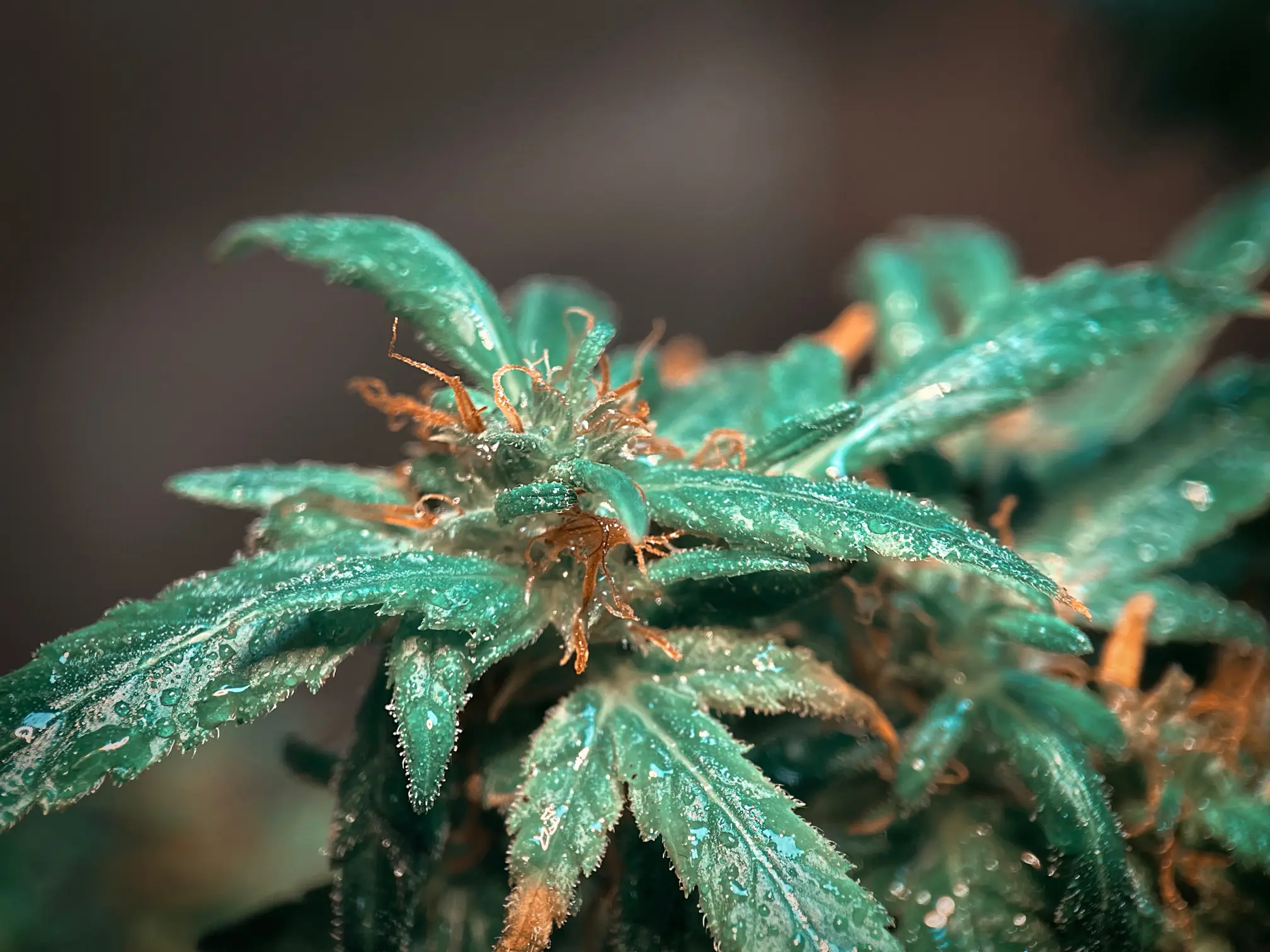
When moist air encounters surfaces colder than its dew point, water vapor condenses into liquid droplets. In high-humidity grow tents, this condensation occurs on reflective Mylar tent walls, metal corner support poles, oscillating fan housings, and, most dangerously, deep inside dense, resinous floral colas. The interior core of a massive cannabis bud maintains a dense boundary layer where stagnant, saturated air is trapped. Once free water droplets form on internal floral calyxes, Botrytis spores germinate within 4 to 8 hours, rotting the bud from the inside out before external symptoms become visible.
To prevent this catastrophic outcome, indoor cultivators must execute a rigorous, step-by-step diagnostic sequence. By identifying the exact sources of moisture, measuring installed volumetric airflow rates, verifying lung room vapor pressure, and sizing compressor dehumidification equipment based on real-world irrigation volumes, growers eliminate chronic humidity bottlenecks and establish absolute atmospheric control.
Defining the Humidity Problem and Governing Biophysical Variables
A Systematic Humidity Diagnosis Begins by Isolating
A systematic humidity diagnosis begins by isolating the physical and environmental parameters controlling moisture transport inside the grow tent. The primary variables include relative humidity (RH percentage), absolute humidity (grams of water per cubic meter of air), dew point temperature (degrees Celsius), leaf vapor pressure deficit (Leaf VPD in kilopascals), and the volumetric airflow rate (CFM) moving through the intake and exhaust pathways.
Cultivators must distinguish between an absolute moisture problem and a temperature-induced relative humidity artifact. An absolute moisture problem exists when the absolute humidity inside the tent significantly exceeds the moisture holding capacity required for healthy transpirational flow, usually driven by wet standing runoff trays, exposed hydroponic reservoir surfaces, or massive canopy biomass. A temperature-induced artifact occurs when absolute moisture is moderate, but rapid cooling during the lights-off photoperiod transition compresses the air psychrometric capacity, forcing relative humidity to spike from 55 percent up to 85 percent.
“My tent runs at 52% humidity when lights are on, but within 20 minutes of lights turning off, humidity skyrockets to 78% and my fan speed controller cannot bring it down. Where is all this extra water coming from at night?”
Question sent by: WhistlerWeedCraft, via contact form.
The extra water was already in your air, substrate, and root containers. When high-intensity grow lights turn off, ambient air temperature plummets by 5 to 7 degrees Celsius. Cooler air holds substantially less water vapor, causing relative humidity to surge automatically through psychrometric compression. Simultaneously, warm moist substrate continues to evaporate water while fan speed controllers, reacting to lower temperatures, mistakenly throttle exhaust fans down. You must program your exhaust controller to decouple nighttime humidity control from temperature or deploy active compressor dehumidification.
Julians Dilemma Illustrates One of the Most
Julian’s dilemma illustrates one of the most widespread environmental controller misconfigurations in modern cultivation. Traditional fan speed controllers operate on an integrated temperature and humidity algorithm. During the lights-off cycle, ambient temperatures naturally drop. If the controller prioritizes temperature conservation to prevent the tent from becoming too cold, it automatically throttles the exhaust fan down to its minimum idle speed (often 10 or 20 percent). This throttling traps continuous substrate evaporation and residual nocturnal transpiration inside a cooling enclosure, guaranteeing a severe humidity spike.
To eliminate this failure mode, smart environmental controllers must be configured with independent lights-off setpoints or minimum baseline airflow floors. An exhaust fan must maintain sufficient volumetric exchange during the dark cycle to sweep away evaporated moisture, even if auxiliary supplemental heating (such as a low-wattage ceramic space heater placed inside the lung room) must be engaged to prevent nocturnal temperatures from dropping below 19 degrees Celsius.
System Layout: Intake Path, Exhaust Path, and Moisture Extraction Geometry
The Physical Routing and Spatial Arrangement
The physical routing and spatial arrangement of ventilation equipment govern how effectively moisture vapor is purged from the grow tent. Air acts as a fluid solvent that absorbs moisture as it moves across wet surfaces. If the fluid pathway is poorly structured, stagnant microclimates form within the canopy, trapping humid air regardless of total fan power.
A classic layout flaw is pulling intake air from a humid or stagnant micro-zone. If your grow tent intake duct pulls air from a damp basement floor, a laundry room with a running clothes dryer, or directly beside an open drainage sump, you are constantly injecting air with high moisture content into the garden. In such setups, exhausting air at high CFM does not reduce tent humidity because the incoming replacement air is already saturated. The lung room supplying intake air must be systematically audited for moisture sources.
“I am trying to dial in the physical routing and spatial arrangement for my indoor tent, what is the most reliable measurement to check first so I do not overcorrect?”
Question sent by: Logan Langston, via email.
Start by taking a direct baseline measurement rather than guessing from foliar symptoms alone. In practice, In such setups, exhausting air at high CFM does not reduce tent humidity because the incoming replacement air is already saturated.
Once you have confirmed the baseline reading, adjust only one variable at a time and log the response over the next 24 to 48 hours. This ensures that irrigation water moves exclusively through the plant vascular system via controlled transpiration rather than evaporating uncontrolled into the air.
Ductwork installation defects severely impair moisture extraction. Long flexible duct runs with sagging coils and sharp 90-degree elbows introduce immense static pressure resistance, reducing actual volumetric airflow by 40 to 60 percent. A fan struggling against high static pressure cannot maintain the necessary air changes per hour to evacuate heavy transpirational moisture loads. Cultivators must pull flexible ducting taut, secure collars with mechanical worm-drive clamps, and minimize bends to ensure maximum air velocity.
Internal Circulation Fans
Internal circulation fans are equally vital for moisture management. Without robust horizontal and vertical air circulation, the dense foliar boundary layer thickens. Leaves transpire water vapor into the microscopic space directly adjacent to their stomatal pores, creating localized microclimates where relative humidity hits 95 percent, even if a wall-mounted sensor several feet away reads a comfortable 55 percent. Oscillating circulation fans must be positioned to deliver gentle, uniform air movement (0.5 to 1.0 meters per second) across every layer of the canopy, stripping stagnant boundary layers and sweeping moisture into the bulk exhaust air stream.
Aerodynamic Rule: Airpath Stratification and Moisture Scavenging
Warm, moisture-laden air is less dense than dry air at the same temperature and naturally rises toward the upper ceiling volume. To maximize moisture extraction efficiency, the exhaust intake port (equipped with a carbon filter) must be suspended horizontally or vertically at the absolute highest ceiling point in the tent. Passive intake vents must be positioned at the base on the opposing wall. This bottom-to-top diagonal flow pattern ensures that dry incoming air sweeps across substrate pots, absorbs evaporating water, rises through the foliage, and is purged immediately without recirculating into the canopy.
Standing Water Inside Runoff Collection Saucers
Standing water inside runoff collection saucers represents an enormous, unnecessary source of evaporative moisture. Cultivators who water to 15 or 20 percent runoff and allow the pots to sit in stagnant wastewater pools create an open-surface evaporative reservoir. Under the radiant heat of LED fixtures, gallons of runoff water evaporate continuously back into the air. Elevating pots on drainage grates and utilizing wet-vacuums or automated condensate removal pumps to evacuate runoff within 15 minutes of irrigation eliminates up to 30 percent of the tent’s daily moisture load.
Covering exposed substrate surfaces is another highly effective layout strategy. In loose coco coir or peat-based potting soils, water evaporates directly from the warm top layer of media. Installing plastic moisture barriers, silicone pot covers, or clean mulch mats over container tops suppresses direct media evaporation without restricting oxygen diffusion to the root zone. This ensures that irrigation water moves exclusively through the plant vascular system via controlled transpiration rather than evaporating uncontrolled into the air.
Step-by-Step Diagnostic Workflow and Sizing Methodology
When High Humidity Persists Despite Basic Operational
When high humidity persists despite basic operational adjustments, cultivators must execute a structured diagnostic workflow to determine whether the issue stems from ventilation limitations, ambient lung room moisture, or undersized mechanical dehumidification. Relying on generic rules of thumb guarantees misdiagnosis.
The diagnostic protocol begins by evaluating the absolute moisture differential between the intake air and exhaust air. Cultivators must place a calibrated thermo-hygrometer inside the lung room directly in front of the intake port and a second sensor inside the grow tent exhaust duct. By measuring temperature and relative humidity at both points, the grower can calculate the dew point and grains of moisture per pound of dry air.
“My grow room logs look stable on paper, but I am still unsure about high humidity persists despite basic operational. Should I adjust my equipment settings immediately or run a baseline verification test first?”
Question sent by: SedonaSunCola, via reader Q&A form.
Start by taking a direct baseline measurement rather than guessing from foliar symptoms alone. In practice, For a typical 4×4 tent with four mature plants transpiring 0.8 pints of water per hour, pulling 45 percent RH intake air requires at least 160 to 200 CFM of actual, delivered airflow to maintain 55 percent internal RH.
Once you have confirmed the baseline reading, adjust only one variable at a time and log the response over the next 24 to 48 hours. Gradual, single-variable corrections protect root function and canopy stability without triggering secondary shock.
| Diagnostic Step | Measured Parameter | Target Value | Failure Threshold | Corrective Action |
|---|---|---|---|---|
| 1. Lung Room Audit | Supply Air Relative Humidity | 40% to 50% RH | > 65% RH | Dehumidify lung room; vent tent exhaust outdoors to stop recirculation. |
| 2. Substrate Surface | Standing Runoff Water | Zero standing water | Runoff pooled in trays > 1 hr | Elevate pots on grates; vacuum runoff immediately post-irrigation. |
| 3. Airflow Resistance | Duct Static Pressure | < 0.35 in. w.g. | > 0.65 in. w.g. (choked) | Wash dust pre-filter; straighten flexible duct; eliminate sharp elbows. |
| 4. Canopy Boundary | Foliar Air Velocity | 0.5 to 1.0 m/s | < 0.2 m/s (stagnant) | Add oscillating fans above and below canopy; reposition clip fans. |
| 5. Nighttime Transition | Lights-Off RH Rise | < 8% RH increase | > 20% RH surge | Set minimum exhaust fan floor; engage active dark-cycle dehumidifier. |
| 6. Sensor Accuracy | Transducer Drift | Within ±2% RH | > 8% error (drift high) | Recalibrate sensor via saturated salt test; clean sensor head. |
As Demonstrated in the Diagnostic Matrix Above
As demonstrated in the diagnostic matrix above, troubleshooting progresses systematically from external supply air to internal mechanical dynamics. If Step 1 reveals that the lung room is sitting at 70 percent relative humidity, no adjustment made inside the tent will resolve the problem. The exhaust fan is simply circulating high-humidity air through the tent, where plants add even more moisture. In this scenario, the solution is conditioning the lung room, not buying a bigger fan for the tent.
If the lung room is dry (45 percent RH) but tent humidity remains above 70 percent, the diagnostic focus shifts to Step 3 and Step 4: verifying installed airflow and air exchange rates. Cultivators must calculate the required moisture extraction airflow using the standard psychrometric moisture balance formula: CFM equals Transpiration Rate (pints per hour) multiplied by Specific Volume divided by the humidity ratio differential between exhaust and intake air. For a typical 4×4 tent with four mature plants transpiring 0.8 pints of water per hour, pulling 45 percent RH intake air requires at least 160 to 200 CFM of actual, delivered airflow to maintain 55 percent internal RH.
Dynamic Environmental Loads: Plant Biomass, Weather Fronts, and Photoperiod Shifts
Moisture Loads Within an Indoor Cultivation Facility
Moisture loads within an indoor cultivation facility fluctuate dynamically across the crop cycle. A ventilation design that maintains pristine 50 percent relative humidity during week two of vegetative growth will be completely overwhelmed by week six of flowering. Cultivators must anticipate these load escalations rather than reacting after fungal blight takes hold.
As cannabis plants develop leaf area index (LAI, defined as the ratio of total upper leaf surface area to ground surface area), their total transpirational surface expands exponentially. A vegetative seedling with six leaves transpires a few milliliters of water daily. By week six of flowering, a heavily foliated canopy in a 5×5 tent presents over 100 square feet of active leaf surface area, transpiring upwards of 5 to 6 gallons (19 to 23 liters) of water every single day. Without aggressive mechanical dehumidification or massive air exchange, this immense vapor load will saturate the enclosure.
“I bought a small 50-pint compressor dehumidifier and placed it inside my 4×4 grow tent, but the tent temperature skyrocketed to 34 degrees Celsius and the humidity barely dropped. Did I buy the wrong dehumidifier?”
Question sent by: Logan Savard, via contact form.
You bought an appropriate capacity unit, but placing a compressor dehumidifier inside a small grow tent is an architectural error. Compressor dehumidifiers operate on a refrigeration cycle: they condense moisture across cold evaporator coils, but then pass that air over hot condenser coils, rejecting all compressor electrical energy back into the room as sensible heat. In a 4×4 tent, a 50-pint unit acts like a 400-watt space heater, driving temperatures past 34 degrees Celsius. Relocate the dehumidifier into your lung room; condition the intake air before it enters the tent.
Devon’s experience highlights the thermodynamic reality of mechanical dehumidification. A standard residential compressor dehumidifier consumes between 400 and 600 watts of electrical power. Nearly 100 percent of that electrical energy is converted into sensible heat and rejected through the exhaust grille. In a small enclosed volume like a 4×4 or 5×5 grow tent, this massive heat injection creates severe heat stress, drives Leaf VPD into dangerous extremes, and stresses fan motors.
The Correct Engineering Architecture for Small-to-medium Grow Tents
The correct engineering architecture for small-to-medium grow tents is lung room conditioning. By placing the compressor dehumidifier inside the sealed lung room outside the tent, the dehumidifier dries the bulk air of the room to 40 or 45 percent relative humidity. The exhaust fan inside the tent then draws this dry, pre-conditioned air through the lower intake vents, across the canopy, and out through the ceiling exhaust. The heat generated by the dehumidifier is easily dissipated by the larger volume of the lung room or managed via residential air conditioning.
External Meteorological Weather Events Also Dramatically Alter
External meteorological weather events also dramatically alter environmental moisture loads. During prolonged autumn rainstorms or humid summer heatwaves, outdoor ambient relative humidity frequently hovers between 85 and 98 percent. If a cultivation setup relies on venting exhaust air outdoors while pulling fresh makeup air through open residential windows or foundation vents, the intake air enters already near saturation. Under these weather conditions, increasing fan speed accomplishes nothing except pumping outdoor fog directly into the grow tent.
During high-humidity weather events, cultivators must switch from an open-loop ventilation strategy to a closed-loop or conditioned-lung-room architecture. All incoming outdoor makeup air must be routed through dedicated dehumidification coils, or the lung room must be temporarily sealed and operated in closed recirculation mode with active air conditioning and supplemental dehumidification until the outdoor weather front passes.
Mechanical Failure Modes: Exhaust Recirculation, Carbon Saturated Beds, and Sensor Drift
When Diagnostic Calculations Indicate That Installed Equipment
When diagnostic calculations indicate that installed equipment should theoretically handle the moisture load, cultivators must inspect for mechanical failure modes and aerodynamic flaws that degrade performance in real-world operation.
The most devastating mechanical error is exhaust air recirculation. When a grow tent exhausts air directly into the lung room without external ducting, and the lower intake ports draw air from that same room, a closed moisture loop is established. The tent discharges air at 75 percent humidity; that air mixes into the lung room; the intake vents suck that 75 percent air back into the tent; and plants add another layer of transpirational vapor. Within 48 hours, both the tent and the lung room reach 85 to 90 percent relative humidity, creating an emergency mold outbreak. Exhaust ducting must always discharge into a separate room, an attic cavity, or an external building penetration.
Diagnostic Warning: Carbon Filter Hydrophilic Saturation
Activated carbon is inherently porous and adsorbs volatile organic terpene compounds. However, when relative humidity exceeds 70 to 75 percent, water vapor molecules compete with terpenes for binding sites across the activated carbon micropores. At 80 percent RH, water vapor condenses directly inside the carbon bed, saturating the micropores with liquid water. This hydrophilic flooding dramatically increases static pressure resistance, chokes exhaust airflow by up to 50 percent, and causes immediate odor breakthrough. Operating exhaust carbon filters in high humidity destroys their filtration efficacy.
Carbon Filter Saturation
Carbon filter saturation represents a compounding failure mode. As high humidity persists, the carbon bed adsorbs moisture, increasing static resistance and choking the exhaust fan. As the fan moves less air, humidity inside the tent climbs even higher, further soaking the carbon bed. Cultivators who notice a sudden loss of exhaust airflow accompanied by intense cannabis odor during late bloom are almost invariably suffering from high-humidity carbon saturation. The solution requires reducing room humidity below 60 percent and blowing warm, dry air through the carbon filter for 24 hours to desorb the trapped moisture.
Sensor drift and contamination represent another widespread diagnostic pitfall. Capacitive relative humidity transducers rely on a microscopic polymer dielectric film that absorbs water vapor. In dense cultivation environments, airborne organic terpenes, aerosolized pesticide residues, and mineral scale from ultrasonic humidifiers deposit an oily film over the sensor element. This contamination causes the transducer to drift, frequently reading 10 to 15 percent higher or lower than true ambient conditions. Calibrating sensors quarterly using certified saturated salt test standards ensures automated environmental controllers are reacting to accurate data.
Commissioning Protocol and Safe-Failure Automation
Before Introducing High-value Flowering Plants Into
Before introducing high-value flowering plants into an enclosure or declaring an environmental moisture issue resolved, cultivators must execute a rigorous commissioning test. This procedure verifies that the ventilation and dehumidification systems can maintain target humidity under peak transpirational stress.
To simulate peak flowering transpirational load in an empty or early-stage tent, cultivators can perform an evaporative stress test. Place wide-surface trays containing four gallons of warm water on heating mats inside the tent, or operate an ultrasonic commercial humidifier set to discharge 1.5 pints of water per hour. Power on the exhaust ventilation system and any auxiliary lung room dehumidifiers. Monitor the environment continuously for six hours, tracking the speed at which the system stabilizes relative humidity at the 50 percent target.
Standard Operating Verification Checklist
- Lung Room Baseline Verification: Confirm ambient lung room humidity remains below 50% under full operational load.
- Exhaust Duct Termination Audit: Verify exhaust duct terminates outside the lung room, preventing moisture recirculation.
- Substrate Drainage Evacuation: Ensure all container runoff is automatically evacuated or drained away within 15 minutes of feeding.
- Internal Boundary Layer Flow: Confirm canopy air velocity measures between 0.5 and 1.0 m/s with zero stagnant leaf pockets.
- Lights-Off Humidity Ramp Setting: Program exhaust controller to maintain minimum 40% fan floor during dark cycle.
- Carbon Filter Pre-Filter Cleanliness: Inspect white polyester pre-filter sleeve for dust, mineral scale, and pet hair.
- High-Humidity Alarm Configuration: Set automated smartphone controller alerts to trigger if humidity exceeds 65% for > 30 minutes.
This Commissioning Checklist Ensures That Every Physical
This commissioning checklist ensures that every physical and digital safeguard is operational before valuable floral colas develop. Establishing high-humidity alarm thresholds within smart climate controllers provides vital early-warning protection. If an exhaust fan motor fails or a lung room dehumidifier bucket fills and shuts off unexpectedly at 2:00 AM, the automation system sends an immediate alert to the cultivator smartphone, allowing intervention before stagnant moisture induces fungal spore germination.
In addition, advanced cultivators program automated safe-failure sequences. If relative humidity breaches 70 percent during the dark cycle and remains elevated for more than 45 minutes, the environmental controller can be programmed to trigger auxiliary emergency exhaust fans, energize supplemental lung room heaters to raise air temperature (and lower RH), or increase circulation fan velocities to maximum speed to prevent stagnant foliar boundary layer condensation.
Preventative Maintenance and Dehumidification Hygiene
Maintaining Long-term Atmospheric Moisture
Maintaining long-term atmospheric moisture control requires disciplined preventative maintenance. Dehumidifiers, exhaust fans, and environmental sensors operate under punishing continuous-duty conditions in warm, humid agricultural environments, making them prone to biofouling and mechanical fatigue.
Compressor dehumidifiers require bi-weekly maintenance. The internal cooling coils collect airborne organic dust and plant debris, which combines with condensed water to form a slimy bacterial and fungal biofilm. If left uncleaned, this biofilm insulates the evaporator coils, reducing heat transfer efficiency and cutting moisture extraction capacity by up to 30 percent. Cultivators must turn off power, slide out the air filter, wash it under warm running water, and spray the aluminum evaporator fins with a non-toxic coil cleaner or dilute hydrogen peroxide solution.
Field Advice: Maintenance Protocol: Dehumidifier Condensate Drain Line Flush. Continuous gravity-drain and condensate pump lines on dehumidifiers are prime breeding grounds for algae and microbial slime. A clogged drain line causes condensate to back up into the internal catch basin, triggering the automatic float shutoff switch and halting dehumidification in the middle of the night. Every 30 days, flush the condensate drain line with a 10 percent hydrogen peroxide solution or distilled white vinegar to dissolve biological slime. Inspect external condensate pumps to verify that internal impellers spin freely and check valves prevent water backflow.
Exhaust Ventilation Components
Exhaust ventilation components must also receive structured seasonal care. Between cropping cycles, remove the inline exhaust fan and wipe the curved impeller blades clean of accumulated dust and resin film. Inspect ducting for interior condensation pools; flexible ducting that sags can collect condensed moisture, creating heavy liquid traps that block airflow and breed mold colonies. Replace any torn or degraded flexible duct sections with clean, heavy-duty multi-ply aluminum ducting.
By executing this structured, step-by-step diagnostic methodology, indoor cannabis cultivators eliminate chronic high-humidity issues at the root. By isolating external lung room baselines, eliminating standing runoff pools, optimizing duct geometry, configuring dedicated nighttime airflow floors, and maintaining mechanical dehumidification hygiene, growers maintain flawless atmospheric control. The cultivation space remains permanently protected against fungal pathogens, allowing crops to achieve their absolute genetic potential in trichome density, terpene richness, and harvest yield.
Scientific References
- Both, A. J., Benjamin, L., Ciolkosz, D., & Kleinhenz, M. D. (2015). Greenhouse Dehumidification: Principles and Practices. Extension Bulletin, Rutgers University. Engineering analysis of moisture mass balance, latent heat loads, and commercial dehumidification sizing in CEA environments.
- Jarvis, W. R. (1977). Botryotinia and Botrytis Species: Taxonomy, Physiology, and Pathogenicity. Canadian Department of Agriculture. Landmark research defining the exact relative humidity, temperature, and free water surface requirements for Botrytis cinerea spore germination.
- Gislerød, H. R., & Nelson, P. V. (1989). The interaction of relative air humidity and carbon dioxide enrichment in the growth of greenhouse crops. Scientia Horticulturae, 38(1-2), 9-17. Comprehensive study on transpirational water flow, nutrient transport, and stomatal dynamics under varying atmospheric moisture levels.
- ASABE Standards. (2018). Heating, Ventilating and Cooling Greenhouses (ANSI/ASAE EP406.4). American Society of Agricultural and Biological Engineers. Definitive engineering guidelines for airflow distribution, duct friction losses, and psychrometric moisture calculations.
Share this article
A quick overview of the topics covered in this article.
Follow us
Latest articles
November 7, 2026
November 7, 2026
November 7, 2026
November 7, 2026
