Growing Cannabis in Clay Soil: How to Improve Structure, Drainage, and Root Health
Cannabis can grow in clay soil, but the useful question is not whether clay is automatically good or bad. The real question is whether the soil has enough structure for roots to expand, enough connected pore space for water to move, and enough air to return after rain or irrigation. A clay-rich soil can hold nutrients and water well. A compacted, poorly drained clay root zone can also stay saturated long enough to restrict root function.
Do not try to turn clay into sand. Clay is a soil texture class, and texture changes only when enormous amounts of mineral material are added. For a home grow, the practical target is better structure: stable aggregates, continuous pores, less smearing and compaction, better surface infiltration, and a drainage path that keeps the main rooting zone from remaining waterlogged.
This resource focuses on that decision. It does not replace the broader Cannabis Soil and Growing Media guide, and it does not assume every clay site should be planted directly in the ground. By the end, you should be able to decide whether your clay is workable, whether it needs a season of improvement, or whether a raised bed or container is the more reliable root-zone strategy.
Resource Navigation
In This Resource
- Clay Soil Is a Texture, Not a Diagnosis
- Read Water, Air, and Root Access Together
- Test the Clay Before You Change It
- Decide Whether to Improve the Ground or Build Above It
- Improve Clay as a Root-Zone System
- Irrigate Clay by Response, Not by Calendar
- Common Clay-Soil Failures and Misdiagnoses
- Verify That the Root Zone Is Actually Improving
Clay Soil Is a Texture, Not a Diagnosis
Soil texture describes the relative proportions of sand-, silt-, and clay-sized mineral particles. Clay particles are extremely small, and clay-rich soils tend to have high total pore space and strong water and nutrient retention. The problem is that many of those pores are small. Water can be held strongly, gas exchange can become slow when the pores are saturated, and wet clay can be easily smeared or compacted by traffic and cultivation.
That means two clay soils can behave very differently. One can have stable crumb-like aggregates, worm channels, old root pathways, and enough macropores to accept water and re-aerate after rain. Another can contain a similar clay percentage but be massive, compacted, crusted, and slow to drain. Calling both simply “clay” hides the management difference.
Texture and structure are not the same property
Texture is the mineral particle-size mix. Structure is how those particles are arranged into aggregates and pores. A grower can rarely change texture economically, but management can improve or damage structure.
Why cannabis roots care about structure more than the clay label
Roots need a mechanically penetrable path, water, mineral nutrients, and oxygen for respiration. In a structured clay loam, roots can exploit cracks, biopores, aggregate boundaries, and larger channels while the finer matrix stores water between irrigation events. In dense clay, those routes may be limited. The soil can be chemically fertile while still creating a poor physical root environment.
A useful field observation is to compare the soil immediately around an old root or earthworm channel with an undisturbed clod. If roots repeatedly follow existing cracks instead of entering the surrounding matrix, the plant is showing you where resistance is lower. That is a structure clue, not proof of a nutrient problem.
Remember: Clay can be nutrient-rich and still be physically hostile to roots. A fertilizer response cannot compensate for a root zone that repeatedly loses air after irrigation or rain.
Clay loam and heavy clay should not be managed as though they are identical
A clay loam that crumbles when moist, accepts water without prolonged ponding, and can be worked without smearing may need only moderate organic-matter management and careful irrigation. A heavy clay that ribbons strongly, turns glossy when rubbed, forms hard clods when dry, and holds surface water after storms needs a more conservative plan.
The words on a soil texture triangle are only a starting point. Your decision should also include slope, subsurface layers, compaction, organic matter, previous land use, rainfall pattern, irrigation method, and whether the site sits in a natural low spot.
“My soil makes a long ribbon in my hand, but there are lots of worms and plants grow well nearby. Is the clay still a problem?”
Question sent by: SoilAndCoffee, via email.
The ribbon tells you clay content is substantial. It does not tell you the soil is structurally poor. Worm channels, roots, stable aggregates, and reliable drainage after rain are positive evidence. Check water movement and compaction before deciding the site needs aggressive amendment.
Read Water, Air, and Root Access Together
Clay soil problems are often described as “bad drainage,” but that phrase can hide several different mechanisms. Water may enter the surface slowly because of crusting. It may enter quickly through shrinkage cracks, then move slowly through the surrounding matrix. It may percolate through the topsoil and stop above a compacted or denser subsoil layer. It may also leave the site slowly because the garden sits in a low landscape position.
The previous Weedth resource on infiltration, drainage, and percolation is designed to separate those processes. Until that page is live, the practical rule here is simple: watch where water enters, where it slows, and how long the main root zone remains saturated.
Small pores hold water; connected large pores restore air
Fine-textured soils can store substantial water because small pores hold water strongly. That storage is useful during dry weather, but saturation changes the balance. When water fills the air-filled pores, oxygen diffusion through the soil becomes much slower. Roots and soil organisms continue consuming oxygen, so prolonged saturation can create a low-oxygen root zone even though the plant is surrounded by water.
Cannabis-specific controlled research supports the general mechanism. A 2025 study that exposed Cannabis sativa to waterlogging found measurable reductions in growth and physiological performance, with duration and growth stage affecting the response. Those treatment durations are experimental conditions, not outdoor clay-soil thresholds. A garden may become stressful sooner or later depending on temperature, soil structure, cultivar, rooting depth, and how completely the pores remain saturated.
Important: Do not convert a published waterlogging duration into a rule such as “seven wet days is safe.” The field decision is based on saturation, root-zone recovery, plant response, and repeated site behavior.
Shrinkage cracks can make infiltration look better than the root zone really is
Some clay soils crack deeply when dry. The first irrigation or storm can disappear rapidly into those cracks. That looks like excellent infiltration, but much of the water may be bypassing the dry soil matrix. The root zone can end up with wet channels beside blocks of soil that rewet slowly. Later in the season, once the clay swells and the cracks close, the same site may accept water much more slowly.
Do not judge clay from one dry-season hose test. Repeat observations under different moisture conditions. If the water path changes dramatically as the clay wets and swells, irrigation strategy needs to account for that change.
Fast water disappearance through cracks does not prove good drainage
Preferential flow can move water past the surface while the surrounding clay remains poorly wetted or a deeper layer remains restrictive. Check the profile after irrigation instead of judging only from the surface.
Compacted layers can create a second problem below apparently improved soil
Clay topsoil may be workable while a wheel-compacted or construction-compacted layer sits below it. Water moving downward then encounters a sharp reduction in pore continuity. Extension guidance describes how abrupt texture or pore-space interfaces can cause water to accumulate above the restrictive layer, creating a temporarily perched wet zone.
This is one reason an attractive amended planting hole can fail. Filling a narrow hole in dense clay with very loose, organic-rich material does not repair the surrounding profile. It can create a different pore system inside the hole while root expansion and water movement remain restricted at the boundary.
Field Advice: In clay, inspect below the pretty top layer. A loose 20 cm surface does not tell you what happens at 30 or 45 cm when roots and water reach the next horizon.
Wet clay can also warm more slowly
A waterlogged, fine-textured soil often requires more energy to warm than a drier, well-aerated surface. In cool spring climates this can delay root activity and make early growth appear sluggish even when fertility is adequate. Raised beds and mounds often warm and drain faster because more of the root zone sits above the surrounding grade.
Do not use this as a universal reason to raise every clay garden. In hot, dry climates, the moisture-holding capacity of a well-structured clay loam can be valuable. The goal is not maximum drainage at all times. It is a root zone that stores useful moisture without remaining saturated.
| Observation | What It May Mean in Clay Soil |
|---|---|
| Water ponds before entering | Surface sealing, crusting, compaction, very wet soil, or low infiltration capacity. It does not identify deeper drainage by itself. |
| Water disappears into dry cracks | Preferential flow may be bypassing part of the matrix. Recheck wetting depth and uniformity after the irrigation. |
| Topsoil drains but subsoil stays wet | A restrictive horizon, compacted layer, shallow water table, or landscape low point may be limiting deep drainage. |
| Soil stays soft and plastic for days | The profile is not re-aerating quickly. Avoid traffic or cultivation and investigate drainage before adding more irrigation. |
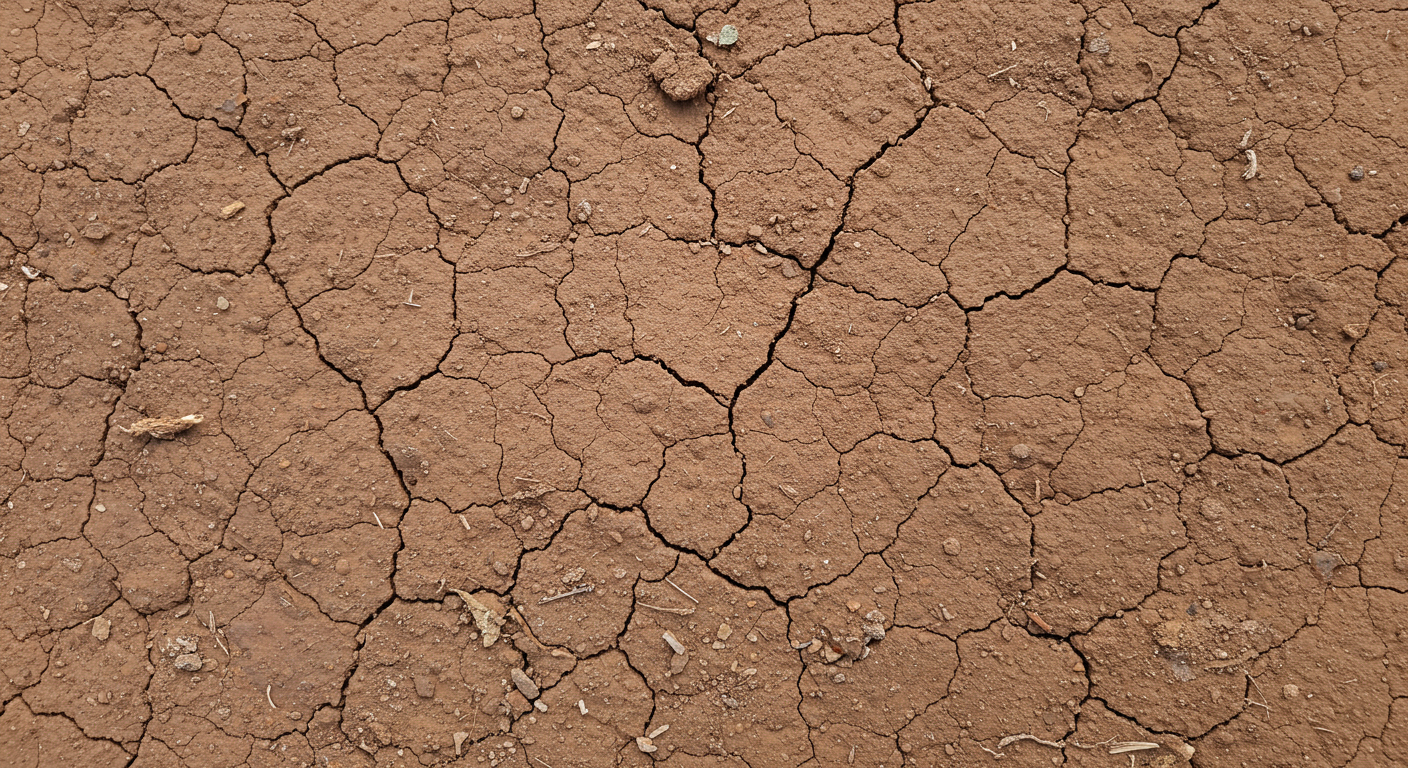
| Soil becomes brick-hard when dry | High clay content plus weak structure or low organic inputs may be restricting root penetration between wet periods. |
| Plant wilts while soil is visibly wet | Do not assume drought. Root hypoxia, root disease, transplant damage, heat load, or another root-zone problem can reduce water uptake in wet soil. |
Test the Clay Before You Change It
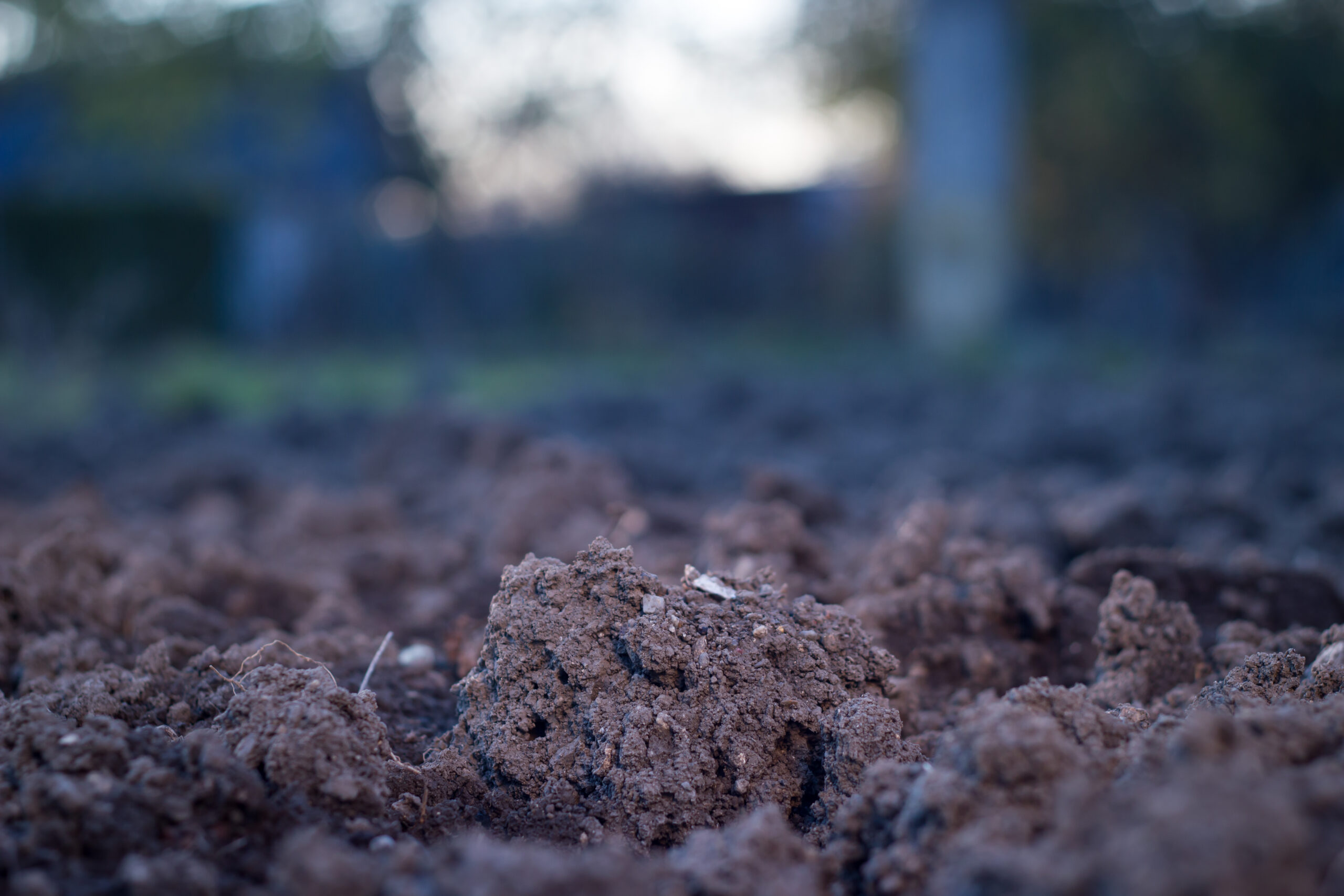
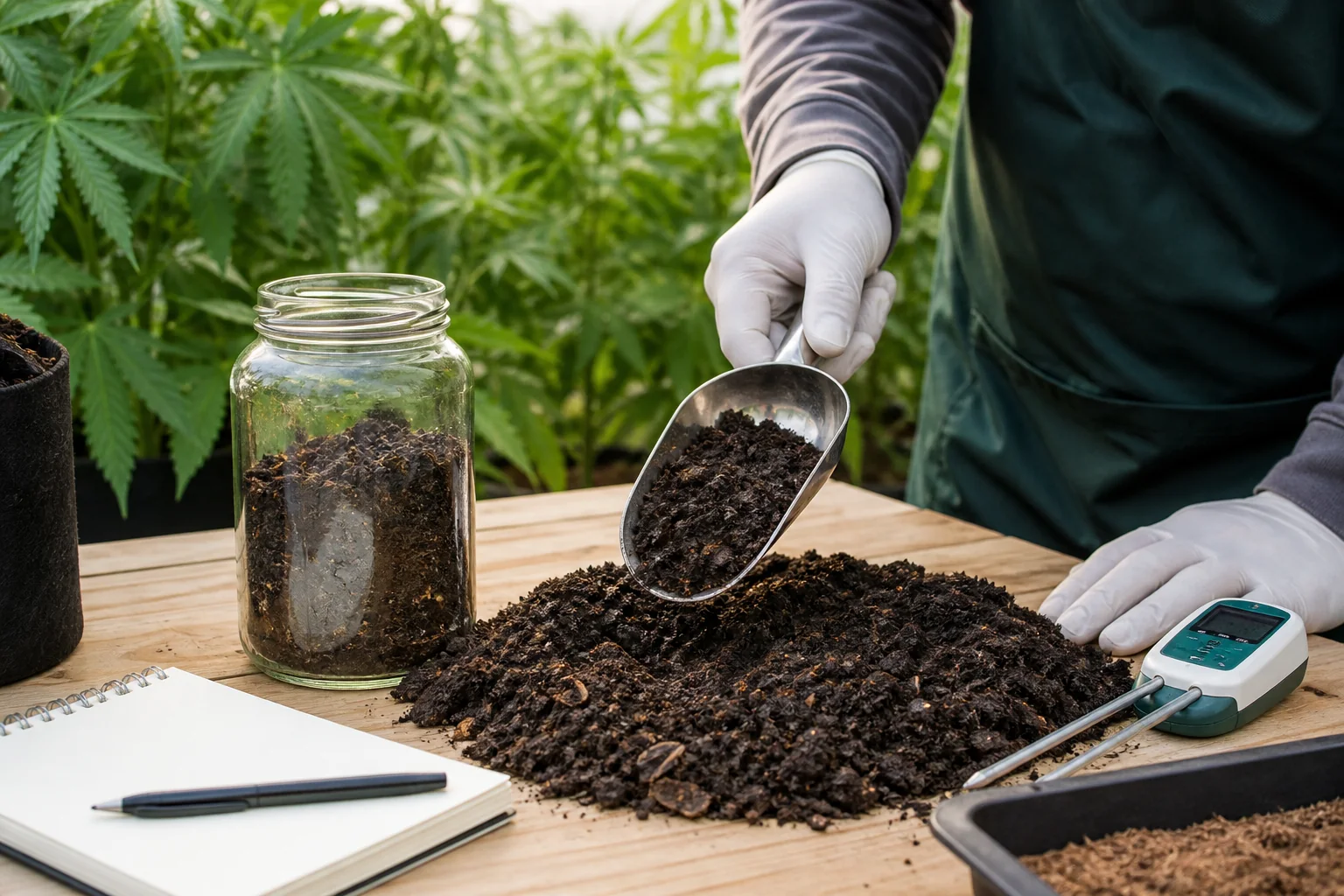
The best amendment plan begins with observations you can repeat. You do not need a laboratory for every decision, but you should know more than “the ground feels sticky.” Separate texture, structure, drainage, compaction, chemistry, and contamination risk. One problem can exist without the others.
Start with the hand-texture and ribbon check
Take moist soil from the mineral layer, not just loose mulch at the surface. Knead it until moisture is even. Grit suggests sand, smooth flour-like feel suggests silt, and strong stickiness with a durable ribbon suggests substantial clay. The ribbon test is a field estimate, not a laboratory particle-size analysis, but it is useful for deciding whether you are dealing with a genuinely fine-textured soil.
Repeat the check in more than one location and at more than one depth. A garden can have imported topsoil over native clay, river deposits over dense subsoil, or a compacted construction layer beneath a seemingly good surface.
Compaction is a change in pore space and soil strength
Compaction is not the same as having a high clay percentage. Traffic, equipment, repeated foot pressure, and working soil when wet can reduce large pore continuity and increase mechanical resistance even when the soil texture has not changed.
Use a spade profile instead of diagnosing from the surface
Dig a narrow inspection pit or spade slice where it is lawful and safe to do so. Look at the side wall. Are there roots throughout the profile or do they turn sideways at one depth? Does the soil break into aggregates, or does it come out as large smooth blocks? Are there gray, bluish, or mottled zones that may indicate prolonged wetness? Does water seep into the hole from the side after the surface appears dry?
A screwdriver, soil probe, or penetrometer can add information about resistance, but soil moisture strongly affects the reading. Clay becomes much harder when dry and much softer when wet. Compare locations at similar moisture rather than treating one resistance number as a universal cannabis threshold.
Pro Tip: Compare a suspected compacted zone with a nearby area that supports healthy vegetation. The contrast is often more useful than one isolated number.
Observe drainage after real rain, not only after a small test pour
A small infiltration test tells you how water enters one patch under one moisture condition. A storm reveals landscape drainage, low spots, runoff from neighboring surfaces, and whether the profile remains saturated after the rain stops. If possible, inspect the site during rain, a few hours afterward, the next morning, and again after a dry day.
Mark where puddles form and how long they persist. Push a clean probe or narrow trowel into the soil at the same locations to compare wetting depth. If the site repeatedly stays saturated while nearby ground drains, the problem may be landscape position as much as texture.
“The top 10 cm dries and cracks, but deeper soil is still sticky. Should I water because the surface looks dry?”
Question sent by: CedarAndSoil, via contact form.
Not from surface appearance alone. Clay can dry and crack at the top while deeper soil still holds substantial water. Check moisture at the active root depth and use plant response plus profile moisture to decide whether irrigation is actually needed.
Send a representative soil sample when chemistry matters
Clay soils often have substantial nutrient-holding and buffering capacity, but that does not guarantee balanced fertility or suitable pH. A laboratory test can help distinguish a physical problem from a chemical one. If the site has an unknown urban, industrial, roadside, demolition, or fill history, contamination testing may be more important than a routine fertility package.
Do not take a handful from the worst puddle and treat it as representative of the whole bed. Use the laboratory’s sampling instructions and keep abnormal zones separate when the purpose is diagnostic comparison. The exact handling depends on the test being ordered.
Decide Whether to Improve the Ground or Build Above It
Not every clay site deserves the same amount of rehabilitation. Some clay loams are productive garden soils that only need better structure management. Other sites sit in a depression, contain compacted subsoil, flood after storms, or remain plastic for days. In those conditions, spending a season adding products to one planting hole may be less reliable than changing the root-zone geometry.
Use native ground when the profile can drain and roots can escape the planting area
Direct in-ground planting makes sense when the soil accepts water, the root zone re-aerates after rain, contamination risk is acceptable, and there is no severe restrictive layer close to the surface. Cannabis can exploit a large soil volume in this system, and clay’s moisture and nutrient retention can reduce irrigation volatility during hot periods.
Improve the rooting area broadly rather than creating a small pocket of luxury potting mix. If the surrounding soil remains dense, roots eventually encounter that boundary. Whole-bed improvement, surface organic inputs, reduced traffic, and long-term biological activity are more useful than a narrow amended hole.
Master Advice: A planting hole is not a drainage system. If the surrounding clay cannot accept or move water, a softer hole inside it does not remove the site limitation.
Use a mound or raised bed when elevation solves the main water problem
Raising the crown of the root zone above surrounding grade can provide more aerated rooting volume while the lower native soil remains clay-rich. This is often useful on flat, slowly draining ground where rainfall repeatedly saturates the upper profile. The bed still needs a route for excess water to leave the site. A raised box sitting over an impermeable depression can remain wet if runoff has nowhere to go.
Abrupt interfaces also matter. Extension guidance warns that sharply different textures can change water movement at the boundary. Where appropriate, transition the raised material into the surface below rather than creating a perfectly distinct layer over compacted clay. The exact construction depends on site drainage and the materials being used.
Raise the effective root zone when the site repeatedly saturates
Use a broad mound or properly designed raised bed when elevation gives roots a larger aerated zone and the site has a real outlet for excess water.
Dig a deep bowl and fill it with loose mix
A highly amended pocket inside dense clay can create a sharp interface and does not fix the drainage behavior of the surrounding profile.
Use containers when the native soil is a poor risk to rehabilitate
A container can be the more rational choice when the site has severe clay compaction, uncertain contamination, a shallow restrictive layer, or drainage that cannot be corrected without major earthwork. Containers let you choose a medium designed for container physics rather than forcing native garden clay into a pot.
Do not fill containers with heavy native clay soil and then add a few handfuls of perlite. Container depth, wall effects, and the lack of a continuous ground profile change water behavior. Use a proper container medium if you choose the container route.
Tip: Choosing a raised bed or container is not “giving up” on the soil. It is a root-zone design decision when site drainage or contamination is a stronger constraint than the value of growing directly in native ground.
Do not bring unknown outdoor clay into an indoor grow
Native soil can carry insects, weed seeds, plant pathogens, unknown residues, and contaminants. Soil that works acceptably outdoors is not automatically suitable for an indoor container. Keep native-ground rehabilitation and indoor-media formulation as separate decisions.
Unknown native soil needs a contamination history check before cultivation
Dark color, worms, or good texture do not rule out lead, petroleum residues, construction fill, pesticide history, or other contamination. If previous land use is uncertain, choose appropriate laboratory testing before treating the site as a clean growing area.
Improve Clay as a Root-Zone System
Clay improvement works best when several small management decisions support the same goal: protect aggregation, add appropriate organic inputs, reduce compaction, keep the surface covered, provide a drainage path, and irrigate at a rate the soil can accept. One amendment cannot substitute for the system.
Organic matter helps structure, but more is not always better
Mature compost and other stable organic inputs can support aggregation and biological activity, helping clay particles form larger structural units with more useful pore space between them. This can improve infiltration and aeration over time. The effect is not instantaneous, and the quality of the compost matters.
Do not assume a thick layer of nutrient-rich compost is harmless. Excessive compost can raise phosphorus, salts, or other nutrients, and some composts have poor maturity or contamination history. Use soil testing and product analysis where needed. The physical goal is better structure, not maximum compost percentage.
Field Advice: Spread improvement across the rooting area. A uniformly improved bed gives roots somewhere to go; an isolated soft pocket surrounded by hard clay mainly postpones the boundary problem.
Do not add a small amount of sand as a clay shortcut
This is one of the most persistent clay-soil myths. Sand particles are much larger than clay particles. When modest amounts are mixed into heavy clay, the smaller clay particles can pack around the sand and reduce useful pore space instead of creating a loose loam. Multiple university extension programs explicitly warn that small sand additions can produce a denser, concrete-like material.
Changing a heavy clay texture toward a truly sandy soil would require such a large mineral-volume change that it is usually impractical for a home garden. If you need a different texture quickly, building a raised bed with an appropriate soil blend is generally more controllable than trying to convert the native clay mineral fraction.
Do not “fix” heavy clay with a few bags of sand
Small sand additions can reduce porosity and increase compaction risk. Improve structure with organic matter and management, or replace the rooting environment through a raised bed when a major texture change is required.
Use gypsum only when the soil chemistry gives you a reason
Gypsum is often marketed as a universal clay breaker. That is too broad. Calcium amendments can help specific sodic soils where excess sodium has damaged aggregation, but gypsum is not automatically useful simply because a soil contains clay. It also does not lower soil pH in the way elemental sulfur can under appropriate conditions.
If dispersion or sodicity is suspected, laboratory testing is the right starting point. Adding gypsum without evidence can add material without correcting the actual structural cause.
Important: “Clay” is a texture description. “Sodic” is a chemical condition. Do not use a sodic-soil amendment merely because the soil feels sticky.
Avoid working clay while it is plastic and wet
Wet clay is highly vulnerable to smearing and compaction. Tilling, digging, walking, or driving equipment over it when it is plastic can collapse larger pores and leave smooth glazed surfaces. Those structural injuries can persist after the surface dries.
A simple field check is to squeeze a handful. If it smears, shines, and deforms like modeling clay rather than breaking into crumbs, delay cultivation. The workable moisture window can be short, especially in spring.
Work clay when it is moist enough to crumble
Choose a moisture condition where aggregates separate without smearing. Protect the same areas from repeated foot traffic once the bed is prepared.
Till or stomp wet clay into shape
Wet-working can destroy pore structure, glaze planting-hole walls, and create the compaction problem you were trying to solve.
Keep the surface covered
Mulch reduces raindrop impact, slows crust formation, moderates surface drying, and reduces repeated wet-dry extremes at the top of the soil. Organic surface residues also contribute carbon as they decompose. In permanent outdoor beds, cover crops can provide living roots and biological channels when the season and legal setup allow them.
Mulch should not be used to hide a saturated bed. If the profile already stays waterlogged, reduce the water problem first. A surface layer can conserve moisture so effectively that an already wet root zone dries even more slowly.
Pro Tip: In heavy clay, use mulch as a surface-structure tool and moisture buffer, then confirm the deeper root zone is actually drying between wet events.
Think about paths, not just amendments
Every time a grower walks through a wet clay bed, the same soil receives repeated pressure. Design permanent access paths so the rooting area is not also the traffic area. If you can reach the plant from the edge, the soil supporting the roots can remain comparatively undisturbed.
This is a low-cost change that often matters more than another bagged amendment. Structure can take time to build and only minutes to damage when the soil is wet.
“Would adding lots of perlite to my outdoor clay make it behave like potting soil?”
Question sent by: PrairieRoots, via Facebook page.
Not reliably. A few aeration particles do not convert the native profile into a container substrate, and mixing enough material to change the whole rooting volume can become impractical. Improve the bed broadly with structure-building practices or use a raised bed with a designed mix when you need a different root environment quickly.
Irrigate Clay by Response, Not by Calendar
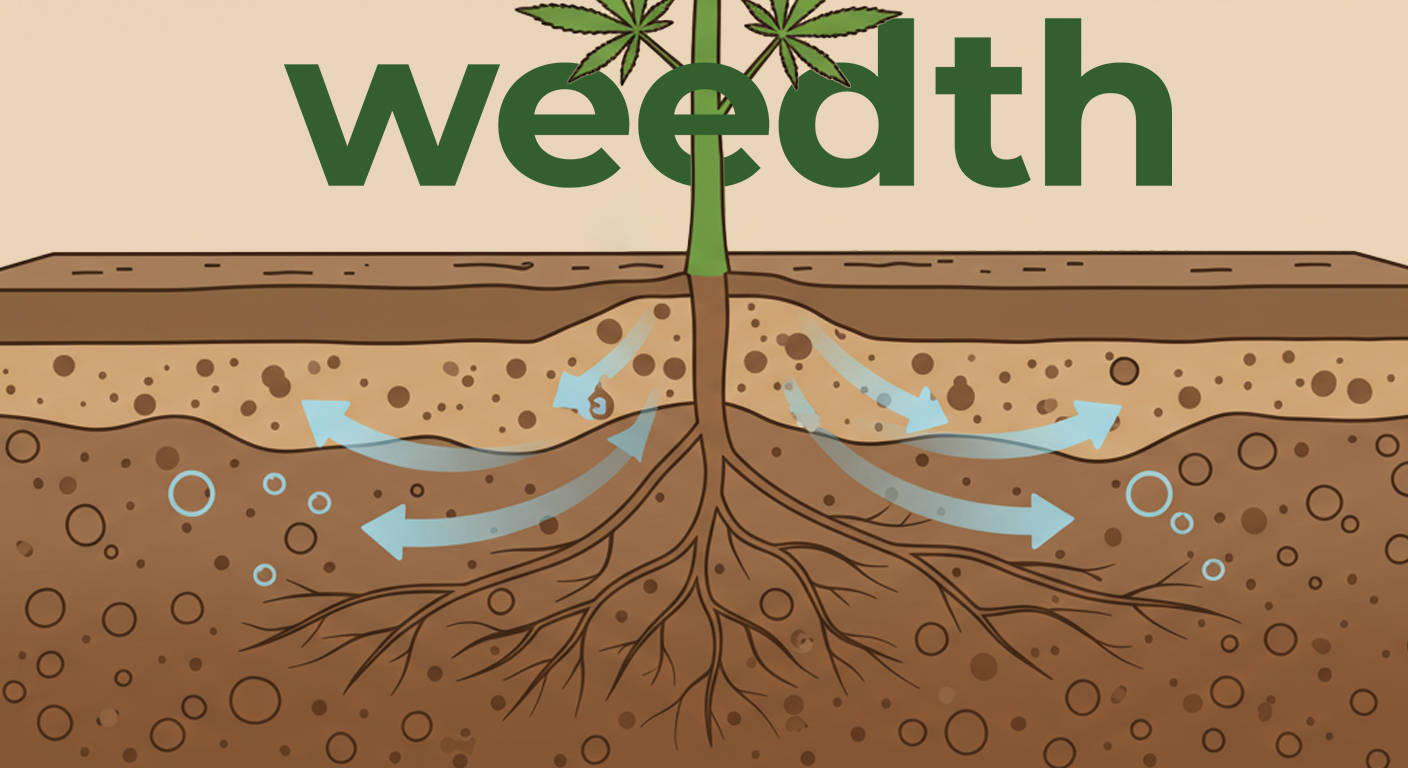
Clay’s water-holding capacity changes irrigation strategy. A schedule that works in a fabric pot or sandy bed can keep clay saturated. At the same time, dry clay can become hard, crack, and shed or channel the first irrigation. The useful target is a controlled wetting and dry-down cycle through the active root zone, not a fixed number of watering days per week.
Apply water slowly enough for the surface to accept it
If water ponds or runs away from the stem before entering the bed, increasing flow rate only wastes more water. Drip irrigation or multiple low-flow emitters can apply water at a rate closer to the infiltration capacity of the soil. Pulse irrigation can also help when a dry clay surface initially resists wetting: apply a smaller amount, allow it to soak, then return with the remaining irrigation if the deeper profile actually needs it.
Do not copy emitter spacing from a sandy soil without checking the wetting pattern. Clay often spreads water laterally more than coarse soil. Dig a small observation slice after an irrigation to see whether the wet zone is reaching the root area evenly.
Tip: The correct emitter setup is the one that produces the wetting pattern you intended in your soil, not the one that looks symmetrical from above.
Check depth before repeating irrigation
The surface may dry while deeper clay remains wet. Use a probe, narrow trowel, moisture sensor appropriate to the soil, or repeated hand checks at a representative depth. A sensor should be interpreted against your own soil because clay mineralogy, salinity, installation quality, and sensor type can affect readings.
Record irrigation date, approximate volume, rainfall, and the next time the root zone reaches your chosen rewatering condition. Over several cycles you will learn whether the bed needs less frequent but deeper irrigation, smaller pulses, additional emitters, or a drainage correction rather than more water.
Remember: Calendar watering can hide a clay problem. If the soil has not recovered air space, the next scheduled irrigation simply restarts saturation.
Separate plant demand from poor root function
A wilted plant in wet clay does not necessarily need more water. High atmospheric demand can cause temporary midday wilt, but root hypoxia, root disease, transplant injury, and heat stress can also reduce water uptake. Check the root zone before reacting.
If leaves remain limp after the heat of the day has passed while the soil is saturated, stop treating the symptom as drought until you have inspected drainage and root condition. Adding water to a low-oxygen root zone can intensify the stress.
Check moisture where active roots are growing
Use depth checks, recent rainfall, irrigation volume, and plant response together before deciding the next watering.
Water because the clay surface looks pale and cracked
The upper layer can look dry while deeper clay remains wet enough to delay the next irrigation.
After heavy rain, suspend the irrigation logic and reassess
A storm can refill the profile far beyond the normal irrigation depth. Check low points, the depth of saturation, and whether water is entering the bed from adjacent roofs, paths, slopes, or compacted surfaces. The correct response may be no irrigation for several days, temporary surface diversion, or a longer-term drainage change.
Do not repeatedly poke deep holes beside the stem as a drainage hack. A few holes do not fix the profile and can damage roots. Improve the soil system or the site drainage route instead.
Do not respond to wet-soil wilt with automatic extra irrigation
When clay is saturated, the problem may be reduced root oxygen or root damage rather than lack of water. Confirm root-zone moisture and drainage before adding more.
Common Clay-Soil Failures and Misdiagnoses
Clay symptoms are easy to misread because water, nutrition, compaction, and root health interact. A grower sees yellowing and reaches for fertilizer. The real issue may be low oxygen. Another grower sees cracked ground and increases irrigation frequency even though the deeper profile has not dried. The correction starts with naming the mechanism correctly.
Compaction mistaken for clay texture
A compacted clay bed can improve when traffic is excluded and structure is rebuilt. The clay percentage has not changed. If you call the problem “too much clay,” you may keep buying amendments while continuing the traffic pattern that destroys pore space.
Weedth Verdict: If the soil works well where nobody walks and poorly along the access route, management pressure is part of the diagnosis.
Waterlogging mistaken for nutrient deficiency
Low root-zone oxygen can reduce root function and nutrient uptake. Leaves may pale, growth may slow, and the plant may appear underfed even when nutrients are present in the soil. Adding more fertilizer can raise salinity without solving the oxygen problem.
Compare the symptoms with soil moisture, drainage, root condition, and recent weather. If the problem follows prolonged saturation, restore the physical root environment before making large nutrient corrections.
Hard dry clay mistaken for permanent infertility
Clay can become extremely hard when dry, especially when structure is weak. That does not mean the soil lacks nutrient-holding capacity. It means roots may not have physical access to the water and nutrients held in the matrix. Organic inputs, biological channels, surface protection, and avoiding destructive cultivation can improve the situation over time.
Field Advice: Separate “nutrients are present” from “roots can access the soil volume that contains them.” Physical access is part of fertility in practice.
Cracking mistaken for ideal aeration
Large shrinkage cracks allow air and water to move, but they are not automatically a sign of excellent structure. Severe cracking can expose roots, create uneven wetting, and concentrate irrigation flow. When the soil rewets, swelling may close those cracks again.
Stable granular structure is more useful than alternating between deep fissures and a dense saturated mass.
Gypsum used where sodium is not the problem
If the soil is not sodic or dispersive because of excess sodium, gypsum may not deliver the dramatic structural change the grower expects. A soil test can identify whether exchangeable sodium or salinity needs specific management. Without that evidence, the amendment is a guess.
Pro Tip: Before buying a “clay breaker,” ask what property it is supposed to change and what measurement shows that property is actually limiting your soil.
A small amended hole mistaken for whole-site improvement
Roots eventually reach the undisturbed clay. Water also crosses the boundary between the amended zone and native soil. If the surrounding profile remains compacted or saturated, the planting hole cannot function as an independent pot indefinitely.
| Failure Pattern | Better Diagnostic Question |
|---|---|
| Yellow plant in wet clay | Is the root zone oxygen-limited or diseased before assuming the soil needs more fertilizer? |
| Surface cracks after hot weather | What is the moisture condition at active root depth, and are cracks creating uneven wetting? |
| Water disappears quickly | Did it wet the root-zone matrix or run down preferential cracks? |
| Raised bed remains wet | Does the bed have an outlet, or is water accumulating above a restrictive native layer? |
| Roots stay in amended hole | Is the surrounding clay mechanically restrictive or sharply different in texture and pore space? |
| Repeated poor growth after rain | How long does saturation persist, and does the pattern repeat in the same low area? |
Verify That the Root Zone Is Actually Improving
Clay improvement is easy to judge by appearance. Fresh compost makes a bed darker. Tilling makes the surface fluffy. A raised bed looks organized. None of those observations proves the root zone is functioning better. Verification should repeat the same measurements that identified the problem.
Repeat infiltration and wetting-pattern observations
Use the same approximate area, similar starting moisture, and similar water application. Does water enter with less ponding? Does the wetting front spread through the root zone more evenly? Are preferential cracks less dominant? Record the change rather than relying on memory.
Do not expect clay texture to disappear. Success looks like better behavior: more stable aggregates, easier water entry, fewer glazed surfaces, more root penetration, and faster recovery of air-filled pore space after saturation.
Remember: The verification target is not “soil feels fluffy today.” It is that the bed repeatedly handles water and root growth better under real weather and irrigation.
Recheck the profile after heavy rain
The best drainage test for an outdoor clay bed is often the next substantial rain. Record where water stands, how deep the profile remains saturated, and how long it takes the main root zone to return to a moist but aerated condition. Compare with the same locations before the intervention.
If the top improved but the subsoil still stays saturated, the limiting layer may be deeper than the amendment zone. That is evidence to reconsider bed elevation, drainage routing, or the decision to grow in native ground.
Track root and plant response over time
Healthy new roots, stronger expansion into previously resistant soil, reduced wet-soil wilt, more stable watering intervals, and fewer recurring post-rain symptoms all support the conclusion that the root environment improved. Old damaged leaves will not necessarily recover, so judge the next growth rather than waiting for old tissue to become perfect.
If problems continue, change one major variable at a time where practical. For example, correct irrigation frequency first, then observe before adding another amendment. Multiple simultaneous changes make it hard to learn which correction mattered.
Master Advice: Keep a before-and-after record of the soil, not just the plant. Rainfall, irrigation, ponding time, moisture depth, resistance, and root observations turn clay improvement into evidence instead of a seasonal guess.
Use a simple verification timeline
| Checkpoint | Soil Status | Main Task | Risk / Check |
|---|---|---|---|
| Immediately after preparation | Structure is newly disturbed and may look better than it performs. | Record baseline depth, texture, amendments, bed geometry, and irrigation layout. | Do not declare success from a loose surface alone. |
| After first full irrigation | Initial wetting pattern becomes visible. | Check ponding, runoff, wetting depth, and lateral spread. | Preferential cracks or dry pockets may still exist. |
| 24-72 hours later | The profile should be moving from wet toward aerated conditions. | Check deeper moisture, softness, smell, and whether the bed remains plastic. | Persistent saturation points to deeper drainage limits. |
| After a substantial rain | Landscape and subsoil limits are exposed. | Map standing water, saturation depth, runoff inputs, and recovery time. | A raised or amended surface may still sit over a restrictive layer. |
| 2-4 weeks into active growth | Root expansion and irrigation demand become easier to interpret. | Compare new growth, watering interval, and root-zone observations with baseline. | Do not judge recovery from old damaged leaves alone. |
| End of season | The bed has experienced repeated wet-dry cycles and traffic. | Inspect root distribution, compaction, aggregation, and where water problems persisted. | Use the record to redesign the next season rather than repeating the same amendment blindly. |
Weedth Verdict: If the soil still saturates at the same depth for the same length of time after your intervention, the root-zone limitation has not been solved, even if the surface looks much better.

Common Questions About Growing Cannabis in Clay Soil
Can cannabis grow directly in clay soil?
Yes, when the clay soil has workable structure, adequate drainage, acceptable chemistry, and enough rooting depth. Clay itself is not a disqualifier. Heavy compaction, prolonged saturation, contamination, or a restrictive landscape position may make direct in-ground planting a poor choice.
Should I add sand to clay soil for cannabis?
Not as a small-volume shortcut. University extension guidance warns that modest sand additions to heavy clay can reduce porosity and create a denser mixture. Improve structure with appropriate organic matter and management, or use a raised bed with a designed soil blend if a different texture is needed quickly.
Is gypsum good for all clay soil?
No. Gypsum has a specific role in reclaiming sodic soils because calcium can replace sodium on exchange sites. It is not a universal clay loosener and it is not a general pH-lowering amendment. Test the soil before using it for that purpose.
How often should cannabis in clay soil be watered?
There is no universal schedule. Clay may hold water much longer than a sandy soil or container mix. Rewater from the root-zone condition, plant demand, rainfall, and the previous irrigation response. Surface cracking alone is not enough to decide.
Are raised beds better than native clay?
They can be, especially when native ground remains saturated, is severely compacted, or has an uncertain contamination history. A raised bed is not automatically superior. It still needs a suitable soil blend, an outlet for excess water, and irrigation that matches its faster drying behavior.
Can I improve clay soil in one season?
You can improve drainage geometry, traffic control, surface management, and the rooting environment quickly. Stable biological structure often develops over longer periods. If the site limitation is severe and the grow must proceed this season, a raised bed or container can provide more control while the native soil is rehabilitated separately.
Build the Clay-Soil Plan Before Planting
The easiest clay problem to manage is the one identified before a large plant depends on the site. Walk the bed after rain. Inspect more than the surface. Decide where water will go. Separate texture from compaction. Test chemistry when needed. Then choose direct ground, mound, raised bed, or container from the evidence.
The checklist below is intentionally short enough to use before planting and detailed enough to prevent the most common clay-soil shortcuts.
Before You Commit a Cannabis Plant to the Site
- Confirm that the soil is actually clay-rich rather than simply compacted or wet.
- Inspect texture and structure at more than one depth.
- Observe infiltration, percolation, ponding, and drainage after real rain.
- Check for a restrictive layer, low landscape position, or runoff entering from outside the bed.
- Review previous land use and test for contamination when the history is uncertain.
- Use a representative laboratory test when pH, salinity, fertility, or sodicity may influence the plan.
- Do not add sand as a small-volume clay fix.
- Do not use gypsum unless the soil chemistry supports that decision.
- Add mature organic inputs at a rate that fits the soil test and rooting area, not as a blind maximum.
- Avoid tilling, digging, or walking on clay while it is plastic and wet.
- Choose permanent paths so the main rooting area is protected from traffic.
- Use a mound, raised bed, or container if the native profile cannot drain reliably.
- Set irrigation from root-zone response rather than a fixed calendar.
- Record a baseline so improvement can be checked after irrigation, rain, and several weeks of growth.
Pro Tip: If you cannot explain where excess rainwater will leave the root zone, the clay plan is not finished yet.
Make Clay Work by Improving Structure, Not Chasing Texture
Clay soil can support a productive cannabis root zone when it is structured, aerated, and positioned so excess water can leave. Its ability to hold moisture and nutrients can be an advantage. The same fine texture becomes a liability when compaction, saturation, or a restrictive subsoil disconnects roots from oxygen and usable pore space.
The strongest correction is rarely one product. It is a sequence: identify the actual texture, inspect the profile, observe water under real conditions, protect the soil from wet-working and traffic, add suitable organic matter, choose the right root-zone geometry, and then verify that drainage and root penetration improved. If the native clay cannot meet those requirements without major reconstruction, growing above it is a valid design choice.
The practical decision is simple: keep clay when it behaves like a functioning soil; bypass it when the site keeps behaving like a basin. Let repeated water and root observations decide which side of that line your garden is on.
Share this article
A quick overview of the topics covered in this article.
Follow us
Latest articles
October 25, 2026
October 25, 2026
October 25, 2026