
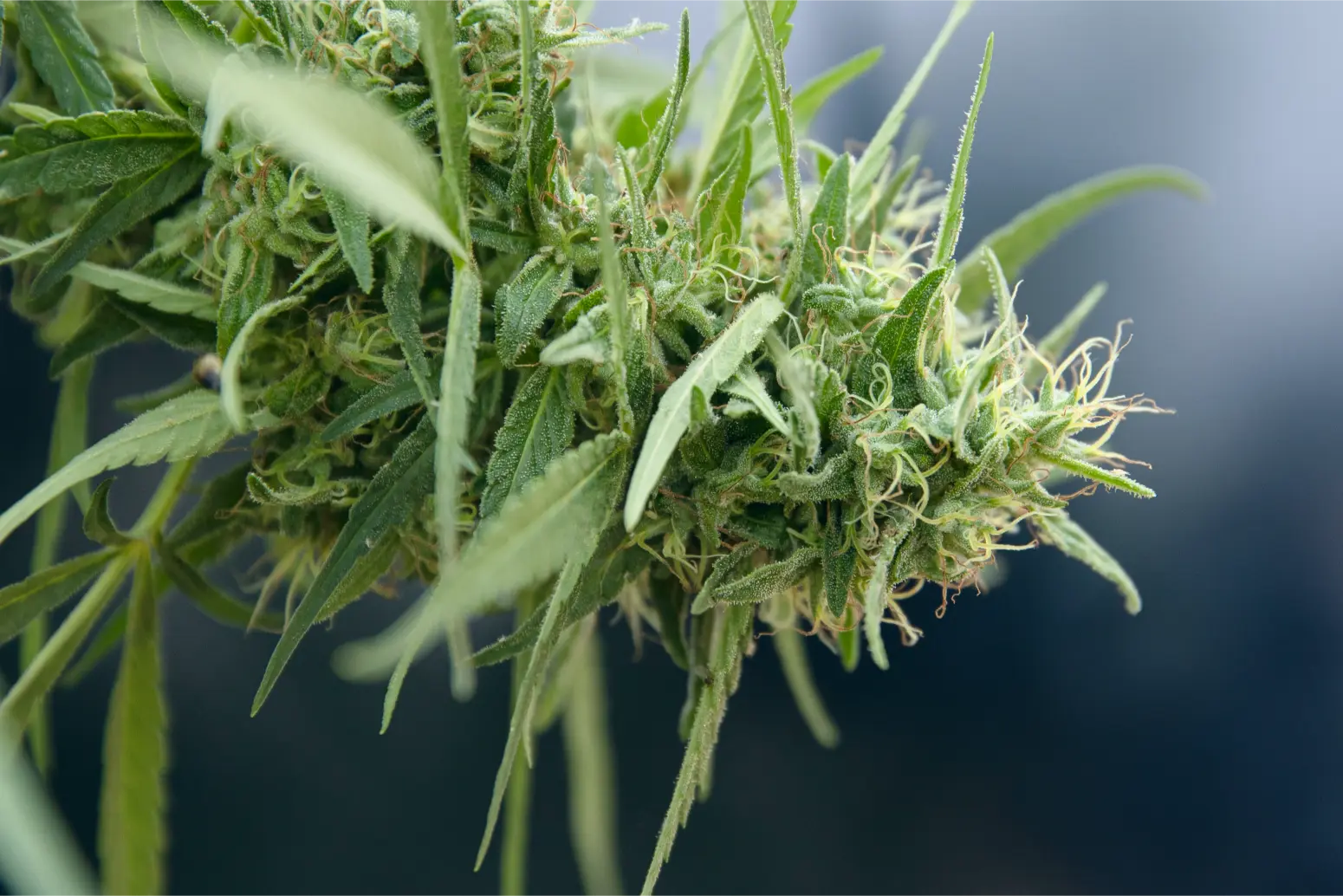
Headband
Headband is a strain built around tension between two growth habits. Its Sour Diesel side can push height, long laterals, and a more extended flowering rhythm, while its OG Kush side pulls the plant back toward denser flower, heavier resin, and a more compact finish. That combination is why Headband can begin as a manageable hybrid and then become much harder to organize once the transition stretch opens the plant and the side branches start competing for the same upper light.
The name is usually connected to OG Kush and Sour Diesel, and the finished flower reflects both sides clearly. Diesel, lemon, earth, pine, and pepper sit over a creamy or slightly sweet background, while the effect often arrives slowly enough that inexperienced users can mistake the first few minutes for a mild dose. Then the head pressure, euphoria, and body relaxation build together. The same delayed character appears in the grow: Headband often keeps developing quality after a faster hybrid would already look finished.
For cultivation, the central issue is not simply height. The grower has to control stretch and lower-canopy congestion without stripping away the late-filling flower sites that make the cultivar productive. A plant that is allowed to stretch upward without branch planning produces shaded lower growth and uneven tops. A plant that is over-pruned too early can lose the long lateral architecture that converts the Sour Diesel influence into usable flower mass.
Headband also rewards patience at the end. Nine to ten weeks is a common flowering range, but individual expressions can take longer, especially when they lean toward the Diesel side. Dense, sticky buds may appear visually complete before the aroma has fully moved from green citrus into the deeper fuel, earth, and pine profile that defines good cured flower.
This makes Headband a useful strain for growers who already understand basic canopy management and want to refine timing. The plant is not exceptionally fragile. The challenge is knowing when to spread it, when to thin it, when to stop training, and when to let the final swelling finish without turning the lower canopy into a humid tangle.
Strain Features
| Feature | Details |
|---|---|
| Strain Type | Balanced to slightly indica-leaning hybrid; phenotype dependent |
| Genetic Profile | OG Kush × Sour Diesel |
| THC | Commonly reported in the high teens to mid-20% range; batch dependent |
| CBD | Usually low |
| Dominant Terpenes | Beta-caryophyllene, limonene, and myrcene recur frequently |
| Flavor / Aroma | Diesel, lemon peel, earth, pine, pepper, pungent skunk, occasional creaminess |
| Effect Character | Slow-building euphoria and head pressure followed by relaxed, tingly body effects |
| Flowering Time | Commonly around 9 to 10 weeks; Diesel-leaning expressions may take longer |
| Outdoor Harvest | Often October in the Northern Hemisphere, climate and phenotype dependent |
| Grow Difficulty | Moderate; stretch, lower-canopy airflow, and finish timing deserve attention |
| Stretch | Moderate to strong in many expressions |
| Plant Architecture | Medium to tall with useful lateral branching and an open-to-moderate canopy early |
| Bud Density | Medium-dense to dense, resinous, sticky |
| Training Compatibility | Topping, LST, selective SCROG, and lower-branch cleanup all make sense |
| Mold Risk | Moderate when lower branches remain crowded or late flowers become dense |
| Odor Intensity | Strong in late flower and drying |
| Best Time of Use | Late afternoon through evening for many users |
Genetic Lineage
Headband is most consistently described as OG Kush crossed with Sour Diesel. The value of that lineage is obvious in the way the plant behaves. Sour Diesel contributes extension, long lateral branches, a longer finish, and the sharp fuel-citrus side of the aroma. OG Kush contributes denser floral stacking, resin, pine and earth, and a stronger physical landing.
The result is not perfectly balanced in every plant. Some Headband expressions look more OG-like, with tighter node spacing and heavier, chunkier flowers. Others run longer between nodes and hold narrower leaves, then continue adding flower mass deeper into bloom. That variation affects training and harvest more than the simple hybrid label suggests.
Growers should be careful with direct title variants such as 707 Headband, 818 Headband, and other regional Headband lines. They may share related ancestry or a similar fuel-forward profile, but they are not automatically the same cultivar. This profile focuses on the classic OG Kush × Sour Diesel Headband identity.
The lineage also explains why Headband often seems more vigorous after topping than a very compact indica. Removing the main apex can release useful side branches, but those branches may keep elongating during transition. The grower gains more flowering surface, yet also creates a need for earlier height planning and later support.
Effect Breakdown
Headband is often described as slow to reveal its full intensity. A small dose can begin with a mild change in pressure around the forehead and eyes, a lift in mood, and increased engagement with music, conversation, or a focused task. The early phase may feel cleaner and more functional than the final effect suggests.
As the effect builds, the characteristic head-pressure sensation becomes more obvious for many users. It is not a medical sign or a guaranteed response, but enough people report a band-like tension or tingling around the scalp that the name has become part of the strain's identity. Euphoria and sensory interest often increase at the same time.
The body phase develops gradually. Muscles loosen and the user becomes more comfortable sitting still, but moderate doses do not always create full couch-lock. Experienced users may remain active, while new users can become mentally foggy or physically heavy.
Higher doses turn the experience inward. The same relaxed focus can become spacey, short-term memory can weaken, and the body effect can make demanding tasks unattractive. Dry mouth and dry eyes are common. Headache or uncomfortable pressure is reported by a smaller group of users, especially with excessive dosing.
Because the onset can feel incomplete at first, the practical caution is to wait before redosing. Headband is easy to overshoot when a user assumes the first ten minutes represent the full effect.
Tolerance changes the profile strongly. A high-tolerance user may emphasize focus and mood, while a low-tolerance user experiences the same batch as heavy and disorienting. This is one reason user reports can disagree without either being false.
The reported forehead pressure is best treated as a subjective marker rather than a biological mechanism. It is useful as part of the strain's cultural identity, but not everyone experiences it and it should not be used to verify genetics.
Flavor & Aroma Profile
Headband is built around fuel, but good flower should not taste like raw solvent. The upper layer is usually lemon peel, sour citrus, or fresh pine. Underneath is diesel, damp earth, pepper, and a pungent skunk quality that becomes louder when the bud is broken apart.
Some phenotypes add a creamy or lightly sweet middle note. That softer layer is useful because it separates Headband from a harsher straight diesel profile. When the flower is well cured, the inhale can begin with lemon and pine, move into earthy fuel, and finish with pepper and a smooth oily coating on the palate.
The Sour Diesel influence becomes clearer after grinding. Unbroken buds can smell earthy and pine-heavy, but crushed resin releases a sharper sour-fuel character. OG-leaning plants may be denser and more pine-dominant, while Diesel-leaning plants can be louder, more acidic, and slightly more open in flower structure.
Fast drying hurts Headband in a predictable way. The lemon and fresh pine disappear first, leaving generic diesel, hay, and earth. A slower controlled dry preserves the contrast between bright citrus and the darker fuel base.
Average Headband can still be potent, but exceptional Headband tastes layered rather than merely loud. The grower should be able to identify citrus, fuel, earth, pine, and pepper as separate impressions rather than one harsh pungent note.
Dominant Terpenes
| Terpene | Aroma Role | Cultivar Relevance | Scientific Caution |
|---|---|---|---|
| Beta-caryophyllene | Pepper, dry spice, wood | Fits the peppery diesel base and commonly appears high in tested Headband flower | CB2 activity does not make strain-specific medical outcomes predictable |
| Limonene | Lemon peel, citrus | Matches the bright sour-citrus layer inherited from the Diesel side | Its presence does not guarantee stimulation or mood elevation |
| Myrcene | Earth, herbs, musk | Supports the earthy background and may be prominent in more relaxing batches | Myrcene alone cannot explain sedation |
| Pinene | Pine needles, resin | Can sharpen OG-like pine notes in some phenotypes | Often secondary and batch dependent |
Headband chemistry varies enough that no single terpene order should be treated as universal. Caryophyllene, limonene, and myrcene are recurring anchors, while pinene and other secondary compounds help determine whether a batch leans more citrus-fuel or pine-earth.
Terpenes describe aroma more reliably than psychoactive effect. Headband's slow-onset head pressure and relaxation are whole-flower experiences shaped by cannabinoids, dose, tolerance, and chemistry together.
Indoor vs. Outdoor Growing
| Decision Point | Indoor | Outdoor |
|---|---|---|
| Stretch | Requires height planning before flip; tops may continue moving after an indica would slow | Outdoor height is easier to accommodate, but long laterals need space |
| Lower Canopy | Selective cleanup improves airflow and premium flower percentage | More lower branches can stay productive if sun reaches them from the side |
| Flowering Length | Nine to ten weeks is common, so room scheduling should not assume a fast finish | Cool autumn weather can become the main limitation |
| Humidity | Interior airflow matters once dense late flowers form | Dew and autumn rain increase risk on mature colas |
| Training | Topping plus LST or an open SCROG works well | Early topping and branch spacing are usually enough |
| Flavor Control | Strong advantage through stable late-flower heat and controlled drying | Sun-grown complexity can be excellent, but hot harvest weather strips citrus quickly |
| Best Fit | Growers comfortable managing moderate-to-strong stretch | Warm, dry, long-season climates |
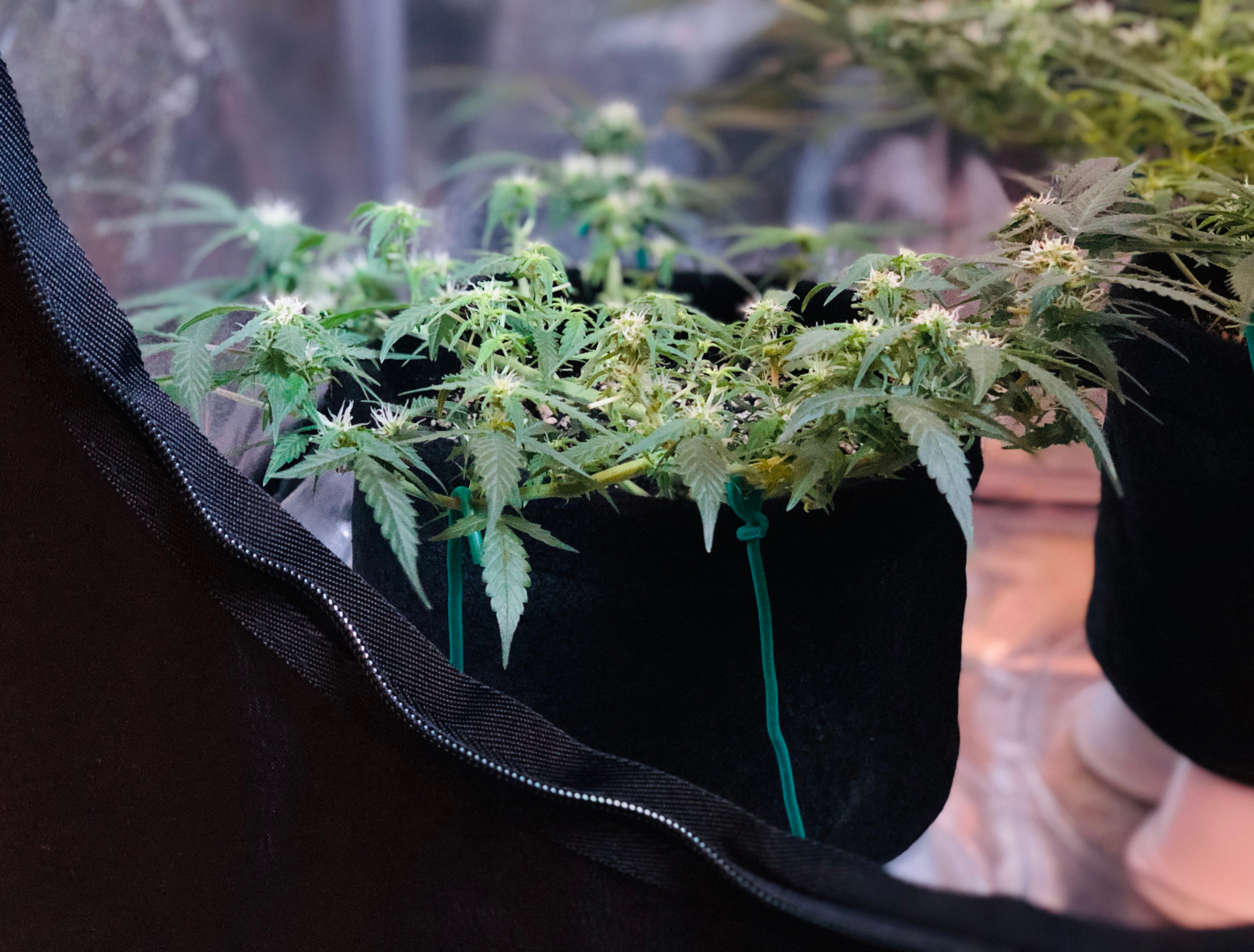
Indoor Headband should be flipped with the future stretch already in mind. A screen or branch tie system helps convert vertical movement into a wide productive canopy, but the screen should remain open enough for access below.
Outdoors, the same stretching tendency is less problematic and can become an advantage. Long laterals receive light from changing sun angles, so lower branches that would be removed indoors may produce worthwhile flower outside.
The outdoor limitation is finish timing. Diesel-leaning plants that want extra time can collide with cool, wet autumn weather. In a humid climate, the ability to finish indoors may be worth more than the potential size advantage of outdoor growth.
Headband is also a useful example of why indoor and outdoor harvest windows should not be assumed identical. Outdoor sunlight can keep lower branches productive and may allow a larger root system, but seasonal light decline and cool nights can slow the final push. An indoor clone that consistently finishes in a certain window may need a slightly different calendar outdoors.
For greenhouse production, ventilation should be treated almost like an indoor room. A covered structure protects from rain but can trap exactly the humidity that Headband's lower branching struggles with. Sidewall airflow and plant spacing remain essential.
Strain-Specific Grow Guidance
Build Width Before the Stretch Becomes Vertical
Top healthy plants early enough that the two new leaders and several side branches can establish before flower. Headband usually has enough vigor to recover, but topping immediately before the flip can produce an uneven transition.
Use low-stress ties to move the strongest laterals outward. The goal is a broad frame with several tops at similar height, not a perfectly flat plant. Leave enough vertical freedom for the Sour Diesel side to extend.
Treat the First Two Weeks of Flower as Structural Time
Headband's transition is the period when a manageable plant can become too tall. Keep redirecting flexible branches while internodes are still opening. Once stems harden, stop forcing them into small screen openings.
Do not wait for every branch to finish stretching before deciding which shoots are weak. Interior branches that remain far below the canopy can be removed while they are still small.
Keep the Lower Canopy Breathing
Headband is often specifically improved by clearing weak lower growth because its side branches can create a congested zone under the productive canopy. Remove inward shoots and small branches that cannot reach light.
The goal is not aggressive lollipopping. Strong lower laterals at the edge of the plant can still finish good flower. Remove based on light access and airflow, not height from the pot.
SCROG Should Spread Stretch, Not Trap Humidity
A screen works well because it turns Headband's branch extension into horizontal coverage. Leave some empty openings. A completely filled screen becomes difficult to inspect when sticky buds swell and lower foliage thickens.
A second support layer can be useful later if the branches become heavy. By late flower, the net should function more as support than as an active training surface.
Feed for Growth Rate, Not for the Diesel Reputation
Headband generally tolerates moderate feeding, but the Sour Diesel influence does not mean it needs constant high nutrient strength. Watch water use, tip condition, leaf color, and growth speed.
Do not let the stretch make the decisions
Excess nitrogen during transition can keep the lower canopy too leafy and delay the clean shift into flower. Once stretch is under control, nutrition should support bud development rather than continued vegetative density.
Do Not Keep the Root Zone Saturated During a Long Finish
A nine-to-ten-week plant spends enough time in flower for root-zone mistakes to compound. Repeated irrigation before adequate dryback reduces oxygen and can slow late swelling.
If the plant suddenly drinks less while leaves remain dark, check root-zone moisture and salt accumulation before adding more feed.
Light Distribution Matters More Than Chasing Extreme Intensity
The productive advantage of Headband is branch length. Use that by spreading tops into even light rather than concentrating all power on the tallest points.
Very strong upper light cannot rescue shaded interior sites. Structural spacing and a shallow flower zone create more premium bud than simply increasing intensity.
Harvest After the Aroma Finishes, Not When the Plant First Looks Done
Headband can appear frosty and dense before the full diesel-lemon profile has matured. Watch calyx swelling, reduction in fresh pistils, flower trichomes, and aroma together.
An earlier harvest tends to preserve more brightness and mental stimulation. A later mature window generally deepens body relaxation and fuel-earth character. Waiting too long in humid conditions is not worth the small theoretical gain.
How Much Vegetative Time Does Headband Really Need?
Headband does not need a long vegetative period merely because it can stretch. The useful question is whether the selected branches have enough thickness and root support to carry the final flower. A plant with a broad but immature frame may fill a screen quickly after the flip, yet the thin branches can struggle to support dense late flowers. A shorter, more mature plant with established laterals often finishes with a higher percentage of solid bud.
Growers using fewer plants should let the main branches reach the edges of their assigned footprint before flowering. Growers using more plants can flip earlier and allow transition stretch to finish the fill. In both cases, the goal is to enter bloom with a clear map of which branches will become tops. Headband is less forgiving when the grower tries to decide that map after the stretch is already underway.
Branch Angles Matter More Than Perfect Symmetry
Headband's laterals can rise aggressively once the main top is removed. If every branch is tied to the exact same height, the plant may respond by sending new vertical shoots from several nodes at once. A slightly tiered canopy can be easier to manage than forcing perfect symmetry. Keep the strongest primary tops near one plane, while allowing useful edge branches to sit slightly lower where they still receive direct light.
This also improves airflow. A completely flat, overfilled screen can create a horizontal wall of leaf and flower. A canopy with small differences in height and clear spaces between major tops allows air to move around the buds rather than only above them.
Defoliation Should Follow Stretch, Not Precede It Blindly
Heavy defoliation before the flip can make Headband look beautifully open for several days, but the cultivar may replace that lost leaf area during stretch. The more useful timing is selective removal during the transition, once the grower can see which fan leaves are permanently blocking important branches. Remove individual leaves with a reason rather than stripping the plant according to a calendar.
After stretch, perform one structural review. If a leaf is buried, resting against a developing flower, or blocking several productive sites, removing it can improve light and airflow. If the leaf is healthy and exposed, keeping it usually contributes more than removing it for appearance.
Late-Flower Swelling Can Change the Balance of the Plant
Headband often gains meaningful weight after the canopy appears fully formed. The plant may look finished structurally while the flowers are still adding density. Long side branches that seemed stable in week six can begin leaning later as the buds harden. Support should therefore be installed before the final swell rather than after the first branch collapses.
A second loose support layer is especially useful in a wide screen. It holds the heavy tops apart and prevents one branch from falling across another. Keeping separation also reduces the chance of humid contact points where sticky flowers touch.
The Outdoor Plant Needs a Different Lower-Branch Decision
Indoor growers often remove low branches because overhead light loses intensity rapidly beneath the canopy. Outdoors, sunlight changes angle throughout the day, so lower edge branches can receive meaningful direct light. Removing them automatically wastes part of Headband's natural lateral productivity.
The branches most worth removing outdoors are those trapped in the interior, permanently shaded by other branches, or so close to the main stem that air cannot move through them. A wide open plant with fewer interior shoots usually handles autumn humidity better than a dense spherical bush.
What to Watch in the Final Two Weeks
The final two weeks should be quieter than the first half of flower. Major training is finished, feeding should be stable rather than aggressive, and the grower's attention shifts to flower maturity, odor, moisture, and structural support. Fresh white pistils appearing from isolated tips are not necessarily a reason to delay harvest if the majority of the flower is mature.
Watch for the point where the lemon-diesel aroma stops becoming brighter and begins becoming heavier. That sensory change, combined with swollen calyxes and mature trichomes on the flower, often tells more than the calendar. A Diesel-leaning phenotype may need extra time, but the extra time should produce real maturity rather than simply more amber.
Weedth Bud Flavor Tips
Headband's flavor goal is the preservation of the bright layer over the heavy one. Lemon peel, sour citrus, and fresh pine are more fragile than earth, fuel, and pepper. A hot room or a fast dry can leave the darker notes while erasing what makes the profile dimensional.
Do not harvest only because trichomes look cloudy on exposed sugar leaves. Wait for full calyx development and an aroma that smells like fuel and citrus rather than green stems.
Dry dense tops slowly enough for internal moisture to migrate outward, but do not allow large touching colas to remain wet. Separate oversized branch sections if the drying room is humid.
Direct fan air is especially damaging to the surface aroma. Move air around the room and exchange it, but avoid continuously blasting one side of the flower.
During cure, Headband should become smoother and more integrated. The citrus may seem quieter for a few days, then reappear as green odors decline. Cure cannot restore volatile compounds already lost during hot drying.
Storage should be cool, dark, and airtight. Repeated opening and over-dry conditions flatten the lemon-diesel contrast faster than they remove the heavier earthy base.
Headband's creamier note deserves specific protection because it is easy to miss. A plant that smells aggressively sour in late flower may become smoother after cure, revealing a soft oily or creamy middle beneath the lemon and fuel. This development is more likely when the flower is dried evenly rather than driven rapidly toward a crisp exterior.
Trim timing can also affect aroma handling. Very dry trimming breaks resinous sugar leaves and knocks trichomes from the surface. Wet trimming exposes more flower surface early and can speed drying. A moderate branch dry followed by careful final trim usually offers better control for dense Headband buds.
If one phenotype is clearly more lemon-forward and another more earthy-diesel, store them separately. Mixing phenotypes in one container makes it difficult to evaluate which plant truly preserved the best aroma after cure, and keeper selection becomes less useful.
Weedth Bud Boost Tips
The best yield strategy is to use the plant's stretch instead of fighting it. Give selected branches a destination before flowering, then let transition growth fill the remaining horizontal space.
Indoors, remove lower shoots that are clearly outside the productive light zone after stretch. This improves airflow and raises the percentage of mature dense flower.
Do not create more tops than the screen can separate. Headband can carry many flowers, but crowded tops turn productive branching into a humidity problem.
Support long laterals before late swelling. A branch that falls sideways loses light and can push sticky buds against neighboring colas.
Outdoors, wider spacing can raise usable yield more effectively than heavy pruning because sunlight reaches side branches from multiple angles.
Do not chase weight with late heavy nitrogen or automatic bloom boosters. The cultivar's quality comes from mature resin and full flavor, not maximum leaf mass.
Quality yield means dense mature top and mid-canopy flower with clean airflow, not every possible small lower bud.
Headband rewards branch selection more than raw branch multiplication. When two laterals occupy the same space, keeping both rarely doubles usable yield. One usually shades the other and both finish smaller. Removing the weaker branch early redirects light and space toward the better-positioned one.
The cultivar also benefits from preserving a meaningful distance between the light and the highest tops throughout stretch. A top that reaches the fixture too early may need emergency bending, which creates an uneven canopy precisely when flower initiation is accelerating. Leaving reserve height is a yield decision, not wasted space.
For outdoor plants, staking the main framework before flowers are heavy is more efficient than tying individual colas after storms. A central cage or several perimeter stakes can hold long Headband laterals in their natural positions while still letting wind move through the plant.
Medical Uses & Benefits
Headband is commonly chosen by users seeking stress relief, mood elevation, pain distraction, and physical relaxation. These are user-reported patterns rather than proof that the cultivar treats a medical condition.
Pain users often value the combination of cerebral distraction and body relaxation. The strain can make discomfort feel less dominant without always creating immediate sedation.
Stress and low mood are also frequently reported reasons for use, but the strong cerebral onset can feel uncomfortable to people who are sensitive to THC or pressure sensations around the head.
Headband is usually THC-dominant with little CBD, so it is not a low-intoxication medical profile. Driving and safety-sensitive activity remain unsafe while impaired.
Anyone using cannabis for a diagnosed condition or alongside prescription medication should discuss cannabinoid use with a qualified healthcare professional.
Ideal User Profile
Headband fits the user who wants a potent hybrid that begins mentally and ends physically. It works well for late afternoon or evening when some engagement is still welcome but deep relaxation is the eventual goal.
Fuel and citrus lovers are the clearest flavor audience. People seeking candy, cream, or tropical fruit may find it too earthy and pungent.
Experienced users often appreciate its gradual build because it leaves room for a functional early phase. Beginners should dose carefully because the delayed intensity makes premature redosing easy.
It is a poor choice before driving, demanding work, or any situation where short-term memory and rapid decision making matter.
Grower Notes and Feedback
Growers repeatedly mention that Headband needs air movement through the lower plant, not only above the tops. Long laterals and interior shoots can create a surprisingly congested base.
Another recurring theme is patience. Plants often look close to ready before the final aroma and density are complete. Growers who cut by calendar alone may leave quality on the plant.
Stretch reports vary, but moderate-to-strong transition growth is common enough that low-ceiling growers should plan early. OG-leaning plants may stay shorter than Diesel-leaning ones.
Aroma reports consistently center on diesel, earth, pine, and lemon, with creaminess or sweetness appearing in some batches. This variation is a useful keeper-selection criterion.
The finished effect also varies with phenotype and harvest. Some users find Headband functional and uplifting, while others experience a much heavier, spacey finish.
Another pattern across grow discussions is that Headband can look deceptively finished in photographs before the flowers have reached their best density. Growers who wait for the aroma and calyx structure rather than only visual frost tend to describe a more complete final product.
There is also no single ideal plant height. Some growers prefer a compact OG-leaning keeper because it is easier to manage indoors. Others prefer a taller Diesel-leaning plant because the long laterals produce more usable sites. The correct keeper depends on whether the room values compactness, aroma, yield, or finish time most.
Weedth Editor's Note
Where Headband earns its space
Headband is a plant I would organize before I tried to intensify. The branch length is already there. The grower's job is to give those branches light and air rather than manufacture more sites.
I would top once, spread the strongest laterals, and watch how aggressively the plant continues stretching after the flip. If the screen begins filling quickly, I would stop adding complexity and start removing weak interior shoots.
The lower canopy is where I think many runs lose quality. A Headband plant can look open from above while the base is packed with small branches and leaves. I would rather finish fewer lower sites well than trim a large pile of airy diesel-smelling popcorn.
The finished flower is worth the extra week when the aroma is still improving. I would keep the phenotype whose lemon-diesel top note survives the cure, not simply the one that finishes first.
Its weakness is timing. Headband is easy to overgrow early and easy to harvest early late. A grower who understands those two moments usually gets a much better version of the cultivar.
Weedth Score
Growing Experience 8.1/10 Vigorous and trainable, but stretch and lower-canopy management require planning.
Bud Structure & Visual Appeal 8.4/10 Sticky, dense, classic green flowers with strong resin; lowers become airy if the canopy is too deep.
Aroma Complexity 8.8/10 Diesel, lemon, earth, pine, pepper, and occasional cream create a distinctive layered profile.
Flavor & Smoothness 8.5/10 Excellent when slowly dried; hot drying quickly flattens citrus and pine.
Effects & High Experience 8.6/10 Memorable slow build from head pressure and euphoria into relaxation; can overwhelm new users.
Overall Satisfaction & Recommendation 8.5/10 A strong classic hybrid for growers who can manage stretch and wait for full maturity.
Personal closer: I would choose the Headband that keeps its sour lemon edge after cure, even if another phenotype looks heavier on harvest day.
FAQ
How much does Headband stretch after the flip?
Moderate-to-strong stretch is common, especially in Diesel-leaning expressions. Plan height before flowering and use early branch redirection rather than waiting until stems harden.
How long does Headband flower?
Nine to ten weeks is a useful expectation, but some plants take longer. Harvest by flower maturity, aroma, and trichomes on the buds rather than a fixed day.
Does Headband respond well to topping?
Yes. A healthy plant usually releases useful side branches after topping. Give it recovery time before the flip so the new leaders establish evenly.
Is SCROG good for Headband?
Yes, particularly for converting transition stretch into horizontal flower sites. Keep the screen open enough for airflow and inspection.
Should I remove Headband's lower branches?
Remove weak inward and shaded shoots, but keep strong laterals that can reach the productive light zone. The cultivar can use lower branches well when they have real light.
Is Headband prone to mold?
It has a moderate risk when the lower canopy is congested or late buds touch each other. Airflow through the plant is more important than air moving only across the top.
Is Headband a heavy feeder?
It can handle moderate feeding when vigorous, but it should not be force-fed. Match nutrition to water use and growth rather than reputation.
Why does my Headband smell earthy but not lemony?
Phenotype variation is one cause. Early harvest, high drying temperature, and over-dry storage can also remove the brighter citrus and pine notes.
When should Headband be harvested for flavor?
Wait for swollen calyxes, reduced fresh pistil production, mature flower trichomes, and a complete diesel-lemon-earth aroma. Do not rely on sugar-leaf trichomes alone.
Is Headband suitable for a small tent?
Yes if trained early, but vertical space must account for stretch. A low-ceiling tent benefits from topping and branch spreading before flip.
Does Headband need branch support?
Long laterals can become heavy in late flower. A trellis or soft ties help keep tops separated and upright.
Is Headband good for daytime use?
Some experienced users find low doses functional, but the effect can become spacey and physically relaxing as it builds. Late afternoon is a safer fit.
Why is the Headband effect slow to arrive?
Many user reports describe a gradual build. The practical lesson is to wait before redosing because the full body effect may appear after the initial head change.
Can Headband finish outdoors in a short season?
It can be difficult in cool wet regions because some expressions want ten weeks or more. Dry, mild autumn conditions are preferable.
How can I preserve Headband's diesel-lemon aroma?
Harvest fully mature flower, dry without excess heat or direct fan air, and store cool and airtight. The bright citrus layer is easier to lose than the earthy fuel base.
Similar Strains
Sour Diesel: Shares the sharp fuel and citrus side, but usually stretches more and stays more cerebral.
OG Kush: Shares pine, earth, resin, and body relaxation, but is often more compact and less sour.
Chemdawg: Offers a related chemical-fuel complexity with stronger funk and less obvious lemon creaminess.
Tahoe OG: Provides similar pine, earth, and Kush weight with a more compact OG-centered grow style.
Super Skunk: Matches the pungent old-school intensity but finishes faster and generally grows more compactly.
White Widow: A resinous alternative with a more balanced spice-pine profile and less diesel dominance.
Share this article
A quick overview of the topics covered in this article.
Follow us
Latest articles
September 28, 2026
September 28, 2026
September 28, 2026
September 28, 2026