
How Long Do Cannabis Nutrients Last?
How long do cannabis nutrients last? A sealed bottle may remain usable for years, an opened biological product may have a much shorter life, and the same product can become unsuitable within hours after it is diluted with water. Dry mineral salts can remain stable for a very long time when they stay dry, while a mixed reservoir starts changing as soon as water, air, light, microbes, and plant roots enter the equation.
That is why the date on a bottle cannot answer every version of this question. We need to know whether you are checking an unopened product, an opened concentrate, a premixed watering can, a stock tank, or a working hydroponic reservoir. Each one fails in a different way.
Let us sort those clocks out before you decide to keep or replace anything. We will compare mineral liquids, dry salts, organic formulas, microbial products, enzymes, supplements, and mixed solutions. You will also learn which changes are normal, which changes suggest real failure, and how to store a nutrient program so it remains predictable from one crop to the next.
Master Advice: The product label is the authority for a specific nutrient. When the label and a general online estimate disagree, follow the label. Formulation, packaging, storage testing, and biological ingredients can change the answer dramatically.
Use this guide only for lawful cultivation. Keep fertilizers, acids, bases, biological concentrates, and cleaning products in their original containers and away from children, pets, food, and harvested flowers. Follow the label and safety data sheet for handling and disposal.
Shelf life and solution life are not the same measurement.
Shelf life describes how long a packaged product is expected to retain its intended quality under stated storage conditions. Solution life describes how long that product remains suitable after it has been diluted, mixed with other inputs, or placed in a reservoir.
The Four Clocks Behind Nutrient Life
A useful answer begins by naming what is aging. The sealed bottle in a cabinet is not exposed to the same conditions as a half-used bottle in a warm grow room. A diluted feed is chemically and biologically different from its concentrate, and a working reservoir is continually changed by roots, evaporation, top-ups, pH correction, temperature, and microorganisms.
Think of nutrient life as four connected clocks:
- Unopened shelf life: the period in which the manufacturer guarantees a sealed product stored as directed.
- Opened shelf life: the period after air and possible contamination can enter the package.
- Mixed-solution life: the useful window after nutrients are diluted into water and combined with other products.
- Root-zone persistence: how long nutrients remain available after irrigation, top-dressing, reservoir use, or incorporation into a medium.
These clocks do not run at the same speed. An unopened mineral base nutrient may carry a multi-year best-before date, yet the finished feed made from it is still best used soon after mixing. A dry fertilizer can remain chemically stable in its sealed bag while a biological additive from the same feeding program loses viable organisms much earlier.
| Nutrient form | Unopened or dry product | After opening | After mixing with water | Main limitation |
|---|---|---|---|---|
| Mineral liquid base | Often measured in years; use the printed date | Can remain stable for a long period if clean and correctly stored | Use promptly; several days may be possible only when the manufacturer allows it | Contamination, evaporation, precipitation, heat, or freezing |
| Dry mineral salts | Potentially many years; some products remain stable indefinitely when sealed and dry | Long-lived if moisture is excluded | Treat as a working solution, not as dry product | Humidity, caking, contamination, and incompatible concentrates |
| Organic or biological liquid | Commonly shorter and highly product-specific | Often months to about a year, but the label controls | Frequently hours to one day unless the label says otherwise | Microbial activity, fermentation, mold, heat, and oxygen conditions |
| Microbial inoculant | Use the viability or best-before date | Depends on carrier, temperature, moisture, and contamination | Use according to the inoculant label, often immediately | Loss of viable organisms or contamination |
| Enzyme or plant-extract additive | Product-specific | Usually shorter than simple mineral salts | Use promptly unless reservoir storage is approved | Biological degradation and formula instability |
| Premixed working reservoir | Not applicable | Not applicable | May function for days or longer under active management; it is never chemically static | Plant uptake, pH drift, temperature, biofilm, evaporation, and ion imbalance |
Those ranges are deliberately broad. A manufacturer that has tested a formula may specify two years unopened and one year after opening, while another mineral product may list three or five years. The right habit is to record the date you opened each container and keep the label readable.
Remember: “Still liquid” does not prove that a nutrient still has its original balance. “Past best-before” does not automatically prove that a mineral fertilizer is unusable. Condition, formulation, storage history, and manufacturer guidance matter together.
How Long Unopened Cannabis Nutrients Last
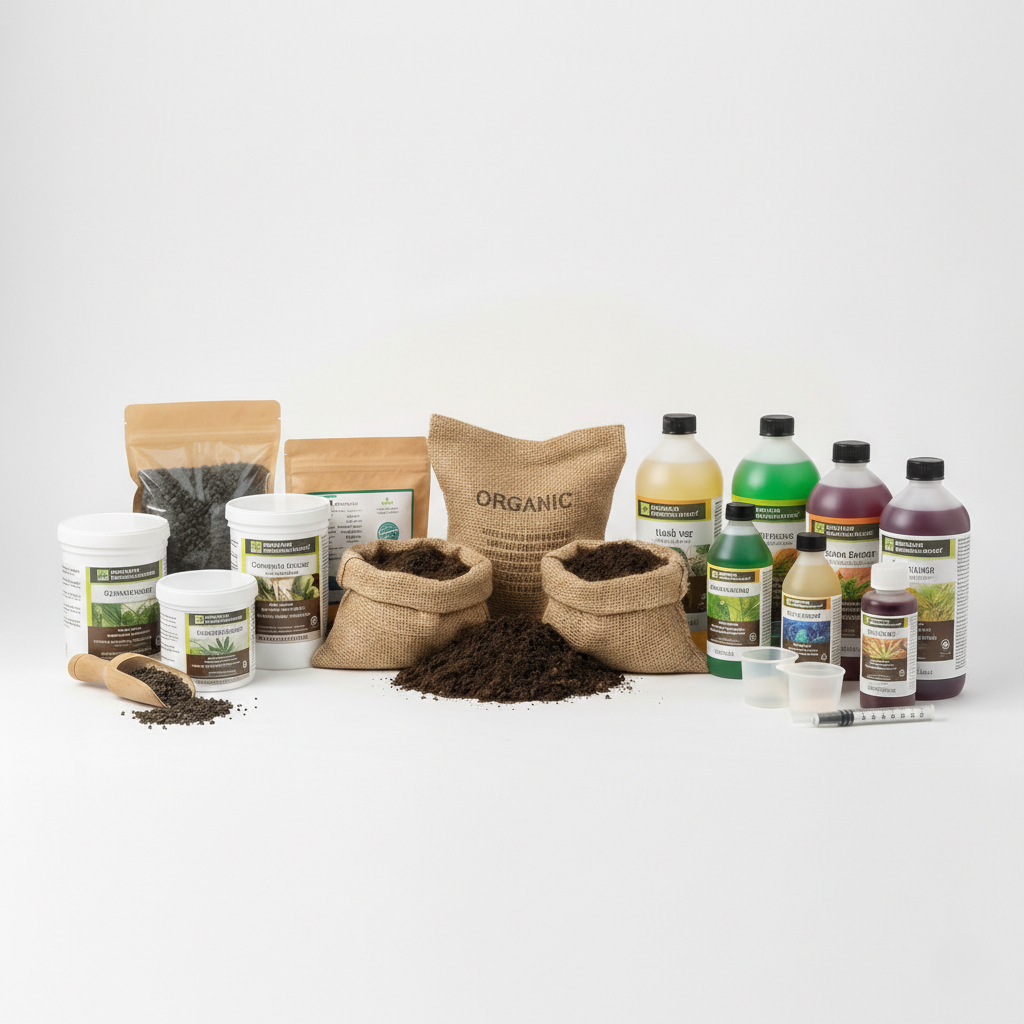
Unopened nutrients usually have the longest and most predictable life because the manufacturer controls the concentration, package, headspace, and contamination level. Many commercial mineral base nutrients carry best-before periods measured in years. CANNA, for example, publishes product-specific periods ranging from one to five years, with many base nutrients listed at three years. That does not create a universal three-year rule; it shows why the individual label matters.
Organic liquids and products containing biologically active ingredients may have shorter guarantees. Biobizz states that its unopened products last about two years under suitable storage. The same company gives a different timeline after opening and a much shorter one after dilution. One product can therefore have three valid answers depending on its state.
Dry water-soluble mineral fertilizers are generally more storage-stable than liquids when moisture is excluded. A General Hydroponics technical bulletin states that its water-soluble fertilizers can last indefinitely when kept cool, dry, out of direct sunlight, and sealed in their original packaging. The bulletin still recommends first-in, first-out rotation because packaging damage, humidity, and caking become practical problems even when the salts themselves do not spoil.
Best-before date versus automatic failure
A best-before date normally marks the period in which the manufacturer guarantees expected quality under stated storage conditions. It is not always a chemical switch that turns a mineral fertilizer harmful on the next day. CANNA explicitly describes its date as a quality guarantee and notes that some products may gradually lose effectiveness after it.
That distinction does not give us permission to ignore the date. Once the guaranteed period has passed, the grower carries more uncertainty. A low-cost replacement is often more sensible than testing an unknown bottle on a valuable flowering crop, especially when the product contains microbes, enzymes, organic extracts, or unstable chelates.
A best-before date describes expected quality; an expiration instruction tells you when the product should no longer be used.
Labels use different terms across countries and product categories. Follow the exact wording on your container and contact the manufacturer with the lot code when the instruction is unclear.
How Long Nutrients Last After Opening
Opening a bottle introduces air and creates a route for contamination. The largest risk is often not oxygen by itself but what enters on a measuring cup, syringe, funnel, glove, cap, or drop of reservoir water. Returning unused concentrate to the original bottle can carry diluted fertilizer, microbes, or another nutrient part into a product that was designed to remain clean and concentrated.
Simple mineral liquids can remain stable for a long time after opening when the cap seals properly and the product stays cool, dark, and uncontaminated. Biological and organic liquids usually have a shorter window because their ingredients can support microbial activity or degrade more readily. Biobizz gives an example of about one year after opening under proper storage, but that figure applies to its products rather than every organic fertilizer.
Write the opening date directly on the bottle or on a waterproof label. If the product has a lot number, keep that visible too. This small step lets you separate an old product from a poorly stored one and gives the manufacturer useful information if you need support.
Keep concentrates clean and identifiable.
Use dedicated dry measuring tools, close the cap promptly, record the opening date, and store the container upright in the conditions printed on its label.
Pour leftovers back into the bottle.
Reservoir water, another nutrient part, or a wet measuring tool can contaminate the concentrate and trigger reactions that shorten its useful life.
Does headspace make liquid nutrients expire?
A partially empty bottle has more air space, but headspace alone does not tell you that a mineral product is bad. Evaporation becomes more relevant when the cap leaks or the container is repeatedly left open. Water loss can concentrate a liquid, while humidity entering a dry product can cause caking.
Do not transfer nutrients into a smaller unlabelled bottle simply to remove headspace. The original package carries identity, hazard, lot, storage, and mixing information. If a manufacturer approves decanting for commercial use, the replacement container must be chemically compatible, clearly labelled, clean, opaque when required, and protected from accidental access.
Pro Tip: Keep a separate clean syringe or measuring cup for each Part A, Part B, silica product, and pH adjuster. Cross-contamination can damage a concentrate long before its printed date.
How Long Mixed Cannabis Nutrient Water Lasts
Once nutrients are diluted, the answer becomes shorter and less predictable. The working solution is now exposed to the mineral content of the source water, the cleanliness of the container, temperature, light, air, pH adjustment, and every additive in the recipe. Some reactions that were controlled inside separate bottles can begin after mixing.
When a manufacturer gives no storage period, the most dependable home-grow practice is to mix only what you can use promptly. Same-day use removes many variables and makes your feed log easier to interpret. It does not mean every mineral solution becomes harmful after midnight. It means freshness is the lowest-uncertainty default.
A clean mineral solution may remain physically usable for several days when it is held cool, dark, covered, and mixed according to the product instructions. Some manufacturers support longer reservoir intervals for specific programs. Organic or biologically active formulas can change much faster. Biobizz advises using its diluted products within a few hours to one day because microbial activity can recover after dilution.
| Situation | Low-uncertainty practice | What to monitor | When to discard |
|---|---|---|---|
| Hand-watered mineral feed | Mix for the current irrigation; store only when the product allows it | Appearance, odor, pH, EC, temperature, and container cleanliness | Unexpected odor, slime, mold, heavy precipitate, or unexplained drift |
| Hand-watered organic or biological feed | Prepare immediately before irrigation | Fermentation, gas, foam, odor, film, and label time limit | The label window passes or abnormal biological activity appears |
| Mineral stock concentrate made from dry salts | Keep separate stocks compatible, sealed, dark, and within the manufacturer’s limit | Evaporation, crystals, sediment, light exposure, and dilution accuracy | Composition is uncertain or incompatible salts have reacted |
| Active hydroponic reservoir | Manage as a living root-zone environment, not stored watering water | Water level, pH, EC, temperature, oxygen, roots, odor, and biofilm | Root disease, contamination, uncontrolled imbalance, or scheduled replacement requires it |
| Leftover solution with unknown recipe or age | Do not use it on a valuable crop | Identity, mix date, ingredients, and storage history | You cannot verify what it contains or when it was made |
Ready-to-use solution versus stock concentrate
A ready-to-use solution is diluted to the concentration delivered to plants. A stock concentrate is intentionally much stronger and is later injected or diluted into irrigation water. They need different handling.
General Hydroponics recommends using finished water-soluble fertilizer solutions soon after preparation. Its technical bulletin allows longer storage for prepared concentrates and recommends using those concentrates within one month when they are sealed or covered and protected from sunlight. That guidance belongs to the specified water-soluble fertilizer program, not to every bottled cannabis nutrient.
Concentrated calcium should remain separate from concentrated phosphates and sulfates because insoluble compounds can form. This is the reason many programs use Part A and Part B or separate stock tanks. Dilution into the main water volume reduces the reaction risk, but pouring two concentrates together defeats the system.
Never combine concentrated nutrient parts, acids, bases, or cleaners unless the label explicitly directs it.
Add each nutrient separately to the main water volume in the stated order and mix between additions. Concentrated reactions can create heat, precipitate nutrients, damage equipment, or expose you to corrosive chemicals.
A hydroponic reservoir is not a sealed jug
A reservoir can operate for days or longer, but that does not mean the original recipe remains unchanged for that entire period. Roots remove water and individual ions at different rates. Evaporation changes volume, top-ups alter concentration, pH control adds ions, and microbes can develop on wet surfaces. EC can appear stable while the ratio of individual nutrients shifts.
Manage the reservoir by the nutrient program and system design. Record input water, final EC and pH, daily top-ups, solution temperature, root appearance, and any scheduled replacement. Exclude light, maintain suitable circulation and oxygenation, and clean the system between crops. A reservoir is an active root zone that needs monitoring, not a storage shortcut.
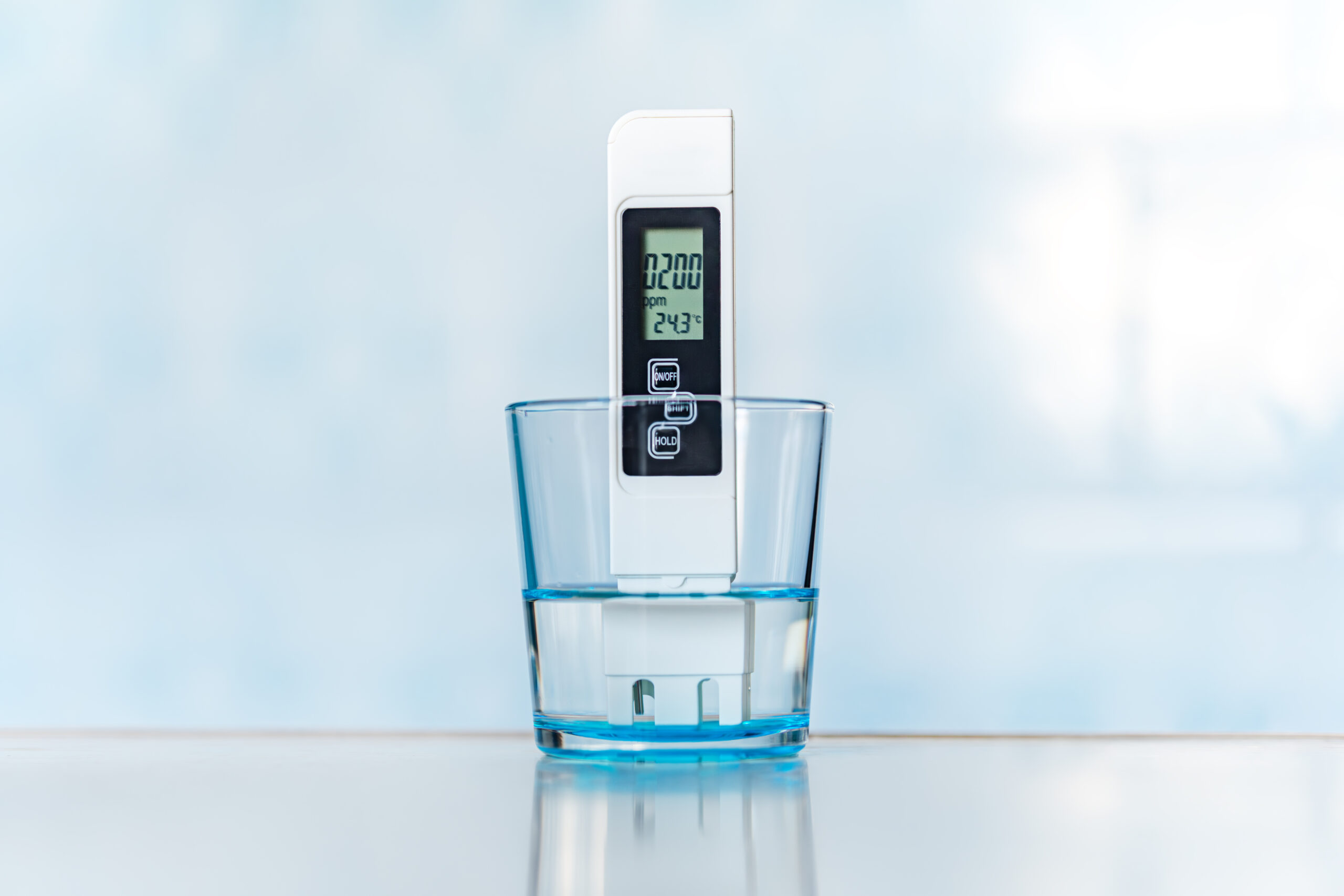
Important: Stable EC does not prove that every nutrient remains in the correct ratio. EC measures total electrical conductivity, not individual nitrogen, phosphorus, potassium, calcium, magnesium, or micronutrient concentrations.
How Long Nutrients Remain Available in the Root Zone
Growers sometimes use “How long do nutrients last?” to ask how long one feeding supports the plant. There is no fixed number of days because the medium changes the answer. Water-soluble ions can be absorbed, exchanged onto particles, leached, immobilized by microbes, precipitated, or concentrated as water leaves. Dry amendments must dissolve or decompose before much of their nutrition becomes available.
Plant size, root volume, temperature, moisture, irrigation frequency, drainage, microbial activity, source water, and light-driven growth all influence the timeline. A small plant in a large amended soil container can draw on reserves for weeks. A large flowering plant in a small inert coco pot may depend on a complete solution at every irrigation.
| System | Where nutrition is stored | What shortens availability | Useful monitoring |
|---|---|---|---|
| Pre-amended potting mix | Fertilizer charge, organic matter, and exchange sites | Fast growth, small volume, heavy leaching, and exhausted charge | Amendment history, plant trend, water use, and root-zone pH or EC when appropriate |
| Living soil | Organic matter, minerals, microbes, and soil exchange sites | Insufficient soil volume, poor moisture, low biological activity, and unbalanced amendments | Soil volume, moisture consistency, growth trend, and planned top-dress timing |
| Coco or rockwool | Mostly the nutrient solution held around roots, with some exchange in coco | Rapid uptake, irrigation gaps, uneven wetting, and salt concentration | Input and root-zone EC trends, event frequency, coverage, and drainage |
| Drain-to-waste hydroponics | Working solution and moisture retained in the medium | Small root volume, pump failure, clogged emitters, and high water use | Tank condition, delivered EC, distribution, and runoff trend |
| Recirculating hydroponics | The reservoir and root-zone solution | Unequal ion uptake, evaporation, contamination, precipitation, and root disease | Daily pH, EC, volume, temperature, oxygen, and root health |
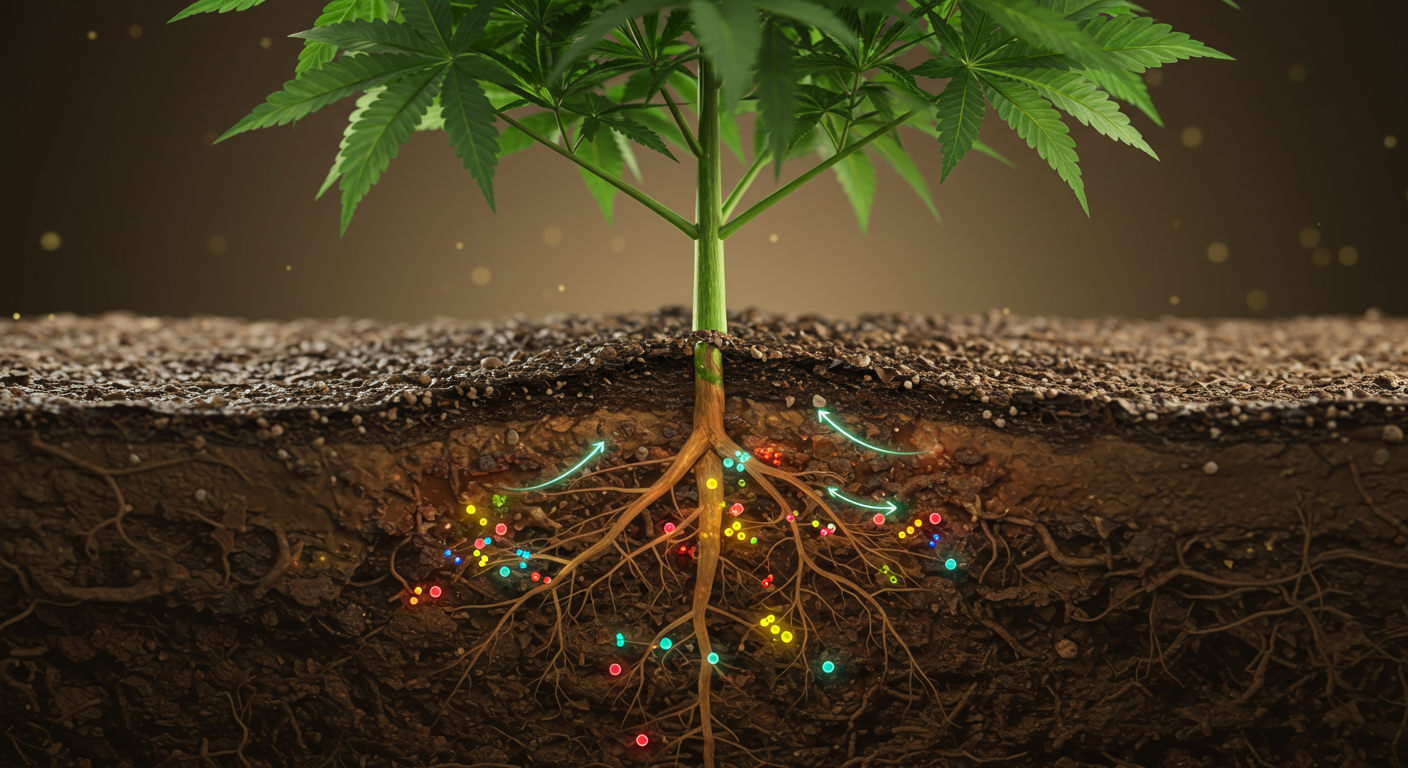
What to Remember: The age of the last feeding is less useful than the condition of the root zone. Ask what is still available, what has accumulated, and whether healthy roots can reach it.
What Makes Cannabis Nutrients Age Faster
Most premature failures come from storage conditions or contamination rather than the calendar alone. The following factors deserve more attention than a generic internet shelf-life estimate.
Heat and repeated temperature swings
A grow room is convenient but often too warm for long-term nutrient storage. Heat can accelerate biological activity, evaporation, separation, and degradation. Daily heating and cooling also stresses caps and containers. Store products in the labelled range in a stable cabinet outside the cultivation environment when possible.
Freezing
Freezing can separate liquid formulas, damage emulsions, and create crystals that do not fully redissolve. Do not assume that thawing and shaking restores the original composition. Contact the manufacturer with the product name and lot code when a bottle has frozen.
Light exposure
Light does more than warm a container. USDA research found that light degraded FeEDTA in fertilizer solution, reduced soluble iron, and produced an iron-rich precipitate. Opaque storage prevented that photodegradation. Keep nutrient bottles, stock tanks, and reservoirs away from direct light, especially when they contain chelated micronutrients.
Dirty measuring tools and cross-contamination
A single wet syringe moved from Part A to Part B can carry enough material to start precipitation inside the bottle. Organic residue can introduce microorganisms. Use clean, dedicated tools and never touch the inside of a cap or bottle neck with equipment that has contacted the reservoir.
Source-water chemistry
Well water, surface water, hard water, and treated municipal water can change solution behavior. Carbonates influence pH stability, while calcium, magnesium, iron, sodium, chloride, and microorganisms can interact with a fertilizer program. A formula that stores acceptably in clean reverse-osmosis water may behave differently in warm well water.
Mixing incompatible products
Calcium, phosphate, and sulfate are common compatibility concerns at high concentration. Silica and pH adjusters can also create local extremes when they are added carelessly. Follow the order on the nutrient program, mix thoroughly between additions, and perform a manufacturer-approved jar test before combining unfamiliar products on a larger scale.
Advice: Storage life belongs to the complete recipe, not only the base nutrient. Adding carbohydrates, compost extracts, microbes, enzymes, plant material, or an incompatible supplement can shorten the useful life of an otherwise stable mineral solution.
How to Tell Whether Cannabis Nutrients Have Gone Bad
No single visual clue works for every formulation. Some products are naturally dark, cloudy, thick, or strongly scented. Mineral components can settle and return to a uniform liquid after the bottle is shaken. Other changes, such as mold, swelling, gas release, persistent slime, or a new rotten odor, are strong reasons to stop.
Start by comparing the product with its original appearance and label description. Check the date, storage history, seal, cap, and lot code. If the product is still within its date but looks abnormal, contact the manufacturer before using it.
| Observation | Possible meaning | Can shaking solve it? | Practical decision |
|---|---|---|---|
| Light settling that fully redistributes | Normal suspension behavior in some formulas | Often, when the label says to shake | Use only if odor, texture, date, and storage history remain normal |
| Hard crystals or gritty sediment that remains | Precipitation, freezing damage, evaporation, or contamination | Usually not reliably | Pause and ask the manufacturer; replace when composition is uncertain |
| Swollen bottle or gas release | Fermentation or microbial activity | No | Do not use; handle and dispose of it according to the label |
| New sour, rotten, or sewage-like odor | Biological spoilage or contamination | No | Discard according to local and label instructions |
| Mold, slime, rope-like film, or heavy biofilm | Microbial growth | No | Do not apply it; clean contaminated equipment separately |
| Color change without other symptoms | Light, age, oxidation, or a normal product change | Not applicable | Compare with label guidance and contact the manufacturer |
| Stable pH and EC in an old solution | Total acidity and conductivity appear stable | Not a freshness test | Do not assume individual nutrients or biology remain correct |
Biofilm is not merely a cosmetic layer. University of Connecticut greenhouse research notes that soluble fertilizers can support microorganisms in irrigation lines and that biofilm can clog emitters directly or contribute to mineral precipitation. In a cannabis irrigation system, that can create uneven delivery before every plant shows the same symptom.
Can you filter an old nutrient solution and use it?
Filtering removes visible particles; it does not restore precipitated nutrients, reverse chemical degradation, correct an unknown ion ratio, or prove that microorganisms are safe. A clear filtered solution can still be nutritionally incomplete. Do not use filtration as a freshness test.
Can a test plant prove an old product is good?
A small test can reveal severe phytotoxicity, but it cannot verify the original nutrient balance or microbial viability. Visible damage may also take time to appear. For a product beyond its guarantee, replacement or manufacturer confirmation is usually a better quality-control decision than experimenting on a flowering plant.
Tip: If you have to ask what a mystery jug contains, it is no longer a usable nutrient product. Identity and concentration are part of safety.
How to Store Cannabis Nutrients Correctly
A simple storage routine extends product life and makes the feeding program easier to trust. It also prevents the common situation in which a grower owns ten partly used bottles but cannot remember which crop opened them.
- Keep the original container and label. Preserve the product name, guaranteed analysis, hazard information, lot code, best-before date, and mixing directions.
- Choose a cool, dark, dry location. Follow the product’s stated temperature range. Do not use the hot floor of a grow tent, a sunny window, or a freezing shed.
- Store containers upright and close them immediately. Clean residue from the thread without pushing it into the bottle.
- Write the opening date on every product. Add the date to a simple nutrient inventory and use older suitable stock first.
- Use dedicated clean measuring tools. Keep Part A, Part B, silica, microbes, and pH products separated.
- Keep dry salts dry. Reseal the bag and place it in an airtight compatible container. Humidity is the main storage enemy.
- Mix only the volume you can manage. Label stored solution with the recipe, EC, pH, date, and time. Use an opaque, compatible container when the product permits storage.
- Inspect before dosing. Check the cap, odor, texture, sediment, and date before the concentrate enters the irrigation tank.
- Clean reservoirs and lines on schedule. Excluding light and removing residue limits algae and biofilm pressure.
- Keep acids, bases, and cleaners separate. Use secondary containment and follow the safety data sheet.
Practical Advice: Buy the package size you can finish within its reliable window. A cheaper large bottle is not economical if half of it becomes uncertain before the next crop.
Can Expired Nutrients Damage Cannabis Plants?
They can, but the failure may look like underfeeding, imbalance, root stress, or clogged irrigation rather than immediate chemical burn. A degraded product may supply less of one nutrient than expected. A concentrated old liquid may deliver more than expected after evaporation. A contaminated biological solution can consume oxygen, create odor, form biofilm, or introduce unwanted organisms.
Precipitation creates another problem: the elements still exist in the container, but some may no longer be soluble or evenly distributed. The EC may remain measurable because other ions are still present. The plant can then show a deficiency even though the grower delivered a solution with a familiar conductivity.
Do not diagnose the resulting symptoms by adding more of the same old product. First replace the uncertain input, confirm water quality and meter calibration, inspect roots and irrigation hardware, and return to a known complete formula. Change one major variable at a time so you can see whether the crop stabilizes.
When Replacing Nutrients Is the Better Decision
Replacement makes sense when the product identity, date, or storage history is unknown; the bottle has frozen or overheated; contamination may have entered; the cap or seal failed; persistent crystals or slime have formed; odor changed unexpectedly; or the manufacturer cannot confirm use after the observed change.
The decision should also reflect crop value and timing. A questionable bottle used on a small non-critical test plant carries a different consequence from an uncertain micronutrient or biological product used across a full flowering room. The cost of new fertilizer is often smaller than the labor and lost time required to diagnose an unstable crop.
Past best-before does not automatically equal dangerous, particularly for simple mineral products stored correctly. It does mean performance is no longer guaranteed. If the product remains visually normal, contact the manufacturer with the lot code and storage history. That answer is stronger than a forum estimate because it can account for the actual formulation.
Before You Feed From an Older Product
- Identify the state: unopened product, opened concentrate, dry salt, mixed feed, stock tank, or working reservoir.
- Read the label: check best-before or expiration wording, storage range, and post-opening instructions.
- Confirm the history: opening date, heat, freezing, sunlight, damaged seals, and possible contamination.
- Inspect the product: compare odor, color, texture, gas, film, mold, crystals, and settling with its normal condition.
- Check compatibility: verify that concentrates were kept separate and added in the correct order.
- Measure the finished feed: record pH and EC, while remembering that neither proves complete composition.
- Protect the crop: replace the product when identity, balance, or biological viability remains uncertain.
- Record the decision: note the lot, date, recipe, and crop response for the next irrigation.
Frequently Asked Questions About Cannabis Nutrient Shelf Life
Do liquid cannabis nutrients expire?
Yes, liquid nutrients have a manufacturer-defined useful period, but the length varies widely. Mineral base nutrients often last for years when sealed and stored correctly. Organic, microbial, enzyme, and plant-extract products may have shorter windows. Use the date and storage instructions on the individual bottle.
How long do cannabis nutrients last once opened?
There is no universal period. A clean mineral concentrate may remain stable for years, while a biological liquid may be intended for use within months or about a year. Record the opening date, prevent cross-contamination, and follow the manufacturer’s post-opening guidance.
How long can mixed cannabis nutrients sit before watering?
Use a freshly mixed solution whenever the label is silent. Some clean mineral solutions can be held for several days under controlled conditions, but organic or biologically active mixes may need to be used within hours or the same day. The shortest-lived ingredient sets the practical limit for the complete mix.
Can I leave mixed nutrients overnight?
Sometimes, if every product in the mix allows it and the solution remains cool, dark, clean, covered, and stable. Do not assume that rule applies to organic feeds, microbial inoculants, teas, or products that specify immediate use. Recheck appearance, odor, pH, and EC before irrigation.
Do powdered cannabis nutrients go bad?
Dry mineral salts are highly stable when kept sealed, cool, dry, and uncontaminated. Humidity can cause caking or uneven measuring. Caking does not always mean chemical failure, but a wet, moldy, contaminated, or unidentified powder should not be used.
Are crystals in a nutrient bottle normal?
Some products form harmless settling that redistributes when shaken, while hard crystals can indicate freezing, evaporation, precipitation, or contamination. Do not assume every crystal is normal. Compare the product with label guidance and ask the manufacturer when particles remain after proper mixing.
Does aerating nutrient water make it last longer?
Aeration can support dissolved oxygen and circulation in some reservoirs, but it does not preserve every formulation. It can also increase evaporation and may not suit products designed for a different biological process. Aeration cannot reverse precipitation, restore degraded chelates, or correct contamination. Follow the reservoir program.
Can I use nutrients after the best-before date?
Possibly, when the manufacturer treats the date as a quality guarantee rather than a strict expiration and the product was stored correctly. Performance may no longer be guaranteed. Biological viability is especially difficult to judge at home, so replacement or manufacturer confirmation is the safer choice.
Should nutrient bottles be refrigerated?
Not unless the label specifically requires refrigeration. Some organic products are harmed by unsuitable low temperatures, and many mineral liquids should be protected from freezing. Store each product within its stated range rather than assuming colder is always better.
Can I use old nutrient water on soil plants?
Do not use a contaminated, moldy, fermented, unidentified, or chemically unstable solution on another plant simply to avoid waste. For a known mineral solution that is only surplus, follow the fertilizer label and local disposal guidance. Never dump concentrated nutrients or pH adjusters into drains or natural water.
Research and Technical References
The practical recommendations in this guide were checked against manufacturer storage instructions and horticultural research rather than one universal grower rule.
- Biobizz product storage and mixed-solution guidance
- CANNA product-specific shelf-life information
- General Hydroponics technical bulletin on water-soluble fertilizer storage and compatibility
- University of Missouri Extension guidance on hydroponic nutrient solutions and precipitation
- USDA research on iron-chelate photodegradation in fertilizer solutions
- University of Connecticut greenhouse research on biofilm in irrigation systems
- University of New Hampshire Extension guidance on nutrient-solution management
Keep the Nutrient Program Fresh Enough to Trust
The useful life of cannabis nutrients is not one number. A sealed mineral product may last for years, a dry salt may remain stable much longer, an opened biological bottle may have a shorter guarantee, and a diluted organic feed may need to be used the same day.
Start by naming which clock you are measuring. Then follow the label, record the opening and mixing dates, protect products from heat, freezing, light, moisture, and contamination, and replace anything whose identity or balance is no longer reliable.
That approach is less dramatic than testing a mystery bottle on the crop, but it protects the thing that matters: a root zone you can read and a feeding program you can repeat. Freshness is not about throwing products away early. It is about keeping uncertainty out of the garden.
Share this article
A quick overview of the topics covered in this article.
Follow us
Latest articles
September 24, 2026

September 24, 2026
September 24, 2026
September 24, 2026