
How to Dry Cannabis Without Mold or Overdrying
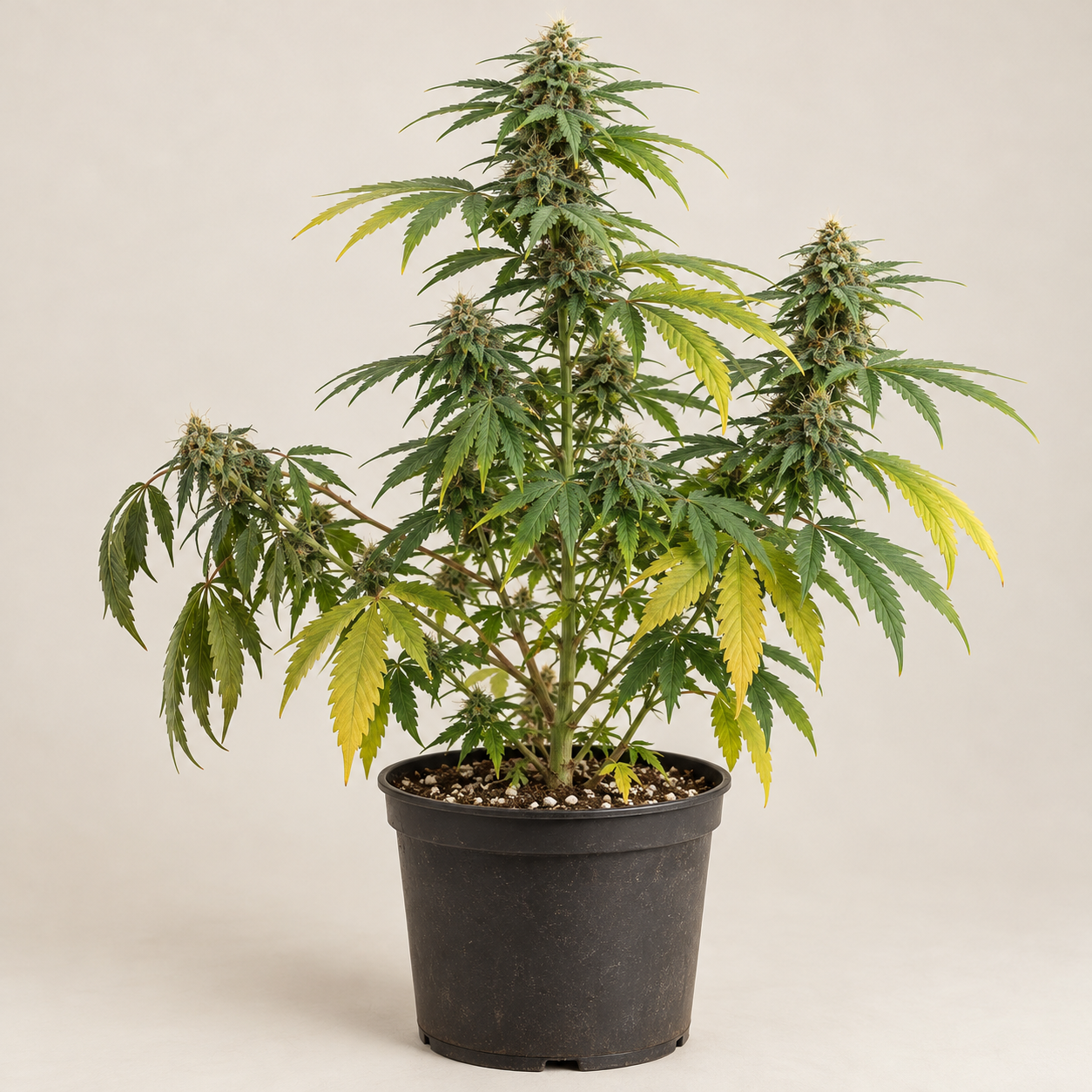
Freshly harvested cannabis flowers consist of 75% to 80% water by weight, and how you remove that moisture over the first 10 to 14 days after chop determines whether months of careful indoor cultivation finish as aromatic, resin-rich flower or harsh, hay-smelling buds ruined by mold. Drying is not simply dehydration: it is a controlled post-harvest biochemical phase during which live plant cells respire remaining starches and enzymatic pathways break down bitter green chlorophyll before cellular water drops below the threshold required for enzyme activity.
Balancing the drying room requires navigating a narrow corridor between two destructive extremes: drying too slowly above 65% relative humidity invites Botrytis cinerea and Aspergillus mold inside dense colas, while drying too fast in warm, arid air locks chlorophyll permanently inside the bracts and volatilizes fragile monoterpenes. This guide covers water activity physics, the 60/60 environmental baseline, whole-plant versus branch hanging, indirect airflow rules, and objective jar-hygrometer end-point testing.
Post-Harvest Moisture Physics and Water Activity (aw)
Successful cannabis drying depends on matching the rate of surface evaporation from outer bracts to the rate of internal capillary moisture diffusion from the dense flower core and stem.
Moisture Content Versus Water Activity (0.55 to 0.62 aw)
Total moisture content measures the total weight percentage of water remaining in dried flower (ideally 10% to 12% by dry weight), whereas water activity (`aw`, measured on a scale from 0.0 to 1.0) measures the unbound ‘free’ water vapor pressure available inside the flower tissue to support microbial growth or chemical reactions. Multiplying water activity by 100 equals the equilibrium relative humidity (ERH) inside a sealed container at constant temperature: a flower stabilized at 0.60 `aw` produces an exact 60% RH reading inside a sealed curing jar.
Pathogenic molds including Botrytis cinerea and Penicillium species require a water activity above 0.65 `aw` (65% ERH) to germinate and proliferate, while metabolic enzymes that degrade chlorophyll cease functioning once water activity falls below 0.50 `aw` (50% ERH). Therefore, the universal target window for finished dried cannabis is 0.55 to 0.62 `aw` (58% to 62% equilibrium RH), which permanently halts microbial spoilage while preserving trichome cuticle elasticity and terpene aromatics.
How Case Hardening Locks In Chlorophyll and Causes the ‘Hay Smell’
When freshly harvested buds are hung in an environment below 45% relative humidity or exposed to direct fan breezes, moisture evaporates from the outer layer of bracts and sugar leaves three times faster than deeper water can migrate outward from the central rachis (stem). As the outer cell walls desiccate and shrink, they form a crispy, impermeable crust known as case hardening.
Case hardening creates two simultaneous problems: the dry outer bract layer drops below 0.50 `aw` within 48 hours, deactivating the magnesium-dechelating and chlorophyllase enzymes that break down harsh, grassy-smelling chlorophyll into smooth, neutral compounds; meanwhile, trapped moisture remains locked inside the core of the bud, creating a hidden pocket of high water activity that can mold days after the outside feels bone-dry.
Water Activity (aw) Equilibrium Window: Water activity (aw) quantifies the free water available to microorganisms inside cannabis flower; drying to an equilibrium of 0.58 to 0.62 aw (58%-62% jar RH) sits safely below the 0.65 aw mold threshold while preventing brittle trichome stalk fracture below 0.52 aw.
Practical questions from home cultivators often center on how these thresholds behave in real-world tents and small rooms.
“Why do my hanging buds smell like cut grass or wet hay on day four of drying when they smelled like sweet citrus and fuel on harvest day?”
Question sent by: CascadeGrower_p2_84_1, via grow journal submission.
A temporary grassy or hay-like aroma between days three and six of drying is a completely normal chemical phase caused by chlorophyll degradation and green leaf volatiles escaping as cell membranes break down. As long as your drying space stays cool (60-64 F) and humid (58-60% RH) so the flowers do not dry out completely during those first five days, the grassy chlorophyll notes will fade by days 9 to 12 and the cultivar’s true terpene profile will return once sealed in curing jars.
The hay smell only becomes permanent if the flowers dry too fast (in 3 to 5 days below 50% RH), which halts the enzymatic breakdown of chlorophyll before it finishes.
The 60/60 Environmental Baseline and Real-World Room Adaptations
The benchmark standard for slow-drying cannabis is 60 degrees Fahrenheit (15.5 C) and 60% relative humidity in total darkness over 10 to 14 days, though slight adjustments keep harvests safe when household AC cannot reach 60 F.
Why 60 Degrees Fahrenheit and 60% Relative Humidity Works
At 60 degrees Fahrenheit and 60% relative humidity, ambient air holds a gentle vapor pressure deficit of approximately 0.70 kPa, and the equilibrium moisture content of the room air matches your final 0.60 `aw` target. Because the room air itself sits at 60% RH, hanging flowers lose moisture rapidly during days 1 through 4 (when tissue water activity is near 0.95 `aw`) and then automatically slow their drying curve to a crawl during days 8 through 14 as internal flower moisture approaches 60% ERH.
Equally important, keeping temperatures at 60 to 64 degrees Fahrenheit protects highly volatile monoterpenes such as beta-myrcene, alpha-pinene, and limonene, which begin evaporating rapidly at temperatures above 70 degrees Fahrenheit (21 C). Drying in complete darkness prevents UV and blue wavelengths from oxidizing delta-9-THCA into CBN and degrading green pigments into bitter photo-oxidation byproducts.
Two-Stage Humidity Control for Heavy Wet Loads (Days 1-3 vs Days 4-14)
When you hang four large, freshly chopped plants inside a 4×4 tent, those plants release several liters of free surface water during the first 48 to 72 hours. If your dehumidifier or exhaust controller is slow to respond, relative humidity inside the tent can spike to 72%-78% on night one, allowing Botrytis spores sitting inside dense colas to germinate before the outer flower surface dries.
To prevent first-week mold in densely packed tents, run a slightly drier initial pull of 52% to 55% RH at 60-64 F for the first 36 to 48 hours to knock down surface wetness and shrink swollen outer bracts. Once the initial moisture surge subsides on day three, raise your humidistat setpoint to a steady 60% RH for the remaining 8 to 11 days so internal stem moisture draws out smoothly.
Adapting When Your Drying Space Runs Warmer (65-70 F) or Too Dry
Many home cultivators drying in spare bedrooms or closets without dedicated mini-split cooling can only cool their lung room down to 66 to 70 degrees Fahrenheit. At 68 F, 60% RH produces a higher vapor pressure deficit (0.93 kPa vs 0.70 kPa at 60 F), which accelerates drying to 7 to 9 days; compensate by leaving the whole plant intact with larger fan leaves attached and keeping RH strictly between 58% and 60% (never raising RH above 63% at warm temperatures, as warm wet air accelerates mold exponentially).
Conversely, if you are drying in a winter or desert climate where room humidity sits at 30% RH, hang plants inside your sealed grow tent with the inline exhaust fan running on its lowest continuous setting (10%-20%), and place an evaporative or cool-mist humidifier controlled by an inkbird-style humidistat in the lung room or bottom intake zone to hold the tent at 58%-60% RH.
| Drying Room Scenario | Actual Temp & RH Range | Recommended Hanging Prep | Expected Dry Duration & Primary Risk |
|---|---|---|---|
| Ideal Dedicated Dry Tent | 60-62 F & 58-60% RH | Whole plant hang; remove only largest fan leaves | 11 – 14 days; gold-standard terpene & smoothness retention |
| Warm Household Room | 66-70 F & 56-60% RH | Whole plant hang; keep extra fan leaves to slow drying | 7 – 9 days; check jar test by day 6 to prevent overdrying |
| High-Humidity / Huge Colas | 60-64 F & >62% RH ambient | Buck into individual branches; buck colossal tops into smaller nodes | 8 – 11 days; high Botrytis risk unless RH held at 52-55% Days 1-2 |
| Arid Winter / Desert Room | 62-66 F & 30-40% RH ambient | Whole plant hang in tent + lung-room humidifier at 60% RH | 4 – 5 days if unhumidified (severe case hardening / hay smell) |
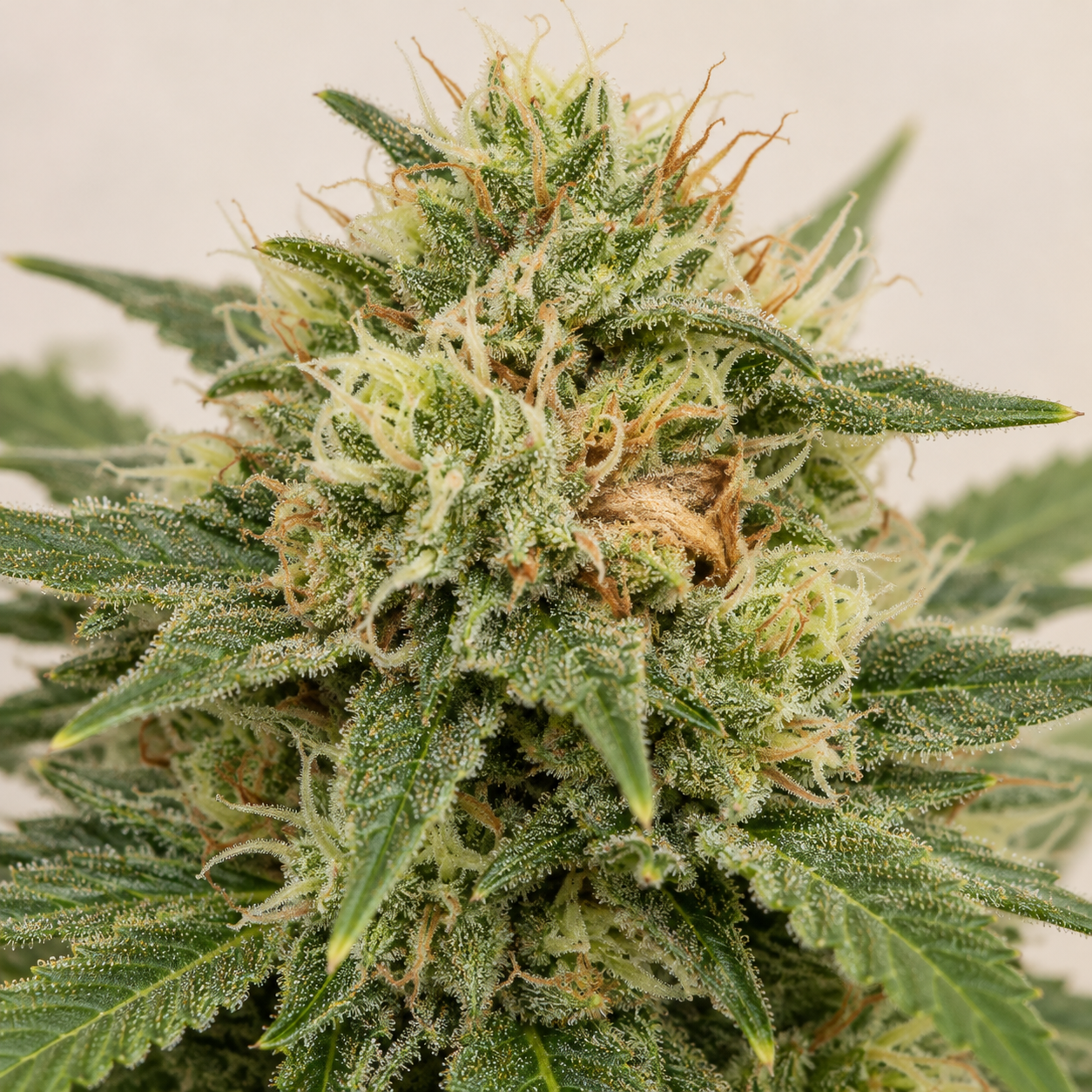
Matching your hanging preparation to your room’s climate profile gives you a powerful physical buffer against both mold and rapid desiccation.
Preparation Strategy: Whole-Plant Hang, Branch Hang, or Wet Trim
How much stem and leaf mass you leave attached at harvest acts as a natural moisture reservoir that regulates how fast water leaves the flowers.
Why Whole-Plant Hanging and Dry Trimming Preserve Terpenes
Cutting the plant at the base of the main trunk, stripping only the large, non-resinous outer fan leaves with visible petioles, and hanging the entire plant upside down is the preferred method whenever drying room humidity stays at or below 60% RH. The thick vascular trunk and attached branches hold significant internal water that wicks slowly into the flowers over 10 to 14 days, preventing outer bracts from crisping prematurely.
Leaving the resin-coated sugar leaves untouched until after the flowers are dry (‘dry trimming’) also provides a physical protective shroud around the fragile capitate-stalked trichome heads. As sugar leaves curl inward during drying, they shield outer trichomes from oxidation, light contact, and friction, whereas wet trimming with scissors smears sticky live resin across the bracts and removes the moisture-buffering leaf mass.
When to Buck Into Individual Branches or Break Down Giant Colas
Whole-plant hanging becomes dangerous when plants have tightly overlapping interior branches or fist-sized apical colas and your drying space struggles to stay below 62% RH. In those conditions, cut the plant into individual 16-to-24-inch branches with a clean V-hook at the base and hang them on trellis netting or wire hangers with at least 3 to 4 inches of open air clearance between every branch.
If any single top cola is thicker than a soda can (greater than 2.5 to 3 inches in diameter), inspect its interior carefully at harvest and consider bucking the dense top 6 inches into two or three smaller sub-branches before hanging. Breaking up massive floral cores eliminates the anaerobic center pocket where Botrytis cinerea thrives during the first 72 hours of drying.
Do
- Dry harvested cannabis in complete darkness at 60 to 64 degrees Fahrenheit and 58% to 60% relative humidity for 10 to 14 days.
- Hang whole plants or full branches with sugar leaves intact (‘dry trim’) to buffer evaporation and shield trichome heads from physical abrasion.
- Aim a small oscillating fan at the floor or tent wall below the hanging plants and run your top exhaust fan on low continuous speed.
- Verify dryness from day 7 onward by sealing trimmed test buds in a glass jar with a salt-calibrated mini hygrometer for 12 to 24 hours.
Avoid
- Pointing oscillating or stationary fans directly at hanging cannabis branches, which causes case hardening and locks in a harsh hay aroma.
- Waiting until thick main stems snap like dry brittle twigs before jarring, which almost always overdries the flowers below 50% RH.
- Drying at temperatures above 70 degrees Fahrenheit or in rooms with light exposure, which volatilizes monoterpenes and oxidizes cannabinoids.
- Putting orange peels, tortilla pieces, or wet paper towels inside curing jars to rehydrate dry buds, which introduces mold spores.
Once your plants or branches are spaced evenly across the drying rack, configuring indirect air movement ensures moisture-laden air is swept away without wind-burning the buds.
“Should I water my plants the day before harvest or let the pots dry out for two to three days before chopping?”
Question sent by: CascadeGrower_p2_84_2, via email.
Allowing your containers to go through a normal dry-back for 24 to 48 hours before harvest (stopping just short of severe wilting) is helpful if your drying tent struggles with high humidity during the first two days after chop. Harvesting when the substrate is moderately dry reduces excess free turgor water in the large main stems without damaging trichomes.
Conversely, if you live in an arid climate where buds tend to dry too quickly in 5 to 6 days, harvesting while the plant is fully hydrated and hanging the whole plant intact helps extend your drying window closer to 10 days.
Airflow Engineering Inside the Drying Tent
Drying flowers require continuous gentle air exchange to prevent stagnant humidity pockets, but direct fan velocity aimed at hanging branches is the fastest way to ruin a harvest.
Setting Up Indirect Floor-Level Circulation and Low Exhaust
Every fan rule changes the moment you cut the plant down: live vegetative plants actively pump water from the soil to replace transpired moisture, whereas harvested branches have a finite water supply. Never aim an oscillating clip fan directly at hanging cannabis flowers; direct airflow strips surface moisture within 24 to 36 hours, causing severe case hardening and stripping volatile monoterpenes.
Instead, place a single small oscillating fan on the floor of the drying tent pointed horizontally at the tent wall, at least 24 inches below the lowest hanging branch tips. This floor-level fan keeps the room air gently mixed so thermal and humidity stratification cannot form, while your top inline exhaust fan runs continuously at a low setting (15% to 30% speed) through its carbon filter to evacuate moisture at 1 air exchange every 3 to 5 minutes.
Daily Mold Scouting During the Critical First 96 Hours
Because 90% of post-harvest mold outbreaks initiate during the first four days when flower water activity sits above 0.80 `aw`, perform a three-minute daily sensory and visual check using a low-intensity green or white flashlight. Inhale deeply when opening the tent: a normal drying room smells intensely floral, skunky, and briefly grassy on days 3-5 as chlorophyll breaks down, whereas a sharp ammonia, wet basement, or sour locker-room odor warns of active microbial fermentation.
Wear clean nitrile gloves and gently flex the thickest hanging colas once a day during days 1 through 4 to check the main stem core. If you spot any gray-white cottony webbing or brown mushy calyx tissue along the stem, immediately bag and remove that entire branch from the tent before spores become airborne.
| Day of Drying (60/60 Baseline) | Typical Flower Water Activity (aw) | Physical & Aromatic State | Daily Cultivator Check |
|---|---|---|---|
| Days 1 – 3 (Initial Pull) | 0.95 down to 0.80 aw | Stems flexible; heavy terpene release; outer leaves wilting | Ensure RH stays 52-58%; check thickest colas for internal condensation |
| Days 4 – 7 (Chlorophyll Phase) | 0.80 down to 0.68 aw | Outer bracts feel papery; temporary green/hay aroma as chlorophyll degrades | Do NOT jar early; maintain 60% RH so internal stem moisture wicks outward |
| Days 8 – 10 (Equalization) | 0.68 down to 0.62 aw | Floral/cultivar aroma returns strongly; small side stems bend with crisp fibers | Begin sealed-jar hygrometer sweat testing on mid-sized test buds |
| Days 11 – 14 (Target Finish) | 0.62 down to 0.58 aw | Popcorn buds snap cleanly off stem; jar test stabilizes at 58-62% RH | Take down, dry trim in cool room, and seal in curing jars or groove bags |
As your harvest enters days 8 through 14, relying on objective moisture equilibrium testing rather than folklore ensures you pull the branches down at the exact right hour.
Cultivation Warning
Even a low-speed clip fan aimed directly at drying branches causes localized case hardening within 36 hours, locking bitter chlorophyll inside the outer bracts while leaving the stem core wet enough to mold inside curing jars.
Practical questions from home cultivators often center on how these thresholds behave in real-world tents and small rooms.
“Is it safe to use hanging mesh drying racks for trimmed buds if I do not have enough space to hang whole branches?”
Question sent by: CascadeGrower_p2_84_3, via contact form.
Collapsible hanging mesh drying nets work well for small popcorn buds or high-humidity environments where large colas must be bucked down, but they dry loose flowers roughly twice as fast as whole-plant hanging (typically finishing in 4 to 7 days) and flatten one side of soft wet buds. If you use mesh racks, keep your tent humidity strictly at 60% to 62% RH, do not wet-trim the sugar leaves too closely, and gently roll the buds over once a day during the first four days so they keep their natural shape.
Begin running your 24-hour sealed jar hygrometer test by day 4 or 5 when using mesh nets so the loose flowers do not overshoot below 55% RH.
Objective End-Point Testing: Why the Stem-Snap Myth Fails
Waiting until thick main branches snap like dry twigs is the single most common reason home growers overdry their harvest down to 45% RH.
The Flaw in Traditional Stem-Snap Advice
For decades, casual cultivation guides advised waiting to jar cannabis until the main structural stems snap cleanly in half with an audible crack. Because lignified main stems hold water far longer than porous floral bracts, by the time a thick 6-millimeter branch snaps like dry kindling in a 55% RH room, the surrounding flower tissue has already plummeted to 45%-48% equilibrium RH (0.45-0.48 `aw`).
Once cannabis flower dries below 50% RH, trichome heads turn brittle and fracture off into the bottom of the trim bin, volatile monoterpenes are permanently lost, and rehydration packs can restore physical softness but can never restart the halted enzymatic cure. If you use physical tactile cues at all, test only the tiniest 1-to-2 mm pedicels holding small lower popcorn buds: when small lower buds flick or snap cleanly off the main stem while the main branch itself still bends with a fibrous crease, it is time to run a jar test.
Performing the 24-Hour Sealed Jar Hygrometer Sweat Test
Starting on day 7 (or day 5 in warmer rooms), snip three to four representative medium-sized buds from the middle of your hanging branches, trim them lightly, and seal them inside a small half-pint or pint glass mason jar alongside a calibrated digital mini-hygrometer (fill the jar about 70% full). Let the sealed jar sit at 65-68 F for 12 to 24 hours so moisture trapped deep inside the flower cores equalizes with the headspace air.
Read the hygrometer at the 24-hour mark: if the reading climbs above 65% RH, the internal cores are still too wet and the hanging crop needs another 24 to 48 hours on the line. If the reading stabilizes between 58% and 62% RH and the buds remain distinct without sticking together in a wet clump when shaken gently, the entire batch has hit target water activity and is ready for dry trimming and curing.
Cheap six-pack digital jar hygrometers routinely read 3% to 6% off out of the box; sealing all of them in a zip-top bag with a bottlecap of table salt dampened with a few drops of water for 12 hours (which creates an exact 75% RH reference standard) lets you write the exact offset on each meter with a marker before harvest.
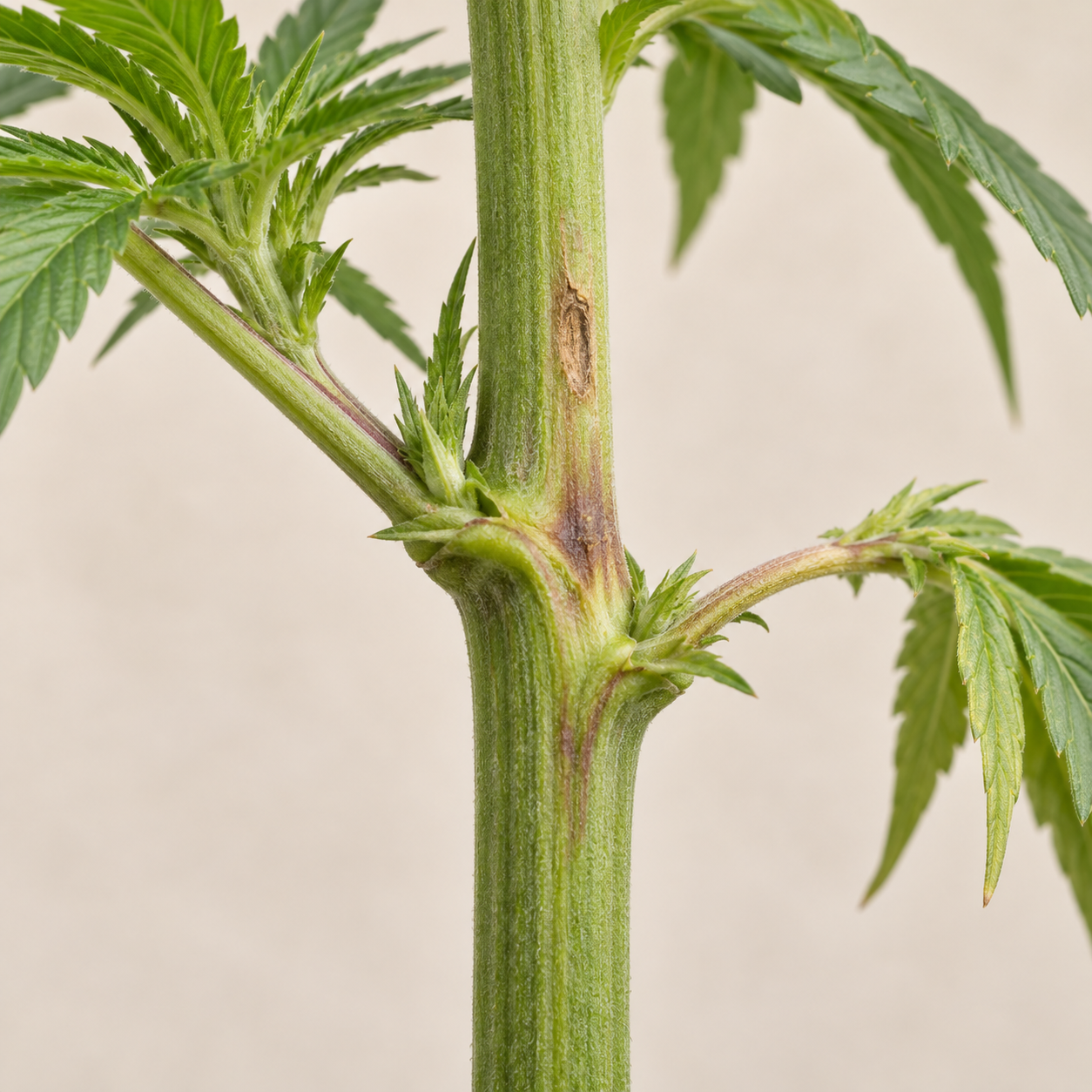
Even if a batch finishes slightly too wet or slightly too dry on the test reading, immediate corrective steps during the first 48 hours of jarring can rescue the harvest.
Correcting Under-Dried or Over-Dried Batches Before Curing
The first 72 hours after trimming and jarring represent your final adjustment window to stabilize equilibrium relative humidity at 58% to 62%.
Safely Stepping Down High-Humidity Jars (64% to 70% RH) via Paper-Bag Sweating
If you trim and jar your harvest and the mini-hygrometers creep up to 64%-66% RH after 12 hours, leaving the lids open inside the jar (‘burping’) for 30 to 60 minutes twice a day in a 55%-60% RH room will slowly bring the headspace down by 1% to 2% per day. Gently roll the jar before opening to verify that flowers tumble freely rather than sticking together.
If the hygrometer climbs past 67%-70% RH or the flowers feel spongy and clump together, burping the jar lid is not fast enough to prevent anaerobic bacteria and mold at the bottom of the jar. Empty the jars immediately onto clean hanging mesh screens or into single-layer brown kraft paper bags inside your 60/60 drying tent for 12 to 24 hours before re-jarring and re-testing.
Stabilizing Over-Dried Flower (<54% RH) to Protect Trichomes
If a room AC failure or dry winter cold front causes your hanging flowers to overshoot and stabilize at 50% to 54% RH on the 24-hour jar test, get the entire harvest off the hanging lines and into sealed glass mason jars or heat-sealed curing bags immediately before any more moisture escapes. Handle the flowers gently during dry trimming, as low-moisture bracts shatter easily.
Insert a two-way 62% salt-based humidity control packet (sized appropriately for your flower weight, such as a 67-gram pack per pound) into each sealed jar and leave the jars closed for 5 to 7 days without burping. Never place orange peels, lettuce leaves, or wet paper towels directly against dried cannabis flower, as raw food matter introduces Aspergillus and Penicillium spores directly onto your buds.
Field Verification Checklist
- Clean and vacuum your drying tent and salt-calibrate your mini jar hygrometers (75% RH NaCl test) three days before harvest.
- Remove large non-resinous fan leaves at chop, buck any soda-can-thick colas if room RH exceeds 60%, and hang with 3-4 inches of branch spacing.
- Hold drying tent climate at 60-64 F with 52-55% RH for the first 36-48 hours of heavy moisture release, then stabilize at 58-60% RH.
- Inspect thickest colas daily during days 1-4 with clean nitrile gloves and verify zero direct fan breeze is hitting any hanging flower.
- Confirm a 24-hour sealed-jar hygrometer reading of 58% to 62% RH before taking down the full batch for dry trimming and curing.
Follow the five verification checkpoints below across every harvest to lock in 0.58-0.62 water activity, clean combustion, and full cultivar terpene expression.
“What should I do if I cannot get my drying room temperature below 70 degrees Fahrenheit during a summer harvest?”
Question sent by: CascadeGrower_p2_84_4, via contact form.
When ambient temperatures sit at 70 to 73 degrees Fahrenheit, water evaporates much faster and mold spores germinate more aggressively if humidity creeps too high. To protect your harvest at 70 F, hang the whole plant intact with most fan leaves left on to act as a physical moisture shield, hold relative humidity strictly at 58% to 60% (never raising RH to 65%+ at warm temperatures), keep indirect airflow continuous, and start jar-testing on day 5 or 6.
Once the flowers reach 60%-62% equilibrium RH in the test jar around day 6 or 7, trim and seal them into glass jars stored inside the coolest dark cabinet, basement, or wine fridge (set to 58-60 F) available in your home.
Scientific References
- Challa, S. K. R., Misra, N. N., & Martynenko, A. (2021). Drying of cannabis-state of the practices and future needs. Drying Technology, 39(14), 2055-2064.
- ASTM International. (2020). ASTM D8197-20: Standard Specification for Maintaining Acceptable Water Activity (aw) Range (0.55 to 0.65) for Dry Cannabis Flower. ASTM International, West Conshohocken, PA.
- Punja, Z. K., & Ni, L. (2021). Post-harvest handling, drying parameters, and microbial proliferation in inflorescences of Cannabis sativa L. Canadian Journal of Plant Pathology, 43(6), 823-838.
- Sommano, S. R., Chittasupho, C., Ruksiriwanich, W., & Jantrawut, P. (2020). The cannabis terpenes: Volatility, thermal preservation, and biological properties. Molecules, 25(24), 5792.
Share this article
A quick overview of the topics covered in this article.
Follow us
Latest articles
November 9, 2026
November 9, 2026
November 9, 2026
November 9, 2026
