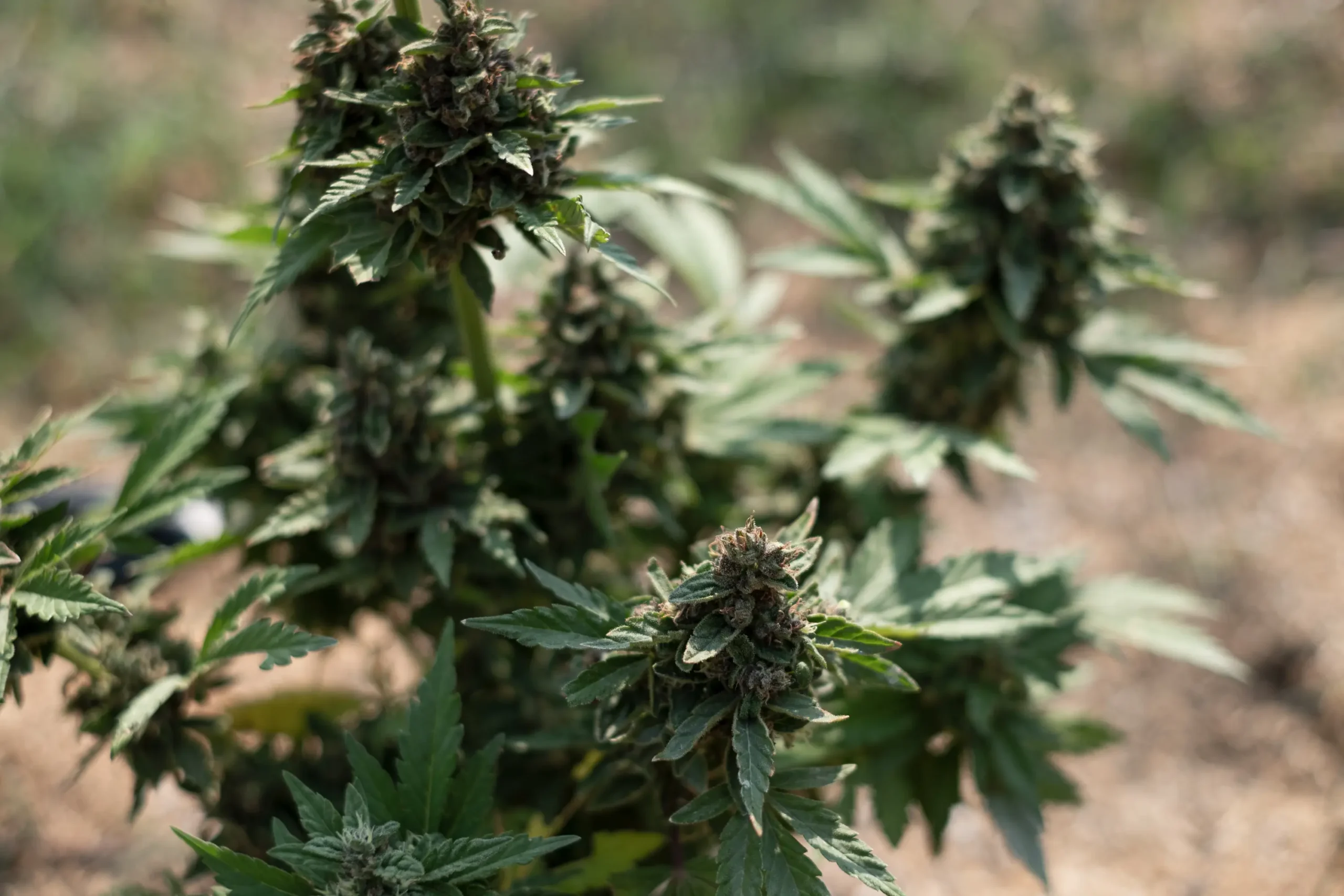
Outdoor Cannabis Irrigation in Native Soil: Soil Textures, Infiltration Rates, and Deep Root Hydration
Cultivating outdoor cannabis directly in native ground soil represents the pinnacle of sustainable, low-input regenerative agriculture. Unlike artificial container environments or raised fabric beds where the root volume is strictly bounded by geotextile walls, native soil provides cannabis taproots with virtually unlimited vertical and lateral expansion. Mature full-season outdoor cannabis plants can drive taproots 4 to 6 feet deep into native subsoils and extend lateral lateral feeder roots across a 10-foot radius, anchoring plants capable of yielding several pounds of dried floral biomass. However, irrigating in native ground requires an entirely different agronomic skill set than potting soil or hydroponics. In native ground, growers cannot inspect drainage saucers, cannot pick up the pot to test its weight, and cannot flush root zones overnight. The movement of water through native soil is governed by unalterable geological textures, saturated hydraulic conductivity, infiltration rates, and seasonal evapotranspiration (ET) demand. Novice outdoor cultivators who irrigate native ground with daily, light sprinkler showers drown the upper 3 inches while leaving deep subsoils bone dry, forcing roots into shallow, heat-stressed surface layers. Conversely, over-irrigating dense native clay pans triggers massive sub-surface hypoxia, rooting out entire canopies beneath stagnant perched water tables. This comprehensive guide details the soil physics, infiltration testing procedures, irrigation engineering, and seasonal moisture scheduling required to master outdoor cannabis irrigation in native soil, integrating directly with our foundational guides on watering cannabis in soil and cannabis dry-back and VWC targets.
Native Soil Textures: Sand, Silt, Clay, and Saturated Hydraulic Conductivity
To engineer an effective outdoor watering regimen, cultivators must first diagnose the physical texture and hydraulic conductivity of their indigenous soil profile:
- The USDA Soil Texture Triangle: Native mineral soils are composed of three distinct mineral particle classes defined by particle diameter: sand (2.0 to 0.05 mm), silt (0.05 to 0.002 mm), and clay (<0.002 mm). A true native agricultural loam consists of roughly 40% sand, 40% silt, and 20% clay. The textural balance determines both the total pore volume and the ratio of gravitational macropores to capillary micropores across the field.
- Saturated Hydraulic Conductivity (Ksat): Hydraulic conductivity measures the velocity at which water moves through saturated soil under a unit hydrostatic pressure gradient, governed by Darcy’s Law. In coarse sandy soils, Ksat is exceptionally high (often exceeding 2.0 to 6.0 inches per hour): water percolates straight down through large macropores with minimal lateral spread, carrying soluble nitrates beyond the root zone. In heavy native clay soils, Ksat drops to less than 0.05 to 0.2 inches per hour: microscopic plate-like clay particles pack tightly together, creating massive capillary retention but near-zero gravitational percolation.
- Plant-Available Water (PAW) and Storage Capacity: Silt loams and clay loams possess the highest Available Water Capacity (AWC), holding 1.8 to 2.5 inches of plant-available water per foot of soil depth. Coarse sands hold less than 0.5 to 0.8 inches per foot. Understanding your native soil storage capacity allows you to calculate the exact depth of the “soil sponge,” determining how many days your cannabis crop can thrive between deep irrigation events without suffering water stress.
Because native subsoils exhibit distinct horizontal layering (stratified soil horizons), water movement is rarely uniform. Cultivators must evaluate both the topsoil (A-horizon) and the deeper subsoil (B-horizon) to identify impermeable clay pans or compacted plow hardpans that impede downward drainage.
The Agronomic Physics: The Sub-Surface Wetting Bulb Geometry
When water drips onto native soil from an irrigation emitter, it does not move outward uniformly in all directions: it forms a three-dimensional sub-surface wetting bulb dictated by soil texture. In coarse sandy soils, gravity overwhelms capillary action, forming a tall, narrow “carrot-shaped” wetting bulb with virtually zero lateral spread. In heavy clay and silty loams, strong matric capillary suction draws water outward horizontally, forming a wide, shallow “onion-shaped” wetting bulb. On sandy soils, drip emitters must be placed closely together (12 to 18 inches apart) to prevent dry vertical bypass gaps; on clay loams, emitters can be spaced 24 to 36 inches apart because lateral capillary wicking bridges the gap between lines.
Infiltration Velocity, Percolation Depth, and Evapotranspiration Dynamics
Managing outdoor irrigation requires balancing surface water application rates with atmospheric evapotranspiration demands:
- The Horton Infiltration Model: When irrigation begins on dry native ground, initial infiltration is rapid as dry soil aggregates exert strong matric suction. However, as surface soil pores saturate, infiltration velocity steadily declines, eventually stabilizing at the constant basic infiltration rate. If an irrigation system delivers water faster than this basic infiltration rate (e.g., applying 1.0 inch/hour onto a clay loam that can only absorb 0.3 inches/hour), the excess water does not penetrate: it ponds on the surface, erodes topsoil, and runs off into low spots.
- Reference Evapotranspiration (ETo) and Crop Coefficients (Kc): Outdoor cannabis water consumption is driven by solar radiation, ambient temperature, relative humidity, and wind velocity. Commercial outdoor farms utilize local CIMIS or weather station data to track daily Reference Evapotranspiration (ETo). Actual cannabis water demand (ETc) is calculated using the formula: ETc = ETo × Kc. During vegetative expansion, the cannabis crop coefficient (Kc) ranges from 0.5 to 0.7; during peak flowering canopy development under hot summer conditions (July/August), Kc surges to 1.0 to 1.25, with mature 10-foot outdoor plants transpiring 8 to 15 gallons of water per plant per day.
- Deep Soak vs. Frequent Sprinkling: The single most damaging mistake in outdoor cultivation is light daily watering. Applying 2 gallons of water daily to a massive outdoor plant only wets the top 2 to 4 inches of soil. Direct sunlight and wind evaporate this surface moisture within hours, while deep subsoils remain desiccated. To force cannabis taproots deep into the earth where temperatures remain cool (18 °C to 20 °C), growers must apply massive, infrequent irrigation events: delivering 25 to 50 gallons per plant once or twice per week, driving moisture 36 to 48 inches deep into the native subsoil.
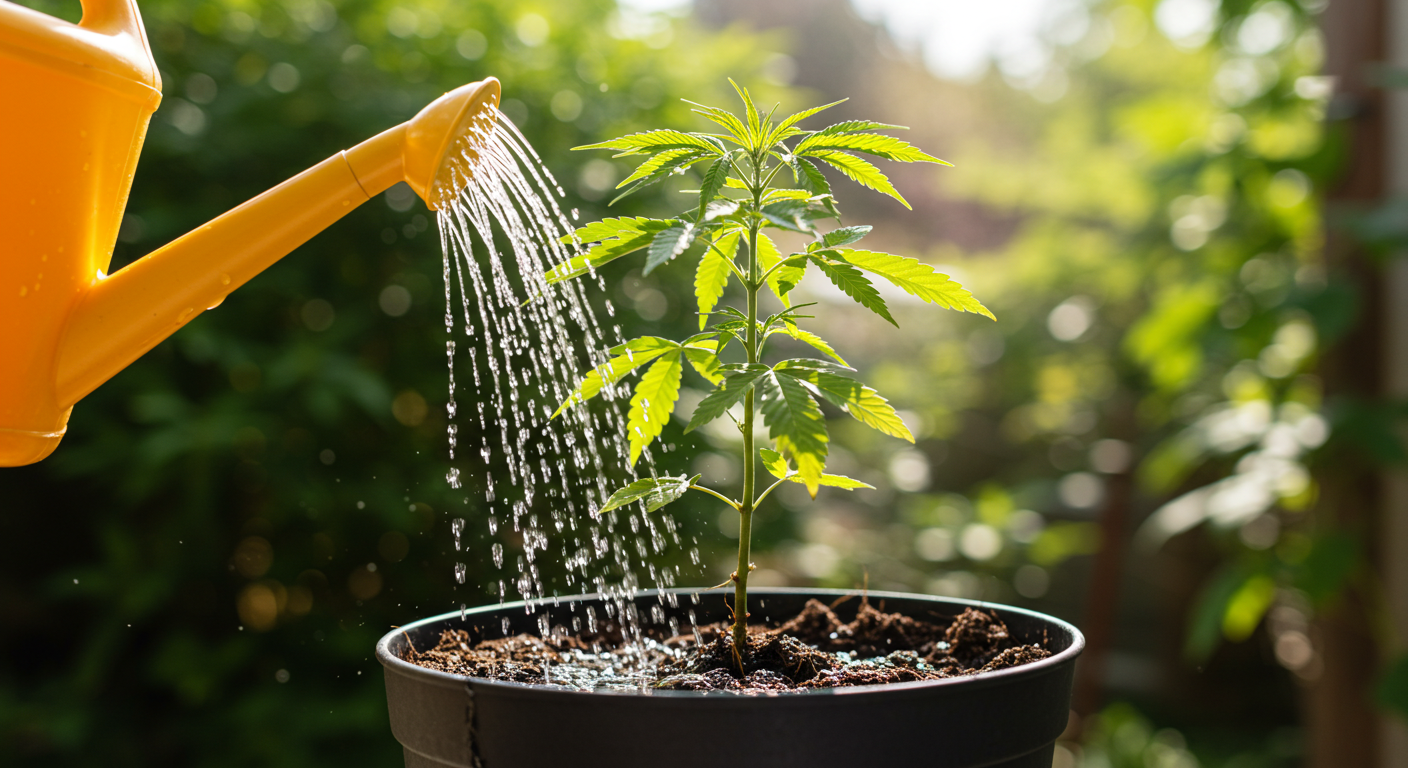
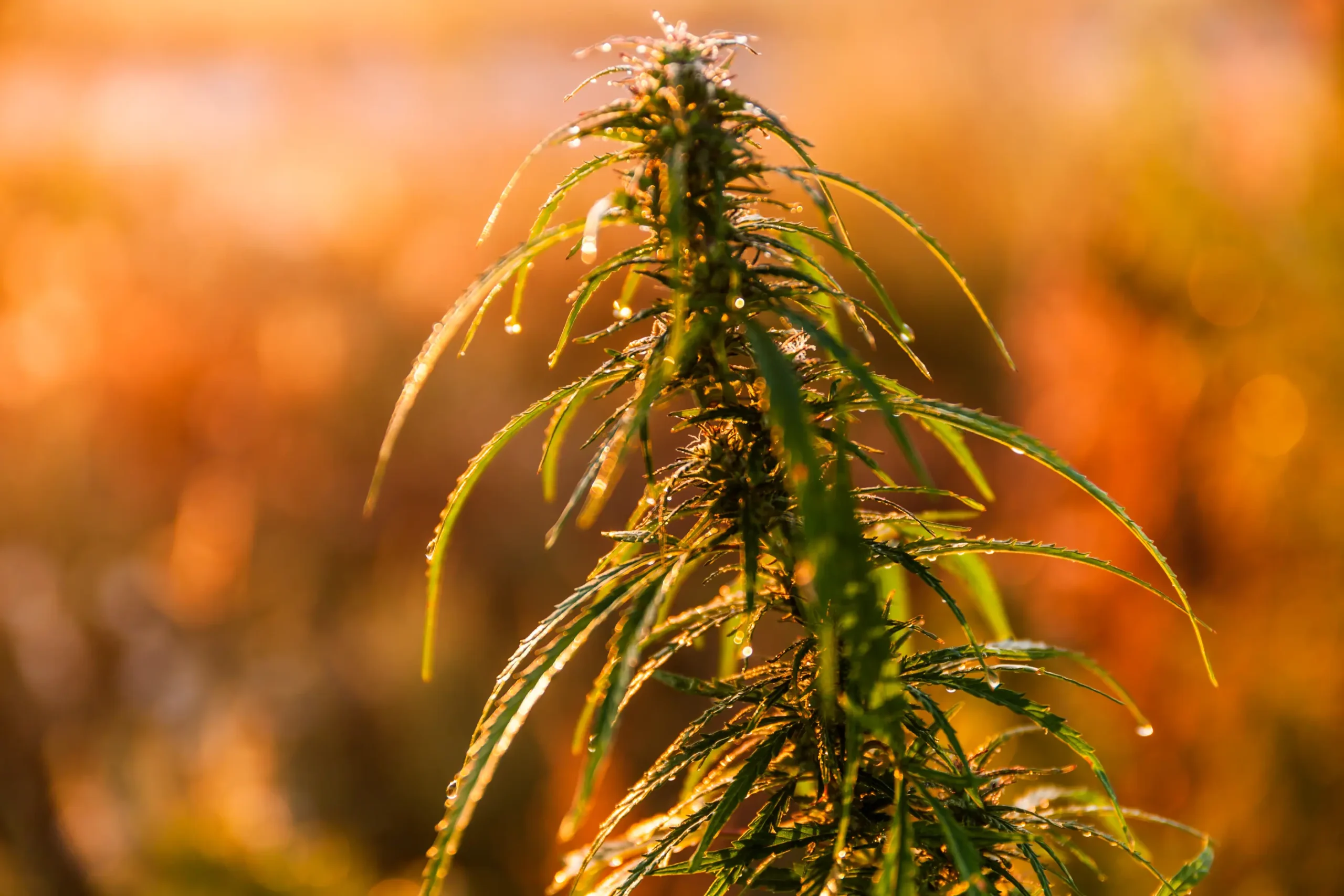
Targeted root-zone basin irrigation delivering measured water volume to outdoor native soil cannabis without surface runoff.
Testing Native Ground: Percolation Tests, Soil Ribboning, and Deep Tensiometer Stations
Before investing in planting mounds or irrigation infrastructure, cultivators must physically profile and test their native ground:
1. The Field Percolation Test (Perc Test)
Dig a hole 12 inches wide and 24 to 30 inches deep at your proposed planting site. Scrape the sides to remove smeared clay surfaces, and place 2 inches of coarse gravel at the bottom. Fill the hole with water to the top and allow it to pre-soak overnight to saturate surrounding subsoil. The following morning, refill the hole with water to a depth of 12 inches and record the drop in water level every 30 minutes over a 4-hour window:
- Optimal Infiltration: A drop of 1.0 to 2.5 inches per hour indicates excellent, well-draining loam ideal for direct in-ground cannabis planting.
- Excessive Drainage: A drop exceeding 4.0 inches per hour indicates coarse sand or fractured gravel that will require massive organic compost amendments to hold moisture.
- Impaired / Poor Drainage: A drop of less than 0.5 inches per hour indicates dense clay or an impermeable hardpan. Planting directly into this soil without raised mounds will drown root zones during heavy rains.
2. Soil Texture by Feel (The Field Ribbon Test)
Take a palm-sized sample of native soil, moisten it with clean water, and knead it into a uniform putty. Squeeze the ball between your thumb and forefinger, pushing it upward to extrude a ribbon of uniform thickness (about 1/8 inch):
- Sand: Will not form a ball; crumbles completely through fingers.
- Loam / Sandy Loam: Forms a ribbon less than 1.0 inch long before breaking; feels slightly gritty.
- Clay Loam: Forms a flexible ribbon 1.0 to 2.0 inches long before breaking; feels moderately sticky.
- Heavy Clay: Forms a shiny, continuous ribbon exceeding 2.0 to 2.5 inches without cracking; feels intensely sticky and plastic.
3. Dual-Depth Tensiometer Stations (12-Inch and 24-Inch Monitoring)
Because the surface of native soil dries rapidly under sun and wind while subsoils remain wet, commercial outdoor growers install paired Irrometer vacuum tensiometers at every irrigation station. One tensiometer is seated at a depth of 12 inches (active feeder root zone), while the second is seated at 24 to 30 inches (taproot deep storage zone). Irrigations are triggered only when the 12-inch tensiometer reaches 25 to 35 cbar, and irrigation volume is calculated to replenish moisture down to the 24-inch sensor (returning it to 10 to 15 cbar) without saturating beyond 36 inches.
| Native Soil Textural Class | Basic Infiltration Rate (in/hr) | Available Water Capacity (in/ft) | Sub-Surface Wetting Pattern | Ideal Irrigation Strategy |
|---|---|---|---|---|
| Coarse Sand / Loamy Sand | 2.0 – 5.0 in/hr (rapid) | 0.5 – 0.9 in/ft (very low) | Narrow vertical column (carrot profile) | Frequent, moderate pulses; dense emitter spacing |
| Sandy Loam | 1.0 – 2.0 in/hr (good) | 1.2 – 1.6 in/ft (moderate) | Oval bell curve; balanced percolation | Deep soak every 3 to 4 days during peak summer |
| Silt Loam / Agricultural Loam | 0.5 – 1.0 in/hr (optimal) | 1.8 – 2.4 in/ft (maximum) | Broad bulb; exceptional capillary lateral spread | Deep soak every 5 to 7 days; wide emitter grid |
| Clay Loam / Silty Clay Loam | 0.2 – 0.5 in/hr (slow) | 1.6 – 2.0 in/ft (high retention) | Very wide, shallow horizontal spread (onion) | Low-flow micro-emitters; extended soak intervals |
| Heavy Native Clay / Adobe | 0.05 – 0.15 in/hr (critical) | 1.2 – 1.5 in/ft (tightly bound) | Extremely flat pancake; high runoff risk | Requires planting mounds, gypsum, and pulse drip |
The physical properties in Table 1 dictate the maximum application velocity and volumetric storage capacity of native soil. When cultivators fail to adapt their irrigation volume and application rate to these physical realities, they encounter chronic root-zone stress, especially during prolonged summer heat waves.
Should I water my full-season outdoor cannabis plants every single day when temperatures exceed 35 °C (95 °F)?
Question sent by: Clayton Miller, via email.
“I am growing six large outdoor cannabis plants directly in native California loam soil. It has been over 95 °F every afternoon for two weeks. The topsoil is dry and hot by 2:00 PM every day. Should I run my drip system every morning to keep the soil wet, or will daily watering hurt my plants?”
Watering every single day in native soil is an agronomic trap that will weaken your root architecture and create severe root rot.
When the top 2 inches of native soil are exposed to direct summer sun, temperatures can easily exceed 45 °C (113 °F). Any water delivered in small daily doses simply sits in this boiling surface layer, where it rapidly evaporates or cooks fine surface feeder roots. Even worse, daily shallow waterings train the plant to keep all of its active roots in the top 6 inches of soil. When an intense heat wave strikes, this shallow root zone quickly dehydrates, causing the entire plant to wilt severely.
In native loam soil, your plants need deep, infrequent irrigation cycles combined with heavy organic surface mulching. A mature 8-to-10-foot outdoor plant in peak summer requires approximately 30 to 45 gallons of water delivered slowly over a 4-to-6-hour drip cycle once every 3 to 4 days. This slow delivery pushes moisture 24 to 36 inches deep into the cool, sheltered subsoil layers where temperatures remain at a stable 18 °C to 21 °C. Cannabis taproots will eagerly dive deep into this cool sub-surface moisture reservoir, providing massive hydraulic lift that sustains leaf turgor even during 100+ °F afternoons. Cover the entire 8-foot soil basin with a 3-to-4-inch layer of clean barley straw or arborist woodchips: this shields the topsoil from solar radiation, cuts surface evaporation by 70%, and keeps the upper root zone cool and active.
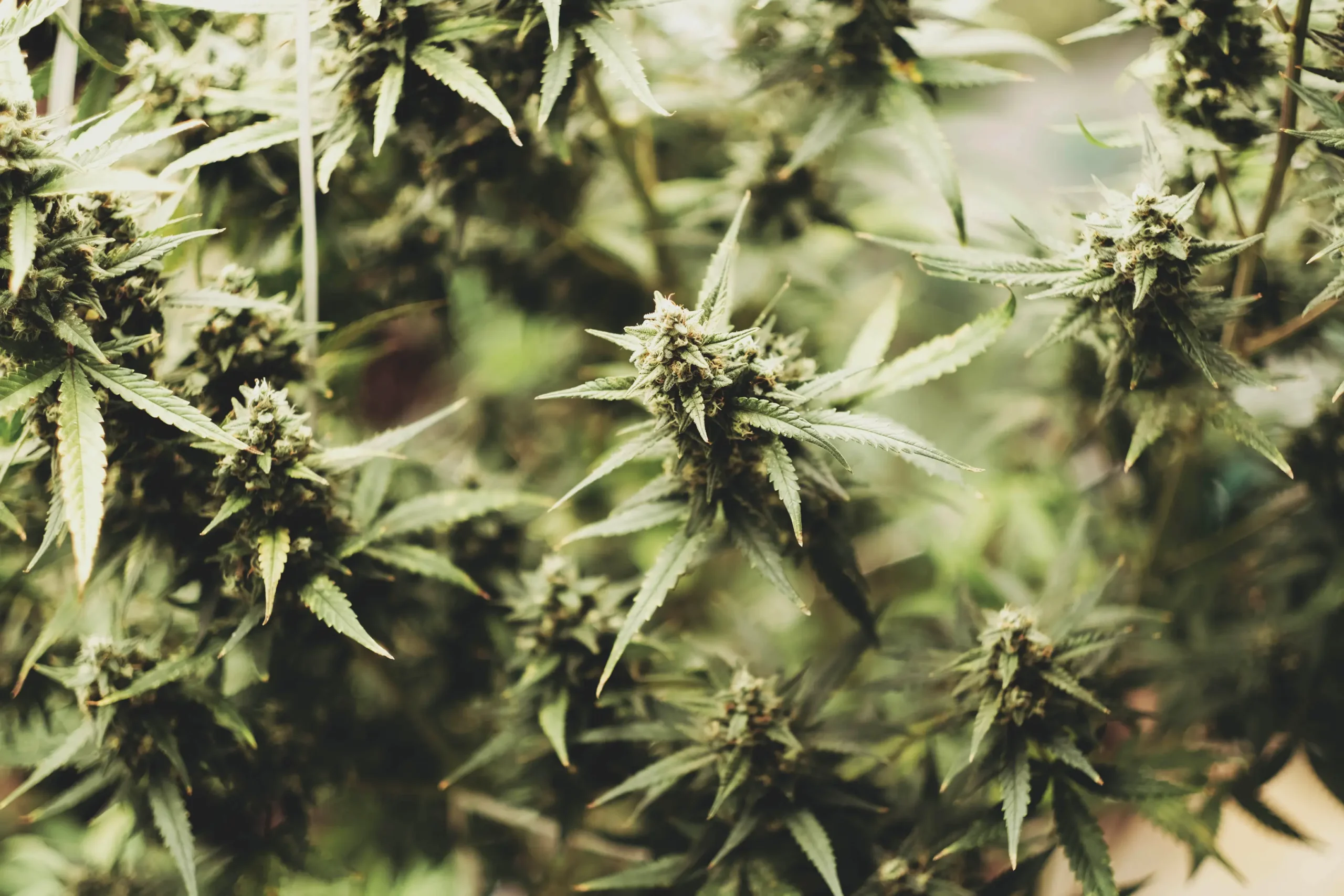
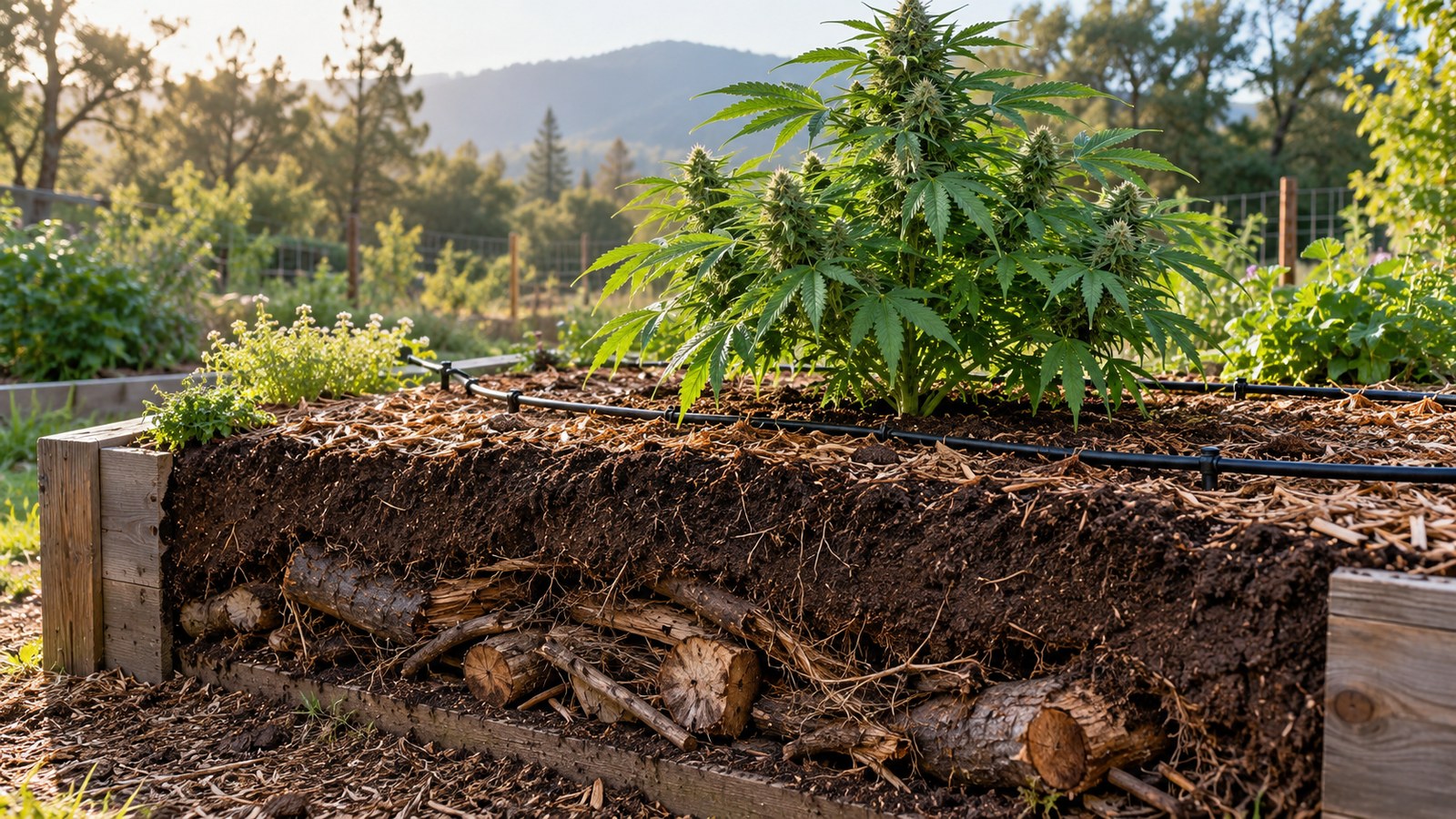
Outdoor canopy expanding rapidly as taproots penetrate deep native subsoil layers to access stored capillary groundwater.
Irrigation Infrastructure: Drip Emitters, Basins, Trenches, and Heavy Mulching
Delivering high-volume irrigation to native ground without causing soil erosion or surface runoff requires specialized hardware and field design:
- Pressure-Compensating (PC) Drip Grids: The premier commercial delivery system for native soil cannabis is a concentric drip emitter ring or manifold grid using pressure-compensating drip line (such as Netafim Techline or Rain Bird XFS). PC drippers deliver an exact flow rate (typically 0.5 to 1.0 gallon per hour per emitter) regardless of elevation changes across sloped fields. For a full-season plant in an 8-foot root zone, install 3 concentric rings of 0.6 GPH drip line spaced 12, 24, and 36 inches from the main stalk (totaling 16 to 24 drippers per plant). Running the system for 3 hours delivers 30 to 45 gallons with zero surface erosion or runoff.
- Constructed Soil Basins and Berms: If irrigating with hoses or high-flow water sources, growers must construct a wide, level soil basin. Scrape a 4-inch-high circular soil berm around each plant with a diameter of 6 to 8 feet. The basin acts as a temporary retention pond, capturing delivered water and forcing it to percolate vertically downward through the root core rather than sheeting across the field and pooling in non-target pathways.
- Sub-Surface Drip Irrigation (SDI): In arid climates (such as Southern Oregon, Northern California, or Southern Spain), elite commercial farms bury heavy-wall drip lines 4 to 6 inches beneath the native soil surface. Sub-surface drip eliminates 100% of surface evaporative losses, delivers water directly to active cortical root hairs, and keeps the soil surface bone dry, preventing weed seed germination and fungal spore dispersal.
- The Heavy Organic Mulch Blanket: Bare native soil exposed to outdoor elements undergoes rapid structural breakdown: rainfall and sprinkler drops shatter soil aggregates, forming an impermeable surface crust that seals off oxygen. Spreading a 3-to-4-inch blanket of organic barley straw, shredded alfalfa, or aged woodchips protects soil aggregate structure, retains sub-surface capillary moisture, feeds mycorrhizal fungi, and reduces irrigation frequency by up to 50%.
The Engineering Warning: Match Irrigation Application Rate to Soil Absorption
Surface runoff on sloped outdoor hillsides is not merely wasted water: it washes away expensive organic top-dresses, fertilizers, and beneficial microorganisms while leaving the root zone completely un-hydrated. The delivery rate of your irrigation hardware must never exceed the native soil infiltration rate. If your native clay loam absorbs water at 0.4 inches per hour, an irrigation system delivering 1.0 inch per hour will waste 60% of its volume to surface runoff. Use low-flow micro-emitters (0.5 GPH) or pulse irrigation (running 45 minutes on, 45 minutes off over a 6-hour window) to allow native clay aggregates adequate time to absorb water without pooling.
Properly engineered drip lines and mulch blankets resolve surface application challenges on permeable loams. However, many outdoor growers face severe native soil limitations, specifically heavy clay soils that resist infiltration and threaten root zones with prolonged saturation.
My property has heavy, dense clay soil. Can I dig a large 200-gallon hole and fill it with potting soil to grow cannabis?
Question sent by: Hannah Morales, via email.
“I tested my native soil and it is thick, heavy clay with terrible drainage. A friend told me to dig a 4×4-foot hole 3 feet deep and fill it with high-grade organic potting mix. Will this give my cannabis plants the perfect root environment, or is there a better way to handle clay?”
Digging a large hole in native clay and filling it with loose potting soil is one of the most famous horticultural disasters in outdoor cultivation: it creates the lethal bathtub effect.
When you dig a deep pit in dense, impermeable clay, the smooth clay walls and floor act like an unglazed ceramic bathtub. You then fill this impermeable pit with loose, highly porous, peat-based potting soil. When you irrigate or when outdoor autumn rains arrive, water rushes easily through the loose potting soil and hits the impenetrable clay bottom. Because the clay cannot absorb water faster than a tiny trickle (0.05 to 0.1 inches per hour), the water stops moving and begins filling the hole from the bottom up.
Within days, the lower half of your potting soil pit becomes a stagnant, anoxic underground swamp. Root cortical tissues drown, fungal pathogens (Pythium and Fusarium) thrive, and your cannabis plants suddenly collapse with severe yellowing, root rot, and stunted buds. Even worse, plant roots that reach the clay walls will refuse to cross the textural interface into the dense clay, circling around the pit just like a root-bound plastic pot.
The correct agronomic strategy for heavy native clay is raised mound cultivation combined with broad-area soil flaking. Do not dig a deep pit. Instead, broadfork the native ground to crack the subsoil without inverting horizons. Apply agricultural gypsum (calcium sulfate) at a rate of 10 to 15 pounds per 100 square feet: calcium ions displace excess sodium, flocculating fine clay particles into granular aggregates that allow water infiltration. Then, build an elevated planting mound 18 to 24 inches high and 6 to 8 feet wide on top of the native ground using a blend of compost, topsoil, and coarse pumice. The plant taproot establishes vigorously in the aerated mound and gradually acclimates to the native clay beneath, while excess water drains freely away above ground level.
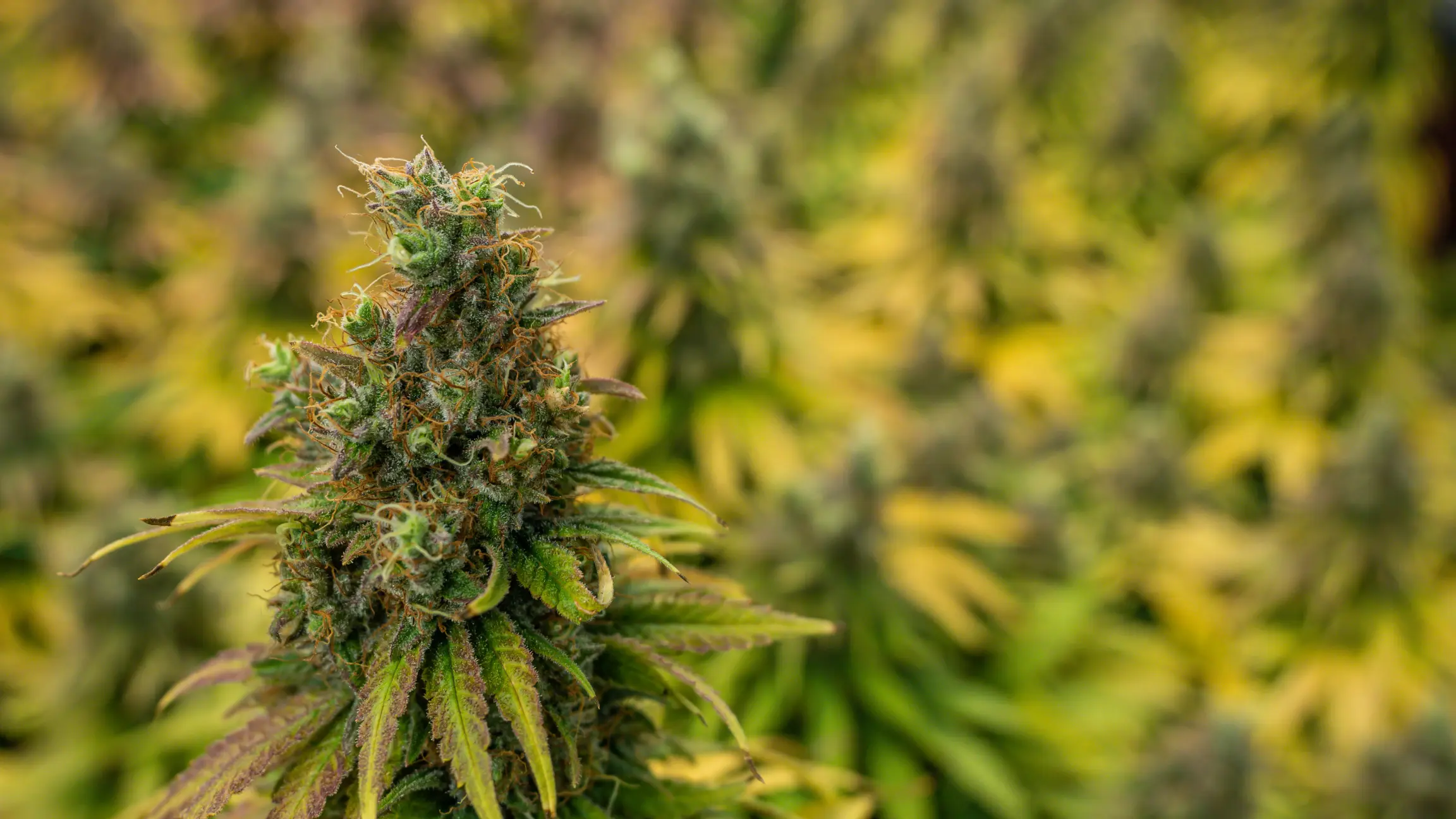
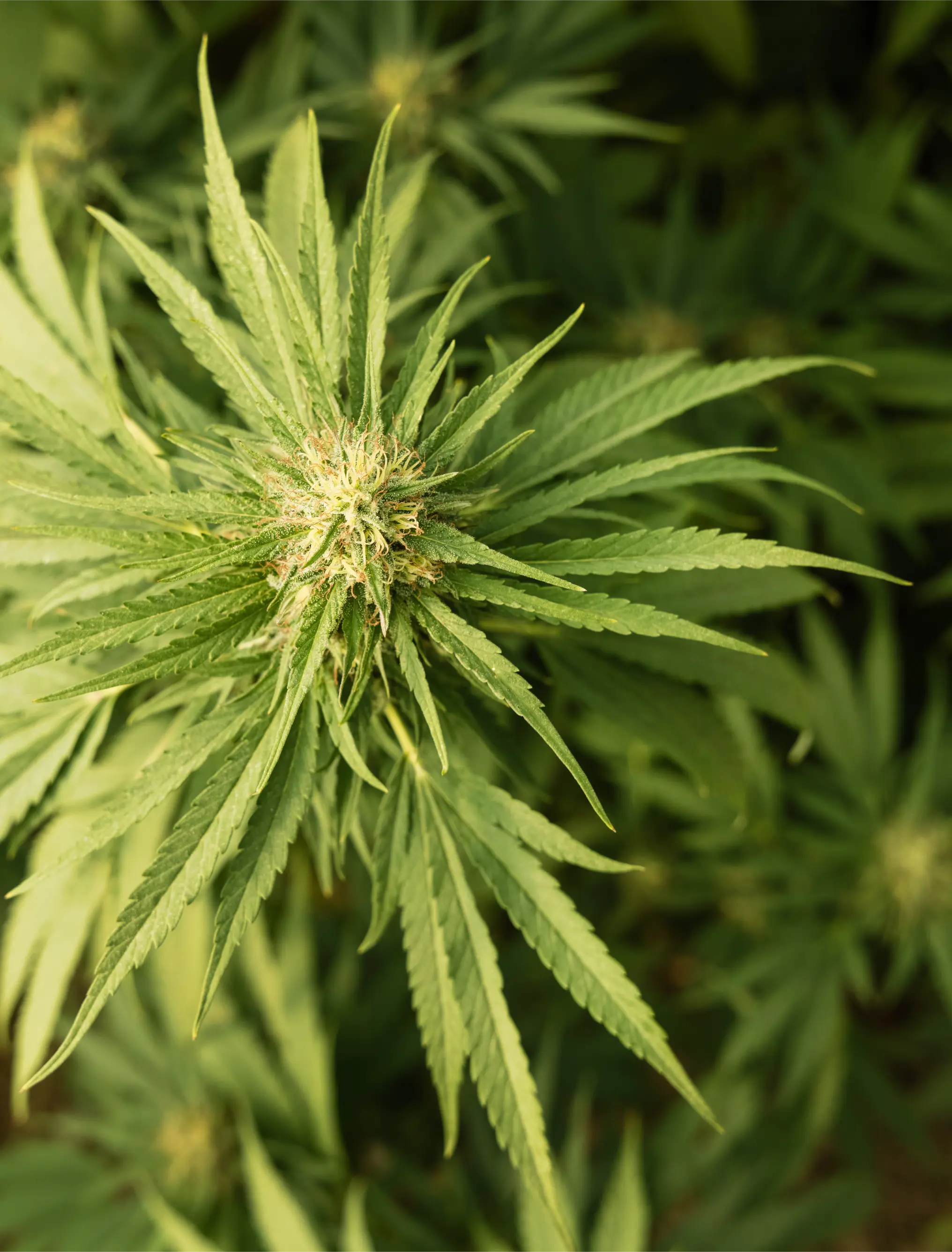
Late-season outdoor cannabis flowers ripening under controlled moisture deficit irrigation in native garden loams.
Failure Modes: Clay Hardpan Stagnation, Sandy Leaching, and Shallow Root Crowding
When irrigating native ground, failure modes develop slowly over weeks and require distinct biological and mechanical corrections. The most destructive physiological consequence of native clay stagnation is sub-surface hypoxia. Unlike wetland species, Cannabis sativa lacks internal aerenchyma tissue: it cannot transport atmospheric oxygen downward from leaves into roots through internal gas chambers. Roots depend entirely on oxygen diffusing through drained soil macropores. When sub-surface clay pans remain saturated for more than 48 hours, root cortical cells shift from aerobic oxidative phosphorylation to anaerobic glycolysis and lactic acid fermentation. This metabolic crisis generates toxic acetaldehyde and ethanol, rupturing root cell membranes and opening pathways for opportunistic Fusarium oxysporum vascular wilt.
Conversely, in deep, well-structured native loams, mature outdoor cannabis exhibits hydraulic redistribution (hydraulic lift). During the day, transpirational pull draws massive volumes of water upward from deep moist subsoils. At night when stomata close and transpiration ceases, taproots continue absorbing water from deep, wet horizons and passively release a fraction of that water into dry upper topsoil layers. This nocturnal hydraulic lift rehydrates dry surface roots and sustains mycorrhizal fungi in the nutrient-rich O-horizon during prolonged summer droughts. Table 2 contrasts the primary native soil failure modes and their corrective actions:
| Failure Mode / Soil Limitation | Underlying Biophysical Cause | Canopy Symptom Presentation | Field Diagnostic Test | Corrective Agronomic Action |
|---|---|---|---|---|
| Sub-Surface Hardpan Stagnation | Compacted clay plow layer 12-18 inches deep stops drainage | Sudden lower leaf chlorosis, stunted flower development | Soil probe hits impenetrable layer; standing water at depth | Deep broadforking; build elevated planting mounds |
| Excessive Sandy Leaching | Coarse sand allows rapid gravitational flush (>4 in/hr) | Pale foliage; chronic nitrogen and potassium deficiency | Tensiometers drop rapidly; water fails to spread laterally | Heavy compost/biochar top-dresses; dense pulse drip lines |
| Shallow Root Crowding | Daily light sprinkler applications wet only upper 3 inches | Extreme heat wilt at midday; poor wind anchorage | Surface root mats visible; soil dry 8 inches below | Transition to deep weekly soak; apply 4 inches straw mulch |
| Surface Crust Compaction | Bare soil exposed to rain/sprinkler droplet impact energy | Water pools and runs off without penetrating root zone | Rock-hard surface cap; cracked dry mud plates | Light shallow aeration; install permanent cover crop/mulch |
Systemic Native Ground Rehabilitation: Cover Crops, Deep Organic Tillage, and Gypsum
Rather than fighting native soil properties with synthetic band-aids, elite regenerative cannabis cultivators work with biological and mineral mechanisms to permanently enhance soil structure and infiltration:
1. Deep Bio-Drilling with Taproot Cover Crops
The most effective method for shattering compacted subsoils without disturbing delicate fungal hyphae is biological drilling using cover crops. In the autumn preceding spring planting, sow a dense cover crop blend featuring Daikon radish (tillage radish), hairy vetch, crimson clover, and winter rye. Daikon radishes drive massive fleshy taproots 24 to 36 inches deep, exerting over 300 psi of hydraulic pressure that penetrates dense clay hardpans. Over the winter, the radishes freeze and decompose, leaving deep vertical aeration chimneys lined with organic matter that channel subsequent irrigation water deep into the subsoil profile.
2. Chemical Flocculation of Native Clay Using Agricultural Gypsum
Dense native clays are often dispersed due to an imbalance between monovalent sodium ions (Na+) and divalent calcium ions (Ca2+). Dispersed clay particles form a dense, tight slurry that blocks water movement. Applying pure agricultural gypsum (calcium sulfate dihydrate, CaSO4·2H2O) at 10 to 20 pounds per 100 square feet introduces soluble divalent calcium ions. Calcium displaces sodium on clay binding sites, drawing individual clay platelets together into loose, porous aggregates (floccules) in a process called flocculation. Flocculated clay behaves like a well-draining loam, dramatically increasing saturated hydraulic conductivity without raising soil pH.
3. Sub-Surface Biochar and Humic Amendment for Sandy Soils
In excessively fast-draining sandy native soils where water percolates straight into the water table, growers must permanently increase the soil sponge capacity. Incorporate 10% fully inoculated horticultural biochar (pre-charged with compost tea, kelp, and worm castings) into the top 18 inches of the planting mound. High-porosity biochar contains millions of internal microscopic micropores that trap water against gravity via capillary adsorption. Combining biochar with potassium humate creates permanent organo-mineral complexes that boost sandy soil Available Water Capacity (AWC) by over 300%, slashing required irrigation frequency.
Native Soil Irrigation and Planting Checklist
Review these operational checkpoints before planting and irrigating outdoor cannabis in native ground:
- Field percolation test is conducted to 24-inch depth to verify infiltration rates between 1.0 and 2.5 inches per hour.
- Soil texture is identified via ribbon testing; heavy clay sites are converted to raised mounds (18 to 24 inches high).
- Sub-surface hardpans are shattered via broadforking or deep-taproot cover crops (Daikon radishes) without inverting soil layers.
- Agricultural gypsum is applied to heavy clay soils to promote flocculation and enhance water percolation.
- Dual-depth vacuum tensiometer stations are installed at 12-inch and 24-inch depths to monitor root-zone moisture tension.
- Concentric pressure-compensating drip rings (0.5 to 1.0 GPH) are installed to prevent surface erosion and runoff.
- Deep, infrequent watering cycles are established: 25 to 50 gallons per plant once or twice weekly rather than light daily sprinkling.
- A 3-to-4-inch organic mulch blanket (seedless barley straw or aged arborist chips) is spread across the entire basin.
- Autumn rains and drainage patterns are mapped to prevent winter waterlogging and root asphyxiation.
- Irrigation water chemistry is filtered to remove excessive bicarbonates and sodium that degrade soil aggregate stability.
Scientific References
- Allen, R. G., Pereira, L. S., Raes, D., & Smith, M. (1998). Crop Evapotranspiration: Guidelines for Computing Crop Water Requirements. FAO Irrigation and Drainage Paper 56, Rome.
- Brady, N. C., & Weil, R. R. (2016). The Nature and Properties of Soils (15th ed.). Pearson, New York.
- Hillel, D. (2004). Introduction to Environmental Soil Physics. Academic Press, San Diego, CA.
- Kramer, P. J., & Boyer, J. S. (1995). Water Relations of Plants and Soils. Academic Press, San Diego, CA.
- Marschner, H. (2012). Marschner’s Mineral Nutrition of Higher Plants (3rd ed.). Academic Press, London.
- Rana, G., & Katerji, N. (2000). Measurement and estimation of actual evapotranspiration in the field under Mediterranean climate: A review. European Journal of Agronomy, 13(2-3), 125-153.
- Taiz, L., Zeiger, E., Møller, I. M., & Murphy, A. (2015). Plant Physiology and Development (6th ed.). Sinauer Associates, Sunderland, MA.
- Zheng, Y. (2021). Handbook of Cannabis Production in Controlled Environments. CRC Press, Boca Raton, FL.
Share this article
A quick overview of the topics covered in this article.