Watering Cannabis in Soil: Complete Beginner Guide: Moisture Physics, Pot Lift Checks, and Root Aeration
Watering cannabis in soil appears deceptively simple to novice cultivators: pour water from a can until moisture emerges from the bottom holes, then repeat whenever the top surface looks dry. In reality, improper irrigation is responsible for more early crop failures, stunted root zones, nutrient lockouts, and pathogen outbreaks than all environmental pests and diseases combined. Natural potting soil is not an inert sponge or a passive reservoir. It is a complex, living tri-phasic ecosystem composed of solid mineral and organic particles, liquid soil solution, and atmospheric gas pockets. Plant roots do not drink water in isolation: root cortical cells require a constant, uninterrupted supply of dissolved molecular oxygen to power the cellular respiration that drives active nutrient ion uptake. When soil is kept continuously saturated, oxygen diffusion plummets by ten-thousand-fold, drowning fine root hairs and triggering opportunistic fungal root infections. Conversely, chronic underwatering desiccates delicate mycorrhizal networks, collapses microbial organic nutrient cycling, and turns peat-based potting soils severely hydrophobic. To achieve predictable commercial success, beginner growers must transcend calendar-based watering routines and master the fundamental biophysics of soil water potential, air-filled porosity, container lift calibration, and structured dry-back cycles. This authoritative beginner guide establishes the agronomic foundation needed to irrigate potted cannabis in soil with scientific precision, connecting directly with our master guides on cannabis watering frequency and volume and cannabis dry-back and VWC targets.
Soil Physics: Matric Potential, Capillary Action, and Root Hair Osmosis
To understand how cannabis plants interact with water in potting soil, cultivators must understand the invisible thermodynamic forces that govern liquid movement through porous media:
- Matric Potential (Ψm): Matric potential represents the physical adhesive and cohesive forces that bind water molecules to soil particles, organic humus, and peat fibers. In soil science, matric potential is expressed as negative hydrostatic pressure, measured in kilopascals (kPa) or bars (1 bar = 100 kPa). When soil is thoroughly soaked to container capacity, matric suction is minimal (-1 to -3 kPa): water molecules cling loosely to soil aggregates, and roots absorb moisture with virtually zero metabolic effort. As roots transpire water and the pot dries down, remaining water retreats into microscopic soil crevices where matric tension becomes intensely negative (-30 to -80 kPa). When tension drops past the permanent wilting point (-1500 kPa), capillary pull exceeds the plant internal osmotic suction, and roots can no longer extract water regardless of how much residual moisture remains chemically bound to soil grains.
- Capillary Action and Surface Tension: Water molecules possess extraordinary cohesive properties due to hydrogen bonding. Within the tiny pore channels of potting soil, capillary action draws water laterally and upward against gravity, distributing hydration outward from drip points. In finely balanced potting loams, capillary action creates an even, unified wetting front across the root zone. However, if potting soil dries past a critical hydration threshold, soil organic waxes re-orient outward, turning soil aggregates repellent to capillary invasion.
- Osmotic Potential (Ψs) and Ion Uptake: Water moves into cannabis root hairs via osmosis, traveling spontaneously from regions of high water potential (dilute soil solution) to regions of lower water potential (concentrated root cortical cytoplasm). If mineral fertilizer salts or organic breakdown products accumulate excessively in dry soil, the soil solution becomes hypertonic. If the osmotic suction of the soil solution surpasses the osmotic pressure inside root cells, water reverses flow, draining out of plant tissue into the soil in an event known as osmotic root desiccation or fertilizer burn.
Because plant roots absorb water against both matric suction and osmotic tension, beginner cultivators must maintain soil moisture within the generous “plant-available water” window: wet enough to minimize negative suction, yet dry enough to guarantee unrestricted root cortical aeration.
The Agronomic Golden Standard: Calibrating Physical Pot Lift Calibration
The single most reliable, fail-safe diagnostic tool available to a soil grower is not an expensive digital gadget: it is the tactile physical lift test calibrated against gravimetric mass. Water has an exact physical density of 1.0 kilogram per liter (8.34 pounds per gallon). A 5-gallon container holding moist potting soil weighs approximately 28 to 34 pounds immediately following a full watering event at container capacity. When the root zone transpires down to its ideal dry-back floor, the exact same container will feel feather-light, weighing only 14 to 17 pounds. By physically lifting containers daily with both hands, growers calibrate muscle memory to detect the 40% to 50% mass reduction that marks the exact physiological moment to irrigate.
Pore Space Dynamics: Micropores, Macropores, and Oxygen Diffusion
A healthy container potting soil contains approximately 50% solid matter (peat moss, compost, coco coir, perlite) and 50% void pore space. This void volume is subdivided into two critical functional geometries:
- Macropores (Aeration Pores): Large interstitial voids between coarse soil aggregates, pumice, and perlite particles. Macropores are too large to hold water against the downward force of gravity. Immediately after irrigation ceases, free water drains out of macropores within minutes, allowing atmospheric air to diffuse into the root zone. Macropores are the physiological breathing lungs of the cannabis root system. In high-performance cannabis potting soils, macroporosity should constitute 15% to 25% of total container volume.
- Micropores (Capillary Water Pores): Microscopic void spaces within peat fibers, decomposed bark, and clay-humus complexes. Capillary suction inside micropores is stronger than gravitational pull, allowing micropores to retain water films long after gravitational drainage stops. These retained water films provide the continuous reservoir from which root hairs draw water and dissolved nutrients.
- Oxygen Diffusion Kinetics: Root cortical cells and beneficial aerobic soil bacteria require continuous oxygen for aerobic ATP synthesis. Molecular oxygen diffuses through open, drained macropores roughly 10,000 times faster than it diffuses through stagnant, water-saturated pores. When a container is kept perpetually soaked by daily small waterings, macropores remain filled with water, dropping root-zone oxygen concentration below the hypoxic threshold of 2.0 milligrams per liter. Under hypoxic asphyxiation, roots stop absorbing calcium, potassium, and magnesium, and cell membrane integrity dissolves within 48 hours. Review our detailed diagnostic manual on root rot vs overwatering to identify cortical decay early.
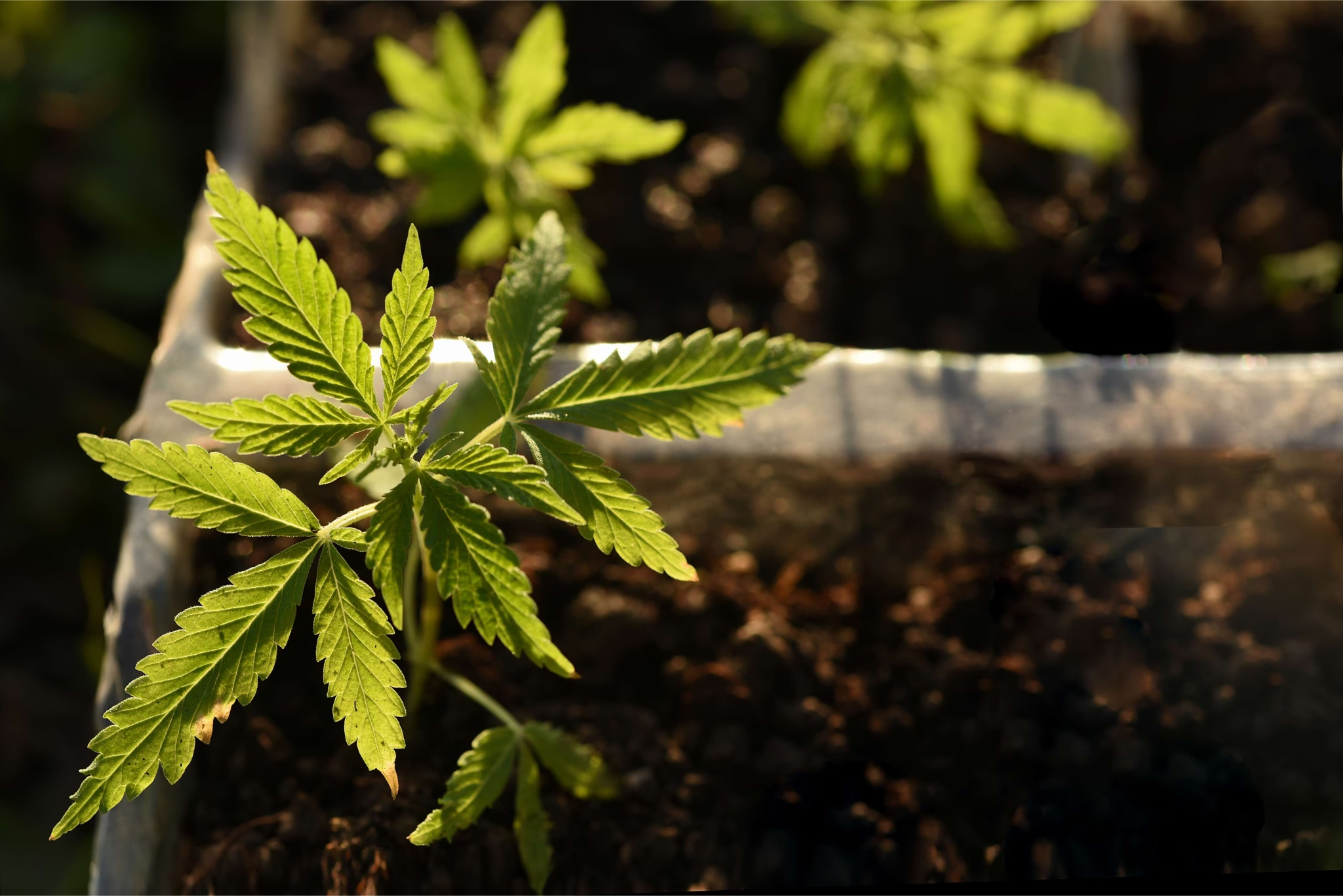
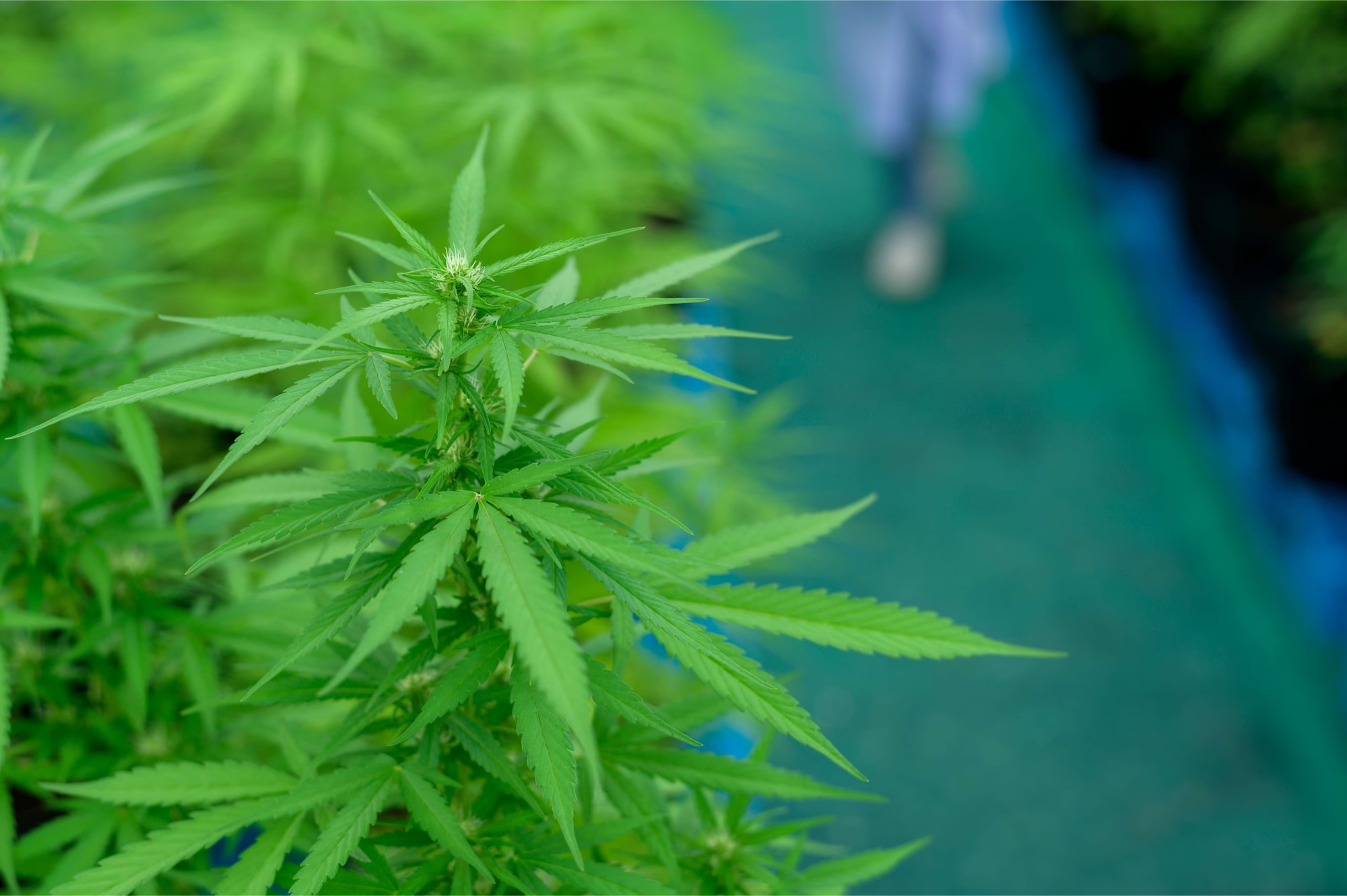
Vigorous cannabis vegetative plant transpiring in well-aerated organic potting soil under warm sunlight.
Diagnostic Testing: Lift Method, Soil Probes, Tensiometers, and Moisture Profiles
Beginner growers frequently make the mistake of evaluating container hydration solely by looking at the top half-inch of soil. Soil surfaces dry rapidly due to radiant heat from grow lights and direct air movement from oscillating canopy fans, while the root core 6 inches below remains completely saturated. To accurately evaluate true root-zone hydration, cultivators utilize four diagnostic techniques:
1. The Two-Knuckle Finger Probe
Insert a clean index finger two full knuckles deep (approximately 2.0 to 2.5 inches) into the potting soil midway between the container rim and the plant main stem. If the soil at that depth feels cool, pliable, and clings to skin like moist cake crumbs, ample plant-available water remains in the root zone: do not water. If the soil at two knuckles feels dusty, warm, and loose without clinging to skin, the upper root zone is dry and ready for moisture inspection via pot lifting.
2. Dial-Gauge Soil Tensiometers (Irrometer / Blumat Digital)
Tensiometers utilize a porous ceramic tip filled with de-aired water attached to a vacuum gauge. When inserted into the soil root ball, water is pulled through the ceramic tip into drying soil, creating a measurable vacuum inside the tube. In container soil cultivation, tensiometer readings provide exact matric potential: readings of 5 to 10 cbar (or kPa) indicate full saturation; readings of 15 to 25 cbar mark the ideal watering window for vegetative cannabis; and readings above 35 to 40 cbar indicate excessive drought stress.
3. Deep Moisture Meter Probes vs. Electrical Resistance Fallacies
Many beginner growers purchase inexpensive dual-prong analogue moisture meters from retail garden centers. Cultivators must recognize that cheap analogue meters measure electrical conductivity (resistance), not actual water volume. If your soil contains higher levels of dissolved organic kelp or mineral fertilizer salts, budget resistance meters will register “Wet” even when the soil is completely bone dry. If using metal probes, opt for calibrated capacitive probes or combine them with physical lift validation.
| Container Size & Type | Plant Growth Stage | Average Water Volume per Event | Typical Interval Between Waterings | Runoff Strategy (Organic vs Mineral) |
|---|---|---|---|---|
| 1-Gallon (3.8 L) Nursery Pot | Seedling / Early Veg (Weeks 1 – 3) | 250 ml – 400 ml (targeted ring around stem) | Every 3 to 5 days (slow transpiration) | 0% runoff (avoid washing root zone) |
| 3-Gallon (11.4 L) Fabric Pot | Mid-to-Late Veg (Weeks 3 – 6) | 1.5 L – 2.2 L (15% – 20% container volume) | Every 2 to 3 days (moderate transpiration) | 5% light trickle (confirm complete saturation) |
| 5-Gallon (19 L) Fabric Pot | Transition Stretch & Early Bloom | 2.5 L – 3.8 L (20% container volume) | Every 2 to 3 days (rapid water uptake) | 10% – 15% runoff if using synthetic salts; 0% in living soil |
| 7-Gallon (26.5 L) Smart Pot | Peak Flowering Bulking (Weeks 4 – 7) | 3.8 L – 5.5 L (deep soak) | Every 1 to 2 days (heavy transpiration canopy) | 10% runoff to prevent localized mineral salt pockets |
| 15+ Gallon Living Soil Bed | Full Cycle (Seed to Harvest) | 5% – 8% container volume daily or drip pulsed | Continuous steady-state (daily low-volume pulses) | Strictly 0% runoff (preserve organic soil biology) |
The operational guidelines outlined in Table 1 demonstrate how container dimensions and plant transpiration rates dictate watering volume and delivery tempo. However, beginner growers frequently struggle to reconcile how much volume to pour during individual applications without leaving dry hydrophobic dead zones in the center of the pot.
How much water should I pour each time, and how do I know if I am underwatering the root core?
Question sent by: Marcus Vance, via email.
“I am growing two plants in 5-gallon soil pots. I pour about 2 cups of water every single morning around the base of the plant. The top looks damp, but my lower leaves are drooping and turning pale yellow, and my plant growth has completely stopped. Am I giving too much water or too little?”
You are suffering from classic chronic micro-underwatering combined with root-core desiccation.
Pouring two small cups (approximately 500 milliliters) into a 5-gallon (19-liter) container only wets the top 2 inches of soil directly beneath the pour spout. Because water clings to dry peat via surface tension, 500 ml is nowhere near enough liquid volume to overcome the matric suction of the dry medium and percolate down to the mid and bottom root zones. As a result, 75% of your root system is stranded in bone-dry, desiccated dirt. The roots in that dry zone cannot absorb moisture or mobile nitrogen, causing lower leaves to yellow and drop. Meanwhile, because you pour water every single morning, the top 2 inches never get a chance to dry back, suffocating the top surface roots and creating a localized hypoxia zone.
The corrective rule for container soil is simple: water thoroughly to full container capacity, then wait for a full dry-back. In a 5-gallon soil container, a full watering requires approximately 2.5 to 3.5 liters (0.75 to 1.0 gallon) of water delivered slowly in stages across the entire soil surface. Once the pot is completely soaked from top to bottom, stop watering entirely. Lift the pot to feel its heavy baseline mass, then allow 3 to 4 days for the plant canopy to transpire the water out until the pot feels light again before applying another drop.
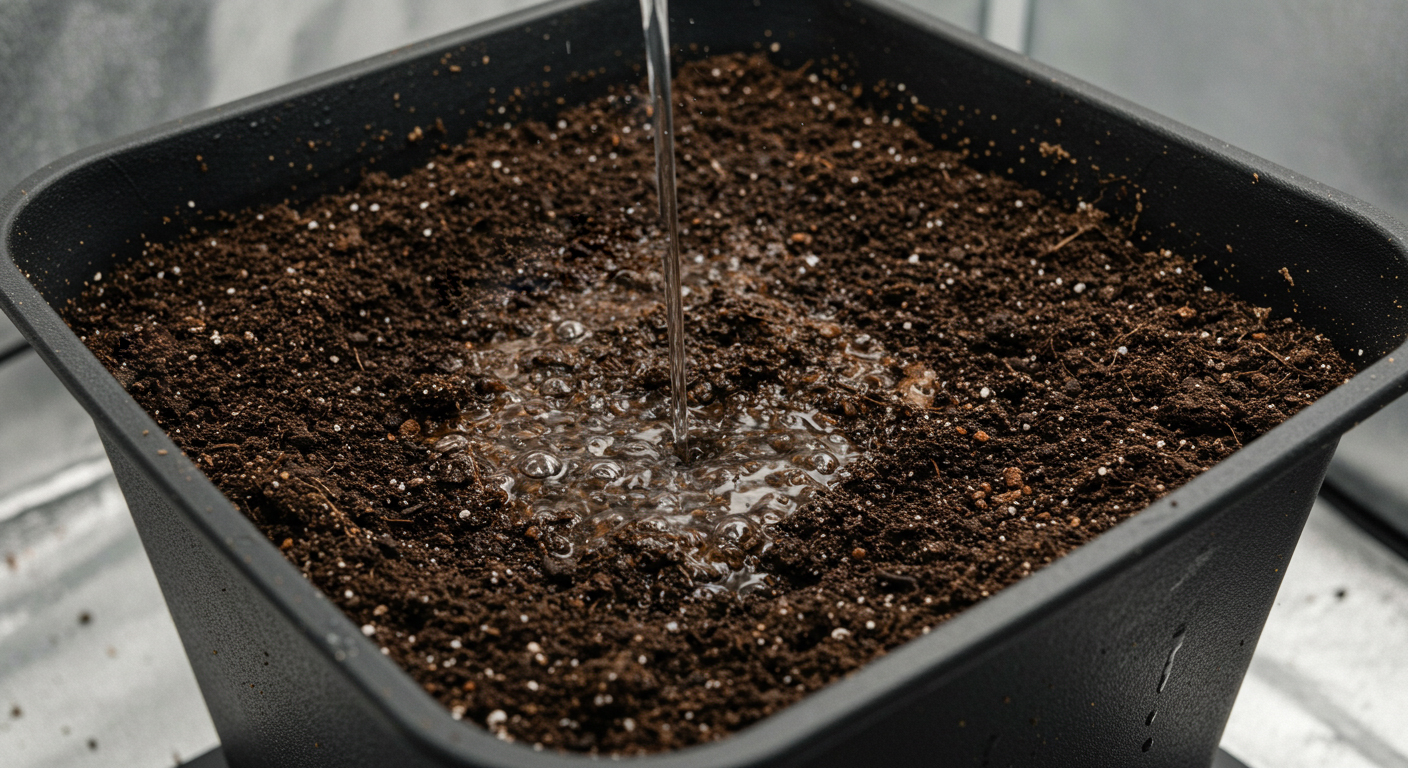
Container drainage evaluation testing percolation velocity and preventing perched water table accumulation.
Material/System Tradeoffs: Fabric Pots vs Plastic Containers, Perlite Ratios, and Peat vs Loam
The physical design of your container and the textural composition of your potting mix dictate how water moves, drains, and dries out:
- Fabric Pots (Smart Pots / Root Pouches) vs. Solid Plastic Nursery Pots: Solid plastic containers only allow water and air exchange through small holes drilled into the flat bottom. In plastic pots, water drains slowly, and roots that hit the smooth impermeable walls spiral around the perimeter, becoming root-bound. Fabric containers made of breathable geotextile polypropylene allow lateral evaporation and total 360-degree air penetration. When root tips reach the breathable fabric wall, air exposure dehydrates the apical root tip, triggering natural “air pruning” that stimulates extensive lateral branching throughout the soil volume. However, fabric pots dry out 30% to 50% faster than plastic containers, requiring more frequent watering cycles.
- Aeration Amendments (Perlite, Pumice, Rice Hulls): Standard commercial potting soils are frequently too dense and water-retentive for cannabis. Cannabis roots thrive when potting soils are amended with 20% to 30% coarse perlite or volcanic pumice by volume. Coarse perlite creates permanent, rigid macropores that cannot be compressed by gravitational head pressure, ensuring rapid gravitational percolation and preventing chronic overwatering even if a grower waters too heavily.
- Peat-Based vs. Coco-Coir vs. Loam-Based Mixes: Sphagnum peat moss holds up to 20 times its dry weight in water and has an acidic natural pH (3.8 to 4.5) buffered with agricultural limestone. Peat provides excellent moisture retention but exhibits extreme hydrophobicity if allowed to dry completely. Coco coir holds exceptional moisture while maintaining superior air-filled porosity (approximately 25% air at full saturation compared to 10% in peat), but coco coir requires specific calcium-magnesium buffering. Rich loam-based living soils hold substantial biological humus, requiring steady-state capillary moisture rather than dramatic dry-down extremes.
The Horticultural Myth: Why Adding Gravel to the Bottom of Pots Drowns Cannabis Roots
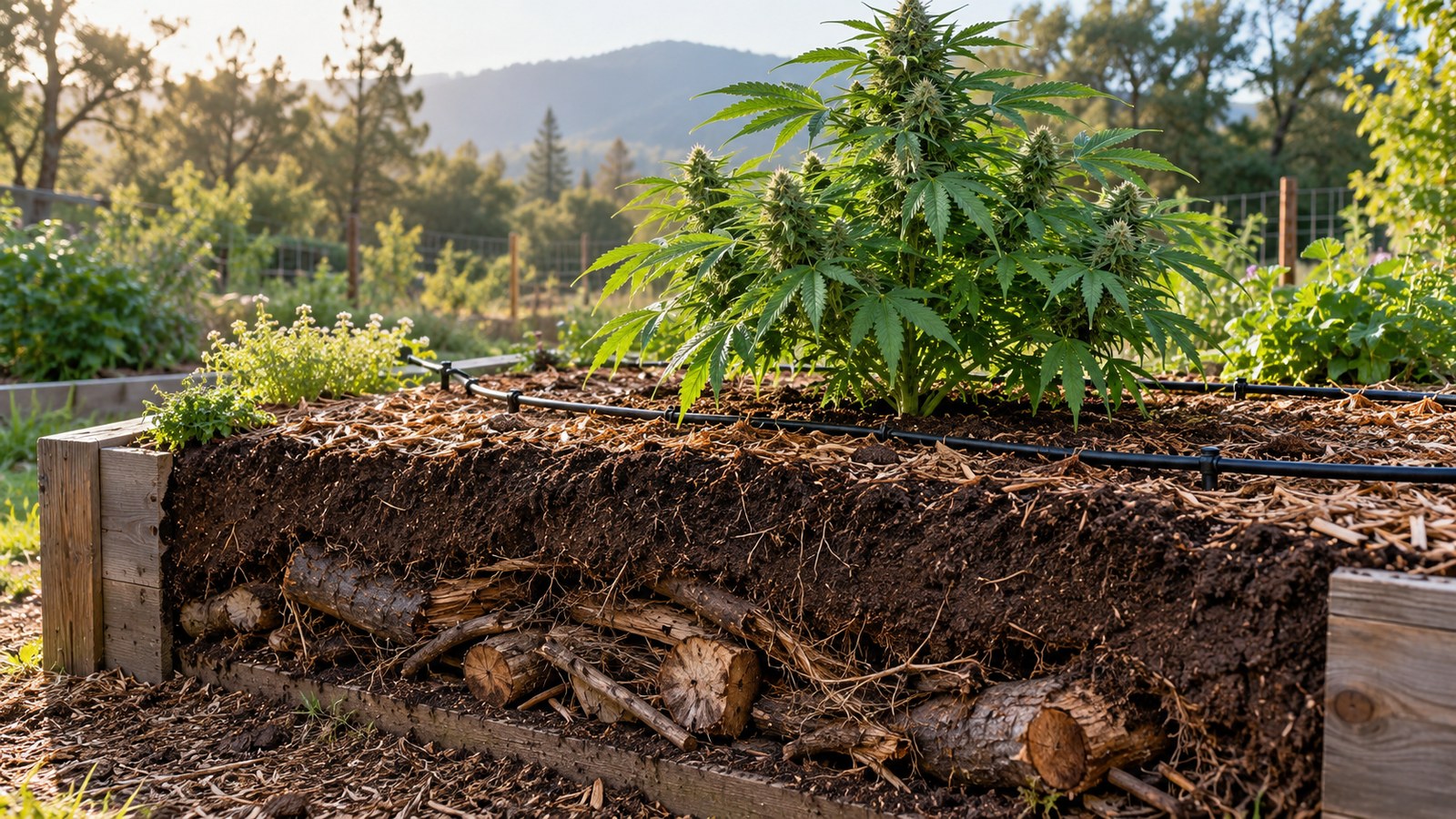
A persistent folklore myth among beginner gardeners advises placing a 1-inch layer of gravel, stones, or clay pebbles at the bottom of a pot to “improve drainage.” In soil physics, this practice produces the exact opposite result by creating a dangerous perched water table. Water will not cross an interface from a fine-textured medium (potting soil) into a coarse-textured medium (gravel) until the fine soil above is 100% saturated to the point of positive hydrostatic pressure. Placing gravel at the base artificially raises the saturation zone higher up into the container, effectively shrinking the root zone volume and placing root cortical tissue directly into a stagnant pool of anoxic sludge. Always fill containers with uniform, well-mixed soil from the very bottom to the top rim.
Understanding the internal hydrology of container soils prevents structural mistakes like perched water tables. However, once water is properly introduced to the pot, beginner cultivators encounter intense debates regarding drainage management, particularly whether water should be allowed to exit through the base perforations.
Should beginner soil growers water until runoff every time, or will that wash away all my organic amendments?
Question sent by: Elena Rostova, via email.
“I keep reading conflicting advice online. Hydroponic growers say you must always get 20% runoff to wash away salts. Organic living soil growers say you should never let any water drain out or you will strip your nutrients. Which rule should a beginner growing in potting soil follow?”
The correct answer depends entirely on whether your soil fertility is powered by bottled liquid mineral salts or amended organic dry amendments and soil biology.
Scenario A: If you feed with synthetic or liquid mineral fertilizers (Fox Farm, General Hydroponics, FloraFlex): You must water until 10% to 15% runoff emerges from the bottom. Liquid mineral fertilizers deliver concentrated soluble salts (calcium nitrate, potassium phosphate, ammonium sulfate). As roots transpire pure water, unabsorbed mineral ions remain behind in the soil pore spaces. If you never water to runoff, these residual salts accumulate over several weeks, driving root-zone electrical conductivity past 4.0 dS/m and causing severe salt burn and nutrient lockout. The 10% to 15% runoff flushes accumulated mineral residues out of the pot. Always empty saucers within 30 minutes: never let containers sit in their own stagnant runoff brine.
Scenario B: If you grow in living organic soil or super soil (Fox Farm Ocean Forest, SoHum, BuildASoil): You should aim for minimal to zero runoff (0% to 5% max). In living organic soil, plant nutrition is stored inside complex organic matter (alfalfa meal, bat guano, bone meal, worm castings) and processed by living soil microbes. Pouring excessive water that drains heavily out of the container leaches water-soluble organic fulvic acids, humic substances, and beneficial bacteria right down the drain, depleting your soil fertility reserves. In living organic soil, water slowly with 5% to 10% of container volume, moistening the entire profile without generating heavy drainage torrents. Consult our complete analysis on leaching fractions and runoff dynamics for media-specific calculations.
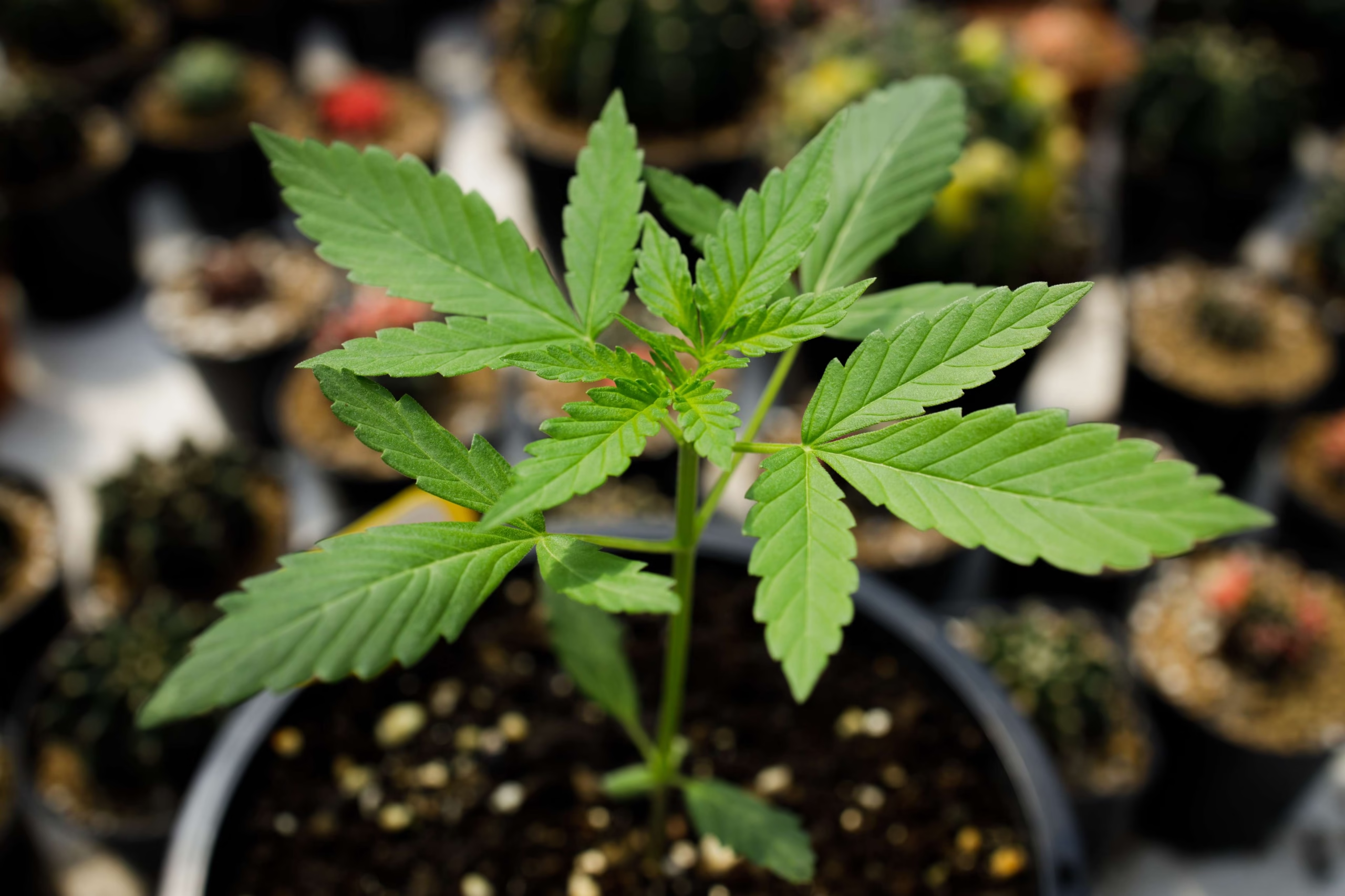
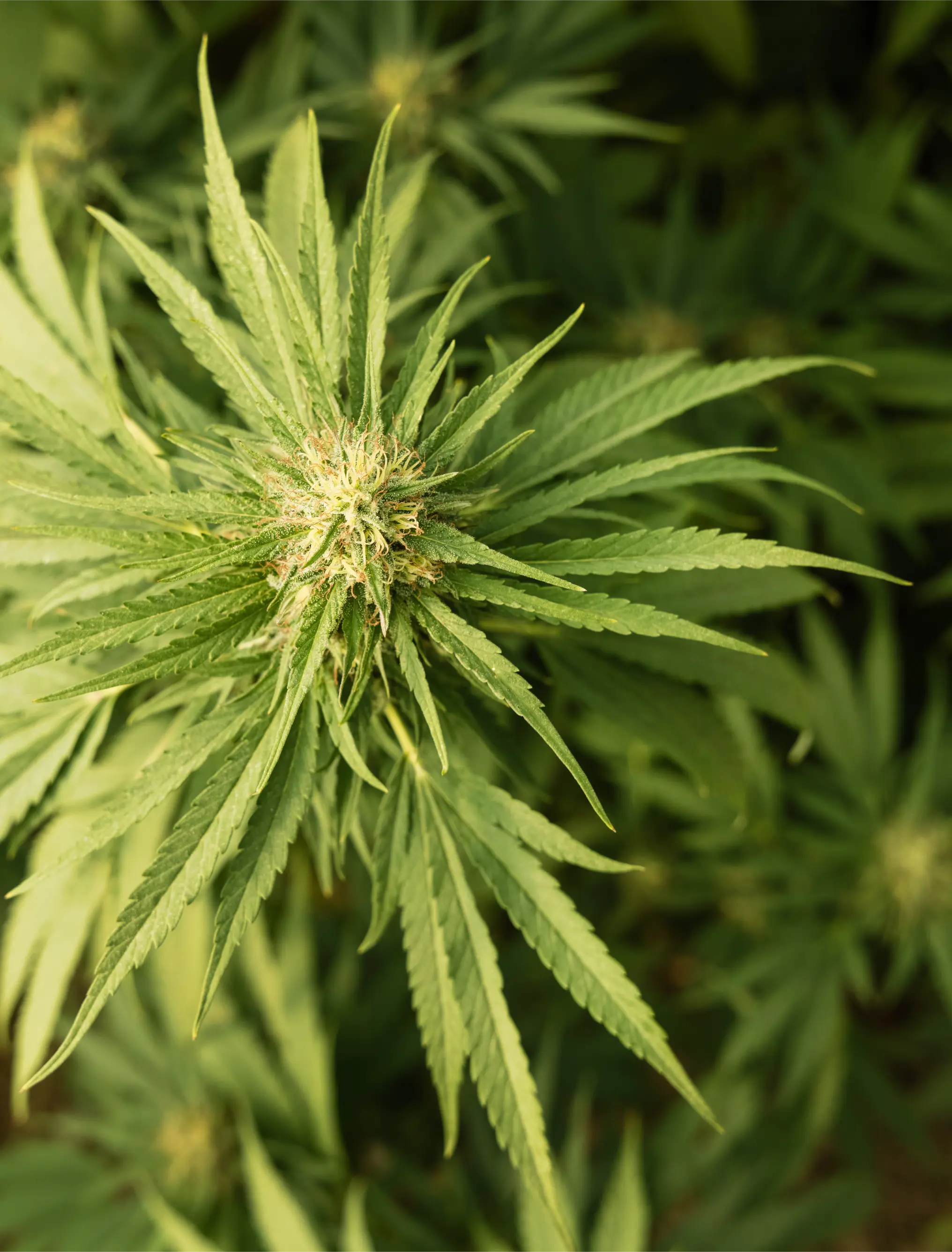
Potted soil cannabis displaying healthy leaf turgor and dark green coloration following balanced wetting and drying cycles.
Failure Modes and Look-Alikes: Overwatering, Underwatering, Perched Tables, and Channeling
Because visual canopy wilting is a non-specific symptom produced by both saturated asphyxiation and acute drought desiccation, novice cultivators frequently misdiagnose root-zone distress. When roots drown in waterlogged soil, cellular oxygen deprivation blocks the production of adenosine triphosphate (ATP) in root cortical mitochondria. Without cellular ATP, root cell membrane pumps cannot phosphorylate aquaporin channels, halting active water transport into the metaxylem. Simultaneously, hypoxic roots synthesize 1-aminocyclopropane-1-carboxylic acid (ACC), which translocates up into the canopy and oxidizes into ethylene gas. Ethylene causes downward petiole epinasty: the familiar thick, curled “clawing” where leaves droop downward even though their vascular tissues remain turgid and water-filled.
In contrast, true drought underwatering drains cellular vacuoles, dropping leaf turgor pressure to zero. The entire leaf blade and petiole collapse into limp, papery ribbons that lack structural firmness. The critical distinction lies in tactile physical inspection: overwatered leaves feel heavy, firm, and brittle, while underwatered leaves feel soft, thin, and lifeless. Table 2 breaks down the physiological differences between common root-zone watering mistakes:
| Diagnostic Symptom | Overwatering (Hypoxic Root Drowning) | Underwatering (Cellular Plasmolysis) | Hydrophobic Channeling (Bypass Flow) |
|---|---|---|---|
| Leaf Texture & Feel | Thick, heavy, firm, turgid; curling downward like a curled claw | Thin, limp, papery, lifeless; soft to the touch throughout canopy | Patchy: upper leaves limp while lower leaves show localized necrosis |
| Stem & Petiole Rigidity | Petioles remain stiff and arched while leaf blades curl downward | Both petioles and leaf blades droop limply against main branches | Inconsistent petiole turgor across different branches of the same plant |
| Container Weight | Extremely heavy; waterlogged; cold to the touch at container base | Extremely light; feels hollow when lifted; slides easily on floor | Deceptively light despite rapid water emergence into runoff saucer |
| Drainage Behavior | Continuous sluggish oozing; soil remains swampy for 5+ days | Soil is rock hard; surface cracks; soil pulls away from pot walls | Water flashes straight through container perimeter in under 10 seconds |
| Root Health Status | Brown, slimy, decaying cortical sheath; foul anaerobic odor | White or tan root cores but shriveled, desiccated fine root hairs | Roots concentrated only along outer edges where bypass water flowed |
| Primary Corrective Action | Withhold irrigation immediately; increase airflow; elevate pot | Slow, staged soak; re-establish capillary hydration; mist canopy | Apply organic surfactant (yucca extract) and bottom-submerge container |
Systemic Soil Water Corrections: Resetting Aeration, Rewetting Channels, and Volume Sizing
When a watering mistake has occurred in potting soil, attempting to fix it by blindly dumping a chemical additive or watering schedule change will often exacerbate the problem. Follow these systematic recovery sequences:
1. Correcting an Overwatered Soil Container
If you have overwatered your cannabis plant and the pot has remained heavy and swampy for over four days, take immediate steps to re-introduce atmospheric oxygen:
- Elevate and Isolate: Place the container on an elevated pot elevator or wire baking rack to allow unrestricted airflow underneath the bottom drainage holes. Trapped water beneath solid pot bottoms creates an airtight seal that prevents capillary drainage.
- Direct Oscillating Airflow: Aim a low-speed oscillating fan directly across the base of the container fabric to accelerate lateral evaporative dry-back.
- Do Not Fertilize: Never feed an overwatered plant with additional nutrients in an effort to “boost its energy.” Damaged hypoxic root hairs cannot absorb salts, and added fertilizers will simply compound osmotic stress. Withhold all liquids until the container achieves a full 50% gravimetric dry-back.
2. Remedying Hydrophobic Peat and Soil Bypass Channeling
If your soil has dried out to the point where water runs straight down the inside walls and out the bottom into the saucer in 10 seconds while leaving the center bone dry, your peat moss has turned severely hydrophobic. Review our full operational guide on rewetting hydrophobic soil and peat. Execute this proven two-step restoration:
- Apply a Horticultural Wetting Agent (Yucca Extract / Quillaja Saponin): Mix 1/8 teaspoon of natural organic yucca extract powder per gallon of clean, lukewarm water (20 °C to 22 °C). Saponins act as natural non-ionic surfactants that reduce water surface tension from 72 dynes/cm down to 30 dynes/cm, allowing water droplets to penetrate organic hydrophobic waxes and soak directly into compressed peat fibers.
- Execute Bottom-Submersion Rewetting: Place the entire container into a large shallow tub filled with 2 to 3 inches of yucca-treated water. Allow the container to soak from the bottom up via capillary wicking for 45 to 60 minutes until the top soil surface becomes uniformly moist. Remove the pot, allow gravitational drainage for 20 minutes, and return to the grow area.
3. The Three-Stage Pulse Pouring Protocol for Soil Containers
To prevent water from channeling down the container sides during routine manual waterings, beginner cultivators should adopt the commercial three-stage pulse method:
- Pulse 1 (Surface Priming): Pour 20% of your total intended water volume evenly across the entire surface of the pot. Wait 10 to 15 minutes. This preliminary pulse breaks surface crusting and hydrates top peat fibers, initiating capillary action without pushing water to the bottom.
- Pulse 2 (Core Hydration): Pour 50% of your total volume in a circular spiral moving outward from the main stalk toward the container edge. Wait 10 minutes. The moisture front moves downward uniformly, drawn inward by the capillary suction activated in Pulse 1.
- Pulse 3 (Completion & Leaching): Pour the remaining 30% of your volume. This final pulse pushes through the lower root zone, reaching container capacity and generating the desired light runoff without washing preferential erosion canyons through the potting soil.
Soil Potting and Irrigation Setup Checklist
Before planting or transplanting cannabis into container potting soil, verify these critical agronomic parameters:
- Breathable fabric pots (Smart Pots or Root Pouches) are selected to ensure 360-degree lateral aeration and automatic root air pruning.
- Potting soil is amended with 20% to 30% coarse perlite or volcanic pumice to guarantee open macropores under compaction.
- Gravel, stones, and clay pebbles are strictly omitted from the pot base to avoid creating a lethal perched water table.
- Containers are placed on pot elevators or wire risers above saucers to maintain free air exchange beneath drainage holes.
- The lift test baseline is calibrated: the physical weight of the container at full saturation and dry-back floor is memorized.
- Irrigation water temperature is maintained between 18 °C and 22 °C (64 °F to 72 °F) to maximize dissolved oxygen content.
- Water is applied slowly in multiple passes across the entire soil surface, avoiding single localized dump points.
- Runoff strategy matches fertilizer format: 10% to 15% leaching for liquid mineral salts, 0% to 5% for living organic soils.
- Runoff saucers are completely drained or wet-vacuumed within 30 minutes of irrigation; pots never sit in stagnant leachate.
- Soil moisture is verified two knuckles deep and validated by container weight before any subsequent irrigation is initiated.
Scientific References
- Brady, N. C., & Weil, R. R. (2016). The Nature and Properties of Soils (15th ed.). Pearson, New York.
- Bugbee, B. (2004). Nutrient management in recirculating hydroponic culture. Acta Horticulturae, 648, 99-112.
- Hillel, D. (2004). Introduction to Environmental Soil Physics. Academic Press, San Diego, CA.
- Kramer, P. J., & Boyer, J. S. (1995). Water Relations of Plants and Soils. Academic Press, San Diego, CA.
- Marschner, H. (2012). Marschner’s Mineral Nutrition of Higher Plants (3rd ed.). Academic Press, London.
- Raviv, M., & Lieth, J. H. (2008). Soilless Culture: Theory and Practice. Elsevier Science, Amsterdam.
- Taiz, L., Zeiger, E., Møller, I. M., & Murphy, A. (2015). Plant Physiology and Development (6th ed.). Sinauer Associates, Sunderland, MA.
- Zheng, Y. (2021). Handbook of Cannabis Production in Controlled Environments. CRC Press, Boca Raton, FL.
Share this article
A quick overview of the topics covered in this article.