

Ozone Generators in Grow Rooms: Health and Crop Risks
In the ongoing quest to eliminate intense botanical odors and sterilize airborne fungal pathogens, indoor cannabis cultivators occasionally turn to industrial ozone generators. Aggressively marketed across some horticultural forums as miracle air purifiers capable of obliterating powdery mildew, killing spider mites, and permanently eliminating skunky odors, ozone (O3) generators represent one of the most hazardous and counterproductive technologies ever introduced to indoor agriculture. Operating an active ozone generator inside or directly upstream of an occupied cannabis cultivation room inflicts catastrophic oxidative damage on plant tissue, permanently destroys delicate terpene profiles, and creates severe, life-threatening respiratory health hazards for human cultivators.
Ozone is not a benign air freshener; it is a highly reactive, unstable triatomic allotrope of oxygen and one of the most powerful oxidizing agents known to chemical science. While standard atmospheric oxygen (O2) is stable, ozone possesses an extra oxygen atom held by a weak chemical bond. This third oxygen atom readily detaches to oxidize any organic substance it contacts, indiscriminately attacking living plant cells, animal lung tissue, electrical wiring insulation, and rubber duct gaskets. Understanding the biophysical pathology of ozone toxicity, occupational safety exposure limits, and safe air purification alternatives is essential for protecting both crop equity and human life.
Toxicological Law: The Incompatible Window of Ozone Efficacy vs Biological Safety
The fundamental scientific dilemma of ozone generation is that the concentration required to kill fungal spores or oxidize volatile terpenes is ten to fifty times higher than the concentration that causes acute cellular damage to cannabis foliage and severe respiratory injury to humans. Federal OSHA and EPA regulations establish a strict maximum human 8-hour exposure limit of 0.10 parts per million (ppm), with 0.05 ppm recommended for continuous exposure. However, destroying Botrytis or powdery mildew spores requires ozone concentrations exceeding 2.0 to 5.0 ppm. You cannot sterilize a room with ozone while plants or humans are inside without causing catastrophic oxidative destruction.
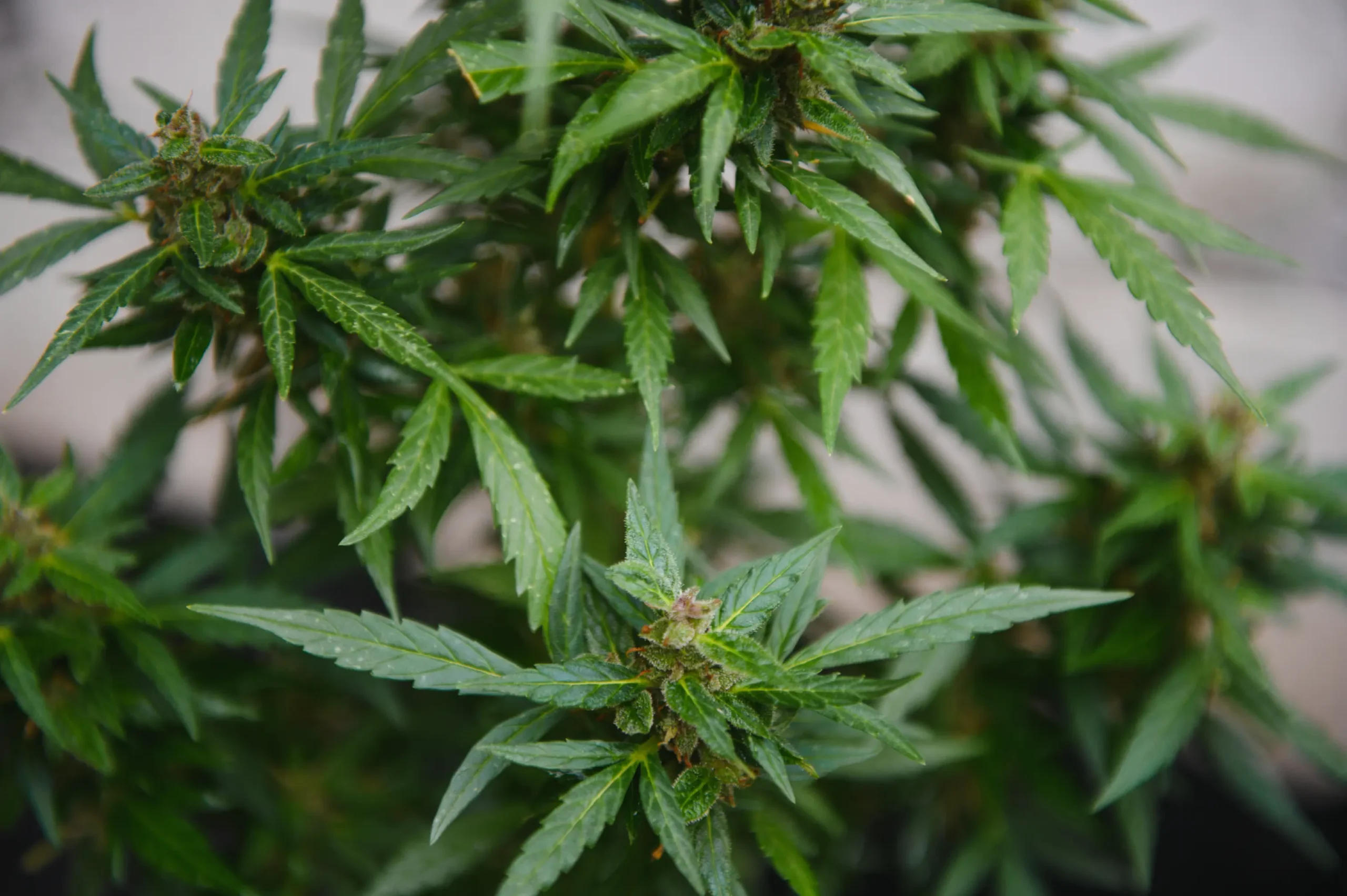
The biological impact on cannabis foliage is devastating. When ozone gas enters leaves through open stomatal guard cells, it immediately dissolves in the apoplastic fluid surrounding photosynthetic cells. Ozone reacts instantaneously with cellular water and organic membranes, generating toxic reactive oxygen species (ROS): hydrogen peroxide, hydroxyl free radicals, and superoxide anions. These free radicals induce massive lipid peroxidation, rupturing cellular plasma membranes, degrading chlorophyll molecules, and triggering programmed cell death (necrosis). Within 24 hours of ozone exposure, fan leaves develop severe interveinal chlorosis, bronze flecking, and necrotic leaf margins that mimic acute nutrient burns.
Even more tragic for connoisseur cultivators is the total destruction of floral aroma. Terpenes are unsaturated volatile hydrocarbons characterized by multiple carbon-carbon double bonds. Ozone reacts with terpenes through rapid ozonolysis, cleaving the carbon double bonds and breaking complex aromatic monoterpenes and sesquiterpenes down into non-aromatic aldehydes, ketones, and organic peroxides. Operating an ozone generator near flowering colas completely strips the crop of its natural bouquet, leaving cured buds smelling like stale grass or burnt bleach, while severely degrading cannabinoid potency.
Furthermore, human respiratory risks are severe. Inhaled ozone oxidizes the delicate epithelial lining of the human respiratory tract, causing bronchial inflammation, chest tightness, severe coughing, reduced vital lung capacity, and permanent pulmonary damage. Cultivators who spend hours working in ozone-treated rooms experience chronic respiratory irritation and dramatically elevated risks of asthma and permanent lung scarring.
This technical guide provides an exhaustive engineering analysis of ozone chemistry, foliar toxicity symptoms, structural equipment degradation, and life-safety thresholds. Cultivators will discover why ozone generation has been universally abandoned by modern commercial CEA facilities in favor of safe, high-performance gas-phase activated carbon adsorption and intake HEPA biosecurity.
Defining Space Constraints: Dimensions, Access, and Chemical Reactivity Limits
To Evaluate Ozone Hazards Objectively, Cultivators
To evaluate ozone hazards objectively, cultivators must understand the physical space constraints, fluid dynamics, and chemical reactivity rates that govern ozone gas behavior inside enclosed architectural structures. Ozone generation cannot be controlled like simple heat or humidity; it operates as an uncontrollable chain reaction of gas-phase oxidation.
The physical volume and air exchange rate of the cultivation facility dictate how ozone gas accumulates. In compact spaces (such as 4×4 or 5×5 grow tents, spare bedrooms, or basement enclosures), ozone output from even a small corona-discharge generator (rated at 200 to 500 milligrams per hour) rapidly saturates the airspace. Within 15 minutes of activation, ozone concentrations inside a small enclosure surge past 1.5 to 3.0 ppm (thirty times the OSHA safe threshold). Because ozone is approximately 1.6 times denser than air, the toxic gas pools along floor corridors and under-canopy zones, displacing breathable air and exposing lower root containers and service aisles to maximum oxidative stress.
“A friend told me to put an ozone generator inside my exhaust ducting after my carbon filter to kill any lingering smell before the air goes outside. Is this safe to do?”
Question sent by: Kellan Callahan, via grow journal submission.
Installing an ozone generator in your exhaust duct is hazardous and causes severe equipment damage. First, ozone requires a minimum reaction dwell time of 5 to 10 seconds to oxidize volatile organic compounds. In high-velocity exhaust ducting where air travels at 600 to 1,000 feet per minute, air exits the building in less than one second, leaving virtually zero time for ozone to eliminate odors. Instead, unreacted raw ozone gas discharges outdoors, creating toxic exposure hazards for neighbors. Second, ozone aggressively corrodes the metal impeller blades and motor bearings of your inline fan and rapidly degrades flexible rubber duct couplings. You should rely on an properly sized virgin activated carbon filter, which achieves 100 percent single-pass odor elimination safely.
Craigs Question Addresses the Common Misconception
Craig’s question addresses the common misconception of using in-duct ozone generation. Cultivators assume that because ducting is enclosed, ozone gas will be contained. However, chemical kinetics cannot be rushed: volatile terpenes (such as beta-myrcene and caryophyllene) require prolonged contact dwell time in a large reaction plenum to be oxidized by ozone.
In high-velocity duct runs, unreacted ozone simply blows out of the exterior building termination. Ozone has a low human olfactory threshold (detectable at 0.01 to 0.03 ppm as a sharp, pungent chlorine-like odor). Neighbors smelling an ozone plume immediately recognize an industrial chemical reaction, defeating all operational stealth while exposing surrounding residential environments to hazardous ambient ozone pollution.
Layout Architecture Before Purchasing Equipment: Isolation and Airpath Rules
Commercial Controlled Environment Agriculture Facilities Maintain Strict
Commercial controlled environment agriculture facilities maintain strict layout boundaries regarding air treatment infrastructure. If ozone is ever deployed within an industrial facility, its application is strictly quarantined to unoccupied waste-air treatment plenums or empty-room terminal sterilization cycles.
The first structural rule of facility design is complete physical isolation between ozone treatment zones and active cultivation canopies. Ozone must never be generated in any space that shares air circulation, return ducting, or passive intake pathways with living plants. If an industrial facility utilizes an ozone injection chamber to neutralize exterior exhaust odors, that reaction chamber must be constructed of heavy-duty 316 stainless steel or fluoropolymer (PVDF / Teflon), located downstream of all fans and mechanical equipment, and maintained under continuous negative pressure with fail-safe outdoor discharge.
“How much margin for error do I really have with commercial controlled environment agriculture facilities maintain strict during peak flowering when plant demand is at its highest?”
Question sent by: Kellan Beaulieu, via contact form.
Start by taking a direct baseline measurement rather than guessing from foliar symptoms alone. In practice, Entry doors to spaces equipped with ozone generation must be equipped with magnetic door interlocks that instantly kill power to the ozone generator when the door unlatches.
Once you have confirmed the baseline reading, adjust only one variable at a time and log the response over the next 24 to 48 hours. In addition, illuminated exterior warning placards (displaying “DANGER: OZONE GENERATION ACTIVE: DO NOT ENTER”) must be mounted at eye level outside all access points.
Equipment placement inside the cultivation room must prioritize non-reactive mechanical components. Air conditioning coils and commercial dehumidifiers utilize aluminum heat exchanger fins and copper refrigerant tubes. Ozone gas accelerates galvanic corrosion between aluminum and copper, causing microscopic refrigerant pinhole leaks that vent expensive HFC or HFO refrigerants and destroy HVACD cooling compressors. Facilities that run ozone generators routinely experience catastrophic air conditioner compressor burnouts within 12 to 18 months of commissioning.
Sensor Placement Is Severely Compromised by Ozone
Furthermore, sensor placement is severely compromised by ozone gas. Solid-state capacitive humidity transducers, NTC temperature thermistors, and optical NDIR carbon dioxide sensors utilize delicate polymer membranes and optical lenses. Ozone oxidizes these sensor elements, causing rapid calibration drift, erratic signal output, and permanent transducer death. An automated climate controller relying on ozone-degraded sensors will misread environmental conditions, cycling fans and heaters erratically.
Structural Degradation Rule: Ozone Attack on Plastics, Rubber, and Wiring
Ozone is exceptionally destructive to common cultivation materials. It cleaves polymer chains in elastomers, natural rubber, silicone, and un-stabilized plastics through oxidative embrittlement. Operating an ozone generator inside a grow room causes flexible duct sleeves to crack, silicone irrigation tubing to split and leak, tent reflective Mylar coatings to peel, and electrical wire insulation to become brittle and crumble. Within six months, ozone exposure degrades electrical insulation, exposing bare copper conductors and creating severe electrical arc fire hazards.

Electrical Safety Infrastructure
Electrical safety infrastructure must also be physically separated from potential ozone zones. Electronic LED drivers, digital lighting ballasts, and automated fertigation relay boards contain sensitive printed circuit boards (PCBs) with lead-tin solder joints and copper traces. Ozone rapidly corrodes copper traces, forming non-conductive copper oxide films that cause intermittent electronic connection drops, controller lockups, and PCB burnouts.
Life-safety access controls must be hardwired into any facility deploying ozone. Entry doors to spaces equipped with ozone generation must be equipped with magnetic door interlocks that instantly kill power to the ozone generator when the door unlatches. In addition, illuminated exterior warning placards (displaying “DANGER: OZONE GENERATION ACTIVE: DO NOT ENTER”) must be mounted at eye level outside all access points.
Equipment Sizing Workflow: Analyzing the Fatal Sizing Imbalance
To Definitively Prove Why Ozone Generation
To definitively prove why ozone generation is mathematically and biologically incompatible with indoor cannabis cultivation, cultivators must execute a quantitative mass balance and exposure calculation.
Consider the biological requirements for odor elimination versus crop survival. A mature four-plant cannabis canopy in late bloom emits volatile organic terpenes at an approximate mass rate of 0.50 to 1.5 grams per hour. To oxidize one gram of monoterpenes via gas-phase ozonolysis requires approximately 1.5 to 2.5 grams of pure ozone gas, assuming 100 percent stoichiometric reaction efficiency. In a standard 5×5 grow tent (200 cubic feet of volume) with a 250 CFM exhaust fan, maintaining this reaction rate requires injecting ozone at a continuous concentration exceeding 4.0 to 6.0 ppm.
“When working on to definitively prove why ozone generation in my home grow, how do I know if my current setup is drifting out of range before visible plant stress appears?”
Question sent by: Kellan Dube, via contact form.
Start by taking a direct baseline measurement rather than guessing from foliar symptoms alone. In practice, In a standard 5×5 grow tent (200 cubic feet of volume) with a 250 CFM exhaust fan, maintaining this reaction rate requires injecting ozone at a continuous concentration exceeding 4.0 to 6.0 ppm.
Once you have confirmed the baseline reading, adjust only one variable at a time and log the response over the next 24 to 48 hours. A carbon filter captures 100 percent of volatile terpenes on a single pass, operates with zero foliar damage, releases zero toxic byproducts, consumes zero electrical wattage, and poses zero health hazards to cultivators working inside the facility.
| Ozone Concentration (ppm) | Human Health Impact (OSHA / EPA) | Cannabis Foliar Impact | Terpene & Odor Impact |
|---|---|---|---|
| 0.01 to 0.03 ppm | Olfactory detection threshold (chlorine smell) | Zero visible damage; background ambient level | Zero odor reduction; terpenes completely unaffected. |
| 0.05 to 0.10 ppm | OSHA 8-hour legal permissible exposure limit (PEL) | Minor stomatal guard cell fatigue | Negligible odor neutralization (< 5% VOC capture). |
| 0.15 to 0.30 ppm | Throat irritation, coughing, chest tightness, headache | Stomatal closure; reduced transpirational cooling | Partial monoterpene oxidation; lingering odor. |
| 0.50 to 1.00 ppm | Severe respiratory distress, pulmonary edema risk | Acute foliar chlorosis, bronze flecking, necrosis | Monoterpenes destroyed; cured aroma ruined. |
| 2.00 to 5.00 ppm | Immediately dangerous to life and health (IDLH) | Total crop destruction; complete tissue death | Odor oxidized, but crop is 100% dead and unsellable. |
The Toxicological Matrix Above Illustrates the Fatal
The toxicological matrix above illustrates the fatal paradox of horticultural ozone application. At legal, human-safe concentrations (below 0.10 ppm), ozone is completely incapable of eliminating cannabis odor: terpenes continue escaping effortlessly. To reach the concentration where ozone actually eliminates odor (above 1.0 to 2.0 ppm), you must subject your plants to levels that destroy chlorophyll, cause necrotic leaf drop, oxidize cannabinoids, and create an atmosphere immediately dangerous to human life.
In contrast, a high-quality virgin activated carbon filter operates via passive physical adsorption, requiring zero toxic chemical generation. A carbon filter captures 100 percent of volatile terpenes on a single pass, operates with zero foliar damage, releases zero toxic byproducts, consumes zero electrical wattage, and poses zero health hazards to cultivators working inside the facility.
Dynamic Environmental Loads: Foliar Chlorosis Pathology and Trichome Loss
When Cannabis Plants
When cannabis plants are subjected to ozone gas, physiological collapse occurs along a well-documented biochemical progression. Recognizing these symptoms allows growers to identify ozone poisoning and immediately halt equipment operation before complete crop loss occurs.
The initial biological response is acute stomatal guard cell shock. Stomata are the microscopic breathing pores located on the undersides of cannabis leaves that regulate carbon dioxide intake and transpirational water evaporation. When ozone gas contacts guard cell membranes, it triggers an immediate efflux of potassium ions. Guard cells lose turgor pressure rapidly, causing stomatal pores to snap shut in a defensive reaction. While closing stomata temporarily limits ozone ingress, it completely halts transpirational cooling and stops photosynthetic carbon assimilation. Leaf temperatures spike by 3 to 5 degrees Celsius, and the plant enters acute metabolic paralysis.
“My fan leaves have developed tiny white and bronze speckled dots between the leaf veins, and the leaf edges are curling upward and dying. I thought it was a calcium deficiency, but adding Cal-Mag made it worse. What could be causing this bronzing?”
Question sent by: SuperiorSoilCraft, via email.
You are observing textbook ozone-induced foliar chlorosis and lipid peroxidation. Ozone toxicity creates distinctive interveinal bronze or bleached white flecking (stippling) on the upper surface of mature fan leaves, while leaf veins remain green. This symptom is frequently misdiagnosed as calcium deficiency, spider mite damage, or light burn. If you are running an ozone generator or electronic air ionizer anywhere in your facility, unplug it immediately. Calcium supplements cannot repair oxidized cell membranes; the damaged foliage will remain scarred, but new growth will emerge healthy once ozone is removed.
Sergio’s scenario highlights how easily ozone toxicity is mistaken for nutritional disorders. Many growers misdiagnose ozone stippling as calcium deficiency or septoria leaf spot, leading them to pour heavy fertilizer salts into the root zone, which burns root hairs and compounds plant stress.
The Distinctive Visual Hallmark of Ozone Damage
The distinctive visual hallmark of ozone damage is spatial localization: damage appears exclusively on the upper surface (adaxial side) of mature sun leaves directly exposed to air currents, while shaded lower leaves remain undamaged. As oxidative damage progresses, bronze flecks coalesce into large necrotic lesions. Fan leaves become dry, brittle, and drop prematurely, severely reducing the plant photosynthetic surface area during critical floral swelling.

Floral Bracts and Trichome Heads Suffer Devastating
Floral bracts and trichome heads suffer devastating chemical degradation under ozone exposure. Cannabinoids (THC, CBD, CBG) and terpenes are synthesized inside secretory glandular trichome heads. When exposed to ozone, the fragile outer cuticle of the trichome head is oxidized, causing resin heads to rupture prematurely. Clear, gland-packed trichomes oxidize into cloudy, amber, or brown desiccated husks. Cannabinoids undergo oxidative degradation, converting psychoactive delta-9-THC into non-psychoactive cannabinol (CBN) and oxidized quinones, reducing potency by up to 25 to 30 percent.
Simultaneously, delicate monoterpenes are completely cleaved. Cultivators who cured flower grown in ozone-treated rooms report that the buds possess a sterile, metallic, hay-like aroma, lacking all authentic varietal character. When smoked, ozone-damaged cannabis produces an acrid, throat-burning smoke that causes immediate coughing, ruining commercial market value.
Furthermore, the chemical byproduct reaction between ozone and airborne terpenes generates hazardous Secondary Organic Aerosols (SOAs). When ozone gas cleaves the unsaturated bonds of limonene, pinene, and caryophyllene, the reaction does not magically produce clean air; it produces complex oxidized byproducts, including formaldehyde, formic acid, ultrafine organic peroxides, and acetone. These secondary aerosol particulates are potent respiratory irritants and known human carcinogens. In an unventilated grow room, the concentration of these toxic reaction byproducts rapidly exceeds industrial exposure thresholds, creating an indoor air quality environment significantly more hazardous than the raw botanical odor it was intended to treat.
Failure Modes: Toxic Gas Infiltration, Sensor Death, and Corona Arc Fires
Ozone Generators Introduce Severe Physical and Mechanical
In addition to biological crop destruction, ozone generators introduce severe physical and mechanical failure modes that threaten life safety and facility infrastructure.
The most catastrophic life-safety failure mode is toxic gas migration into residential living spaces. In home cultivation setups located in basements, spare bedrooms, or attached garages, ozone gas generated inside a grow tent does not stay inside the tent. Operating under positive pressure or escaping through open doors, ozone diffuses through floor joists, ceiling drywall seams, and HVAC return air plenums. Within hours, living rooms and bedrooms reach toxic ozone concentrations exceeding 0.30 ppm. Occupants, including children and pets, awaken with acute respiratory distress, severe headaches, coughing fits, and burning eyes. In severe cases, toxic gas migration can trigger fatal asthma attacks or acute pulmonary edema.
Life Safety Warning: High-Voltage Corona Discharge Arc Fire Hazards
Commercial ozone generators produce ozone gas by passing oxygen through an electrical corona discharge field operating at high electrical potentials (typically 5,000 to 15,000 volts AC). In warm, humid agricultural environments, moisture and airborne dust condense across the high-voltage ceramic or quartz dielectric plates. This moisture creates an electrical short-circuit path, leading to catastrophic electrical arc-tracking. The intense electrical arc ignites surrounding plastic housings, filter fabrics, or nearby structural framing, causing devastating facility fires.
Another Prevalent Mechanical Failure Mode
Another prevalent mechanical failure mode is ductwork and fan impeller destruction. High-output inline exhaust fans utilize backward-curved aluminum or high-impact composite impellers. When exposed to continuous ozone gas concentrations, aluminum oxidizes rapidly, developing pitting corrosion that unbalances the impeller wheel. The unbalanced wheel generates violent harmonic vibrations that destroy motor shaft bearings, leading to motor seizure and complete ventilation failure. Similarly, flexible vinyl ducting degrades into brittle shards that crack open, dumping exhaust air directly into the building.
Electronic sensor blindness represents an insidious operational trap. Modern environmental automation computers rely on solid-state transducers to measure temperature, humidity, and carbon dioxide. Ozone rapidly oxidizes the delicate gold and polymer layers inside capacitive humidity sensors, permanently destroying their dielectric properties. The damaged sensor reports a constant, frozen humidity reading (such as 45 percent RH) while the actual room humidity climbs to 90 percent, allowing Botrytis bud rot to ravage the crop unhindered.
Empty-Room Terminal Sterilization: The Only Legitimate Horticultural Use
There Is Only One Legitimate Scientifically Sound
There is only one legitimate, scientifically sound application for ozone generation in controlled environment agriculture: empty-room terminal shock sterilization between cropping cycles. When a facility has suffered a devastating pathogen epidemic (such as severe hop latent viroid, systemic powdery mildew, or widespread russet mite infestation), high-concentration ozone shock treatment can be utilized to decontaminate bare building surfaces before introducing a new crop.
Terminal sterilization must strictly follow an industrial hazardous-gas protocol. All living plants, biological amendments, and human personnel must be completely evacuated from the facility. All exterior doors and windows must be sealed airtight with polyethylene sheeting and heavy-duty vapor tape. High-output corona discharge ozone generators are positioned in the center of the bare room, programmed to deliver a lethal shock concentration of 10 to 20 ppm of ozone gas for six to twelve continuous hours.
Standard Operating Verification Checklist
- Complete Biological Evacuation: Confirm zero plants, humans, or animals remain inside the facility.
- Structural Hermetic Sealing: Seal all door jambs, windows, and ventilation louvers with 6-mil poly and tape.
- High-Concentration Gas Injection: Operate commercial generator to achieve 10 to 20 ppm lethal shock concentration.
- Six-Hour Dwell Time Verification: Maintain lethal ozone concentration for minimum 6 hours for total spore kill.
- Exterior Safety Warning Signage: Mount illuminated warning placards at all access doors prohibiting entry.
- Automated Emergency Purge Exhaust: Program high-velocity exhaust fan to purge room outdoors for 2 hours before entry.
- Ambient Gas Detection Clearance: Verify ozone levels measure strictly 0.00 ppm with calibrated gas detector before entry.
Executing This Terminal Sterilization Checklist Ensures
Executing this terminal sterilization checklist ensures that lethal spore-killing concentrations are achieved without endangering human life. Following the six-hour shock dwell time, the ozone generator is powered off remotely, and a dedicated high-velocity exhaust fan (venting directly out of the building envelope away from public walkways) is energized to purge the room for at least two hours.
Technicians must never enter an ozone-treated space based on time alone. Before unsealing doors or stepping inside, a certified technician equipped with a personal digital electrochemical ozone gas detector (such as an Eco Sensors or RAE Systems monitor) must measure ambient air through a test port. The room must measure strictly below 0.03 ppm before any human worker enters without full-face supplied-air respiratory protection.
Safe Air Scrubbing Transition and Equipment Reset Protocols
Chemical and Human Health Risks of Ozone
Because the biological, chemical, and human health risks of ozone generation far outweigh any theoretical benefits, commercial cannabis facilities have universally decommissioned ozone equipment, transitioning to safe, high-performance mechanical filtration arrays.
To safely transition your facility away from hazardous ozone generation, immediately disconnect and permanently remove all corona-discharge generators, ultraviolet ozone lamps, and electronic ionizers. Inspect all mechanical ventilation equipment that was exposed to ozone: replace cracked flexible ducting with heavy-duty multi-ply aluminum or rigid galvanized metal ductwork, replace brittle rubber duct couplings with chemical-resistant silicone couplers, and test inline fan motor bearings for mechanical grinding or runout.
Field Advice: Decontamination Protocol: Replacing Ozone-Damaged Transducers and Seals. Following the removal of ozone equipment, every environmental sensor probe (temperature, relative humidity, and carbon dioxide) that operated in the ozone-treated atmosphere must be recalibrated or replaced. Execute a two-point saturated salt calibration on relative humidity probes: if the sensor deviates by more than plus or minus 3 percent RH, discard the probe, as the internal polymer dielectric has suffered irreversible oxidative breakdown. Inspect door gaskets and silicone electrical sealants, scraping away brittle, cracked caulking and re-sealing with fresh polyurethane sealant.
In addition, electrical wiring harnesses and light fixture power cords must undergo a thorough physical flex test. Ozone-induced polymer degradation causes flexible PVC and rubber cord jackets to lose their plasticizers, becoming stiff and brittle. Gently bend electrical cords by hand: if you observe surface micro-cracking, flaking, or stiff resistance, the cord must be decommissioned and re-wired with oil- and moisture-resistant SOOW or SJTW industrial cordage to eliminate fire and short-circuit hazards before restaffing the room.
Replace the Decommissioned Ozone System
Replace the decommissioned ozone system with a dual-stage mechanical air purification architecture: install an intake HEPA filter box (rated at 99.97 percent capture at 0.3 microns) to sterilize incoming makeup air, paired with a heavy-duty virgin activated carbon exhaust canister sized for a minimum contact dwell time of 0.10 to 0.15 seconds. This proven engineering design delivers 100 percent single-pass odor elimination and absolute biological biosecurity without releasing a single toxic molecule into the garden.
By abandoning the dangerous myth of ozone air purification and embracing the proven physical science of gas-phase carbon adsorption and particulate HEPA exclusion, indoor cannabis cultivators eliminate severe respiratory health hazards and structural fire risks completely. The cultivation facility operates with absolute biosecure sterility, preserving the delicate, connoisseur-grade terpene profiles of flowering colas and unlocking the full genetic potential and commercial value of premium cannabis harvests.
Scientific References
- U.S. Environmental Protection Agency. (2018). Ozone Generators that are Sold as Air Cleaners: An Assessment of Effectiveness and Health Consequences. EPA Indoor Environments Division. Comprehensive scientific review on ozone health hazards, respiratory toxicity, and failure to clean indoor air at safe levels.
- Occupational Safety and Health Administration. (2019). OSHA Occupational Chemical Database: Ozone. U.S. Department of Labor. Federal regulatory standards for occupational exposure limits (0.10 ppm PEL) and IDLH toxicity thresholds.
- Kangasjärvi, J., Jaspers, P., & Kollist, H. (2005). Signalling and cell death in plant responses to ozone. Plant, Cell & Environment, 28(8), 1021-1036. Landmark biochemical research detailing reactive oxygen species (ROS) generation, stomatal guard cell shock, and foliar necrotic lesions in plants.
- Albright, L. D. (1990). Environment Control for Animals and Plants. American Society of Agricultural and Biological Engineers. Foundational text covering ventilation engineering, safe air distribution, and hazardous gas management in controlled environment agriculture.
Share this article
A quick overview of the topics covered in this article.
Follow us
Latest articles
November 7, 2026
November 7, 2026

November 7, 2026

November 7, 2026
