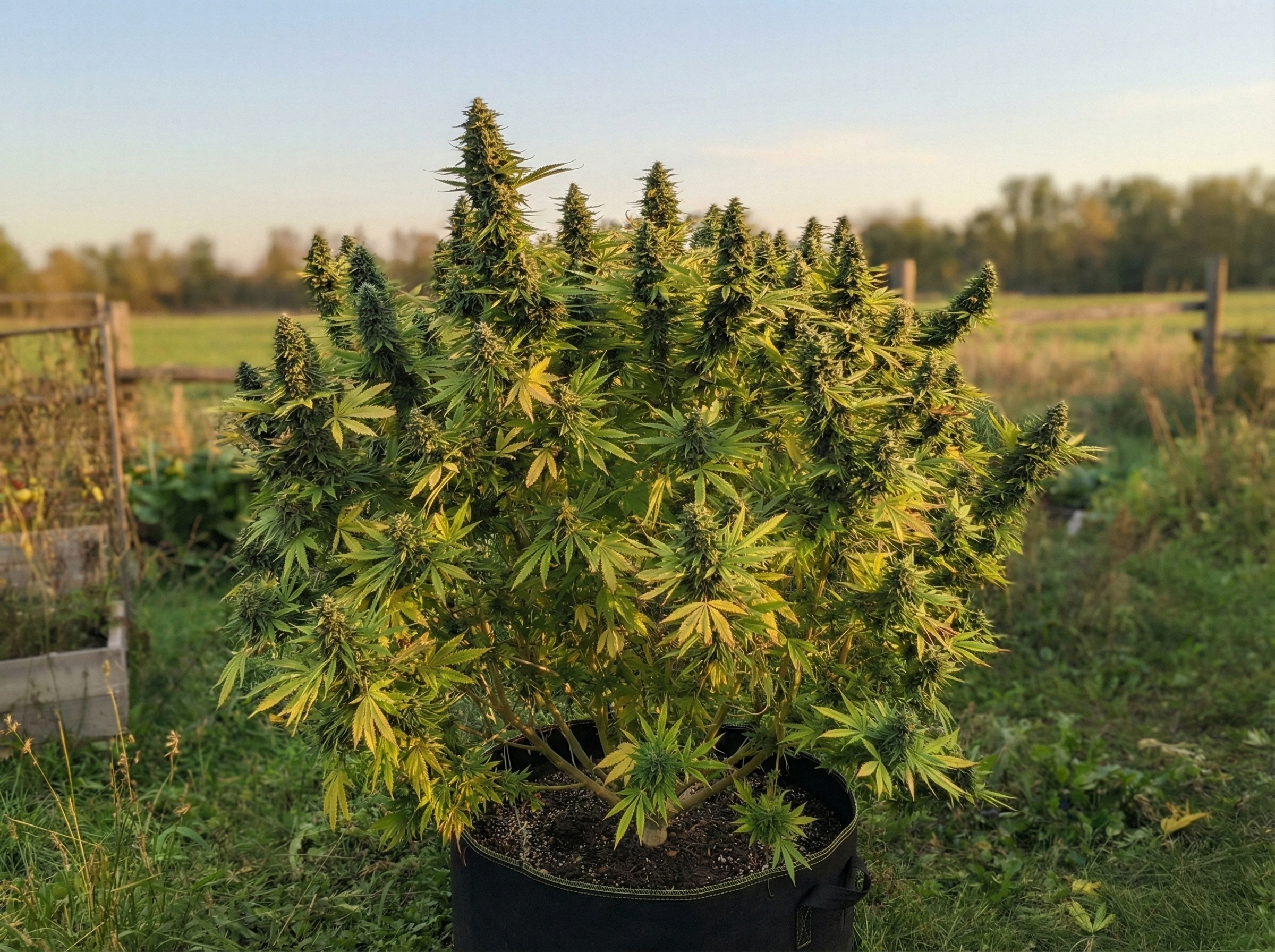
Perlite, Pumice, Rice Hulls, and Aeration Amendments
Perlite, pumice, rice hulls, and other aeration amendments are useful because they change the physical structure of a cannabis root zone. They can increase the amount of large pore space that refills with air after irrigation, reduce the tendency of fine media to settle into a dense mass, and change how quickly water moves through and leaves a container. They do not create a universally “well-drained” mix simply because a certain percentage was added.
The correct amendment depends on the base medium, particle size, container height, irrigation method, climate, crop duration, and how often you can water. A peat-heavy mix in a short plastic pot has a different problem from coco in a fabric pot outdoors. Perlite may be helpful in both, but the amount and the reason are not the same. Pumice can provide longer-lasting structure and more weight. Parboiled rice hulls can create useful air space with an organic agricultural byproduct, but their long-term behavior is different from mineral aggregates.
This resource focuses on that physical decision: how to choose, test, and use aeration amendments without treating them as drainage magic. For the broader root-zone system, including soil texture, compost, living soil, coco, peat, native ground, nutrition, and pH, use the Cannabis Soil and Growing Media guide.
Resource Navigation
In This Resource
- What Aeration Actually Means in a Cannabis Root Zone
- Perlite, Pumice, Rice Hulls, and Other Aeration Materials
- Water Movement, Dry-Back, and Container Geometry
- How to Test an Aeration Mix Before Planting
- Match the Amendment to the Whole Growing System
- Failure Modes: When More Aeration Does Not Fix the Problem
- How to Correct an Existing Mix Without Guessing
- Build and Selection Checklist
What Aeration Actually Means in a Cannabis Root Zone
A root zone contains solid particles and the pores between them. After a thorough irrigation, some pores retain water while larger pores drain and refill with air. The balance between those pore sizes influences how easily roots exchange gases, how much water remains available, how fast the medium dries, and how often irrigation must return.
Aeration amendments work mainly by changing particle arrangement. Coarse particles can interrupt the close packing of peat, compost, fine coco, or other small particles. This can create or preserve larger pores. The result may be more air after drainage, but the effect depends on the size distribution of all components. A coarse aggregate mixed with a large amount of fines can behave very differently from the same aggregate in a more open base medium.
Air-filled porosity is the pore volume that contains air after drainage
Air-filled porosity, often shortened to air space or AFP, describes the portion of a substrate volume occupied by air after the medium has been saturated and allowed to drain under the specified test conditions. It is not the same as total porosity. Total porosity includes pores holding both air and water.
Roots Need an Air-Water Balance, Not Maximum Air
More air space is not automatically better. A mix with very large pores may drain quickly but hold too little readily available water for the irrigation schedule. The plant can then move from adequately moist to water-limited too quickly. This is especially noticeable in small containers, porous fabric pots, warm rooms, sunny outdoor sites, and large flowering plants with high daily water use.
The opposite problem occurs when the medium contains too many fine particles or loses structure over time. Water occupies more of the pore volume after irrigation and gas exchange slows. Roots may remain in a wet environment for longer than the irrigation strategy assumed.
Important: There is no single scientifically established “perfect aeration percentage” for cannabis across soil, peat, coco, living soil, container sizes, and irrigation systems. Horticultural substrate ranges are useful reference points, but cannabis management still has to be verified in the actual pot and irrigation system.
Particle Size Matters as Much as the Ingredient Name
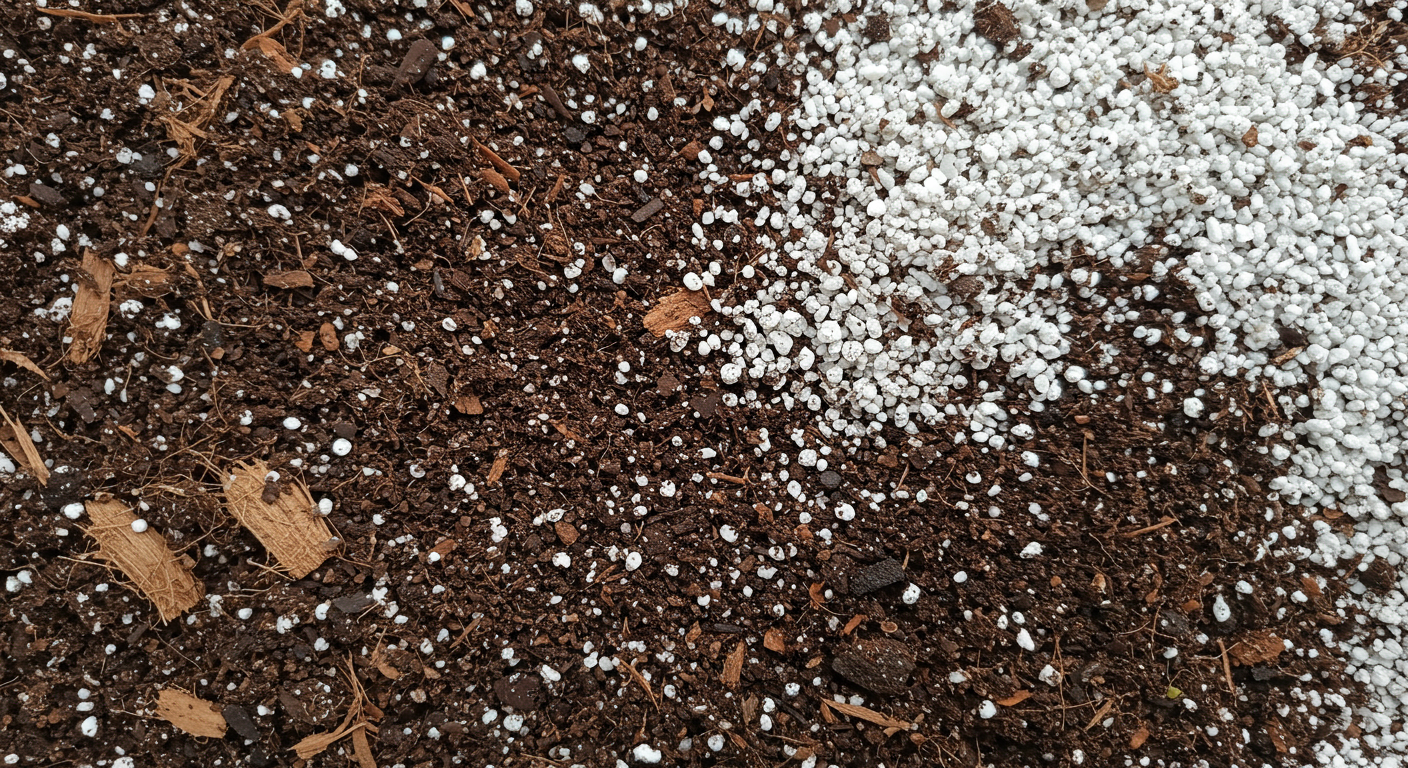
A bag can say perlite or pumice and still behave differently from another bag with the same label. Coarse screened particles usually create a different pore network from fine material containing dust and small fragments. Oregon nursery research with pumice illustrates the principle clearly: screened grades maintained more air space than a grade containing more fines. The lesson is broader than pumice. Particle-size distribution determines whether an amendment acts as a spacer or whether its small particles nest into existing pores.
The same issue applies to perlite. Coarse horticultural perlite can create substantially more air porosity and lower water capacity than finer grades. Fine perlite may still lighten a medium, but it should not be assumed to produce the same air-water behavior as larger particles.
Aeration Amendments Do Not Replace Fertility or Biology
Perlite and pumice are primarily structural components. They generally have low nutrient-holding capacity compared with peat, compost, or vermiculite. Rice hulls are organic and may contribute small amounts of minerals as they age, but they should still be selected mainly for physical structure rather than as a fertilizer.
If a plant is pale because nitrogen supply is inadequate, adding perlite will not feed it. If a root zone is saturated because the container has no drainage outlet, adding a handful of pumice to the surface will not repair the container. If the medium has become hydrophobic and water is bypassing the root ball, faster runoff after adding coarse material does not prove the center is being wetted.
Choose an amendment for a measured physical job
Decide whether you need more post-irrigation air space, slower structural collapse, a heavier container, faster dry-back, or a more reusable mix before selecting the material.
Adding aeration because a recipe says every mix needs it
A base medium that already dries rapidly can become harder to manage when more coarse aggregate is added. Diagnose the system before changing it.
Perlite, Pumice, Rice Hulls, and Other Aeration Materials
The three main materials in this resource can all increase coarse pore space, but they differ in weight, persistence, processing, particle shape, and how they behave during repeated irrigation. Choosing among them is less about finding a universal winner and more about matching those traits to the grow.
| Amendment | Primary Function | Air / Water Effect | Best Use | Caution |
|---|---|---|---|---|
| Perlite | Lightweight mineral aggregate that opens fine-textured media. | Can increase air space and speed drainage/dry-back, especially in coarser grades. | Peat and soil-style container mixes where low weight and easy availability matter. | Very light, can float or migrate, dusty when handled dry, and high rates can make frequent irrigation necessary. |
| Pumice | Durable volcanic aggregate that adds pore stability and weight. | Screened grades can preserve air space while retaining some water within porous particles. | Long-cycle containers, reused soil, living soil, and outdoor pots needing more ballast. | Heavier and regionally less available. Fine-rich grades can reduce the air-space benefit. |
| Parboiled rice hulls | Organic agricultural byproduct used as a lightweight aggregate. | Whole parboiled hulls can increase drainage and air-filled pore space in peat-based substrates. | Organic-minded mixes, shorter crop cycles, and systems where eventual biodegradation is acceptable. | Use horticultural parboiled material rather than unknown raw hulls. Long-term persistence is lower than mineral aggregates. |
| Lava rock / scoria | Coarse mineral structure and container weight. | Can create durable macropores when particle size is suitable. | Reusable beds and large soil volumes where weight is not a problem. | Very coarse material can create uneven mixing; unknown outdoor rock can introduce contamination or inappropriate fines. |
| Coarse coco chips or bark | Organic structural particles within peat, coco, or soil-style mixes. | Can increase large pores but also changes water retention and decomposition behavior. | Blended substrates designed around organic structural components. | Quality and particle size vary. Decomposition can change physical properties through the crop cycle. |
Perlite: Light, Porous, and Easy to Overgeneralize
Horticultural perlite is produced by heating mined volcanic material until it expands into a lightweight porous aggregate. It is commonly used in greenhouse substrates because it adds air space without adding much container weight. It also has low cation exchange capacity, so its main role is structural rather than nutrient buffering.
Perlite is especially useful when a peat-based or compost-rich mix is physically too fine. It can reduce the tendency of the medium to pack tightly and can make the wet-to-dry cycle easier to control. However, the grade matters. A coarse perlite behaves differently from fine material. Research in other horticultural crops has measured much higher air porosity in coarse perlite than in medium grades, which is a reminder not to treat all white particles as equivalent.
Its low density is both its advantage and its weakness. Large indoor containers are easier to move when perlite is part of the mix, but strong top watering can move particles upward. Outdoors, wind can scatter dry perlite during mixing. Repeated handling can also break particles and create more fines.
Field Advice: When comparing perlite products, inspect the grade rather than only the bag name. A visibly coarse, low-dust horticultural grade is a different structural tool from fine propagation-grade material.
Pumice: More Weight and Longer Structural Persistence
Pumice is a naturally porous volcanic rock. Unlike expanded perlite, it is used after mining and sizing rather than being puffed into an extremely light aggregate. It is heavier, which can help large outdoor containers resist movement and can make a living-soil or reusable mix feel more physically stable.
Its value depends heavily on screening. Oregon container-substrate work found that pumice containing more fine particles produced less air space than cleaner screened grades. In the same work, screened pumice helped maintain air space as organic components aged and produced more fines. That is a useful reason to choose pumice for long-cycle media: the amendment can remain as a durable skeleton while peat, bark, compost, or other organic particles change around it.
Pumice also contains internal pores and does not behave like smooth aquarium gravel. It can retain water within the particle while still contributing larger inter-particle pores. That combination is one reason it can support both structure and a workable moisture buffer when the grade is appropriate.
Parboiled Rice Hulls: Organic Aeration With a Different Time Horizon
Rice hulls are the protective outer covering removed during rice processing. For horticultural use, parboiled rice hulls are preferable to unknown raw hulls. Purdue Extension notes that fresh hulls can contain rice seed capable of germinating, while steam parboiling is used to eliminate viable seed. Whole parboiled hulls have been shown to increase drainage and air-filled pore space in peat substrates without causing the severe nitrogen immobilization associated with some fresh woody materials.
The hulls are naturally high in silicon, which slows degradation and allows useful structural stability during greenhouse production. That does not make them permanent. A grower building a bed intended for repeated multi-year reuse should not assume rice hulls will behave like pumice forever. They fit best when gradual biological breakdown is acceptable or even desirable.
The word “organic” should not be used as a quality certificate. Horticultural-grade parboiled rice hulls are a processed substrate ingredient. Unknown hulls from a farm, mill, animal bedding source, or outdoor pile may bring viable grain, foreign material, pesticides, salts, or other contaminants that have not been characterized.
“If rice hulls eventually break down, does that make them a bad choice for cannabis soil?”
Question sent by: CedarRoute, via Facebook page.
No. It means the amendment has a different service life. Parboiled rice hulls can be very useful in a fresh or shorter-cycle mix where you want lightweight organic structure. For a soil that will be reused repeatedly, plan to reassess physical structure between cycles. If long-term pore stability is the main priority, a durable mineral aggregate such as screened pumice may carry more of that job.
Where Lava Rock, LECA, Sand, and Coarse Organic Particles Fit
Lava rock and scoria can perform a similar long-term structural role to pumice when the material is clean, horticultural-grade, and appropriately sized. Expanded clay aggregates such as LECA are common hydroponic media and can be used in some blends, but large round particles may occupy a lot of volume without integrating smoothly into a fine potting mix. They should not be treated as a mandatory ingredient.
Coarse coco chips, bark, and wood-derived substrate components can also increase pore size. Unlike mineral aggregates, they decompose. That means the mix may become finer and more water-retentive with time. If the crop lasts many months or the soil will be reused, physical change through the cycle matters as much as the starting texture.
Sand requires particular caution. Coarse horticultural sand can alter texture, but fine sand can settle into pores and increase bulk density. A small amount of random sand added to a dense soil does not reliably create better aeration. For most container growers, perlite or screened pumice is easier to interpret.
Do not bring random outdoor stone, gravel, sand, or plant material into indoor cannabis pots
Unknown materials can carry pests, weed seeds, pathogens, salts, heavy metals, pesticide residues, or particle sizes that make the root zone denser rather than more open. Use clean horticultural-grade inputs whose source and purpose are known.

Water Movement, Dry-Back, and Container Geometry
Aeration amendments only make sense when water movement is understood correctly. Growers often use the words drainage, infiltration, and dry-back as though they describe the same process. They do not.
Infiltration is water entering the surface of a medium. Percolation is water moving through the profile. Drainage is excess water leaving the relevant root zone or container. A pot can accept irrigation rapidly at the surface and still contain a wet lower zone. It can also produce runoff quickly because water is channeling around a dry root ball rather than moving evenly through it.
Dry-back is the decrease in root-zone water content between irrigation events
Dry-back describes the loss of water from the medium through plant uptake, evaporation, and drainage. In practical cannabis cultivation, it is better treated as a measured or observed water-content change than as a fixed number of hours. The useful dry-back depends on medium, pot, plant size, environment, and irrigation strategy.
Container Height Changes the Same Mix
A substrate does not have one fixed air-water ratio independent of the container. Purdue Extension describes how the same medium holds a greater proportion of water and less air in a shorter container because a saturated or nearly saturated zone remains near the bottom after drainage. In a taller container, that wet zone occupies a smaller proportion of the total root volume.
This is why a mix that works in a tall nursery pot can stay much wetter in a shallow bed or tray. It also explains why copying an amendment percentage from another grower without copying the container geometry and irrigation method can produce a different result.
Why a Gravel Layer Does Not Fix Container Drainage
Adding a layer of stones, gravel, LECA, or coarse lava rock under a finer medium does not make water fall through the pot faster. Water tends to remain in the finer layer until the suction conditions allow it to cross into the coarser layer. The effect can move the wetter zone upward rather than eliminate it.
If a container has functioning drainage holes, the better strategy is to build appropriate structure through the usable root volume and match irrigation to that medium. A thin clean screen or material placed only to keep very large holes from losing mix is a different purpose from constructing a thick “drainage layer.”
Distribute structural amendment through the root zone
When aeration is needed, blend the chosen aggregate through the medium so pore structure changes where roots actually grow.
Building a thick coarse layer at the bottom
A gravel or LECA layer does not correct a fine, saturated medium above it. Fix the medium, the container outlet, or the irrigation strategy instead.
Faster Dry-Back Also Changes Salt Management
A more aerated medium often needs more frequent irrigation. If the nutrient solution has a meaningful EC, every irrigation adds dissolved ions while plant uptake and evaporation remove water. When irrigation frequency increases without enough drainage or nutrient adjustment, salts can still accumulate even though the pot feels airy.
The reverse can also happen. A coarse mix may receive large volumes that drain rapidly, leaching nutrients more aggressively than expected. The plant then shows deficiency-like symptoms even though the grower is feeding at the same concentration used in a more retentive mix. Aeration and fertilization cannot be managed as independent systems.
Root-Zone Temperature and Evaporative Drying
Aeration amendments do not directly control root-zone temperature, but they can change water content and evaporation. A very fast-drying mix in a fabric pot can cool through evaporation at some times and then heat quickly once little water remains. Outdoors, dark containers, wind, direct solar exposure, pot size, and substrate moisture all interact.
Do not diagnose a hot root zone by looking at the percentage of perlite. Measure the medium temperature with a probe where roots are active and compare sun-facing, center, and shaded positions when heat is suspected. Surface temperature from an infrared thermometer is not the same measurement as internal root-zone temperature.
How to Test an Aeration Mix Before Planting
The safest time to evaluate a new mix is before a valuable root system occupies it. You do not need a laboratory to compare two candidate blends. A simple side-by-side pot test can show whether one mix wets more evenly, drains faster, stays wet too long, becomes hydrophobic, settles excessively, or dries too rapidly for your schedule.
For a Role A decision, use the same sequence each time: prepare equal containers, apply equal irrigation, observe drainage, measure water loss, rewet, and compare again. The goal is not to prove that one amendment is universally superior. The goal is to identify which blend behaves predictably in your actual system.
1. Build Small Test Batches by Volume
Choose the base medium first. Make a control with no additional amendment, then one or two amended versions. Measure ingredients by volume rather than by weight because perlite, pumice, and rice hulls have very different bulk densities.
Keep the total container volume, pot shape, compaction, and moisture at filling as similar as possible. Do not pack one mix firmly and leave another fluffy. Filling pressure can change porosity enough to distort the comparison.
Pro Tip: If you are testing a commercial bagged medium, save the ingredient label and batch number. Physical properties can vary between products and sometimes between batches, so record what was actually tested.
2. Saturate, Drain, and Measure What Leaves
Slowly irrigate until the full medium is wetted and drainage begins. Allow the containers to drain under the same conditions. Record the amount of water applied and the amount collected. This does not directly give you a professional laboratory air-space measurement, but it establishes a repeatable reference for how much water the container retains after a standardized irrigation.
Watch how drainage begins. A mix that releases water immediately may be genuinely coarse, or the irrigation may be channeling down a wall. Split the pot after the test or inspect the medium at several depths to verify that the center actually became wet.
3. Use Pot Weight to Track Dry-Back
Weigh the container after drainage if you have a suitable scale. Reweigh it at the same time intervals. The difference provides a simple measure of water loss from that specific pot. Without a scale, lifting or gently tilting small containers can still teach you the wet and drying reference, but recorded weights are more useful when comparing mixes.
The question is not “Which pot dries fastest?” The useful question is “Which dry-back fits the plant size, environment, and irrigation frequency I can maintain?” A mix that loses water twice as quickly may be a benefit in a cool wet room and a liability on a hot balcony.
4. Let the Mix Dry Further, Then Test Rewetting
Peat-rich media can become difficult to rewet when allowed to dry excessively. Water may run through cracks between the root ball and the container wall or through preferential channels while the center remains dry. Aeration amendments do not automatically prevent this.
After a controlled dry period, irrigate slowly again. Compare how long the water takes to enter, whether it beads on the surface, whether runoff appears before the center wets, and whether the medium has pulled away from the pot wall. This test can reveal a failure that is invisible when the mix is kept continuously moist.
“Water comes out of my drainage holes almost immediately. Doesn’t that prove the mix has good drainage?”
Question sent by: Chloe, via X.
Not by itself. Fast runoff can mean a coarse, freely draining medium, but it can also mean water is bypassing a hydrophobic or shrunken root ball through side gaps and channels. Check the center of the pot after irrigation. If the outside is wet and the middle remains dry, the problem is uneven wetting rather than a lack of drainage speed.
5. When You Need Better Physical Data, Measure Air Space Properly
Nursery substrate programs use standardized cylinders and saturation/drainage procedures to estimate air space, container capacity, total porosity, and bulk density. Those methods are more useful than trying to infer porosity from appearance. A commercial substrate laboratory can provide physical-property testing when a large grow, product formulation, or repeated crop justifies the cost.
Method matters. Air space measured in one cylinder height should not be treated as a universal value for every production container. Container geometry changes the water distribution. Keep test method, sample preparation, and interpretation together.
| Test or Observation | What It Can Tell You |
|---|---|
| Wet and drained pot weight | Creates a repeatable reference for the amount of water retained in that container after your standard irrigation and drainage period. |
| Weight loss over time | Shows dry-back rate in the actual environment. Compare amended mixes under the same conditions. |
| Cross-section after irrigation | Reveals dry pockets, sidewall channeling, compact layers, and whether rapid runoff actually represented uniform wetting. |
| Settling depth after repeated irrigations | Shows whether the mix is shrinking or losing structural volume. Excess settling can indicate decomposition, poor particle stability, or over-compaction. |
| EC and pH test | Separates physical problems from chemical stress. A fast-drying or heavily fertigated medium can still accumulate salts. |
| Laboratory substrate physicals | Can quantify air space, container capacity, total porosity, and bulk density using a defined test method. |
Match the Amendment to the Whole Growing System
The amendment is only one part of the hydraulic system. A sensible selection considers the base medium, container, climate, irrigation delivery, crop duration, and whether the mix will be discarded or reused. Cannabis-specific research comparing peat-perlite, coco, and rockwool has shown that performance differences can be explained largely by water availability and medium-specific irrigation management. That is a stronger lesson than declaring one substrate superior.
Peat-Based Mixes
Peat can hold substantial water and can become difficult to rewet when excessively dry. Perlite is common because it lightens the mix and can increase air space. Pumice can perform a similar structural function with more weight and longer persistence. Rice hulls can also open peat, particularly when whole parboiled hulls are used.
Do not set an amendment rate before looking at the starting product. A commercial peat mix may already contain perlite, bark, wood fiber, or another aggregate. Adding another large fraction can push the mix toward a dry-back rate that requires much more frequent irrigation.
Coco-Based Mixes
Coco products vary from fine coir dust to coarse fiber and chips. A fine, highly water-retentive coco product may benefit from coarse aggregate. A coarse coco blend may already have abundant air space. Adding perlite to every coco product by habit can create unnecessary leaching and faster dry-back.
Coco is also managed nutritionally through frequent fertigation in many systems. If more aggregate increases irrigation frequency, the nutrient and runoff strategy must change with it. The old EC input and event volume are not automatically correct after the physical mix changes.
Soil and Living-Soil Containers
Soil-style mixes often contain compost, castings, peat or coco, and mineral or organic amendments. They can become physically dense when too much fine compost or castings are used. Perlite can lighten such mixes, but growers planning to reuse the soil often prefer a durable aggregate such as pumice or lava rock because it remains after organic components decompose.
Living soil also benefits from moisture continuity. An extremely coarse mix that dries rapidly can make biological activity and nutrient mineralization less stable. The goal is not hydroponic-level drainage. It is a root zone that holds useful moisture while maintaining air after irrigation.
Fabric Pots vs Plastic Pots
Fabric sidewalls increase evaporation from the container surface and can accelerate dry-back, especially under strong airflow. A mix that is comfortable in plastic may need less additional aeration in fabric. Outdoors, wind and heat magnify the difference.
Plastic containers reduce sidewall evaporation and may provide a larger water buffer. That does not mean plastic automatically causes oxygen problems. Root-zone oxygen still depends on pore structure, saturation duration, drainage outlets, root respiration, and irrigation.
Hot, Dry, and Windy Conditions
In a hot dry environment, the limiting factor may be water storage rather than air space. Large percentages of coarse perlite in fabric pots can make irrigation demand difficult to meet. Pumice may still be useful for structure, but the total coarse fraction should be balanced against the water-holding base. Rice hulls also increase openness and should not be assumed to conserve water simply because they are organic.
Cool, Humid, or Low-Transpiration Conditions
When evaporation and plant water use are low, a fine peat or compost-rich mix may remain wet too long. More durable coarse material can help, but first confirm that the container drains, the plant is appropriately sized for the pot, and irrigation is not returning too early. Adding aggregate cannot compensate indefinitely for a watering schedule that ignores dry-back.
| Growing Situation | Better Aeration Direction |
|---|---|
| Fine peat mix in plastic container, cool room | Consider a coarser structural amendment and test a longer interval between irrigations. Perlite or screened pumice can both fit if the base medium is genuinely too retentive. |
| Fine peat mix in fabric pot, hot dry room | Be conservative. Sidewall evaporation may already produce rapid dry-back. Test before increasing coarse aggregate substantially. |
| Reusable living soil | Favor durable structure such as pumice or suitable lava rock as part of the long-term skeleton. Reassess organic particles between cycles. |
| Fresh organic mix for one crop | Parboiled rice hulls can provide useful lightweight air space when gradual decomposition after the crop is acceptable. |
| Large outdoor container exposed to wind | Pumice can add structural air space and ballast. Perlite may reduce weight but can be messy during dry mixing and does not help container stability. |
| High-frequency fertigation | More air space may be manageable because irrigation can return frequently, but monitor EC and runoff because nutrient delivery changes with event frequency. |
Master Advice: Do not ask “How much perlite does cannabis need?” Ask “What physical behavior does this container and irrigation schedule need from the medium?” The second question leads to a testable answer.
Failure Modes: When More Aeration Does Not Fix the Problem
A root zone can look like an aeration problem while the actual cause sits elsewhere. Adding more coarse aggregate without identifying the failure can create a second problem and make the original one harder to read.
Compaction vs Repeated Saturation
A dense mix can have low air space because fine particles have settled and pores are small. A structurally acceptable mix can also remain oxygen-poor if it is irrigated again before enough water leaves or is used. These are different problems.
Check the physical resistance of the medium, settling, particle distribution, and whether roots are densely occupying the container. Then compare irrigation timing with dry-back. If the pot remains heavy because it is being watered too frequently, changing the recipe may be unnecessary.
Hydrophobic Channeling Can Look Like “Excellent Drainage”
Dry peat can shrink from the wall and repel water. Irrigation then follows low-resistance paths and appears at the drainage holes quickly. The center can remain dry while the grower concludes that the medium is very aerated.
Confirm with a cross-section, moisture probe readings at several locations, or careful inspection after watering. Correction may require slower staged rewetting or a wetting strategy rather than more perlite.
Salt Buildup Can Mimic Root-Zone Physical Stress
Root tip injury from high soluble salts can reduce water uptake and cause leaf symptoms that resemble both overwatering and drought stress. A grower may respond by changing the physical mix when the main problem is chemical.
Check root-zone EC with a method appropriate to the medium. Compare input and drainage trends. A highly aerated mix can still have severe salt accumulation if fertigation inputs and leaching are mismatched.
Root Disease Is Not Diagnosed by a Wet Pot Alone
Long periods of saturation can increase disease risk, but slow drying does not prove a pathogen is present. Look for independent evidence such as root discoloration, tissue breakdown, crown lesions, odor, progressive plant decline, or laboratory confirmation when a specific pathogen matters.
Likewise, adding more aeration after a pathogen is established does not sanitize the crop. Physical correction and disease management are separate tasks.
Blocked Drainage Holes and Standing Saucers
No amendment can overcome a container that cannot release excess water. Inspect every outlet. Make sure the pot is not sitting flat in a way that seals holes, and do not allow a normal soil container to stand in collected runoff.
A container can have a coarse mix and still become saturated if its drainage path is blocked. Correct the outlet before rewriting the soil recipe.
A Pot That Is Too Large for the Root System
A small plant in a large wet container may use only a fraction of the stored water each day. The medium can remain wet for a long time even if its structure is reasonable. Adding perlite can shorten the wet period, but it does not change the fact that the plant occupies little of the root volume.
Match container size, plant size, irrigation volume, and medium. The Containers and Pots Basics guide covers that broader decision in more detail.
An over-aerated mix can create its own stress cycle
If coarse aggregate reduces water storage beyond what your irrigation schedule can support, roots can move repeatedly between adequate moisture and drought stress. More frequent fertigation may then increase salt-management demands. Correct air and water together rather than maximizing one at the expense of the other.
Algae, Moss, and a Wet Surface Do Not Describe the Whole Pot
A green surface can indicate persistent moisture and light exposure, but it does not measure the air space deeper in the root zone. Conversely, a dry surface can hide a saturated lower layer. Use more than one observation depth before changing the medium.
Reused Media Can Lose Air Space as Fines Accumulate
Organic components decompose, roots break down, and handling creates smaller particles. Those fines can occupy large pores that were present at the beginning of the crop. Rice hulls and bark are part of that changing organic fraction. Pumice is more persistent, while perlite can fracture during repeated handling.
Before reusing a mix, inspect the structure rather than simply topping up the original recipe. If the medium has become significantly finer, fresh coarse material may help. If it remains open and dries quickly, adding the same percentage again can overshoot.
“I reuse living soil. Should I add the same amount of pumice or rice hulls after every harvest?”
Question sent by: Ethan Brooks, via email.
No. Durable pumice may still be doing its job, while rice hulls and other organic particles may have changed more. Remove old root masses as appropriate, inspect how much the soil settled, run a wetting and dry-back test, and then replace only the structural capacity that was actually lost. Repeating the original amendment rate every cycle can make the mix progressively coarser.
How to Correct an Existing Mix Without Guessing
Once a plant is established, rebuilding the medium is harder because roots occupy the space you would need to mix thoroughly. The correction should therefore start with the least disruptive variable that can actually explain the problem.
1. Confirm the Physical Problem
Record pot weight after irrigation, the time required to reach the normal rewatering point, drainage behavior, root-zone EC and pH where relevant, and the plant’s response. Check whether the pot has free outlets and whether water wets the full profile.
If the medium stays wet because the room is cool and the plant is small, waiting longer between irrigations may solve more than adding aggregate. If the mix is visibly collapsed and root-zone oxygen remains poor even with correct irrigation, physical change is more justified.
2. Change Irrigation Before Excavating Roots
For an established plant in a medium that is only moderately too retentive, reduce unnecessary irrigation frequency and make sure each event is applied evenly. Do not repeatedly add small sips to a root zone that never gets a proper air-return period.
In a hydrophobic mix, use slower staged wetting rather than a large fast pour. In a high-EC root zone, correct the chemical issue using an appropriate irrigation and nutrient strategy rather than assuming more dry-back will remove accumulated salts.
3. Use Transplanting as the Main Structural Reset
If the plant is due for a larger container, transplanting is the cleanest time to correct the physical recipe. Prepare the new medium first. Test it. Then place the existing root ball into a surrounding mix whose water behavior is not radically different from the center.
A very dense root ball placed inside an extremely coarse new mix can create a hydraulic mismatch. The outer zone may dry quickly while the inner root ball remains wet, or irrigation may preferentially move through one material. Water the transition carefully and monitor both zones.
4. Do Not Expect Surface Top-Dressing to Aerate the Whole Pot
Perlite or pumice scattered on top may keep the surface open, but it does not change the pore structure around most roots. Mixing deeply into an established pot can tear roots. Unless the plant is being transplanted or the bed can be cultivated safely between plants, structural amendments are primarily a pre-planting tool.
5. Beds Need a Different Scale of Correction
In raised beds and large living-soil systems, structural changes can be made between cycles across the upper profile. Test the current soil first. If compaction is localized to traffic or repeated working while wet, the correction may involve management and organic structure rather than importing a large amount of perlite.
For native outdoor ground, perlite and pumice are not substitutes for understanding soil texture, drainage, and site hydrology. Large field soils behave differently from container substrates. Use organic matter, aggregation, drainage design, raised beds, or other site-specific approaches where appropriate rather than trying to convert the ground into a potting mix.
Remember: Change one major variable when possible. If you simultaneously transplant, double the perlite, change nutrients, change pot type, and alter irrigation frequency, you lose the ability to identify which change solved or worsened the problem.
6. Verify the Correction With the Same Measurements
After the change, repeat the same pot-weight, dry-back, drainage, rewetting, EC, and root observations used before it. A successful correction should produce a predictable directional change. If the pot previously stayed saturated for an impractical period, it should now return air and lose water more appropriately without moving into chronic drought.
Do not use leaf posture alone as proof. Leaves can improve because temperature changed, light demand fell, or the root system grew. Verification is stronger when the physical behavior of the container changed in the direction you intended.
Build and Selection Checklist
Before planting or rebuilding a root zone, make the amendment decision in the same order each time. Start with the base medium and management constraints. The ingredient comes last.
Before You Add Perlite, Pumice, Rice Hulls, or Another Aeration Amendment
- You know whether the base medium is already coarse, fine, water-retentive, or fast-drying.
- You inspected the amendment’s particle size and amount of fines, not only the material name.
- You chose the amendment by volume and kept the test containers identical.
- You considered container height and material because the same mix behaves differently in different pots.
- You confirmed that drainage holes are open and the container will not stand in runoff.
- You tested wetting, drainage, pot weight, dry-back, and rewetting before committing a full crop.
- You checked whether a faster-drying mix will require an irrigation frequency you can actually maintain.
- You considered EC and nutrient delivery because more frequent fertigation changes salt management.
- You avoided a thick gravel, stone, or LECA layer as a supposed drainage fix.
- You used clean horticultural-grade materials rather than unknown outdoor stones, sand, or plant debris.
- You planned for crop duration and reuse: mineral aggregates persist longer than rice hulls and other organic structural materials.
- You have a post-planting verification plan using the same measurements from the pre-plant test.
Choose Perlite When Low Weight and Easy Adjustment Matter
Perlite is a strong default when a container mix needs more open structure without becoming much heavier. It is widely available and easy to blend. Choose a grade that fits the container and avoid assuming fine propagation perlite will act like a coarse aggregate.
It is less attractive when wind, flotation, long-term reuse, or container stability are major concerns. In those situations, pumice may solve the same structural problem with fewer handling disadvantages.
Choose Pumice When Durability and Ballast Matter
Screened pumice fits long-cycle soil, reusable beds, and large containers where the additional weight is acceptable. It can serve as a persistent structural framework while organic components settle and decompose.
Do not pay for pumice and then choose a dust-heavy grade that fills the very pores you are trying to create. Screen quality matters.
Choose Parboiled Rice Hulls When Organic Lightweight Structure Fits the Crop Cycle
Parboiled rice hulls can be a useful alternative aggregate where local supply is good and the mix does not need permanent mineral structure. They are especially interesting for growers trying to reduce reliance on mined lightweight aggregates.
Use a horticultural product with documented processing. Do not assume raw hulls from an unknown source have equivalent weed-seed control, cleanliness, particle consistency, or chemical properties.
FAQ About Cannabis Aeration Amendments
How Much Perlite Should I Add to Cannabis Soil?
There is no universal cannabis percentage. The parent Weedth soil guide has historically used broad practical starting ranges, but a focused aeration decision should begin with the existing mix. Test a control and one or two amended versions by volume, then compare wetting, retained water, dry-back, and irrigation demand. A commercial mix that already contains substantial aggregate may need little or none added.
Is Pumice Better Than Perlite for Cannabis?
Not universally. Pumice is heavier and generally more persistent, which can be useful for reusable soil and outdoor container stability. Perlite is lighter and often cheaper or easier to source. Both depend on particle grade. Choose the material whose physical and handling traits fit the system.
Can Rice Hulls Replace Perlite?
Whole parboiled rice hulls can replace part of the aggregate function in some peat-based mixes and have horticultural research supporting their use for increased air-filled pore space. They are not identical to perlite because they are organic and will change with time. Test the blend rather than assuming a one-for-one substitution behaves exactly the same.
Why Does Perlite Float to the Top of the Pot?
Perlite has very low bulk density. Strong top irrigation and repeated water movement can move particles upward, especially when the surface is disturbed. This does not necessarily mean all perlite has left the root zone, but severe migration can make the mix less uniform over time.
Do Rice Hulls Steal Nitrogen From Cannabis?
Whole parboiled rice hulls have been used in greenhouse substrates without the strong nitrogen immobilization seen with some fresh woody materials. That does not mean every raw rice-hull product behaves identically. Use horticultural-grade parboiled hulls and monitor plant nutrition normally.
Should I Put Pumice, Perlite, or LECA at the Bottom of the Pot?
Not as a drainage layer. A coarse layer below finer media can leave a wetter zone perched above the interface. Blend the structural material through the usable root zone instead. Keep the drainage holes open and use a thin screen only when needed to stop large holes from losing medium.
Can Cannabis Soil Have Too Much Aeration?
Yes in the practical sense that a mix can become too coarse for the available irrigation schedule. If it stores too little water, the plant may experience rapid dry-back and require frequent fertigation. That can increase labor and make EC control more demanding. The target is a manageable air-water balance, not the highest possible air percentage.
Do I Need to Replace Aeration Amendments When Reusing Soil?
Inspect first. Pumice and suitable lava rock may persist for many cycles. Perlite can fracture and migrate. Rice hulls and other organic structural materials change as they decompose. Re-test the old medium and add only what is needed to restore the desired physical behavior.
Build the Root Zone Around Water Behavior, Not a Recipe Percentage
Perlite, pumice, and parboiled rice hulls can all improve a cannabis growing medium, but none of them is a universal cure for “bad drainage.” Their real job is to change particle arrangement and pore structure. That changes how much air returns after irrigation, how much water remains available, how quickly the pot dries, and how the irrigation and nutrient program must respond.
The strongest choice is conditional. Use perlite when lightweight open structure is the priority. Use screened pumice when durable pore stability and added weight are useful. Use parboiled rice hulls when lightweight organic structure fits the crop duration and sourcing goals. Then verify the result in the actual container rather than trusting a generic percentage.
A successful aeration amendment should make the root zone easier to manage. Water should enter evenly, excess water should leave through a real drainage path, the medium should hold enough moisture for the plant, air should return between events, and the grower should be able to repeat that behavior without constant rescue. If the amendment only makes water disappear faster from the bottom of the pot, the root-zone problem has not necessarily been solved.
Share this article
A quick overview of the topics covered in this article.
Follow us
Latest articles
October 25, 2026
October 25, 2026
October 25, 2026