Purple Kush
Cultivation, Flavor, Effects & Grower Guidance
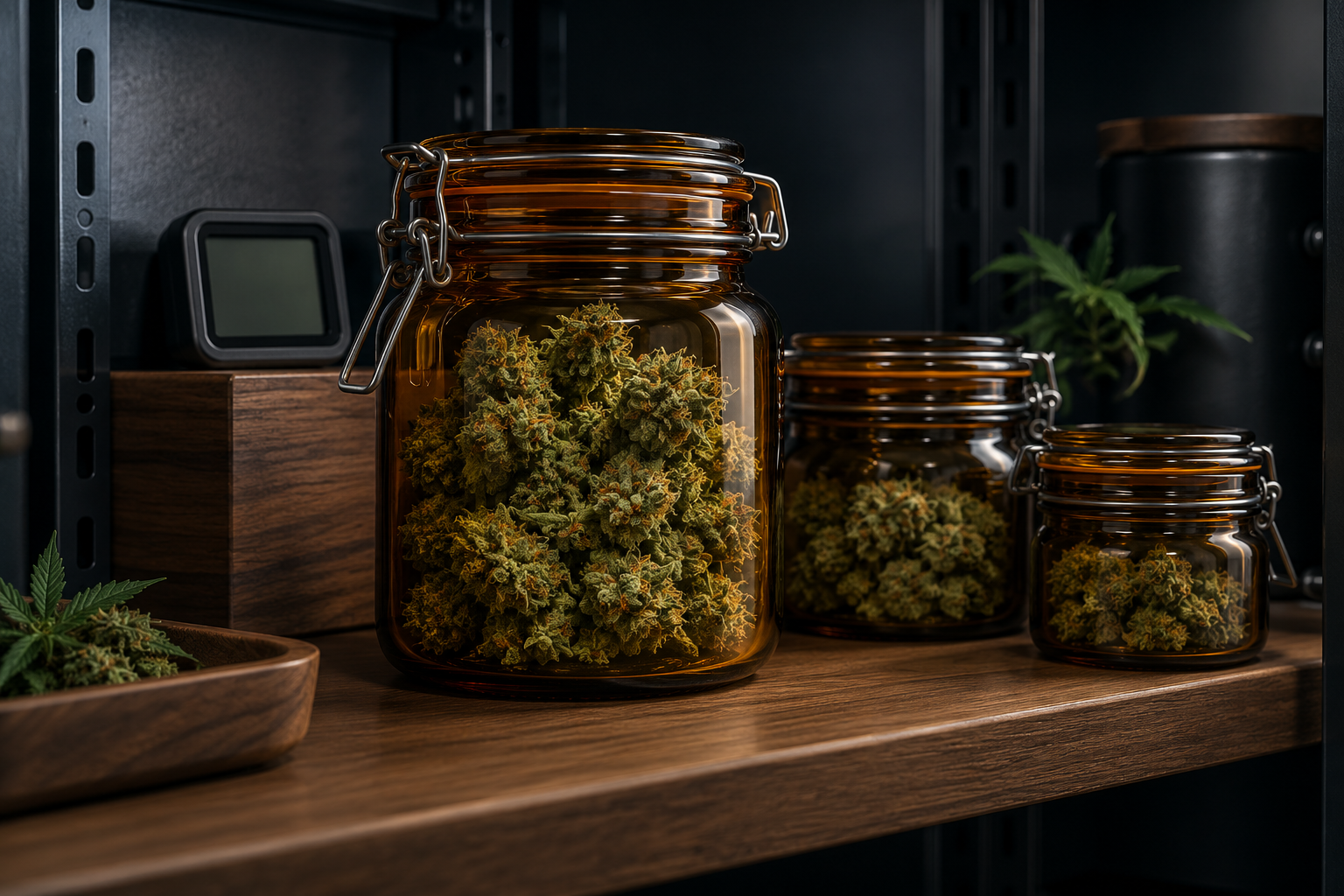
Purple Kush is a compact, broad-leaved indica known for deep physical relaxation, dense resinous flowers, and an old-school aromatic profile built around earth, grape skin, violet-like floral notes, and hashy spice. It is often discussed as a simple strain because its mature plants tend to stay short and sturdy, but that description can be misleading. Purple Kush is easy to keep under a low ceiling, yet producing exceptional flower requires close control of canopy density, root-zone moisture, late-flower humidity, and post-harvest temperature. The same traits that make the plant attractive, especially tight branching and thick flowers, can become quality problems if the interior canopy remains shaded or damp.
A well-grown Purple Kush is less about chasing extreme height or forcing maximum stretch and more about building a wide, evenly lit plant with enough airflow to let each flower finish cleanly. Its best expressions are usually rich rather than loud: dark fruit, soil, dried flowers, pepper, pine, and a lingering hash-like depth. The famous purple coloration can be dramatic, but color should never be treated as proof of maturity, potency, or quality. Pigment expression depends on genetics and environment, while harvest decisions should still be based on flower development, resin maturity, plant health, and the effect profile the grower is trying to preserve.
For consumers, Purple Kush is primarily an evening strain. The experience commonly begins with a soft mental easing and a warm mood lift before becoming increasingly physical. At moderate doses it can feel quiet and comforting. At higher doses it can become heavy, appetite stimulating, and strongly sleep oriented. This makes it a poor match for someone looking for a bright daytime work strain, but an excellent profile for users who appreciate deep relaxation and a slower pace.
Strain Features
| Feature | Details |
|---|---|
| Type | Indica-dominant, commonly described as a near-pure indica expression |
| Common Lineage | Hindu Kush x Purple Afghani or Purple Afghani-type genetics |
| Typical THC Range | Commonly reported around 17-22%, with meaningful variation by phenotype and cultivation |
| CBD | Usually low, commonly below 1% |
| Dominant Terpenes | Myrcene, pinene, caryophyllene; minor floral and citrus terpenes can vary |
| Main Aroma | Earth, grape skin, violet, pine, dry spice, hash |
| Main Flavor | Dark grape, earthy herbs, floral sweetness, pepper, woody hash |
| Primary Effects | Relaxing, sleepy, hungry, euphoric, physically heavy |
| Flowering Time | Usually about 7-9 weeks indoors, with many expressions finishing near week 8 |
| Plant Height | Short to medium; typically wider and bushier than tall |
| Stretch | Low to moderate compared with Haze-leaning hybrids |
| Yield Potential | Moderate to high when the canopy is opened and evenly lit |
| Grow Difficulty | Easy to moderate for basic survival; moderate for top-quality dense flower |
| Best Environment | Controlled indoor rooms or dry, sunny outdoor climates |
| Main Grow Challenge | Dense foliage and compact flowers can hold moisture and shade inner sites |
| Training Response | Responds well to topping, LST, selective pruning, and low horizontal canopies |
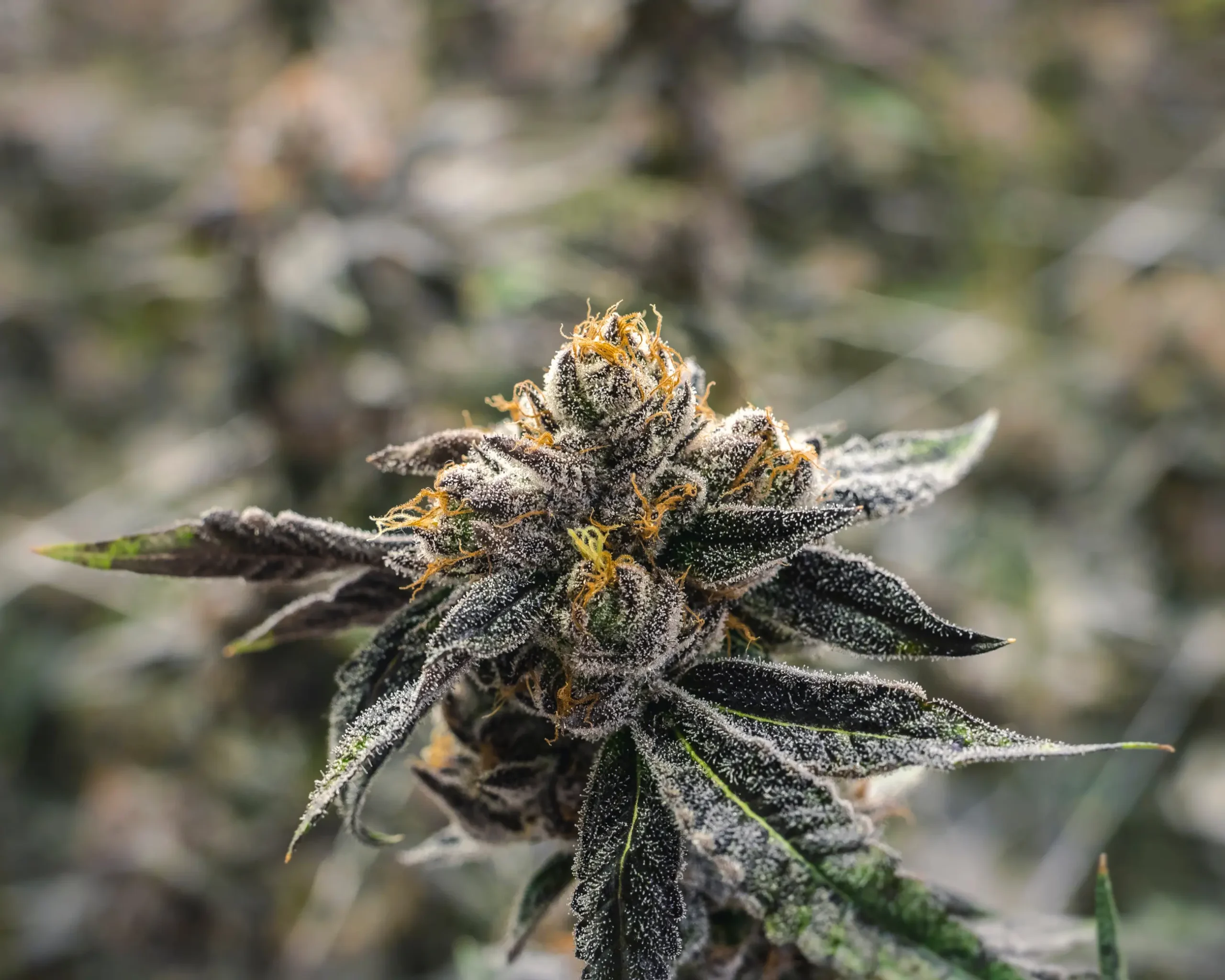
| Bud Structure | Compact, dense, resinous flowers with frequent dark green to purple pigmentation |
| Best Time of Use | Late afternoon to night, especially when relaxation is the goal |
| Common Reported Uses | Stress reduction, discomfort relief, appetite support, and sleep-oriented use |
The table describes the traditional Purple Kush profile rather than every product carrying the name. Cannabis strain labeling is not genetically standardized across the entire market, and plants sold under an identical name can differ in chemistry, morphology, and finishing time. The most useful approach for a grower is to treat these values as a working range, then learn the behavior of the exact phenotype in the garden.
Genetic Lineage
Purple Kush is most commonly traced to Hindu Kush and a purple Afghani-type parent. That pairing explains why so many examples express classic broad-leaf indica traits: short internodes, thick stems, dense lateral branching, a relatively restrained stretch after the light cycle changes, and flowers that mature into compact clusters rather than long open spears. Both sides of the commonly reported lineage come from genetic traditions associated with resin production, compact growth, and adaptation to comparatively harsh or seasonally cool environments.
The Hindu Kush side is especially relevant to the way Purple Kush grows. Traditional Kush-type plants tend to build a squat framework with strong apical and lateral growth rather than the long, flexible spacing common in tropical sativas. That architecture makes Purple Kush naturally suitable for restricted vertical spaces. It also means the plant can become congested. A short plant is not automatically an airy plant. In fact, Purple Kush can create a wall of overlapping fan leaves in vegetative growth, followed by heavy flower formation in areas that already have limited air movement. The grower should therefore think horizontally from the beginning.
The purple Afghani side is associated with the cultivar's famous dark color potential. Purple coloration in cannabis is largely linked to anthocyanin pigments. Genetics determines whether a plant has the capacity to express these pigments strongly, while environmental conditions influence how visible the expression becomes. Cooler conditions can encourage anthocyanin accumulation in some genotypes, but deliberately chilling a plant is not necessary and can reduce growth if taken too far. Color should be treated as a secondary aesthetic trait. A green Purple Kush plant can still be completely authentic and chemically excellent, while an intensely purple plant can still be underfed, overripe, poorly dried, or weak in aroma.
This distinction matters because Purple Kush is one of the strains most likely to be judged visually before it is judged horticulturally. Growers can become tempted to chase purple pigmentation at the expense of root temperature, photosynthesis, or late-flower metabolism. The better strategy is to keep the plant healthy and allow color to appear naturally as the flowers ripen. If a phenotype has strong anthocyanin potential, the transition often begins around sugar leaves and calyx edges before spreading through the flower. Some plants remain mostly dark green with only violet highlights. Others finish with deep plum, burgundy, or nearly black patches.
Historical descriptions generally place Purple Kush in Northern California, particularly around the Oakland area, where it became known as a strongly relaxing indica with a distinctive purple appearance. Exact origin stories vary, and that uncertainty should be respected rather than disguised. Cannabis varieties were circulated for decades through cuttings, informal exchanges, and local grow networks before modern testing or reliable genetic documentation became common. As a result, a strain name may represent a family of related selections rather than one universally identical genotype.
This is particularly relevant when discussing potency. Purple Kush is sometimes presented as if it has a fixed THC percentage, but cannabinoid expression is influenced by genetics, phenotype, plant health, light, harvest timing, drying, and testing methodology. A realistic description is that well-grown Purple Kush is usually a THC-dominant cultivar with little CBD and enough potency to produce a pronounced body effect in most users. Some batches may test in the upper teens, others in the low twenties, and individual examples can fall outside that range.
The lineage also helps explain why the strain can feel stronger than a number alone suggests. Purple Kush does not typically deliver an aggressively stimulating onset. Its perceived strength comes from the way the effect accumulates through the body. A consumer may initially feel only a gentle easing of mental tension, then notice that movement has slowed, muscles feel heavier, appetite is increasing, and the desire to remain seated has become much stronger. This gradual physical dominance is consistent with the cultivar's traditional indica character.
For growers, the practical lesson from the lineage is simple: Purple Kush should be treated as a compact resin plant, not as a miniature sativa. Give it room to widen, keep the interior open, avoid excessive late nitrogen, and do not assume that a short canopy requires less airflow. Its genetics naturally favor density. The grower's job is to create enough space inside that density for light, air, and moisture exchange.
Effect Breakdown
Purple Kush is best understood as a staged experience rather than a single word such as "sedating." The onset, peak, and late phase can feel quite different, especially when dose and tolerance change.
Initial phase: mental quiet and emotional release
The first stage commonly arrives as a calm shift rather than an electric head rush. Many users describe a subtle euphoria, reduced mental noise, and a sense that external pressure has moved farther away. The mood can become warmer and more content without producing the urgent sociability associated with many energetic cultivars. Conversation may still be enjoyable, but the strain rarely demands activity.
At a low dose, this phase can be surprisingly functional. The user may remain clear enough to listen to music, watch a film, prepare food, or have a relaxed conversation. The emotional tone is usually gentle. Purple Kush is not generally sought for rapid creative output or detailed analytical work. Its value is more often the ability to soften the edges of the day.
Middle phase: body dominance
As the experience develops, the physical component becomes much more obvious. Shoulders can feel looser. The jaw may unclench. The body begins to feel heavier against a chair or bed. For users who carry tension in the back, neck, or legs, this is often the stage they find most appealing.
The transition is frequently smooth enough that people underestimate it. Someone may feel "not that high" during the first several minutes, take more, and then discover that both doses arrive together as the body effect deepens. This is one reason Purple Kush deserves measured dosing even when its THC number looks moderate beside modern high-potency hybrids.
Appetite often rises during the middle phase. Food aromas become more noticeable and eating can feel unusually satisfying. This is one of the strain's most consistent recreational characteristics. Users who want to avoid late-night snacking may find the appetite effect inconvenient, while those who intentionally use cannabis around meals may consider it a benefit.
Peak: deep relaxation and reduced motivation
At the peak, Purple Kush becomes unmistakably indica-like. The body can feel weighted and comfortable, while motivation to perform complicated tasks drops. The mind is usually less racy than with strong sativas, although very high doses of THC can still produce anxiety, dizziness, or an uncomfortable sense of disorientation in sensitive users.
This phase is better matched to passive activities than demanding ones. Music, slow movies, familiar television, stretching, or simply resting tend to fit the experience. The strain can make physical stillness feel rewarding. For users who are already tired, the peak may move quickly toward sleepiness.
Late phase: sedation and sleep pressure
The final phase is where Purple Kush earns its reputation as a night strain. Mental stimulation usually decreases while the body remains relaxed. Eyelids may feel heavy, and the user may prefer to stop interacting and go to bed. This effect is dose-dependent. A small amount can simply make the evening quieter, whereas a large amount can make staying awake feel like unnecessary work.
The late phase is also where inexperienced consumers should be cautious about redosing. If the first dose has not fully peaked, adding more can transform a pleasant relaxing experience into excessive heaviness, dry mouth, dizziness, or next-morning grogginess. Starting low is especially sensible when the exact potency of the flower is unknown.
Emotional character
Purple Kush generally has a low-conflict emotional profile. It is not famous for intense introspection, psychedelic thought loops, or dramatic sensory acceleration. Instead, many users describe comfort, contentment, and a reduction in urgency. This can make it attractive after stressful days, but it also means the strain may be too flattening for someone who wants energy or social momentum.
Mental character
The mental effect is often euphoric but not sharply focused. Ideas may wander, yet the experience is usually less busy than a Haze-like cultivar. At modest amounts, users can remain conversational. At heavier amounts, short-term memory and task switching may become noticeably worse. This is not the strain to choose immediately before complex work, driving, or anything requiring fast reactions.
Physical character
The physical component is central. Warmth, heaviness, muscle ease, and a strong desire to settle into one place are common descriptions. Some users also report tingling or a pleasant pressure-like sensation through the limbs. Because physical relaxation can be strong, Purple Kush is often chosen late in the day by people who want a clear boundary between activity and rest.
Duration
Duration varies with dose, tolerance, consumption method, and individual metabolism. Inhaled flower often produces a noticeable experience for a few hours, followed by a softer residual relaxation. Heavier sessions may leave lingering sleepiness. Consumers who are new to the strain should avoid assuming that the first fifteen minutes represent the full effect.
Weedth note: Purple Kush is a strain where patience improves the experience. Give the first dose time to unfold before deciding it is weak. Its body effect can build quietly and become much stronger than the opening minutes suggest.
Flavor & Aroma Profile
Purple Kush is often reduced to "grape" in short descriptions, but a good sample is more complex. The fruit note is usually dark rather than candy-like. Think grape skin, dried berry, plum, or the slightly tannic smell left on the fingers after handling dark fruit. Under that sits a thick earthy base that can resemble damp soil, dry herbs, wood, and traditional hash.
Aroma in the living plant
During early flowering the smell may remain relatively restrained compared with highly volatile citrus or fuel cultivars. As the resin layer develops, the plant becomes deeper and more persistent. The room aroma often combines earthy sweetness with a dry floral quality. Some phenotypes produce a clearer grape-like note, while others lean toward wood, pine, pepper, or musk.
Late in flower, the smell can become heavy even if it is not sharp. This matters for indoor growers because a low-pitched earthy odor can still travel. The aromatic profile tends to cling to clothing and hands, especially during pruning or harvest.
Freshly harvested flowers
Immediately after cutting, the plant can smell much greener than the cured product. Chlorophyll-rich moisture may temporarily cover the grape and floral character. Growers sometimes panic at this stage, believing the finished aroma has disappeared. It usually has not. The goal of drying is to remove moisture without stripping the volatile compounds that will re-emerge as the green smell recedes.
Properly dried flower
When the dry is controlled rather than rushed, Purple Kush begins to show its real identity. Earth remains the foundation, but fruit and floral notes become clearer. A good sample can smell like crushed grape skins over dry forest soil, with a violet-like perfume and a faint peppery edge.
The floral note deserves attention. It is not necessarily sweet in the way dessert strains are sweet. It can resemble dried flowers, old-fashioned perfume, or the smell of violets pressed between pages. That floral layer is one reason Purple Kush can seem more refined after a longer cure.
Flavor on inhale
The first taste is often earthy and softly sweet. Grape or berry may appear quickly but usually does not dominate every phenotype. Pine and herbal notes can make the inhale feel drier and more botanical. If the plant was harvested too early, the flavor may seem green and simple. If it was dried too fast, the first impression may be harsh and thin despite strong jar aroma.
Flavor on exhale
The exhale tends to reveal spice, wood, and hash. Caryophyllene-rich expressions may leave a mild pepper sensation on the back of the palate. Pinene can add a clean resinous quality that keeps the flavor from becoming flat. The best examples finish with a dark-fruit aftertaste rather than a sugary one.
What ruins Purple Kush flavor
Three mistakes are particularly damaging. The first is excessive heat late in flower. High canopy temperatures can flatten volatile aroma even when the plant continues to build weight. The second is aggressive drying. A fast dry can turn an aromatic plant into flower that smells good only when broken apart. The third is sealing buds while the internal moisture is still uneven. That can create stale, grassy, or musty aromas and increases microbial risk.
Purple Kush rewards a grower who values depth over loudness. It is not always the strain that announces itself across the room with lemon or solvent intensity. Instead, the reward is a layered profile that becomes more obvious when the flower is broken apart and given time in the cure.
Dominant Terpenes
Laboratory profiles vary among products carrying the Purple Kush name, but myrcene, pinene, and beta-caryophyllene are frequently reported among the dominant or important terpenes. The exact order can change. This variability is normal and should be expected in a strain with decades of circulation and multiple selections.
Myrcene
Myrcene contributes earthy, musky, herbal, and sometimes ripe-fruit characteristics. In Purple Kush, it fits naturally with the cultivar's dark base notes. It can make the jar aroma feel thick and rounded rather than sharp.
Myrcene is often discussed as a "sedating terpene," but terpene effects in humans are more complicated than simple one-to-one labels. The relaxing character of Purple Kush comes from the full chemical profile, dose, and individual response. Still, a myrcene-rich aroma can help explain why the strain smells more like earth and herbs than bright citrus.
From a cultivation perspective, preserving myrcene means minimizing unnecessary heat after the flower begins to mature. Volatile compounds are vulnerable during drying and storage, and research on cannabis post-harvest processing consistently shows that harsher drying conditions can reduce terpene retention.
Pinene
Pinene provides the fresh conifer, resin, and dry woodland edge found in many Purple Kush samples. It helps cut through the sweetness and gives the exhale a cleaner finish. Some phenotypes show a pronounced pine needle note when a bud is broken open, while others express pinene more quietly under the grape and earth.
Pinene is also one reason the strain should not be described as purely "sweet." A good Purple Kush can be sweet, but the sweetness is grounded by woody and resinous tones.
Beta-caryophyllene
Beta-caryophyllene contributes pepper, dry spice, wood, and a slightly warm sensation in the aroma. It is chemically interesting because it interacts with CB2 receptors, but that fact should not be turned into a medical promise. In practical sensory terms, caryophyllene is the terpene that often gives Purple Kush its hashy spice and prevents the grape note from becoming one-dimensional.
Minor terpenes
Depending on the phenotype, small amounts of limonene, linalool, humulene, or other volatile compounds may contribute citrus lift, floral softness, woody dryness, or herbal bitterness. These minor components can dramatically change perception even when they are present below the major terpenes.
A Purple Kush plant with more linalool-like floral character may smell like violets and dried lavender. A limonene-leaning example may show a brighter fruit rind quality. A humulene-rich expression can become more woody and dry. This is why terpene lists are useful but should never replace direct sensory evaluation.
Terpenes and phenotype selection
For growers who keep cuttings, aroma should be evaluated at multiple stages. Stem rubs in vegetative growth can offer hints, but they do not reliably predict the final cured profile. Early flower aroma is more informative, while the cured flower is the real test. A plant that smells slightly plain in week four can become far more complex after resin maturation and a slow cure.
If flavor is the priority, phenotype selection should consider not only intensity but stability. A plant that smells extraordinary but repeatedly develops weak branches, excessive leaf density, or poor flower structure may be less useful than a slightly less dramatic phenotype that consistently produces clean, resin-rich flowers.
Indoor vs. Outdoor Growing
Purple Kush can perform in both environments, but its natural structure makes indoor cultivation especially easy to control.
| Aspect | Indoor | Outdoor |
|---|---|---|
| Height control | Naturally easy because the plant stays compact | Usually remains manageable but can become very wide with a long season |
| Climate control | Strong advantage for humidity and terpene preservation | Success depends heavily on a dry finish to the season |
| Flower density | Can become very dense under strong light | Can also become dense, with rain exposure creating added risk |
| Training | Excellent candidate for topping, LST, low screens, and wide canopies | Topping and branch spreading work well on larger plants |
| Main risk | Interior humidity and stagnant air in a crowded canopy | Rain, dew, caterpillar damage, and bud rot near harvest |
| Aroma quality | Easier to protect from heat spikes and weather | Sun-grown expressions can be rich but are more weather dependent |
| Harvest timing | Controlled by photoperiod and phenotype | Commonly finishes around early autumn in suitable northern climates |
Indoors
Indoors, Purple Kush's low stretch lets the grower build a flat canopy without fighting rapid vertical growth. This is useful in tents and low rooms. The trade-off is that the plant can pack many leaves into a small volume. Strong airflow above and below the canopy is more valuable than simply adding more branches.
A common mistake is allowing too many tops because the plant appears small. Once each top thickens, the canopy can become crowded. Fewer well-spaced tops often produce better-quality flower than a dense mass of shaded sites.
Outdoors
Outdoors, Purple Kush prefers abundant sun and a finish that is not persistently wet. Its compact flower structure can be a liability in climates with repeated late-season rain or heavy morning dew. A sheltered position with good air movement is more valuable than chasing the coldest possible nights for color.
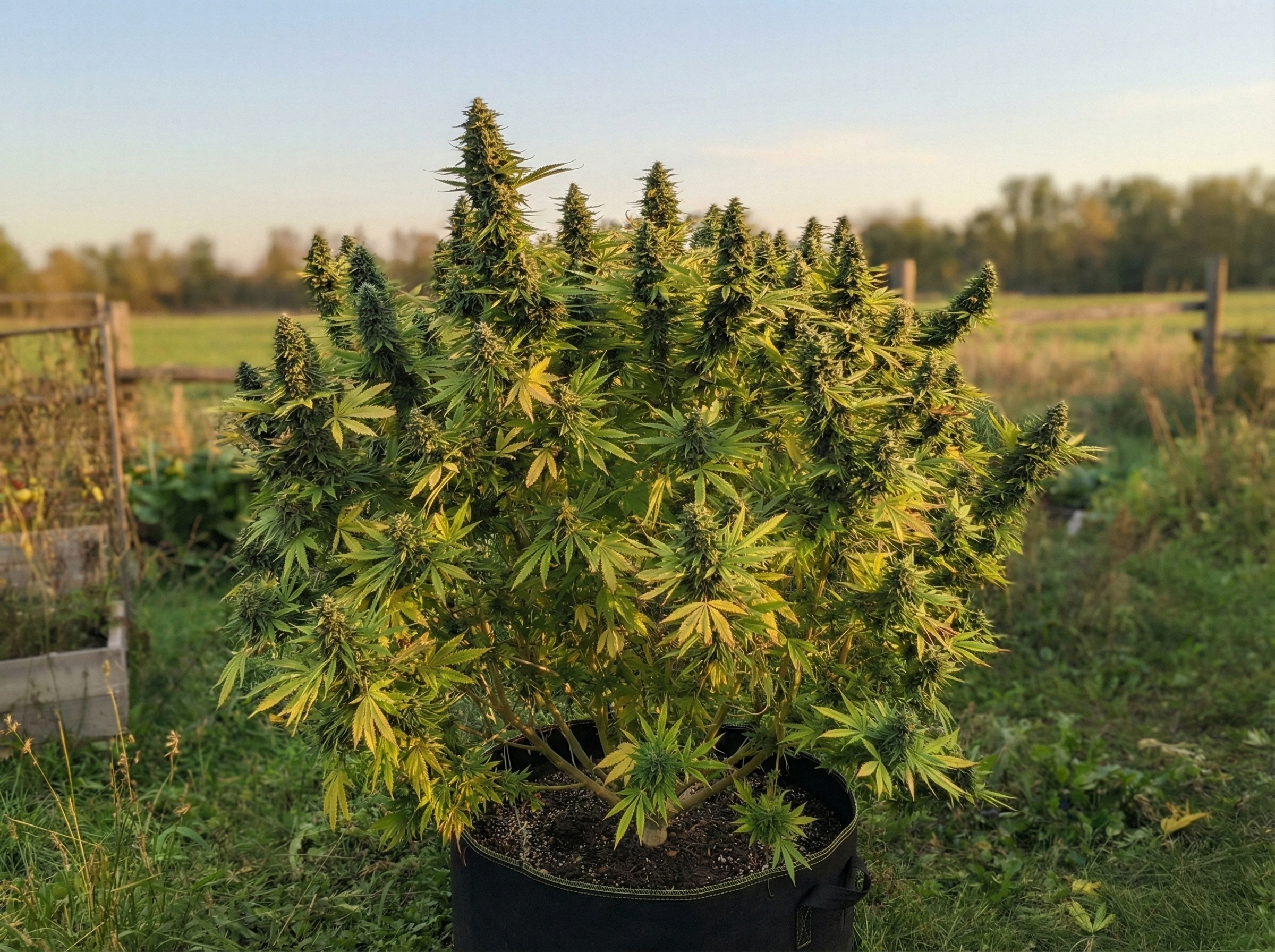
Plants can become broad, rounded shrubs. Support may be necessary because heavy lateral branches can pull outward as flowers gain mass. Early structural training is easier than trying to rescue overloaded branches late in bloom.
Strain-Specific Grow Guidance
Build width, not unnecessary height
Purple Kush naturally wants to stay low. Use that tendency instead of fighting it. Early topping can split apical dominance and create several strong branches. Low-stress training then spreads those branches outward so light reaches the middle of the plant.
The objective is not to flatten every shoot aggressively. It is to create separation between future flower sites. A well-trained Purple Kush should look open from above, with visible gaps that allow light and air to move into the plant.
Vegetative structure
Expect broad fan leaves and relatively short spacing between nodes. Healthy plants can look extremely full even when they are not tall. This is the stage when selective leaf removal can be helpful, but indiscriminate stripping is unnecessary. Remove leaves that repeatedly lie on top of one another, block important interior shoots, or prevent airflow through the center.
If the plant is kept too wet, the compact structure can exaggerate the problem. Leaves may remain heavy and dark, growth slows, and the root zone becomes less oxygenated. Purple Kush often looks sturdy enough to tolerate frequent watering, but its broad leaves do not mean it wants constantly saturated media.
Stretch management
The flowering stretch is usually modest compared with sativa-dominant cultivars. This makes timing easier. Indoor growers can allow a fuller vegetative canopy before switching to flower, but there still needs to be room for lateral expansion and flower bulk.
A plant that enters flower already touching every neighboring plant is likely to become too dense. Leave working space for airflow and access. Purple Kush rewards deliberate spacing more than maximum plant count.
Nutrient behavior
Purple Kush can support a healthy nutrient level, but "Kush plants are heavy feeders" should not be treated as permission to push concentration blindly. The correct level is the one the plant can use under the available light, temperature, root volume, and transpiration rate.
Excess nitrogen is particularly undesirable late in flower. It can keep foliage dark and soft, prolong vegetative-looking growth, and make a dense canopy even harder to manage. Watch the newest growth, leaf tip color, and overall plant posture rather than following a fixed feed number simply because of the strain name.
Root zone
A porous root zone is valuable because Purple Kush is often grown as a broad plant with a substantial canopy. The roots need oxygen to support that leaf mass. In container culture, allow a sensible wet-dry rhythm. Do not water by calendar alone.
In soil, wait until the container has clearly lost weight and the upper layer has begun to dry before irrigating again. In coco or other high-frequency systems, maintain the intended air-filled porosity and avoid letting runoff salts accumulate. The strain is not uniquely sensitive to pH, but like any cannabis cultivar it will show nutrient problems if the root-zone chemistry drifts outside the appropriate range for the medium.
Canopy density and defoliation
This is the most strain-specific management issue. Purple Kush's wide leaves can overlap quickly. A single heavy defoliation is less useful than several restrained cleanups. The best targets are leaves that block multiple bud sites, inward-growing shoots, weak interior branches, and material that will never reach strong light.
After the flowering stretch, inspect the canopy from below. If the center looks like a dark wall of petioles and leaves, remove enough material to establish channels for moving air. Do not remove healthy leaves merely because they are large. The goal is airflow and light distribution, not a naked plant.
Training response
Purple Kush responds well to topping and LST. It can also work under a screen because its branches are strong and the stretch is predictable. The screen should be used to separate tops rather than pack every opening. Overfilling a screen defeats the purpose by recreating the same humidity problem in a different shape.
High-stress bending can be used in vegetative growth if necessary, but the plant rarely needs extreme manipulation. Once flowers begin to harden, stop aggressive training. Late damage can create open wounds, broken branches, and unnecessary stress at the exact stage when the plant should be finishing.
Light strategy
Purple Kush can produce dense flowers under strong lighting, but density is not the only target. Watch leaf temperature and canopy response. Excessive intensity without matching CO2, nutrition, water, and environmental control can produce bleaching, foxtailing, stalled photosynthesis, or flattened aroma.
Research on cannabis shows that higher light can increase flower yield within appropriate environmental limits, but that does not mean every home garden should chase laboratory-level intensity. A uniform canopy with no hot spots is more useful than a maximum reading at one point.
Because Purple Kush stays short, it is easy to accidentally place the fixture too close after the stretch ends. Recheck distance and leaf response as the flowers rise toward the light.
Temperature and purple coloration
The cultivar is associated with purple flowers, and cooler temperatures can increase anthocyanin expression in genetically capable plants. However, the target is controlled color expression, not cold stress. Mildly cooler late-flower nights can occur naturally in a healthy environment, but severe temperature drops can slow metabolism and create humidity problems as the room cools.
Never sacrifice root health or dew-point safety just to make the flowers darker. A green, aromatic, fully mature Purple Kush is better than a purple plant that was chilled into poor performance.
Humidity and flower density
Humidity control becomes progressively more important after the flowers thicken. Dense buds can create internal microclimates that are wetter than the room reading suggests. Good circulation around the canopy is therefore essential even when the hygrometer looks acceptable.
Avoid aiming fans directly at one flower with enough force to cause constant windburn. Instead, create gentle circulation across and beneath the canopy. Outdoors, inspect the interiors of the largest colas after rain or prolonged dew.
Pest considerations
The squat architecture can hide pests on lower leaf surfaces. Regular inspection matters because mites and other small pests can establish colonies inside a dense plant before the grower notices damage from above. The best defense is early detection and a clean environment. Avoid spraying flowers late in bloom unless a legal and crop-safe treatment is specifically intended for that stage.
Flower development
Purple Kush flowers often become compact rather than dramatically elongated. Calyx swelling can make individual buds feel hard while the plant still has time to mature. Do not harvest purely because the flowers look dense.
Track pistil behavior, calyx expansion, resin maturity, water consumption, and the overall fade together. Some phenotypes finish quickly around eight weeks. Others need longer. The exact plant should make the decision.
Harvest timing
For a more balanced effect, many growers prefer a harvest window where trichomes are predominantly cloudy with limited amber. For a heavier night-oriented expression, allowing more mature resin can shift the subjective experience toward deeper relaxation, although the relationship between trichome color and effect is not perfectly linear.
Purple coloration is not a harvest signal. Nor is leaf fade by itself. A plant can turn purple early and still be immature.
Branch support
Build support before the flowers demand it
Although the plant is short, heavy lateral buds can pull branches downward. Add support before branches are already bent. Soft ties, stakes, or a second support layer can protect the structure without compressing the flowers together.
Outdoor finishing
In outdoor gardens, the final weeks determine whether a good Purple Kush becomes excellent or becomes a mold problem. If the forecast turns wet, prioritize airflow and inspection. Remove dead leaf material from flower clusters immediately. Do not leave damaged tissue embedded in dense buds.
Master advice: With Purple Kush, the grower usually loses more quality from an overcrowded canopy than from failing to maximize the number of tops. Space is a yield tool because clean, fully lit flowers are worth more than a larger count of shaded, humid buds.
Weedth Bud Flavor Tips
Purple Kush flavor is built during flowering but protected after harvest. The drying and curing stage can either reveal the grape-floral-earth profile or erase much of it.
Indoor flavor strategy
Keep late-flower canopy temperatures stable and avoid unnecessary heat. A Purple Kush crop that smells rich in week seven can become noticeably flatter if the room runs hot for the final week. Heat increases volatile loss and can also increase plant stress.
Do not overfeed late. Heavy mineral buildup does not magically become "chemical flavor," but an unhealthy overfed plant can finish poorly and dry unevenly. The goal is a healthy transition into maturity rather than forcing extreme green color until harvest.
Outdoor flavor strategy
Outdoor Purple Kush can develop a deep earthy and fruit character under full sun. Protecting that expression requires choosing the harvest window around weather as well as resin maturity. A single warm dry day may be better for harvesting than waiting through several days of rain for a theoretical perfect trichome percentage.
Harvest material should move into a controlled drying environment quickly. Leaving cut branches in direct sun or a hot vehicle is one of the fastest ways to lose volatile aroma.
Slow, controlled drying
Research on cannabis post-harvest handling shows that high drying temperatures reduce terpene retention. For premium flower, the aim is therefore a cool, dark, controlled dry rather than maximum speed.
Whole-plant or large-branch hanging can slow drying when environmental conditions are appropriate. Smaller branches may be safer when flowers are extremely dense or the room is humid. Purple Kush's compact buds deserve more mold awareness than airy sativas.
Do not rely only on the outside feel of the bud. Dense flowers can feel crisp on the surface while remaining wetter inside. Equalization matters before sealed curing.
Curing
After the flower reaches a safe and even moisture level, curing allows the aroma to settle and harsh green notes to recede. Purple Kush often benefits from several weeks because the floral and hashy layers can become clearer with time.
Open containers as needed during the early cure to prevent trapped excess moisture, but avoid excessive handling and repeated long exposure to room air. Once the moisture is stable, the best preservation strategy is boring: cool, dark, airtight, and undisturbed.
Preserve the trichomes
Purple Kush can be resinous enough that rough trimming visibly removes heads. Handle cold, dry-but-not-brittle flowers carefully. Over-trimming for a perfectly smooth cosmetic surface can remove flavorful sugar-leaf material and damage the exterior resin layer.
Flavor-first harvest decision
If the plant has reached physiological maturity and the aroma is at its strongest, do not automatically extend the crop simply to chase more amber resin. Very late harvest can change the sensory profile and increase the time flowers spend exposed to environmental risk. For a flavor-first harvest, the best moment is when the flowers are fully swollen, resin is mature, and the plant still carries a vivid aroma.
Weedth flavor tip: Purple Kush usually tastes better when the grower stops trying to make it "grapier." Do not add fruit, flavorings, or improvised sweeteners to the root zone or curing container. Preserve the genetics that are already there.
Weedth Bud Boost Tips
Yield improvement with Purple Kush comes from canopy geometry, root health, and keeping the flower zone active until maturity.
Top early enough to recover
A single early topping is often enough to redirect the plant into multiple strong leaders. If more tops are desired, allow recovery before topping again. Purple Kush does not need endless high-stress events to become bushy. Its genetics already favor lateral growth.
Use LST to create separation
Tie branches outward before they become woody. The ideal shape is a low bowl or table of evenly spaced tops. This exposes more flower sites without stacking them on top of one another.
Remove low-value interior shoots
Before or shortly after the flowering transition, remove weak shoots that remain buried under the canopy. These sites are unlikely to produce premium buds and they reduce airflow. Redirecting the plant toward better-lit branches improves harvest consistency even if total theoretical bud count decreases.
Maintain leaf health through mid flower
Do not over-defoliate. Purple Kush needs fewer leaves blocking the interior, not fewer leaves overall. Healthy leaves drive photosynthesis and supply the flowers. A good canopy has exposed bud sites and enough leaf area to support them.
Support before weight arrives
Install stakes or support netting before late-flower mass makes the branches difficult to move. Support allows the plant to hold larger flowers without folding them into neighboring colas.
Root volume and irrigation
A broader Purple Kush plant can use more root volume than its height suggests. Choose container size based on canopy mass and vegetative duration, not only final height. Root restriction can limit a plant that otherwise looks small enough for a tiny pot.
Keep irrigation consistent. Repeated severe drybacks can reduce photosynthesis and cause leaf loss, while constant saturation reduces root oxygen. The best yield comes from a root zone that cycles predictably.
Light distribution
A level canopy lets more sites operate at useful intensity. This is more efficient than allowing one central cola to sit close to the light while lower branches remain shaded. If the center top is dominating, bend or top early rather than compensating with excessive fixture power.
CO2 and advanced environments
Additional CO2 only makes sense in a properly controlled environment with enough light and climate capacity to use it. It is not a shortcut for a weak canopy or poor root zone. For most small gardens, uniform light, leaf temperature control, and airflow will produce a larger real-world improvement than adding CO2 to an unstable room.
Final weeks
Do not keep pushing nitrogen or aggressive training when the flowers are finishing. Maintain plant health and environmental consistency. Purple Kush often puts on noticeable density late, so the last weeks are a time for patience rather than experimentation.
Medical Uses & Benefits
Purple Kush is frequently selected by medical cannabis users for its strong relaxing profile, but strain-level medical claims need caution. Human responses vary, products with the same strain name can differ chemically, and evidence for specific named strains is much weaker than evidence for cannabinoids in general.
Stress and tension
The reported combination of mental easing and body relaxation makes Purple Kush popular among people who use cannabis to decompress after stressful days. Many users describe reduced mental urgency and less physical tension. This does not mean the strain treats an anxiety disorder, and high THC can worsen anxiety in some people.
Sleep-oriented use
Sleepiness is one of the most commonly reported Purple Kush effects. For some users, the late phase makes it easier to transition toward bed. However, cannabis can affect sleep architecture and tolerance, and regular heavy use is not the same as treating the cause of insomnia. People with persistent sleep problems should seek appropriate medical evaluation.
Pain and physical discomfort
The strong body sensation can make discomfort feel less intrusive for some users. This is often why Purple Kush appears in discussions of chronic pain, muscle tension, and recovery. The appropriate medical product, dose, and cannabinoid ratio depend on the individual and condition, so a strain name should not replace professional guidance.
Appetite
Purple Kush often increases appetite. That can be welcome for users who intentionally want appetite stimulation and inconvenient for others. Medical appetite problems can have serious underlying causes, so self-treatment should not delay diagnosis.
Important cautions
THC-dominant cannabis can cause dry mouth, dry eyes, impaired coordination, slowed reaction time, dizziness, anxiety, and short-term memory impairment. Do not drive or perform safety-critical work while impaired. People who are pregnant, have cardiovascular concerns, take interacting medications, or have a personal or family history of psychosis should discuss cannabis use with a qualified clinician.
The responsible way to describe Purple Kush medically is as a commonly reported relaxation-oriented cultivar, not as a treatment with guaranteed outcomes.
Ideal User Profile
Purple Kush is best for someone who wants the day to slow down rather than speed up.
The ideal recreational user enjoys body-heavy indicas, deep evening relaxation, and earthy old-school flavor. They are not looking for a strain that turns errands into an adventure or makes a work session more productive. They want a comfortable chair, familiar music, food nearby, and enough time before sleep.
A moderate-tolerance user may appreciate the balance between early euphoria and later heaviness. A new user should start with a small amount because the delayed body build can be stronger than expected. High-tolerance users may enjoy Purple Kush specifically because it remains physically satisfying even when the initial cerebral effect feels gentle.
Flavor-oriented users should choose it if they appreciate grape skin, dried flowers, earth, pine, and hash. Someone looking for syrupy candy or sharp lemon may find it understated.
For growers, Purple Kush suits people with limited vertical space who are willing to manage width and humidity. A first-time grower can keep the plant alive without advanced techniques, but anyone aiming for premium flower should be comfortable pruning selectively and monitoring dense buds during the final weeks.
Best use window: evening through bedtime. Less suitable: mornings, demanding work, driving, or activities that require fast reactions.
Grower Notes and Feedback
Grower reports on Purple Kush are remarkably consistent on structure even when potency and exact aroma vary. The plant is usually described as short, bushy, and easy to contain. The most common surprise is how much lateral space it occupies once trained.
Many growers initially underestimate how dense the foliage becomes. A plant that looks perfectly manageable in early veg can become crowded after several weeks of branching. This is why early structure work pays off. Growers who spread the plant and clean the interior usually report more uniform flowers and easier humidity control.
Another recurring observation is that purple expression varies widely. Some plants turn dark with little intervention. Others remain green even in cool finishing conditions. Experienced growers generally learn not to chase color. The better selection criteria are aroma, resin, health, flower structure, and the final effect.
Flower density is usually considered a strength, but it requires attention. Outdoor growers in dry climates often find Purple Kush straightforward. Growers in humid regions report more concern around bud rot, especially when nights become cool and dew forms inside the flowers.
Feeding reports vary. Some phenotypes tolerate relatively strong nutrition, while others show leaf tip burn before the grower expects it. This variation supports a plant-reading approach. Start within a sensible range and increase only if growth and leaf color justify it.
The strain generally responds well to topping. Growers who leave it completely natural often receive one dominant central flower with strong side branches. Growers who top and spread it tend to get a flatter collection of similarly sized colas. Both styles can work. The choice should depend on available area and airflow.
Curing feedback is also consistent. Purple Kush is rarely at its best immediately after drying. The earthy green edge can be prominent at first. After several weeks, dark fruit and floral notes usually become clearer and the smoke becomes smoother.
A useful way to summarize grower feedback is this: Purple Kush is easy to grow compact, but harder to grow exceptional. The plant rarely causes dramatic structural problems. The challenge is refinement. Canopy spacing, humidity, harvest timing, and a slow cure determine whether the result is average purple-looking flower or a rich, resinous expression worth remembering.
Weedth Editor's Note
The point where this plant reveals itself
I like Purple Kush because it forces me to think about space differently. The plant never looks intimidating in height, so the temptation is to keep adding branches and let it fill every empty corner. The first time I treated it that way, I ended up with exactly the problem the structure predicts: a beautiful green canopy from above and too much shaded growth underneath.
The better runs were the ones where I removed less useful interior growth early and stopped measuring success by the number of tops. Purple Kush does not need help becoming bushy. It needs help becoming organized. Once I started leaving more air between branches, the flowers became more even and the harvest was easier to dry.
I also stopped trying to force the purple color. Some plants naturally darkened as they finished and some did not. The best-tasting plant I remember was not the darkest one. It stayed mostly green with violet edges, but the jar smelled like crushed grape skin, dry earth, and old wooden hash boxes after a month of cure. That was the moment I understood that the name can distract you from what actually matters.
For feeding, I prefer to keep the plant healthy but not excessively dark in late flower. Purple Kush can carry broad leaves deep into bloom, and too much nitrogen makes the canopy feel even heavier. A gentle natural fade makes trimming easier and usually gives me a cleaner final expression.
The most important decision I make with this strain is humidity management. Once the buds begin to harden, I inspect the interior rather than admiring the tops. If air cannot move through the plant, I correct it before the flowers get heavier. Dense buds are only valuable if they finish clean.
When I smoke a properly cured Purple Kush, the first thing I notice is how little it needs to prove. It does not rush. The mood becomes softer, the body settles, and the room seems quieter. Ten or fifteen minutes later I usually realize I have no interest in standing up. That slow physical build is why I treat it as a night strain even when the first few minutes feel relatively clear.
For a beginner, I think Purple Kush is a good introduction to indica morphology because the stretch is manageable and the plant tolerates sensible training. I would only add one warning: do not confuse short with low-maintenance. Watch the middle of the plant, not just the top.
If flavor is the goal, give the cure time. Purple Kush can smell ordinary during the first days after drying and then open into something far more layered. I would rather wait another two weeks than rush a jar that has taken months to grow.
Weedth Score
Growing Experience – 9/10 Compact structure, predictable stretch, and a strong response to topping make Purple Kush enjoyable to manage. The deduction comes from canopy congestion and dense-flower humidity risk.
Bud Structure & Visual Appeal – 9/10 Dense flowers, heavy resin, orange pistils, and the potential for deep violet or plum coloration give it classic bag appeal. Color varies by phenotype, so not every plant becomes dramatically purple.
Aroma Complexity – 8.5/10 The combination of grape skin, earth, floral notes, pine, pepper, and hash is deep and mature. It may not be as explosively loud as modern citrus or fuel cultivars, but the layered profile rewards attention.
Flavor & Smoothness – 8.5/10 A slow dry and proper cure produce a rich dark-fruit and earthy smoke. Rushed flower can become harsh and disappointingly flat.
Effects & High Experience – 9/10 Excellent for deep evening relaxation. The staged move from mental ease into body heaviness is the defining experience. It loses points only because that same sedation limits versatility.
Overall Satisfaction & Recommendation – 9/10 Purple Kush remains one of the clearest examples of why a traditional indica profile still matters. It is compact in the garden, rich in the jar, and deeply relaxing when used at the right time.
"I do not grow Purple Kush for speed or novelty. I grow it for the moment the grape, earth, and hash finally meet after a patient cure."
FAQ
Is Purple Kush really a pure indica?
It is commonly described as a pure or near-pure indica based on its traditional Hindu Kush and Afghani-type lineage. Modern genetic classification is more complicated than simple indica and sativa percentages, but its morphology and effect profile strongly match what growers traditionally call indica: short stature, broad leaves, modest stretch, compact flowers, and a heavy physical effect.
How long does Purple Kush flower indoors?
Most traditional descriptions place it around 7-9 weeks, with many phenotypes finishing close to eight weeks. Do not harvest solely by calendar. Individual plants can mature faster or slower depending on phenotype and environment. Watch calyx swelling, resin development, pistil behavior, plant fade, and trichome maturity together.
Does Purple Kush always turn purple?
No. Purple coloration is genetically influenced and environmentally modulated. Some plants become extremely dark, while others remain mostly green. Cooler late-flower conditions can increase anthocyanin expression in capable plants, but intentionally stressing the plant with severe cold is unnecessary. Color is not a measure of potency or maturity.
Is Purple Kush easy for beginners?
Yes for basic cultivation, with one major condition: beginners need to learn canopy management. The strain stays short and responds well to training, but the foliage can become dense. If the center remains crowded, airflow decreases and late-flower humidity risk rises. A beginner who learns selective pruning and proper watering can do very well with it.
How tall does Purple Kush grow indoors?
It is usually short to medium and often finishes around one meter or less in compact indoor setups, although vegetative time, container size, training, and phenotype can change the final height. The more important measurement is width. A topped plant can spread much farther sideways than a new grower expects.
Does Purple Kush stretch a lot after flowering starts?
Usually not compared with Haze or tropical sativa lines. Expect low to moderate stretch. This predictability allows growers to build a fuller canopy before flowering, but leaving the area completely packed before the transition can still create crowding once flowers gain volume.
What training method works best?
Topping followed by low-stress branch spreading is one of the most natural approaches. A screen can also work well if it is used to separate branches. The plant does not require extreme high-stress training. Focus on an even canopy with visible airflow channels.
Is Purple Kush a heavy feeder?
Some examples tolerate strong nutrition, but the safest strategy is to feed according to plant response rather than strain reputation. Excess nitrogen late in flower can leave the plant overly leafy and dark. Healthy leaf color and active growth matter more than pushing a specific concentration.
What humidity problem should growers watch for?
Dense buds and a compact canopy can create humid microclimates inside the plant. This matters especially late in flower. Maintain good circulation and avoid leaving dead leaf material inside flowers. Outdoor growers should inspect large buds after rain or prolonged dew.
Is the grape flavor caused by purple color?
No. Pigment and aroma are different biological traits. A dark flower is not automatically grape-flavored, and a green flower can still express strong dark-fruit terpenes. Aroma comes from volatile compounds and their ratios, not from anthocyanin color itself.
Which terpenes are most common in Purple Kush?
Myrcene, pinene, and beta-caryophyllene are frequently reported. Individual chemical tests can show different dominant orders and minor terpenes. This is expected because phenotype, environment, harvest timing, and post-harvest handling all influence the measured profile.
What does Purple Kush taste like after a good cure?
The classic profile is earthy and hashy with dark grape or berry skin, dried floral notes, pine, and pepper. The fruit is usually deeper and less candy-like than modern dessert cultivars. A rushed dry can hide much of this complexity.
How long should Purple Kush cure?
There is no single required duration, but it often improves noticeably over several weeks once moisture is stable. The aim is not to chase a calendar number. Cure until the flower burns or vaporizes smoothly, the green edge has receded, and the aroma has become stable and layered.
Is Purple Kush better indoors or outdoors?
Indoors offers easier control of humidity, temperature, and canopy density, which makes it the more predictable option. Outdoors can produce excellent flower in sunny, dry climates. Persistent rain near harvest is the main concern because the buds can become dense.
When is the best time to use Purple Kush?
Evening and nighttime are the natural fit. Low doses can be relaxing without immediate sleep, but the effect commonly becomes heavier as it develops. It is not an ideal choice before driving, detailed work, or tasks requiring fast reactions.
Can Purple Kush cause anxiety?
It is often reported as calming, but any THC-dominant cannabis can cause anxiety, dizziness, or discomfort, especially at high doses. Individual response matters more than strain reputation. New users should start low and wait for the full effect before taking more.
Why can Purple Kush feel stronger than its THC percentage suggests?
THC percentage is only one part of the experience. Dose, terpene profile, minor cannabinoids, tolerance, inhalation style, and expectations all influence perceived strength. Purple Kush also develops a cumulative body effect, so the first minutes can underestimate how heavy the session will become.
What is the biggest mistake growers make with Purple Kush?
Overcrowding. Because the plant stays short, growers often allow too many branches and leaves to remain. The result is poor light penetration, stagnant air, and a harvest with uneven flower quality. A cleaner, wider canopy usually performs better.
Similar Strains
Hindu Kush
The most obvious comparison because it represents a major part of Purple Kush's reported heritage. Hindu Kush offers a similarly compact plant structure, earthy hash aroma, and body-heavy relaxation. Choose it if you want the traditional Kush side with less emphasis on grape and purple color.
Granddaddy Purple
A strong match for users who enjoy dark fruit, purple coloration, appetite stimulation, and evening relaxation. The flavor is often sweeter and more berry-forward, while the plant can show a somewhat different branching pattern.
Grape Ape
Relevant for its grape-like aroma, purple potential, and heavy indica-style experience. It is a good alternative for users who want fruit to sit more prominently in the flavor profile.
Bubba Kush
A classic choice for deep physical relaxation and earthy, coffee-like, hashy flavor. It lacks the same grape-violet identity but shares the compact, calming, night-oriented character.
Northern Lights
Another classic compact indica that is easy to manage indoors and valued for physical relaxation. Northern Lights generally leans more toward pine, earth, and sweetness than dark grape, but it offers a similarly forgiving grow and dependable night effect.
Black Diamond
A useful comparison for people who enjoy dark coloration, berry-earth aromas, and a relaxing evening profile. It can bring a slightly more hybrid mental lift before the body settles.
Purple Kush remains distinct because it combines low vertical growth, dense resinous flower, dark-fruit florals, and a slow-building physical high in a very recognizable package. For growers who manage the interior canopy and protect the cure, it is one of the most satisfying old-school indica profiles to keep in rotation.
Share this article
A quick overview of the topics covered in this article.
Follow us
Latest articles
October 25, 2026
October 25, 2026