Sealed vs Vented Grow Room: Architecture, Air Exchange, and Control
Selecting the core atmospheric architecture for an indoor cannabis cultivation facility is the single most consequential engineering decision a cultivator will make. Every downstream equipment choice (from lighting selection and HVACD tonnage to electrical distribution and daily operating budgets) hinges directly on whether the space operates as an open-loop vented environment or a closed-loop sealed facility. Choosing the wrong architectural approach for a specific building site or budget inevitably produces chronic environmental instability, structural moisture rot, or crippling monthly utility expenses.
An open-loop vented grow room relies on continuous mechanical air exchange, drawing fresh ambient air from an external supply (or adjacent lung room) and exhausting warm, moisture-laden air outside through carbon filtration. In contrast, a closed-loop sealed grow room completely isolates the internal cultivation atmosphere from the outdoor world, recirculating conditioned air while actively manufacturing and managing every environmental variable: temperature, relative humidity, and carbon dioxide (CO2). Navigating this architectural fork in the road requires analyzing thermodynamic mass balance, local climatic extremes, capital expenditure constraints, and biological crop performance.
Thermodynamic Law: Open vs Closed Environmental Mass Exchange
In an open vented room, environmental stability is fundamentally tied to the enthalpy (total heat and moisture energy) of the incoming outdoor makeup air. If outdoor air is hot and humid, the exhaust fan simply injects heat and moisture into the garden. In a sealed room, the environmental mass exchange with the exterior envelope is theoretically zero. All sensible heat from lighting and equipment, as well as all latent moisture from canopy transpiration, must be physically removed by internal refrigeration and mechanical dehumidification systems, while carbon dioxide consumed by photosynthesis must be artificially injected from compressed gas cylinders or catalytic burners.
Understanding this fundamental thermodynamic divergence dispels the common misconception that sealed rooms are universally superior. While a sealed room provides absolute biological biosecurity and allows precision CO2 enrichment up to 1,500 ppm, it demands immense electrical service capacity and sophisticated HVACD machinery. If a sealed room experiences an electrical outage or compressor failure, canopy temperatures can surge past 38 degrees Celsius (100 degrees Fahrenheit) in less than twenty minutes, destroying an entire crop.
Conversely, a well-engineered vented room leverages natural outdoor thermodynamics to evacuate massive heat loads with minimal electrical power. A high-efficiency EC mixed-flow fan consuming only 75 watts can evacuate the sensible heat of 3,000 watts of LED lighting, provided the incoming intake air is sufficiently cool. However, vented rooms are inherently vulnerable to outdoor weather shifts, seasonal humidity surges, and pest infiltration, and they make carbon dioxide supplementation economically impractical because expensive CO2 is sucked out of the exhaust port within minutes.
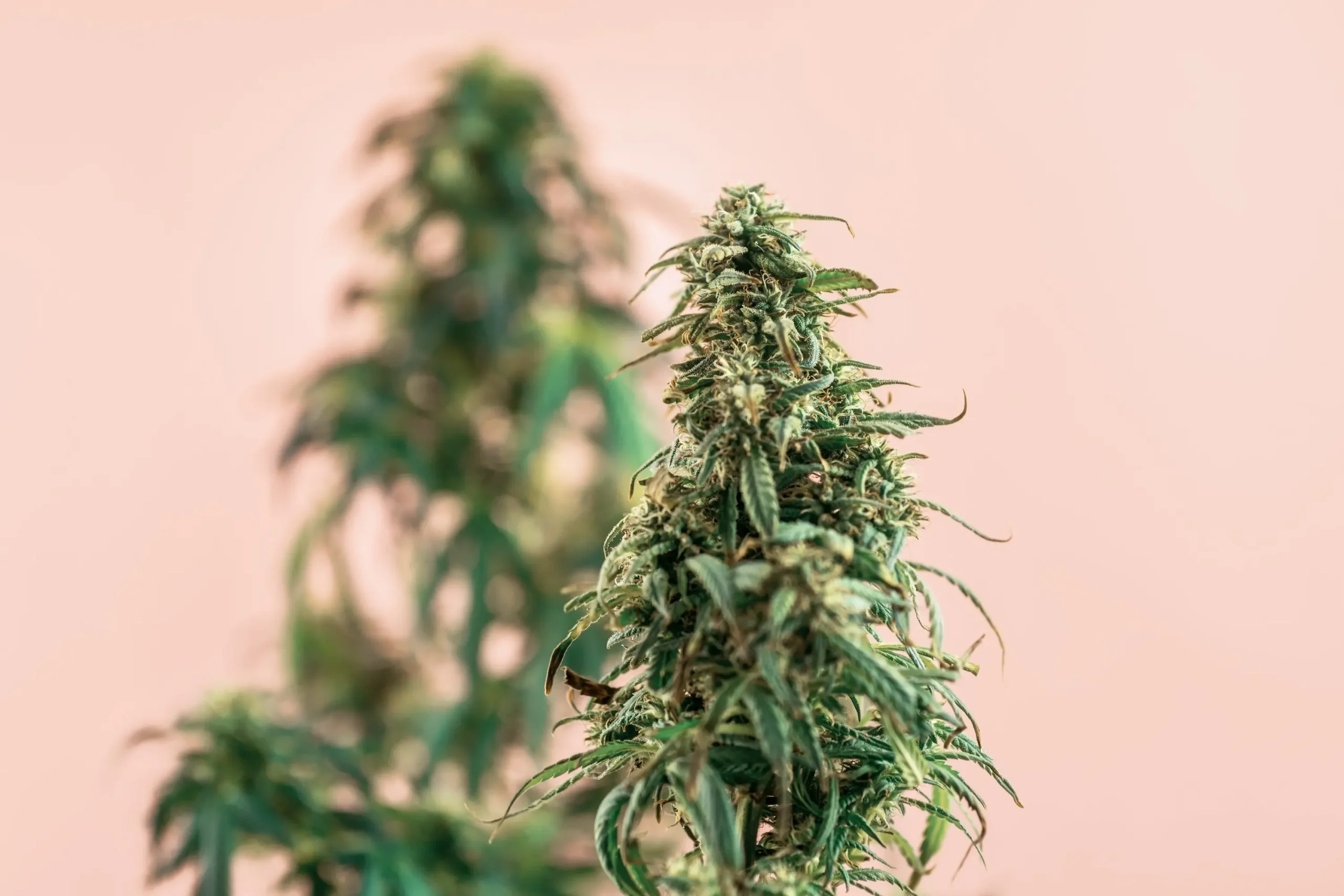
Comparison of closed-loop sealed cultivation architecture against continuous-exchange vented enclosures, illustrating distinct airflow pathways and thermodynamic profiles.
Cultivators must objectively evaluate their local site realities rather than blindly following commercial hype. A grower operating in an arid, cool mountain climate with clean ambient air has vastly different thermodynamic leverage than a cultivator battling subtropical summer heat and 90 percent ambient humidity in a coastal lowland. Matching the ventilation architecture to the physical site ensures predictable harvest cycles and protects investment capital.
This comprehensive engineering guide breaks down the structural requirements, fluid dynamic calculations, failure modes, and long-term operating costs of both systems. By examining real-world commissioning workflows, pressure balancing, and emergency failsafe planning, growers can confidently select and execute the architectural design that maximizes yield and reliability.
Defining the Airflow, Pressure, and Gas Exchange Problem
To evaluate sealed versus vented systems objectively, cultivators must define the primary physical variables governing the growing environment: volumetric airflow rate (CFM), differential static pressure (Pascals or water gauge inches), ambient dry-bulb temperature, relative humidity, dew point, Leaf Vapor Pressure Deficit (Leaf VPD), and carbon dioxide concentration (ppm).
In a vented system, airflow is dynamic and linear. The primary controlling variable is volumetric exchange rate, traditionally targeted at one complete room air exchange every one to three minutes under peak thermal load. This continuous stream of air serves a dual purpose: it sweeps away sensible heat and latent transpirational water vapor, while replenishing the ambient 400 to 420 ppm of carbon dioxide consumed by foliar photosynthesis. If the exhaust fan slows down, heat and humidity spike, while CO2 levels plummet toward 200 ppm, severely stalling plant metabolism.
I want to add a CO2 tank and regulator to my 5×5 grow tent, but I have a 6-inch exhaust fan running continuously to keep temperatures down. Will adding CO2 increase my yields?
In a continuously vented grow tent, injecting compressed CO2 is an expensive waste of money. An inline fan moving 250 to 350 CFM exchanges the entire air volume of a 5×5 tent several times every minute. Any carbon dioxide injected into the tent will be sucked into the carbon filter and discharged outdoors before plant stomata can absorb it. To effectively enrich CO2 above ambient levels (800 to 1,200 ppm), you must either seal the room and deploy dedicated air conditioning and dehumidification, or utilize a smart environmental controller that pauses exhaust fans during brief, sealed enrichment cycles.
Question sent by: Cameron, via email.
Cameron’s question highlights the fundamental rule of carbon dioxide enrichment: CO2 supplementation and open exhaust ventilation are mechanically incompatible. In a sealed environment, airflow is recirculating rather than directional. The air within the room passes continuously through internal air handlers, cooling coils, dehumidifiers, and carbon scrubbers, moving through the canopy in closed convection loops.
Because the sealed room discharges zero air to the outside, carbon dioxide gas injected from compressed cylinders or generated by natural gas catalytic burners remains inside the space until assimilated by foliar chloroplasts. This enables cultivators to maintain steady-state daytime CO2 concentrations of 1,100 to 1,500 ppm. Elevated CO2 shifts the photosynthetic saturation threshold, allowing plants to comfortably utilize higher light intensities (PPFD exceeding 1,000 to 1,200 μmol/m²/s) and tolerate elevated canopy temperatures (29 to 31 degrees Celsius) without suffering cellular photoinhibition.
System Layout: Intake Path, Exhaust Path, and Recirculation Geometry
The physical routing of ducts, equipment placement, and air distribution geometry differs radically between sealed and vented architectures. A failure to engineer these pathways properly creates severe microclimatic stratification, thermal hot spots, and pressure imbalances.
In a vented room, the physical layout must establish a clean, diagonal displacement air path. Passive or motorized intake ports must be situated low to the ground on one side of the room, protected by light-trapping baffles and MERV 11 to MERV 13 particulate filters to intercept dust, fungal spores, and insect pests. The exhaust intake port, coupled to a heavy-duty activated virgin carbon filter, must be suspended at the highest point of the ceiling on the opposing wall. This diagonal bottom-to-top airflow sweeps cool incoming air across root containers, rises through the foliage, absorbs lighting heat plumes, and exhausts smoothly without thermal short-circuiting.
Aerodynamic Rule: Static Pressure Balancing in Vented Environments
An exhaust fan moving air out of an enclosure creates negative static pressure. If passive intake vents are undersized, the negative pressure becomes extreme, causing tent walls to suck inward, bowing structural poles and straining fan motor windings. Passive intake aperture area must be sized to two to three times the cross-sectional area of the exhaust duct. For a 6-inch exhaust duct (approximately 28 square inches), the passive intake opening must provide at least 56 to 84 square inches of free, unrestrictive opening area.
In a sealed room, the layout must address internal fluid mixing and thermal destratification rather than exterior exchange. Conditioned air from a mini-split evaporator, ducted air handler, or dedicated packaged HVACD system is delivered overhead through insulated sheet metal trunks or perforated linear fabric ducts. The supply air is discharged horizontally along the ceiling plane, gently cascading downward across the lighting fixtures and into the plant canopy.
Return air grilles must be distributed along perimeter floor lines or lower wall sections to scavenge cool, humid air settling beneath benches. Internal oscillating circulation fans must be positioned to generate a continuous, undulating circular swirl flow around the perimeter of the room, maintaining uniform canopy boundary layer velocities (0.5 to 1.0 m/s) without blasting foliage directly. Industrial carbon scrubbers (fans paired with carbon canisters suspended independently inside the room) run continuously to strip volatile organic terpenes from the recirculating air, preventing odor escape during door openings.
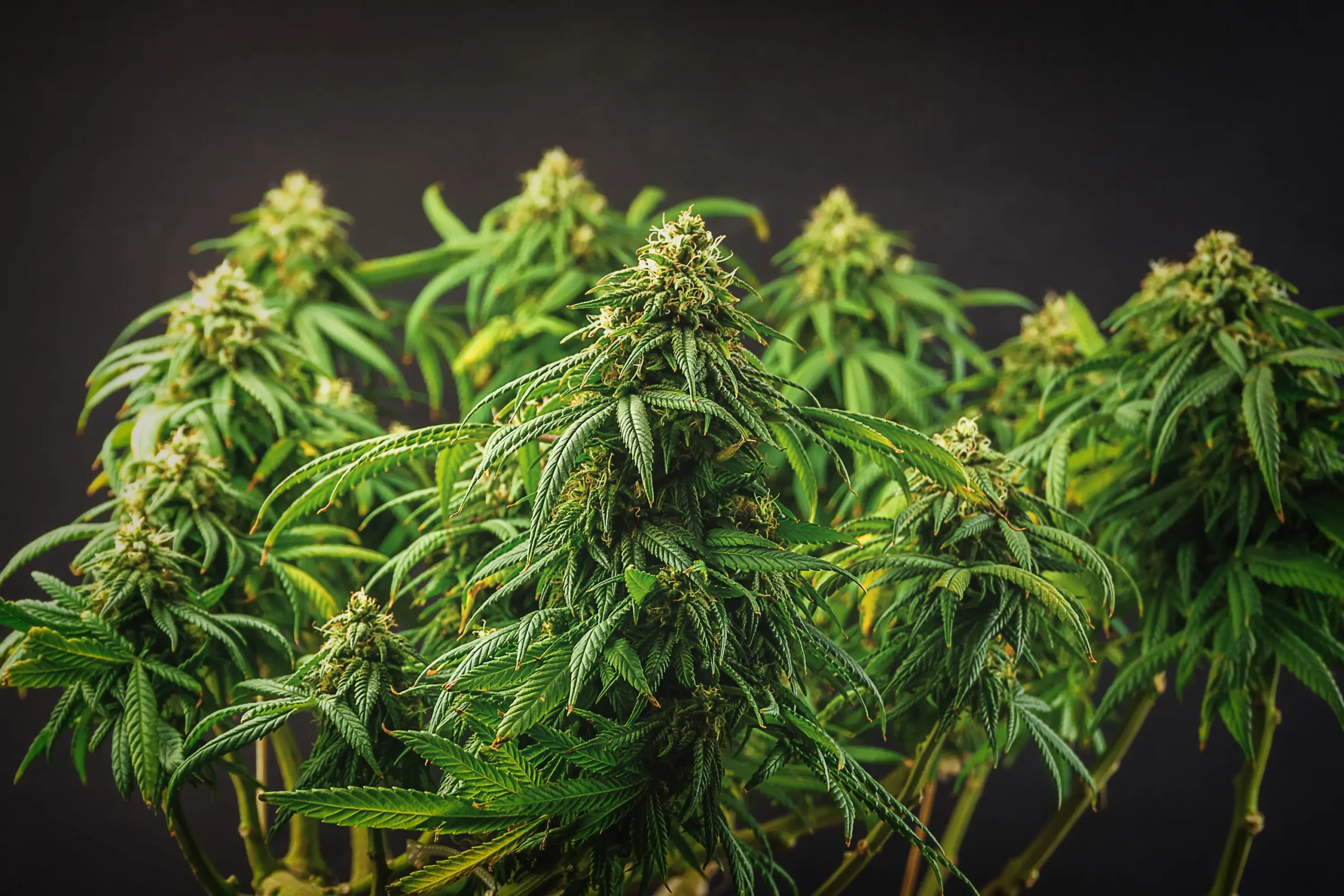
Overhead linear fabric ducting delivering conditioned air across an indoor canopy, demonstrating optimal air distribution in a sealed controlled agricultural environment.
Cultivators designing sealed rooms must also construct an airtight structural envelope. All wall and ceiling surfaces must be sealed with a continuous vapor barrier (minimum 6-mil poly or closed-cell spray foam) taped at all joints with vapor-barrier tape. Electrical pass-through penetrations, plumbing lines, and structural framing must be sealed with silicone or expandable foam. Any breach in the sealed envelope allows expensive carbon dioxide to leak into living areas while permitting uncontrolled moisture migration into structural wall cavities.
Furthermore, entry into a sealed room should ideally incorporate an airlock vestibule or secondary decompression anteroom. This buffer zone prevents outdoor air from rushing into the garden when technicians enter, keeping humidity and CO2 stable while preventing flying pests from hitchhiking onto plants.
Installed Sizing and Measurement Workflow: Installed Capacities vs Free-Air Ratings
Accurate equipment sizing separates high-performance cultivation facilities from operational disasters. Sizing methodology differs completely depending on which architecture is selected.
For vented facilities, sizing calculations revolve around the sensible heat dissipation formula: CFM equals Total Sensible Heat (BTU/hr) divided by (1.08 multiplied by Target Delta T in degrees Fahrenheit). For example, a room operating 4,000 watts of high-efficiency LEDs produces approximately 13,648 BTU/hr of sensible heat. If the intake lung room sits at 70 degrees Fahrenheit and the target tent temperature is 78 degrees Fahrenheit (an 8-degree Delta T), the required airflow is: 13,648 / (1.08 * 8) = 1,579 CFM of actual, delivered air exchange. The cultivator must then derate fan capacity by 30 to 45 percent to overcome the static pressure resistance of carbon filters, duct bends, and intake louvers, specifying an installed fan capacity of at least 2,200 CFM.
| Architectural Parameter | Open-Loop Vented System | Closed-Loop Sealed System | Engineering Consequence |
|---|---|---|---|
| Capital Cost (CapEx) | Low ($500 to $1,500 per 4×4) | High ($3,000 to $7,000 per 4×4) | Sealed requires mini-split AC, commercial dehumidifier, and CO2 gear. |
| Operating Cost (OpEx) | Low electrical wattage; filter replacements | High electrical wattage (AC/Dehum); CO2 refills | Sealed consumes 40% to 60% more electricity per month. |
| CO2 Enrichment | Ineffective (ambient 400-420 ppm only) | Highly effective (800-1,500 ppm steady-state) | Sealed yields 20% to 35% higher biomass under high PPFD. |
| Odor Management | Exhaust stream must be 100% scrubbed | Internal scrubbing; zero exterior exhaust duct | Sealed provides absolute exterior stealth with no building penetrations. |
| Pest & Biosecurity | Vulnerable to intake outdoor pests/spores | Hermetically isolated; maximum biosecurity | Vented requires high-efficiency MERV intake filtration. |
| Climatic Sensitivity | Tied directly to outdoor seasonal weather | Independent of exterior weather extremes | Vented can fail during extreme summer heatwaves or humid storms. |
The comparative matrix above clearly outlines the fundamental trade-offs between capital investment, electrical consumption, and crop productivity. In a sealed room, equipment sizing requires calculating both sensible cooling tonnage and latent moisture removal capacity separately.
For sensible cooling in a sealed room, total wattage (lights, ballasts, fans, dehumidifiers) is summed and converted to BTU/hr (Watts multiplied by 3.412). A 4,000-watt LED room with 600 watts of auxiliary motors and a 1,000-watt dehumidifier generates: 5,600 * 3.412 = 19,107 BTU/hr. Dividing by 12,000 BTU/ton reveals a minimum required cooling capacity of 1.6 tons of refrigeration. Adding a 25 percent engineering safety margin to account for building envelope heat gain dictates a 2.0-ton (24,000 BTU) mini-split heat pump.
Simultaneously, the latent moisture load must be sized directly from peak daily irrigation volume. If the 4,000-watt canopy drinks 12 gallons of water daily, that translates to 96 pints of liquid water transpired into the sealed atmosphere. Derating for cooler late-flowering conditions (dividing by 0.65) and adding an infiltration safety buffer indicates a required commercial dehumidification capacity of at least 170 to 200 pints per day AHAM rating.
Dynamic Environmental Loads: Photoperiod Transitions, Weather, and Plant Mass
Cultivation environments undergo violent thermodynamic shifts that test the limits of both architectures. Environmental loads change dynamically across day-to-night transitions, plant maturation stages, and external meteorological shifts.
In a vented room, external weather is the dominant dynamic load. When a summer heatwave drives outdoor temperatures to 35 degrees Celsius (95 degrees Fahrenheit), an open-loop system collapses. No matter how fast exhaust fans spin, pulling 35-degree air into a room heated by high-output lights will overheat the canopy, forcing stomata to close and inducing acute thermal shock. Conversely, during sub-zero winter weather, unheated outdoor makeup air will freeze root containers, stall transpirational nutrient uptake, and shock plant vascular systems.
My sealed room stays locked at 25 degrees Celsius and 1,200 ppm CO2 during the day, but at lights-out my humidity spikes to 85% and the mini-split stops pulling water. Why does this happen?
Your mini-split air conditioner only dehumidifies while its cooling compressor is running to satisfy the temperature setpoint. When grow lights turn off, sensible heat drops to zero, and the mini-split thermostat detects no call for cooling. The compressor shuts off, completely halting condensation across the cooling coil. Meanwhile, warm, moist root containers continue to evaporate water. Because the room is sealed, that moisture has nowhere to go. You must install a dedicated commercial dehumidifier configured with a dark-cycle humidity priority to strip nocturnal moisture independently of temperature.
Question sent by: Hannah, via email.
Hannah’s experience illustrates the critical necessity of decoupled latent control in sealed cultivation facilities. A mini-split air conditioner is a comfort-cooling appliance, not a dedicated horticultural dehumidifier. Relying solely on an air conditioner to control moisture in a sealed room guarantees catastrophic nighttime humidity spikes, leading directly to Botrytis bud rot in late bloom.
In addition, canopy biomass expands dramatically across the crop cycle. A canopy in week one of vegetative growth transpires minimal water, representing an almost purely sensible thermal load. By week six of flowering, that same canopy presents hundreds of square feet of active foliar surface area, transpiring gallons of water every hour and shifting the room into a heavy latent regime. In a vented room, fan controllers must ramp volumetric exchange upward to purge this expanding moisture plume. In a sealed room, multi-stage commercial dehumidifiers must stage on sequentially to handle the surging transpirational mass.

Foliar stomata operating under optimized CO2 enrichment in a sealed environment, enabling higher photosynthetic conversion rates and accelerated floral maturation.
Building envelope thermal mass also plays an important role. In uninsulated metal pole barns or garage conversions, external solar radiation soaks into walls throughout the day, creating massive sensible heat lag that radiates into the space hours after the sun goes down. Cultivators must account for this building thermal inertia when programming lights-off cooling ramps.
Furthermore, photoperiod transitions must be managed with soft ramp intervals. Dimming LED fixtures down over a 15-minute sunset sequence allows heating, cooling, and dehumidification actuators to adjust smoothly, preventing the abrupt temperature drop and psychrometric saturation that triggers dew point condensation on floral colas.
Mechanical Failure Modes: Pressure Imbalances, Odor Breaches, and CO2 Leaks
Both vented and sealed architectures carry unique mechanical failure modes that can undermine crop vitality, violate building safety, or breach privacy.
In vented systems, the most severe failure mode is extreme negative pressure collapse. When high-volume exhaust fans run against clogged intake filters or undersized passive ports, internal room pressure drops significantly below atmospheric pressure. This extreme depressurization sucks dust, mold spores, and outdoor pests through building crevices, causes tent fabric walls to cave inward against plants, and strains fan motor bearings, leading to premature motor burnout. Even more dangerously, excessive negative pressure in residential homes can induce backdrafting of toxic carbon monoxide fumes from fossil-fuel water heaters or furnaces into living spaces.
Diagnostic Warning: Positive Pressure Odor Blowout in Sealed Facilities
While vented rooms rely on negative pressure to contain odors, poorly engineered sealed rooms can inadvertently develop positive static pressure. If air conditioning blowers, dehumidifier exhaust jets, or compressed CO2 injection streams create positive pressure relative to adjacent rooms, untreated terpene-rich air is physically driven through unsealed drywall seams, electrical outlets, and door frames into the building. Sealed facilities must maintain a neutral to very slight negative pressure (-0.01 to -0.02 inches w.g.) relative to exterior corridors, backed by continuous internal carbon scrubbing.
In sealed systems, compressed CO2 safety represents a critical life-safety concern. Carbon dioxide is an odorless, colorless asphyxiant gas that is denser than air and pools along floors. If a CO2 solenoid valve sticks open or a high-pressure regulator diaphragm fails, thousands of cubic feet of pure CO2 can flood into the cultivation room, displacing oxygen. Entering a room flooded with CO2 exceeding 5,000 ppm causes rapid confusion, unconsciousness, and fatal asphyxiation. All sealed cultivation spaces utilizing compressed CO2 must be equipped with wall-mounted life-safety CO2 monitors featuring audible alarms, digital readouts, and automated emergency exhaust overrides that engage when levels exceed 1,500 ppm.
Another prevalent failure mode in sealed facilities is HVACD condensate overflow. A commercial dehumidifier condensing 200 pints of water daily generates continuous liquid runoff. If the gravity drain line becomes choked with bacterial slime or the mechanical condensate pump motor fails, gallons of water flood across the cultivation floor. Unchecked standing water increases room humidity exponentially, destroys building flooring, and creates serious electrical short-circuit hazards.
Commissioning Protocol and Empty-Room Environmental Testing
Before introducing live crops into either an open-loop or closed-loop room, cultivators must execute a comprehensive empty-room commissioning protocol. Commissioning confirms that thermal, hygrometric, and aerodynamic systems perform according to engineering specifications under maximum simulated load.
For a vented room, commissioning focuses on validating airflow volume, static pressure, and intake air filtration. Power on all exhaust fans to 100 percent speed and measure static pressure differential using a digital manometer. Verify that negative pressure remains mild (-0.02 to -0.04 inches w.g.) and that duct connections are airtight with zero odor leakage. Conduct a thermal delta test by running all lights at 100 percent power for six hours: confirm that the exhaust air temperature rises no more than 4 to 5 degrees Celsius above incoming intake air.
- Envelope Hermetic Seal Audit: Conduct smoke pen or ultrasonic leak test on all sealed room doors, joints, and penetrations.
- Static Pressure Differential Verification: Verify vented room maintains safe negative pressure without wall collapse or backdrafting.
- Full Thermal Load Stress Run: Operate all lighting fixtures at 100% power for 8 hours to verify HVACD cooling capacity.
- Artificial Latent Load Injection: Introduce warm water trays or steam humidifiers to test commercial dehumidifier extraction rate.
- CO2 Safety Shutoff and Sensor Calibration: Verify life-safety CO2 monitor trips emergency exhaust at 1,500 ppm.
- Condensate Pump Dual-Float Cutoff: Manually trigger condensate pump overflow switch to confirm irrigation timer lockout.
- Aspirated Canopy Sensor Audit: Verify temperature, RH, and CO2 transducers are actively aspirated and shielded from direct light.
Executing this commissioning checklist eliminates costly operational surprises during live cropping cycles. In a sealed facility, commissioning must also include a CO2 decay test to evaluate structural envelope airtightness. Enrich the empty room to 1,500 ppm CO2, close all doors, and track the rate of CO2 decay over a six-hour period with all circulation fans running. If CO2 levels drop faster than 50 to 75 ppm per hour, the room possesses significant air infiltration leaks that must be identified and sealed with acoustic caulking or spray foam before crops arrive.
Furthermore, commissioning must test automated emergency failsafe sequences. Simulate a primary air conditioning compressor failure by switching off its circuit breaker while lights operate at full power. The central environmental controller must instantly detect the temperature rise, trigger urgent smartphone notifications, and execute emergency protective protocols: immediately dimming lighting arrays to 20 percent power or activating backup exhaust fans to prevent catastrophic canopy thermal damage.
Preventative Maintenance Schedule and Long-Term Reliability
Sustaining flawless environmental control across multiple cropping cycles requires disciplined preventative maintenance. Wear and tear on mechanical fans, refrigeration coils, sensor heads, and carbon filters steadily degrades performance over time.
Establish a monthly maintenance routine between cropping cycles. In vented rooms, inspect and wash intake pre-filter media and carbon filter polyester pre-sleeves. A dust-choked pre-filter increases static pressure drag, starving the fan of air and reducing sensible heat removal capacity by up to 40 percent. In sealed rooms, remove and wash MERV 11 air filters on mini-splits and commercial dehumidifiers, and spray aluminum evaporator fins with a non-acidic coil cleaner to remove organic terpene deposits.
Maintenance Protocol: CO2 Transducer Recalibration and Valve Hygiene
Non-Dispersive Infrared (NDIR) carbon dioxide sensors are prone to optical drift over time. Every 90 days, recalibrate the NDIR sensor by exposing the probe to fresh outdoor air (which maintains a known global baseline of approximately 415 to 420 ppm CO2) and executing the controller digital zero-calibration sequence. Inspect brass CO2 regulator diaphragms, solenoid shutoff valves, and distribution tubing for micro-leaks using a commercial soap-bubble leak detector solution. Replacing worn gaskets and solenoids prevents catastrophic gas loss and protects room safety.
Every six months, inspect all mechanical fan impellers, blower belts, and motor shafts. Clean fan blades with a microfiber cloth dampened with isopropyl alcohol to remove accumulated perlite dust and sticky botanical resin films. Check electrical terminal screws on all contactors, relays, and circuit breakers, re-torquing connections to manufacturer specifications to prevent high-resistance electrical connections from overheating.
Site-Specific Architectural Decision Framework
To help cultivators make one definitive, site-specific architectural decision, this final framework synthesizes the exact engineering criteria that dictate which system fits your physical building location.
Sealed vs Vented Grow Room: Which Architecture Fits the Site?
The decision between sealed and vented architecture is ultimately governed by site constraints, ambient climate, electrical capacity, and financial budget. A vented architecture is the optimal choice when the following site conditions exist: the cultivation space is located in a geographic region with cool, dry, clean outdoor air throughout the growing season; electrical service panel capacity is limited (preventing the installation of dedicated 30-ampere or 50-ampere AC circuits); capital budgets are constrained; and the cultivator does not plan to invest in supplemental carbon dioxide enrichment. Vented systems provide unmatched energy efficiency, leveraging nature’s cooling capacity to evacuate heat at minimal electrical cost.
Conversely, a sealed architecture is strictly mandatory when: the cultivation facility is situated in a warm, humid, or heavily polluted outdoor climate; absolute exterior stealth and odor containment are non-negotiable (such as dense residential neighborhoods where exterior building exhaust terminations are prohibited); the cultivator demands maximum commercial yields through high-PPFD lighting paired with 1,200 to 1,500 ppm CO2 enrichment; and the electrical infrastructure supports the heavy sensible cooling and latent dehumidification loads. By matching architectural physics to site realities, cultivators establish the rock-solid environmental foundation required for bountiful, connoisseur-grade cannabis harvests.
Sealed vs Vented Grow Room
When comparing sealed versus vented grow rooms side by side, cultivators must recognize that neither system is inherently flawed; rather, each excels within a specific operational envelope. Vented systems minimize capital expenditure and electrical overhead while demanding minimal mechanical complexity, making them the gold standard for budget-conscious home growers operating in temperate climates. Sealed facilities maximize biosecurity, eliminate seasonal weather vulnerability, and unlock the absolute upper biological yield limits of the cannabis plant through carbon dioxide supplementation, justifying their higher capital and operational costs for serious commercial producers. By executing the sizing workflows, aerodynamic layouts, and commissioning protocols outlined in this guide, growers achieve absolute environmental mastery across either architectural path.
Scientific and Technical References
- Nelson, P. V. (2012). Greenhouse Operation and Management (7th ed.). Prentice Hall. Comprehensive engineering principles covering greenhouse and indoor agricultural ventilation rates, sensible heat removal equations, and closed-loop environmental control.
- ASHRAE. (2019). ASHRAE Handbook: HVAC Applications (SI Edition). Chapter 24: Plant Environments. American Society of Heating, Refrigerating and Air-Conditioning Engineers. Foundational standards for sensible and latent loads, sensible heat ratios, and HVACD design in controlled environment agriculture.
- Taiz, L., Zeiger, E., Møller, I. M., & Murphy, A. (2015). Plant Physiology and Development (6th ed.). Sinauer Associates. In-depth analysis of stomatal conductance, photosynthetic carbon assimilation under elevated CO2, and transpirational cooling dynamics.
- Both, A. J., Benjamin, L., Ciolkosz, D., & Kleinhenz, M. D. (2015). Greenhouse Dehumidification: Principles and Practices. Rutgers University Cooperative Extension Bulletin E353. Engineering analysis of moisture removal, psychrometrics, and energy efficiency metrics in CEA environments.
Share this article
A quick overview of the topics covered in this article.
Follow us
Latest articles

November 6, 2026

November 6, 2026

November 6, 2026