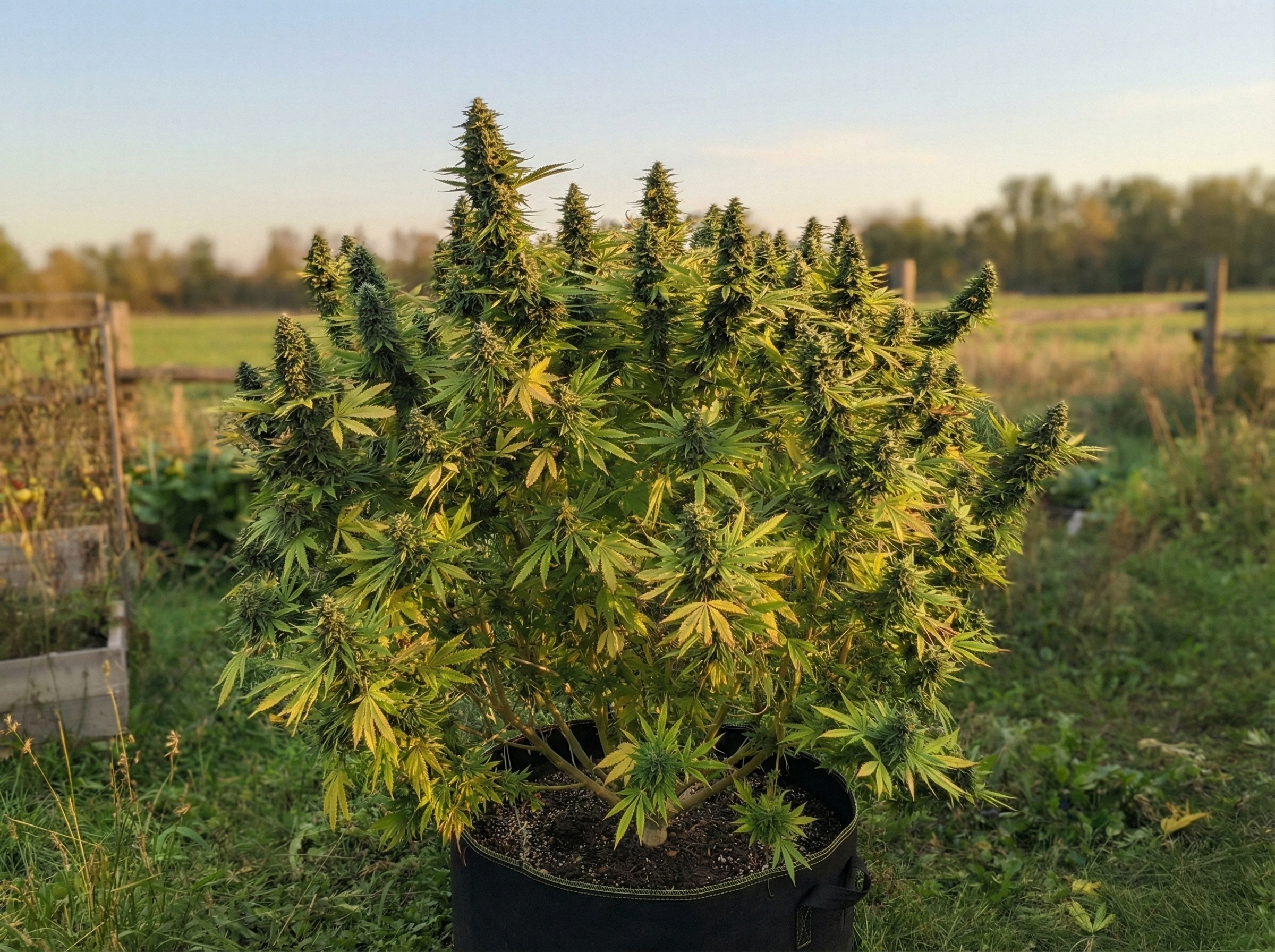
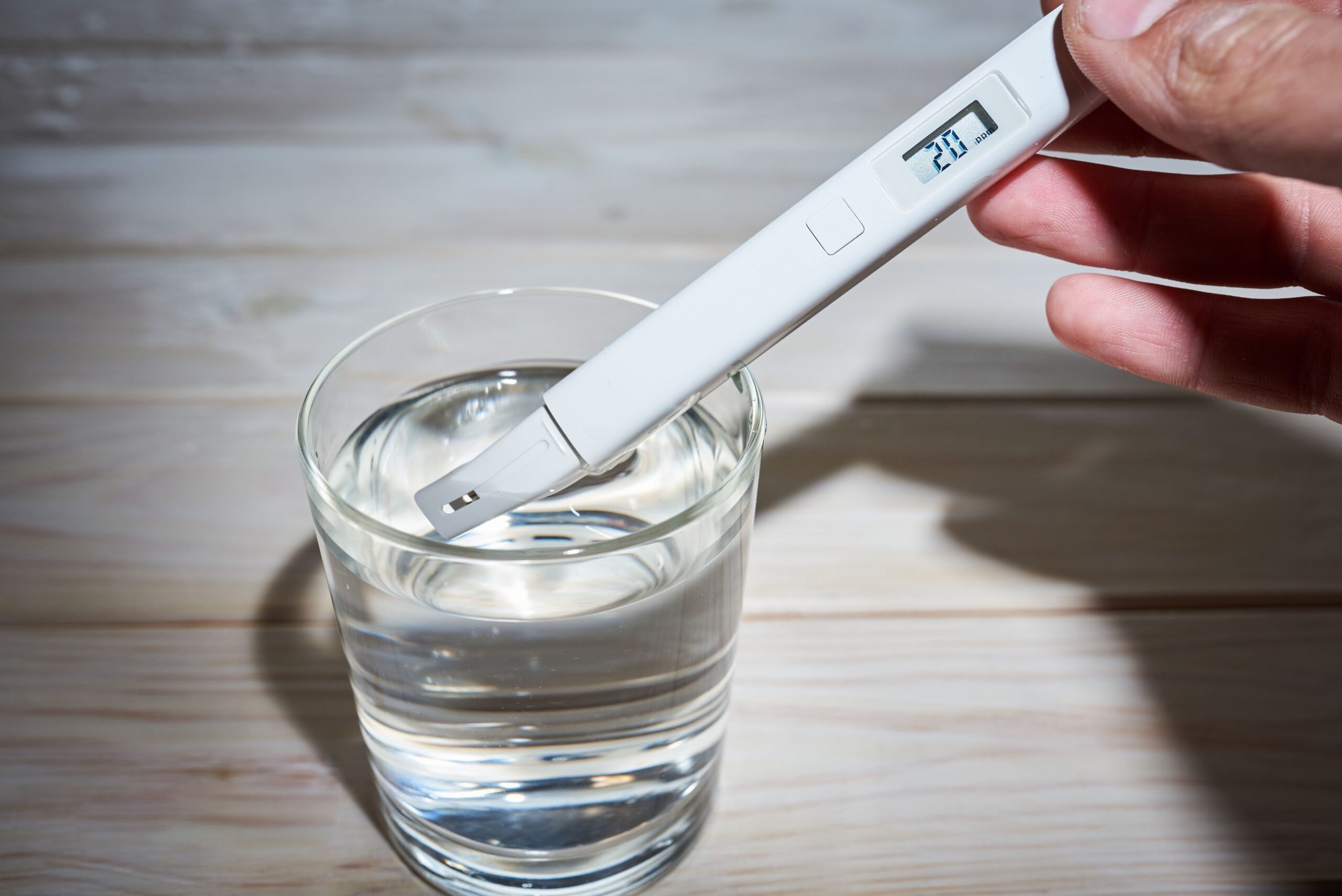
Soluble Salts and EC in Outdoor Soil
Electrical conductivity, or EC, is one of the most useful ways to detect a soluble-salt problem in outdoor soil, but the number is only meaningful when you know what was tested, how it was extracted, and what is contributing the dissolved ions. EC does not identify sodium, chloride, fertilizer nutrients, manure salts, or any other individual ion. It tells you that the tested solution conducts electricity more strongly because more dissolved ions are present.
For outdoor cannabis, the practical concern is salinity. As dissolved salts accumulate in the root-zone solution, roots have to work against a stronger osmotic gradient to take up water. A plant can therefore look drought-stressed while the soil is still moist. At the same time, specific ions such as sodium or chloride may create additional toxicity or nutrient-balance problems. High EC can also come from excessive fertilizer rather than saline groundwater or coastal exposure, so the correction must follow the source.
The right workflow is straightforward: separate the affected zone, test the soil with a defined EC method, test irrigation water when it may be contributing salts, distinguish salinity from sodicity, confirm that water can actually move below the root zone, remove or reduce the salt source, and then re-test using the same method. Do not copy hydroponic EC targets into outdoor soil, and do not assume that flushing, gypsum, or more organic matter is automatically the answer.
In This Resource
Diagnose Salt Load Before You Try to Wash It Away
- What EC Actually Measures in Outdoor Soil
- Why Soluble Salts Make Water Harder to Use
- Where Outdoor Soil Salts Come From
- How to Test Outdoor Soil EC Without Mixing Methods
- How to Interpret an EC Result Without Inventing a Cannabis Threshold
- Salt Management Depends on Water Movement
- Failure Modes and Problems That Look Like Salinity
- Correct the Cause and Verify the Root Zone
What EC Actually Measures in Outdoor Soil
Soil water contains dissolved ions. Some come from weathering minerals, some from fertilizer, some from irrigation water, and some from organic amendments as they release nutrients. These ions carry electrical charge. When a soil extract contains more dissolved ions, it usually conducts electricity more readily, which is why EC is used as an indirect measure of soluble salt concentration.
EC is normally reported in decisiemens per meter, written dS/m. Millisiemens per centimeter, written mS/cm, is numerically equivalent: 1 dS/m equals 1 mS/cm. Some meters report microsiemens per centimeter, or µS/cm. In that case, 1,000 µS/cm equals 1 dS/m.
EC measures conductivity from dissolved ions, not the identity of the salts
A higher EC means the tested solution contains a greater electrically conductive ionic load. EC does not tell you whether that load is mostly useful fertilizer nutrients, sodium and chloride, calcium sulfate, nitrate, bicarbonate-related salts, or a mixture. Ion-specific analysis is needed when the source matters.
EC is a concentration signal, not a fertilizer score
Growers often learn EC through nutrient tanks, where it is used to describe the strength of a mixed fertilizer solution. That can create a misleading habit outdoors. Soil EC is not a direct reading of how much usable fertilizer a cannabis plant has available. It reflects the soluble ions present in the extract produced by the test method.
A high EC could mean repeated mineral fertilizer has accumulated. It could mean saline irrigation water has deposited sodium and chloride. It could reflect a concentrated manure or compost application. It could also result from upward movement of saline groundwater followed by evaporation. The same EC can therefore describe chemically different root zones.
Important: Treat EC as an alarm and a trend measurement. If the number is unexpectedly high, identify the ions and the source before deciding what to add.
Salinity and sodicity are different diagnoses
Salinity describes an excessive concentration of soluble salts. Sodicity describes excessive sodium relative to calcium and magnesium on soil exchange sites, commonly evaluated with measurements such as sodium adsorption ratio in water or extract and exchangeable sodium percentage in soil. A soil can be saline without being sodic, sodic without showing the same soluble-salt pattern, or both saline and sodic.
This distinction changes the correction. A saline soil primarily needs control of the salt source plus enough suitable water and drainage to move soluble salts out of the active root zone. A sodic soil may also need a calcium amendment and a sodium-replacement strategy, but only when the chemistry supports it. That is why high EC alone is not a reason to apply gypsum.
Separate salinity from sodicity
Use EC to evaluate soluble salt load, then request sodium, calcium, magnesium, chloride, and SAR or other appropriate sodicity measurements when sodium is a realistic concern.
Using gypsum because the EC is high
Gypsum adds calcium and sulfate to the system. It can be useful in a diagnosed sodicity problem, but adding it blindly also adds dissolved ions and does not remove the original salt source.
EC is also different from pH and alkalinity
pH describes acidity or alkalinity in a defined solution or extract. Alkalinity describes acid-neutralizing capacity, often driven by bicarbonate and carbonate in irrigation water. EC describes ionic conductivity. These properties interact, but none can replace the others.
A well-water source can have a high EC because it contains calcium, magnesium, sodium, sulfate, chloride, and bicarbonate. The same water may also have high alkalinity and repeatedly push soil or substrate pH upward. Correcting water pH before irrigation does not remove the dissolved salts. Likewise, lowering soil salinity does not automatically correct a separate alkalinity problem.
Why Soluble Salts Make Water Harder to Use
The most important effect of salinity is easy to miss because the soil may still look wet. Roots absorb water because of differences in water potential between the soil solution and root tissues. Dissolved salts lower the osmotic potential of soil water. As the solution becomes more concentrated, the plant must maintain a stronger internal gradient to take up the same water.
This is why salinity is often described as a form of chemical drought. Water can be physically present while becoming physiologically harder for the plant to use. The canopy may lose turgor faster in heat, growth may slow, and the plant may respond as though irrigation is inadequate even when a moisture probe shows plenty of water in the root zone.
Osmotic stress can appear before obvious ion toxicity
A plant does not need visible sodium or chloride injury before a concentrated root-zone solution begins affecting water relations. The first consequence can simply be reduced water uptake and slower expansion. Young roots and newly transplanted plants can be especially vulnerable because they occupy a smaller soil volume and have less established root mass to explore alternative zones.
Outdoor conditions can amplify the problem. Hot, windy weather raises transpiration demand at the same time that evaporation and plant water use concentrate salts in the remaining soil solution. A site that looked acceptable after spring rainfall may behave differently during a dry summer under frequent irrigation.
“The soil is still damp, but the plant wilts in the afternoon. Can high EC cause that?”
Question sent by: Ethan Brooks, via email.
It can. Salinity can make soil water harder for roots to extract, especially when heat and wind raise transpiration demand. But afternoon wilt is not diagnostic by itself. Check actual root-zone moisture, drainage, root health, temperature, irrigation history, and EC before treating the problem as salt stress.
Specific ions can create a second layer of stress
Total salinity and ion-specific toxicity are related but not identical. Sodium and chloride can accumulate to damaging levels in some soils and irrigation systems. Excess sodium can also affect soil structure when it dominates exchange chemistry, particularly in susceptible clay soils. Chloride can accumulate in leaves and contribute to marginal or tip injury in sensitive plants.
Other salts may raise EC without causing the same structural effects. Calcium sulfate, magnesium sulfate, potassium salts, nitrate salts, and other fertilizer ions contribute to conductivity. The plant response therefore depends on both total osmotic load and ion composition.
High EC can interfere with nutrient balance without proving a deficiency
When the root-zone solution becomes concentrated, nutrient uptake patterns can change. Ions compete, root water uptake slows, and pH may shift as the soil dries and re-wets. Leaves may then show chlorosis, tip burn, marginal necrosis, slow growth, or other signs that resemble deficiency.
Adding more fertilizer at this point can make the diagnosis worse. If the plant is already surrounded by a concentrated ionic solution, another nutrient dose raises the load before you have proved that supply is actually low. The broader Cannabis Nutrients and Fertilizers guide explains nutrient supply, availability, and demand in more detail.
Remember: A deficiency-like leaf does not prove that the soil needs more nutrients. High EC, unsuitable pH, wet roots, heat, drought, or damaged roots can all reduce effective uptake.
Cannabis research confirms that salinity can reduce growth, but it does not give outdoor-soil EC targets
A controlled Cannabis sativa study in rockwool exposed one cultivar to nutrient solutions with different EC levels and also created salinity with sodium chloride. Shoot and flower weight declined as salinity increased under the tested conditions. That supports the basic conclusion that excessive root-zone salinity can reduce cannabis performance.
It does not justify copying those solution EC values into native ground. The study used hydroponic nutrient solutions, rockwool, a specific cultivar, and controlled conditions. Outdoor soil EC is measured through a soil extraction method and includes buffering, rainfall, mineral surfaces, organic matter, drainage, and spatial variation that were not represented in the same way.
The useful evidence boundary is therefore simple: cannabis is not immune to salinity, but Weedth does not assign a universal outdoor cannabis ECe threshold from hydroponic experiments.
Where Outdoor Soil Salts Come From
A correction plan is much easier when you build a salt budget. Every irrigation, fertilizer application, compost addition, manure application, groundwater movement, sea-spray event, or roadside runoff event can add ions. Rainfall and drainage can remove some. Plant uptake removes a portion of nutrient ions, but water loss through transpiration and evaporation leaves many dissolved salts behind.
Irrigation water can add a small salt load every time you water
Well water, reclaimed water, municipal water, and surface water can all contain dissolved minerals. A water source that appears acceptable after one irrigation can still deposit a meaningful amount of salt over a long dry season if evapotranspiration removes most of the water and there is little rainfall or deep drainage.
Source-water EC is therefore worth measuring before the grow begins and again when a seasonal well or surface source changes. If EC is elevated, request a laboratory water analysis rather than guessing from conductivity alone. Sodium, chloride, calcium, magnesium, sulfate, bicarbonate, boron where relevant, and SAR can materially change the management decision.
Fertilizer is designed to dissolve, so over-application can become a salt problem
Mineral fertilizers supply nutrients as soluble ions. That is exactly what makes them available to roots, but it also means repeated applications can raise EC when plant uptake and leaching do not keep pace. More fertilizer does not stay “food” simply because the label calls it nutrients. In excess, the same ions contribute to osmotic stress.
Outdoor growers sometimes assume field soil is too large to accumulate fertilizer salts. That can be true in rainy climates with deep permeable soil, but it is not universal. Raised beds, lined beds, compacted subsoil, arid climates, drip-irrigated zones, and repeated localized feeding can all create concentrated salt patterns.
Manure and compost can raise EC as well
Organic amendments are not exempt from salinity. Manure and manure-based composts can contain substantial potassium, ammonium, sodium, chloride, sulfate, and other soluble ions. Repeated application can also build phosphorus and other nutrients long after the crop’s immediate nitrogen demand has changed.
If manure is part of the site’s history, use the Weedth resource on manure in cannabis soil to evaluate source, processing, nutrient loading, pathogens, and salts. Do not try to fix a salty manure-amended bed by adding another compost simply because the second product is plant-based.
Organic does not mean low-salt
Compost, manure, guano, mineral amendments, and concentrated organic fertilizers can all add soluble ions. If EC is already high, stop adding nutrient-rich amendments until the source and chemistry are clear.
Arid and semi-arid climates favor accumulation
Where rainfall is too limited to move salts below the root zone, irrigation water becomes both the water source and a major salt source. Evaporation and transpiration remove water, while much of the dissolved mineral load remains. Over time, salts can concentrate near the surface, around wetting fronts, or at the edges of drip-irrigated zones.
This pattern can change through the season. Spring rain may dilute and redistribute salts, while late-summer irrigation concentrates them again. One pre-plant soil sample may therefore fail to describe the root zone at peak heat.
Poor drainage can trap salts in the active root zone
Leaching only works when infiltrated water continues moving downward and has somewhere to go. A compacted layer, dense subsoil, shallow bedrock, perched water table, high groundwater, or poorly designed raised bed can leave salts within or just below the roots.
Standing water creates an additional oxygen problem. The plant may then experience salinity and waterlogging at the same time. Adding more water because the EC is high can worsen oxygen stress without removing much salt if the profile cannot drain.
Shallow saline groundwater can move salts upward
In some landscapes, groundwater rises close enough to the root zone for capillary movement to carry dissolved salts upward. Evaporation at the surface leaves those salts behind. This is a different problem from excessive top-applied fertilizer because the source is below the crop.
Repeated surface flushing will not solve a continuing shallow-water-table source unless drainage and groundwater movement are addressed. Large field-scale salinity problems may require professional soil and water management rather than a garden amendment.
Coastal exposure and roadside salts create localized patterns
Sea spray can deposit sodium and chloride on foliage and soil, especially in exposed coastal sites. Road-deicing salts can enter soil through splash, runoff, or snowmelt. These sources often create a directional pattern: exposed edges, roadside strips, low drainage points, or windward zones can test differently from protected areas only a short distance away.
The Weedth guide on outdoor cannabis near the coast covers foliar salt exposure, wind, and humidity in more detail. This page stays focused on root-zone soluble salts and EC.
| Possible Salt Source | What to Check Before Correcting the Soil |
|---|---|
| Irrigation water | Source-water EC plus sodium, chloride, calcium, magnesium, bicarbonate or alkalinity, and SAR when sodium risk is relevant. Re-test seasonal wells or changing surface sources. |
| Mineral fertilizer | Application history, concentration, placement, frequency, rainfall, irrigation volume, and whether the highest EC follows the fertilized wetting zone. |
| Manure or compost | Material EC or soluble-salts test, source history, application rate, nutrient analysis, sodium and chloride where relevant, and repeated phosphorus or potassium loading. |
| Shallow groundwater | Water-table depth, seasonal rise, landscape position, subsurface drainage, and whether salinity increases during dry periods. |
| Coastal or deicing salt | Windward or roadside pattern, runoff path, chloride and sodium analysis, and comparison samples from protected areas. |
| Natural parent material | Regional soil information, subsoil EC, depth pattern, drainage, and local laboratory interpretation. |
How to Test Outdoor Soil EC Without Mixing Methods
The biggest EC interpretation mistake is comparing numbers produced by different methods as though they are interchangeable. A meter may be accurate while the comparison is still wrong. Soil-to-water ratio, saturation level, extraction time, temperature, soil texture, and sampling depth all affect the result.
Start by defining the sampling zone
Do not mix the entire garden into one sample when only one area is struggling. Divide the site according to soil type, management history, irrigation pattern, elevation, and plant response. A low wet corner, a heavily amended bed, and an apparently healthy reference zone should normally remain separate if the goal is diagnosis.
Within each zone, take multiple small cores and combine them into a representative composite sample. The exact number and depth should follow the laboratory’s instructions and the depth of soil you are trying to evaluate. If you suspect vertical salt movement, collect separate depth intervals rather than blending the surface with deeper soil.
Field Advice: A comparison sample from a healthy part of the same site is often more informative than comparing one troubled sample with a generic internet chart. The two zones share weather and much of the site history, so differences become easier to investigate.
Record the conditions that surrounded the sample
Write down the date, sampling depth, last rainfall, last irrigation, fertilizer or manure applications, irrigation-water source, and whether the area was recently flooded or allowed to dry hard. EC can change as the root zone wets, dries, and receives new inputs. Without this context, the number is harder to interpret later.
Do not deliberately wait a fixed number of days just to make the test fit a rule. If you are diagnosing an acute event, sample the event. If you are establishing a seasonal baseline, sample under the same repeatable conditions each time.
ECe uses the saturated paste extract
The saturated paste extract is a long-established laboratory method for soil salinity. The soil is brought to a defined saturation condition, the liquid extract is collected, and its conductivity is measured. The result is commonly written ECe. Many agricultural crop-salinity relationships are based on this method.
That point matters because a tolerance table labeled ECe cannot be applied directly to a 1:1 or 1:5 soil-to-water test. More added water dilutes the extracted salts and changes the conductivity reading.
ECe, EC1:1, and EC1:5 are not the same number
ECe is measured from a saturated paste extract. EC1:1 and EC1:5 use defined soil-to-water ratios. Each method can be useful, but the interpretation range must match the extraction method. Do not convert casually between methods unless the laboratory or a validated soil-specific relationship supports the conversion.
A 1:1 extraction is useful for repeatable field or laboratory monitoring
A 1:1 soil-to-water method mixes a defined amount of soil with an equal amount of low-EC water according to the specified procedure. It is faster and easier than preparing a saturated paste, which makes it useful for repeated monitoring. NRCS guidance, for example, provides a standardized 1:1 field procedure and shows that the relationship between EC1:1 and ECe varies with soil texture.
The practical lesson is not to memorize a conversion factor. It is to keep the method constant. If your local laboratory reports EC1:1, use its EC1:1 interpretation. If it reports ECe, track ECe. A clean trend is more valuable than forcing every result into one universal scale.
A 1:5 test is even more diluted
Some laboratories use a 1:5 soil-to-water extraction. This can be appropriate within their analytical system, but the reading will not equal ECe or EC1:1. Always record the ratio beside the number in your grow journal.
Writing “soil EC = 1.2” without a method is incomplete. Writing “EC1:5 = 1.2 dS/m” gives the result enough context to compare with a future sample analyzed the same way.
Direct soil EC probes are strongly affected by moisture and placement
Portable probes can be useful for mapping relative differences across a site, but direct soil readings depend heavily on water content, temperature, contact quality, texture, and calibration. A dry zone and wet zone may produce different conductivity even when the total salt inventory is similar.
If you use a field probe, create a repeatable protocol. Measure at comparable moisture, depth, and temperature, clean the sensor between sites, and verify suspicious trends with a laboratory soil extract. Use the field tool to find patterns, not to replace method-specific laboratory interpretation.
Runoff EC is usually the wrong primary test for native ground
Container growers sometimes collect leachate or runoff to follow nutrient trends because the root zone is confined and irrigation exits through known drainage holes. Native outdoor soil is different. Surface runoff may have contacted only the top few millimeters, flowed across fertilizer granules, picked up salts from another area, or bypassed the roots entirely.
For an in-ground salinity diagnosis, a representative soil sample is usually more meaningful than surface runoff. If the site uses raised beds or large containers, a defined leachate method can provide additional information, but it should not be confused with field-soil ECe.
| EC Method | How to Use It Correctly |
|---|---|
| ECe saturated paste | Use when the laboratory reports soil salinity as saturated paste extract. Compare with ECe-based interpretations and repeat the same method for trend monitoring. |
| EC1:1 | Useful for standardized monitoring when the 1:1 method is documented. Compare only with 1:1 ranges or validated relationships appropriate to the soil and laboratory system. |
| EC1:5 | A more diluted extraction. Keep the ratio with the result and use the laboratory’s method-specific interpretation rather than an ECe chart. |
| Direct field probe | Best for relative mapping under controlled moisture, temperature, depth, and calibration. Confirm important decisions with a defined extract or laboratory test. |
| Irrigation-water EC | Measures the incoming water, not soil salinity. Pair it with ion analysis when sodium, chloride, alkalinity, or other water-quality problems may matter. |
| Surface runoff | Can help identify pollution or runoff pathways, but it is not a direct substitute for representative root-zone soil EC in native ground. |
“My handheld meter says 2.0, but the lab says 3.4. Which one is wrong?”
Question sent by: Julia Schneider, via contact form.
Possibly neither. First check units and the extraction method. A direct soil reading, 1:1 extract, 1:5 extract, and saturated paste can legitimately produce different numbers from the same soil. Compare results only after the methods, calibration, temperature handling, and sampling depth are matched.
How to Interpret an EC Result Without Inventing a Cannabis Threshold
A soil EC result needs four pieces of context: the method, the soil or substrate, the crop, and the site history. Remove any one of those and the number becomes easier to misuse.
Use the laboratory’s method-specific classification first
When a professional soil laboratory reports salinity, start with the interpretation attached to that exact test. Many laboratories classify ECe or EC1:1 into general salinity categories. These categories are useful for recognizing whether the root zone is moving from a low-salt condition toward one that affects increasingly salt-sensitive crops.
They are not cannabis prescriptions. Crop salt tolerance differs among species and can vary with cultivar, growth stage, environment, and the ions creating the salinity. A generic “slightly saline” label tells you the soil deserves attention. It does not tell you that a cannabis plant will lose a particular percentage of yield.
Do not use nutrient-solution EC as soil ECe
Hydroponic cannabis studies report the conductivity of nutrient solution supplied to roots. Outdoor soil salinity research commonly reports ECe from a soil extract. Both are EC measurements, but the sampled systems are different.
A nutrient solution at 3 mS/cm is not automatically equivalent to outdoor soil with ECe 3 dS/m in terms of plant response. Root-zone water content, ion ratios, adsorption, mineral surfaces, microbial processes, drainage, and concentration gradients differ. Copying the number while ignoring the system creates false precision.
Look at the trend, not one isolated reading
A single EC value is most useful when it is clearly extreme or when it is paired with chemistry that explains the problem. For ongoing management, trends are stronger. Compare pre-plant, early-season, peak-irrigation, and post-correction samples from the same zones using the same method.
If EC rises while irrigation-water EC stays stable, review fertilizer, manure, evaporation, and drainage. If both irrigation-water EC and soil EC rise, the source-water contribution becomes more plausible. If only one low spot rises, landscape water movement or shallow groundwater deserves attention.
Compare affected plants with a reference zone
Pattern analysis helps separate salinity from general crop stress. If every plant across multiple soil zones shows the same problem, a weather event, irrigation failure, spray injury, or systemic nutrient mistake may be more likely than a localized salt pocket. If damage tracks a drip line, manure strip, coastal edge, road, or low drainage area, salinity moves higher on the list.
Sample the good and bad zones separately. A difference in EC plus a matching source pattern is much more persuasive than a white crust or burned leaf tips alone.
Pro Tip: Build a small site map and write each EC result directly on it. Outdoor salinity is spatial. A map can reveal irrigation edges, low spots, road exposure, and amendment bands that disappear when samples are averaged together.
Use ion analysis when the correction depends on composition
EC cannot distinguish beneficial nutrient ions from problematic sodium or chloride. If the next action could involve changing water source, adding gypsum, reducing fertilizer, or addressing a shallow saline water table, request the chemistry needed to choose among those paths.
For suspected irrigation-water problems, a useful analysis may include sodium, calcium, magnesium, chloride, bicarbonate or alkalinity, sulfate, boron where regionally relevant, pH, EC, and SAR. For soil, the laboratory may offer soluble ions, exchangeable cations, SAR, or other salt-affected-soil panels. Ask the lab what method it uses and what it recommends for local soil conditions.
Salt Management Depends on Water Movement
Soluble salts leave a root zone mainly by moving with water. That makes soil physics part of the chemistry. You cannot manage salinity responsibly without knowing whether irrigation infiltrates, percolates through the profile, and drains beyond the roots.
Evapotranspiration removes water faster than it removes salts
Plants take up water and selected nutrients. Evaporation removes water from the soil surface. Neither process removes the entire dissolved salt load in the same proportion as water. As the root zone dries, the remaining solution becomes more concentrated.
This is why EC often increases during dry periods even when no new fertilizer was added that day. The salt mass may be similar while the water volume holding those ions has decreased.
Rainfall can dilute and leach, but only when it passes through the root zone
A short rain that wets the surface and then evaporates may redistribute salts without carrying them very far. A larger event can move soluble salts downward if water infiltrates deeply enough. On a slope or sealed soil surface, much of the rain may run off instead.
Natural rainfall therefore cannot be treated as guaranteed leaching. Check moisture at depth and follow the soil EC trend after the wet season.
Infiltration, percolation, and drainage must all work
Infiltration is water entering the soil surface. Percolation is water moving downward through the profile. Drainage is excess water leaving the relevant root zone or system. Fast infiltration can occur through cracks while deeper soil remains restrictive. Good surface entry does not prove successful salt removal.
The Weedth guide on infiltration, percolation, and drainage explains these pathways in detail. Use that framework before applying a large leaching irrigation.
Do not leach a poorly drained root zone blindly
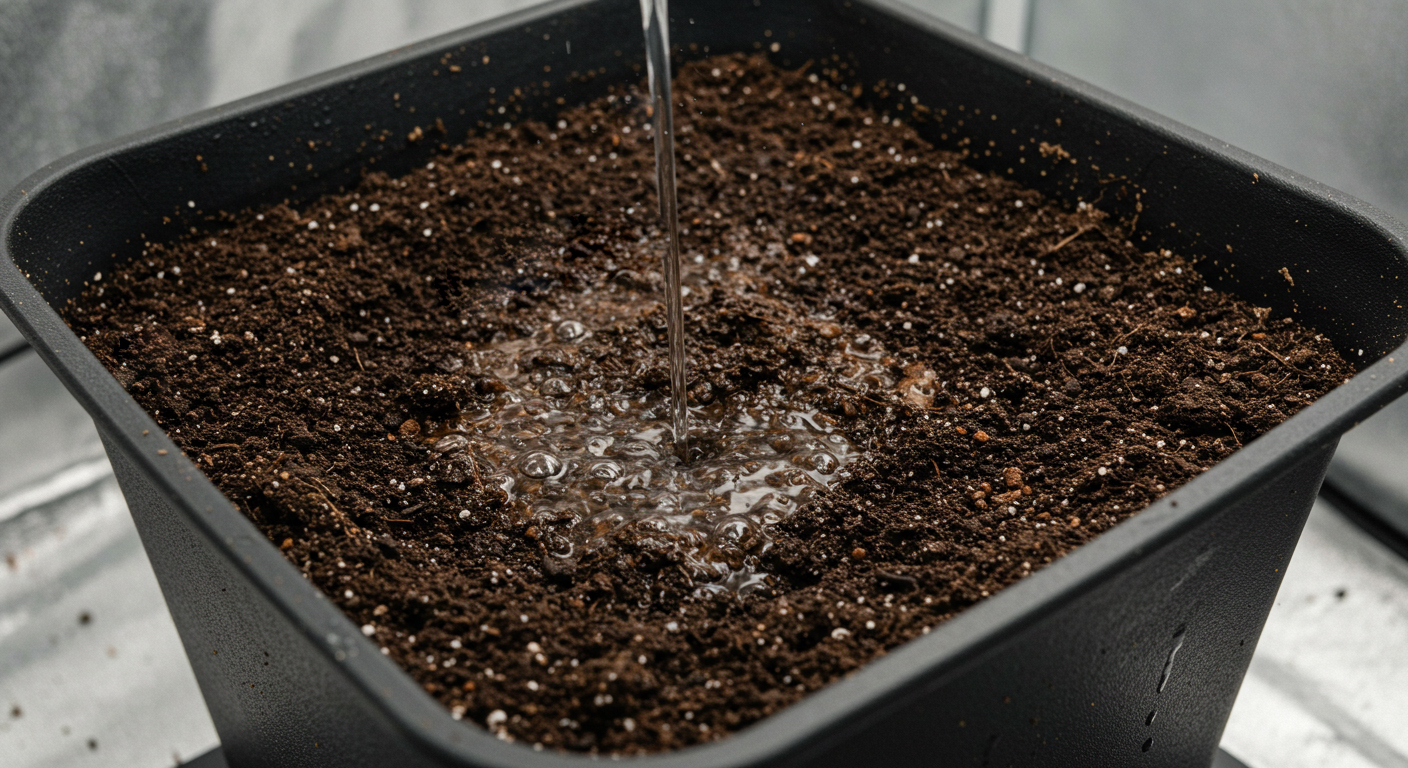
Large irrigation volumes can create oxygen stress, runoff, nutrient loss, erosion, or groundwater contamination without removing much salt if water cannot move below the active roots. Confirm a drainage pathway before using water as the correction.
Leaching needs water that is cleaner than the problem you are trying to correct
Leaching replaces more concentrated soil solution with less saline water and carries dissolved salts below the target root zone. If the irrigation water itself contains a large salt load, every correction also adds more ions. Long-term management then depends on the relationship between incoming water quality, crop water use, rainfall, and drainage.
This is why a soil test alone can be incomplete. Test the water source too. If source-water salinity is the dominant limitation, blending with a better source, collecting suitable rainwater, changing water source, or redesigning irrigation may matter more than another soil amendment.
Leaching fraction is a management calculation, not a universal recipe
Agricultural salinity management often uses the concepts of leaching requirement and leaching fraction. In simple terms, some infiltrated water must move below the root zone to carry salts with it. The amount depends on irrigation-water salinity, the acceptable root-zone salinity for the crop, irrigation uniformity, soil behavior, rainfall, and drainage.
Weedth does not give one number such as “flush with twice the normal water” for outdoor soil. That shortcut ignores soil depth, field capacity, root depth, water quality, slope, drainage, and environmental consequences.
Gypsum belongs to the sodicity decision, not the generic salinity decision
Gypsum supplies calcium and sulfate. In sodic soil, added calcium can help replace sodium on exchange sites, after which sodium still has to be leached out. In a saline but non-sodic soil, gypsum may add ions without correcting the source. In a compacted clay that is not sodic, gypsum is not an automatic drainage repair.
If sodium chemistry is part of your problem, use Gypsum vs Lime: They Do Different Jobs for the amendment decision. Keep the correction based on verified laboratory chemistry rather than a guessed product rate.
Fix the water pathway before calculating leaching
Confirm infiltration, deeper percolation, and a safe drainage outlet. Then use soil and water results to decide whether planned leaching is appropriate.
Trying to dilute salts in a sealed profile
More water cannot remove salts from the root zone if the water has nowhere to go. It may simply create a wet, oxygen-poor, still-saline soil.
Failure Modes and Problems That Look Like Salinity
Salinity symptoms are not unique. Diagnosis improves when you treat leaves as evidence of stress rather than as a meter reading.
Drought and salinity can produce similar wilting
True drought means the soil contains too little plant-available water. Salinity can create a chemical drought in moist soil. Both can reduce turgor and slow growth. The difference is found below the canopy: measure moisture and EC in the same root zone instead of assuming wilt means more water is needed.
Over-fertilization can be the salinity source rather than a separate diagnosis
Fertilizer burn and soil salinity overlap because soluble fertilizer ions raise EC. If symptoms appeared after a concentrated feed or repeated side-dressing, test the fertilized zone. The correction may be to stop or reduce fertilizer and manage accumulated salts, not to search for an unrelated sodium source.
Heat and wind can expose a marginal salt problem
High evaporative demand increases water use. A plant that tolerates the root zone on a cool morning may wilt or scorch during a hot, dry afternoon because salt stress and atmospheric demand act together. This can make salinity look like a heat-only problem.
Compare plants in similar sun exposure but different soil EC zones. If the high-EC area consistently performs worse under the same weather, salinity becomes a stronger part of the diagnosis.
Waterlogging creates a different root limitation
A saturated root zone limits oxygen diffusion. Roots may then take up water and nutrients poorly even if EC is not excessive. Waterlogged leaves can droop, yellow, and grow slowly, which overlaps with salt stress.
Measure drainage and saturation duration. Do not use a high surface EC reading as the sole explanation if the root zone remains flooded after irrigation or rain.
High pH can mimic nutrient problems without high salinity
Alkaline soils can restrict availability of iron, manganese, zinc, phosphorus, and other nutrients depending on chemistry. The plant may show chlorosis even when EC is modest. Conversely, a saline soil can also have an acceptable pH. Test both instead of treating one as a substitute for the other.
A white soil crust is a clue, not a chemical analysis
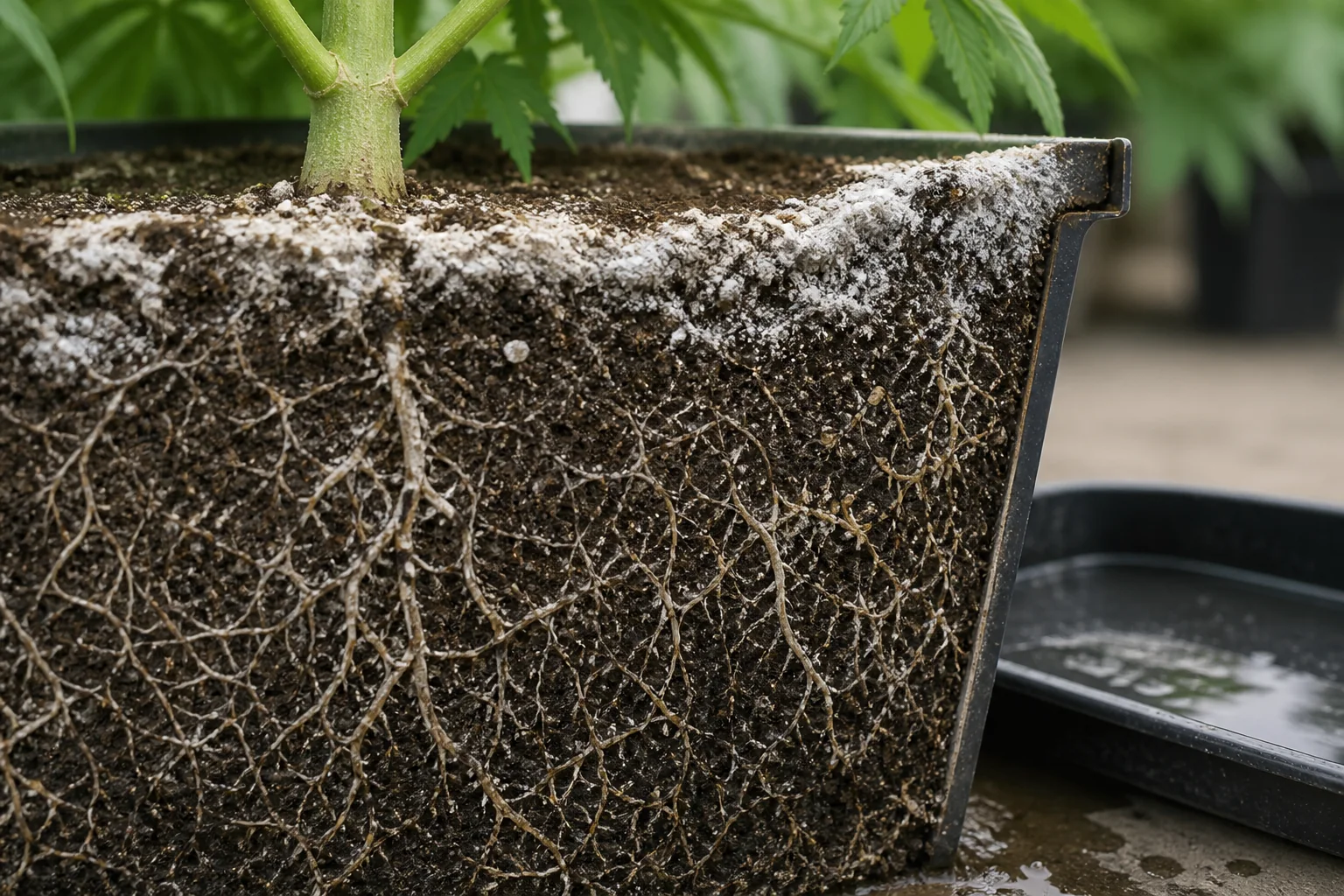
White or pale deposits at the surface can indicate evaporated salts, but appearance cannot identify their composition or tell you how much salt remains deeper in the root zone. Calcium carbonate, fertilizer residues, sulfate salts, and other minerals can create similar crusts.
Use the crust to choose where to sample. Do not scrape it away and declare the soil fixed.
Dry soil can create misleading direct-probe readings
Conductivity depends on water connecting ions and the sensor. Very dry soil may give unstable or unexpectedly low direct readings even while a laboratory extract later shows a meaningful salt load. This is another reason direct probes are strongest for repeatable mapping rather than absolute diagnosis.
“There is a white crust around the drip line. Should I scrape it off and add fresh compost?”
Question sent by: CedarRoute, via Facebook page.
Scraping changes the surface appearance but may not remove the salt load in the active root zone. Fresh compost can also add more ions. Sample the drip zone and a reference zone, test the irrigation water, and correct the source and drainage before adding another amendment.
Correct the Cause and Verify the Root Zone
A Role A correction should leave you with evidence that the root zone actually improved. Avoid rescue recipes that change fertilizer, water source, gypsum, compost, irrigation frequency, mulch, and pH all at once. You lose the ability to identify what worked and can create a second problem while treating the first.
Step 1: Confirm that EC is elevated with a defined method
Repeat any suspicious handheld result with a consistent extraction or laboratory analysis. Keep affected and healthy zones separate. Record units, method, depth, moisture context, and sampling date.
If the result is not elevated relative to the method’s interpretation or the healthy reference area, do not build an aggressive salinity correction around leaf symptoms alone.
Step 2: Identify the likely salt source
Review the previous season and the current one. List irrigation sources, fertilizer products and rates, manure or compost additions, road or coastal exposure, drainage changes, and any period when shallow groundwater or flooding reached the site.
Then test the most plausible source. Water analysis is especially important because a continuing saline water source can rebuild soil EC after an apparently successful leaching event.
Step 3: Determine whether the problem is saline, sodic, or both
If sodium is a realistic concern, request the measurements needed to evaluate it. Do not infer sodicity from EC or clay texture. A sodic soil can have severe infiltration and structural problems that require different management from a saline soil with stable structure.
This step decides whether a calcium amendment belongs in the plan. It also helps prevent the common mistake of applying gypsum to every salty or compacted soil.
Step 4: Stop avoidable salt inputs
Pause concentrated fertilizer, manure, compost, or other high-EC amendments until you know whether they are contributing. If the irrigation water is problematic and another practical source exists, change or blend the water before trying to wash the soil with the same saline supply.
Stopping the source is often the highest-value action because no amount of leaching solves a salt budget that remains strongly positive.
Step 5: Confirm that water can leave the root zone
Inspect infiltration and deeper drainage. Dig or probe below the main root zone after irrigation. Look for a dense restrictive layer, perched saturation, shallow water table, compacted traffic pan, or raised-bed liner that prevents downward movement.
If drainage is inadequate, correct the physical pathway first where practical. That may mean protecting soil structure, relieving compaction when the soil is in a workable moisture condition, redesigning beds, addressing site drainage, or choosing a different growing location. The right solution depends on the site.
Step 6: Use leaching only when the soil and water data support it
When the soil is saline, drainage is functional, and the available water is suitable, planned leaching can move soluble salts below the active root zone. Apply water in a way that infiltrates rather than runs off. Split applications may be safer on soils with slow infiltration.
Do not use a universal volume from a cannabis forum. Agricultural leaching requirement depends on water salinity, soil salinity, crop tolerance, irrigation uniformity, rainfall, and drainage. Large outdoor corrections can also move nitrate or other nutrients toward groundwater, so environmental protection belongs in the decision.
Master Advice: The goal is not to create the lowest EC possible. The goal is to keep the root-zone solution within a workable range while maintaining enough nutrients, oxygen, and water for healthy growth.
Step 7: Re-test instead of judging the correction by leaf color
Old damaged tissue may not recover. Burned tips and necrotic margins can remain visible after the root zone improves. New growth, plant water use, root vigor, and repeated soil EC are better verification signals than expecting old leaves to become green again.
Sample the same zone, depth, and method after the correction has had time to change the root zone. The appropriate interval depends on the scale and mechanism. A container-sized raised bed can respond faster than a field soil influenced by shallow groundwater.
Use 24 hours, 3 days, and 1 to 2 weeks as observation checkpoints, not proof of clearance
Within the first 24 hours, check whether the corrective irrigation created standing water, runoff, erosion, or sudden wilt. Verify that drainage actually occurred.
At about three days, compare plant turgor, surface crust development, soil moisture distribution, and any field-probe trend under comparable moisture. Do not declare success from appearance alone.
At one to two weeks, re-test when that timing makes sense for the root-zone volume and intervention. For a large native soil profile or a continuing groundwater problem, meaningful re-evaluation may take longer. These are operational checkpoints, not universal cannabis salinity-recovery thresholds.
| Checkpoint | What to Verify |
|---|---|
| Immediately before correction | Defined soil EC method, affected and reference zones, source-water quality, recent inputs, drainage condition, and whether sodium chemistry needs testing. |
| First 24 hours | Water infiltrated rather than ran off, no prolonged saturation or erosion developed, and the drainage pathway actually carried water below the target zone. |
| About 3 days | Root-zone moisture is moving back toward the normal site pattern, plant water status is not worsening, and no new concentrated salt crust or wet pocket is forming. |
| 1 to 2 weeks when appropriate | Repeat EC with the same method, compare the same sampling zones, review new growth and water use, and confirm the original source has been reduced or removed. |
| Later seasonal check | Confirm that EC does not rebuild under the normal irrigation, fertilization, rainfall, and evapotranspiration pattern. |
Before You Correct a Salty Root Zone
- I know whether the result is ECe, EC1:1, EC1:5, direct-probe EC, or irrigation-water EC.
- I sampled the affected area separately from a healthy reference area.
- I recorded the sampling depth, recent rain, irrigation, and fertilizer or amendment history.
- I tested or reviewed the irrigation-water EC when it may be contributing salts.
- I know whether sodium or chloride analysis is needed instead of relying on total EC.
- I have not assumed that high EC automatically means sodic soil.
- I confirmed that water can infiltrate, percolate, and drain below the active root zone.
- I stopped avoidable fertilizer, manure, compost, or saline-water inputs before adding another amendment.
- I will not use gypsum unless sodium chemistry and the soil-management goal support it.
- I have a re-test plan using the same EC method and the same sampling zones.
Prevention is a salt-budget problem
Once a site is stable, prevention is easier than reclamation. Test source water before relying on it for an entire dry season. Split fertilizer applications around plant demand instead of front-loading excessive soluble nutrients. Test manure and compost when they will be used heavily. Keep irrigation uniform enough that some plants are not sitting in concentrated dry edges while others are overwatered.
Record EC at the same seasonal checkpoints each year. A rising trend gives you time to reduce inputs or improve water management before plants develop obvious stress.
Use EC to Find the Salt Problem, Not to Create a New One
Outdoor soil EC is most useful when it narrows a decision. It can show that the root-zone solution is carrying more soluble ions than expected and it can track whether a correction is moving in the right direction. It cannot tell you which ions are present, whether the soil is sodic, whether pH is suitable, or whether drainage is functioning.
The best response to high EC is therefore not automatically “flush.” First establish the method and sampling zone. Then identify the source, test irrigation water, distinguish salinity from sodicity, and confirm a drainage pathway. If leaching is appropriate, use water that improves rather than reinforces the salt balance and verify the result with the same soil test.
For cannabis, avoid importing hydroponic EC numbers into native ground. Controlled research confirms that excessive salinity can reduce cannabis growth and flower yield, but the root-zone system, cultivar, ion composition, and measurement method change the meaning of the number. A repeatable outdoor soil trend is more defensible than a universal target copied from another production system.
Frequently Asked Questions
Does high soil EC always mean I used too much fertilizer?
No. Fertilizer is one possible source. Irrigation water, manure, compost, shallow saline groundwater, coastal deposition, deicing salts, and naturally saline parent material can also raise EC. Review the site history and test the most plausible source.
Can I lower outdoor soil EC just by watering more?
Only if suitable water actually moves through and below the root zone. On poorly drained soil, extra irrigation can create waterlogging without removing enough salt. Confirm infiltration, percolation, drainage, and water quality before planning leaching.
Should I add gypsum whenever outdoor soil EC is high?
No. Gypsum is not a universal salinity treatment. It is most relevant when soil sodium chemistry indicates a sodicity problem that can benefit from added calcium, followed by effective leaching. High EC alone does not prove that condition.
Is a white crust proof that my cannabis soil is saline?
It is a useful clue but not proof of composition or root-zone severity. Sample the crusted zone and a nearby reference zone. A laboratory EC and ion analysis can determine whether the visible deposits correspond to a meaningful root-zone salt problem.
Can I compare runoff EC with a laboratory ECe result?
Not directly. Runoff, direct-probe EC, EC1:1, EC1:5, saturated paste ECe, and irrigation-water EC are different sampling systems. Keep the method attached to every result and compare trends within the same method unless a validated conversion is available.
What EC should outdoor cannabis soil be?
There is no single scientifically established outdoor cannabis soil EC target that can be applied across ECe, 1:1, 1:5, native ground, raised beds, climates, cultivars, and salt compositions. Use the laboratory’s method-specific salinity interpretation, compare with a healthy site reference, consider cannabis evidence as a general salinity warning rather than an outdoor threshold, and track the same root zone over time.
Share this article
A quick overview of the topics covered in this article.
Follow us
Latest articles
October 25, 2026
October 25, 2026
October 25, 2026