Spritzer
Spritzer – Strain Profile & Grow Guide
Cultivation, bud quality, flavor preservation, effects, and practical grow strategy
Spritzer is a vigorous grape-candy hybrid combining ripe purple fruit, apricot, grapefruit peel, floral sweetness, pepper, ammonia, earth, and gas with heavy resin and an uplifting opening that slowly becomes deeply relaxed. It belongs to the modern group of cultivars in which flavor and visual quality are inseparable from cultivation discipline. The plant can produce impressive flower without an exotic feeding program, but the best version depends on canopy balance, stable root-zone conditions, controlled late-flower humidity, and a careful dry. A high THC number alone does not explain why the strain is memorable. Its value is in the way aroma, texture, resin, and effect develop together.
The documented lineage is Runtz x Grape Pie x MAC. That background gives the plant a recognizable direction, yet phenotype variation still matters. One plant may lean toward the brighter, faster, or more aromatic parent, while another may stay shorter, denser, darker, or more physically calming. For that reason, every figure in this guide should be treated as a working range rather than a promise. Observe the individual plant first and use the cultivar description as a map, not a rigid recipe.
For growers, the central task is to understand the strain’s architecture before the flowering stretch ends. Vigorous tall hybrid growth with medium-to-long internodes, flexible side branches, strong apical extension, and heavily frosted spear-shaped flowers. The main risks are uncontrolled vertical stretch, uneven light, late branch collapse, hidden moisture in bulking spears, calcium and magnesium demand, odor leakage, and premature harvest. These are manageable problems, but they become expensive when noticed late. The following profile focuses on how to prevent those losses while preserving the cultivar’s defining aroma of grape soda, overripe purple fruit, apricot, grapefruit peel, floral candy, black pepper, ammonia, earth, and sweet gas.
For consumers, potency should be approached with the same care. Effects can change with dose, tolerance, harvest maturity, and terpene expression. A small amount may feel bright and balanced, while a larger amount from the same flower can become physically heavy or mentally hazy. Start low, especially with a fresh batch, and allow the onset to develop before increasing the dose.
Weedth Grower Note: The defining challenge is not simply growing the plant to harvest. It is preserving grape soda, overripe purple fruit, apricot, grapefruit peel, floral candy, black pepper, ammonia, earth, and sweet gas while preventing uncontrolled vertical stretch, uneven light, late branch collapse, hidden moisture in bulking spears, calcium and magnesium demand, odor leakage, and premature harvest.
Strain Features
| Feature | Details |
|---|---|
| Type | Balanced hybrid with a bright sativa-like start and an indica-leaning finish |
| Genetic profile | often close to balanced, with phenotype-dependent stretch and a progressively heavier late effect |
| Lineage | Runtz x Grape Pie x MAC |
| THC | commonly reported around 24-32% THC in selected flower |
| CBD | usually below 1%; minor CBG is sometimes reported |
| Indoor flowering time | approximately 63-70 days indoors, with many cuts showing major flower bulking during weeks six and seven |
| Outdoor harvest | early to mid-October in the Northern Hemisphere where the longer finish can remain dry |
| Yield potential | medium to high when the tall frame is trained early and supported before the late swell |
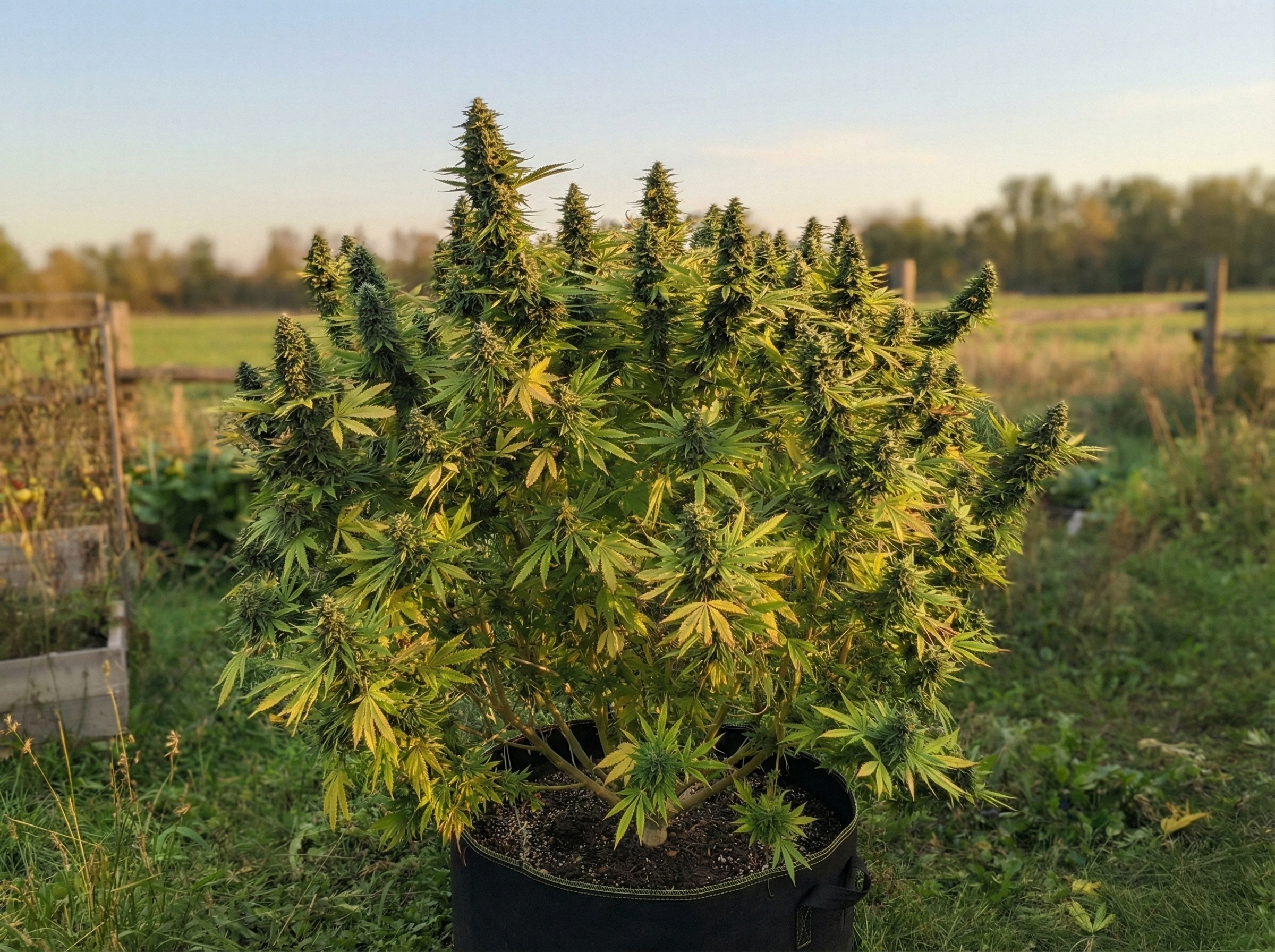
| Height | medium-tall to tall indoors and very large outdoors with unrestricted roots |
| Grow difficulty | Moderate because aggressive stretch, late flower weight, high resin, and a longer finish demand early training and support |
| Plant structure | vigorous tall hybrid growth with medium-to-long internodes, flexible side branches, strong apical extension, and heavily frosted spear-shaped flowers |
| Stretch | usually about 1.8-2.4x, with MAC-leaning plants capable of exceeding the average |
| Aroma | grape soda, overripe purple fruit, apricot, grapefruit peel, floral candy, black pepper, ammonia, earth, and sweet gas |
| Flavor | grape candy and apricot on the inhale with grapefruit, floral sweetness, pepper, fermented fruit, and clean gas on the exhale |
| Primary cultivation concern | uncontrolled vertical stretch, uneven light, late branch collapse, hidden moisture in bulking spears, calcium and magnesium demand, odor leakage, and premature harvest |
| Best training direction | top early, spread the frame under a screen, continue tucking through the first two weeks of flower, remove weak lowers, and install a second support layer before the late swell |
Genetic Lineage
The lineage of Spritzer is best understood as a combination of structural and sensory inheritance rather than a simple family-tree label. Runtz contributes candy sweetness, smooth smoke, dense flower, and balanced relaxation. Grape Pie supplies dark grape, fermented fruit, pastry-like depth, and purple coloration. MAC contributes stretch, strong branching, intense trichome production, and a clearer cerebral edge. Different family descriptions sometimes present the cross order differently, but the repeated genetic theme is candy, grape, and MAC-style resin. These parent traits do not appear in equal proportions in every plant. A grower may find one phenotype that emphasizes fruit and color, another that emphasizes fuel and density, and a third that sits between them.
The most useful lineage clue for cultivation is the relationship between internodal spacing and flower density. Vigorous tall hybrid growth with medium-to-long internodes, flexible side branches, strong apical extension, and heavily frosted spear-shaped flowers. This means the plant can create a productive canopy, but only when the grower prevents strong branches from shading weaker interior sites. The genetics provide the capacity for yield; the final architecture determines how much of that capacity becomes premium flower rather than lower-grade material.
Lineage also explains the effect progression. The early phase tends to show an uplifting euphoric rise, increased sensory interest, talkativeness, and a clean burst of creative energy. The middle becomes tingling body warmth, playful focus, easier conversation, and a smooth balance between stimulation and calm. The finish develops into deep physical ease, appetite, slower movement, and a relaxed mental state that can become sleepy at high doses. That sequence is more informative than a simple indica or sativa percentage because it describes how the experience changes over time.
Published strain descriptions can disagree because the same popular name may be used for different selections, clone-only cuts, or later breeding generations. This is especially common with modern dessert and Kush lines. When the documented lineage, flowering time, and aroma all point in the same direction, the identity is reasonably clear. When they conflict, the plant label should be treated cautiously until morphology and finished aroma confirm it.
For a home grower keeping a mother plant, clone testing is valuable. Root and flower several copies under the same conditions before making a long-term selection. Compare stretch, branch strength, flower density, aroma after four weeks of cure, and the effect at a controlled dose. The best keeper is not always the plant with the loudest stem rub in veg. A plant that finishes evenly, resists stress, dries predictably, and retains flavor after storage may be more valuable over repeated cycles.
Effect Breakdown
Initial emotional shift
The opening of Spritzer is commonly described as an uplifting euphoric rise, increased sensory interest, talkativeness, and a clean burst of creative energy. The effect may arrive within minutes when inhaled, but the full direction is not always clear immediately. A cautious user should wait before redosing because the physical side can build after the mental change has already appeared.
Emotionally, the strain often reduces the sense that every task is urgent. This can feel like relief from accumulated pressure rather than forced happiness. At a moderate dose, users may become more talkative, amused, or willing to focus on music and conversation. At a larger dose, the same release can become dreamy detachment.
The onset is sensitive to harvest timing. Flower taken earlier, while trichomes are mostly cloudy with little amber, tends to preserve more mental brightness. Flower allowed to mature longer usually begins with less sparkle and moves more quickly toward weight and calm. Neither direction is automatically better, but they suit different users and times of day.
Mental and sensory phase
As the initial rise settles, the experience becomes tingling body warmth, playful focus, easier conversation, and a smooth balance between stimulation and calm. Sensory details often become more noticeable. Food may taste richer, background sounds may separate more clearly, and repetitive activities may feel easier to stay with. This is not the same as reliable productivity. Complex work, driving, and safety-sensitive tasks should be avoided.
The strain can create a narrow but pleasant focus. Users may become absorbed in one album, one conversation, or one visual detail while ignoring everything else. For creative work, that can be useful. For multitasking, it can be limiting. The best setting is usually one where the user does not need to shift attention rapidly.
High-THC samples can become mentally hazy, especially for people who are tired, underfed, or sensitive to cannabis. A dry mouth, head pressure, or brief dizziness may appear. Hydration, a calm environment, and a lower starting dose reduce these problems more effectively than trying to correct them after overconsumption.
Physical development and late phase
The late phase is defined by deep physical ease, appetite, slower movement, and a relaxed mental state that can become sleepy at high doses. Muscle tone may soften through the shoulders and back before the legs feel heavier. The body effect can outlast the strongest mental change, which is why the strain may seem manageable at first and then become more sedating an hour later.
Dose changes the balance sharply. A small amount may support a relaxed walk, social evening, or creative hobby. A large amount may reduce motivation and make standing up feel unnecessary. Users seeking sleep often prefer a later harvest and a slightly larger dose, while daytime users should choose a smaller dose from a more balanced harvest window.
Tolerance does not eliminate impairment. Experienced consumers may feel emotionally comfortable while coordination, reaction time, and judgment remain affected. The safest approach is to treat the strain as potent even when the subjective experience feels smooth.
The comedown is usually gradual rather than abrupt. Appetite may increase, mental stimulation may fade, and the body may remain calm. Some users wake refreshed after evening use, while others report residual heaviness after a large late-night dose. Personal response should guide timing.
Important: Effects are dose-dependent and can vary substantially between batches. Start low and allow time for the physical phase to develop.
Flavor & Aroma Profile
Live plant and jar aroma
The live plant usually develops a layered aroma built around grape soda, overripe purple fruit, apricot, grapefruit peel, floral candy, black pepper, ammonia, earth, and sweet gas. Early flower may reveal only the brightest or most generic part of the profile. The defining secondary notes often emerge after the middle of bloom, when resin heads become abundant and the calyxes begin to swell.
A stem rub can help identify phenotype direction, but it is not a perfect predictor of cured flower. Some plants smell intensely sweet in veg and finish earthy. Others seem quiet until late bloom and become loud during drying. Keep notes at several stages rather than selecting from one early impression.
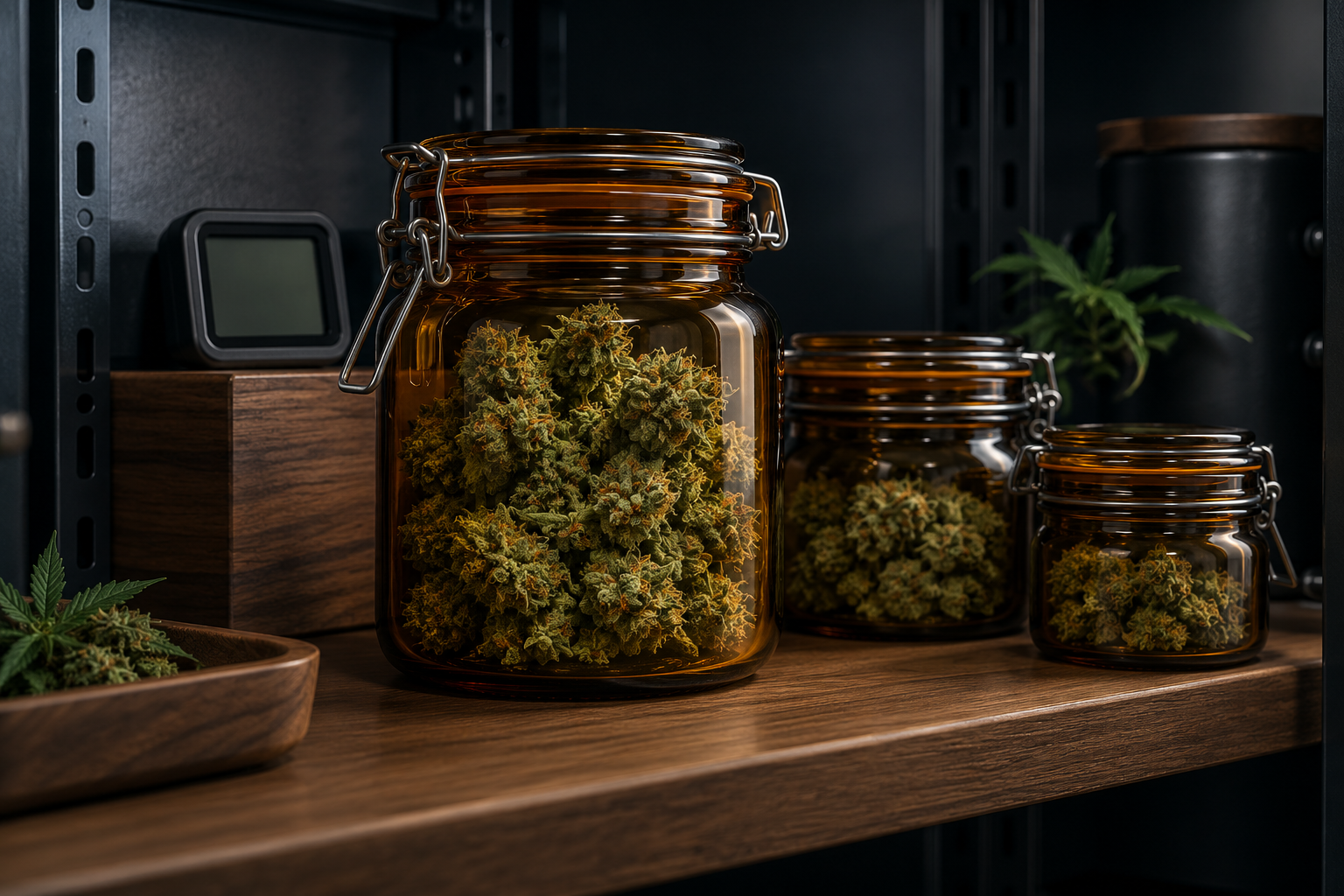
In a properly cured jar, the first aroma should feel integrated rather than separated into raw green plant matter and sharp volatile sweetness. Opening the jar briefly and returning after a few minutes often reveals the deeper base. That second impression is where earth, spice, cream, wood, or fuel becomes easier to identify.
Inhale, exhale, and aftertaste
The expected flavor is grape candy and apricot on the inhale with grapefruit, floral sweetness, pepper, fermented fruit, and clean gas on the exhale. On the inhale, the most volatile notes arrive first. On the exhale, heavier sesquiterpenes and roasted, earthy, woody, or peppery elements become more noticeable. A clean vaporizer at moderate temperature often separates these layers better than combustion.
Smoothness depends on cultivation and post-harvest practice. Excess late nitrogen, salt accumulation, a hot dry, or flower sealed while the center is still wet can create a harsh or dull result even when the genetics are excellent. The grower should not assume that a strong smell guarantees a clean taste.
The aftertaste is a useful quality test. Premium flower leaves a recognizable trace that matches the jar aroma. Poorly finished flower may smell impressive but finish bitter, grassy, mineral, or empty. The most accurate evaluation should happen after at least three to four weeks of cure, not immediately after drying.
Why the profile can disappear
Volatile monoterpenes are easily lost through heat, direct airflow, light, and repeated exposure to fresh air. Large flowers make the problem more complicated because the surface can dry quickly while the center remains wet. The grower then faces a choice between overdrying the exterior or sealing moisture inside. A slower and more even dry reduces that conflict.
For Spritzer, the most important flavor risk is linked to uncontrolled vertical stretch, uneven light, late branch collapse, hidden moisture in bulking spears, calcium and magnesium demand, odor leakage, and premature harvest. Preventing that problem during bloom is easier than trying to repair flavor after harvest. Mold, heat stress, and root-zone imbalance can change aroma before the plant is cut.
Storage matters after curing. Keep flower in airtight containers, away from heat and light, and avoid opening the full harvest every day. Dividing the crop into smaller containers protects the reserve from repeated oxygen exchange.
Dominant Terpenes
Terpene results are phenotype- and batch-dependent. The compounds below describe the most common aromatic direction reported for this cultivar or its documented family. They should be confirmed with laboratory data when chemical precision is required.
Beta-caryophyllene
Beta-caryophyllene is relevant to Spritzer because it contributes pepper, gas, warm body relaxation, and a dry finish. Terpene dominance can change among phenotypes and laboratories, so the profile should be treated as a common direction rather than a fixed chemical fingerprint.
The sensory role is easier to verify than a precise effect claim. Aroma can be smelled and compared directly, while human effects are shaped by dose, THC, minor cannabinoids, tolerance, and expectation. Terpenes may influence the experience, but they should not be treated as a guaranteed medical mechanism in a single flower sample.
Limonene
Limonene is relevant to Spritzer because it contributes grapefruit brightness, candy lift, and positive mental energy. Terpene dominance can change among phenotypes and laboratories, so the profile should be treated as a common direction rather than a fixed chemical fingerprint.
The sensory role is easier to verify than a precise effect claim. Aroma can be smelled and compared directly, while human effects are shaped by dose, THC, minor cannabinoids, tolerance, and expectation. Terpenes may influence the experience, but they should not be treated as a guaranteed medical mechanism in a single flower sample.
Linalool
Linalool is relevant to Spritzer because it contributes floral sweetness and a softer calming transition. Terpene dominance can change among phenotypes and laboratories, so the profile should be treated as a common direction rather than a fixed chemical fingerprint.
The sensory role is easier to verify than a precise effect claim. Aroma can be smelled and compared directly, while human effects are shaped by dose, THC, minor cannabinoids, tolerance, and expectation. Terpenes may influence the experience, but they should not be treated as a guaranteed medical mechanism in a single flower sample.
Myrcene and ocimene
Myrcene and ocimene is relevant to Spritzer because it contributes ripe grape depth, tropical fruit, and the heavier late phase that varies by phenotype. Terpene dominance can change among phenotypes and laboratories, so the profile should be treated as a common direction rather than a fixed chemical fingerprint.
The sensory role is easier to verify than a precise effect claim. Aroma can be smelled and compared directly, while human effects are shaped by dose, THC, minor cannabinoids, tolerance, and expectation. Terpenes may influence the experience, but they should not be treated as a guaranteed medical mechanism in a single flower sample.
Indoor vs. Outdoor Growing
| Factor | Indoor | Outdoor |
|---|---|---|
| Size | medium-tall to tall indoors and very large outdoors with unrestricted roots | Larger root volume can create a wide multi-branch plant |
| Finish | approximately 63-70 days indoors, with many cuts showing major flower bulking during weeks six and seven | early to mid-October in the Northern Hemisphere where the longer finish can remain dry |
| Main advantage | Environmental control and repeatable quality | Root volume, sunlight, and higher per-plant yield |
| Main risk | uncontrolled vertical stretch, uneven light, late branch collapse, hidden moisture in bulking spears, calcium and magnesium demand, odor leakage, and premature harvest | Weather, insects, branch damage, and late moisture |
| Best strategy | top early, spread the frame under a screen, continue tucking through the first two weeks of flower, remove weak lowers, and install a second support layer before the late swell | Open structure, early support, and weather planning |
Indoor structure
Indoors, Spritzer usually finishes as a medium-tall to tall indoors and very large outdoors with unrestricted roots plant. Its stretch is usually about 1.8-2.4x, with MAC-leaning plants capable of exceeding the average. The main objective is to create an even canopy before vertical growth stops. A net is useful, but branches should not be woven so tightly that removal at harvest becomes destructive.
Indoor climate
Indoor success depends on lower humidity before the late bulking phase and move air through the long spears because week-six and week-seven swelling can close internal spaces quickly. Air should move above, below, and through the canopy without blasting one flower continuously. Strong extraction is more valuable than a fan pointed directly at the buds.
Indoor nutrition
The cultivar’s feeding direction is moderate-to-strong feeding during active stretch with reliable calcium and magnesium, then a controlled taper as flower density and aroma develop. Irrigation runoff, leaf color, and tip condition should guide adjustment. A predetermined high-strength recipe is less reliable than observing how quickly the plant uses water and how the new growth develops.
Outdoor structure
Outdoors, the plant benefits from unrestricted root volume and direct sun. Expected timing is early to mid-October in the Northern Hemisphere where the longer finish can remain dry. Give branches enough space to move in wind and enough support to prevent the final flowers from folding them downward.
Outdoor climate
The best outdoor site provides morning sun, steady airflow, and protection from prolonged late-season rain. The cultivar’s dense flower structure makes dry autumn weather more valuable than extreme summer heat.
Outdoor pest pressure
Outdoor aroma and dense flowers attract attention from insects as well as people. Inspect the interior of flowers and branch junctions. Caterpillar damage can open a path for rot, while mites and aphids reduce vigor long before yield visibly collapses.
Greenhouse use
A greenhouse can extend the season and protect flowers from rain, but it can also trap humidity. Side ventilation, roof vents, plant spacing, and active airflow are essential. Closing the structure at night without humidity control can create a wetter environment than growing outside.
Which environment fits best
Choose indoors when flavor consistency, security, and climate control are the priorities. Choose outdoors when root volume, plant size, and lower energy use matter more. Spritzer can perform in both, but the grower must solve different problems: canopy density indoors and weather uncertainty outdoors.
Strain-Specific Grow Guidance
Vegetative structure and plant selection
Spritzer begins with vigorous tall hybrid growth with medium-to-long internodes, flexible side branches, strong apical extension, and heavily frosted spear-shaped flowers. Select plants for vigor, symmetrical branching, clean leaf development, and a root system that fills the container without circling excessively. Do not choose only by early aroma. Weak structure becomes expensive once flowers gain weight.
The natural branching pattern is lateral branches train easily and fill a screen well, but they require support as the flowers bulk late. If growing from seed, expect some variation. Label every plant and preserve clones before flowering when possible. A keeper should be judged after cure, not only by photographs at harvest.
Allow the root zone to establish before heavy training. A plant that is topped while rootbound or recently transplanted may respond with uneven shoots and delayed growth. Wait for active new development, then make the first structural decision.
Training and canopy design
The preferred training direction is: top early, spread the frame under a screen, continue tucking through the first two weeks of flower, remove weak lowers, and install a second support layer before the late swell. The purpose is not to create the flattest possible plant. The purpose is to distribute strong flower sites across the available light while preserving airflow and branch strength.
Low-stress training should begin while stems are flexible. Bend gradually over several sessions rather than forcing a mature branch into one severe angle. If a branch splits, support it immediately and keep the wound dry. Cannabis often heals well, but a damaged joint can become a failure point under heavy flowers.
Complete major high-stress work before flowering or during the earliest transition. After the stretch, use only selective leaf removal and support. Late topping or aggressive supercropping shifts energy from flower maturation into repair.
Transition and stretch management
Plan for a stretch of usually about 1.8-2.4x, with MAC-leaning plants capable of exceeding the average. The flip height should reflect the available vertical space, container size, light distance, and phenotype. A plant with healthy roots and high light can stretch more strongly than a stressed plant described in an online grow report.
Warning
Build support before the flowers demand it
During the first two weeks of flowering, continue guiding the main branches into open spaces. Remove obviously weak shoots below the productive canopy, but do not strip every lower leaf at once. A gradual cleanup protects photosynthesis and avoids a sudden stress event.
By the end of the third flowering week, the canopy should be mostly final. From that point forward, the goal shifts from shape creation to flower support, climate control, and stable irrigation.
Root zone, watering, and nutrition
The cultivar’s watering preference is that it likes consistent irrigation and an oxygen-rich root zone; severe drybacks during stretch reduce branch uniformity, while constant saturation weakens late flower support. Choose a medium with enough air capacity to recover after full irrigation. Container size should match the intended vegetative period; a long veg in a small pot creates root restriction before the plant reaches its productive phase.
Feeding should follow this direction: moderate-to-strong feeding during active stretch with reliable calcium and magnesium, then a controlled taper as flower density and aroma develop. Watch the newest leaves, not only the oldest fans. Dark glossy foliage, clawing, burnt tips, or slowed water use indicate that more fertilizer is unlikely to improve yield.
Calcium and magnesium supply must be considered in relation to water source and medium. Do not add supplements automatically when the base nutrient and water already provide enough. Excess ions can create the same symptoms growers try to correct with more feed.
Measure root-zone pH and electrical conductivity when the plant’s behavior changes unexpectedly. A deficiency pattern caused by lockout will not improve when more of the same nutrient is added. Correct the environment first.
Light, temperature, and humidity
The lighting strategy is to uses strong even light well after acclimation, but tall tops must be kept level to avoid bleaching and lost grape-floral detail. Increase intensity in steps and watch leaf angle, edge curl, bleaching, and water demand. More light only improves production when roots, carbon dioxide, temperature, and nutrition can support the extra photosynthesis.
Humidity management should follow this rule: lower humidity before the late bulking phase and move air through the long spears because week-six and week-seven swelling can close internal spaces quickly. Dense cannabis flowers can maintain much higher humidity internally than the room reading suggests. That is why a safe ambient number does not guarantee a safe flower interior.
Keep night temperature from falling so sharply that relative humidity spikes for hours. The lights-off period is often when condensation and mold risk increase. Dehumidification and air exchange should be sized for transpiration, not chosen only by room volume.
Flower development and support
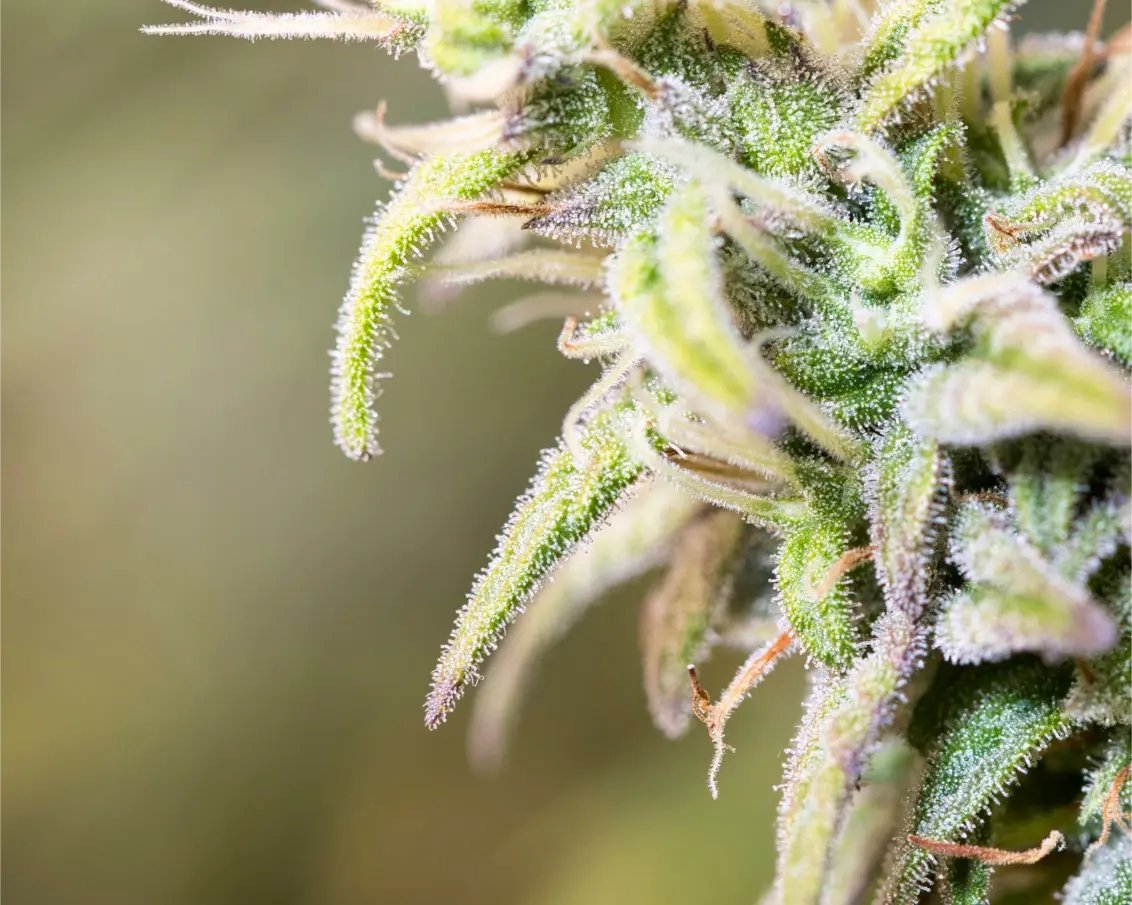
The finished flowers are expected to be medium-dense purple and green spears with swollen calyxes, orange pistils, and a thick crystalline resin forest. Support should be installed before the branches lean. Adding stakes or a second net late can damage trichomes and compress flowers against each other.
The middle of flowering is the time to inspect density, spacing, and moisture. Look inside the largest flowers with clean hands or tools. A sweet or musty smell that differs from the cultivar’s normal aroma deserves immediate investigation.
Do not confuse foxtailing from genetics with heat stress. Genetic foxtails develop evenly and remain resinous. Heat-related foxtails often appear closest to the light, with pale tops, rising leaf edges, or stalled aroma.
Pest and disease prevention
The main strain-specific risks are uncontrolled vertical stretch, uneven light, late branch collapse, hidden moisture in bulking spears, calcium and magnesium demand, odor leakage, and premature harvest. Prevention begins before flowering. Clean the space, inspect incoming plants, remove dead material, and avoid carrying outdoor tools directly into an indoor room.
Once flowers become dense, spraying should be avoided unless a legal and crop-safe intervention is absolutely necessary. Biological prevention and early detection are better than applying residues to mature inflorescences.
Stress inspection should include the lower nodes and interior branches. Sensitive modern hybrids can express isolated reproductive structures after light leaks, severe drought, root damage, or repeated high-stress training. Remove affected tissue, correct the stress, and evaluate whether the plant remains suitable to finish.
Harvest timing
The expected flowering window is approximately 63-70 days indoors, with many cuts showing major flower bulking during weeks six and seven. Calendar age is only a checkpoint. The actual harvest decision is: allow the late bulking phase to finish and harvest at mostly cloudy trichomes with a small amber fraction for a bright opening and complete body landing.
Check trichomes on calyxes rather than sugar leaves. Sugar-leaf trichomes often turn amber earlier and can make a plant appear more mature than the flower itself. Examine several canopy levels because top and lower flowers may not finish together.
A staged harvest can improve uniformity when lower sites remain clearly behind. Remove mature tops, restore light to the middle, and allow the remaining flowers several days to finish. This works best when plant health is still strong and weather or room scheduling allows it.
Master Advice: Build the grow around vigorous tall hybrid growth with medium-to-long internodes, flexible side branches, strong apical extension, and heavily frosted spear-shaped flowers and a stretch of usually about 1.8-2.4x, with MAC-leaning plants capable of exceeding the average. Do not wait until late flower to solve spacing and support.
Weedth Bud Flavor Tips
Keep grapefruit and apricot above the grape base
Spritzer will usually retain some dark grape, pepper, and gas even after an imperfect finish. The quality test is whether apricot, grapefruit peel, and floral candy remain distinct. Those brighter notes disappear first from overheated tops and fast drying rooms.
Compare the aroma of the upper spears with flowers from the middle. If the tops smell only like fermented grape and ammonia while the middle retains citrus and stone fruit, reduce canopy heat or redistribute intensity.
Do not let late hunger become late accumulation
The vigorous frame can use meaningful nutrition through stretch and bulk, including consistent calcium and magnesium where the water and medium require them. That does not justify carrying high nitrogen or rising root-zone EC into ripening.
Watch water demand. When the plant begins drinking less after the week-six or week-seven swell, concentration should follow actual uptake rather than the memory of its earlier appetite.
Dry long spears with space between them
Large branches, darkness, cool air, and gentle exchange preserve fruit while allowing the thickest flower centers to equalize.
Using direct fans to speed a crowded dry
It hardens the surface, strips grapefruit-floral notes, and can leave hidden moisture inside the spear.
Post-harvest timing for a volatile fruit profile
Whole-plant or large-branch hanging around 16-19°C and 55-60% RH can support a ten-to-fourteen-day dry. Branch diameter, flower length, and room exchange decide the endpoint.
Use minimal wet trimming and handle by the branch. MAC-influenced frost is easy to transfer to gloves and trays, while Grape Pie fruit is easy to flatten with warmth and oxygen.
Condition one large spear before sealing the crop. The outer bracts can feel ready while the center remains too wet, especially after the late bulking phase.
Cure until grape soda becomes layered
Four to six weeks should separate ripe grape from apricot, grapefruit, floral candy, pepper, fermented fruit, and clean gas. A jar that remains simply “purple sweet” has lost much of the cultivar’s value.
Store the reserve in smaller cool, dark containers after curing. Repeatedly opening one large jar sacrifices the citrus-floral ceiling before the last flowers are used.
Weedth Bud Boost Tips
Turn vertical enthusiasm into horizontal efficiency
Spritzer commonly stretches 1.8-2.4x, and MAC-leaning plants can exceed the average. Top early, spread the flexible laterals under a screen, and keep tucking through the first two weeks of flower.
Do not flip a full screen as if the plant were compact. Leave open area for extension and an access lane for later inspection. Height control performed during stretch is far cheaper than supercropping hardened branches beside forming flowers.
Prune after the stretch map becomes visible
Remove weak lower shoots and interior branches that cannot reach the productive layer near the end of stretch. Preserve strong laterals: they are part of the cultivar’s medium-to-high yield potential.
Install a second support layer before the week-six and week-seven swell. Flexible branches that looked self-supporting earlier can fold when the spear-shaped flowers add resin and mass.
| Stage | Architectural objective | Useful action | Risk signal |
|---|---|---|---|
| Early veg | Strong roots and multiple leaders | Top once after establishment | Slow recovery or pale new growth |
| Late veg | Spread the vigorous frame | LST laterals and set the first screen | One leader escaping the canopy |
| Stretch | Place 1.8-2.4x extension | Tuck through weeks one and two | Hard bends beside early flower |
| End of stretch | Open lower airflow | Remove weak shaded shoots | Stripping productive side branches |
| Late bulk | Carry frosted spears | Add support and maintain steady moisture | Branch lean and flower contact |
| Finish | Preserve citrus-stone-fruit detail | Lower humidity and taper by uptake | Premature harvest after the first frost peak |
Calcium and magnesium are continuity tools
Fast growth under strong light can expose calcium or magnesium limitations, especially in coco or low-mineral water. Supply them as part of a balanced program rather than stacking corrective products after symptoms appear.
Check pH, irrigation coverage, root temperature, and total EC before assuming a spotted leaf proves a single-element deficiency. Several root-zone problems imitate calcium demand.
Late swell changes the climate risk
Run horizontal air across the long flowers and separate circulation beneath the screen. A practical progression is about 50-55% RH early, 45-50% in bulk, and 40-45% near finish where temperature and plant health support it.
Inspect the center of the thickest spears and every point where a leaning branch touches another. Spritzer’s open internodes help early airflow, but late flower mass can close the same spaces.
Warning
Heavy frost is not a harvest signal by itself
Spritzer can look finished before its late bulking and aroma integration are complete. Wait for swollen bracts, mature fruit-gas balance, and calyx trichomes.
Medical Uses & Benefits
Users most often consider Spritzer for reported use for stress, low mood, appetite, mild pain, and evening tension, though high potency and strong initial stimulation may not suit panic-sensitive users. These are reported uses, not guaranteed treatments. Cannabis can reduce symptoms for one person and worsen them for another, especially when THC dose is high.
The onset of an uplifting euphoric rise, increased sensory interest, talkativeness, and a clean burst of creative energy may be helpful when stress or low mood is the main problem. The later development into deep physical ease, appetite, slower movement, and a relaxed mental state that can become sleepy at high doses may suit evening discomfort and physical tension. The same progression can be inconvenient for anyone who needs sustained alertness.
Pain relief is usually described as partial rather than anesthetic. The strain may change attention, muscle tone, and emotional response to discomfort. Severe, new, or unexplained pain requires medical evaluation rather than self-treatment.
For sleep, timing matters. Taking a potent strain immediately before bed can feel mentally active for some users, even when the late phase is sedating. An earlier evening dose may allow the initial mental effects to settle before bedtime.
Anxiety response is dose-dependent. A small dose may feel calming, while a large dose can increase heart awareness, dizziness, or repetitive thought. Users with panic history should be especially conservative and consider lower-THC options.
Dry mouth, dry eyes, appetite changes, slowed reaction time, and short-term memory impairment are common cannabis effects. Combining cannabis with alcohol or other sedatives can increase impairment.
Medical patients should consider medication interactions, cardiovascular conditions, pregnancy, age, and mental-health history. Professional guidance is appropriate when cannabis is used alongside prescription treatment.
The safest therapeutic approach is repeatable dosing. Use the same preparation, measure the amount, keep notes, and avoid judging benefit from one unusually strong or weak batch.
Ideal User Profile
The ideal user is experienced consumers seeking a powerful fruit-gas hybrid and growers comfortable with tall canopies, multi-layer support, longer flowering, and slow drying. The strain suits someone who values a changing experience rather than a single flat effect. The early phase and late phase may feel different enough that timing matters.
For low-tolerance users, one inhalation may be sufficient. Wait at least several minutes before adding more. Edible forms require much longer onset time and should be dosed even more conservatively.
Time of day should match the finish. A cultivar that begins cheerful can still become physically heavy. Users should plan the full two-to-three-hour window rather than judging only the first fifteen minutes.
The best activities are low-risk and sensory: music, conversation, film, a meal, light stretching, or a familiar creative hobby. Driving, machinery, important financial decisions, and unfamiliar physical environments are poor matches.
Flavor-focused users should compare flower through a clean vaporizer at moderate temperature. Combustion can emphasize pepper and char while hiding delicate fruit, cream, or floral notes.
Growers considering this strain should be comfortable with its main cultivation issue: uncontrolled vertical stretch, uneven light, late branch collapse, hidden moisture in bulking spears, calcium and magnesium demand, odor leakage, and premature harvest. A grower who can manage that issue will usually find the rest of the cycle straightforward.
Grower Notes and Feedback
Grower reports on Spritzer tend to agree on its central identity: a vigorous grape-candy hybrid combining ripe purple fruit, apricot, grapefruit peel, floral sweetness, pepper, ammonia, earth, and gas with heavy resin and an uplifting opening that slowly becomes deeply relaxed. The most consistent praise concerns resin, aroma, and the finished effect. The most consistent problems are linked to uncontrolled vertical stretch, uneven light, late branch collapse, hidden moisture in bulking spears, calcium and magnesium demand, odor leakage, and premature harvest.
Plant-to-plant variation should be expected. Stretch may range around usually about 1.8-2.4x, with MAC-leaning plants capable of exceeding the average, and flowering may fall within approximately 63-70 days indoors, with many cuts showing major flower bulking during weeks six and seven. Keep records rather than forcing every phenotype onto one schedule.
A common mistake is reacting to one unusual leaf by changing the entire feed program. Stress leaves can appear after transplanting, drought, root restriction, or rapid environmental change. Correct the cause and watch new growth before making several simultaneous adjustments.
The feeding consensus is best summarized as: moderate-to-strong feeding during active stretch with reliable calcium and magnesium, then a controlled taper as flower density and aroma develop. Growers who maintain stable root conditions usually report better flavor than growers who chase maximum electrical conductivity.
The expected bud structure is medium-dense purple and green spears with swollen calyxes, orange pistils, and a thick crystalline resin forest. That density is attractive but changes airflow and drying behavior. The plant should be supported and inspected before the flowers become difficult to move.
Harvest timing should follow this direction: allow the late bulking phase to finish and harvest at mostly cloudy trichomes with a small amber fraction for a bright opening and complete body landing. Growers who cut only by calendar often miss either the late flavor development or the preferred effect balance.
Post-harvest quality depends on this rule: dry whole branches or large sections in a cool dark room with gentle exchange so grape, apricot, and floral notes survive without trapping moisture inside the spears. A fast dry can make a visually excellent crop taste ordinary. A slow but stagnant dry can create microbial risk. Air exchange and temperature should work together.
The strongest keeper is usually the plant that repeats. One spectacular harvest under perfect conditions is less useful than a phenotype that clones easily, tolerates small mistakes, finishes on schedule, and keeps its aroma after two months of storage.
Weedth Experience
A plant that makes empty screen space feel intelligent
Spritzer is one of those cultivars that can make a careful grower look timid during the flip. The screen seems underfilled, branches are still flexible, and there is an urge to add more plant. I would resist it. A 1.8-2.4x stretch can turn that empty area into the exact breathing room the finish needs.
I would treat the first two flower weeks as a choreography problem. Every day of tucking decides where a future spear will stand, how close it will be to its neighbor, and whether I can reach the center later. Once the branches harden, improvisation becomes damage control.
The pruning decision comes only after I can see the stretch map. I would remove lower shoots that have clearly lost the race, but preserve strong laterals even when they are not the tallest. Spritzer’s yield comes from converting a large branch system into an even field, not reducing it to a few apical poles.
I would plan two layers of support. The first shapes the plant; the second carries it. Waiting for the week-six swell to reveal which branch will fold means handling heavily frosted flower when it should be left alone.
My nutrient attention would focus on continuity. A fast MAC-leaning plant under bright light can show calcium and magnesium stress quickly, but I would check irrigation coverage and pH before pouring more into the reservoir. Correct diagnosis keeps grape and apricot cleaner than reactive bottle stacking.
The aroma I want is not just grape candy. I want overripe purple fruit joined by apricot, grapefruit peel, floral sweetness, pepper, a controlled ammonia edge, earth, and gas. If the highest flowers lose citrus and stone fruit, I would consider that a canopy warning even when their resin looks exceptional.
I would be patient with the calendar. Spritzer often makes an impressive resin display before the interior flowers have finished bulking. The harvest decision belongs to swollen bracts, mature aroma, water-use trend, and calyx trichomes together.
During the dry, the long spears need physical separation. I would rather occupy more hanging space than let two resinous flowers touch and create a slow wet seam. Cool darkness preserves grapefruit and floral lift while the centers equalize.
As finished flower, Spritzer should feel like its name: a bright effervescent opening over a darker wine-like base, followed by a slow physical settling. When the grow and cure are right, the transition feels deliberate rather than merely potent.
Weedth Score
Growing Experience 8.7/10 Rewarding when uncontrolled vertical stretch, uneven light, late branch collapse, hidden moisture in bulking spears, calcium and magnesium demand, odor leakage, and premature harvest are managed early.
Bud Structure & Visual Appeal 9.5/10 Medium-dense purple and green spears with swollen calyxes, orange pistils, and a thick crystalline resin forest.
Aroma Complexity 9.7/10 Layered profile of grape soda, overripe purple fruit, apricot, grapefruit peel, floral candy, black pepper, ammonia, earth, and sweet gas.
Flavor & Smoothness 9.5/10 Best after four to eight weeks transforms sharp grape and ammonia into grape soda, fermented fruit, grapefruit candy, floral spice, and smoother gas and a slow dry.
Effects & High Experience 9.4/10 Moves from an uplifting euphoric rise, increased sensory interest, talkativeness, and a clean burst of creative energy toward deep physical ease, appetite, slower movement, and a relaxed mental state that can become sleepy at high doses.
Overall Satisfaction & Recommendation 9.5/10 A strong choice for experienced consumers seeking a powerful fruit-gas hybrid and growers comfortable with tall canopies, multi-layer support, longer flowering, and slow drying.
Personal Closer: Spritzer earns its place through character rather than one exaggerated number. The best flowers are structured, expressive, and worth the patience required to cure them properly.
FAQ
Is Spritzer beginner-friendly?
It is moderate. Vigorous growth helps recovery, but 1.8-2.4x stretch, late branch weight, calcium-magnesium continuity, and spear density require planning.
What is its lineage?
Runtz x Grape Pie x MAC, combining candy smoothness, dark grape-fermented fruit, stretch, branching, and intense resin.
How long does it flower?
Approximately 63-70 days, with important bulking often occurring in weeks six and seven. Do not cut from frost alone.
How much does it stretch?
Usually 1.8-2.4x. MAC-leaning selections under vigorous root conditions can exceed that range.
What training works best?
Top early, spread laterals under a screen, tuck through the first two flower weeks, clean weak lowers, and add a second support layer.
Does it require extra calcium and magnesium?
It may show increased demand under strong light or in coco, but additions must fit the water, medium, pH, irrigation coverage, and total EC.
What is the main grow risk?
Uncontrolled stretch followed by branch collapse and hidden moisture when late-bulking spears touch.
Why is the flavor only grape and gas?
Hot tops, premature harvest, late accumulation, rough handling, or a fast dry can remove apricot, grapefruit, and floral detail.
When should it be harvested?
After the late swell, when bracts are full and grape-apricot-citrus has integrated with pepper, earth, ammonia, and clean gas.
How should it be dried?
Hang separated large branches in cool darkness with gentle exchange. Test moisture inside a representative thick spear before sealing.
How long should it cure?
Four to six weeks usually clarifies grape soda, apricot, grapefruit peel, floral candy, pepper, fermented fruit, and gas.
What defines a keeper?
Predictable stretch, strong laterals, late support tolerance, clean spear interiors, and multi-layered fruit that survives storage.
Is it daytime cannabis?
The opening may feel uplifting, but ordinary or large doses tend to become deeply relaxed as the experience develops.
Similar Strains
Runtz
The direct parent reference supplies candy sweetness, smooth smoke, dense flower, and a bright-to-relaxed effect progression.
Grape Pie
Grape Pie explains dark grape, fermented fruit, pastry depth, color, and a heavier aromatic base.
MAC 1
MAC 1 connects through stretch, strong branching, extreme frost, floral citrus, and a clearer cerebral opening.
Grape Cream Cake
Grape Cream Cake shares dense purple fruit and dessert depth, replacing Spritzer’s grapefruit sparkle with more vanilla cream.
Grape Ape
Grape Ape offers classic grape, earth, color, and physical calm in a shorter, more uniformly indica structure.
Glitter Bomb
Glitter Bomb shares dramatic resin and dark fruit, moving toward blueberry, plum, lavender, cocoa, and a heavier finish.
Share this article
A quick overview of the topics covered in this article.
Follow us
Latest articles
October 25, 2026
October 25, 2026