

What Happens if Cannabis Has Too Much Cal-Mag?
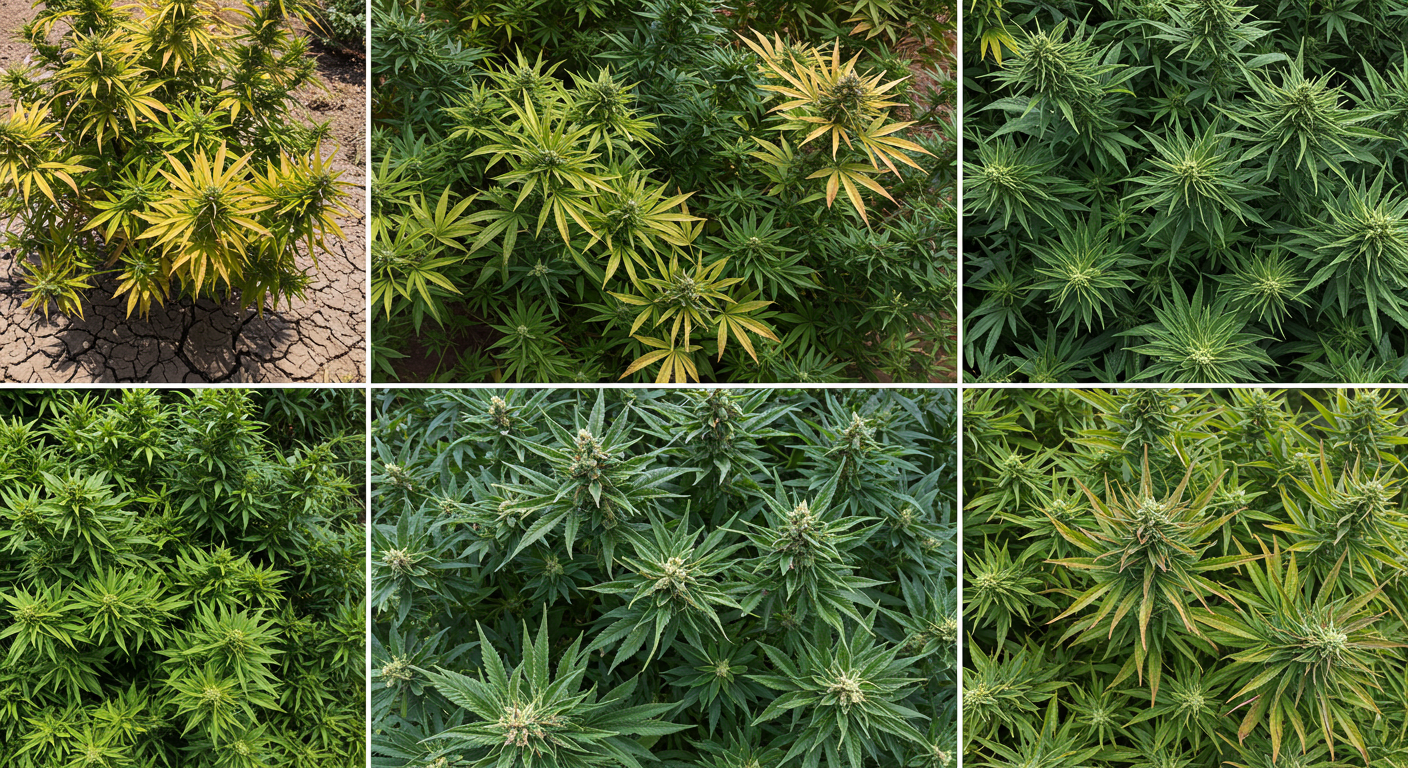
Too much Cal-Mag can stress cannabis, but the problem is rarely a single, unmistakable “Cal-Mag toxicity.” An excessive dose may raise root-zone EC, make water harder for roots to absorb, add more nitrogen than you intended, or push calcium, magnesium, and potassium out of balance. The plant can then show burned tips, slow growth, dark or clawed leaves, interveinal chlorosis, marginal damage, or symptoms that look confusingly similar to a deficiency.
So let us slow the correction down before we reach for another bottle. We need to know what the Cal-Mag product contains, what the base nutrient already supplies, what is in the source water, and whether the root zone is actually accumulating salts. That short investigation tells us whether to pause one supplement, lower the complete recipe, renew a hydroponic reservoir, or correct irrigation instead of performing an unnecessary flush.
This guide is for lawful cultivation. Follow local rules, the fertilizer label, and appropriate handling precautions for nutrient concentrates, acids, and bases.
Master Advice: Do not diagnose excess Cal-Mag from one damaged leaf. Diagnose the complete root-zone program.
What Too Much Cal-Mag Does to Cannabis
The immediate effect depends on the product and the growing system. Cal-Mag is a product category, not one standardized chemical. One bottle may contain calcium nitrate, magnesium nitrate, and iron. Another may use magnesium sulfate or different calcium sources. Some products add a meaningful amount of nitrogen, while others contain little or none.
When too much is applied, four problems can develop together:
- EC and soluble salts rise. A concentrated root solution makes water uptake more difficult and can injure root tips.
- Calcium, magnesium, and potassium compete. An excessive concentration of one cation can restrict the uptake or movement of another.
- Hidden nitrogen accumulates. Nitrate-based Cal-Mag can deepen leaf color, promote clawing, and keep the crop too vegetative when stacked on top of a complete feed.
- The original diagnosis becomes harder to read. A plant with poor roots, unsuitable pH, uneven irrigation, or excess potassium may still look calcium- or magnesium-deficient after more Cal-Mag is added.
Recent cannabis research gives us a useful example of why balance matters. In a controlled reproductive-stage study, plants receiving high magnesium developed burned leaf tips followed by chlorosis, while calcium and potassium concentrations in shoot tissues declined as magnesium supply increased. At the highest tested magnesium treatment, photosynthesis and biomass were also reduced compared with a more moderate treatment. That does not create a universal bottle rate, but it confirms that cannabis can be harmed by magnesium oversupply and by the nutrient interactions it creates.
Cal-Mag excess means the complete calcium and magnesium input is greater or less balanced than the root-zone system can use.
The total includes source water, base fertilizer, supplements, liming materials, amendments, and anything already stored in the substrate or reservoir.
Too Much Cal-Mag Is Not Always Calcium Toxicity
True visible calcium toxicity is considered uncommon in many crops. Excess calcium still matters because it can increase the fertilizer load and interfere with magnesium or potassium nutrition. Calcium can also react with concentrated phosphate or sulfate sources during mixing, creating precipitates that remove nutrients from solution and clog equipment.
Magnesium oversupply has clearer cannabis-specific evidence. Magnesium competes with other positively charged nutrients, and elevated magnesium has been shown to restrict calcium uptake and calcium and potassium movement from roots to shoots. A grower may therefore add Cal-Mag, see a potassium- or calcium-like symptom, and mistakenly add even more.
“Can too much Cal-Mag cause nutrient lockout?”
Question sent by: Jordan Hayes, via e-mail.
It can contribute to what growers call lockout, but that word can hide several mechanisms. High EC can restrict water uptake, excess magnesium or calcium can antagonize other cations, unsuitable pH can change nutrient availability, and damaged roots can absorb poorly. Check those mechanisms separately. Saying “lockout” is the beginning of the diagnosis, not the conclusion.
What Too Much Cal-Mag Looks Like
There is no single leaf pattern that proves Cal-Mag excess. The most reliable clue is a matching history: the symptoms appeared or accelerated after repeated supplementation, the base formula or water already contained calcium and magnesium, and root-zone EC or reservoir concentration moved above the normal trend.
| Observed sign | Possible Cal-Mag link | Common lookalikes | Best confirmation | First response |
|---|---|---|---|---|
| Burned leaf tips | Higher total EC or magnesium oversupply | Strong base feed, dry-back salt concentration, heat or light stress | Compare feed EC, root-zone EC, and recent dose changes | Stop increasing supplements and review the full recipe |
| Very dark, glossy, clawed leaves | Extra nitrate nitrogen in the supplement | Excess nitrogen from the base feed, saturated roots | Read the guaranteed analysis and total nitrogen contribution | Pause the nitrogen-bearing supplement and lower duplicated inputs |
| Interveinal yellowing on older leaves | Cation imbalance or high-EC root stress | True magnesium deficiency, pH problem, root disease | Review Mg input, pH, EC, roots, and progression | Do not add more magnesium until excess is ruled out |
| Brown or scorched leaf margins | Restricted potassium uptake or general salt stress | True potassium shortage, light stress, severe dry-back | Check K sources, Ca and Mg additions, and root-zone EC | Restore balance instead of stacking a PK booster |
| Distorted or damaged new growth | Calcium delivery disrupted by roots, salinity, or cation competition | True calcium or boron deficiency, pests, heat, root injury | Inspect new roots, transpiration conditions, pH, and recipe | Correct the delivery problem before adding calcium |
| Slow water use and stalled growth | High EC reduces the ease of water uptake | Overwatering, cold roots, low light, root disease | Inspect roots and compare pot weight, environment, and EC trend | Stabilize the root zone and reduce confirmed excess |
Remember: A deficiency-looking leaf does not prove the solution lacks that nutrient. Excess, pH, root injury, and poor water movement can all reduce delivery.
Burned Tips Are a Warning, Not a Chemical Test
Tip burn often appears where salts, nutrient load, and transpiration meet at the leaf edge. It can be an early sign that the complete feed is too concentrated, but it cannot identify which bottle caused the problem. If Cal-Mag was the last change, treat that as a lead and compare the before-and-after EC rather than assuming the name on the bottle is the diagnosis.
Dark Clawing Leaves May Come From the Nitrogen
Many Cal-Mag supplements are built partly from nitrate salts. This can be useful when the nutrient program needs nitrogen, calcium, and magnesium together. It can be awkward in mid or late flowering when a complete bloom formula already supplies enough nitrogen. Read the label for total nitrogen and nitrate nitrogen, then include that contribution in the whole recipe.
“My leaves turned dark after Cal-Mag. Is that calcium toxicity?”
Question sent by: Lauren Mitchell, via Facebook page.
Dark green foliage is more closely associated with nitrogen status than with a unique calcium toxicity pattern. Check whether the supplement contains nitrate nitrogen and whether it was added on top of a nitrogen-rich base. Downward tip clawing, overly soft foliage, and delayed flower development strengthen the nitrogen-excess hypothesis.
Calcium Excess, Magnesium Excess, and Nitrogen Excess Are Different
A combined label encourages growers to treat calcium and magnesium as one nutrient. The plant does not. Calcium is relatively immobile in the plant and depends strongly on healthy root tips, water movement, and transpiration. Magnesium is mobile and sits at the center of the chlorophyll molecule. Their oversupply patterns and interactions are related but not identical.
| Likely excess | What it can do | What you may see | What to verify |
|---|---|---|---|
| Calcium | Add salts, compete with magnesium, and upset potassium balance when supplied disproportionately | Secondary Mg- or K-like symptoms rather than a unique calcium burn pattern | Source-water calcium, base formula, liming materials, and supplement analysis |
| Magnesium | Restrict calcium and potassium uptake or shoot movement at high supply | Burned tips, chlorosis, reduced vigor, and Ca- or K-like secondary symptoms | All Mg sources, including Epsom salt, hard water, dolomite, and the base feed |
| Nitrate nitrogen | Push vegetative vigor beyond the intended stage and raise total EC | Dark foliage, downward clawing, soft growth, or delayed maturation | Guaranteed analysis and nitrogen already supplied by the base program |
| Iron or trace additions | Duplicate a complete micronutrient package | Symptoms depend on dose, pH, and the duplicated element | Chelated iron and trace elements across every product |
Why Potassium Problems Often Enter the Picture
Potassium, calcium, and magnesium are cations. They do not simply queue at the root independently. Excessive concentrations can compete, and the balance changes with crop demand, solution chemistry, root condition, and transpiration. University greenhouse guidance describes the relationship as nutrient antagonism: too much of one can inhibit uptake of another.
This is why a potassium-like scorched margin after heavy Cal-Mag use should not trigger an automatic PK boost. If the root zone is already concentrated, adding another salt increases EC and may deepen the imbalance. Confirm the root-zone trend first.
Calculate the entire nutrient stack.
Include the water, base nutrient, Cal-Mag, bloom additives, pH adjusters, and substrate amendments before deciding what is missing.
Answer every new symptom with another supplement.
Cal-Mag excess followed by a PK booster can turn one uncertain diagnosis into a high-EC, multi-element problem.
Why Growers Accidentally Add Too Much
Most excess begins with a reasonable intention. A leaf looks pale, an LED is blamed, or a feed chart lists Cal-Mag as a separate line. The grower adds the supplement without checking whether the base fertilizer, source water, or amended medium already covers the same nutrients.
The Base Nutrient Already Contains Calcium and Magnesium
Complete one-part, two-part, and three-part programs can already provide substantial calcium and magnesium at the intended use rate. Soft-water and hard-water versions may be formulated differently. A coco-specific base may also account for cation exchange. The front label cannot tell you this; the guaranteed analysis and manufacturer program can.
Tap Water Is Being Treated Like Reverse-Osmosis Water
Hardness is mainly a measure of calcium and magnesium in water, expressed as calcium carbonate equivalents. A high starting EC does not reveal exactly which ions are present, but a water report can. Some hard water supplies meaningful calcium while contributing much less magnesium. Others also contain high bicarbonate, sodium, chloride, or sulfate. The solution is not automatically “no Cal-Mag” or “full Cal-Mag.” It is to formulate from the report.

“Do I need Cal-Mag if I use tap water?”
Question sent by: Ethan Brooks, via e-mail.
Not automatically. Test or obtain a report for calcium, magnesium, hardness, alkalinity, sodium, chloride, and EC. Then compare those contributions with the base formula and medium. Tap water can already provide useful calcium and magnesium, but hardness alone does not guarantee the right balance or suitable overall quality.
Every LED Symptom Is Being Called a Cal-Mag Problem
High light intensity can increase growth and transpiration demand when the rest of the environment supports it. That does not mean LED-grown plants need an automatic supplement at every irrigation. Excess light, low root temperature, high humidity, poor airflow, and irrigation problems can all interfere with growth or nutrient delivery. Measure light and environment rather than using the fixture type as a diagnosis.
Coco Advice Is Being Applied to Soil
Coco coir has cation exchange behavior that can affect calcium, magnesium, potassium, and sodium. Proper buffering and a suitable complete feed matter. Fertilized potting soil or living soil has a different reserve, buffering capacity, and irrigation rhythm. A routine that works in drain-to-waste coco can overfeed a charged soil.
Old Damage Is Being Used to Judge a New Correction
Necrotic spots and burned tissue do not turn healthy again. If a grower adds Cal-Mag and checks the same damaged leaves the next morning, the plant may appear “still deficient.” The better test is whether the damage stops advancing and whether new growth develops normally over the following days.
Pro Tip: Photograph the same plant under neutral light before changing the recipe. Mark two affected leaves and one growing tip, then compare progression instead of relying on memory.
How to Confirm Cal-Mag Excess Before Correcting It
We can make this diagnosis much more reliable with a short audit. No single measurement is perfect, but several matching clues are far stronger than a leaf chart.
Check these before changing the feed
- Write down the exact Cal-Mag dose and every recent application.
- Read the guaranteed analysis for calcium, magnesium, nitrogen, iron, and sulfur.
- Check the base nutrient for the same elements at the actual use rate.
- Record source-water EC and obtain a mineral and alkalinity report when possible.
- Measure final feed EC and pH after all products are mixed.
- Use one consistent root-zone or drainage sampling method and compare trends.
- Inspect roots for discoloration, odor, slime, compaction, dryness, or saturation.
- Review irrigation volume, frequency, runoff management, temperature, humidity, and light intensity.
- Check whether the symptom began before or after the dose increase.
- Judge new growth and progression, not the recovery of dead tissue.
Use EC as a Trend, Not a Nutrient Identity Test
Electrical conductivity estimates the total concentration of dissolved ions. It cannot tell you how much calcium, magnesium, potassium, sodium, or nitrate is present. A high reading supports an excess-salt diagnosis, while a normal reading does not prove the ratios are balanced.
Sampling method matters. A runoff sample, a pour-through extraction, a saturated media extract, and a reservoir reading are not interchangeable. Choose a method suitable for the system and repeat it consistently. University greenhouse guidance emphasizes regular pH and EC testing because leaf symptoms can also arise from pests, disease, waterlogged media, or unhealthy roots.
“Does Cal-Mag raise EC or PPM?”
Question sent by: Chloe Martin, via e-mail.
Yes. Calcium and magnesium fertilizers add dissolved ions, so they contribute to EC. The size of the increase depends on the product concentration and dose. PPM displayed by most handheld meters is a conversion from EC, and different conversion scales produce different numbers. Record EC when possible and compare the final solution with the same meter and method.
Check pH, but Do Not Blame pH for Everything
An unsuitable root-zone pH can change nutrient solubility and availability. It is a valuable diagnostic measurement, but correcting the pH does not remove excess salts or repair oxygen-starved roots. Likewise, repeatedly pouring strongly adjusted water through a buffered soil can create more instability than it solves.

Inspect the Roots and the Irrigation Pattern
Calcium uptake depends heavily on active root tips and transpiration-driven water movement. Saturated, cold, diseased, or severely dried roots can create calcium-like damage even when the solution contains enough calcium. Magnesium deficiency symptoms can also appear when roots are compromised.
In containers, check whether the root ball is wet evenly. Channels around the pot edge can produce runoff while the center remains dry. Large dry-backs concentrate salts. Constant saturation limits oxygen. Both can make a reasonable recipe behave badly.
Do not perform a large flush only because a leaf chart says “toxicity.”
Confirm excess and choose a correction that matches the medium. Heavy leaching can waterlog soil, strip a lightly buffered substrate, spread contaminated runoff, or shock a recirculating system without solving the original cause.
How to Fix Too Much Cal-Mag
The safest correction is usually smaller than growers expect. Stop adding the suspected supplement, return to a balanced complete program, and correct the root-zone condition that allowed the excess to accumulate. The exact method changes with the medium.
Step 1: Pause the Supplement and Recalculate
Remove Cal-Mag from the next mix while you total the calcium, magnesium, nitrogen, and EC contributed by the water and base formula. Do not remove calcium and magnesium indefinitely if the underlying program genuinely requires them. The goal is to eliminate duplication and restore a balanced supply.
Step 2: Correct the Complete Feed, Not One Number
If final feed EC is higher than intended, dilute or remix the complete solution according to the crop stage and system. Do not reduce only Cal-Mag while keeping several other duplicated additives unchanged. If EC is normal but the nutrient ratios are questionable, use a complete formula designed for the water and medium rather than improvising multiple single-element corrections.
Step 3: Choose the Medium-Specific Reset
| Growing system | Safer correction | What to avoid | Recovery signal |
|---|---|---|---|
| Fertilized potting soil | Pause the supplement, allow proper aeration, and resume a milder complete feed only when the plant and medium need it | Repeated high-volume flushing without confirmed high salts or adequate drainage | Normal new growth, renewed water use, and no spread of tip or margin damage |
| Living soil | Stop liquid duplication, stabilize moisture, and account for lime, compost, gypsum, dolomite, and top-dresses | Trying to wash a biologically managed soil clean or chasing runoff numbers from coco methods | Steady growth, healthy tips, balanced color, and normal moisture use |
| Coco or drain-to-waste soilless | Use a balanced, lower-concentration complete solution and controlled drainage if root-zone EC confirms accumulation | Letting coco dry severely or replacing every feed with plain water for an extended period | Input and drainage trend converge while new growth remains clean |
| Recirculating hydroponics | Replace or substantially renew the reservoir with a correctly mixed complete solution, then track EC, pH, temperature, and water level | Endlessly topping up an imbalanced old reservoir or correcting EC without knowing what was added | Stable reservoir trend, healthy roots, resumed uptake, and undamaged new growth |
| Rockwool or inert slabs | Restore the intended complete solution and irrigation frequency, using measured drainage to move the slab back toward target | Large recipe swings based on one drainage sample | More uniform slab conditions and stable shoot growth |
“Should I flush after giving too much Cal-Mag?”
Question sent by: Mason Reed, via e-mail.
Only when measurements and the growing system justify leaching or solution replacement. In coco or an inert medium with clearly elevated root-zone EC, controlled drainage with a balanced lower-EC feed may be appropriate. In hydroponics, renew the reservoir. In potting or living soil, a blind heavy flush can cause prolonged saturation and new root stress. Start by stopping the excess input and checking the root zone.
Step 4: Stabilize Water Movement and the Environment
Keep roots oxygenated, prevent extreme dry-back, and correct excessive heat or root-zone cold. Review humidity and airflow because calcium delivery depends on water movement through the plant. A nutrient correction cannot work normally while the roots remain stagnant or the irrigation pattern keeps concentrating salts.
Step 5: Watch New Growth
Damaged leaf tissue may remain spotted, yellow, or burned. Recovery is shown by slower progression, clean new growth, improved turgor, normal water use, and a stable pH and EC trend. Removing every marked leaf immediately makes that trend harder to judge.
Important: Change one major variable at a time whenever the plant is stable enough to wait. A new base feed, a flush, a pH swing, a PK booster, and altered irrigation on the same day erase the evidence you need.
How Long Does Recovery Take?
A mild one-time overdose in a healthy, well-drained root zone may stop progressing after the next correctly managed irrigations. A concentrated or repeatedly overfed root zone can take longer because salts must be reduced, root tips must recover, and new foliage must develop. The calendar is less useful than the trend.
Look for stable water use and healthy new growth over several days. In flowering plants, old leaf damage may remain visible through harvest. If symptoms continue to spread after the recipe is corrected, reconsider the diagnosis and inspect roots, irrigation uniformity, pH, pests, disease, and light stress.
“Will the burned leaves turn green again?”
Question sent by: Riley Thompson, via X.
No. Necrotic tissue is dead, and severe chlorosis may not reverse. Keep enough affected foliage to monitor whether damage is advancing, then judge the correction from new growth and overall function. Remove leaves when they are dead, diseased, blocking airflow, or ready to detach, not merely because they record an old mistake.
Should You Use Cal-Mag at Every Watering?
There is no universal schedule. A complete coco or hydroponic recipe used with very soft or reverse-osmosis water may need a consistent calcium and magnesium source. A pre-amended soil irrigated with mineral-rich tap water may need none. A base nutrient may already contain the full intended amount.
The right question is not “How often should everyone use Cal-Mag?” It is “What calcium and magnesium does this water, formula, medium, and crop already receive?” If the answer is known, frequency becomes a formulation decision rather than a habit.
“How much Cal-Mag is too much?”
Question sent by: Noah Bennett, via e-mail.
A universal milliliter-per-gallon limit would be misleading because products contain different nutrient concentrations. The same dose can be appropriate in reverse-osmosis water with one base formula and excessive in hard water with another. Use the guaranteed analysis, final EC, water report, medium, crop stage, and manufacturer compatibility guidance to calculate the contribution.
Reverse-Osmosis Water
Reverse osmosis removes most dissolved minerals, which makes the water a clean starting point but not a complete nutrient solution. Calcium and magnesium must come from the fertilizer program. A separate bottle is optional if the base formula supplies them at the intended rate.
Coco Coir
Coco’s cation exchange sites can bind calcium and magnesium while releasing potassium and sodium, especially when the material is poorly processed or unbuffered. Use properly buffered coco and a complete program designed for the medium. Do not translate “coco often needs deliberate Ca and Mg management” into “more Cal-Mag is always better.” Track input and drainage trends and keep irrigation even.
Soil and Living Soil
Potting mixes may contain dolomitic or calcitic lime, compost, mineral amendments, and a starter fertilizer charge. Living soils may also include gypsum, basalt, oyster shell, or other calcium and magnesium sources. Count those reserves before adding a liquid supplement. Soil testing is more informative than trying to infer the mineral balance from one runoff sample.
Flowering Plants
Calcium and magnesium remain essential during flowering, but the full recipe must match changing demand. Nitrogen-bearing Cal-Mag can unintentionally keep nitrogen high when the base program already supplies enough. Potassium-heavy bloom additives can also change the cation balance. Review the entire flowering formula instead of automatically continuing every vegetative supplement unchanged.
Is Epsom Salt the Same as Cal-Mag?
No. Epsom salt is magnesium sulfate. It supplies magnesium and sulfur but no calcium, and it may not supply nitrogen or iron. A Cal-Mag product can use different calcium and magnesium sources and may include nitrogen or micronutrients. They are not interchangeable names.
If the confirmed gap is magnesium while calcium is already high, magnesium sulfate may be a more specific tool under a suitable program. If both calcium and magnesium are low, Epsom salt alone cannot solve the calcium shortage. Do not combine both products casually because their magnesium contributions add together.
“Can I add Epsom salt after I used too much Cal-Mag?”
Question sent by: Emma Wilson, via contact form.
Not until you know which element is excessive or deficient. Epsom salt adds more magnesium and sulfate. If magnesium oversupply is already restricting calcium or potassium, that correction moves in the wrong direction. Review the labels, water report, EC, and root-zone condition first.
Can You Mix Cal-Mag With Other Nutrients?
Cal-Mag is commonly used in complete fertilizer programs, but concentrates should not be mixed directly together. Calcium can react with concentrated phosphates or sulfates and form insoluble precipitates. Dilute each product into the main water volume in the manufacturer’s recommended order, mixing thoroughly between additions. Adjust pH after the complete solution is mixed unless the product instructions say otherwise.
Cloudiness, flakes, sediment, crystals, or clogged emitters can indicate incompatibility, water chemistry problems, or an incorrect mixing sequence. A clear solution is not proof that every ratio is suitable, but visible precipitation is a reason to stop and correct the process.
Never pour concentrated Cal-Mag directly into concentrated bloom fertilizer.
Add concentrates separately to the full water volume and mix between additions. Follow the label because product chemistry and recommended order vary.
Can Foliar Cal-Mag Cause Excess?
Foliar application bypasses part of the root-zone problem, but it is not automatically safer. A strong spray can burn leaves, leave residues, interfere with stomatal function, or damage flowers. Calcium also has limited redistribution from treated leaves to new tissues, so foliar calcium does not replace a functioning root supply.
Do not spray developing or mature flowers unless a lawful crop protocol and product label specifically support it. Residues, moisture inside flowers, microbial risk, light exposure, and harvest timing all matter. For a root-zone excess, adding foliar Cal-Mag usually complicates the diagnosis rather than solving it.
Common Misdiagnoses That Look Like Cal-Mag Trouble
| Lookalike | Why it resembles Cal-Mag trouble | Clue that separates it | What to inspect | Better first move |
|---|---|---|---|---|
| Potassium imbalance | Marginal scorch, weak growth, and cation interactions overlap | Heavy bloom additives or changing K demand | Complete K, Ca, and Mg inputs plus EC | Rebalance the base recipe instead of stacking supplements |
| High light intensity | Upper leaves bleach, spot, curl, or lose function | Damage follows the light map and canopy height | PPFD, distance, leaf temperature, and canopy uniformity | Correct light and environment before altering nutrition |
| Root-zone saturation | Poor roots cannot deliver calcium or magnesium normally | Slow drying, low oxygen, odor, discoloration, or weak roots | Drainage, pot weight, roots, temperature, and pathogens | Restore aeration and irrigation rhythm |
| Severe dry-back | Salts concentrate and leaf edges burn | Damage follows repeated wilting or hydrophobic zones | Moisture distribution, pot weight, channels, and EC | Rewet evenly and prevent extreme concentration cycles |
| pH or alkalinity drift | Availability changes even when nutrients are present | Repeated pH drift or high-bicarbonate water | Calibrated pH, root-zone method, and water report | Correct the cause of the drift, not only the daily number |
| Pests or disease | Spotting, yellowing, necrosis, and reduced vigor overlap | Localized spread, insects, frass, webbing, lesions, or root decay | Leaf undersides, stems, roots, and symptom distribution | Identify the biological cause before changing fertilizer |
“Why did more Cal-Mag make the spots worse?”
Question sent by: Caleb Morris, via e-mail.
The first symptom may not have been a shortage. More fertilizer can raise EC, add nitrogen, intensify cation imbalance, or burden damaged roots. It can also take time for old damage to become visible after the original stress. Return to the timeline: when did the symptom begin, what changed, and what do the root-zone measurements show?
A Practical Decision Tree
- Stop escalating. Do not add more Cal-Mag, Epsom salt, or PK booster while the cause is uncertain.
- Read every label. Total calcium, magnesium, nitrogen, potassium, iron, and sulfur across the program.
- Identify the water. Record EC and use a mineral and alkalinity report when available.
- Check the delivery system. Inspect roots, moisture distribution, temperature, oxygen, and transpiration conditions.
- Measure consistently. Compare final feed with reservoir, slab, drainage, or media measurements made by one repeatable method.
- Choose the medium-specific correction. Pause duplication, lower confirmed excess, or renew the solution without blindly flooding the root zone.
- Watch new growth. Give the corrected system time to produce evidence before making the next major change.
“I accidentally doubled the dose once. Will the plant die?”
Question sent by: Sarah Nguyen, via Facebook page.
A one-time mistake does not automatically kill a healthy plant. Risk depends on the product strength, final EC, plant size, root-zone volume, medium, irrigation, and what else was in the mix. Stop further dosing, measure what you can, maintain a healthy root environment, and use the appropriate medium-specific correction if the root zone is measurably concentrated.
Frequently Asked Questions
Can too much Cal-Mag burn cannabis plants?
Yes. The supplement adds fertilizer salts, so a high dose can contribute to tip burn, marginal injury, root stress, and reduced water uptake. The burn may come from total EC, magnesium oversupply, added nitrogen, or a combination rather than from calcium alone.
Can too much Cal-Mag cause potassium deficiency?
It can contribute to a secondary potassium problem. Potassium, calcium, and magnesium interact as cations, and cannabis research has shown reduced potassium uptake or movement under high magnesium supply. Confirm the complete nutrient balance before adding more potassium.
Can Cal-Mag lower or raise pH?
The effect depends on the product chemistry, water alkalinity, fertilizer blend, and plant uptake. Do not assume the brand category predicts pH behavior. Mix the complete solution, measure it, and monitor the root-zone trend.
Can I use plain water to fix too much Cal-Mag?
Sometimes a lower-mineral irrigation is part of a correction, but prolonged plain-water treatment can create new shortages in coco, hydroponics, or inert media. In those systems, a balanced lower-EC nutrient solution or reservoir replacement is often more controlled. Soil requires a different decision based on salt level and drainage.
Does Cal-Mag help every deficiency under LED lights?
No. Light stress, heat, low humidity, excessive humidity, root-zone problems, pests, and imbalanced base nutrition can all appear under LEDs. Cal-Mag helps only when the complete program has a calcium or magnesium gap or a predictable medium and water requirement.
When should I start Cal-Mag again after an excess?
Restart only if the recalculated program requires it and the root-zone trend has stabilized. Use the lowest justified contribution within a complete formula, then watch new growth and EC. Do not restart simply because old damaged leaves remain marked.
What the Research Tells Us
Cannabis nutrition research is growing, but it does not support one universal Cal-Mag dose for every cultivar and system. The strongest conclusion is more useful: nutrient response changes with concentration, growth stage, cultivar, environment, and the balance of the complete solution.
- Reproductive-stage magnesium research reported visible toxicity at high magnesium supply, reduced photosynthetic function at oversupply, and changes in calcium and potassium distribution.
- Vegetative-stage magnesium research found that increasing magnesium restricted calcium uptake and calcium and potassium translocation in medical cannabis.
- Controlled hydroponic deficiency research documented how calcium and magnesium symptoms developed across flowering cannabis, which helps separate deficiency patterns from excess and root stress.
- Cultivar-specific nutrient uptake research found changing calcium and magnesium uptake patterns between cultivars and across the vegetative phase.
- University of Florida greenhouse fertilizer guidance explains how water hardness, alkalinity, EC, root health, and competition among potassium, calcium, magnesium, and ammonium affect plant nutrition.
- University of New Hampshire diagnostic guidance recommends checking roots, media pH, EC, drainage, pests, and disease before confirming a nutrient disorder.
What to Remember: The bottle name is not the diagnosis. Water, base fertilizer, medium, roots, irrigation, environment, and cultivar decide whether Cal-Mag fills a gap or creates one.
The Bottom Line
Too much Cal-Mag can raise EC, burn tips, restrict water uptake, add excess nitrogen, and disturb the balance among calcium, magnesium, and potassium. Yet the symptoms are not unique enough to diagnose by appearance alone. The most dependable evidence is a matching timeline supported by the product analysis, water quality, complete recipe, root condition, and consistent pH and EC measurements.
If you suspect an excess, pause the supplement and stop stacking corrections. Recalculate the whole program, choose a reset that fits soil, coco, hydroponics, or living soil, and judge recovery from new growth. Once we treat the root zone as one connected system, Cal-Mag stops being a mystery bottle and becomes what it should be: a specific tool for a specific nutritional gap.
Share this article
A quick overview of the topics covered in this article.
Follow us
Latest articles

October 24, 2026

October 24, 2026

October 24, 2026
October 24, 2026