
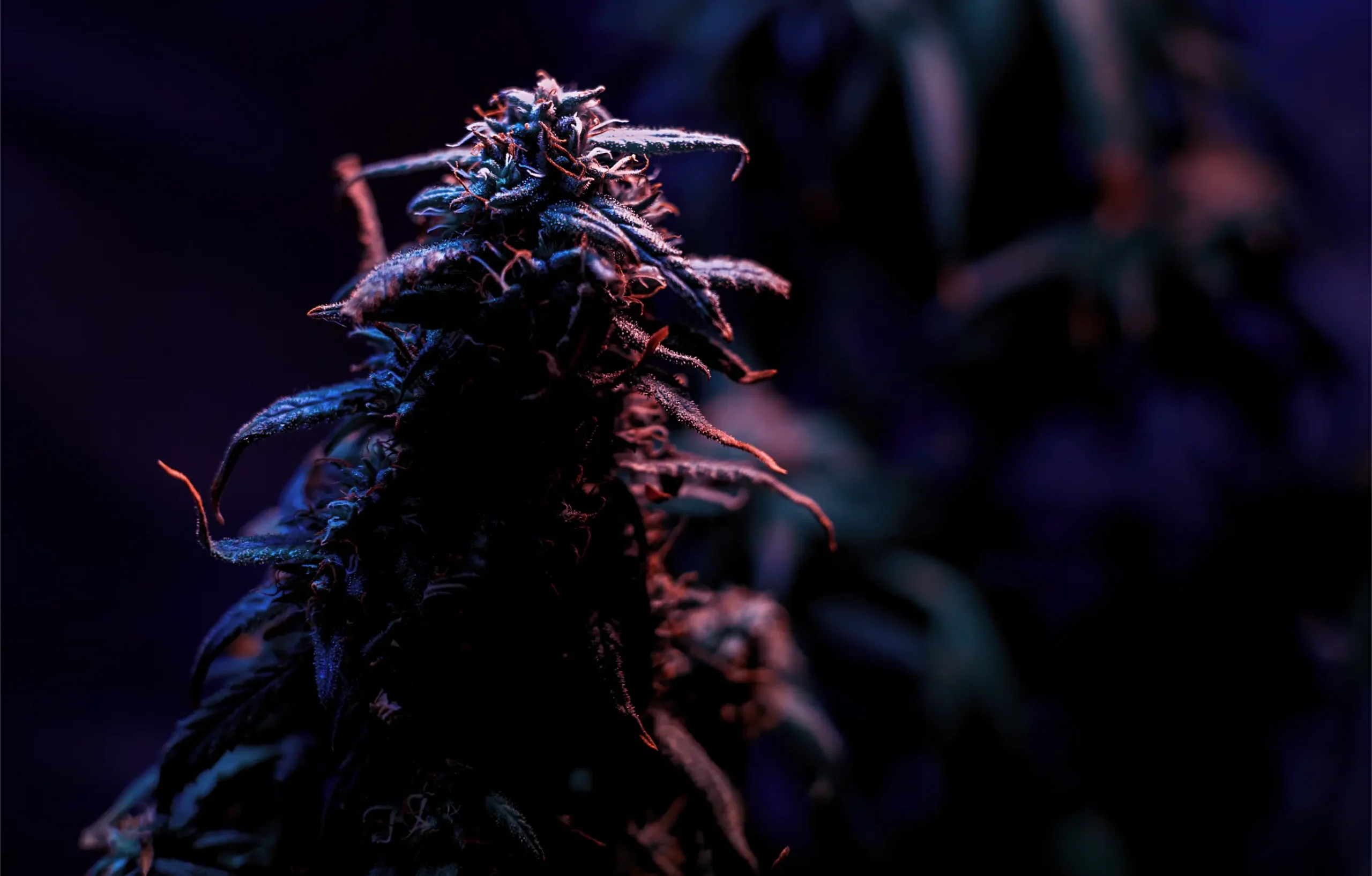
Gushers
Gushers – Strain Profile & Grow Guide
Gushers is a dense, fruit-and-gas hybrid known for an aroma that can move from ripe tropical candy into sour berries, creamy dough, pine and earthy fuel. The sweetness is often described as fruit snacks, guava, mango skin or berry syrup, but the cultivar should not be reduced to candy. Well-grown flower carries a sharper Kush-like base that gives the sweetness structure and prevents the smoke from feeling flat.
The plant usually develops a medium frame with strong lateral branching, moderate flowering stretch and rounded flowers that become increasingly compact near the finish. Its manageable height can make it look easier than it is. The real challenge is not keeping the plant away from the ceiling. It is keeping air and light moving through a canopy that can become thick with broad leaves and close-set, resinous buds.
Gushers often changes its water and nutrient behavior during flowering. Vigorous plants may drink and feed strongly during transition, then slow as flower density rises. Growers who continue using the same irrigation frequency or nutrient concentration can create a root-zone problem that looks like deficiency. This shifting demand is part of the cultivar’s practical identity and one reason it benefits from observation rather than a fixed calendar.
The highest-quality Gushers flower preserves three separate layers after cure: juicy fruit, creamy sweetness and dry gas. Heat, excess salts and rapid drying remove the fruit first. The grower who wants more than attractive purple buds must manage the final weeks and the drying room with the same care used to build the canopy.
Strain Features
| Feature | Details |
|---|---|
| Strain Type | Indica-leaning hybrid with a bright, sociable opening at moderate doses |
| Genetic Profile | Gelato #41 x Triangle Kush |
| THC | Commonly reported in the low-to-upper 20% range; selected batches may test higher |
| CBD | Usually very low |
| Dominant Terpenes | Limonene and beta-caryophyllene are frequently reported; myrcene, linalool and humulene vary |
| Flavor / Aroma | Tropical fruit, guava, berry syrup, sour candy, cream, pine, earth and gas |
| Effect Character | Fast euphoria and sensory brightness followed by tingling physical relaxation |
| Flowering Time | Commonly around 9 to 10 weeks; some cuts may finish slightly earlier |
| Stretch | Moderate, often enough to fill a partially open canopy |
| Plant Architecture | Medium height, broad side branching and a center that can become leafy |
| Bud Structure | Rounded, dense and heavily resinous with possible purple or dark-green coloration |
| Feeding Behavior | Moderate appetite; late demand may decrease as flowers harden |
| Irrigation Behavior | Strong drinking during stretch can slow noticeably in late flower |
| Mold Risk | Moderate to high when compact flowers touch or broad leaves trap humidity |
| Training Compatibility | Responds well to topping, low-stress training and a screen |
| Grow Difficulty | Intermediate |
| Best Time of Use | Afternoon to evening, depending on dose and tolerance |
Genetic Lineage
Gushers combines Gelato #41 with Triangle Kush. The genetic pairing is responsible for the cultivar’s contrast between sweet modern dessert flower and a drier, older-style Kush foundation.
Gelato #41 contributes cream, fruit, dense resin, color and a potent effect that can remain mentally engaging before becoming physically relaxing. It also contributes the tendency for rounded, compact flowers and a high level of visual bag appeal. In Gushers, this side may appear as guava, mango, berry candy, vanilla or soft dough.
Triangle Kush contributes pine, earth, pepper, fuel and structural seriousness. Its influence can sharpen the aroma and create a more grounded body phase. It also helps explain why some Gushers plants stretch more than the dense indica-leaning flower suggests. The parentage is not simply sweet crossed with short. It includes an OG-derived side capable of vertical growth, branch extension and strong late aroma.
The cultivar commonly produces several phenotype directions. Fruit-forward plants smell like tropical candy, guava and berries with a softer gas finish. Kush-forward plants show pine, earth, lemon peel and fuel, sometimes with less obvious sweetness. Balanced expressions preserve ripe fruit in the jar and reveal dry gas after grinding.
Color varies. Some plants develop purple or dark burgundy accents under normal healthy finishing conditions. Others remain green and heavily frosted. Color should not be forced with severe cold, and it should not be used as the primary keeper criterion. A green plant with stronger cured fruit may be more valuable than a dark plant that tastes mostly earthy.
The lineage affects branch behavior. Gelato-derived density can concentrate weight around rounded tops, while Triangle Kush influence can produce longer side branches. The plant may look strong during mid-flower and then spread outward as the compact buds gain mass. A net is useful for both canopy shape and late support.
The genetic combination also creates a misleading maturity signal. Resin and color can develop before the interior calyxes complete their final swelling. Growers should not harvest because the flower looks dark and frosty. The sweet-fruit layer often becomes more integrated during the later part of the normal window.
What the Parentage Means in the Grow Room
The parentage creates a useful contradiction. Gushers can remain medium in final height while behaving vigorously across the width of the canopy. The Gelato side encourages broad leaf area and compact flower clusters, while the Kush side can lengthen stems during transition. A plant can therefore look controlled from the side and overcrowded from above. This is one reason plant height alone is a poor spacing tool for this cultivar.
The fruit-forward phenotype often produces slightly softer branch angles and a sweeter live-stem aroma. These plants may appear easier to train, yet their round flowers can merge into dense clusters late. Kush-forward expressions may show more upright branching, firmer stems and a sharper pine-fuel aroma before flowering. They can require an earlier flip even when their leaves remain broad.
A useful keeper hunt should compare more than color and resin. Record the following differences through the same environment: transition stretch, water use after week five, resistance to leaf overlap, speed of calyx swelling, aroma before and after drying, and the amount of premium flower after lower growth is removed. A phenotype that looks spectacular at day forty may be less useful than a greener plant that stays open, drinks predictably and preserves guava after cure.
Gushers also demonstrates why genetic labels do not replace observation. Two plants with similar fruit aromas can finish with different flower density and moisture behavior. The plant with the harder flower may require a longer, more carefully graded dry. The slightly more open plant may produce less visual density but retain a brighter flavor and provide a safer outdoor finish.
Effect Breakdown
Gushers usually presents a mind-to-body progression, but the transition is smoother than the abrupt shift seen in some heavy Kush hybrids.
Mental Character
The first phase is often euphoric, amused and sensory-rich. Music may feel fuller, food aromas become more noticeable and conversation can feel easy. Some users report a playful or flirtatious mood. The strain may encourage creative thought, but it is less reliably productive than a clear sativa because attention can become absorbed in pleasure rather than organization.
The mental effect is generally positive at moderate doses. It can reduce the emotional weight of daily stress and make an ordinary evening feel more interesting. The user may remain socially present even as the body begins to relax.
Emotional Tone
Gushers often feels warm rather than sharply stimulating. It can encourage laughter and a comfortable sense of detachment. The emotional effect may be especially appealing to users who find fuel-heavy strains too serious or purely candy strains too light.
Sensitive users should still be cautious. High potency and a relatively fast onset can create anxiety, especially if the person consumes more while waiting for the body phase. The smooth fruit flavor can make large inhalations easier than expected.
Physical Character
A tingling or spreading warmth often appears through the limbs and shoulders. The body does not always feel immediately heavy. At a moderate dose, the relaxation may remain compatible with sitting outside, watching a film, cooking or socializing.
As the dose rises, the body effect becomes more obvious. Movement feels less necessary, appetite may increase and the user may prefer a comfortable chair. The physical phase can reduce the perception of tension without completely numbing the body.
Sedation Threshold
Gushers becomes much heavier when the dose is increased or the flower is harvested later. Eyes may feel weighted and short-term focus less reliable. This is the point where the cultivar shifts from an afternoon hybrid into an evening strain.
The late phase can become sleepy, but the strain is not a guaranteed immediate knockout. Some users remain mentally active while physically relaxed. Others experience a smooth descent into drowsiness after the initial euphoria fades.
Duration and Unwanted Effects
The effect commonly lasts several hours, with a softer after-effect continuing beyond the peak. Dry mouth and dry eyes are common. Dizziness, anxiety and occasional headache are more likely after overconsumption.
Harvest maturity and phenotype affect the experience. Fruit-forward expressions may feel brighter and more social. Kush-forward plants often feel heavier and more grounded. Earlier harvest can preserve mental sharpness, while additional maturity tends to deepen the physical finish.
Flavor & Aroma Profile
Gushers has one of the clearest fruit-to-gas transitions among modern dessert hybrids. The intact flower can smell almost edible: guava nectar, tropical fruit snacks, berry syrup, sweet cream and soft citrus. The aroma becomes more serious when the bud is broken.
Grinding releases pine, pepper, earth and fuel. Some phenotypes show a sour candy note that resembles citric acid on fruit sweets. Others present mango skin, fermented berry or a faint floral perfume. The sweetness should remain recognizable, but it should not feel one-dimensional.
The inhale is usually juicy and creamy. Tropical fruit, berries and vanilla arrive first. The smoke or vapor may feel smoother than the potency suggests when the cure is correct. The exhale introduces dry pine, pepper and Kush-like gas.
A mature aftertaste often returns to fruit after the gas. The user may notice guava or berry on the tongue several moments after exhaling. This return is a sign of good terpene preservation. Poorly processed flower leaves only dry earth and fuel.
Late nitrogen can damage the profile. A dark, leafy plant may still produce loud aroma, but the smoke can feel thick and vegetal. Excess salts in the root zone may create a hot mineral finish. Because Gushers already has a sharp gas component, nutrient harshness can be mistaken for genetics.
Heat is another major quality variable. High canopy temperatures reduce tropical fruit and cream before they reduce pine and pepper. The result can smell strong while lacking the cultivar’s main attraction. Stable late-flower conditions protect the fruit more effectively than a last-minute stress technique.
Drying speed is critical. Rounded dense flowers often feel dry on the outside before the core has equalized. A rapid dry traps uneven moisture and produces harsh smoke. A slow, controlled process allows fruit, cream and gas to connect during cure.
Outdoor Gushers may show more pine, herbs and sour earth. Indoor flower often expresses cleaner fruit and cream. Sun-grown quality can be exceptional in a dry climate, but autumn weather and drying capacity must be considered because the flowers become compact.
Dominant Terpenes
Gushers laboratory results vary. The cultivar’s identity depends on a group of volatile compounds rather than one fixed terpene ranking.
| Terpene | Flavor and Aroma Role | Possible Contribution to the Experience |
|---|---|---|
| Limonene | Citrus brightness, tropical lift and part of the sour-candy edge | Often associated with the upbeat mental opening and a less heavy aromatic top |
| Beta-Caryophyllene | Pepper, dry spice, wood and the Kush-gas foundation | May contribute to the grounded physical tone, although effects cannot be assigned to one terpene alone |
| Myrcene | Ripe fruit, earth, musk and depth | May support the later body relaxation and appetite response |
| Linalool | Floral cream, soft perfume and a smoother dessert impression | Can contribute to emotional softness in selected samples |
| Humulene | Dry herbs, hops and bitter wood | Helps connect sweet fruit to the drier earthy finish |
| Minor esters and sulfur compounds | Guava, berry syrup, tropical candy and fuel | Likely create much of the cultivar-specific identity beyond the dominant terpene list |
Limonene is important even when the aroma does not smell like obvious lemon. It brightens guava, mango and berry, giving the fruit an acidic edge rather than a flat sugary quality.
Beta-caryophyllene provides the peppery bridge into Triangle Kush-style gas. It remains noticeable after other volatiles fade, which is why over-dried Gushers often tastes peppery and earthy.
Myrcene can deepen fruit and create a ripe, almost fermented character. In heavier phenotypes, it may be associated with a softer, more physically relaxing finish.
Linalool appears more clearly in floral or creamy expressions. It can make the fruit feel perfumed and round. This note is delicate and disappears quickly under warm drying.
The practical goal is not to maximize one terpene. It is to preserve the relationship between juicy fruit, cream and dry Kush gas. That relationship depends on late-flower temperature, root-zone health, harvest maturity and post-harvest moisture control.
Indoor vs. Outdoor Growing
| Decision Point | Indoor Growing | Outdoor Growing |
|---|---|---|
| Height | Moderate stretch fits many rooms when flipped before the canopy is full | Root space can produce a broad medium-large plant with longer side branches |
| Canopy Density | Broad leaves and rounded flowers require selective thinning | Wide spacing and natural air help, but the center still needs pruning |
| Flower Quality | Climate control favors dense, colorful flowers with clean fruit | Sun can deepen flavor, while heat or rain may reduce fruit or damage dense buds |
| Irrigation | Container weight and dryback can be monitored precisely | Large plants may drink heavily during heat and slow quickly in cool autumn weather |
| Support | A net shapes the stretch and supports heavy rounded tops | Cages or branch ties should be installed before flower weight develops |
| Mold Risk | Controlled humidity reduces risk if colas remain separated | Dew and rain can stay inside compact flowers and dark tissue can hide damage |
| Harvest | The full 9-to-10-week window can be completed safely | Weather may require staged harvest or protection |
| Best Fit | Intermediate growers focused on fruit retention and premium bag appeal | Warm, dry regions with airflow, privacy and reliable autumn conditions |
Indoors, Gushers is easier to control vertically than many OG-derived hybrids. The main problem is horizontal congestion. A grower can keep the plant below the light and still end up with a humid center because broad leaves and rounded flowers occupy the same space.
A partially open screen works well. The plant should finish filling the canopy during transition. The net also prevents heavy branches from leaning into one another late.
Outdoors, Gushers can become a wide, productive shrub. Early topping and branch spreading help sunlight reach the center. Large root volume increases flower mass but also creates a larger late-season drying and support problem.
The outdoor climate should be dry near harvest. The cultivar’s dense flowers do not respond well to repeated autumn rain. Temporary cover can help, but only if ventilation remains strong.
Outdoor irrigation demand can change rapidly. A large plant may drink heavily during hot flowering weather, then slow after cooler nights. Continuing summer watering frequency into cool conditions can leave the root zone wet and the canopy humid.
Strain-Specific Grow Guidance
Build a Medium-Wide Plant, Not a Low Dense Mat
Gushers responds well to one early topping and gentle branch spreading. The aim is to create several strong laterals with vertical breathing room. Training every branch flat can produce a thick horizontal layer of leaves that becomes difficult to ventilate.
Allow the main tops to rise slightly above the lower productive sites. This creates a shallow three-dimensional canopy rather than a compressed sheet of foliage.
Leave Space for the Kush Stretch
The plant is often described as manageable, but Triangle Kush influence can still produce meaningful transition growth. Flip before the canopy is completely filled and continue tucking during the first part of stretch.
The exact behavior is cut-dependent. Record the first run. A compact fruit-forward plant may need more vegetative fill, while a longer Kush-leaning expression should be flipped earlier.
Use the Broad Leaves as Diagnostic Information
Gushers leaves can become broad and dark when nitrogen is abundant. Their size makes overwatering and excess nutrition visually obvious if the grower pays attention to posture.
Healthy leaves should remain firm and responsive. Heavy downward posture after irrigation, clawed tips and slow recovery suggest root-zone or nutrient excess. Do not assume broad leaves are naturally supposed to hang.
Remove Shoots That Cannot Escape the Interior
The cultivar can produce many side shoots near the center. Some will never reach useful light, even though they may develop resin. Remove them before the flowers harden.
This is not simply a yield technique. It creates vertical air lanes from the lower canopy toward the main tops and reduces the number of small wet flowers near the stem.
Defoliate Around Airflow Bottlenecks
A single large leaf may cover several bud sites and block the only path for air into the middle. Remove selected leaves with a clear reason. Avoid removing leaves only because they are large.
A first pass near the end of stretch and a lighter second pass in mid-flower are usually more effective than one severe stripping event. The plant should remain photosynthetically healthy while the center stays readable.
Expect Water Demand to Change
Do not let the stretch make the decisions
Gushers may drink strongly during transition as branches stretch and leaf area expands. Demand can slow later when vertical growth stops and flowers harden. This is the point where fixed irrigation schedules become risky.
Use container weight, runoff pattern, leaf posture and the time needed for the medium to return to the target moisture range. A late-flower plant that suddenly stays wet longer may be reducing demand, not asking for more nutrients.
Distinguish Deficiency From Salt Buildup
Pale or mottled leaves can tempt the grower to add calcium, magnesium or general feed. The same symptoms may appear when root-zone salts restrict uptake.
Check whether the plant is drinking normally and whether the medium is drying predictably. If the root zone remains wet and concentrated, adding more fertilizer can worsen the problem. Correct irrigation and concentration before assuming a true shortage.
Maintain Moderate Nutrition Through Bulking
Gushers can produce dense flower without extreme nutrient strength. A stable moderate program is safer than chasing maximum dark green color. Excess nitrogen creates leaf mass, while excessive late salts reduce smoothness.
The plant should be allowed to transition away from vegetative growth. Some natural late fade is not automatically a problem if flower development remains strong and the fade progresses gradually.
Keep Rounded Colas From Touching
The flowers often become wide rather than long. Two rounded tops can touch across a larger surface area than narrow spears. These contact points trap humidity.
Use the support net or soft ties to maintain small gaps. Inspect the hidden sides of the largest buds. The visible top may look perfect while the touching surface remains soft.
Support the Branch Junctions
Flower weight can pull entire lateral branches outward. Support should begin near the branch structure, not only at the cola tips. A net that catches the branch before it falls reduces the need for late manipulation.
Check major junctions after irrigation and during late swell. Water weight can temporarily increase the load and expose weak splits.
Protect Fruit From Canopy Heat
Tropical fruit and floral cream are more delicate than pine and gas. Keep the top flowers within a stable temperature range and avoid chronic light stress. Leaves folding upward or pale flower tips indicate that the upper canopy is receiving more energy than the environment can process.
A slight reduction in late intensity may protect more quality than forcing the last possible grams of density.
Use Calyxes, Not Purple Color, to Judge Maturity
Colorful phenotypes can look finished early. Harvest should be based on calyx swelling, pistil slowdown and trichomes on calyx tissue. Sugar-leaf trichomes mature sooner and should not control the decision.
The fruit aroma often becomes rounder as the calyxes finish. An early harvest may smell bright but taste thin. A very late harvest can deepen earth and body weight while reducing tropical clarity.
Consider a Staged Harvest When the Canopy Is Uneven
If upper rounded tops mature before interior sites, remove the ready branches and allow lower flowers additional light and airflow. This can be more effective than cutting the entire plant at an average maturity.
A staged harvest also reduces the amount of dense flower entering the drying room at one time. The grower must maintain plant health and avoid unnecessary delay, but the approach can improve uniformity.
Prepare the Dry for Rounded Dense Flowers
Gushers colas may be shorter than Grease Monkey spears, but their rounded cores can hold moisture. Separate large tops and avoid hanging them tightly together.
Monitor the drying room through both day and night. Temperature changes alter relative humidity and moisture release. The flower should lose water gradually without developing a dry shell.
Read Late-Flower Water Use as a Quality Signal
Gushers often drinks aggressively during stretch and early flower, then slows as the canopy stops expanding and the root zone becomes cooler or more concentrated. This transition is easy to miss when irrigation is automated around a fixed schedule. The first warning is not always wilt. Containers may remain heavier for longer, leaf posture may stay downward after lights-on, and runoff may become more concentrated even though the buds continue to look healthy.
A late plant that no longer dries at the previous rate should not receive the same volume simply because the calendar says it is in bulking. Reduce frequency or volume according to actual demand. Keeping the root zone saturated can limit oxygen and create pale interveinal symptoms that resemble a mineral deficiency. Adding more feed in response can intensify the problem.
Separate Flower Support From Flower Compression
Rounded Gushers tops become wider as they harden. A second trellis can help, but the squares should catch branches below the flowers rather than squeeze the flowers themselves. Where two colas touch, neither side receives clean moving air. The contact point also becomes difficult to inspect once resin and color deepen.
Use soft ties or a loose support layer to maintain a small gap between neighboring tops. Support should preserve each cola’s shape and circumference. It should not turn several flowers into one large humid mass.
Use Calyx Expansion to Distinguish Frost From Finish
Gushers can develop heavy resin and color while fresh pistils are still emerging. A visually mature plant may continue to increase density and integrate flavor. Inspect calyx tissue from several heights rather than relying on sugar-leaf trichomes, which often mature earlier.
A fruit-focused harvest is commonly taken when calyxes are fully developed and most trichomes on the calyx tissue are cloudy, with limited amber. Allowing more amber usually strengthens the body phase and dry Kush finish, but excessive delay can reduce the bright tropical edge. The best window is the point where guava and cream remain vivid while the flowers have stopped producing large waves of new white pistils.
Weedth Bud Flavor Tips
The desired flavor is tropical fruit first, cream in the middle and dry gas on the finish. A batch that tastes only like earth and pine has lost much of its identity.
Protect fruit during the final weeks by maintaining stable canopy temperature and avoiding severe root-zone stress. Repeated wilting near harvest can reduce photosynthesis and alter volatile expression.
Outdoor flowers should be harvested after dew dries and before strong sun heats the plant. Move branches directly into a shaded, controlled space. Direct sunlight after cutting is especially damaging to tropical and floral notes.
Dry with indirect circulation. Dense rounded buds need enough time for internal moisture to move. Dividing the thickest tops is safer than forcing the entire harvest to dry at the pace of the smallest flowers.
Do not end drying based only on small stem behavior. Stem snap varies with branch thickness and room conditions. Evaluate the flower’s outer texture, internal moisture and response after a short sealed test.
The early cure can smell sour, gaseous or slightly green. Guava and berry often become clearer over several weeks. Open containers only as needed for moisture management. Excessive burping after equilibrium accelerates aroma loss.
Keep long-term storage cool, dark and divided into smaller containers. The fruit fraction fades faster than the earthy Kush base. Handle buds gently to preserve resin and avoid releasing aroma unnecessarily.
Grade the Harvest Before Drying
Gushers rarely produces one uniform flower size across the entire plant. Main tops can be thick and rounded, while secondary branches carry smaller but still dense buds. Drying all of them as one unit forces the smallest flowers to wait for the largest cores or encourages the largest flowers to enter cure too wet.
Separate unusually thick tops, medium branches and smaller branches. The goal is not to create three different drying methods. It is to prevent one size class from determining the end point for every other flower. A short sealed-container test on a representative bud from each group can reveal moisture rebound before the full batch is stored.
The initial sealed aroma may temporarily become sharper or more gaseous as moisture redistributes. That alone is not failure. A persistent sour, hot or stagnant smell combined with soft internal tissue is different and requires immediate drying correction. Properly equalized Gushers should regain fruit and cream as the cure settles.
Weedth Bud Boost Tips
Gushers produces the best premium yield when the canopy contains several strong, separated tops rather than a large number of interior sites. Remove low-value shoots before they become frosty distractions.
Indoors, use a screen to finish the transition and support late flower. The screen should create gaps around rounded colas. A second layer may be useful if branches lean.
Root-zone consistency is a major yield tool. Sudden late saturation or salt accumulation can slow flower expansion. Match irrigation frequency to the plant’s changing demand instead of repeating the transition schedule through harvest.
Moderate feeding supports clean bulking. The plant does not need to remain dark green. Excess nitrogen and salts can reduce smoothness and increase humidity without improving flower quality.
Light should reach the full productive zone. Remove weak lower sites rather than increasing intensity to compensate for a deep canopy. Strong top light cannot mature flowers hidden beneath broad leaves.
Outdoor growers should widen the plant early and install support before flowering. Large root systems can create high yield, but branch separation and late weather protection become essential.
Avoid forcing purple color with harmful cold. Pigmentation is genetic and environmental, but quality depends on healthy metabolism. A green, aromatic plant is preferable to a stressed dark plant.
Allow the final calyx swell when conditions are safe. Cutting early sacrifices density and flavor integration. Waiting through dangerous humidity is equally unwise. The best harvest balances maturity and environmental risk.
Medical Uses & Benefits
Gushers is commonly selected for stress, low mood and physical tension. Its reported benefits reflect the combination of an uplifting first phase and a calmer body finish.
The early euphoria may help some users shift attention away from repetitive worry. Social comfort and sensory enjoyment can improve temporarily. High doses can have the opposite effect and create anxiety or mental confusion.
The later physical relaxation may reduce the perceived intensity of muscle tension or everyday discomfort. Users often choose the strain after work or during evenings when activity is no longer required. These reports do not establish medical treatment.
Appetite stimulation is frequently mentioned. The fruit-candy aroma and body relaxation may make food more appealing. Users managing appetite concerns should consider dose and timing with professional guidance.
Sleep may become easier after the bright phase fades, especially with a larger dose or later-harvested flower. The cultivar is not always immediately sedating, so users seeking sleep often prefer it before rather than at bedtime.
Dry mouth, dry eyes, dizziness and anxiety are possible. Very low CBD offers little moderation for THC-sensitive users. Begin with a small amount and allow the full progression to develop.
Cannabis responses vary. Gushers should not be presented as curing, preventing or treating a disease. Medical decisions require qualified advice and product-specific information.
Ideal User Profile
Gushers suits users who want modern fruit-candy flavor without losing a dry Kush foundation. It is particularly appropriate for late afternoons and evenings when a cheerful opening can transition into physical calm.
Social users may enjoy its laughter and sensory enhancement at moderate doses. Creative users may appreciate the playful attention, but the strain is less suited to precision work as the body phase develops.
Flavor chasers who enjoy guava, berry and cream should look for a phenotype that retains fruit after cure. People who prefer savory, pine-heavy cannabis may choose a Kush-forward expression, though it may feel less representative of the name.
Growers should choose Gushers when they can manage broad foliage, changing irrigation demand and dense rounded flowers. It is not excessively tall, but it requires close interior management.
The cultivar is less suitable for persistently humid finishing environments, rushed drying or growers who rely on fixed irrigation schedules. It is also not ideal for low-tolerance consumers who assume sweet flavor means mild potency.
Grower Notes and Feedback
Growers frequently describe Gushers as easier to control in height than in width. The plant can fill a screen quickly through side branching and broad leaf development.
One common mistake is keeping too many interior shoots because the plant appears medium-sized. The final flower density reveals that the center was overbuilt. Early cleanup improves both airflow and the proportion of premium buds.
Irrigation reports are especially important. Many growers notice strong drinking during stretch followed by a slower late-flower rhythm. Those who continue the same frequency can create saturation or salt accumulation.
Feeding opinions vary from moderate to hungry. The difference often reflects medium and root health. A vigorous plant under strong light may use substantial nutrition. A late-flower plant with reduced water demand may not.
The fruit aroma can be loud in the room and disappointing after drying if the process is warm. This is one of the most repeated quality gaps. The cultivar benefits from a cool controlled dry and enough cure time for guava and cream to return.
Flower color is attractive but inconsistent. Some plants darken strongly, while others remain green. Growers who select only by color may miss the most flavorful phenotype.
Branch support is usually easier when installed before the flowers become round. Late ties can compress buds and disturb resin. A second net provides cleaner support.
The effect is commonly described as cheerful and relaxing. Heavier phenotypes or later harvests can become sedating. Users should allow time for the body phase before redosing.
Additional Grower Pattern: Color Can Distract From Irrigation
Growers repeatedly report giving darker Gushers phenotypes more water because their broad leaves appear heavy even when the root zone is healthy. Leaf color and shape make the plant look less active than a narrow-leaf hybrid. The more reliable comparison is how quickly the container lightens, how the petioles rise after lights-on and whether the plant recovers cleanly after irrigation.
Another pattern appears during phenotype selection. Purple flowers are often chosen first, yet the most colorful plant may dry into a simple earthy profile. Greener or less dramatic expressions sometimes retain stronger guava, mango or sour-candy notes. Visual quality should remain part of the decision, but cured flavor and flower health deserve equal weight.
Weedth Experience
The moment Gushers stops asking for more
What keeps Gushers interesting to me is the way it can look uncomplicated while quietly changing the terms of the grow. It does not usually threaten the ceiling, and its branches accept a screen without much argument. For the first half of flowering, that manageable frame can create a dangerous confidence. The plant drinks, the leaves stay broad and assertive, and the first round flowers appear to confirm that the same rhythm should continue.
I pay closest attention when the stretch ends. That is the point at which Gushers often stops behaving like a vigorous green plant and begins behaving like a collection of dense, resinous sinks. The visual change is obvious, but the irrigation change is easier to miss. A container that dried quickly during transition can remain heavy much longer once the flowers harden. If I keep feeding the calendar instead of the root zone, the plant can show pale interveinal tissue and burned tips at the same time.
That contradiction is the cultivar’s most useful lesson. Pale leaves invite an immediate bottle-based answer, especially when the aroma and resin suggest the plant is working hard. Yet Gushers can have plenty of minerals in the medium and still look hungry because the root zone is too wet or too concentrated to deliver them cleanly. Before I add magnesium or increase the base feed, I want to know how long the container has stayed heavy, whether the petioles rise after lights-on and whether runoff has been drifting upward.
I do not expect damaged leaves to become beautiful again. My measure of recovery is quieter: the newest tissue stops deteriorating, the dryback becomes predictable and the flowers continue to push their calyxes outward. That distinction matters because chasing cosmetic recovery can lead to another unnecessary correction. Gushers rewards the grower who can leave an old symptom alone once the underlying rhythm is improving.
The canopy has its own version of the same problem. From the side, a medium Gushers plant can look perfectly controlled. From above, broad leaves and rounded tops may be closing every useful air lane. I prefer several clearly separated colas over a perfectly flat carpet. The slight variation in height gives the flowers somewhere to expand, lets air pass between them and makes inspection possible when purple tissue begins hiding the earliest signs of damage.
Its best live aroma is not merely sweet. I look for a bright guava or berry note that seems almost wet, followed by cream and then a dry pine-fuel edge when a flower is moved or a stem is rubbed. If only the gas remains near harvest, I start reviewing temperature and root-zone stress rather than assuming the cut lacks fruit. The tropical layer is the first part of the profile to become blurred by excess heat, heavy late feeding or repeated wilting.
Gushers also makes me patient after harvest. Those round flowers can feel ready on the surface while holding substantially more moisture near the stem. I would rather grade the branches by thickness and let each group reach equilibrium at its own pace than force the entire crop through one deadline. In the first days of cure, the jar may smell sharper and more gaseous than expected. Given stable moisture and time, the guava-cream character often returns and begins to sit above the Kush base instead of fighting it.
The difference between an attractive batch and a memorable one is most obvious in the exhale. Attractive Gushers can be frosty, colorful and loud yet finish as generic peppery gas. Memorable Gushers opens with fruit, softens into cream and leaves dry pine behind after the sweetness has gone. That sequence tells me the plant was not merely pushed to produce; it was allowed to finish, dry and equalize without losing its most fragile fraction.
As an effect, I enjoy the way the cultivar changes the pace of an evening without immediately ending it. The first portion can make music, food and conversation feel more vivid, while the physical warmth arrives gradually through the shoulders and limbs. It is easy to underestimate because the flavor is friendly and the opening feels social. A larger dose exposes the Triangle Kush side and turns the same flower into a much heavier, less organized experience.
My lasting impression of Gushers is therefore not purple color or raw potency. It is transition: from fast drinking to slower finishing, from fruit to gas, and from sociable brightness to body weight. I would build every cultivation decision around noticing those transitions early. A fixed schedule can produce handsome flower, but a responsive schedule is what preserves the part of Gushers that actually deserves its name.
Weedth Score
Growing Experience – 8.3/10: Gushers is responsive and not unusually tall. The deduction reflects late irrigation changes, broad foliage and compact flowers that require close management.
Bud Structure & Visual Appeal – 9.4/10: Rounded resinous flowers and potential dark coloration create exceptional appearance. The density is both an advantage and a risk.
Aroma Complexity – 9.2/10: Tropical fruit, berry syrup, cream, pine and gas remain distinct when the plant is finished well. Some phenotypes lean too far toward earth or candy, preventing a perfect score.
Flavor & Smoothness – 8.8/10: Excellent Gushers is juicy, creamy and dry on the finish. Root-zone salts and warm drying create noticeable harshness, so execution matters.
Effects & High Experience – 8.6/10: The progression is pleasant and versatile at moderate doses. Larger doses can become anxious or heavily sedating.
Overall Satisfaction & Recommendation – 8.9/10: Gushers offers strong flower quality, memorable flavor and a manageable frame. It is recommended for intermediate growers willing to track changing plant demand.
I would keep Gushers for the moment when guava sweetness turns into dry pine gas, but I would never interpret a pale late-flower leaf without first checking how slowly the root zone is drying.
FAQ
What is Gushers’ lineage?
Gushers is commonly documented as Gelato #41 crossed with Triangle Kush. Gelato contributes fruit, cream, resin and color. Triangle Kush contributes pine, earth, gas and structural stretch.
Question sent by: Nora, via e-mail.
Is Gushers an indica or a sativa?
It is generally considered an indica-leaning hybrid. The first phase can feel bright and social, while the later phase becomes more physically relaxing.
How much does Gushers stretch?
Moderate stretch is common. Many cuts can fill a partially open screen during the first two to three weeks. Kush-leaning expressions may extend more.
How long does Gushers flower?
Most reports place the cultivar around nine to ten weeks, although some cuts may finish earlier. Calyx swelling and trichome maturity should confirm the calendar.
Does Gushers need heavy feeding?
Not necessarily. It can use productive nutrition during stretch, but late water demand may slow. Continuing the same concentration and frequency can create salt buildup.
Why are my Gushers leaves pale even though I am feeding?
Possible causes include true deficiency, root-zone saturation, salt accumulation or pH-related uptake problems. Check water use, container weight and root-zone conditions before increasing supplements.
Is Gushers prone to bud rot?
Dense rounded flowers can trap moisture, especially where colas touch. Maintain gaps, late humidity control and interior inspection. Outdoor rain increases risk.
Why did my Gushers lose its tropical aroma after drying?
Warm temperatures, direct airflow, low humidity and over-drying remove guava, berry and floral cream before pine and gas. A slower controlled dry is necessary.
When should Gushers be harvested?
Wait for full calyx swelling, fewer fresh pistils and mostly cloudy trichomes on calyx tissue. Earlier harvest is brighter. Later harvest deepens body relaxation and earth.
Is Gushers suitable for beginners?
A careful beginner can succeed, but the cultivar is better classified as intermediate. The main challenges are canopy density, irrigation changes, late humidity and post-harvest control.
Similar Strains
Gelato: Shares creamy fruit, resin and a balanced effect. Gelato is often softer and more dessert-forward, while Gushers adds stronger pine and Triangle Kush gas.
Triangle Kush: Provides the dry pine, earth, fuel and stretch. It is less candy-like and often feels more direct and Kush-heavy.
Forbidden Fruit: Offers dark fruit, color and relaxation, but leans toward cherry and grapefruit rather than guava cream.
Gastro Pop: Matches purple fruit candy, gas and dense modern flower. Gastro Pop often has a darker grape-apple profile and a heavier fermented note.
Runtz: Shares candy fruit and creamy resin. Runtz is often sweeter and less pine-driven, with more variable branch strength.
Rainbow Belts: Provides sour candy, fruit and gas with a similar premium flower style. It often leans toward lime and sweet sherbet rather than guava and pine.
Share this article
A quick overview of the topics covered in this article.
Follow us
Latest articles
October 24, 2026
October 24, 2026
October 24, 2026
October 24, 2026
