
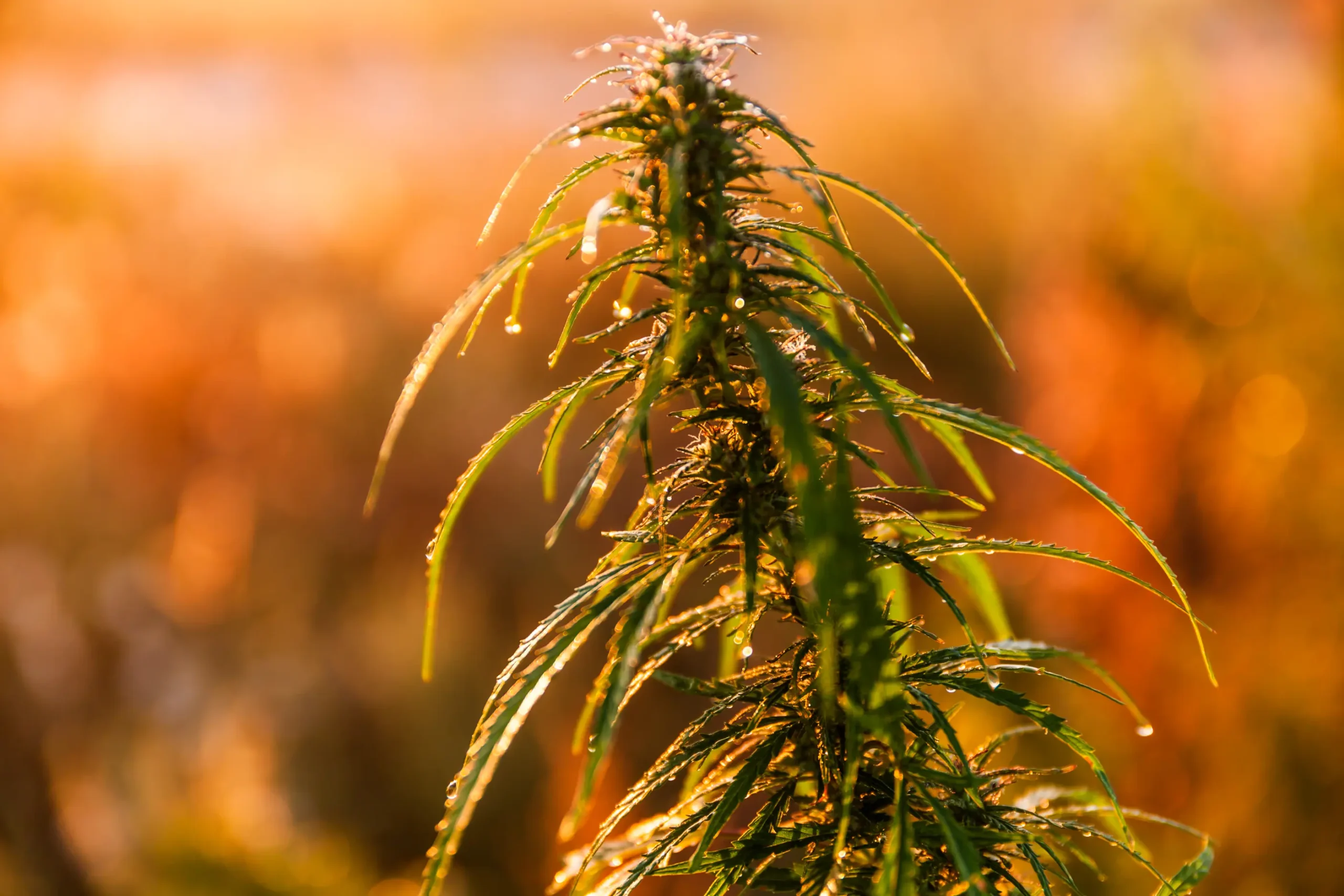
Golden Goat
Golden Goat is a sativa-dominant hybrid whose cultivation identity is built around branchiness, root appetite, and a long enough flowering period to develop a complex tropical-spicy aroma without becoming a true long-season Haze. It often sits around nine to ten weeks indoors, yet can stretch strongly and become a very large plant outdoors.
The lineage is most consistently described as a Hawaiian-Romulan male pollinating an Island Sweet Skunk female. The cross is widely associated with an accidental pollination event, but the horticultural result is anything but random: vigorous side branching, tropical citrus sweetness, spicy herbs, and a creative euphoric effect.
The central cultivation question is: how can a grower give Golden Goat enough root and branch space to express its sativa vigor while keeping the flowering canopy organized enough for even maturity and terpene preservation? The plant can be grown as a multi-branched specimen or in a more compact production system, but it should not be confined so tightly that the natural laterals become a tangled interior.
Golden Goat is usually described as a moderate feeder rather than a cultivar that demands aggressive nutrition. This matters because vigorous height can trick growers into equating fast growth with high mineral demand. Strong roots, root-zone oxygen, and enough physical space are more characteristic needs.
The finished profile can combine tropical fruit, sweet citrus, lime, honey-like sweetness, herbs, pepper, earth, and occasional diesel. The bright terpinolene-forward side is sensitive to heat and over-drying. A mature plant can still smell strong after losing much of the tropical clarity, so flavor preservation needs its own strategy.
Strain Features
| Feature | Details |
|---|---|
| Strain Type | Sativa-dominant hybrid |
| Genetic Profile | Hawaiian-Romulan x Island Sweet Skunk |
| Origin Story | Widely associated with an accidental pollination event |
| THC | Commonly moderate to strong, often around the high teens to low 20% range |
| CBD | Usually low |
| Dominant Terpenes | Terpinolene, beta-caryophyllene, myrcene, limonene commonly recur |
| Flavor / Aroma | Tropical fruit, citrus, lime, honey-like sweetness, herbs, pepper, earth, mild diesel |
| Effect Character | Happy, creative, euphoric, energetic, uplifting, later more grounded |
| Flowering Time | Usually about 9 to 10 weeks; some lines extend toward 11 |
| Outdoor Harvest | Often late October in suitable Northern Hemisphere climates |
| Grow Difficulty | Moderate |
| Stretch | Moderate to strong |
| Plant Architecture | Branchy, vigorous, large root and lateral potential |
| Yield | Moderate to high depending on plant size and training |
| Training Compatibility | Topping, LST, open SCROG, multi-branch training |
| Feeding Behavior | Moderate feeding is usually sufficient |
| Root Preference | Benefits from generous root space and good oxygen |
| Best Time of Use | Daytime to early evening for many users |
Genetic Lineage
Golden Goat combines Hawaiian-Romulan with Island Sweet Skunk. The pairing creates a sativa-dominant plant with both tropical sweetness and enough grounding body influence to avoid feeling like a pure narrow-leaf landrace.
The Island Sweet Skunk side explains vigorous branching, citrus sweetness, and energetic effects. Hawaiian influence contributes tropical fruit and expansive growth, while Romulan ancestry can add earth, resin, and a later physical grounding phase.
The clone-only historical reputation means modern seed-labeled versions should not automatically be assumed identical to the original selected plant. The recognizable identity is the tropical-spicy aroma, energetic effect, branchy structure, and roughly nine-to-ten-week flowering window.
Golden coloration near harvest is part of the cultivar’s visual reputation, but color should not be used as a maturity or authenticity test. Healthy green phenotypes can still produce excellent Golden Goat-style flower.
Keeper selection should focus on the plant that balances tropical aroma, manageable stretch, and branch efficiency. A very large plant is not automatically better if its interior produces soft, late, or difficult-to-dry flower.
Effect Breakdown
Golden Goat usually opens with an immediate positive mental lift. Happiness, creative thinking, and sensory interest are common user reports.
At moderate doses, the effect can feel energetic without being as sharp as some Haze cultivars. Conversation, music, creative work, and social activity often fit naturally.
A later grounding phase can emerge as the Romulan side becomes more noticeable. The body relaxes while the mind remains active enough that the experience does not necessarily become sedating.
At higher doses, mental intensity can become distracting and physical relaxation can increase. The strain is not universally functional simply because it is sativa-dominant.
Dry mouth and dry eyes are common. Anxiety can occur in sensitive users, particularly when strong THC combines with the energetic onset.
The overall arc is one of Golden Goat’s strengths: bright and creative first, smoother and more grounded later rather than a sudden sleepy crash.
The creative reputation is most obvious at moderate doses. As the amount rises, the later grounding phase becomes stronger and the user may feel less social or productive even without true sedation.
This delayed body phase is part of the cultivar’s complexity. The initial energetic label should not be treated as the complete effect arc.
Tolerance can make Golden Goat feel either very functional or surprisingly intense. A low-tolerance user may experience the cerebral rush more strongly than the relaxed later phase.
Flavor & Aroma Profile
Golden Goat’s signature is tropical sweetness with spice. Pineapple-like fruit, sweet citrus, lime, honey-like notes, herbs, pepper, and earth can appear in the same flower.
Some phenotypes lean more diesel or skunky, while others are almost entirely fruit and herbs. The best examples remain complex enough that sweetness does not become one-dimensional.
Grinding usually releases more pepper and earth. The intact flower can smell fruitier and lighter than the broken interior.
On inhale, tropical citrus and sweetness tend to lead. The middle becomes herbal and peppery. The exhale can show earth, mild diesel, and a lingering sweet-lime finish.
Terpinolene-forward aroma can be fragile in heat. The plant may remain resinous and potent while tropical fruit becomes less precise.
A careful cure should keep the fruit bright while smoothing the herbal and earthy base. The goal is not maximum sweetness but clear separation between tropical, spicy, and grounding notes.
Honey-like sweetness is often subtle and works more as a soft bridge between fruit and herbs than as literal honey flavor. The tropical fruit should remain the brighter impression.
Diesel-leaning expressions can still be valid, but a keeper selected for classic identity should preserve enough lime, tropical sweetness, and herbs that gas does not dominate the entire profile.
The golden visual reputation can distract from flavor selection. A greener plant with stronger pineapple-lime character may be more representative of the sensory identity than the most colorful flower.
Dominant Terpenes
| Terpene | Aroma Role | Cultivar Relevance | Scientific Caution |
|---|---|---|---|
| Terpinolene | Herbal, floral, fruity, fresh | Frequently associated with Golden Goat’s bright tropical-sativa aroma | Not dominant in every modern sample |
| Beta-caryophyllene | Pepper, spice, wood | Supports the spicy herbal finish | CB2 activity does not prove strain-specific medical efficacy |
| Myrcene | Earth, herbs, ripe fruit | Rounds the profile and supports the grounded base | Does not independently cause sedation |
| Limonene | Citrus peel | Can sharpen lime and sweet citrus notes | Does not guarantee uplift or energy |
Golden Goat’s tropical impression involves more than one terpene. Minor fruit volatiles and the balance between terpinolene, citrus, spice, and earth shape whether the flower reads as pineapple, lime, honey, or generic sweetness.
The creative effect should not be assigned to terpinolene alone. Dose, THC, tolerance, and the complete chemotype matter more.
Indoor vs. Outdoor Growing
| Decision Point | Indoor | Outdoor |
|---|---|---|
| Primary Challenge | Giving branchy vigorous growth enough space without losing canopy organization | Managing very large plants and late October finish |
| Stretch | Moderate to strong | Easy to absorb with outdoor height |
| Training | Topping, LST, multi-branch training, open SCROG | Early topping and wide branch spacing |
| Root Volume | Generous root space improves vigor and irrigation stability | Large containers or ground culture can produce very large plants |
| Feeding | Moderate feeding is usually adequate | Large outdoor plants may use more total nutrition but do not require aggressive concentration |
| Flavor Control | Indoor temperature protects tropical terpenes | Warm outdoor conditions are good until harvest heat becomes excessive |
| Yield | Moderate to high with organized branches | Potentially high with root space and season length |
| Best Fit | Growers comfortable with sativa branching and a 9-to-10-week finish | Warm climates with room for a large branchy plant |
Golden Goat benefits from more space than a compact hybrid. Root space and branch space are linked: a vigorous plant in a generous container will quickly use horizontal room.
A screen can help organize the branches, but it should remain open enough that the grower can reach the center and the final flower has physical separation.
Outdoors, the cultivar can become very large. That scale is an advantage only when branch support, privacy, and drying capacity are already planned.
Late October harvest timing means short wet climates can be risky. A warm dry finish or protected environment is more reliable than simply relying on the plant’s vigor.
Indoor growers should leave enough aisle or edge access to reach long branches through the entire flowering cycle. A branchy plant that cannot be inspected from either side becomes increasingly difficult as flowers gain resin and weight.
Outdoor growers should plan the drying footprint at the same time they plan the plant footprint. A very large Golden Goat can produce far more branch volume than an ordinary indoor drying area can handle safely.
Strain-Specific Grow Guidance
Give the Roots Room Before the Plant Demands It
Golden Goat responds strongly to generous root space. A plant that is expected to fill a large indoor screen should not be kept in a root volume designed for a small compact hybrid.
Stable root volume reduces severe dryback swings during the long branch-building phase.
Top Early and Let the Natural Laterals Do the Rest
The plant is naturally branchy. One early topping is often enough to release several productive leaders.
Repeated topping can create too many competing branches. Use LST to spread the existing structure instead.
Leave Transition Space in the Screen
Golden Goat stretches enough that a fully packed vegetative screen is risky.
Use the first part of flower to finish coverage, then stop tucking once branches harden and flowers begin stacking.
Keep the Branchy Interior From Becoming a Tangle
Strong secondary shoots can fill the middle quickly. Remove inward growth with no independent light lane.
Retain strong edge laterals and branches that receive real side light.
Treat Moderate Feeding as a Strength
Golden Goat is commonly described as satisfied with moderate feeding. Vigorous growth should not be interpreted as a demand for extreme nutrient concentration.
Healthy roots, consistent water use, and adequate but not excessive nutrition are more important than pushing inputs.
Prioritize Root Oxygen
A large root system needs oxygen as much as water. Chronic saturation slows a plant that otherwise wants to grow vigorously.
Use a medium and irrigation rhythm that allow the root zone to breathe between waterings.
Use Branch Spacing to Improve Mid-Canopy Flower
Long side branches can produce excellent flowers beyond the very top when light reaches them.
Separate leaders so light can reach the sides and lower sections rather than concentrating all quality into the uppermost tip.
Support Long Laterals Before Late Flower
Distributed flower weight across a long branch creates leverage even when individual buds are not enormous.
A loose second net or soft ties can keep branches upright and prevent them from collapsing into each other.
Do Not Chase Golden Color
The cultivar can develop warmer yellow or golden tones near maturity, but appearance is not a harvest test.
Allow natural color changes while keeping the plant healthy. Severe cold or deliberate stress is unnecessary.
Watch Late Heat Around Terpinolene-Forward Flowers
The tropical herbal top layer can fade under high late temperatures before the plant shows dramatic visual stress.
A slightly cooler final environment can protect flavor better than forcing maximum intensity into already mature flower.
Harvest When Tropical Fruit and Spice Are Fully Integrated
Use calyx maturity, flower trichomes, reduced fresh pistils, and a complete tropical-spicy aroma.
Earlier mature flower can feel brighter and more energetic; later maturity adds more body grounding. The best window preserves both character and smoothness.
Use Root Volume to Stabilize a Large Branchy Plant, Not to Chase Size Alone
Build support before the flowers demand it
Golden Goat responds well to root space, but a larger container should support the canopy plan rather than encourage uncontrolled plant size. Root volume is useful when it creates stable water demand and strong branch growth.
A container much larger than the plant can use can stay wet for too long early in the cycle. Increase root space in proportion to the intended canopy.
Branch Selection Should Happen Before the Screen Becomes a Web
The plant can generate many secondary shoots after topping. Choose the strongest leaders and give them defined lanes before the screen becomes difficult to access.
A branch that repeatedly crosses another leader or grows into the center should be redirected or removed while stems are still flexible.
Do Not Use SOG as an Excuse to Ignore Branchiness
Golden Goat can be adapted to production systems, but its natural lateral growth means each plant still needs enough side room. A dense plant count without early training can create more interior shade than a true central-column SOG cultivar.
If plant count is high, keep each plant structurally simple. If plant count is low, allow the branchy phenotype more horizontal development.
Moderate Feeding Makes Root Health Easier to Read
Because Golden Goat generally does not require extreme nutrient concentration, sudden darkening, clawing, or slow dryback should not be dismissed as the price of high production.
A stable moderate program makes it easier to diagnose real problems because the plant is not constantly operating near the edge of excess.
Late Flower Should Protect the Bright Terpene Layer
Tropical fruit and bright herbal notes can weaken under excessive heat while earth and pepper remain. A mature plant may therefore still smell strong even after losing its best top notes.
If the crop is already fully developed, reducing unnecessary heat load can protect more final quality than forcing maximum environmental intensity.
Outdoor Branch Reach Can Exceed the Original Footprint
Golden Goat can expand sideways dramatically when root space and sun are abundant. Early plant spacing should account for the reach of mature branches, not just the trunk position.
Branches pressed into neighboring plants lose side light and dry more slowly after weather, reducing the value of the extra size.
Late October Finish Makes Weather Strategy Part of Phenotype Selection
A phenotype that consistently needs an extra week may be excellent in a dry region and frustrating in a climate where late October becomes wet.
When several candidates are available, finish time should be recorded alongside flavor and yield. Environmental fit is a real quality trait outdoors.
Do Not Let Natural Branching Turn Into a Deep Indoor Canopy
Golden Goat can create useful flower along long laterals, but an indoor light still has a finite effective depth. Once stretch settles, compare which lower sections receive real direct or strong side light.
Remove shoots that remain permanently buried while preserving productive mid-level sites. The goal is a deeper sativa-hybrid canopy only where the light actually supports it.
Support Should Preserve the Plant’s Wide Shape
A long productive branch may bend inward as flower weight accumulates. Support it from the outside or below rather than pulling every branch toward one central stake.
The wide open shape is part of the plant’s airflow and light strategy. Support should maintain that geometry rather than undo it.
Weedth Bud Flavor Tips
Golden Goat’s tropical and lime notes are more fragile than pepper and earth. Protect the bright layer through the final environment and dry.
Do not harvest because leaves become yellow or golden. Color can be attractive without confirming flower maturity.
Dry with gentle air exchange rather than direct fan air. Branchy sativa-hybrid flowers can dry unevenly when some tops are denser than others.
During cure, tropical sweetness should become clearer as green plant notes decline. Pepper and earth should add depth without becoming dominant.
Keep fruit-heavy and diesel-heavy phenotypes separate during cure.
Evaluate storage stability. The best keeper still smells tropical after several weeks rather than becoming generic herbs.
Store cool and airtight to preserve terpinolene-rich brightness.
A tropical phenotype should be compared after several weeks of cure because the fresh fruit can either become more distinct or fade quickly. Storage stability is a useful keeper trait.
Different branch densities may dry at different speeds on a large plant. Separate unusually dense tops from lighter side flowers when their moisture behavior diverges.
Do not use color change as a reason to leave the crop in a hot or wet environment longer than its flavor needs. Aroma and biological maturity matter more than golden leaves.
The bright tropical side can become easier to recognize after the first stage of cure, when raw plant moisture no longer dominates the jar. Do not make a final keeper decision from drying-day aroma alone.
A diesel-heavy phenotype may seem louder in late flower, but the classic tropical-herbal plant can prove more complex during consumption. Compare actual flavor progression rather than choosing only by room odor.
Golden Goat benefits from gentle handling after drying because resinous outer surfaces can become fragile. Repeated movement removes trichomes and accelerates aroma loss without improving cure.
Weedth Bud Boost Tips
Golden Goat quality yield begins with root capacity and organized branches, not aggressive nutrient concentration.
One early topping plus branch spreading can create a large productive canopy without repeated recovery periods.
Remove weak interior growth once stretch reveals which branches actually reach useful light.
Support long laterals before the final weeks so they remain in their intended light zones.
Outdoor yield depends on season length and drying capacity as much as plant size.
A phenotype that finishes slightly earlier with preserved tropical flavor can be more practical than the largest plant in the group.
The ideal Golden Goat harvest is a large but readable canopy producing mature tropical-spicy flower, not an uncontrolled bush with maximum branch count.
A useful repeat-run metric is final branch width. Knowing how far a clone reaches after topping can determine plant count more accurately than final height alone.
If the center of the plant produces leafy or late flowers, remove inward secondary shoots earlier next cycle. A more readable branch framework usually improves premium flower percentage.
Drying capacity should scale with outdoor plant size. A giant harvest crowded into a small warm dry space can erase the flavor advantage gained from months of good cultivation.
Compare premium dry flower against root volume and veg time. A slightly smaller plant can be more efficient if the extra size mainly creates lower-grade interior buds.
Clone consistency can make plant spacing much easier. Once final branch reach is known, the room can be planted according to mature width rather than the misleading size of young veg plants.
A production run should not sacrifice the tropical profile for sheer canopy mass. If the most crowded zones consistently cure into flatter herbs and earth, reducing branch density is a direct flavor improvement as well as a yield-quality improvement.
Medical Uses & Benefits
Golden Goat is commonly chosen by users seeking mood elevation, stress relief, creative engagement, and daytime pain distraction. These are user-reported patterns rather than clinical proof.
The energetic first phase may help some users feel more engaged with activity or less mentally preoccupied with low mood.
A later physical grounding phase can reduce tension without necessarily causing strong sedation.
High doses can still cause anxiety, dizziness, or impaired concentration, particularly in THC-sensitive users.
Most Golden Goat flower is THC-dominant with little CBD and should not be presented as a low-intoxication medical option.
Anyone using cannabis for a diagnosed condition or alongside prescription medication should consult a qualified healthcare professional.
Ideal User Profile
Golden Goat suits users who want a bright sativa-dominant experience with enough later body presence to feel complete rather than thin. Its best-known arc begins with sociability, creative momentum, and sensory interest, then settles into a smoother physical calm without automatically ending the day.
It fits daytime art, music, conversation, outdoor activity, collaborative work, and early-evening relaxation. The cultivar is especially attractive to users who enjoy an effect that changes in stages instead of staying locked into one energetic note.
Flavor preference matters. The ideal user should enjoy pineapple-like fruit, lime peel, honeyed sweetness, fresh herbs, pepper, and earthy depth in the same session. Someone looking only for syrupy candy or heavy fuel may find Golden Goat less direct than a modern dessert hybrid.
THC-sensitive users should approach it conservatively. The upbeat beginning can become mentally busy at higher doses, and the later body phase does not necessarily cancel that intensity. It is a better match for someone who understands how dose changes a sativa-leaning experience.
For growers, Golden Goat suits people who enjoy reading plant architecture and making early spatial decisions. It rewards anyone willing to measure mature width, assign branches their own lanes, and keep the root zone stable rather than reacting to vigor with stronger feed.
Indoor growers need enough horizontal room and access to the center of the canopy. Outdoor growers need a season capable of carrying a late finish, plus a drying area large enough for the branch volume produced by a healthy specimen.
It is less ideal for very small crowded rooms, short wet outdoor seasons, or growers who want a compact plant that can be flipped without structural planning. Golden Goat is not unusually fragile, but its size makes weak decisions visible.
The best match is a grower or user who values character over convenience: tropical aroma that survives cure, an effect with a clear beginning and finish, and a plant whose generous lateral growth becomes an advantage only after it is deliberately organized.
Grower Notes and Feedback
Branchiness and root-space preference are among the most consistent practical traits. The plant can become much larger than expected when given room.
Flowering generally centers around nine to ten weeks, with late-October outdoor harvest common in suitable climates.
Moderate feeding is frequently described as adequate, which separates Golden Goat from cultivars that are routinely pushed hard.
The plant trains well as a multi-branched specimen and can also be adapted to more production-oriented systems when structure is controlled.
Tropical fruit, lime, sweetness, spice, herbs, and occasional diesel are consistent aromatic markers.
A second run should record final width as carefully as height. Golden Goat’s lateral reach often determines how many plants a room can actually support.
Grow information repeatedly describes Golden Goat as a plant that benefits from root and branch space rather than high feed concentration. That distinction is useful because vigor is often misread as hunger.
The cultivar’s historical clone reputation means modern seed-labeled versions may not reproduce every trait exactly. Growers should document actual stretch, flowering time, and aroma instead of assuming clone behavior.
A strong lateral phenotype can look almost too open in veg and then become perfectly filled after transition. This is one reason early overtraining can create a crowded final plant.
Root-space observations should be compared with final plant width. If a larger container mainly creates branches the room cannot use, the next run should reduce root volume or flip earlier rather than simply pruning more later.
Conversely, a plant that repeatedly becomes root-bound before the final weeks may benefit from more volume even if its height is already manageable. Irrigation stability is a better guide than pot size alone.
Golden Goat should also be judged after branches are dry and trimmed. A plant that looks enormously productive before harvest may contain a large amount of lighter interior flower. Dry premium yield reveals whether the natural branching pattern was truly efficient or simply large.
Weedth Experience
The moment Golden Goat reveals its real scale
What interests me about Golden Goat is that it does not announce its difficulty through weakness. It looks enthusiastic. The roots establish, the laterals reach, and the plant gives the impression that every new branch deserves to stay. That generosity is exactly where the grower has to become selective.
I do not judge this cultivar by height alone. The number that matters to me is mature width. A plant can remain comfortably below the lamps while quietly occupying the aisle, crossing its neighbor’s lane, and turning the center of the screen into a knot. I want that question answered in late veg, while the stems still bend without argument.
My preferred opening is simple: one early topping, a patient look at which laterals accelerate, then outward guidance rather than repeated cuts. Golden Goat already knows how to branch. My job is to give the best branches destinations, not to prove how many training techniques I can perform.
The most satisfying stage is the end of stretch, when an open plant begins to look intentional. The gaps close without disappearing. Side light reaches farther down the long leaders, air can still cross the middle, and every retained branch appears to have a reason for being there. That is the point where I stop trying to improve the shape and start protecting it.
I remain conservative with feed because the plant’s speed can be misleading. Fast growth is not an invitation to darken every leaf. I would rather see steady water use, responsive tips, and a breathable root zone than a saturated medium supporting a glossy canopy. Golden Goat’s vigor feels more convincing when it comes from roots and geometry than from concentration.
Late in flower, I pay more attention to the aroma’s separation than to the famous golden color. I want lime to remain distinct from pineapple-like sweetness, pepper to sit behind the fruit, and earth to arrive as a base rather than a replacement for the brighter notes. A warm room can leave the plant loud while making that composition much less interesting.
The harvest decision is therefore sensory as well as visual. If fresh pistil production has slowed, calyxes are mature, and the tropical-spicy profile feels integrated, I will not delay simply to force yellower leaves. Color can make the plant photogenic; it cannot rescue fruit that has already flattened into generic herbs.
After trim, I would lay out the branches in groups and ask an unromantic question: how far down each lateral did the premium flower truly continue? Golden Goat can reward a deeper canopy than a compact indica, but only where photons and moving air supported it. Anything leafy, late, or slow to dry becomes the map for the next run.
The keeper that excites me is not necessarily the largest. It is the plant whose tropical-lime identity remains obvious after several weeks in the jar, whose width can be predicted, and whose later branches justify the space they occupied. That combination turns Golden Goat from an impressive first encounter into a cultivar worth learning repeatedly.
As flower, its best expression feels as animated as the plant itself. The first minutes are bright and outward-facing, but the experience gains weight instead of collapsing. When the cure preserves the fruit and herbs, the aroma and effect tell the same story: expansive at the beginning, warmer and more grounded at the end.
Weedth Score
Growing Experience 8.1/10 Vigorous and trainable, with root space and branch organization as the main challenges.
Bud Structure & Visual Appeal 8.3/10 Attractive sativa-hybrid flowers with warm late coloration in some expressions.
Aroma Complexity 9.2/10 Tropical fruit, citrus, honey-like sweetness, herbs, pepper, earth, and diesel create excellent range.
Flavor & Smoothness 8.9/10 Highly rewarding when bright terpenes survive heat and drying.
Effects & High Experience 8.9/10 Creative euphoric energy transitions into a pleasant grounded body phase.
Overall Satisfaction & Recommendation 8.7/10 A distinctive tropical sativa hybrid for growers who can provide root space and control branch spread.
Personal closer: I would keep the Golden Goat that stays tropical and spicy after cure while using its large root system to build organized rather than chaotic branches.
FAQ
What is Golden Goat’s lineage?
It is most commonly described as Hawaiian-Romulan crossed with Island Sweet Skunk.
Question sent by: Nora, via e-mail.
Was Golden Goat created accidentally?
The cultivar is widely associated with an accidental pollination event that produced the original selected plant.
How long does Golden Goat flower?
About nine to ten weeks is common, with some plants extending toward eleven.
How much does Golden Goat stretch?
Moderate-to-strong stretch is normal, especially when root space is generous.
Does Golden Goat need a large pot?
Large trained plants benefit from generous root space and stable irrigation.
Does Golden Goat respond well to topping?
Yes. One early topping followed by LST works well because the plant is naturally branchy.
Is SCROG good for Golden Goat?
Yes, provided the screen remains open enough for access and airflow.
Is Golden Goat a heavy feeder?
It is usually described as satisfied with moderate feeding. Increase input only when actual demand supports it.
Why is my Golden Goat getting too bushy?
Strong lateral growth is normal. Remove weak inward shoots and spread the main branches early.
Does Golden Goat need branch support?
Long productive laterals can lean late in flower and may benefit from a second net or soft ties.
Is Golden Goat prone to mold?
Open structure helps, but a long humid finish or crowded branches can still create problems.
Why isn’t my Golden Goat turning golden?
Color is phenotype and environment dependent and is not required for quality or maturity.
When should Golden Goat be harvested?
Use flower maturity and a complete tropical-spicy aroma rather than leaf color.
Can Golden Goat grow outdoors?
Yes, especially in warm long-season climates with enough space and a relatively dry late October.
Is Golden Goat good for daytime use?
Many users describe it as happy, creative, and uplifting at moderate doses.
Similar Strains
Romulan: Represents the grounding parent-family side with more pine, earth, and nighttime body weight.
Tangie: A brighter citrus sativa with less tropical spice and more direct tangerine.
Pineapple Express: A tropical hybrid with easier room management and a softer energetic effect.
Super Lemon Haze: A longer Haze-style citrus option with more lemon and incense.
Mimosa: A modern fruit-forward daytime hybrid with strong citrus and a cleaner compact structure.
Trainwreck: A vigorous sativa-dominant comparison with strong branching, pine-citrus, and a more intense rush.
Share this article
A quick overview of the topics covered in this article.
Follow us
Latest articles
October 24, 2026
October 24, 2026
October 24, 2026
October 24, 2026
