
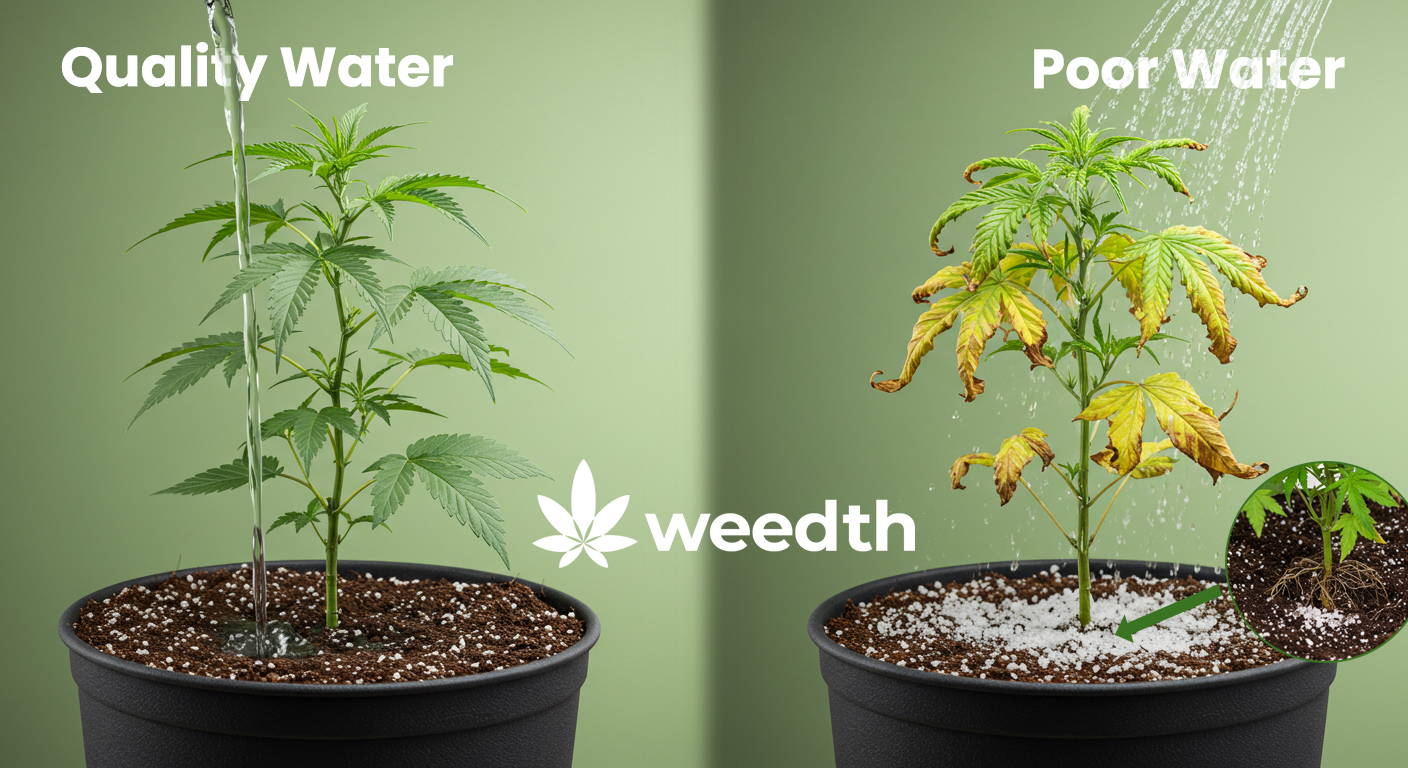
Is Tap Water Safe for Cannabis Plants?
Yes, tap water is safe for many cannabis plants, and a great number of lawful home gardens can use it without buying a reverse-osmosis system. The useful question is not simply whether the water comes from a faucet. We need to know what the water carries into the root zone: its alkalinity, electrical conductivity, calcium, magnesium, sodium, chloride, disinfectant, and consistency through the year.
If your municipal water has a moderate mineral load, low sodium, manageable alkalinity, and no unusual contamination warning, it may be a practical and economical starting point. If it is very hard, salt-softened, highly alkaline, or already consumes most of the electrical-conductivity range you planned for nutrients, it may need blending or treatment. The growing medium matters too. A large soil container can buffer source-water variation that would become obvious much faster in a small coco pot or recirculating hydroponic reservoir.
Important: “Safe to drink” and “ideal for a controlled root zone” answer different questions. Drinking-water standards protect people from regulated health risks. Plant suitability also depends on salts, alkalinity, nutrient balance, irrigation frequency, drainage, and the growing system. Do not assume that a water-quality report replaces a crop-focused water test.
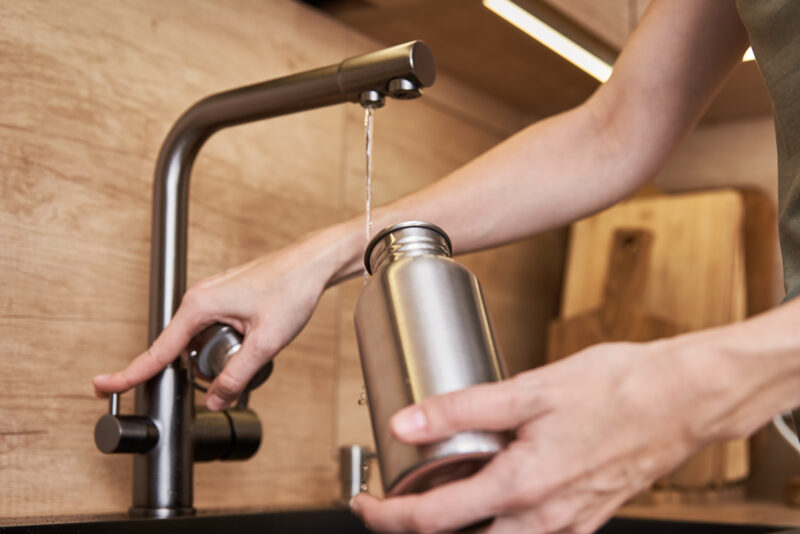
Is Tap Water Safe for Cannabis Plants? The Short Answer
Most growers do not need to fear ordinary tap water. Cannabis does not require laboratory-pure water to grow well. It needs water whose chemistry works with the medium, fertilizer, container, drainage, and irrigation routine. In many soil and peat-based gardens, stable municipal water can be easier to manage than ultra-pure water because it may already contain useful calcium, magnesium, and a modest amount of buffering.
Problems begin when one measurement is treated as the entire answer. A pH of 7.8 may look alarming, yet water with low alkalinity can be easy to adjust and may have little long-term effect on the medium. Another supply may read pH 7.2 but contain enough bicarbonate alkalinity to push the root zone upward week after week. Two faucets can therefore show similar pH readings and behave very differently.
| Tap-water situation | What it usually means | Best next step |
|---|---|---|
| Stable, modest mineral content | Often usable as-is after nutrients are mixed and the finished solution is checked | Record baseline pH and EC, read the water report, and watch root-zone trends |
| Hard but low in sodium | May contribute useful calcium and magnesium, but alkalinity or scale can become the limiting issue | Test hardness and alkalinity separately before buying a filter |
| Salt-softened household water | Calcium and magnesium may have been exchanged for sodium | Use an unsoftened bypass, blend with low-mineral water, or choose another source |
| High starting EC | Leaves less room for a balanced nutrient solution and can increase salt accumulation | Obtain a laboratory breakdown, then consider blending or reverse osmosis |
| Chloraminated water | Disinfectant is more persistent than free chlorine | Do not rely on an open bucket alone; confirm the disinfectant and use appropriate treatment only if needed |
| Seasonally variable supply | Source, disinfectant, mineral content, or treatment can change during the year | Keep a baseline log and retest when the source changes or plant behavior shifts |
“Can I fill the watering can from the faucet and use it immediately?”
Question sent by: Ryan Coleman, via email.
Often, yes. If the water is not extremely hot or cold, its chemistry is suitable, and your nutrient instructions do not require a different mixing procedure, direct use can be perfectly reasonable. The important habit is to test the finished irrigation solution after adding nutrients. Source-water pH alone does not tell us what reaches the roots.
What “Tap Water” Can Actually Mean
Tap water is a delivery point, not a chemical description. It may begin as reservoir water, river water, groundwater, a blended municipal source, desalinated water, or a private well. A utility may disinfect it with free chlorine or chloramine, adjust corrosion control, blend sources seasonally, and alter treatment in response to weather or infrastructure work. Inside the building, the water may then pass through old pipes, a whole-house filter, or an ion-exchange softener before reaching the faucet.
That is why advice such as “tap water is always fine” or “never use tap water” is too shallow. The name does not tell us the mineral load. We need a small source-water profile.
Source-water profile
A source-water profile is a record of the water before fertilizer is added. At minimum, it includes pH, alkalinity, EC, hardness, calcium, magnesium, sodium, and chloride. It should also identify the disinfectant and any locally relevant concern such as iron, manganese, boron, fluoride, or heavy metals.
Municipal Water
Municipal water is treated and monitored for public use, which makes it convenient and microbiologically dependable in many locations. Growers can often obtain an annual water-quality report from the utility. In the United States, community water systems provide a Consumer Confidence Report containing the source, detected regulated contaminants, compliance information, and treatment details.
The report is a strong first step, but it may not contain every horticultural measurement we want. Alkalinity, hardness, calcium, magnesium, sodium, and chloride might be listed, or they might require a separate utility data sheet or irrigation-water laboratory test. A report also describes the distribution system, not necessarily the exact chemistry after water passes through your building’s plumbing.
Private Well Water
Well water is often called tap water because it comes from the faucet, but responsibility for testing usually belongs to the property owner. It can be excellent irrigation water, or it can carry high alkalinity, hardness, sodium, iron, manganese, sulfur compounds, nitrate, or microbial contamination. A clear appearance and pleasant taste do not confirm suitability.
If the source is a private well, use an accredited laboratory and follow local guidance for drinking-water safety as well as agricultural interpretation. Retest after flooding, construction, well service, changes in taste or odor, or an unexplained shift in crop behavior.
What to Remember: Test at the point where you fill the reservoir or watering can. A city report cannot show what a household softener, old plumbing, storage tank, or local filter has changed.
The Measurements That Decide Whether Tap Water Works
You do not need to become a water chemist before watering a plant. You do need to separate measurements that look similar but answer different questions. The table below is the practical map.
| Measurement | What it tells us | What it cannot tell us alone | Why it matters |
|---|---|---|---|
| pH | How acidic or basic the sample is at that moment | How strongly the water will resist pH change | Influences nutrient-solution chemistry and the final irrigation target |
| Alkalinity | The acid-neutralizing capacity, usually reported as mg/L CaCO3 | The total amount of every dissolved salt | Predicts whether repeated irrigation may drive medium pH upward |
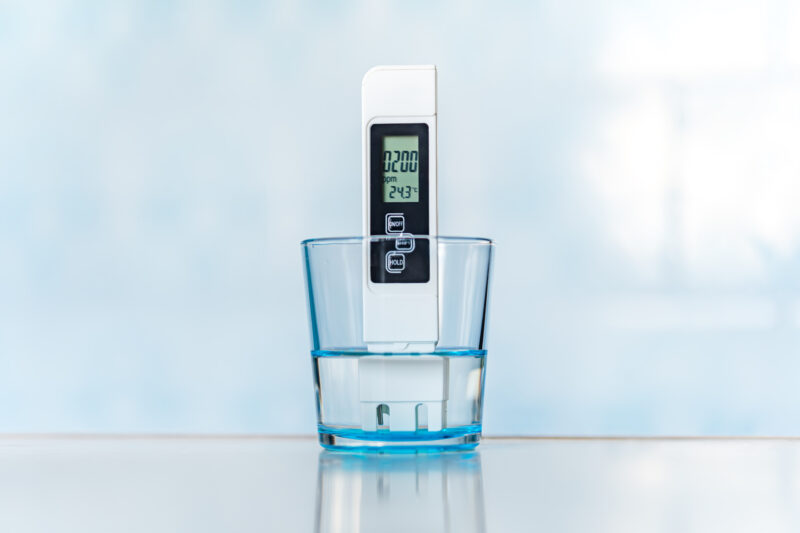
| EC | The total ionic conductivity of the water | Which ions create that conductivity | Shows how much mineral load exists before fertilizer is added |
| TDS or ppm | An estimated or laboratory-measured dissolved-solids value | A complete nutrient or contaminant identity | Useful for trends, but meter conversion scales can differ |
| Hardness | Mostly calcium and magnesium concentration | Whether alkalinity or sodium is high | Affects fertilizer balance, scaling, and how much Ca/Mg supplementation is sensible |
| Sodium and chloride | Specific ions that can accumulate and contribute to salinity | The behavior of the entire nutrient solution | Especially important with softened water, small containers, and recirculating systems |
pH Is Important, but Alkalinity Explains the Long Game
A pH pen gives a snapshot. Alkalinity tells us how difficult that snapshot is to move and how repeated watering may affect the root zone. This is one of the most useful distinctions in the entire subject.
Imagine two water samples that both read pH 8.0. The first has low alkalinity and changes easily when fertilizer is added. The second contains a large bicarbonate reserve and resists acidification. It may require much more acid, add more counter-ions to the solution, and steadily push a peat or coco root zone upward. The pH number is the same, but the management problem is not.
Alkalinity is not the same as high pH
Alkalinity is the water’s capacity to neutralize acid, commonly expressed as milligrams per liter of calcium carbonate. Bicarbonate and carbonate are major contributors. A high-pH sample can have low alkalinity, while water with a less dramatic pH can still carry enough alkalinity to change the medium over time.

Useful Working pH Ranges
Many soil and peat-based cannabis programs finish the irrigation solution around pH 6.0 to 6.8. Many coco, mineral-wool, and hydroponic programs work closer to roughly 5.5 to 6.3. These are working ranges, not universal commandments. The fertilizer, medium chemistry, root-zone measurements, plant stage, and manufacturer’s instructions all matter.
Do not automatically adjust plain source water before adding nutrients. Fertilizers often change pH substantially. Mix the solution in the correct order, allow it to stabilize when the product instructions call for it, then measure EC and pH. Adjust pH last.
“My tap water is pH 8.1. Does that automatically make it unsafe?”
Question sent by: Sarah Nguyen, via contact form.
No. First check alkalinity and the pH of the finished nutrient solution. Low-alkalinity water can begin at a high pH and still be easy to manage. High alkalinity is the stronger warning that repeated irrigation may move the root zone upward.
Pro Tip: When pH keeps rebounding after adjustment, stop adding acid by guesswork. Check alkalinity, confirm that the meter is calibrated, and make sure the solution has finished reacting before taking another reading.
EC, TDS, and the Mineral Load Before Nutrients
Electrical conductivity measures how well the water conducts electricity, which rises as dissolved ions increase. It is an efficient screening tool because it shows how much ionic material the source water contributes before fertilizer enters the bucket.
EC does not reveal the identity of those ions. An EC of 0.5 mS/cm might include useful calcium and magnesium, unwanted sodium and chloride, or a mixture of both. That is why EC tells us when to investigate, not what treatment to buy.
EC and ppm are not interchangeable labels
EC is a direct conductivity measurement, commonly shown in mS/cm or µS/cm. Many handheld “ppm” meters convert EC into an estimated TDS value. Different conversion factors can make two meters display different ppm numbers for the same water. Record the EC whenever possible and note the meter scale if you also use ppm.
A Practical Source-Water Interpretation
Instead of treating one number as a universal safe limit, think in terms of nutrient headroom:
| Source-water EC | Planning interpretation |
|---|---|
| Very low | Plenty of room for fertilizer, but little natural calcium, magnesium, or buffering may be present. The nutrient program must supply what the crop needs. |
| Low to moderate | Often the easiest range to work with when the ions are balanced and alkalinity is manageable. |
| Moderately high | Obtain an ion breakdown. The water may still work in soil, but concentrated feeding and small containers leave less margin. |
| High | Salt accumulation, nutrient imbalance, or reduced fertilizer flexibility becomes more likely. Blending or reverse osmosis may be justified. |
Container size and irrigation frequency change the consequences. A high-mineral source applied frequently to a small coco container can concentrate salts quickly. A large, well-drained soil bed may respond more slowly, though long-term sodium and bicarbonate loading still matters.
“My meter says 280 ppm from the faucet. Is that good or bad?”
Question sent by: GreatLakesGarden, via Facebook page.
It is a clue, not a verdict. Confirm the meter’s conversion scale, record the EC, and look for calcium, magnesium, sodium, chloride, and alkalinity in a laboratory report. Two 280 ppm supplies can behave very differently.
Hard Water Is Not Automatically Bad Water
Hardness mainly describes dissolved calcium and magnesium. Those are essential plant nutrients, so hard water is not automatically an enemy. In fact, a stable source with useful calcium and magnesium may reduce the need for a separate supplement.
The difficulty is balance. Hard water can also come with high bicarbonate alkalinity, scale formation, clogged emitters, and less room for nutrients. A fertilizer designed for soft water may provide more calcium and magnesium than a hard-water source requires. Another program may offer a hard-water formulation with reduced amounts. Read the source analysis before adding a supplement simply because “cannabis needs Cal-Mag.”
Remember: A white mineral ring on a pot or humidifier confirms dissolved minerals, not a calcium deficiency in the plant. Diagnose the water and the root zone before adding more mineral salts.
“Should I add Cal-Mag to hard tap water?”
Question sent by: Dylan Hayes, via email.
Not automatically. Find the calcium and magnesium concentrations in the source, then compare them with the complete fertilizer program. More is not always safer. Excess additions raise EC and can distort the balance among potassium, calcium, and magnesium. Our guide to too much Cal-Mag in cannabis explains the other side of that decision.
Chlorine and Chloramine: Similar Purpose, Different Behavior
Municipal systems use disinfectants to keep water microbiologically safe as it travels through the distribution network. Free chlorine is reactive and comparatively easy to remove. Chloramine, usually formed by combining chlorine and ammonia, persists longer in pipes. This difference matters because a method that reduces free chlorine may do little for chloramine.
Does Letting Tap Water Sit for 24 Hours Work?
It can reduce free chlorine, especially with a wide surface area and active aeration. It is not a dependable chloramine treatment. Chloramine is intentionally more persistent. Time, temperature, pH, organic matter, and container shape also influence the result, so the popular “24-hour rule” should not be treated as a universal measurement.
First ask the utility which disinfectant it uses. If the water is chloraminated and treatment is genuinely necessary, use a filter or neutralization method specifically rated for chloramine and sized for the actual flow and contact time. A generic carbon filter may make water taste better without delivering the chloramine reduction you assumed.

Will Chlorine Kill Every Beneficial Microbe?
That claim is too absolute. Drinking-water disinfectant residuals are designed to control microbes, but their effect in a container depends on concentration, organic matter, contact time, soil volume, microbial habitat, and irrigation pattern. A mature biologically active medium is not a sterile glass of water. At the same time, growers deliberately maintaining microbial inoculants, compost teas, or aquaponic biology may reasonably choose to reduce the disinfectant before use.
Measure the actual residual or obtain utility data. Do not build an expensive treatment system around a dramatic generalization.
“I leave water out overnight. How do I know whether that is doing anything?”
Question sent by: Rachel Monroe, via email.
Check the utility report for chlorine or chloramine, then use an appropriate residual test before and after standing. If chloramine is used, an open bucket is not a reliable plan. The test should decide the method, not the ritual.
Do not improvise disinfectant chemistry
Acids, reducing agents, and concentrated water-treatment products can create dosing errors, dangerous reactions, or an unsuitable nutrient solution. Use only products intended for the purpose, follow the label, confirm the residual, and keep chemicals away from children, pets, and incompatible materials.
The Water-Softener Trap
Household “soft water” sounds ideal for plants, but conventional ion-exchange softeners often remove calcium and magnesium by replacing them with sodium. The water feels softer and produces less scale, yet it can be worse for repeated irrigation.
Sodium contributes to salinity without serving as a primary cannabis nutrient. In soil, an unfavorable sodium balance can degrade aggregation and infiltration, especially in clay-rich ground. In containers and recirculating systems, sodium can accumulate as water is used by the plant. Chloride may also rise depending on the system and regeneration chemistry.
Do not confuse softened water with filtered water
A sodium-based softener changes mineral composition. It is not the same as carbon filtration or reverse osmosis. If a house has a softener, locate an unsoftened cold-water line or outdoor spigot and test both sides before choosing the irrigation source.
“The bathroom tap tests lower for hardness than the outdoor faucet. Should I use it?”
Question sent by: Stefan Keller, via contact form.
Not until you check sodium and identify the plumbing route. The bathroom line may pass through an ion-exchange softener while the outdoor faucet bypasses it. Lower hardness does not automatically mean lower irrigation risk.
Other Tap-Water Components Worth Knowing
Sodium
Sodium is one of the first numbers to inspect when source EC is high or a softener is present. Risk depends on concentration, irrigation volume, drainage, medium, and the balance with calcium and magnesium. In field soil, sodium adsorption ratio can help evaluate infiltration risk. In a small indoor container, repeated accumulation may matter before a field-scale soil guideline seems relevant.
Chloride
Chloride is an essential micronutrient at low concentration, but excess contributes to salinity and can injure sensitive foliage or roots. It may arrive from source geology, road salt, treatment, fertilizers, or softened water. A basic EC meter cannot separate it from useful nutrients.
Calcium and Magnesium
These hardness minerals can be useful. Their ratio and absolute concentrations matter more than the word “hard.” Include what the water supplies when building the nutrient program rather than adding the same supplement to every source.
Bicarbonate and Carbonate
These are major contributors to alkalinity. Repeated applications can neutralize acidity in the medium and raise root-zone pH. High alkalinity also increases the amount of acid required for correction.
Iron and Manganese
Well water can contain soluble iron or manganese that oxidizes after exposure to air, leaving stains or sediment. These elements may clog emitters, coat equipment, or complicate nutrition. A laboratory analysis and appropriate pretreatment are more useful than guessing from color alone.
Lead, Copper, and Building Plumbing
A municipal report reflects the distribution system, while lead and copper exposure can also depend on premise plumbing, stagnation time, corrosion control, and fixture materials. Follow public-health guidance for drinking-water safety. For irrigation decisions, sample the actual faucet after the appropriate flushing protocol recommended by the laboratory or authority.
Fluoride and Boron
These may be relevant in certain sources and for sensitive plants, but they are often blamed without a measurement. Request them when local geology, utility treatment, recycled water, or persistent unexplained symptoms make them reasonable suspects.
Master Advice: Never buy a filter to solve an unidentified ion. Carbon, sediment filtration, softening, and reverse osmosis solve different problems. The water analysis should choose the treatment.
How the Growing Medium Changes the Answer
The same tap water can be easy in one garden and frustrating in another. Buffering, container size, drainage, irrigation frequency, and recirculation determine how quickly source-water chemistry appears at the roots.
| Growing system | Tap-water tolerance | What deserves extra attention |
|---|---|---|
| Mineral soil or large organic bed | Often more forgiving when structure and drainage are good | Long-term alkalinity, sodium loading, soil pH, and runoff protection |
| Peat-based potting mix | Can buffer moderate variation, but repeated bicarbonate input changes pH | Medium pH trend, fertilizer acidity, container size, and leaching fraction |
| Coco coir | Works well with suitable tap water, but small volumes respond quickly | Starting EC, Ca/Mg balance, sodium, irrigation frequency, and drainage EC |
| Mineral wool or drain-to-waste hydroponics | Requires deliberate nutrient-solution control | Source EC, final EC and pH, emitter consistency, and drain measurements |
| Recirculating hydroponics or DWC | Least forgiving of accumulating unwanted ions | Full ion profile, reservoir trends, temperature, oxygen, sanitation, and water replacement |
| Seedlings and small propagation cells | Less buffering volume means less margin for excess salts | Low EC, gentle nutrition, even moisture, and calibrated measurements |
Soil and Living Soil
A healthy, adequately sized soil system can buffer short-term variation. That does not make it immune to high alkalinity or sodium. If irrigation water steadily adds bicarbonate, the soil pH can climb. If it steadily adds salts and drainage is poor, those salts remain. Periodic soil or saturated-media testing is more informative than repeatedly changing the water based on leaf color alone.
Biologically active soil also changes how growers think about disinfectant. Some choose carbon filtration to protect deliberately cultivated microbial processes. Others use ordinary municipal water successfully because the disinfectant residual is modest and the soil system is large and biologically resilient. Measure the source and observe the system rather than treating either experience as universal.
Coco and Soilless Mixes
Coco is usually managed with frequent fertigation and a defined nutrient solution. A high starting EC reduces room for fertilizer and can hide unwanted sodium or chloride. Calcium and magnesium in tap water may help or may complicate a formula already designed to supply them. Compare source water with the nutrient manufacturer’s assumptions.
Hydroponic Reservoirs
In recirculating systems, plants remove water and nutrients at different rates. Ions that the plant does not use efficiently can concentrate. Source-water chemistry therefore matters more than a single initial reading. Track reservoir EC, pH, temperature, water replacement, and top-off volume. If sodium or chloride is high, repeatedly topping off with the same water can increase their concentration even when the EC appears manageable at first.
“The same tap water worked in soil. Why is it difficult in DWC?”
Question sent by: BlueRoomNotes, via Facebook page.
Soil provided buffering, exchange sites, a larger biological system, and drainage. In DWC, the roots are directly exposed to a recirculating solution, and unused ions can accumulate. The source-water profile, reservoir management, and nutrient formula must work together much more precisely.
How to Test Tap Water Without Buying Everything at Once
Start with the free information, then buy only the measurement that changes a decision.
Step 1: Find the Water Report
Search the utility’s website for its annual water-quality report and a current mineral analysis. Record:
- water source and whether sources are blended;
- chlorine or chloramine;
- pH and alkalinity;
- hardness, calcium, and magnesium;
- sodium and chloride;
- total dissolved solids or conductivity;
- seasonal treatment notices; and
- any violation or public-health advisory.
If an important horticultural number is missing, call the utility or order an irrigation-water panel. Do not confuse a report’s regulatory maximum with the typical value delivered to your address.
Step 2: Measure Baseline EC and pH
Use calibrated meters and a clean sample container. Let cold water run according to the sampling purpose. A plant-management sample and a lead-compliance sample may require different collection protocols, so follow the laboratory’s instructions when health-related contaminants are being tested.
Step 3: Test Alkalinity
This is the measurement many home growers skip. A laboratory result is best for the full profile. A quality titration kit can help with routine trend checks when used correctly. Report alkalinity in a clear unit, commonly mg/L as CaCO3.
Step 4: Compare the Finished Nutrient Solution
Mix nutrients in the labeled order. Measure the final EC and pH, then compare them with the source. This shows how much the fertilizer added and how strongly the water resisted the change.
Step 5: Watch the Root Zone
Source water is only the beginning. Record irrigation input and a consistent root-zone indicator appropriate to the medium, such as a soil test, saturated-media extract, pour-through sample, or drain trend. Random runoff from a dry channel is not automatically representative.
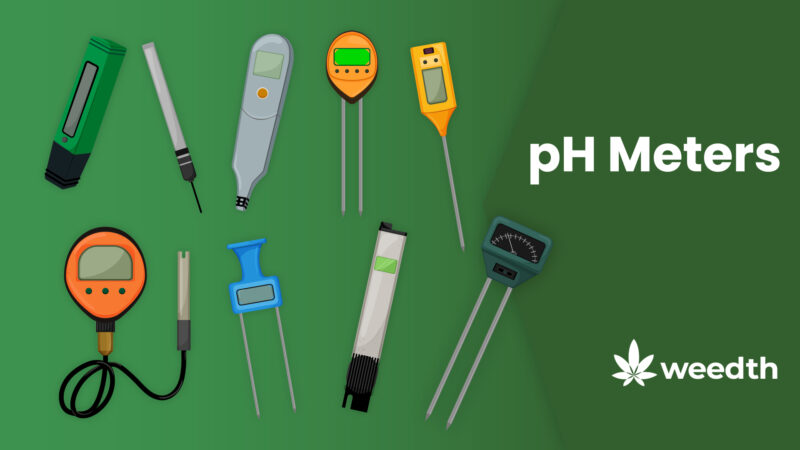
“Do I need both a pH meter and an EC meter?”
Question sent by: Marcus Chen, via email.
They answer different questions. The pH meter shows acidity or basicity. The EC meter shows total ionic conductivity. For repeatable nutrient mixing, both are useful. Neither identifies the individual ions, so a laboratory report still matters when the source is difficult.
A Simple Testing Schedule
| When | What to check |
|---|---|
| Before the first grow | Utility report or laboratory panel, source pH, EC, alkalinity, hardness, calcium, magnesium, sodium, chloride, and disinfectant |
| Each nutrient mix | Source EC trend, final EC, final pH, water temperature, and unusual color or odor |
| Weekly or on a stable schedule | Root-zone or drain trend using the same sampling method |
| After a utility notice or seasonal source change | Source EC, pH, disinfectant, and any parameter identified in the notice |
| When repeated symptoms resist normal correction | Full water profile, medium analysis, meter calibration, mixing order, irrigation distribution, and drainage |
Should You Filter Tap Water?
Filtering is useful when it solves a measured problem. It is unnecessary expense and maintenance when the original water already works.
Sediment Filtration
A sediment filter removes particles that can clog emitters or protect later filter stages. It does not meaningfully lower dissolved sodium, hardness, alkalinity, or EC. Choose micron rating and flow capacity around the equipment, then monitor pressure loss.
Activated Carbon
Carbon can reduce free chlorine and various compounds associated with taste and odor. Chloramine reduction requires an explicit performance claim, appropriate media, sufficient contact time, and realistic flow. Replace cartridges according to treated volume and measured breakthrough rather than appearance alone.
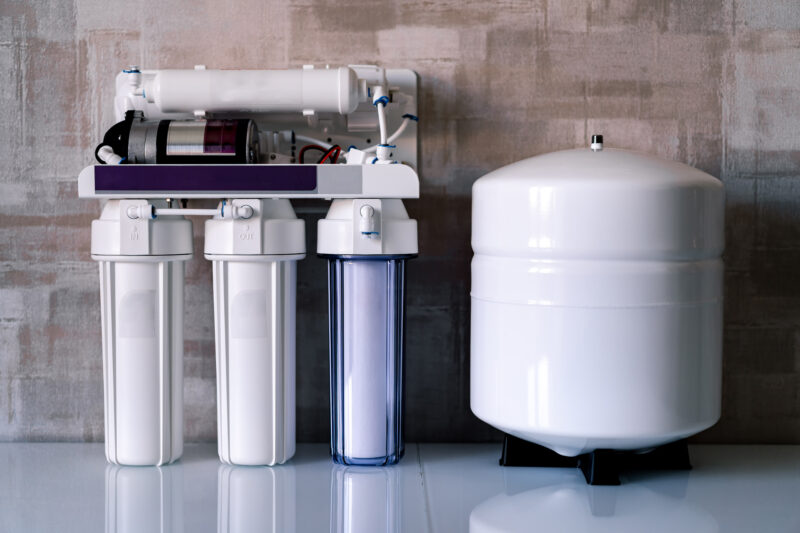
Reverse Osmosis
Reverse osmosis can remove a large portion of dissolved minerals and create a consistent low-EC base. It becomes valuable when source EC, sodium, chloride, alkalinity, or an identified contaminant makes the original supply difficult to formulate around.
RO also has costs. The system needs adequate pressure, prefiltration, membrane care, storage, and sanitation. It produces a concentrate stream and may deliver water slowly. Very low-mineral water has little buffering and does not supply meaningful calcium or magnesium, so the nutrient program must be complete. RO water is not “more alive,” and a pH reading from nearly pure water can be unstable and easy to misinterpret.
Blending Tap Water with RO or Rainwater
Blending can lower mineral load without discarding the useful contribution of the entire tap supply. If both waters are stable, a simple starting estimate is:
Estimated blend EC = (tap fraction × tap EC) + (low-mineral fraction × low-mineral EC)
A 50:50 blend of 0.8 EC tap water and 0.05 EC RO water would be approximately 0.425 EC before nutrients. This linear estimate is useful for EC planning. pH does not blend linearly, and alkalinity must be considered separately.
“Is bottled water safer than tap water?”
Question sent by: PrairieRoot, via contact form.
Not automatically. Bottled water may be spring water, purified water, mineral water, or municipal water treated by a bottler. Its mineral content can vary, it costs more, and the label may not provide a full analysis. Compare a report and measurements instead of comparing packaging.
Advice: If the source is close to workable, blending is often more economical than treating every gallon to near-zero EC and rebuilding the mineral profile from scratch.
What Does Not Reliably Fix Tap Water?
Use a measured treatment ladder
- Read the current utility report.
- Test source pH, EC, and alkalinity.
- Identify chlorine or chloramine.
- Check calcium, magnesium, sodium, and chloride.
- Match treatment to the measured problem.
- Verify the result after the filter or blend.
Do not treat water by folklore
- Do not assume every bucket must sit for 24 hours.
- Do not boil large volumes to “purify” irrigation water.
- Do not use softened water because its hardness number is lower.
- Do not add acids or neutralizers without measurement.
- Do not judge suitability from pH or ppm alone.
- Do not buy RO before calculating the actual need.
Boiling
Boiling is impractical for garden volumes, consumes energy, concentrates nonvolatile dissolved salts as water evaporates, and creates burn risk. It is not a substitute for a water analysis or suitable filtration.
Leaving Every Container Open
Standing may reduce free chlorine, but it does not reliably remove chloramine, alkalinity, sodium, chloride, or hardness. Open reservoirs can also collect dust, pests, and debris. Cover stored water appropriately and provide circulation when the system requires it.
Adding Acid Until the Pen Shows the Desired Number
This may temporarily reach a target pH while ignoring high alkalinity, acid dose, added ions, and rebound. Commercial acid injection is a chemistry and safety task, not a blind recipe. For persistent high alkalinity, obtain professional or laboratory guidance and use a product intended for horticultural water treatment.
Assuming a Carbon Filter Lowers EC
Ordinary activated carbon usually does not remove the dissolved mineral salts responsible for hardness, alkalinity, sodium, and EC. Measure before and after treatment so the filter receives credit only for what it actually changes.
How to Mix Nutrients with Tap Water
The water may be suitable while the mixing routine is not. Use the nutrient label as the authority, because concentrated components can react when combined incorrectly.
- Start with a clean container and known water volume. Record source EC and temperature when consistency matters.
- Add silica first only when the product instructions require it. Dilute and allow it to disperse before other concentrates.
- Add base nutrients separately. Never pour concentrated parts directly into each other.
- Add supplements only when the complete program and source analysis justify them.
- Mix thoroughly. Give reactions and temperature compensation time to settle.
- Measure final EC. This confirms the total ionic concentration reached the planned range.
- Adjust pH last. Use small measured additions of a suitable product and mix between readings.
- Record the recipe and plant response. Change one major variable at a time.
“Should I pH the tap water before adding nutrients?”
Question sent by: Evelyn Hart, via email.
Usually no. Nutrients can change pH substantially, so premature adjustment may waste acid or create an overshoot. Mix products in their required order, measure the finished solution, and adjust last unless the manufacturer gives a different procedure.
If you are deciding whether plain water or nutrients belong in the next irrigation, continue with our guide to adding nutrients every time you water cannabis. Water chemistry and feeding frequency should be planned together.
Tap Water for Seedlings and Clones
Young plants occupy a small root volume and have less margin for high salts. A source that works for a large established soil plant may be too mineral-heavy for delicate propagation cells once starter nutrients are added. Use a light, well-aerated medium, modest fertility, even moisture, and a lower total EC appropriate to the propagation method.
Do not respond to every pale seedling by adding calcium, magnesium, and fertilizer. Cold roots, saturated media, weak light, damaged roots, excessive EC, and inappropriate pH can look like hunger. Check the environment and root-zone moisture first.
“Do seedlings need distilled or RO water?”
Question sent by: Jordan Price, via Facebook page.
No. Suitable low-to-moderate-mineral tap water can work well. RO becomes useful when the tap source is too saline, high in unwanted ions, or leaves no room for a gentle starter solution. Ultra-pure water still needs a complete, correctly diluted nutrient plan when feeding begins.
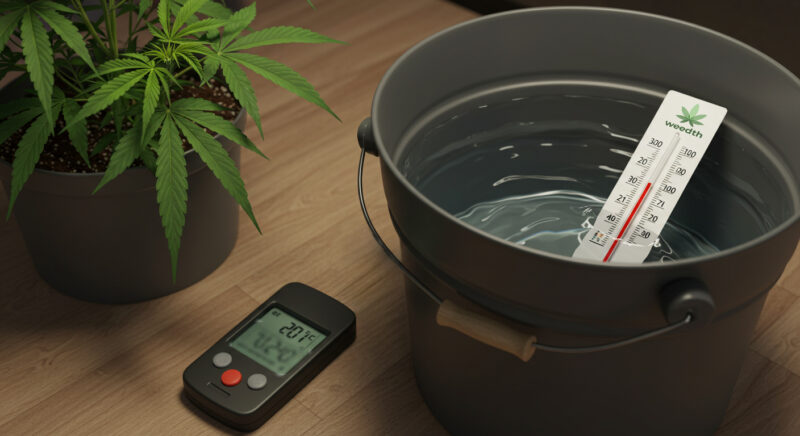
Temperature and Storage Matter Too
Even chemically suitable tap water can cause problems if it is extremely cold, hot, stagnant, or stored poorly. Very cold water can temporarily slow root activity. Warm reservoirs hold less dissolved oxygen and encourage biological growth. Aim for a root-zone-appropriate temperature and avoid placing storage containers where light and heat create a warm microbial incubator.
Use opaque, clean, food-safe containers when water must be stored. Provide circulation where appropriate, keep lids secure, and clean the reservoir and tubing on a defined schedule. Do not store mixed nutrients longer than their instructions allow. Organic inputs and biological products may have very different stability from mineral solutions.
“Can I keep a week of tap water in an open tote?”
Question sent by: ClearCanopy, via X.
A covered, clean, appropriately circulated reservoir is safer than an open tote collecting dust and insects. Storage time depends on temperature, sanitation, disinfectant, and whether nutrients or biological products have been added. Prepare only the volume you can keep stable and clean.
Signs That Tap Water May Be Part of the Problem
No leaf symptom proves “bad tap water.” Source-water trouble usually appears as a pattern: repeated pH drift, rising root-zone EC, scale, clogged emitters, unexplained sodium or chloride accumulation, or the same problem returning after otherwise sensible corrections.
| Pattern | Possible water connection | How to confirm | First response |
|---|---|---|---|
| Medium pH keeps rising | High alkalinity or a fertilizer with insufficient acidity for the source | Test alkalinity, input, and medium pH trends | Review fertilizer choice, blending, or measured alkalinity treatment |
| Root-zone EC rises despite modest feeding | High source EC, sodium, chloride, poor drainage, or excessive dry-back | Compare source, input, and consistent drain or media tests | Correct irrigation and drainage; identify ions before treatment |
| White crust and emitter blockage | Hardness, bicarbonate scale, or fertilizer precipitation | Inspect deposits and test hardness and alkalinity | Clean equipment safely and correct source or mixing conditions |
| Soil seals and drains slowly outdoors | Sodium imbalance may be degrading clay structure | Laboratory water and soil analysis including SAR where appropriate | Stop the sodium source and follow soil-specific remediation guidance |
| Reservoir drifts after repeated top-offs | Unused ions accumulating in a recirculating system | Track top-off volume, reservoir EC, and laboratory ion profile | Change solution strategy or use a more suitable source |
| Problem follows one faucet only | Softener, filter, heater, or plumbing route differs | Test faucets separately and map the plumbing | Use the correct unsoftened or treated line |
What to Remember: Leaves show the result of many interacting conditions. Confirm the water at the source, the solution after mixing, and the root zone before blaming the faucet.
How to Choose the Least Complicated Water Solution
Use this order. It keeps the budget focused and prevents treatment from creating a new problem.
Option 1: Use Tap Water as It Is
Choose this when the source is stable, sodium and chloride are low, alkalinity is manageable, EC leaves nutrient headroom, and the plants and medium show stable trends. This is the simplest and often the best answer.
Option 2: Adjust the Finished Solution
Choose this when the mineral profile is acceptable and only the final nutrient-solution pH needs modest correction. Measure alkalinity so the acid dose remains sensible.
Option 3: Remove Sediment or Disinfectant
Choose a sediment or certified carbon system when particles, chlorine, or chloramine are the identified problem. Match the unit to the claim, flow, capacity, and replacement schedule.
Option 4: Blend
Blend tap with tested low-mineral water when reducing EC, alkalinity, sodium, or chloride partway creates a workable and economical source.
Option 5: Use Reverse Osmosis
Use RO when the full analysis shows that dissolved minerals make the source consistently difficult, or when a precise recirculating system needs a repeatable low-mineral base. Budget for wastewater, storage, pressure, maintenance, and complete remineralized nutrition.
“At what ppm do I absolutely need RO?”
Question sent by: Nicole Avery, via email.
There is no honest universal cutoff. The same ppm can represent different ions, and soil has a different margin from DWC. RO becomes justified when a laboratory profile shows problematic minerals, source EC leaves inadequate nutrient headroom, or repeated root-zone evidence confirms accumulation that irrigation management cannot solve.
Frequently Asked Questions About Tap Water and Cannabis
Can cannabis grow with ordinary city water?
Yes. Many lawful gardens use municipal water successfully. Confirm the source profile, mix nutrients correctly, and monitor the root zone rather than assuming every city supply behaves alike.
Should tap water sit for 24 or 48 hours?
Only when you have identified free chlorine and standing is a practical reduction method. It is not reliable for chloramine and does not remove dissolved salts, hardness, sodium, or alkalinity.
Is chloramine worse than chlorine for cannabis?
It is more persistent and requires a different removal strategy. Whether it creates a meaningful crop problem depends on residual concentration and the growing system. Identify and measure it before treating.
Can an aquarium dechlorinator be used?
Do not assume products intended for aquarium water belong in a crop nutrient solution. They may add reducing agents or other compounds that change chemistry. Use only a product suitable and lawful for the cultivation application, follow its label, and verify the result.
Does bubbling tap water lower pH?
Aeration can change dissolved gases and move pH, especially as carbon dioxide equilibrates with air. It does not remove alkalinity or unwanted dissolved salts. Measure after the water reaches the condition in which you will mix nutrients.
Is rainwater better than tap water?
Collected rainwater is often low in minerals, but cleanliness depends on the atmosphere, roof, gutters, storage, animals, and collection design. Test it, use a first-flush and clean storage strategy where appropriate, and follow local collection rules. Natural does not mean automatically clean.
Is distilled water good for cannabis?
It offers a very low-mineral base but is usually expensive and unnecessary for garden volumes. It supplies essentially no useful hardness minerals or buffering, so nutrition must be built accordingly.
Can I use hot tap water to warm the nutrient solution?
Use caution. Hot water may draw more material from plumbing and can overshoot a root-safe temperature. A clean reservoir brought gradually to the intended temperature is easier to control.
Why does tap-water pH change after sitting?
Dissolved carbon dioxide can move into or out of the water, temperature can change, and chemical equilibria continue. This is another reason to measure under repeatable conditions and interpret pH together with alkalinity.
Why is the runoff EC higher than the input?
Fertilizer salts, evaporation, root uptake, dry-back, uneven irrigation, and source-water minerals can concentrate in the medium. A single runoff sample is not enough to assign blame. Standardize sampling and inspect irrigation distribution and drainage.
Can tap water cause nutrient lockout?
Tap water can contribute when high alkalinity drives medium pH or when salts accumulate, but “lockout” is not a diagnosis. Root disease, saturated media, incorrect feeding, temperature, and damaged roots can create similar symptoms.
Do I need to flush plants because I use tap water?
No routine flushing decision should be based only on the source name. Use measured root-zone EC, nutrient strategy, medium, plant health, and drainage evidence. Excessive leaching wastes water and can move nutrients into the environment.
A Final Tap-Water Checklist
Before the faucet becomes your irrigation source
- Confirm cultivation is lawful and follow local water, drainage, and electrical rules.
- Find the current utility report or order an accredited irrigation-water test.
- Identify chlorine or chloramine.
- Record pH, alkalinity, EC, and hardness.
- Check calcium, magnesium, sodium, and chloride individually.
- Determine whether the chosen faucet passes through a water softener.
- Match the source to soil, coco, hydroponics, and container size.
- Mix nutrients in the labeled order and adjust pH last.
- Calibrate pH and EC meters and keep a repeatable log.
- Monitor the root-zone trend, not only the source-water reading.
- Buy filtration only for a measured problem.
- Verify water quality again after any filter, blend, or treatment.
The Weedth Answer
Tap water is not a compromise by default. When its mineral profile fits the growing system, it can be the most practical, affordable, and consistent water available. The mistake is not using water from a faucet. The mistake is asking one pH or ppm number to describe everything inside it.
Begin with the report. Measure pH, alkalinity, EC, hardness, sodium, and chloride. Identify the disinfectant. Then look at the finished nutrient solution and the root zone. If the numbers and the plant remain stable, keep the system simple. If a specific parameter is working against you, solve that parameter with the least complicated treatment that actually changes it.
For the complete irrigation routine, container moisture checks, input and drainage interpretation, continue with Watering Indoor Plants. Water quality tells us what enters the pot. Watering technique decides how the root zone receives it.
Scientific and Official References
- U.S. Environmental Protection Agency: Chloramines in Drinking Water
- U.S. Environmental Protection Agency: Understanding Your Annual Water Quality Report
- Penn State Extension: A Water Quality Toolkit for Greenhouse and Nursery Production
- Penn State Extension: Interpreting Irrigation Water Tests
- Colorado State University Extension: Irrigation Water Quality Criteria
- Utah State University Extension: Irrigation Water Quality Sampling Guide
- North Dakota State University Extension: Water Softening by Ion Exchange
- USDA Agricultural Research Service: Irrigation Water Acidification and Alkalinity
- Frontiers in Plant Science: Aquaponic and Hydroponic Solutions and Salt Stress in Cannabis sativa
- Plants: Nutrient Deficiency, Solution Chemistry, and Hydroponically Grown Cannabis
Share this article
A quick overview of the topics covered in this article.
- Is Tap Water Safe for Cannabis Plants? The Short Answer
- What “Tap Water” Can Actually Mean
- The Measurements That Decide Whether Tap Water Works
- pH Is Important, but Alkalinity Explains the Long Game
- EC, TDS, and the Mineral Load Before Nutrients
- Hard Water Is Not Automatically Bad Water
- Chlorine and Chloramine: Similar Purpose, Different Behavior
- The Water-Softener Trap
- Other Tap-Water Components Worth Knowing
- How the Growing Medium Changes the Answer
- How to Test Tap Water Without Buying Everything at Once
- A Simple Testing Schedule
- Should You Filter Tap Water?
- What Does Not Reliably Fix Tap Water?
- How to Mix Nutrients with Tap Water
- Tap Water for Seedlings and Clones
- Temperature and Storage Matter Too
- Signs That Tap Water May Be Part of the Problem
- How to Choose the Least Complicated Water Solution
- Frequently Asked Questions About Tap Water and Cannabis
- A Final Tap-Water Checklist
- The Weedth Answer
- Scientific and Official References
Follow us
Latest articles

September 29, 2026
September 29, 2026
September 29, 2026
September 29, 2026