Gypsum vs Lime: They Do Different Jobs
Gypsum and lime can both add calcium to a root zone, but they are not interchangeable amendments. Lime is primarily a soil-acidity correction material. Gypsum is primarily a calcium sulfate amendment that can supply calcium and sulfur without functioning as a conventional liming material. In some sodic soils, gypsum can also provide the calcium needed to displace exchangeable sodium so that sodium can be leached from the profile. That is a specific chemical problem, not a general cure for clay.
For a cannabis grower, the practical decision starts with the problem you are trying to solve. If the soil is too acidic and a soil test recommends lime, use an appropriate liming material. If pH is already acceptable but calcium or sulfur is needed, gypsum may fit better. If a clay soil is structurally poor because of sodicity, gypsum may be part of reclamation. If the problem is simple compaction, overwatering, salinity, poor drainage, or a peat mix that already contains lime, neither material should be added blindly.
This distinction matters because an amendment can be chemically useful and still be the wrong tool for the root zone in front of you. Cannabis needs calcium and magnesium, but plant demand does not turn every calcium-containing product into the same amendment. The soil test, growing medium, water chemistry, and the job you need the amendment to perform come first.
In This Resource
Gypsum vs Lime Decision Guide
- The Direct Answer: Choose the Job Before the Amendment
- What Lime Actually Changes in Soil
- What Gypsum Actually Changes in Soil
- The Measurements That Change the Decision
- A Repeatable Gypsum vs Lime Selection Method
- Common Mistakes and Misleading Rules of Thumb
- How to Verify That the Amendment Worked
- Make the Final Gypsum vs Lime Decision
The Direct Answer: Choose the Job Before the Amendment
The simplest way to separate these materials is to ask what needs to change in the root zone. Agricultural lime contains compounds that neutralize soil acidity. Ground calcitic limestone is mainly calcium carbonate. Dolomitic limestone contains calcium carbonate plus a meaningful magnesium component. Both can raise the pH of an acidic soil when the product, rate, particle size, and incorporation method fit the soil-test recommendation.
Gypsum is calcium sulfate. It supplies calcium and sulfur, but it is not a conventional liming material because sulfate does not neutralize soil acidity the way carbonate does. Gypsum can be useful where calcium is needed without a corresponding pH increase. Its best-known soil-structure role is in sodic soil, where calcium can replace sodium on exchange sites and the displaced sodium can then be moved out of the root zone with suitable-quality water and adequate drainage.
Liming means neutralizing soil acidity
A liming material must have acid-neutralizing capacity. Calcium carbonate and magnesium carbonate provide that capacity. Calcium sulfate supplies calcium and sulfate, but it does not perform the same acid-neutralizing reaction. That is why two products can both contain calcium while doing different chemical jobs.
| Question | Decision |
|---|---|
| Is the soil too acidic? | Use the soil-test lime recommendation. Choose calcitic or dolomitic lime according to magnesium status and the recommendation, not by habit. |
| Is pH acceptable but calcium is low? | Gypsum may be appropriate because it supplies calcium without acting as a strong pH-raising material. Confirm the need first. |
| Is magnesium also low while the soil needs liming? | Dolomitic limestone can correct acidity while also supplying magnesium. |
| Is a clay soil sodic or sodium-dispersed? | Gypsum may be part of reclamation, but the plan also requires sodium removal through leaching and drainage. Laboratory interpretation matters. |
| Is the soil saline but not sodic? | Do not assume gypsum or lime is the answer. Salinity management centers on salt source control, water quality, drainage, and leaching where appropriate. |
| Is the root zone merely compacted? | Neither amendment automatically fixes physical compaction. Identify traffic, wet tillage, poor aggregation, container collapse, or a restrictive layer instead. |
Important: Calcium content does not tell you the amendment’s full job. The accompanying anion matters. Carbonate chemistry can neutralize acidity. Sulfate chemistry does not turn gypsum into lime.
This is the boundary for the entire article. The broader Cannabis Soil and Growing Media Guide covers root-zone structure, pH, nutrient availability, and amendment planning more broadly. Here, the focus stays on one decision: when lime fits, when gypsum fits, and when neither should be added.
What Lime Actually Changes in Soil
Lime is used because acidic soil contains active and reserve acidity that needs to be neutralized. A pH reading tells you how acidic the soil solution is at the time of testing, but the amount of lime required also depends on the soil’s buffering capacity. A sandy soil with low organic matter can require a very different rate from a clay-rich or organic soil even if both return a similar pH number.
That is why responsible liming starts with a laboratory recommendation rather than a household volume recipe. The laboratory may use buffer pH or another calibrated method to estimate how much neutralizing material is needed to move that particular soil toward the target range for the crop and management system.
Calcitic lime raises pH and supplies calcium
Calcitic limestone is dominated by calcium carbonate. The carbonate portion reacts with acidity, while calcium enters the soil exchange system and solution. If an acidic mineral soil needs pH correction and magnesium is already sufficient, calcitic limestone can be the cleaner choice because it corrects acidity without adding unnecessary magnesium.
Dolomitic lime raises pH and supplies calcium plus magnesium
Dolomitic limestone contains both calcium and magnesium carbonates. It performs the same basic liming job but adds magnesium as well. This makes it useful when a soil test shows that the soil needs both acidity correction and magnesium.
Dolomitic lime is not automatically better because it contains an extra nutrient. Cannabis research confirms that magnesium is essential, but it also shows that nutrient balance matters. Controlled cannabis studies have found that excessive magnesium supply can reduce calcium and potassium uptake or movement within the plant. That does not mean dolomitic lime is dangerous. It means magnesium should be added because the root zone needs it, not because more nutrients must be better.
Match the lime type to soil chemistry
Use dolomitic limestone when acidity needs correction and magnesium is also low. Use calcitic limestone when liming is needed but additional magnesium is not.
Choosing dolomite only because cannabis needs magnesium
The plant needs magnesium, but the correct source and amount depend on the existing medium, water, fertilizer program, and soil test. A magnesium requirement is not automatically a liming requirement.
Lime quality affects how much product actually works
Two bags labeled agricultural lime can have different neutralizing performance. Calcium carbonate equivalent, often abbreviated CCE, expresses acid-neutralizing capacity relative to pure calcium carbonate. Particle size also matters because finely divided material reacts faster than coarse particles with the same chemistry. Local labels may provide an effective neutralizing value or similar rating that combines chemistry and fineness.
For a grower, this means a rate cannot safely be copied from one product to another without reading the analysis. The same scoop volume can contain a different mass, neutralizing value, moisture content, and particle distribution.
Field Advice: When a soil test gives a lime rate, check whether the laboratory recommendation assumes a standard neutralizing value. Then compare that assumption with the actual product label before calculating how much material to apply.
Lime acts more slowly than emergency pH products
Ground agricultural limestone is only slightly soluble and reacts over time. Reaction speed depends on particle size, moisture, mixing, soil chemistry, and temperature. In mineral soil, incorporating an appropriate lime before planting creates more even contact than sprinkling a heavy dose on the surface after a large cannabis plant is already established.
This slow behavior is usually an advantage because liming is supposed to correct a soil condition, not produce a dramatic overnight pH swing. Attempts to force a rapid change with aggressive alkaline materials can create localized root-zone chemistry that is harder to control.
Lime does not repair every nutrient problem caused by low pH
Raising excessively acidic soil toward a suitable range can improve the availability of some nutrients and reduce the solubility of certain potentially toxic metals. But a successful pH correction does not create nutrients that are absent, remove salts, fix waterlogging, eliminate pathogens, or repair compacted structure.
Think of pH as one control on nutrient availability. It is not a diagnosis by itself. A plant with marginal necrosis, chlorosis, or weak growth may be responding to irrigation, EC, root injury, temperature, nutrient imbalance, disease, or several stresses at once.
“My soil pH is low. Should I use dolomite because cannabis needs calcium and magnesium anyway?”
Question sent by: Ethan Brooks, via email.
Not automatically. First confirm that the soil actually needs lime and check magnesium status. If magnesium is low, dolomitic lime can solve two measured needs at once. If magnesium is already sufficient or high, calcitic lime may be the more targeted liming material. The goal is to correct the root zone, not maximize the number of nutrients in the amendment.
What Gypsum Actually Changes in Soil
Gypsum is calcium sulfate dihydrate. It contributes calcium and sulfate sulfur and is more soluble than limestone, but its chemistry is different from carbonate-based lime. The useful question is therefore not whether gypsum is a “gentler lime.” It is whether calcium sulfate performs the job the root zone needs.
Gypsum supplies calcium without conventional liming
If a soil or growing medium needs calcium but its pH is already where you want it, gypsum can sometimes provide calcium without the pH increase associated with lime. It also provides sulfur in sulfate form. This can be useful in soils where the nutrient need is real and a pH rise would be undesirable.
That does not make gypsum a universal calcium supplement. A cannabis plant can show calcium-related symptoms for reasons that have nothing to do with total calcium concentration. Root-zone saturation, very high EC, damaged roots, transport limitations, nutrient interactions, and unsuitable solution chemistry can all change calcium acquisition or delivery to growing tissue.
Gypsum can help reclaim sodic soil because calcium can replace sodium
The classic soil-reclamation use for gypsum is sodicity. A sodic soil contains enough exchangeable sodium to destabilize clay aggregates and impair infiltration or permeability. Calcium from gypsum can move onto exchange sites and displace sodium. The resulting soluble sodium salts then have to be moved out of the relevant root zone with water.
The second half of that process is easy to miss: displaced sodium must have somewhere to go. A grower can add gypsum to a poorly drained site and still have a sodium problem if water cannot carry the sodium away. Reclamation therefore connects amendment chemistry with water quality, leaching requirement, profile permeability, and drainage.
Sodic is not the same as saline
Salinity describes a high concentration of soluble salts. Sodicity describes excessive sodium on soil exchange sites relative to other cations. A soil can be saline, sodic, both, or neither. Gypsum has a specific role in many sodic-soil reclamation plans, but it does not remove ordinary salinity by itself.
The distinction is especially important in outdoor cannabis because slow infiltration or surface sealing is sometimes blamed on “heavy clay” without testing. Clay texture, compaction, and sodicity are different conditions. The Growing Cannabis in Clay Soil resource covers the physical side of that diagnosis in more detail.
Do not use gypsum as a generic clay breaker
Gypsum can improve aggregation and infiltration when sodium is the chemical cause of clay dispersion. It does not automatically loosen non-sodic clay, eliminate a compacted hardpan, fix a perched water problem, or create an outlet for trapped water. Diagnose texture, structure, sodium status, and drainage separately.
Gypsum is not a reliable way to lower soil pH
One of the most persistent amendment myths is that gypsum lowers pH because it contains sulfur. The sulfur is already present as sulfate. That is chemically different from elemental sulfur being oxidized by microorganisms to produce acidity. In most ordinary soils, gypsum should not be treated as a pH-lowering material.
If the actual goal is to acidify an alkaline soil or counter excessive alkalinity, the amendment plan requires its own diagnosis. Soil carbonates, irrigation-water alkalinity, buffering capacity, crop system, and the type of acidifying material all matter. Do not substitute gypsum simply because the word sulfur appears on the label.
Remember: Gypsum contains sulfur, but it is not elemental sulfur. Sulfate sulfur is a plant nutrient form. Elemental sulfur is used in some acidification strategies because microbial oxidation can generate acidity. Those are different mechanisms.
Gypsum adds soluble ions, so unnecessary use still changes EC
Gypsum is often described as safe because it does not strongly raise pH, but no soluble amendment is chemically invisible. Dissolved calcium and sulfate contribute ions to the root-zone solution. In a mineral soil with a real gypsum requirement, that may be appropriate. In a container already carrying high soluble salts, unnecessary gypsum can add to the ionic load rather than solve the reason the plant is stressed.
That is why pH and EC should be interpreted together where salinity is a concern. The Soil Cation Exchange Capacity guide also helps explain why the same amendment can behave differently in a sandy soil, clay-rich soil, or organic medium.
“Can I use gypsum to bring my pH down while adding calcium?”
Question sent by: Madison Carter, via Facebook page.
Do not plan on gypsum as a general pH-lowering amendment. It can supply calcium and sulfate sulfur, but it does not neutralize alkalinity or acidify ordinary soil in the same way an appropriate acidification program can. If pH is high, identify why it is high before choosing the correction.
The Measurements That Change the Decision
Gypsum versus lime becomes much easier once the decision is tied to measurements. Leaf appearance alone is not enough. The same chlorosis or marginal damage can emerge from several different root-zone problems, while a lime or gypsum application can take the system farther away from balance if the actual limitation was never identified.
Start with the growing system
A native mineral soil, raised bed, peat-based container mix, living soil, coco system, and hydroponic reservoir do not manage calcium, magnesium, sulfur, or pH in the same way. Agricultural lime and field-scale gypsum recommendations are mainly soil-management tools. They should not be copied directly into coco or recirculating hydroponics.
Many commercial peat-based substrates are already limed during manufacturing because peat is naturally acidic. Adding another blanket dose of dolomite can overshoot the intended chemistry, especially when irrigation water and fertilizer also influence pH. In coco and hydroponic systems, calcium and magnesium are usually managed through nutrient solution chemistry rather than by treating the root zone like field soil.
If you are still deciding what kind of root zone you are managing, the Cannabis Indoor Growing Mediums guide separates soil, soilless, coco, and hydro systems before amendment decisions are made.
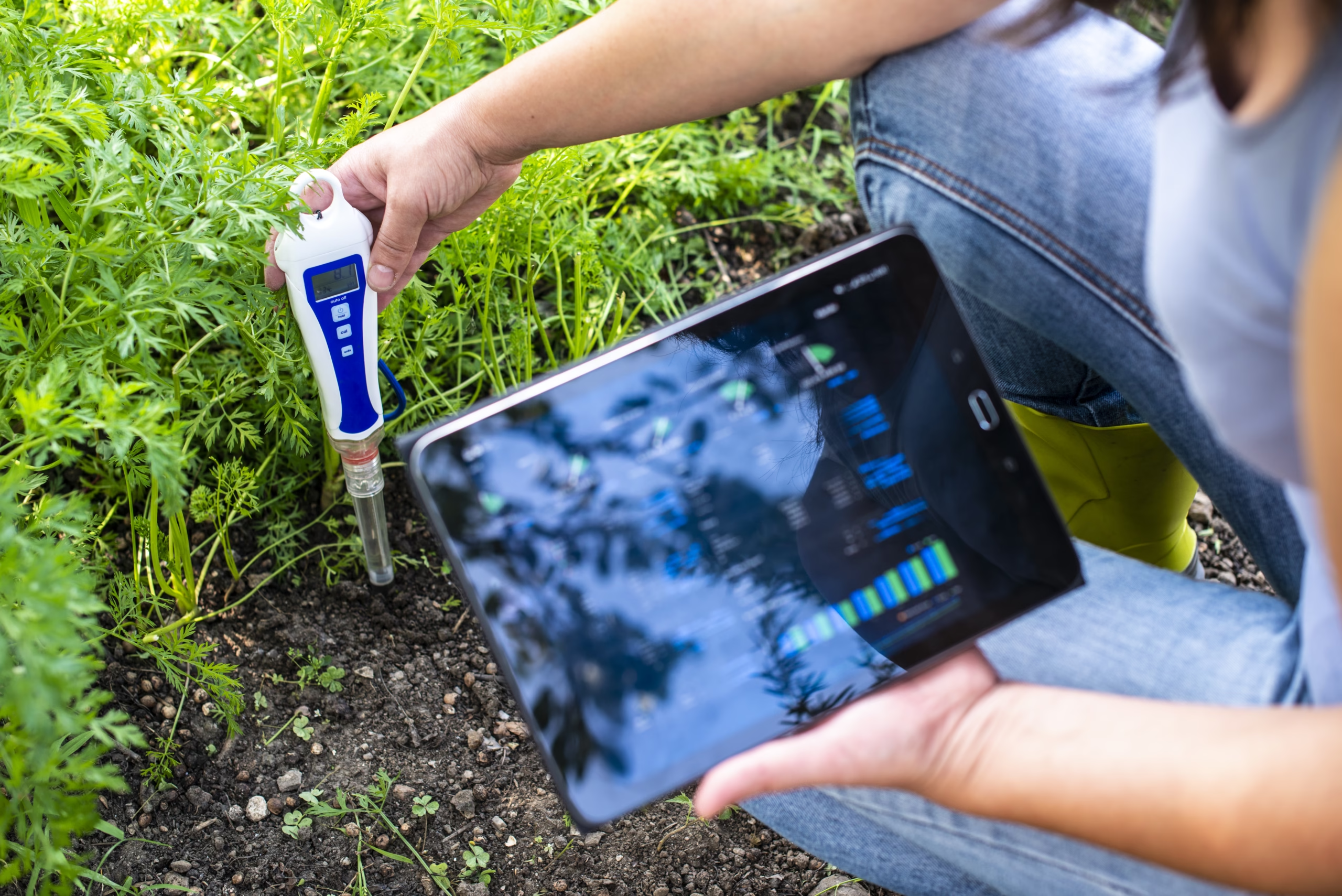
Measure soil pH using an appropriate method
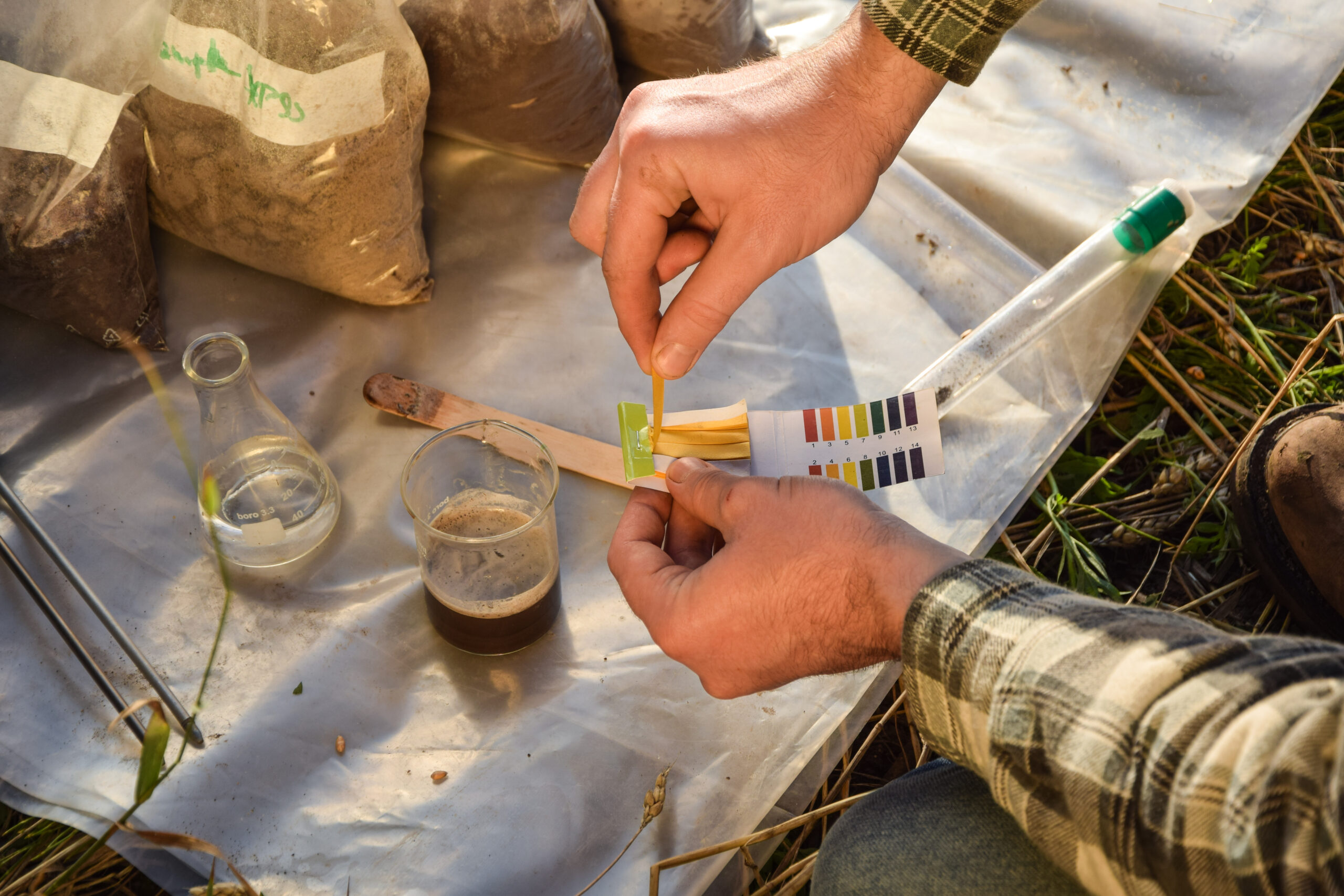
A field pH reading is useful, but the best amendment decision comes from a representative soil sample analyzed by a laboratory that provides a crop-appropriate lime recommendation. Sampling should cover the actual management zone rather than one convenient handful beside the healthiest plant.
For established outdoor beds, take samples from representative locations and depths according to the laboratory’s instructions. Keep obviously different soil zones separate. A low, wet clay pocket should not necessarily be mixed into a sandy upper bed if those areas will be managed differently.
Check calcium and magnesium, but interpret them beside pH
If pH is low, calcium or magnesium deficiencies may be part of a broader acidity problem. If pH is already suitable, adding lime merely to supply calcium can create unnecessary alkalization. That is where a non-liming calcium source may make more sense.
The same logic applies to magnesium. Low magnesium in acidic soil may point toward dolomitic limestone when liming is already required. Low magnesium at an acceptable pH may call for a different magnesium source rather than a pH-changing amendment.
Check sodium and salinity when structure or irrigation suggests a salt problem
If water infiltrates poorly, the surface crusts or seals, clay disperses, or irrigation water has a sodium history, ask the laboratory whether sodium hazard testing is appropriate. Measures such as exchangeable sodium percentage, sodium adsorption ratio, or related local indices may be used depending on the laboratory and soil context.
Do not attempt to interpret one sodium number without the method and local guidance. A reclamation plan may require an amendment requirement calculation, drainage assessment, and water-quality information. Gypsum rate should come from that chemistry, not from a generic “handful per plant” rule.
Separate salinity from sodicity
High EC indicates a soluble salt problem, but it does not prove sodicity. If the soil is saline and not sodic, the primary correction is usually to control the salt source and move excess salts out of the root zone where drainage and water quality make that possible. Adding gypsum merely adds more soluble material unless it performs a specific chemical job.
Pair chemistry with the physical root zone
Read pH, calcium, magnesium, sodium, EC, drainage, and irrigation history together. One result rarely explains the whole root zone.
Using a leaf symptom as an amendment prescription
Calcium and magnesium deficiency symptoms confirm that plant nutrition matters, but they do not prove that lime or gypsum is the right correction. Root damage, pH, EC, water, and nutrient interactions can produce the same practical problem.
Use cannabis research to understand nutrient need, not to invent a gypsum or lime rate
Controlled cannabis research has clearly demonstrated that calcium and magnesium are essential. Calcium-deficient plants can develop severe disorders, while magnesium deficiency commonly begins as interveinal chlorosis on older leaves. More recent cannabis work also shows that magnesium supply can influence calcium and potassium uptake.
Those studies are valuable for nutrient physiology, but most were conducted in hydroponic or controlled substrate systems. They do not establish a universal cannabis gypsum rate, lime rate, or field-soil amendment threshold. A soil-amendment recommendation still needs the chemistry and buffering characteristics of the actual soil being treated.
Pro Tip: Use plant symptoms to decide what to investigate next. Use root-zone measurements to decide what to add.
A Repeatable Gypsum vs Lime Selection Method
The most reliable method is deliberately boring: identify the system, collect representative data, select the amendment only after the job is clear, and verify the response. This avoids rescue recipes that change several variables at once.
Step 1: Name the problem in measurable terms
Replace vague statements such as “the soil is bad” with a measurable hypothesis. Examples include:
- The mineral soil is too acidic for the intended crop management.
- The soil is acidic and magnesium is also low.
- pH is acceptable but calcium is insufficient.
- The soil has a sodium-related infiltration problem.
- The root zone has high soluble salts but sodium is not the structural issue.
- The soil is compacted without evidence of sodicity.
- A peat-based container mix is drifting in pH despite already containing lime.
Step 2: Decide whether the problem is chemical, physical, or both
Low pH is a chemical problem. Sodicity is a chemical condition with physical consequences because dispersed clay can reduce infiltration and permeability. Compaction is mainly a physical condition. Poor container drainage can come from particle-size distribution, substrate collapse, container geometry, and irrigation rather than from calcium shortage.
This separation prevents the common mistake of buying an amendment because the soil “feels wrong.” A sticky clay soil may need better traffic management and drainage, not gypsum. A peat pot that stays wet may need a different medium structure or irrigation interval, not lime.
Step 3: Test the relevant properties before amending
For mineral soil, use a representative soil test. At minimum, pH and a laboratory lime recommendation are useful when acidity is the concern. Add calcium, magnesium, EC, sodium, and sodicity-related tests when the site history or symptoms justify them.
For container media, use a substrate-appropriate extraction or laboratory method rather than assuming a field-soil test translates directly. Water alkalinity and fertilizer chemistry can be important because the irrigation program continuously changes the chemical environment.
Step 4: Choose lime only when acid neutralization is part of the job
If the root zone needs its acidity neutralized, lime belongs in the decision. Choose calcitic versus dolomitic according to magnesium status and the test recommendation. Then adjust the rate for the actual product quality when necessary.
If pH is already acceptable, pause. Adding lime just because calcium appears on the label can make a correct pH become an incorrect one.
Step 5: Choose gypsum only when calcium sulfate solves a measured need
Gypsum becomes a candidate when calcium or sulfur is needed without liming, or when sodic-soil reclamation requires a calcium source. In the sodic case, the amendment is only one part of the system. Water must move through the root zone and carry displaced sodium away.
If drainage cannot support leaching, fix or bypass the drainage limitation before expecting gypsum to solve the site.
Do not combine lime and gypsum just to “cover all bases”
Using both materials without a measured need can add unnecessary calcium, magnesium, sulfur, alkalinity, or soluble ions while hiding the original diagnosis. Each amendment should have a separate job that can be explained and verified.
Step 6: Apply the calculated amount to the correct soil volume
Field recommendations are often given per acre or area. Container products may be specified by mass or volume of substrate. Do not convert between these casually. A container is a finite root zone, while a field soil recommendation assumes a specific sampling depth, bulk density, and incorporation layer.
Follow the laboratory and product instructions for the system being treated. If the recommendation seems unusually large or small, verify units before applying anything.
Step 7: Change one major variable when possible
If you add lime, do not simultaneously add gypsum, a new fertilizer, a large compost top-dress, and a pH-adjusting drench unless there is a documented reason for each change. Multiple corrections destroy cause-and-effect information and can create interacting chemistry.
Make the correction, manage irrigation consistently, record the date and rate, and establish a follow-up point.
Step 8: Reinspect the root zone, not just the leaves
Old damaged leaves may never become green again. Successful correction should be judged from new growth, root-zone measurements, irrigation behavior, and the specific property you intended to change. A pH correction should be verified with pH. Sodic-soil reclamation should be verified through sodium-related measurements and improved infiltration or permeability, not just a greener canopy.
| Measured Situation | Most Defensible Starting Decision |
|---|---|
| Acidic soil, magnesium sufficient | Calcitic lime is usually the more targeted liming choice because the job is acidity correction plus calcium supply without unnecessary magnesium. |
| Acidic soil, magnesium low | Dolomitic lime can correct acidity while adding calcium and magnesium. |
| pH acceptable, calcium low | Consider a non-liming calcium source such as gypsum if sulfur and EC implications also fit the system. |
| pH acceptable, magnesium low | Do not raise pH with dolomitic lime by default. Select a magnesium source suited to the system and nutrient program. |
| Sodic soil with adequate drainage and suitable leaching water | Gypsum may be part of reclamation. Determine requirement from soil chemistry and pair it with sodium removal. |
| Saline but non-sodic soil | Neither amendment is automatically indicated. Identify salt inputs, water quality, and drainage, then manage leaching appropriately. |
| Non-sodic compacted clay | Do not expect gypsum to remove compaction. Address traffic, wet working, structure, organic matter, drainage, and hardpan where relevant. |
| Peat-based potting mix already containing lime | Measure substrate pH and review irrigation alkalinity and fertilizer before adding more lime. A new amendment may not be needed. |
| Coco or hydroponic system | Manage Ca, Mg, S, EC, alkalinity, and pH through the nutrient and water program rather than copying mineral-soil amendment rates. |
“My outdoor clay is compacted and drains slowly. Would gypsum be safer than lime?”
Question sent by: Julia Schneider, via contact form.
They are not two versions of the same fix. First determine whether the clay is sodic, simply compacted, structurally damaged, or sitting over a restrictive layer. Gypsum is useful when sodium chemistry gives it a job. Lime is useful when acidity gives it a job. If neither condition exists, the better correction may be physical management rather than either amendment.
Common Mistakes and Misleading Rules of Thumb
“Gypsum lowers pH because it contains sulfur”
This confuses sulfate with elemental sulfur. Gypsum should not be used as a general soil acidifier. If the root zone is too alkaline, diagnose alkalinity and carbonate chemistry before choosing an acidification strategy.
“Lime is the best calcium source because it lasts longer”
Lime is an excellent calcium-containing amendment when acidity also needs correction. If pH is already suitable, that same pH-raising action may be unwanted. The nutrient source must fit the chemistry.
“Dolomitic lime is better than calcitic lime for cannabis”
Dolomitic lime supplies magnesium, but extra magnesium is only a benefit when magnesium is actually needed. Root-zone balance matters. A grower should not use a pH-changing magnesium source simply because cannabis requires magnesium somewhere in its nutrition program.
“Every clay soil improves with gypsum”
Gypsum is strongly associated with clay because its calcium can help sodium-dispersed clay flocculate and aggregate. But clay texture alone does not prove sodicity. A non-sodic clay can remain dense because of compaction, poor organic matter management, wet tillage, traffic, restricted drainage, or inherent structure.
“If the soil test says calcium is high, calcium cannot be deficient”
Total or extractable calcium in soil is only one part of plant calcium nutrition. Root health, soil moisture, EC, transpiration, nutrient ratios, and transport to rapidly growing tissue also matter. Conversely, a calcium-like leaf symptom does not prove the soil needs a calcium amendment.
“A runoff pH tells me whether my soil needs lime”
Runoff can be useful for trend monitoring in some container systems, but it is not automatically equivalent to a representative mineral-soil pH or laboratory lime requirement. The sampling and extraction method changes what the number means.
“More lime can buffer pH more safely”
Buffering is not the same as adding unlimited alkaline material. Excess liming can push soil pH too high and change nutrient availability. Once a large amount of lime is incorporated into a container or bed, reversal is slower and more complicated than preventing the overshoot.
“Gypsum flushes salts out of soil”
Water movement removes soluble salts. Gypsum can be chemically necessary before leaching a sodic soil because calcium replaces exchangeable sodium. That does not mean gypsum itself performs the leaching or that every saline soil needs gypsum.
Master Advice: Never choose a soil amendment from the symptom name alone. Choose it from the measured property you intend to change.
“I can fix a pH problem after planting with a heavy top-dress”
Surface applications can be appropriate in some established soil systems, but large corrective top-dresses are slow to distribute and can create uneven chemistry in containers. If a major pH correction is known before planting, build it into the medium or soil preparation instead of waiting for the plant to become the test instrument.
“If one amendment is natural, it cannot overcorrect the soil”
Natural origin does not remove chemistry. Limestone can over-lime a soil. Gypsum can add unnecessary soluble ions. Dolomite can add magnesium that was not needed. Organic and mineral amendments should both be selected from evidence.
How to Verify That the Amendment Worked
An amendment decision should end with verification because application is not the finish line. The follow-up depends on the job the amendment was supposed to perform.
After lime: retest pH with the same reliable method
Do not judge lime from the color of the leaves a few days later. Agricultural limestone reacts over time. The appropriate retest interval depends on soil type, product fineness, moisture, incorporation, and the laboratory’s guidance. Use the same sampling zone and a comparable analytical method so the result can be compared with the baseline.
If pH moved too little, first check product quality, rate calculation, distribution, and time. Do not immediately double the dose. If pH overshot, stop adding alkaline materials and review irrigation alkalinity and the broader nutrient program before trying to force the pH back down.
After gypsum for nutrient supply: verify the nutrient problem rather than assuming absorption
If gypsum was used to address a measured calcium or sulfur need, monitor new plant growth and repeat the relevant substrate, soil, or tissue test when justified. Old necrotic tissue will not repair itself. New growth should be the visual reference.
At the same time, monitor EC. If soluble salts were already elevated, an additional amendment can complicate the root zone even when it contains a needed nutrient.
After gypsum for sodicity: verify sodium movement and infiltration
A successful sodic-soil treatment should change the sodium problem and the soil’s physical behavior. Depending on the site and laboratory, follow-up may include exchangeable sodium, SAR-related measurements, EC, infiltration, or other locally recommended indicators.
Observe whether irrigation or rainfall enters the profile more evenly and whether surface sealing decreases, but do not use appearance alone as proof. If sodium has been displaced but cannot leach because drainage is inadequate, the reclamation process is incomplete.
Use operational checkpoints, not universal biological deadlines
A practical log can include an initial baseline, a short check after irrigation, another check after several wetting and drying cycles, and a laboratory retest at an interval appropriate to the amendment and soil. These are management checkpoints rather than universal cannabis thresholds.
For container media, changes can become apparent faster because the root zone is small and frequently irrigated. Field soil may react more slowly. Lime in particular should not be judged as though it were a soluble pH-up product.
Make the Final Gypsum vs Lime Decision
The right choice can often be reduced to one sentence: use lime when the soil needs acid neutralization, and use gypsum when calcium sulfate solves a measured need without conventional liming. Everything else is a condition attached to that rule.
If acidity is the problem, let the soil test determine whether lime is required and whether calcitic or dolomitic material fits the magnesium status. If pH is already suitable but calcium is low, gypsum may be useful. If sodicity is breaking down soil structure, gypsum may be part of the reclamation plan, but only when water and drainage can actually remove the displaced sodium.
When the soil is merely compacted, saline, waterlogged, or structurally poor for a reason unrelated to sodium, do not force either amendment into the solution. Correct the property that is actually limiting the roots.
Before You Apply Gypsum or Lime
- Identify whether you are managing mineral soil, a raised bed, peat-based mix, living soil, coco, or hydro.
- Measure pH with a method appropriate to that system.
- Use a laboratory lime recommendation when correcting mineral-soil acidity.
- Check calcium and magnesium before choosing calcitic versus dolomitic lime.
- Do not use lime only because the plant needs calcium.
- Do not use gypsum as a general pH-lowering product.
- Do not use gypsum on clay merely because the soil contains clay.
- Test sodium and salinity when dispersion, sealing, or irrigation history suggests a salt problem.
- Confirm that drainage and suitable water can remove sodium before planning sodic-soil reclamation.
- Keep salinity and sodicity as separate diagnoses.
- Read the amendment label for CCE, fineness, nutrient analysis, and application instructions.
- Calculate the rate for the actual soil area or substrate volume being treated.
- Change one major variable at a time when possible.
- Record the baseline, product, rate, date, and irrigation conditions.
- Verify the specific property you intended to change instead of judging only by old leaves.
Common Questions About Gypsum and Lime for Cannabis Soil
Does gypsum raise soil pH?
Not in the same way agricultural lime does. Gypsum is calcium sulfate and is not considered a conventional liming material. If the goal is to neutralize acidic soil, use a soil-test-based liming recommendation rather than substituting gypsum.
Does gypsum lower soil pH?
Do not rely on it as a general pH-lowering amendment. The sulfur in gypsum is sulfate sulfur, not elemental sulfur. Acidification requires a different chemical mechanism and should be planned around the actual soil and water chemistry.
Which is better for calcium, gypsum or lime?
Neither is universally better. Lime is appropriate when calcium supply can be combined with a needed pH increase. Gypsum can be more appropriate when calcium is needed but pH should not be raised. The soil test and growing system determine the better source.
Should cannabis growers always use dolomitic lime?
No. Dolomitic limestone is useful when liming is required and magnesium is also needed. If magnesium is already adequate, calcitic limestone may be the more targeted choice. In systems that do not need liming, magnesium may be supplied through another appropriate source.
Can gypsum fix compacted cannabis soil?
Not as a general compaction treatment. Gypsum can improve the behavior of some sodic soils because calcium replaces exchangeable sodium. It does not remove a hardpan, undo traffic compaction, or repair a collapsed container medium simply by being mixed in.
Can I add both gypsum and lime to cannabis soil?
Only when each has a measured job. For example, a soil-management plan could theoretically have separate acidity and calcium-sulfur considerations, but using both simply to be safe is poor amendment practice. Extra material can create new imbalances and makes verification harder.
Is gypsum useful in living soil?
It can be when calcium or sulfur is genuinely needed and the pH should remain largely unchanged. Living soil does not remove the need for chemistry. Test or otherwise quantify the root-zone need before adding gypsum as a routine ingredient.
How long does lime take to change soil pH?
There is no universal cannabis timeline. Reaction depends on lime fineness, neutralizing value, soil moisture, incorporation, temperature, buffering capacity, and initial acidity. Ground agricultural limestone generally works over weeks to months rather than behaving like an instant soluble pH adjuster.
Share this article
A quick overview of the topics covered in this article.
Follow us
Latest articles
October 24, 2026
October 24, 2026
October 24, 2026