
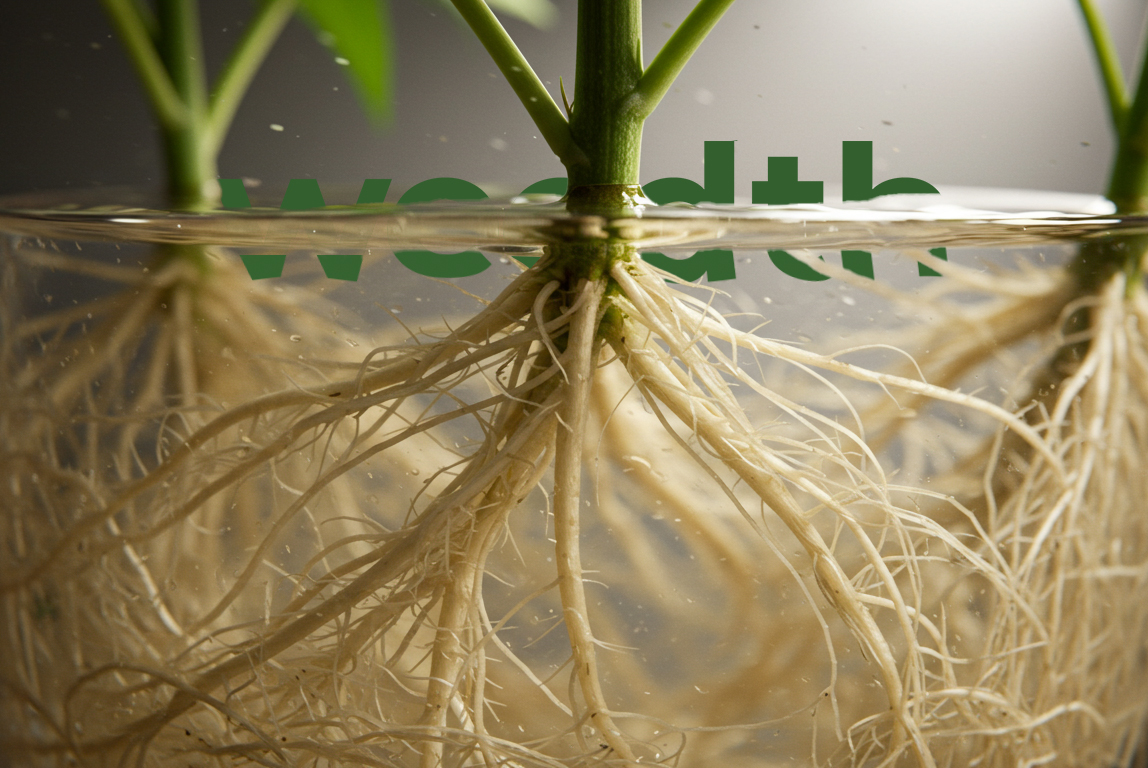
Root Rot vs Simple Overwatering
A cannabis plant can droop in a wet pot for two very different reasons. The first is simple overwatering or prolonged saturation: the root zone has stayed too wet for too long, oxygen supply has fallen, and otherwise living roots are temporarily functioning poorly. The second is root or crown disease: root tissue is being damaged or destroyed by a pathogen such as a Pythium-like water mold or a Fusarium species, sometimes after wet conditions created an opportunity for infection.
The practical difference is not visible from the leaves alone. Yellowing, slow growth, reduced water use, wilting, and deficiency-like symptoms can occur in both situations. A plant with simple overwatering should begin to stabilize as the root zone regains air and the irrigation error is corrected. A plant with established root rot may continue to decline because damaged tissue does not become healthy again simply because the pot dries.
The decision, therefore, is not “Should I water less or buy a root-rot treatment?” It is: are the roots mainly oxygen-limited but still structurally intact, or is there progressive tissue decay that requires disease containment and a more cautious recovery plan? This resource shows how to make that distinction without turning every brown root into a diagnosis or every wet pot into a disease case.
Resource Navigation
In This Resource
- Root Rot and Overwatering Are Not the Same Diagnosis
- Identification Starts Below the Canopy
- How to Confirm What the Root Zone Is Doing
- Problems That Can Look Like Root Rot
- Conditions That Turn Wet Roots Into a Disease Risk
- Immediate Containment Before Treatment
- Control Options, Recovery, and Their Limits
- Reinspection: 24 Hours, 3 Days, and 1 to 2 Weeks
Root Rot and Overwatering Are Not the Same Diagnosis
Overwatering describes a water-and-oxygen management problem. Root rot describes deterioration of root or crown tissue associated with disease, and several different pathogens can produce that outcome. The two problems overlap because prolonged wetness often weakens roots and creates conditions that favor some root pathogens, but one does not prove the other.
A root zone can be overwatered without having a confirmed pathogen. Conversely, cannabis root disease can persist after irrigation has been corrected because infected tissue and pathogen inoculum remain. Published work on cannabis has identified root-infecting Fusarium and Pythium species from diseased plants in hydroponic, coco, greenhouse, and field systems, with symptoms that included root browning, crown discoloration, yellowing, stunting, wilting, and sometimes death. The same cannabis literature also warns that excessive waterlogging itself can brown roots, which is exactly why visual diagnosis must be careful.
Root rot is a disease description, not one single pathogen
“Root rot” describes decay of root or crown tissue. Pythium and Phytophthora are oomycetes, often called water molds, while Fusarium and Rhizoctonia are true fungi. They can overlap in symptom appearance but differ biologically and may require different diagnostic and management approaches.
For a home grower, the first useful question is whether the plant follows a reversible moisture-stress pattern or a progressive tissue-decay pattern. Neither can be judged from leaf droop alone.
| Observation | Simple Overwatering More Likely | Root Rot More Likely | How to Confirm | First Response |
|---|---|---|---|---|
| Pot or bed moisture | Stays wet too long after irrigation, but begins to normalize after the schedule is corrected | Often wet or poorly drained, but decline may continue even after surface moisture improves | Track moisture at root depth and wet-to-drying behavior over several checks | Stop unnecessary irrigation and restore drainage and air |
| Root texture | Roots may be tan or stressed but remain mostly firm and attached | Soft, mushy, water-soaked, sloughing, or easily broken tissue is more concerning | Inspect accessible roots and compare healthy and declining zones | Avoid aggressive handling until disease risk is assessed |
| Crown or stem base | No expanding lesion; tissue remains firm | Sunken, dark, water-soaked, necrotic, or internally discolored crown tissue raises concern | Inspect the soil line and, when justified, cut a sacrificed diseased plant for internal comparison | Isolate plants with suspicious crown lesions |
| Plant response | Water use and posture begin to stabilize as the root zone regains air | Yellowing, wilt, root loss, or collapse continues despite corrected watering | Record new growth, water use, and symptom progression | Escalate to pathogen testing when decline persists or spreads |
| Pattern in the crop | Often follows the wettest pots, oversized containers, blocked drainage, or one irrigation mistake | May cluster around contaminated stock, shared runoff, recirculating water, tools, or previously diseased media | Map affected plants and shared inputs | Contain shared pathways before applying treatments |
Important: A wet pot is evidence of a moisture problem. It is not evidence of which pathogen, if any, is present. Diagnose the root zone before choosing a disease treatment.
“My plant perked up after the pot finally dried. Does that mean it never had root rot?”
Not necessarily. Improvement after aeration strongly supports a moisture and oxygen component, but mild disease can coexist with waterlogging. Continue watching root-zone smell, root texture, water use, and new growth. If the plant stabilizes and no tissue decay progresses, simple overwatering becomes more likely. If decline resumes even with a corrected cycle, investigate disease.
Question sent by: Ethan Brooks, via email.
Identification Starts Below the Canopy
Above-ground symptoms are useful for deciding where to look, but they rarely separate overwatering from root disease by themselves. Both problems can reduce root function enough to produce yellowing, weak posture, small new growth, stalled development, or a plant that appears thirsty while the medium is still wet.
Root and crown inspection carries more diagnostic weight. Even then, color alone is weak evidence. Organic fertilizers, dark substrates, humic materials, staining, and older roots can change color without active rot. Focus on texture, tissue integrity, pattern, progression, and the condition of the crown.
Where simple overwatering usually shows itself first
Simple overwatering often appears first as a mismatch between plant demand and how long the root zone stays wet. The pot remains heavy. Moisture at the center or bottom changes slowly. Water use falls. The plant may droop after irrigation rather than before it. Lower foliage can yellow because oxygen-limited roots are not functioning normally, but there may be no expanding lesion at the crown and no obvious sloughing of root tissue.
Young plants in oversized containers are especially easy to overwater because a small root system cannot remove water from a large volume quickly. Cool conditions, weak light, high humidity, dense media, blocked drainage holes, and standing runoff can make the same irrigation schedule suddenly excessive.
Where root rot becomes more convincing
Root disease becomes more likely when root tissue shows actual deterioration rather than simple discoloration. Pythium-associated root rot in many crops often produces soft brown roots and loss of the outer cortex, sometimes leaving the central strand of the root behind. Cannabis studies have also reported browning and decay associated with Pythium and Fusarium infections. The Fusarium on Cannabis guide explains how the organism can involve the crown and internal stem tissues, producing discoloration that extends beyond the root surface.
Look for several findings together:
- Soft, water-soaked, mushy, or sloughing roots rather than firm roots that are merely tan.
- Loss of fine feeder roots or roots that break away unusually easily.
- Dark, sunken, or necrotic tissue around the crown or soil line.
- Internal brown or reddish discoloration in crown or lower stem tissue when a sacrificed plant is sectioned.
- Progressive decline despite a corrected wet-dry cycle.
- Several plants becoming affected through a shared water, propagation, or sanitation pathway.
Smell is a clue, not a laboratory result
A sour, stagnant, or decomposing odor is a warning that the root zone has remained biologically and physically unfavorable. It can accompany anaerobic conditions, decaying roots, decomposing organic matter, or pathogen activity. Its absence does not prove the roots are healthy, and its presence does not identify Pythium, Fusarium, or any other organism.
Do not diagnose root rot from brown roots alone
Cannabis roots can darken from nutrients, organic inputs, media staining, age, and oxygen stress. Root disease becomes more convincing when discoloration is paired with soft or collapsing tissue, crown lesions, loss of fine roots, progressive decline, or laboratory evidence.
Why the leaves can mislead you
Roots supply water and mineral ions while also consuming oxygen for respiration. When the root zone remains saturated, active uptake and hydraulic function can fall even though fertilizer is present. The canopy may then look nitrogen-deficient, magnesium-deficient, generally chlorotic, or drought-stressed. Established root disease can produce the same picture because diseased roots are physically lost or function poorly.
This is why nutrient correction belongs later in the decision process. If the pot is saturated and the root system is failing, a stronger nutrient solution can raise root-zone EC without restoring root function. For the broader nutrient differential, use Cannabis Nutrient Basics rather than trying to diagnose the whole feeding program from this one comparison.
How to Confirm What the Root Zone Is Doing
A useful diagnosis should be repeatable. Take notes before changing anything: last irrigation, input volume, drainage behavior, pot weight, temperature, humidity, recent transplanting, fertilizer changes, and whether neighboring plants share the same symptoms. Then inspect the root zone in a sequence that minimizes unnecessary disturbance.
Step 1: prove that the root zone is actually staying wet
Do not rely only on the surface. Check deeper moisture with an appropriate method for the system. For containers, compare current weight with the weight after a known full irrigation and with a healthy drying point. For beds or native soil, inspect multiple depths and locations. A dry crust can sit above a saturated lower profile, while a wet surface can sit above an adequately aerated deeper mix after a recent irrigation.
If the plant occupies a small part of a large pot, measure the area outside the main root ball as well. That unused volume can remain wet long after the active root zone would normally be ready for more water.
Step 2: inspect drainage and water distribution
Watch what happens during a controlled irrigation only when the plant is actually ready for one. Water that exits immediately from one edge may be channeling around a dry root ball. Water that barely exits from a heavy container may point toward compaction, blocked drainage, an oversized pot, or a high water-holding mix. A saucer or tray that holds runoff against the pot can extend saturation after the irrigation itself has ended.
The goal is not “maximum drainage.” The goal is a root zone that wets evenly, releases excess water, and regains enough air for the crop and medium. The broader mechanics are covered in Watering Basics and Containers and Pots Basics.
Step 3: inspect roots without destroying the evidence
Small container plants can sometimes be slid out carefully when the root ball is structurally stable. Do not repeatedly unpot a large stressed cannabis plant just to “check the roots.” For beds and large containers, inspect exposed roots near drainage openings, edges, or a carefully opened diagnostic area when feasible.
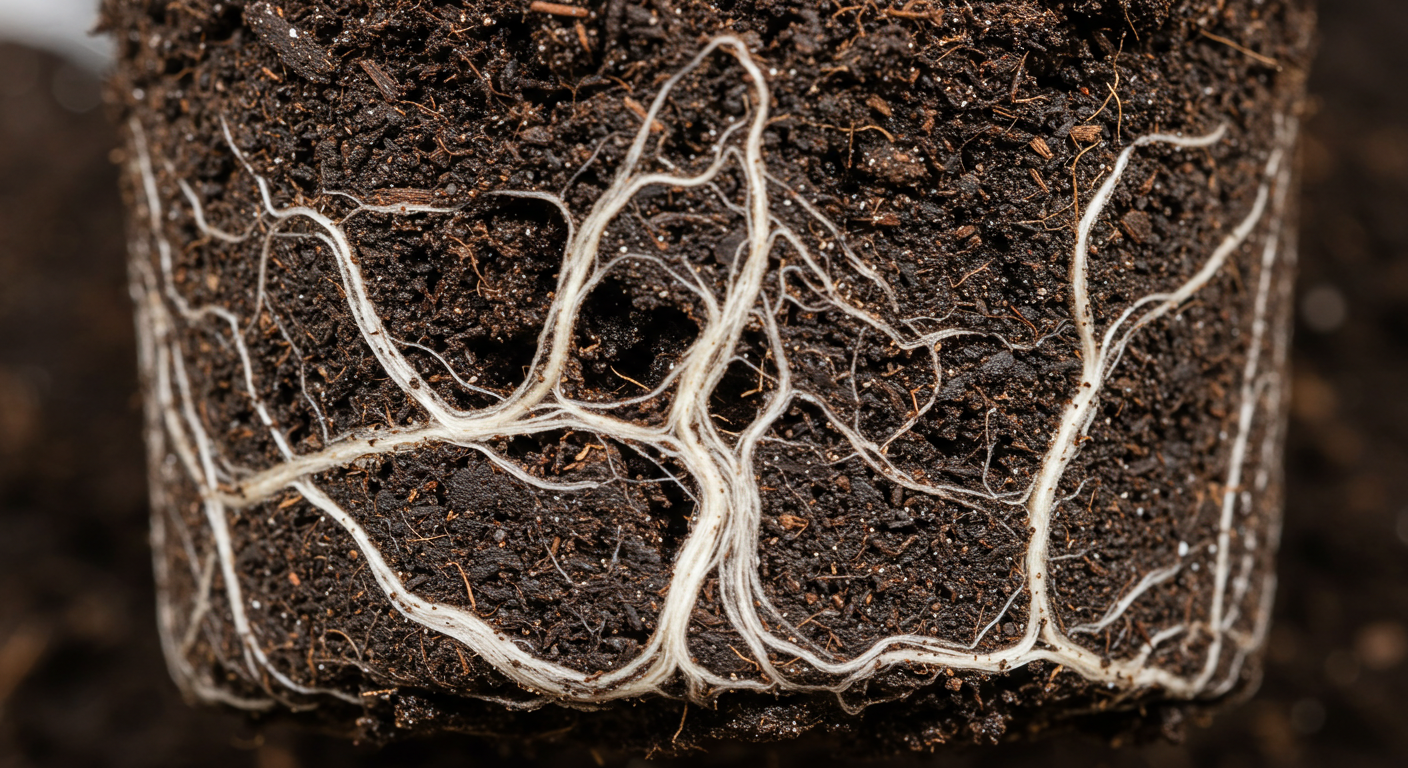
Healthy active roots are usually firm and have intact fine branching. Disease suspicion rises when the outer tissue is soft, the cortex slips away, roots are visibly reduced, or decay extends into the crown. Compare affected roots with roots from a healthy plant grown in the same medium if possible. A comparison is more useful than a color chart.
Step 4: inspect the crown and lower stem
Root pathogens do not always stay below the medium surface. Cannabis research has documented crown and pith discoloration associated with Fusarium infection and root/crown damage associated with Pythium. Look for a sunken lesion, soft tissue at the soil line, unusual cracking, or internal discoloration in a plant that is already being removed or sacrificed for diagnosis.
Do not cut into the main stem of a plant you intend to keep unless there is a clear diagnostic reason. Wounds create a new stress and can create another entry point for pathogens.
Step 5: map the pattern across the crop
One plant in one oversized pot points toward a local root-zone problem before it points toward a facility-wide pathogen. Several plants fed from the same reservoir, recirculating line, bench, propagation batch, or contaminated substrate deserve a different response. Cannabis research has recovered Fusarium and Pythium from diseased plants and has emphasized contaminated growing material, diseased cuttings, water-borne inoculum, and residual inoculum from previous crops as potential pathways.
Field Advice: Draw a quick map. Mark every symptomatic plant, its irrigation source, propagation batch, cultivar, container type, and recent transplant date. Disease patterns often become clearer when you stop looking at plants one at a time.
Step 6: use a plant diagnostic laboratory when the answer changes management
If several plants are declining, valuable stock plants are involved, the problem returns after correction, or pathogen identity will change sanitation and treatment decisions, submit representative material to a qualified plant diagnostic laboratory. General extension guidance for root rot stresses that excessive moisture, low oxygen, high salts, and nutrient injury can all damage roots, so pathogen confirmation may require laboratory examination rather than visual guessing.
Cannabis pathogen research commonly uses isolation and molecular methods such as PCR or sequencing to identify Fusarium and Pythium species. A home microscope or hand lens can reveal severe decay, but it is not a substitute for validated identification when the pathogen matters.
Preserve diagnostic evidence
Record the moisture pattern, photograph roots and crown tissue, keep treatment history, and submit representative fresh material when laboratory diagnosis is justified.
Treating first and identifying later
Peroxide, fungicides, biologicals, transplanting, flushing, and heavy root pruning can alter the evidence and make the original cause harder to confirm.
“The roots are brown but still firm. Should I cut them off?”
No. Brown color alone does not prove that the tissue is dead or infected. Check firmness, fine-root loss, odor, crown condition, progression, and the products used in the root zone. Cutting living roots can worsen water stress and create wounds. Remove tissue only when you have a clear reason and the plant can tolerate the intervention.
Question sent by: Julia Schneider, via contact form.
Problems That Can Look Like Root Rot
The fastest way to misdiagnose root rot is to use a single symptom such as yellow leaves, droop, or brown roots. Several root-zone and whole-plant problems can create the same visible decline. The useful question is not “What disease makes leaves look like this?” but “Which mechanism best explains the moisture, roots, crown, plant pattern, and recent history together?”
High root-zone EC
Excess dissolved salts can make water uptake more difficult and can injure root tips. A plant may wilt in moist media, burn at the margins, slow its water use, and develop damaged roots. High EC can also coexist with overwatering because a stressed plant uses less water and fertilizer salts remain concentrated in the root zone.
Measure EC with a method appropriate to the growing system and compare the trend with input concentration and irrigation history. Do not assume that every damaged root in a strongly fed pot is infectious disease.
Incorrect pH or nutrient imbalance
pH can change nutrient availability and root-zone chemistry, while deficiencies and toxicities can create yellowing or distorted growth. The presence of a nutrient symptom does not exclude root disease, but neither does it prove it. If the root tissue remains firm, the crown is healthy, the medium is not persistently saturated, and a measured nutrient or pH problem matches the symptom pattern, correct that confirmed limitation rather than treating for root rot.
Cold roots and low plant demand
Cold root zones slow water use and can reduce root function. A pot that behaved normally under strong light and warm conditions may remain wet for much longer after a temperature drop, cloudy weather, a reduction in light intensity, or heavy pruning. The resulting yellowing and droop can look like disease even when the primary problem is a sudden mismatch between irrigation frequency and plant demand.
Root binding and physical root damage
A root-bound plant may dry unevenly, wilt rapidly, and show nutrient stress because the active root volume is restricted. Transplant damage, rough root pruning, pest feeding, or mechanical injury can also reduce uptake. These conditions can later increase disease susceptibility, but they should not be called root rot unless tissue decay or pathogen evidence supports that diagnosis.
Hydrophobic channeling
A pot can produce runoff and still contain dry roots. Very dry peat or shrunken media may direct water around the root ball while the center remains poorly wetted. The plant wilts, receives another fast irrigation, and the grower concludes that it is both overwatered and thirsty. In reality, wet and dry zones can exist in the same container.
Fungus gnats
Fungus gnats often increase in persistently moist media. Their presence supports the observation that the surface environment has stayed wet, but it does not prove root rot. Larvae can damage young roots at high populations and may complicate an already stressed root zone. Monitor them separately and correct the moisture condition that supports them.
HLVd and other systemic problems
In cannabis production, hop latent viroid can reduce vigor and root development, especially in material derived from infected stock. That does not make every weak-rooted cannabis plant an HLVd case. When stock plants, clones, or repeated propagation batches show unexplained poor rooting and systemic decline, molecular testing may belong in the diagnostic plan rather than assuming the entire problem began with irrigation.
Conditions That Turn Wet Roots Into a Disease Risk
Waterlogging does not automatically create an infection. Disease requires a susceptible plant, a capable pathogen, and conditions that allow infection and spread. Prolonged wetness matters because it can injure roots and because several important root pathogens thrive or spread more readily in wet production systems.
The disease triangle
Plant disease develops when a susceptible host, a pathogen capable of causing disease, and a favorable environment overlap. Wet roots can strengthen the environmental side of that triangle, but wetness alone does not identify the pathogen.
Persistent saturation and poor drainage
Pythium and Phytophthora are strongly associated with wet conditions in general horticulture, and cannabis disease reviews specifically identify excessive watering and flooding as factors that can increase root disease severity and spread. Saturation is more concerning when it persists through the central and lower root zone rather than only following a thorough irrigation that drains and aerates normally.
Damaged or newly developing roots
Fresh root tips and propagation material are vulnerable. Root injury from rough transplanting, pruning, salt stress, heat, cold, pests, or low oxygen can reduce the plant’s defensive capacity and expose tissue. Cannabis disease management literature repeatedly emphasizes avoiding root injury and maintaining pathogen-free propagation material.
Contaminated cuttings or stock plants
In vegetatively propagated crops, a pathogen can enter the production area before the first irrigation mistake occurs. Diseased cuttings, infected stock plants, contaminated tools, and residual material from previous crops can establish an inoculum source. If multiple plants from one propagation batch decline while neighboring batches remain healthy, do not assume every grower made the same watering mistake.
Shared water and recirculating systems
Water can connect root systems that never touch each other. Cannabis research has identified Fusarium and Pythium inoculum in hydroponic production and stresses monitoring recirculated nutrient solutions where disease is a concern. Drain-to-waste runoff that splashes into neighboring pots, shared reservoirs, dirty flood tables, and reused irrigation hardware can create similar movement pathways.
Warm or cool conditions can favor different organisms
There is no single “root rot temperature.” Different Pythium species and different fungal pathogens have different temperature preferences. Root-zone temperature also changes oxygen demand, plant metabolism, and dissolved oxygen in hydroponic systems. Treat temperature as part of the disease environment, not as a universal diagnostic cutoff.
Remember: The same irrigation schedule can be safe in one week and excessive the next. A cooler room, lower light, smaller canopy, recent transplant, or damaged root system can lengthen the wet period enough to change disease risk.
Trace how disease could move
Check propagation history, water source, shared runoff, recirculation, tools, benches, reused media, and the order in which plants became symptomatic.
Blaming humidity around the leaves
Canopy humidity may influence whole-plant demand, but root-rot risk is driven more directly by root-zone wetness, pathogen presence, sanitation, root injury, and water movement.

Immediate Containment Before Treatment
The first response depends on whether you are dealing with one wet plant or a suspected disease pathway. Simple overwatering usually needs correction, not quarantine. Suspected root rot in a shared system needs more caution because treatment without containment can leave the source of reinfection untouched.
If simple overwatering is more likely
Stop automatic or habitual irrigation to the affected container. Remove standing runoff. Confirm that drainage openings are clear and that the pot is not sealed against a flat tray. Restore appropriate room temperature, light, and gentle air circulation. Then allow the root zone to move toward its normal aerated range.
Do not force-dry the pot with a heater, hair dryer, intense fan, or sudden environmental stress. A strong surface-drying treatment can leave the lower root zone saturated while adding heat or drought stress to the canopy.
If root disease is plausible
Prevent the affected root zone from sharing water, tools, or debris with healthy plants. Work with healthy plants first and suspicious plants last. Clean and disinfect reusable tools with a method appropriate to the material and pathogen-control protocol. Do not allow drainage from a suspect pot to enter another root zone.
If a plant is severely collapsed, has extensive crown rot, or has little functional root system left, keeping it beside healthy plants may create more risk than value. Bagging and removing a severely diseased plant can be the safer crop-level decision. Disposal rules vary, so follow local requirements and do not compost confirmed diseased material back into the same production system.
Do not pour a rescue cocktail into an uncertain root zone
Hydrogen peroxide, biological inoculants, enzymes, fungicides, microbes, vitamins, extra calcium, and flushing products are often combined in panic. This changes several variables at once and may damage remaining roots or obscure the diagnosis. Start with containment and physical root-zone correction, then choose any treatment only after you know what problem the treatment is meant to solve.
Shared runoff can turn one sick pot into a system problem
Do not let drainage from a plant with suspected root disease enter healthy containers, flood tables, or recirculating reservoirs until the disease risk has been assessed.
“Should I immediately transplant a suspected root-rot plant into fresh soil?”
Not automatically. Transplanting can remove a failing medium, but it also tears roots, moves contaminated material, and stresses a plant that may already have poor water uptake. Use it when the current container or medium cannot recover in place and enough healthy root tissue remains to justify the disturbance. If disease is spreading through the crown or most roots are decayed, transplanting may not solve the underlying infection.
Question sent by: CedarRoute, via Facebook page.
Control Options, Recovery, and Their Limits
The correction for simple overwatering is primarily cultural. The correction for confirmed or strongly suspected root disease may combine cultural control, sanitation, removal of diseased material, biological control, and crop-legal disease products when appropriate. The earlier the disease is caught, the more useful prevention-focused measures tend to be.
Simple overwatering: restore the normal root-zone cycle
The objective is to restore a predictable moisture cycle, not to create an artificial drought. Correct the trigger that caused excessive wetness: irrigation frequency, oversized wet volume, blocked drainage, compacted media, standing runoff, environmental demand, or an emitter that delivers more than intended.
When the plant becomes ready for water again, irrigate in a way that wets the active root zone evenly. Do not compensate for the previous overwatering by giving tiny surface sips indefinitely. A healthy root zone still needs complete and uniform hydration followed by appropriate aeration.
Root disease: remove the conditions that keep feeding the epidemic
Even a correctly chosen disease-control product performs poorly if the roots stay saturated and contaminated water keeps moving between plants. Correct drainage, irrigation, sanitation, and shared-water pathways first. Remove plants or tissue that cannot reasonably recover and that may carry heavy inoculum.
Cannabis disease reviews describe integrated approaches because Pythium and Fusarium can persist and move through production systems. Preventative use of some biological control organisms has shown value in cannabis propagation and vegetative production, but the literature emphasizes protection of susceptible tissue before infection. The benefit of late applications after extensive root rot is less certain.
Biological control is not a root resurrection product
Beneficial organisms may compete with pathogens, colonize roots, or protect new tissue under appropriate conditions. They do not rebuild roots that have already become necrotic. If a biological program is used, judge success by the health of new roots and stabilization of disease, not by expecting dead roots to turn white again.
Pro Tip: When recovery begins, photograph the same accessible root area or drainage-zone roots every few days. Healthy new white or pale tips are more meaningful than waiting for old brown tissue to change color.
Chemical controls require pathogen, crop, and jurisdiction matching
Pythium is an oomycete rather than a true fungus, so products that affect one pathogen group may not control another. Resistance can also occur. Cannabis pesticide and fungicide legality varies widely by jurisdiction, production license, growth stage, and intended use of the harvested flower.
Do not use a general ornamental, turf, or food-crop recommendation as permission to apply that product to cannabis. If a chemical control is being considered, confirm the pathogen when practical, follow the local cannabis crop rules and the product label, and account for residue and worker-safety requirements. This resource does not provide a universal cannabis fungicide program.
Hydroponics requires a different correction framework
Roots can live continuously in water when oxygen, temperature, sanitation, nutrient concentration, and circulation are actively managed. A hydroponic plant with brown roots therefore should not be diagnosed by applying a soil dry-back rule. Check dissolved oxygen where relevant, solution temperature, biofilm, reservoir hygiene, pump performance, recirculation pathways, root tissue integrity, and pathogen testing.
If one plant in a recirculating system has confirmed Pythium or Fusarium, the reservoir and water pathway become part of the disease investigation. Cannabis research specifically identifies these pathogens in hydroponic production and supports monitoring recirculated solution for inoculum.
Outdoor ground requires drainage and site logic
An outdoor plant cannot be “unwatered” after a storm. Where saturation comes from rainfall, a perched water table, dense subsoil, or a sharply amended planting hole, the long-term correction is hydraulic. Improve the real drainage path, protect soil structure, adjust irrigation after rain, or move future crops to raised beds or containers when the site cannot provide a reliable aerobic root zone.
The broader outdoor context is covered in Outdoor Growing Basics. For amended-hole saturation, use the dedicated hydraulic explanation rather than treating the planting hole with fungicide by default.
When the plant is too far gone
A severely diseased plant with extensive root loss, crown collapse, and continuing wilt may not recover enough to justify repeated treatments. This is especially true when it threatens clean plants in a shared production area. Crop-level sanitation can be more valuable than trying to save one plant with little functional root tissue remaining.
Master Advice: Do not judge a treatment by whether old leaves look better. Root recovery is shown by stable moisture use, halted progression, firm surviving roots, clean new root tips, and healthy new shoot growth.
Reinspection: 24 Hours, 3 Days, and 1 to 2 Weeks
Recovery should be measured against the mechanism you are trying to correct. These checkpoints are operational observation points, not universal biological thresholds. A small plant in a warm airy pot can change faster than a mature outdoor plant in cool ground. The purpose of the timeline is to stop repeated panic treatments and give you comparable evidence.
| Checkpoint | Plant Status | Main Task | Risk / Check |
|---|---|---|---|
| Initial observation | Wet root zone plus wilt, yellowing, reduced water use, or decline | Record irrigation, moisture, root appearance, crown condition, temperature, EC/pH context, and crop pattern | Do not add fertilizer or disease products before the first differential |
| First 24 hours | Simple overwatering may stop worsening as standing water is removed; disease may remain unchanged | Confirm drainage, stop unnecessary irrigation, isolate suspicious runoff pathways, inspect progression | Rapid worsening, crown collapse, or new affected plants increases disease concern |
| About 3 days | A recoverable root zone should show more predictable moisture loss and less acute stress if conditions allow | Compare pot weight, water use, new root tips where visible, and symptom edge from dated photos | Persistent wilt in a correcting root zone warrants deeper root/crown inspection or lab diagnosis |
| 1 to 2 weeks | Recovery should appear in new root and shoot growth, not in dead tissue becoming healthy again | Review new growth, irrigation interval, root integrity, disease spread, and sanitation results | Recurring decline suggests unresolved structure, contaminated inputs, or active disease |
| End of cycle | The plant may recover, remain chronically weak, or be removed | Inspect roots after harvest and document the root-zone failure for the next cycle | Do not reuse contaminated media or equipment without an appropriate sanitation plan |
What improvement from simple overwatering looks like
The pot resumes losing water at a believable rate. The plant stops declining. New growth becomes more normal. Root tips remain firm and new fine roots appear. The next irrigation is needed because the root zone has actually used water, not because a calendar says it is time.
Old yellow leaves may stay yellow and old necrotic tissue will not repair itself. Judge the correction by what happens next.
What successful root-disease management looks like
Disease progression stops. No additional plants become affected through the suspected pathway. Surviving roots remain firm. New roots form. Water use stabilizes. Crown lesions do not expand. If testing was used, follow the diagnostic laboratory’s guidance on whether repeat sampling is useful for the specific pathogen and production system.
What means the problem is not solved
Water use keeps falling, decay moves upward into the crown, roots continue to slough, new plants become affected, or the same problem returns immediately after irrigation. At that point, repeating the same “dry it out” correction is not enough. Revisit disease, substrate structure, contamination, irrigation distribution, root-zone EC, pH, temperature, and shared water.
Before you call it root rot
- Confirm that the active root zone has actually stayed wet longer than normal.
- Check whether roots are firm or truly soft, sloughing, and structurally damaged.
- Inspect the crown and lower stem for lesions or internal discoloration.
- Map whether the issue follows irrigation, propagation batch, water source, or sanitation pathway.
- Rule out high EC, pH problems, cold roots, hydrophobic channeling, and physical root injury.
- Use laboratory diagnosis when pathogen identity will change management.
- Correct water and oxygen problems even when a pathogen is confirmed.
- Recheck new roots, new shoots, water use, and spread instead of waiting for old damaged tissue to recover.
Build a Root Zone That Makes the Difference Easier to Read
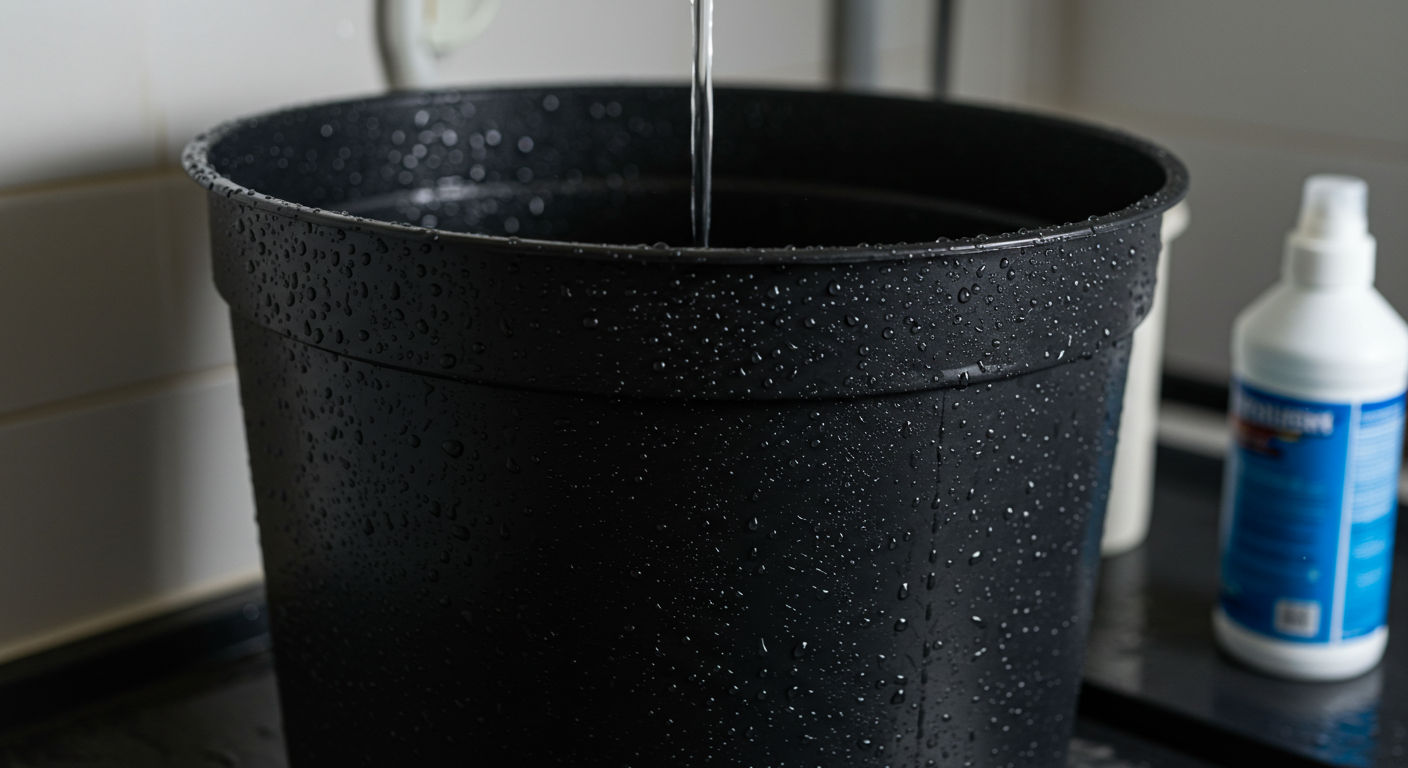
Prevention is not simply “water less.” A good production system makes moisture behavior observable and root disease harder to spread. Match container volume to the root system, use a medium whose air and water balance suits the irrigation method, keep drainage paths open, remove standing runoff, and change irrigation frequency when plant demand changes.
Keep propagation material clean. Avoid unnecessary root wounds. Do not move dirty tools from suspect plants into healthy root zones. Treat recirculating water as a shared biological pathway. Store new growing media so that contaminated soil, runoff, and crop debris cannot enter it.
For soil and soilless selection, use the broader Cannabis Soil and Growing Media Guide and Indoor Growing Mediums. This page should remain focused on the diagnostic line between overwatering and root disease rather than becoming another complete medium-selection guide.
Do not sterilize every root zone because disease exists
A healthy root zone is not microbe-free. Cannabis and its substrates contain diverse microbial communities, many of which are harmless or potentially beneficial. Disease management should target pathogenic risk, contaminated pathways, and conditions that favor disease rather than attempting to make every growing medium biologically empty.
Keep records that reveal the first change
Record irrigation volume, frequency, pot weight or moisture trend, root-zone temperature, input EC, transplant date, and unusual events. When a plant declines, the earliest change often matters more than the latest symptom. A wet pot may be the cause, or it may be the result of a root system that already stopped functioning because of disease.
Weedth Verdict: If the root zone recovers its normal moisture cycle and the plant stabilizes without progressive tissue decay, simple overwatering is the stronger explanation. If roots or crown tissue continue to deteriorate, decline spreads, or the problem persists after irrigation is corrected, treat it as a disease investigation rather than a watering lesson.
Common Questions About Root Rot and Overwatering
Can overwatering turn into root rot?
It can increase the risk, but the terms are not interchangeable. Prolonged saturation reduces root-zone oxygen and can injure roots. Wet conditions also favor several important root pathogens and can help water-borne inoculum move. Root rot still requires disease-causing organisms or a disease process, while overwatering itself is a moisture and oxygen management problem.
Can a plant have root rot without smelling bad?
Yes. Odor is not required for root disease. Early or localized infections may have no dramatic smell. Root texture, fine-root loss, crown lesions, progression, crop pattern, and laboratory testing carry more diagnostic value.
Are white roots always healthy?
White or pale, firm, well-branched roots are generally reassuring, but color is not an absolute test. New roots are often lighter while older roots can darken naturally. Judge tissue integrity, branching, function, and disease progression together.
Should I add beneficial bacteria after overwatering?
Not as the first correction. Restore the moisture and oxygen cycle first. Biological products may have a role in a planned root-health or disease-prevention program, but they cannot compensate for a saturated root zone or rebuild necrotic tissue. Use products according to their evidence, label, crop legality, and the problem being addressed.
Should I flush a plant with suspected root rot?
Not automatically. A large flush adds more water to a root zone that may already be oxygen-limited. Controlled leaching can be appropriate for a confirmed salt problem in some drain-to-waste systems, but that is a different diagnosis. Check moisture, EC, drainage, and root condition first.
Can I reuse soil from a plant that had confirmed root rot?
Do not assume that ordinary drying makes contaminated media safe. Pathogen survival differs by organism, and some root pathogens can persist in soil, crop debris, or production surfaces. For valuable crops, replacing suspect media is often simpler than trying to validate a home sanitation process. If reuse is necessary, base the sanitation method on the identified pathogen and local production guidance.
Decide From the Roots, Not the Droop
The canopy tells you that something is wrong. The root zone tells you what kind of problem you may actually have. Simple overwatering and root rot overlap because both can produce wet-pot wilt, yellowing, slow growth, and reduced nutrient uptake. The difference appears when you follow the evidence below the surface.
Simple overwatering should improve when the root zone regains air and the irrigation mismatch is corrected. Root disease becomes more likely when roots lose structural integrity, crown lesions develop, decline continues despite corrected moisture, or a shared propagation, water, or sanitation pathway links affected plants.
Do not treat the name before you verify the mechanism. Correct excessive moisture either way, protect healthy plants when disease is plausible, and escalate to laboratory diagnosis when the pathogen will change the decision. That approach is slower than reaching for a rescue bottle, but it gives you something much more useful: a diagnosis you can verify and a system you can improve.
Share this article
A quick overview of the topics covered in this article.
- Root Rot and Overwatering Are Not the Same Diagnosis
- Identification Starts Below the Canopy
- How to Confirm What the Root Zone Is Doing
- Problems That Can Look Like Root Rot
- Conditions That Turn Wet Roots Into a Disease Risk
- Immediate Containment Before Treatment
- Control Options, Recovery, and Their Limits
- Reinspection: 24 Hours, 3 Days, and 1 to 2 Weeks
- Build a Root Zone That Makes the Difference Easier to Read
- Common Questions About Root Rot and Overwatering
- Decide From the Roots, Not the Droop
Follow us
Latest articles
October 21, 2026
October 21, 2026
October 21, 2026
October 21, 2026
