How Temperature, Humidity, and Light Change Water Demand: Vapor Pressure Deficit, Transpiration Flux, and Stomatal Conductance
In controlled-environment cannabis production, a common misconception is that a plant’s daily water demand is determined primarily by container size, substrate composition, or plant age. In biophysical reality, cannabis does not consume water according to a calendar schedule; rather, water uptake is an atmospheric pull driven by microclimatic physics. The volumetric rate at which roots extract water from the rhizosphere is governed by the Soil-Plant-Atmosphere Continuum (SPAC), where liquid water moves along a continuous negative water potential gradient from wet medium through xylem vascular conduits and evaporates into ambient air via foliar stomata. This transpirational flux is dictated by three interconnected environmental drivers: ambient and leaf temperature, relative humidity (governing Vapor Pressure Deficit, or VPD), and photosynthetically active radiation (PPFD and Daily Light Integral, DLI). When these variables shift, daily crop water consumption can swing by more than 300% across consecutive days. A flowering plant consuming 1.5 liters per day under moderate light and low VPD will consume over 4.5 liters per day when PPFD increases to 1,000 μmol/m2/s and VPD climbs into the generative range.
Cultivators who fail to adjust irrigation volume and pulse frequency in response to changing environmental parameters trigger severe agronomic failures. Irrigating heavily during periods of low light and high humidity waterlogs the root zone, inducing root hypoxia and suppressing mobile calcium delivery, leading to marginal bract necrosis and botrytis bud rot. Conversely, underestimating water demand during heat waves or intense LED irradiance desiccates root hairs, causes stomatal closure, and spikes root-zone electrical conductivity to toxic concentrations. Mastering the physics of stomatal conductance, the Penman-Monteith evapotranspiration relationship, and leaf temperature depression allows commercial growers to dynamically align fertigation shot timing with atmospheric evaporative demand. This comprehensive scientific guide analyzes how temperature, humidity, and lighting dictate cannabis transpiration, linking directly to our core frameworks on cannabis dry-back and VWC targets, watering cannabis by growth stage, and water temperature and root-zone health.
The Soil-Plant-Atmosphere Continuum: Water Potential and Stomatal Conductance
Water movement through a cannabis plant is fundamentally passive, driven by thermodynamic potential gradients across the plant architecture:
- The Water Potential Gradient (Ψ): Water moves spontaneously from regions of high water potential (less negative) to low water potential (more negative). Saturated container substrate typically sits between -0.01 and -0.03 MPa. Inside root cortex cells, water potential drops to -0.2 to -0.5 MPa. In xylem vascular bundles, tension pulls Ψ down to -0.6 to -1.0 MPa. Inside leaf mesophyll cells, Ψ falls to -1.2 to -1.8 MPa. Finally, ambient room air at 50% relative humidity exhibits an extraordinarily negative water potential of approximately -95.0 MPa. This massive atmospheric pull acts like a hydraulic pump, lifting tons of water from the substrate into the atmosphere. Under extreme light conditions, this hydraulic tension pulls water through tracheids and vessel elements at velocities exceeding 1 to 2 meters per hour.
- Stomatal Conductance (gs) and Guard Cell Turgor: Microscopic stomatal pores on the underside of cannabis leaves regulate the boundary between leaf tissue and atmosphere. Guard cells swell to open stomata when light activates proton pumps that drive potassium (K+) and chloride (Cl–) accumulation, drawing water in by osmosis. Stomatal conductance measures the physical ease with which water vapor diffuses out and carbon dioxide diffuses in. When ambient VPD climbs excessively, guard cells lose turgor faster than xylem can replenish moisture, causing stomata to constrict to prevent catastrophic vascular cavitation. Conversely, when stomatal conductance is maximized within optimal VPD bands, net photosynthetic carbon assimilation reaches peak saturation.
- Mass Flow of Essential Nutrients: Highly mobile ions (such as nitrates and potassium) can be absorbed via active transport pumps. However, structural divalent cations, most notably calcium (Ca2+), move almost exclusively through passive mass flow in the transpirational stream. If atmospheric conditions suppress transpiration, calcium delivery to rapidly dividing floral tips ceases, resulting in leaf tip burn, cell wall collapse, and severe susceptibility to fungal pathogens. Cultivators must ensure steady transpiration velocity to maintain continuous calcium deposition throughout structural bract cell walls.
The Agronomic Physics: More Than 95% of Absorbed Water Is Lost to Transpiration
Novice cultivators often assume that water added to a pot is consumed to build vegetative plant biomass. In agricultural plant physiology, less than 3% to 5% of the water absorbed by cannabis roots is incorporated into biochemical molecules or retained for cellular turgor. The remaining 95% to 97% is evaporated directly through foliar stomata into the atmosphere. Transpiration serves two non-negotiable biological functions: latent heat evaporative cooling (preventing leaf enzyme denaturation under intense lighting) and vascular bulk nutrient transport.
Vapor Pressure Deficit (VPD): Saturation Deficits and Leaf Temperature Depression
To accurately gauge the drying power of the atmosphere, growers must move beyond simple relative humidity and calculate Vapor Pressure Deficit:
- Air VPD vs Leaf-to-Air VPD (VPDleaf): Relative humidity (RH) indicates the percentage of moisture air holds relative to its maximum capacity at that specific temperature. Vapor Pressure Deficit (VPD) quantifies the absolute drying force of the air in kilopascals (kPa), calculated as the difference between the saturation vapor pressure inside the saturated leaf substomatal cavity (VPsat) and the actual vapor pressure of the ambient air (VPact). Commercial precision agriculture measures leaf VPD using infrared radiometer thermal cameras to measure actual leaf canopy temperature. Relying strictly on air VPD introduces systematic calculation errors of up to 0.4 kPa.
- Leaf Temperature Depression (LTD): Because transpiration requires latent heat of vaporization (roughly 2,440 Joules per gram of water evaporated), transpiring leaves cool themselves below room air temperature. Under high transpiration rates, healthy cannabis leaves are typically 1.0 °C to 3.0 °C cooler than the ambient air (Tleaf < Tair). In high-radiation HPS grow rooms, leaf surfaces can absorb radiant infrared heat, becoming warmer than ambient air. In modern LED rooms with zero radiant infrared heat, leaves run significantly cooler than air, altering the true evaporative gradient.
- The Tetens Equation for Vapor Pressure: Saturation vapor pressure (es) is an exponential function of temperature: es(T) = 0.61078 × exp[(17.27 × T) / (T + 237.3)]. Because this relationship is exponential, warming the air from 22 °C to 28 °C nearly doubles the air’s moisture-holding capacity, drastically accelerating transpirational pull even if relative humidity stays constant. Understanding this non-linear thermodynamic response allows facility managers to predict seasonal dehumidification loads.
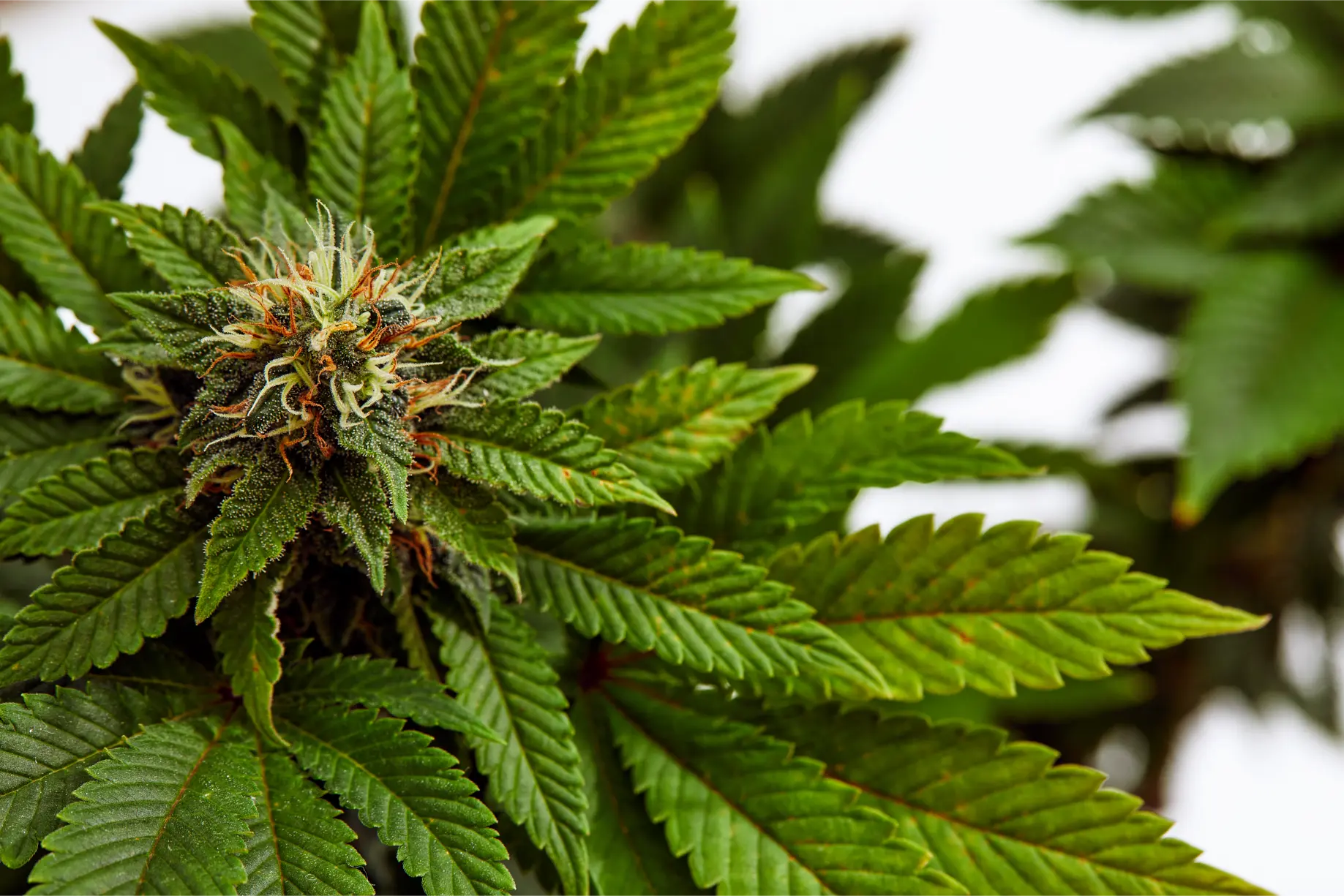
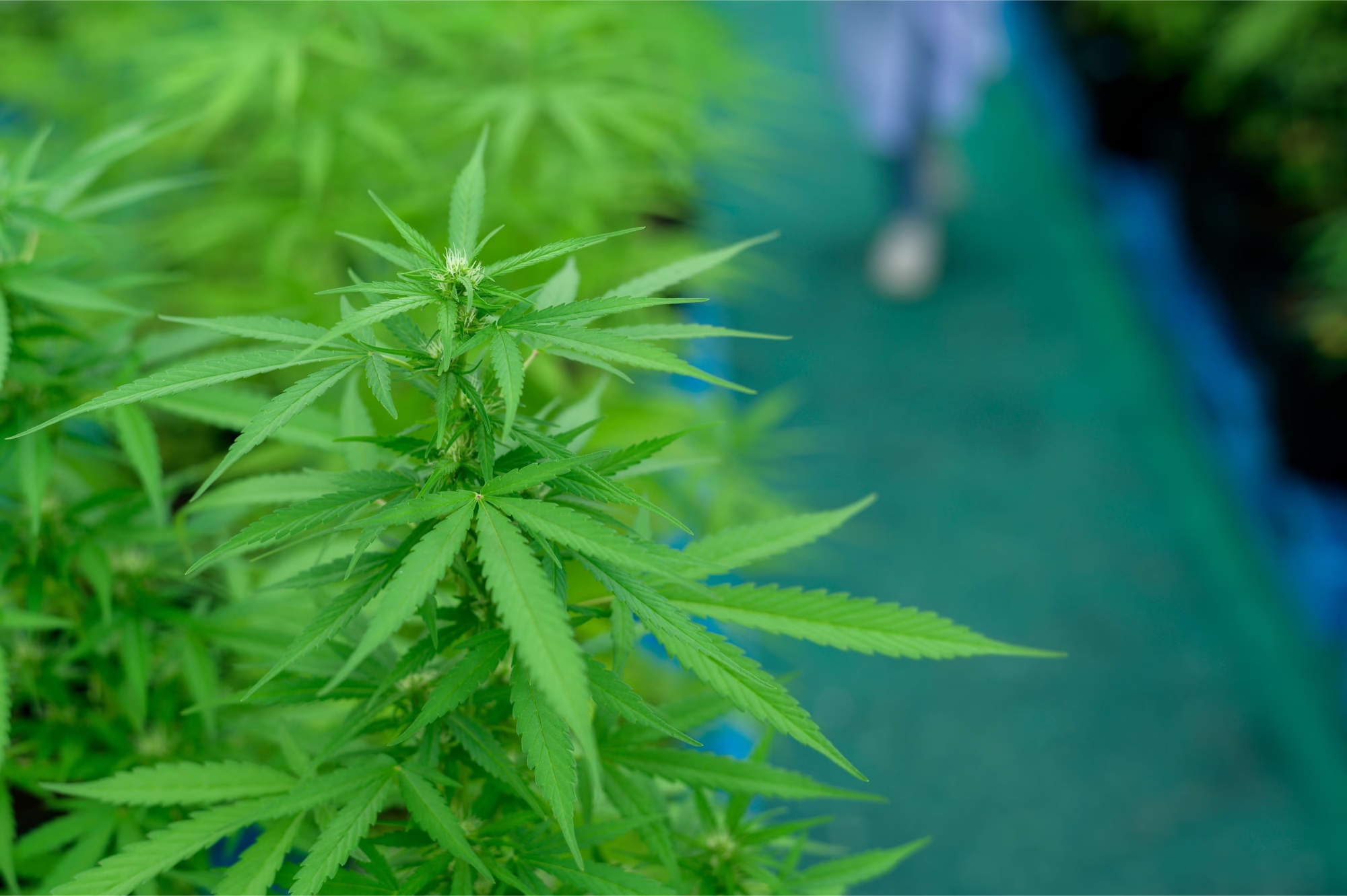
Broad fan leaf morphology exhibiting active stomatal conductance and high transpiration volume under intense photosynthetic light.
Light Intensity and Photobiology: PPFD, Daily Light Integral, and Hydraulic Flux
Radiation from grow lights or sunlight provides the thermal energy and biological signals that power the transpiration engine:
- Blue-Light Photoreceptors and Stomatal Opening: Guard cells possess specialized blue-light photoreceptors known as phototropins. Even low levels of blue photon flux (5 to 10 μmol/m2/s) trigger hyperpolarization of guard cell membranes, activating proton pumps and initiating rapid stomatal opening within 15 minutes of lights-on. Broad-spectrum white LED fixtures rich in 450 nm blue light promote wide stomatal apertures, facilitating rapid transpiration.
- Daily Light Integral (DLI) and Total Daily Transpiration: The total volume of water transpired across a 24-hour cycle correlates almost linearly with cumulative photosynthetic photon accumulation (mol/m2/day). A vegetative canopy receiving 25 mol/m2/day transpires approximately half the water volume of a high-light flowering room absorbing 45 to 55 mol/m2/day (under 1,000 to 1,200 μmol/m2/s PPFD with supplemental carbon dioxide). Higher photon flux directly accelerates cellular carbon fixation, requiring wider stomatal opening and triggering greater moisture extraction from the medium.
- Radiant Heat Load: LED vs High-Pressure Sodium (HPS): High-pressure sodium luminaires emit massive amounts of infrared radiation (700 nm to 1,000 nm), directly heating the upper canopy leaf tissue regardless of air temperature. Commercial broad-spectrum LED arrays deliver high PAR efficiency with virtually zero radiated infrared energy. Consequently, plants grown under LEDs transpire slightly less water per unit of PPFD than under HPS at identical air temperatures, requiring cultivators to raise ambient room temperatures (typically 27 °C – 29 °C under LED) to achieve equivalent transpiration rates.
| Environmental Variable | Operational Change | Effect on Atmospheric Drying Force | Impact on Plant Daily Water Demand | Required Fertigation Adjustment |
|---|---|---|---|---|
| Ambient Air Temperature | Increases from 22 °C to 28 °C | Exponential surge in air moisture capacity (VPD ↑) | Surges 50% – 100% higher | Increase pulse shot frequency; reduce input feed EC slightly |
| Relative Humidity (RH) | Rises from 50% to 75% | Drastic collapse in vapor pressure deficit (VPD ↓) | Drops 40% – 60% lower | Reduce shot count; extend dry-back times to avoid hypoxia |
| Light Intensity (PPFD) | Ramps from 400 to 1,000 μmol/m2/s | Wider stomatal aperture; higher leaf temperature | Surges 100% – 200% higher | Accelerate P2 maintenance shots; maintain steady container capacity |
| Canopy Air Velocity | Increases from 0.1 to 0.6 m/s | Strips boundary layer resistance off foliar surfaces | Increases 20% – 35% higher | Ensure uniform airflow to prevent uneven dry-backs across benches |
| Elevated CO2 (1,200 ppm) | Enrichment from 400 to 1,200 ppm | Induced partial stomatal closure (improved WUE) | Decreases 15% – 25% per unit leaf area | Offset by massive biomass expansion; monitor substrate dry-down |
The multidimensional dynamics summarized in Table 1 demonstrate why cannabis irrigation can never be managed as an isolated task separate from room climate control. When cultivators adjust lighting levels or deploy modern high-efficiency LED arrays, the entire energy balance of the cultivation room shifts immediately. Even a minor adjustment in airflow velocity strips the insulating stagnant boundary layer of humid air clinging to leaf surfaces, suddenly exposing leaf stomata to the full evaporative force of room VPD. In high-tech commercial facilities, environmental computers calculate real-time transpiration flux, coordinating dehumidification capacity with automated irrigation manifolds. However, growers transitioning between different lighting technologies frequently misjudge these physical forces, causing severe nutritional and hydraulic imbalances.
Why are my plants drinking twice as much water under new LEDs even though room temperature is identical to my old HPS setup?
Question sent by: Mateo Silveira, via email.
“I recently retrofitted my flower room from 1,000W double-ended HPS lights to high-output commercial LED fixtures. I kept the room temperature at 25 °C (77 °F) and relative humidity at 55%. Under HPS, my 3-gallon coco pots needed 1.8 liters per day. Under the new LEDs, the pots are bone dry by 2:00 PM and demanding nearly 3.5 liters per day! Why did water consumption almost double when the thermometer reads the exact same temperature?”
Your surge in water demand is driven by two biophysical factors: drastically higher usable photon flux (PPFD) and the total elimination of heat-induced photoinhibition.
First, when growers upgrade to modern commercial LEDs, they typically increase canopy PPFD from 650 – 750 μmol/m2/s up to 1,000 – 1,150 μmol/m2/s across the entire bench footprint. Photons directly activate guard cell phototropins, forcing stomatal apertures to open to their absolute physical maximum. More importantly, this 40% to 50% increase in usable photosynthetically active radiation accelerates carbon fixation (photosynthesis), demanding a massive corresponding volume of mineral ions and water to support tissue synthesis.
Second, double-ended HPS lamps emit intense infrared radiation that heats leaf surfaces up to 28 °C – 30 °C. Under high HPS heat, plants often hit localized leaf VPD levels exceeding 1.8 kPa, triggering partial stomatal shutdown (photoinhibition) during midday to protect against water loss. LEDs emit zero radiant infrared: under LEDs at 25 °C air temperature, your leaf temperature is running at a cool 23 °C – 24 °C. At this ideal leaf temperature, stomata stay 100% open all day long without stress-induced midday closing. Your plants are transpiring freely without restriction, driving an unprecedented transpirational stream.
To support this high transpiration velocity, you must increase your irrigation frequency: add two to three midday maintenance pulses (P2 shots) to replenish container capacity and prevent substrate EC from spiking due to extreme moisture draw.
Mateo’s experience illustrates how transitioning to modern LED luminaires fundamentally alters canopy water dynamics. While the cooler leaf temperature under LEDs eliminates heat-induced stomatal closure, it also accelerates transpirational mass flow because guard cells remain wide open throughout the photoperiod. If a grower fails to recognize this surge in water uptake, the root zone dries down far beyond target thresholds, causing substrate pore-water electrical conductivity to skyrocket as salts concentrate in residual capillary moisture. Conversely, commercial operators frequently face the opposing microclimatic extreme: periods of persistent high humidity and low solar radiation in greenhouse or outdoor facilities, where transpirational pull collapses entirely.
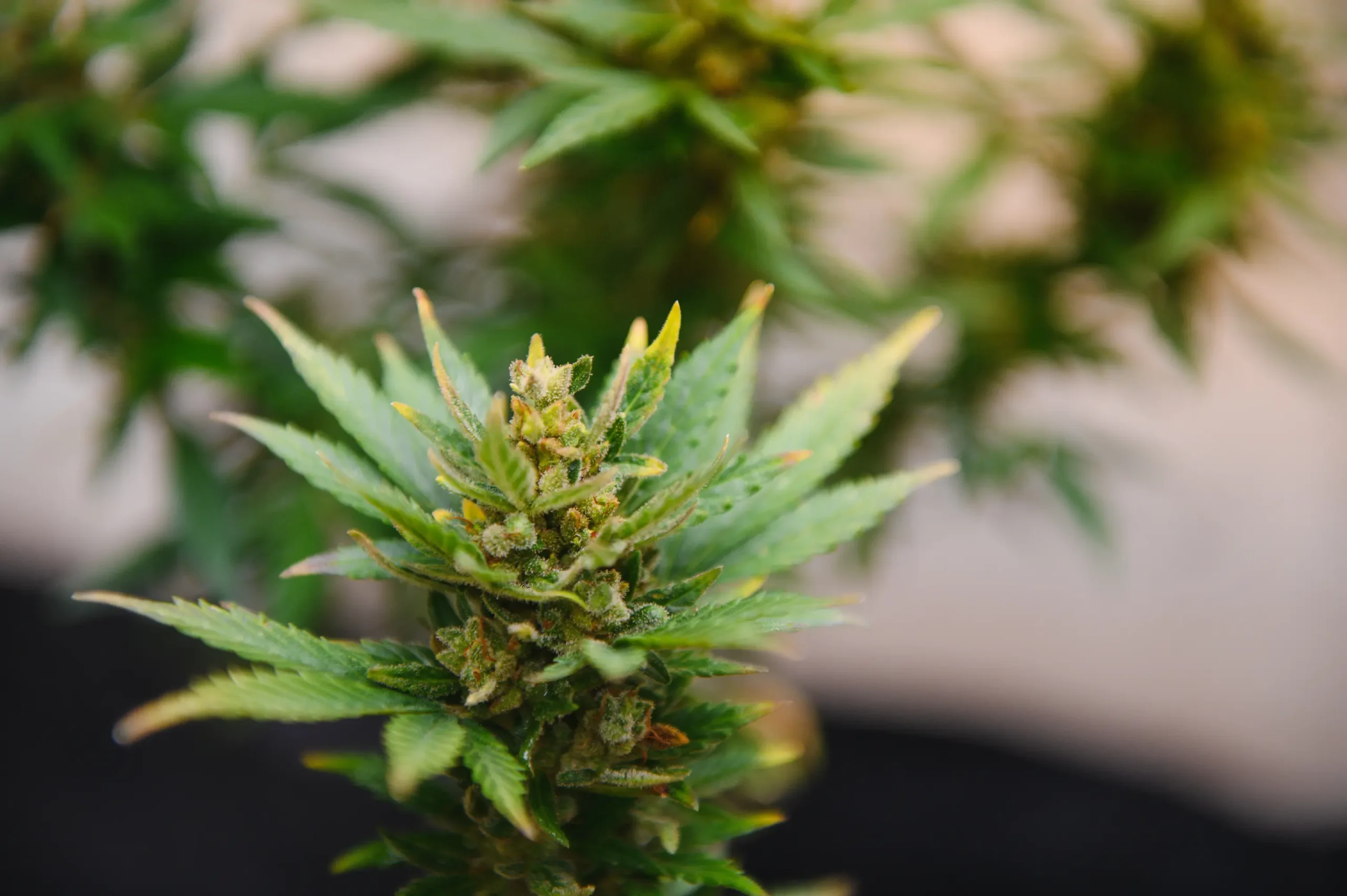
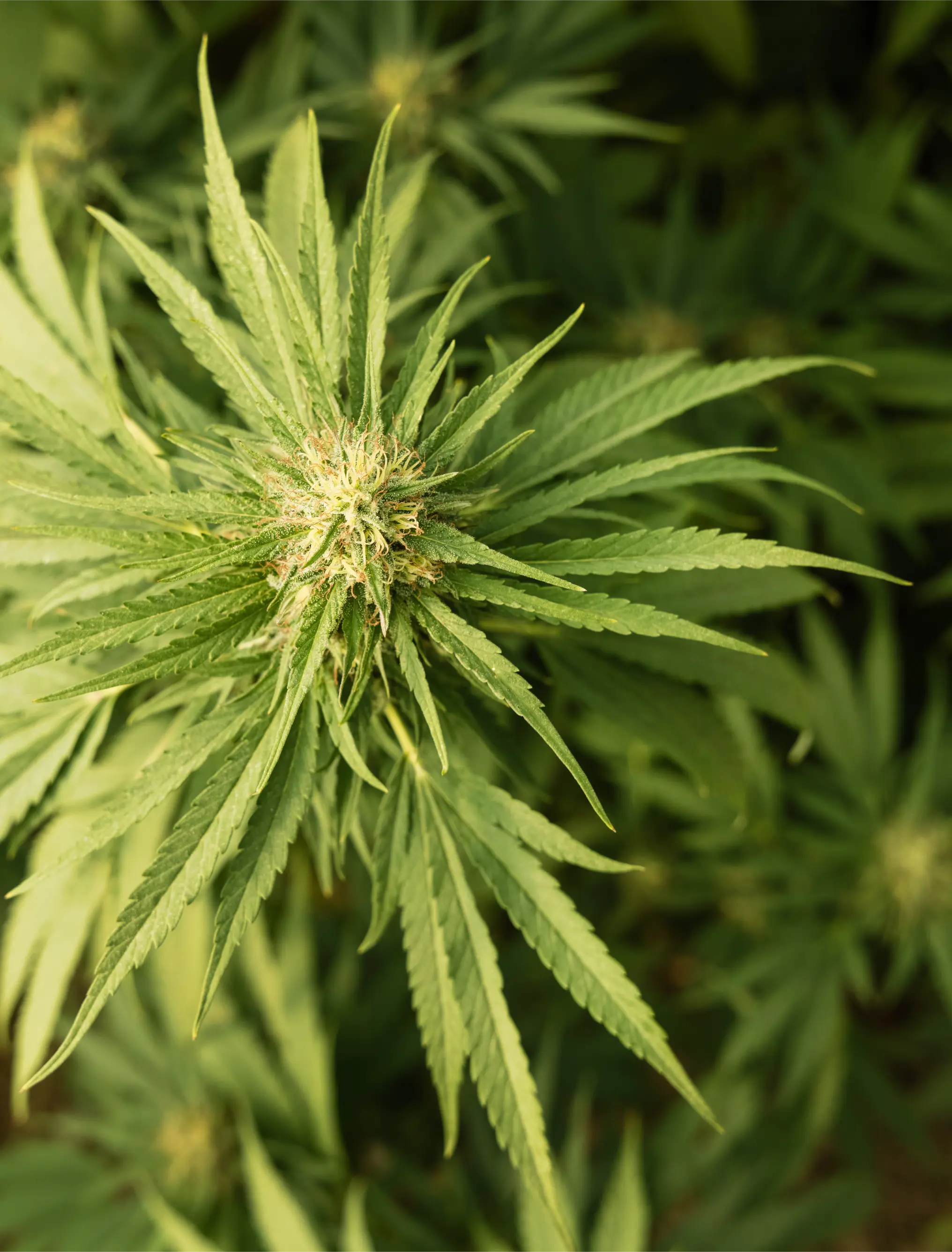
Early flowering cannabis canopy regulated within tight vapor pressure deficit targets to maximize nutrient mass flow.
Boundary Layer Resistance and Canopy Airflow Dynamics
In addition to temperature, humidity, and light, physical air movement across the leaf surface plays a critical role in controlling transpirational resistance:
- The Foliar Boundary Layer: Surrounding every cannabis leaf is a microscopic layer of motionless, stagnant air known as the boundary layer. As water vapor diffuses out of stomata, it saturates this micro-thin cushion, creating a localized humidity pocket near 90% RH immediately adjacent to the leaf surface. This boundary layer acts as a physical buffer, restricting further water evaporation regardless of room VPD.
- Stripping Boundary Layer Resistance with Air Velocity: Direct, uniform air movement across the canopy (ideal speed: 0.3 to 0.5 meters per second) physically scrubs away this boundary layer, replacing it with bulk room air. Stripping the boundary layer lowers total transpirational resistance, dramatically accelerating water vapor loss. If oscillating fans are positioned unevenly, plants situated directly in front of high-velocity fan blasts will transpire twice as fast as sheltered canopy clusters, resulting in severe container-to-container dry-back variations across the same bench.
- Stomatal Oscillation and Wind Burn: When air velocity exceeds 0.8 to 1.0 m/s directly over foliar surfaces, the boundary layer is completely destroyed. The sudden evaporative demand exceeds the xylem conduits’ hydraulic transport capacity. In response, guard cells lose turgor and snap closed to prevent desiccation. Leaves curl downward into classic “eagle claw” shapes, transpirational cooling ceases, and photosynthetic carbon assimilation halts. Air movement must be turbulent, diffused, and uniform, never focused as a jet directly onto foliage.
The Agronomic Risk: Low Airflow and Microclimate Trapping Cause False High VPD
Growers frequently position a single temperature and humidity sensor high above the lighting grid or on a wall 10 feet away from the plants. That wall sensor might register a perfect 26 °C and 55% RH (1.4 kPa VPD). However, deep inside a dense flowering canopy where air movement is stagnant (< 0.1 m/s), humidity pools at 80% RH, and the true localized VPD collapses to 0.5 kPa. In that stagnant microclimate, transpiration grinds to a halt, calcium cannot reach flower tips, and fungal spores germinate rapidly. Always place aspirated sensor beacons directly at mid-canopy height.
Proper canopy airflow management ensures that environmental sensor telemetry accurately mirrors the microclimate experienced by leaf tissues. However, even with optimal air circulation, ambient weather patterns can disrupt indoor environmental control. In commercial greenhouses and indoor warehouses with undersized dehumidification systems, prolonged outdoor rainstorms drive indoor relative humidity to extreme levels. When ambient relative humidity lingers near 80%, the atmospheric vapor pressure deficit collapses below 0.6 kPa. Under these conditions, the physical driving force for evaporation vanishes, and plants practically stop extracting moisture from the medium. Cultivators navigating these humid spells must understand how to adjust their fertigation scheduling to prevent devastating root hypoxia.
During rainy weeks, my greenhouse humidity hits 80% and pots stay wet for 4 days. Should I keep watering on timer?
Question sent by: Chloe Bennett, via email.
“I cultivate cannabis in a commercial greenhouse with light deprivation. We just entered a 5-day streak of heavy overcast rain. Outside humidity is 95%, and inside the greenhouse it is hovering around 82% RH at 21 °C. My automated drip timer is set to deliver four pulses daily, but the rockwool slabs are completely soaked, heavy, and have barely dried down in three days. Should I let the timer continue running to supply nutrients, or turn it off?”
You must immediately disable your automated irrigation timer. Forcing water into saturated slabs during a high-humidity, low-light weather event is an agronomic death sentence that will cause severe root rot and calcium deficiency.
At 21 °C and 82% relative humidity, your atmospheric Vapor Pressure Deficit has collapsed to approximately 0.45 kPa. At this extremely low VPD, the air is nearly saturated with moisture: it has virtually zero drying power. Furthermore, overcast clouds reduce incoming solar PPFD by up to 75%, eliminating the photosynthetic energy needed to drive stomatal opening. With stomata constricted and atmospheric evaporative demand near zero, your cannabis plants have virtually stopped transpiring.
If your automated timer continues pulsing nutrient solution into slabs that have not dried down, you replace air-filled macropores with stagnant water, starving roots of oxygen. Hypoxic roots lose the ability to generate ATP, causing root cortical collapse and inviting devastating Pythium infections. Furthermore, because transpiration is halted, calcium cannot travel via mass flow to rapidly expanding bud sites, resulting in severe blossom-end tip rot within days.
Your Action Plan: Lock out all irrigation until root-zone moisture sensors indicate a minimum 10% to 15% volumetric dry-back. Activate greenhouse heating and exhaust louvers simultaneously (minimum heat-and-purge cycles) to artificially lower relative humidity, or engage commercial dehumidifiers to drive VPD back above 1.0 kPa. Never water a plant because the clock says so: water only when atmospheric demand and substrate dry-back dictate replenishment.
Chloe’s greenhouse crisis emphasizes the fundamental rule of precision irrigation: fertigation must never operate independently of atmospheric transpirational reality. In automated commercial cultivation, sensor-driven controllers resolve this dilemma by linking moisture delivery directly to solar radiation sums and live VPD metrics. When rainy overcast conditions depress transpirational pull, radiation-integrated automation automatically pauses irrigation shots, preserving root-zone air-filled porosity until sunlight returns. Conversely, when sunny skies, high temperatures, and optimal humidity align, transpirational flux accelerates, triggering timely replenishment shots that keep pace with rapid water uptake.
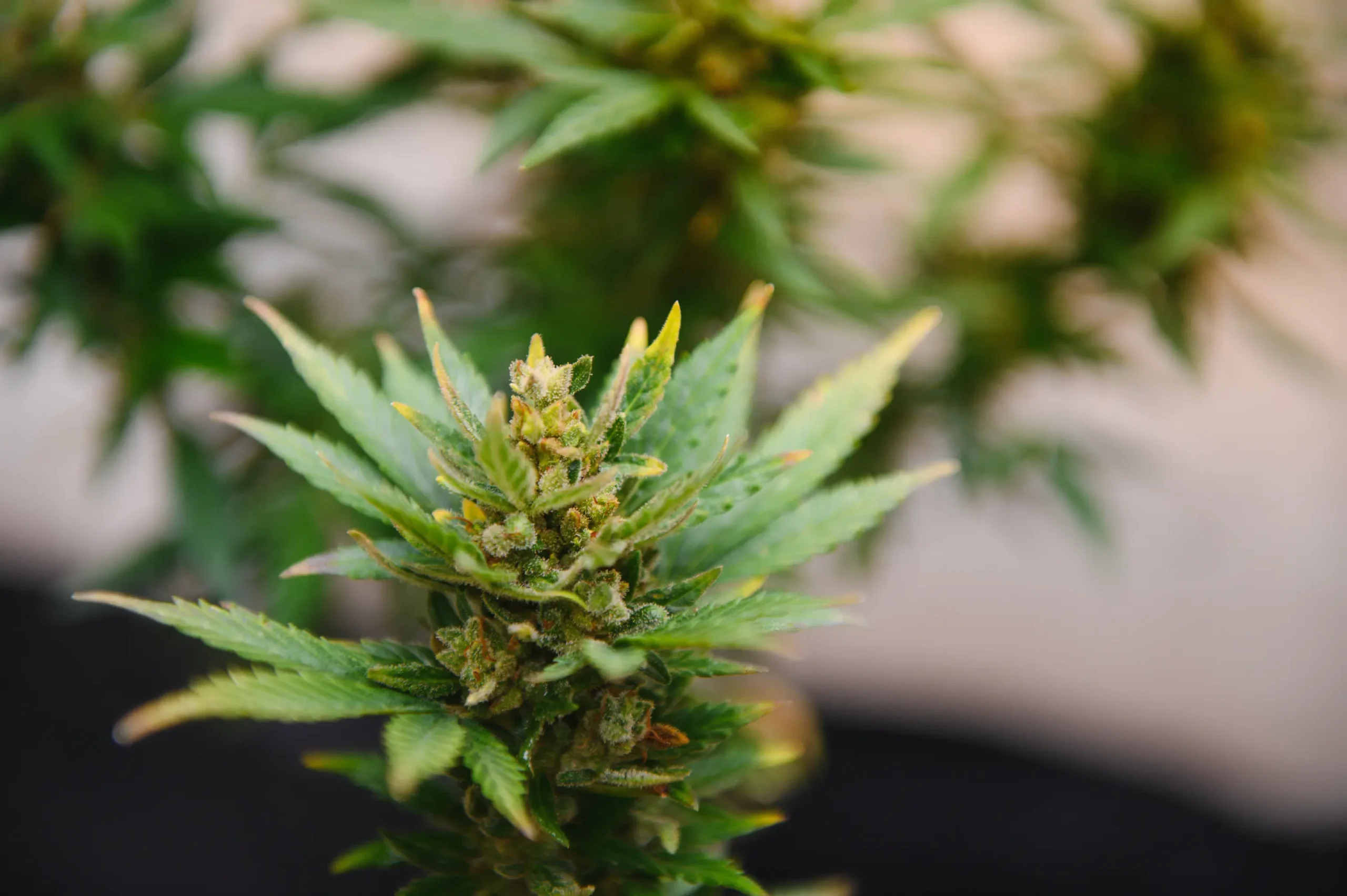
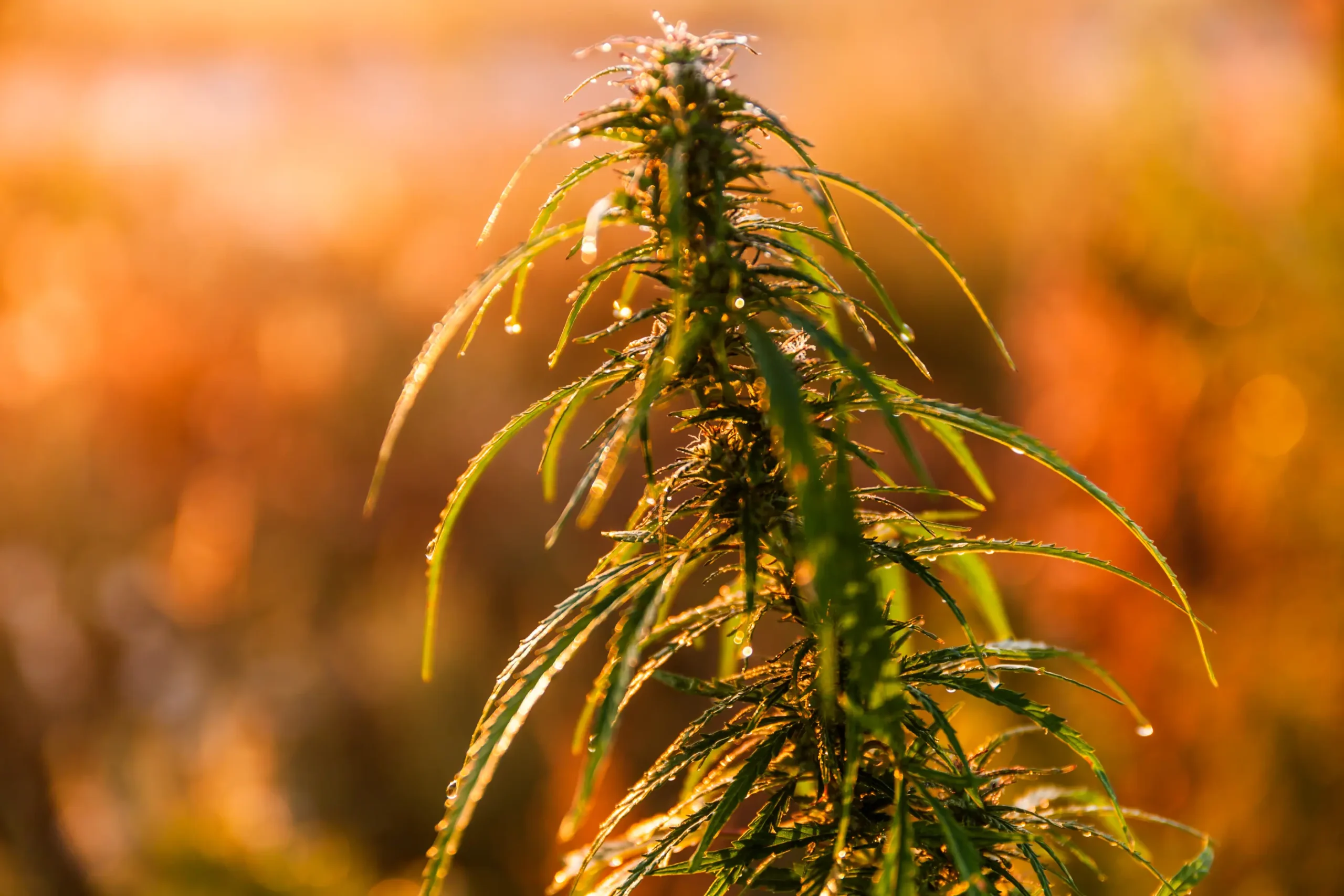
Mature floral colas transpiring under optimized environmental VPD, ensuring robust calcium mobility and high dry-back velocity.
VPD Targets Across Phenological Stages: Vegetative vs Generative Steering
Different growth stages require specific VPD environments to balance transpiration rate against tissue water stress:
- Cloning and Seedling Phase (0.6 – 0.8 kPa VPD): Cuttings have zero functional root systems; water uptake occurs solely through basal stem cut surfaces. High VPD causes instant foliar desiccation. High humidity (75% to 85% RH) and moderate temperatures (24 °C) minimize transpirational demand, preserving turgor while adventitious root primordia form.
- Vegetative Expansion Phase (0.9 – 1.2 kPa VPD): Roots are established and can support robust transpirational flux. A moderate VPD of 1.0 to 1.2 kPa encourages active stomatal opening, driving rapid mass-flow absorption of nitrogen, potassium, and calcium without subjecting cellular membranes to hydraulic tension.
- Early Flower / Stretch Phase (1.2 – 1.4 kPa VPD): Elevated transpiration aids in tightening internodal stretch while supporting intense cell division across developing floral calyxes. Substrate dry-backs are accelerated, promoting strong root-zone oxygen recharge.
- Late Flower / Ripening Phase (1.4 – 1.6 kPa VPD): Dry atmospheric conditions (45% to 50% RH) suppress fungal spore germination (Botrytis cinerea). The elevated evaporative pull stimulates secondary metabolite synthesis (cannabinoids and terpenes) while demanding careful irrigation management to prevent premature substrate salt accumulation.
| Growth Stage | Target Air Temp (°C / °F) | Target Relative Humidity | Target Leaf VPD Range | Transpiration Flux & Irrigation Strategy |
|---|---|---|---|---|
| Clones / Seedlings | 23 °C – 25 °C (73 °F – 77 °F) | 75% – 85% RH | 0.6 – 0.8 kPa | Extremely low: misting domes, minimal root uptake |
| Vegetative Stage | 25 °C – 28 °C (77 °F – 82 °F) | 60% – 70% RH | 0.9 – 1.2 kPa | Moderate-high: small frequent pulses, 8-12% dry-back |
| Weeks 1-3 Flower (Stretch) | 26 °C – 28 °C (79 °F – 82 °F) | 55% – 65% RH | 1.1 – 1.3 kPa | Peak transpiration: robust P1 ramp, 15-20% dry-back |
| Weeks 4-7 Flower (Bulking) | 24 °C – 26 °C (75 °F – 79 °F) | 50% – 55% RH | 1.3 – 1.5 kPa | High demand: multiple P2 maintenance pulses, audit EC |
| Late Flower (Ripening/Flush) | 21 °C – 23 °C (70 °F – 73 °F) | 42% – 48% RH | 1.4 – 1.6 kPa | Moderate demand: deep generative dry-backs (20-30%) |
Dynamic Fertigation Adjustment Protocols: Balancing Feed EC and Pulse Volumes
To maintain nutrient equilibrium under shifting atmospheric environments, commercial growers adjust both the volume of water delivered and the electrical conductivity (concentration) of the nutrient solution. When high temperatures and intense lighting elevate VPD, plants transpire massive volumes of pure water while leaving dissolved fertilizer salts behind in the root zone. Under these intense evaporative conditions, cultivators should slightly reduce input fertilizer EC (for example, lowering feed EC from 2.4 dS/m down to 2.0 dS/m) while increasing total irrigation volume and pulse frequency. This provides the plant with abundant water to meet evaporative demand without driving root-zone pore-water EC to toxic salinity levels.
Conversely, during periods of cool temperatures, high relative humidity, or reduced lighting intensity, transpiration slows dramatically while the plant’s active demand for metabolic ions continues. Under low-transpiration conditions, cultivators should increase input feed EC slightly (raising feed EC from 2.0 dS/m to 2.4 dS/m) while significantly reducing irrigation volume and spacing out pulses. This ensures that root systems absorb necessary mineral nutrition without flooding substrate macropores or inducing root hypoxia. By coupling real-time environmental monitoring with dynamic fertigation adjustments, commercial facilities optimize plant water use efficiency across every season.
Microclimate and Water Demand Master Checklist
Audit these critical environmental and irrigation checkpoints daily:
- Infrared radiometer sensors are used to measure true canopy leaf temperature and calculate leaf-to-air VPD.
- Environmental sensor beacons are positioned at mid-canopy height, protected from direct fixture radiation.
- Target leaf VPD is maintained within stage-specific boundaries: 0.9-1.2 kPa in veg, 1.2-1.5 kPa in flower.
- Irrigation pulse frequency is scaled proportionally to Daily Light Integral (DLI) and real-time solar radiation sums.
- Under intense LED PPFD (> 900 μmol/m2/s), additional P2 maintenance shots are programmed to sustain hydration.
- Input feed EC is lowered slightly during extreme VPD heat waves to prevent pore-water salinity spikes.
- Input feed EC is raised slightly during low-VPD humid conditions to satisfy metabolic ion demand.
- Canopy air velocity is maintained uniformly at 0.3 to 0.5 m/s, avoiding localized high-speed windburn jets.
- Irrigation is locked out during overcast low-VPD weather events until substrate achieves minimum target dry-back.
- Root-zone VWC telemetry is cross-referenced with atmospheric VPD curves to confirm active transpiration uptake.
Scientific References
- Monteith, J. L., & Unsworth, M. H. (2013). Principles of Environmental Physics: Plants, Animals, and the Atmosphere (4th ed.). Academic Press, Boston.
- Kramer, P. J., & Boyer, J. S. (1995). Water Relations of Plants and Soils. Academic Press, San Diego, CA.
- Taiz, L., Zeiger, E., Møller, I. M., & Murphy, A. (2015). Plant Physiology and Development (6th ed.). Sinauer Associates, Sunderland, MA.
- Zheng, Y. (2021). Handbook of Cannabis Production in Controlled Environments. CRC Press, Boca Raton, FL.
- Jones, H. G. (2014). Plants and Microclimate: A Quantitative Approach to Environmental Plant Physiology (3rd ed.). Cambridge University Press, Cambridge.
- Bugbee, B. (2016). Toward an optimal spectral quality for plant growth and development: The importance of radiation capture. Acta Horticulturae, 1134, 1-12.
- Allen, R. G., Pereira, L. S., Raes, D., & Smith, M. (1998). Crop evapotranspiration: Guidelines for computing crop water requirements. FAO Irrigation and Drainage Paper 56, Rome.
- Marschner, H. (2012). Marschner’s Mineral Nutrition of Higher Plants (3rd ed.). Academic Press, London.
Share this article
A quick overview of the topics covered in this article.