Water Stress, Flower Yield, and Cannabinoid Production: Controlled Deficit Irrigation, Osmotic Steering, and Terpene Density
In commercial cannabis cultivation, the relationship between water availability, floral biomass yield, and biochemical potency represents one of the most commercially critical frontiers in plant physiology. For decades, traditional horticulture taught that optimizing crop yield required maintaining substrate moisture permanently near container capacity, eliminating all forms of drought stress. However, modern cannabinoid pharmacology and controlled-environment agricultural research have revealed a profound evolutionary paradox: cannabis is a stress-responsive bio-factory. The primary economic drivers of the crop: cannabinoids (THCA, CBDA, CBGA) and monoterpenes (myrcene, limonene, pinene, caryophyllene): are secondary metabolites synthesized within epidermal capitate-stalked glandular trichomes. In nature, these specialized phytochemicals evolved primarily as protective physical and chemical shields against ultraviolet radiation desiccation, thermal stress, and oxidative damage. When cannabis plants are subjected to scientifically engineered Controlled Deficit Irrigation (CDI) and generative osmotic dry-backs during specific phenological windows, the plant activates defensive hormonal signaling cascades that up-regulate cannabinoid synthase enzymes, elevating cannabinoid concentration by 10% to 15% without sacrificing commercial flower weight.
However, navigating the boundary between beneficial deficit stress and destructive drought damage requires extreme physiological precision. If water stress is imposed too early during the floral transition (weeks 1 to 3), the loss of cellular turgor impairs cell division and halts canopy leaf area expansion, permanently stunting colas and collapsing commercial yield by up to 35%. Conversely, if plants are subjected to un-calibrated, severe drought where leaves experience severe vascular cavitation (xylem embolism) and permanent wilting, stomatal closure arrests photosynthetic carbon assimilation, causing floral bracts to senesce prematurely and volatile terpenes to oxidize. Mastering controlled deficit irrigation requires understanding leaf water potential, abscisic acid signaling cascades, the MEP pathway of terpene synthesis, and substrate dry-back telemetry. This comprehensive agronomic guide establishes the biophysical mechanisms, experimental research data, operational timing, and diagnostic sequences required to harness water stress for maximum cannabinoid and terpene density, integrating directly with our master guides on cannabis dry-back and VWC targets, irrigation and root-zone EC dynamics, and watering cannabis by growth stage.
Evolutionary Biology: Secondary Metabolites as Biophysical Desiccation Shields
To understand why cannabis elevates resin production under moisture stress, cultivators must examine the evolutionary functions of glandular trichomes:
- The Ecological Function of Cannabinoid Resins: In the harsh, arid mountainous regions of Central and South Asia where cannabis evolved, female floral inflorescences are exposed to intense solar radiation, high winds, and severe seasonal droughts. The dense carpet of capitate-stalked glandular trichomes covering floral bracts and perigonal bracteoles serves as a multifunctional protective barrier. The viscous, hydrophobic resin matrix traps moisture, reflecting harmful UV-B radiation (280 to 315 nm), reducing foliar transpiration, and deterring phytophagous insects through bitter, sticky chemical defenses. Under moisture stress, plants prioritize resin gland production to prevent reproductive structures from desiccating before fertilization.
- The Abscisic Acid (ABA) and Jasmonic Acid (JA) Signaling Cascades: When substrate moisture drops and roots encounter matric suction exceeding -0.05 MPa, root cells synthesize the drought hormone abscisic acid (ABA). ABA is transported via the xylem stream into the canopy, where it triggers guard cell ion efflux, causing stomatal closure to conserve water. Simultaneously, mild water deficit induces systemic production of jasmonic acid (JA) and methyl jasmonate (MeJA). Jasmonic acid acts as the master transcriptional activator for secondary defense metabolism, binding to JAZ repressor proteins and releasing transcription factors that up-regulate terpene synthase (TPS) and polyketide synthase genes. This hormonal synergy directly couples drought signaling with terpene and cannabinoid accumulation.
- Enzyme Up-Regulation in the MEP and Polyketide Pathways: Cannabinoid biosynthesis begins with the condensation of hexanoyl-CoA and malonyl-CoA by polyketide enzymes (olivetolic acid synthase and olivetolic acid cyclase) to form olivetolic acid. Concurrently, the 2-C-methyl-D-erythritol 4-phosphate (MEP) pathway in plastids generates geranyl pyrophosphate (GPP). The aromatic prenyltransferase enzyme (CsPT4) couples GPP with olivetolic acid to create cannabigerolic acid (CBGA), the central mother cannabinoid. Peer-reviewed research demonstrates that moderate drought stress significantly increases the transcript abundance of THCA synthase (THCAS) and CBDA synthase (CBDAS) within trichome secretory disk cells, converting precursor pools into finished active cannabinoids at accelerated rates.
The Agronomic Physics: Total Extracted Mass vs Cannabinoid Percentage
In commercial cannabis analytics, there is a fundamental mathematical difference between cannabinoid concentration (% dry weight) and total cannabinoid yield (grams per square meter): Total Cannabinoid Mass = Dry Flower Weight × Cannabinoid %. Severe drought stress might raise THC concentration from 24% to 27%, but if it reduces dry flower biomass by 25%, total harvested cannabinoid mass drops significantly. The objective of professional Controlled Deficit Irrigation (CDI) is to locate the optimal biological inflection point: applying moderate moisture stress that maximizes cannabinoid percentage while preserving 95% to 98% of total floral biomass.
Peer-Reviewed Research: Controlled Deficit Irrigation in Medical Cannabis
Until recently, cultivator understanding of water stress relied primarily on anecdotal folklore. However, groundbreaking scientific trials have established rigorous empirical benchmarks:
- The University of Guelph Landmark Study (Caplan et al., 2019): In a controlled scientific trial published in HortScience, researchers investigated the impact of controlled deficit irrigation on potted medicinal cannabis in peat-based substrates during the flowering stage. Plants subjected to a regulated deficit irrigation threshold (allowing substrate water potential to drop to -0.05 MPa before irrigating) during the final weeks of flowering showed a 12% increase in THCA content and a 13% increase in CBDA content compared to control plants kept fully well-watered. Remarkably, this increase in active pharmaceutical ingredients was achieved without any statistically significant reduction in dry flower yield or commercial grade. The research team noted that precision timing was critical: applying stress earlier in flower diminished yield.
- Terpene Density and Volatile Synthesis: Scientific profiling of monoterpene and sesquiterpene accumulation under deficit regimes reveals that moderate water stress significantly elevates concentrations of beta-myrcene, d-limonene, and beta-caryophyllene. Because monoterpenes possess high volatility, plants under mild water deficit increase glandular storage capacity, resulting in denser resin glands and enhanced aromatic pungency. However, extreme drought where leaf temperatures climb above 30 °C triggers evaporative off-gassing and thermal degradation of fragile monoterpenes. Maintaining moderate canopy temperatures during deficit prevents volatile loss.
- Photosynthetic Quantum Efficiency (Fv/Fm): Using chlorophyll fluorometers, researchers monitor the maximum photochemical quantum efficiency of Photosystem II (Fv/Fm). Healthy unstressed cannabis exhibits an Fv/Fm ratio of 0.80 to 0.83. Mild controlled deficit maintains Fv/Fm above 0.78, indicating that the photosynthetic apparatus remains undamaged and electron transport continues unimpeded. Severe drought causes Fv/Fm to collapse below 0.65, indicating acute photo-inhibition and permanent cellular senescence.

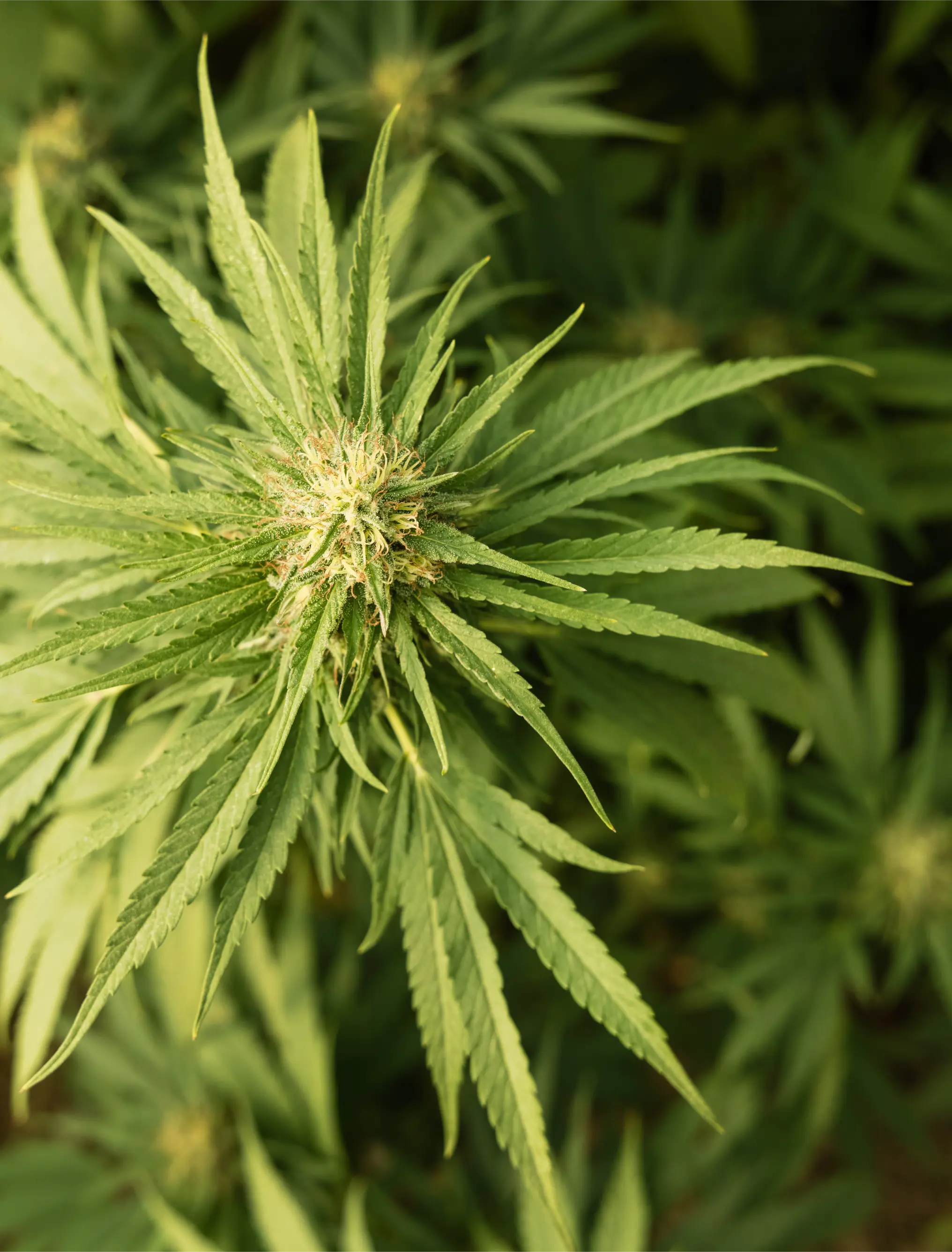
Capitate-stalked glandular trichomes swelling with aromatic resin following controlled late-flower moisture deficit cycles.
Phenological Timing: When to Apply Deficit Stress and When to Water Abundantly
The physiological outcome of water deficit depends entirely on the developmental stage at which moisture restriction is applied across the flowering cycle:
- Weeks 1 to 3 of Flower (Stretch and Floral Induction): Zero Deficit Permitted. During the post-flip stretch, cannabis canopies undergo rapid cellular division, internodal elongation, and rapid leaf area expansion. The plant requires maximum turgor pressure to drive cell enlargement. Applying drought stress during weeks 1 to 3 restricts canopy footprint, shrinks total photosynthetic leaf area, and limits the total number of floral bud sites (nodes), permanently capping harvest potential. Irrigation should be vegetative to moderate, maintaining high container capacity and narrow dry-backs.
- Weeks 4 to 6 of Flower (Floral Bulking and Bract Proliferation): Mild Generative Steering. Colas are established and undergoing rapid floral calyx swelling. Maintain steady midday hydration (P2 maintenance pulses) to support active carbon fixation, but enforce moderate overnight dry-backs (14% to 18% VWC drop) to promote root-zone oxygenation and signal generative development. Ensuring adequate moisture prevents premature calyx hardening.
- Weeks 7 to 9 of Flower (Floral Ripening and Terminal Deficit): Active Controlled Deficit. Calyx cell division has completed; colas are accumulating essential oils, secondary cannabinoids, and aromatic terpenes. This is the exclusive operational window for Controlled Deficit Irrigation (CDI). Extending the overnight dry-back to 20% to 28% VWC drop (or allowing living soil beds to reach -0.05 to -0.08 MPa matric suction) triggers the full secondary metabolite defense response without sacrificing flower biomass. This terminal deficit also accelerates chlorophyll catabolism, aiding final cure quality.
| Irrigation Regime | Substrate Water Potential (Ψsub) | Dry Floral Yield (% of Control) | Cannabinoid Potency (% THC/CBD) | Total Cannabinoid Mass Output | Agronomic Assessment |
|---|---|---|---|---|---|
| Fully Well-Watered (Control) | -0.01 to -0.02 MPa (0% deficit) | 100% (Baseline maximum) | Baseline (e.g. 24.0% THC) | 100% baseline mass | Maximum bulk biomass; sub-optimal chemical density |
| Mild Controlled Deficit (CDI) | -0.03 to -0.05 MPa (Late Flower) | 97% – 100% (Zero significant loss) | +10% to +14% increase (27.1% THC) | 108% – 112% maximum | Commercial Gold Standard: Peak commercial value |
| Moderate Deficit Stress | -0.06 to -0.09 MPa | 88% – 92% (8-12% biomass loss) | +12% to +16% increase (27.5% THC) | 101% – 104% (Parity) | High potency; slight flower mass penalty |
| Severe Unregulated Drought | < -0.12 MPa (Visible wilting) | 60% – 75% (Catastrophic collapse) | +5% to +8% (Terpenes degraded) | 68% – 80% (Severe loss) | Destructive failure: cellular lysis and crop failure |
The empirical comparisons detailed in Table 1 definitively resolve the age-old debate between maximum yield and maximum potency. Applying mild controlled deficit irrigation during terminal ripening produces a statistically significant surge in cannabinoid concentration without compromising dry flower biomass, yielding the highest total mass of extracted active ingredients per square meter of canopy. However, in the absence of precision instrumentation, many legacy cultivators misinterpret the concept of deficit irrigation. A widespread and destructive folklore myth persists in illicit and traditional cultivation circles: the belief that cutting off all water entirely for the final three to five days before harvest will force the plant to push out massive amounts of resin as a dying gasp. In reality, total starvation triggers catastrophic physiological collapse rather than controlled biochemical stimulation.
Should I cut off water completely for 3 days before harvest to stress the plants and boost THC?
Question sent by: Julian DeMarco, via email.
“An old grower told me that if I completely stop watering my plants 72 to 96 hours before harvest, the extreme drought stress will force the buds to dump trichomes and push THC levels through the roof. My pots are currently bone dry, the fan leaves are crispy and drooping, and the lights are still running at full power. Does this pre-harvest dry-out actually increase potency, or am I damaging my crop?”
You must immediately deliver a light hydration pulse: total pre-harvest starvation is an agronomic myth that destroys terpene quality and causes cellular necrosis.
First, glandular trichome heads are living biochemical factories that require hydration, cellular turgor, and active cytoplasmic streaming to synthesize cannabinoids. When a container dries down to the permanent wilting point for 72 hours, intracellular water potential collapses below -1.5 MPa. At this lethal stress level, root hairs shrivel, xylem vessels experience hydraulic cavitation (air bubbles break the water columns), and stomata snap closed. Without transpirational evaporative cooling, the canopy temperature surges 3 °C to 6 °C above ambient air temperature under high-intensity lights.
Second, this extreme foliar heating rapidly volatilizes and oxidizes your most precious monoterpenes (myrcene, limonene, terpinolene), boiling off the delicate aromatic top notes that define premium flower quality. Furthermore, starving root cells causes necrotic fan leaves to shrivel and dry directly into the floral colas, exponentially increasing the risk of post-harvest Botrytis cinerea (gray mold) during the hang-dry phase. Capitate trichomes cannot synthesize cannabinoids in dead, desiccated tissue.
The Professional Alternative: Implement Controlled Deficit Irrigation (CDI) instead of complete starvation. Rather than withholding water until plants wilt, deliver small, targeted morning pulses that replenish approximately 40% to 50% of the daily transpirational draw. This maintains sufficient cellular turgor to prevent wilting while enforcing a controlled 20% to 25% substrate dry-back. The plant remains metabolically active, synthesized terpenes remain sealed inside intact resin glands, and secondary metabolite pathways are stimulated safely.
Julian’s situation illustrates the critical distinction between regulated biological stimulation and indiscriminate drought damage. When plants are pushed into severe un-watered wilting, the physical integrity of cell membranes is destroyed. In contrast, controlled deficit irrigation operates within the plant’s natural physiological buffering capacity. By monitoring plant turgor and substrate moisture telemetry, commercial growers guide cannabis through intentional dry-backs that trigger defensive hormonal pathways without ever allowing leaves to lose structural turgor or experience vascular cavitation. Understanding how to interpret foliar visual cues alongside digital sensor metrics is what allows master growers to execute deficit regimes with surgical precision.
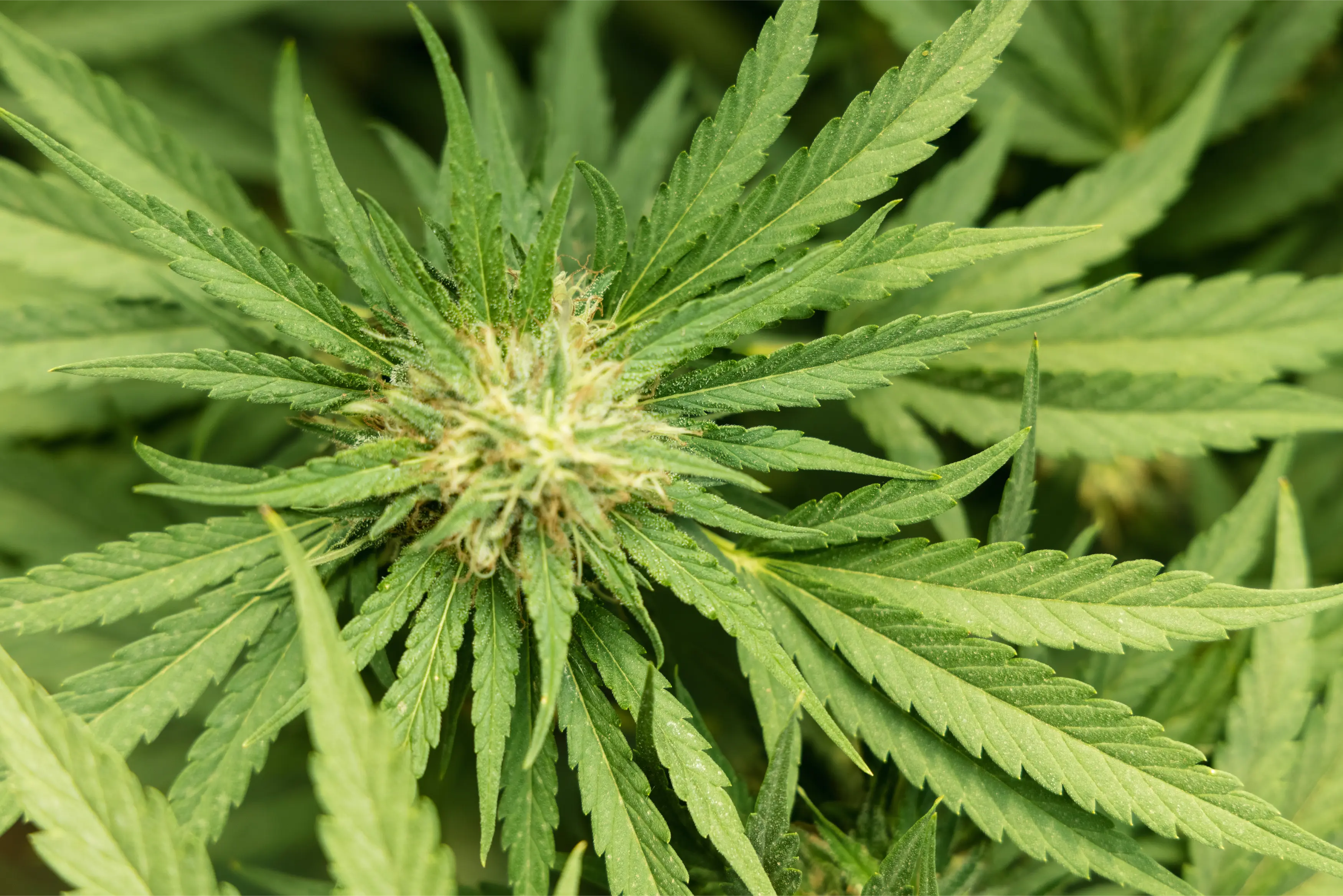
Dense floral bract clusters maintaining structural turgor under mild regulated deficit irrigation in commercial substrate.
Biophysical Diagnostics: Differentiating Beneficial Generative Stress from Drought Injury
To successfully execute controlled deficit irrigation without crossing into lethal stress, cultivators must master these diagnostic indicators:
- Foliar Petiole Angle and Leaf Turgor: In a plant experiencing beneficial generative water deficit, leaf blades remain fully horizontal and turgid, but the petiole angle (the angle between leaf stem and main stalk) drops slightly from an alert 45 degrees to a relaxed 25 degrees. When a plant crosses into dangerous drought stress, the primary leaf blades themselves become flaccid, curling downward and losing all structural turgor.
- Stomatal Conductance (gs) Thresholds: In commercial research facilities, handheld porometers or leaf gas exchange analyzers measure stomatal conductance. Healthy unstressed cannabis exhibits stomatal conductance between 300 and 500 mmol/m2/s. Under optimal controlled deficit irrigation, conductance declines moderately to 150 – 250 mmol/m2/s, conserving water while sustaining carbon fixation. If conductance drops below 80 mmol/m2/s, stomata have closed completely, shutting down photosynthesis.
- Canopy Leaf Temperature vs Room Air Temperature: Using infrared thermal cameras, growers track leaf temperature depression (LTD). As long as transpiration continues during controlled deficit, leaf surfaces remain 0.5 °C to 1.5 °C cooler than ambient room air. If leaf temperature rises to match or exceed ambient air temperature (Tleaf ≥ Tair), transpiration has completely ceased, signaling an emergency need for immediate irrigation.
The Physiological Danger: Xylem Cavitation and Vascular Embolism
Inside the vascular xylem bundles of cannabis, water is held under continuous negative tension (the cohesion-tension theory). When substrate matric suction becomes excessively negative (past -0.15 MPa in soilless media), the tensile strength of the water column breaks. Dissolved micro-bubbles expand instantaneously, filling xylem vessel elements with air in a destructive physical event known as acoustic cavitation (embolism). Once a xylem vessel cavitates, it can no longer transport water or mineral ions to the canopy, permanently crippling that branch for the remainder of the crop cycle.
Preventing xylem cavitation requires establishing strict lower boundaries on substrate dry-back percentages. While substrate moisture sensors report real-time volumetric water content, growers must translate those numbers into actionable irrigation commands. A common challenge arises in facilities cultivating diverse genetic cultivars side-by-side on the same irrigation bench. Different cannabis cultivars exhibit vastly divergent drought tolerance: narrow-leaf equatorial sativa phenotypes often consume water rapidly and wilt easily, while broad-leaf Afghan indica cultivars possess thick epidermal cuticles and robust osmotic regulation that withstand deeper dry-backs. Cultivators must learn how to navigate these phenotypic differences to avoid uneven stress across the canopy.
How do I know the exact VWC dry-back target for late-flower deficit without causing leaf wilting?
Question sent by: Maya Lin, via email.
“I cultivate in 2-gallon coco coir pots with automated drip and Aroya sensors. In vegetative growth, I let pots dry back 10% overnight (from 62% peak down to 52% VWC). Now I am in week 7 of flower and want to implement controlled deficit irrigation to maximize THC and terpenes. Exactly how deep should I push the dry-back, and what is my safety floor to prevent drought damage?”
To execute controlled deficit irrigation safely in 2-gallon coco coir, target an overnight volumetric dry-back of 18% to 22%, maintaining a strict safety floor of 38% to 40% VWC.
In standard 70/30 coco/perlite blends, container capacity (maximum gravity-drained saturation) hovers between 60% and 65% VWC. The permanent wilting point for coconut coir occurs when moisture drops below 28% to 30% VWC: at that depth, capillary water films become too thin for root hairs to extract moisture against matric suction.
During late flower Controlled Deficit Irrigation (weeks 7 and 8), your strategy is to hover comfortably above the wilting floor while still generating strong generative hormonal signaling:
- Morning P1 Saturation: Deliver a sequence of small pulses starting 2 hours after lights-on to ramp VWC from its overnight floor up to 58% – 60% VWC. In late flower, you do not need 70% saturation; a 58% peak provides ample moisture for midday photosynthesis without over-saturating the root core.
- Midday P2 Window: Strictly restrict or eliminate P2 maintenance pulses. Allow the canopy to transpire freely through the afternoon.
- Evening P3 Lockout & Overnight Dry-Back: Cease all irrigation 3 to 4 hours before lights-off. Over the next 14 to 16 hours (including the dark cycle), the substrate will steadily dry down from 58% to approximately 38% – 40% VWC (an 18% to 20% dry-back).
At 38% VWC, coco coir still holds ample capillary water to prevent xylem cavitation, but the elevated matric suction and concentrating pore-water EC trigger continuous ABA synthesis, maximizing trichome secondary metabolism safely.
Maya’s operational framework demonstrates how digital substrate telemetry transforms deficit irrigation from a dangerous gamble into an exact engineering protocol. By maintaining a hard floor at 38% VWC in coco coir, cultivators harness the full hormonal and enzymatic benefits of moisture restriction while keeping the root zone safely above the permanent wilting point. When executing these generative dry-backs across large commercial benches, operators must also monitor root-zone pore-water electrical conductivity. As moisture evaporates and is transpired by the plant, the dissolved mineral salts naturally concentrate, creating a combined matric-and-osmotic stress environment that demands careful stage-specific calibration.
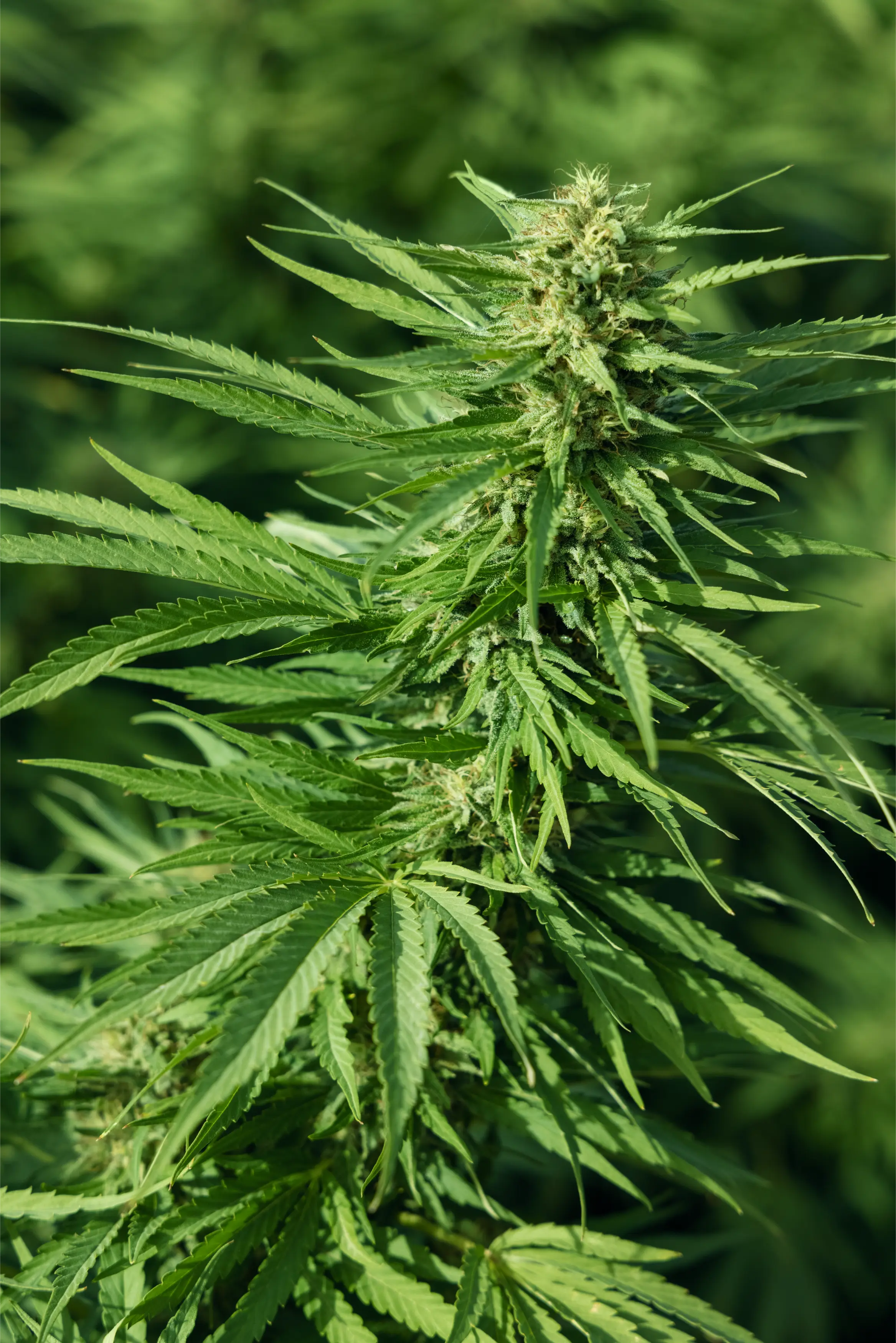
Heavy cannabinoid-producing cannabis canopy audited for stomatal conductance and chlorophyll fluorescence during dry-down.
Phenological Deficit Irrigation Scheduling Matrix
Commercial crop-steering programs calibrate irrigation delivery according to weekly phenological goals:
- Weeks 1 to 2 Flower (Transition / Stretch): Vegetative steering focus. Overnight dry-backs are kept tight (8% to 12% VWC drop). Frequent small pulses maintain high container capacity, fueling rapid root expansion and maximizing the number of flowering nodes.
- Weeks 3 to 5 Flower (Bud Set / Early Bulking): Moderate generative steering. Overnight dry-backs expand to 14% to 16% VWC drop. P2 maintenance pulses sustain active carbon fixation during peak midday PPFD, keeping colas hydrated while encouraging dense floral calyx formation.
- Weeks 6 to 7 Flower (Mid Bulking / Calyx Swelling): Transition phase. Overnight dry-backs increase to 16% to 18% VWC drop. Daily leaching fraction is maintained at 15% to prevent runaway salt accumulation in root zones.
- Weeks 8 to 9 Flower (Terminal Ripening / Deficit): Active Controlled Deficit Irrigation (CDI). Overnight dry-backs expand to 20% to 24% VWC drop in rockwool and coco. P2 maintenance shots are eliminated. Input EC is tapered down while secondary cannabinoid synthase activity peaks.
| Flowering Phase (Weeks) | Peak Container VWC % Target | Overnight Dry-Back Target % | Irrigation Window Focus | Target Agronomic Outcome |
|---|---|---|---|---|
| Weeks 1 – 2 (Floral Stretch) | 65% – 70% VWC | 8% – 12% drop | Vegetative: Rapid P1 ramp + active P2 maintenance | Maximize node sites; prevent vegetative stalling |
| Weeks 3 – 5 (Early Bulking) | 62% – 66% VWC | 14% – 16% drop | Balanced: Controlled P1 ramp + moderate P2 shots | Dense floral clustering; tight internodal spacing |
| Weeks 6 – 7 (Late Bulking) | 60% – 64% VWC | 16% – 18% drop | Generative: Slower P1 ramp + restricted P2 pulses | Calyx expansion; active mass flow calcium supply |
| Weeks 8 – 9 (Terminal Deficit) | 56% – 60% VWC | 20% – 24% drop (CDI) | Strict Deficit: Brief P1 ramp + ZERO P2 shots | Peak cannabinoid and terpene synthesis |
Environmental Integration: Aligning Deficit Irrigation with Room Vapor Pressure Deficit
Controlled Deficit Irrigation cannot be executed in a vacuum; it must be synchronized with atmospheric Vapor Pressure Deficit (VPD) and lighting intensity. When root moisture availability is restricted during late flower, the plant’s capacity for latent heat evaporative cooling is naturally diminished. If room air temperature is maintained at 28 °C with a high VPD of 1.6 kPa while the root zone is undergoing a 22% dry-back, the extreme atmospheric demand will overwhelm the restricted root water supply. Leaf stomata will snap closed, causing foliar temperatures to surge past 31 °C, which induces severe photo-oxidative stress and destroys delicate monoterpenes like myrcene and pinene.
To safeguard crop quality during terminal deficit irrigation, commercial facility managers slightly soften atmospheric stress. During weeks 8 and 9, ambient room temperatures are reduced to 22 °C to 24 °C (72 °F to 75 °F), while relative humidity is maintained at 48% to 52%, establishing a moderate leaf VPD between 1.2 and 1.3 kPa. Lighting intensity is backed off slightly from 1,100 μmol/m2/s down to 850 μmol/m2/s. This controlled microclimate allows the plant to experience the biochemical benefits of subterranean root-zone water deficit without suffering foliar thermal overload, ensuring maximum preservation of trichome resin heads and aromatic terpenes.
Controlled Deficit Irrigation Master Checklist
Audit these critical biological and telemetry parameters before initiating deficit irrigation:
- Controlled Deficit Irrigation is strictly restricted to terminal ripening (weeks 7 to 9 of flower).
- Zero water deficit is permitted during weeks 1 to 3 to protect floral stretch and canopy node development.
- Overnight substrate dry-back targets are expanded to 20% to 24% VWC drop in rockwool and coco coir.
- A strict moisture safety floor is programmed at 38% to 40% VWC to prevent root hair desiccation and cavitation.
- Complete pre-harvest water starvation (cutting water for 72+ hours) is completely prohibited.
- Canopy leaf temperature depression is audited via thermal radiometers to ensure leaves remain cooler than air.
- Midday P2 maintenance pulses are eliminated during terminal deficit to enforce generative hormonal signaling.
- Ambient room temperatures are reduced to 22 °C – 24 °C during late deficit to protect volatile monoterpenes.
- Photochemical quantum efficiency (Fv/Fm) is maintained above 0.78 to verify photosynthetic health.
- Runoff EC is audited daily during morning P1 pulses to ensure concentrating salts do not exceed 4.0 dS/m.
Scientific References
- Caplan, D., Dixon, M., & Zheng, Y. (2019). Increasing inflorescence dry weight and cannabinoid content in medical cannabis using controlled deficit irrigation. HortScience, 54(5), 964-969.
- Zheng, Y. (2021). Handbook of Cannabis Production in Controlled Environments. CRC Press, Boca Raton, FL.
- Kramer, P. J., & Boyer, J. S. (1995). Water Relations of Plants and Soils. Academic Press, San Diego, CA.
- Taiz, L., Zeiger, E., Møller, I. M., & Murphy, A. (2015). Plant Physiology and Development (6th ed.). Sinauer Associates, Sunderland, MA.
- Bernstein, N., Gorelick, J., Zerahia, R., & Koch, S. (2019). Impact of environmental conditions on secondary metabolite production in Cannabis sativa L. Industrial Crops and Products, 139, 111467.
- Chaves, M. M., Maroco, J. P., & Pereira, J. S. (2003). Understanding plant responses to drought: from genes to the whole plant. Functional Plant Biology, 30(3), 239-264.
- Booth, J. K., & Bohlmann, J. (2019). Terpenes in Cannabis sativa: From plant genome to humans. Plant Science, 284, 67-72.
- Marschner, H. (2012). Marschner’s Mineral Nutrition of Higher Plants (3rd ed.). Academic Press, London.
Share this article
A quick overview of the topics covered in this article.