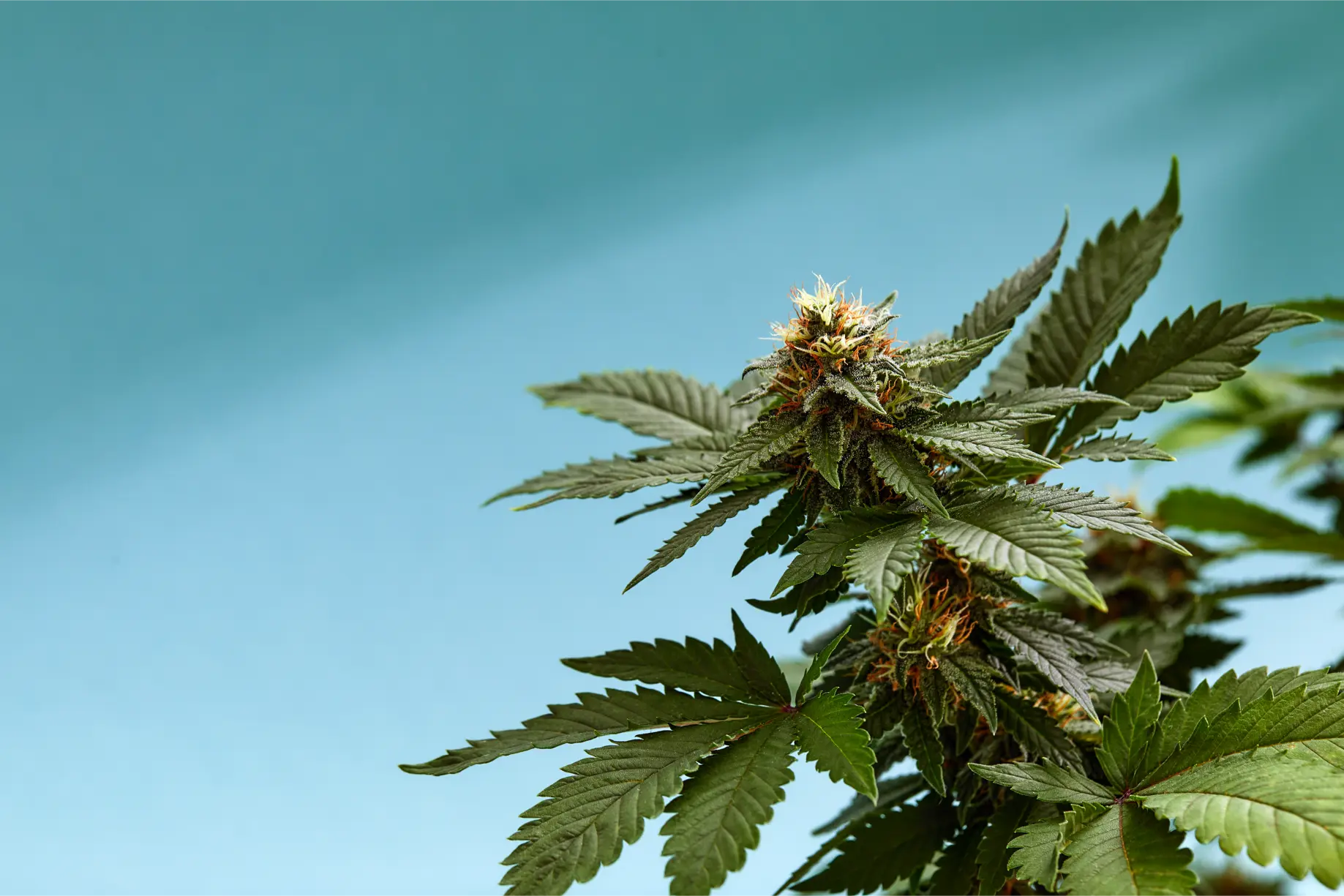
Animal Face
Animal Face is a high-potency hybrid that often grows with more vertical ambition than its dense finished flowers suggest. Its lineage combines an OG-influenced parent with Animal Mints, creating a plant that can stretch, branch, and demand support while still producing thick, resinous buds. The result is a cultivar with two very different sides: a sharp cerebral onset and a heavy physical finish, plus a plant structure that begins open but can become surprisingly crowded once the flowers harden.
The defining cultivation question is how to control height without sacrificing the strong lateral sites that make the strain productive. Animal Face is not best handled as a single-column plant in a low room. It benefits from early topping, deliberate branch spacing, and a support system installed before the tops become heavy. The grower who gets the architecture right is rewarded with pungent pine, citrus, mint, nutty sweetness, and diesel. The grower who lets it crowd itself may finish with uneven light exposure, weak lower flowers, and higher humidity risk inside the most valuable colas.
Strain Features
| Feature | Details |
|---|---|
| Strain Type | Sativa-dominant to balanced high-potency hybrid, depending on the selected cut |
| Genetic Profile | Face Off OG x Animal Mints |
| THC | Commonly reported in the mid to high 20% range; some tested batches exceed this |
| CBD | Usually very low, commonly below 1% |
| Dominant Terpenes | Limonene, beta-caryophyllene, myrcene, with pinene frequently present |
| Flavor / Aroma | Pine, diesel, citrus peel, sweet mint, nutty cream, earth, and pepper |
| Effect Character | Intense cerebral rush followed by deep body relaxation and mental quiet |
| Flowering Time | Usually about 9-10 weeks indoors, with some expressions finishing slightly earlier or later |
| Outdoor Harvest | Commonly mid to late October in the Northern Hemisphere |
| Stretch | Moderate to strong; 1.5x-2x is a practical planning range |
| Plant Architecture | Medium-tall, vigorous, branchy, and responsive to topping and trellising |
| Bud Density | Dense upper flowers with high resin and substantial late weight |
| Branch Strength | Acceptable early, but support is strongly recommended once colas swell |
| Grow Difficulty | Intermediate; height, support, humidity, and harvest timing all require attention |
| Main Grow Risk | Letting an open early canopy become a crowded, top-heavy late-flower canopy |
Genetic Lineage
Animal Face combines Face Off OG with Animal Mints. Face Off OG contributes the sharp pine, fuel, earthy depth, intense mental onset, and OG-style stretch. Animal Mints contributes sweetness, mint, cream, dense flower formation, and additional resin. The cross is often described as sativa-dominant because of its growth and early psychoactive energy, but the finished effect can feel much heavier than the label suggests.
This is a useful example of why simple indica-sativa percentages do not fully explain a cultivar. Animal Face can grow tall and produce a forceful cerebral onset, yet it also forms compact flowers and can become deeply relaxing. Growers should plan around the actual morphology rather than the category printed beside the name.
The plant often develops a strong central framework with several lateral arms capable of reaching the top plane. Those side branches are valuable. They should not be removed automatically. The better strategy is to spread them early so each branch becomes its own lighted column. If the plant is left upright, the main top can dominate and the lower branches may remain too far below the productive zone.
Phenotype variation appears in color, terpene sharpness, and the degree of stretch. Some expressions remain bright green with pine-diesel dominance. Others show bluish or purple tones and more fruit, mint, or creamy sweetness. The most desirable keeper is not necessarily the shortest or darkest. Structure, finish time, aroma intensity, and resistance to late-flower stress should be judged together.
Effect Breakdown
Low to moderate dose: fast and mentally expansive
Animal Face often announces itself quickly. The first phase can feel mentally bright, intense, and slightly disorienting in a way that experienced users may enjoy. Thoughts move faster, sensory details become more noticeable, and music or visual media can feel immersive. The mood is frequently euphoric, but the effect is not always gentle. People who are sensitive to high-THC cerebral strains may experience restlessness or anxiety if the dose is too large.
The shift from stimulation to pressure release
As the effect develops, physical tension begins to soften. The mental intensity remains, but it becomes less scattered and more absorbed. Some users describe a strong sense of focus, while others feel pleasantly detached from ordinary stress. The body effect can spread through the shoulders, limbs, and face, creating a warm, heavy calm without immediate sleepiness.
High dose: body-led and potentially sedating
At a larger dose, Animal Face often becomes much less functional. The initial mental force may be followed by deep body heaviness, appetite, and reduced motivation. This is where the strain's Animal Mints side becomes more obvious. The user may remain mentally aware while feeling physically slowed, or the entire experience may turn inward and dreamy.
The strain is best respected rather than chased. Repeated inhalation during the fast onset can push the experience past comfortable intensity. Common unwanted effects include dry mouth, dry eyes, dizziness, anxiety, and temporary mental fog. Low-tolerance users should treat Animal Face as a high-potency strain even when the aroma seems smooth and inviting.
Flavor & Aroma Profile
Animal Face has a sharper and less dessert-like profile than many modern hybrids. The first impression is often pine and fuel. Citrus peel follows, then mint, nutty cream, earth, and pepper appear as the flower opens. Some samples carry a light sweet pastry quality, but it usually sits beneath the sharper OG and diesel notes.
Aroma before grinding
The closed flower can smell dry, piney, and earthy, sometimes with lemon peel or sweet mint around the edges. A well-cured sample may also show a nut-like richness that softens the fuel. The aroma is normally strong but not always immediately sweet.
Broken flower
Grinding releases the most aggressive part of the profile. Diesel, paint-like sharpness, pine resin, citrus oil, and pepper become more obvious. Some phenotypes reveal a creamy mint or cereal-like sweetness after the initial fuel dissipates.
Palate and aftertaste
The inhale tends to begin with citrus, pine, and light sweetness. The exhale is more complex, bringing fuel, earthy pepper, mint, and a dry nutty finish. Properly cured flower can be surprisingly smooth considering the aroma intensity. Poorly dried flower often becomes harsh and loses the separation between pine, mint, and citrus.
The aroma should remain distinct after cure. If the flower becomes only earthy and peppery, the more volatile citrus and mint fraction was probably reduced by heat, excessive drying, or repeated air exposure.
Dominant Terpenes
| Terpene | Likely Role in Animal Face |
|---|---|
| Limonene | Supports lemon peel and brighter citrus notes. It may help shape the uplifted early character, although subjective effects cannot be assigned to one terpene alone. |
| Beta-Caryophyllene | Adds pepper, dry spice, and fuel-like depth. It is frequently present in pungent OG-influenced profiles. |
| Myrcene | Contributes earth, musk, and a softer herbal base. It may be consistent with the heavier physical finish reported at higher doses. |
| Pinene | Reinforces pine resin and forest-like sharpness. It can make the aroma feel cleaner and drier rather than purely sweet. |
Tested batches vary. Some are limonene-dominant, others show stronger caryophyllene or myrcene. That variation fits the strain's broad sensory profile. Animal Face should not be reduced to one terpene label. The most useful description is a pine-citrus-fuel chemotype with mint, earth, and sweet nutty support.
Terpene names are most reliable for explaining aroma. Claims that a specific terpene guarantees focus, sedation, or anxiety relief should remain cautious. Dose, THC concentration, minor cannabinoids, personal tolerance, and setting all contribute to the actual experience.
Indoor vs. Outdoor Growing
| Factor | Indoor Growing | Outdoor Growing |
|---|---|---|
| Height | Requires early planning because stretch can be substantial | Can become tall and wide with a long vegetative season |
| Training | Topping, LST, and a trellis make the plant far easier to manage | Topping and wide branch support help create a stable open framework |
| Flowering Window | Commonly 9-10 weeks under controlled conditions | Mid to late October is common, requiring a dependable autumn |
| Bud Support | Trellis or ties are strongly recommended | Stakes or a cage should be installed before branches are loaded |
| Humidity Risk | Dense tops need active air movement and a dry late-flower environment | Rain, dew, and cool nights increase risk in the final weeks |
| Flavor Control | Stable temperatures help preserve citrus, mint, and fuel clarity | Sun can deepen aroma, but hot weather and rain can reduce finish quality |
| Yield Pattern | Moderate to high when the canopy is leveled and lower growth is removed | Large plants can produce heavily, but the late harvest increases seasonal risk |
| Best Advantage | Precise control over height, support, and flower environment | Full root volume and sunlight allow the plant's vigor to express fully |
| Main Limitation | Low ceilings and delayed training can create a top-heavy room | The cultivar may still be finishing when autumn weather becomes unstable |
Indoor cultivation is generally the more predictable choice. Animal Face benefits from environmental control because its most valuable traits, dense resinous flowers and sharp terpenes, are also the traits most vulnerable to late heat and humidity. A tall room is helpful, but careful training can make a standard space work.
Outdoor cultivation suits warm regions with a long, dry autumn. The plant can build a strong structure and produce large branches, but the grower must prepare for the October finish. A short or wet season is a poor match unless the selected expression has been proven locally. Wind protection and structural support matter because tall, loaded branches can split during storms.
Strain-Specific Grow Guidance
Flip earlier than the final canopy suggests
Animal Face often looks manageable in vegetative growth because the branches remain relatively open. After the light change, those branches rise and begin competing for the top plane. In a height-limited room, flip while there is still visible empty space. Waiting until the tent looks full creates a much more difficult stretch.
A practical plan is to top once above a healthy node, allow the strongest laterals to develop, and begin spreading them before flowering. A screen helps keep the plant low, but it should be used early. Bending thick, mature stems after flowers have formed creates unnecessary damage.
Preserve the right branches
The cultivar can produce strong lateral colas, so aggressive removal of all side growth wastes its architecture. Keep branches that can reach the productive canopy. Remove thin interior shoots and shaded lower branches that cannot. This distinction matters more than a fixed lollipopping height.
After stretch, complete a cleanup beneath the established canopy. Do not keep removing major branches deep into flowering. Animal Face needs enough leaf area to finish dense flowers, and repeated late stress can reduce quality.
Use moderate, measured feeding
Dense flowers change the airflow plan
Grow reports do not support treating every Animal Face plant as an extreme feeder. Start with a balanced program and watch leaf color, tip condition, and irrigation response. Excess nitrogen during transition can produce dark leaves, soft stems, and delayed flower set. That makes height and humidity management harder.
A well-aerated root zone is important because the plant can drink strongly during active growth. Allow appropriate dryback without forcing severe wilt. Large swings between saturated and very dry conditions can create uneven nutrient uptake and stress during the exact period when branch structure is forming.
Build support into the training plan
Animal Face can hold itself early, then become top-heavy as the dense flowers gain mass. Install a trellis, support ring, or branch ties before this happens. A first layer can shape the canopy and a second layer can support the tops. Outdoor plants benefit from a cage or multiple stakes that support the entire branch framework rather than only the main stem.
Important: Supporting the plant is not only about preventing breakage. Keeping the tops separated improves air movement and light exposure during the final swell.
Manage light across the whole canopy
The plant responds well to strong light when the environment supports it, but uneven height creates uneven quality. Tall central tops may receive excess intensity while lower branches remain underdeveloped. A level canopy is more valuable than simply pushing the strongest possible light at the tallest flower.
Watch for upper-leaf stress, bleaching, and foxtailing. If the top flowers continue producing weak new growth under high heat, reduce stress rather than assuming more time will improve density.
Humidity and airflow
The flowers become dense enough that internal moisture deserves attention. Keep air moving between branches. A canopy that feels open at leaf level can still trap humidity once the flowers expand. Selective defoliation around crowded tops is useful, but do not remove every nearby fan leaf.
Late-flower inspections should include the underside and interior edge of the largest colas. A single browned sugar leaf may indicate hidden damage. Outdoors, inspect after rain and remove dead plant material immediately.
Harvest maturity
Animal Face commonly needs patience. The calendar may say nine weeks while some tops are still adding density and aroma. Harvest when calyxes have swollen, most trichomes are cloudy, pistils have largely receded, and the sharp pine-citrus-fuel aroma has stopped increasing.
An earlier harvest emphasizes the cerebral side and brighter citrus. A later harvest generally increases physical heaviness and softens the sharpness. Waiting too long can dull the mint and citrus while adding more earth and sedation. The best window depends on the desired effect, but flavor-focused growers should avoid allowing the entire profile to become heavy and flat.
Weedth Bud Flavor Tips
Keep late flower cooler than early flower
Animal Face carries volatile citrus and mint above a heavier pine-fuel base. Excessive heat removes the top notes first. Maintain a stable late-flower environment and avoid letting the upper canopy run hotter than the measured room air.
Harvest by aroma maturity
The strain's aroma usually becomes sharper before it becomes deeper. When the lemon peel, pine, and mint are clear and the flowers have completed most of their swelling, the flavor window is close. A very late harvest may increase body weight in the effect but can reduce aromatic contrast.
Do not rush the dry because the buds feel firm
Dense flowers can feel dry on the surface while holding moisture near the stem. Use cool, dark conditions with gentle air exchange. Avoid direct airflow. If the largest colas are exceptionally thick, separate them into smaller branches so the interior dries evenly.
Let the cure soften the edges
Freshly dried Animal Face can smell sharp, solvent-like, and almost aggressive. A controlled cure often integrates the fuel with mint, citrus, and nutty sweetness. Judge the final flavor after moisture has equalized, not immediately after the stems begin to snap.
Flavor Tip: The goal is not to remove the fuel. It is to keep the fuel clean enough that pine, citrus, mint, and cream remain identifiable around it.
Weedth Bud Boost Tips
Use canopy control to convert stretch into yield
Animal Face yields best when its vertical energy is redirected into several evenly lit tops. Topping and early branch spreading create more productive columns. Letting one main stem dominate often produces a dramatic top and a large amount of lower, less consistent flower.
Keep a shallow productive zone
Remove branches that cannot reach the light. The strain can make dense upper flowers, so there is little reason to spend plant resources on shaded interior growth. A cleaner lower plant also improves airflow and simplifies harvest.
Support before bulking
The late weight gain can be substantial. Support prevents branches from leaning into each other, protects vascular flow, and keeps flowers in the intended light zone. Install support early enough that it does not crush trichomes.
Avoid forcing maturity with stress
Severe drought, heavy nutrient reduction, and extreme temperature changes do not reliably improve resin or flavor. Animal Face already has strong genetic resin potential. The grower's job is to preserve leaf function and environmental stability until the plant is actually mature.
Prioritize uniform ripening
If upper tops are far ahead of the lower canopy, consider a staged harvest only when necessary. A better first strategy is to create a more even canopy from the beginning. Uniform light and branch spacing produce more consistent density, color, and trichome maturity.
Medical Uses & Benefits
Animal Face is primarily a high-THC cultivar. Reported medical use should be treated as symptom-oriented anecdotal evidence, not proof that the strain treats a disease. Users often choose it for stress, low mood, physical discomfort, and evening decompression.
| Reported Need | Potentially Useful Character | Main Caution |
|---|---|---|
| Stress | Strong euphoria followed by mental and physical release | The early rush may worsen anxiety in sensitive users |
| Low mood | Bright, immersive onset can temporarily shift emotional tone | High doses may reduce motivation or increase mental fog |
| Pain and tension | Heavy body relaxation may reduce awareness of discomfort | Intoxication can become substantial and impair function |
| Appetite | Later effects often increase hunger | Not suitable when appetite stimulation is unwanted |
| Sleep preparation | The late phase can become sedating | The initial stimulation may delay sleep if used too close to bedtime |
The strain may be more appropriate for evening use than daytime medical use, especially at moderate to high doses. People seeking functional relief should begin very low and evaluate whether the cerebral onset interferes with concentration.
Animal Face is not a high-CBD option. Users with low THC tolerance, panic sensitivity, or a history of strong adverse reactions should proceed cautiously. Medical cannabis decisions should involve a qualified professional where legal and appropriate.
Ideal User Profile
Animal Face is best suited to experienced consumers who enjoy a forceful onset and a deep finish. It fits people who like pine, gas, citrus, mint, and savory sweetness more than simple fruit or candy. The strain is especially appropriate for evenings, immersive music, films, private social settings, or activities where strong intoxication is acceptable.
It may appeal to users who find some energetic strains too thin and some heavy indicas too mentally dull. Animal Face provides mental intensity first, then physical weight. That progression can be satisfying when the user expects it.
It is a poor choice for a nervous beginner, an important workday, driving, or situations requiring quick judgment. People who use cannabis primarily for immediate sleep may also find the onset too stimulating, although the later phase can become sedating.
Grower Notes and Feedback
Growers repeatedly describe Animal Face as tall, productive, and more demanding than its early growth suggests. The plant often responds well to topping, but it does not stop stretching simply because it has been topped. The new leaders can rise together and still create a height problem.
Another recurring observation is the need for regular trimming and branch organization. This does not mean constant defoliation. It means removing weak interior growth early and preventing the upper branches from collapsing into one another.
Flowering time reports vary from roughly eight to ten weeks or more. The difference may reflect cuts, environment, and the point at which growers begin counting. The plant should not be harvested according to a generic eight-week promise if the calyxes, aroma, and trichomes are still developing.
A common positive report is the quality of resin and the intensity of finished flower. Even when yield is not exceptional, the top flowers often show excellent density and visual appeal. The main negative is that quality falls quickly when the plant is overcrowded, under-supported, or dried too warm.
Weedth Editor's Note
How I would judge the finished flower
I think growers can misread Animal Face because the plant starts with an open, manageable look. It does not always appear like a dense indica in veg. That can encourage a long vegetative period. After the flip, the same branch count that looked ideal begins to climb, and the room becomes smaller every day.
My priority would be to flip earlier, top once, and train the strongest laterals into separate spaces. I would install support before I needed it. By late flower, I would care more about keeping the tops apart than about squeezing one more branch into the canopy.
The finished flower is at its best when the sharp notes remain separated. I want pine, lemon peel, mint, fuel, and a soft nutty sweetness. When everything becomes only gas and earth, the plant may still be potent, but part of its personality has been lost.
This is not the strain I would give to a first-time grower with a low ceiling. It is a strong choice for an intermediate grower who enjoys shaping plants and can maintain a dry, stable finish. The second run should focus less on plant count and more on usable canopy space.
Weedth Score
Growing Experience 7.9/10 Rewarding but requires early height planning, support, and a controlled finish
Bud Structure & Visual Appeal 9.0/10 Dense, resin-heavy tops with strong bag appeal when light distribution is even
Aroma Complexity 8.9/10 Pine, fuel, citrus, mint, nut, earth, and spice create real depth
Flavor & Smoothness 8.5/10 Excellent after a careful cure, but sharp terpenes can become harsh if dried quickly
Effects & High Experience 8.8/10 Powerful progression from cerebral intensity to physical heaviness
Overall Satisfaction & Recommendation 8.6/10 A serious high-potency cultivar that rewards skilled canopy management
My final take: Give it space early, support it before it asks, and do not rush the finish.
FAQ
How much does Animal Face stretch?
A practical planning range is about 1.5x-2x, depending on the expression and environment. The stretch can be more difficult than the number suggests because several lateral branches may reach upward at the same time.
Is Animal Face better indoors or outdoors?
Indoors is more predictable because the grower can control height, humidity, and temperature. Outdoors can produce large plants in warm regions with a long, dry autumn, but the mid to late October finish creates weather risk.
Does Animal Face need topping?
It does not require topping, but topping once is usually helpful indoors. It reduces apical dominance and allows the productive side branches to become part of an even canopy.
Does it need a trellis?
A trellis is strongly recommended. It helps shape the stretch, supports the dense tops, and prevents branches from leaning into one another during late flower.
Why are my Animal Face lower buds airy?
The most common reason is excessive canopy depth. The upper branches absorb most of the light while shaded interior shoots continue flowering. Remove weak lower growth after stretch and keep the productive zone shallow.
Is Animal Face sensitive to nutrients?
Reports vary, so it is safer to begin with moderate feeding and read the plant. Excess nitrogen during transition can increase stretch, dark leaf growth, and delayed flower set.
When should Animal Face be harvested?
Many expressions finish around nine to ten weeks. Use mostly cloudy trichomes, swollen calyxes, receded pistils, and a fully developed pine-citrus-fuel aroma as the main maturity indicators.
Is Animal Face suitable for beginners?
It is better for intermediate growers. A beginner can succeed with enough space and good climate control, but the combination of stretch, support needs, dense flowers, and high-value terpenes leaves less room for late mistakes.
Similar Strains
- Animal Mints: Shares dense resin, minty sweetness, and strong physical effects. Animal Mints is usually more compact and body-led, while Animal Face shows more stretch and cerebral force.
- Headband: Similar pine, fuel, and pressure-like mental intensity. Headband often feels more gradual and may produce a softer body finish.
- OG Kush: A close reference for pine, earth, fuel, and OG-style structure. Animal Face adds sweeter mint and denser modern flower traits.
- Permanent Marker: Similar potency, sharp aroma, and heavy late effect. Permanent Marker leans more toward chemical sweetness and floral gas.
- GMO: Shares loud savory-fuel terpenes and a long, heavy finish. GMO generally flowers longer and presents stronger garlic-onion character.
- Do-Si-Dos: Similar resin density, high potency, and evening suitability. Do-Si-Dos is normally more compact and less vertically aggressive.
Share this article
A quick overview of the topics covered in this article.
Follow us
Latest articles
September 10, 2026
September 10, 2026
September 10, 2026