
Atomic Apple
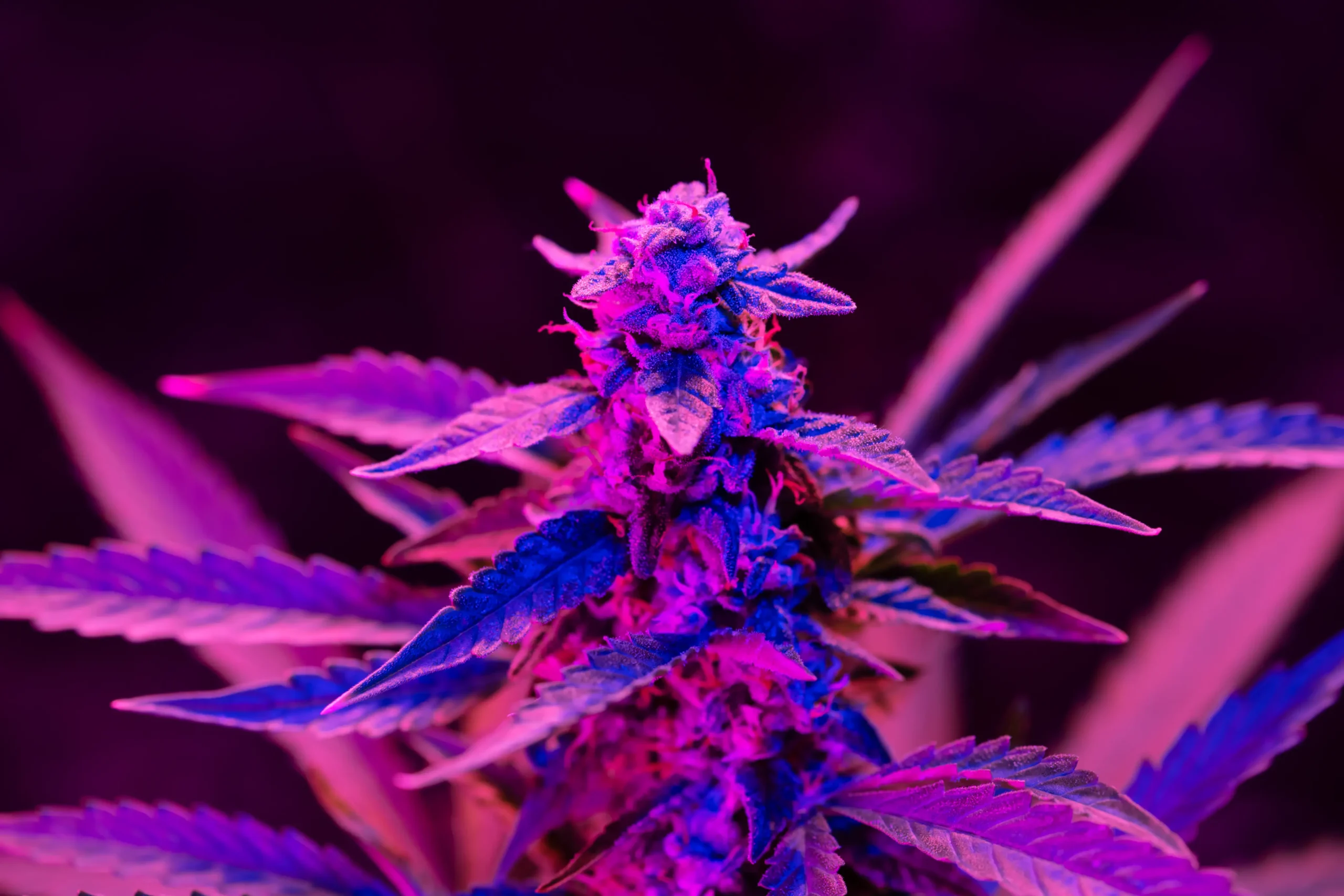
Atomic Apple is a balanced modern hybrid built around orchard fruit, pastry sweetness and a firm chemical-gas backbone. The best flowers do not smell like simple apple candy. They can move from tart green apple and apricot skin into cinnamon pastry, floral cream, pepper and solvent-like fuel. That contrast is what gives the cultivar depth, but it also makes post-harvest handling decisive. The fruity top layer is more fragile than the pepper and gas beneath it.
The plant is generally described as medium in height with sturdy branches, moderate stretch and dense resinous flowers. It can look cooperative during vegetative growth, then become more demanding after the flip as side branches rise, leaves overlap and compact buds begin forming close to the stems. Growers who keep every attractive lower site often end with a large amount of frosty but underdeveloped flower.
Atomic Apple is also a phenotype-sensitive cultivar. Some expressions are bright and orchard-driven, while others emphasize chemical gas, dough and spice. Color can range from green to deep purple, yet color is not a reliable flavor indicator. A darker plant may be visually striking while a greener expression carries the cleaner apple note after cure.
The main cultivation goal is to create enough canopy separation for dense flowers while preserving the volatile apple, apricot and floral notes. That requires an early structural plan, a timely reduction in vegetative nitrogen, stable late-flower temperatures and a controlled dry. Heavy resin alone does not guarantee a complete Atomic Apple result.
Strain Features
| Feature | Details |
|---|---|
| Strain Type | Balanced hybrid |
| Genetic Profile | Triangle Mints x Apple Fritter |
| THC | Commonly reported from the low 20% range into the upper 20s; individual batches vary |
| CBD | Usually very low |
| Reported Leading Terpenes | Beta-caryophyllene, limonene and linalool are commonly reported |
| Flavor Identity | Tart apple, apricot, pear skin, pastry dough, floral cream, pepper and chemical gas |
| Effect Direction | Fast euphoria and sociability followed by steady physical relaxation |
| Flowering Time | Approximately 8.5 to 10 weeks, with many cuts finishing close to nine |
| Stretch | Moderate, often enough to complete a partially open canopy |
| Plant Habit | Medium frame, sturdy lateral branching and medium internodes |
| Bud Structure | Dense, rounded to spear-shaped flowers with heavy trichome coverage |
| Color Potential | Green, lavender and deep purple expressions are all possible |
| Training Response | Generally responds well to early topping, branch spreading and a support net |
| Grow Difficulty | Intermediate |
| Primary Grow Risk | Overfilled interior canopy, late branch lean and loss of orchard-fruit aroma during drying |
| Best Quality Target | Dense mature flowers that retain tart apple and apricot behind the dough and gas |
Genetic Lineage
Atomic Apple combines Triangle Mints with Apple Fritter. Triangle Mints contributes structure, minty chemical gas, pepper and a strong hybrid effect. Apple Fritter contributes orchard fruit, pastry sweetness, resin and a softer physical finish. The cross therefore joins a relatively forceful gas line with a sweeter fruit-and-dough line.
The Triangle Mints influence often appears in the branch frame. Many plants develop laterals strong enough to become main colas after topping, and the post-flip stretch is useful rather than extreme. The same parent can also contribute a sharp chemical or cleaner-like aroma that becomes more prominent if fruit terpenes are lost during a hot finish.
Apple Fritter is visible in the rounded flower shape, pastry aroma and apple-apricot sweetness. However, the apple note is not guaranteed to dominate every phenotype. Some plants smell more like pear skin, cinnamon dough or fermented fruit, while others are primarily gas with a soft baked-fruit background.
Phenotype selection should therefore happen after drying and curing. The plant with the strongest live-room odor may not be the plant that keeps its fruit. Likewise, the darkest purple plant may not be the best flavor keeper. The most complete expression retains three layers: tart orchard fruit on the front, pastry or cream in the middle and peppery chemical gas on the finish.
The lineage also explains why Atomic Apple can feel more energetic than its dense flower suggests. The mental phase is often bright and conversational, but the body effect becomes more obvious as the session develops. This balance changes with maturity. Earlier harvested flower tends to feel sharper and more cerebral, while later flower usually produces a warmer and heavier finish.
Effect Breakdown
First 10 Minutes: Bright and Immediate
Atomic Apple usually announces itself quickly. At moderate doses, the initial effect can feel euphoric, talkative and visually engaging. Music, conversation and ordinary surroundings may feel more interesting. Some users describe a focused or creative quality, but the focus is not always linear. It may be better suited to brainstorming than precise technical work.
The first phase can also feel physically tingly around the face, shoulders or upper body. This gives the onset more presence than a purely mental daytime strain. Users sensitive to rapid THC onset may experience a short wave of anxiety or dizziness before the experience settles.
The Middle Phase: Function Without Full Sobriety
After the initial rise, the effect commonly becomes smoother and more balanced. The body relaxes, yet many experienced users remain mobile and social. This makes the cultivar suitable for an afternoon walk, music, design work or a relaxed group setting where complete sedation is not desired.
The strain can create a pleasant sense of emotional distance from stress. That does not mean it reliably treats anxiety. In some users, especially at a large dose, the fast opening can increase anxious thoughts even though the later phase is calming.
The Late Phase: Dose and Harvest Matter
At higher doses, concentration becomes less dependable and the physical side becomes heavier. Appetite may rise and the user may prefer sitting rather than continuing an active task. Flower harvested later in the window often emphasizes this phase more strongly.
Dry mouth and dry eyes are common. Dizziness is possible when standing quickly or consuming too much. A low-tolerance user should approach Atomic Apple as a potent modern hybrid rather than assuming the fruit flavor indicates a mild experience.
Best Contexts and Poor Fits
Atomic Apple can work well for social afternoons, creative hobbies, low-pressure errands and early evenings. It is less ideal immediately before sleep for users who find the opening stimulating. It is also a poor choice for situations requiring precise coordination or quick decision-making.
The cultivar’s greatest strength is transition. It begins expressive and outward, then becomes calmer without always ending in couch-lock. The exact balance depends on batch chemistry, dose, tolerance and harvest maturity.
Flavor & Aroma Profile
Live Plant Aroma
During mid-flower, many expressions begin with sweet dough, green fruit and a faint floral smell. The sharper chemical note often becomes clearer later. A plant that smells intensely sweet at week five may finish with more pepper and gas once the flowers harden.
Rubbing a stem or sugar leaf can reveal useful selection information. Orchard-forward plants may show apple peel, pear, apricot or fermented fruit. Gas-forward plants often show mint, pepper, solvent and damp dough. Stem rub is not a substitute for cured evaluation, but it helps identify the direction of each plant.
Jar Aroma
A well-cured jar can open with tart apple, apricot, pear skin and pastry. Breaking the flower releases pepper, floral cream, fuel and sometimes a cinnamon-like dry spice. The fruit should feel acidic and fresh rather than like flat sugar.
Poorly preserved flower may still smell loud, but the profile becomes much simpler. Pepper, chemical gas and earth remain while the apple disappears. This is why aroma strength alone is not a useful quality measure.
Inhale, Exhale and Aftertaste
The inhale is often sweet and slightly floral. Apple, apricot and dough appear first. The exhale becomes drier, with pepper, mint and solvent-like gas. A creamy or pastry aftertaste may remain on the palate.
The smoothest examples balance acidity with cream. If the flower is harsh despite a good cure, late salt stress, over-drying or an immature harvest should be considered. The cultivar can produce thick resinous smoke, so large inhalations may feel heavier than the flavor suggests.
Phenotype Differences
An orchard phenotype may emphasize apple peel, pear and apricot with a lighter gas finish. A pastry phenotype may present cinnamon dough, cream and baked fruit. A Triangle Mints-leaning phenotype can be darker, sharper and more chemical.
None of these expressions is automatically superior. The most desirable plant depends on the editorial goal. For Weedth, the ideal keeper is the one that preserves recognizable apple while still carrying enough gas and spice to avoid becoming generic fruit candy.
What Usually Damages the Flavor
Late heat, direct fan air during drying, repeated handling and excessive oxygen exposure remove the fruit layer first. A plant can smell like apples at harvest and taste mostly pepper three weeks later if the outer flowers dry too quickly.
Excess nitrogen can also reduce aromatic clarity by keeping the plant leafy and delaying clean maturation. Heavy late salt accumulation may create a mineral or hot finish that is easily confused with genetic chemical gas.
Dominant Terpenes
Laboratory batches commonly place beta-caryophyllene, limonene and linalool near the top of Atomic Apple’s terpene profile. The order varies, and the recognizable apple aroma cannot be explained by three terpenes alone. Esters and other minor volatile compounds probably contribute substantially to the orchard-fruit identity.
Terpene names should therefore be used as a guide rather than a complete explanation. Two flowers with similar headline terpene percentages can smell different because minor compounds, curing and phenotype shape the final profile.
| Terpene / Volatile Group | Role in Atomic Apple |
|---|---|
| Beta-Caryophyllene | Supports black pepper, dry pastry spice and part of the chemical-gas backbone. It may align with the later body calm, but effect claims should remain cautious. |
| Limonene | Adds brightness and acidity. It helps the apple and apricot notes feel fresh rather than heavy or jam-like. |
| Linalool | Can contribute floral cream and softness, especially in expressions that smell like apple blossom or sweet pastry. |
| Myrcene | May deepen ripe fruit, earth and physical relaxation in batches where it appears at a meaningful level. |
| Minor Esters and Volatiles | Likely contribute apple, pear, apricot and fermented-fruit impressions. Their preservation is highly sensitive to heat and drying speed. |
Note: Terpene order and total concentration vary by phenotype, environment, harvest date and laboratory method. Aroma should not be reduced to one dominant terpene.
Indoor vs. Outdoor Growing
| Decision Point | Indoor Growing | Outdoor Growing |
|---|---|---|
| Height and Stretch | Medium plant with moderate stretch; easy to guide through a partially open net | Can become a broad medium-large shrub when root volume and season are unrestricted |
| Canopy Strategy | One topping and branch spreading usually create enough main sites | Early topping and wide branch angles improve sunlight and airflow |
| Flower Density | Controlled humidity supports compact premium buds | Dense tops become vulnerable during humid autumn weather |
| Support | A second net prevents late outward lean | Cages or individual ties should be installed before flowering branches stiffen |
| Flavor Control | Indoor temperature stability protects apple, apricot and floral notes | Sun can deepen complexity, but late heat can flatten the orchard profile |
| Root-Zone Demand | Container demand is easier to measure and adjust | Large plants can drink rapidly during hot weather but still suffer in saturated soil |
| Harvest Timing | Close trichome and calyx observation allows staged harvest if necessary | Weather may force a compromise between maturity and flower safety |
| Best Fit | Flavor-focused indoor rooms with good late humidity control | Warm, dry climates with dependable autumn conditions and branch support |
Indoors, Atomic Apple is manageable because the stretch is usually useful rather than extreme. The main mistake is filling the screen completely in vegetative growth. The plant often adds enough lateral and vertical movement during transition to close the remaining spaces.
Outdoors, the cultivar can produce larger branches and heavier individual tops. The quality ceiling is high in a dry climate, but dense flower and volatile fruit aroma make wet or very hot finishing conditions less forgiving.
The choice between indoor and outdoor should therefore be based on the finishing environment, not only potential yield. An outdoor plant with more biomass can still produce less premium flower if rain enters the colas or heat strips the apple profile.
Strain-Specific Grow Guidance
Read the Plant Before Choosing the Final Shape
Atomic Apple usually develops a medium hybrid frame, but individual cuts differ in internode length and branch speed. Observe whether the side branches reach the main top naturally. A plant with active laterals may need only one topping. A slower plant may benefit more from gentle bending than repeated cuts.
The first run should document stretch, branch angle, flowering speed and aroma development. Those notes are more valuable for the second run than applying a universal plant count.
Vegetative Growth: Build Strength, Not Excess Shoot Count
One early topping after a healthy root system is established usually creates a useful set of main arms. Spread those arms gradually. Repeated topping can create a dense center and extend vegetative time without improving the final percentage of premium flowers.
Remove the weakest inner shoots while they are still small. This is easier than deciding late in flower which resinous but shaded sites must be sacrificed.
Flip Timing and Transition Stretch
Enter flower with part of the screen still open. Moderate stretch commonly completes the canopy during the first two to three weeks. Continue light tucking while stems remain flexible, then allow the tops to rise once flower clusters become easy to bruise.
A canopy that is already packed at the flip often becomes too thick. Leaves overlap, interior humidity rises and lower sites remain shaded even though the top looks impressive.
Defoliation Should Create Air Lanes
Use defoliation to solve specific problems. Remove a large fan leaf when it blocks several tops, presses against developing flowers or closes an important air path. Do not remove leaves simply because a calendar says it is defoliation day.
A measured pass near the end of stretch is usually more useful than aggressive late stripping. The plant still needs healthy leaf area to support dense flower development.
Root-Zone Moisture and Irrigation Rhythm
Atomic Apple performs best with a repeatable wet-dry cycle and strong drainage. Constant saturation can create heavy downward leaves and slow the transition. Severe dryback during stretch can shorten branches before the canopy is complete.
Container weight, leaf posture and the speed of recovery after irrigation are more informative than a fixed watering schedule. Large late-flower plants may drink quickly, but watering frequency should still respond to actual demand.
Nutrition: Avoid Keeping the Plant Too Dark
The cultivar can accept productive nutrition, yet prolonged high nitrogen creates thick dark leaves and a congested flower zone. Begin reducing the vegetative bias as flowering becomes established.
If leaf tips burn, the plant stops increasing water use or the newest leaves claw downward, review root-zone concentration before adding more bloom products. Strong aroma is not evidence that the plant wants a stronger feed.
Calcium, Magnesium and False Deficiency Diagnoses
Fast growth and dense tissue may reveal genuine mineral demand, but similar symptoms can result from root-zone pH drift, salt accumulation or poor oxygen. Correct the environment before stacking supplements.
A single damaged lower leaf does not justify a major nutrient change. Look for a consistent pattern in new growth, petioles and overall plant pace.
Branch Support and Cola Separation
Branches often appear strong until the final two weeks, when compact flowers pull them outward. Install a second net or soft ties before resin makes handling difficult.
Do not allow neighboring colas to lean into one another. Contact points hold moisture and reduce air movement even when room humidity is acceptable.
Late-Flower Climate
Protect the top layer of the canopy from excessive heat. Apple, apricot and floral volatiles fade before the heavier gas notes. Stable conditions generally preserve more flavor than deliberate late stress.
Humidity should be reduced before maximum density arrives, not after a problem is found. Air should move through the plant without blowing directly at the flowers.
Harvest Window and Staged Harvest
Use swollen calyxes, slowing fresh pistil production and mostly cloudy trichomes on calyx tissue. Sugar-leaf trichomes mature earlier and can encourage a premature cut.
If top flowers are fully mature while lower branches remain active, a staged harvest can protect the ideal top window and give the lower sites additional time. This is more useful than waiting until every flower looks equally old.
Outdoor-Specific Watch Points
Large outdoor plants need early structural support and a clear plan for autumn rain. Inspect the stem side of dense tops after dew or rainfall. Remove damaged tissue immediately rather than hoping a soft area will recover.
Harvest after surface moisture has evaporated, but before strong sun heats the flowers. Move cut branches into shade quickly to protect the fruit profile.
Grower Note: These observations are cultivar-specific decision points, not a fixed feeding or climate recipe. The exact cut, medium, root volume, room design and local weather can change the correct response.
Weedth Bud Flavor Tips
Protect the Orchard Layer Before Harvest
Reduce late canopy heat and avoid severe drought events. The apple and apricot notes are more volatile than pepper and gas.
Choose Branch Size According to Cola Density
Medium branches usually provide a good balance. Exceptionally thick outdoor tops may need to be divided so internal moisture can escape safely.
Use Indirect Air Only
Air should circulate around the drying space, not strike the flower surface. Direct fan pressure creates a dry shell around a moist core.
Do Not Judge Dryness by One Small Stem
Dense flowers can remain wet internally after small stems snap. Check bud feel, internal moisture movement and container behavior together.
Give the Cure Time to Reconnect the Layers
The first week may smell mostly chemical or grassy. Apple, pastry and floral cream often become clearer over several weeks.
Limit Repeated Oxygen Exposure
Divide long-term flower into several small containers. Opening one large container daily removes the most volatile top notes.
Handle the Resin Carefully
Dry trimming should be gentle. Excessive tumbling, repeated squeezing and rough storage reduce visual quality and aroma.
Weedth Bud Boost Tips
Prioritize Premium Flower Percentage
A smaller number of fully lit, supported tops usually creates more valuable finished flower than a deep canopy filled with frosty lowers.
Use the Stretch to Complete the Screen
Do not spend extra vegetative weeks filling every space. Allow transition growth to complete the canopy.
Keep the Productive Zone Shallow
Remove branches that cannot reach useful light. This improves density, trim efficiency and drying uniformity.
Support Photosynthesis Instead of Chasing Additives
Stable root health, leaf function and climate drive late swelling. Excessive bloom products cannot replace those foundations.
Match Light to Environmental Capacity
Stronger light only helps when the plant can supply enough water and the room can remove heat. Bleached or overheated tops lose flavor.
Allow Full Calyx Expansion
The final week can add meaningful density and aroma integration. Harvest timing is one of the most effective yield-quality tools.
Select the Right Phenotype
A slightly lower-yielding plant with strong cured apple flavor may be more valuable than a larger gas-dominant plant.
Medical Uses & Benefits
Stress and Low Mood
Users often report temporary mood elevation and emotional distance from stress. The bright onset may feel useful when low mood is paired with fatigue, but high doses can become mentally intense.
Mild Physical Tension
The later phase may reduce general body tension without immediate full sedation. This is an anecdotal use pattern rather than proof of pain treatment.
Appetite
Some users experience appetite increase as the body phase develops. The effect is dose-dependent and not universal.
Daytime Symptom Management
Experienced users may find moderate doses functional enough for afternoon use. New users may experience too much impairment for work or driving.
Anxiety Caution
Although some people report calm, others report anxious or dizzy reactions during the fast onset. Low CBD provides little buffering.
Sleep
Atomic Apple is not always an immediate sleep strain. A larger dose or later-harvested batch may become sleepy after the initial cerebral phase.
Medical Disclaimer
Cannabis responses vary by chemistry, tolerance and individual health. This profile does not establish treatment or replace professional medical advice.
Do not choose the keeper by color and frost alone
Atomic Apple can produce a dark, heavily frosted plant that looks superior before harvest while a greener expression preserves the clearer apple and apricot profile after cure. Keep phenotypes separated through drying, judge aroma only after several weeks in the jar and never sacrifice airflow just to retain every photogenic flower site.
Ideal User Profile
Best-Matched Consumer
An experienced user who enjoys fruit, pastry and gas and wants a hybrid that begins socially before becoming physically calm.
Best Time of Day
Late afternoon to early evening is often the most flexible window. Earlier use may suit high-tolerance users who remain functional.
Best Activities
Conversation, music, visual art, casual walks, cooking and low-pressure creative work.
Less Suitable For
Very low-tolerance users, people sensitive to rapid cerebral effects and anyone seeking immediate heavy sedation.
Best-Matched Grower
An intermediate cultivator who can manage a moderately stretching canopy and values cured flavor more than raw plant count.
Grower Notes and Feedback
The Canopy Often Looks Finished Before It Is
Heavy frost and color can create a false sense of maturity. Calyx swelling and aroma integration continue after the flowers already look photogenic.
Apple Is Not Guaranteed
Some cuts are orchard-forward, while others are mostly pastry, mint or chemical gas. This should be treated as phenotype variation, not necessarily mislabeling.
Lower Buds Can Be Deceptively Attractive
Resin appears on shaded sites, but many remain soft. Early lower cleanup improves the percentage of dense flowers.
Branch Lean Arrives Late
The frame can look self-supporting until the final swell. Growers commonly regret installing support after the colas have already moved.
Cure Changes the Hierarchy of Aromas
Fresh flower may be apple-dominant. Early cure may emphasize chemical gas. Several weeks later, pastry and apricot can return.
Second-Run Adjustments Matter
The largest quality gains usually come from an earlier flip, fewer interior shoots and better drying control rather than a more aggressive feed.
Weedth Experience
When the Green Plant Beat the Purple Favorite
Atomic Apple taught me not to choose a keeper under flowering-room lights. I ran two expressions in the same canopy, and the first one seemed to win almost every visible contest. It colored early, stacked dark purple bracts and carried a thick white resin coat before its greener sister looked finished. The second plant stretched slightly farther and made the canopy less tidy, but every time I moved a branch, it released a sharper scent of tart apple skin.
I treated their structures differently rather than forcing them into the same plan. The compact purple plant had accumulated too many interior shoots, so I removed only the branches that could not find a clean light path. The greener plant already had better separation and needed little more than lower cleanup. That choice mattered later: the purple flowers began leaning into one another during the final swell, while the greener plant remained open enough for air to pass between the colas.
By week six, the purple expression was the one everyone wanted to photograph. Its aroma, however, stayed centered on pepper, dough and solvent. The greener plant was less dramatic to look at but kept developing apple peel, apricot and a light floral pastry note. I installed support under the purple branches later than I should have, working around sticky flowers that would have been easier to protect if the second net had gone in before week five.
The two plants also refused to finish together. I harvested the mature purple tops first and gave the greener lower branches several extra days for calyx expansion. Keeping every branch labeled through drying felt fussy at the time, but it prevented the most important information from being mixed into one jar.
After the first week of cure, the purple plant still smelled louder. Four weeks later, the ranking reversed. The greener expression retained tart apple, apricot and floral cream over its gas, while the purple flower had excellent resin and visual quality but very little recognizable orchard character. I kept the greener plant as the flower keeper and treated the purple one as a useful resin-heavy expression rather than the definitive Atomic Apple.
That run changed the way I evaluate this cultivar. Color and early frost can be persuasive, but the keeper decision belongs after cure. On a second run I would flip the orchard-forward plant slightly earlier, install support before the branches lean and retain fewer lower sites. I would not feed harder or chase darker color. The defining quality is the apple-pastry layer that survives into the jar, and every canopy decision should protect it.
Weedth Score
Growing Experience 8.4/10 Manageable stretch and strong branches, with late canopy density requiring attention.
Bud Structure & Visual Appeal 9.4/10 Dense, colorful and heavily frosted with excellent bag appeal.
Aroma Complexity 9.1/10 Orchard fruit, pastry, florals, pepper and chemical gas can form exceptional depth.
Flavor & Smoothness 8.7/10 Excellent after careful drying, but the defining apple layer is fragile.
Effects & High Experience 8.6/10 Fast social euphoria transitions into steady physical calm.
Overall Satisfaction & Recommendation 8.8/10 A premium modern hybrid for growers who select after cure rather than by appearance.
Atomic Apple is most convincing when the fruit survives every stage from the final week of flower to the cured jar. I would recommend it to growers who enjoy phenotype selection and are willing to trade a little raw biomass for a more complete apple-pastry profile.
FAQ
Why did the apple aroma disappear during curing?
Question sent by: Elena R., via e-mail.
Atomic Apple’s orchard-fruit layer is more fragile than its pepper and gas base. Warm or rapid drying, direct fan air and repeated oxygen exposure can remove the apple and apricot notes while leaving the flower loud but chemically one-dimensional.
What is Atomic Apple’s lineage?
Atomic Apple is commonly documented as Triangle Mints crossed with Apple Fritter.
How much does Atomic Apple stretch?
Most descriptions suggest moderate stretch. A partially open canopy is safer than a completely filled screen.
How long does Atomic Apple flower?
Many cuts finish around nine weeks, but a practical range of roughly 8.5 to 10 weeks is more honest.
Does Atomic Apple respond well to topping?
Yes. One early topping and branch spreading usually create a strong canopy without excessive interior growth.
Why does one Atomic Apple plant smell like apple while another smells chemical?
Phenotype variation changes the balance between orchard fruit, pastry, mint, pepper and gas. Heat and drying also affect which notes survive.
Is Atomic Apple prone to mold?
Its dense flowers can hold moisture when the canopy is crowded. Late humidity, cola contact and internal inspection matter.
When should Atomic Apple be harvested for the best flavor?
Wait for full calyx swelling, reduced fresh pistil production and mostly cloudy trichomes on calyx tissue while the fruit remains vivid.
Why did the apple aroma disappear during curing?
Rapid drying, warm temperatures, direct airflow and repeated oxygen exposure can remove volatile fruit compounds.
Is Atomic Apple suitable for beginners?
An attentive beginner can grow it, but canopy control, late support and post-harvest flavor preservation make it better for intermediate growers.
Should the darkest phenotype automatically be kept?
No. Color is valuable for appearance but does not guarantee apple flavor, smoothness or the preferred effect.
Similar Strains
Apple Fritter – Shares pastry, apple and balanced potency, but often has less sharp minty chemical gas.
Triangle Mints – Provides structure, pepper and gas, with less orchard sweetness.
Georgia Pie – Offers stone fruit, pastry and minty gas, but leans toward peach and apricot rather than apple.
Permanent Marker – Matches the chemical and floral intensity, though it is darker, heavier and less fruit-forward.
Jealousy – Provides dense colorful flower and balanced effects, with more cream, citrus and spice.
Share this article
A quick overview of the topics covered in this article.
Follow us
Latest articles
October 11, 2026
October 11, 2026
October 11, 2026
October 11, 2026