
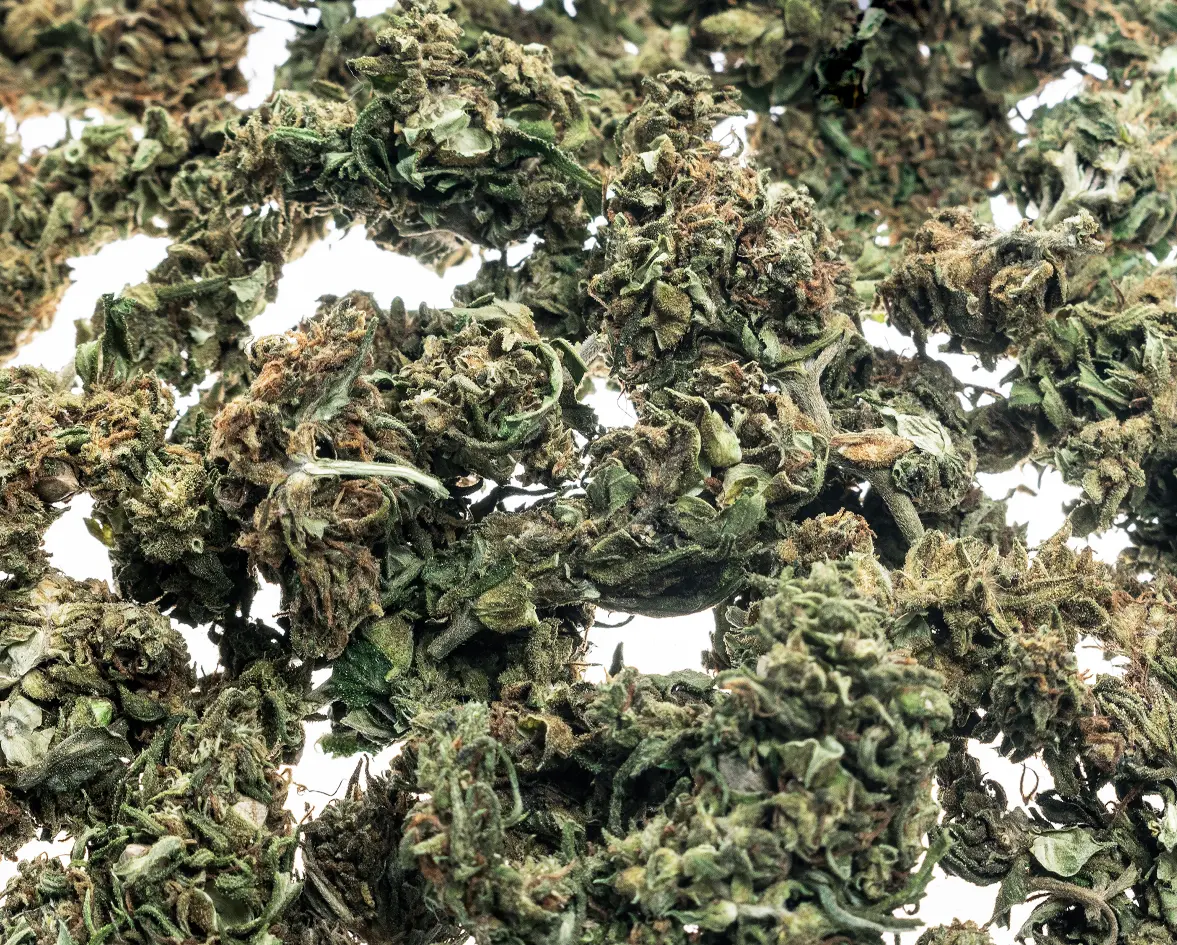
Blue Cookies
Weedth Strain Library
Blue Cookies is best understood through the relationship between a compact-to-medium Cookies frame carrying large, resinous, colorful buds, blueberry, sweet dough, cherry, earth and spice and head euphoria that settles into slow, substantial body relaxation. The name is widely recognized, but the plant is not perfectly uniform across every seed line, clone, region or product carrying the label. The useful goal is therefore not to memorize one number. It is to understand the recurring center of the cultivar and then read the individual plant in front of you.
For growers, the decisive traits are moderate, often around 1.5-2x, nutrient excess, leaf crowding and heavy dense buds and the way the cultivar responds to one early topping, low-stress spreading, SCROG and lower-canopy cleanup. For consumers, the identity is built around blueberry candy and dark fruit over cookie dough, earth, pepper and faint leather and a progression that usually moves from a quick euphoric head rush, happiness and heightened sensory interest toward deep calm, appetite and possible sleepiness. The guide below treats published figures as working ranges, separates reliable consensus from naming uncertainty and focuses on the choices that protect bud quality rather than chasing headline yield alone.
The costly mistake to avoid with Blue Cookies
Published data for Blue Cookies should be treated as a range. Phenotype, cut identity, cultivation environment, harvest timing and laboratory method can change potency, flowering time, yield, terpene order and effect.
Strain Features
| Feature | Details |
|---|---|
| Type | Indica-dominant hybrid |
| Genetic profile | Commonly described between roughly 70-90% indica depending on the version |
| Lineage | Girl Scout Cookies x Blueberry |
| THC | Commonly reported from the high teens into the mid-20% range; some tested products fall outside this range |
| CBD | Usually negligible |
| Dominant terpenes | Beta-Caryophyllene, Limonene, Humulene, Myrcene in many expressions |
| Primary aroma | blueberry, sweet dough, cherry, earth and spice |
| Flavor character | blueberry candy and dark fruit over cookie dough, earth, pepper and faint leather |
| Indoor flowering time | about 8-10 weeks, often around 9 weeks |
| Outdoor harvest | late September to early October in suitable northern climates |
| Indoor yield | moderate, often around 350-500 g/m² with an even canopy |
| Outdoor yield | moderate to high in warm, dry climates with support |
| Plant height | short to medium, commonly 0.9-1.5 m indoors |
| Flowering stretch | moderate, often around 1.5-2x |
| Grow difficulty | moderate; trainable but sensitive to overfeeding and high humidity |
| Primary cultivation risk | nutrient excess, leaf crowding and heavy dense buds |
The table is a planning snapshot. The sections below explain why Blue Cookies may finish outside the stated range and how the grower can respond without sacrificing flower quality.
Genetic Lineage
The most commonly documented lineage for Blue Cookies is Girl Scout Cookies x Blueberry. That parentage is a practical map rather than a guarantee. It explains why the cultivar repeatedly shows broad leaves, chunky flowers, strong resin and moderate stretch while also carrying blueberry sweetness, cherry-dark fruit, cookie dough, earth and spice.
From the first side of the cross, growers usually see dense trichomes, doughy earth, caryophyllene spice, nutrient sensitivity and potent hybrid effects. From the second side, the plant tends to inherit berry aroma, color potential, broad leaves and a softer body-centered character. When both sets of traits meet in a well-selected expression, the result is a colorful, resin-heavy plant with dessert fruit at the front and a calming Cookies finish.
The lineage also explains the main cultivation tension. Traits that improve flower value can create management problems. The large flowers and clumped leaves create bag appeal but can weigh down branches and trap humidity around the interior sites. This is why training and environment should be planned from inherited architecture instead of from the strain name alone.
A second cultivar has also circulated under the Blue Cookies name, sometimes described as a selected GSC expression rather than the Blueberry cross. This profile follows the dominant Blueberry x Girl Scout Cookies consensus and treats unmatched samples cautiously. In practical terms, keep records of stretch, node spacing, leaf width, aroma onset, flower density and finish time. Those observations identify the plant more reliably than a label on its own.
A keeper should not be selected on color or potency alone. The strongest all-round expression will combine the expected sensory profile with stable growth, manageable internodes, good recovery after training and flowers that dry without collapsing into a wet, airless mass. That selection standard preserves what is distinctive about Blue Cookies while avoiding the weakest structural expressions.
Effect Breakdown
Initial emotional phase. Blue Cookies commonly begins with a quick euphoric head rush, happiness and heightened sensory interest. The onset speed depends on dose, tolerance and delivery method, but the first noticeable change is often emotional rather than physical. The strain can make the environment feel softer, brighter or more interesting before the body becomes heavy.
Mental development. During the central part of the experience, the mind often remains engaged but less pressured, creating a playful or intimate mood rather than sharp productivity. This is the phase in which the cultivar's balance becomes clear. A modest amount may support conversation, music, creative work or quiet focus, while a larger amount can narrow attention and make complex tasks less appealing.
Physical phase. The body response generally develops as a slow wave of relaxation through the shoulders, face and limbs with increasing heaviness. People often notice the face, shoulders and hands relax first. The legs and lower back may feel heavier later, especially when the session takes place in a warm, comfortable setting.
Late phase. The final stage tends toward deep calm, appetite and possible sleepiness. The late phase is also where dose errors become obvious. Repeated inhalations taken before the first dose has fully developed can convert a balanced session into pronounced sedation, mental fog or restlessness, depending on the user's sensitivity.
Dose sensitivity. Blue Cookies can feel friendly at first, then become much heavier as the body phase catches up. The aroma can make the flower feel approachable, but pleasant flavor is not a measure of mild potency. New or low-tolerance users should wait long enough to judge the first dose before adding more.
The most accurate description is therefore a sequence: euphoria, sensory pleasure, emotional warmth, physical release and a heavy finish. That sequence explains why two users can describe the same flower differently. One may stop at the bright opening, while another continues into the heavier final stage.
Flavor & Aroma Profile
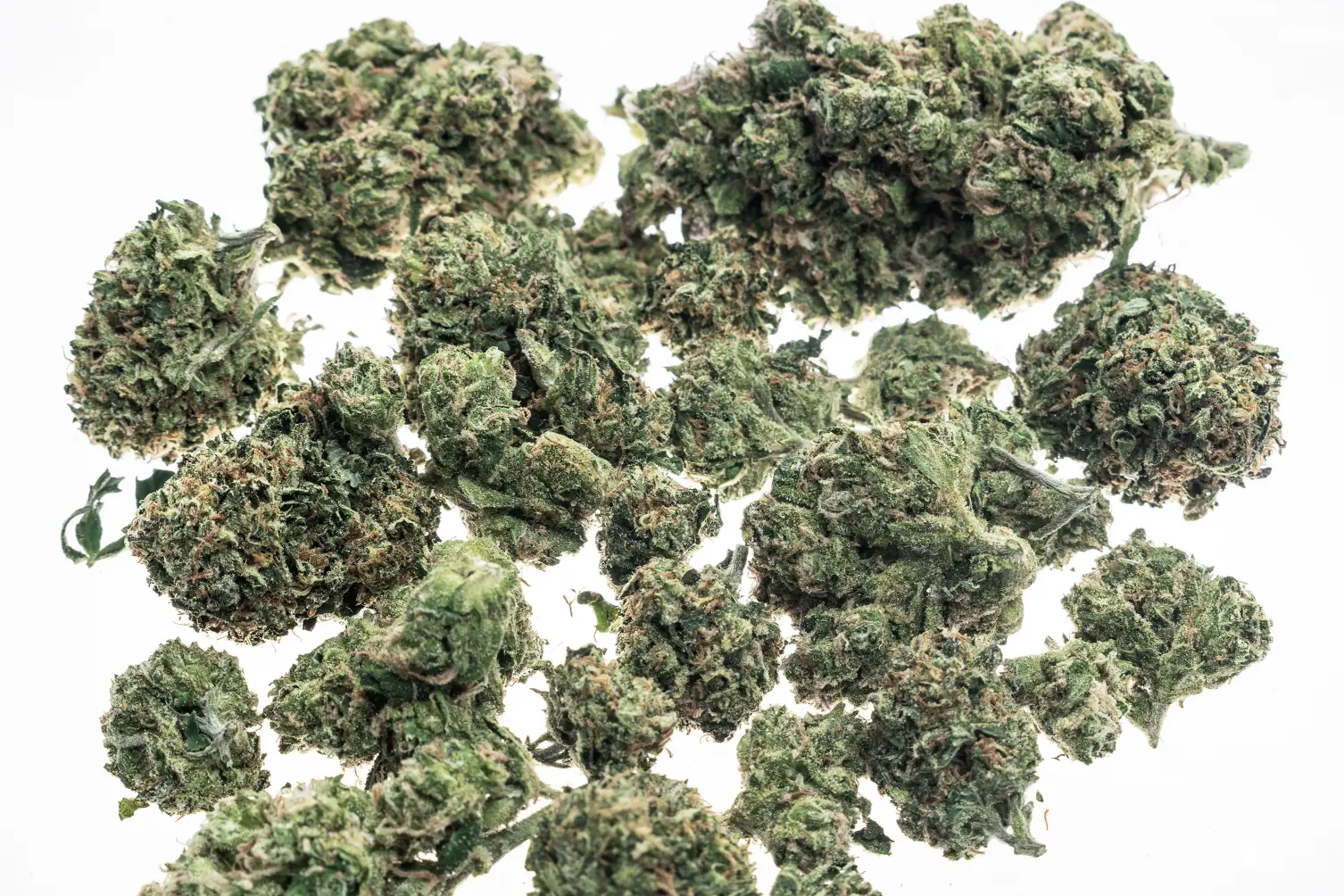
The jar aroma of Blue Cookies is centered on fresh blueberry, berry candy, dark cherry, sweet dough, damp earth, pepper, herbs and a faint leather or mint accent. A clean sample should smell layered rather than merely loud. The first impression comes from the most volatile top notes. The deeper earth, spice, fuel, herb or hash notes become clearer after the flower is broken apart.
On inhalation, the expected flavor is blueberry candy and sweet berry pastry. On exhalation, earth, pepper, dough and a slightly leathery herbal finish. The aftertaste is often the best indicator of cure quality because it reveals whether the flower retained its delicate upper notes or was reduced to generic sweetness, hay or blunt fuel.
The profile can be divided into four layers. The top layer contains blueberry, berry candy and dark cherry. The middle layer carries sweet dough, cream and light floral notes. The base layer is built from earth, pepper, wood and faint leather. A final finish of berry sweetness with dry Cookies spice may remain on the palate after the smoke or vapor has cleared.
Harvest timing changes this structure. An early cut may smell bright but taste thin, sharp or green because the plant has not completed resin and aromatic development. A very late cut may deepen the base and body effect while muting the fresh blueberry and cherry top note. The ideal window is the point at which the aroma remains vivid and the calyxes have finished swelling.
Drying speed is equally important. Fast drying tends to erase the bright berry-candy layer, leaving the heavier earth, pepper or fuel. Drying too slowly in a stagnant room can create a damp, sour or musty note and raises the risk of microbial damage. The best expression comes from a controlled middle path.
Aroma intensity should not be confused with quality. A harsh, overheated flower may smell strong because the heaviest compounds remain, yet still lack the clean progression that makes Blue Cookies recognizable. Smoothness, persistence and separation between layers matter more than raw loudness.
Dominant Terpenes
Beta-Caryophyllene. In Blue Cookies, this terpene contributes pepper, dry spice, wood and a doughy warmth. Its likely sensory role is forming the classic Cookies backbone beneath the fruit. Terpene rankings can change by phenotype, environment, harvest timing and analytical method, so the compound should be treated as part of a pattern rather than as a guaranteed dominant in every sample.
Limonene. In Blue Cookies, this terpene contributes sweet citrus lift and clean brightness. Its likely sensory role is supporting the euphoric opening and keeping the berry profile lively. Terpene rankings can change by phenotype, environment, harvest timing and analytical method, so the compound should be treated as part of a pattern rather than as a guaranteed dominant in every sample.
Humulene. In Blue Cookies, this terpene contributes dry hops, wood and herbs. Its likely sensory role is adding a mature dry finish to the dessert sweetness. Terpene rankings can change by phenotype, environment, harvest timing and analytical method, so the compound should be treated as part of a pattern rather than as a guaranteed dominant in every sample.
Myrcene in many expressions. In Blue Cookies, this terpene contributes earth, musk and soft dark fruit. Its likely sensory role is deepening the body effect and connecting Blueberry to the earthy base. Terpene rankings can change by phenotype, environment, harvest timing and analytical method, so the compound should be treated as part of a pattern rather than as a guaranteed dominant in every sample.
Together, these compounds create the cultivar's movement from blueberry, berry candy and dark cherry toward earth, pepper, wood and faint leather. The blend matters more than a single terpene. Similar amounts of one compound can smell different when the surrounding minor compounds change.
Terpenes are volatile. Excess canopy heat, drought stress, late overfeeding, rough handling and rapid drying can reduce the very notes that separate Blue Cookies from a generic hybrid. Protecting aroma begins in the flowering room and continues through storage.
Indoor vs. Outdoor Growing
| Aspect | Indoor Growing | Outdoor Growing |
|---|---|---|
| Space and structure | Short to medium with broad leaf clusters and large, heavy flowers that need support. | Can become a wider shrub with more pronounced branching and significant flower weight. |
| Climate control | Moderate warmth with careful humidity reduction and strong air movement through the center. | Warm, dry and sunny, with cool late nights acceptable if rain is limited. |
| Training | Top at the fourth or fifth node, spread branches and lollipop weak lower growth by early flower. | Open the center early, stake the perimeter and protect heavy branches from wind and rain. |
| Yield strategy | Use a flat canopy and moderate plant count to expose lower sites without crowding. | Use root volume and strong support to carry larger branches while preserving airflow. |
| Main risk | Nutrient burn, dark clawed leaves, dense flower humidity and snapped branches. | Rain entering heavy buds and cold, wet soil reducing late vigor. |
| Best fit | Growers who can feed conservatively and manage dense dessert-hybrid flowers. | Warm dry regions with a reliable early-autumn harvest window. |
Indoor cultivation gives the grower control over feeding strength, airflow, branch support and late-flower humidity. This is especially useful because the plant can look compact and stable until the buds suddenly gain enough mass to pull branches down. The plant should enter flowering with enough open space for the expected stretch and with lower growth already organized.
The indoor advantage is precise humidity management. Keep the center visible, reduce humidity below 45-50% late and avoid direct fan burn on exposed tops. Air movement should pass through the canopy rather than only across the top. A strong exhaust system cannot compensate for a sealed interior created by overlapping leaves and unsupported branches.
Indoor yield is most reliable when training matches the plant. Top at the fourth or fifth node, spread branches and lollipop weak lower growth by early flower.. The goal is not to produce the greatest number of branches. It is to create the number of well-lit, well-supported tops that the root zone and light can finish with density.
Outdoor cultivation allows greater root volume and full-spectrum sunlight. Sunlight can deepen berry aroma and color while root space increases branch strength. The plant can become wider and more productive than it does indoors, but the larger canopy also holds more moisture after rain or dew.
Outdoor success depends on the finish window. Cool nights may intensify color, but prolonged wet weather should not be accepted merely to chase purple tones. In regions with wet autumns, protection from prolonged rain can be more valuable than an extra week of theoretical ripening.
The choice between environments should be based on control and climate, not on a claim that one method automatically produces better flower. Indoor growing offers repeatability. Outdoor growing offers root freedom and sunlight. Both can produce excellent Blue Cookies when canopy density, harvest timing and drying are handled correctly.
Strain-Specific Grow Guidance
Grower Note: Build the schedule from observed stretch, water demand and flower density. Blue Cookies should not be forced into a generic week-by-week feed chart when the plant is showing different needs.
Morphology and plant shape
Blue Cookies typically develops broad leaves, medium-short internodes, a bushy center and stout but heavily loaded branches. This shape determines how the plant should be spaced. A plant that looks manageable from the aisle may still be crowded at the stem where leaves, petioles and young branches overlap.
Internodal spacing is usually short to medium, with frequent leaf overlap. The flowering stretch is moderate, often around 1.5-2x, but seed-grown plants may fall outside the average. Measure the plant at flip and again at the end of week two. That simple record improves future planning more than relying on a generic ratio.
The flower structure is large, chunky, trichome-heavy flowers that can show green, blue and purple tones. This creates the main late-flower priority: supporting weight and preventing moisture from remaining between closely packed calyxes. Dense flowers need airflow around them, not direct high-speed wind that dries exposed surfaces while the interior remains moist.
Root zone, containers and irrigation
Use a root zone that drains freely but does not swing from saturated to bone dry. Use an aerated medium and avoid oversized wet containers during early growth. Fabric containers, well-aerated soil or properly managed coco can all work. The correct medium is the one the grower can irrigate consistently.
Water by container weight, plant demand and runoff behavior rather than by a fixed calendar. The plant prefers consistent moisture but should not remain saturated; dense foliage can make water demand appear lower than expected. In late flower, the plant may drink less even while the flowers continue to swell. Continuing peak irrigation after demand falls is a common route to root stress and humidity problems.
Training response
The preferred training strategy is top once, spread the plant horizontally, use a support net and remove the lowest third after stretch. Begin while stems are flexible. Early shaping creates stronger branch angles and reduces the need for aggressive correction after flowering begins.
Topping is helpful for creating several equal tops without extending veg excessively. Low-stress training is very effective because the plant naturally responds by building a broad canopy. A screen is useful both for shaping and for holding heavy branches upright. High-stress work should be completed before the plant commits heavily to flower production.
Remove weak interior shoots that cannot reach useful light. Do not strip the plant simply to create a clean photograph. Every removed leaf should solve a real problem such as blocked airflow, a buried flower site or excessive interior humidity.
Nutrition and feeding response
Blue Cookies should be fed moderately, often below the maximum rate used for more vigorous feeders. Cookies-influenced leaves can burn, claw or darken under excess nitrogen and salts. Begin with a moderate concentration and watch new growth, leaf posture, tip color and runoff trend. The plant's response is more useful than a feed chart designed for an average cultivar.
During transition, avoid carrying excessive nitrogen deep into flower. Too much nitrogen can delay natural fade, soften stems, darken leaves and reduce airflow by keeping the canopy overly lush. Shift gradually toward a bloom-balanced program after stretch becomes clear.
Calcium and magnesium demands depend more on medium, water and growth rate than on the strain name. Supplement only when the system requires it. Repeatedly adding products to chase isolated symptoms can create salt buildup that looks like a new deficiency.
Climate and disease prevention
The safest climate is moderate to warm and dry in late flower. In early flower, maintain enough humidity for active growth without creating condensation. In late flower, reduce humidity as density increases and keep night temperatures stable enough to prevent dew forming inside the canopy.
The main biological risk is nutrient stress combined with dense, humid flowers and late branch failure. Prevention depends on sanitation, spacing, leaf inspection and environmental control. Sprays should not be treated as a substitute for a healthy room, and late-flower applications can damage aroma or leave residues.
Inspect the thickest flowers and the quietest interior zones. The top of the canopy may look dry while the shaded center remains damp. A small sensor placed inside the canopy often tells a different story from the room sensor on the wall.
Week-by-week cultivation roadmap
Establishment and early roots. Keep young Blue Cookies plants in a stable root environment and avoid pushing rapid top growth before roots occupy the container. Early overwatering can create a small plant with a large, wet medium and weak oxygen availability.
Vegetative framework. Build six to ten equal tops with the lower center open and no leaves stacked in multiple layers. Remove only growth that clearly cannot contribute. Use gentle ties to widen the plant and inspect the underside of leaves during every training session.
The final week before flowering. Confirm that the canopy has spare vertical space, support points are installed and the lower third is not packed with weak shoots. Correct major structural problems now rather than after pistils appear.
Flower weeks one and two. Expect moderate stretch, strong lateral fill and rapid increase in leaf density. Continue tucking or tying until the stretch slows. Avoid heavy defoliation and high nutrient concentration at the same time because combined stresses can stall the transition.
Flower weeks three and four. Flower sites begin to define themselves. Remove shaded interior growth, check branch angles and verify that air can move through the center. Aroma should begin to shift toward sweet earth and dough first, followed by blueberry and cherry as resin develops.
Flower weeks five and six. Density and resin become the main story. Support branches before they bend. Lower humidity progressively and inspect the largest flowers with clean hands and good light.
Final ripening. Reduce unnecessary manipulation. Watch trichome development on the calyxes, not only on exposed sugar leaves. Track water demand, fade, pistil recession and aroma together instead of harvesting from a calendar alone.
Phenotype selection and harvest troubleshooting
Select keepers by a complete scorecard: rooting speed, structure, recovery after training, aroma identity, flower density, resistance to stress, finish time and final smoke quality. A spectacular color expression that repeatedly molds or produces weak lower flowers may not be the best long-term choice.
If stretch is greater than expected, stop adding vertical problems. Bend the tallest branches gradually, increase side lighting if available and avoid severe late topping. If the canopy is too dense, thin in stages rather than removing a large amount in one session.
If flowers remain airy, review light distribution, root health, temperature and excessive nitrogen before adding more bloom products. If the aroma weakens late, inspect canopy heat, irrigation stress and harvest delay. If the outer flower feels dry while stems remain flexible, slow the dry rather than sealing the buds immediately.
Harvest when the plant has reached the desired balance between aroma, resin maturity and effect. Harvest when most trichomes are cloudy and berry aroma is fully developed, using a small amber fraction for a heavier finish. A few amber trichomes can deepen the finish, but waiting for a heavily amber canopy may sacrifice the brighter part of the profile.
Weedth Bud Flavor Tips
Protect flavor before harvest. Keep canopy temperatures moderate, avoid severe drought cycles and do not chase color with extreme cold. Do not overfeed late in an attempt to enlarge already dense buds; clean ripening preserves blueberry and dough. Healthy late-flower metabolism generally preserves more aroma than stress used as a cosmetic trick.
Harvest handling should be gentle. Support each heavy branch before cutting and avoid compressing the soft, resinous flowers. Trichome heads carry much of the aroma and should remain on the flower rather than on gloves, trays or the floor.
Dry in darkness with cool, stable air and controlled humidity. A slow dry of roughly one to two weeks is a useful target, but stem size, flower density and room conditions matter more than a fixed day count. Large buds may need to be separated from very thick stems to prevent a wet core in humid rooms.
For dense flowers, use smaller hanging branches or whole-plant sections chosen according to room humidity. Whole-plant drying can protect aroma in a dry room, while very large intact plants can remain wet too long in a humid room. Adjust the plant size to the environment.
Begin curing only when the flower surface is dry, small stems are approaching a snap and moisture no longer feels trapped in the center. Seal a small test portion first. If humidity rises rapidly or the aroma turns damp, return the flower to open drying conditions.
During the first cure week, release excess moisture regularly without leaving containers open for long periods. As moisture equalizes, reduce the frequency. Three to six weeks integrates blueberry candy with dough, earth and pepper. The aim is a stable flower that burns or vaporizes cleanly and releases distinct layers rather than one blunt note.
Store the finished flower in airtight containers in a cool, dark place. Divide long-term storage into smaller containers so the entire harvest is not exposed every time a jar is opened. Heat, light and repeated oxygen exposure flatten aroma over time.
Indoor and outdoor flowers may need different handling. Outdoor material can carry more surface dust and variable moisture, while indoor material may be denser and easier to overdry under strong dehumidification. Evaluate the actual flower rather than applying one post-harvest schedule to both.
Weedth Bud Boost Tips
The most reliable yield increase comes from canopy efficiency, not from late additives. For Blue Cookies, build an even, moderately dense canopy of supported tops with the lowest third removed. A flat, open canopy converts light into useful flower while reducing shaded larf.
Use the training method that matches the architecture. top once, spread the plant horizontally, use a support net and remove the lowest third after stretch Do not force a wide-screen method onto a plant count, veg time or room shape that cannot support it. Yield per harvest and yield per year are different calculations.
Root health sets the ceiling. Provide enough container volume for the planned plant size, maintain oxygen and avoid salt accumulation. A plant with damaged roots cannot use stronger light or more nutrients efficiently.
Increase light only when the environment and irrigation can support the extra demand. Leaves that taco, bleach or remain unusually upright under intense light are not proof of productive stress. Uniform light across the canopy is usually more valuable than an extreme peak reading at one point.
Branch support is preventive yield protection. A net or soft ties should be in place before the flowers become too heavy to reposition safely. Install stakes, a net or soft ties before branches collapse. Repairing broken branches late in flower costs time and exposes tissue to infection.
Selective pruning improves the quality ratio. Remove weak lower growth before it consumes weeks of energy. Keep enough healthy leaf area to power the flowers and avoid repeated heavy defoliation that forces the plant to rebuild tissue.
Carbon dioxide enrichment is only useful in a sealed, measured environment with sufficient light, temperature control and irrigation capacity. It should not be used to compensate for poor airflow, weak roots or an uneven canopy. Most small gardens gain more from basic environmental consistency.
Outdoor yield depends on early structure, root space and season length. Train the plant outward before stems harden, support major branches and thin the interior before autumn humidity arrives. A slightly smaller, open plant can finish more usable flower than an enormous plant with shaded or mold-damaged interiors.
Do not confuse wet harvest weight with yield. The meaningful target is dry, stable, aromatic flower after trimming and curing. Strategies that produce oversized but watery or loosely finished buds may look impressive at harvest and disappoint after drying.
Medical Uses & Benefits
Reported stress and mood use. Consumers often choose Blue Cookies for stress, low mood, sensory enjoyment and intimate or creative evening activities. The effect pattern may make it useful for unwinding, changing mental tone or making low-pressure activities feel more engaging. Individual responses vary, and high THC can increase anxiety in sensitive users.
Reported physical use. The progression toward a slow wave of relaxation through the shoulders, face and limbs with increasing heaviness is why some consumers report using the cultivar for muscle tension, general discomfort or evening recovery. These reports do not establish treatment efficacy, and the strain should not replace professional care.
Sleep context. The late body phase can become sleepy at higher doses, though the first euphoric stage may remain mentally engaging. Timing matters. A stimulating opening can be inconvenient immediately before bed even when the late phase becomes heavy.
Appetite and nausea context. Hunger often increases as the relaxation deepens. The response is dose-dependent, and some people experience dry mouth or dizziness instead of useful appetite support.
Terpene interpretation should remain cautious. Compounds such as Beta-Caryophyllene, Limonene, Humulene have been studied individually, but a cannabis flower is a variable mixture and user experience cannot be predicted from one terpene name.
Anyone using cannabis for a medical reason should discuss it with a qualified healthcare professional, especially when taking medication, managing a psychiatric condition, pregnant, nursing or sensitive to THC. Start with a small amount and avoid driving or operating equipment while impaired.
Medical Note: Reported consumer experiences are not medical evidence and this profile is not a diagnosis or treatment recommendation. Cannabis can interact with medications and may worsen symptoms for some people.
Ideal User Profile
Blue Cookies best suits users who like dessert fruit but want a more grounded, body-centered finish than a bright candy sativa. The user should appreciate blueberry candy and dark fruit over cookie dough, earth, pepper and faint leather and understand that the experience may continue developing after the first obvious effects.
The most suitable time is late afternoon or evening. A small amount may fit a different part of the day than a large amount. Dose changes the practical identity of the strain as much as the clock does.
The cultivar is less suitable for very low-tolerance users, people needing precise daytime focus or growers who routinely feed at maximum strength. Sensitive users should approach the aromatic, appealing flower with the same caution they would apply to any potent cultivar.
For growers, the ideal match is someone willing to manage moderate feeding, canopy thinning and heavy-bud support. A beginner can succeed when the environment is stable, but the plant should not be mistaken for a completely automatic crop.
The best reason to choose Blue Cookies is its complete combination of blueberry dessert flavor, high resin, colorful buds and a layered euphoric-to-relaxed effect. Growers or consumers seeking only one extreme trait may prefer another cultivar.
Grower Notes and Feedback
Growers commonly describe Blue Cookies as beautiful and potent, with quality strongly tied to feeding restraint and airflow. The positive reports usually come from gardens that matched training to the natural architecture instead of trying to force every plant into the same schedule.
Vegetative feedback often centers on quick bush formation and dense leaf clusters around the center. This is the stage where the final canopy is decided. Waiting until flowering to address crowding or height creates more stress and less predictable recovery.
Flowering feedback emphasizes heavy resin and rapid flower weight that can surprise unsupported branches. The plant may look finished from a distance before the calyxes and interior trichomes are ready, so close observation is essential.
Feeding reports are mixed because medium, water and phenotype differ. The recurring lesson is less feed usually produces cleaner leaves and better flavor than chasing dark green growth. Dark, glossy leaves and burned tips are warnings, not proof that the plant is receiving a productive amount of nutrition.
Post-harvest reports show that berry becomes clearer after cure while earth and pepper dominate immediately after drying. Samples rushed through drying often lose the delicate notes and retain only the heaviest base aroma.
The most common disappointment is excellent-looking buds with muted blueberry because heat or fast drying removed the top notes. That outcome is usually linked to environment or selection rather than to the cultivar being inherently poor.
A repeat run should begin with notes from the first. Record flip height, final height, irrigation frequency, climate peaks, harvest date, dry duration and cured aroma. The second crop is where the grower can move from simply completing Blue Cookies to expressing it well.
Weedth Editor's Note
What this cultivar asks from the room
I approach Blue Cookies as a plant that rewards observation more than aggression. On my first run, the defining lesson was the plant needed support earlier and feed strength lower than its dark leaves initially suggested. Once I adjusted that decision, the canopy became easier to read and the quality improved more than it would have from any extra product.
During vegetative growth, I focused on spreading the main branches and removing only the lowest, weakest shoots. I prefer to make the plant reveal its architecture before I decide how many tops to keep. That small pause prevents me from creating more branches than the light and root zone can finish.
In flower, I watched tip burn, interior humidity and the increasing pull on side branches. I removed only the leaves that blocked a meaningful site or sealed the interior. The goal was an open plant that still carried enough healthy foliage to drive resin and calyx development.
The aroma changed most noticeably when blueberry emerged from behind the dough and earth near the middle of flower. That transition told me more about maturity than pistil color alone. I began checking trichomes on the calyxes and comparing them with water demand and overall fade.
At harvest, I chose a mostly cloudy window before the fruit flattened into generic sweetness. I handled the branches gently, kept the dry room cool and resisted the urge to speed the process when the outside of the buds felt ready before the stems did.
After curing, the best jar showed blueberry pastry, dark cherry, pepper and clean earthy dough. The weaker jar had dried faster and proved how easily the upper notes can disappear. That comparison changed the way I handle this cultivar more than any theoretical description could.
I would recommend Blue Cookies to growers who enjoy modern dessert hybrids but still value a strong body effect. It is not difficult for the sake of being difficult, but it asks the grower to respect its structure and finish. When those details are handled well, the flower feels complete rather than merely potent.
Weedth Score
Growing Experience 8.7/10 Responsive and manageable, though nutrient sensitivity and flower weight require attention.
Bud Structure & Visual Appeal 9.5/10 Large, colorful, resinous buds with strong modern bag appeal.
Aroma Complexity 9.1/10 Blueberry, cherry, dough, earth, pepper and herbs create clear layers.
Flavor & Smoothness 9.0/10 Excellent with a cool dry and cure; heat quickly flattens the fruit.
Effects & High Experience 9.2/10 A satisfying euphoric opening that settles into deep physical calm.
Overall Satisfaction & Recommendation 9.2/10 A complete dessert hybrid for quality-focused growers and evening users.
Blueberry sweetness gets the attention, but the dough, pepper and slow body finish are what keep me coming back.
FAQ
Is Blue Cookies suitable for beginners?
It is better for an attentive beginner than a careless one. Feeding restraint, airflow and support are the deciding skills. Beginners should keep the first run simple, use moderate feeding, shape the canopy early and prioritize stable temperature and humidity over advanced additives.
How long does Blue Cookies really flower?
The most useful planning range is about 8-10 weeks, often around 9 weeks. Seed-grown plants, different cuts and environmental stress can move the finish earlier or later. Judge calyx swelling, trichomes, aroma, fade and water demand together.
How much does Blue Cookies stretch?
The expected stretch is moderate, often around 1.5-2x. Measure the plant rather than trusting a fixed multiplier. Light intensity, root space, temperature, nitrogen and phenotype all affect final height.
What training method works best for Blue Cookies?
top once, spread the plant horizontally, use a support net and remove the lowest third after stretch The best method creates an even canopy without leaving too many weak interior branches. Complete major high-stress work before flowering is established.
Is Blue Cookies sensitive to nutrients?
Blue Cookies should be fed moderately, often below the maximum rate used for more vigorous feeders. Cookies-influenced leaves can burn, claw or darken under excess nitrogen and salts. Start below the maximum feed rate and increase only when leaf color, tip condition, growth speed and runoff support the change.
What humidity is safest in late flower?
A practical target is generally in the low-to-mid 40% range, adjusted for temperature, density and airflow. The important point is the humidity inside the canopy and around the largest flowers, not only the wall sensor.
When should I harvest Blue Cookies for the best flavor?
Harvest when most trichomes are cloudy and berry aroma is fully developed, using a small amber fraction for a heavier finish. Harvesting only by calendar can miss the strongest aromatic window, especially when one phenotype finishes differently from another.
How should Blue Cookies be dried and cured?
Use a cool, dark, controlled dry and allow moisture to leave the flower gradually. Large buds may need to be separated from very thick stems to prevent a wet core in humid rooms. Begin curing only after moisture has equalized enough to avoid a rapid humidity spike in a sealed test container.
What does Blue Cookies taste like?
The central profile is blueberry candy and dark fruit over cookie dough, earth, pepper and faint leather. The exact balance changes with phenotype and post-harvest handling. A good cure should preserve both the bright top notes and the deeper base.
Who should approach Blue Cookies cautiously?
Very low-tolerance users, people needing precise daytime focus or growers who routinely feed at maximum strength High-THC flower can also cause dry mouth, dizziness, anxiety or heavy sedation when the dose exceeds the user's comfortable range.
Can Blue Cookies be grown outdoors?
Yes, when the season matches the finish window and the climate can protect the flowers from prolonged rain or stagnant humidity. Cool nights may intensify color, but prolonged wet weather should not be accepted merely to chase purple tones.
Why might two samples of Blue Cookies feel different?
Cannabis names are not always tied to one verified clone or standardized chemical profile. Genetics, phenotype, environment, harvest timing, storage, age and dose can all change aroma and effect.
Does purple color mean the flower is stronger?
No. Pigmentation reflects genetics and environmental expression, not a direct measure of THC, terpene quality or maturity. Select and harvest by the complete plant, not color alone.
What is the most common grower mistake with this strain?
The recurring mistake is feeding too aggressively because the plant is compact and assuming the dense leaves indicate unlimited appetite. Correcting that issue early protects both yield and flavor more effectively than trying to repair the crop late.
Similar Strains
The following strains are similar to Blue Cookies for genetic, sensory, effect or cultivation reasons. They are not interchangeable, but each offers a useful comparison point.
Blueberry
One parent and the clearest comparison for berry sweetness, color and relaxed body character.
Girl Scout Cookies
Provides the dough, spice, resin and potent hybrid effect beneath the fruit.
Gelato
Offers comparable dessert depth, colorful flowers and an euphoric-to-relaxed progression.
Blue Cheese
A more savory blueberry comparison with stronger funk and a similarly calming body effect.
Wedding Cake
Shares dense dessert flowers, caryophyllene spice and a heavy finish, though it is less berry-forward.
Share this article
A quick overview of the topics covered in this article.
Follow us
Latest articles
October 24, 2026
October 24, 2026
October 24, 2026
October 24, 2026