
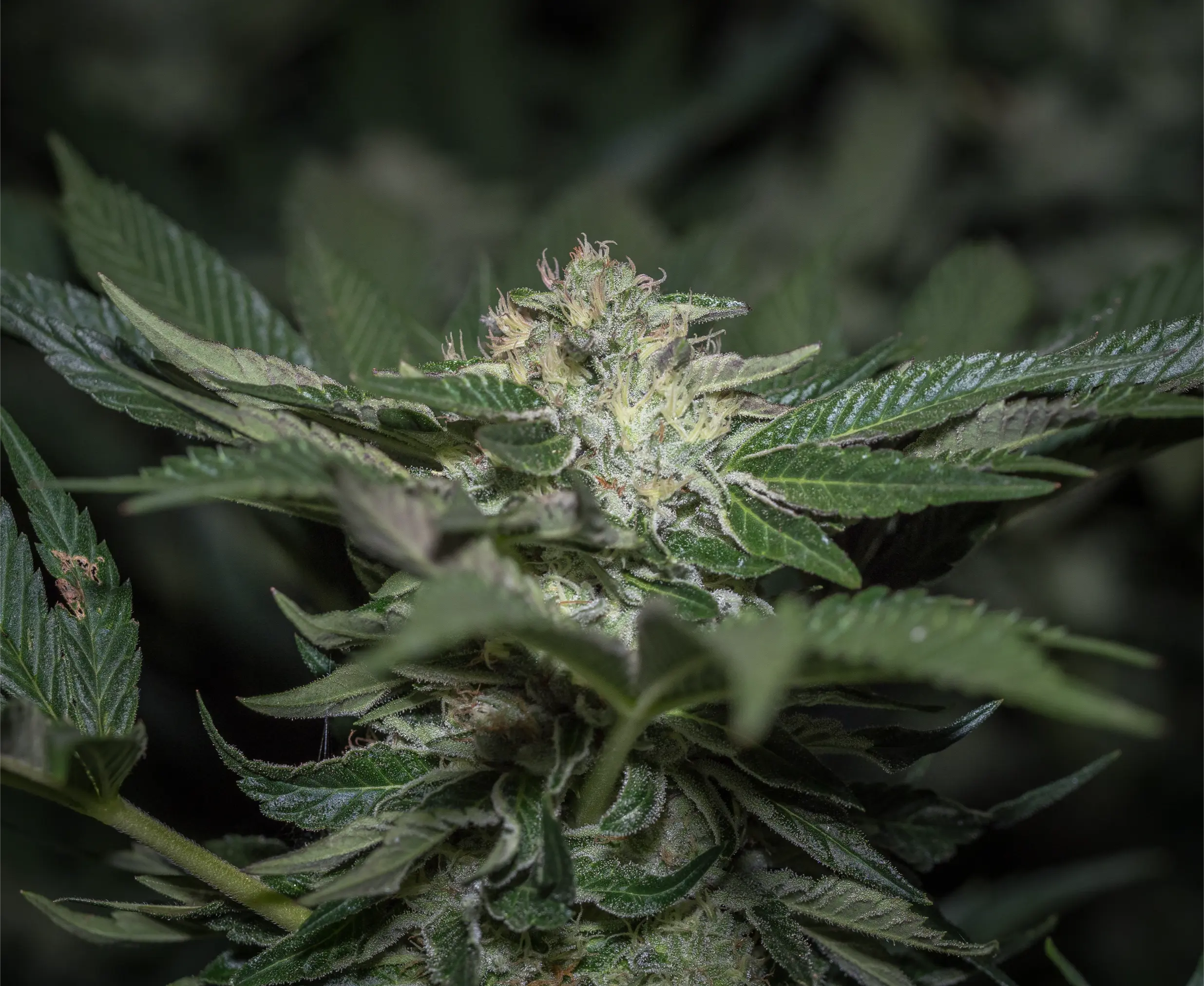
Blue Power
Blue Power is a cultivar that rewards growers who look beyond a single THC number or a generic indica-sativa label. Its identity comes from Power, itself associated with Sour Dubble and Master Kush, crossed with White Moonshine, which brings The White and Blue Moonshine ancestry; alternate commercial versions exist under the same name, so lineage should always be verified for the specific material. The finished flower is best understood through the relationship between plant architecture, ripening speed, aroma retention and post-harvest handling. In other words, a technically healthy plant can still produce an average jar if the grower ignores the particular way Blue Power builds flowers and loses volatile aroma.
The most useful way to approach Blue Power is to treat the cultivar as a quality-yield project rather than a wet-weight contest. The grower is trying to preserve blueberry and dark berry, lemon peel, kush, earth, sweet fuel and occasional floral notes, while building enough structural support and airflow to finish dense flowers safely. Its central cultivation theme is a sturdy, thick-stemmed, compact-to-medium plant that can carry substantial resinous flowers, with phenotype variation in color, aroma and degree of stretch. That combination creates clear advantages, but it also creates predictable failure points: confusing different Blue Power lineages, over-ripening berry-dominant phenotypes, heat-driven loss of lemon and floral top notes, and leaving too many shaded lower branches because the frame appears strong enough to carry them.
The guide below uses the classic photoperiod expression as the reference. Where multiple versions or phenotype descriptions circulate, the uncertainty is stated directly instead of blending every report into one imaginary plant. Expect individual plants to vary. Keep records from seed or clone through cured flower, because the keeper decision should be based on repeatable growth and cured quality, not on color or early aroma alone.
Strain Features
| Feature | Details |
|---|---|
| Type | indica-dominant hybrid, usually around 70-80% indica depending on release |
| Genetic Lineage | Power, itself associated with Sour Dubble and Master Kush, crossed with White Moonshine, which brings The White and Blue Moonshine ancestry; alternate commercial versions exist under the same name, so lineage should always be verified for the specific material |
| THC | commonly upper-teens to low-20s, with stronger selections possible |
| CBD | low |
| Indoor Flowering | about 55-65 days indoors |
| Outdoor Harvest | late September to mid-October in suitable climates |
| Yield Potential | medium to high, commonly around a few hundred grams per square meter in well-filled indoor canopies |
| Height and Structure | short to medium with thick stalks and a sturdy frame |
| Grow Difficulty | moderate |
| Aroma | blueberry and dark berry, lemon peel, kush, earth, sweet fuel and occasional floral notes |
| Flavor | berry-kush sweetness with lemon brightness, earthy fuel and a smooth lingering finish |
| Primary Grow Focus | a sturdy, thick-stemmed, compact-to-medium plant that can carry substantial resinous flowers, with phenotype variation in color, aroma and degree of stretch |
Genetic Lineage
The genetic story of Blue Power matters because it explains why the plant behaves the way it does. The most defensible lineage description is Power, itself associated with Sour Dubble and Master Kush, crossed with White Moonshine, which brings The White and Blue Moonshine ancestry; alternate commercial versions exist under the same name, so lineage should always be verified for the specific material. That background should be used as a practical map, not as a guarantee that every seed will look identical. Cannabis seed lines segregate. Even relatively stable material can express different internodal spacing, leaf width, stretch, aroma intensity, flower density and finishing speed.
For growers, lineage becomes useful when it predicts tendencies. In Blue Power, the family background helps explain a sturdy, thick-stemmed, compact-to-medium plant that can carry substantial resinous flowers, with phenotype variation in color, aroma and degree of stretch. The inherited structure should influence how early the plant is topped, how aggressively the center is thinned, whether a net is used mainly for training or mainly for support, and how much empty space is left between flowering tops. A lineage label is therefore not trivia. It is a starting hypothesis for canopy design.
The same logic applies to aroma. Blue Power is associated with blueberry and dark berry, lemon peel, kush, earth, sweet fuel and occasional floral notes. Those notes do not come from one terpene acting alone. They reflect a changing mixture of monoterpenes, sesquiterpenes and other volatile compounds. The grower should expect the brightest top notes to be more sensitive to heat, excess airflow during drying and long exposure to oxygen than the heavier earthy or spicy base. That is why a plant can smell spectacular in late flower and still cure into something dull.
When working from seed, label every plant and keep a simple phenotype sheet. Record early vigor, branch angle, stretch ratio, first week of visible flower, aroma at mid-flower, aroma near harvest, final flower density, trimming effort, dry-down speed and aroma after four weeks of cure. That record is more useful than assuming the name alone tells you which plant is superior. If a cut is already selected and proven, the task changes from hunting variation to learning the cut's repeatable environmental preferences.
Effect Breakdown
Blue Power is usually described as producing a gradual relaxing wave with euphoria and creativity first, then stronger physical calm without always becoming immediate knockout sedation. The experience is easier to understand in stages than as a list of adjectives. The opening phase tends to be the most mentally noticeable. Depending on dose and tolerance, users may notice mood lift, sensory sharpening or a change in the pace of thought before the heavier body component becomes obvious.
The middle phase is where the cultivar's dominant physical character becomes clearer. Muscle tone can feel looser, the body may feel warmer or heavier, and attention often becomes less urgent. This is the point where dose matters most. A modest amount may remain functional, while repeated inhalations can push the same flower into a much more immobilizing experience. That dose-dependent shift is one reason percentage labels alone are poor predictors of how a session will feel.
The late phase usually favors calm rather than stimulation. For evening-oriented cultivars, the transition can be useful for quiet activities, food, music or sleep preparation. For more balanced expressions, the mind may stay alert even as the body settles. Dry mouth and dry eyes are common cannabis effects. Sensitive users can also experience dizziness, anxiety or uncomfortable mental intensity, particularly when potency is high or the dose rises too quickly.
Context changes the experience. A small inhaled dose in a social setting is not the same as a large dose taken late at night. Tolerance, food intake, sleep debt and individual sensitivity all matter. For a first session with a new batch of Blue Power, the sensible approach is to start low, wait long enough to understand the onset and only then decide whether more is actually needed.
Flavor & Aroma Profile
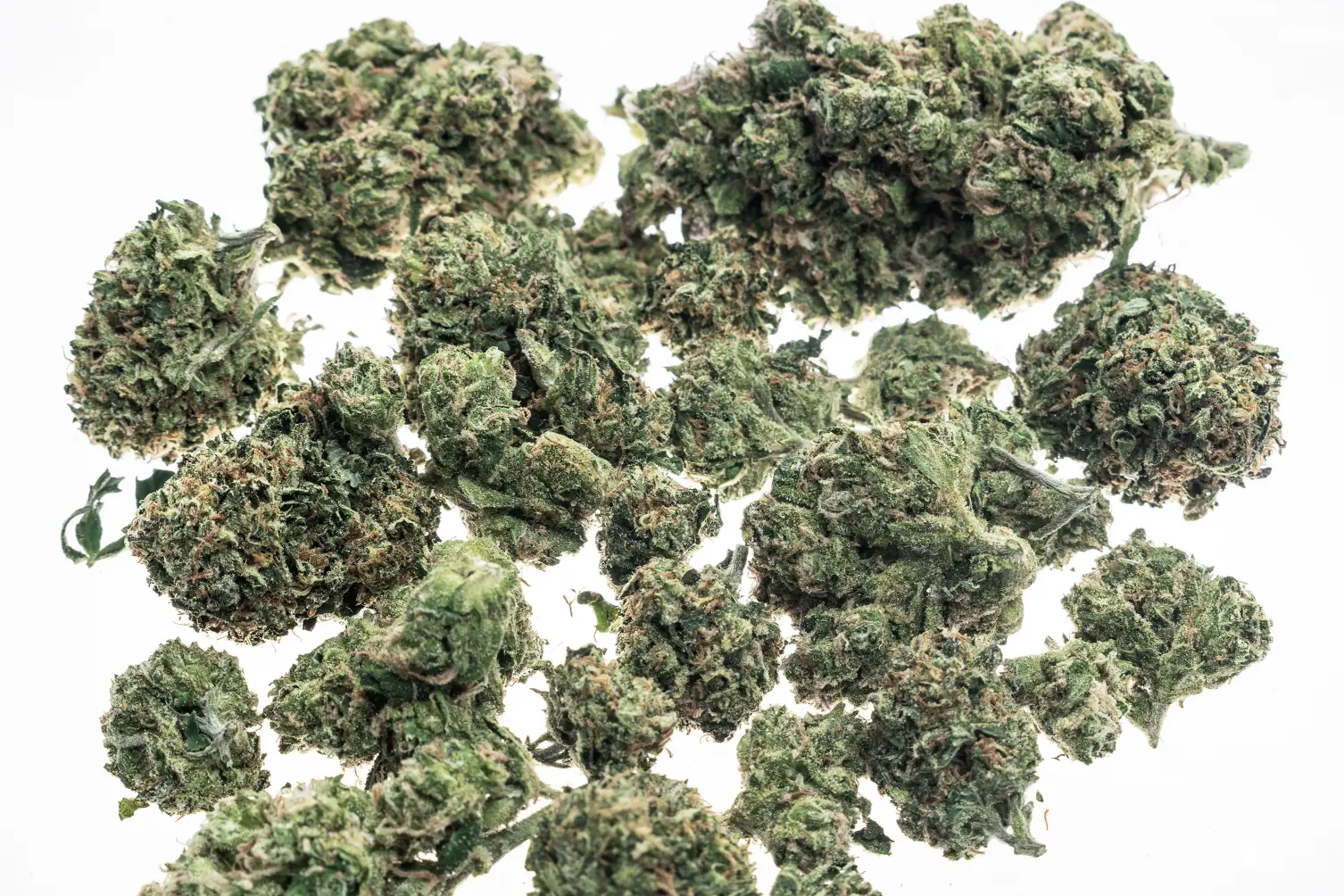
The defining sensory profile of Blue Power is blueberry and dark berry, lemon peel, kush, earth, sweet fuel and occasional floral notes. On a properly dried and cured flower, the jar should not present as one flat odor. The first opening often releases the most volatile notes, followed by deeper earth, spice, fuel, pine or floral compounds after the bud is broken. That layered change is a useful quality marker because it shows that the harvest retained more than the heaviest background aromatics.
On inhale, expect berry-kush sweetness with lemon brightness, earthy fuel and a smooth lingering finish. Vaporization at moderate temperature can make the top notes easier to separate, while combustion emphasizes heavier toasted, spicy and resinous tones. A harsh batch should not automatically be blamed on genetics. Over-drying, immature harvest, contaminated ash, excessive mineral residue in the substrate, poor storage and overly hot smoking can all flatten the flavor.
The grower's quality target is not simply 'strong smell.' Premium Blue Power should have definition. The bright note should be identifiable, the middle should carry the cultivar's characteristic body, and the finish should remain clean enough that the next inhalation still tastes like the same strain. When all the flower smells like generic dried plant material after two weeks, post-harvest handling has usually erased much of what was present on the living plant.
A useful sensory practice is to make aroma checkpoints. Smell the plant at week three of flower, again near peak swelling, again immediately before harvest, then after seven days of drying and after four weeks of cure. Write down only concrete descriptors. This creates a direct record of where flavor was preserved or lost. For Blue Power, pay special attention to the cultivar can dry into generic kush and fuel if harvested too late or dried too warm; the premium expression keeps berry, lemon and floral notes distinct after several weeks of cure.
Dominant Terpenes
The terpene profile of a named cannabis cultivar is not a permanent barcode. Different phenotypes, cultivation environments, harvest dates and analytical labs can produce different rankings. The following terpenes are the most useful recurring reference points for the classic sensory profile.
Limonene: Aromatically, this terpene is associated with lemon and bright citrus. In Blue Power, it keeps the berry profile lively and is one of the easiest notes to lose in heat. Terpene rankings can change among phenotypes and labs, so it is better to describe this as a commonly reported contributor than as a fixed percentage. From a grower perspective, the important point is preservation. High flower temperature, hot drying and repeated oxygen exposure can reduce the clarity of volatile aroma even when cannabinoid potency remains substantial.
Myrcene: Aromatically, this terpene is associated with earth, herbs and ripe fruit. In Blue Power, it adds depth beneath the berry sweetness and supports the relaxed character. Terpene rankings can change among phenotypes and labs, so it is better to describe this as a commonly reported contributor than as a fixed percentage. From a grower perspective, the important point is preservation. High flower temperature, hot drying and repeated oxygen exposure can reduce the clarity of volatile aroma even when cannabinoid potency remains substantial.
Linalool: Aromatically, this terpene is associated with floral sweetness. In Blue Power, it contributes soft floral edges that distinguish good cured flower from a simple berry-gas profile. Terpene rankings can change among phenotypes and labs, so it is better to describe this as a commonly reported contributor than as a fixed percentage. From a grower perspective, the important point is preservation. High flower temperature, hot drying and repeated oxygen exposure can reduce the clarity of volatile aroma even when cannabinoid potency remains substantial.
The practical lesson is that growers should not chase a terpene name with an additive. Aroma is the final expression of genetics, healthy metabolism and post-harvest preservation. The highest-value intervention is usually a stable environment, correct harvest timing and a slow controlled dry, not a late bottle designed to make a plant smell stronger.
Indoor vs. Outdoor Growing
Indoors, Blue Power benefits from repeatable control over temperature, humidity, light distribution and irrigation. Its main structural identity is a sturdy, thick-stemmed, compact-to-medium plant that can carry substantial resinous flowers, with phenotype variation in color, aroma and degree of stretch. That makes canopy planning more important than simply maximizing plant count. A well-planned room gives each main top enough horizontal space to receive light and enough air movement that the boundary layer around the flower does not stay humid for hours.
The cultivar's indoor flowering window is about 55-65 days indoors. That figure should be treated as a planning range, not a harvest command. Use flower development, trichome maturity, aroma, water use and the plant's overall senescence together. A plant that reaches a calendar target with many clear trichomes and actively swelling calyxes is not finished because a database says it should be.
Outdoors, Blue Power can exploit a much larger root zone and sunlight, but environmental control is replaced by site selection. The expected harvest is late September to mid-October in suitable climates. The best site provides direct sun, morning drying, air movement and protection from prolonged rain. Dense cultivars should not be placed in low pockets where cool humid air settles overnight.
Indoor quality is easier to standardize. Outdoor plants can exceed indoor plants in size and can develop very rich aroma under full sun, but they face rain, wind, pests, smoke, dust and seasonal humidity. The correct choice therefore depends less on whether the strain is 'indoor' or 'outdoor' and more on whether the grower can meet its finishing requirements in the chosen environment.
Strain-Specific Grow Guidance
The central cultivation problem with Blue Power is a sturdy, thick-stemmed, compact-to-medium plant that can carry substantial resinous flowers, with phenotype variation in color, aroma and degree of stretch. Start by observing the plant rather than forcing a favorite training method onto it. During early vegetative growth, watch internodal spacing, branch angle and the speed at which side shoots catch the main stem. These three traits tell you whether the plant wants to be a compact multi-top bush, a taller framework with fewer dominant arms or a dense column suited to a higher plant count.
Build support before the flowers demand it
Canopy formation. The most reliable approach is top once or twice, spread the main arms early, keep the middle open and use a net mainly for distribution and support rather than forcing an extremely flat canopy. The goal is not to create the greatest number of tops. It is to create the greatest number of tops that can finish as premium flower. Every extra branch has a cost in light interception, humidity and trimming time. If the lower third of the plant remains permanently shaded after stretch, those sites are unlikely to become the same grade as the upper canopy. Remove them early enough that the plant can redirect growth without major late stress.
Stretch management. Measure the plant at flip and again around day 14 and day 21. Do not rely on a universal multiplier. Even within Blue Power, phenotype and environment can change stretch. This simple record lets you decide how tall the next run should be at flip. A cultivar that repeatedly stretches 1.7 times in your room should be planned differently from one that barely moves.
Root zone and irrigation. Blue Power performs best when roots receive both water and oxygen. The most common home-grow mistake is watering by calendar instead of by substrate demand. Allow the medium to move through a healthy wet-to-drier cycle without reaching severe wilt. In soil and soilless mixes, adequate air-filled porosity matters. In hydroponics, root temperature and dissolved oxygen matter. The strain-specific risk here is confusing different Blue Power lineages, over-ripening berry-dominant phenotypes, heat-driven loss of lemon and floral top notes, and leaving too many shaded lower branches because the frame appears strong enough to carry them.
Feeding. moderate to moderately strong feeding can work when roots are healthy, but berry quality benefits more from stable mineral availability and clean runoff than from late bloom booster escalation. Leaf color is useful, but do not use dark green as a goal. A plant can look 'lush' while accumulating excess nitrogen that delays fade, increases leaf mass and makes the canopy harder to ventilate. During flower, watch the newest healthy leaves, tip condition, petiole behavior and runoff trends rather than responding to every lower leaf with more fertilizer.
Flower-zone climate. Dense flowers create their own microclimate. Room humidity is not the same as humidity deep inside a cola. Air movement should reach through and around the canopy without blasting one side of the plant continuously. As flower mass rises, night humidity becomes more important because transpiration continues while temperature falls. A strong exhaust strategy, dehumidification when necessary and sensible spacing protect more yield than trying to rescue infected flowers later.
Late flower. Resist the urge to make major structural changes once flowers are heavy. Late supercropping, severe defoliation or aggressive feeding changes can create stress without giving the plant enough time to benefit. Support branches before they fail. Inspect the densest tops by gently separating flower clusters and looking for dead sugar leaves, gray tissue or unusual softness.
Harvest decision. Harvest should match the quality target. Earlier harvest tends to preserve brighter aroma and a more energetic edge, while later harvest can deepen body effect but may reduce volatile top notes. For Blue Power, this balance is especially relevant because the cultivar can dry into generic kush and fuel if harvested too late or dried too warm; the premium expression keeps berry, lemon and floral notes distinct after several weeks of cure. Use a loupe on calyx trichomes, not just sugar leaves, and combine that view with aroma and flower development.
Phenotype selection and repeatability. A serious Blue Power grow should distinguish between the best-looking plant and the best repeatable plant. Keepers earn their place by combining vigor, manageable architecture, useful flower-to-leaf ratio, predictable finish and cured sensory quality. Record the day each plant first shows clear flowering, the amount of stretch after flip, the point when stems begin needing support and how quickly each plant drinks during peak bloom. Then compare those notes with dry yield and cured aroma. A plant that produces spectacular color but weak aroma after cure is less valuable than a greener plant that repeatedly preserves the strain's defining profile. The same applies to yield. One oversized cola can make a plant look productive while the rest of the canopy is shaded and low grade. Measure total premium flower, not the photograph.
Diagnosing stress without overcorrecting. When Blue Power slows down, separate root-zone problems from canopy problems before changing nutrients. If leaves are drooping while the medium remains wet, adding fertilizer is unlikely to help. If only the highest leaves show bleaching or upward curl, inspect light intensity and leaf temperature before assuming deficiency. If lower leaves fade gradually late in bloom while tops remain healthy, that can be normal senescence. The most damaging pattern is a grower responding to every visual change with a new bottle. Make one correction at a time, then allow enough time to evaluate the response. This strain's specific risk cluster, confusing different Blue Power lineages, over-ripening berry-dominant phenotypes, heat-driven loss of lemon and floral top notes, and leaving too many shaded lower branches because the frame appears strong enough to carry them, should stay at the top of the diagnostic list because those are the failures most likely to reduce premium flower quality even when the plant survives.
Managing the final three weeks. Late flower is where Blue Power can gain substantial density while also becoming more vulnerable. Irrigation demand may peak and then gradually decline as ripening advances. Do not keep watering at the same volume simply because that was correct two weeks earlier. Watch pot weight, runoff timing and daily water use. At the same time, inspect branch junctions and the underside of large tops because weight can change quickly. Reduce unnecessary handling of resinous flowers. Keep tools clean and avoid foliar products on developed buds. If a dense top develops a dead sugar leaf that pulls out too easily, inspect the interior immediately rather than waiting for an odor problem. Early removal of a small infected area is better than losing an entire branch.
Outdoor site management. Outdoor Blue Power should be shaped for the actual site, not for an indoor photo. In a windy location, a slightly lower, wider frame can reduce leverage on main stems. In a humid valley, more open spacing and earlier interior pruning are worth more than maximum branch count. In a dry hot climate, retaining enough healthy leaf mass can protect flowers from heat while irrigation is scheduled to avoid repeated severe wilt. Rain near harvest changes the decision tree. Do not assume a plant must remain outside until every trichome reaches an idealized percentage. If prolonged wet weather is forecast and dense flowers are already mature, protecting quality can be more valuable than chasing a few additional days of swelling.
Quality-yield accounting. After harvest, divide the crop into premium tops, acceptable mids and low-grade material. Weigh each category only after drying. Then compare those numbers with the canopy decisions made during the run. If the crop produced a large amount of lower material, the next cycle should not automatically use more light or more fertilizer. It may need earlier lollipopping, fewer branches or a shorter vegetative period. If premium tops were excellent but total canopy coverage was poor, the next cycle may need one additional week of vegetative growth or earlier topping. This feedback loop is how a grower learns Blue Power instead of merely completing it.
Mother-plant and clone considerations. Once a desirable Blue Power phenotype is identified, preserve it only if it remains healthy and repeatable. A mother plant should be kept under stable vegetative conditions and inspected for pests, nutrient imbalance and loss of vigor. Clones taken from a stressed or unhealthy mother can make the next run look like a genetic problem when the real issue is plant health. Label clones by mother and date. If a cut begins drifting in vigor or structure across cycles, investigate environment, pests and root health before assuming the genetics changed. For a flavor-focused library, maintaining the same proven cut is one of the best ways to separate cultivation improvements from phenotype variation.
Weedth Bud Flavor Tips
For Blue Power, flavor preservation begins before harvest. The most important late-flower rule is to avoid unnecessary heat. Terpenes are volatile, and the brightest parts of blueberry and dark berry, lemon peel, kush, earth, sweet fuel and occasional floral notes can become noticeably flatter when flower-zone temperatures remain high. Good climate control near harvest protects quality without forcing artificial stress.
Indoor flavor strategy. Keep the canopy even so one group of tops is not sitting in a hot light pocket. Reduce excessive late nitrogen and avoid spraying flowers. If irrigation is automated, confirm that the root zone is not staying saturated overnight. A healthy, gradually ripening plant usually produces a cleaner sensory result than one pushed through repeated drybacks, heavy boosters or abrupt nutrient withdrawal.
Outdoor flavor strategy. Harvest clean, dry flowers. If possible, avoid cutting immediately after rain or heavy dew. Morning harvest can be useful once surface moisture has evaporated and before intense daytime heat, but the exact timing should prioritize dry flower and sanitary handling. Remove visibly damaged or contaminated material rather than mixing it into the drying room.
Drying. A slow, dark and moderately cool dry is the single most important post-harvest step. Whole-plant or larger-branch hanging can slow the process when the environment is dry, while smaller branches may be safer in humid conditions. Do not follow a fixed number of days. Judge the actual flowers. The outside should not become crispy while the center is still wet, and stems should move toward a clean snap without the buds becoming brittle.
Curing. Once internal moisture has equalized enough for sealed storage, cure in clean airtight glass with minimal headspace and minimal light. Monitor rather than blindly 'burping' on a schedule. If the container climbs into an unsafe humidity range, remove the flower and let it continue drying. If the flower is already too dry, opening it repeatedly only accelerates aroma loss.
The Weedth quality target for Blue Power is not the strongest possible jar odor on day one. It is a stable, layered aroma after several weeks of cure. The specific failure to avoid is the cultivar can dry into generic kush and fuel if harvested too late or dried too warm; the premium expression keeps berry, lemon and floral notes distinct after several weeks of cure. When the cured flower still shows the same major descriptors that were present on the plant, the harvest and post-harvest process did its job.
Weedth Bud Boost Tips
Bud boosting for Blue Power should mean increasing the percentage of fully illuminated, well-aerated, properly ripened flowers, not simply increasing total wet biomass. The core strategy is choose the keeper by cured aroma, not purple color alone; maintain strong but not excessive light, open the interior early, support heavy tops and give enough root volume to sustain the final swell. This often produces fewer weak lower flowers and more uniform tops, which is a better outcome for both trimming efficiency and final jar quality.
Light distribution first. Before adding supplements, map the canopy. High-quality light should reach the main flowering surface evenly. A few extremely bright tops surrounded by shaded branches create inconsistent ripening. Raise, dim or redistribute fixtures when necessary. In dense canopies, leaf position and branch spacing can be more important than adding more photons.
Root capacity. The root zone has to support the planned plant size. A plant that repeatedly dries too fast in late flower may need more substrate volume next cycle, not stronger fertilizer this cycle. Outdoors, unrestricted root volume can create enormous plants, but the canopy must still be pruned so interior flowers receive air and useful light.
Training timing. Do structural work in vegetative growth and the first part of stretch. Once flowers are forming, shift from creating architecture to supporting it. A trellis, stakes or soft ties should be installed before branches are leaning under full weight. Support does not increase genetic yield by itself, but it prevents breakage and keeps productive tops in the light zone.
CO2 and advanced intensity. Supplemental carbon dioxide only makes sense in a sealed, high-light, climate-controlled environment where the grower can measure and manage the entire system. It is not a shortcut for a small ventilated home grow. Without appropriate light, temperature and irrigation, extra CO2 does not solve the limiting factor.
The final swell. Do not mistake swollen flowers for permission to flood the plant with bloom additives. moderate to moderately strong feeding can work when roots are healthy, but berry quality benefits more from stable mineral availability and clean runoff than from late bloom booster escalation. A stable plant that keeps functioning into late flower can continue building density and resin. Salt stress, root damage or excessive heat during the same period can stop that process faster than any booster can restart it.
The best yield metric for Blue Power is grams of cured premium flower per unit of canopy, followed by aroma retention after cure. Record those values. They tell you far more about whether a change worked than wet harvest weight or the size of the single largest cola.
Medical Uses & Benefits
Cannabis effects are highly individual, and Blue Power should not be presented as a treatment. Adult consumers commonly report choosing it for stress, body tension and evening decompression, while high-THC flower can worsen anxiety in some people. Those reports are best understood as descriptions of subjective symptom relief, not proof that the strain treats a disease.
Its reported effect pattern, a gradual relaxing wave with euphoria and creativity first, then stronger physical calm without always becoming immediate knockout sedation, helps explain why some people prefer it at a particular time of day. A strongly sedating batch may be poorly suited to work, driving or complex tasks. A more balanced phenotype may feel functional in a small dose but heavy in a larger one. The same person can therefore experience the strain differently depending on dose and context.
Anyone using cannabis alongside prescription medication, during pregnancy, with a history of psychosis or serious cardiovascular problems, or for persistent medical symptoms should discuss use with a qualified health professional. Inhaled cannabis also exposes the lungs to irritants when smoked. Vaporization avoids combustion but is not risk-free.
For readers evaluating Blue Power for personal use, the practical approach is conservative titration. Start with a small amount from a known batch, wait for the full onset and keep notes on desired and undesired effects. The goal is not to reach the maximum tolerable dose. It is to find the minimum amount that produces the experience the user actually wants.
Ideal User Profile
The ideal Blue Power user is someone who appreciates a gradual relaxing wave with euphoria and creativity first, then stronger physical calm without always becoming immediate knockout sedation and understands that dose can shift the experience substantially. It is especially well suited to people who value berry-kush sweetness with lemon brightness, earthy fuel and a smooth lingering finish rather than choosing flower only by THC percentage.
For growers, the best match is a cultivator willing to manage a sturdy, thick-stemmed, compact-to-medium plant that can carry substantial resinous flowers, with phenotype variation in color, aroma and degree of stretch. Beginners can succeed if they keep irrigation and climate simple. Experienced growers will find more room to optimize canopy uniformity, phenotype selection and post-harvest flavor. The plant is less suited to someone who wants to ignore canopy density or harvest purely by date.
For consumers, timing depends on phenotype and dose. A heavier expression belongs later in the day. A more balanced expression may work for a relaxed afternoon, creative hobby or social setting. New users should avoid assuming that an indica label guarantees a gentle experience. Potency and personal sensitivity matter more than marketing categories.
The strongest reason to choose Blue Power is the combination of its sensory identity and grow behavior, not novelty. If the goal is a completely different effect or a radically different aroma family, another cultivar may be a better fit. A good strain library should help readers make that decision rather than insisting every strain is exceptional for everyone.
Grower Notes and Feedback
Grower feedback around Blue Power becomes most useful when it is translated into repeatable observations. The first recurring theme is structure: a sturdy, thick-stemmed, compact-to-medium plant that can carry substantial resinous flowers, with phenotype variation in color, aroma and degree of stretch. This affects plant spacing, how many tops are worth keeping and when support should be installed.
A second recurring theme is that visual appeal does not always predict cured quality. Color, frost and large colas are easy to photograph. They do not tell you whether the flower will retain blueberry and dark berry, lemon peel, kush, earth, sweet fuel and occasional floral notes after drying. Keepers should be selected only after cure. If two plants yield similarly but one retains a layered aroma for six weeks while the other becomes flat, the first is usually the more valuable mother.
The third theme is risk management. Growers repeatedly get into trouble with confusing different Blue Power lineages, over-ripening berry-dominant phenotypes, heat-driven loss of lemon and floral top notes, and leaving too many shaded lower branches because the frame appears strong enough to carry them. These problems are preventable when they are anticipated. Build enough space into the canopy, watch night humidity, keep irrigation matched to actual demand and inspect the densest flowers rather than assuming the room-average sensor represents the bud interior.
Another practical observation is that the plant often performs best when the grower stops changing the plan every few days. Stable light, stable climate, stable root chemistry and gradual adjustments are more productive than repeated rescue treatments. Cannabis can adapt to a wide range of conditions, but constant swings make it difficult to understand what caused an improvement or decline.
Finally, photograph and weigh only after drying. Wet flowers and dramatic harvest-day branches exaggerate yield. A useful grow log includes dry weight, trim grade, amount of lower material, drying loss, final jar humidity and a sensory score after cure. That record turns a single Blue Power grow into information that improves the next run.
Weedth Editor's Note
The decision I would not postpone
I judge Blue Power by what remains in the jar after the excitement of harvest has passed. The first thing I watch in the garden is not frost. It is the way the plant builds its frame. With this cultivar, a sturdy, thick-stemmed, compact-to-medium plant that can carry substantial resinous flowers, with phenotype variation in color, aroma and degree of stretch. Once I see that pattern, I know whether I need to spread the plant, remove the lower center or install support earlier than usual.
I prefer to do most structural work before flowering becomes serious. For Blue Power, I use top once or twice, spread the main arms early, keep the middle open and use a net mainly for distribution and support rather than forcing an extremely flat canopy. I would rather finish eight strong tops than carry fifteen mixed-quality branches through harvest. That decision also makes the late-flower climate easier to control, which matters because confusing different Blue Power lineages, over-ripening berry-dominant phenotypes, heat-driven loss of lemon and floral top notes, and leaving too many shaded lower branches because the frame appears strong enough to carry them.
The part I enjoy most is aroma development. A healthy plant can move from a fairly ordinary vegetative smell into blueberry and dark berry, lemon peel, kush, earth, sweet fuel and occasional floral notes. I start smelling individual plants separately near mid-flower and I write the descriptors down. Memory is unreliable when several aromatic cultivars share one room. The notes let me compare the living plant with the dried flower later.
At harvest I do not chase maximum amber. I want the expression that matches the reason I grew the strain. With Blue Power, the cultivar can dry into generic kush and fuel if harvested too late or dried too warm; the premium expression keeps berry, lemon and floral notes distinct after several weeks of cure. If the plant is fully developed and the bright notes are beginning to soften, I would rather harvest into a careful dry than leave it standing just to gain a little more scale weight.
My favorite jars are the ones that become more coherent after three or four weeks instead of simply becoming quieter. When Blue Power is handled well, the cured flower still presents berry-kush sweetness with lemon brightness, earthy fuel and a smooth lingering finish. That is the point where I decide whether a plant deserves another run. A pretty flower can impress me once. A plant that grows predictably and keeps its flavor earns space in the next cycle.
Weedth Score
Growing Experience – 8.5/10. Blue Power offers a clear structural identity and responds well when the canopy is planned around it. The main deduction comes from the need to manage confusing different Blue Power lineages, over-ripening berry-dominant phenotypes, heat-driven loss of lemon and floral top notes, and leaving too many shaded lower branches because the frame appears strong enough to carry them.
Bud Structure & Visual Appeal – 8.8/10. The cultivar can produce attractive, resinous flower when light and airflow are balanced. Visual quality should still be judged alongside density and drying behavior.
Aroma Complexity – 9.0/10. The best expressions layer blueberry and dark berry, lemon peel, kush, earth, sweet fuel and occasional floral notes. The profile is more interesting when the bright and deep notes remain distinct after cure.
Flavor & Smoothness – 8.8/10. Properly cured flower shows berry-kush sweetness with lemon brightness, earthy fuel and a smooth lingering finish. Smoothness depends heavily on drying, storage and consumption method.
Effects & High Experience – 8.8/10. The characteristic progression is a gradual relaxing wave with euphoria and creativity first, then stronger physical calm without always becoming immediate knockout sedation. It has personality without needing an extreme potency claim.
Overall Satisfaction & Recommendation – 8.8/10. I would recommend Blue Power to growers who value repeatable cultivation decisions and cured flavor over hype.
Personal closer: I keep coming back to the jars that still smell like the plant weeks later. When Blue Power holds onto its defining aroma through cure, the grow feels complete.
FAQ
Is Blue Power easy to grow?
It is best described as moderate. The main challenge is not keeping the plant alive. It is finishing premium flower while managing confusing different Blue Power lineages, over-ripening berry-dominant phenotypes, heat-driven loss of lemon and floral top notes, and leaving too many shaded lower branches because the frame appears strong enough to carry them.
Q: How long does Blue Power flower?
A: A typical indoor range is about 55-65 days indoors. Use that as a planning window and confirm maturity with calyx development, trichomes and aroma.
Q: How tall does Blue Power get?
A: The usual pattern is short to medium with thick stalks and a sturdy frame. Final size depends strongly on vegetative time, container volume, light intensity and phenotype.
Q: What does Blue Power taste like?
A: A well-cured batch should show berry-kush sweetness with lemon brightness, earthy fuel and a smooth lingering finish. Poor drying can flatten the profile into heavier earth or generic fuel.
Q: What training method works best for Blue Power?
A: A reliable starting point is top once or twice, spread the main arms early, keep the middle open and use a net mainly for distribution and support rather than forcing an extremely flat canopy. The exact method should follow the plant's branch angle and stretch rather than a fixed recipe.
Q: What is the biggest grow risk with Blue Power?
A: The main cluster of risks is confusing different Blue Power lineages, over-ripening berry-dominant phenotypes, heat-driven loss of lemon and floral top notes, and leaving too many shaded lower branches because the frame appears strong enough to carry them. Most are easier to prevent through spacing and climate than to correct late in flower.
Q: When should Blue Power be harvested?
A: Use the expected window of about 55-65 days indoors as context, then inspect calyx trichomes and aroma. Do not harvest only because the calendar has reached a listed day.
Q: How should Blue Power be dried for the best flavor?
A: Dry slowly in darkness at a moderate temperature with controlled humidity and gentle air exchange. For this cultivar, remember that the cultivar can dry into generic kush and fuel if harvested too late or dried too warm; the premium expression keeps berry, lemon and floral notes distinct after several weeks of cure.
Q: Is Blue Power suitable outdoors?
A: Yes when the local season can reach late September to mid-October in suitable climates and the site has enough sun and airflow. Dense flowers need extra protection from prolonged wet weather.
Q: What should I select in a keeper phenotype?
A: Prioritize healthy structure, manageable stretch, premium-flower percentage and the ability to retain blueberry and dark berry, lemon peel, kush, earth, sweet fuel and occasional floral notes after at least several weeks of cure.
Similar Strains
The most useful similar strains are not simply names with matching marketing labels. They should help the reader understand Blue Power through shared genetics, grow behavior, flavor or effect. The following cultivars are good reference points:
Master Kush: links to the compact kush structure and earthy base.
Blue Moonshine: explains the blue-fruit and resin side of the family.
Animal Mints: contains Blue Power deeper in its family and shows how the line contributes resin and body.
Apples and Bananas: another descendant where Blue Power ancestry contributes structure and flavor complexity.
Blueberry: a useful sensory comparison for growers selecting berry-forward phenotypes even though the lineage is different.
These comparisons are directional, not promises that every phenotype will behave alike. When choosing a next strain, decide which part of the experience you want to preserve: plant structure, flavor family, flowering behavior or effect. That produces a more useful comparison than simply choosing another indica or another strain with the same color.
Share this article
A quick overview of the topics covered in this article.
Follow us
Latest articles
October 24, 2026
October 24, 2026
October 24, 2026
October 24, 2026