
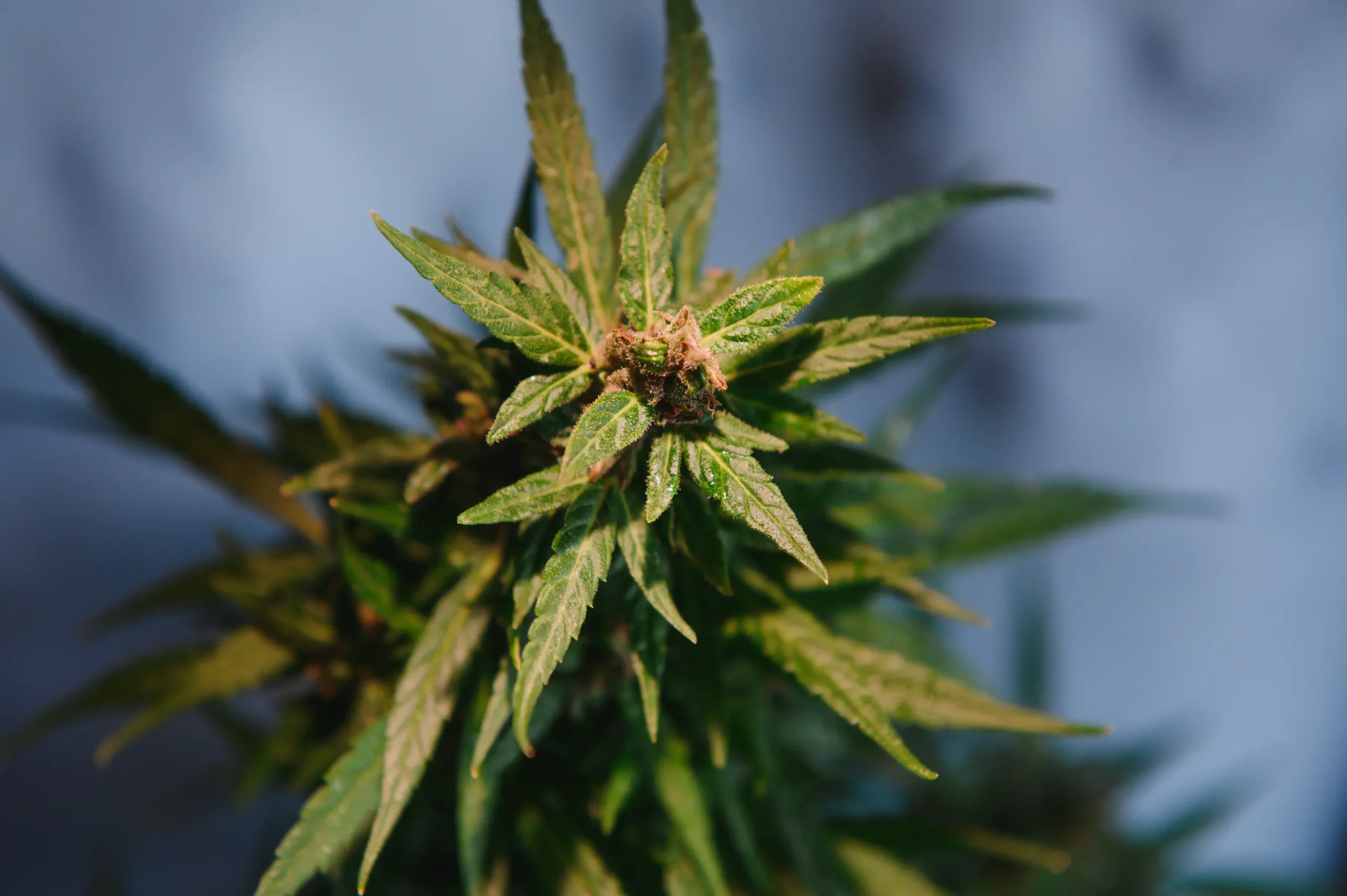
Bubble Gum
Bubble Gum is easy to underestimate because the name makes it sound simple. In cultivation, its most interesting trait is not sweetness but structural variation. Modern grow information repeatedly describes at least two useful plant types: one with minimal side branching and strong central growth, and another with fuller lateral development that takes longer to build but can produce a larger canopy.
That variation changes almost every grow decision. The central-dominant plant is naturally suited to SOG and a shorter vegetative period. The branchier plant benefits from topping, more vegetative time, and enough horizontal room for the laterals to earn their place. Trying to grow both phenotypes with the same schedule creates either wasted empty space or an overcrowded canopy.
The cultivar’s history begins with Indiana material whose exact ancestry remains uncertain, followed by preservation and selection in Europe. Different lines developed from that original material, which helps explain why some versions are more indica-like while others are more balanced or sativa-leaning in structure. Bubble Gum should be treated as a historically related family with a recognizable sweet-floral-berry identity rather than one perfectly uniform modern genotype.
The central cultivation question is how to identify the plant’s branching type early enough to choose the right production model. Once that decision is correct, Bubble Gum is generally manageable. It flowers in roughly eight to nine weeks in many lines, clones well, and can yield strongly without an extreme feeding or lighting strategy.
Flavor is the second half of the challenge. Sweet bubblegum, berry, floral notes, fruit, and mild earth are delicate compared with the plant’s basic herbal background. Overheating the canopy or drying too aggressively can leave a respectable hybrid that no longer tastes like the cultivar’s name.
Strain Features
| Feature | Details |
|---|---|
| Strain Type | Hybrid with line-dependent indica or sativa expression |
| Historical Origin | Indiana material later preserved and selected through multiple European lines |
| Genetic Profile | Exact original ancestry is uncertain; Indiana Bubble Gum is the clearest historical anchor |
| THC | Commonly moderate to strong, with modern samples varying widely |
| CBD | Usually low |
| Dominant Terpenes | Beta-caryophyllene, limonene, and myrcene commonly recur |
| Flavor / Aroma | Sweet bubblegum, berry, floral, fruit, mild earth |
| Effect Character | Happy, relaxed, euphoric, sometimes creative and lightly stimulating |
| Flowering Time | Usually about 8 to 9 weeks; some lines extend slightly longer |
| Grow Difficulty | Easy to moderate |
| Plant Architecture | Two common tendencies: central-dominant with limited side branching, or fuller branchy phenotype |
| Vegetative Speed | Can be slower early, then accelerate in flowering |
| Yield | Medium to high depending on phenotype and training model |
| Training Compatibility | SOG for central plants; topping, LST, and open SCROG for branchier plants |
| Bud Structure | Light green, frosty, medium-to-dense flower depending on line |
| Mold Risk | Moderate when dense flowers or protected outdoor conditions stay wet |
| Cloning | Generally suitable for clone-based production |
| Best Time of Use | Daytime to evening depending on dose |
Genetic Lineage
Bubble Gum’s exact ancestry is uncertain, but the historical trail points to Indiana-grown material that later reached European breeders and was selected into different commercial lines. That is a better-supported history than a neat modern two-parent formula.
The existence of multiple selected lines helps explain why Bubble Gum can be described as mostly indica in one context and more balanced or sativa-leaning in another. This is not simply bad data. It reflects genuine selection from a historically broader pool.
The sweet bubblegum and strawberry-like aromatic direction became the common identity marker even while growth structure diverged. That makes sensory phenotype selection unusually important for a strain whose genetics are historically less precise than its flavor reputation.
The branch architecture is one of the most useful inherited traits to record. A central-dominant plant can be an excellent production clone in SOG. A fuller branchy plant may produce more total flower but requires more veg time and a different canopy plan.
A keeper should therefore be chosen by matching plant type to grow style. The best SOG Bubble Gum is not necessarily the best low-plant-count Bubble Gum, and vice versa.
Effect Breakdown
Bubble Gum commonly begins with a happy, pleasant mental change. The effect can feel light enough for conversation or creative activity before the body relaxation becomes obvious.
At a moderate dose, the strain often sits near the middle of the hybrid spectrum. The user may feel uplifted and mildly stimulated while the body becomes calmer, making the experience social rather than immediately sleepy.
The physical side can become stronger over time. Tension drops, the body feels softer, and users may prefer quiet activity even if the mind remains relatively clear.
Higher doses shift the cultivar toward a heavier, more stoney experience. Attention can become scattered, short-term memory may weaken, and sleepiness may appear in more indica-leaning lines.
Dry mouth and dry eyes are common. Headache, dizziness, or anxiety can occur when the dose is too high, particularly because sweet smooth flavor can encourage redosing.
The overall arc is versatile. Small doses can work during the day for experienced users, while larger doses or heavier phenotypes fit the evening better.
The strain’s balance is phenotype sensitive. A more indica-leaning Bubble Gum can move toward body numbness and sleep at doses where a lighter line remains creative and social.
This is another reason the strain name should not be treated as a guaranteed effect percentage. The same historical family contains legitimately different selections.
Flavor & Aroma Profile
Bubble Gum’s defining aroma is sweet, but the best flower is not simply sugary. Berry, strawberry-like fruit, flowers, mild earth, and soft herbs usually sit underneath the chewing-gum impression.
The name describes a sensory resemblance rather than one isolated compound. The bubblegum impression comes from multiple sweet and fruity volatiles interacting with the earthy cannabis base.
On inhale, sweetness and fruit tend to lead. Floral notes can appear in the middle. The exhale becomes earthier and slightly spicy, which keeps the flavor from feeling artificial.
Different historical lines can emphasize different parts of the profile. Some are more strawberry-like. Others are more floral or earthy. A line can still be valid Bubble Gum even when the sweetness is less literal than expected.
The fragile layer is the sweet fruit. A hot late-flower environment or aggressive dry can leave only mild earth and herbs. The flower may remain potent but lose the reason the cultivar became famous.
Cure should make the sweetness cleaner rather than dramatically stronger. Green plant notes should recede, the berry or floral side should separate, and the smoke should become smooth enough that the finish does not bury the flavor.
The bubblegum impression can feel louder in the room than in smoke. Combustion often brings the earthy and spicy background forward, which is why smooth post-harvest handling matters if the sweet top layer is supposed to remain visible on the exhale.
A floral phenotype can be just as valuable as a strawberry-heavy one when the sweetness remains clean and persistent. The cultivar’s historical diversity makes one exact candy profile an unrealistic authenticity test.
Dominant Terpenes
| Terpene | Aroma Role | Cultivar Relevance | Scientific Caution |
|---|---|---|---|
| Beta-caryophyllene | Pepper, spice, wood | Commonly reported and supports the mild spicy-earthy base beneath the sweetness | CB2 activity does not prove strain-specific therapeutic effects |
| Limonene | Citrus, fresh sweetness | Can brighten fruit and candy-like perception | Does not guarantee an energetic effect |
| Myrcene | Earth, herbs, musk | Supports the grounding herbal base and may be stronger in more relaxing lines | Does not independently cause sedation |
| Pinene / floral minor compounds | Fresh herbs, flowers | Can sharpen or soften the sweet profile depending on phenotype | Minor compounds vary substantially among historical lines |
Bubble Gum’s namesake aroma is a strong example of why flavor cannot be explained by the three most abundant terpenes alone. Minor esters and other volatiles can strongly influence candy and fruit perception.
Terpene data should therefore support sensory description without pretending one fixed laboratory fingerprint represents every preserved Bubble Gum line.
Indoor vs. Outdoor Growing
| Decision Point | Indoor | Outdoor |
|---|---|---|
| Phenotype Decision | Central-dominant plants fit SOG; branchy plants reward more veg and horizontal training | Branchier plants can use natural side light and more root space |
| Vegetative Speed | Can be slow early, so flip timing should follow structure rather than impatience | Long season gives fuller branchy phenotypes time to build |
| Stretch | Usually manageable, but growth can accelerate after flip | Rarely the main outdoor limitation |
| Training | SOG, topping, LST, or open SCROG depending on branching type | Early topping can widen fuller phenotypes |
| Bud Moisture | Controlled humidity protects sweet flower | Rain protection helps, but covered environments still need ventilation |
| Flavor Control | Indoor temperature and drying control help preserve candy-fruit notes | Outdoor heat at harvest can flatten sweetness |
| Yield | High when phenotype and production model match | Good potential in suitable climates |
| Best Fit | Growers willing to identify plant type before choosing the training system | Warm temperate climates with a dry enough finish |
Bubble Gum is unusually useful for demonstrating why grow style should follow phenotype. A low-branch plant can waste a long vegetative period because it was naturally built for central production. A fuller plant can underperform if flipped too early before its laterals establish.
Indoor clone runs are especially valuable. Once the grower knows which structure a selected mother produces, plant count, veg time, and canopy spacing can be planned with much more precision.
Outdoors, the branchier phenotype can use sunlight from multiple angles and develop a larger framework. The main risk is moisture in mature flowers, particularly when weather protection reduces rain but also reduces air exchange.
The cultivar does not require a tropical-length season, which makes outdoor timing more practical than long sativas. The final quality still depends on a dry enough harvest period and gentle post-harvest handling.
Indoor mother-and-clone production is especially useful because structural predictability matters so much. Once a selected clone is known to be central or branchy, plant count and veg time can be designed around that behavior instead of accommodating both at once.
Outdoor seed plants have more room to express variation, but spacing still matters. A branchy phenotype can occupy far more horizontal area than the early-season plant suggests, and neighboring plants can close the airflow long before harvest.
Strain-Specific Grow Guidance
Identify the Branching Type Before Choosing the System
Bubble Gum’s two common structural tendencies should be treated as the first cultivation decision. A plant that stays strongly central with minimal side branching naturally fits SOG or a simple single-column shape.
A fuller branchy plant should be allowed more veg time so the laterals thicken and spread. Forcing the same schedule onto both phenotypes wastes one of them.
Do Not Punish Slow Early Veg With Excess Feeding
Bubble Gum can appear slow during early vegetative growth and accelerate later. Slow growth is not automatically a nutrient deficiency.
If leaves are healthy and the root zone is functioning, increasing feed simply because the plant is not racing can create excess salts before the natural growth acceleration begins.
Use SOG for the Central Phenotype
Minimal-side-branch plants are efficient when each plant occupies a narrow footprint and concentrates weight into the main flower.
Keep plant height uniform and avoid long veg. The point of SOG is to use many simple plants, not to create large bushes in a crowded room.
Use Topping and LST for the Fuller Phenotype
Branchier plants can justify topping because several laterals are already prepared to take over. One early topping can create a broad productive canopy.
Use ties to separate the main branches and allow transition stretch to fill the remaining gaps rather than topping repeatedly.
Let Flowering Acceleration Work for You
Some Bubble Gum plants speed up after the light cycle changes. This means the grower should not completely fill the footprint in veg.
Leave modest reserve space and watch the first two weeks closely. Branches that become useful can be retained; weak interior shoots can be removed after the final structure is visible.
Keep the Canopy Shallow Enough for Sweet Flower to Mature
Deep shaded Bubble Gum flowers can remain airy and less aromatic. Once stretch settles, remove shoots with no realistic path to useful light.
Strong outer laterals on branchy phenotypes can stay. The goal is a productive layer, not a fixed pruning line.
Feed Moderately and Watch the Root Zone
There is no need to treat Bubble Gum as an extreme feeder. The cultivar generally performs well under a stable complete nutrient program.
Water use and leaf condition should decide whether strength rises. Dark leaves, burned tips, or slow dryback are stronger evidence than a generic feeding reputation.
Use Airflow to Protect the Candy Aroma and the Bud Interior
Mature flower can become dense enough that inner humidity matters. Keep branches separated and air moving through the canopy without blasting the flowers directly.
Outdoor covers should not become stagnant shelters. Rain protection only helps if humid air can still leave the plant.
Support the Branchy Phenotype Before Late Weight Arrives
Build support before the flowers demand it
Fuller Bubble Gum plants can carry substantial flower across several laterals. A loose support net or soft ties keep those branches upright and maintain the spacing created during training.
Central SOG plants may need less individual support when stem diameter is strong, but neighboring tops should still remain physically separated.
Harvest for Sweetness, Not Just Trichome Cloudiness
The sweet bubblegum aroma should feel complete before harvest. A plant that still smells mostly green and herbal is unlikely to gain full candy character through cure alone.
Use calyx swelling, flower trichomes, pistil slowdown, and aroma together. Later harvest can deepen body effects, while a slightly earlier mature window may preserve a brighter social profile.
Use Clone Runs to Turn Structural Variation Into an Advantage
Bubble Gum becomes much easier once the grower stops treating every seed plant as interchangeable. If a desirable phenotype is retained as a clone, the next cycle can be planned around its exact branching pattern rather than around the strain’s average reputation.
A central-dominant clone can be run at higher plant count with shorter veg. A branchy clone can be given more floor space and trained wider. This is a practical example of phenotype selection improving horticulture rather than simply choosing flavor.
Do Not Fill a Branchy Plant So Deep That the Center Disappears
The fuller phenotype can produce many useful laterals, but the middle of the plant can still become shaded when every secondary branch is retained. A productive Bubble Gum bush should have visible routes through the interior after stretch.
Remove branches that grow inward and have no independent light lane. This reduces small flower, simplifies trim, and keeps air moving around sweet mature buds.
Vegetative Slowness Can Change Transplant Timing
A plant that grows slowly above ground may still be establishing roots. Transplanting repeatedly or increasing irrigation simply to accelerate visible veg can create more stress than benefit.
Allow the root system to occupy the current container before moving to a much larger wet volume. Bubble Gum responds better to stable root development than to impatient changes based only on shoot speed.
Flowering Acceleration Can Change Irrigation Demand Quickly
When the cultivar begins growing faster after the flip, water use can rise before the flowers look substantial. This is one of the periods when a previously comfortable container can begin drying much faster.
Increase irrigation frequency only when the medium and plant demonstrate the need. Avoid jumping immediately to larger volumes that keep the root zone saturated.
Sweet Aroma Does Not Mean the Plant Wants a Sweeter Feed
The name encourages myths about sugar, molasses, fruit juice, or sweet additives directly flavoring the buds. The bubblegum character is produced by the plant’s genetics and volatile chemistry, not by feeding it candy-like ingredients.
Organic carbon sources can affect soil biology in some systems, but they should not be sold as a way to make the finished flower taste sweeter. Flavor preservation is a plant-health and post-harvest problem.
Outdoor Branchy Plants Need More Support Than Central SOG Types
A wide branchy Bubble Gum can distribute flower weight far from the trunk. Wind and rain create leverage that an indoor central-column plant never experiences.
A perimeter cage or several outward stakes preserve the broad shape better than pulling every branch toward one pole. Structural openness improves both light and drying after weather.
Branch Angle Can Predict Which Fuller Phenotypes Stay Manageable
Not all branchy Bubble Gum plants spread the same way. Some laterals rise steeply and compete with the main stem, while others naturally travel outward. The outward type is easier to keep open because the plant creates part of its own horizontal separation.
A plant with steep vertical laterals can still be an excellent keeper, but it needs earlier ties and more deliberate spacing. Recording branch angle in vegetative growth makes the second run easier before stretch begins.
Do Not Let a Uniform SOG Become a Humidity Wall
Uniform central plants are ideal for SOG only when each main flower has physical space around it. The system stops being efficient when pots are packed so tightly that mature tops form one continuous surface.
Leave enough distance for hands and air to pass between neighboring plants. A small reduction in plant count can increase the percentage of flower that finishes evenly and reduce hidden late-flower moisture.
Root-Zone Stability Matters More Than Early Speed
Bubble Gum’s slow start can encourage repeated changes to irrigation, nutrients, and container size. Constant correction often creates more variability than the original slow growth.
A healthy plant with normal leaf color and a functioning dryback should be allowed to establish. Once the root system catches up, shoot growth can accelerate without the grower forcing the transition.
Use Late-Flower Aroma to Separate Cultivar Sweetness From Green Sweetness
Young cannabis tissue can smell fresh, sweet, or floral before the cultivar-specific profile is mature. Bubble Gum should move from generic plant sweetness toward recognizable candy, berry, or strawberry character as the flowers finish.
If that change has not occurred, cure alone is unlikely to create the missing identity. Harvesting after complete aromatic development gives the sweet phenotype its best chance to survive post-harvest.
Weedth Bud Flavor Tips
Bubble Gum’s namesake sweetness is the first thing to protect. Earth and herbs remain after rough handling, while strawberry-like fruit and floral candy disappear sooner.
Do not dry according to a fixed number of days. Different phenotypes can produce fluffier or denser flower, and moisture leaves those structures at different rates.
Avoid direct fan air and high heat. The goal is even moisture movement, not a crisp exterior.
During cure, the sweetness should become cleaner and the green edge should fade. A jar that turns flat and hay-like usually entered storage after a dry that moved too quickly or after an immature harvest.
Keep central and branchy phenotypes separate during cure. Structural differences can also produce different drying behavior and flavor expression.
A strawberry-heavy plant may become more obvious after a few weeks. Do not reject a phenotype on drying day if the late-flower aroma suggested strong fruit.
Store cool and airtight. Candy-like aroma often seems loud when fresh but loses character quickly when the flower is repeatedly exposed to warm dry air.
Bubble Gum should be evaluated after several weeks of cure because the candy impression can change dramatically. Freshly dried flower may smell more floral or herbal, then reveal stronger berry sweetness once internal moisture stabilizes.
Do not let the flower become brittle-dry simply because a fluffier phenotype feels ready sooner than a dense one. Over-dry sweet cultivars often retain smell better than they retain actual flavor on the palate.
If a phenotype has a pronounced strawberry direction, record it separately from generic sweetness. That distinction can become especially valuable when selecting plants for future crosses or repeat clone runs.
Weedth Bud Boost Tips
The most important Bubble Gum yield decision is matching phenotype to grow style. A central plant in SOG can outperform the same plant forced into a long branch-building veg.
A branchy phenotype deserves enough vegetative time for strong laterals, but not enough to overfill the room before stretch.
Clone-based runs can improve uniformity dramatically because the grower knows which structural type will appear before the cycle starts.
Remove weak lower growth after stretch, but keep productive outer branches on fuller plants. Use actual light rather than one pruning rule.
A support net can improve usable yield on branchy plants by keeping dense flowers separated and evenly exposed.
Do not chase sweetness with sugar products or fruit additives. Bubble Gum’s flavor is genetic and is preserved through healthy maturation, temperature control, drying, and storage.
Quality yield means the chosen phenotype expresses its natural production style and still tastes distinctly sweet after cure.
For SOG, uniform height matters more than a high number of plants. One taller phenotype can dominate the light while shorter central plants lose the very efficiency the system is designed to create.
For branchy plants, a second support layer can increase premium yield by keeping heavy side flowers in their intended light lanes and preventing them from collapsing inward.
Track dry premium yield separately from total trimmed weight. The plant that produces fewer leafy lowers and more uniform sweet flower may be the better production keeper even if another plant is physically larger.
Medical Uses & Benefits
Bubble Gum is commonly chosen by users seeking stress relief, mood improvement, relaxation, and pain distraction. These are user-reported patterns rather than clinical evidence.
At smaller doses, the balanced mental and physical profile may appeal to users who want to remain engaged while feeling calmer.
Larger doses can become heavier or sleepier, particularly in more indica-leaning lines. This dose response explains why user reports range from daytime-friendly to strongly relaxing.
Dry mouth and dry eyes are common. Headache, dizziness, or anxiety can occur in some users, especially when potency is higher than expected.
Bubble Gum is generally THC-dominant and should not be treated as a non-intoxicating medical option.
Anyone using cannabis for a diagnosed condition or alongside prescription medication should seek guidance from a qualified healthcare professional.
Ideal User Profile
Bubble Gum suits users who want sweet classic cannabis with a middle-ground hybrid effect rather than an extreme sativa or heavy knockout indica.
It fits social afternoons, creative hobbies, music, films, and relaxed evenings depending on dose.
Flavor preference should lean toward sweet candy, berry, flowers, and mild earth. People seeking aggressive gas or deep hash may find it too soft.
For growers, it is a good educational cultivar because the phenotype visibly teaches why branch architecture should determine training style.
It is especially attractive for growers who use clones and want to refine either a SOG or a branchy low-plant-count system over repeated cycles.
Grower Notes and Feedback
The two-structure pattern is the most useful recurring grow observation. Minimal-branch plants and fuller branchy plants should not be treated as if they need the same veg duration.
Slow early vegetative growth followed by faster flowering growth is another repeated observation. This can tempt beginners to overfeed or over-veg before the plant has shown its full behavior.
The cultivar is generally described as easy enough for beginners once the structure is understood. Its flowering window is relatively practical, usually around eight to nine weeks.
SOG is repeatedly associated with central-dominant plants, while branchier phenotypes can produce stronger total yields when given time and space.
Sweet berry and floral aroma is the key keeper trait. The plant should be judged after cure because fruit intensity can change substantially post-harvest.
Weather protection can help outdoors, but dense mature flowers still need moving air. A covered stagnant plant is not automatically safer from mold.
Historical line differences are not merely a trivia problem. They affect whether a grower should expect a compact mostly-indica plant, a more balanced branching hybrid, or a somewhat taller expression. The article should leave room for those legitimate variations.
Another recurring pattern is that the cultivar can remain visually modest early and then become much more productive in flower. Growers who abandon a healthy slow-starting plant too early can miss that later acceleration.
Seed growers should avoid selecting a mother solely during vegetative growth. A visually attractive branchy plant may lose the sweet aroma after cure, while a less dramatic central plant may produce the cleaner candy profile.
The strongest selection process therefore evaluates structure first for grow fit and cured flower second for cultivar identity. Both traits matter if the plant is going to become a long-term clone.
Weedth Experience
The point where this plant reveals itself
Bubble Gum is a strain I would not train until I had watched the plant long enough to understand what structure it wants to build. The central phenotype and the branchy phenotype are almost two different production problems.
If the plant stays strongly apical, I would keep it simple and use a shorter veg. If the laterals rise naturally, I would top once, spread them, and give them enough time to become real load-bearing branches.
I would be patient with slow early veg. I would rather let a healthy plant reveal its natural acceleration than push extra nutrition into it simply because I wanted faster growth.
At harvest, sweetness would matter as much as resin. If the flower is frosty but still smells mostly green, I would wait within the safe maturity window.
The keeper for me would be the plant whose structure fits my system and whose cured flower still smells recognizably sweet, floral, and berry-like without needing hype.
I would label Bubble Gum plants by structure before I labeled them by flavor. ‘Central’ and ‘branchy’ would tell me how to grow the clone on the next cycle, while cured aroma would decide whether the clone deserves to stay.
I would also resist trying to manufacture sweetness with feeding tricks. If the flavor is disappointing, I would look first at phenotype, maturity, canopy heat, drying speed, and storage.
The plant I would keep would make my production method easier, not harder. A great Bubble Gum keeper should taste distinctive and fit naturally into either a simple SOG or a deliberate branchy canopy.
On a second run, I would change only one major production variable at a time. Keeping the clone and environment stable while adjusting plant count or veg time would show whether the structural match truly improves premium yield.
Bubble Gum becomes much more interesting when it is treated as a phenotype-management cultivar rather than merely a sweet classic. The plant teaches the grower to let architecture dictate the system.
The emotional payoff arrives after cure, when the structure recorded in the grow notes finally connects with the jar. A compact central plant that preserves a clear sweet-floral finish can be more valuable than a larger branchy plant whose aroma turns generic. That is the comparison I would trust, because it measures both the plant I had to manage and the flower I actually wanted to keep.
Weedth Score
Growing Experience 8.6/10 Generally forgiving and flexible once the grower identifies whether the plant is central-dominant or branchy.
Bud Structure & Visual Appeal 8.2/10 Frosty light-green flower can look excellent, though density and form vary among historical lines.
Aroma Complexity 8.5/10 Sweet bubblegum, berry, flowers, fruit, and earth create a distinctive classic profile.
Flavor & Smoothness 8.7/10 The cultivar is most rewarding when the candy-fruit character survives drying and cure.
Effects & High Experience 8.3/10 A versatile happy-relaxed hybrid arc that changes usefully with dose.
Overall Satisfaction & Recommendation 8.5/10 A strong classic for both beginners and experienced growers who appreciate phenotype-specific training.
Personal closer: I would keep the Bubble Gum whose structure clearly fits my production style and whose sweetness remains obvious weeks after cure.
FAQ
What is Bubble Gum’s real lineage?
The exact original ancestry is uncertain. The strongest historical link is Indiana-grown material later preserved and selected into several different lines.
Question sent by: Elena, via e-mail.
Is Bubble Gum indica or sativa?
Different historical lines can lean differently. Treat the actual plant as a hybrid and judge its structure rather than relying on one fixed percentage.
How long does Bubble Gum flower?
About eight to nine weeks is common, with some lines finishing slightly earlier or later.
Why is my Bubble Gum barely branching?
A central-dominant phenotype is a recognized structural type and can be excellent for SOG.
Why is my Bubble Gum very branchy?
Fuller lateral phenotypes also occur. They usually benefit from more veg time and wider training.
Is Bubble Gum good for SOG?
Yes, especially central-dominant plants with limited side branching.
Is Bubble Gum good for SCROG?
Branchier phenotypes can work very well in an open screen with enough vegetative time.
Does Bubble Gum grow slowly?
Early vegetative growth can be slower than expected, with faster development after flowering begins.
Does Bubble Gum respond well to topping?
Yes on branchier phenotypes. A strongly central plant may be more efficient kept simple.
Is Bubble Gum a heavy feeder?
It usually does not require extreme feeding. Follow actual water use, vigor, and leaf condition.
Is Bubble Gum prone to mold?
Mature flowers can develop moisture problems if the canopy is crowded or outdoor protection traps humidity.
Why doesn’t my Bubble Gum smell like candy?
Phenotype variation, immature harvest, high late-flower heat, or aggressive drying can all reduce the sweet profile.
When should Bubble Gum be harvested for flavor?
Use calyx maturity, flower trichomes, reduced fresh pistils, and a complete sweet berry-floral aroma.
Can Bubble Gum grow outdoors?
Yes in suitable temperate climates with a dry enough finish and good airflow.
Is Bubble Gum good for daytime use?
Many users find smaller doses happy and relaxed without heavy sedation, while larger doses can become more stoney or sleepy.
Similar Strains
Strawberry Banana: Uses a strawberry-leaning Bubble Gum parent and intensifies the fruit and resin side.
Blueberry: A classic sweet-fruit cultivar with more berry depth and a heavier body profile.
Skunk #1: A foundational hybrid comparison with more skunk and less candy sweetness.
Pineapple Express: Offers a brighter tropical fruit profile with a more energetic hybrid effect.
Strawberry Cough: A strawberry-focused sativa alternative with more stretch and stronger daytime stimulation.
Runtz: A modern candy comparison with denser resinous flower and a stronger contemporary sweet-gas profile.
Share this article
A quick overview of the topics covered in this article.
Follow us
Latest articles
October 23, 2026
October 23, 2026
October 23, 2026
