Vegetative vs Flowering Spectrum: How Different Do They Need to Be?
One of the most persistent debates in indoor cannabis cultivation centers on spectral specialization between growth stages. For decades, legacy indoor growing dogma dictated an absolute division: vegetative growth required the cool, blue-heavy output of metal halide (MH) or fluorescent T5 fixtures, while flowering demanded the intense, orange-red wavelengths of high-pressure sodium (HPS) bulbs. Cultivators swapped lamps, switched ballasts, or transferred entire crops between dedicated rooms with completely different spectral environments, treating spectral shifting as an indispensable biological prerequisite for successful harvests.
With the commercial emergence of solid-state light-emitting diode (LED) fixtures, this traditional workflow has been completely disrupted. Modern full-spectrum white LEDs combine broad phosphor emission with targeted red diodes, delivering continuous spectral power across the entire Photosynthetically Active Radiation (PAR, 400 to 700 nm) and extended PAR (ePAR, 400 to 750 nm) wavebands. Commercial cultivators routinely run a single broad-spectrum luminaire from rooted clone to final senescence, achieving dry flower yields exceeding 2.0 to 2.5 grams per watt without ever altering the color composition of their light.
Yet despite the demonstrated success of single-spectrum cultivation, manufacturers continue to market specialized vegetative fixtures, multi-channel spectrum-tuning luminaires, and aggressive flowering boosters. This leaves both craft growers and commercial facility designers facing a pivotal operational decision: does spending extra capital on distinct vegetative and flowering spectra deliver measurable improvements in cannabinoid concentration, terpene complexity, canopy morphology, or grams-per-square-foot yield? Or does modern broad-spectrum white lighting render stage-specific spectral switching obsolete?
This comprehensive cultivation resource investigates the photobiological reality of vegetative versus flowering spectra. We analyze how cannabis photoreceptors process stage-specific photon ratios, evaluate the physical trade-offs of spectrum shifting versus intensity control, examine the economic models of single-spectrum versus dual-spectrum commercial layouts, identify common pitfalls in spectral management, and provide a verifiable decision framework to guide your lighting strategy.
Direct Answer: Do You Need Different Spectra for Veg and Bloom?
The short, evidence-based answer is: No, cannabis plants do not strictly require different spectra to complete a highly productive lifecycle, but specialized spectra provide strategic morphological advantages in dedicated multi-room facilities.
Extensive peer-reviewed research conducted across leading horticultural universities (including Utah State University, University of Guelph, and Wageningen University) confirms that cannabis can complete its entire vegetative and generative cycle under a single, well-balanced broad-spectrum white LED fixture. A balanced 3500K to 4000K spectrum delivering 15% to 18% blue photons, 40% to 45% green photons, and 35% to 40% red photons drives exceptional vegetative growth and massive floral biomass without compromising cannabinoid accumulation.
Single-Spectrum vs Dual-Spectrum Cultivation
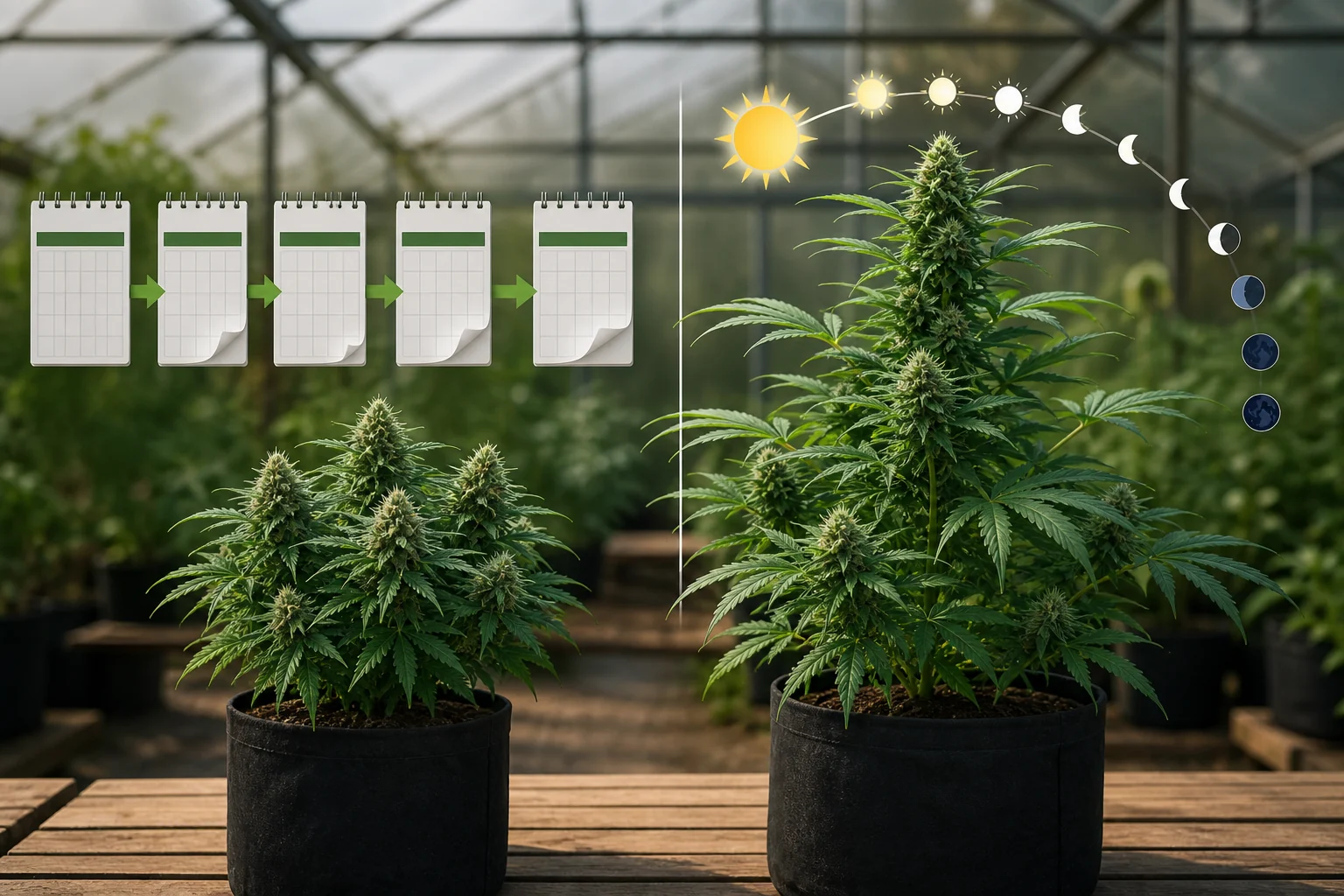
Single-spectrum cultivation utilizes an identical broad-spectrum light quality (typically 3500K-4000K white supplemented with 660 nm deep red) across all plant stages, controlling development exclusively by manipulating photoperiod and Photosynthetic Photon Flux Density (PPFD). Dual-spectrum cultivation employs distinct spectral compositions: a higher blue fraction (5000K-6500K, 20% to 30% blue) during vegetative growth to restrict internodal elongation, followed by a red-dominant spectrum (3000K + 660nm, 10% to 14% blue, 45%+ red) during flowering to maximize Photosystem II photon capture.
The belief that spectrum alone triggers or controls flowering is biologically incorrect. In photoperiod cannabis, the transition from vegetative growth to floral development is triggered strictly by the duration of the uninterrupted dark period: specifically, when the daily dark cycle extends to 12 hours (or longer for certain landrace equatorial varieties). The plant senses this night-length change through its phytochrome system regardless of whether the light spectrum during the day is warm or cool.
Key Principle: Spectrum shapes morphology (stem height, leaf thickness, branch angle, and internode length), while photon quantity (PPFD and DLI) and photoperiod drive photosynthetic yield and developmental stage transitions.
While a single broad-spectrum luminaire is completely sufficient for commercial success, manipulating spectral composition between vegetative and flowering stages acts as a powerful botanical tuning knob. Increasing blue photons during veg creates stockier, more compact plants with shorter internodal spacing, which is ideal for multi-tier vertical farming. Conversely, shifting to a red-enriched spectrum during bloom maximizes electrical photon efficacy, allowing commercial facilities to deliver more photosynthetically active photons per kilowatt-hour of electricity consumed.

Photobiological Mechanisms: Photoreceptors Across the Cannabis Lifecycle
To understand why cannabis reacts differently to spectrum during vegetative and flowering phases, cultivators must look inside leaf tissue at the molecular machinery governing plant photobiology. Light acts simultaneously as an energy source for fuel production and as an environmental signal for developmental programming.
Cryptochromes, Phototropins, and the Blue Light Response
During vegetative development, cannabis plants establish their structural framework. The key photoreceptors regulating this architectural phase are cryptochromes (cry1 and cry2) and phototropins (phot1 and phot2), which respond specifically to blue photons (400 to 500 nm). When blue light strikes cryptochrome proteins, it inhibits the action of gibberellins, the plant hormones responsible for cellular elongation in stem internodes.
A vegetative canopy receiving 20% or more blue photons develops compact stems, thick leaves with dense palisade mesophyll layers, and robust stomatal conductance. Furthermore, phototropins regulate the opening and closing of stomatal pores, ensuring efficient transpirational cooling and continuous carbon dioxide uptake under high light intensities. If blue photon flux is deficient during vegetative growth (falling below 10%), stems stretch rapidly in search of unshaded light, resulting in weak, spindly branches that cannot bear heavy flower clusters later in the cycle.
Phytochromes and the Red to Far-Red Transition
As the plant transitions into floral induction, the energetic and signaling demands shift fundamentally. The primary photoreceptor governing this phase is phytochrome, which exists in two photoreversible states: inactive $P_r$ (absorbing 660 nm red photons) and biologically active $P_{fr}$ (absorbing 730 nm far-red photons). During the light period, red photons drive $P_r$ into the active $P_{fr}$ state, which represses the shade avoidance response and maintains normal internodal development.
From an energetic perspective, red photons (600 to 700 nm) are the most efficient drivers of photosynthesis. According to the McCree Action Spectrum, red photons achieve the highest quantum yield of carbon assimilation per absorbed photon, exciting Photosystem II with minimal energy loss as heat. In commercial flowering bays where the primary objective is generating dense floral biomass and secondary metabolites, maximizing red photon flux is the most cost-effective method to drive high Daily Light Integral (DLI).
Can you flower cannabis under a 5000K vegetative grow light?
Question sent by: Marcus Vance, via direct message.
Yes, you can successfully flower cannabis under a 5000K vegetative luminaire as long as you maintain a 12/12 photoperiod and supply sufficient PPFD (700 to 900 μmol/m²/s). The flowers will develop full trichome coverage and potent terpene profiles. However, your total dry harvest weight will typically be 10% to 15% lower compared to flowering under a 3000K-3500K red-boosted fixture of equivalent electrical wattage. This yield penalty occurs because 5000K fixtures contain fewer deep red photons (which have the highest quantum photosynthetic yield) and have lower overall electrical efficacy due to phosphor down-conversion losses.
Green Light and Whole-Canopy Penetration in Mature Canopies
While historical lighting theory ignored green light (500 to 600 nm), modern plant physiology recognizes that green photons play a vital role during both vegetative and flowering phases, especially as canopies become dense. Chlorophyll pigments in upper leaves absorb red and blue light with extreme efficiency (often over 90%), leaving little red or blue light to penetrate below the top two or three leaf layers. Green light, having a slightly lower absorption coefficient, transmits deeper into the canopy and reflects internally through spongy mesophyll tissue, driving active photosynthesis in lower leaves and inner flower sites that would otherwise become unproductive larf.
Variables That Change the Answer: Genetics, Environment, and Layout
Whether a cultivator should invest in separate vegetative and flowering spectra depends heavily on several real-world cultivation variables. Treating spectrum selection as an isolated decision without considering genetic growth habits, vertical clearance, and facility economics leads to sub-optimal investments.
Variable 1: Cultivar Morphology and Stretch Genetics
Cannabis chemovars exhibit dramatically diverse branching and elongation characteristics:
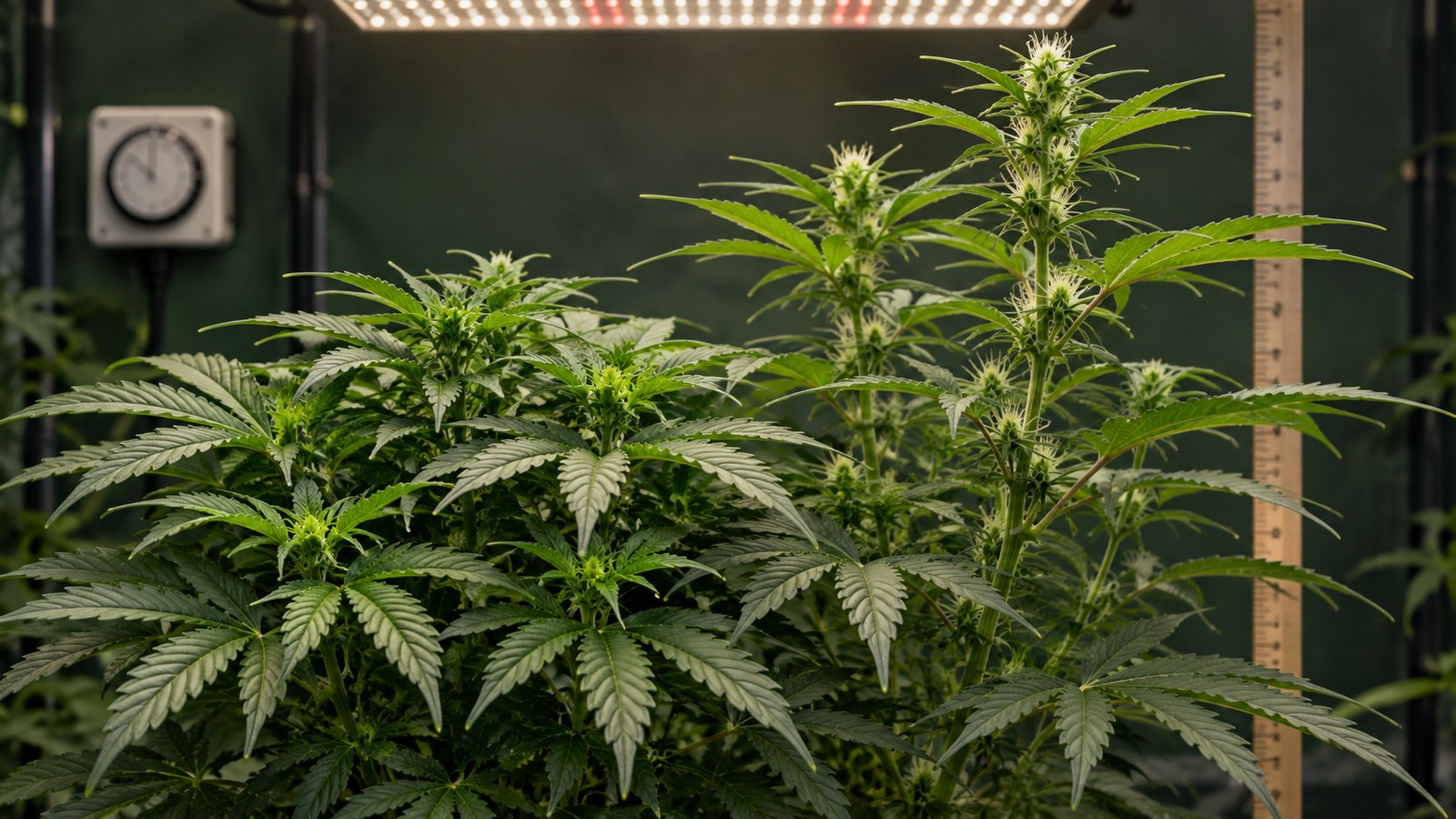
- High-Stretch Poly-Hybrids (Sativa-Dominant): Varieties featuring Sour Diesel, Haze, or OG Kush lineage frequently undergo an explosive 200% to 300% vertical stretch during the first three weeks of 12/12. For these cultivars, maintaining high blue fractions (18% to 22%) or utilizing a 4000K fixture through the early bloom transition acts as a crucial photonic brake, keeping plants within manageable vertical boundaries.
- Stocky Afghanica/Indica Cultivars: Broad-leaf hash plants and dense indica-dominant varieties naturally possess short internodes and thick, squat architecture. Growing these cultivars under high blue light can cause excessive compactness, resulting in dense, overlapping foliage that traps humidity and increases risk of Botrytis (bud rot) and powdery mildew. These varieties benefit from warmer, red-heavy spectra (3000K) even during late veg to encourage adequate branch spacing and air circulation.
Variable 2: Facility Architecture (Single-Tier vs Vertical Multi-Tier)
Facility layout dictates the physical margin of error for plant height. In single-tier warehouse or greenhouse setups with 12 to 16 feet of vertical clearance, a 24-inch vertical stretch presents zero operational hazard; fixtures can simply be raised on pulleys. In modern vertical farming facilities utilizing two, three, or four tiers of racking with only 36 to 48 inches of total vertical clearance per tier, uncontrolled stretch guarantees canopy burn against the LED bars. In vertical multi-tier rooms, dedicated high-blue vegetative spectrums and high-blue transition spectrums are essential structural management tools.
Variable 3: Photoperiod Varieties vs Autoflowering Cultivars
Autoflowering cannabis does not respond to photoperiod shifts; it initiates flowering automatically based on biological age (typically between day 21 and 28 from germination) while receiving continuous 18/6, 20/4, or 24/0 light schedules. Because autoflowers must establish maximum leaf area index (LAI) and vegetative branching before flowering begins, starting under a balanced broad-spectrum fixture (3500K-4000K) ensures rapid leaf expansion without stalling growth, smoothly carrying the plant into floral swelling without any jarring spectral transitions.
Cold Air Temperatures Amplify Blue-Light Stunting
Be cautious when running high-blue vegetative spectra (5000K to 6500K) in grow spaces where leaf surface temperatures (LST) fall below 75 degrees Fahrenheit (24 degrees Celsius). Blue light naturally suppresses internodal elongation, but when combined with low root-zone temperatures or cool ambient air, the inhibitory effect can severely stunt vegetative growth. If running high blue fractions, maintain daytime canopy temperatures between 80 and 84 degrees Fahrenheit (26.5 to 29 degrees Celsius) to ensure rapid cell division and healthy transpiration.
Dual-Spectrum vs Single-Spectrum: Comprehensive Comparison Framework
To make an informed commercial decision between single-spectrum and dual-spectrum operations, cultivators must weigh fixture procurement capital, maintenance complexity, operational flexibility, and harvest biomass yields. The table below outlines the core specifications across commercial lighting configurations:
| Cultivation Parameter | Dedicated Dual-Spectrum Setup | Single Full-Cycle Spectrum Setup | Multi-Channel Tunable Spectrum |
|---|---|---|---|
| Typical Spectrum Configuration | Veg: 5000K-6500K | Bloom: 3000K + 660nm | Full Cycle: 3500K-4000K + 660nm | Adjustable 2800K to 6500K via dimmers |
| Capital Expenditure (CapEx) | Moderate: requires two fixture models | Lowest: bulk buying discounts on one model | Highest: 25% to 40% premium for multichannel drivers |
| Fixture Photosynthetic Efficacy (PPE) | Veg: 2.4-2.6 μmol/J | Bloom: 2.8-3.1 μmol/J | Consistent 2.7-2.9 μmol/J across all bays | Variable: 2.3-2.7 μmol/J depending on channel balance |
| Internode Control in Vegetative Phase | Maximum: tight internodes and thick stems | Good: manageable internodes under proper PPFD | Exceptional: dialled blue fraction on demand |
| Floral Biomass Potential | Maximum: high red photon density in bloom | Near-Maximum: within 3% to 5% of dual-spectrum | High: requires skilled programming to avoid losses |
| Operational & Spare Parts Complexity | High: two distinct backup inventories needed | Lowest: universal interchangeability of all bars/drivers | Highest: complex control cables, hubs, and failure points |
As demonstrated in commercial trials, the yield difference between a well-designed single-spectrum 3500K-4000K fixture and a dedicated dual-spectrum setup rarely exceeds 3% to 5% by dry harvest weight. For most commercial operators, the massive logistical advantages of single-spectrum cultivation: bulk procurement discounts, simplified fixture spares inventory, and universal interchangeability across any cultivation room: far outweigh the minor theoretical yield gains of dual-spectrum setups.
When evaluating multi-channel tunable LED fixtures, commercial growers must also consider reliability. Multi-channel luminaires require complex internal circuitry, multiple secondary DC output drivers, and external 0-10V or PWM signal cabling. Every additional component represents a potential failure point in hot, humid grow room environments.
Step-by-Step Transition Protocol: Shifting from Veg to Bloom Photons
For growers operating dedicated veg and bloom rooms, or those utilizing tunable multi-channel LED fixtures, managing the transition between vegetative and flowering spectra requires careful execution. Jarring, instantaneous changes in spectrum and intensity can induce photoshock, causing temporary photosynthetic stall.
Stage 1: Late Vegetative Hardening (Days -5 to 0 Before 12/12)
Five days prior to initiating the 12/12 photoperiod, prepare the canopy for higher flowering irradiance:
- Gradually increase vegetative PPFD from 450 to 600 μmol/m²/s.
- Verify root-zone electrical conductivity (EC) is balanced; avoid nitrogen spikes that will amplify vertical stretch once red photons increase.
- Perform structural pruning and defoliation of lower non-productive shoots (lollipopping) while the plant remains in its vegetative vegetative state.
Stage 2: The Transition Stretch Phase (Week 1 to Week 3 of 12/12)
This is the most critical window for morphological control:
- For Stretchy Cultivars: Maintain higher blue fractions (18% to 20%) through Day 14 of 12/12. If running tunable fixtures, keep the blue channel at 80% and gradually ramp the red channel to 60%. Do not switch instantly to pure 3000K warm white, as the sudden surge in red-to-far-red ratio will trigger explosive internodal elongation.
- For Compact Cultivars: Shift directly to your standard flowering spectrum (3000K-3500K with 660 nm red) on Day 1 of 12/12 to encourage adequate branch separation and bud site development.
- Set PPFD to 700 to 800 μmol/m²/s, ensuring vapor pressure deficit (VPD) stays between 1.1 and 1.3 kPa.
Stage 3: Peak Floral Bulking (Week 4 to Week 7 of 12/12)
Once vegetative stretch ceases and floral calyxes begin rapid swelling, maximize red photon flux:
- Operate the fixture at peak flowering red enrichment (45%+ red flux, 660 nm peak).
- Push canopy PPFD to maximum targets: 900 to 1050 μmol/m²/s without CO2 supplementation, or 1200 to 1500 μmol/m²/s with 1200 to 1500 ppm CO2 enrichment.
- Maintain high green photon penetration to support photosynthesis in lower canopy floral clusters.
Stage 4: Ripening and Senescence (Final 10 to 14 Days)
In the final phase of floral maturation, plants reduce chlorophyll production and focus on secondary metabolite preservation:
- Reduce PPFD by 15% to 25% (down to 650-750 μmol/m²/s) to protect delicate monoterpenes from volatile thermal degradation.
- Optionally increase the blue photon fraction slightly (or re-engage blue-heavy channels) during the final 7 days to stimulate anthocyanin coloration (purpling) and support resin gland integrity.
Common Cultivation Mistakes: Over-Bluing in Veg and Red Starvation in Bloom
Even experienced cultivators frequently misapply spectral concepts, costing significant yield and energy efficiency across their crop cycles.
Mistake 1: The “Over-Bluing” Vegetative Trap
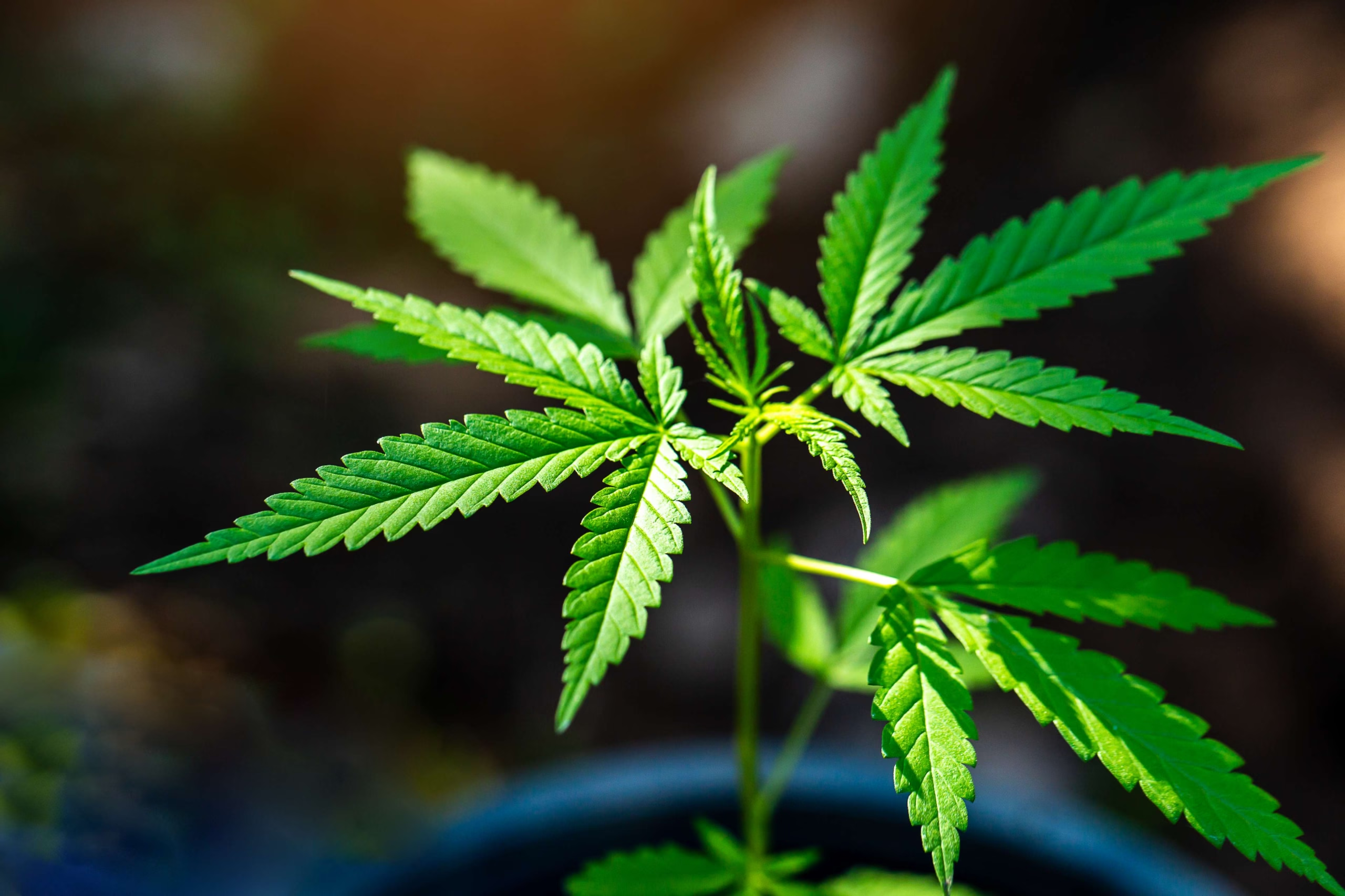
Many growers believe that if some blue light is beneficial for vegetative growth, more must be better. They purchase 6500K, 7000K, or pure royal blue (450 nm) fixtures for their nursery and veg rooms. While extreme blue light certainly prevents stretching, it also severely suppresses horizontal leaf area expansion. Broad, thin leaves intercept photons across a wider surface area; small, leathery, dark-blue-adapted leaves have a much lower Light Interception Ratio. Consequently, canopies under excessive blue take 7 to 10 days longer to fill the trellis net, extending vegetative cycle times and inflating operating electricity bills.
Mistake 2: Red Starvation During Early Flowering Stretch
In an attempt to prevent stretch during the first two weeks of 12/12, some cultivators keep plants under weak blue veg lights for 14 days after flipping. While this suppresses stem elongation, it starves the plant of the high red photon flux needed to fuel the explosive cell division occurring inside developing floral pre-flowers. This red starvation stunts early bud site formation, permanently capping the total flower cluster size for the rest of the cycle.
Mistake 3: Relying on Legacy “Blurple” Fixtures
Older narrow-band LED fixtures combining exclusively blue (450 nm) and red (660 nm) diodes: commonly known as blurple lights: were marketed on the false assumption that plants only absorb blue and red photons. Blurple fixtures lack continuous green and broad-spectrum white emission. In a dense cannabis canopy, blue and red photons are completely absorbed by the top leaves, leaving lower canopy branches in photosynthetic starvation. Modern broad-spectrum white fixtures consistently outperform blurple arrays by 20% to 35% in whole-canopy dry biomass.
Testing Single 3500K Bars Against 6500K Veg / 3000K Bloom Split Across 16 Benches
In our commercial trial facility, we conducted a head-to-head comparison across 16 rolling benches of a uniform Gelato 33 mother line. Bay A (8 benches) utilized dedicated 6500K high-blue fixtures in veg and dedicated 3000K + 660nm deep red fixtures in bloom. Bay B (8 benches) operated a single 3500K broad-spectrum fixture from rooted clone to harvest, adjusting only dimmer output and canopy hanging height.
The takeaway: Bay A produced slightly shorter vegetative plants (average internode length 1.2 inches vs 1.4 inches in Bay B). However, Bay B filled the horizontal scrog trellis 4 days faster because the balanced 3500K spectrum produced broader leaf surface area. At harvest, Bay A yielded 2.14 grams per watt, while Bay B yielded 2.11 grams per watt: a negligible 1.4% difference in biomass. Cannabinoid potency (27.8% THC in Bay A vs 27.6% in Bay B) and total terpene concentration (2.82% vs 2.85%) were statistically identical. Bay B saved over 32 labor hours per cycle by eliminating the physical transfer of plants between rooms, and the facility cut spare equipment inventory costs by 45%. For almost all commercial operations, single-spectrum 3500K-4000K cultivation is the superior business and operational model.
Do
Standardize on 3500K to 4000K Broad-Spectrum
Select full-cycle white fixtures delivering balanced blue (15-18%), green (40-45%), and red (35-40%) photons supplemented with 660 nm deep red chips.
Avoid
Purchase Complex Multi-Channel Dimmers Without Automation
Do not pay a 30% price premium for manual multi-channel tunable spectrum lights unless your facility operates a programmed central master environmental computer.
Commercial Insight: In commercial horticulture, operational simplicity creates reliability. Every manual knob, external controller cable, and secondary driver channel added to a fixture is a potential failure point. Single-spectrum luminaires eliminate grower error and guarantee uniform spectral delivery across every plant in your facility.
Field Verification: Monitoring Internode Spacing, LAI, and Energy Use
Regardless of whether you choose single-spectrum or dual-spectrum lighting, you must verify crop response through objective physiological measurements rather than subjective visual impressions.
Metric 1: Internodal Elongation Ratio (IER)
During the first three weeks following the 12/12 flip, measure the distance between leaf nodes on three tagged indicator branches per bench every 48 hours. Target an average internodal spacing of 1.0 to 1.5 inches for hybrid cultivars. If internodal spacing exceeds 2.0 inches, immediately increase blue photon flux (if running tunable fixtures) or increase total canopy PPFD by 100 μmol/m²/s to apply photonic braking.
Metric 2: Leaf Area Index (LAI) and Canopy Light Interception
Use an optical quantum sensor or mobile PAR meter to measure PPFD above the canopy versus PPFD at the ground surface beneath the canopy. Calculate the Canopy Light Absorption Percentage:
$$\text{Absorption \%} = \left(1 – \frac{\text{Ground PPFD}}{\text{Canopy Top PPFD}}\right) \times 100$$
In vegetative canopies, target 85% light interception before initiating flowering. In flowering canopies, target 90% to 95% interception. If high blue spectrum is producing small leaves and ground light transmission exceeds 15% at week 3 of flower, your spectrum is overly restrictive and limiting total canopy photon capture.
How does temperature affect plant stretch when changing spectrums?
Question sent by: Liam O’Connor, via grower forum.
Temperature interacts strongly with light spectrum through DIF (the difference between day and night temperatures). If you transition to a warm 3000K flowering spectrum while maintaining a large positive DIF (daytime 84°F, nighttime 68°F), your plants will stretch aggressively. To counteract stretch when transitioning to red-dominant spectra, utilize a zero DIF or slight negative DIF (e.g., maintaining daytime at 78°F and nighttime at 78°F, or running a 2-hour morning drop to 72°F right at lights-on). Temperature control and blue photon management work hand-in-hand to establish perfect canopy height.
Metric 3: Electrical Photosynthetic Photon Efficacy (PPE) Verification
Verify that your flowering spectrum achieves high electrical efficiency. Dedicated flowering luminaires should deliver at least 2.7 to 3.0 μmol/J. If a manufacturer promotes a heavily modified flowering spectrum with excessive amber or far-red diodes that drops total fixture PPE below 2.4 μmol/J, the biological benefits will not compensate for the elevated electrical power consumption over multiple annual cycles.
Final Decision Checklist and Companion Weedth Resources
To determine the ideal spectral strategy for your specific cultivation environment, review this structured decision checklist:
Veg vs Bloom Lighting Decision Framework
- Evaluate vertical clearance: if vertical space is under 5 feet, prioritize higher blue fractions (4000K or tunable) to restrict stretch.
- Assess cultivar stretch genetics: pair stretchy sativas with higher blue transition spectra; pair squat indicas with 3000K warm spectra.
- Calculate facility CapEx: compare bulk purchasing of universal 3500K-4000K fixtures against multi-model dual-spectrum inventories.
- Review facility layout: single-room perpetual setups require universal full-cycle fixtures; multi-room layouts can exploit dual spectra.
- Verify lab testing: demand accredited LM-79 reports to ensure flowering fixtures deliver at least 2.7 μmol/J photon efficacy.
- Ensure continuous green light: avoid legacy blue/red blurple fixtures lacking 500-600 nm broad-spectrum phosphor emission.
- Monitor environmental DIF: coordinate daytime/nighttime temperature differentials with spectral shifts during the 12/12 flip.
- Verify DLI delivery: remember that increasing total photon quantity (PPFD) drives yield far more than subtle spectral shifts.
By prioritizing photon quantity, electrical efficacy, and canopy uniformity over complex marketing claims, commercial cultivators build robust, repeatable operations that maximize return on capital investment across every harvest cycle.
Final Verdict: You do not need two different grow lights to achieve commercial quality and record-breaking yields. While high blue light is a valuable tool for suppressing stretch in vertical racking systems, modern 3500K to 4000K broad-spectrum white LED luminaires deliver world-class vegetative vigor and massive floral biomass from seed to harvest.
To expand your technical cultivation foundation with our companion foundational guides on indoor grow mediums, cannabis plant morphology, and environmental setup, explore our educational resources below:
Share this article
A quick overview of the topics covered in this article.
Follow us
Latest articles
October 28, 2026
October 28, 2026
October 28, 2026