
Lemon Skunk Strain: Citrus Aroma, Odor Control and Growing
The Lemon Skunk strain is sativa-dominant hybrid, often described near 60% sativa / 40% indica, commonly associated with fresh lemon zest, sweet citrus, skunk, herbs, earth and pepper and upbeat, creative and social mental lift with gentle later relaxation. Its cultivation value comes from topping, lst and scrog with early odor and height planning, while the main quality decisions involve powerful odor, stretch, root-zone drift and volatile citrus loss during drying.
Lemon Skunk is not one single universal clone. Different selections share a bright citrus direction but can vary in skunk intensity, height and finish. Its broad appeal comes from vigorous growth and a cheerful effect, while its quality depends on preserving volatile lemon compounds after harvest.
A familiar cultivar name is a starting point rather than a guarantee. Seed source, selected cut, root health, light, harvest timing and post-harvest handling can change height, aroma, potency and finish. The practical descriptions below therefore separate repeatable tendencies from claims that should be verified on the actual plant or batch.
| Variety | Sativa-dominant hybrid, often described near 60% sativa / 40% indica |
|---|---|
| Commonly reported genetics | Selected Skunk lines chosen for strong lemon expression |
| Typical THC | Often around 15-22%, with stronger examples reported |
| CBD | Usually very low, commonly below 1% |
| Typical effects | Upbeat, creative and social mental lift with gentle later relaxation |
| Flavor direction | Fresh lemon zest, sweet citrus, skunk, herbs, earth and pepper |
| Indoor flowering | About 8-9 weeks, commonly around 55-65 days |
| Outdoor harvest | Late September to October depending on latitude and selection |
| Plant size | Medium to tall with sativa-like extension and good lateral growth |
| Difficulty | Easy to moderate |
| Training response | Topping, LST and SCROG with early odor and height planning |
| Yield potential | Medium-high to high under an even canopy |
| Main cultivation risk | Powerful odor, stretch, root-zone drift and volatile citrus loss during drying |
Lemon Skunk is a legendary sativa-dominant hybrid cannabis strain cherished for its zesty lemoncitrus aroma, skunky sweetness, and well-balanced effects. Bred from two special Skunk phenotypes selected for their tangy lemon characteristics, Lemon Skunk burst onto the scene in the late 2000s as an award-winning cultivar and quickly became a favorite among growers and consumers. It offers an upbeat, mood-boosting high paired with gentle physical relaxation – all wrapped in a pungent lemon-skunk flavor. Below is a comprehensive profile of Lemon Skunk, covering its genetics, potency, effects, flavor, cultivation tips, medical uses, and more. Genetic Type (Indica/Sativa Hybrid) Genetics & Lineage: Lemon Skunk is a sativa-dominant hybrid with roughly 60% sativa / 40% indica in its lineage. It was created by crossing two distinct Skunk strains – one a classic Skunk #1 lineage and the other a “citral” lemony Skunk phenotype – chosen specifically for their intense citrus aroma. In essence, Lemon Skunk is the “love child” of two Skunks: one developed in Las Vegas and another bred in the Netherlands, each with pronounced lemon traits. This heritage gives Lemon Skunk a balanced genetic profile that blends vigorous Skunk #1 growth traits with a unique terpene twist (lots of lemon!). The result is a strain that captures old-school Skunk potency and robustness, but with a bright citrus spin.
Dominance: Being ~60% sativa, Lemon Skunk tends to exhibit sativa-like growth and effects (taller plant structure, cerebral high) moderated by an indica influence that adds some body effect and faster flowering. Many growers consider it a “balanced” hybrid in practice, as it delivers the best of both worlds – an energetic head high plus mild physical relaxation. Overall, expect a plant that leans sativa in spirit but still retains some indica sturdiness and shorter bloom time thanks to that 40% indica genetics. THC / CBD Potency THC Levels: Lemon Skunk is reasonably potent but not over-the-top. THC content typically ranges from ~15% up to about 22% in stronger samples. Most buds will test around the high teens (~18– 19% THC), which is above average but still comfortable for most users. This means Lemon Skunk can deliver a strong euphoric buzz without necessarily overwhelming you. Some exceptional phenotypes or well-grown harvests have hit the low-20s in THC percentage, giving a robust high for experienced consumers. In general, it’s safe to say Lemon Skunk has high THC potency (comparable to many top hybrids), offering a notable psychoactive kick. CBD Levels: CBD content in Lemon Skunk is very low – usually around 0.3–1% at most. In many tests it’s under 0.5% CBD, which is typical for a THC-focused strain.
Because CBD is minimal, Lemon Skunk’s effects are driven almost entirely by THC and other cannabinoids/terpenes. The low CBD means it’s not ideal for conditions requiring high CBD (e.g. seizures), but it does contribute a slight buffer that may take the edge off the THC a tiny bit. Essentially, expect a classic THC-dominant profile: lots of high with only trace amounts of CBD. (CBN is also low, often ~1% or less.) Overall: Lemon Skunk’s THC:CBD ratio is very high (basically THC-dominant). This translates into a potent psychoactive experience with strong euphoria but little CBD-mediated mellowness. Novice users should start slow despite the delicious flavor, as THC around ~20% can sneak up on you. Conversely, those with higher tolerance will appreciate that Lemon Skunk can deliver a solid high without couchlock (more on effects below).
Effects of Lemon Skunk
Primary Effects: Lemon Skunk’s high is often described as uplifting, happy, and energizing. The strain delivers a “heady, peppy cerebral high” that kicks in quickly with a burst of energy, creativity, and euphoria. Many users feel a buzzy mental stimulation almost immediately – it can brighten your mood and get the thoughts flowing in a cheerful, positive direction. This makes Lemon Skunk great for daytime use or social settings where you want to be talkative, giggly, and alert. Consumers frequently report feeling more motivated and upbeat after a few puffs, with stress and gloom seemingly melting away in the lemon-scented haze. Despite the initial energizing buzz, Lemon Skunk isn’t a pure racy sativa that leaves you jittery. It also provides a gentle body relaxation that creeps in as time passes. After an hour or two, the subtle indica side may emerge – relaxing your muscles and easing tension without knocking you out. The overall experience stays clear-headed and functional; users rarely report couchlock or heavy sedation from this strain, especially in moderate doses. Instead, you get a long-lasting high that is “uplifting yet lazy” – in other words, cheerful and stimulated mentally, while your body feels loose and calm. This balanced effect profile makes Lemon Skunk versatile for many situations.
It’s the kind of high that can jump-start your day with optimism, or later on help you unwind without completely knocking you out. Social and Creative Use: Thanks to its mood-lifting and sociable nature, Lemon Skunk is popular for social gatherings and creative activities. Expect fits of laughter and an easygoing, talkative vibe (it’s been known to make folks giggly and sociable). Artists and creatives may enjoy the enhanced creativity and focus it can provide – it’s a strain that can inspire brainstorming and imaginative thinking. Meanwhile, its calming undercurrent keeps anxiety at bay, so you remain relaxed even while your mind is active. Potential Negative Effects: Like most high-THC strains, Lemon Skunk can cause dry mouth and red/ dry eyes – have water handy. It’s generally smooth sailing, but in higher doses or for sensitive users, the strong cerebral uplift could spark some paranoia or anxiety. This is not common, but if you’re prone to anxiety with sativas, start with a small dose to gauge your reaction. Dizziness is also rarely reported. Overall, most people find Lemon Skunk’s positivity and mild body mellow avoids the edginess that some pure sativas have, making it an enjoyable and manageable high for a wide range of consumers.
Flavor and Aroma (Terpene Profile)
Aroma: True to its name, Lemon Skunk has an intense citrus-skunk aroma that is both pungent and sweet. When you crack open a jar of Lemon Skunk, your nose is hit with skunky musk and the smell of fresh-cut lemons in almost equal measure. The skunk odor is classic – earthy, slightly sour, and very pungent (it can fill a room quickly) – but it’s uplifted by a strong overlay of sweet citrus zest. Many describe the scent as “sweet lemons with a skunky, sour backnote.” There may also be hints of tangy orange or general citrus, and a light earthy undertone in some phenotypes. Properly cured buds often have an almost candy-like lemon smell mixed with the dank skunk, making Lemon Skunk a real treat for the senses – albeit a very loud one (expect any container opened to be very aromatic!). Flavor: The flavor of Lemon Skunk is remarkably similar to its smell. On inhale, users get a burst of sweet lemon – like lemon peel or lemonade – that coats the tongue. This bright citrus flavor is usually accompanied by a sweet, creamy smoothness (no harsh smoke here) and followed by the telltale skunky-spicy taste on the exhale. Many note the aftertaste of skunk and a bit of sourness lingers, but it’s pleasantly balanced by the sugary lemon candy taste up front.
Hints of other flavors can appear too: some phenos have a touch of tangy orange or grapefruit, others a note of peppery spice or herbal funk. Overall, if you enjoy citrusy strains, Lemon Skunk’s flavor profile is a delight – imagine smoking a slice of lemon meringue pie in a piney skunk garden. Terpene Profile: Lemon Skunk’s vibrant aroma comes from a rich terpene blend, dominated by those that give citrus and skunk characteristics. The primary terpenes often found in Lemon Skunk include:
Limonene
The top terpene responsible for the zesty lemon scent and uplifting mood effect. Limonene gives that sharp citrus peel aroma (think lemon rind) and contributes to the strain’s stress-relieving, happy vibes.
Myrcene
A supporting terpene that adds earthy, musky, and sweet notes. Myrcene in Lemon Skunk can enhance the relaxing aspect of the high, taking the edge off the sativa energy and imparting a faint herbal sweetness.
Caryophyllene
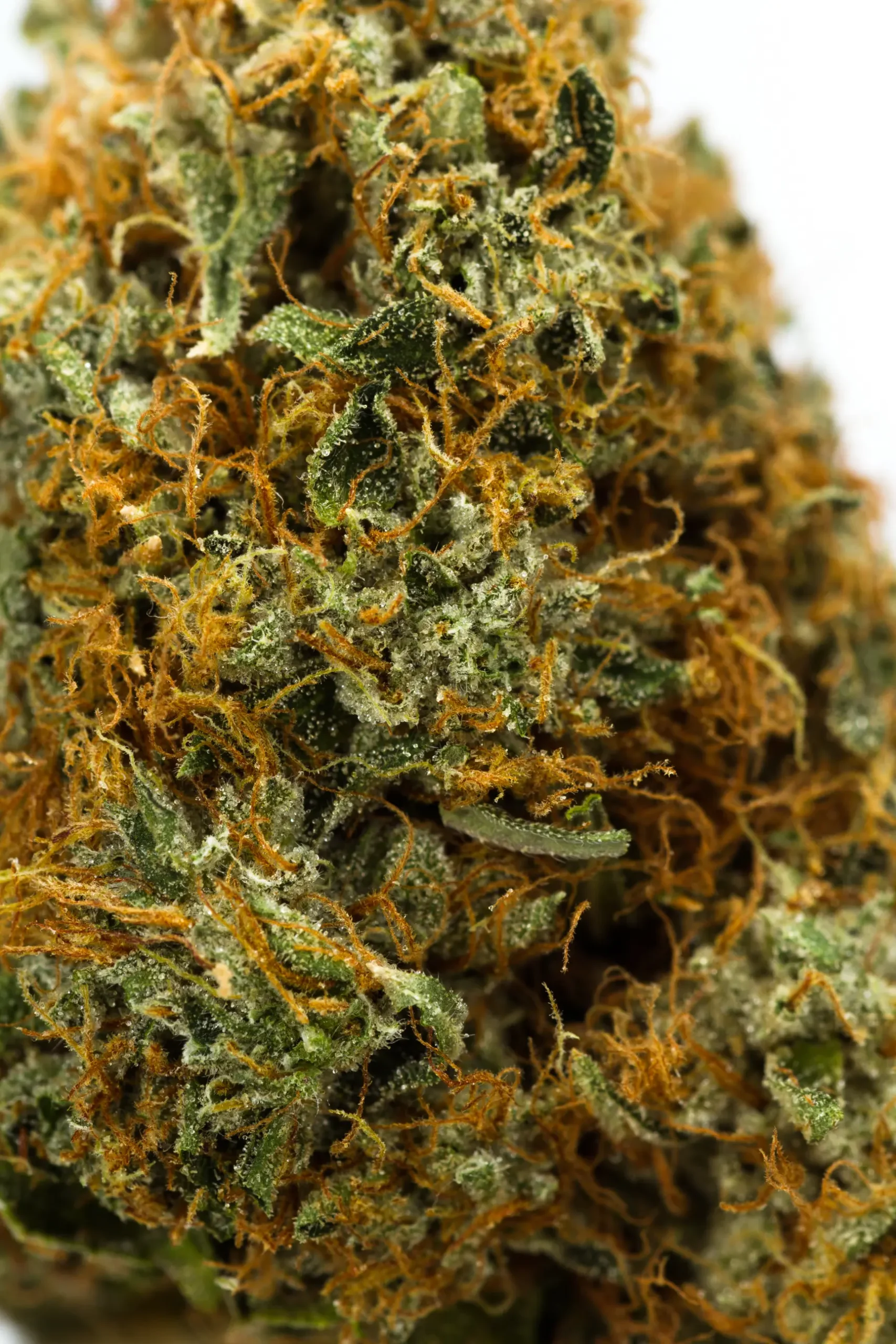
This terpene introduces a spicy, peppery element to the aroma. It’s often present in skunk strains. In Lemon Skunk, caryophyllene underscores the skunky funk with a bit of warm spice and may contribute to the strain’s potential anti-inflammatory benefits (caryophyllene can bind to CB2 receptors). Some analyses also find notable levels of terpinolene in Lemon Skunk, another citrus-pine smelling terpene common in uplifting strains. In one lab test, terpinolene was measured as the most abundant terpene in a Lemon Skunk sample, which would further amplify the strain’s fresh citrus-pine fragrance (terpinolene is known for the “bright” Jack Herer-like scent). However, generally limonene is considered the dominant terpene in Lemon Skunk across most cuts, with myrcene and caryophyllene usually next in prominence. This combo creates a “citrus skunk with a hint of spice” aroma profile that is quite unmistakable. Visuals: Buds of Lemon Skunk often have striking coloration that matches their aroma. They tend to be light-medium green but feature patches of pale yellow or bright orange pistils that almost give a sun-kissed, lemony appearance. A frosty coat of trichomes adds a silvery sheen. The nuggets are usually medium density – not as rock-hard as pure indicas, but not airy either – with a high calyx-to-leaf ratio (more flower, less leaf) which makes those sticky lime-green calyxes and orange hairs really stand out. In summary, Lemon Skunk is all about the lemons and skunk. If you love pungent citrus strains, you’ll be enamored with its powerful lemon-funk aroma. Just be prepared: it’s very aromatic, so stealth is tough. But that bold terpene profile is a major part of what makes Lemon Skunk such a memorable strain both to grow and consume.
Growing Difficulty
Skill Level: Easy to Moderate. Lemon Skunk is considered a relatively forgiving strain to grow, making it suitable for beginners with a bit of basic knowledge, while also rewarding experienced cultivators. Several factors contribute to its ease: it’s vigorous and hardy, can thrive in different conditions, and has natural resistance to common issues. Growers consistently rate Lemon Skunk’s difficulty as “easy to medium”. On the easy side, Lemon Skunk’s Skunk lineage gives it a robust constitution – it can handle mistakes or less-than-perfect conditions better than many finicky strains. For example, it has good resistance to mold and mildew 15 and even to pests, meaning a minor humidity spike or the odd pest sighting is less likely to ruin your crop (a big relief for new growers!). It’s also adaptable to climate – it tolerates relatively humid environments (thanks to its sativa-like bud structure) and can withstand slightly cooler temperatures better than many pure sativas. All this resilience means Lemon Skunk won’t punish you for small errors; it “wants” to grow and can bounce back from stress. Where the moderate skill comes in is primarily managing its vigorous growth. Lemon Skunk tends to grow tall and branchy (sativa traits), so indoor growers especially need to be ready to train and prune.
If left unchecked in a small tent, it could stretch quite a bit in early flower. Keeping its height under control through topping or low-stress training (more on that in Cultivation Traits) is important. This isn’t difficult per se – it just means the grower should pay attention and use basic training techniques. Additionally, Lemon Skunk is a hungry, fast-growing plant; it responds well to moderate or even heavy feeding. Beginners should be prepared to supply sufficient nutrients (especially during flowering) – underfeeding could limit its potential. Fortunately, it isn’t overly finicky about nutrients as long as pH is correct; just don’t let it starve and it will reward you. Overall, novice growers often find success with Lemon Skunk. As one guide notes, “Yes, Lemon Skunk is a relatively easy strain to grow, making it ideal for beginners. It has good resistance to pests and common diseases…”. The only cautions are its size and smell – both of which can be managed with proper techniques. If you can give it enough space (or prune it) and control that pungent odor, Lemon Skunk will pretty much handle the rest. Its hardy nature and short flowering time make it a low-maintenance, high-reward strain in the garden.
Flowering Time
Indoors: Lemon Skunk has a reasonably quick flowering period for a sativa-dominant strain. Indoor plants finish flowering in roughly 8 to 9 weeks on average (around 55–65 days of 12/12 light). Some fast phenotypes may be ready as early as 7 weeks (~49–50 days), though 8 weeks (56 days) is more typical for full maturity. It’s not unusual for growers to let it go closer to 9 weeks (63 days) to maximize resin and flavor, especially if the plant is a later-flowering pheno. Overall, about 8 weeks is a good benchmark for most Lemon Skunk indoors. This is relatively short – many sativa hybrids take 9–10 weeks or more – so Lemon Skunk’s Skunk heritage helps speed up bloom. Outdoors: When cultivated outdoors in the ground or large pots, Lemon Skunk will complete its life cycle by late September to early October in the Northern Hemisphere. In most temperate climates, you can plan to harvest around the end of September (or very early October) before fall rains become an issue. For example, growers in sunny climates often cut Lemon Skunk by the last week of September, whereas in slightly cooler regions it might push into the first week of October. Finishing by late September means Lemon Skunk avoids the very late-season – a big advantage in avoiding bad weather and mold.
In the Southern Hemisphere, this translates to late March harvest. Always watch the trichomes and pistils as harvest time approaches: Lemon Skunk is usually ready when most pistils have turned orange/brown and the trichomes are milky with a hint of amber. Veg Time: (Although not a flowering time per se, it’s worth noting.) Lemon Skunk can be vegged as long or short as you need, but given its vigor, indoor growers often keep veg time moderate (4–6 weeks) to prevent it from overgrowing the space. Outdoors, you essentially veg all spring and summer until nature flips it – resulting in very large plants by September. Summary: Expect ~8 weeks indoor flowering (which is on the faster side of average). Outdoors, early autumn harvest – around late September N.H. – which is great for beating cold weather. This relatively short flowering time makes Lemon Skunk a practical choice for growers who want a sativa influence but don’t want to wait deep into October or November to finish. Always ensure plants get a proper flush in the final 1–2 weeks of flowering to maximize the clean lemon flavor (more on that in Flavor Tip). With its quick finish, Lemon Skunk rewards growers with a speedy turnaround from flip to fragrant harvest.
Indoor/Outdoor Suitability
Lemon Skunk can thrive in both indoor and outdoor setups – it’s a versatile strain that adapts well as long as its basic needs are met. Here’s how it fares in each environment:
Indoor
Lemon Skunk grows happily indoors under lights, provided you give it enough vertical space or train it to stay bushy. Its moderate height (often ~3–4 feet without training) can stretch upwards during flowering, so indoor growers typically top and/or use low-stress training (LST) to manage canopy height. It responds very well to these techniques, developing multiple tops when trained. One advantage for indoor grows is Lemon Skunk’s manageable flowering time (~8 weeks) and high calyx-to-leaf ratio – those dense, easy-to-trim buds are ideal for indoor cultivation, where every cola counts. Ventilation is key: Lemon Skunk’s chunky buds and rapid growth mean you should maintain good airflow to prevent any chance of mold (especially in smaller grow tents). Fortunately, its inherent mold resistance gives some leeway. Odor control is a must – this strain puts out a very pungent smell, so carbon filters or other odor solutions are strongly recommended in indoor gardens. In terms of environment, it prefers a moderate climate (temps ~70–80°F, humidity ~50% in flower), which is easy to maintain indoors.
Outdoor
Grown outdoors, Lemon Skunk really shows its potential. With ample root space (in open soil or large pots) and plenty of sunshine, these plants can become fairly large, with robust branching. Expect an outdoor Lemon Skunk to easily reach 6–7 feet (2+ meters) in height if untrained, and it will form a broad bush if allowed to naturally spread. This strain loves being under the sun – many growers note it “thrives when grown outdoors because it has space to stretch out fully.” 23 Warm, Mediterranean-like climates are ideal, but Lemon Skunk is also hardy enough for slightly cooler or more humid regions, thanks to its sativa heritage and early finish. Its natural mold and pest resistance make it suitable for outdoor grows, where it can handle the challenges of weather and bugs better than fussier strains. Outdoor growers should be prepared to provide support (stakes or cages) for Lemon Skunk as it flowers – the branches can get heavy with buds, and a fall rainstorm or wind could cause un-supported limbs to snap. If given support and good nutrients, outdoor Lemon Skunk plants will yield exceptionally well (often a pound or more per plant!). Harvest comes by late September, which generally beats the onset of heavy rains or frost in most areas. This makes Lemon Skunk a great outdoor choice even in climates with shorter growing seasons. In summary, Lemon Skunk is suitable for both indoor and outdoor cultivation. Grow it indoors for a more controlled, compact grow – just top it and filter that smell. Or grow it outdoors to let it reach its full potential as a lemon-scented beast of a plant. It truly shines under natural sunlight, but many successful indoor grows have proven you can get top-quality Lemon Skunk buds in a tent or room as well. As long as you adjust your techniques (training, odor control, etc.) to the setting, Lemon Skunk will reward you in either environment. Below is a side-by-side comparison of Indoor vs. Outdoor growing for Lemon Skunk:
Indoor vs Outdoor Comparison
Lemon Skunk developing dense, trichome-frosted colas indoors (top) vs. a large Lemon Skunk bush thriving outdoors under full sun (bottom). Note the abundant orange pistils and lime-green buds – signature traits of this strain. Aspect Indoor Growing Outdoor Growing Medium height if untrained (about Tall and expansive. Outdoors, Lemon Skunk ~100–120 cm / 3–4 ft). Plants tend to can easily reach 2–2.5 m (6–8 ft) or more in stretch during the first weeks of height given sufficient veg time and root flower, often doubling in height. Plant space. Plants grow into large bushy shapes Training (topping/LST) is Height with long lateral branches – imagine a recommended to keep it bushy and small lemon-scented tree. Be prepared to prevent it from hitting lights. With stake or trellis, as an unrestricted outdoor training, can be kept at ~3 ft tall with Lemon Skunk will get wide as well as tall! an even canopy. High. Indoors it reliably produces Very High. Outdoors each Lemon Skunk heavy yields given good light and plant can yield hundreds of grams of care. Typical yields are around 400– buds. In ideal conditions, growers have 500 g/m² of grow space. Skilled reported up to 800 g (1.75 lbs) per plant Yield growers using techniques like SCROG 24 (with long veg and good sun).
More Potential (Screen of Green) have pushed yields commonly, expect on the order of 400– even further (600 g/m² or more in 600 g per plant in a decent season. Its optimized hydro setups). Its high budcombination of size and dense buds makes to-leaf ratio means most of that it a prolific outdoor yielder. weight is quality flower. Late September (Northern Hemisphere). ~8 weeks of flowering (55–65 days on Outdoors, Lemon Skunk is usually ready to 12/12). Lemon Skunk’s indoor bloom harvest by end of September or very early period is relatively short for a sativa- October. It finishes before most heavy Flowering leaning strain. Buds bulk up autumn rains or frost, even in higher Time quickly and are usually ready to cut by latitudes. (Southern Hemisphere: late week 8 or 9. This faster finish allows March). Its quick outdoor finish is a big multiple indoor cycles per year or asset, ensuring buds ripen in warm coordination with faster indicas. weather. Aspect Indoor Growing Outdoor Growing Prefers a stable environment: temps Thrives in warm, sunny climates with a around 20–27 °C (68–80 °F) and long growing season. It loves plenty of moderate humidity (~50% RH in direct sun and can also handle hot days flower). Lemon Skunk can handle well (it won’t easily wilt in heat).
Lemon occasional temperature swings (it’s Skunk shows good resilience in humid not too finicky), but try to avoid environments 25 26 – its sativa bud Climate & extremes. It actually tolerates slightly structure and mold resistance mean it’s Hardiness higher humidity in veg due to airy less prone to bud rot than tight indica foliage, but keep flowering humidity buds, though caution is still needed in ~45–50% to protect those dense prolonged wet weather. It tolerates cool buds. Good airflow and ventilation nights better than many strains; a few chilly are important indoors – mimic nights won’t stunt it. Overall, very outdooroutdoor breezes to strengthen stems hardy – just avoid climates with very early and prevent any moisture buildup. frost or extremely damp autumn. Large & bushy. Outdoors this strain can Vigorous & branchy. Indoors, Lemon develop a robust structure with a strong Skunk grows rapidly during veg, with central stalk and many side branches. It thick branching. It tends to stretch naturally forms a multi-branch bush ~2× in height after the switch to (especially if topped early) rather than a 12/12. Training methods (topping the single cola. Lemon Skunk loves to spread main stem, LST tying, SCROG netting) out under sun, so give at least a few feet of are highly effective – the plant spacing between plants.
As flowering responds by pushing out multiple Growth progresses, the long branches will fill with colas and fills the grow space evenly Behavior buds – plan to support them (cages,. It also clones well and grows stakes, or trellis) so they don’t sag or snap uniformly, making Sea of Green under weight. The plant’s vigor possible. Stems are reasonably means it can take heavy pruning if needed strong, but using a trellis or stakes in (e.g. removing excess interior shoots for late flower is wise because the buds airflow). It’s generally a hardy grower that can get weighty. The high calyx-tocan handle outdoor stresses; just ensure leaf ratio means buds swell nicely it’s well-fed and watered during its big and are easy to trim. summer growth spurts. (In summary: Indoors, keep Lemon Skunk trained and ventilated for best results. Outdoors, let it stretch out, but be ready to support its bounty. Either way, you’ll be rewarded with lemon-frosted colas in abundance.) Cultivation Traits (Growth Characteristics) Growing Lemon Skunk is a rewarding experience characterized by vigorous growth, big yields, and a wonderfully pungent garden aroma. Here are key cultivation traits and tips for this strain:
Growth Structure
Lemon Skunk grows with a classic hybrid structure – tall, but well-branched. During vegetative stage it bushes out with multiple offshoots, and once flowering begins it can stretch significantly (often doubling in height). The internodal spacing is moderate, not too tight, which allows light to penetrate and promotes bud development along each branch. It naturally wants to form multiple cola sites (especially if topped). Untrained, it may take a Christmas-tree shape with a dominant top; trained, it forms a wide, even canopy of top buds. Bottom line: expect a robust, branchy plant that benefits from training to maximize yield.
Training and Pruning
Lemon Skunk responds exceptionally well to plant training techniques. Topping is highly recommended – pinch or cut the main stem after the 4th–6th node in early veg to encourage multiple main branches. This plays to Lemon Skunk’s strength of growing “out” as well as “up.” Many growers use LST (low stress training) or a SCROG (Screen of Green) net to spread the branches and create an even canopy. The strain’s flexibility and quick recovery mean you can bend and tie branches without much risk of damage; it will quickly redirect its growth tips upward. Pruning away some lower popcorn bud sites (lollipopping) can further direct energy to the main colas. In essence, Lemon Skunk loves training – you can shape it into a bush with lots of tops, which in turn significantly boosts yields. Just remember to give the plant a bit of recovery time before flowering if you do any high-stress training like topping or supercropping. Also plan for support in late flower: use stakes, tomato cages, or trellis netting to hold up branches heavy with buds, particularly in outdoor grows.
Feeding and Nutrients
This strain is a moderate-to-heavy feeder. It has an appetite for nutrients, especially during its rapid vegetative growth and peak bloom. Growers report that Lemon Skunk “does well with moderate to heavy nutrients” 16 – meaning you shouldn’t be shy with the bloom fertilizer when the time comes. In veg, it appreciates ample nitrogen to fuel its lush growth. In bloom, phosphorus and potassium (plus micronutrients) will help those lemony buds swell. Of course, always listen to your plants – Lemon Skunk is not particularly prone to nutrient burn or deficiencies if pH and EC are managed, but every setup is different. Organic cultivation (super soil or compost teas) can produce excellent results with this strain, enhancing flavor (more on that in Flavor Tip). Ensure a flush in the final 1–2 weeks to allow the plant to use up excess nutrients – this will improve the smoothness and taste. Overall, keep her well-fed and she will reward you, but if you do make a mistake (overfeed, etc.), Lemon Skunk tends to be forgiving and won’t collapse at the first sign of trouble.
Climate and Environment
Lemon Skunk is comfortable in a range of conditions, which adds to its ease of growth. Optimal temperature is around 70–80 °F (21–27 °C) during the day. It can tolerate slightly higher temps (mid-80s) without much issue as long as water is adequate. At night, it’s fine with cooler temps down to mid-60s °F (around 18 °C) – in fact, a bit of night cooling late in flower can sometimes bring out purple hues in the leaves (as one grower saw when his mother plant, grown a week ahead, turned “super purple” from cooler nights). Humidity: In veg, Lemon Skunk’s sativa genetics allow it to handle higher RH (60–70%) since its foliage is not ultra-dense. In flowering, it’s naturally somewhat mold-resistant (less dense buds, open structure), but it’s still wise to keep RH around 45–50% to prevent any botrytis in the colas. Notably, growers have pushed Lemon Skunk in adverse conditions – one report described a plant enduring 80% humidity in late flower with no mold at harvest, a testament to its resilience. Nevertheless, good airflow (oscillating fans, outdoor breezes) and reasonable humidity will ensure those thick buds stay healthy. In outdoor grows, Lemon Skunk withstands wind and weather well, though prolonged rain should be avoided near harvest (like any strain). Its relatively early finish outdoors means it usually escapes heavy autumn rains.
Pest and Disease Resistance
Lemon Skunk carries some old-school Skunk hardiness, which includes a natural resistance to many pests and molds. Its stout stems and vigorous growth help it outgrow minor pest damage. Many cultivators find they have fewer issues with powdery mildew or botrytis on Lemon Skunk compared to more sensitive strains – likely due to its bud structure and possibly higher limonene content (which some suggest may deter pests). Warning: While it’s generally robust, very lush Lemon Skunk plants can still attract common pests like spider mites or aphids if you’re not careful. Keep up with Integrated Pest Management (IPM) especially in indoor gardens. But overall, expect fewer problems than with fussier strains. The combination of mold resistance, pest resilience, and tolerance to environmental stresses makes Lemon Skunk a reliable grow.
Bud Structure and Trimming
Lemon Skunk produces dense yet not overly leafy buds. The colas are chunky and elongated, with large calyxes that stack up nicely. Importantly, it has a high calyx-to-leaf ratio, meaning there is relatively little sugar leaf protruding from the buds. This is great news for harvest time – trimming is easy and quick. Growers often note that fan leaves tend to yellow and wither by harvest (especially if flushed), leaving mostly plump buds covered in trichomes that “snip off easily” from any remaining leaf. Your scissors will get coated in sticky resin thanks to the rich terpene content. The buds themselves, once dried and cured, hold their lemony smell very well – even months after jar-curing, they still burst with citrus skunk scent when opened. In terms of bag appeal: Lemon Skunk buds are usually midsized, very frosty, and have an attractive green-and-orange coloration. They may not be purple or exotic-looking, but any old-school grower will recognize their top-shelf “skunky dank” appearance immediately.
Aroma during Grow
Be aware, Lemon Skunk is a very smelly plant in bloom. As early as midflowering, your grow space will be filled with a pungent citrus-skunk odor. By late flowering, it can be overpowering. One source notes: “The plant can produce a strong smell, therefore it's recommended to use filters.” 22 This cannot be overstated for indoor growers in non-legal areas – invest in a carbon filter or other odor control, or your whole house (and likely the neighbor’s) will know what you’re growing! Outdoor growers should plant away from nosy neighbors if possible; though outdoors the smell dissipates a bit, a large Lemon Skunk in flower still puts out a cloud of skunky perfume that travels downwind. Of course, for cannabis lovers, that smell is heavenly – your garden will be the best smelling on the block – but just plan accordingly. In summary, Lemon Skunk’s cultivation traits make it a favorite of growers: it’s fast, hardy, highyielding, and easy to trim, with a legendary aroma as the cherry on top. It’s a strain that doesn’t require advanced techniques to get good results, yet it responds amazingly to advanced methods if you choose to employ them (SCROG, hydroponics, etc.). Whether you’re a hobby grower or a commercial cultivator, Lemon Skunk offers a low-stress, high-reward growing experience – as long as you can handle the height and smell, you’ll be rewarded with jars full of lemony, sticky buds. Highlighted Cultivation Features
Robust & Mold-Resistant
Skunk-tough genetics! Lemon Skunk shows excellent resistance to mold and mildew and can handle humidity better than many strains. Its sativa-style buds and hardy constitution mean fewer issues with bud rot – great for beginners and outdoor growers in damp climates.
Vigorous Growth
This strain grows fast and vigorously, especially in vegetative stage. It’s a branchy, high-energy plant that responds well to training. Expect rapid development of foliage and quick recovery from mistakes – Lemon Skunk is a forgiving, energetic grower.
High Yield Potential
Heavy producer in the grow room or garden. Indoors it commonly 📈 yields ~400–500 g/m² under good lighting, and skilled growers have pushed it even higher. Outdoors, a single well-grown plant can deliver multi-hundred-gram yields, with reports of up to 800 g per plant in ideal conditions. It’s a strain that combines quality with quantity.
Quick Flowering
Short flowering time of roughly 8 weeks (indoor) means faster ⏱ turnarounds. Outdoor crops finish by late September, avoiding bad weather. You won’t be waiting forever to taste those lemons!
Indoor/Outdoor Versatility
Lemon Skunk thrives in both indoor and outdoor setups. It’s adaptable to soil, coco, or hydro. Grows big under the sun but stays manageable (with topping) under lights. A true all-rounder strain that can fit in a grow tent or explode in your backyard.
✂ Easy Trimming
Growers love that Lemon Skunk has a high calyx-to-leaf ratio, meaning dense buds with little leaf. Come harvest, you’ll spend less time trimming and more time admiring big resinous colas. The buds are large, cylindrical, and “a trimmer’s delight” – sugar leaves snip off easily, yielding good-looking nugs.
Training Responsive
Top it, crop it, drop it! Lemon Skunk is ideal for training techniques. It suits SCROG or LST methods perfectly 22 – you can create an even canopy and maximize light use. It also clones readily if you want to keep mother plants. A very controllable plant for those who like to shape their grow.
Pungent Aroma
Very strong smell in late flower – odor control is necessary for stealth. (This is a “feature” because it indicates rich terpenes, but growers should be prepared.) The upside: your curing room will smell amazing. With these traits, Lemon Skunk offers a cultivator-friendly profile: tough, productive, fast, and fragrant. Whether you’re aiming for a bumper harvest or just a smooth, trouble-free grow, Lemon Skunk delivers. Weedth Flavor Tip – Enhancing that Lemon Zest Even after you’ve put in the work to grow Lemon Skunk, certain techniques can boost its signature flavor and aroma. Here are some tips for maximizing the lemony goodness in both indoor and outdoor grows:
Harvest Timing for Terpenes
For the brightest lemon flavor, consider harvesting slightly on the early side of ripeness. Many growers find that terpenes are at their peak just as trichomes turn milky and about 50–70% of pistils darken (before too many ambers). In practice, this might mean chopping about a week earlier than normal. One guide suggests “if you want to enhance the lemon flavor, harvest a week or so early when slightly more than half of the pistils have changed color.” 35 Doing so preserves more of the volatile citrus terpenes like limonene, which can start to degrade if the plant goes too long. The trade-off is a bit less body effect (since amber trichomes aren’t as developed), but the flavor will be extra zesty. Keep an eye on those trichomes with a loupe – harvesting when they’re mostly cloudy (with just a few amber) will lock in a sweeter, fresher lemon taste.
Slow Dry & Cure (Terpene Preservation)
How you dry and cure Lemon Skunk has a huge 🌡 impact on flavor. To retain maximum terpenes, do a slow dry in a cool, dark place – ideally around 60–70 °F (15–21 °C) with 50–60% RH for 7–10 days. Rapid drying in hot conditions can evaporate those lovely lemon oils. Once the buds are dry to the touch, cure them in glass jars burped daily for at least 2 weeks (and up to 4–8 weeks for top-shelf flavor). Lemon Skunk cured for a month develops a deeper sweet-citrus complexity and the harsh chlorophyll notes fade, leaving behind pure lemon-skunk essence. Many growers note that after a proper cure, “the jars smell almost like sweet lemon candy or lemon zest” when opened – that’s what you want.
Flush and Use Clean Medium
Ensure you flush your plants with pure water in the final 10– 14 days before harvest (for soil grows). This means no feeding, just water – it allows the plant to use up stored nutrients, which leads to smoother-burning buds and a cleaner flavor. A wellflushed Lemon Skunk will have white ash and let the true citrus terpenes shine without any chemical aftertaste. Additionally, growing in organic soil or soilless medium with organic nutrients can enhance flavor. Many growers swear by compost teas and organic amendments (like bat guano, molasses, kelp) during flowering to boost terpene production. These natural inputs can subtly enrich the aroma profile. If growing hydroponically, consider adding a finishing flush product or just extended flush to achieve a similarly clean result.
Temperature & Humidity Tweaks
In the last weeks of flower, keep temperatures on the cooler side if possible. High heat can cause terpenes to volatilize (evaporate). Aim for around 68–75 °F (20–24 °C) in late bloom. Some growers even drop temps to ~65–68 °F in the final days. This helps preserve delicate flavor compounds and can also enhance resin production. Likewise, maintain lower humidity (~40–45% RH) toward the end 39 – not only does this prevent mold, it encourages the plant to produce more resin (a stress response) which can concentrate flavor. Essentially, a slightly cool, dry finish simulates a crisp fall climate and can sharpen the lemon taste.
Outdoor-Specific Tip – Terpene Timing
For outdoor growers, consider harvesting in the early morning if you can. Terpene levels are often highest at dawn before the day’s heat causes any evaporation. Cutting your Lemon Skunk plants early in the day (and trimming in a shaded area) can help capture every last bit of aroma in those buds. Additionally, try to avoid extended sun exposure on harvested branches – once you cut, get them hung in your drying area away from sunlight quickly. Sunlight and heat degrade terpenes post-harvest.
Curing Environment
While curing, store your jars of Lemon Skunk in a cool, dark place. UV light can break down both THC and aromatic compounds. Burp jars daily at first to release moisture and gases – and take a moment to enjoy that evolving lemon scent each time! If the odor intensifies over weeks, you’re doing it right. By the end of cure, you should have buds that smell like a jar of lemon candy and skunk – a sign that the flavor will come through strong when smoked or vaped. By following these tips – timing your harvest for terpene peak, drying/curring slowly, and maintaining optimal final conditions – you’ll be rewarded with Lemon Skunk buds that explode with flavor. There’s nothing quite like the sweet, tangy lemon inhale and skunky exhale of a well-grown and well-cured Lemon Skunk. Your taste buds will thank you! Weedth Bud Boost Tip – Maximizing Yields & Bud Quality Everyone loves a big harvest of top-quality buds. Here are some “Bud Boost” tips for Lemon Skunk to help you get the most out of your grow, whether indoors or outdoors:
Vegetative Boost (Outdoor)
To achieve monster yields outdoors, start Lemon Skunk early and give it a long vegetative period. If possible, germinate seeds or root clones indoors in late winter, then move them outside after the last frost (or once days are long enough). An early start can add weeks or months of extra growth, resulting in a much larger plant by flowering time. More plant mass = more budding sites = bigger yield. For example, some growers will veg Lemon Skunk under lights from February, then plant outdoors in April – by September, they have a bush of enormous size. Just be sure you have the space and legal allowance for big plants if you do this.
Canopy Management (Indoor)
Indoors, maximize your light exposure by using training techniques. Lemon Skunk’s branching nature makes it ideal for a SCROG (Screen of Green) setup. Place a screen 20–30 cm above the pots and weave the branches through during veg/ early flower to create a flat canopy of bud sites all at equal height. This way, all colas get equal light intensity, resulting in uniform development and significantly boosted yields. If SCROG isn’t your style, even basic LST (tying branches down) can open up the plant and increase light penetration to lower nodes. The goal is to create an even, wide plant rather than one skinny Christmas tree. More horizontal spread means more main colas under the light, which can dramatically increase total yield. Growers have reported that with aggressive training and sufficient veg, indoor Lemon Skunk can produce 1+ gram per watt of light – a testament to how yield-efficient it can be when fully optimized.
✂ Prune for Performance
Don’t be afraid to prune lower growth that isn’t receiving light. Lemon Skunk can put out a lot of secondary shoots; trimming the scraggly bottom branches and small bud sites (a technique called lollipopping) will direct the plant’s energy to the top colas, making them larger and denser. Removing excess fan leaves in late veg (if they are blocking bud sites) can also help – but do this gradually to avoid stress. A well-pruned Lemon Skunk will have an open structure with airflow and all its energy focused on the prime buds, resulting in better quality and bigger size.
Feeding and Supplements
To push yields, ensure consistent feeding throughout the grow. Lemon Skunk can handle and indeed thrives on rich nutrition. During peak bloom (weeks 3–7 of flower), give it a boost of PK (phosphorus and potassium) via bloom boosters – this helps swell the buds to their max size. Additionally, supplements like silica can strengthen cell walls (helpful for supporting heavy buds) and molasses or carbohydrate feeds can feed soil microbes that in turn help the plant uptake nutrients (and potentially enhance flavor). Always monitor for any signs of nutrient burn, but know that Lemon Skunk often “asks for more” when it comes to feeding – many growers are surprised by how much this strain can eat without tip burn. A healthy, well-fed plant will develop the thickest, stickiest buds.
Light Intensity
More light (to a point) often equals more yield. Under indoor conditions, give Lemon Skunk plenty of light intensity during flowering – it can soak up strong LED or HPS lighting. Make sure your canopy is at the optimal distance to get ~800–1000 µmol/m²/s of PPFD (for CO₂-normal environments). If you notice the tops can handle it (no bleaching or stress), that means the plant is using the light effectively to pump out bud growth. Outdoors, try to plant in the sunniest spot in your garden. Full sun exposure (8+ hours a day) will dramatically improve yields compared to partial shade. If growing in a pot outdoors, you can even move the plant to follow the sun for maximum rays. Lemon Skunk really rewards strong light with explosive bud development.
Root Space & Medium
Especially for outdoors or indoor container grows – bigger roots = bigger fruits. Use at least a 5-gallon (19 L) pot for indoor Lemon Skunk (many go 7 or 10 gal for longer veg). Outdoors, the sky’s the limit: plant in the ground or use huge fabric pots (20–30+ gallons). The strain will happily fill whatever root volume you give it, and a larger root mass supports more foliage and buds. Ensure the medium is well-aerated and drains well; adding perlite or using fabric pots can help the roots breathe, which in turn can support faster growth and heavier yields.
Extend Veg (Indoor, if space allows)
If you have the vertical room, you can veg Lemon Skunk a bit longer than usual to increase eventual yield. Each additional week in veg can substantially increase the plant’s size (it grows fast!). Just remember it will stretch ~2x after flip, so plan accordingly. Some advanced growers use techniques like mainlining (manifolding) to create multiple main colas, which involves a longer veg time but results in a bush that can yield extremely well. For example, one grower’s Lemon Skunk in DWC (deep water culture) with an extended veg and mainlining yielded over 1 pound (16 oz) from one indoor plant 41 – a testament to what can be achieved with training and time. While that’s an advanced scenario, it shows that Lemon Skunk’s genetic potential for yield is huge, and giving it a bit more veg time and structure can let it reach that potential.
Outdoor Monster Cropping
If you really want to maximize an outdoor Lemon Skunk, you could try supercropping or topping multiple times early in the season. By repeatedly encouraging branching, you create a bush with dozens of tops. Combined with an early start, this can yield a massive plant. Just be sure to cease heavy training by mid-July so it can recover and form buds. Provide a sturdy tomato cage and outer trellis (as described in grow guides) so that when those dozens of colas pack on weight, they’re all supported and not touching the ground. This method requires effort but can result in truly impressive harvests (multi-pound yields if done perfectly).
Timing and Patience
Finally, be patient and let Lemon Skunk fully mature (unless 🕒 employing the early harvest for flavor tactic on a branch or two). To maximize bud weight and potency, you want to harvest when buds have swelled to their largest and trichomes are at peak ripeness. For yield maximization, that usually means letting it go the full 8 (or even 9) weeks until the calyxes are nice and plump. The last week or two is when buds pack on a lot of weight, so resist any urge to cut early (again, unless you intentionally take a small portion early for a more terpy lighter effect). Many growers observe that Lemon Skunk’s “buds fatten a lot in the final weeks” (common with Skunk hybrids), so those extra 7–10 days can noticeably increase yield. By implementing these bud-boosting strategies – ample training, feeding, light, support, and proper timing – you can push Lemon Skunk to its productive peak. This strain has a high ceiling for yield; with some experience and care, you might be surprised at just how laden with colas your Lemon Skunk can become. Happy growing, and may your harvest baskets overflow with chunky, lemon-scented buds!
Grower Question
Why is my Lemon Skunk loud in the room but faint after drying?
Question sent by: Priya D., via email
The growing plant can produce abundant volatile citrus compounds that disappear quickly under heat, strong direct airflow, overdrying, or repeated oxygen exposure. Harvest healthy flower at real maturity, dry it slowly in cool darkness with gentle air exchange, and cure without leaving jars open unnecessarily. The lemon profile often becomes clearer again after moisture equalizes through the flower.
Grower Notes (Personal Experience)
From a cultivator’s perspective, Lemon Skunk is a joy to grow. Here are some personal grower notes and observations that highlight why tending this strain can be so rewarding: Vigorous & Forgiving: “Hardy” is the word I’d use for Lemon Skunk. In my grows, this strain has been very robust and resilient. During veg, I was amazed at how quickly it exploded with new growth – every day there was noticeable development. I did make a couple of rookie mistakes (one time I overfed slightly and got leaf tip burn, another time my pH pen was off for a bit), but Lemon Skunk bounced back without much fuss. This plant can take a licking and keep on ticking. For instance, I once had a late flower incident where humidity spiked to ~80% RH for over a week (dehumidifier failure) – I was sure I’d find mold. But upon harvest, I carefully inspected every bud and found no mold at all. Even the thick colas were perfectly clean inside, much to my relief. That really sold me on Lemon Skunk’s supposed mold resistance – it’s the real deal. In general, it’s a very forgiving strain: if you keep the basics in check (watering, decent soil, etc.), it will thrive and even if you slip up, it’s unlikely to totally implode.
As a grower, that’s a confidence booster. It’s one of those plants that can make a novice feel like a pro. Training & Height Management: I learned early on that Lemon Skunk likes to stretch – underestimate that at your peril! In one of my first runs, I vegged a bit too long and didn’t top enough; come mid-flower, I had branches nearly touching my grow lights, whoops. Since then, I always top Lemon Skunk at least once or twice and use LST to spread it out. It’s highly responsive to training – you tie a branch down and within a day it’s already oriented back up toward the light. Very flexible stems, too, which made supercropping (bending stems) easy with no splits. Once, I mainlined a Lemon Skunk into 8 colas – it formed a beautiful even canopy about 3 feet across. This strain is fun to train; it’s so vigorous you can practically see it growing and adjusting every day. If you have height restrictions, definitely flip to 12/12 earlier or employ a scrog net. Topping + scrog was my favorite method: I ended up with a table of uniformly thick buds, and it helped support the weight as well. With these methods, I found I could keep indoor plants around 100 cm tall with lots of bud sites, perfect for my tent.
In an outdoor grow, I let a Lemon Skunk go au naturel (with just a single topping early on) – it ended up about 6 feet tall and just as wide, a huge bush that needed multiple stakes. But wow, the yield from that one plant was worth the work. Feeding & Growth Observations: Lemon Skunk in veg is like a green rocket – every time I watered with a mild nutrient solution, it seemed to double in foliage the next week. It definitely likes calcium and magnesium; I noticed a minor Cal-Mag deficiency (purple stems) at one point, which was quickly fixed by supplementing. During flowering, I fed fairly heavily – and it took it in stride. No signs of burn at full strength nutrients; in fact, it seemed to want more PK near week 5–6 when bud growth was in overdrive. I used organic soil with some top-dress guano and liquid bloom feed – the plants responded with thick, sticky buds that reeked of lemon candy. Mid-flower, the smell in my grow room was intensely sweet and skunky – I had carbon filters running 24/7, and even then a hint of lemon would sneak through. One practical note: odor control is not optional with Lemon Skunk.
During trimming, my fingers and scissors got absolutely glued with resin and the entire house smelled like a skunk drank lemon pledge. It’s potent in the aroma department! But as a grower who loves terpy strains, that’s a “problem” I happily welcome. Bud Development & Harvest: Watching Lemon Skunk buds fatten up was extremely satisfying. They start off airy in early bloom, then around week 6 they really bulk out, calyxes swelling and stacking on each other. By harvest, I had dense spear-like colas with minimal leaves – visually gorgeous. Trimming was surprisingly easy; true to the descriptions, fan leaves yellowed and fell off towards the end, and sugar leaves were tiny. I could almost trim by hand without scissors for some buds – just a couple of snips and they were manicure-perfect. The yield did not disappoint either. In one indoor run (400W LED in a 3×3’ tent), a single Lemon Skunk plant yielded about 9 ounces dried, which shocked me given it was just one plant – it absolutely filled the tent with buds. In my outdoor grow, the big bush yielded over 1 pound (16 oz) of dry bud, which is my personal best from one plant. The buds were moderately dense, not rock-hard, but the sheer volume made up for it.
Honestly, Lemon Skunk’s yield potential is excellent, especially considering the quality of the buds (often you get either quality or quantity, but here you get both). I will say, do support the branches; I lost a small side branch that snapped under weight two days before harvest (heartbreaking, but it became early sample smoke). After that, I make sure to net or stake well in advance. Post-Harvest & Smoke: After a nice cure, I was blown away by the flavor and effect. Opening a jar of well-cured Lemon Skunk, even months later, releases a pungent wave of lemon-skunk fragrance that can fill a room – it retained smell better than many strains I’ve grown. The smoke (or vapor) is ultra smooth and citrusy. It’s the kind of bud that when you grind it, the entire area smells like a lemon orchard with a hint of skunk spray – very satisfying. Effect-wise, my homegrown Lemon Skunk lived up to its reputation: the high comes on quick, a rush of happy energy that had me grinning and tidying the house (or chatting if with friends). A couple of my buddies who tried it became Lemon Skunk fans immediately, remarking how it was “strong but not debilitating” and how the lemon flavor really comes through on exhale.
As the grower, that’s a proud moment – knowing you cultivated something that others genuinely enjoy. Overall: Growing Lemon Skunk has been one of my most enjoyable cultivation experiences. It’s low-stress to grow, high-reward to harvest, and the end product is top shelf in both effect and taste. It’s also a bit sentimental for me – it feels like tending a piece of cannabis history (with that Skunk heritage), and the old-school skunky aroma during flowering brings a smile to my face every time. For any grower looking for a strain that practically grows itself and produces copious flavorful bud, Lemon Skunk is a nobrainer. I have it permanently on my rotation now – it’s that good. Highly recommended from this grower’s perspective!
Weedth Bud Flavor Tips
Indoor flavor protection:
Keep top temperatures controlled and stop late sprays. A dark, even dry preserves more lemon peel than hanging flowers near a warm exhaust stream.
Keep mature flowers away from excessive canopy heat and avoid unnecessary late sprays. Harvesting by aroma and calyx maturity, then drying in darkness with gentle exchange, preserves more character than trying to create flavor with a root additive.
Outdoor and greenhouse flavor protection:
Harvest dry branches during the cool part of the day and move them out of sun quickly. Protect late flowers from rain without enclosing them in stagnant air.
Cut only dry branches and move them out of sun quickly. Separate very large branches when their mass would prevent an even dry, and keep phenotypes labeled through cure so aroma differences are not lost in one mixed container.
Warning
Advanced cultivation claims need controlled testing
The source includes grower techniques and breeder-style performance claims that may depend on phenotype, equipment, climate, root health, and operator experience. Treat UV, added CO₂, severe stress, concentrated supplements, and unusually high yield or potency figures as controlled variables rather than guaranteed instructions.
Weedth Bud Boost Tips
Indoor yield and quality:
Use an early top and a partially filled SCROG so stretch completes the canopy. Remove weak lower sites before flower set and keep irrigation matched to root demand.
Useful yield is the dry, clean flower that receives adequate light and survives post-harvest. Stable irrigation, enough root volume and an open canopy usually add more than an abrupt late PK increase. Supplemental CO2 only makes sense in a sealed, measured environment with enough light and climate capacity.
Outdoor and greenhouse yield:
Build a wide frame before natural flower, support long branches and maintain a well-aerated root zone. Sun and healthy roots do more for yield than repeated late boosters.
Support is a yield tool because it keeps flowers separated, lit and intact. Build cages or anchors before weight arrives. Maximum wet-weight claims should never outrank the weather forecast, branch health or the ability to dry the harvest evenly.
Warning
Reported use is not a medical guarantee
The following section preserves reported uses from the research source. Lemon Skunk does not diagnose, treat, or cure a condition. High-THC cannabis can worsen anxiety or impairment, and individual response, medicines, pregnancy, cardiovascular concerns, and mental-health history require appropriate professional guidance.
Medical Uses & Benefits
Adult consumers often describe choosing this cultivar for a particular balance of mood and body effects. Those experiences are worth recording, but they are not clinical proof.
Topic: Practical Context
Common adult reports: Users often report choosing Lemon Skunk for temporary mood lift, fatigue, stress or appetite. These experiences are not medical evidence, and stimulating high-THC cannabis may worsen anxiety or sleep problems in some people.
What those reports cannot prove: A cultivar name does not diagnose, treat or cure a medical condition, and one batch may differ substantially from another with the same label.
Practical caution: Because the opening can feel quick and stimulating, anxious or low-tolerance users may prefer a very small amount and a familiar setting. Driving, work at height, machinery and other safety-sensitive tasks should wait until impairment has fully passed.
When professional advice matters: Pregnancy, breastfeeding, interacting medication, cardiovascular concerns, a history of psychosis or severe anxiety, and persistent symptoms all warrant advice from a qualified healthcare professional.
Ideal User Profile
It fits growers seeking a forgiving, vigorous citrus cultivar and adult consumers who prefer a social, upbeat effect with a softer landing. Odor-sensitive sites are a poor fit without planning.
Grower fit:
The best grower is prepared for easy to moderate management, keeps dated notes and can adjust branch count, irrigation and harvest timing by phenotype. A beginner can learn from the plant when the setup remains simple and there is room to inspect every selected top.
Consumer fit:
The best consumer values the full upbeat, creative and social mental lift with gentle later relaxation arc rather than choosing from flavor alone. A measured first serving makes the transition between the opening and later phases easier to understand.
Weedth Editor’s Note
Lemon Skunk is one of those strains that holds a special place in the cannabis garden. In an era where new “dessert” strains and ultra-high-THC hybrids grab headlines, Lemon Skunk stands out as a timeless classic that truly earns its keep. As cannabis writers and enthusiasts in these grow notes, we’ve encountered countless varieties with flashy names and trendy lineages, but Lemon Skunk remains a beloved staple for a reason. It combines so many qualities growers and users seek: an easygoing cultivation experience, vigorous yields, a unique and delightful flavor, and a balanced high that appeals to both recreational and medical users. One thing we especially appreciate is how accessible yet rewarding Lemon Skunk is. It’s not finicky or high-maintenance – even a novice can achieve a great result – yet it also has a high ceiling for experts to push (big SCROG yields, connoisseur-grade terpene profile when perfected). That kind of versatility is rare. It’s the sort of strain you can grow as your first plant and feel like you did a great job, or grow as your hundredth plant and still be impressed at harvest. There’s a reason it won multiple Cannabis Cup awards in its heyday 2 and continues to rank among the top lemon/citrus strains on the market. For consumers, Lemon Skunk offers an unpretentious but deeply satisfying experience.
The high is the definition of “feel-good” – upbeat without being edgy, relaxing without being sedating. It’s the kind of strain that can fit into your day whenever you need a little sunshine or creative spark, and it won’t leave you regretting it later. We often recommend Lemon Skunk to people who want an energetic sativa-type effect but sometimes get anxiety from pure sativas; Lemon Skunk tends to be kinder and gentler in that regard, likely due to its balanced makeup and terpene blend. It’s no surprise that it has remained popular in West Coast dispensaries and beyond – many of us for many of us have a personal “positive story” about Lemon Skunk, whether it was the strain that lifted our mood on a tough day or the joint that got a whole group laughing at a party. Flavor-wise, Lemon Skunk is unforgettable. In a single nug, it captures the very essence of “classic weed” and “fresh lemons” together. That skunky lemon stink is something that once you’ve smelled, you’ll recognize for life. We find that this strain often turns people into terpene connoisseurs – after trying it, you can’t help but seek out that lemony profile again.
It has even been used as a parent to other famous strains (like the illustrious Super Lemon Haze) – a testament to its breeding value and extraordinary terpene content. As editors, if we had to summarize Lemon Skunk in one line: “It’s a strain that delivers on all fronts – growability, yield, flavor, and effect – all while staying true to a heritage that shaped modern cannabis.” In a rapidly evolving cannabis landscape, Lemon Skunk remains a reliable go-to. We wholeheartedly stand by this strain as a must-try for any cultivator or enthusiast. Whether you’re a citrus flavor fanatic, an aspiring grower looking for a forgiving first strain, or a veteran who just hasn’t revisited this classic in a while – Lemon Skunk will remind you of why certain strains become legendary. In closing, growing and enjoying Lemon Skunk is a bit like enjoying a perfectly steeped cup of lemon tea on a sunny morning – it’s refreshing, uplifting, and comforting all at once. It’s a bright old friend in the garden and in the jar. We encourage you to give this strain a place in your grow or a spot in your stash. Chances are, it’ll earn a permanent spot in both.
Happy growing and happy toking! – The Weedth Team Related Strains Cannabis strains that are genetically or experientially similar to Lemon Skunk include a mix of its direct descendants and other lemony, uplifting varieties. If you enjoy Lemon Skunk, consider trying these related strains:
Super Lemon Haze
A famous sativa hybrid bred from Lemon Skunk (as the mother) crossed with Super Silver Haze. Super Lemon Haze inherited much of Lemon Skunk’s zesty lemon flavor but amps it up with an even more energizing, hazy head high. It’s a multiple Cannabis Cupwinning strain known for its intense citrus candy taste and stimulating effects. If you love Lemon Skunk but want something with a bit more cerebral punch, Super Lemon Haze is a natural next step. (Fun fact: Super Lemon Haze’s soaring popularity helped shine a spotlight on Lemon Skunk’s incredible genetics.)
Lemon Tree (Lemon Tree Kush)
A newer strain that shares half its lineage with Lemon Skunk – it’s actually a cross of Lemon Skunk and Sour Diesel. Lemon Tree is a balanced hybrid (50/50) that offers a robust lemon-fuel flavor. From Lemon Skunk it gets that fresh lemon zest, and from Sour Diesel a pungent diesel skunkiness – together they create a unique citrus-gas terpene profile. The effects of Lemon Tree are typically described as happy and relaxing yet euphoric, somewhat similar to Lemon Skunk but with an added body buzz from the Diesel side. This strain has won awards for its flavor and is great for those who want a bit more indica relaxation while still enjoying a sunny lemon high.
Skunk #1
The legendary ancestor of Lemon Skunk and the entire “Skunk family.” Skunk #1 is a classic hybrid from the 1980s that combines Afghan, Mexican, and Colombian genetics. It doesn’t have the strong lemon note, but it offers that sweet-skunky aroma and a potent, euphoric effect that underpins what Lemon Skunk gives. Think of Skunk #1 as the foundational strain – it’s robust, high-yielding, and famously easy to grow, traits very much passed down to Lemon Skunk. Smoking Skunk #1, you’ll taste earthy sweetness and experience a balanced high (perhaps a bit more sedative than Lemon Skunk due to more indica influence). It’s worth trying to appreciate where Lemon Skunk’s “skunky” half originated. Plus, Skunk #1 remains a benchmark for stability and performance in cultivation.
Lemon Kush (Lemon G / Lemon OG)
There are a few “Lemon Kush” variants out there; one of the popular ones is a hybrid of Lemon Skunk and an OG Kush phenotype (sometimes called Lemon OG). This strain carries a citrus pine aroma – less skunky, more sweet lemon and OG fuel. The high often has a heavier, more relaxing aspect from the Kush side, providing stress relief and mild couch-lock alongside a bright head buzz. If you like lemon flavor but want something for evening use with a bit more body load, a Lemon Skunk x Kush combo is a good choice. It’s like Lemon Skunk’s chilled-out cousin – still flavorful and uplifting, but wrapped in a cozy Kush blanket.
Citrus Skunk
This strain is essentially a close relative of Lemon Skunk, often thought to be one of the phenotype parents (the “Citral” side). Citrus Skunk (sometimes just called Citral or Lemon Citrus Skunk) delivers – as the name suggests – a sharp citrus aroma with plenty of skunk. Its effects are very akin to Lemon Skunk: energetic, happy, creative, with a mild relaxant undertone. Not widely available everywhere, but if you find it, you’ll notice the family resemblance immediately. It can be a bit more tart, like grapefruit or orange peel, compared to the sweeter lemon of Lemon Skunk. For those interested in lineage, trying Citrus Skunk is like tasting one half of Lemon Skunk’s parentage. Each of these strains offers something familiar to Lemon Skunk fans – be it the lemony flavor, the skunky punch, or the balanced uplifted high. Yet each also has its own twist, whether it’s Super Lemon Haze’s haze spice and extra energy, Lemon Tree’s diesel kick, Skunk #1’s old-school charm, or Lemon Kush’s indica depth. Exploring them will not only expand your palate but also deepen your appreciation for how Lemon Skunk’s genetics have influenced the cannabis world. Happy tasting and happy growing!
Weedth Score
Growing Experience: 8.7/10
Bud Structure & Visual Appeal: 8.4/10
Aroma Complexity: 9.1/10
Flavor & Smoothness: 8.9/10
Effects & High Experience: 8.7/10
Overall Satisfaction & Recommendation: 8.8/10
Lemon Skunk reminds me not to confuse speed with appetite.
FAQ – Lemon Skunk Common Questions
Q: Is Lemon Skunk an indica or sativa?
A: Lemon Skunk is a sativa-dominant hybrid. It’s generally about 60% sativa, 40% indica in its genetic makeup. This means it tends to grow and feel more like a sativa (taller plant, uplifting high) while still retaining some indica traits (shorter flowering time and a touch of body relaxation). Many describe it simply as a “sativa hybrid” – you get the best of both worlds, but expect a bit more on the sativa side in terms of effects.
Q: What does Lemon Skunk smell and taste like?
A: True to its name, Lemon Skunk has a strong lemon and skunky aroma. The smell is often compared to fresh lemon zest or lemon candy combined with a pungent skunk musk. There are also hints of sweetness, citrus peel, and a slight earthy sour undertone. In terms of taste, most users get a sweet, citrusy flavor on inhale – like lemons and orange/tangerine – followed by a skunky, slightly earthy exhale. It’s a very pungent strain both in smell and flavor; even a small bud can fill a room with citrus-skunk perfume. If you enjoy strains like Super Lemon Haze or Tangie, Lemon Skunk will be right up your alley with its bright, lemon-drop taste and classic skunk finish.
Q: How does the high feel? What are the effects?
A: The Lemon Skunk high is generally described as happy, energetic, and uplifting. Shortly after consuming, you’ll likely experience a rush of euphoria and a clear-headed cerebral buzz that can spark creativity and talkativeness. It’s a feel-good, mood-elevating high – many users report feeling more sociable, giggly, and positive. It’s great for daytime use as it provides energy and focus (some even use it as a wake-and-bake strain). As the high progresses, usually after an hour or two, a gentle relaxation spreads through the body – not heavy or couch-locking, just a pleasant calmness in the background. This is the indica side creeping in, which can help ease tension without putting you to sleep. Overall, the effect is balanced: mentally stimulating and creativity-fueling, yet physically calming. You likely won’t feel couch-locked or foggy. However, in higher doses, the strong cerebral kick can become intense for some, occasionally leading to slight anxiety or raciness (so dose accordingly if you’re sensitive). Most find Lemon Skunk to be bright and functional – a “let’s get things done” or “let’s socialize and have fun” kind of high, with a soft landing as it tapers off.
Q: How long does Lemon Skunk take to flower, and when do I harvest outdoors?
A: Lemon Skunk is relatively quick in the flowering department. Indoors, it takes about 8 weeks of flowering (around 55–65 days under a 12/12 light cycle) to reach maturity. Some phenotypes might finish in 7 weeks, while others can go 9 weeks, but ~8 is the sweet spot in most cases. You’ll know it’s ready when buds are dense, pistils are mostly amber/brown, and trichomes are milky (with some amber). Outdoors, Lemon Skunk finishes early – usually by late September in the Northern Hemisphere. Plan to harvest around the last week of September, give or take a week depending on your latitude and local climate. In some climates it might go into the first few days of October, but generally it’s done before mid-October hits. This early finish is great because it avoids the worst of autumn weather. (In the Southern Hemisphere, this means late March harvest.) Always check the trichomes on outdoor plants starting mid-late September; when they’re mostly cloudy and the plant’s fan leaves begin to fade, you’re in the harvest window. So to summarize: ~8 weeks indoor, and end of September outdoor for Lemon Skunk.
Q: Is Lemon Skunk easy to grow for beginners?
A: Yes, Lemon Skunk is considered beginner-friendly and forgiving to grow. It’s often recommended as a strain for novice cultivators due to its robust genetics and mold resistance. It can handle fluctuations in environment better than many strains – for example, it’s not super prone to mold or mildew, and it can withstand a humid climate or cooler nights that might trouble other plants. It also doesn’t require any special techniques to yield well (though training can improve results). As long as you provide the basics – good light, a decent soil or hydro setup, regular feeding, and especially odor control – Lemon Skunk will reward you. Do keep in mind it can grow fairly tall and will stretch in flower, so beginners should be prepared to either manage height (by topping early or using LST) or ensure their grow space is tall enough. Its nutrient needs are moderate; it’s not extremely picky but also not a plant that thrives on neglect. Think of it as a “vigorous garden weed” (in the best way) – it wants to grow and will tolerate some mistakes like minor over-watering or slight nutrient imbalance without drama. Many first-time growers have succeeded with Lemon Skunk and loved the end product. So if you’re new to cultivation, rest assured: Lemon Skunk is a solid choice that is relatively easy to grow and will give you a great learning experience with a high margin for error.
Q: What are the medical benefits of Lemon Skunk?
A: Lemon Skunk is popularly used to help with mood and stress-related issues. The uplifting and euphoric nature of its high makes it a good choice for alleviating depression and anxiety (especially social anxiety, since it tends to make users more sociable and upbeat). The strain’s sativa drive provides an energy boost that can combat fatigue – many medical patients use it as a daytime strain to fight lethargy and get tasks done. Additionally, Lemon Skunk’s later onset body relaxation can help with mild pain relief (such as headaches, muscle tension, or nagging chronic pain) without knocking you out, thanks to its anti-inflammatory terpene content like caryophyllene. Some patients report it’s useful for nausea as well – the combination of mood uplift and slight body calm can settle the stomach and increase appetite. It has been noted to aid those with stress-related gastrointestinal issues or general stress, as it calms the mind and body. People with ADD/ADHD have found Lemon Skunk beneficial too, as the strain’s focusing yet soothing effect can help them concentrate (one AllBud reviewer mentioned it “helps me with ADHD because it keeps me focused”). However, because Lemon Skunk is THC-heavy and low in CBD, it’s not typically recommended for conditions like severe seizures or anything requiring high CBD therapy. In summary, medicinally Lemon Skunk is valued for lifting mood, fighting depression/stress, managing anxiety (in moderate doses), relieving fatigue, and easing mild pains and nausea. As always, patient experiences may vary, but it’s generally seen as a versatile daytime medicine. Hope this comprehensive profile helps! Lemon Skunk truly is a standout strain that marries old-school skunk reliability with a burst of lemony charisma. Happy growing and enjoy the buds!
Similar Strains
These cultivars overlap with Lemon Skunk through lineage, cultivation behavior, flavor direction or the sequence of effects. They are comparisons, not substitutes; source and phenotype still matter.
Super Lemon Haze:
Why it feels familiar: A descendant with strong lemon aroma and energetic effects. Main difference: More Haze-like, taller and longer flowering.
Lemon Tree:
Why it feels familiar: Uses Lemon Skunk and adds diesel intensity. Main difference: More fuel-forward and often more balanced.
Skunk #1:
Why it feels familiar: The foundational vigor and pungent structure. Main difference: Less consistently lemon-dominant.
Tangie:
Why it feels familiar: Bright citrus and social creative lift. Main difference: More orange-tangerine focused.
Jack Herer:
Why it feels familiar: Upbeat effect with citrus, pine and spice. Main difference: More pine-spice complexity.
Sour Diesel:
Why it feels familiar: Pungent uplifting profile. Main difference: More fuel-driven and usually less sweet.
Share this article
A quick overview of the topics covered in this article.
Follow us
Latest articles
September 9, 2026
September 9, 2026

September 9, 2026