
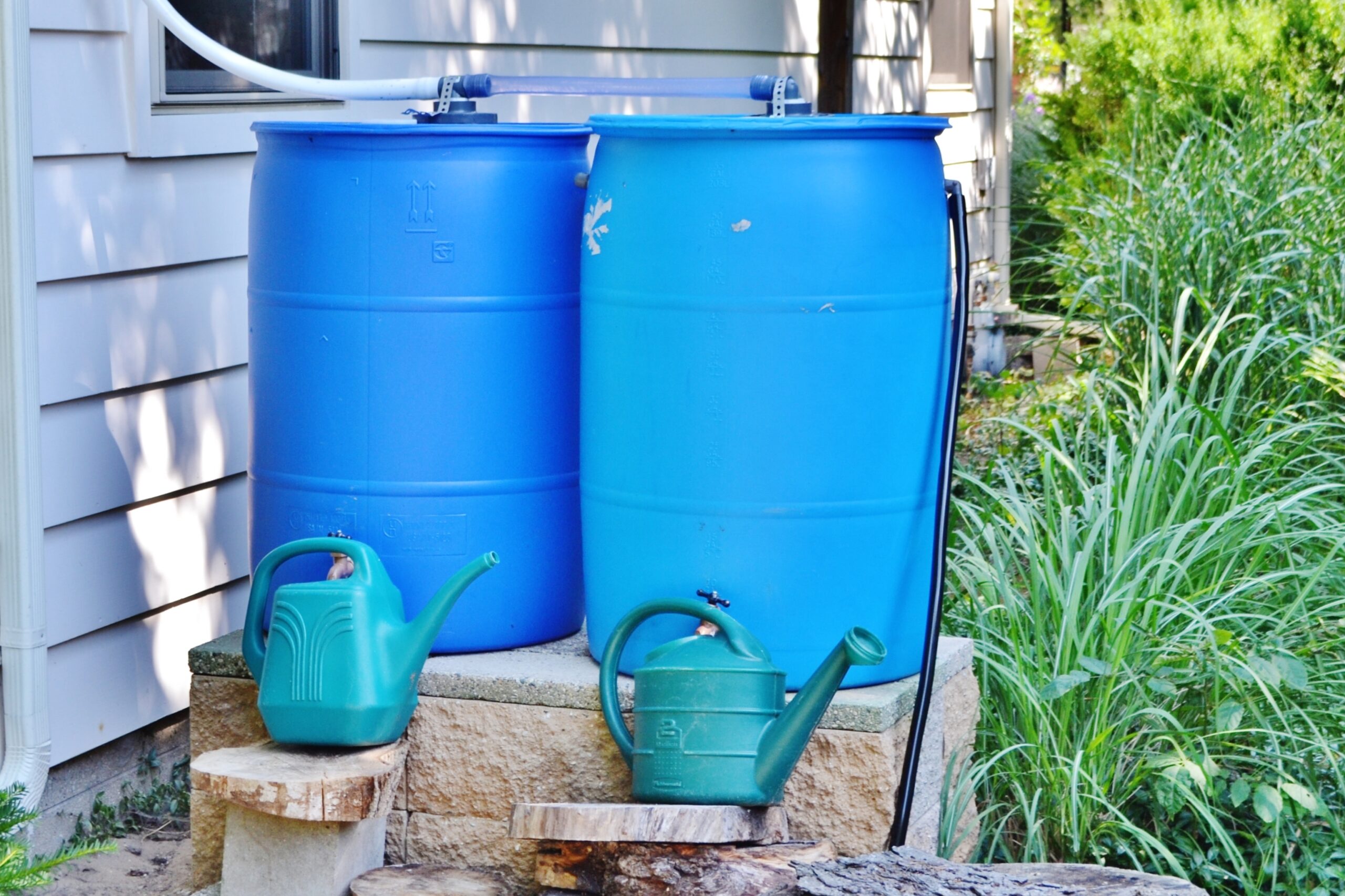
Rainwater for Cannabis: Collection, Storage, First Flush, and Testing
Rainwater can be an excellent irrigation source for cannabis, especially when the alternative is high-alkalinity or saline tap or well water. It is often low in dissolved minerals and easy to blend into a controlled nutrient program. But collected rainwater is not automatically clean, sterile, chemically stable, or ready for an indoor grow. The final water quality depends on the air the rain passed through, the roof it washed across, the gutters and first-flush system, the storage tank, and everything that happened before the water reached your irrigation container.
The practical question is therefore not simply, “Is rainwater good for cannabis?” The useful question is: can this particular rainwater system consistently produce water that is chemically manageable, physically clean, and appropriate for the grow system you are using? That requires a repeatable collection and testing routine rather than a visual judgment.
For most growers, the best approach is to treat harvested rainwater as a variable irrigation source. Inspect the catchment, divert the dirtiest early runoff when justified, keep storage protected from light and debris, test the stored water, and compare the result with what reaches the root zone. When rainwater will be used indoors, in small containers, in coco, rockwool, drip systems, or hydroponics, consistency matters even more because there is less soil volume and natural rainfall to buffer mistakes.
In This Resource
Rainwater Collection and Testing Guide
- Rainwater Quality Starts Before the Tank
- Design the Catchment Around Water Quality
- First Flush: How Much Water Should You Divert?
- Store Rainwater Without Creating a New Problem
- Test Rainwater Before Building a Feed Plan Around It
- Using Rainwater for Indoor Cannabis
- Diagnose Problems Before Treating the Water
- Build a Repeatable Rainwater Baseline
Rainwater Quality Starts Before the Tank
Fresh precipitation is usually low in dissolved minerals compared with many groundwater and municipal sources, but the water you collect is no longer just rain. As it falls, it can pick up airborne particles and gases. Once it reaches a roof, it can mobilize dust, pollen, soot, bird droppings, insects, roofing residues, metals, and organic debris. Conveyance and storage then add another layer of risk.
This is why a collection system should be thought of as a chain. The tank cannot make a contaminated catchment clean by itself. A good system reduces contamination before water enters storage and then prevents new contamination during storage.
Roof-harvested rainwater is runoff, not untouched rain.
Once rainfall contacts a roof, gutter, downspout, screen, first-flush device, pipe, or tank, its chemistry and microbial quality can change. Testing the collected water matters more than assuming the original rainfall was pure.
Rainwater for Cannabis
Rainwater can work well for cannabis when the collection surface is appropriate, storage is maintained, and the water is tested before it becomes the foundation of a nutrient program. Its low mineral content can be useful when a grower wants control over calcium, magnesium, nitrogen, potassium, and trace-element inputs rather than inheriting a large mineral load from the source water.
That same low mineral content also means rainwater may provide very little calcium, magnesium, or alkalinity. A grower should not describe that as a deficiency in the water itself. Irrigation water is only one part of the fertility program. The real question is whether the complete nutrient and root-zone system supplies what the plant needs.
Low EC Does Not Mean “Perfect Water”
A low source-water EC tells you that the water contains relatively little dissolved ionic material. It does not tell you that the roof is free from heavy metals, that the tank is microbiologically clean, that suspended solids are absent, or that every batch of stored rainwater will behave the same way.
Use EC as one measurement, not as a purity certificate. If local air pollution, wildfire ash, industrial dust, questionable roofing material, animal waste, or old plumbing create a credible contamination concern, add laboratory testing for the relevant contaminants instead of relying on a handheld EC meter.
Important: Clear, odorless rainwater can still contain contaminants that are invisible to the eye. Visual clarity is useful for spotting gross debris or algae, but it cannot replace chemical or microbial testing where the collection history creates a real concern.
Why Water pH Alone Can Mislead You
Rainwater may read acidic when measured immediately after collection. That number should not be interpreted in the same way as high-alkalinity well or tap water. Low-mineral rainwater is often weakly buffered, which means its pH can move easily when nutrients, media, or treatment chemicals are added.
For irrigation management, alkalinity often tells you more about how strongly the water can influence root-zone pH over time than the raw water pH does by itself. This distinction becomes especially useful indoors, where irrigation may be the only meaningful water source entering the root zone.
Design the Catchment Around Water Quality
The collection surface is the first treatment decision. A well-maintained roof with compatible gutters and a clean conveyance path is easier to manage than a roof with deteriorating materials, exposed metals, heavy bird activity, accumulated leaf litter, or recent chemical treatment.
Inspect the Roof Before You Collect
Walk the collection path from the roof edge to the storage tank. Look for flaking coatings, exposed flashing, corroded gutters, moss, leaf mats, standing debris, nests, droppings, soot, recently applied pesticides, sealants, paint, or pressure-treated wood that could contact the runoff.
The inspection should be repeated after maintenance, roof replacement, major storms, wildfire smoke events, nearby construction, or long dry periods. A system that produced acceptable water last season can change when the catchment changes.
Do not collect from an unknown or chemically questionable roof.
Exposed copper or zinc, lead-containing components, deteriorating coatings, treated wood, industrial fallout, pesticide residues, heavy bird contamination, and wildfire ash can change roof runoff chemistry. If you cannot establish what the water contacted, do not assume filtration will make it suitable.
Roof Material Matters, but Condition Matters Too
Research on roof runoff shows that roofing and gutter materials can contribute metals, while atmospheric deposition can contribute additional contaminants. The practical lesson is not that one roof material is always safe and another is always unsafe. Age, coatings, fasteners, nearby pollution sources, rainfall pattern, surface condition, and maintenance all change the result.
When a roof contains exposed metal surfaces or old components of uncertain composition, a targeted water test is more useful than an internet list of supposedly safe roofing products.
Keep Leaves and Coarse Debris Out Before the Tank
Gutter screens, leaf guards, inlet strainers, and pre-tank filters reduce the organic load entering storage. They do not sterilize water. Their job is to stop larger material before it decomposes in the tank or clogs irrigation hardware.
Fine drip emitters require more filtration than hand watering. A screen that is adequate for filling a watering can may still allow enough sediment through to reduce emitter flow. Match filtration to the smallest passage in the irrigation system.
Prevent debris before storage.
Keep gutters clean, use suitable screens, inspect the roof, and clean prefilters before they become a source of decomposing material.
Relying on the tank to settle everything out.
Sedimentation can help with some particles, but it does not remove dissolved metals, all microbes, or contaminants that remain suspended.
Calculate Collection Capacity Separately From Water Quality
Roof area and rainfall determine how much water a system can potentially capture. One inch of rain over 1,000 square feet of roof is roughly 623 gallons before accounting for losses. That calculation is useful for tank sizing, but it says nothing about whether the resulting water is suitable for cannabis.
A large tank can reduce water shortages between storms, yet longer storage also increases the importance of tank hygiene, light exclusion, sediment management, and sampling. Capacity planning and quality control are related but separate jobs.

First Flush: How Much Water Should You Divert?
The first portion of roof runoff often carries a larger load of accumulated dust, pollen, animal waste, fine debris, and atmospheric deposition than water arriving later in the same rain event. A first-flush diverter keeps some of this early runoff out of storage.
That does not mean there is one scientifically correct first-flush volume for every cannabis grow. The amount needed depends on roof area, roof condition, slope, rainfall intensity, time since the last rain, local pollution, animal activity, and the water-quality goal.
Why a Fixed First-Flush Rule Can Fail
Some extension documents provide engineering starting ranges for diversion volume. Other rainwater-harvesting guidelines explicitly state that there is no one-size-fits-all formula because catchment and storm conditions vary so much. Both can be true: a design range can help size equipment, but it should not be presented as a biological safety threshold.
For Weedth purposes, treat first flush as a risk-reduction step that must be validated by system cleanliness and water testing, not as proof that everything entering the tank afterward is clean.
Field Advice: After a long dry period, inspect the roof and gutters before relying on the normal first-flush setting. More time between storms can mean more accumulated material on the catchment, although the exact contaminant pattern still depends on the roof and local environment.
When a First-Flush Diverter Becomes More Valuable
A diverter becomes more useful when the roof frequently accumulates bird droppings, dust, pollen, leaf fragments, wildfire residue, soot, or other debris. It is also more useful when collected water will enter a small indoor root zone or fine irrigation system where consistency and cleanliness matter more.
A well-maintained roof in a relatively clean environment may produce acceptable irrigation water with modest pretreatment, while a dirty catchment may remain questionable even with a large diverter. The catchment condition always outranks the gadget.
Maintain the Diverter or It Stops Being a Treatment Step
A first-flush chamber that never drains, fills with decomposing debris, leaks continuously, or bypasses unpredictably becomes part of the contamination problem. Confirm that it resets between storms and that diverted water has a safe outlet away from foundations and traffic areas.
If the device uses screens, valves, floating balls, or drain holes, inspect them on a schedule. After a major storm or long dry spell, check sooner.
“How many gallons should I throw away at the start of every storm?”
Question sent by: Ethan Brooks, via email.
There is no universal cannabis first-flush volume. Size the diverter from roof area and a reputable rainwater-harvesting design reference, then adjust the risk assessment for roof condition, dry days, bird activity, local pollution, and the intended grow system. The final check is the stored-water result, not the number printed on the diverter.
Store Rainwater Without Creating a New Problem
Collection quality can be lost in storage. A clean first flush does little if the tank receives sunlight, insects, rodents, open dust, decaying leaves, contaminated hoses, or sediment that is never removed.
Use Opaque, Covered Storage
Keep the tank closed to debris and animals and block light as much as practical. Light encourages algae, while open vents and overflows can become entry points for insects and small animals. Screens should remain intact and should not stay submerged where debris can accumulate around them.
Storage material itself should be appropriate for water storage and should not have a history of hazardous chemical use. Reusing an unknown industrial drum simply because it holds water is a poor risk tradeoff.
Keep Overflow and Air Vents Protected
Every tank needs a safe way to overflow during large rain events. Route overflow away from foundations and areas where erosion or contaminated backflow could occur. Vent and overflow openings should be screened to reduce insect and animal entry.
If the system uses a pump, design the outlet so settled sludge is not constantly pulled from the very bottom of the tank. A floating or elevated intake can reduce the amount of settled debris entering fine irrigation lines.
Sediment Is a Maintenance Signal
Some sediment is expected over time. A rapidly growing sludge layer suggests that pretank debris control is not doing enough. Do not wait for emitter clogging before cleaning the system.
Document when the tank was cleaned and how quickly sediment returns. That record can reveal a seasonal pollen event, roof deterioration, gutter problem, or filtration failure.
Stored rainwater is non-potable unless it has been treated and verified for potable use.
This article is about irrigation. Do not assume water that is acceptable for a plant is safe for drinking, cooking, washing produce, or other human-consumption uses. Microbial and chemical requirements for potable water are a separate standard.
Do Not Let the Tank Become a Mosquito Habitat
Standing water must be screened from mosquito access. Check lid gaps, torn mesh, overflow pipes, and water collecting on top of the tank. Good storage is closed storage.
Do You Need Disinfection for Cannabis Irrigation?
Not every rainwater system requires routine disinfection for plant irrigation, and there is no universal cannabis sanitation recipe. The decision depends on source risk, the grow system, whether water is recirculated, whether biofilm or pathogen transmission is a concern, and whether the treatment could interfere with a living root-zone strategy.
If microbial contamination is suspected or a commercial system requires sanitation, choose a treatment based on actual water testing and the irrigation design. UV, filtration, oxidizing disinfectants, and other treatments have different limitations. Do not improvise a concentrated bleach or peroxide dose from a generic household recipe.
Safety Note: Water-treatment chemicals can injure plants, damage irrigation components, or expose the grower if mixed incorrectly. Follow the product label, local regulations, and system-specific guidance. Never mix acids with chlorine-based products.
Test Rainwater Before Building a Feed Plan Around It
A repeatable testing routine is more useful than a single sample collected after an unusually clean storm. The goal is to understand both the normal baseline and the conditions that make the source change.
Collecting and Testing Rainwater for Cannabis
For a baseline irrigation sample, collect from the point where the grow will actually receive water, after the storage tank and any normal filtration or treatment. If you are troubleshooting the collection system, take paired samples from different points: roof runoff after first flush, tank water, post-filter water, and irrigation outlet water.
Use clean sample containers and follow the laboratory’s instructions. Some tests require preserved bottles, refrigeration, or rapid delivery. Do not rinse a laboratory bottle with nutrient solution, disinfectant, or tap water unless the laboratory tells you to.
Test After the System Has Been in Normal Operation
A sample from a brand-new empty tank tells you little about what happens after weeks of rainfall and storage. Establish a baseline after the system has experienced normal collection conditions, then repeat after significant changes such as roof work, storage contamination, wildfire ash, a new filter, a tank cleaning, or a long seasonal dry period.
What Should a Rainwater Irrigation Test Include?
| Water Parameter | Typical Question | Main Risk | How to Use the Result | When to Expand Testing |
|---|---|---|---|---|
| pH | How acidic or basic is this sample right now? | Misreading pH without alkalinity | Interpret with alkalinity and the final nutrient solution | When pH behaves unpredictably after mixing |
| Alkalinity | How strongly can the water resist acidification? | Too little or too much buffering for the system | Use it to predict pH-management behavior | When substrate pH drifts despite reasonable feed pH |
| EC | How much dissolved ionic material is present? | Unexpected salt loading | Establish the source-water contribution before fertilizer | When EC rises between storms or during storage |
| Ca and Mg | Does the source contribute meaningful hardness minerals? | Assuming rainwater supplies enough Ca/Mg | Build fertility from measured contribution, not assumption | When nutrient formulation depends strongly on source minerals |
| Na and Cl | Is there an unwanted salinity component? | Root-zone accumulation or local contamination | Trace the source if values are unexpectedly elevated | Near coasts, salted roads, industry, or contaminated catchments |
| Metals | Could roof or gutter materials be contributing contaminants? | Invisible chemical contamination | Target the panel to catchment materials and local risk | With exposed metals, old roofs, industrial dust, or ash |
| Microbial indicators | Is storage or animal contamination a concern? | Pathogen and sanitation risk | Use laboratory guidance appropriate to intended use | After animal entry, foul storage, or high-risk reuse |
This is not a mandatory universal panel for every barrel. It is a decision framework. A clean, simple outdoor irrigation system may need less monitoring than a large indoor fertigation system using stored roof water as its only source.
Handheld Meters Are Useful, but Limited
A calibrated pH meter and EC meter can reveal changes quickly. They cannot identify which ions created the EC, detect a specific heavy metal, or determine whether microbial contamination is present. Use handheld meters for trend monitoring and laboratory analysis for chemistry that requires identification.
Pro Tip: Record source-water EC before nutrients, final feed EC after nutrients, and a consistent root-zone measurement when the grow system supports it. That three-point record helps separate source-water change from fertilizer concentration and root-zone accumulation.
Keep the Sampling Point Consistent
If one sample is taken from the top of a barrel and the next from the bottom sludge layer, the numbers may change because the sampling method changed. Use the normal irrigation outlet for routine monitoring unless you are deliberately investigating stratification or sediment.
Do Not Compare Unmatched Laboratory Methods
When reviewing water reports over time, compare the same analytes and units. For microbial tests, metals, and other specialized chemistry, method differences can matter. If two laboratories report results differently, ask them how to compare the data instead of forcing a conversion.
“My rainwater reads almost zero EC. Can I skip the lab test?”
Question sent by: Julia Schneider, via contact form.
No. Very low EC means the water contains little dissolved ionic material overall, but it does not prove the absence of a specific contaminant at a concentration relevant to your situation. Whether you need expanded laboratory testing depends on the roof, local pollution, storage history, and how intensively the water will be used.
Using Rainwater for Indoor Cannabis
Indoor growing removes much of the dilution and variability that outdoor rainfall naturally provides. The irrigation source becomes a larger part of the root-zone chemistry, which makes repeatability more valuable.
Rainwater for Indoor Cannabis: Collection and Testing
For indoor use, treat the storage tank as part of the grow infrastructure. The water should be screened, protected from light and animals, easy to sample, and compatible with the pump and emitter system. A rain barrel that is acceptable for hand-watering a garden may not be clean or consistent enough for a fine indoor drip system.
Before building a nutrient formula around it, test the post-storage water. Recheck when seasons change or after collection-system maintenance. If the indoor system is sensitive to low alkalinity, rapid pH movement, low calcium/magnesium contribution, or fine sediment, solve those measured issues rather than trying to make the rainwater imitate tap water.
Soil and Living Soil
Mineral soil and biologically active mixes can provide more chemical and physical buffering than a small inert substrate. Even so, very low-mineral water should not be assumed to supply meaningful calcium or magnesium. Fertility planning should come from the complete soil and nutrient system.
Stored rainwater that contains significant debris or questionable microbial contamination is still a poor choice. “Living soil” is not a reason to introduce uncontrolled biological material from a dirty tank.
Coco Coir
Coco is highly responsive to irrigation chemistry. Low-mineral rainwater gives the grower control over the final feed composition, but the nutrient program must be designed for coco rather than copied from hard tap water. Source-water EC should be recorded separately from final feed EC.
Because coco is frequently irrigated and may be used with drip systems, sediment filtration and emitter consistency deserve attention. A clogged emitter can create a local dry root zone even when the tank chemistry is excellent.
Rockwool and Other Inert Media
Inert systems provide little buffering against irrigation mistakes. Rainwater can be useful because it starts with a small mineral load, but final nutrient concentration and pH behavior become more dependent on what the grower adds.
Do not confuse low alkalinity with instability that must always be “fixed.” The goal is a repeatable nutrient solution and root-zone response, not a specific source-water number in isolation.
Hydroponics and Recirculating Systems
Recirculating systems can concentrate contaminants or spread biological problems through a shared solution. Rainwater entering these systems should therefore be evaluated not only at collection but also after storage and, when appropriate, within the recirculating reservoir.
Do not assume that a clean initial EC reading means the reservoir will remain chemically stable. Plant uptake, fertilizer additions, evaporation, top-offs, and sanitation practices all change the solution over time.
Do Not Add Minerals Just Because the Source Is Soft
Low EC rainwater does not automatically require a generic calcium-magnesium supplement. First determine what the nutrient program, medium, and source water already provide. Adding supplements by habit can raise EC and distort nutrient ratios without solving a demonstrated deficiency.
Build feed chemistry from measured source water.
Use the actual rainwater result, medium, nutrient formula, and plant response to decide what the feed needs.
Treating low EC as a deficiency diagnosis.
Source-water EC describes dissolved ions in the water. It does not tell you whether the plant is deficient in calcium, magnesium, or anything else.
Separate Source Water From Feed and Root-Zone Accumulation
Rainwater can be blamed for problems that actually begin after fertilizer is added. A useful troubleshooting record separates three stages:
| Sampling Point | What It Tells You |
|---|---|
| Stored source water | The baseline chemistry and cleanliness entering the irrigation process. |
| Final nutrient solution | What fertilizer, acid, supplements, and mixing procedure changed before irrigation. |
| Root-zone or drainage sample | What the medium, plant uptake, evaporation, irrigation pattern, and accumulated salts changed after repeated use. |
If source EC is low but root-zone EC rises, the rainwater itself may not be the main salt source. If source pH changes between storms but final feed pH remains consistent and the root zone stays stable, the raw pH variation may not matter much. Diagnose the stage where the problem appears.
Remember: A source-water number becomes useful when it helps explain what happens downstream. Do not “correct” rainwater simply because one raw measurement looks different from tap water.
Diagnose Problems Before Treating the Water
Rainwater systems create several failure modes that can resemble nutrient, watering, or root problems. Treatment should follow evidence rather than appearance.
| Symptom | Possible Cause | How to Confirm | Corrective Action | Prevention |
|---|---|---|---|---|
| Emitter flow falls | Sediment, algae, biofilm, or debris | Compare emitter discharge and inspect filters/lines | Clean the water path and correct filtration | Improve pretank screening and tank maintenance |
| Source EC rises unexpectedly | Catchment contamination, tank contamination, evaporation, mixing error | Compare fresh runoff, stored water, and post-treatment samples | Trace the source before changing nutrients | Keep a seasonal baseline and inspect the catchment |
| pH swings after nutrient mixing | Very low alkalinity or inconsistent mixing | Test alkalinity and repeat the same mixing sequence | Adjust the nutrient preparation process | Record source alkalinity and final feed behavior |
| Visible algae in tank | Light exposure and nutrient/debris entry | Inspect lid, tank walls, screens, and sediment | Clean the tank and block light/debris entry | Use opaque covered storage |
| White or colored deposits | Minerals, metals, salts, or biological residue | Compare water chemistry and deposit location | Treat the identified cause rather than guessing | Monitor source chemistry and hardware |
Look-Alike: Nutrient Deficiency
Low-mineral rainwater makes it tempting to blame every pale leaf on a lack of calcium or magnesium. Check the complete feed, root-zone pH, EC, watering pattern, root health, and growth stage before adding nutrients. Rainwater does not remove nutrients from a properly managed substrate simply because its source EC is low.
Look-Alike: Overwatering
The source can be chemically excellent while the root zone remains saturated too long. Container size, medium structure, irrigation volume, root mass, temperature, and humidity determine dry-back. If the plant declines in a persistently wet root zone, solve the water-balance problem rather than treating the rainwater chemistry.
Look-Alike: Salt Buildup
Stored rainwater may begin with a low EC while fertilizer salts accumulate in the root zone because irrigation volume, drainage, or feed strength is mismatched. Compare source EC with final feed and an appropriate root-zone measurement before blaming collection water.
Look-Alike: Disease or Biofilm
Clogged emitters and declining roots can share a system with biofilm, but cloudy water or slime does not identify a specific pathogen. Clean and inspect the irrigation system. If pathogen identity will change management, use qualified laboratory diagnostics rather than visual guesses.
“My stored rainwater smells earthy after a few weeks. Can I still use it indoors?”
Question sent by: CedarRoute, via Facebook page.
Do not use odor alone as a safety test, but a new odor is a reason to inspect the tank, sediment, screens, light exposure, organic debris, and biofilm. Clean the storage system and test the water if the source is important to the grow. Indoors, especially with drip or recirculating irrigation, unexplained storage changes deserve more caution than they might in a simple outdoor hand-watering setup.
Correct Rainwater Problems in Sequence
Changing several variables at once destroys useful diagnostic information. Use a sequence that lets you see whether the correction actually worked.
Step 1: Identify the Stage Where Quality Changes
Compare the roof/catchment, post-first-flush runoff when needed, stored water, post-treatment water, final nutrient solution, and root-zone result. You do not need to sample every point forever. Use paired samples when troubleshooting.
Step 2: Fix Physical Contamination Before Chemical Adjustment
Clean blocked screens, remove decomposing debris, repair the lid, eliminate light entry, service the first-flush diverter, and correct dirty filters before reaching for acids or supplements. Chemical adjustment will not fix leaves rotting in the bottom of a barrel.
Step 3: Treat Only the Measured Chemical Problem
If alkalinity is very low, the practical issue may be pH stability during mixing. If a roof contributes metal contamination, the correct response may be to stop using that catchment rather than trying to neutralize the water. If sodium or chloride is elevated, trace the source instead of adding calcium and hoping the EC number improves.
Step 4: Rebuild the Nutrient Solution From the New Baseline
When treatment changes source-water chemistry, the old feed program may no longer behave the same way. Recheck source EC, pH, alkalinity, relevant minerals, and final feed behavior. This is especially important after installing reverse osmosis, blending with another water source, or changing mineral supplementation.
Step 5: Verify at the Next Irrigation Events
Check that the source remains stable, emitters flow evenly, the nutrient solution mixes predictably, and the root zone responds normally. If the problem returns only after several days of storage, focus on the tank. If it returns only after fertilizer is mixed, focus on the feed process. If source and feed remain stable but the root zone drifts, investigate irrigation and substrate management.
Master Advice: The most valuable rainwater system is not the one with the lowest EC. It is the one that produces a repeatable, testable source you can manage without guessing.
A Practical Rainwater Monitoring Schedule
No calendar can replace site-specific risk, but operational checkpoints make the system easier to manage.
| Stage / Period | System Status | Main Task | Risk / Check |
|---|---|---|---|
| Before the collection season | System dry or returning to service | Inspect roof, gutters, screens, diverter, tank, overflow, pump | Old debris, damaged components, unknown tank residue |
| After a long dry period | Higher catchment buildup possible | Inspect catchment and confirm first-flush operation | Dust, pollen, droppings, ash, roof debris |
| After a major storm | High collection volume | Check overflow, filters, tank clarity, sediment movement | Bypass, washed-in debris, damaged screens |
| Before building a feed plan | Stored source in normal use | Establish pH, EC, alkalinity and relevant laboratory baseline | Assuming low-mineral means complete or contamination-free |
| During routine use | System operating normally | Track handheld pH/EC trends and irrigation performance | Seasonal drift, clogged emitters, storage changes |
| After treatment or cleaning | System changed | Retest the post-treatment water and final feed | Assuming treatment worked without measurement |
These are operational checkpoints rather than biological thresholds. A high-risk catchment may need more frequent laboratory testing, while a simple clean system may remain stable with less intensive monitoring.
Build a Repeatable Rainwater Baseline
Rainwater is most useful when it becomes predictable. The goal is not to make it chemically identical to municipal water. The goal is to know where it came from, what it contains, how storage changes it, how it behaves when nutrients are added, and whether the root zone remains stable.
If the catchment is clean, storage is protected, the first-flush system is maintained, and testing shows a manageable chemistry, rainwater can provide an excellent low-mineral starting point. If the roof or local environment introduces contamination, the correct decision may be to change catchments, blend with another source, improve treatment, or stop using the water. Collection convenience should never outrank water quality.
Before Rainwater Becomes Your Main Cannabis Water Source
- Confirm the roof, gutters, fasteners, and storage materials are appropriate for collection.
- Remove leaves, droppings, and accumulated debris before they reach storage.
- Use a maintained first-flush strategy when catchment risk justifies it.
- Keep the tank opaque, covered, screened, and protected from animals and insects.
- Provide a safe overflow path and maintain filters, pumps, and screens.
- Test stored water at the point the grow actually receives it.
- Track pH, EC, and alkalinity separately rather than treating them as interchangeable.
- Expand testing for metals, sodium, chloride, or microbial contamination when the catchment history warrants it.
- Keep source-water EC separate from final feed EC and root-zone accumulation.
- Retest after roof work, system cleaning, treatment changes, contamination events, or major seasonal shifts.
- Change one variable at a time when troubleshooting.
- Verify the result at the next irrigation events instead of assuming the correction worked.
Frequently Asked Questions About Rainwater for Cannabis
Rainwater for Cannabis: Collection, Storage, and Testing
Rainwater can be used for cannabis when the catchment is appropriate, storage is protected, and the final stored water is tested. The most useful routine is to inspect the roof and gutters, reduce early-runoff contamination, prevent light and debris from entering storage, test the water at the irrigation outlet, and verify that the nutrient solution and root zone remain stable.
Is Rainwater Better Than Tap Water for Cannabis?
Not automatically. Rainwater may offer lower EC and alkalinity, which can be useful where tap water contains unwanted salts or strong buffering. Tap water may be more consistent, treated, and easier to monitor. Compare the actual sources rather than ranking them by whether they are “natural.”
Do I Have to Use a First-Flush Diverter?
Not every collection system has the same risk, but first flush is a useful contamination-control step when roof debris, droppings, dust, local pollution, or a long interval between rains make the earliest runoff more questionable. There is no universal cannabis first-flush volume.
Can I Use Rainwater With Zero or Near-Zero EC?
Yes, but low EC does not mean the complete nutrient solution should remain near zero. The source contributes little ionic material, so the nutrient program must supply what the crop and medium require. It also does not prove that specific contaminants are absent.
Should I Add Cal-Mag to Every Batch of Rainwater?
No. Decide from the complete nutrient formulation, source analysis, medium, and plant response. Rainwater usually contributes little hardness, but that does not justify adding a supplement without knowing what the base fertilizer already supplies.
Can I Mix Rainwater With Tap or Well Water?
Yes, blending can be a practical way to adjust alkalinity, mineral load, or supply volume, but the blend should be tested rather than calculated from assumptions. If source chemistry changes seasonally, the blended result can change too.
Share this article
A quick overview of the topics covered in this article.
Follow us
Latest articles
September 26, 2026

September 26, 2026

September 26, 2026
September 26, 2026