Red-to-Far-Red Ratio and Cannabis Stretch
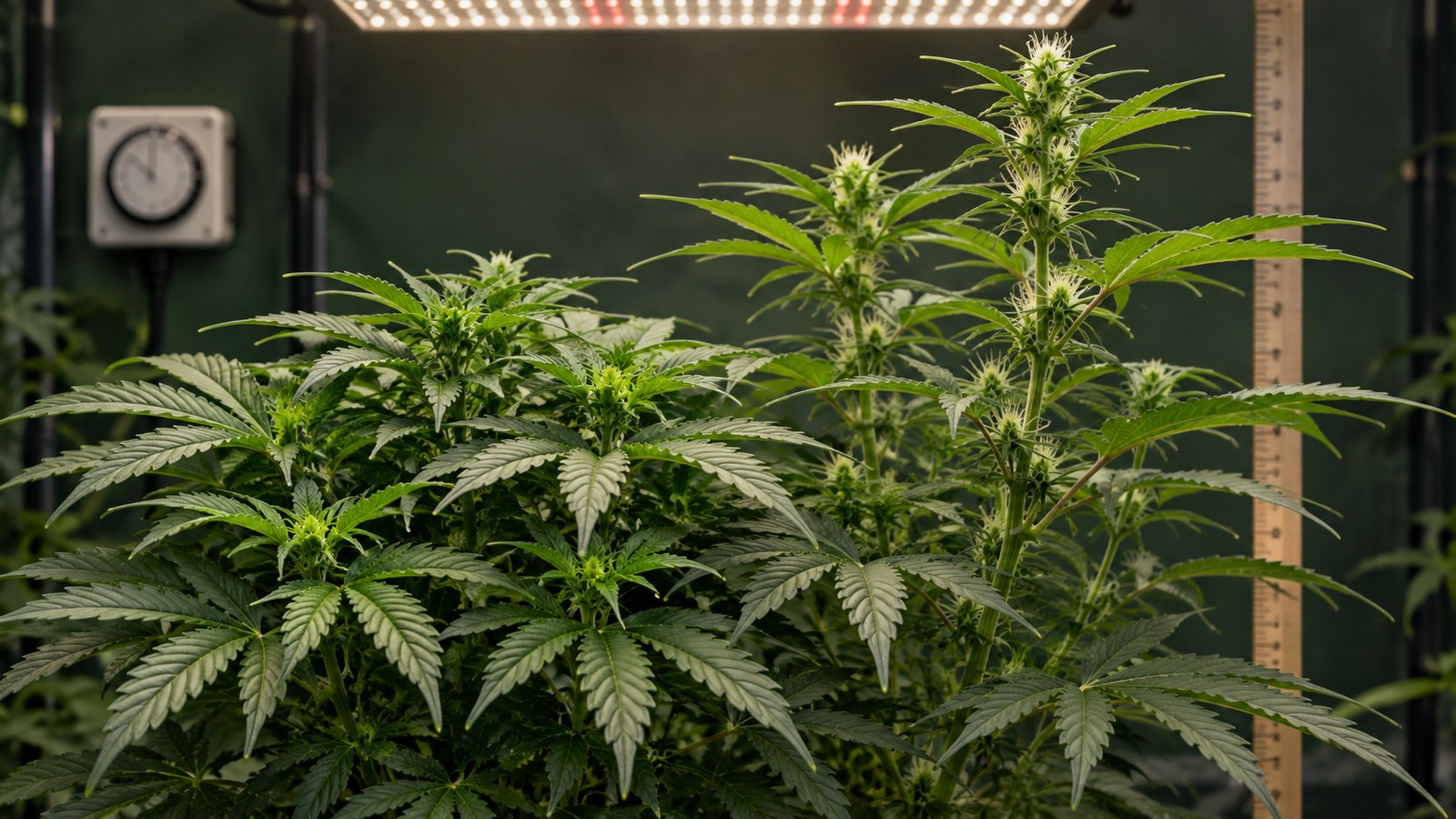
During the first three weeks of the flowering cycle, indoor cannabis cultivators confront one of the most critical physiological transitions in the plant lifecycle: the flowering stretch. Depending on genetic lineage, environmental cues, and lighting spectrum, plants can double or even triple in vertical height in a matter of fourteen to twenty-one days. In commercial vertical farming facilities with fixed rack clearance, as well as in home grow tents with strict vertical boundaries, uncontrolled stem elongation poses an immediate operational crisis: tall branches push into luminaires, causing thermal bleaching, photon toxicity, uneven canopy microclimates, severe humidity pockets, and catastrophic popcorn larf in lower shaded tiers.
Historically, cultivators attempted to manage this rapid vertical surge through manual labor-intensive techniques: physical trellising, aggressive topping, high-stress branch bending, chemical plant growth regulators (PGRs, which are strictly prohibited in clean commercial cannabis production), or manipulative day-to-night temperature swings (negative DIF). While these methods can blunt vertical growth, they address only the external symptoms. Modern plant photobiology has identified the master biophysical switch governing stem elongation: the red-to-far-red photon ratio (R:FR) and its precise regulation of the plant phytochrome photoreceptor system.
Plants do not simply measure total light intensity; they continuously calculate the spectral composition of their surrounding photonic environment. Specifically, the ratio between red photons (centered at 660 nm) and far-red photons (centered at 730 nm) acts as a sophisticated biological radar for vegetative competition. When the R:FR ratio drops, cannabis senses an encroaching neighbor canopy and triggers the classical Shade Avoidance Syndrome (SAS), mobilizing internal plant hormones: specifically auxins, brassinosteroids, and gibberellic acid: to drive explosive cellular elongation in stems and petioles. By learning how to measure, calculate, and manipulate the R:FR ratio through solid-state LED fixtures, commercial growers gain direct architectural control over canopy geometry.
This comprehensive guide deconstructs the red-to-far-red ratio in cannabis production. We analyze the biophysical mechanics of phytochrome photoequilibrium (PSS), examine how far-red photons interact with blue light fractions and Daily Light Integral (DLI), evaluate continuous far-red versus End-of-Day Far-Red (EOD-FR) protocols, explore genetic variability across indica and sativa landraces, and provide an actionable, step-by-step canopy management framework to maintain absolute structural command over your garden.
Direct Answer: How the Red-to-Far-Red Ratio Controls Cannabis Elongation
The fundamental photobiological rule is definitive: A high red-to-far-red ratio (R:FR > 4.0) represses stem elongation and keeps internodes compact, whereas a low red-to-far-red ratio (R:FR < 1.5) triggers rapid internodal elongation and canopy stretching.
In natural sunlight at solar noon under clear skies, the red-to-far-red ratio is roughly 1.1 to 1.2: there are approximately equal numbers of 660 nm red photons and 730 nm far-red photons. However, when sunlight strikes a dense plant canopy, chlorophyll pigments absorb over 90% of the red photons to power photosynthesis, while reflecting or transmitting nearly 80% of the far-red photons through leaf mesophyll tissue. Underneath or within a crowded canopy, the R:FR ratio plummets from 1.2 down to 0.1 or 0.2.
Red-to-Far-Red Ratio (R:FR)
The mathematical ratio of photon flux density in the red waveband (655 to 665 nm, centered at 660 nm) to photon flux density in the far-red waveband (725 to 735 nm, centered at 730 nm):
$$\text{R:FR} = \frac{\text{Photon Flux}_{655-665\,\text{nm}}}{\text{Photon Flux}_{725-735\,\text{nm}}}$$
In broader horticultural practice, broad-band definitions (Red: 600-700 nm; Far-Red: 700-800 nm) are also used. High R:FR signals open, unobstructed sunlight, while low R:FR signals dense vegetative shading.
When a cannabis plant detects this drop in R:FR, its evolutionary survival programming interprets the low ratio as an existential threat: neighboring vegetation is about to overtop it and steal its sunlight. In response, the plant initiates the Shade Avoidance Syndrome (SAS). Within hours of sensing a low R:FR ratio, the plant reallocates its carbon resources from root expansion, leaf lamina thickening, and secondary metabolite synthesis into rapid vertical cellular elongation of hypocotyls, petioles, and stem internodes.
Conversely, when cannabis plants are exposed to light with a high R:FR ratio (such as standard broad-spectrum white LEDs with minimal 730 nm emission), the plant senses wide-open canopy conditions. In this environment, stem elongation is actively suppressed. The plant invests its photosynthetic carbon into robust lateral branch expansion, thick main stems with wide vascular xylem rings, and broad horizontal leaves designed to intercept maximum downward photon flux.
Core Concept: Far-red light is not inherently harmful: it enhances Photosystem II quantum efficiency through the Emerson Enhancement Effect. However, when far-red photons are delivered without sufficient compensating red or blue photons, they trigger explosive vertical stretch.
By managing the R:FR ratio delivered by solid-state LED fixtures, commercial cultivators gain direct architectural control over crop geometry. Delivering high R:FR (above 5.0 to 10.0) during the early vegetative and early stretch phases produces ultra-compact, rigid plants with short internodal spacing. Conversely, selectively lowering R:FR allows growers to stretch squat indica cultivars that would otherwise become excessively dense and prone to mold.
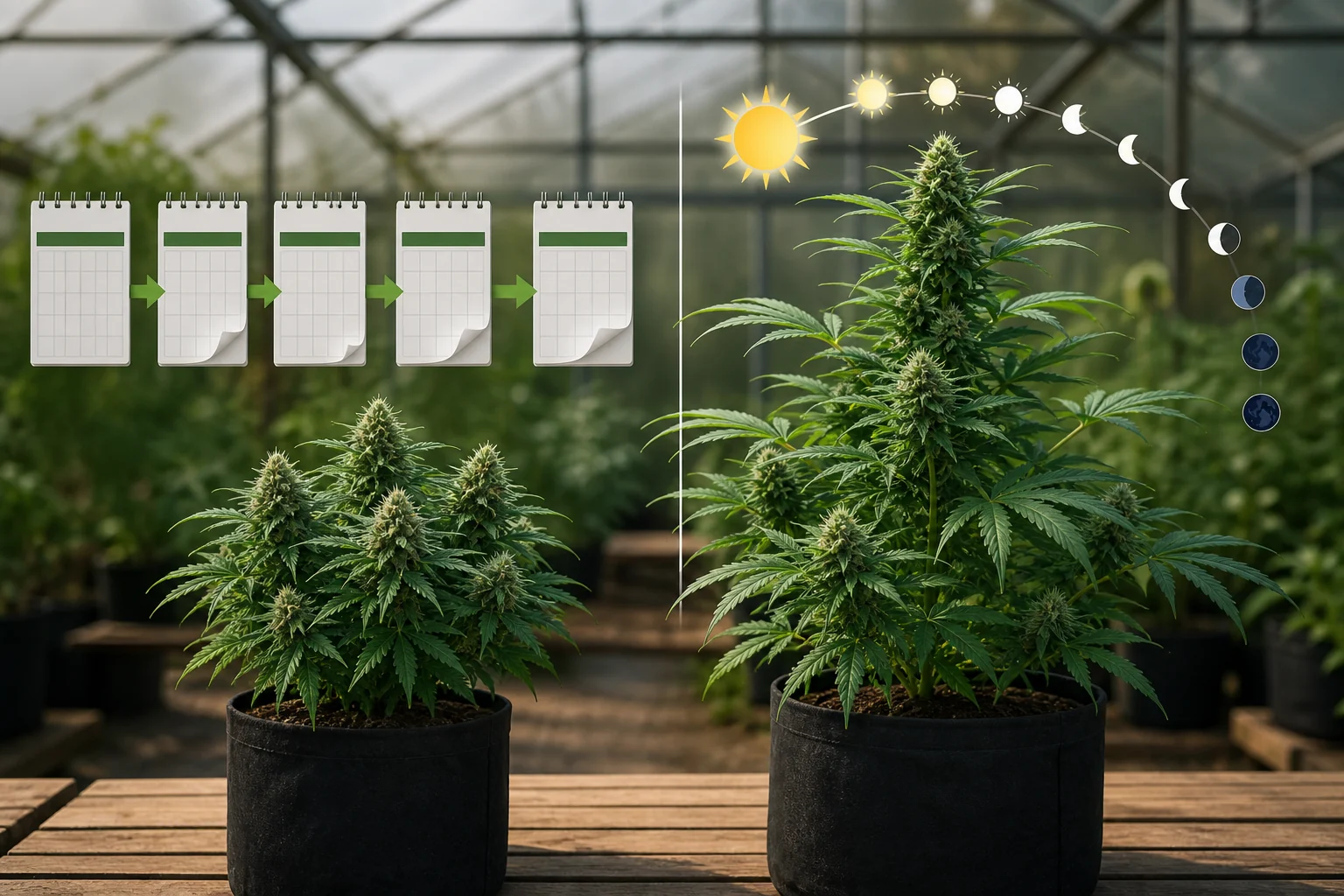
The Biophysical Mechanism: Phytochrome Photoequilibrium and Shade Avoidance
To master canopy elongation, cultivators must understand the molecular operation of the primary sensory pigment: phytochrome. Phytochrome is a soluble chromoprotein that operates as a reversible photochemical switch transitioning between two distinct molecular conformations:
- $P_r$ (Red-Absorbing Form): The physiologically inactive conformation with an absorption peak at 660 nm. When $P_r$ absorbs a red photon, its linear tetrapyrrole chromophore (phytochromobilin) undergoes a cis-to-trans isomerization that drives a major conformational change, converting it into active $P_{fr}$.
- $P_{fr}$ (Far-Red-Absorbing Form): The physiologically active conformation with an absorption peak at 730 nm. When $P_{fr}$ absorbs a far-red photon, it rapidly converts back into inactive $P_r$. In the dark, $P_{fr}$ also slowly reverts to $P_r$ through a temperature-dependent non-photochemical process known as thermal dark reversion.
Phytochrome Photoequilibrium (PSS or \Phi)
Because the absorption spectra of $P_r$ and $P_{fr}$ overlap broadly across the 600 to 750 nm spectrum, any continuous light source establishes a dynamic, steady-state balance between the two forms. This balance is quantified as the Phytochrome Photoequilibrium (PSS or $\Phi$):
$$\text{PSS} = \frac{[P_{fr}]}{[P_{total}]} = \frac{[P_{fr}]}{[P_r] + [P_{fr}]}$$
Under natural unfiltered daylight, PSS is approximately 0.70 to 0.72: roughly 70% of the total phytochrome pool exists in the biologically active $P_{fr}$ state. Under high-performance white LED fixtures lacking dedicated far-red diodes, PSS rises to 0.85 to 0.88 because white phosphors emit abundant 660 nm red but negligible 730 nm far-red. Under double-ended high-pressure sodium (HPS) fixtures, PSS drops to roughly 0.72 to 0.75 due to substantial infrared and far-red emission.
The Molecular Cascade of Cellular Elongation
Active $P_{fr}$ functions as a master genetic repressor of stem elongation. When PSS is high (above 0.80), $P_{fr}$ translocates into the cell nucleus, where it binds directly to a class of basic helix-loop-helix transcription factors known as Phytochrome-Interacting Factors (PIFs), specifically PIF4, PIF5, and PIF7. This binding targets the PIFs for rapid ubiquitination and degradation by the 26S proteasome. Without active PIFs, the plant cannot transcribe the genes responsible for synthesizing auxins (indole-3-acetic acid, IAA) and bioactive gibberellic acid ($GA_1$ and $GA_3$).
However, when far-red photons (730 nm) strike the canopy and the R:FR ratio drops, $P_{fr}$ is rapidly converted into inactive $P_r$, causing PSS to plummet below 0.68. With $P_{fr}$ depleted from the nucleus, PIF transcription factors accumulate rapidly, immediately binding to the promoters of auxin biosynthesis genes (such as YUCCA enzymes). Auxin production surges, and auxin efflux carriers (PIN-FORMED proteins) transport this hormone downward through stem tissues.
In stem cortical cells, auxin stimulates plasma membrane proton pumps ($H^+$-ATPases), pumping protons into the apoplast and dropping cell wall pH below 4.5. This acidification activates expansin proteins and xyloglucan endotransglucosylase/hydrolases (XTHs), which sever hydrogen bonds between cellulose microfibrils. Under osmotic turgor pressure, the loosened cell walls stretch outward. Within 12 to 24 hours of far-red exposure, internodal elongation accelerates dramatically.
Does far-red light actually increase photosynthetic yield, or does it only cause stretch?
Question sent by: Brett Miller, via Instagram.
Far-red light (700 to 750 nm) genuinely increases photosynthetic yield through the Emerson Enhancement Effect. While far-red photons alone are inefficient at driving Photosystem II, when combined with shorter-wavelength photons (red and blue), far-red photons selectively excite Photosystem I, balancing the electron transport chain and increasing net photosynthetic rate. Research by Dr. Bruce Bugbee has proven that far-red photons contribute to photosynthesis with an efficiency equal to traditional PAR photons. However, if far-red is added without adequate blue light (at least 15% to 18%) or without sufficient PPFD, the structural stretching caused by shade avoidance will ruin canopy architecture before the photosynthetic benefits can be realized.
Variables That Alter Stretch: Chemovar Genetics, DLI, Blue Fraction, and DIF
While the R:FR ratio is the primary photobiological driver of elongation, its real-world impact in an indoor facility is heavily modulated by four environmental and genetic variables. Cultivators who treat R:FR in isolation will experience unpredictable crop morphology.
Variable 1: Chemovar Genetic Predisposition
Genetic background determines the baseline sensitivity of the phytochrome-PIF pathway:
- Equatorial / Sativa Lineages (Haze, Durban, Thai): Evolved near the equator under dense tropical canopies with intense year-round sunlight. These chemovars exhibit hyper-sensitive shade avoidance responses. Exposing a stretchy sativa hybrid to a low R:FR ratio (under 2.0) can trigger an uncontrollable 250% to 350% vertical stretch, doubling branch length in under two weeks.
- High-Altitude / Afghanica Lineages (Kush, Hash Plants): Evolved in arid mountainous regions with wide plant spacing and unobstructed solar irradiance. These broad-leaf cultivars possess muted shade avoidance responses. Even under low R:FR ratios, their internodal stretch remains modest (50% to 100%), often requiring far-red supplementation to achieve adequate branch elongation and prevent bud mold.
Variable 2: Blue Photon Fraction (The Photonic Brake)
Blue light (400 to 500 nm) operates through cryptochrome photoreceptors (cry1 and cry2) to directly counteract phytochrome-induced shade avoidance. High blue photon fractions (above 18% to 22%) suppress PIF activity and enhance gibberellin degradation. If a luminaire delivers abundant far-red light (lowering R:FR to 1.5) but simultaneously supplies a high blue fraction (20%+ blue), the blue photons act as a powerful biological brake, significantly muting the stretch response.
Variable 3: Daily Light Integral (DLI) and Photon Flux Density
The absolute quantity of delivered photons heavily influences how plants respond to spectrum. Under low PPFD (200 to 400 μmol/m²/s), plants are light-limited and allocate all available carbohydrates toward vertical stem growth to seek brighter light. When canopy PPFD is increased to commercial levels (800 to 1100 μmol/m²/s), high photosynthetic carbohydrate production promotes thick cell wall synthesis and leaf expansion, dampening the elongation response triggered by low R:FR ratios.
Variable 4: Temperature Differential (DIF)
DIF is the mathematical difference between daytime and nighttime canopy temperatures:
$$\text{DIF} = \text{Day Temperature} – \text{Night Temperature}$$
A large positive DIF (+10°F to +15°F: warm days and cool nights) stimulates endogenous gibberellin synthesis, multiplying the stretching effect of low R:FR. Conversely, a zero DIF (identical day and night temperatures) or negative DIF (night warmer than day) suppresses gibberellin activity, helping cultivators control stretch even when running red-heavy flowering spectra.
Combining Low R:FR with High Positive DIF Triggers Extreme Stretch
Never run a low R:FR spectrum (such as high-pressure sodium or far-red boosted LEDs) in combination with a day/night temperature spread exceeding 12 degrees Fahrenheit (6.5 degrees Celsius) during weeks 1 through 3 of flowering. This combination acts as a compounding elongation signal that causes explosive, uncontrollable internodal stretching, often resulting in branches collapsing under their own weight later in bloom.
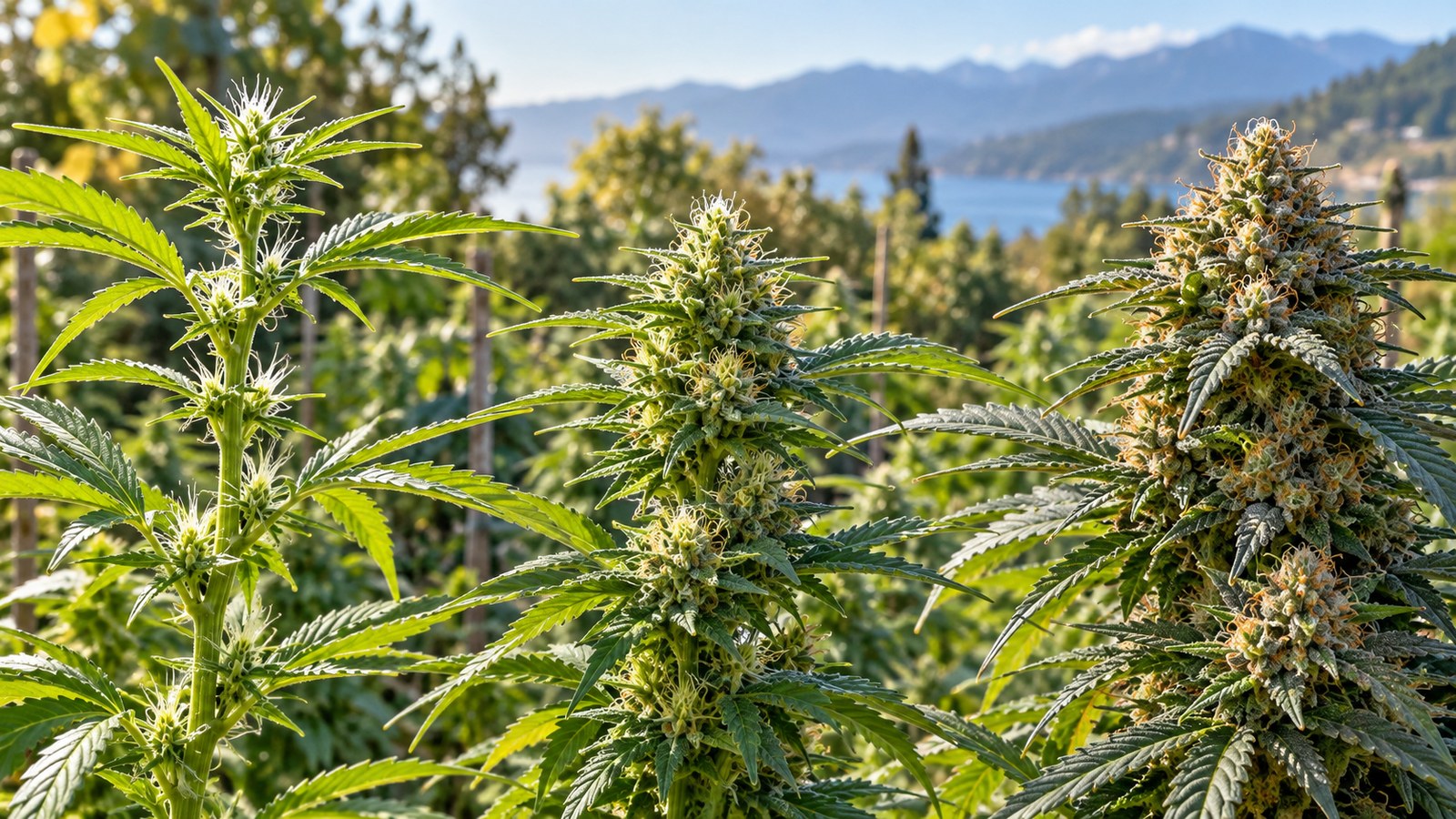
Step-by-Step Canopy Control: Manipulating R:FR Across Growth Phases
By intentionally scheduling R:FR ratios across the cultivation cycle, commercial facilities can sculpt canopy architecture with scientific precision. The operational protocol below provides stage-by-stage targets:
| Growth Phase | Target R:FR Ratio | Target PSS (\Phi) | Morphological Objective |
|---|---|---|---|
| Propagation & Seedlings | > 6.0 (Zero Far-Red) | 0.85 – 0.88 | Prevent hypocotyl stretch; establish thick stems and rapid rooting |
| Early to Mid Vegetative | 4.5 – 6.0 (Low Far-Red) | 0.82 – 0.85 | Promote lateral branching, tight internodes, and thick foliage |
| Flower Transition (W1-W3) [Stretchy Cultivars] | 4.0 – 5.5 (Controlled FR) | 0.80 – 0.83 | Suppress runaway stretch; maintain vertical clearance below lights |
| Flower Transition (W1-W3) [Squat Cultivars] | 1.5 – 2.5 (High Far-Red) | 0.70 – 0.75 | Encourage branch elongation; open canopy for air movement |
| Peak Bulking (W4-W7) | 2.0 – 3.0 (Balanced FR) | 0.74 – 0.78 | Maximize Photosystem I excitation and whole-canopy photosynthesis |
| Final Ripening (Last 10 Days) | > 5.0 (Disable Far-Red) | 0.84 – 0.88 | Halt vegetative growth; protect delicate monoterpenes from heat |
Executing this schedule requires either fixtures with independently controllable far-red diode channels (typically 730 nm SMD chips) or modular supplemental far-red bars that can be switched on or off via digital relays. In commercial multi-tier rooms, having discrete far-red control allows head growers to run different chemovars on neighboring benches without risking canopy collisions.
End-of-Day Far-Red (EOD-FR) vs Continuous Far-Red: Acceleration vs Stretch
Cultivators deploying far-red photons must choose between two distinct application strategies: continuous spectrum delivery throughout the entire photoperiod, or concentrated End-of-Day Far-Red (EOD-FR) pulses.
The Continuous Far-Red Strategy
In continuous delivery, 730 nm far-red diodes run simultaneously with the main white and 660 nm red diodes for the entire 12-hour flowering day. This approach leverages the Emerson Enhancement Effect to maximize quantum yield throughout the light cycle. However, continuous far-red maintains a reduced PSS (0.72 to 0.75) for 12 straight hours, significantly magnifying internodal stretch during weeks 1 to 3 of flower.
Continuous far-red is best reserved for open single-tier warehouse bays with 12 to 16 feet of vertical headroom, or for cultivation spaces growing naturally compact, slow-stretching indica varieties where extra branch separation improves air movement and lowers mold risks.
The End-of-Day Far-Red (EOD-FR) Pulse Strategy
EOD-FR is an advanced photoperiod manipulation technique designed to accelerate flowering without causing massive daytime stretch. In this protocol, far-red diodes remain turned off during the 12-hour main lighting cycle (maintaining high PSS and tight internodes). Immediately when the main lights shut off, dedicated 730 nm fixtures turn on for 10 to 15 minutes, delivering a pure burst of 15 to 30 μmol/m²/s far-red photons.
This concentrated far-red pulse rapidly converts all remaining active $P_{fr}$ into inactive $P_r$ within minutes, bypassing the normal 2 to 3 hours of dark thermal reversion. The plant perceives that night has arrived instantly, allowing it to experience a full 12 hours of $P_r$ signaling even under a slightly shorter 11.5-hour physical dark period. In commercial trials, EOD-FR can accelerate floral maturation by 3 to 5 days over an 8-week cycle while minimizing daytime stem elongation.
Do
Deploy EOD-FR for Flowering Acceleration
Use 10 to 15 minutes of pure 730 nm far-red right at lights-off to instantly convert $P_{fr}$ to $P_r$, shaving days off flowering time without triggering daytime stretch.
Avoid
Run Continuous Far-Red in Vertical Racking Systems
Do not deliver continuous 730 nm far-red during early bloom in multi-tier racks with under 48 inches of total clearance; the resulting stretch will burn your canopy.
Practical Takeaway: If vertical clearance is restricted, avoid continuous far-red during weeks 1 through 3 of flowering. Delay far-red supplementation until week 4, when floral calyxes have set and vegetative internodal stretch has naturally ceased.

Common Mistakes: Accidental Far-Red Overload and Misreading Nitrogen Stretch
Because the red-to-far-red ratio operates invisibly at the quantum level, cultivators frequently make diagnostic and operational errors when managing canopy stretch.
Mistake 1: Accidental Far-Red Overload from Legacy HPS Fixtures
Growers transitioning from high-pressure sodium (HPS) fixtures often fail to realize that double-ended HPS bulbs emit an enormous fraction of far-red and near-infrared radiation (over 700 to 850 nm), operating at an R:FR ratio of roughly 1.8 to 2.2. When switching to modern broad-spectrum white LEDs (which typically operate at R:FR > 5.0), cultivators are shocked by how compact their plants remain. Mistaking this healthy compactness for stunted growth, some growers aggressively add external far-red bars without balancing blue photons, triggering runaway elongation.
Mistake 2: Confusing Far-Red Stretch with Nitrogen Elongation
When plants stretch excessively during early bloom, growers frequently blame lighting spectrum while overlooking root-zone chemistry. Excessive vegetative nitrogen ($NO_3^-$ or $NH_4^+$) during weeks 1 and 2 of 12/12 stimulates vigorous vegetative cell division. Stems stretching from nitrogen toxicity appear thick, soft, and dark green, often with clawed leaf tips. In contrast, stems stretching from low R:FR appear pale green, fibrous, and thin, with elongated internodes and wide leaf angles.
Mistake 3: Measuring Far-Red with Incompatible Quantum Meters
Standard quantum PAR sensors (such as basic Apogee SQ-110 or generic lux/FC meters) have an optical cutoff filter at 700 nm; they are completely blind to far-red photons (700 to 750 nm). Cultivators who attempt to measure far-red irradiance with standard PAR meters receive zero reading. Accurately measuring far-red flux requires an extended-PAR (ePAR) sensor (measuring 400 to 750 nm, such as the Apogee SQ-610) or a calibrated field spectroradiometer.
| Observed Stretch Pattern | Probable Root Cause | Stem & Leaf Appearance | Corrective Cultivation Action |
|---|---|---|---|
| Rapid Elongation with Thin, Pale Stems | Low R:FR ratio (< 1.5) triggering shade avoidance | Pale green, slender stems, wide branch angles | Increase R:FR (> 4.0) or boost blue photon fraction to 20% |
| Thick, Vigorous Stems with Downward Leaf Clawing | Nitrogen toxicity during transition phase | Very dark green, brittle stems, heavy leaf cupping | Drop feed EC and taper nitrate concentrations by 25% to 35% |
| Uniform Elongation Across Entire Room | High positive DIF (day temp much higher than night) | Healthy green color, uniform stretching across all cultivars | Implement zero DIF or negative DIF (night temp equal to day) |
| Localized Stretch Near Center of Trellis | Canopy shading and severe canopy crowding | Center plants reaching for light; perimeter plants compact | Perform selective leaf defoliation and widen plant spacing |
Taming a 36-Inch OG Kush Stretch in a 4-Tier Vertical Facility
In a commercial 4-tier vertical farming installation in Michigan, we encountered a critical height crisis on an elite Tahoe OG cut. The cultivar naturally stretched 32 to 36 inches under the facility’s standard multi-bar flowering spectrum (R:FR = 2.1, 12% blue). By week 3 of 12/12, the upper colas were growing directly into the LED diodes, causing widespread chlorosis, light bleach, and severe canopy hotspotting on tiers 2 and 3.
The takeaway: On the subsequent cycle, we executed a two-pronged photobiological intervention during the first 21 days of flower: we disengaged the supplemental 730 nm far-red channel (raising R:FR from 2.1 up to 6.2) and boosted the blue channel from 12% to 20% of total PPFD, while simultaneously running a -2°F negative DIF. The result was remarkable: vertical stretch was restricted to exactly 17.5 inches, cutting elongation by nearly 50% without reducing branch count or bud site formation. At day 22, after vertical stretch naturally halted, we re-engaged the far-red channel to capture the Emerson Enhancement Effect during peak bulking. The harvest delivered 2.28 lbs per light with zero bleached tips. Managing R:FR as a dynamic, stage-specific tool is the single most effective way to eliminate vertical canopy hazards.
Field Verification: Calculating Phytochrome Photoequilibrium (PSS) and R:FR
To take complete control of your canopy architecture, implement this objective measurement and calculation protocol:
Step 1: Capture High-Resolution Spectral Scan
Position a calibrated field spectroradiometer at average canopy height. Capture the full Spectral Power Distribution (SPD) in 1 nm increments from 380 nm to 780 nm. Record the exact photon flux in the red band (655-665 nm) and far-red band (725-735 nm).
Step 2: Calculate the Red-to-Far-Red Ratio
Divide the measured red photon flux by the far-red photon flux:
$$\text{R:FR} = \frac{\text{PPFD}_{655-665}}{\text{PPFD}_{725-735}}$$
If R:FR is above 4.5, your spectrum is elongation-inhibiting (compact growth). If R:FR is between 1.5 and 3.0, your spectrum is balanced for commercial floral bulking. If R:FR drops below 1.2, your spectrum will induce active shade avoidance stretching.
Step 3: Calculate Phytochrome Photoequilibrium (PSS / \Phi)
Using the Sager et al. (1988) photochemical cross-section weighting factors, calculate the estimated PSS value:
$$\text{PSS} = \frac{\sum_{\lambda=380}^{780} N_\lambda \cdot \sigma_{r\lambda}}{\sum_{\lambda=380}^{780} N_\lambda \cdot \sigma_{r\lambda} + \sum_{\lambda=380}^{780} N_\lambda \cdot \sigma_{fr\lambda}}$$
Where $N_\lambda$ is photon flux at wavelength $\lambda$, and $\sigma_{r\lambda}$ and $\sigma_{fr\lambda}$ are the photochemical cross-sections of $P_r$ and $P_{fr}$. Target PSS > 0.82 for compact vegetative growth, and PSS between 0.73 and 0.78 for optimal flowering biomass accumulation.
Can I control stretch using only the R:FR ratio without changing hanging height?
Question sent by: Tyler Vance, via community thread.
Yes, absolutely. In commercial multi-tier facilities with fixed fixture mounting brackets, adjusting light hanging height is physically impossible. In these environments, manipulating the R:FR ratio and blue photon fraction via multi-channel digital controllers is the primary method used by commercial head growers to control canopy height. Shifting from R:FR = 2.0 to R:FR = 5.5 restricts internodal elongation just as effectively as physically lowering a luminaire closer to the canopy, with zero risk of heat damage.
Final Decision Checklist and Companion Weedth Resources
To successfully integrate red-to-far-red management into your cultivation facility, review this practical decision checklist:
R:FR Canopy Control Decision Checklist
- Audit vertical headroom: if clearance is under 4 feet, eliminate continuous far-red during weeks 1 to 3 of flower.
- Match R:FR to genetics: pair stretchy equatorial sativas with high R:FR (> 4.5); pair squat indicas with low R:FR (1.5-2.5).
- Maintain blue photon fraction at 18%+ if delivering far-red photons to prevent unmanageable shade avoidance.
- Coordinate DIF temperature: avoid high positive day/night temperature swings when running far-red enriched spectra.
- Consider End-of-Day Far-Red (EOD-FR): deploy 10-15 minute pulses at lights-off to accelerate flowering cycles without daytime stretch.
- Measure spectrum with an ePAR sensor (400-750 nm) or spectroradiometer; do not rely on standard 700 nm cutoff PAR meters.
- Delay continuous far-red supplementation until week 4 of 12/12 on vigorous hybrids once vertical stretch ceases.
- Black out dark-cycle indicator lights: ensure zero red or far-red photons leak into the room during the 12-hour night.
Manipulating the red-to-far-red ratio empowers indoor cultivators to manage plant morphology with scientific precision. By balancing the dual roles of 660 nm and 730 nm photons: driving photochemical energy while commanding developmental gene expression: growers construct robust, uniform canopies that maximize floral yield and facility profitability.
Final Verdict: The red-to-far-red ratio is the primary optical switch governing cannabis canopy stretch. High R:FR suppresses elongation and keeps internodes compact, while low R:FR triggers the shade avoidance response. By mastering R:FR dynamics alongside blue photon fractions and temperature control, cultivators gain complete architectural command over crop geometry.
To expand your technical cultivation foundation with our companion foundational guides on indoor grow mediums, cannabis plant morphology, and environmental setup, explore our educational resources below:
Share this article
A quick overview of the topics covered in this article.
Follow us
Latest articles
October 28, 2026
October 28, 2026
October 28, 2026