
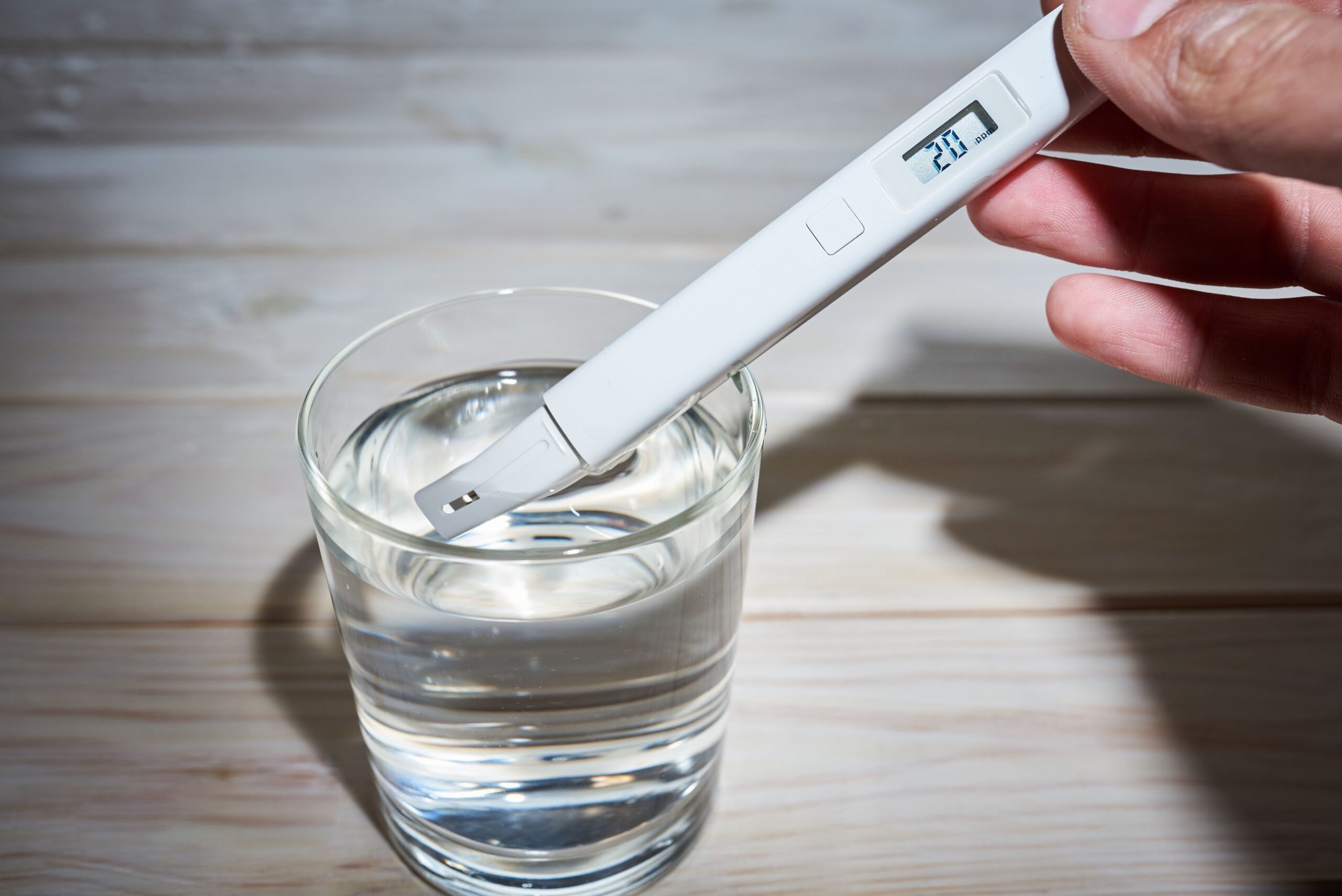
Surface Water for Irrigation: Legal and Microbial Risks
Surface water can irrigate cannabis, but a river, stream, pond, canal, reservoir, or open irrigation ditch should never be treated as a predictable water source simply because it looks clean. The practical decision has two parts: do you have the legal right to take and use the water, and can you show that the water is suitable for the way it will contact the crop and root zone?
Surface water is exposed to the surrounding landscape. Rain can move manure, wildlife waste, soil, sewage, fertilizers, pesticides, and sediment into the source. Upstream construction, livestock access, wastewater releases, algae, low flow, flooding, and seasonal changes can alter quality between one sampling date and the next. The same source may therefore be usable during one period and unacceptable after a storm or contamination event.
For cannabis growers, microbial risk also has two different meanings. Human or fecal contamination indicators help assess sanitary risk, while plant-pathogenic organisms can threaten roots even when the water looks clear. Cannabis research has documented waterborne root pathogens in irrigation systems, including a greenhouse crown-rot case in which Pythium ultimum was recovered from stream-supplied irrigation water. A water test must therefore answer the question you actually have rather than being treated as a universal certificate of safety.
This resource focuses on that decision process. For the broader mechanics of watering frequency, root-zone moisture, runoff, and irrigation timing, use the Cannabis Watering Basics guide instead of trying to solve those topics here.
In This Resource
Surface Water Decision Path
Surface Water Is an Open System
A groundwater well draws from below the surface and a municipal supply is managed through a treatment and distribution system. Surface water is different. It remains physically connected to weather, animals, upstream land use, sediment, runoff, and other users. That openness is the reason its quality can change quickly.
For a grower, the useful question is not, “Is pond water good?” or “Can cannabis use river water?” The better question is: what can enter this source before it reaches the intake, how variable is the source, and what does my irrigation method expose to that water?
Rivers, Streams, Ponds, Reservoirs, and Canals Do Not Carry the Same Risk
A flowing stream may receive upstream livestock runoff, septic leakage, wastewater discharge, or sediment after rain. A farm pond may collect drainage from a much smaller watershed, but animals may enter directly and warm stagnant conditions can change microbial activity. Reservoirs may stratify or develop algal problems. Irrigation canals can collect material from many kilometers of upstream land and may be shared by multiple users.
The source name alone does not predict quality. The catchment and management history matter more. Walk the source and upstream area that you can legally access. Look for inflows, animal access, erosion, drainage outlets, nearby manure storage, wastewater infrastructure, construction, algae, dead wildlife, and any recent event that could change the water.
Surface water
For irrigation planning, surface water includes open water bodies such as rivers, streams, ponds, reservoirs, canals, irrigation ditches, and similar sources exposed to the surrounding environment. The exact legal definition may differ by jurisdiction.
Clear Water Is Not Evidence of Microbial Safety
Fecal organisms and many plant pathogens are invisible. Water can look clear, smell normal, and still contain organisms that matter. The opposite is also true: turbid water after a storm may be unacceptable for an emitter system even when a particular microbial test is low, because sediment can shield microbes from treatment, clog filtration, and signal that the source has changed.
Visual inspection is therefore an early warning tool, not a substitute for testing. It helps you decide when a previously characterized source should be sampled again.
Important: Treat a major storm, flood, sewage incident, livestock entry, algae bloom, intake relocation, or unexplained change in turbidity as a new water-quality event. An old laboratory report cannot describe a changed source.
Contact Path Changes the Consequence
Drip irrigation directed into a root zone creates a different exposure pattern from overhead irrigation that wets leaves and flowers. A surface-water source used only early in vegetative growth also creates a different practical decision from water sprayed directly onto late-flowering inflorescences.
This does not mean drip irrigation “makes dirty water safe.” It means application method belongs in the risk assessment. Water entering the root zone can still spread root pathogens through connected irrigation systems, and a contaminated source may create sanitation concerns around workers, tanks, hoses, tools, or splash. Direct crop contact simply adds another pathway.
Map the full water path
Trace the source, intake, pump, storage tank, filters, treatment equipment, irrigation lines, emitters, drainage, and any recirculation before deciding what needs to be sampled.
Judging the source from appearance
A clean-looking pond or stream can carry microbial hazards, while visible sediment may indicate a treatment and clogging problem even when the crop shows no immediate symptom.
Confirm Legal Use Before Water Quality
A laboratory report cannot grant a water right. Before building an irrigation plan around a stream, river, pond, reservoir, canal, or diverted spring, confirm that you are legally allowed to abstract, divert, store, transport, and use the water for the intended cultivation activity.
Water law varies dramatically between countries, states, provinces, watersheds, and even seasons. Rules may depend on whether the source is public or private, naturally connected to a stream, located on your property, shared with other users, protected for habitat, or subject to drought restrictions. Cannabis cultivation can also face additional licensing or source-documentation requirements that do not apply to an ordinary garden.
Owning Land Beside Water Does Not Automatically Mean You Can Divert It
Property access and water-use authorization are separate questions in many jurisdictions. A stream crossing private land may still be regulated. A private pond may be hydrologically connected to another surface-water source. A diversion structure may require authorization even when the water volume is small. Seasonal restrictions may apply during low flow.
The practical sequence is simple: identify the source, identify the regulator, confirm the right or permit, confirm any seasonal conditions, and keep documentation with the irrigation records. If the answer is unclear, obtain local regulatory advice before installing pumps or storage.
Do not treat a nearby stream as free irrigation water
Surface-water diversion can require water rights, abstraction licences, source documentation, seasonal forbearance, environmental review, or other authorization. A cannabis licence does not automatically grant the right to take water.
Current Rules Show Why Universal Legal Advice Fails
California provides a direct cannabis-specific example. Commercial cannabis cultivators who divert surface water must have an appropriate water right, and the state Cannabis Policy includes a dry-season surface-water diversion forbearance period. In England, surface-water abstraction is governed through a different system, where an abstraction licence is generally required above a specified daily volume, subject to source and activity details.
These examples are deliberately not presented as global rules. Their value is to show how different the legal frameworks can be. A lawful practice in one region can be prohibited or differently licensed in another.
Master Advice: Do the legal check before buying the pump. Water quality can often be treated. An unauthorized diversion may make the entire irrigation plan unusable.
Also Check Environmental and Discharge Obligations
Taking water is only one side of the system. Some regions regulate work in or near waterways, intake structures, stream-bank disturbance, fish passage, wetland impacts, and discharge from cultivation sites. If irrigation runoff, sediment, nutrients, pesticides, or other pollutants can return to surface water, separate discharge rules may apply.
The Complete Outdoor Cannabis Growing Guide covers broader site, legal, and outdoor-planning considerations. Keep this resource focused on the legality and safety of the irrigation source itself.
Microbial Risks Are Not One Test
The phrase “microbial water quality” can hide two different questions. One concerns organisms associated with fecal contamination and human health. The other concerns plant pathogens capable of colonizing cannabis roots, crowns, or irrigation systems. The tests, interpretation, and corrective actions are not interchangeable.
Fecal Indicators Help Characterize Sanitary Risk
Generic E. coli is commonly used in agricultural-water programs as an indicator of fecal contamination. It does not mean every detected E. coli strain is a human pathogen. Instead, greater fecal contamination increases concern that disease-causing microorganisms may also be present.
The U.S. FDA’s current pre-harvest agricultural-water framework for covered produce uses a systems-based assessment that considers source type, nearby animal activity, untreated human waste, application method, crop characteristics, environmental conditions, and testing where relevant. That rule is useful evidence for agricultural-water risk thinking, but it is not presented here as a cannabis-specific regulatory standard.
A Clean Fecal-Indicator Result Does Not Clear Plant Pathogens
Pythium, Phytophthora, Phytopythium, and Fusarium are not measured by a routine generic E. coli test. Some of these organisms can spread in irrigation water and cause root or crown disease. Their presence depends on plant hosts, water temperature, season, contaminated runoff, infected roots, recirculation, and other ecological factors.
This distinction matters especially in cannabis. A published California greenhouse case recovered Pythium ultimum from an irrigation system supplied by a local stream while potable-water samples were negative. Cannabis disease literature has also documented Fusarium and Pythium in recirculating hydroponic water.
“My pond tested negative for E. coli. Does that mean it cannot cause root rot?”
No. A fecal-indicator test answers a different question. It does not test for Pythium, Phytophthora, Fusarium, or other plant pathogens. If root disease or a waterborne outbreak is suspected, discuss plant-pathogen testing with a qualified diagnostic laboratory.
Question sent by: Ethan Brooks, via email.
Surface Water Changes Faster Than a Single Test Can Capture
One sample is a snapshot. Surface water can change after rainfall, snowmelt, low-flow periods, wildlife activity, upstream discharge, irrigation return flows, or sediment disturbance. A result from a quiet summer week may not describe the same source after a severe storm.
For that reason, the most useful monitoring program is event-aware. Establish a baseline, then define the events that trigger reassessment. The exact testing frequency should follow local regulation, laboratory guidance, source variability, crop contact, and the consequences of failure rather than a universal Weedth calendar.
Indicator organism
An indicator organism is measured as a practical sign of a contamination pathway, such as fecal pollution. It is not a complete inventory of every pathogen that may be present in the water.
Human and Plant Pathogens Can Require Different Controls
Some treatment approaches can reduce both groups, but efficacy depends on the organism, water quality, equipment, dose or exposure, and system design. A treatment validated for one target should not be assumed to eliminate every microbial hazard.
This is why treatment claims must be specific. “UV system installed” is not verification. The grower needs to know the target, required water clarity, flow rate, equipment condition, and whether testing after treatment shows the system is working.
A Repeatable Surface-Water Assessment
Role A means the grower should finish with a repeatable process. Use the sequence below before relying on untreated surface water and repeat the relevant steps when the source changes.
Step 1: Document the Source and Legal Status
Record the source type, ownership or access arrangement, intake location, water-right or abstraction documentation where required, seasonal restrictions, and whether storage is permitted. Mark the exact intake point on a map or site plan. If the intake moves, record the new location because water conditions can differ within the same pond, reservoir, or canal.
Step 2: Walk the Catchment and Intake
Inspect the source before sampling. Look for livestock, wildlife concentration, drainage pipes, septic or wastewater concerns, manure storage, eroding banks, algae, dead animals, construction, pesticide handling, and visible runoff. Note recent rainfall and upstream events.
At the intake, inspect sediment, floating debris, biofilm, pump strainers, screens, and suction depth. Avoid sampling from an easy shoreline spot if the irrigation pump draws water somewhere else. The sample should represent what the system actually receives.
Step 3: Define the Intended Use
Write down how the water will contact the crop. Is it drip irrigation into outdoor soil? Overhead irrigation? A source for nutrient mixing in coco? Water entering a recirculating system? A foliar or pesticide spray carrier? The water-quality decision becomes stricter when the route increases crop contact or system-wide spread.
For indoor use, surface water deserves additional caution because one contaminated tank can distribute organisms to many plants. If you are building an indoor irrigation routine, use How to Water Cannabis Indoors for the application side after the water-source decision is complete.
Step 4: Establish a Laboratory Baseline
Use a laboratory that can advise on agricultural or irrigation-water sampling. A useful baseline may include sanitary indicators appropriate to local regulation and intended use, plus chemistry that affects irrigation equipment and root-zone management. For surface water, turbidity or suspended-solids information may also matter because sediment influences filtration and treatment.
When the concern is plant disease, request plant-pathogen diagnostics rather than assuming a standard water panel includes them. Depending on the laboratory and question, testing may involve baiting, culture, PCR, sequencing, or other methods. Method matters, so record it with the result.
Step 5: Sample the Water Path, Not Only the Source
If treatment or storage is part of the system, a source sample alone cannot verify the final water reaching the crop. Consider paired sampling points:
- Raw source or intake: what the pump receives.
- After storage: whether the tank changes the water.
- After treatment: whether the treatment step performs as intended.
- Near the irrigation outlet: whether lines or equipment reintroduce contamination when that is a realistic concern.
You do not need every point on every sampling date. Select points that answer a specific question.
Use paired samples to test a treatment claim
If you believe filtration or disinfection solved a problem, compare water before and after that step under representative operating conditions.
Testing one convenient jar and calling the system safe
A shoreline grab sample cannot prove what happens after storage, treatment, dirty lines, or a different intake depth.
Step 6: Define Trigger Events
Create a short list of events that require inspection or retesting. These may include heavy rainfall, flooding, an upstream manure or sewage event, livestock access, algae bloom, major sediment disturbance, intake relocation, treatment failure, sudden emitter clogging, or an unexplained cluster of root disease.
Event-based monitoring is more useful than assuming yesterday’s source is unchanged.
Step 7: Keep the Result With the Irrigation Log
Record sample date and time, source location, recent weather, visual condition, laboratory method, results, treatment status, and what changed afterward. This turns a water test into a decision record rather than a forgotten PDF.
Field Advice: Photograph the source and intake when you sample. Six months later, the image can reveal whether the water level, algae, sediment, bank condition, or intake position changed between “good” and “bad” results.
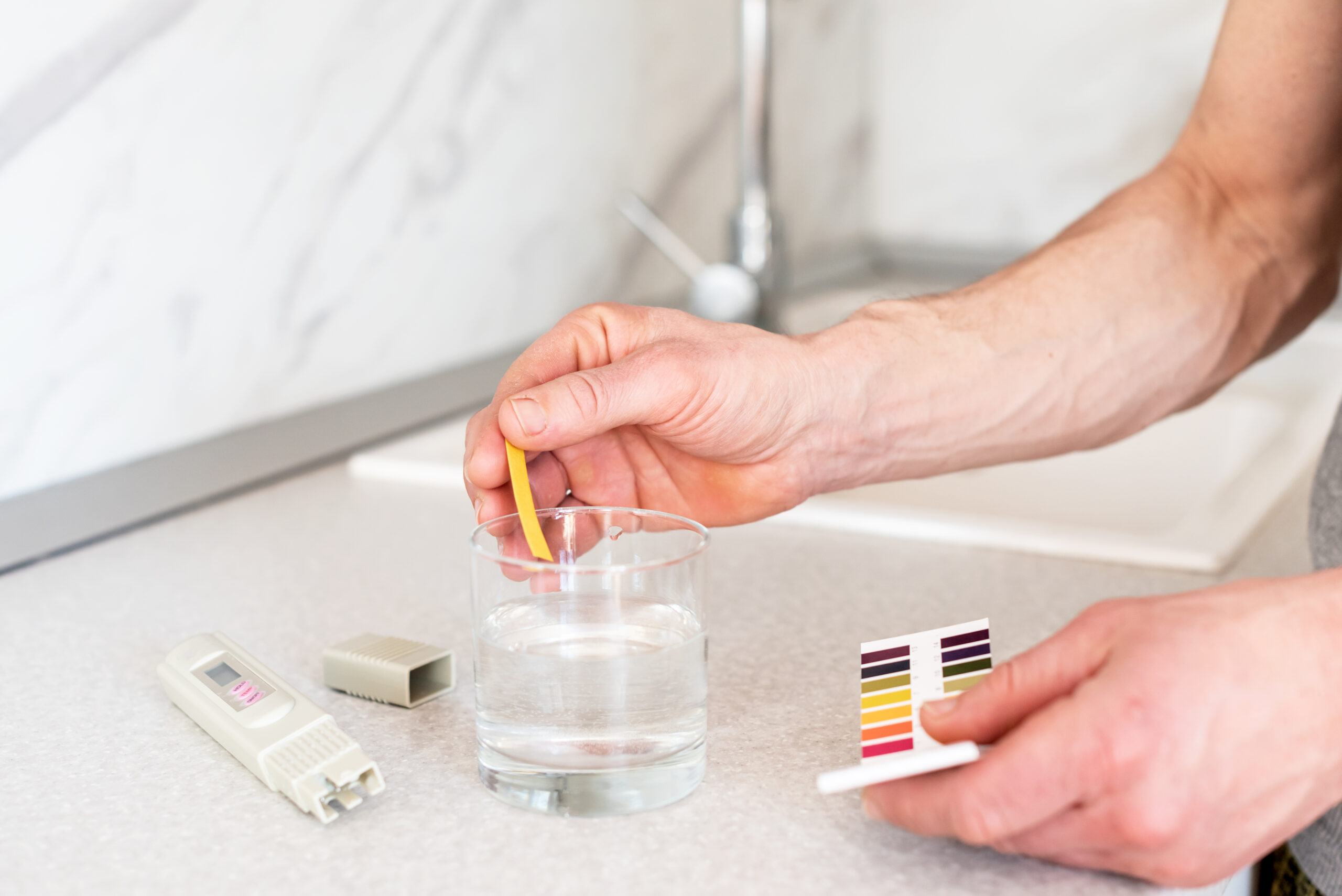
Sampling, Testing, and Interpretation
Laboratory accuracy begins before the sample reaches the laboratory. Microbial testing is particularly sensitive to collection method, container sterility, holding time, temperature, and transport. Follow the laboratory’s instructions rather than improvising a jar and leaving it in a warm vehicle.
Use the Laboratory’s Bottle and Holding Instructions
Microbiology laboratories commonly provide sterile containers and specific handling instructions. Some tests have short holding times. If disinfectant is present in treated water, the sample container may require a neutralizing agent supplied by the laboratory. Do not rinse a sterile bottle with source water unless the method specifically instructs you to do so.
Label the sample before collection and record the exact point. “Pond water” is not enough when you later compare raw intake, tank, and post-treatment samples.
Sample What the Pump Actually Uses
A surface-water body can vary horizontally and vertically. Shoreline water with animal access may not represent a protected intake farther offshore. Conversely, a deep intake may pull sediment or low-oxygen water that is not visible at the surface.
If the purpose is to judge irrigation suitability, collect from the irrigation flow or intake point under normal operation whenever the lab method permits. If the purpose is to investigate the source itself, additional locations may be justified.
Do Not Mix Microbial and Chemistry Interpretation
EC, pH, alkalinity, sodium, chloride, and hardness describe chemistry. They do not certify sanitary quality. Generic E. coli and other microbial indicators describe another dimension. Plant-pathogen testing answers another.
The earlier Watering Basics page provides a broad overview of pH and EC. A dedicated irrigation-water chemistry resource should own the deeper chemistry interpretation once its live URL is confirmed.
| Water Check | Typical Profile | Main Risk | Recommended Treatment | Best Use |
|---|---|---|---|---|
| Sanitary indicator | Generic E. coli or another locally specified indicator | Evidence of fecal contamination pathway | Investigate source, protect intake, use validated treatment or alternative water as required | Sanitary-risk assessment |
| Plant-pathogen test | Targeted culture, baiting, PCR, or laboratory diagnostic method | Waterborne root or crown disease inoculum | Source control, sanitation, validated water treatment, and disease-management plan | Outbreak investigation or high-risk systems |
| Turbidity / suspended solids | Highly event-dependent in surface water | Emitter clogging and reduced disinfection performance | Settling, prefiltration, filtration, intake management as appropriate | Treatment-system design and monitoring |
| EC and ions | Depends on geology, runoff, irrigation return flow, evaporation, and discharge | Salinity, sodium, chloride, nutrient interactions | Treat the measured chemistry, not the water-source label | Root-zone and nutrient planning |
Generic E. coli Is an Indicator, Not a Universal Cannabis Threshold
Do not copy a microbial limit from a produce rule, recreational-water standard, drinking-water rule, or another crop and present it as a biological threshold for cannabis. Regulations differ by intended use and jurisdiction.
FDA’s current produce-safety framework is useful because it emphasizes that surface water is more exposed and variable, and that risk depends on source, nearby land use, weather, application practice, and crop contact. Cannabis growers can borrow the risk-assessment logic without pretending the legal standard automatically applies to cannabis flower.
“Can I buy an aquarium bacteria test kit and use that to clear my irrigation pond?”
Not as a substitute for a laboratory method tied to your actual decision. A field kit can sometimes support screening, but legal compliance, sanitary assessment, and plant-pathogen investigation may require different organisms, detection limits, methods, and sample handling. Ask the laboratory or regulator what result is needed before choosing the test.
Question sent by: Julia Schneider, via contact form.
Negative Results Have Limits
A non-detect means the target was not detected in that sample by that method at that detection limit. It does not mean the entire reservoir, river, or irrigation network is sterile. Intermittent contamination and uneven distribution are normal challenges in environmental sampling.
The stronger conclusion comes from repeated characterization, source protection, stable treatment performance, and results that remain acceptable under the conditions in which the water is actually used.
Treatment Decisions and Limits
Treatment should solve a measured problem. Surface water sometimes needs sediment removal, filtration, disinfection, chemical adjustment, or a combination. It may also be more practical to abandon the source for a cleaner one. The choice depends on the target hazard and the reliability required.
Start With Source Protection
The cheapest pathogen is the one that never reaches the intake. Restrict livestock access where you control the source, move the intake away from obvious contamination, stabilize eroding areas when lawful, maintain setbacks from waste or manure handling, and keep irrigation-return water from flowing back into a clean source.
Source protection does not eliminate the need for testing, but it reduces the burden placed on downstream treatment.
Sediment Control Is Not Disinfection
Screens, settling, and particle filters protect pumps and emitters and can improve downstream treatment. They should not automatically be described as pathogen removal. A filter designed to remove visible particles may allow microorganisms to pass.
However, turbidity matters to disinfection. Particles can shield microbes and reduce UV performance. Water that changes from clear to muddy after a storm may therefore require different treatment conditions even if the installed equipment has not changed.
UV Treatment Has to Be Engineered and Maintained
UV can be useful against waterborne organisms when the system delivers an effective dose to sufficiently clear water. Performance depends on UV transmittance, turbidity, lamp condition, sleeve cleanliness, flow rate, organism sensitivity, and system design.
Do not size a unit from tank volume alone and assume it sterilizes the irrigation system. Validate the treatment target, maintain the equipment, and test downstream when the consequence of failure is meaningful.
Oxidizing or Chemical Treatment Is Not a Home Recipe
Chlorine-based and other oxidizing treatments can be effective in irrigation-water management, but dose, contact time, organic load, pH, target organism, equipment compatibility, worker safety, crop-contact rules, and local pesticide or biocide regulation all matter.
This resource therefore does not provide a universal bleach, peroxide, chlorine, ozone, peracetic-acid, or other disinfectant recipe for cannabis irrigation water. Use a product and treatment process lawful for the crop and jurisdiction, and verify performance rather than assuming a smell or ORP reading proves complete control.
Do not disinfect an unknown water source by guesswork
Overdosing can injure roots, damage equipment, create worker hazards, or conflict with crop and environmental rules. Underdosing can create false confidence while pathogens remain. Treatment needs a defined target and verification method.
Slow Sand Filtration Can Reduce Risk but Is Not a Magic Barrier
Recent nursery research found that slow sand filtration and chlorination reduced recovery of oomycetes from recycled irrigation water, but organisms were still detected after treatment and reintroduction remained a challenge. That finding is useful because it shows why treatment must be viewed as a system rather than a single device.
Water can be recontaminated in tanks, lines, biofilms, dirty tools, runoff, or infected root zones. A clean treatment outlet does not automatically sanitize everything downstream.
Alternative Water Can Be the Better Control
If legal status is uncertain, contamination is severe, treatment is difficult to validate, or a high-value crop is repeatedly exposed to root pathogens, switching to a more controlled source may be more reliable than engineering around the problem.
Municipal water, a characterized well, properly collected rainwater, or another lawful source each has its own tradeoffs. The goal is not to rank sources by reputation. Choose the source you can legally use, test, treat if necessary, and keep consistent.
Pro Tip: Calculate treatment cost per reliable irrigation season, not just the purchase price of a filter or UV unit. Include prefiltration, replacement parts, cleaning, energy, testing, labor, downtime, and the crop cost of one treatment failure.
Failure Modes That Are Easy to Misread
When plants decline after switching to pond, river, or canal water, the source may be involved without microbes being the cause. Surface water can introduce sediment, salinity, sodium, bicarbonate, algae, temperature changes, or emitter problems that produce symptoms resembling disease or nutrient stress.
| Symptom | Possible Cause | How to Confirm | Corrective Action | Prevention |
|---|---|---|---|---|
| Several plants wilt while medium remains wet | Root disease, low root-zone oxygen, blocked drainage, severe root injury | Inspect roots/crown, moisture pattern, drainage, spread pattern; use lab diagnostics when pathogen identity matters | Correct saturation first, isolate suspect spread pathways, diagnose before treatment | Manage irrigation and keep contaminated water from moving through shared systems |
| Emitters lose flow unevenly | Sediment, algae, mineral scale, biofilm | Measure emitter discharge and inspect filters/lines; compare raw and treated water | Clean according to system requirements and correct the source of clogging | Intake management, filtration, water chemistry monitoring, line maintenance |
| Leaf burn or rising root-zone EC | Salinity, sodium/chloride, fertilizer concentration, poor leaching | Test source chemistry and root-zone EC with method-specific interpretation | Correct the measured salt source and irrigation strategy | Establish a source baseline and monitor seasonal change |
| Root disease appears across connected zones | Waterborne inoculum, contaminated reservoir, propagation material, sanitation failure | Map spread and sample plants/water at meaningful points | Contain movement, sanitize system, treat source if validated, remove infected material as appropriate | Water monitoring, source protection, clean stock, system hygiene |
High Turbidity Can Cause a Mechanical Problem Before a Biological One
Fine sediment can reduce emitter uniformity, shorten filter runs, collect in tanks, and protect biofilm. A plant at the end of a partially clogged line may appear nutrient-deficient because it is receiving less water and fertilizer than neighboring plants.
Measure emitter output before diagnosing a systemic nutrient problem.
Warm Surface Water Can Change Root-Zone and Biological Behavior
Shallow ponds and exposed tanks can become warm. Temperature influences dissolved oxygen, microbial growth, treatment performance, and the temperature delivered to the root zone. If a problem appears seasonally during hot weather, record source and tank temperature rather than assuming chemistry is unchanged.
Surface-Water EC Can Change With Season and Flow
Low flow can concentrate dissolved salts. Irrigation return flows can contribute nutrients and ions. Storms can dilute some dissolved constituents while increasing suspended solids and microbial contamination. The direction of change is source-specific.
That is why a single annual EC number is not a complete surface-water characterization in a highly variable watershed.
“My river water has a low EC. Does that mean it is a better source than my tap water?”
Not automatically. Low EC tells you the dissolved ion load is low at that moment. It does not tell you whether the water is legally available, fecally contaminated, carrying plant pathogens, turbid after storms, or stable across the season. Compare the full source profile and management burden.
Question sent by: CedarRoute, via Facebook page.
Reinspection After a Change
A correction is incomplete until you show that it worked. Use the same sampling point and method whenever possible so the before-and-after comparison means something.
Within the First 24 Hours
After changing an intake, cleaning filters, correcting a treatment failure, or switching water sources, inspect system operation. Confirm that pumps, filters, flow, treatment equipment, and emitters are functioning as expected. Check for leaks, bypasses, abnormal turbidity, or treatment alarms.
This checkpoint verifies equipment, not biological clearance.
At About Three Days
Review emitter uniformity, filter loading, tank condition, odor, algae, sediment, and plant response. If the correction involved water chemistry, compare the next prepared irrigation solution and root-zone trend. If it involved a suspected plant pathogen, three days is only an operational checkpoint. It is not a universal pathogen-clearance period.
Over One to Two Weeks
Look for new disease incidence rather than expecting old damaged roots or leaves to become healthy. A successful correction should reduce the appearance of new affected plants, stabilize water delivery, and improve new root or shoot growth where recovery is biologically possible.
If disease continues to spread through connected irrigation zones, escalate the investigation. Sample symptomatic plants and water at points that can distinguish source contamination from downstream reinfection.
| Stage / Period | Plant Status | Main Task | Risk / Check |
|---|---|---|---|
| Before first use | No crop response yet | Confirm legal status, map source, inspect catchment, establish baseline | Do not let first crop symptoms become the first water test |
| First 24 hours after correction | Too early for biological clearance claim | Verify pump, filtration, treatment, flow, and intake condition | Mechanical success is not pathogen verification |
| About 3 days | Early trend only | Inspect filters, emitters, tanks, and new plant response | Do not call the source “clean” from appearance |
| 1–2 weeks | New growth and disease incidence become more informative | Compare new cases, root recovery, irrigation uniformity, and repeat tests where justified | Persistent spread suggests unresolved source or downstream inoculum |
Remember: Re-test the correction with the method that found the problem. A lower EC does not prove a microbial treatment worked, and a negative fecal-indicator test does not prove a root pathogen was removed.
Deciding Whether to Use Surface Water
Surface water can be a workable irrigation source when the grower has lawful access, understands the catchment, can characterize variability, controls sediment and microbial hazards, and can verify treatment where treatment is needed. It becomes a poor choice when legality is uncertain, contamination pathways are uncontrolled, the source changes faster than it can be monitored, or the treatment system is more complicated than the value of the water justifies.
The best decision is conditional rather than ideological. A protected reservoir with a lawful allocation, stable chemistry, managed intake, and validated treatment may be easier to use than an uncharacterized private well. A scenic creek running beside the garden may be one of the least controllable choices on the property.
Before Irrigating Cannabis From a Pond, River, Stream, Canal, or Reservoir
- Confirm that cannabis cultivation and the proposed surface-water use are lawful at the site.
- Document the water right, abstraction permission, source agreement, or exemption when required.
- Map the catchment, intake, storage, treatment, irrigation lines, and drainage path.
- Inspect upstream animal, sewage, manure, runoff, erosion, algae, and sediment risks.
- Define whether water contacts roots only or can contact foliage and flowers.
- Establish a laboratory baseline using tests that answer the actual sanitary, chemistry, or plant-pathogen question.
- Record the laboratory method and sampling point, not only the number.
- Use treatment designed and validated for the measured hazard.
- Define storm, flood, algae, contamination, and treatment-failure events that trigger reassessment.
- Verify the correction downstream instead of assuming the equipment works.
- Keep results with the irrigation log so seasonal changes are visible.
- Switch to a more controllable source when legal, microbial, or treatment uncertainty remains too high.
Common Surface-Water Questions
Can I use pond water for cannabis?
Potentially, but “pond water” is not a quality category. Confirm legal use, inspect the catchment and animal access, characterize microbial and chemical risk, manage sediment, and verify any treatment. A protected irrigation pond and a wildlife pond receiving manure runoff should not receive the same answer.
Is river or stream water better than tap water?
Not inherently. River water may have low EC and still carry fecal contamination, sediment, plant pathogens, or legal diversion restrictions. Tap water may contain disinfectants or high alkalinity but is usually more controlled and documented. Compare the problems you can actually measure and manage.
Should I test surface water for Pythium before every irrigation?
No universal testing schedule is supported. Testing intensity should reflect source history, system design, crop value, previous disease, season, treatment reliability, and local requirements. In a waterborne root-disease investigation, targeted testing can be highly useful. Routine testing should be designed with a qualified laboratory rather than copied from another operation.
Does drip irrigation make contaminated surface water safe?
No. Drip can reduce direct wetting of leaves and flowers, but contaminated water can still expose roots, workers, tanks, lines, and connected irrigation zones. Waterborne plant pathogens can move through root-zone irrigation systems.
Can I boil or chlorinate surface water for a home grow?
Small-volume treatment is technically possible in many forms, but this resource does not provide a universal disinfection recipe. The appropriate method depends on target organisms, water clarity, volume, crop-contact rules, equipment, and local law. For a small grow, changing to a more controlled water source may be safer and simpler.
Share this article
A quick overview of the topics covered in this article.
Follow us
Latest articles
September 27, 2026
September 27, 2026
September 27, 2026
September 27, 2026