
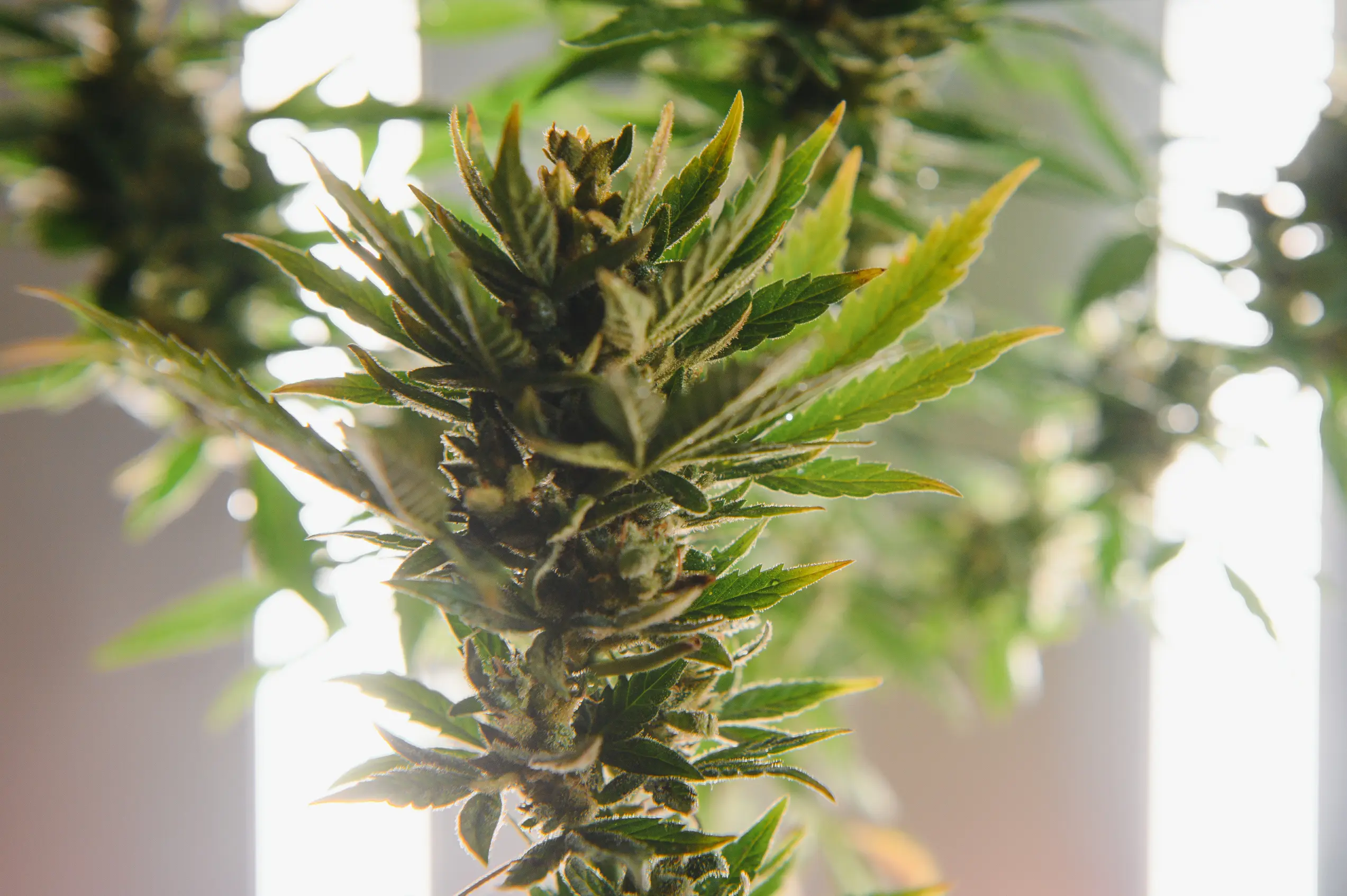
Vanilluna
For Weedth, Vanilluna is evaluated through cultivation behavior, bud quality and flavor retention, not through a headline THC value. Short nodes, large dark-green leaves, thick hollow stems, a clear main stem in many plants and long productive laterals. Roughly a minority of plants can show genetic variegation. Tight spade-shaped flowers built from elongated swollen calyxes, with abundant clear resin and a dense but not purely golf-ball shape. The goal of the grow guidance below is to turn those traits into practical decisions about training, light, irrigation, humidity, harvest and postharvest handling.
Vanilluna is better anchored by its Blue-family morphology and late sensory development than by a fixed potency number. Short nodes, a distinct central stem, long productive laterals, thick hollow branches, occasional stable variegation and a subtle vanilla-honey finish form the useful identity. Individual populations may shift, but those traits tell the grower how to interpret and finish the plant.
Strain Features
| Feature | Details |
|---|---|
| Type | Indica-leaning Blue-family hybrid with Kush-like structure |
| Genetics | Blueberry Sativa female × Original Blueberry male |
| THC / CBD | THC-dominant in classic psychoactive material; exact cannabinoid percentages vary by preserved line, phenotype, environment and laboratory method. CBD is generally low unless the material was specifically selected for a different chemotype. |
| Flowering Time | about 55-60 days indoors, with the most interesting aromatic oils often developing in the final week |
| Stretch | Moderate. Plants are medium-tall despite short nodes, and long side branches can become important yield carriers. |
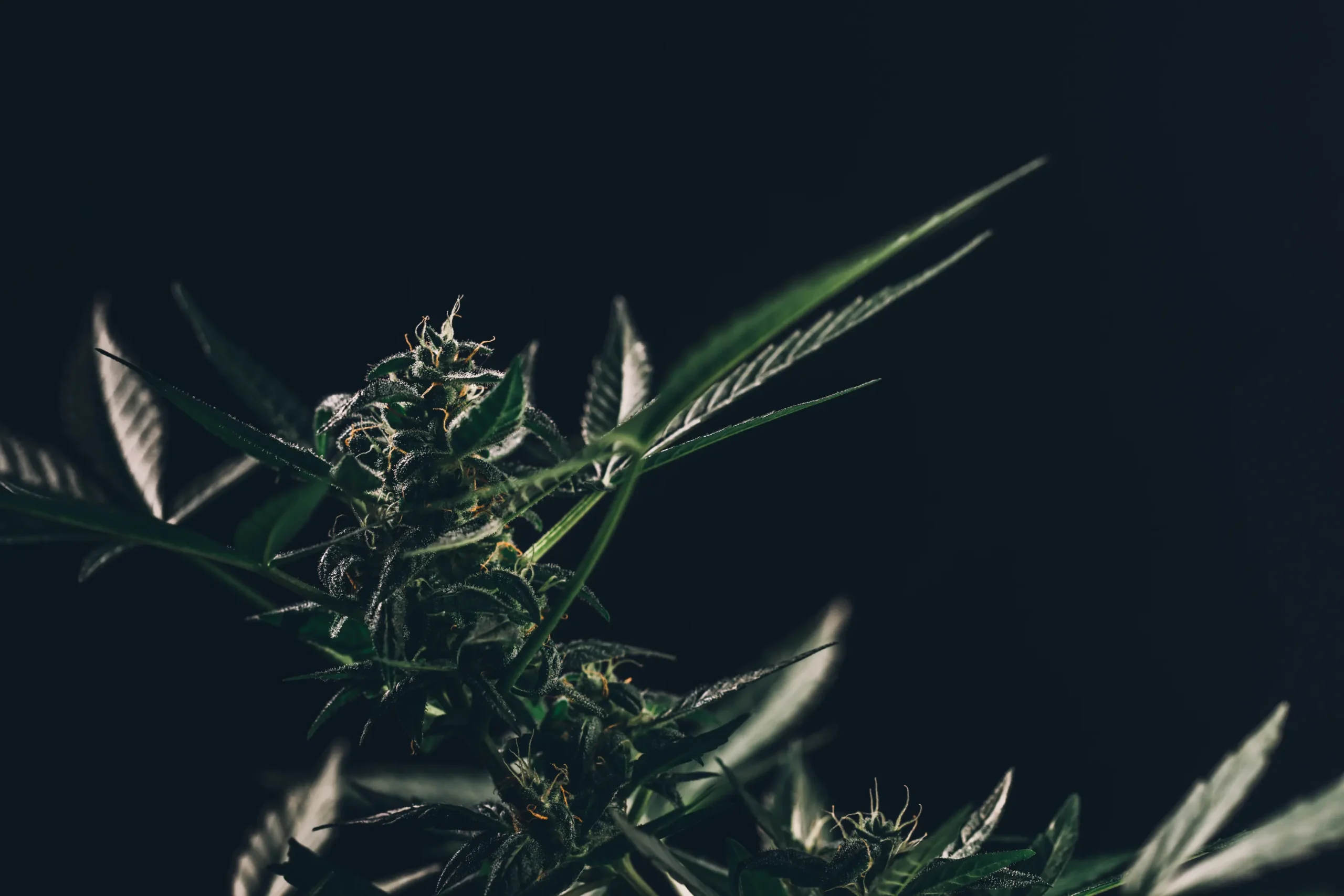
| Plant Structure | Short nodes, large dark-green leaves, thick hollow stems, a clear main stem in many plants and long productive laterals. Roughly a minority of plants can show genetic variegation. |
| Bud Structure | Tight spade-shaped flowers built from elongated swollen calyxes, with abundant clear resin and a dense but not purely golf-ball shape. |
| Yield Identity | Medium by default, improved by longer vegetative development and one early topping, or by running untopped plants in a dense single-cola system. |
| Climate Fit | Strong indoor fit. Outdoors it needs enough season to finish into autumn and enough air movement to protect dense aromatic flowers. |
| Grow Difficulty | Moderate. It is not fragile, but yield and flavor both depend on distinguishing genetic traits from stress and on allowing the late aromatic phase to finish. |
| Flavor / Aroma | cream, vanilla, honey, sweet melon musk, soft flowers, blueberry skin and a faint earthy Kush base |
| Effect Character | Long-lasting, dreamy and comfortable, with a calm clear beginning that gradually becomes more physically settled and sensual. |
| Primary Grow Risks | harvesting at day 55 before late oils mature; treating genetic variegation as a nutrient deficiency; over-vegetating short-node plants until long side branches overlap; unsupported hollow stems; drying too warm and losing vanilla-honey top notes; keeping all lower shoots just because the plant branches well |
| Best Training Fit | Either extended veg with one early topping and lateral spreading, or an untopped SOG-style run. Avoid repeated topping that turns short nodes into a congested bush. |
Genetic Lineage
Vanilluna combines a Blueberry Sativa female with an Original Blueberry male. The female side is remembered for a green, symmetrical plant with a distinct main stem, compact nodes and long side branches, while the male side contributes the stretch-indica character that gives the offspring more height than the word ‘Kush-like’ might suggest.
This family relationship explains the apparent contradiction in its morphology. Internodes can remain short while the plant still becomes medium-tall because the stem continues extending and the long laterals keep building. A grower who sees short nodes and assumes the plant will stay tiny can over-veg it; a grower who sees the same short nodes and flips too early can leave yield on the table.
A minority of plants are historically reported to show variegated growth. That is important because pale or patterned leaf tissue can be misdiagnosed as nutrient deficiency, viral damage or pH instability. Diagnosis should start with distribution and progression. Stable repeated variegation on otherwise vigorous tissue is different from a deficiency that advances across new growth or follows a root-zone event.
The final week deserves special attention. Historical cultivar descriptions repeatedly note that more interesting oils develop late. That makes a calendar-only harvest especially risky. The plant can look visually finished while the aroma is still shifting from generic sweetness toward cream, honey, floral melon and the deeper Blue-family musk.
Lineage becomes useful when it predicts work. With Vanilluna, the relevant inherited traits are short nodes, large dark-green leaves, thick hollow stems, a clear main stem in many plants and long productive laterals. roughly a minority of plants can show genetic variegation. That architecture should change how a grower decides plant spacing, topping, lower cleanup and the point at which the canopy is considered full. Genetics is not a trivia section when it explains why the plant responds differently from a generic hybrid.
A Vanilluna selection sheet should record symmetry, variegation pattern, lateral length, hollow-stem strength, date the vanilla note first separates from general sweetness and how that note survives cure. I keep clones until after the jar test because the most vigorous plant may not be the one that develops the quiet honey-floral layer in the final week.
Effect Breakdown
Vanilluna’s effect is more useful when described as a progression. The broad pattern is long-lasting, dreamy and comfortable, with a calm clear beginning that gradually becomes more physically settled and sensual. Dose, tolerance, inhalation method and personal sensitivity can shift that balance, so the stages below are directional rather than medical promises.
Opening phase. The opening is usually comfortable rather than abrupt. Mood can lift while attention remains soft and socially usable.
Middle phase. The middle phase is where the strain becomes most characteristic: dreamy, sensual and long-lasting without automatically becoming mentally foggy.
Late phase. At larger doses or later in the session, the body settles more heavily and the same clear beginning can move toward sleepiness.
Vanilluna smells soft enough to suggest a mild experience, but aroma is not dosage. I follow the actual progression from comfortable clarity into a dreamier, more sensual middle and finally a settled physical tail. The way that arc changes with dose tells the user more than attaching the experience to one vanilla-associated compound.
The calm beginning of Vanilluna can conceal how much impairment accumulates later. Driving and safety-sensitive work remain inappropriate, and larger servings can turn the comfortable tail into pronounced sleepiness. Sensitive users should give the long-lasting effect time to establish before adding more.
Flavor & Aroma Profile
The signature profile is cream, vanilla, honey, sweet melon musk, soft flowers, blueberry skin and a faint earthy Kush base. That description is most useful when treated as a sequence from volatile top notes to heavier base notes. The same harvested flower can smell different in late bloom, on day three of drying and after a month of cure because water content and volatile balance are changing.
The top layer is creamy vanilla and light honey rather than sharp confectionery sugar.
Under it sits sweet melon musk, floral pollen and a soft ripe-fruit quality that can read as blueberry skin rather than obvious blueberry candy.
A mild earthy or woody base keeps the profile from becoming one-dimensional.
The vanilla-honey fraction is fragile. Hot drying and repeated open-air handling can leave a generic sweet-floral jar with much less identity.
Vanilluna rewards a late-flower aroma diary. I smell the same marked top around day 50, near day 55, and again when the plant appears fully finished. Vanilla, honey and cream may move from background to recognizable only near the end. Repeating the check during drying and cure shows whether harvest timing or temperature erased the most delicate layer.
Vanilla and honey are not heavy base notes that survive careless heat. I hang large branches in cool darkness, keep air off the flower surface and trim dry with minimal handling. If the cured jar offers only wood and generic sweetness, I investigate early harvest and drying temperature before blaming the phenotype.
For Vanilluna, the flavor target is not maximum odor in the room. Strong room odor can mean volatiles are leaving the plant. The target is a mature flower that keeps its defining contrast after drying: cream, vanilla, honey, sweet melon musk, soft flowers, blueberry skin and a faint earthy Kush base.
Dominant Terpenes
Vanilluna can express floral, sweet, woody, creamy and Blue-family musky directions without one fixed terpene hierarchy. Laboratory data should be read as a batch description. The cultivar decision is whether the combined cured aroma carries the vanilla-honey signature clearly enough to distinguish it from a generic sweet hybrid.
| Terpene / Aromatic Candidate | Flavor / Aroma Role | How to Read It |
|---|---|---|
| Beta-caryophyllene | dry spice, wood | Frequently reported in modern samples and useful for the warm base. |
| Limonene | citrus brightness | Can lift the sweet cream and fruit without making the strain overtly lemony. |
| Humulene | dry herb, wood | Adds structure under honey and melon notes. |
| Myrcene | soft herb, musk | A plausible contributor to the dreamy body character and melon musk. |
| Linalool | floral softness | Consistent with the subtle bouquet in aromatic phenotypes, but not a guaranteed dominant terpene. |
Vanilla and cream impressions depend on ratios and minor volatiles beyond the common terpene names. Cure can make those relationships easier to perceive even as total volatile content changes. This is why I compare sealed samples at the same age rather than selecting from a quick stem rub in veg.
Vanilluna needs continuity into the final week: healthy leaves, supported hollow stems, controlled canopy temperature and no unnecessary late stripping. Stress cannot manufacture the subtle vanilla-honey layer, but heat or an early cut can remove it.
Indoor vs. Outdoor Growing
| Aspect | Indoor Growing | Outdoor Growing |
|---|---|---|
| Canopy | Indoor growing gives precise control over stretch, humidity and drying access. Either extended veg with one early topping and lateral spreading, or an untopped SOG-style run. Avoid repeated topping that turns short nodes into a congested bush. The main indoor risk is harvesting at day 55 before late oils mature. | Outdoor growing can express larger root volume and natural spectrum, but weather changes the risk calculation. Strong indoor fit. Outdoors it needs enough season to finish into autumn and enough air movement to protect dense aromatic flowers. Training should prioritize branch spacing, storm support and a harvest window that protects mature flower. |
| Flowering | about 55-60 days indoors, with the most interesting aromatic oils often developing in the final week | Latitude and seasonal weather move the calendar; use flower maturity plus forecast rather than a fixed date. |
| Stretch | Moderate. Plants are medium-tall despite short nodes, and long side branches can become important yield carriers. | Root freedom can make the same genetic tendency larger outdoors, especially with a long vegetative season. |
| Humidity Risk | Control lights-off humidity and bud spacing directly. | Rain, dew and cold nights create moisture events that cannot be solved by room ventilation. |
| Training | Either extended veg with one early topping and lateral spreading, or an untopped SOG-style run. Avoid repeated topping that turns short nodes into a congested bush. | Use fewer high-stress events and more early branch placement, staking and weather access. |
| Quality Goal | Even light, high premium-bud percentage and repeatable dry conditions. | Fully mature clean flower harvested before weather damage, with a shaded transition into drying. |
Indoors, Vanilluna benefits from precise timing because short nodes can disguise the amount of lateral growth still coming. Outdoors, hollow branches need early support and the late aromatic window needs dry weather. In both settings the plant should be given enough root and vegetative time to turn its long sides into real yield.
Controlled-environment cannabis research consistently shows that inflorescence yield can rise as canopy light increases when the rest of the environment can support that demand. The practical lesson is not to chase a universal PPFD number. It is to build an even canopy, avoid light-stressed tops, and increase intensity only when irrigation, nutrition, temperature and carbon supply are already stable. More light on a poorly watered or overheated canopy simply magnifies the weakest part of the system.
Irrigation should be driven by root-zone condition rather than a fixed calendar. Cannabis water-stress research shows that water availability changes biomass allocation and secondary metabolism, while field studies show that efficient drip delivery can improve water-use efficiency. In a container, the translation is simple: saturate the intended root volume, allow meaningful oxygen recovery, and adjust frequency as root mass, plant size and climate change. Keeping the medium permanently wet is not the same as keeping the plant well watered.
Strain-Specific Grow Guidance
The central cultivation problem with Vanilluna is not generic cannabis care. It is harvesting at day 55 before late oils mature; treating genetic variegation as a nutrient deficiency; over-vegetating short-node plants until long side branches overlap; unsupported hollow stems; drying too warm and losing vanilla-honey top notes; keeping all lower shoots just because the plant branches well. The following guidance is organized around preventing those losses while preserving the cultivar’s own growth pattern.
Give Veg More Time Than the Nodes Suggest
Vanilluna’s short internodes can make a young plant look ready for flower before it has built enough branch length to carry a satisfying crop. Historical guidance specifically favors extended vegetative development when the goal is higher yield. Let the root system and side branches establish, then shape the plant once rather than forcing rapid flower on a tiny compact frame.
Top Early, Not Repeatedly
One early topping can redirect the strong main-stem tendency into several long productive laterals. Repeated topping is less attractive because the underlying node spacing is already tight. Too many cuts can create a dense interior full of small branch junctions that are hard to light and ventilate.
Understand the SOG Alternative
Vanilluna is also suited to an untopped SOG-style approach. That sounds contradictory until the architecture is understood: a strong central axis, short nodes and spade-shaped flowers can make a single-leader plant efficient when enough small plants are used. The choice is therefore strategic. Low plant count favors longer veg and one top. Higher plant count favors shorter veg and natural leaders.
Treat Variegation as a Phenotype Question First
If a plant shows stable patterned pale tissue from early growth while vigor and root health remain normal, do not immediately increase feed. Compare the pattern with siblings, inspect new leaves and confirm that pH and root-zone EC are not drifting. Genetic variegation can reduce photosynthetic area locally, so the best keeper is usually a plant where the trait remains mild rather than one where decorative pattern overwhelms useful green tissue.
Support Hollow Stems Before Bud Weight Arrives
Thick hollow stems can look strong while still splitting at a topped junction or leaning when late flowers gain weight. Install soft ties or a loose support net before the canopy becomes difficult to reach. Support should hold branches in their light lane, not squeeze stems together.
Let the Final Week Earn Its Place
This cultivar is a poor candidate for a fixed ‘day 55 chop’ mentality. In the last week, compare aroma intensity, calyx swelling and trichome development every two or three days. If the plant is healthy and the room is safe, waiting until the creamy honey-melon profile is clearly formed can improve the jar more than any late additive.
Manage Dense Spade Flowers for Interior Dryness
Warning
Dense flowers change the airflow plan
The buds are dense enough that the outside can dry faster than the core. Late flower therefore needs low enough humidity for water vapor to leave the bud interior, and postharvest needs gentle pacing. Do not pack branches tightly in the drying room because their spade-shaped flowers can touch at broad surfaces.
Keeper Selection Should Include Cure Performance
A plant that smells spectacular at day 58 but becomes generic after four weeks in a jar is not automatically the best keeper. Record live aroma, end-of-dry aroma and cured aroma. Vanilluna is specifically valuable for subtle cream, honey and melon, so postharvest retention belongs in the selection criteria.
Vegetative Branch Mapping
Because the plant can carry a dominant main stem and long laterals at the same time, label the four to eight branches most likely to become primary flower carriers before the flip. Spread those branches early and remove only shoots that remain trapped under them. This keeps the short-node interior from becoming a collection of small shaded sites.
Last-Week Decision Log
From roughly day 52 onward, take a short aroma note every two days. Write down whether the flower smells primarily sweet, creamy, floral, melon-like or musky. Pair that note with trichome observations. The harvest point that repeatedly preserves the best cured aroma is more valuable than a generic day count.
Second-Run Adjustment
If the first run yielded too little, add vegetative time before adding fertilizer. If the canopy became congested, top once earlier rather than topping more often. If the vanilla note faded, slow and cool the dry. These changes address the cultivar’s actual bottlenecks instead of turning the second run into a more complicated version of the first.
Light Strategy
Controlled-environment cannabis research consistently shows that inflorescence yield can rise as canopy light increases when the rest of the environment can support that demand. The practical lesson is not to chase a universal PPFD number. It is to build an even canopy, avoid light-stressed tops, and increase intensity only when irrigation, nutrition, temperature and carbon supply are already stable. More light on a poorly watered or overheated canopy simply magnifies the weakest part of the system.
For Vanilluna, that research translates into a cultivar-specific priority: build the canopy shape first, then add intensity. Short nodes, large dark-green leaves, thick hollow stems, a clear main stem in many plants and long productive laterals. Roughly a minority of plants can show genetic variegation. A few overlit tops above a shaded interior do not represent a high-performance canopy. Use height control and branch placement so the plant can actually convert additional light into mature flower.
Ultraviolet light should not be treated as a guaranteed resin switch. Controlled studies have not shown a commercially reliable increase in flower yield or cannabinoid concentration from adding UV to otherwise adequate visible light. For a quality-focused grow, uniform photosynthetically active light, stable leaf temperature and healthy roots deserve priority over stress-based lighting tricks.
Feeding Strategy
Flowering-stage nutrition research also argues against the idea that more fertilizer automatically means more flower. Cannabis shows an optimum response to nitrogen and phosphorus, while very high potassium supply is not automatically rewarded with higher inflorescence yield. The useful grower habit is to watch plant response, runoff or root-zone EC where relevant, and leaf-tip behavior rather than feeding to a strain myth.
For Vanilluna, begin with moderate nutrition and adjust from the active leaves and root-zone data. Dark foliage, slow height gain, fast stretch or late senescence can all be genetic traits rather than direct nutrient instructions. Increase feed only when the pattern of growth supports the decision. In late flower, the objective is healthy functional leaf area and clean maturation, not keeping every fan leaf cosmetically dark green until harvest.
Irrigation and Root-Zone Rhythm
Irrigation should be driven by root-zone condition rather than a fixed calendar. Cannabis water-stress research shows that water availability changes biomass allocation and secondary metabolism, while field studies show that efficient drip delivery can improve water-use efficiency. In a container, the translation is simple: saturate the intended root volume, allow meaningful oxygen recovery, and adjust frequency as root mass, plant size and climate change. Keeping the medium permanently wet is not the same as keeping the plant well watered.
Avoid small nervous irrigations that wet only the surface while leaving the lower container inconsistent. Conversely, do not repeatedly saturate a medium that has not had a chance to recover oxygen. The first run should teach you how quickly the container loses water at each stage. That dryback pattern is more useful than copying a schedule from a different cultivar, pot size or climate.
Humidity, Disease and Flower Density
Humidity deserves the same respect as light. Recent controlled research found that very high canopy humidity can delay flowering and sharply reduce flower biomass and cannabinoid accumulation. Dense cultivars therefore need more than a fan pointed at the room. They need space between flowering sites, leaf removal only where it improves exchange, dry leaf surfaces before the dark period, and enough air replacement that humidity does not climb around the buds after lights-off.
Read the cultivar’s flower architecture directly: Tight spade-shaped flowers built from elongated swollen calyxes, with abundant clear resin and a dense but not purely golf-ball shape. The denser the flower and the tighter the canopy, the more conservative the late-flower humidity strategy should be. Resistance traits can widen the safety margin, but they do not make stagnant wet air harmless.
Harvest Maturity and Quality Yield
Use at least four signals together: calyx development, rate of fresh pistil production, trichome condition on the calyxes, and the way the aroma changes over several days. Pistils alone are unreliable, and trichomes on sugar leaves often age faster than trichomes on the flower itself. The best flavor window is usually a period, not a single day.
Quality yield for Vanilluna means the dry weight of clean, fully mature, well-lit flower that still expresses cream, vanilla, honey, sweet melon musk, soft flowers, blueberry skin and a faint earthy Kush base after cure. Separate premium tops, good secondary flower and low-grade material when weighing the first run. That ratio reveals whether training actually improved the crop or merely increased biomass.
Weedth Bud Flavor Tips
Flavor is protected by decisions made before harvest and after it. No finishing product can fully repair immature flower, overheated resin or a drying room that removes the volatile top layer in two days.
Tip. Do not harvest solely because most trichomes are cloudy if the aroma is still developing. Combine resin maturity with the late oil shift.
Tip. Keep drying air indirect. Vanilla and honey notes disappear quickly when fragrant flowers sit in a warm fan stream.
Tip. A cure of several weeks often clarifies the difference between sweet fruit, floral musk and true vanilla cream.
Vanilla and honey are not heavy base notes that survive careless heat. I hang large branches in cool darkness, keep air off the flower surface and trim dry with minimal handling. If the cured jar offers only wood and generic sweetness, I investigate early harvest and drying temperature before blaming the phenotype.
During cure, allow moisture to equalize before long-term sealing. A jar that repeatedly develops an ammonia-like, sharp wet smell is not ‘curing harder’; it is too wet. Stable cured flower should feel resilient rather than brittle, open with the cultivar’s defining aroma and become smoother over time without losing its top notes.
For Vanilluna, compare the live flower with the cured jar. The target is not to make the aroma stronger through additives. It is to keep the recognizable sequence of cream, vanilla, honey, sweet melon musk, soft flowers, blueberry skin and a faint earthy Kush base from collapsing into generic hay, earth or sweetness.
Weedth Bud Boost Tips
Bud boosting should begin with architecture and environment. The highest-return interventions are often boring: more even light, fewer useless lower sites, roots that cycle between water and oxygen correctly, and branch support installed before weight becomes a problem.
Grower move. For a few plants, use extended veg plus one early top and spread the resulting laterals evenly.
Grower move. For many plants, keep them untopped and use short veg so the natural main stem does the work.
Grower move. Remove weak shaded shoots once, then stop cutting and let the calyx-heavy flowers finish.
Controlled-environment cannabis research consistently shows that inflorescence yield can rise as canopy light increases when the rest of the environment can support that demand. The practical lesson is not to chase a universal PPFD number. It is to build an even canopy, avoid light-stressed tops, and increase intensity only when irrigation, nutrition, temperature and carbon supply are already stable. More light on a poorly watered or overheated canopy simply magnifies the weakest part of the system.
Flowering-stage nutrition research also argues against the idea that more fertilizer automatically means more flower. Cannabis shows an optimum response to nitrogen and phosphorus, while very high potassium supply is not automatically rewarded with higher inflorescence yield. The useful grower habit is to watch plant response, runoff or root-zone EC where relevant, and leaf-tip behavior rather than feeding to a strain myth.
CO2 enrichment only belongs in a room that can control light, temperature, irrigation and safety well enough to use it. It is not a substitute for an uneven canopy. Likewise, stress techniques should never be applied simply because a forum calls them a resin booster. Premium flower percentage is a better objective than spectacular-looking stress symptoms.
On the second run, change one major variable at a time. If Vanilluna had too much larf, change lower cleanup or branch placement. If aroma disappeared, change the dry. If the canopy stretched beyond control, change flip size. A controlled second run teaches more than adding five new products at once.
Medical Uses & Benefits
Consumers may choose Vanilluna for the subjective pattern described above, particularly long-lasting, dreamy and comfortable, with a calm clear beginning that gradually becomes more physically settled and sensual.. Those preferences can overlap with goals such as relaxation, appetite, sleep preparation, mood change or temporary distraction from discomfort, but they should not be presented as proof that the cultivar treats a disease.
Strain names are not standardized medical formulations. Two products with the same name can differ in THC, CBD, minor cannabinoids and volatile chemistry. Clinical decisions should therefore be based on tested composition, route of administration, dose and patient response rather than a cultivar reputation.
THC can cause impairment, anxiety, dizziness, dry mouth and increased heart rate, and it may interact with medications. People who are pregnant, have cardiovascular concerns, are vulnerable to psychosis, or are using prescription drugs should seek medical advice. Medical users should start with a low dose and use regulated tested products where available.
Ideal User Profile
From a cultivation perspective, Vanilluna best suits a grower who is comfortable with this reality: Moderate. It is not fragile, but yield and flavor both depend on distinguishing genetic traits from stress and on allowing the late aromatic phase to finish. The ideal setup is one that can accommodate moderate. plants are medium-tall despite short nodes, and long side branches can become important yield carriers. and can manage the cultivar’s main risk before it becomes an emergency.
From a sensory perspective, it suits users who appreciate cream, vanilla, honey, sweet melon musk, soft flowers, blueberry skin and a faint earthy Kush base rather than choosing flower only by potency. The effect profile, long-lasting, dreamy and comfortable, with a calm clear beginning that gradually becomes more physically settled and sensual., makes dose and time of day more important than a simple indica/sativa label.
Vanilluna suits a patient beginner more than an impatient one. Stable variegation should be diagnosed before feeding, and the final week should not be sacrificed to a calendar. Its moderate stretch is manageable, but repeated topping and crowded laterals can turn a graceful plant into unnecessary work.
An experienced grower can choose between two clear systems: one early top with enough veg to develop long laterals, or an untopped higher-count run. The value comes from matching the system to the phenotype and preserving the faint late aroma, not from imposing constant training.
Grower Notes and Feedback
Morphology note. Short nodes, large dark-green leaves, thick hollow stems, a clear main stem in many plants and long productive laterals. Roughly a minority of plants can show genetic variegation. The first run should document where flower mass actually forms instead of assuming every branch deserves equal space.
Flowering note. about 55-60 days indoors, with the most interesting aromatic oils often developing in the final week Treat that as a working window. Seed-grown plants, preserved cuts and environmental stress can move the finish.
Stretch note. Moderate. Plants are medium-tall despite short nodes, and long side branches can become important yield carriers. Record a real ratio in your room. That number is the basis for next cycle’s flip height.
Feeding note. Start moderate. If leaves look dark, slow or unusual, rule out cultivar morphology and root-zone issues before increasing nutrient concentration.
Humidity note. Tight spade-shaped flowers built from elongated swollen calyxes, with abundant clear resin and a dense but not purely golf-ball shape. Flower density should change spacing and late-flower humidity targets even if the cultivar has a reputation for resilience.
Postharvest note. The defining aroma is cream, vanilla, honey, sweet melon musk, soft flowers, blueberry skin and a faint earthy Kush base. If those notes were strong alive and weak after cure, investigate harvest timing, drying temperature, direct airflow and storage before blaming genetics.
Keeper note. Select the plant that combines manageable structure, clean maturity, high premium-bud percentage and retained cured aroma. The tallest, darkest, purple-est or highest wet-weight plant is not automatically the best keeper.
Weedth Experience
The point where this plant reveals itself
Vanilluna is one of those plants that punishes impatience more than aggression. I can grow it cleanly in eight weeks of flower, but I do not want to decide the harvest date before I smell what the final week is doing. The vanilla and honey notes are not loud candy terpenes. They are subtle and they disappear if I cut early or dry warm. I also do not panic when I see stable variegation on an otherwise healthy plant. I check roots, pH and new growth first. For yield, I either commit to one early top and enough veg to build laterals, or I run it untopped. The middle ground, lots of topping on a short-node plant, is where I create work without creating better buds.
Vanilluna asks me to listen for quiet changes. It rarely announces the finish with a loud candy smell. The room may seem merely sweet, then the same flower a few days later carries vanilla skin, honey and a soft floral musk. I resist the urge to cut on the first acceptable trichome check. I also resist correcting a stable pale pattern before the roots and new growth give me evidence. The best cured jar feels gentle but deliberate, with a sweetness that opens slowly rather than shouting. That late, restrained character is the reason I give the plant time and the reason I do not judge it by wet weight.
Weedth Score
Growing Experience 8.8/10 The score reflects how naturally the plant’s architecture can be converted into clean mature flower.
Bud Structure & Visual Appeal 9.0/10 Judged on density, resin, calyx development, trim quality and phenotype consistency rather than size alone.
Aroma Complexity 9.4/10 The defining profile of cream, vanilla, honey, sweet melon musk, soft flowers, blueberry skin and a faint earthy Kush base gives this cultivar a clear sensory identity when well preserved.
Flavor & Smoothness 9.3/10 A careful dry and cure are necessary for the score; overheated flower would rate substantially lower.
Effects & High Experience 9.0/10 Based on the common progression: Long-lasting, dreamy and comfortable, with a calm clear beginning that gradually becomes more physically settled and sensual.
Overall Satisfaction & Recommendation 9.1/10 Recommended when the grower’s environment matches the cultivar rather than as a universal choice.
Weedth overall score: 9.1/10. This is an editorial quality score, not a laboratory ranking. Phenotype, grow quality and postharvest handling can move the real experience significantly.
I would keep Vanilluna for the grower who wants its specific structure and aroma, not because a strain list says it should be the strongest plant in the room.
FAQ
Grower Question
Is Vanilluna easy to grow?
Moderate. It is not fragile, but yield and flavor both depend on distinguishing genetic traits from stress and on allowing the late aromatic phase to finish. The practical difficulty comes from harvesting at day 55 before late oils mature; treating genetic variegation as a nutrient deficiency; over-vegetating short-node plants until long side branches overlap; unsupported hollow stems; drying too warm and losing vanilla-honey top notes; keeping all lower shoots just because the plant branches well. A grower who solves those specific issues can find the plant much easier than its reputation suggests.
How long does Vanilluna flower?
A useful working range is about 55-60 days indoors, with the most interesting aromatic oils often developing in the final week. Use the calendar to know when to start close inspection, then harvest by flower maturity, aroma and plant condition.
How much does Vanilluna stretch?
Moderate. Plants are medium-tall despite short nodes, and long side branches can become important yield carriers. Measure your own plant at flip and when stretch stops because phenotype and environment can change the ratio.
What training method works best for Vanilluna?
Either extended veg with one early topping and lateral spreading, or an untopped SOG-style run. Avoid repeated topping that turns short nodes into a congested bush. The best method is the one that opens useful flower sites without creating more branch density than the cultivar can ventilate.
What is the biggest cultivation mistake with Vanilluna?
The biggest losses usually come from harvesting at day 55 before late oils mature; treating genetic variegation as a nutrient deficiency; over-vegetating short-node plants until long side branches overlap; unsupported hollow stems; drying too warm and losing vanilla-honey top notes; keeping all lower shoots just because the plant branches well. Pick the one most relevant to your room and solve it before adding advanced techniques.
Is Vanilluna suitable for indoor growing?
Yes, if the room can manage its architecture and flower density. Indoor growing gives precise control over stretch, humidity and drying access. Either extended veg with one early topping and lateral spreading, or an untopped SOG-style run. Avoid repeated topping that turns short nodes into a congested bush. The main indoor risk is harvesting at day 55 before late oils mature.
Can Vanilluna be grown outdoors?
Yes, where the season and climate fit. Outdoor growing can express larger root volume and natural spectrum, but weather changes the risk calculation. Strong indoor fit. Outdoors it needs enough season to finish into autumn and enough air movement to protect dense aromatic flowers. Training should prioritize branch spacing, storm support and a harvest window that protects mature flower.
When should Vanilluna be harvested for the best flavor?
Start close checks during the latter part of the normal window, then combine calyx swelling, slowing fresh pistils, trichomes on the flowers and the development of cream, vanilla, honey, sweet melon musk, soft flowers, blueberry skin and a faint earthy Kush base. Flavor maturity should agree with resin maturity.
How should Vanilluna be dried?
Use a cool, dark, gently ventilated room and space branches so flowers do not touch. Postharvest handling can erase weeks of good cultivation. Drying studies on cannabis and hemp show that hotter, faster drying changes terpene retention and can reduce the volatile fraction. The exact ideal schedule depends on flower density and room conditions, but the quality principle is consistent: darkness, moderate cool temperatures, gentle indirect air movement and enough time for internal moisture to equalize preserve aroma better than hot air blasting the outside of the bud.
Why can two Vanilluna plants look or smell different?
Vanilluna seedlings may vary in symmetry, variegation, lateral reach and the strength of vanilla, honey or Blue-family musk. Keep identifiers and backups until the cured samples can be compared at the same age.
Does Vanilluna need heavy feeding?
No strain needs blind heavy feeding. Start moderate and use active-leaf color, growth rate, root-zone EC or runoff where relevant, and tip condition to guide changes. Research supports an optimum nutrient range rather than an unlimited response to more fertilizer.
What should I record on the first run?
Record node spacing, lateral length, any stable variegation, support points on hollow stems, first recognizable vanilla aroma, final maturity and cured sweetness. These details make the second run more useful than a simple height and yield entry.
Similar Strains
Blueberry: for the foundational fruit-floral family character and relaxed effect.
Cocoa Kush: for closely related Blue-family genetics, swollen calyxes and late aromatic development.
Blue Moonshine: for compact Blue-family structure and a dreamy evening profile.
Blueberry Muffin: for sweet fruit identity with a more modern dessert direction.
Vanilla Kush: for users seeking a more overt vanilla-leaning flavor in a heavier indica frame.
Similarity does not mean interchangeability. The reason to choose Vanilluna is its own combination of short nodes, large dark-green leaves, thick hollow stems, a clear main stem in many plants and long productive laterals. roughly a minority of plants can show genetic variegation. and the sensory profile of cream, vanilla, honey, sweet melon musk, soft flowers, blueberry skin and a faint earthy Kush base. Use similar strains as comparison points, not substitutes.
Share this article
A quick overview of the topics covered in this article.
Follow us
Latest articles
October 24, 2026
October 24, 2026
October 24, 2026
October 24, 2026