
Blueberry Diesel
Blueberry Diesel is a hybrid name associated with a sweet berry and fuel profile, but it is also a cultivar that requires careful identity checking before cultivation advice is applied. The most common descriptions place Blueberry on one side of the cross and a Diesel-family parent on the other, with sources variously naming Sour Diesel or NYC Diesel. A separate line carrying the same name has also circulated from different parentage. For that reason, the Weedth approach is to treat Blueberry Diesel as a Blueberry x Diesel-type family profile and to make lineage uncertainty explicit rather than pretending every seed, clone, or commercial flower carrying the name is genetically identical.
That uncertainty is not a weakness in the article. It is the first grow lesson. If the plant in front of you stretches hard, develops long internodes, and throws sharp fuel early, manage it as a Diesel-leaning expression. If it stays broader, colors more readily, and builds shorter dense flowers with strong berry sweetness, manage it as a Blueberry-leaning expression. The grower should document the actual plant and let phenotype behavior determine the second run.
At its best, Blueberry Diesel combines fresh berry sweetness, dark fruit, light earth, and a sour fuel edge without allowing either side to erase the other. The cultivation goal is therefore not simply to grow purple buds or maximize weight. It is to preserve a two-part sensory identity. Hot flowering rooms and fast drying often remove the delicate berry top notes while the heavier diesel and earth remain. A successful harvest should still smell unmistakably fruity after cure.
Strain Features
| Feature | Details |
|---|---|
| Type | Hybrid, commonly balanced to slightly indica-leaning in effect, phenotype dependent |
| Common Lineage | Blueberry x Diesel-family parent; commonly reported as Sour Diesel or NYC Diesel depending on line |
| THC | Commonly moderate to high, often in the mid-teens to low-20% range with stronger selections higher |
| CBD | Usually low |
| Dominant Terpenes | Myrcene, limonene, caryophyllene; pinene may contribute |
| Aroma | Blueberry, mixed berry, diesel, earth, citrus, light spice |
| Flavor | Sweet berry inhale with sour fuel, earth, and citrus on the finish |
| Effects | Relaxed, uplifted, euphoric, giggly, mentally easygoing, sometimes more energetic in Diesel-leaning plants |
| Flowering Time | Commonly about 8-9 weeks |
| Indoor Structure | Medium to tall, often stretch-prone, with useful lateral growth |
| Outdoor Structure | Large when allowed a long vegetative season |
| Yield | Moderate; quality varies strongly with canopy management and phenotype |
| Grow Difficulty | Moderate |
| Training Response | Good response to LST, topping, trellising, and branch support |
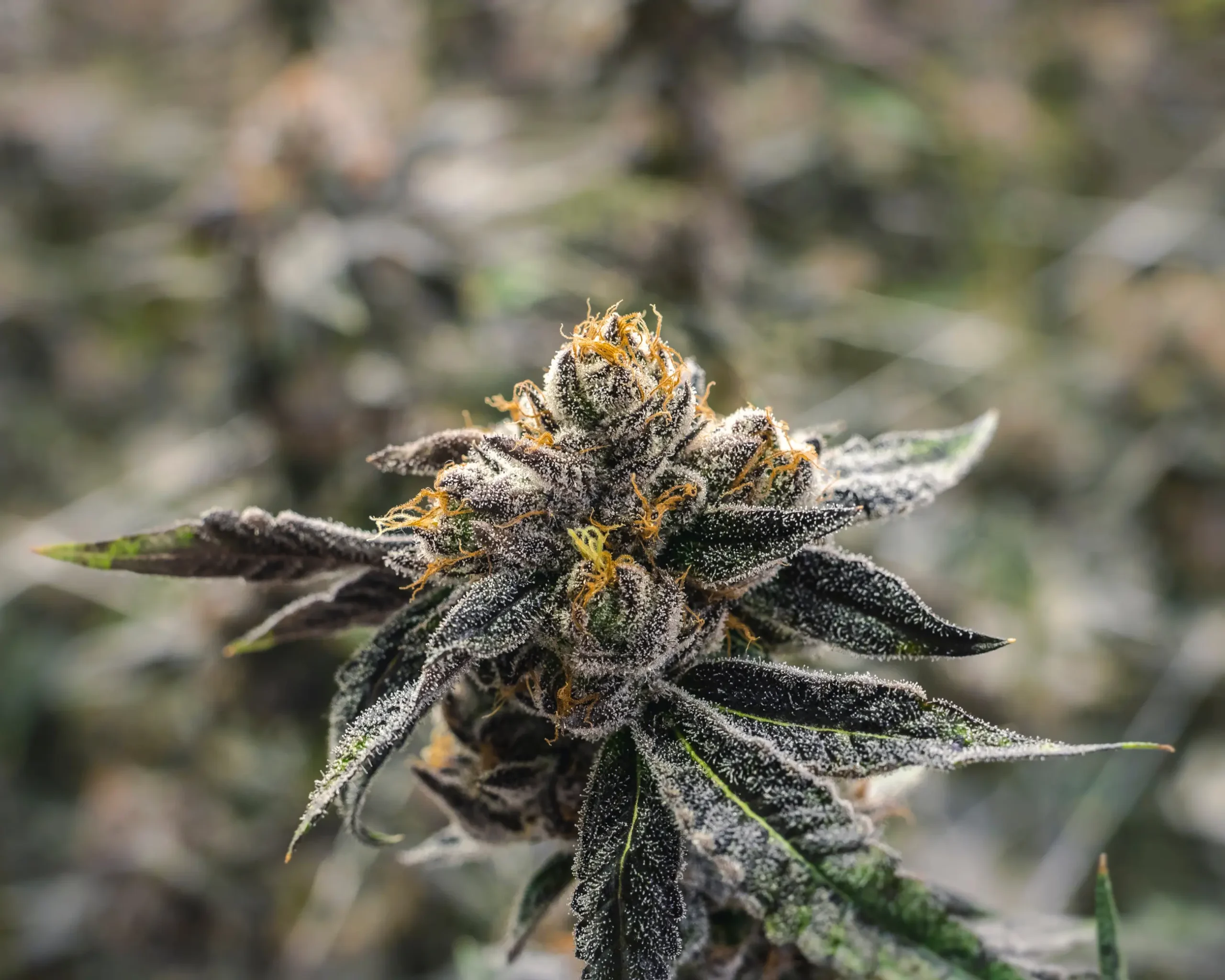
| Bud Structure | Trichome-heavy, green to purple-tinged flowers with orange pistils; density varies by expression |
| Main Grow Risk | Height, branch loading, phenotype variation, and late-flower humidity |
| Main Flavor Risk | Berry loss during hot flowering, over-ripening, or rapid drying |
| Best Environment | Controlled indoor environment or sunny outdoor site with dry finishing weather |
| Ideal User | Consumers wanting fruit-and-fuel flavor with balanced relaxation rather than immediate sedation |
Blueberry Diesel should be grown as a phenotype project, not as a fixed recipe. The grower who records structure and aroma will understand the strain far better after one cycle than the grower who memorizes a generic height number.
Genetic Lineage
The most widely repeated description of Blueberry Diesel combines Blueberry with a Diesel-family cultivar, but the exact Diesel parent is inconsistent across sources. Some describe Blueberry x Sour Diesel. Others describe a Blueberry x NYC Diesel combination and use the related name Blue Diesel. There are also separate hybrids carrying the Blueberry Diesel name from different parents.
This matters because lineage affects expectations. Sour Diesel-type plants are often associated with stronger stretch, more open branching, and a sharper fuel profile. NYC Diesel-influenced plants may also stretch but can show a somewhat different citrus-diesel direction. Blueberry contributes sweet fruit, broader leaves in some phenotypes, color potential, and a calmer physical effect.
Rather than choosing one disputed lineage and presenting it as universal, growers should identify the source of their plant whenever possible. If that is impossible, morphology and aroma can still provide clues. A narrow-leaf plant with rapid transition stretch and intense sour fuel is likely expressing more Diesel-family behavior. A shorter plant with stronger berry aroma, broader foliage, and easier purple coloration may be expressing more of the Blueberry side.
Why the Blueberry side matters
Blueberry genetics have a reputation for intense fruit aroma that can range from fresh blueberry to jam, grape skin, floral sweetness, and earthy berry. The flavor is not simply sugar. Good Blueberry expressions can have a musky or spicy base that gives the fruit depth.
The same side of the family is often associated with plants that respond well to careful environmental control rather than constant high stress. Some Blueberry-derived lines can be slower in veg or sensitive to overfeeding, although that cannot be assumed for every Blueberry Diesel plant.
Why the Diesel side matters
Diesel genetics contribute vigor, stretch, sour fuel, and a more stimulating mental edge. They can also create branch structure that benefits strongly from early training and later support.
In Blueberry Diesel, the ideal phenotype does not need to be the most extreme version of either parent. A useful keeper often sits in the middle: enough Diesel vigor to fill the canopy, enough Blueberry influence to retain fruit through cure, and enough branch strength to support dense flowers.
Keeper selection
A Blueberry Diesel keeper should be judged after cure. Record the following:
- stretch ratio,
- branch strength,
- flowering duration,
- calyx-to-leaf ratio,
- late-flower berry intensity,
- fuel-to-fruit balance,
- post-cure aroma retention,
- final effect.
A plant that smells like blueberry candy at week seven but cures into plain fuel is not the strongest flavor keeper. Another plant may smell less dramatic while growing but retain a clearer berry note for months.
For Blueberry Diesel, genetic uncertainty makes phenotype documentation more valuable, not less.
Effect Breakdown
Blueberry Diesel usually occupies a comfortable middle ground between the physical calm associated with many Blueberry expressions and the brighter mental character of Diesel-family genetics.
Onset: uplift without a violent rush
The first phase often begins with a noticeable but manageable lift in mood. Users commonly describe feeling happier, more sociable, or more amused. The mental effect can be clearer and less heavy than the dark berry aroma suggests.
Diesel-leaning material may start faster and feel more energetic. Blueberry-leaning material may come on more gently and transition toward body comfort sooner.
Middle phase: balanced hybrid relaxation
After the onset, the body usually becomes more relaxed without immediately losing function. This is the phase where Blueberry Diesel works well for casual daytime or afternoon use for experienced consumers.
The user may feel less physical tension while remaining interested in conversation, music, games, or a walk. The strain is often described as giggly, which fits the emotional softness of the middle phase.
Late phase
The late phase tends to become calmer. Heavy doses can increase body weight and reduce motivation. Moderate doses may simply fade into a relaxed baseline without a dramatic crash.
Mental effects
Focus can be reasonable at lower doses, but this is not a precision productivity strain for everyone. The fruit-and-fuel hybrid effect can become dreamy as dose increases.
Emotional effects
Happiness and relief from stress are common user reports. The strain is usually less confrontational than very sharp sativas, but high THC can still create anxiety in sensitive users.
Physical effects
Muscle relaxation, a warm body sensation, and appetite stimulation may appear. Some consumers use it in the evening because the physical side becomes more noticeable with time.
Dose matters
At low doses, Blueberry Diesel can feel socially easy and mildly energizing. At moderate doses, it becomes balanced. At high doses, the Blueberry side may dominate and make the experience heavier.
The defining effect is not raw sedation or raw stimulation. It is the gradual handoff from light mental uplift to comfortable physical ease.
Flavor & Aroma Profile
Blueberry Diesel is a strain where the name accurately describes the target, but the best examples contain more than two notes.
Fresh flower
During flowering, the berry side may appear as fresh blueberry, mixed dark fruit, grape skin, or sweet floral fruit. The fuel can begin as a background sourness and become stronger as flowers mature.
Some phenotypes reverse that balance. Fuel dominates early and fruit appears only when flowers are disturbed. This is why aroma should be recorded across the cycle.
Jar aroma
A strong cured sample should open with fruit before or alongside fuel. Blueberry sweetness can be bright and jam-like, while diesel adds sour sharpness. Earth and light spice keep the aroma grounded.
If the jar smells only of diesel, the plant may be genetically fuel-dominant or the berry top notes may have been lost during drying. If it smells only sweet and fruity, the phenotype may lean heavily toward Blueberry.
Inhale
The inhale is often softer than the aroma. Berry sweetness leads, followed by earth and mild citrus. Vapor can make the fruit particularly clear.
Exhale
The exhale is where fuel often becomes more obvious. Sour diesel, earthy spice, and a slightly sharp finish can remain on the palate.
Berry vulnerability
Fruit aromas are among the qualities growers most often lose. High drying temperature, low humidity, excessive direct airflow, and repeated oxygen exposure all favor a flatter final profile.
The challenge is that diesel notes can remain strong enough to hide the loss. A grower may open the jar and think the strain is still loud while the defining Blueberry component has disappeared.
Harvest timing and flavor
Harvesting too early can produce bright but thin fruit with underdeveloped body. Harvesting too late can deepen the physical effect while dulling fresh berry notes. The best flavor window usually appears when calyxes are fully swollen, trichomes are predominantly cloudy, and the berry-fuel smell is coherent rather than green or overly fermented.
Purple does not equal berry
A purple flower can smell like fuel, pepper, or earth. Color is controlled by pigment expression and environment, not by a direct "purple equals blueberry" rule. Do not use color as a substitute for smelling and tasting the phenotype.
Dominant Terpenes
Blueberry Diesel commonly shows a terpene pattern built around myrcene, limonene, and caryophyllene, with pinene sometimes contributing.
Myrcene
Myrcene provides earthy, musky, herbal depth and can support the darker side of the berry aroma. It also fits the strain's physical relaxation.
Limonene
Limonene contributes citrus brightness and helps sharpen the fruit. In Diesel-leaning phenotypes it can combine with sour fuel to produce a lemon-diesel edge.
Caryophyllene
Caryophyllene adds pepper and dry spice. This is especially noticeable on the exhale, where the sweet berry opening can finish warmer and more savory.
Pinene
Pinene may add fresh conifer or herbal clarity. It is rarely the defining note but can make a phenotype smell cleaner and more layered.
Grower interpretation
The terpene profile should be treated as a range. If laboratory data are available for your actual plant, use them. If not, sensory observations are still valuable.
The cultivation objective is to preserve the plant's own ratio rather than force a published terpene list through feeding tricks.
Indoor vs. Outdoor Growing
Indoor
Indoor rooms are especially useful for Blueberry Diesel because height and phenotype variation can be controlled. A tall expression can be flipped earlier and trained horizontally. A compact expression can be given more veg time.
Humidity control also protects berry flavor by allowing the plant to finish without emergency harvests. Dense purple-tinged flowers can trap moisture even when the overall plant structure is open.
Outdoor
Outdoors, the strain can become large. Diesel vigor and a long vegetative season create substantial branches that may need support before flowering becomes heavy.
A sunny, dry site is ideal. Morning sun helps dry dew, and wind movement reduces interior humidity.
Outdoor risk
The biggest outdoor risk is not cold color development. It is late-season moisture. A grower who waits for colder nights just to intensify purple color can expose ripe flowers to unnecessary disease pressure.
Indoor quality advantage
Indoor control makes it easier to protect the last two weeks from high heat and humidity. This can improve berry retention and reduce the need for early harvest.
Outdoor quality advantage
Outdoor plants can develop broad aromatic complexity under full-spectrum sunlight and large root systems. When the climate cooperates, sun-grown Blueberry Diesel can be exceptionally expressive.
Yield
Yield is generally moderate, with strong plants capable of better results. The cultivar should be evaluated by premium bud percentage rather than raw branch mass.
The best environment is the one that gives the plant enough time to ripen the fruit aroma without forcing the grower to choose between maturity and mold risk.
Strain-Specific Grow Guidance
Identify the phenotype early
Record leaf shape, node spacing, branch angle, and stretch. Do not make permanent pruning decisions based on the strain name alone.
A Diesel-leaning plant may require earlier topping and more horizontal training. A Blueberry-leaning plant may stay shorter and benefit from a slightly longer veg.
Topping
Topping is useful on vigorous plants. Cut while the plant is actively growing and give it time to recover. One topping can create four to eight useful leaders depending on later training.
LST
Low-stress training is highly recommended. Bending branches outward keeps the center open and prevents tall tops from dominating.
Trellis
A trellis is useful for both canopy control and late support. Install it before the plant needs it. Late attempts to force rigid branches under a net can split stems.
Branch support
Support is frequently mentioned for Blueberry Diesel-type plants because tall branches may not hold mature flowers upright. Use soft ties or a second net rather than allowing branches to rest on each other.
Lower cleanup
Remove weak lower shoots that cannot reach useful light. Keep productive lower branches when the canopy is open enough to support them.
The strain is not always a candidate for extreme lollipopping. Some open Diesel-leaning phenotypes can produce decent secondary flowers. Let actual light penetration determine how deep the productive canopy should be.
Defoliation
Use selective defoliation to reduce overlapping leaves and improve air movement. Avoid heavy repeated stripping, especially on slower Blueberry-leaning plants.
Feeding
Start moderate. Some Blueberry-derived plants can react poorly to excessive nutrient concentration, while Diesel-leaning plants may tolerate more. The mixed lineage makes plant observation essential.
Watch for dark green clawing, burnt tips, and slowed water uptake. These are more useful than a fixed EC target copied from another grow.
Nitrogen transition
Do not remove nitrogen abruptly at the flip. The plant still needs it during stretch. Gradually shift the balance as flower development becomes dominant.
Root zone
Good drainage is essential. Tall, vigorous plants can drink heavily, but they still require oxygen at the roots.
If irrigation frequency increases under strong light, make sure runoff and medium structure prevent salt accumulation.
Temperature and berry aroma
Late-flower heat is one of the most important quality threats. Berry top notes can become less distinct when the canopy remains excessively warm.
Do not use cold stress as a flavor technique. Stable moderate temperatures are more useful than dramatic swings.
Humidity
Reduce humidity as flowers gain density. Monitor lights-off conditions because temperature drops can increase relative humidity quickly.
Interior air movement is important. A room sensor mounted on the wall does not measure the humidity inside a dense flower cluster.
Light intensity
Blueberry Diesel can use strong light when roots and climate are stable. Increase intensity gradually. If top flowers bleach while lower sites remain underdeveloped, the problem is canopy geometry.
Flowering weeks one to three
Expect transition stretch, particularly in Diesel expressions. Continue training while stems remain flexible. Remove low-value growth by the end of this phase.
Weeks four to six
Flower mass and resin increase. Check supports. Reduce unnecessary leaf overlap. Keep irrigation consistent.
Final weeks
Protect aroma. Avoid heat spikes, major pruning, and aggressive feed changes. Watch trichomes and calyx expansion rather than pistil color alone.
Harvest window
For a balanced effect and clear fruit, harvest when most trichomes are cloudy with a small amber percentage. A more energetic result can come from slightly earlier maturity. A heavier result can come later, but over-ripening may reduce fresh fruit expression.
Staged harvest
If tall tops mature earlier, harvest them first. Lower branches can then receive stronger light for several days.
Clone selection
Keep clones until after cure. Blueberry Diesel's real value is revealed in the jar. The best grower plant is the one that performs consistently across cultivation and post-harvest, not merely the fastest plant in veg.
Second-run optimization
On the second cycle, change only the largest limitation. If height was the problem, flip earlier. If lower flowers were weak, clean deeper. If berry aroma disappeared, adjust drying conditions before changing nutrients.
Blueberry Diesel improves rapidly when the grower stops chasing a generic recipe and starts building a phenotype-specific record.
A phenotype matrix for the first run
A first Blueberry Diesel run becomes much easier when the grower stops trying to force every plant into one expected shape. A useful way to read the crop is to divide plants into three practical expressions rather than searching for a perfect textbook phenotype.
Blueberry-leaning plants usually deserve closer attention to interior airflow. They may remain shorter, branch more tightly, and produce flowers with a denser silhouette. Their strongest attraction is often aroma. Sweet berry, grape skin, floral fruit, or jam-like notes may appear before the fuel character becomes loud. These plants can be excellent flavor keepers, but their compact architecture may hide humid pockets. The most productive response is not aggressive stripping. Open the center gradually, remove weak interior shoots that will never reach useful light, and keep enough healthy leaf area to drive late flower.
Diesel-leaning plants often announce themselves with greater vertical speed. Their internodes may lengthen quickly after the flip, and secondary branches can rise aggressively toward the top light. These plants usually benefit from earlier horizontal training and a wider support net. They are also the plants most likely to punish a late attempt to control height. A grower who waits until week three to bend every tall branch may damage stems just as flower clusters are forming. With a Diesel-leaning expression, the best correction happens before the stretch is finished.
Balanced plants often make the easiest keepers. They stretch enough to build a broad productive frame but do not become difficult to contain. Their flowers may carry enough density for good bag appeal while retaining enough spacing for airflow. Most importantly, the aroma can remain genuinely two-sided: berry sweetness on top with recognizable sour fuel underneath. For a home grower focused on quality rather than novelty, this middle phenotype can be more rewarding than the most purple plant or the tallest plant in the room.
A simple phenotype matrix should therefore score each plant from one to five for stretch, internode length, branch strength, berry intensity, fuel intensity, flower density, trim ratio, and post-cure aroma. This creates a record that can guide future selection without relying on memory.
Week-by-week flowering checkpoints
During weeks one through three, Blueberry Diesel should be treated as a plant that is still building architecture. Watch how fast each top rises relative to the others. If one phenotype is stretching much faster, continue tucking or tying that plant instead of raising the entire light for one outlier. Removing weak lower shoots during this period is useful because those sites are unlikely to catch up after stretch. Avoid heavy late topping. The plant is moving from vegetative expansion toward flower initiation and should not be forced to rebuild major branches unnecessarily.
Build support before the flowers demand it
During weeks four through six, the grower should shift from shaping the plant to protecting flower development. This is where branch support begins to matter. Bud sites that looked small during week three can gain weight quickly. If branches are already leaning outward, add support before the stems become rigid and resin-covered. Aroma should also be recorded at this point. A plant that begins developing clear berry notes in mid flower is worth flagging, but do not assume that aroma will survive harvest automatically.
The middle of flowering is also the best period to reassess interior leaf density. The goal is to remove genuine airflow barriers, not to make the plant look stripped. Leaves touching one another continuously inside a humid canopy can create local moisture even when room RH appears acceptable. A few carefully chosen removals can be more effective than one dramatic defoliation event.
During weeks seven through nine, the crop should become progressively quieter. Stop chasing growth with extra nitrogen or repeated stress techniques. The emphasis is now flower finish, trichome maturity, aroma, and climate stability. This is the period when careless heat can flatten berry character and high night humidity can threaten the densest flowers. Inspect deep inside the largest tops rather than judging only the outer surface.
If a phenotype appears visually ready at the beginning of the expected window, compare trichomes in more than one canopy position. Blueberry Diesel can finish unevenly when a tall plant has been allowed to create strong top-to-bottom light differences. If the highest flowers are mature while lower productive branches are still developing, a staged harvest may preserve both quality and total premium flower.
Reading nutrient response without chasing darkness
The leaf color of Blueberry Diesel should be used as information rather than as a target. Many growers associate dark green leaves with health and continue feeding nitrogen until late flower. On a fruit-sensitive hybrid, that can be counterproductive. Excessively dark leaves, persistent clawing, or a canopy that refuses to fade naturally can indicate more nitrogen than the plant needs.
Diesel-leaning phenotypes may appear capable of stronger feeding because they grow rapidly. That does not mean the entire crop should be pushed to the same concentration. A mixed phenotype run is safer when feeding is based on the most sensitive plant and individual containers are adjusted only when necessary. Chasing one hungry outlier with a stronger batch can burn the rest of the room.
In soil, watch the relationship between irrigation frequency and leaf posture. A plant that stays heavy and drooped long after watering may be experiencing poor root-zone oxygen rather than hunger. Adding fertilizer to a saturated root zone compounds the problem. In coco or hydroponic systems, monitor solution strength and root-zone consistency instead of increasing nutrients because flower swelling appears slow for a few days.
A useful rule for this cultivar is to protect steady metabolism. Stable root moisture, adequate oxygen, balanced nutrition, and healthy leaves produce better late-flower aroma than alternating between aggressive feeding and corrective flushing.
Watering patterns by phenotype
Tall Diesel-leaning plants can create the impression that Blueberry Diesel always drinks heavily. Some do. Others do not. Transpiration depends on leaf area, temperature, root volume, medium, and phenotype. Water by container demand rather than by the name printed on the plant tag.
If two plants share the same irrigation schedule but one remains wet much longer, that plant needs a different schedule or improved root-zone conditions. Do not keep watering the slower container simply because the faster plant is dry. In hand-watered soil, lifting containers and observing the surface and plant posture remains more reliable than a fixed calendar.
Late in flower, this becomes especially important. Dense fruit-heavy phenotypes may consume less water as vertical growth stops, while a vigorous Diesel expression may continue transpiring strongly. Overwatering the slower plant during the final weeks can reduce root oxygen exactly when the grower wants uninterrupted ripening.
Outdoor climate strategy
Blueberry Diesel can become a substantial outdoor plant, but the decision to grow it outside should be based on the finishing climate, not only on summer vigor. A long sunny vegetative season can create a large frame, yet the final weeks determine whether those branches produce premium flowers or weather-damaged material.
In humid autumn regions, establish wide branch spacing early. Dense central growth that is harmless in July can become a moisture trap when nights cool and dew persists into the morning. Avoid allowing neighboring branches to press large colas directly against one another. Stake or tie outward so air can move between flower clusters.
Rain management should focus on drying speed. After rain, inspect interior flower surfaces and gently improve air exposure rather than shaking heavy branches violently. Repeated rough handling can damage trichomes and stems. If the legal setup allows a rain cover or movable container, use it to prevent prolonged saturation while maintaining side ventilation. A sealed plastic shelter that traps humid air can be worse than the rain it was meant to solve.
Wind is another tradeoff. Moderate airflow strengthens stems and keeps leaves moving, but exposed sites can whip tall Diesel-leaning branches once flowers gain weight. Support should be installed before storms are forecast, not after the first branch splits.
The aroma checkpoint system
Because Blueberry Diesel is judged so heavily by its fruit-and-fuel balance, aroma should be treated like a measurable cultivation trait. Use the same checkpoint dates for every phenotype. For example: end of week five, end of week seven, harvest day, day seven of drying, day fourteen of cure, and day thirty of cure.
At each checkpoint, write down the order in which aromas appear. Does berry arrive before fuel? Is the fruit fresh, jammy, grape-like, or floral? Does the diesel smell sharp and sour or heavier and earthy? Are citrus notes increasing near maturity? These notes help identify where flavor is being lost.
If a plant smelled strongly of blueberry at harvest but the dry flower smells mostly of earth and gas, the problem may be post-harvest rather than genetic. If berry disappeared while the plant was still standing during a hot final week, flowering temperature may have been the larger issue. Without checkpoints, both situations simply become “the strain was not fruity.”
Second-run keeper selection
The best second run should begin with a cured jar, not a photograph of the live plant. A keeper deserves its space because the complete cycle works: manageable structure, acceptable yield, good resistance to the local environment, strong flower quality, and aroma that survives drying and storage.
For Blueberry Diesel, I would give extra weight to post-cure berry clarity, branch strength, and canopy predictability. Extreme color is optional. Maximum height is not a virtue. The most impressive wet flower is not automatically the best cured flower.
If clones were taken before flowering, label them with the same phenotype code used in the grow log. After thirty days of cure, score each jar blind if possible. The plant that consistently delivers berry on opening, fuel underneath, smooth smoke or vapor, and a balanced effect is the one worth repeating. On the second cycle, the grower can then set the exact veg duration, trellis height, irrigation rhythm, and harvest window around a known plant rather than around a generic strain description.
That repeatability is where Blueberry Diesel becomes much easier. The first run identifies the plant. The second run is where the grower can truly optimize it.
Weedth Bud Flavor Tips
Harvest for fruit, not color
Do not wait for maximum purple if the flower is already mature. Purple color can continue developing under cooler weather while aroma quality declines or mold risk rises.
Cool dry
Keep the drying room cool and dark. Moderate humidity allows moisture to leave the center gradually.
Avoid direct airflow
Strong direct airflow is especially damaging to delicate fruit notes. Move room air around hanging branches instead.
Whole branch vs smaller branches
In a dry climate, larger branches or whole-plant hanging can slow the process. In humid conditions, smaller sections may be safer. The correct method depends on the room.
Cure slowly
Once dry enough for airtight storage, let internal moisture equalize. Early cure may smell inconsistent. After several weeks, berry and diesel should become easier to separate.
Do not add fruit peels
Adding blueberry, citrus peel, or other fresh organic material to the jar does not "restore terpenes." It adds moisture and contamination risk. Preserve the plant's natural aroma instead.
Storage
Dark, airtight, cool storage is essential. Avoid repeated opening of large bulk containers.
Berry checkpoint
Smell one flower before grinding and another after breaking it open. Good Blueberry Diesel often becomes fruitier when the interior is exposed.
If the cured jar smells strongly of fuel but only faintly of berry, investigate drying speed before blaming the genetics.
Weedth Bud Boost Tips
Use vertical vigor productively
Train tall branches outward during early flower. Stretch becomes yield when it fills unused canopy space.
Avoid excessive plant count with tall phenotypes
Crowding multiple stretch-prone plants can create a wall of stems and a poor lower canopy. Fewer well-trained plants may produce a higher premium-bud percentage.
Build support early
A plant supported before flower swell keeps every top upright and separated. Collapsed branches reduce light and airflow.
Root volume
Give longer-veg plants enough root space. A root-bound plant can show dramatic water stress in mid flower when demand peaks.
Strong light after canopy control
Cannabis flower yield can rise with light intensity, but only when the plant can use the energy. Flatten the canopy first.
Keep productive leaves
Leaves are not enemies. Remove only those that block multiple sites or trap humidity.
Manage side lighting carefully
Inter-canopy light can improve lower flower development, but it should supplement a clean structure rather than illuminate a crowded interior.
Stable feeding
Avoid late bloom "booster" spikes. A sudden high EC can reduce water uptake at the exact time flowers should be swelling.
Protect late photosynthesis
Healthy green leaf area during ripening supports flower completion. Do not force a dramatic fade by starving the plant.
Harvest zones separately
This is one of the most effective quality-yield strategies for tall plants. Do not sacrifice the lower canopy because the top is ready.
The highest-value Blueberry Diesel harvest comes from many evenly lit, well-supported flowers that retain berry aroma, not from maximizing total wet plant weight.
Medical Uses & Benefits
Blueberry Diesel is commonly chosen for stress relief, mood improvement, and physical relaxation. The effect is often described as comfortable rather than immediately sedating.
Some consumers use moderate doses during the day because the Diesel side can maintain mental brightness. Others prefer it in the evening when the Blueberry side becomes more noticeable.
Users also report help with everyday aches, appetite, and tension. These are subjective reports and should not be treated as proof of treatment efficacy.
High-THC flowers can cause anxiety, dizziness, dry mouth, dry eyes, and impairment. People with low tolerance should start small.
Because lineage and chemistry vary under the Blueberry Diesel name, consumers should pay attention to the actual product's cannabinoid and terpene testing where available.
Ideal User Profile
The ideal consumer enjoys fruit but wants more complexity than a pure berry strain. Diesel adds sourness and energy.
It fits relaxed afternoons, social settings, music, movies, and low-pressure creative work. Heavy doses fit evenings better.
The ideal grower is someone comfortable with LST and support who enjoys phenotype hunting. A person demanding identical plants from seed may find the lineage ambiguity frustrating.
Grower Notes and Feedback
Growers frequently mention tall growth and the usefulness of support. This aligns with a Diesel-leaning structure.
Purple color is often reported, but it is inconsistent. Some plants remain green while producing stronger fruit than colored siblings.
The strain can be visually impressive due to trichome coverage and orange pistils. The flower density can become significant enough that late humidity deserves attention.
A common practical observation is that training improves both yield and handling. Untopped plants can become vertically dominant, while trained plants distribute flower sites more evenly.
Aroma can shift dramatically during cure. Fresh fruit may become jam-like, or fuel may become stronger as green notes fade.
Because multiple genetic versions exist under the same name, growers should avoid comparing their plant too literally with someone else's photograph. Focus on performance.
Weedth Editor's Note
How I would judge the finished flower
Blueberry Diesel is the kind of name that can make a grower think they already know what the plant should do. That is exactly the assumption I try to avoid.
The first thing I do is smell and measure. I want to know whether the plant is showing me more Blueberry or more Diesel before I decide how long to veg it. If the nodes open quickly and the branches start reaching, I treat it as a stretch plant. If it stays tight and broad, I give it more time.
My favorite expression was not the darkest purple one. The best plant stayed mostly green with only a little color in the sugar leaves, but it kept a true blueberry smell after drying. Another plant looked better in photographs and smelled louder at harvest, yet four weeks later it was mostly fuel and earth.
That taught me to keep clones until cure. With a flavor cross like this, the live plant does not tell the whole story.
I also support the branches earlier than I think I need to. The weight seems to arrive suddenly in the final weeks. Once a branch leans into another, both flowers get less airflow and the problem becomes harder to fix without handling resinous buds.
For drying, I am conservative. I would rather extend the dry in a safe controlled room than finish too fast and lose the berry. The diesel side is stubborn and tends to survive. The berry side is what I protect.
The smoke I enjoy most starts sweet and finishes sour. I want the first inhale to say blueberry and the exhale to remind me that this is still a Diesel cross. When one side completely dominates, the strain feels less interesting.
For a second run, I usually make one structural adjustment and one post-harvest adjustment. That keeps the learning clear. Changing ten variables at once makes it impossible to know what actually improved the jar.
Weedth Score
Growing Experience – 8.2/10
Vigorous and trainable, but lineage and phenotype variation require observation.
Bud Structure & Visual Appeal – 8.8/10
Frosty flowers with attractive color potential and strong orange pistils. Density varies.
Aroma Complexity – 9.2/10
Berry and fuel can create an excellent contrast when both are preserved.
Flavor & Smoothness – 8.9/10
Very enjoyable with a slow dry. Fruit loss is the main reason mediocre batches feel ordinary.
Effects & High Experience – 8.8/10
Balanced, upbeat, and relaxing with useful dose flexibility.
Overall Satisfaction & Recommendation – 8.9/10
A rewarding phenotype-hunt strain for growers who value fruit-and-fuel character.
The best Blueberry Diesel is not the purplest plant. It is the one that still gives you fresh berry before the diesel arrives after a month of cure.
FAQ
What are the genetics of Blueberry Diesel?
The name is genetically inconsistent. The most common descriptions pair Blueberry with Sour Diesel or NYC Diesel, and separate lines with the same name also exist. Confirm the source of your plant when possible.
Is Blueberry Diesel the same as Blue Diesel?
The names are sometimes used interchangeably, particularly for Blueberry x NYC Diesel material, but not every Blueberry Diesel labeled plant is necessarily the same genetic line.
How long does it flower?
A practical planning range is about 8-9 weeks, with phenotype-dependent variation.
Does it stretch?
Many plants do, especially Diesel-leaning expressions. Early LST and topping are useful.
Does it need support?
Often yes. Tall branches can lean under mature flower weight.
Is it difficult to grow?
Moderate difficulty. The plant is not necessarily fragile, but height, support, and phenotype variation require management.
Does it turn purple?
Some phenotypes show purple tones, particularly under suitable genetics and cooler late-flower conditions. Others remain green. Purple is not required for quality.
What does it taste like?
Blueberry, mixed berry, sour diesel, earth, citrus, and light spice are common.
What are the dominant terpenes?
Myrcene, limonene, and caryophyllene are commonly associated with the strain family, though actual test results vary.
Why did my plant smell fruity in flower but not after cure?
Berry notes are volatile. Fast drying, heat, direct airflow, or over-drying can leave the heavier fuel and earth while removing fruit.
Is it good for SCROG?
Yes, particularly with stretch-prone plants. Use the screen to spread vertical vigor horizontally.
How much lower growth should be removed?
Remove shoots that remain deeply shaded and weak after stretch. Keep lower branches that receive useful light and form good flowers.
Is it a heavy feeder?
Do not assume so. Start moderate and increase only if the plant demonstrates demand. Different phenotypes may respond differently.
Is it better indoors or outdoors?
Both can work. Indoor control is better for managing height and late-flower humidity. Outdoor plants can become large and aromatic when the finishing season is dry.
When should it be harvested for the best berry flavor?
Look for full calyx development, predominantly cloudy trichomes, and a mature berry-fuel aroma. Avoid keeping the plant excessively late just to intensify color.
Is Blueberry Diesel good for daytime use?
Many users find moderate doses suitable for daytime or afternoon use. Larger doses can become physically heavier.
Similar Strains
Blueberry: The obvious comparison for sweet berry aroma, physical calm, and color potential.
Sour Diesel: Represents the sharper, more energetic fuel side that some Blueberry Diesel phenotypes express.
NYC Diesel: A useful comparison where the Blueberry Diesel line is believed to descend from this side of the Diesel family.
Blue Dream: Combines Blueberry with a more uplifting genetic direction and often provides a similar fruit-plus-energy balance without the same diesel intensity.
Headband: Offers fuel, earth, and physical relaxation with a different aromatic emphasis.
Strawberry Diesel: Another fruit-and-fuel hybrid that demonstrates how volatile berry notes can sit over a strong diesel base.
Blueberry Diesel stands out when the fruit remains clear enough to soften the fuel without disappearing behind it.
Share this article
A quick overview of the topics covered in this article.
Follow us
Latest articles

October 24, 2026

October 24, 2026
October 24, 2026
October 24, 2026