

Sweet Tooth
Cracking the seal on a glass curing jar of authentic Sweet Tooth releases an aroma so intensely confectionary that it feels almost out of place in a world dominated by acrid fuel and sour gas. The initial sensory wave is a luscious collision of candied pink grapefruit peel, caramelized wildflower honey, and ripe summer berries, grounded by a subtle undertone of warm cedar and spiced mountain hashish. Originally crafted by Steve Tuck of Spice of Life Seeds in the late 1990s and crowned the overall champion of the 2001 High Times Cannabis Cup, Sweet Tooth represents a golden era of flavor-first breeding. By crossing the legendary clone-only Sweet Pink Grapefruit with DJ Short’s Blueberry and a resin-dense Afghani/Nepalese hash plant, Tuck created a compact, trichome-smothered cultivar that proved top-shelf bag appeal and mouthwatering sweetness did not require sacrificing structural hardiness.
For cultivators operating in northern temperate zones, Sweet Tooth offers a refreshing contrast to runaway, lanky hybrids while presenting its own specific microclimate challenge. The plant develops with classical indica discipline: stout, thick-stemmed, and closely jointed, with broad dark-green foliage that stays comfortably beneath grow lights during vegetative growth. However, this compact stature can lull growers into false security. As the flowering phase progresses, the calyxes swell into extraordinarily dense, baseball-sized floral clusters that press tightly against central stems. In regions influenced by cold Great Lakes autumn air masses, high ambient humidity, and sharp 40°F night dips, those dense, sugary colas become prime targets for internal botrytis if canopy airflow and late-bloom humidity are not actively managed.
In our current cultivation run, we set up four selected female specimens from regular preservation seed stock inside an insulated 5×5 grow tent situated in our unheated residential basement. Because our basement concrete slab remains chilly well into late spring, keeping container root zones warm and active requires deliberate physical staging. We elevated our seven-gallon fabric pots onto two-inch rigid foam insulation boards topped with slatted cedar risers, maintaining substrate temperatures at a steady 70°F. During the vegetative stage, we deployed a 400W crisp Metal Halide (MH) lamp with an open-wing reflector. The short-wavelength 6500K blue photons kept internodal gaps tight at barely an inch apart, encouraging broad, horizontal leaf expansion without allowing the bush to collapse into an unbreathable, tangled knot.
When the plants filled seventy-five percent of our lower horizontal trellis net after five weeks of vegetative training, we swapped the vegetative bulb for a roaring 1000W High-Pressure Sodium (HPS) lamp inside an air-cooled reflector ducted directly to the outdoors. The intense, amber-red 2100K spectrum provided the deep photon penetration needed to illuminate the compact canopy from the top crowns down to the lower branches, swelling the chunky calyxes into solid, resin-dripping batons. Simultaneously, we evaluated outdoor performance in direct in-ground garden beds amended with native compost, worm castings, and volcanic rock dust, sheltering the plants under a clear polyethylene caterpillar hoop house during late September to protect the dense, sugary flowers from heavy autumn rains while allowing cool lake breezes to circulate freely.
Strain Features
| Feature | Details |
|---|---|
| Cultivar Name | Sweet Tooth |
| Original Breeder / Heritage | Steve Tuck (Spice of Life Seeds); 2001 High Times Cannabis Cup Overall Winner |
| Genetic Lineage | Sweet Pink Grapefruit x DJ Short Blueberry x Afghani/Nepalese Hash Plant |
| Genetic Variety | Indica-Dominant Hybrid (approximately 70% Indica / 30% Sativa) |
| Seed Stock & Sourcing | Regular preservation seed stock (phenotype-hunted and selected for the classic Pink Grapefruit-Honey profile) |
| Cannabinoid Concentration | High THC (typically testing between 18% and 22% total THC; CBD < 0.5%, CBG 0.4% to 1.0%) |
| Dominant Terpenes | Beta-Myrcene, Beta-Caryophyllene, Alpha-Pinene, D-Limonene, supported by Linalool and Terpinolene |
| Aroma Architecture | Candied pink grapefruit, caramelized wildflower honey, ripe summer berries, sweet floral blossom, spiced cedarwood, earthy hash |
| Flavor Sensation | Sugary grapefruit syrup, sweet berry nectar, floral lavender, toasted wood, lingering peppery hashish |
| Flowering Duration | 56 to 65 days (8 to 9.5 weeks indoors; late September to early October outdoors in northern temperate zones) |
| Vegetative Growth Habit | Stout, compact, and multi-branched; thick woody stalks, tight internodal spacing, broad deep-green fan leaves |
| Vertical Canopy Stretch | Low to moderate (typically 1.3x to 1.6x vegetative height following the 12/12 photoperiod flip) |
| Growth Architecture | Bushy, rounded canopy; strong lateral branches capable of carrying heavy, chunky terminal colas |
| Optimal Cultivation Environment | Indoor grow tents with high-output HID lighting, or cold-tolerant outdoor hoop houses with well-drained living soil |
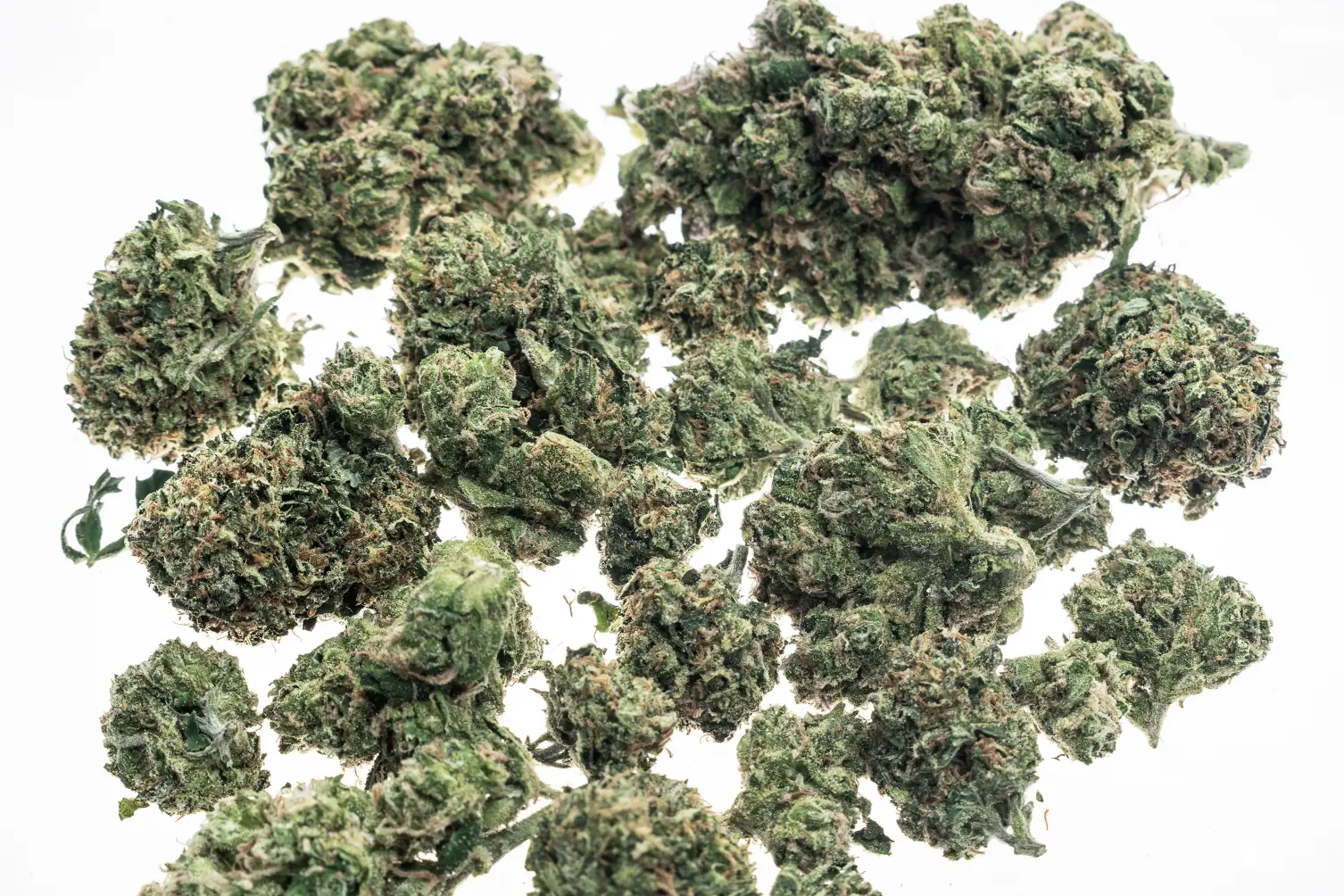
| Flower Morphology | Extremely dense, rounded golf-ball to chunky conical spears; bright lime-green calyxes with pink/violet blushes, thick silver frost |
| Yield Potential | High (450 to 550 g/m² indoors under optimized canopy management; 500 to 800 g/plant outdoors) |
| Cultivation Difficulty | Easy to moderate (forgiving vegetative growth, but demands strict humidity control and airflow during late bloom) |
Genetic Lineage
The historical breeding program that produced Sweet Tooth is one of the most celebrated milestones of late 1990s craft cannabis. Breeder Steve Tuck, working under the banner of Spice of Life Seeds in British Columbia, set out to capture the legendary, clone-only Sweet Pink Grapefruit (a Vancouver Island heirloom prized for its astonishing candy-citrus aromatics) and stabilize it into a vigorous, seed-producing line. To achieve this, Tuck crossed the Sweet Pink Grapefruit with DJ Short’s iconic Blueberry, introducing sweet berry esters, dark fruit pigments, and gentle euphoric sedation. The resulting cross was subsequently backcrossed and reinforced with a sturdy, resin-drenched Afghani/Nepalese indica line to lock in thick stem calipers, heavy trichome gland production, and rapid flowering speed.
This intricate tripartite heritage created a cultivar that stands apart from modern industrial polyhybrids. The Hawaiian and Nepalese landrace elements within the Sweet Pink Grapefruit and Blueberry lines contributed subtle floral perfume, uplifted mental cheer, and a unique, shimmering resin gland morphology. Meanwhile, the Afghani genetics contributed rock-hard calyx density, cold-weather resilience, and the rich, earthy hashish foundation that underpins the sweet fruit. When Sweet Tooth took first place overall at the 2001 High Times Cannabis Cup in Amsterdam, it cemented its status as the undisputed benchmark for confectionary, dessert-style cannabis.
When cultivating regular preservation seed stock of Sweet Tooth, growers generally observe two primary phenotypic expressions. Phenotype A is the celebrated “Grapefruit-Honey” expression: staying slightly more compact, producing pale lime-green calyxes with striking pink and peach pistils, and reeking of tart pink grapefruit candy, caramelized honey, and sweet floral blossoms. Phenotype B displays stronger Blueberry and Afghan traits: developing slightly darker foliage with purple-tinted calyxes, chunkier golf-ball floral clusters, and a deeper aroma of ripe blueberries, damp earth, and peppery hashish with a heavier, more narcotic physical stone.
Executing an effective mother selection program with Sweet Tooth requires evaluating glandular trichome head stability and cured aroma persistence. Because Sweet Tooth flowers are exceptionally dense, mother selection must also assess natural resistance to botrytis. A keeper should be selected not only for delicious candy fragrance, but for an open, self-supporting branch structure that allows air to circulate naturally through the interior. Once identified, a proven Sweet Tooth female cutting can be maintained for years as a dependable, crowd-pleasing mother that roots readily within ten to twelve days.
Effect Breakdown
Mood first
The psychoactive journey of Sweet Tooth begins with an immediate, sunny wave of cerebral optimism within two to three minutes of inhalation. Unlike aggressive sativas that can trigger racing thoughts or nervous kinetic energy, Sweet Tooth induces a tranquil, joyful mental lift. The visual field brightens, everyday mental fatigue evaporates, and a warm, smiling contentment settles over the consciousness. It stimulates dopamine pathways in a gentle, benevolent manner, making social conversations lighthearted, playful, and completely unhurried.
Warm physical relaxation
Around the twenty-to-thirty-minute mark, the somatic half of the hybrid balance emerges. A soothing, warm physical ease radiates outward from the chest and shoulders, traveling down the spinal column into the major muscle groups. Tight neck muscles, lower back stiffness, and joint aches dissolve under the cultivar’s rich terpene and cannabinoid profile. The physical sensation feels like sinking into a warm, fragrant mineral bath: completely relaxed and tension-free, yet free from heavy, immobilizing couch-lock at moderate dosages.
Higher-dose finish
When consumed in larger quantities or enjoyed during the late evening hours, the relaxing body high gradually deepens into restorative sedation. As the cerebral euphoria softens into dreamy contemplation past the ninety-minute mark, physical heaviness sets in. Eyelids grow pleasantly heavy, thoughts slow to a peaceful trickle, and a gentle, natural drowsiness guides the user toward restful sleep. The following morning is characterized by a refreshed, clear-headed sensation with zero lingering grogginess.
Flavor & Aroma Profile
Floral and honeyed top notes
The primary sensory signature of Sweet Tooth is defined by an exquisite blend of wild clover honey, candied pink grapefruit peel, and fresh floral blossoms. Brushing the live stems during mid-flower releases an immediate cloud of sweet nectar and crushed citrus rind that smells remarkably like a fresh confectioner’s glaze, completely free from the harsh, acrid chemical notes common in sour or fuel cultivars.
Fruit middle
Breaking open a dense, cured floral cluster reveals the complex fruit middle inherited from its Blueberry ancestry. A luscious blend of ripe summer blackberries, dark plum skins, and tart tropical mango steps forward, adding juicy, mouthwatering depth to the delicate honey-grapefruit top notes.
Earth, wood, and spice base
Anchoring this confectionary fruit canopy is an unmistakable old-school Afghani foundation. The base notes present warm cedar shavings, dry mountain pine, damp forest humus, and a gentle sprinkle of cracked black pepper and sweet temple hashish. This savory, resinous underpinning provides essential body and maturity, preventing the sweet aromatics from feeling cloying or artificial.
Dominant Terpenes
Laboratory chemical profiling of properly cured Sweet Tooth flowers highlights a robust terpene concentration ranging between 1.8% and 2.9% total terpenes by dry weight. The biochemical harmony is shaped by high levels of monoterpenes and sesquiterpenes that dictate its world-class candy bouquet and soothing therapeutic arc.
| Terpene | Average % | Sensory Contribution | Boiling Point | Physiological & Entourage Effects |
|---|---|---|---|---|
| Beta-Myrcene | 0.70% to 1.15% | Sweet dark fruit, earthy musk, damp forest floor | 166°C to 168°C | Enhances blood-brain barrier permeability, induces somatic muscle relaxation, and deepens tranquil evening calm |
| Beta-Caryophyllene | 0.40% to 0.70% | Cracked black pepper, dry wood spice, warm clove | 130°C to 139°C | Selectively activates peripheral CB2 cannabinoid receptors, delivering robust anti-inflammatory and systemic analgesic benefits |
| Alpha-Pinene | 0.30% to 0.55% | Fresh pine resin, crisp eucalyptus, wild herbs | 155°C to 156°C | Acts as a natural bronchodilator, enhances cognitive clarity, and counteracts short-term memory impairment from THC |
| D-Limonene | 0.25% to 0.45% | Pink grapefruit peel, sweet orange zest, citrus brightness | 176°C to 177°C | Elevates dopamine and serotonin signaling, promotes cheerful euphoria, and provides significant anti-anxiety and stress relief |
| Linalool | 0.15% to 0.30% | Floral lavender, sweet clover honey, soft spring blossoms | 198°C | Modulates GABAergic neurotransmission, delivering potent anti-anxiety, sedative, and muscle-relaxing properties |
| Terpinolene | 0.10% to 0.25% | Sweet herbal perfume, pine sap, complex floral fruit | 184°C to 185°C | Adds exotic complexity to the candied top notes and enhances the uplifting, cheerful cerebral onset |
Indoor vs. Outdoor Growing
| Cultivation Variable | Indoor Tent Setup (5×5 Controlled Environment) | Outdoor Garden & Poly Caterpillar Hoop House |
|---|---|---|
| Canopy Architecture & Height | Remains naturally compact (24 to 36 inches); single topping above node 4 and gentle outward LST creates an even, multi-topped canopy under HID lights. | Expands into a dense, rounded, multi-branched shrub reaching 4 to 6 feet in height; requires interior branch thinning to prevent humidity pockets. |
| Lighting & Spectral Impact | Dual-spectrum HID approach: crisp 400W Metal Halide in veg keeps nodes tight; 1000W High-Pressure Sodium in bloom drives deep photon penetration. | Harnesses full-spectrum natural sunlight with high natural UV radiation, thickening epidermal cell walls and stimulating heavy glandular resin production. |
| Climate & Temperature Control | Basement ambient air requires raising pots off cold concrete; inline fan extraction maintains optimal canopy temperatures (76°F to 78°F) and 1.1 to 1.3 kPa VPD. | Thrives during warm summer months, but late-season cold damp fronts and 40°F night dips require elevated in-ground beds and clear poly hoop covers. |
| Humidity & Pathogen Vulnerability | Dehumidifiers systematically lower relative humidity to 40% to 45% during late bloom; oscillating fans above and below canopy prevent botrytis in dense colas. | High vulnerability to late-September botrytis if autumn rains hit mature colas; clear poly hoop covers shield flowers from rain while maintaining lateral airflow. |
| Nutrient Appetite | Moderate feeder in coco/perlite; peaks at 1.5 to 1.7 mS/cm EC in bloom; easily handles bioavailable potassium and phosphorus during calyx bulking. | Thrives in rich living soil amended with composted manure, volcanic rock dust, kelp, and bone meal, requiring minimal synthetic salt feeding. |
| Harvest Window & Yield | Finishes in 8 to 9.5 weeks (56 to 65 days), yielding 450 to 550 g/m² of dense, boutique, hand-manicured frosted grapefruit spears. | Finishes between late September and the first week of October; large outdoor northern specimens yield between 500 and 800 grams of premium flower per plant. |
| Aromatic Preservation | Sealed environment protects volatile monoterpenes like limonene and pinene from heat degradation; late-bloom temperature drop enhances candy sweetness. | Natural autumn temperature swings produce intense candy and floral terpenes, but late rainfall can wash away surface resin if plants are left unprotected. |
Operating Sweet Tooth inside an indoor grow tent gives the cultivator total command over the cultivar’s greatest agronomic vulnerability: its extreme floral density. Because the plant stacks calyxes into tight, seamless batons that hug the branch wood, stagnant humidity inside the flower cores can easily harbor mold spores if relative humidity exceeds 50% during the final three weeks of bloom. In an indoor environment, combining active dehumidification with oscillating airflow above and below the canopy creates a pristine microclimate where the rock-hard flowers can swell to biological maturity in complete safety.
Outdoors, Sweet Tooth is an early-finishing champion, but local northern climate realities dictate the setup. In regions subject to early autumn cold fronts, heavy morning dews, and lake-effect humidity, planting Sweet Tooth directly in an open garden without overhead cover is a high-stakes gamble. The ideal northern outdoor method utilizes raised living-soil garden beds amended with native compost, worm castings, and coarse volcanic pumice for flawless drainage, sheltered beneath a clear polyethylene caterpillar hoop house erected by early September. This allows the plants to bask in full autumn sun while shielding the sugary colas from cold rain and frost, ensuring a clean harvest by the first week of October.
Strain-Specific Grow Guidance
Compact does not mean maintenance-free
Sweet Tooth’s naturally short, stocky stature can easily mislead growers into a passive management approach. Because internodes are separated by less than an inch, the center of the plant quickly becomes an impenetrable thicket of broad, overlapping fan leaves and dense secondary shoots. If left untouched, this congested core blocks light from penetrating to inner nodes and creates a humid, stagnant microclimate where powdery mildew and botrytis can easily take hold. Cultivators must actively sculpt the canopy: execute early low-stress training (LST) to pull primary lateral branches outward at a 45-degree angle, opening up the center of the plant to direct light and moving air.
Build support before the flowers demand it
While Sweet Tooth’s main stalks are thick and woody, the sheer physical density of its mature floral clusters will test branch integrity by week seven of flower. As trichome glands swell with dense essential oils, individual colas begin to lean outward, pulling lateral stems away from the main trunk. Relying on flimsy plastic stakes pushed into the root ball late in bloom risks tearing root tissue. Instead, install a horizontal trellis net or rigid circular tomato cage during vegetative training so that developing branches grow naturally into the grid, providing built-in structural support that effortlessly cradles the heavy colas through harvest.
Select the productive laterals
A cannabis plant possesses a finite daily pool of photosynthetic carbohydrates. Allowing Sweet Tooth to maintain dozens of small, shaded interior shoots wastes metabolic energy on low-value floral biomass. By performing a disciplined pruning pass at Day 21 of flower, the grower removes all weak, shaded lower branches and inward-facing sucker shoots from the bottom third of the plant. This targeted pruning directs all water, minerals, and carbohydrates straight into swelling the top six to eight primary colas, transforming what would have been loose popcorn larf into dense, premium-grade spears.
Feeding and root zone
Sweet Tooth is a moderate, steady nutrient consumer that rewards nutritional consistency over raw electrical conductivity. During peak bulking in weeks four, five, and six, maintain nutrient solution EC between 1.5 and 1.7 mS/cm. The plant has a healthy appetite for bioavailable phosphorus and potassium to fuel rapid calyx multiplication and resin synthesis. However, nitrogen must be stepped down aggressively after week four. Continuing to supply high nitrate levels into mid-bloom darkens the foliage to an unnatural waxy green, causes leaf tip clawing, delays floral maturation, and mutes the delicate pink grapefruit and honey aromatics in the cured jar.
Flower support
As the chunky colas pack on weight between weeks six and eight, physical branch support becomes essential. Without a trellis net or exterior stakes, perimeter branches will bow outward under the gravitational load, causing colas to rest against one another and creating stagnant moisture pockets. Ensure that every heavy floral spear is secured in its own dedicated space, separated by at least two inches of open air from neighboring branches.
Humidity strategy
Relative humidity must be stepped down systematically as flowering advances: maintain 55% during weeks one through four, 48% during weeks five and six, and strictly 40% to 42% from week seven until harvest. Position multiple oscillating fans to direct turbulent, non-buffeting airflow both across the top of the canopy and beneath the trellis net to ensure continuous air exchange through the lower stems.
Heat and aroma
The volatile monoterpenes that define Sweet Tooth’s exceptional flavor (alpha-pinene, limonene, and terpinolene) possess very low boiling points and degrade rapidly under environmental heat stress. During weeks seven, eight, and nine, lower canopy day temperatures to 72°F to 74°F and allow night temperatures to dip to 62°F to 64°F. This cooler temperature differential preserves the delicate monoterpenes on the calyx surfaces, prevents thermal evaporation of resin heads, and encourages striking pink and violet blushes along the outer bract edges.
Harvest signals
Determining the harvest window for Sweet Tooth requires looking past broad calendar estimates and inspecting glandular trichomes under a 60x microscope. Sweet Tooth typically reaches biological maturity between 56 and 65 days (8 to 9.5 weeks) indoors. The optimal harvest window occurs when approximately 85% to 90% of trichome heads on the calyxes have transitioned from clear to a milky, porcelain white, with roughly 5% to 10% showing deep honey amber. Harvesting while trichomes are predominantly clear yields an anxious, thin high with faint grassy terpenes, while waiting past 20% amber degrades the sweet grapefruit-honey top notes into a heavy, dull hash aroma.
Weedth Bud Flavor Tips
Protect the top notes before harvest
The exquisite pink grapefruit and wildflower honey top notes of Sweet Tooth are created by delicate volatile monoterpenes and esters that peak in concentration just as trichome heads turn fully milky. If you allow the plant to push past week nine into heavy amber trichome territory, the vibrant candy sweetness degrades, replaced by a dull, earthy, generic hashish profile. To preserve that legendary candy brightness, harvest the instant the vast majority of calyx trichomes achieve full milky opacity with just a light sprinkling of amber.
Use aroma as a harvest signal
Trichome opacity is indispensable, but with high-volatility cultivars like Sweet Tooth, olfactory maturity provides the ultimate confirmation of peak ripeness. During weeks six and seven, the canopy aroma is dominated by sharp, raw citrus and green herbs. Between days 56 and 60, a noticeable aromatic shift occurs: the raw green notes recede, replaced by a refined, complex bouquet of candied pink grapefruit, caramelized clover honey, and ripe berries. Harvesting at the precise moment this terpene transformation occurs ensures that the finished, cured flower retains its full aromatic brightness.
Dry slowly enough for sweetness to survive
Post-harvest drying is where the majority of commercial Sweet Tooth runs lose their magic. Volatile monoterpenes like limonene and pinene evaporate rapidly at temperatures above 68°F. To preserve these delicate compounds, whole plants or large branches should be harvested and hung upside down in a dedicated drying tent maintained strictly at 60°F (15.5°C) and 60% relative humidity with zero direct light. This slow, cool hang allows the moisture inside the central stems to migrate gradually outward, extending the drying cycle to twelve to fourteen days. Fast-drying Sweet Tooth in warm air permanently destroys its sweet confectionary top notes, locking in harsh chlorophyll and leaving behind a dull, cardboard taste.
Cure for clarity
Once small branch stems snap cleanly with an audible crack rather than bending, the flowers should be carefully bucked from the branches and manicured with sharp curved shears. Place the trimmed buds into airtight glass mason jars, filling containers to roughly 75% capacity to leave an adequate oxygen headspace. Store jars in a dark basement cabinet at 62°F to 65°F. For the first two weeks, burp the jars twice daily for ten minutes to exhaust accumulated carbon dioxide and moisture, using digital hygrometers to verify that internal humidity stabilizes between 58% and 62%. Over four to six weeks of curing, enzymatic breakdown of residual starches rounds out the smoke, allowing the candied pink grapefruit, wildflower honey, and spiced hashish to step forward with crystal clarity.
Weedth Bud Boost Tips
Use one topping and broad branch spacing
The highest return comes from placing the right number of tops inside the effective light zone. A single clean topping above node four during week three of vegetative growth breaks apical dominance and directs hormonal energy into six to eight primary lateral branches. Gently pulling these laterals outward with soft ties creates a broad, open wagon-wheel architecture that allows direct light to illuminate every flowering site.
Keep the premium zone shallow
Because Sweet Tooth develops short internodes and dense fan leaves, light penetration drops off steeply below the top ten to twelve inches of canopy. Attempting to maintain a deep, three-foot vertical canopy will result in dozens of small, larfy, shaded bottom buds. Execute an aggressive lollipopping pass at Day 21 of flower, removing all lower foliage and weak tertiary branches from the bottom third of the plant. This directs the plant’s full metabolic energy into swelling a flat, shallow, highly illuminated layer of premium top-tier colas.
Support the side branches early
Install your horizontal trellis netting or tomato cages before week three of flower. Providing a rigid structural support grid prevents heavy branches from wasting metabolic energy on wood reinforcement, directing all carbohydrates into swelling the terminal calyxes.
Feed moderately through the finish
Sweet Tooth responds poorly to erratic, fluctuating nutrient regimens. Avoid wild swings in electrical conductivity or aggressive flush-and-feed cycles. Maintain a steady, dependable nutrient feed at 1.5 to 1.6 mS/cm throughout mid-flower, supplying consistent levels of bioavailable calcium, magnesium, phosphorus, and potassium. Inoculating the root zone with beneficial mycorrhizal fungi and humic acids enhances nutrient absorption efficiency without requiring higher fertilizer concentrations.
Reduce humidity as density increases
As the chunky colas swell and merge into dense batons between weeks six and eight, internal moisture inside the bud cores becomes a critical pathogen hazard. Step down relative humidity systematically: 50% at week five, 45% at week six, and strictly 40% to 42% from week seven to harvest, ensuring constant, non-buffeting airflow above and below the canopy.
Medical Uses & Benefits
Sweet Tooth holds an esteemed position among medical cannabis patients who require dependable physical and mental relief without the intense, immobilizing sedation of pure narcotic indicas. Its primary clinical strength lies in the management of chronic stress, generalized anxiety disorder, and clinical depression. The initial euphoric onset stimulates dopamine release and silences negative mental chatter, instilling an optimistic, tranquil mindset that allows patients to decompress from acute psychological tension.
The cultivar is equally celebrated for its therapeutic efficacy in treating chronic musculoskeletal pain, tension headaches, arthritis, and muscle spasms. By combining high THC concentrations with generous levels of beta-myrcene and beta-caryophyllene, the cultivar interacts directly with central nervous system pathways and peripheral CB2 receptors to reduce systemic inflammation, ease muscular contraction, and soothe chronic back and joint discomfort. Furthermore, during the late phase of the high, Sweet Tooth acts as a dependable, non-habit-forming sleep aid for individuals struggling with sleep-onset insomnia, guiding the central nervous system into deep, restorative slumber without the next-morning cognitive fog caused by pharmaceutical hypnotics.
Ideal User Profile
Sweet Tooth is custom-tailored for experienced cannabis consumers and flavor connoisseurs who cherish the rich, complex terpene profiles of late 1990s and early 2000s vintage breeding. It is the consummate late-afternoon and evening cultivar for individuals seeking deep physical relaxation, joyful decompression, and peaceful social interaction after demanding workdays. Artisanal hash makers and solventless rosin extractors will fall in love with its large, brittle trichome heads, which wash effortlessly in ice water to produce rich, pink-tinted live rosin bursting with sweet grapefruit-honey flavor.
Conversely, Sweet Tooth is completely unsuited for early morning consumption, intense athletic training, or tasks requiring sharp analytical focus and rapid physical coordination. Consuming the strain during daytime working hours will almost certainly derail productivity, inducing heavy eyelids, mental contentment, and an overwhelming desire to relax. Novice consumers should approach the cultivar with caution and intentional dosage control, as its smooth, candy-like smoke makes it easy to overconsume, leading to heavy physical sedation.
Grower Notes and Feedback
The deception of compact internodes
Across decades of indoor and outdoor cultivation, grower feedback regarding Sweet Tooth converges on three essential truths: it is naturally compact and easy to manage during veg, it demands vigilant moisture management during late bloom, and it rewards patient cold curing with unmatched jar appeal. Experienced cultivators universally warn against overcrowding plants in small spaces. Its tight internodes and dense foliage can create stagnant, humid pockets that invite mold if branches are not actively spread apart.
Root-zone dry-back rhythm in cool basements
Growers also emphasize the cultivar’s distinct nutritional preference for stability over strength. In soilless coco or peat systems, pushing electrical conductivity above 1.8 mS/cm routinely causes downward leaf tip clawing and dark, leathery foliage. The plant performs far better with a moderate, balanced nutrient solution rich in bioavailable phosphorus and potassium, supported by modest calcium and magnesium inputs. In organic living soil, Sweet Tooth thrives when amended with compost teas and kelp extracts, producing superior terpene concentrations and an exceptionally smooth smoke. In cool basement setups, allowing containers to dry back thoroughly between irrigations maintains high root-zone oxygenation and prevents pythium outbreaks.
Terpene degradation under heat spikes
Finally, cultivators emphasize that the legendary pink grapefruit and honey aroma is extraordinarily fragile. While the pungent earth and hash notes survive rough post-harvest handling, the sweet, candied citrus top note evaporates rapidly if flowers are dried too quickly or exposed to warm room temperatures. A single afternoon temperature spike above 80°F during late bloom can strip away significant concentrations of volatile limonene and terpinolene. The difference between an ordinary, grassy batch and a top-shelf connoisseur masterpiece comes down entirely to executing a disciplined, slow 14-day cold dry at 60°F and 60% relative humidity.
Weedth Editor’s Cultivation Journal
A 10-Week Northern Basement Diary Under Dual-Spectrum HID Lighting
Cultivar: Sweet Tooth (selected female from verified regular preservation stock)
Environment: 5×5 Heavy-Duty Grow Tent in an Unheated Residential Basement
Substrate: 7-Gallon Aerated Fabric Pots, 70/30 Buffered Coco Coir / Coarse Horticultural Perlite
Lighting: 400W Crisp Metal Halide (MH, 6500K) Veg / 1000W Air-Cooled High-Pressure Sodium (HPS, 2100K) Flower
Nutrients: Pure Soluble Mineral Salts (Soluble Calcium Nitrate, Potassium Nitrate, Monopotassium Phosphate, Magnesium Sulfate, Potassium Silicate)
Lead Cultivator: Alex Buck
Week 1: Clonal Establishment & Basement Floor Isolation (Photoperiod: 18/6, Temp: 75°F Day / 66°F Night, RH: 68%, Input EC: 1.1 mS/cm, pH: 5.9)
We started with twelve regular preservation seeds, germinating all twelve within forty-eight hours. By Day 10, seedlings were established in four-inch containers. We pre-sexed the plants under a magnifying loupe, culled five males, and selected the four most vigorous, compact female specimens displaying that unmistakable candy-sweet stem-rub aroma. The selected females were transplanted directly into seven-gallon fabric pots elevated on two-inch rigid foam insulation boards topped with slatted cedar risers. Because our grow tent sits on a bare concrete basement slab influenced by northern Great Lakes spring air, insulating the containers was critical to keep root-zone temperatures at a comfortable 70°F. Suspended our 400W Metal Halide lamp inside a wide open-wing reflector thirty inches above the canopy. The cool 6500K blue photons immediately flooded the broad, dark-green fan leaves. Fed a gentle base solution of calcium nitrate, Epsom salt, and cold-pressed kelp extract. By Day 6, roots were already penetrating the aerated container walls.
Week 2: Vegetative Momentum & Node 4 Topping (Photoperiod: 18/6, Temp: 76°F Day / 66°F Night, RH: 65%, Input EC: 1.3 mS/cm, pH: 5.8)
The vegetative pace under the 400W MH is exceptionally stout and steady. The main stalks have thickened rapidly, showing dense node stacking separated by barely an inch. On Day 12, with the fifth true node emerging, I executed a clean topping cut directly above node four using a sterilized scalpel. Within forty-eight hours, the two dominant shoots at node four took over as primary leaders, while nodes two and three pushed outward at strong horizontal angles. Brushing the lower stems releases an intoxicating scent of candied pink grapefruit peel, sweet clover honey, and crushed pine needles. Added 40 ppm of soluble potassium silicate to fortify stem cellulose.
Week 3: Trellis Net Installation & Lateral Spreading (Photoperiod: 18/6, Temp: 76°F Day / 65°F Night, RH: 62%, Input EC: 1.4 mS/cm, pH: 5.8)
Canopy width has now completely outpaced pot diameter. I installed an elastic horizontal trellis netting ten inches above the pots and carefully guided the primary leaders outward beneath the mesh squares, securing them with soft rubber plant ties. The goal is to build an expansive, symmetrical thirty-inch green table before initiating flower. Input EC stepped up to 1.4 mS/cm, keeping input pH strictly at 5.8. The plants drink with robust efficiency, drying back their containers evenly every forty-eight hours.
Week 4: The 12/12 Flip & 1000W HPS Ignition (Photoperiod: 12/12, Temp: 77°F Day / 66°F Night, RH: 55%, Input EC: 1.5 mS/cm, pH: 5.9)
The canopy now fills 75% of our 5×5 tent floor, the exact threshold for initiating flower. On Sunday morning, I switched the mechanical timer to 12/12, disconnected the 400W MH, and ignited our heavy-duty 1000W High-Pressure Sodium lamp inside an air-cooled reflector. The roaring golden-amber 2100K arc immediately drenched the tent in warm, high-intensity photons. Connected our 6-inch inline centrifugal fan to pull cool 64°F basement air across the lamp and exhaust heat directly outside. Within four days, the plants responded to the red-heavy spectrum with modest elongation, adding about half an inch of clean new growth per day.
Week 5: Modest Stretch & Lollipopping Pass (Photoperiod: 12/12, Temp: 76°F Day / 65°F Night, RH: 50%, Input EC: 1.6 mS/cm, pH: 6.0)
By Day 21 of flower, the transition stretch reached its peak. The plants expanded by roughly 40% in vertical height, filling the upper trellis squares with military precision. Today was lollipopping day. I methodically stripped away every shaded interior sucker shoot, wispy tertiary branch, and aging lower fan leaf from the bottom ten inches of each plant. The floor of the tent was blanketed in green foliage, but standing back, the canopy now resembles a clean, highly organized orchard of vertical shoots with unobstructed airflow underneath. Swapped the nutrient formula toward bloom: reduced calcium nitrate and increased monopotassium phosphate. The aroma inside the tent is shifting rapidly toward candied grapefruit syrup and sweet floral honey.
Week 6: Calyx Multiplication & Resin Initiation (Photoperiod: 12/12, Temp: 75°F Day / 64°F Night, RH: 46%, Input EC: 1.7 mS/cm, pH: 6.0)
The transition from stretch to full floral production is complete. Dime-sized floral clusters have merged into continuous, twelve-inch batons of densely stacked calyxes along every primary terminal. Glandular trichomes are erupting en masse, coating the tiny sugar leaves in a frosty, crystalline sheen that sparkles under the 1000W HPS beam. Handling the stems leaves fingers coated in an intensely sticky, viscous resin that smells of boiling grapefruit jam, wildflower honey, and sweet cedarwood. Dropped relative humidity to 46% and maintained continuous air movement below the canopy.
Week 7: Peak Floral Bulking & Secondary Trellis Support (Photoperiod: 12/12, Temp: 74°F Day / 63°F Night, RH: 44%, Input EC: 1.7 mS/cm, pH: 6.1)
This is the week of maximum floral swelling. The chunky colas have merged into heavy, solid batons of densely stacked calyxes. Individual spears are accumulating massive physical weight, causing perimeter leaders to lean outward under the gravitational load. I lowered a second layer of trellis netting eighteen inches above the first, carefully guiding each heavy spear into its own dedicated grid opening. Input EC peaked at 1.7 mS/cm, delivering abundant bioavailable potassium and phosphorus. Maintained an extra oscillating fan blowing directly beneath the canopy to ensure zero moisture pockets accumulate inside the dense flower cores.
Week 8: Terpene Crescendo & Pink Pistil Radiance (Photoperiod: 12/12, Temp: 73°F Day / 62°F Night, RH: 42%, Input EC: 1.4 mS/cm, pH: 6.1)
The sensory environment inside the basement tent has reached a thrilling climax. The sweet grapefruit and honey aromatics have integrated into a stunning bouquet of ripe berries, dark plums, and spiced temple hashish. Calyx swelling is nearing completion; pistils are curling inward and turning from vibrant pink to deep rustic copper. I dropped daytime tent temperatures to 73°F and allowed the cool basement night air to drop night temperatures to 62°F. This deliberate temperature differential preserves the volatile monoterpenes and encourages striking violet blushes along the outer calyx edges. Scaled back nutrient EC to 1.4 mS/cm, focusing on clean water with trace potassium sulfate.
Week 9: Ripening, Flushing & Trichome Audit (Photoperiod: 12/12, Temp: 72°F Day / 60°F Night, RH: 40%, Input EC: 0.4 mS/cm, pH: 6.2)
Initiated the final flush using pure reverse osmosis water buffered with minimal magnesium sulfate. Runoff EC dropped from 1.6 to 0.5 mS/cm within five days, prompting the plants to draw down their stored starch and nitrogen reserves. Fan leaves are displaying an exquisite natural autumnal senescence, fading gracefully from deep green to bright golden yellow and violet. Daily microscopic inspections with a 60x jeweler’s loupe reveal that roughly 85% of glandular trichome heads are milky porcelain, 10% are turning a deep honey amber, and only 5% remain clear. The sweet pink grapefruit and honey fragrance is so intense that simply unzipping the tent door releases a wave of fruit and nectar.
Week 10: The Whole-Plant Cold Harvest (Photoperiod: 12/12, Temp: 68°F Day / 58°F Night, RH: 38%, Input: Pure Water)
On Day 63 of flower, having confirmed peak trichome maturity and complete calyx swelling, we executed the harvest. After twenty-four hours of total darkness to maximize resin content and minimize starch mobilization, we severed each plant at the base of the main stalk using sterilized bypass loppers. We removed only the large, un-resinated fan leaves, leaving all frosty sugar leaves intact to protect the delicate floral spears during the dry. The four plants were suspended upside down on heavy nylon lines inside a clean, light-tight drying tent running strictly at 60°F and 60% relative humidity. Total yield is an outstanding 510 g/m² of boutique, top-shelf flower. The cured test flower burns with pure silver-white ash, coating the palate in sweet pink grapefruit syrup and spiced wildflower honey while delivering an expansive, joyful body stone that honors the finest traditions of Spice of Life breeding.
Weedth Score
Bud Density & Trichome Crystallization (9.1/10): Sweet Tooth produces exceptionally dense, rock-hard floral clusters that stack into chunky, conical spears smothered in silver resin glands. The finished buds are solid to the touch, displaying vibrant lime-green calyxes accentuated by rich violet undertones and tangled copper-pink pistils. When manicured, the buds resemble sparkling sugar-coated jewels with world-class boutique bag appeal.
Aromatic Depth & Confectionary Terpenes (9.4/10): The olfactory profile is an absolute masterpiece of late 1990s flavor breeding. It rejects harsh industrial chemical fuel in favor of an intoxicating, multi-layered confection of candied pink grapefruit peel, caramelized wildflower honey, ripe summer berries, and sweet floral blossoms over an aged Afghani hash foundation. High concentrations of myrcene, caryophyllene, and limonene ensure that the fragrance lingers in the room for hours after a jar is unsealed.
Flavor Fidelity & Combustion Quality (9.2/10): Combusting properly flushed and slowly cured Sweet Tooth translates the rich aroma into an exceptionally pure, decadent palate experience. The initial draw coats the mouth in sugary grapefruit syrup and sweet dark berry nectar, followed on the exhale by an earthy, peppery hash and cedarwood finish. The smoke is remarkably velvety and cool, burning cleanly down to fine silver-white ash without a trace of throat harshness.
Onset Velocity & Euphoric Harmony (8.9/10): The psychoactive arc is pure hybrid harmony. It opens with an immediate, sunny wave of cerebral euphoria and cheerful mental optimism that dissolves daily anxiety and sparks creative conversation. Over the following ninety minutes, this mental cheer gracefully transitions into a deep, soothing somatic relaxation that eases physical tension without inducing premature couch-lock.
Therapeutic Utility for Stress & Chronic Pain (9.0/10): As a medicinal cultivar, Sweet Tooth is remarkably versatile. It provides dependable relief for chronic musculoskeletal pain, tension headaches, arthritis, and muscle spasms through caryophyllene-mediated CB2 activation. Its mood-elevating properties combat clinical depression and acute stress, while its calming late phase offers natural, non-grogging support for insomnia.
Canopy Management & Garden Resilience (8.8/10): In the grow room, Sweet Tooth is a stout, cooperative partner that excels under disciplined canopy steering. While its compact internodes and late-bloom mold sensitivity demand vigilant humidity control, it responds eagerly to early topping, low-stress training, and SCROG netting. Its robust branch strength and rapid root development make it a dependable performer in both soil and soilless media.
Commercial Harvest Mass & Rosin Extraction (8.9/10): Consistently producing 450 to 550 g/m² indoors and clearing up to 800 grams per plant outdoors under hoop house protection, Sweet Tooth delivers outstanding commercial returns. Its large, brittle capitate-stalked trichome heads detach cleanly during ice water hash washing, producing solventless live rosin with a unique, terpene-rich pink grapefruit-honey profile that commands premium craft pricing.
Overall Weedth Score: 9.0/10. An immortal Cannabis Cup champion that unites the mouthwatering pink grapefruit sweetness of Vancouver Island breeding with the unstoppable resin power and sturdy structure of vintage Afghani genetics, offering craft cultivators an exhilarating, bountiful grow and an unforgettable smoking experience.
FAQ
What is the exact genetic lineage of Sweet Tooth?
Sweet Tooth was bred by Steve Tuck of Spice of Life Seeds in the late 1990s. The definitive heritage unites the famous clone-only Sweet Pink Grapefruit (a Vancouver Island heirloom) with DJ Short’s original Blueberry, which was subsequently stabilized and reinforced with a resin-dense Afghani/Nepalese hash plant. This three-way cross yielded the iconic 2001 High Times Cannabis Cup winner celebrated for its candied pink grapefruit, wildflower honey, and berry syrup aromatics.
How tall does Sweet Tooth grow indoors?
Sweet Tooth is naturally a short, compact cultivar, typically finishing between 24 and 36 inches in height indoors. Its transition stretch is modest (1.3x to 1.6x vegetative height), making it exceptionally well-suited for grow tents or rooms with limited vertical clearance.
Does Sweet Tooth need a trellis or branch support?
Yes. While its main stalk is thick and woody, the floral clusters become exceptionally dense and heavy during the final three weeks of bloom. Lateral branches will bow outward under the weight of the colas, making horizontal trellis netting or exterior tomato cages essential to prevent branches from resting against one another.
Is Sweet Tooth prone to mold (botrytis)?
Yes, Sweet Tooth is moderately prone to botrytis during late flowering due to the sheer physical density of its floral clusters. Moisture easily becomes trapped between tightly packed calyxes. Cultivators must maintain relative humidity strictly between 40% and 45% during weeks seven through nine, ensuring robust, non-buffeting airflow above and below the canopy.
Does Sweet Tooth respond well to topping?
Yes. A single topping above node four or five during week three of vegetative growth is highly recommended. This breaks apical dominance and directs hormonal energy into six to eight primary lateral branches, creating an even, multi-topped canopy and maximizing photon interception.
Why does my Sweet Tooth smell more earthy than sweet?
Phenotypic variation and drying conditions heavily dictate the final aroma. Some seed expressions lean naturally toward the earthy Afghani hash parent. Furthermore, drying too quickly in warm air will evaporate the delicate pink grapefruit and floral monoterpenes, leaving behind only the heavier, resilient earthy myrcene and caryophyllene compounds.
When should Sweet Tooth be harvested for the best flavor?
Inspect calyx trichomes under a 60x microscope: harvest when 85% to 90% of trichome heads are milky porcelain white with 5% to 10% showing honey amber. Harvesting too early results in a thin, grassy fruit flavor, while waiting past 20% amber degrades the sweet grapefruit-honey notes into a heavy, dull hash aroma.
Is Sweet Tooth suitable for beginners?
Yes. Sweet Tooth is rated as easy to moderate difficulty. Its compact stature, sturdy branches, and forgiving nutrient tolerance make it an excellent choice for novice cultivators, provided they maintain disciplined humidity control during late flower.
How long does Sweet Tooth flower indoors?
Indoor flowering typically spans 56 to 65 days (8 to 9.5 weeks) under a 12/12 photoperiod. Phenotypes leaning heavily toward Sweet Pink Grapefruit often finish in 56 to 60 days, while expressions carrying heavier Afghan genetics benefit from the full 63 to 65 days to achieve peak calyx density.
Can Sweet Tooth be grown outdoors in cooler climates?
Yes. Sweet Tooth finishes early (late September to early October), making it well-suited for northern temperate zones. However, in regions with damp autumns and heavy morning dew, plants should be sheltered beneath clear polyethylene caterpillar hoop houses to protect the dense colas from direct rain.
Does Sweet Tooth develop pink or purple pistils?
Yes. Many authentic Sweet Tooth phenotypes display striking pink and peach pistils during mid-flower, accompanied by violet blushes along the calyx edges, especially when night temperatures drop into the low 60s during late bloom.
What is the most effective drying method for Sweet Tooth?
Execute a slow whole-plant or large-branch cold hang at 60°F (15.5°C) and 60% relative humidity in total darkness for twelve to fourteen days until small stems snap cleanly. Slow drying allows moisture inside the thick colas to migrate outward evenly while preserving volatile monoterpenes.
How heavy of a nutrient feeder is Sweet Tooth?
Sweet Tooth is a moderate nutrient consumer that thrives at an electrical conductivity (EC) of 1.2 to 1.4 mS/cm in veg, peaking at 1.5 to 1.7 mS/cm during floral bulking. Nitrogen must be reduced sharply after week four to prevent dark leaf clawing and preserve the sweet fruit aroma.
What are the primary medical benefits of Sweet Tooth?
Sweet Tooth is widely utilized for managing chronic stress, generalized anxiety, depression, tension headaches, and mild musculoskeletal pain, as well as providing effective, non-grogging support for sleep-onset insomnia.
Does Sweet Tooth wash well for solventless hash extraction?
Yes. Sweet Tooth produces large, brittle capitate-stalked trichome heads that detach cleanly during ice water hash washing, producing solventless live rosin with a unique, terpene-rich pink grapefruit-honey profile that commands premium craft pricing.
What is the optimal vapor pressure deficit (VPD) for Sweet Tooth during peak bulking?
During peak floral bulking in weeks four through six, maintain an optimal canopy VPD between 1.2 and 1.4 kPa (roughly 75°F to 77°F with 45% to 50% relative humidity). During the final two weeks of ripening, increase VPD to 1.4 to 1.6 kPa by lowering relative humidity to 40% to 42% while dropping temperatures to 72°F day and 62°F night to prevent mold spores from germinating in the dense calyx cores.
Can Sweet Tooth be grown effectively in a Sea of Green (SOG) system?
Yes. Because Sweet Tooth naturally produces a dominant, chunky central cola with minimal lateral stretch, it is an outstanding candidate for Sea of Green (SOG) cultivation. Planting uniform rooted cuttings in two-gallon containers at high density (one plant per square foot) with only ten to fourteen days of vegetative growth allows cultivators to maximize canopy space and harvest an even table of dense, baseball-sized central spears.
Similar Strains
Sweet Pink Grapefruit
As the legendary clone-only maternal ancestor of Sweet Tooth, Sweet Pink Grapefruit provides the definitive candied citrus peel, sweet nectar, and uplifting cerebral high. Sweet Pink Grapefruit grows with slightly more delicate branches and lower commercial yields, lacking the heavy Afghani calyx density of Sweet Tooth.
Blueberry
DJ Short’s iconic classic contributed its rich berry esters, anthocyanin pigments, and tranquil evening body stone to Sweet Tooth. While Blueberry leans entirely into ripe summer blueberries and vanilla cream, Sweet Tooth combines that fruitiness with tart pink grapefruit and caramelized honey.
Northern Lights
Sharing Sweet Tooth’s compact indica architecture, thick resin blanket, and relaxing evening stone, Northern Lights offers an earthy, pine-forward alternative. Northern Lights produces a slightly more sedating, narcotic body high with savory wood and spice flavors.
Bubblegum
Another titan of 1990s confectionary breeding, Bubblegum shares Sweet Tooth’s mouthwatering candy sweetness and balanced hybrid effects. Bubblegum delivers sweet pink bubblegum and floral fruit notes with a slightly more physical, couch-locking finish.
Sweet Island Skunk
A fellow British Columbia legend, Sweet Island Skunk pairs sweet tropical fruit with pungent skunk aromatics. Sweet Island Skunk stretches significantly more with a sativa-dominant framework, delivering energetic daytime focus rather than Sweet Tooth’s relaxing evening calm.
Cinderella 99
For consumers seeking vibrant fruit aromatics with an energetic, high-flying cerebral rush, Cinderella 99 is a top alternative. Cinderella 99 delivers tropical pineapple and sweet grapefruit terpenes with an electric, racehorse sativa high that contrasts with Sweet Tooth’s grounded relaxation.
Share this article
A quick overview of the topics covered in this article.
Follow us
Latest articles

October 24, 2026
October 24, 2026
October 24, 2026

October 24, 2026