
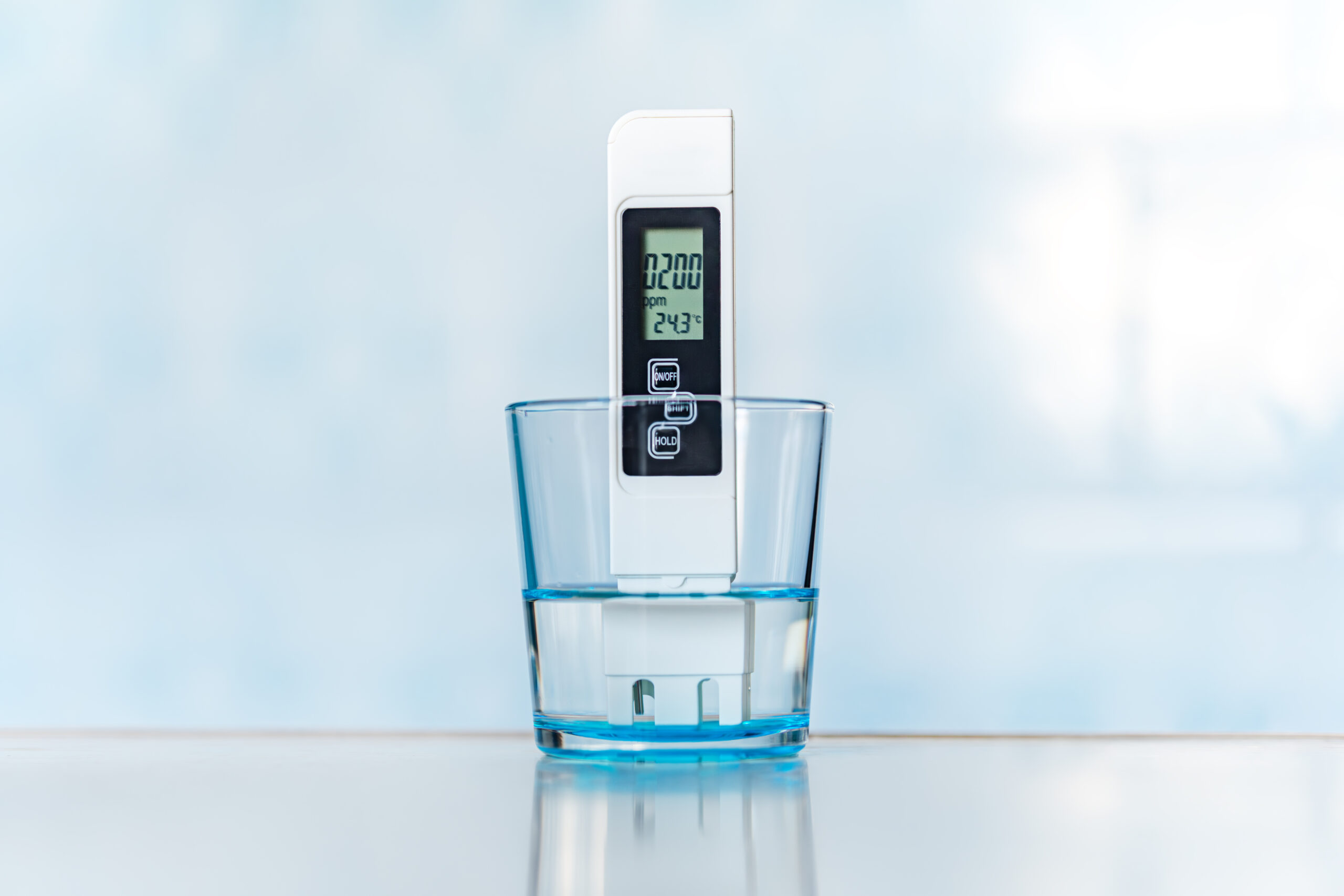
Tap Water for Cannabis: Hardness, Chlorine, Chloramine, and Mineral Buildup
Most municipal tap water can be used for cannabis if you know what is actually in it and how your root zone responds over time. “Tap water” is not one chemistry. One supply may be moderately hard and useful as a calcium and magnesium source, another may carry high bicarbonate alkalinity that slowly pushes substrate pH upward, and another may have enough sodium, chloride, or total dissolved salts to justify blending or treatment.
Chlorine and chloramine add another layer of confusion. Both are drinking-water disinfectants, but they do not behave the same way. Free chlorine can decline during storage and aeration, while chloramine is intentionally more persistent. Neither should be treated as an automatic reason to reject municipal water. The practical question is whether the disinfectant, mineral load, alkalinity, or salt profile is causing a measurable problem in your system.
The most useful workflow is simple: identify the water chemistry, measure the source before adding fertilizer, compare it with the finished irrigation solution, observe what accumulates in the root zone, change one variable, and verify the result. That approach prevents growers from buying unnecessary filters, duplicating calcium and magnesium, chasing pH numbers, or turning a manageable water source into a new problem.
In This Resource
Tap water decisions that actually matter
- Can You Use Tap Water for Cannabis?
- Separate Hardness, Alkalinity, EC, Chlorine, and Chloramine
- How Tap Water Behaves in Soil, Coco, Rockwool, and Hydro
- A Repeatable Tap-Water Testing Procedure
- Source Water vs Fertilizer Strength vs Root-Zone Accumulation
- Diagnose Mineral Buildup, Scale, and Misleading Symptoms
- Treatment Options and Their Limits
- Correct One Variable and Verify the Next Irrigation
Can You Use Tap Water for Cannabis?
Yes, in many cases. Municipal tap water is designed to be microbiologically safe for people and is often chemically consistent enough to be a practical irrigation source. The useful decision is not whether the water came from a tap. It is whether its alkalinity, hardness, total ionic load, sodium, chloride, and disinfectant residual fit the crop system.
A grower using a buffered organic soil can tolerate a different source-water profile than a grower fertigating coco several times a day. A recirculating hydroponic reservoir is different again because every dissolved ion that enters the reservoir participates in the nutrient formula. The same tap water may therefore be easy to manage in one system and awkward in another.
Can You Use Tap Water for Cannabis?
Start by treating tap water as an input that needs a baseline. Measure source EC and pH at the grow site, obtain the municipal water report when one is available, and pay particular attention to alkalinity, calcium, magnesium, sodium, chloride, and the disinfectant used by the utility. If the report is old, highly variable, or missing irrigation-relevant ions, a laboratory water test provides a better baseline.
Do not reject water because it is called “hard,” and do not approve it because the EC looks low. Hardness mainly reflects calcium and magnesium. EC reflects all dissolved ions together. A moderate EC composed largely of useful calcium and magnesium is different from the same EC dominated by sodium and chloride.
Important: A source-water number is not a diagnosis. The same tap-water EC can describe very different chemistries, and the same hardness value can behave differently when alkalinity, sodium, chloride, and fertilizer composition change.
Is Tap Water Safe for Cannabis Plants?
“Safe” should mean more than “the plant did not wilt after one watering.” A usable source should support stable root-zone pH, manageable salinity, adequate nutrient balance, and reliable irrigation hardware over repeated use. Problems from tap water often develop slowly. Bicarbonate alkalinity may raise substrate pH over weeks, mineral scale may gradually narrow emitters, and sodium or chloride may accumulate when leaching is limited.
This is why a healthy plant during the first week does not prove that the water chemistry is suitable for the full crop cycle. The better question is whether the water remains manageable after repeated irrigations under the actual fertilizer program.
“My plants look fine with tap water. Do I still need a water test?”
If the crop is stable and the source is consistent, you do not need to turn routine irrigation into a laboratory project. But a baseline report is still useful because it explains what the fertilizer is starting with. Test sooner when pH keeps drifting, EC rises between irrigations, emitters scale, leaves develop unexplained marginal damage, or the utility changes source or treatment.
Question sent by: Ethan Brooks, via email.
Can Cannabis Grow with Hard Tap Water?
Often, yes. Hardness mainly comes from dissolved calcium and magnesium, both of which are essential plant nutrients. Moderate hardness can reduce the amount of calcium and magnesium the fertilizer program needs to supply. The problem begins when growers assume that “hard” automatically means “bad” or that all of the hardness is nutritionally useful in the same proportions.
Very hard water can increase background EC, contribute to mineral precipitation, leave scale on equipment, and complicate fertilizer formulation. Calcium-rich water may also change the balance between calcium, magnesium, potassium, phosphate, sulfate, and bicarbonate in a concentrated nutrient solution. The response is usually to design the feed around the water, not to automatically add more calcium and magnesium or automatically replace the water with reverse osmosis.
Hardness
Water hardness mainly describes dissolved calcium and magnesium and is often reported as milligrams per liter of calcium carbonate equivalent. Hardness does not directly tell you alkalinity, sodium, chloride, or whether the calcium-to-magnesium ratio fits your fertilizer program.
Separate Hardness, Alkalinity, EC, Chlorine, and Chloramine
The fastest way to make tap-water management confusing is to treat several different measurements as versions of the same thing. They are not. Hardness describes mainly calcium and magnesium, alkalinity describes acid-neutralizing capacity, pH describes current acidity, and EC describes total ionic conductivity. Chlorine and chloramine are disinfectant residuals, not mineral-hardness measurements.
| Measurement or Constituent | What It Tells the Grower |
|---|---|
| pH | The acidity or basicity of the water at the moment of measurement. It does not tell you how strongly the water will resist acidification or how it will push substrate pH over time. |
| Alkalinity | The water’s acid-neutralizing capacity, commonly driven by bicarbonate and carbonate. It is often more useful than source pH for explaining repeated upward root-zone pH drift. |
| Hardness | Mainly the calcium and magnesium content expressed as CaCO3 equivalent. It can provide useful nutrients but also contributes to scale risk when chemistry favors precipitation. |
| EC | The combined conductivity of dissolved ions. It tells you total ionic load but not which ions are present or whether they are nutritionally balanced. |
| Sodium and chloride | Specific ions that may accumulate and contribute to salinity or toxicity risk. They need individual analysis because EC cannot identify them. |
| Free chlorine | A relatively reactive disinfectant residual that can decline with time, aeration, light, temperature, and reaction with organic matter. Its disappearance rate is not fixed. |
| Chloramine | A longer-lasting disinfectant formed when chlorine and ammonia are used together. It is more persistent than free chlorine and should not be assumed to disappear after an overnight rest. |
Water pH vs Alkalinity
A tap-water pH of 8 does not automatically mean the water has high alkalinity, and a lower pH does not prove low alkalinity. pH is a snapshot of hydrogen-ion activity. Alkalinity measures how much acid-neutralizing base is present. In most municipal and groundwater sources, bicarbonate is a major contributor.
This distinction matters because a grower can adjust a tank from pH 8.0 to 6.2 and still deliver a large bicarbonate load if only a small amount of acid was needed to move the meter. Conversely, another water source may begin at a similar pH but have little buffering and move rapidly with a tiny acid addition. The amount of acid required to neutralize alkalinity is chemistry-dependent, not a fixed dose per gallon.
pH vs Alkalinity vs Hardness in Irrigation Water
Hardness and alkalinity often rise together in limestone-influenced groundwater, but they are not interchangeable. Hardness is primarily calcium and magnesium. Alkalinity is acid-neutralizing capacity. A water source can be hard but not strongly alkaline, or alkaline without a matching amount of calcium and magnesium.
This is why the label “hard water” cannot tell you whether repeated irrigation will push medium pH upward. For that question, alkalinity and bicarbonate are more informative. Hardness becomes more important when you are calculating calcium and magnesium contribution, reviewing nutrient compatibility, or diagnosing scale in lines and emitters.
Read hardness and alkalinity separately
Use hardness to understand calcium and magnesium loading. Use alkalinity to understand acid demand and the long-term pH pressure the water may place on the root zone.
Calling every high-pH tap “hard water”
A high pH reading does not identify the minerals present and does not quantify alkalinity. Treating all high-pH sources the same can lead to unnecessary filtration or over-acidification.
Hard Water and Bicarbonate Buildup
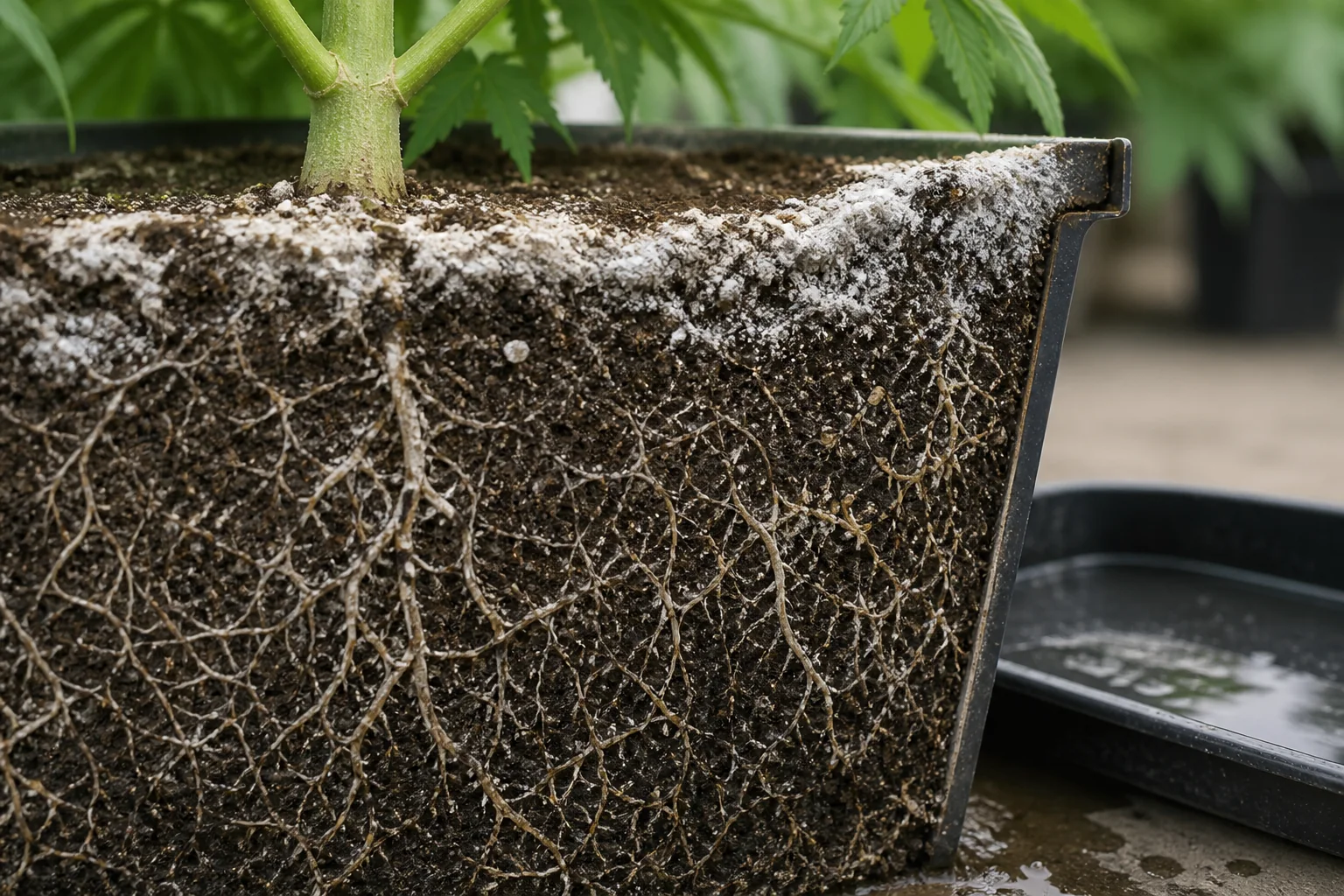
When bicarbonate-rich water is used repeatedly, the bicarbonate load can influence substrate pH and interact with calcium and magnesium. In irrigation equipment, calcium carbonate precipitation can form scale as water evaporates or as pH, temperature, and carbon dioxide conditions change. White crust on emitters, tubing, reservoir fittings, pots, or humidifier surfaces is a clue that mineral precipitation deserves investigation.
Scale on equipment is not the same as salt accumulation in the root zone, although both may occur in the same garden. A white deposit can contain carbonates from hard water, fertilizer salts, or a mixture. Confirm the source by comparing raw-water chemistry, fertilizer inputs, and where the deposit forms.
Field Advice: If scale is appearing first at emitters and tubing rather than in the medium, treat the irrigation system as a separate diagnostic target. Measure emitter flow and inspect the source-water hardness and alkalinity before changing the plant’s nutrient program.
Chlorine and Chloramine in Cannabis Irrigation Water
Municipal utilities use disinfectant residuals to control microbial regrowth in distribution systems. Free chlorine and chloramine both serve that purpose, but chloramine is deliberately more persistent. That is why a method that reduces free chlorine may be ineffective for chloramine.
There is no strong evidence for a universal cannabis rule stating that normal potable residual disinfectant automatically makes tap water unsuitable. The effect of a residual depends on concentration, contact time, organic matter, water temperature, storage, irrigation method, and whether the grower is deliberately managing a highly biological root-zone or reservoir system.
Organic matter and microbial biomass also exert chlorine demand. That means a disinfectant measured at the tap is not necessarily present at the same concentration after storage, fertilizer mixing, contact with a biologically active medium, or irrigation. The useful approach is to measure the residual when it matters, not to assume either total safety or total sterility.
Chlorine vs Chloramine in Grow Water
Free chlorine may decline during open storage because it reacts and volatilizes, but the rate changes with starting concentration, temperature, light, aeration, surface area, and contaminants in the container. “Leave it out for 24 hours” is therefore a rule of thumb, not a validated removal method.
Chloramine is more stable. An uncovered bucket left overnight is not a reliable chloramine treatment. If removal is justified, use treatment designed and rated for chloramine reduction, maintain the filter according to capacity and flow requirements, and verify the result with an appropriate residual test.
Do not assume standing water removes chloramine
Chloramine is used because it persists longer than free chlorine in distribution systems. If your utility uses chloramine and removal is part of your cultivation strategy, use a treatment method specifically designed for it and verify the treated water rather than relying on storage time.
How Tap Water Behaves in Soil, Coco, Rockwool, and Hydro
The same water analysis can produce different practical consequences because each root-zone system stores, exchanges, drains, and recirculates ions differently. A useful tap-water decision therefore includes the growing medium and irrigation strategy.
Soil and organic container mixes
Mineral and organic soils contain exchange sites, buffering materials, microbes, and solid particles that can moderate short-term changes. This can make a reasonable municipal supply forgiving, but it can also hide slow accumulation. Repeated bicarbonate loading may shift pH, while sodium or chloride can accumulate when drainage is weak and leaching is limited.
Living or biologically active soil adds a separate concern: some growers prefer to reduce disinfectant residuals to protect inoculants or deliberately managed microbial populations. That may be reasonable when a real biological program is being used, but it does not prove that untreated tap water sterilizes soil. The response depends on residual concentration, organic demand, frequency, and the microbial habitat itself.
Coco coir
Coco is soilless but chemically active. Its exchange sites interact with calcium, magnesium, potassium, and sodium. A hard tap source can therefore change the balance of a nutrient program designed around lower-mineral water. High alkalinity can also keep pushing root-zone pH upward even when every feed tank is adjusted to a familiar number.
For coco, compare source-water calcium and magnesium with the fertilizer formulation before adding a separate calcium-magnesium supplement. High background EC does not automatically mean the water is nutritionally complete.
Rockwool and other inert media
Rockwool has much less chemical buffering than soil. Water chemistry and fertilizer chemistry are therefore expressed more directly. High alkalinity, background EC, or sodium can become visible through root-zone measurements sooner, especially under frequent fertigation.
Because irrigation volumes are often small and frequent, scale or precipitation in drippers also matters. A chemically acceptable solution is not operationally acceptable if it slowly reduces emitter flow and creates uneven irrigation.
Recirculating hydroponics
In recirculating systems, source water becomes part of a closed or semi-closed nutrient inventory. Calcium, magnesium, sodium, chloride, bicarbonate, and disinfectant residuals all enter the reservoir and may change as plants take up water and nutrients. The grower should therefore distinguish source-water EC, freshly mixed reservoir EC, and reservoir EC after plant uptake and evaporation.
Very hard or saline tap water can make nutrient formulation less flexible. In those situations, blending or reverse osmosis may be justified because the system benefits from a lower-background starting point. But low-mineral water also removes useful calcium, magnesium, and buffering, so the nutrient program must replace what was removed.
A Repeatable Tap-Water Testing Procedure
A single handheld reading is useful, but a reliable tap-water assessment combines the utility report, on-site measurements, and laboratory analysis when needed. The goal is to create a baseline that can be repeated later if the crop or water source changes.
Step 1: Identify the source and disinfectant
Find the current municipal water-quality report or contact the utility. Confirm whether the distribution system uses free chlorine, chloramine, or seasonal switching. Some systems change source water or disinfectant strategy during the year, so an old report may not describe the water currently reaching your grow.
If you use a household filter, water softener, storage tank, or treatment system, note whether the irrigation tap is before or after that equipment. The chemistry at the plant matters more than the chemistry at the treatment plant.
Step 2: Sample the actual irrigation tap
Use a clean container that has not held fertilizer, acid, cleaning chemicals, or concentrated nutrients. If the line has been stagnant, run it long enough to obtain water representative of normal use. For a laboratory sample, follow the lab’s container, preservation, and shipping instructions rather than improvising.
When troubleshooting filters or softeners, collect paired samples before and after treatment. That comparison shows what the equipment actually changed.
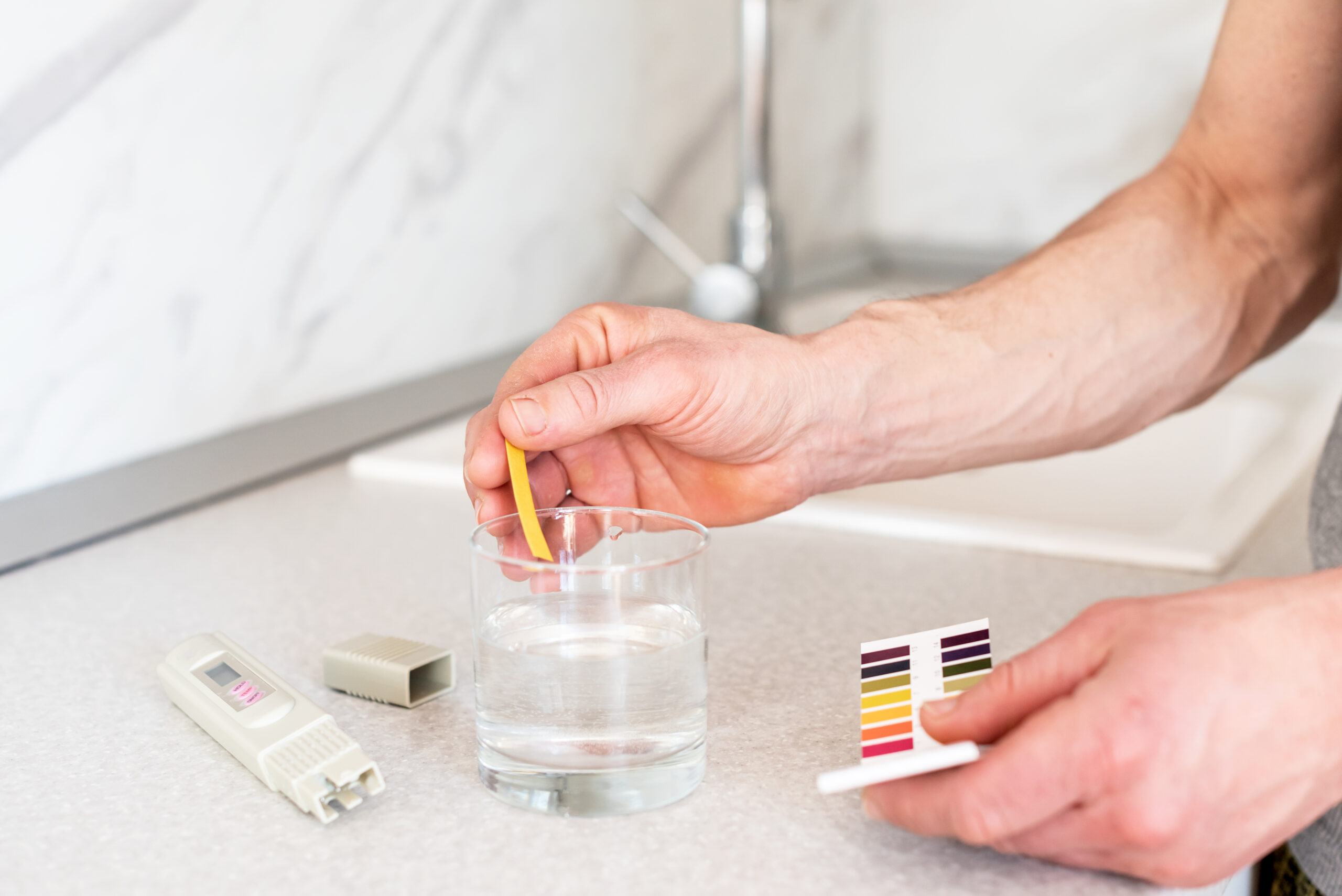
Step 3: Measure pH and EC on site
Calibrate meters with fresh standards. Record water temperature because conductivity readings are temperature-dependent even when the meter applies automatic compensation. Measure raw tap water before fertilizer, acid, silica, supplements, or pH adjusters are added.
A stable baseline is more valuable than chasing the last decimal. If the source EC is normally 0.35 mS/cm and suddenly becomes 0.80 mS/cm, the change is worth investigating even if both numbers fall inside a broad horticultural range.
Step 4: Measure the constituents EC cannot identify
A useful irrigation-water laboratory panel normally includes alkalinity or bicarbonate, calcium, magnesium, sodium, chloride, and EC. Depending on source and region, iron, manganese, sulfate, nitrate, boron, heavy metals, or microbial quality may also matter.
Hardness can be useful for scale screening, but individual calcium and magnesium values are better for nutrient planning. Sodium and chloride should be reported individually because they can be problematic even when the water does not look unusually hard.
| Check | What to Record |
|---|---|
| Utility information | Source, disinfectant, seasonal changes, latest report date |
| Raw-water pH | Value, meter calibration date, temperature |
| Raw-water EC | mS/cm or µS/cm using the same meter and units each time |
| Alkalinity | mg/L as CaCO3 or the laboratory’s stated unit and method |
| Calcium and magnesium | Individual mg/L values, not hardness alone |
| Sodium and chloride | Individual mg/L values |
| Disinfectant residual | Free chlorine or total chlorine/chloramine result when treatment decisions depend on it |
| System observations | Scale, clogged emitters, reservoir deposits, root-zone EC/pH trend |
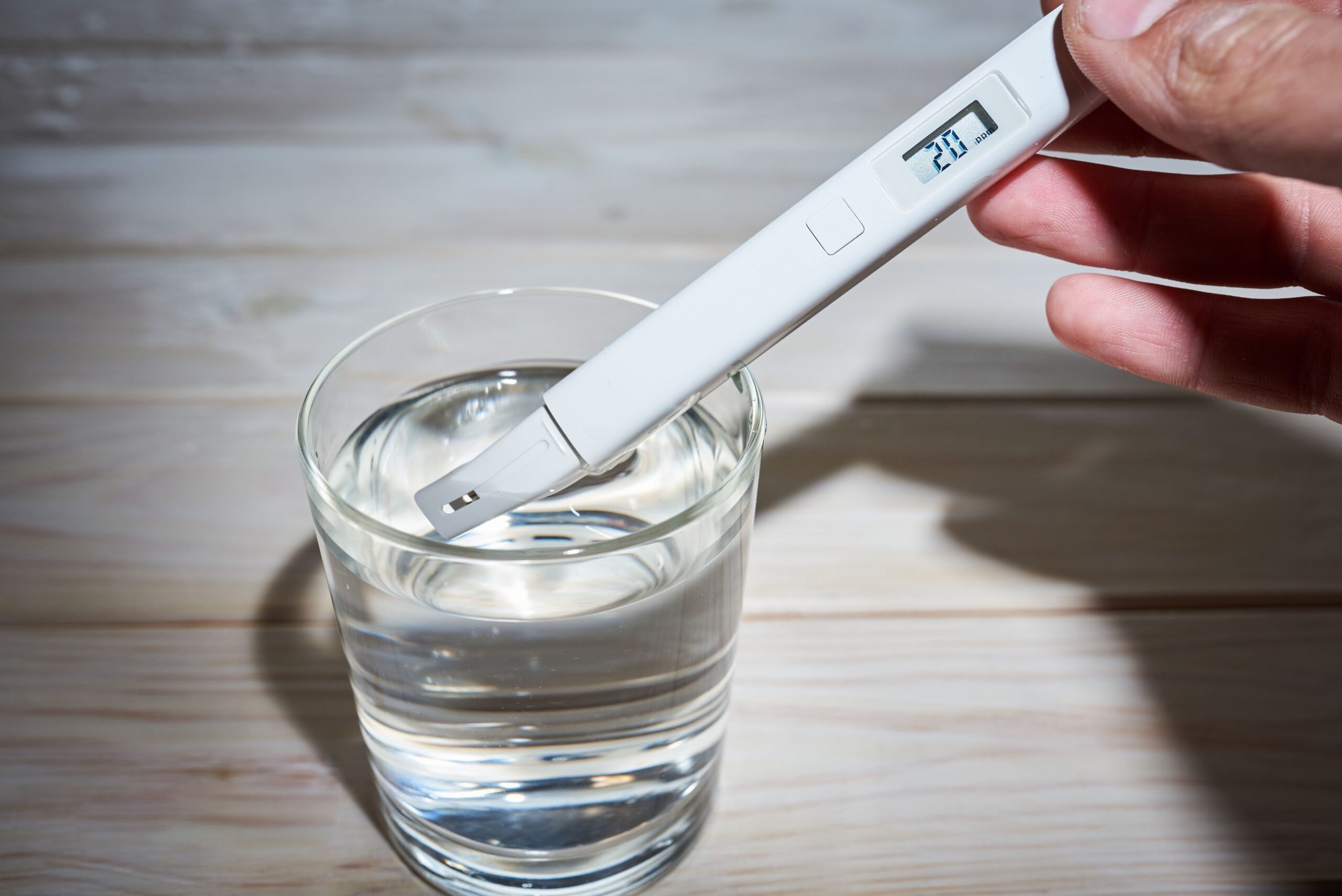
“My TDS meter says 220 ppm. Is that too hard for cannabis?”
Not enough information. TDS meters estimate total dissolved solids from conductivity and cannot tell you how much of the reading comes from calcium, magnesium, bicarbonate, sodium, chloride, or other ions. Record EC in the meter’s native units and use a water analysis for the ions that change the cultivation decision.
Question sent by: Julia Schneider, via contact form.
Pro Tip: Keep one line in your grow log for raw tap EC. It is a low-effort early-warning signal for seasonal utility changes, filter exhaustion, well changes, or accidental sampling after treatment.
Separate Source Water from Fertilizer Strength and Root-Zone Accumulation
One of the most common mistakes in water troubleshooting is measuring a finished nutrient solution and calling the result “tap-water EC.” Once fertilizer is added, the number represents source ions plus fertilizer ions plus any other additives. The source must be measured separately.
The root zone is a third chemistry. Plants selectively absorb ions, water evaporates, the medium exchanges cations, bicarbonate is neutralized or accumulates, and salts may concentrate between irrigations. That means input EC and runoff or extract EC answer different questions.
Raw tap water
Raw tap water tells you the background load the nutrient formula must inherit. This is where hardness, alkalinity, sodium, chloride, and disinfectant residual should be characterized.
Finished irrigation solution
The finished solution tells you what the plant is actually being fed. Measure after all nutrients and compatible additives are mixed and stabilized. If pH adjustment is part of the program, measure the final solution after the adjustment rather than assuming the raw tap pH remains relevant.
Root-zone extract, runoff, or reservoir trend
A root-zone measurement shows what happened after irrigation interacted with the medium and plant. Use a consistent sampling method. Pour-through, slurry, saturated media extract, runoff, and direct sensor readings are not automatically interchangeable.
In recirculating hydroponics, reservoir trends replace some of the root-zone sampling logic. Track EC, pH, water level, temperature, and refill chemistry over time instead of interpreting a single tank reading in isolation.
Label every sample by location
Record raw tap, post-filter, mixed feed, reservoir, and root-zone samples separately. This preserves the causal chain and shows where the chemistry changed.
Using one EC number for the whole system
A single reading cannot tell whether the source water, nutrient mix, evaporation, irrigation frequency, or root-zone accumulation created the problem.
Diagnose Mineral Buildup, Scale, and Misleading Symptoms
Tap-water problems rarely announce themselves with one unique leaf symptom. Marginal burn, pale new growth, dark leaves, slow growth, wilt, nutrient-deficiency patterns, and unstable pH can all have several causes. Diagnose the water by combining plant symptoms with measurements and system evidence.
| Symptom | Possible Cause | How to Confirm | Corrective Action | Prevention |
|---|---|---|---|---|
| White scale on emitters or fittings | Hard water, bicarbonate chemistry, evaporation, high pH, temperature-driven precipitation | Inspect raw-water hardness/alkalinity, compare deposits, measure emitter flow | Treat the water or irrigation hardware based on the confirmed chemistry | Monitor scale and emitter discharge before severe clogging develops |
| Root-zone pH keeps rising | High alkalinity, fertilizer chemistry, medium buffering, irrigation pattern | Measure source alkalinity and use a consistent root-zone pH method | Adjust alkalinity management or fertilizer strategy rather than chasing source pH alone | Track pH trend across several irrigations |
| EC rises between irrigations | High source EC, strong feed, insufficient leaching, high evaporation, uneven wetting | Compare raw-water, feed, and root-zone EC using the same units and method | Correct the dominant salt source and irrigation pattern | Maintain even wetting and appropriate leaching for the system |
| Intermittent emitter output | Scale, fertilizer precipitation, debris, biofilm, pressure variation | Measure discharge from multiple emitters and inspect flush water | Clean or treat the actual plugging mechanism | Use filtration, compatible chemistry, and routine flow checks |
| Plants decline despite “normal” source EC | Sodium/chloride, pH drift, root disease, poor irrigation, nutrient imbalance | Use ion analysis and root-zone inspection rather than EC alone | Change the confirmed cause | Keep source chemistry and plant response in the same record |
Scale is an equipment clue, not a complete plant diagnosis
Calcium carbonate scale can reduce emitter flow long before the plant displays a clear chemistry symptom. Once irrigation becomes uneven, some containers receive less water and fertilizer than others. The canopy may then look like a nutrient problem even though the primary failure is hydraulic.
Measure emitter discharge instead of judging only by appearance. If one dripper delivers 25 percent less than another, the plant is no longer receiving the same irrigation program even if the fertilizer tank is perfect.
Hard-water residue can be confused with fertilizer salt buildup
A crust on a pot rim or saucer may contain carbonates from source water, fertilizer salts, or both. Raw-water analysis, feed chemistry, and deposit location help separate them. Do not assume every white crust means overfeeding.
High background EC can hide a nutrient formulation problem
Suppose two growers target the same final EC. One begins with low-mineral water, while the other starts with hard tap water carrying calcium, magnesium, bicarbonate, and sodium. If both simply stop adding fertilizer when the meter reaches the same target, the second solution may contain less of the intended nutrient formula and more non-target background ions.
Remember: EC counts conductivity, not nutritional completeness. The correct fertilizer dose depends on what the source water contributes, not only on the final meter number.
Runoff can mislead you
Runoff chemistry depends on how the container was irrigated, where the water traveled, how much solution was displaced, and whether preferential channels formed. A small fast runoff sample from a hydrophobic pot does not necessarily represent the average root zone.
Use the same collection method each time and interpret the trend with plant response, container weight, irrigation volume, and medium condition. If the result changes dramatically when the sampling method changes, the method may be the problem.
Do not irrigate cannabis with sodium-softened household water by default
Many household softeners exchange calcium and magnesium for sodium. The water may feel “soft” and produce less scale while becoming less suitable for repeated plant irrigation. Use an untreated bypass, a properly evaluated alternative treatment, or test the post-softener water before using it on a crop.
Treatment Options and Their Limits
Treatment should solve a measured problem. A grower with moderate hardness and low sodium may need no treatment. Another grower with high alkalinity may need chemistry management but not reverse osmosis. A chloraminated supply may only need carbon treatment if disinfectant removal is actually part of the biological strategy.
Do nothing when the water already works
The cheapest and often best treatment is none. If the water report is reasonable, the nutrient program is compatible, root-zone pH is stable, emitters stay open, and the crop performs consistently, adding filtration introduces cost, maintenance, and another failure point.
Adjust the fertilizer program to the water
Hard-water nutrient formulations are designed for sources that already contribute calcium and magnesium. They may reduce or rebalance nutrients that would otherwise be duplicated. This is often more efficient than stripping the water with RO and rebuilding it from zero.
Do not add a generic “Cal-Mag” supplement automatically because the water is hard or because the plant shows a deficiency-like symptom. Check the individual calcium and magnesium values, fertilizer analysis, pH, EC, irrigation behavior, and root health first.
Activated carbon for chlorine or chloramine
Activated carbon can reduce disinfectant residuals, but system sizing matters. Flow rate, carbon type, contact time, starting residual, temperature, and media exhaustion all affect performance. A filter that removed chloramine when new may stop doing so after its capacity is used.
If chloramine reduction is the goal, choose a product with a chloramine-reduction claim or specification rather than assuming every small carbon filter performs equally. Verify the treated water periodically with an appropriate chlorine/chloramine test.
“I leave my tap water overnight. Does that solve chlorine and chloramine?”
It may reduce free chlorine under some conditions, but there is no fixed 24-hour guarantee. Chloramine is more persistent and should not be assumed to disappear. First identify which disinfectant the utility uses. If removal is justified, choose a method that matches it and verify the result.
Question sent by: CedarRoute, via Facebook page.
Blending with low-mineral water
Blending tap water with reverse-osmosis or another tested low-mineral source can lower hardness, alkalinity, sodium, chloride, and background EC in proportion to the blend. It is useful when the source is manageable but stronger than the nutrient program prefers.
Do the math from measured water chemistry rather than a fixed “50/50” recipe. A 50 percent blend only reduces a constituent by about half if the second source contains essentially none of that constituent.
Reverse osmosis
RO is appropriate when the source contains ions that are difficult to manage, such as excessive sodium, chloride, or total mineral load. It provides a predictable low-mineral starting point but also removes calcium, magnesium, and alkalinity. The nutrient program must then provide those intentionally.
RO systems also create reject water, require prefilters and membrane maintenance, and lose performance as membranes foul. Track product-water EC so membrane decline is visible before the crop is affected.
Acidification for high alkalinity
Acidification targets bicarbonate alkalinity. It is not simply “pH Down.” The acid requirement depends on starting alkalinity, target residual alkalinity, acid type and concentration, and the nutrient contribution of the acid used. There is no universal dose per liter or gallon.
Commercial irrigation acidification should be designed around a laboratory alkalinity result and safe equipment. Acids are hazardous concentrates. Follow chemical labeling, use appropriate personal protective equipment, prevent backflow into potable systems, and keep concentrated acids separate from incompatible fertilizer concentrates.
Safety Note: Never copy an acid-injection dose from another grow. The same source pH can require very different acid amounts because alkalinity is different, and concentrated acids can cause severe injury or equipment damage.
Do not use filtration as a substitute for diagnosis
Carbon does not remove hardness the way RO does. A sediment filter does not remove bicarbonate. A sodium softener reduces scale but may increase sodium. RO removes many dissolved ions but may be unnecessary if the only issue is a manageable alkalinity level. Treatment must match the constituent.
Mineral buildup
Mineral buildup can refer to scale inside irrigation hardware, visible deposits on pots and surfaces, or dissolved salts accumulating in the root zone. These are related but different problems, so the location and chemistry of the buildup should be identified before treatment.
Correct One Variable and Verify the Next Irrigation
A water correction is not finished when a filter is installed or an acid dose is changed. Role A means the grower should be able to prove that the intervention changed the intended variable without creating a new problem.
Observation
Define the problem before treatment. Is substrate pH drifting upward? Is background EC too high? Are emitters scaling? Is sodium elevated? Is chloramine removal required for a specific biological process? Do not start from the product you want to buy.
Measurement
Collect the minimum measurements that can confirm the hypothesis. For alkalinity, use a proper alkalinity result. For hardness, obtain calcium and magnesium or a reliable hardness test. For disinfectant removal, measure before and after the treatment device. For scale, measure emitter flow and inspect deposits.
Change one variable
If hardness is acceptable but alkalinity is high, do not simultaneously install RO, add Cal-Mag, change fertilizer, acidify heavily, and increase runoff. Too many changes destroy the information you need to know what worked.
Make the smallest correction that addresses the confirmed limitation. Then keep the irrigation schedule and nutrient program as stable as practical while you observe the response.
Verify the next irrigation event
Recheck the variable directly. After carbon treatment, test the residual. After blending, measure EC and, when necessary, calculate or retest alkalinity and ion concentrations. After changing nutrient formulation, compare finished-solution EC/pH and the root-zone trend. After treating scale, remeasure emitter discharge.
Recheck after several irrigations
Some tap-water problems are cumulative. One corrected tank does not prove that root-zone pH or salinity will remain stable. Recheck after several irrigation cycles and again when plant water use changes significantly during the crop.
Master Advice: Judge a tap-water treatment by the variable it was supposed to change. A new filter is not a success because the water tastes different; it is a success when the target constituent falls, the irrigation system stays reliable, and the root zone becomes easier to manage.
Tap-Water Build and Selection Checklist
Before changing water sources, installing treatment, or committing a crop to an unfamiliar municipal supply, work through the same sequence. The checklist keeps “hard water,” “chlorine,” and “high pH” from becoming vague labels that trigger unnecessary fixes.
What to confirm before the crop depends on the source
- Identify whether the utility uses free chlorine, chloramine, or a seasonal combination.
- Measure raw tap EC and pH before adding nutrients or acid.
- Know alkalinity or bicarbonate when root-zone pH drift is a concern.
- Know individual calcium and magnesium values when hardness affects nutrient formulation.
- Check sodium and chloride rather than assuming EC identifies salinity risk.
- Sample before and after filters, softeners, or RO systems when troubleshooting treatment.
- Keep sodium-softened household water out of the irrigation plan unless analysis supports its use.
- Inspect emitters, tubing, reservoirs, and pots for mineral scale or precipitation.
- Separate raw-water EC, finished-feed EC, and root-zone EC in the grow log.
- Change one water variable at a time and verify the next irrigation event.
- Recheck after several irrigations because alkalinity and salt problems are cumulative.
Tap Water for Cannabis FAQ
Does tap water need to sit for 24 hours before watering cannabis?
No universal waiting period is required. Standing water may reduce free chlorine depending on the conditions, but the rate is variable. Chloramine is more persistent and should not be assumed to disappear overnight. Identify the disinfectant first.
Is hard tap water bad for living soil?
Not automatically. Calcium and magnesium can be useful, while high alkalinity, sodium, chloride, or excessive total mineral load may be more important limitations. If disinfectant reduction is part of a biological management strategy, test the residual and treat specifically rather than assuming hardness is the biological problem.
Do I need Cal-Mag with hard tap water?
Not by default. Hard water may already supply substantial calcium and magnesium. Read the individual Ca and Mg values and compare them with the fertilizer formula. A deficiency-like leaf symptom can also come from pH, salinity, root disease, or irrigation problems.
Can a carbon filter soften hard water?
Typical activated-carbon filtration is used for compounds such as chlorine and certain organics. It does not function like reverse osmosis or ion exchange for hardness removal. Do not buy a carbon filter expecting it to remove calcium, magnesium, alkalinity, sodium, or chloride unless the specific treatment system is designed and verified for those constituents.
Why is my tap-water EC low but my pots still develop white crust?
EC is a total conductivity measurement and a relatively low value can still include enough calcium and bicarbonate to form visible carbonate scale as water evaporates. Fertilizer salts may also contribute. Compare raw water, feed solution, and where the deposits form.
Can I use water from a household softener?
Many household softeners exchange calcium and magnesium for sodium, which is not a good default irrigation strategy. Use an untreated bypass when available or test the post-softener water for sodium and total chemistry before making a crop decision.
Deciding Whether Your Tap Water Needs Treatment
Tap water does not need to be perfect. It needs to be known, compatible, and controllable. Moderate hardness may be useful. A small disinfectant residual may be irrelevant to a conventional mineral-fed system. A high source pH may be easy to manage when alkalinity is low. The problems begin when the chemistry is guessed rather than measured.
Use treatment only when it solves a defined limitation. High alkalinity points toward alkalinity management. High sodium or chloride may justify blending or RO. Chloramine removal calls for a treatment system designed for chloramine, not an open bucket. Scale in drip equipment requires a water-chemistry and hydraulic response, not a random change to plant nutrients.
The most reliable tap-water program is the one you can verify: measure the source, account for what it contributes to the feed, watch what accumulates in the root zone, and retest after the correction. That keeps the water source from becoming either an invisible problem or an expensive problem you invented yourself.
>
Share this article
A quick overview of the topics covered in this article.
Follow us
Latest articles
September 27, 2026
September 27, 2026
September 27, 2026
September 27, 2026